Reading view

There are new articles available, click to refresh the page.

A Constitutional Clash Over Trump’s War Powers in Venezuela

OPINION — “The question before the body is, can the Congress stop a military conflict declared by the Commander-in- Chief because we don’t agree with the decision, and without our [Congress] approval it must end? The answer, unequivocally, to me is no. Under the Constitution, the authority to be Commander-in-Chief resides exclusively with the President. The power to declare war is exclusive to the Congress. Now, what could the Congress do constitutionally if they disagree with a military action that is not a declaration of war? We could cut off funding.”

That was Sen. Lindsey Graham (R-S.C.) speaking on the Senate floor on the afternoon of November 6, when debate was to begin on S.J. Res. 90, legislation that was “to direct the President to terminate the use of U.S. Armed Forces for hostilities within or against Venezuela, unless explicitly authorized by a declaration of war or specific authorization for use of military force.”

Graham’s remark that Congress could cut off funds to halt a President ordered foreign military action took me back 56 years to December 1969, when I was working for Sen. J.W. Fulbright (D-Ark.), then chairman of the Senate Foreign Relations Committee. I had in late 1969 been to Laos where the Nixon administration was carrying out a secret bombing campaign in an attempt to limit weapons going from North Vietnam to pro-Communists in South Vietnam.

To halt the at-the-time classified Laos bombing program, Fulbright introduced an amendment to the fiscal 1970 Defense Appropriations Bill that prohibited the use of U.S. funds to send American ground combat troops into Laos or Thailand. To get his amendment debated and passed, Fulbright had to arrange for a closed-session of the Senate.

That closed session was held on December 16, 1969, with all 100 Senators present, a handful of staff – including me – but no one in the public galleries and no reporters in the press gallery. After a 90-minute debate, the amendment passed. The House accepted the amendment in conference and it was signed into law by President Nixon on December 29, 1969.

Fulbright’s purpose was to assert Congress’ Constitutional role when it came to a prospective military operation amid his concern that the Nixon administration was expanding the Vietnam War into neighboring countries without consulting Congress.

I describe that long-past activity to explain my continuing apprehension over today’s possible Trump administration military action against Venezuela. The Trump administration has already introduced deadly military operations against alleged narco-traffickers working from a secret list of drug cartels using a classified Justice Department Office of Legal Counsel opinion which claims the drugs are to kill Americans and finance arms to terrorists who will destabilize the U.S. and other Western Hemisphere countries.

Last Thursday and Friday, President Trump met in the Oval Office to discuss a host of options for Venezuela with Vice President JD Vance, Defense Secretary Pete Hegseth, Joint Chiefs Chairman Gen. Dan Caine, Secretary of State Marco Rubio and Deputy Chief of Staff Stephen Miller.

Friday night, in remarks to reporters aboard Air Force One as he traveled for the weekend to his Mar-a-Lago estate, the President said he had “sort of made up my mind” about how he will proceed with the possibility of military action in Venezuela. On Sunday, flying home, Trump told reporters the U.S. “may be having some discussions with [Venezuelan President Nicolas] Maduro,” adding that “they [the Venezuelans] would like to talk.”

Although he swings back and forth, it appears clear from President Trump’s point of view, he need not consult with Congress should he decide on any military action that targets the Venezuelan mainland. As Sen. Graham pointed out, “We have only declared war five times in 250 years, and we have had hundreds of military operations -- some authorized and some not.”

Need a daily dose of reality on national and global security issues? Subscriber to The Cipher Brief’s Nightcap newsletter, delivering expert insights on today’s events – right to your inbox. Sign up for free today.

Opening the Senate debate on November 6, Sen. Tim Kaine (D-Va.), a key sponsor of the congressional resolution, pointed out, “On October 31, public reporting shows that many Trump administration officials have told the press that a secret list of targets in Venezuela has been drawn up. All of this, together with the increased pace of strikes in the Caribbean and Pacific [21 attacks on alleged narco-trafficking boats, 83 individuals killed], suggests that we are on the verge of something that should not happen without a debate and vote in Congress before the American people.”

On November 6, after a relatively short debate, the Senate resolution to block the use of U.S. armed forces against Venezuela was defeated by a 49-to-51 vote.

But during that debate some important points were made, and they need some public exposure.

For example, Sen. Tammy Duckworth (D-Ill.), a military veteran herself, said, “Listen, if the Trump administration actually believes there is an ongoing credible threat of armed conflict, then they must bring their case to Congress and give the American people a say through their elected representatives. They must respect our service members enough to prove why war is worth turning more moms and dads into Gold Star parents. And they must testify about what the end state of these military operations would actually look like.”

Sen. Adam Schiff (D-Calif.) said, “Maduro is a murderous dictator. He is an illegitimate leader in having overturned the last election by the use of military force. He is a bad actor. But I do not believe the American people want to go to war to topple this regime in the hopes that something better might follow… Let them [the Trump administration] seek an authorization to use force to get rid of Maduro. But let us not abdicate our responsibility. Let us vote to say no to war without our approval. We don’t have to wait, nor should we wait for that war to begin before we vote.”

Sen. Rand Paul (R-Ky.) pointed out, “Of course, we have the capability of overthrowing the Maduro regime, just like we had the power to overthrow Saddam Hussein and Muammar Qadhafi. But what comes next? Is anyone thinking about the potential blowback that such a campaign could entail? Overthrowing the Maduro regime risks creating more regional instability, not less. The breakdown of state authority may create a power vacuum that the very drug cartels the administration is ostensibly trying to destroy could exploit.”

The Cipher Brief brings expert-level context to national and global security stories. It’s never been more important to understand what’s happening in the world. Upgrade your access to exclusive content by becoming a subscriber.

“You cannot bomb your way out of a drug crisis,” said Sen. Jack Reed (D-R.I.), ranking member on the Senate Armed Services Committee. “The demand that motivates drug trafficking is not found in the Caribbean. It is located in communities across America where people are suffering from addiction, where economic opportunity has dried up, where the social fabric has frayed. Military strikes do nothing to address those root causes. Boats have been blown out of the water in videos released by the administration. But has the flow of fentanyl into America decreased? Has a single trafficking network been dismantled? The administration hasn’t provided any evidence that these strikes are achieving anything beyond the destruction they document on camera. This is not a strategy. This is violence without a strategic objective.”

Sen. Reed also pointed out how the Trump administration is expanding its war powers. “The White House is apparently now arguing that these strikes [on alleged narco-boats] don’t constitute ‘hostilities’ under the War Powers Act because American service members aren’t directly in harm’s way while operating standoff weapons and drones. This is ridiculous…They are very much in harm’s way, and to say that this operation is so safe that it doesn’t qualify as ‘hostilities’ is embarrassing…This new interpretation creates a dangerous precedent. If standoff weapons exempt military operations from congressional oversight, we have effectively granted the Executive Branch unlimited authority to wage war anywhere in the world so long as American forces can strike from a distance.”

Taking a different approach, Sen. Chris Van Hollen (D-Md.) pointed out an irony in Trump’s anti-drug argument. Van Hollen said, “I will tell you what you don’t do. You don’t submit a budget to the U.S. Congress that cuts the funding for the Drug Enforcement Agency and cuts funding for the task forces we developed to go after major organized crime syndicates involved in the drug business.” He added, “I happen to be the ranking member of the Appropriations Committee that oversees the Justice Department. And all my colleagues have to do is take a look at the request from the President of the United States when it comes to resources for fighting drugs coming to the United States. They cut them.”

Raising an additional problem, Sen. Andy Kim (D-N.J.) said, “Letting Donald Trump ignore the law abroad makes him think he has a free pass to do it right here at home. Donald Trump thinks if he can do this in the Caribbean, he can do it on the streets of Chicago. He could use the military for his own political retribution and consolidation of power in and outside our borders. After all, he [Trump] said in his own words: ‘We’re under invasion from within, no different than a foreign enemy but more difficult in many ways because they don’t wear uniforms.’ That is what the President said. We cannot be complacent as he sends troops into our cities as a tool of intimidation against his political enemies.”

While we await President Trump’s decision on what comes next, let me close with another ironic situation, created last Wednesday by Secretary of Homeland Security Kristi Noem.

Giving the keynote address at the Potomac Officers Club’s 2025 Homeland Security Summit, Noem celebrated recent successes in the counter-drug mission. She said that since January, the Coast Guard has stopped 91 metric tons of drugs, confiscated 1,067 weapons and seized more than $3.2 million in cash from terrorist cartels, thanks primarily due to Operation Pacific Viper, which Noem said is strategically designed to seize historic amounts of drugs from smugglers in the eastern Pacific. “Viper has saved millions of lives of individuals and Americans by stopping those drugs before they ever got to the U.S.,” Noem said.

Operation Pacific Viper, according to a Coast Guard press release, also resulted in the arrest of 86 alleged narco-traffickers as of October 15. A needed reminder: Viper was an interdiction program where narco-traffickers were intercepted, arrested and drugs seized – not boats blown up and people killed.

The Cipher Brief is committed to publishing a range of perspectives on national security issues submitted by deeply experienced national security professionals.

Opinions expressed are those of the author and do not represent the views or opinions of The Cipher Brief.

Have a perspective to share based on your experience in the national security field? Send it to Editor@thecipherbrief.com for publication consideration.

Read more expert-driven national security insights, perspective and analysis in The Cipher Brief
Understanding the U.S. Military Mobilization in the Caribbean


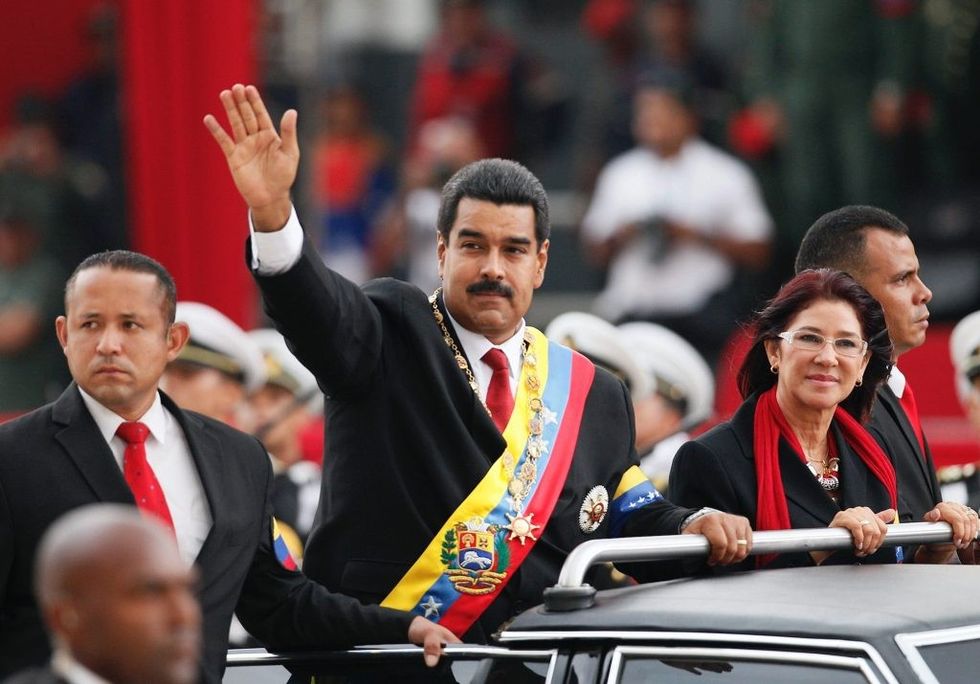
OPINION / EXPERT PERSPECTIVE — The armada the U.S. has assembled in the Caribbean is more formidable than anything the region has seen in decades. What is going on? The administration says it is targeting drug trafficking through the Caribbean. Is that it? Is that really all we are doing? Trump administration officials insist that it is but also acknowledge that strikes on land targets may be necessary to achieve the administration’s goals. Skeptics suggest that regime change in Venezuela is part of the administration’s plan. Is it?

Early in 2025, shortly after taking office, the Trump administration designated several drug cartels as terrorist organizations. This signaled the administration’s intention to escalate U.S. efforts to fight trafficking beyond the usual efforts of the Coast Guard, Drug Enforcement Administration and Border Patrol. It also presaged the use of the military.

Combating narco-trafficking remains the administration’s declared purpose. Implicitly, the decision to escalate U.S. efforts is based on several key points. First, drug abuse in the United States remains at epidemic levels despite decades of efforts to control it. Second, previous efforts to suppress drug smuggling into the U.S. have not been successful. Third, because the cartels smuggling drugs into the U.S. are not merely drug traffickers but large terrorist organizations, they need to be confronted as forcefully as terrorist groups elsewhere. This, effectively, means employing military force.

The administration contends that Venezuela is the country from which much of the illicit boat and air traffic carrying cocaine emanates and that Venezuela’s long-time strong man is really the head of a cartel and “a fugitive from American justice.” On August 7, the administration announced a 50-million-dollar bounty on Venezuela’s long-time strong man, Nicolas Maduro. It is this view of the Venezuelan regime and its leader, in combination with the size and capabilities of the deployed U.S. military in the Caribbean, that suggests the administration’s goals are more ambitious than just striking alleged traffickers on the high seas.

The question then is, how would the Trump administration define regime change? New leadership or something more extensive? If regime change is a goal, how does the administration hope to achieve that result? Would a combination of intimidation, enhanced economic sanctions and diplomatic pressure from the world’s democratic community convince Maduro to abandon power? Can the Venezuelan military, which in 2002 temporarily removed Maduro’s mentor, Hugo Chavez, be persuaded to act once again? Or is the U.S. administration contemplating military strikes inside of Venezuela? If so, how extensively? Would a targeted attack of regime leadership result in regime change or would the U.S. need to hit various elements of the military plus drug labs? The scope of any U.S. kinetic actions would likely affect the way Venezuelans – who overwhelmingly rejected Maduro in last year’s presidential election, react. It would also affect how the region and the rest of the world regard the U.S. campaign.

If the U.S. were able to oust Maduro what would follow? There is a legitimate government in waiting. Former diplomat Edmundo Gonzalez won last year’s presidential election by a huge margin despite regime efforts to sabotage the democratic opposition. Would anything short of the installation of the democratic opposition be considered an acceptable outcome to Venezuelans or the United States? Would a government of national unity which included some of the Venezuelan dictator’s base and elements of the military be acceptable to the democratic opposition? To the U.S? The Venezuelan military has been deeply compromised by the Maduro regime’s criminal activity and is believed to be complicit at the highest levels in drug trafficking. The Cartel de los Soles is thought to include many high-ranking military personnel. Would the U.S.be prepared to put troops on the ground to prevent criminal elements of the Venezuelan military from regrouping even if current regime leadership were forced out?

Finally, what effect will current U.S. operations in the Caribbean have on U.S. relations with the rest of Western Hemisphere especially if U.S. military strikes Venezuela directly? What effect have U.S. operations already had? The answers to these questions are not all obvious.

The Cipher Brief brings expert-level context to national and global security stories. It’s never been more important to understand what’s happening in the world. Upgrade your access to exclusive content by becoming a subscriber.

The Trump team has never mentioned regime change as a campaign goal. The size and nature of the deployed U.S. forces, however, make speculation on the U.S. administration’s real intentions inevitable. The number of ships, aircraft, sailors and marines appeared to be substantially greater than required to combat narcotrafficking through the Caribbean and eastern pacific even before the ordered deployment of the U.S.’s most advanced aircraft carrier, the USS Gerald R Ford. The messaging from Washington, moreover, focuses squarely on the Venezuelan regime.

What we have been hearing from Washington about operations in the Caribbean is a logical extension of steps taken by the Trump administration prior to the start of current operations. While President Obama first called Venezuela a threat to national security in 2015, it was only earlier this year that the U.S. designated the cartels as terrorist organizations. The designation of the cartels as terrorists was a necessary step to operationalize the shift from a law enforcement effort to a military one.

The new militarized U.S. strategy in the Caribbean has had an effect. Drug trafficking by sea is apparently way down. That said, this new strategy has not diminished trafficking by land nor reduced the flow of deadly fentanyl into the country. It has, on the other hand, generated concern in some countries about the return of American gunboat diplomacy. Domestically, the president’s new approach resonates well in some quarters but has incensed many Democrats in the U.S. Congress and even worried some Republicans. British concern about the legality of the U.S. strikes on the high seas is now so acute that the United Kingdom has ended intelligence sharing on Venezuela. The Trump administration has, however, given no indication that either international concern or congressional criticism will precipitate a change in policy.

President Trump’s change of the U.S strategy for fighting the cartels and maybe for achieving regime change in Venezuela has important implications for U.S. relations with its allies everywhere but especially within the region. The Trump administration has clearly made the Western Hemisphere a national security priority but there are many other vitally important arenas in which U.S. interests are affected by developments in this hemisphere – both positively and negatively.

Accordingly, the administration’s agenda in Latin America must include more than just winning the drug fight and controlling our Southern border. More than 40% of all U.S. manufacturing goods are sold into the Western Hemisphere and the U.S. has a positive trade balance with many countries in the region, including Brazil, Chile, Peru, Panama and others. Millions of American jobs depend on trade with the region. Energy production in the region is also significant; Canada is our largest foreign supplier but there are other key players including Mexico, Brazil, Colombia, Ecuador, Trinity and Tobago and, more recently, Guyana. Guyana’s oil production, in fact, is exploding. The country’s GDP grew by over 25% in 2023 and by more than 30% in 2024. On the other hand, China’s influence continues to surge and China is now the largest trading partner for South America in the aggregate. The U.S. clearly needs to do what it can to strengthen the value proposition for the countries of Central and South American to see the U.S. as their commercial partner of choice.

Are you Subscribed to The Cipher Brief’s Digital Channel on YouTube? There is no better place to get clear perspectives from deeply experienced national security experts.

It is, at this point, not clear what the Trump administration’s end game is in the Caribbean. What is clear is that the U.S. cannot ignore other issues around the region or other views on how challenges should be met. Neither should we naively assume that success in suppressing the trafficking of cocaine out of South America is assured even temporarily, however many go-fast boats the U.S. military sinks. Transit by land, which the Trump administration has indicated it may take on next, is still robust. Demand for illegal drugs is still strong in the U.S. and Europe. The U.S. has recently made progress in engaging Mexico, especially on combating the Mexican cartels, but how effective joint efforts will be remains to be seen. Relations with Colombia, the source of most of the world’s cocaine, on the other hand, have deteriorated dramatically. Colombian President Gustavo Petro has characterized U.S. attacks on the drug boats as atrocities, called President Trump a criminal and encouraged American military personnel to defy his orders. The U.S., for its part, has decertified Colombia for failing to cooperate fully with U.S. counternarcotics efforts and cancelled Petro’s visa.

The U.S. still has partners in Latin America, especially trade partners, but there is also, always, concern over U.S. unilateralism. Moreover, President Trump’s announcement that he has authorized the Central Intelligence Agency to become active in Venezuela inevitably recalls for some an earlier and darker time in U.S. relations with Latin America. That said, criticism of U.S. operations in the region has been surprisingly muted – and some countries have been explicitly supportive.

Still, many in the region have been left wondering where multilateral cooperation, diplomacy, democracy support and human rights, pillars of U.S.-Latin American policy since at least the 1980s, fit in America’s new more muscular policy toward the region. At the same time, most of the region agrees that the cartels are a grievous problem, and recognize that Venezuela is a dictatorship and that it has become an epicenter for a great deal of the most pernicious activity in the region. I expect they are dubious about the likelihood of the U.S. eradicating all drug trafficking from South America because so much of the trafficking is by land. They are also unconvinced that combatting drug trafficking per se is the U.S.’s only goal. They do not wish to see a war in either South or Central America but they are also profoundly tired of living with the consequences of the growing and corrosive power of the cartels.

The Trump administration’s campaign to date has had some success and may have put Russia, China and Iran – Venezuela’s extra-regional allies -- on notice that the U.S. has decided to counter malign activity and actors in the region forcefully. But this is a high stakes game for the U.S. A U.S. escalation to ground operations could catalyze world-wide criticism of the U.S. Success with targeted strikes is not assured. At present, we are left to wrestle with the question of whether the campaign to date is a preamble to even more ambitious operations. And, can what has been accomplished to date be sustained at a time when coca cultivation in source countries like Peru and Colombia is increasing and the head of a cartel – which is how the administration has characterized Maduro – remains in control of the government of Venezuela?

Read more expert-driven national security insights, perspective and analysis in The Cipher Brief because National Security is Everyone’s Business.

Trump’s Latest Military Campaign Tests the Limits of Presidential War Powers

OPINION / EXPERT PERSPECTiVE — According to reports, the Trump administration informed Congress that the ongoing hostilities against alleged narco-terrorist groups does not fall within the scope of the War Powers Resolution (WPR). As a result, the administration does not believe the President’s authority to continue to wage this military campaign is in any way constrained by the law.

Trump is building on an interpretation of the law first advanced by the Obama administration to avoid WPR compliance in relation to the U.S. involvement in the NATO campaign against Libya in 2011. This interpretation posits that the WPR is inapplicable to hostilities that fall below the level of large-scale ‘war’ and involve minimal risk of U.S. casualties. Yet ironically, President Trump’s assertion of inherent constitutional authority to start and continue this military campaign is exactly what the law was intended to cover.

Enacted into law in 1973 over President Nixon’s veto, the War Powers Resolution was motivated by congressional determination to prevent future presidents dragging the nation into a war incrementally. The context was obvious: Vietnam. For a super-majority of legislators, that conflict began and slowly expanded under the same premise: presidential assertions of inherent constitutional authority to commit small numbers of U.S. armed forces to low-level operations with limited risk: first as advisors, then to engage in limited direct action, then through ‘limited risk’ air operations. What evolved was an escalation that most of these legislators believed was inconsistent with both presidential assurances and the Gulf of Tonkin Resolution – the statutory use of force authorization Congress enacted in 1965 to empower the President to respond to subsequent North Vietnamese attacks on U.S. assets. From 1964 to 1967, the number of U.S. armed forces in Vietnam had escalated from approximately 25,000 to almost 500,000.

Nothing in the Gulf of Tonkin Resolution limited that escalation, and over the years Congress continued to provide presidents with the money and manpower to wage the war. Yet it was a different lesson from that experience that provided the true motivation for the WPR: the undeniable reality that it is far more difficult for Congress to force an end to a war than it is to prevent (or limit it) from inception.

Voting to cut off funding for an ongoing conflict is certainly a tool in the congressional arsenal to check presidential assertions of war power, but in the context of ongoing hostilities it is unrealistic to expect it will be useful. To begin with, restricting existing appropriations would require a veto-proof super-majority in both the House and Senate. But even mustering a simple majority to deny a continuation of appropriations for ongoing hostilities is politically unrealistic as it will be perceived as ‘abandoning’ or ‘betraying’ troops in the field.

The conflict in Southeast Asia proved this. Even after Congress revoked the Gulf of Tonkin Resolution, it continued to provide fiscal and human resources in support of hostilities. And when service-members asked federal courts to rule that the President lacked constitutional authority to order them to war, judges consistently ruled that this continued support demonstrated joint action by the President and Congress, satisfying the Constitution’s war powers equation. Even when Congress enacted a Bill to cut off all funding for the bombing campaign in support of the Cambodian military’s struggle against the Khmer Rouge, President Nixon’s veto threat and the accordant compromise that extended that funding was enough to lead a federal appeals court to reach the same conclusion. In short, unless Congress could muster a sufficient majority to override a presidential veto and enact law prohibiting continued operations, a president’s unilateral decision to commit the nation to a conflict would effectively put Congress in a straitjacket.

The Cipher Brief brings expert-level context to national and global security stories. It’s never been more important to understand what’s happening in the world. Upgrade your access to exclusive content by becoming a subscriber.

It was against this background the WPR was enacted. At its foundation is the assertion that the President’s authority to commit “United States Armed Forces into hostilities or into situation where imminent involvement in hostilities is clearly indicated by the circumstances” requires either express statutory authorization (a declaration of war or authorization for the use of military force) or “a national emergency created by attack upon the United States, its territories or possessions, or its armed forces.” As a result, the law includes several essential provisions:

· The President must report any such commitment to congressional leadership within 48 hours.

· Once reported (or when such a report was required), the President has 60 days to persuade Congress to support the operation by enacting express statutory authority.

· If Congress fails to enact such an authorization, the operation must terminate (unless Congress grants the President a 30-day extension to bring the operation to an end).

· Congress may order termination of an operation at any time by concurrent resolution (a majority vote by the Senate and the House with no opportunity for a presidential veto).

· Congressional authorization may not be inferred from any appropriation or other law unless it expressly authorizes the operation.

· Nothing in the WPR – to include the 60-day grace period provision – may be interpreted as a grant of authority to the President to commit U.S. forces to hostilities or imminent hostilities.

Are you Subscribed to The Cipher Brief’s Digital Channel on YouTube? There is no better place to get clear perspectives from deeply experienced national security experts.

From inception, presidents (and many experts) have criticized the WPR as self-contradictory, most notably because it also includes a provision that indicates nothing in the law “is intended to alter the constitutional authority of the Congress or of the President…” These critics argue the law does just that by unconstitutionally intruding upon the inherent war powers vested in the President and the prerogative of Congress to indicate support for presidential war powers initiatives by implication. And there are other defects. For example, the law omitted the well-established inherent authority of presidents to use military force to rescue U.S. nationals abroad (the Senate version included such a provision but it was removed during conference negotiations). And the provision allowing Congress to order termination of an ongoing military operation by concurrent resolution arguably runs afoul of a subsequent Supreme Court decision invalidating what is known as a legislative veto – use of a concurrent resolution to revoke a delegation of authority to the President enacted by law (although there is a question of whether the WPR concurrent resolution provision falls into that category as it is not withdrawing any prior statutory delegation of authority).

And then there is the so-called 60-day clock, perhaps the most misunderstood and at the same time perplexing provision of the law: misunderstood because it is often asserted as a statutory grant of authority to the President to conduct any military operation for up to 60 days (which contradicts Section 8 of the WPR); perplexing because if it is not a grant of authority, then what exactly did it mean?

The answer to the second question is ironically highlighted by the current counter-narcotic military campaign. Because it may not be interpreted as an express grant of constitutional authority to engage in hostilities (or situations of imminent hostilities), it is best understood as a failsafe – an acknowledgment that presidents will likely initiate combat operations on the belief they are acting pursuant to constitutional authority. If they do so, however, the law requires such an assertion of authority be validated by express congressional endorsement within 60 days. If a President is unable to secure such validation, congressional inaction functions as opposition, requiring termination of the operation.

There are, of course, problems with this equation. First, from a president’s perspective, if he is acting pursuant to valid constitutional authority on day 59, how does it evaporate on day 61? And if it was valid on day 59, a mere statute cannot dictate its invalidity. Second, there is something troubling about allowing Congress to require a president to terminate a military operation by inaction. Finally, as noted above, this provision ignores the frequently utilized congressional practice of expressing its support for a presidentially initiated military campaign by implication – primarily through funding and providing necessary resources (including manpower). Examples include not only the Korean War, but also the two post-WPR campaigns that exceeded 60 days without express statutory authorization: the Serbian air campaign in 1999, and the Libyan air campaign in 2011.

Nonetheless, the process of at least seeking congressional endorsement of a military campaign that extends beyond 60 days acknowledges a critically important premise: that the Constitution diffuses war powers between Congress and the President. While the requirement for express statutory authorization may have been constitutionally overbroad from inception of the WPR, seeking some manifestation of congressional support preserves this important war powers balance between the two political branches. Perhaps more importantly, it acknowledges the Congress’ constitutional authority to impose limits on – or even prohibit – commitment of the nation to hostilities.

Instead of acknowledging this shared constitutional role in authorizing war, the Trump administration is staking a claim of unilateral presidential authority. Because we are told there is little risk of U.S. casualties, Congress ostensibly has no role, and the WPR is inapplicable. But it is precisely because, “From small things, big things someday come” that Congress enacted the WPR. Acknowledging a congressional role now – while perhaps not necessarily express authorization – will advance the necessity that the administration make its case for the necessity, morality, and legality of this campaign before the representatives of We the People; give Congress the opportunity to exercise its constitutional role in war powers; and most importantly protect the nation from being dragged, incrementally, into a war Congress may find near impossible to get us out of.

This is a genuine War Powers Resolution moment.

Read more expert-driven national security insights, perspective and analysis in The Cipher Brief because National Security is Everyone’s Business.
Former CIA Station Chief on the Trump Administration’s Caribbean Strategy


EXPERT INTERVIEW — Secretary of War Pete Hegseth announced today that the U.S. has carried out three additional strikes on four sea vessels, bringing the total number of attacks on boats to 13, resulting in more than 57 deaths. The Secretary said 14 people were killed and one person survived yesterday’s attacks targeting drug traffickers.

The Secretary posted on X that, “The Department has spent over TWO DECADES defending other homelands. Now, we’re defending our own. These narco-terrorists have killed more Americans than al-Qaeda, and they will be treated the same,” warning of more strikes to come. “We will track them, we will network them, and then, we will hunt and kill them.”

The strikes come amid a major U.S. military buildup in the region, most recently bolstered by Secretary of War Pete Hegseth’s order last week for the USS Gerald Ford aircraft carrier and its escorts to deploy from the Mediterranean to Latin America. President Trump says he is also considering military action against land targets in Venezuela, a sentiment echoed recently by Republican Senator Lindsey Graham.

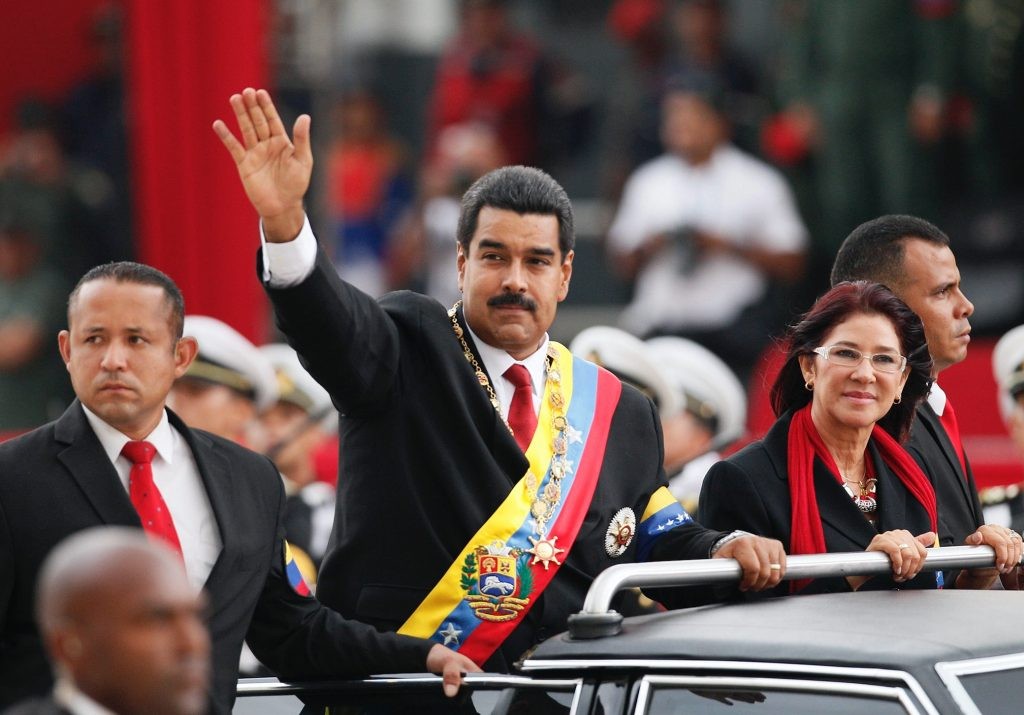
Experts on the region believe part of the counternarcotics campaign is aimed at pressuring Venezuelan President Nicolas Maduro to step down. The U.S. has recently suspended diplomatic efforts with Maduro’s government and the Venezuelan president has been directly accused by the U.S. of involvement in drug trafficking. And in a highly unusual move, President Trump publicly announced recently that he has authorized the CIA to conduct covert action in Venezuela.

Maduro has condemned the U.S. military activity, accusing Washington of “fabricating a new war” while vowing to defend national sovereignty.

The Cipher Brief spoke with former CIA station chief David Fitzgerald, who served in Latin America, at the 2025 Cipher Brief Threat Conference about the implications of the strikes and other forms of pressure on both the cartels and Maduro. Fitzgerald joined the conference live from Panama. Our interview has been lightly edited for length and clarity.

THE INTERVIEW

Kelly: Dave, you have deep expertise in the region and in understanding the drug cartels. With everything going on in the region right now, what's top of mind for you?

Fitzgerald: Regarding Venezuela specifically, it's an interesting situation and I think President Maduro feels like the pincer movement is coming in on him right now. He's feeling the pressure, no doubt, from the military actions in the Caribbean, and also from some of the declarations by President Trump. He doesn't have the support of his neighboring Latin countries that he would like, specifically Brazil - if you remember back when he was elected during the last time, his main ally in Latin America, President Lula, never recognized the election. So theoretically, none of his counterparts other than the ones from the countries everybody suspected would - Nicaragua, Cuba, and, at the time, Bolivia - had recognized the election and President Maduro as the president elect and now the president.

So he understands very well that if push comes to shove, if there's some type of military action vis-a-vis Venezuela, Russia, China, Cuba, even Iran is not going to come to his assistance. He's going to be out on his own and he's going to be very outgunned and outmatched by the U.S. military. [He has a] decrepit air force and a decrepit army. He also claims to have rallied 4 million militia members that are undergoing training to help defend Venezuela.

Kelly: President Trump has openly said that he has authorized covert activity in Venezuela. What does this mean? If you're Maduro, what is that message that you're taking from that? How does it change the situation?

Fitzgerald: I think we're all a little surprised by that announcement, which is very out of character for the IC to have a covert action finding actually being announced by the president of the United States. I guess on one hand he's just circumventing what would eventually happen, and that's having it leaked, which I think has happened to all of the other covert programs. On the other hand, I think it's part of that pressure campaign that Trump is putting on Maduro and I think he's really feeling squeezed. There have been recent media reports that Maduro has offered to provide natural resources to the United States to try to find a way out of the situation by accommodating President Trump by providing oil and some of the other rich resources that Venezuela has. But I think he [Maduro] understands that his plan B is going to get on a plane and go to Cuba, much as President Chavez was back in 2002 when he had a short-lived coup d'état attempt in Caracas. There are not many options for him at this time.

Kelly: This administration has made clear that part of the policy towards Venezuela is applying pressure which includes the targeting of suspected drug boats off the coast of Venezuela. With your decades of experience understanding what motivates the drug cartels and what doesn't, how do you think these attacks might shift their thinking, if at all? And I also want you to explain to us how the cartels are technology, reportedly, better than most other groups in the world. Is this true?

Fitzgerald: They're very sophisticated and vis-a-vis Venezuela, you actually have kind of a, I hate to use the word state-sponsored, but I will say state-approved cartels working in Venezuela. I don't know if we remember the days of Cartel de los Soles, which in English means the cartel of the generals, and that was so true back in the 90’s. The then head of the National Guard was under indictment [for involvement.] He's still under indictment. He has never left Venezuela since then.

Hugo Carvajal, who was General Carvajal, the head of military intelligence, fled to Spain around 2020-2021 because he had a falling out with Maduro. He was extradited to the U.S. back in ‘23. He pled guilty [to involvement in narcoterrorism and drug trafficking] in June of this year and is going to be sentenced at the end of this month. I know the guy personally, and I remember having these conversations with him and telling him, Hugo, one day this house of cards is going to come crumbling down and there's going to be a price to pay, right? He says, ah, no, no, no, no. And I think it's kind of that same atmosphere in Venezuela right now with the senior military officers. Maduro has done a good job of handling the military in the sense of the stick and the carrot, and they all understand that as long as they're true and loyal to Maduro, they're going to benefit from it, from their illegal activities, either allowing trafficking or corruption to take place or participating in it. So there's going to be more indictments, I think. There's no doubt Carvajal is making a plea with the U.S. attorney right now in order to lower his sentence.

You have that combined with what you see now in Colombia. Trump had called President Petro a narco trafficker and said he's cutting all narcotics assistance to Colombia. That's a blow to him, but it's also a blow to our efforts in the region because Colombia, as everybody knows, has been our strongest ally in this fight, both in the Counter-terrorism fight in the region and also in the counter-narcotics fight. So we're going to watch how this plays out.

Elections in Colombia are in May of next year. All polls indicate Petro really doesn't have a chance. I'm not sure whether this announcement will help him or not. Colombia's not doing well right now. The United Nations just last month announced that they have record cultivation of coca now in Colombia. They're producing more than they ever did even before we started our Plan Colombia back in the 90’s. So it's a worrisome situation.

Kelly: I'm glad you brought up Colombia because I was going to ask you about that.

I’ve also heard recently that the epicenter of the drug problem is in Mexico. Talk to us a little bit about that and about what you have seen work or not work, against drug cartels in Mexico.

Fitzgerald: The question has always been how do you declare victory? Okay, narcotics traffic is going to exist for the rest of time. It always has, right? So the question is how do you define victory over that target? Years back, I had a conversation with [former Colombian] President [Alvaro] Uribe and I said, “we’ve made great strides, a lot of great things have happened. How do you define victory over these trafficking and terrorist groups?” Back then it was the FARC and the ELN where they were a two for one, or both trafficking and terrorist groups.

He looked at me and said victory is when these problems stop being a national security problem, a threat to our national security, and just basically turn into a regular criminal problem. I think he nailed it on the head. In countries like Colombia, Venezuela, Mexico, all through Central America, these are national security problems. The corruption that it entails, the penetrations that the traffickers have made through all society. It is a threat to the region and a threat to national security of all of those countries, and indirectly a threat to our national security, especially along the border and especially with some of the violence that comes with it.

In Mexico, I think President [Claudia] Sheinbaum has done a fairly good job. You've seen all the newspaper articles about the ICS (Integrated Country Strategy) participation in Mexico. It has been a successful program, but again, flying under the radar, you really can't broadcast this. Colombia was very effective at taking out the heads of the cartels. Extradition was key. We have extradition with Mexico, but again, you have pockets of immunity within Mexico. The corruption is rampant. How to get past the corruption? Venezuela is that kind of dark hole where you really can't do much. But there has been some success, and I can't take that away from the Mexican services, to a lesser extent, the Colombian services and all through Central America, but we're not where we need to be right now.

Need a daily dose of reality on national and global security issues? Subscriber to The Cipher Brief’s Nightcap newsletter, delivering expert insights on today’s events – right to your inbox. Sign up for free today.

Question from NBC Reporter Dan DeLuce (in the audience): Let's say Maduro does get on a plane and fly to Cuba. What does he leave behind? What are the scenarios you see unfolding? I know it's highly speculative, but I'd like to hear your thoughts.

Fitzgerald: First of all, he wouldn't be the only one on the plane. He would be joined by his wife, probably half of the general staff and anybody else who could get on that plane. They will all understand that if he goes, they go and that they're going to be left to the hoards to try and figure out their survival. So I think right now that is option B, because militarily, he understands the Russians are not going to come to his assistance. The Chinese look at this as a transactional relationship with Venezuela. They are making money off Venezuela’s oil and the loans they provide. They just want to be paid back. Maduro is pretty weakened right now. Nobody is likely to come to his aid. So I think for him right now, it's a very serious consideration as far as plan B, how to get out of Venezuela and how to get out of Venezuela fast.

Kelly: How do you measure the impact of these strikes against these boats?

Fitzgerald: In two ways. The first impact is the psychological impact, and the second is the actual counter-narcotics effort impact. I think the impact of stopping the drugs from reaching [destinations], whether they're going to San Domingo or Dominican Republic or some other Caribbean island as a transit, that's minimal. The Coast Guard has been doing that for decades. It helps, but in many ways it's a drop in the bucket. The psychological impact, however, is far greater. I doubt there's very few volunteers or crewmen, both from Venezuela and from Colombia, who are happy about getting on some of these fastboats or the submersibles to crew them out to the Caribbean. I think what you're going to see, it's probably already started, is a shift to the Pacific side. This situation is kind of a pendulum and it’s been like this for decades. The US and our allies would focus on the Caribbean. They'd switch to the Pacific. We'd focus on the Pacific. They go back to the Caribbean. They would just change their routes, change their modus operandi of how they traffic drugs.

Kelly: Thank you so much, Dave. I really appreciate you taking the time. I know you don't do a lot of interviews like this.

Are you Subscribed to The Cipher Brief’s Digital Channel on YouTube? There is no better place to get clear perspectives from deeply experienced national security experts.

Read more expert-driven national security insights, perspective and analysis in The Cipher Brief because National Security is Everyone’s Business.
‘Show Us the Video’: Lawmakers Seek Transparency in Anti-Drug Boat Strikes

OPINION / FINE PRINT — “We have asked the Mexican government to also step up their involvement in stopping these cartels and stopping the huge amount of drugs that are coming across. If the Mexican navy saw a group of American fishermen that they thought were suspicious of potentially moving drugs and they moved in to kill the 15 American citizens without contacting you, without going through any normal procedures, would you be okay with that?...What we do in combat there is reciprocity, and we are concerned about what other militaries will do to us because we have opened the door on this.”

The was Sen. Elissa Slotkin (D-Mich.) speaking back on September 18, during a Senate Armed Services Committee confirmation hearing for Derrick M. Anderson to be Assistant Secretary of Defense for Special Operations and Low-Intensity Conflict and Platte B. Moring III to be the Defense Department Inspector General.

Three days earlier, the U.S. had carried out the second of its attacks on speedboats it said were trafficking drugs in the Caribbean that were destined for the U.S. killing three individuals. The first such attack, on September 1, killed 11 occupants.

Because the jobs both Anderson and Moring were up for would involve them dealing with the Trump administration’s new policy of attacking alleged narco-trafficking boats in international waters, Sen. Slotkin and other Senators raised questions at this hearing that are highly relevant today as these deadly Trump administration attacks have continued in the Caribbean and since Tuesday began in the eastern Pacific.

So far, Defense Secretary Pete Hegseth has reported nine such attacks resulting in the deaths of 37 individuals.

As I will explore below, last month, Armed Services Committee Chairman Sen. Roger Wicker (R-Miss.) at the close of this hearing made a pledge that remains unfulfilled – in effect to hold oversight hearings on the attacks.

Before that happened, Sen. Slotkin made clear, “I have no problem with these groups being designated foreign terrorist organizations. Fentanyl is killing just as many people, if not more, as any terrorist group we have ever seen. But I do have a problem with the lack of transparency and potential violations of international law.”

The Senator then pointed out, “The U.S. government has a way of interdicting ships. You know this. The U.S. Coast Guard uses patrol boats and helicopters. They are able to shoot out a motor and disable the vehicle, board it, and then indict all those people, grab all those people. Show everyone all the drugs that they have secured.”

As I wrote in my column three days ago, the U.S. Coast Guard announced October 14 that it has seized more than 100,000 pounds of cocaine in the eastern Pacific Ocean since launching Operation Pacific Viper in early August, averaging over 1,600 pounds interdicted daily. These drug seizures, and the apprehension of 86 individuals suspected of narco-trafficking, were the result of 34 interdictions since early August.

I also pointed out in that column, that on the day after the Coast Guard release of the success of Operation Pacific Viper, during an Oval Office press conference President Trump said that Coast Guard interdiction “had been ineffective” for 30 years because “they have faster boats.”

As Sen. Slotkin noted above, and I mentioned in my column, the Coast Guard has helicopter-mounted special long-range rifles that can hit and disable the engines mounted at the rear of narco-trafficker speedboats.

While Trump and Hegseth have publicized videos each time a boat has been blown up, I agree with Sen. Slotkin who at the September 18 hearing said, “I would love it if the Trump administration showed us the full video from that encounter, showed us that these men did not have their hands up, that they were not waving a white flag, that they were not turning around and getting out of there, and then show us the drugs. The President said that there were all kinds of drugs that were in that ship. Show it. Show us the video that he is apparently alluding to.”

Hegseth did show what he said were packages of drugs floating on the water after yesterday’s eastern Pacific action, but then the drugs appeared to have been blown up.

The Cipher Brief brings expert-level context to national and global security stories. It’s never been more important to understand what’s happening in the world. Upgrade your access to exclusive content by becoming a subscriber.

Sen. Tim Kaine (D-Va.) followed Slotkin and brought up a series of questions he and 24 other Democratic or Independent Senators had sent to the White House on September 10, and had not received answers. In fact, they have not yet received an answer.

The questions are worth reviewing: “Give us the evidence that these boats were carrying drugs. Tell us who was on the boats. Tell us what your legal authority was to take a military strike that had not been authorized by Congress? The question that I really want to know is why did you decide to attack rather than interdict? If you interdict a drug boat you get evidence. You seize the drugs but you also get evidence by having access to people and often it is that evidence that leads you to be able to go after the kingpins and the real, you know, muscle behind these operators.”

Kaine added, “If you attack a boat and destroy it makes an impact, but you do not get the evidence. It may actually be counter-productive in fighting narco trafficking.”

As I noted above, when Chairman Wicker closed the September 18 hearing, he said, “The questions about what happened in the Caribbean [and now eastern Pacific] are going to have to be answered. This committee has congressional oversight responsibility.”

Earlier, Sens. Wicker and Slotkin had an exchange about what might occur at any future oversight hearing.

Chairman Wicker reminded Slotkin that “each witness has answered in the affirmative to this question, ‘do you agree to provide records, documents, electronic communications in a timely manner when requested by this committee, et cetera.’ So that is on the record.”

Sen. Slotkin asked, “Do you understand that as video? Just to clarify for me, Chairman.”

Chairman Wicker responded, “Documents, records. I think each witness has answered in the affirmative there…and they will be obligated to follow that.”

“Great,” Sen. Slotkin said at one point, “I look forward to the video.”

I think we all do.

The Cipher Brief is committed to publishing a range of perspectives on national security issues submitted by deeply experienced national security professionals.

Opinions expressed are those of the author and do not represent the views or opinions of The Cipher Brief.

Have a perspective to share based on your experience in the national security field? Send it to Editor@thecipherbrief.com for publication consideration.

Read more expert-driven national security insights, perspective and analysis in The Cipher Brief
The Caribbean Emerges as a Test of U.S. Power


DEEP DIVE — U.S. military forces this week carried out yet another strike on a vessel in Caribbean waters off Venezuela, marking the sixth such lethal operation since September. For the first time, two survivors were rescued and taken into U.S. custody aboard a navy ship.

President Trump also confirmed that he has authorized covert CIA operations inside Venezuela, dramatically broadening the theater of confrontation. Meanwhile, Venezuelan President Nicolás Maduro appealed to the U.N. Security Council, demanding the body denounce the strikes as violations of sovereign rights — a motion the U.S. is poised to veto.

These actions are the latest installments in a mounting campaign the U.S. launched in early September, signaling a shift from isolated interdictions into sustained military pressure.

On September 2, U.S. forces struck a vessel in international waters, killing 11 people, and claimed that it belonged to the Tren de Aragua gang and was laden with narcotics. Just over a week later, Washington unveiled an extensive naval deployment comprised of eight warships, a submarine and thousands of troops and launched a second attack against another alleged smuggling vessel, sending a clear message that the operation is systematic rather than episodic.

Then, in early October, the administration formally alerted Congress that the United States was in “armed conflict” with regional drug cartels, and promptly followed with another strike off Venezuela’s coast, killing four.

What began as maritime interdictions has evolved into a strategic escalation — combining naval power, aerial presence, covert action, and legal redefinition of cartels — in what appears to be an intensifying, long-term confrontation.

Ryan Berg, director of the Americas Program at the Center for Strategic and International Studies, tells The Cipher Brief the strikes “represent a paradigm shift in how the United States conducts counternarcotics.”

“Previously, the United States would board and search vessels and make arrests. Driving much of this paradigm shift is the foreign terrorist designations on more than a dozen organizations,” he continued. “The administration wants to send the message that this is not just a rhetorical shift, but that this is a shift with meaning. We deal with terrorists differently than we deal with criminals.”

From Quiet Waters to Strategic Theater

For decades, the Caribbean was viewed in Washington as a quiet, if troubled, backyard, important for migration and commerce, but hardly central to global competition. That calculation has changed. Today, the region is framed as a frontline of American power, where the U.S. confronts a convergence of transnational threats — from drug trafficking and irregular migration to external influence from China, Russia, and Iran — that unfold just off its own shores.

Michael Shifter, adjunct professor at Georgetown University and former president of the Inter-American Dialogue, tells The Cipher Brief that the strikes “will have a critical impact on the Caribbean security situation.”

“For the first time since the Panama invasion in 1989, the U.S. has carried out combat operations against assets allegedly connected to a Latin American government,” he noted. “That the strikes were conducted without regard to international law has unnerved other regional governments and made them wonder if they might be the next target.”

For much of the post-Cold War era, the Caribbean was not a primary theater for U.S. grand strategy. Policymakers often focused on the Middle East, Asia, and Europe, leaving the islands and waterways between Florida and South America to languish in relative neglect. The U.S. presence was episodic and reactive — providing disaster relief after hurricanes, conducting occasional counternarcotics patrols, and offering modest development aid.

But adversaries were not idle. China deepened infrastructure investments, secured port access, and trained regional military officers in its academies. Russia provided defense diplomacy, intelligence cooperation, and symbolic shows of force. Iran, though less prominent, found opportunity through Venezuela and proxy networks. These activities chipped away at U.S. primacy, testing whether Washington’s absence created a strategic vacuum.

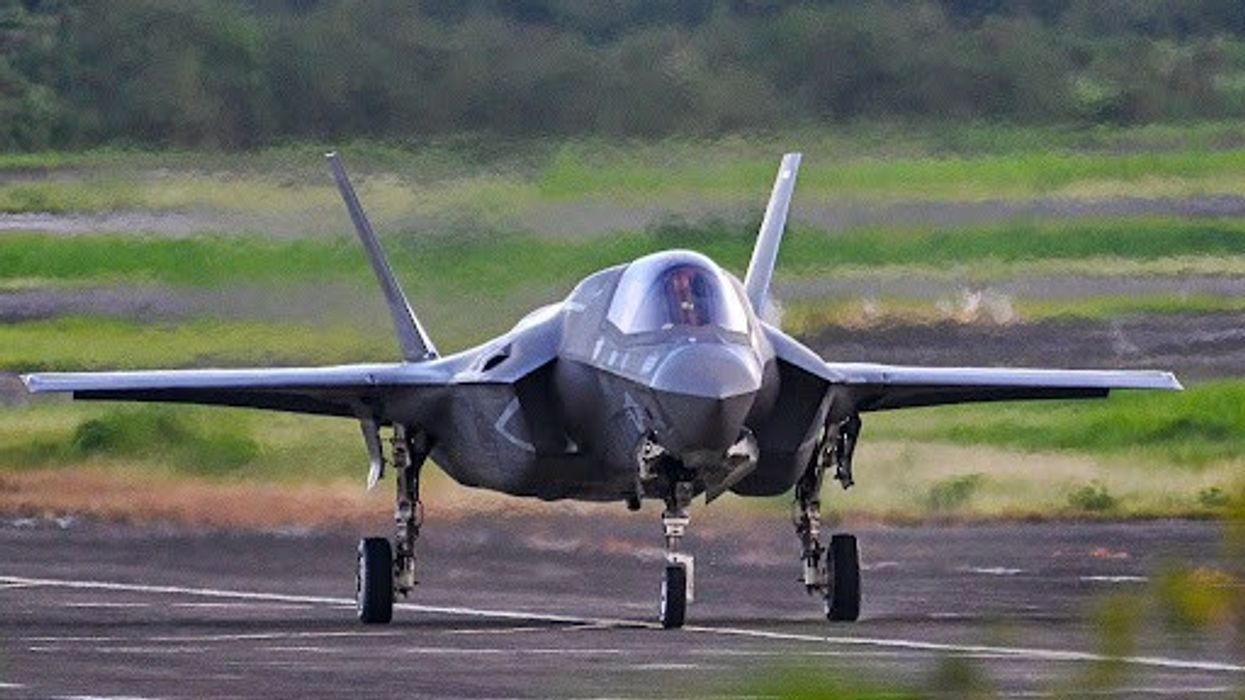
“The presence of the expanded array of U.S. surveillance assets, cruisers, destroyers, amphibious ships, F-35 fighters, and other forces, in conjunction with the demonstrated use of force and reported planning for strikes inside Venezuela, are visibly driving panicked reactions by the Maduro regime,” Evan Ellis, research professor of Latin American studies at the U.S. Army War College Strategic Studies Institute, tells The Cipher Brief. “This demonstrates that the U.S. is willing to go beyond traditional law enforcement interception protocols to use lethal force against suspected drug boats.”

A Renewed U.S. Deterrent Strategy

The Trump administration has reframed narcotics networks as “narco terrorists,” a label that blurs the line between law enforcement and national defense. This allows for military strikes against what once would have been considered criminal targets. The Venezuelan boat destroyed on September 2 is the most vivid example yet, and it sparked immediate backlash from governments in Caracas, Bogotá, and across the Caribbean.

Venezuela condemned the strike as a violation of sovereignty, with Nicolás Maduro mobilizing civilian militias and promising to defend territorial waters. Colombia’s President Gustavo Petro went further, calling for international investigations into U.S. officials for what he termed unlawful killings. Fishermen in Trinidad and Tobago expressed concern about being caught in the crossfire, as expanded naval patrols threatened their livelihoods and heightened the risks to civilian vessels.

From Washington’s perspective, these costs are tolerable compared to the benefits of deterrence. Deploying advanced assets — such as F-35 fighters to Puerto Rico — signals that the U.S. views the region as strategically vital. The administration is also seeking to highlight the deterrent value of its strikes, suggesting they could disrupt smuggling operations and complicate adversaries’ strategic planning.

Still, questions loom about legality and proportionality.

“Unilateral U.S. military operations in Latin America have a long and often unhappy history,” Shifter said. “They remain extremely sensitive and touch a nerve in the region.”

Need a daily dose of reality on national and global security issues? Subscriber to The Cipher Brief’s Nightcap newsletter, delivering expert insights on today’s events – right to your inbox. Sign up for free today.

The Policy Evolution: From Reactive to Strategic

The idea of a sustained U.S. Caribbean policy, however, is not new. The 2020 U.S. Strategy for Engagement in the Caribbean outlined plans for expanded diplomacy, development, and security cooperation. Yet progress was limited by competing priorities and budget shortfalls.

What has changed in 2025 is the scale and framing of U.S. involvement. Rather than treating the Caribbean as an ancillary focus of counternarcotics or disaster relief, the Trump administration now casts it as a frontline of national defense. The deployment of warships and high-tech aircraft, the aggressive legal redefinition of cartels, and the diplomatic outreach led by Secretary of State Marco Rubio all point to an institutional pivot.

Congress is also being drawn into the mix. The reintroduced Caribbean Basin Security Initiative Authorization Act would allocate $88 million annually through 2029 for security cooperation. The measure reflects recognition that sustained resources, not episodic funding, are necessary to compete with external powers.

Risks, Imperatives, and What Comes Next

The road ahead carries both promise and peril. On the opportunity side, elevating the Caribbean to a strategic priority acknowledges geographic fact: the region sits on America’s doorstep, with busy sea lanes and chokepoints that have often been overlooked in U.S. defense planning. A credible deterrent posture, paired with investments in governance and development, could help steady fragile environments and blunt the appeal of rival powers.

Yet the risks of escalation are considerable. Misidentifying a civilian vessel, overreaching in the use of force, or neglecting consultation with regional partners could provoke backlash that undermines U.S. legitimacy.

“It is doubtful that the U.S. strikes will be effective in stopping the flow of narcotics,” Shifter cautioned. “Traffickers will adapt, alter their routes and try to minimize risks. Retaliation by criminal groups cannot be ruled out.”

Ellis warned of another danger: the aftermath of regime change in Venezuela.

“The biggest risks of such an operation would be whether Maduro could be captured alive. The other risk is that, in the absence of a more enduring U.S. force, the legitimate government of Edmundo González would not be able to establish order and control over the military,” he pointed out. “A post-Maduro Venezuela could degenerate into a free-for-all between criminal factions, guerrilla groups, sindicatos, and pranes — with Cuban and Russian elements fueling instability.”

Berg, by contrast, argued that regional cooperation has been robust.

“What has been great to see is the regional support for the United States’ deployment. Jamaica, Trinidad and Tobago, and Guyana have been vocally supportive,” he said. “The Dominican Republic, Ecuador, Peru, Paraguay, and Argentina have all declared the Tren de Aragua to be a foreign terrorist organization in the last month. Countries in the region appear open to a different approach, and some are even synchronizing their approaches with the United States on counternarcotics.”

The strike that killed 11 people was both a tactical hit on a trafficking network and a symbolic declaration of intent. What follows will decide whether this marks the start of a durable doctrine — or an overreach that produces more instability than it resolves.

“More consistent presence in the region will be key to ensuring that the United States can secure its interests,” Berg added.

Are you Subscribed to The Cipher Brief’s Digital Channel on YouTube? There is no better place to get clear perspectives from deeply experienced national security experts.

Read more expert-driven national security insights, perspective and analysis in The Cipher Brief
because National Security is Everyone’s Business.

Washington’s New Frontline: The Caribbean Emerges as a Test of U.S. Power


DEEP DIVE — U.S. military forces this week carried out yet another strike on a vessel in Caribbean waters off Venezuela, marking the sixth such lethal operation since September. For the first time, two survivors were rescued and taken into U.S. custody aboard a navy ship.

President Trump also confirmed that he has authorized covert CIA operations inside Venezuela, dramatically broadening the theater of confrontation. Meanwhile, Venezuelan President Nicolás Maduro appealed to the U.N. Security Council, demanding the body denounce the strikes as violations of sovereign rights — a motion the U.S. is poised to veto.

These actions are the latest installments in a mounting campaign the U.S. launched in early September, signaling a shift from isolated interdictions into sustained military pressure.

On September 2, U.S. forces struck a vessel in international waters, killing 11 people, and claimed that it belonged to the Tren de Aragua gang and was laden with narcotics. Just over a week later, Washington unveiled an extensive naval deployment comprised of eight warships, a submarine and thousands of troops and launched a second attack against another alleged smuggling vessel, sending a clear message that the operation is systematic rather than episodic.

Then, in early October, the administration formally alerted Congress that the United States was in “armed conflict” with regional drug cartels, and promptly followed with another strike off Venezuela’s coast, killing four.

What began as maritime interdictions has evolved into a strategic escalation — combining naval power, aerial presence, covert action, and legal redefinition of cartels — in what appears to be an intensifying, long-term confrontation.

Ryan Berg, director of the Americas Program at the Center for Strategic and International Studies, tells The Cipher Brief the strikes “represent a paradigm shift in how the United States conducts counternarcotics.”

“Previously, the United States would board and search vessels and make arrests. Driving much of this paradigm shift is the foreign terrorist designations on more than a dozen organizations,” he continued. “The administration wants to send the message that this is not just a rhetorical shift, but that this is a shift with meaning. We deal with terrorists differently than we deal with criminals.”

From Quiet Waters to Strategic Theater

For decades, the Caribbean was viewed in Washington as a quiet, if troubled, backyard, important for migration and commerce, but hardly central to global competition. That calculation has changed. Today, the region is framed as a frontline of American power, where the U.S. confronts a convergence of transnational threats — from drug trafficking and irregular migration to external influence from China, Russia, and Iran — that unfold just off its own shores.

Michael Shifter, adjunct professor at Georgetown University and former president of the Inter-American Dialogue, tells The Cipher Brief that the strikes “will have a critical impact on the Caribbean security situation.”

“For the first time since the Panama invasion in 1989, the U.S. has carried out combat operations against assets allegedly connected to a Latin American government,” he noted. “That the strikes were conducted without regard to international law has unnerved other regional governments and made them wonder if they might be the next target.”

For much of the post-Cold War era, the Caribbean was not a primary theater for U.S. grand strategy. Policymakers often focused on the Middle East, Asia, and Europe, leaving the islands and waterways between Florida and South America to languish in relative neglect. The U.S. presence was episodic and reactive — providing disaster relief after hurricanes, conducting occasional counternarcotics patrols, and offering modest development aid.

But adversaries were not idle. China deepened infrastructure investments, secured port access, and trained regional military officers in its academies. Russia provided defense diplomacy, intelligence cooperation, and symbolic shows of force. Iran, though less prominent, found opportunity through Venezuela and proxy networks. These activities chipped away at U.S. primacy, testing whether Washington’s absence created a strategic vacuum.

“The presence of the expanded array of U.S. surveillance assets, cruisers, destroyers, amphibious ships, F-35 fighters, and other forces, in conjunction with the demonstrated use of force and reported planning for strikes inside Venezuela, are visibly driving panicked reactions by the Maduro regime,” Evan Ellis, research professor of Latin American studies at the U.S. Army War College Strategic Studies Institute, tells The Cipher Brief. “This demonstrates that the U.S. is willing to go beyond traditional law enforcement interception protocols to use lethal force against suspected drug boats.”

A Renewed U.S. Deterrent Strategy

The Trump administration has reframed narcotics networks as “narco terrorists,” a label that blurs the line between law enforcement and national defense. This allows for military strikes against what once would have been considered criminal targets. The Venezuelan boat destroyed on September 2 is the most vivid example yet, and it sparked immediate backlash from governments in Caracas, Bogotá, and across the Caribbean.

Venezuela condemned the strike as a violation of sovereignty, with Nicolás Maduro mobilizing civilian militias and promising to defend territorial waters. Colombia’s President Gustavo Petro went further, calling for international investigations into U.S. officials for what he termed unlawful killings. Fishermen in Trinidad and Tobago expressed concern about being caught in the crossfire, as expanded naval patrols threatened their livelihoods and heightened the risks to civilian vessels.

From Washington’s perspective, these costs are tolerable compared to the benefits of deterrence. Deploying advanced assets — such as F-35 fighters to Puerto Rico — signals that the U.S. views the region as strategically vital. The administration is also seeking to highlight the deterrent value of its strikes, suggesting they could disrupt smuggling operations and complicate adversaries’ strategic planning.

Still, questions loom about legality and proportionality.

“Unilateral U.S. military operations in Latin America have a long and often unhappy history,” Shifter said. “They remain extremely sensitive and touch a nerve in the region.”

Need a daily dose of reality on national and global security issues? Subscriber to The Cipher Brief’s Nightcap newsletter, delivering expert insights on today’s events – right to your inbox. Sign up for free today.

The Policy Evolution: From Reactive to Strategic

The idea of a sustained U.S. Caribbean policy, however, is not new. The 2020 U.S. Strategy for Engagement in the Caribbean outlined plans for expanded diplomacy, development, and security cooperation. Yet progress was limited by competing priorities and budget shortfalls.

What has changed in 2025 is the scale and framing of U.S. involvement. Rather than treating the Caribbean as an ancillary focus of counternarcotics or disaster relief, the Trump administration now casts it as a frontline of national defense. The deployment of warships and high-tech aircraft, the aggressive legal redefinition of cartels, and the diplomatic outreach led by Secretary of State Marco Rubio all point to an institutional pivot.

Congress is also being drawn into the mix. The reintroduced Caribbean Basin Security Initiative Authorization Act would allocate $88 million annually through 2029 for security cooperation. The measure reflects recognition that sustained resources, not episodic funding, are necessary to compete with external powers.

Risks, Imperatives, and What Comes Next

The road ahead carries both promise and peril. On the opportunity side, elevating the Caribbean to a strategic priority acknowledges geographic fact: the region sits on America’s doorstep, with busy sea lanes and chokepoints that have often been overlooked in U.S. defense planning. A credible deterrent posture, paired with investments in governance and development, could help steady fragile environments and blunt the appeal of rival powers.

Yet the risks of escalation are considerable. Misidentifying a civilian vessel, overreaching in the use of force, or neglecting consultation with regional partners could provoke backlash that undermines U.S. legitimacy.

“It is doubtful that the U.S. strikes will be effective in stopping the flow of narcotics,” Shifter cautioned. “Traffickers will adapt, alter their routes and try to minimize risks. Retaliation by criminal groups cannot be ruled out.”

Ellis warned of another danger: the aftermath of regime change in Venezuela.

“The biggest risks of such an operation would be whether Maduro could be captured alive. The other risk is that, in the absence of a more enduring U.S. force, the legitimate government of Edmundo González would not be able to establish order and control over the military,” he pointed out. “A post-Maduro Venezuela could degenerate into a free-for-all between criminal factions, guerrilla groups, sindicatos, and pranes — with Cuban and Russian elements fueling instability.”

Berg, by contrast, argued that regional cooperation has been robust.

“What has been great to see is the regional support for the United States’ deployment. Jamaica, Trinidad and Tobago, and Guyana have been vocally supportive,” he said. “The Dominican Republic, Ecuador, Peru, Paraguay, and Argentina have all declared the Tren de Aragua to be a foreign terrorist organization in the last month. Countries in the region appear open to a different approach, and some are even synchronizing their approaches with the United States on counternarcotics.”

The strike that killed 11 people was both a tactical hit on a trafficking network and a symbolic declaration of intent. What follows will decide whether this marks the start of a durable doctrine — or an overreach that produces more instability than it resolves.

“More consistent presence in the region will be key to ensuring that the United States can secure its interests,” Berg added.

Are you Subscribed to The Cipher Brief’s Digital Channel on YouTube? There is no better place to get clear perspectives from deeply experienced national security experts.

Read more expert-driven national security insights, perspective and analysis in The Cipher Brief
because National Security is Everyone’s Business.

As Trump Expands Caribbean Strikes on Cartels, Much is Still Unclear

OPINION — “Extraordinarily violent drug trafficking cartels that the United States has designated as terrorist organizations have wrought devastating consequences on American communities for decades, causing the deaths of tens of thousands of United States citizens each year and threatening our national security and foreign policy interests both at home and abroad…In the face of the inability or unwillingness of some states in the region [the Western Hemisphere] to address the continuing threat…we have now reached a critical point where we must meet this threat to our citizens and our most vital national interests with United States military force in self-defense. Accordingly, at my direction, on September 2, 2025, United States forces struck a vessel [a Venezuelan speedboat] at a location beyond the territorial seas of any nation that was assessed to be affiliated with a designated terrorist organization and to be engaged in illicit drug trafficking activities.”

Those are excerpts from a September 4, 2025, letter to Congress from President Trump under the 1973 War Powers Resolution which requires a report within 48 hours after U.S. military forces undertake an action “into the territory, airspace or waters of a foreign nation,” without Congress having previously adopted a declaration of war.

Other requirements of such a letter are the “circumstances necessitating” U.S. armed forces; the “constitutional and legislative authority” for their use, and the “estimated scope and duration of the hostilities.”

I will discuss the first two requirements below, but as to the last, Trump makes clear he sees no end to this self-declared war on drug cartels by saying, “It is not possible at this time to know the full scope and duration of military operations that will be necessary. United States forces remain postured to carry out further operations.”

I should note here that back in January 2024, with the presidential campaign getting underway, The New York Times reported that Trump’s political campaign had released a video titled “President Donald J. Trump Declares War on Cartels,” and Trump promised to “deploy all necessary military assets, including the U.S. Navy” to impose a full naval embargo on the cartels and to “designate the major cartels as Foreign Terrorist Organizations.”

On January 20, 2025, immediately after his inauguration, Trump signed an Executive Order (EO) that created “a process by which certain international cartels [such as Tren de Aragua (TdA) and La Mara Salvatrucha (MS-13)] and other organizations will be designated as Foreign Terrorist Organizations.” The EO said further that TdA and MS-13 “present an unusual and extraordinary threat to the national security, foreign policy, and economy of the United States. I hereby declare a national emergency, under IEEPA [International Emergency Economic Powers Act], to deal with those threats.”

Having taken those actions, Trump expanded his anti-drug cartel war to include last month doubling up to $50 million the reward for information leading to the arrest and/or conviction of Nicolás Maduro for violating U.S. narcotics laws. Maduro, as head of the Cartel of the Suns, was first indicted on federal charges of narco-terrorism and conspiracy to import cocaine in 2020, during former President Trump's first term. The initial reward was $15 million. It was increased to up to $25 million during the last days of the Biden administration when Maduro assumed a third term as Venezuela’s president despite evidence that he had lost the previous presidential election.

At this time, the U.S. does not recognize Maduro as the rightful president of Venezuela.

It is against that background – Trump’s self-declared war against Western Hemisphere drug cartels and Maduro’s running Venezuela – that the U.S. last month began deploying a Navy force to the Caribbean near Venezuela. By early this month it included three Arleigh Burke-class guided-missile destroyers — the USS Sampson, USS Jason Dunham, and USS Gravely — which are designed to counter threats from the air, land, sea and even undersea simultaneously. Both the Sampson and Gravely have a Coast Guard Law Enforcement Detachment to deal with intercepted drug situations, according to Navy releases.

However, by late August, the Pentagon had also deployed an offensive force that appears to have more than halting possible drug shipments in mind.

Arriving in the area was the Iwo Jima Amphibious Ready Group, including the USS Iwo Jima equipped with AV-8B Harrier attack aircraft and the 22nd Marine Expeditionary Unit, with 2,200 Marines. Additionally there were two amphibious transport dock ships, the USS San Antonio and the USS Fort Lauderdale, plus several Navy P-8 surveillance planes and one attack submarine in the region.

The Cipher Brief brings expert-level context to national and global security stories. It’s never been more important to understand what’s happening in the world. Upgrade your access to exclusive content by becoming a subscriber.

It was with that significant Navy force in the area that on September 2, Trump announced on Truth Social: “Earlier this morning, on my Orders, U.S. Military Forces conducted a kinetic strike against positively identified Tren de Aragua Narco terrorists.” Trump said the strike “occurred while the terrorists were at sea in International waters transporting illegal narcotics, heading to the United States. The strike resulted in 11 terrorists killed in action.”

The New York Times reported the next day that “a senior U.S. official said a Special Operations aircraft — either an attack helicopter or an MQ-9 Reaper drone — carried out the attack on Tuesday morning against a four-engine speedboat loaded with drugs.”

At a briefing for congressional staffers September 9, Pentagon officials acknowledged that the boat had turned around after spotting a military aircraft, and the boat was headed back toward shore when it was sunk.

Other than these limited details, and the widely-seen Pentagon black-and-white video, neither the White House nor the Pentagon have released additional details on the event.

Exiled Venezuelan journalists reported that the destroyed boat and eight of its dead occupants were from the small Venezuelan fishing village of San Juan de Unare in a poor and crime-ridden section of Venezuela’s northwestern coast. Three of the dead were allegedly from nearby Guiria.

According to Latin American news reports, more than 20 years ago, San Juan de Unare became a transit point for drugs, and back on September 1, not one but three boats set out headed east for Trinidad and Tobago (T and T) [not to the U.S.], a key Caribbean transit hub for the international drug trade. It was normal for boats from San Juan de Unare to travel in flotillas, with the logic that some will manage to reach their destination. In this case, the boat hit was a faster speedboat, equipped with four engines of 200 horsepower each.

One more thing worth noting from the Latin press is that the normal crew for similar drug boats would have been three or four, and for that reason the additional passengers could have been men who were either escaping the Maduro regime or had found jobs in Trinidad and were on round trip rides.

These are elements to consider as we remember the U.S. military killed all 11 speedboat passengers outright, without the normal at sea stoppage and searching for drugs as usually done in such circumstances.

That was the case last Saturday when Venezuelan government announced on Saturday that a U.S. destroyer [the USS Jason Dunham] intercepted, boarded and occupied a Venezuelan tuna fishing vessel for eight hours in the waters of the South American country's Special Economic Zone on Friday.

There are many issues to be dealt with about the September 2 incident and Caribbean military buildup. Last Wednesday, 25 Democratic Senators sent a letter to President Trump telling him, “Classifying a clear law enforcement mission as counterterrorism does not confer legal authority to target and kill civilians.”

In turn, they asked 10 questions starting with: “Please clarify the legal and substantive basis for targeting and killing civilians suspected of being affiliated with a designated entity. Please also provide a copy of all legal assessments conducted by the White House, Department of Justice, Department of Defense, or any other entity prior to the strike.’

Another question was: “As noted above, in your September 4th War Powers Report to Congress, you note the ‘potential for further such actions.’ However, you do not specify in that report, nor have you specified elsewhere, any legal authority to take military action to target and kill civilians, including those suspected of committing crimes. What is your legal authority to conduct lethal military operations against civilians at sea, within Venezuela or within other Latin American countries?”

The Senators asked for answers by September 17. Let’s see if they get any answers at all.

Need a daily dose of reality on national and global security issues? Subscriber to The Cipher Brief’s Nightcap newsletter, delivering expert insights on today’s events – right to your inbox. Sign up for free today.

Meanwhile, Defense Secretary Pete Hegseth, in a September 10, interview on the USS Iwo Jima with Fox correspondent Rachel Campos-Duffy said, when asked about this U.S. Caribbean buildup, “We’re going to seek peace through strength. We’re going to put America first. It’s our hemisphere. It’s our homeland, but we are not going to sit back and watch the American people be threatened. We are not going to sit back and watch the American people be poisoned. We’re not going to see people be trafficked, see violent groups exist within our country.”

Hegseth then added, “That’s why you see mass deportations. That’s why you’re seeing criminality being locked down. That’s why our border is being locked down. This [the U.S. military force in the Caribbean] is an extension of that. This is an understanding of exactly how America should project power.”

Although Pentagon officials apparently have not yet shared such details on the September 2 strike with Congress, Hegseth claimed to Campos-Duffy, “I watched the strike live. We knew exactly who it was; exactly what they were doing; exactly where they were going; what they were involved in.”

Hegseth’s words do not replace the need for public disclosure of the facts behind such claims, nor does his rhetoric answer the Democratic Senators’ questions about the constitutional and legal justifications for what’s been going on.

This is all the more true with Trump’s announcement on September 15 that the U.S. military struck another boat allegedly carrying drugs from Venezuela. Trump said three people aboard were killed. A video included in Trump’s announcement shows that the boat, which had only two engines, was not moving when it was blown up. This strike further adds to the questions surrounding this issue.

The Cipher Brief is committed to publishing a range of perspectives on national security issues submitted by deeply experienced national security professionals.

Opinions expressed are those of the author and do not represent the views or opinions of The Cipher Brief.

Have a perspective to share based on your experience in the national security field? Send it to Editor@thecipherbrief.com for publication consideration.

Read more expert-driven national security insights, perspective and analysis in The Cipher Brief
DOJ Captures Alleged ‘Architect’ of Darknet Marketplace Incognito

DOJ Captures Alleged ‘Architect’ of Darknet Marketplace IncognitoAccording to the U.S. Department of Justice (DOJ), the operator of the darknet marketplace Incognito was apprehended at John F. Kennedy Airport on May 18. Law enforcement officials claim Rui-Siang Lin allegedly constructed the DNM and facilitated the sale of over $100 million worth of illegal drugs through the platform. Federal Authorities Nab Alleged Darknet […]
❌