Reading view

There are new articles available, click to refresh the page.

Kryptomeny idú hore. Bitcoin posilnil o ďalších 7 % za posledných 24 hodín

Oslabujúci dolár, očakávané zníženie úrokových sadzieb americkým Fedom a rastúca aktivita na spotových ETF fondoch formujú nové podmienky pre decembrový trh. Bitcoin sa opäť obchoduje nad úrovňou 92 000 $ a aj altcoiny naznačujú zmenu trhovej dynamiky. Je december vhodným časom na nákup?

Preskúmať top predpredaj 2025

Cena Bitcoinu stúpla o viac ako 6 % za posledný týždeň

Bitcoin sa dnes obchoduje za 92 981 $. V priebehu posledných 7 dní posilnil o 6,15 % a zotavil časť novembrových strát, ktoré patrili k najvýraznejším od roku 2021. Nárast objemov v spotových ETF, najmä po tom, čo Vanguard zrušil obmedzenie obchodovania s Bitcoin ETF, podporil nový prílev kapitálu do trhu.

Len samotný fond IBIT spoločnosti BlackRock dosiahol miliardové objemy už v prvých minútach obchodovania po otvorení amerického trhu.
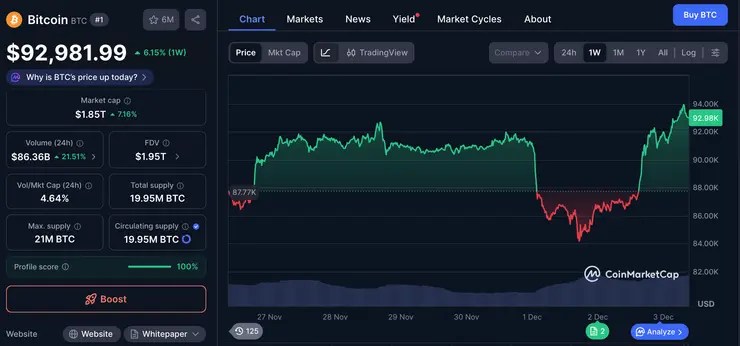
cena bitcoinu december 2025 Zdroj: coinmarketcap.com

Prelomenie hranice 93 000 dolárov by podľa analytikov Glassnode mohlo vyvolať krátkodobý short squeeze, ktorý by cenu vystrelil smerom k 95-100 tisíc $. Zároveň platí, že pokiaľ Bitcoin zostane nad úrovňou 80 tisíc $, trh si udrží býčí výhľad. Makro faktorom dominuje očakávanie, že Fed už budúci týždeň pristúpi k zníženiu sadzieb, ktoré tradične podporuje rizikové aktíva vrátane kryptomien.

Euro posilňuje v očakávaní rozhodnutia americkej centrálnej banky. Dolár oslabil tento rok o takmer 7 %

Euro v úvode decembra posilňuje a prelomilo svoj 50-dňový kĺzavý priemer po tom, čo inflácia v eurozóne mierne prekonala očakávania. Spoločná mena sa aktuálne obchoduje pri úrovni 1,1640 dolára a smeruje k najlepšiemu ročnému výkonu od roku 2017. Trh tak reaguje na kombináciu priaznivých európskych makrodát a slabnúceho amerického dolára, ktorý v tomto roku stratil takmer 7 % hodnoty na indexe DXY.

Investori sa zároveň pripravujú na zasadnutie Federálneho rezervného systému, ktorý sa uskutoční už budúci týždeň. Podľa údajov platformy Polymarket vyskočila pravdepodobnosť, že Fed pristúpi k ďalšiemu zníženiu sadzieb až 93 %.

Práve toto očakávanie patrí medzi hlavné dôvody oslabenia dolára. Americká mena sa totiž stáva menej atraktívnou v prostredí, kde sa úrokový diferenciál medzi USA a ostatnými ekonomikami rýchlo zužuje. Odborníci upozorňujú, že aj malé náznaky holubičej rétoriky Fedu by mohli spôsobiť ďalší pokles dolára v druhej polovici decembra.
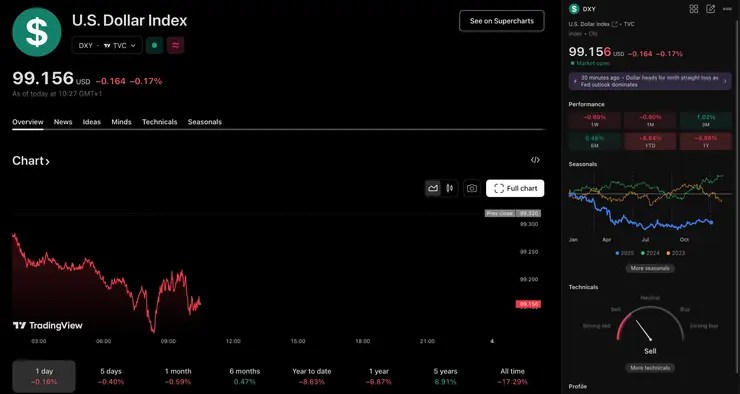
dolár cena december 2025Zdroj: tradingview.com

Naopak, Európska centrálna banka neplánuje bezprostredné znižovanie sadzieb a trhy započítavajú iba približne 25 % pravdepodobnosť uvoľnenia menovej politiky v roku 2026. Tento kontrast medzi Fedom a ECB hrá v prospech eura, ktoré zostáva podporované stabilnou politikou ECB a slabnúcou americkou menou.

Makro pohyby na devízových trhoch tak vytvárajú prostredie priaznivé pre rizikové aktíva vrátane kryptomien. Slabší dolár totiž historicky podporuje dopyt po Bitcoine, altcoinoch a ďalších volatilnejších aktívach.

Altcoiny naznačujú budúci rast. Ethereum si polepšilo o 9 %

Popri Bitcoine sa nálada zlepšuje aj v segmente altcoinov. Celková trhová kapitalizácia kryptomien stúpla na 3,14 bilióna dolárov, čo predstavuje 6,84 % denný nárast. A práve altcoiny ťahajú značnú časť tohto impulzu. Ethereum (ETH) vzrástlo za posledných 24 hodín o 8,80 % a jeho cena sa drží nad 3 052 dolármi. Rast podporuje návrat likvidity na trh a klesajúca dominancia Bitcoinu, ktorá vytvára priestor pre širšiu altcoinovú rally.
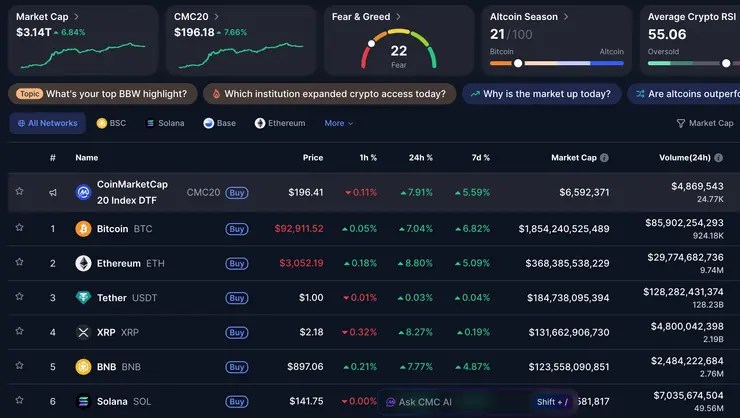
altcoiny december 2025Zdroj: coinmarketcap.com

XRP taktiež potvrdzuje posilnenie sentimentu. S 8,27 % denným nárastom patrí medzi najvýkonnejšie veľké altcoiny, pričom jeho trhová kapitalizácia presiahla už 131,6 miliardy dolárov. Súčasne rastie aj dopyt po XRP ETF fondoch, ktoré pritiahli tento týždeň už viac ako 157 miliónov dolárov.

Súčasne, natívna kryptomena populárneho blockchainu pre meme coiny Solana (SOL), si pripísala za posledný deň 12 %. Celkovo si tak polepšila o takmer 4 % za týždeň. Záujem investorov podporuje vysoká aktivita v DeFi a rastúce množstvo nových aplikácií v jej ekosystéme.
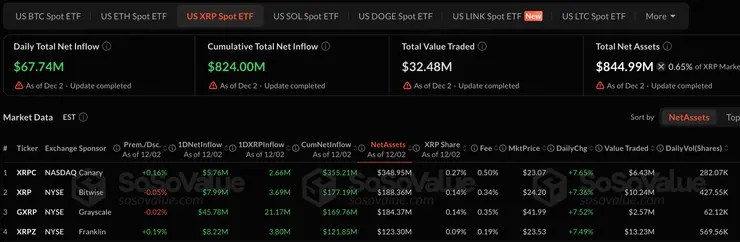
XRP ETF fondy dnesZdroj: sosovalue.com

Stablecoin Tether (USDT) zostáva najväčším zdrojom likvidity na trhu, čo je viditeľné z vysokého 24-hodinového objemu 128,2 miliardy dolárov Ide o jasný signál, že obchodníci aktívne rotujú kapitál medzi hlavnými altcoinmi. Súčasné trhové ukazovatele vytvárajú konzistentný obraz prostredia, v ktorom sa altcoiny presadzujú čoraz výraznejšie.

Rastový impulz v segmente altcoinov zároveň vytvára priaznivé podmienky pre nové kryptomeny, ktoré práve v tomto období vstupujú na trh. Investori po mesiacoch opatrnosti opäť rozširujú expozíciu voči projektom s vyšším potenciálom, čo zvyšuje záujem o kvalitné predpredaje. V tejto skupine aktuálne dominuje projekt Bitcoin Hyper, ktorý počas prebiehajúceho predpredaja už získal viac než 28 miliónov dolárov.

Layer 2 architektúra Bitcoin Hyper prináša pre BTC novú úroveň využitia

Základom projektu Bitcoin Hyper (HYPER) je snaha prepojiť vysokú bezpečnosť Bitcoinovej siete s výkonnosťou moderných blockchainových architektúr. HyperChain používa Solana Virtual Machine (SVM) ako výpočtovú vrstvu, no finálne osadenie transakcií sa rieši na Bitcoinovom Layer 1.

V praxi to znamená, že DeFi aplikácie môžu využívať nízke poplatky a vysoké TPS, kým Bitcoin zostáva konečnou autoritou pre zúčtovanie. Súčasťou riešenia je aj mechanizmus canonical bridge, v ktorom sa BTC uzamkne na základnej vrstve a jeho zabalená verzia sa následne používa v prostredí Bitcoin Hyper. Tým sa otvára priestor pre reálne ekonomické aktivity, ktoré Bitcoin doteraz nepodporoval.
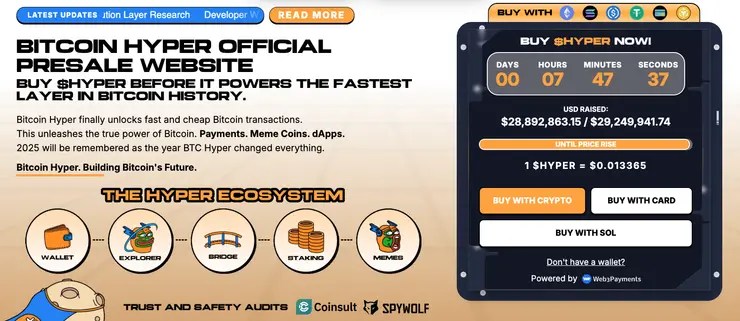
Bitcoin Hyper predpredaj kryptomenyZdroj: bitcoinhyper.com

Natívny token HYPER zohráva v ekosystéme ústrednú úlohu. Držitelia ho využijú ako:

  • platidlo na úhradu transakčných poplatkov
  • zdroj pasívnych príjmov za staking (aktuálne ponúka 40 % APY)
  • hlasovacie právo pri rozhodovaní o budúcom vývoji ekosystému v rámci DAO
  • investičný nástroj na zhodnotenie kapitálu v trhovom prostredí

Aktuálna cena kryptomeny HYPER v predpredaji je 0,013365 $, pričom do uzavretia predpredaja zostáva už len niekoľko dní. Silný záujem retailových investorov dopĺňajú aj výrazné kapitálové vstupy zo strany veľrýb, čo zvyšuje dôveru v dlhodobejšiu víziu projektu.

Pre mnohých investorov predstavuje Bitcoin Hyper riešenie, ktoré môže Bitcoinu priniesť funkcionalitu, aká mu doteraz chýbala. Nová Layer-2 vrstva umožňuje obchodníkom aj vývojárom využívať BTC v moderných decentralizovaných aplikáciách, pokročilých DeFi riešeniach, ekosystémoch založených na meme tokenoch či v rámci smart kontraktov.

Tvorcovia projektu zároveň stavili na výraznú vizuálnu identitu, ktorá pracuje s hravým a virálnym potenciálom značky. Novú sieť reprezentuje postava Hyper, využívaná v meme formáte s estetikou superhrdinu, ktorá sprevádza jednotlivé fázy vývoja projektu.

Markets move fast. Hyper stays ready. ⚡https://t.co/VNG0P4GuDo pic.twitter.com/5YVWN3TnQ1

— Bitcoin Hyper (@BTC_Hyper2) December 3, 2025

Tento prístup podporuje aktívnu a angažovanú komunitu, uľahčuje odlíšenie od ostatných projektov a prispieva k rýchlemu budovaniu povedomia ešte pred uvedením tokenu na trh.

Token nájdete na domovskej stránke projektu a tiež priamo v aplikácii kryptopeňaženky Best Wallet. Nákupný widget akceptuje kryptomeny ETH, BNB, USDT a tiež platbu kartou.

Navštíviť predpredaj Bitcoin Hyper



Trust Wallet Enters Prediction Markets Race With New Trading Feature

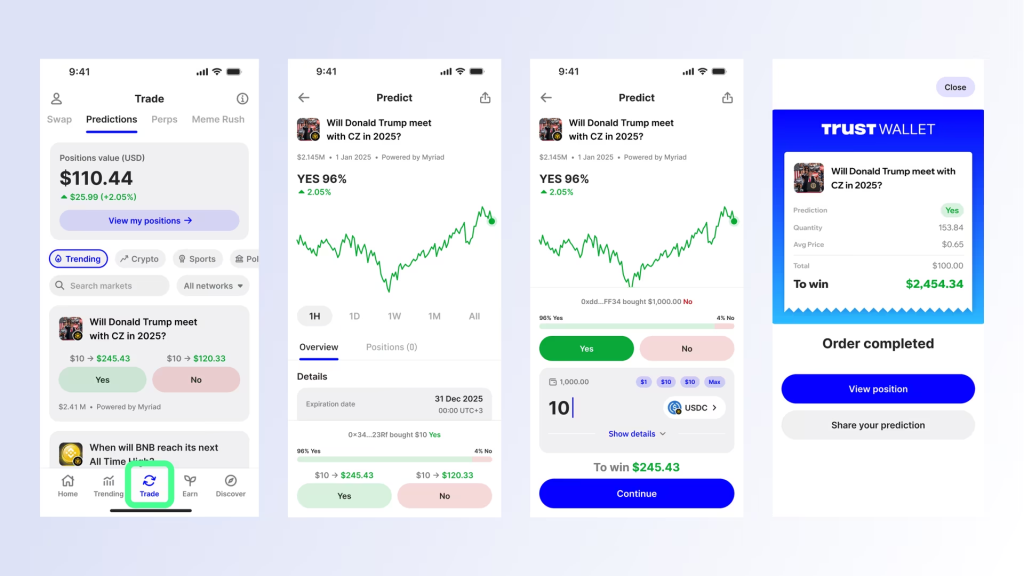
Trust Wallet has launched a prediction markets feature that lets its 200 million users trade real-world event outcomes directly from their wallets without leaving the app.

The wallet-native tool went live on December 2 on Myriad on BNB Chain, with integrations with Polymarket and Kalshi to follow soon.

The move positions Trust Wallet inside a rapidly expanding sector where platforms like Kalshi recently raised $1 billion at an $11 billion valuation, and Polymarket dominates with $248 million in total value locked.

Trust Wallet users can now browse curated events spanning crypto milestones, politics, sports, and global trends, then take YES or NO positions on outcomes tracked fully on-chain in self-custody.

Introducing Predictions in Trust Wallet 🔮

The first major wallet with native predictions.

Trade sports, crypto, politics & more. All in one place & self-custodial.

Powered by @MyriadMarkets (live). @Polymarket & @Kalshi coming soon.

Update now: https://t.co/VHh3snlsip pic.twitter.com/LCOu9BbjTH

— Trust Wallet (@TrustWallet) December 2, 2025

Wallet-Native Trading Removes Platform Friction

Trust Wallet’s Predictions tab appears on the Swaps page, eliminating the need for separate apps or accounts.

Users select events, choose outcome positions, and hold tokenized shares entirely on-chain through vendor smart contracts.

Real-time pricing and sentiment data are surfaced directly in the interface, while event resolution is handled by integrated partners rather than Trust Wallet itself.

Trust Wallet Enters Prediction Markets Race With New Trading Feature
Source: Trust Wallet

Myriad operates on BNB Chain for non-US regions, Polymarket runs via Swap.xyz on Polygon, and Kalshi offers regulated markets on Solana for US and global users.

Access varies by jurisdiction, with automatic geofencing applied based on each vendor’s compliance requirements.

The wallet handles regional restrictions automatically, routing eligible participants to appropriate markets while blocking others.

The integration consolidates multiple prediction platforms into a single interface, allowing users to explore markets from different providers without switching between websites or managing separate accounts.

Each position sits on-chain in the user’s own wallet, maintaining full transparency and self-custodial control aligned with Web3 principles.

Prediction Markets Show Strong Growth Despite Early Risks

Prediction markets have generated $3.7 billion in trading volume as of November, according to Dune data, with Opinion leading at $1.5 billion, Kalshi at $1.2 billion, and Polymarket at $952 million.

Total value locked across the sector reached $337 million in November, up sharply from earlier in the year as users discovered they could profit in stablecoins regardless of broader crypto market conditions.

The sector’s appeal centers on outcome-based returns that remain independent of crypto market fluctuations.

Most bets are placed in stablecoins, with results determined solely by whether predictions prove correct.

This structure has attracted participants who consistently earn even during market downturns, though questions about insider-like behavior and wallet patterns persist across platforms.

The sector’s booming growth has attracted big players as well.

🔮 Leaked screenshots show @Coinbase developing a prediction markets platform built on @Kalshi’s regulated infrastructure.#Kalshi #Coinbasehttps://t.co/2aWPAEBQcV

— Cryptonews.com (@cryptonews) November 19, 2025

Last month, Coinbase confirmed plans to launch its own prediction platform via Kalshi. At the same time, Robinhood and Susquehanna agreed to acquire 90% of LedgerX to operate a dedicated prediction futures exchange launching in 2026.

Robinhood said customers traded 9 billion contracts across more than 1 million accounts in the first year, making prediction markets its fastest-growing product by revenue.

Gemini also filed with the CFTC to become a designated contract market, and Crypto.com launched a prediction product with Trump Media.

In fact, Google Finance announced it will integrate Kalshi and Polymarket data directly into search results, bringing crowd-priced odds on future events alongside traditional market data.

Intercontinental Exchange, owner of the New York Stock Exchange, also agreed in October to invest up to $2 billion in Polymarket.

Trust Wallet Expands Financial Services Beyond Trading

Trust Wallet CEO Eowyn Chen previously outlined plans to transform the wallet into a Web3 neobank offering self-custody, asset exposure, DeFi access, staking, and identity management in one globally accessible app.

The company partnered with Ondo Finance in September to launch tokenized stocks and ETFs, giving users exposure to US equities without traditional brokerage accounts.

Chen said RWAs provide access to financial products previously unavailable to users in emerging markets, allowing participation without sacrificing custody or relying on centralized platforms.

So far, Trust Wallet has integrated the 1inch Swap API to consolidate prices from decentralized exchanges across Ethereum, BNB Chain, Polygon, and Solana.

The post Trust Wallet Enters Prediction Markets Race With New Trading Feature appeared first on Cryptonews.

Coinbase Wallet Rebalancing Creates False $68B LTH Distribution Signal – Details

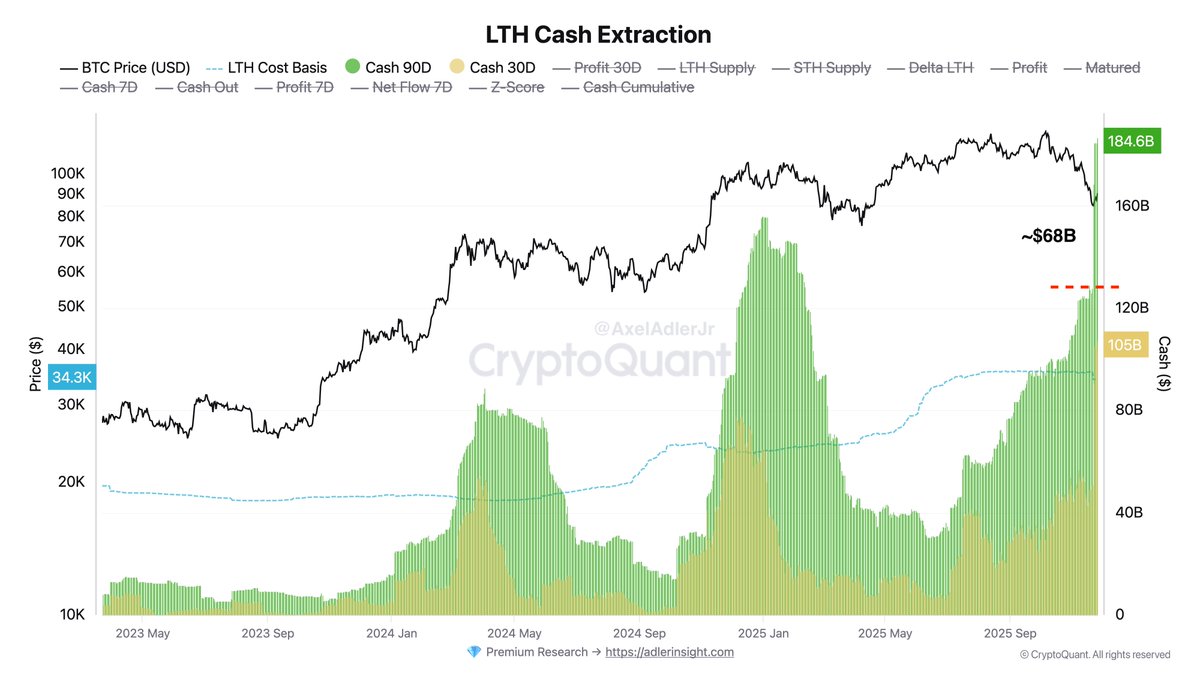
The crypto market is facing a wave of misinterpretation as Coinbase’s large-scale wallet rebalancing, which began on November 22, 2025, continues to distort major on-chain indicators. Many dashboards now display what appears to be an unprecedented $68 billion Long-Term Holder (LTH) “sell” spike — but according to analysts, this is not real distribution. Instead, it’s the direct result of Coinbase transferring coins internally as part of its routine wallet restructuring process.

This distinction is critical. Several prominent analysts and market commentators have highlighted massive outflows, huge shifts in LTH supply, and unusual wallet movements, yet many have failed to mention the underlying cause: Coinbase’s internal reshuffling. Without this context, market participants might wrongly conclude that long-term holders are panic-selling at scale, reinforcing fear during an already fragile market environment.

These rebalancing events have happened before, but the size of Coinbase’s holdings means even normal internal operations can trigger dramatic spikes in on-chain metrics such as LTH Net Position Change, Exchange Netflow, and Spent Output Age Bands.

Coinbase Internal Transfers Distorted Key On-Chain Metrics

According to detailed analysis by Axel Adler, Coinbase’s internal migration of approximately 800,000 BTC created one of the largest distortions in on-chain data ever recorded — without a single coin being sold.

The exchange executed 286 transactions totaling 798,636 BTC, moving funds from legacy P2PKH (Pay-to-Public-Key-Hash) addresses to modern P2WPKH (SegWit) addresses. This technical reorganization produced an artificial $68 billion “realized profit” spike, misleading many market observers into interpreting it as massive long-term holder distribution.

LTH Cash Extraction Chart | Source: Axel Adler

This large UTXO migration disrupted several major on-chain indicators. LTH and STH Supply metrics were temporarily skewed, showing a sharp drop in Long-Term Holder supply and a rise in Short-Term Holder supply — a pattern typically associated with heavy “smart money” selling. In reality, no distribution occurred; Coinbase simply restructured its internal wallets.

The distortion also affected LTH Realized Profit/Loss models, which reflected tens of billions in phantom gains, and HODL Waves, where UTXO ages were “reset,” suggesting long-term holders had suddenly spent old coins. Even Coin Days Destroyed (CDD) showed a significant spike, mimicking an “old coin awakening,” though the activity was entirely internal.

These disruptions highlight how exchange operations can temporarily break the reliability of on-chain metrics, requiring careful interpretation from analysts and investors.

Total Market Rebounds but Remains Under Critical Pressure

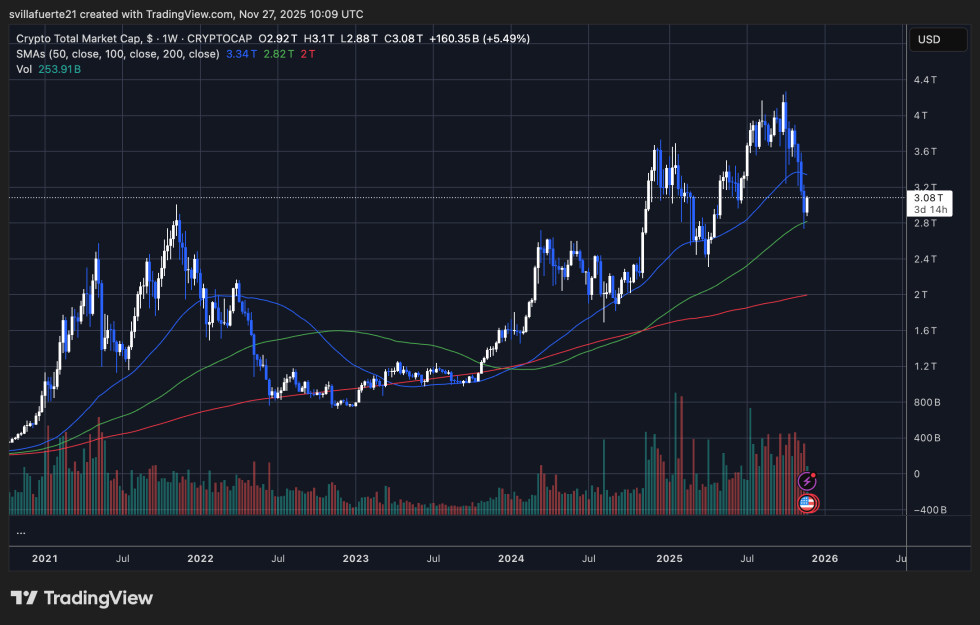
The Total Crypto Market Cap chart shows a sharp rebound after tagging the $2.88T zone, a level that aligns closely with the 100-week moving average (green), acting as a key structural support in previous cycles. This bounce has pushed total valuation back above the $3T mark, but the broader trend remains fragile after weeks of heavy selling across majors like BTC and ETH.

Total Crypto Market Cap | Source: TOTAL chart on TradingView

Price structure highlights a clear breakdown from the $3.6T–$3.8T consolidation zone, followed by a fast, impulsive decline—mirroring the speed of corrections seen during 2021 and mid-2022. Despite the latest recovery candle, the market remains below the 50-week moving average (blue), signaling that buyers must regain momentum quickly to avoid deeper downside toward the 200-week moving average near $2T.

Volume has surged on recent sell-offs, showing widespread forced selling and capitulation behavior—a pattern consistent with cycle mid-reset phases. The rebound, however, shows reduced sell volume, suggesting exhaustion from bearish participants. To confirm strength, total market cap must reclaim the $3.25T–$3.3T area, which currently acts as the first major resistance.

Failure to break above this zone risks further consolidation or a retest of the $2.8T support. For now, the market shows early signs of stabilization, but broader recovery depends on Bitcoin’s ability to sustain its own rebound and restore confidence across altcoins.

Featured image from ChatGPT, chart from TradingView.com

Trust Wallet integrates Apple Pay to streamline cryptocurrency purchases

  • Individuals can now buy crypto on Trust Wallet using Apple Pay.
  • The feature is currently available in more than 45 countries.
  • Such updates reduce entry barriers into the crypto and blockchain world.

Trust Wallet, one of the reputable digital asset wallets, has made another step toward promoting cryptocurrency adoption.

It has confirmed adding Apple Pay today, November 27, on X, allowing individuals in more than 45 countries to purchase their favourite virtual tokens within seconds.

Notably, the new feature promises an enhanced experience for new and existing users. The announcement read:

Trust Wallet has integrated Apple Pay. Buy your first crypto in seconds. Available in 45+ countries.

Indeed, purchasing digital tokens has been challenging for newbies, with lengthy verification procedures, numerous account setups, and limited payment methods often discouraging them.

Trust Wallet wants to address this challenge. With the integration of Apple Pay, it aims to make digital assets more accessible than ever, as individuals can now buy their “first crypto in seconds.”

How to get started

Depositing funds in a Trust Wallet account using Apple Pay is straightforward.

Users only need to open the app, visit the ‘Fund’ tab, and choose Apple Pay as the desired payment option.

Everything takes a few taps, mirroring the smooth experience when using Apply Pay for day-to-day purchases.

Most importantly, Trust Wallet benefits from Apple Pay’s credibility and security features, which include Touch ID, encrypted payments, and Face ID.

That promises streamlined crypto purchases that don’t compromise user safety.

Trust Wallet expands footprint globally

The team confirmed that users in more than 45 countries can access the Apple Pay transaction option.

Trust Wallet is lowering barriers to joining crypto, which will likely make it an entry point for millions who have struggled to access the digital assets market.

Individuals in jurisdictions with limited options to participate in the cryptocurrency industry now have a swift and secure option.

TWT price outlook

Trust Wallet’s native token remained somewhat muted in the past 24 hours.

The alt is trading at $1.08 after a slight 0.09% uptick on the daily price chart.

TWT has consolidated over the past week after losing nearly 15% in the last 30 days, influenced by broader selling pressure.

Meanwhile, TWT has underperformed the broader market today.

CoinMarketCap data shows the value of all cryptocurrencies increased by more than 3% the last 24 hours to $3.12 trillion.

Bitcoin is trading at $91,480, pumping the altcoin space as risk-on sentiments surfaced.

For now, Bitcoin should reclaim the key zone between $93,000 and $94,000 to shift its near-term trajectory to bullish.

That can support steady upswings towards the $100,000 psychological market.

However, a sudden selling wave will see it retracing to the ‘new’ liquidity region at $85,000 – $86,000.

The post Trust Wallet integrates Apple Pay to streamline cryptocurrency purchases appeared first on CoinJournal.

Samourai Wallet Co-Founder Sentenced to Four Years for Crypto Money Laundering

Bitcoin Magazine

Samourai Wallet Co-Founder Sentenced to Four Years for Crypto Money Laundering

On November 19, William “Bill” Hill, 67, co-founder of Bitcoin mixing service Samourai Wallet, was sentenced to four years in prison for operating an unlicensed money transmitting business that processed over $237 million in criminal proceeds, according to journalist Frank Corva.  

Hill pleaded guilty in July in the Southern District of New York, admitting that the platform he co-founded was used to conceal illicit funds from activities including drug trafficking, darknet marketplaces, cyber intrusions, fraud, sanctioned jurisdictions, murder-for-hire schemes, and a child pornography website. 

His co-founder, Keonne Rodriguez, received a five-year sentence.

Prosecutors said Hill and Rodriguez actively promoted Samourai Wallet to criminal users on darknet forums and internally recognized that its mixing process functioned as “money laundering for Bitcoin.” 

Authorities said the pair ran Samourai Wallet’s Whirlpool and Ricochet services to obscure the origins of criminal proceeds from drug trafficking, darknet marketplaces, fraud schemes, cybercrime, and even murder-for-hire operations. 

Whirlpool coordinated Bitcoin exchanges between users, while Ricochet added multiple transaction “hops” to make tracing more difficult. From 2017 to 2019, over 80,000 Bitcoin — worth more than $2 billion at the time — flowed through the services, generating over $6 million in fees, prosecutors said

Court records indicate Rodriguez and Hill actively encouraged criminal use through Samourai Wallet, with Rodriguez describing the services as “money laundering for bitcoin” and Hill promoting Whirlpool on a darknet forum as making illicit funds “untraceable.” 

They also publicly urged hackers to launder stolen funds following a 2020 social media hack, prosecutors contended.

Hill’s sentence was reduced due to his age and recent autism diagnosis, with the judge allowing him to serve three years of supervised release from Lisbon, and imposing a $250,000 fine.

The case reflects a growing crackdown on privacy-focused crypto tools, following similar prosecutions of developers of platforms like Tornado Cash. 

Hill expressed remorse at sentencing, stating, “I am deeply remorseful and ashamed of what I did,” highlighting the increasing scrutiny on services designed to obscure digital asset transactions.

Samourai Wallet’s CEO sentencing

As mentioned earlier, Keonne Rodriguez, CEO of Samourai Wallet, was sentenced to five years in prison earlier this month for the same scheme.

Rodriguez’s sentencing, handed down by U.S. District Judge Denise Cote in Manhattan, followed an hour-long hearing. 

Rodriguez and Hill were arrested in April 2024 and charged with conspiracy to commit money laundering and operating an unlicensed money transmitting business. 

The Department of Justice framed the case as part of a wider crackdown on crypto mixing services, emphasizing the defendants’ active promotion of illicit fund laundering, which undermined trust in digital assets.

Samourai Wallet
Samourai Wallet

This post Samourai Wallet Co-Founder Sentenced to Four Years for Crypto Money Laundering first appeared on Bitcoin Magazine and is written by Micah Zimmerman.

Ethereum Name Service (ENS) Explained — Why It Could Be the Future of Digital Identity

By: MintonFin

Ethereum Name Service (ENS) Explained — Why It Could Be the Future of Digital Identity

Ethereum Name Service (ENS) Explained — Why It Could Be the Future of Digital Identity

Imagine logging into every crypto wallet, Web3 app, or DeFi protocol with a single, human-readable name like “alex.eth” — instead of a long, confusing string of letters and numbers.

No more copying and pasting 42-character wallet addresses, no more double-checking every transaction digit by digit. Just one universal, decentralized identity that connects your entire digital world.

The Future of Online Identity Might Already Be Here — And It’s Built on Ethereum

Welcome to the Ethereum Name Service (ENS) — a revolutionary technology that could reshape the way we think about digital identity, crypto ownership, and online trust in 2025 and beyond.

In this article, we’ll break down how ENS works, why it’s becoming essential for investors, developers, and institutions, and how it could redefine finance, wealth management, and digital ownership for the next decade.

What Is the Ethereum Name Service (ENS)?

At its core, the Ethereum Name Service (ENS) is like a decentralized version of DNS — the system that translates website names (like google.com) into IP addresses that computers understand.

But instead of mapping web domains to servers, ENS maps Ethereum wallet addresses (and other blockchain data) to human-readable names — like “yourname.eth.”

So, instead of sending ETH to a wallet like:

0x7be8076f4ea4a4ad08075c2508e481d6c946d12b

You can send it to:

yourname.eth

ENS uses smart contracts on Ethereum to manage and resolve these names in a secure, transparent, and censorship-resistant way.

This seemingly simple idea has enormous implications for the future of finance, decentralized apps (dApps), and digital identity.

Why ENS Matters in 2025’s Web3 Economy

In 2025, digital identity is more important than ever. Between DeFi, NFTs, crypto wallets, metaverse platforms, and decentralized governance, your online persona is becoming a valuable digital asset.
ENS provides something traditional usernames and email addresses can’t:

* Ownership: You fully own your ENS name via your wallet. No tech company or platform can take it away.
* Portability: Use it across DeFi apps, exchanges, wallets, and NFT marketplaces.
* Verification: It proves on-chain that you own certain wallets, assets, or domains.
* Trust: “alex.eth” instantly builds credibility compared to anonymous 0x addresses.

This makes ENS a cornerstone of Web3 identity — a unified layer connecting all financial and digital activity under one name.

How ENS Works — The Simple Breakdown

To understand ENS, let’s look at how it functions technically and financially:

A. ENS Domains

ENS domains end in “.eth” and are stored on Ethereum as NFTs. Each ENS name is represented as a non-fungible token (NFT) compliant with the ERC-721 standard. This means you can buy, sell, and trade ENS names like any other NFT on platforms such as OpenSea.

B. The ENS Registry

This is a smart contract that stores:

* The owner of each domain
* The resolver (which translates names into addresses)
* The time-to-live (TTL) for caching

C. The Resolver

Resolvers map names to actual addresses — ETH, BTC, or even website URLs and metadata. So “alex.eth” might link to:

* Ethereum wallet
* Bitcoin address
* Email contact
* IPFS website

D. Subdomains

ENS also supports subdomains, allowing organizations to create identity systems like:

* finance.company.eth
* nftvault.john.eth

This enables businesses and DAOs to build trust hierarchies within their ecosystem.

The ENS Token — Governance and Ownership

ENS isn’t just a naming system — it’s also a DAO-governed project with its own native token, $ENS.

The ENS token is used for:

* Voting on protocol upgrades and fee structures
* Treasury management
* Community governance decisions

This decentralized governance model ensures the protocol evolves with its users — not at the mercy of corporate interests.

In November 2021, the ENS DAO distributed $ENS tokens to early users, creating one of the fairest and most community-driven launches in crypto history.

How to Buy or Register an ENS Name

Getting your own ENS domain is easier than ever in 2025. Here’s a quick guide:

1. Go to the official ENS app: app.ens.domains
2. Connect your wallet (MetaMask, Coinbase Wallet, etc.)
3. Search for your desired name (like “yourname.eth”)
4. Register it for 1–10 years using ETH
5. Set up records (wallet addresses, websites, social links)

Once complete, your ENS name becomes a permanent part of your Web3 identity — tradable, transferable, and verifiable on-chain.

Why ENS Could Revolutionize Digital Identity

The ENS ecosystem is much more than vanity addresses — it’s laying the foundation for how digital identity and reputation will function in the decentralized future.

Here’s why investors and tech leaders are paying attention:

A. ENS as a Trust Layer

In DeFi and crypto, trust is currency. An ENS domain linked to a known wallet or DAO adds instant credibility — like a verified badge on social media, but on-chain and provable.

B. Universal Identity for Finance

In traditional finance, identity is tied to banks and KYC systems. ENS flips this model by offering user-owned, interoperable identities across all financial platforms — enabling a borderless financial system.

C. Integration with Major Platforms

ENS is already supported by:

* MetaMask
* Coinbase Wallet
* Uniswap
* Etherscan

This growing adoption ensures that ENS becomes the default naming standard for Web3 — much like DNS was for the early Internet.

ENS vs DNS — The Internet’s Evolution of Ownership

Just as DNS helped billions access the web, ENS could help billions onboard into Web3 — safely, simply, and with true ownership.

The Investment Case for ENS in 2025

Many investors view ENS names as digital real estate — scarce, brandable, and potentially valuable over time.

Just like how short .com domains became multimillion-dollar assets in Web2, short .eth domains (e.g., 3–4 character names) are already in high demand.

Why ENS Names Hold Value:

* Scarcity: There’s only one “finance.eth” or “nft.eth.”
* Utility: They’re functional — used for transactions and identity.
* Adoption: Increasing integration across wallets, apps, and exchanges.
* Brand Power: Businesses and influencers use ENS for credibility.

Many investors are quietly accumulating ENS domains today as long-term digital assets — believing they’ll become as fundamental as owning key Web2 domains in the early 2000s.

ENS and the Future of Decentralized Finance (DeFi)

In DeFi, identity and verification have always been challenges. ENS solves both elegantly.

With ENS, lenders, borrowers, and investors can:

* Verify wallet ownership
* Link on-chain reputation scores
* Access DeFi services tied to their ENS identity

Imagine a credit score linked to your ENS name, or a DeFi yield dashboard personalized to “yourname.eth.”

As AI-driven DeFi and on-chain identity analytics evolve, ENS will likely serve as the universal login layer for decentralized financial ecosystems.

The Rise of Digital Reputation and On-Chain Identity

ENS doesn’t stop at wallet naming. The next wave is about reputation.
Projects like Lens Protocol and Farcaster are integrating ENS names into social graph data, meaning your on-chain identity will soon include:

* Your DeFi history
* Your NFT collection
* Your DAO memberships
* Your staking and governance activity

This makes ENS not just a convenience — but a public, verifiable resume in the decentralized economy.

Real-World Use Cases of ENS in 2025

* Entrepreneurs: Branding wallets like “businessname.eth” for easy payments.
* Investors: Linking ENS names to portfolio trackers and DeFi dashboards.
* DAOs: Assigning subdomains like “treasury.dao.eth” or “members.dao.eth.”
* Artists & Creators: Using ENS for NFT collections or digital galleries.
* Institutions: Using ENS for compliance and cross-chain settlement.

Every use case adds more demand, liquidity, and legitimacy to the ENS ecosystem.

Challenges Ahead — What ENS Still Needs to Solve

No technology is perfect. ENS still faces several hurdles:

* Gas Fees: Registering and updating records can be costly during network congestion.
* Adoption: Mainstream users still find wallets and ENS setup confusing.
* Competition: Other naming systems (like Unstoppable Domains) are fighting for market share.
* Cross-Chain Expansion: ENS must integrate smoothly with non-Ethereum networks.

That said, with Ethereum’s Layer 2 scaling (like Arbitrum and Optimism) and ENS’s growing ecosystem, these challenges are rapidly being addressed.

What’s Next for ENS in 2025 and Beyond

The ENS roadmap includes:

* Cross-chain interoperability
* Decentralized social logins
* Integration with hardware wallets
* Corporate identity verification systems
* ENS-powered Web3 email and messaging

These innovations could make ENS the “digital passport” of Web3 — controlling how users access apps, send payments, and prove ownership across the Internet.

Final Thoughts: ENS Is the Gateway to Digital Sovereignty

The Ethereum Name Service isn’t just a crypto trend. It’s a fundamental building block of the decentralized Internet.

As the world shifts from centralized tech monopolies to user-owned ecosystems, ENS empowers individuals to:

* Own their online identity
* Protect their wealth
* Simplify crypto interactions
* Build trusted reputations across platforms

Owning an ENS name today might feel like buying an early .com domain in 1995 — a small investment that could define your place in the future of finance and digital ownership.

If you believe in decentralization, privacy, and financial freedom, ENS isn’t optional — it’s the foundation of your digital life.


Ethereum Name Service (ENS) Explained — Why It Could Be the Future of Digital Identity was originally published in Coinmonks on Medium, where people are continuing the conversation by highlighting and responding to this story.

Samourai Wallet CEO Sentenced to Five Years for Operating Unlicensed Bitcoin Mixing Service

Bitcoin Magazine

Samourai Wallet CEO Sentenced to Five Years for Operating Unlicensed Bitcoin Mixing Service

A Samourai Wallet developer was sentenced Thursday to five years in prison for operating a crypto mixing service prosecutors say laundered $237 million in illicit funds. 

Keonne Rodriguez, the CEO of Samourai Wallet, received the statutory maximum from U.S. District Judge Denise Cote of the Southern District of New York, following an hour-long hearing in Manhattan, according to journalist Frank Corva.  

Fellow developer William Lonergan Hill, the company’s CTO, is scheduled to be sentenced Friday.

Rodriguez and Hill were arrested in April 2024 and charged with conspiracy to commit money laundering and conspiracy to operate an unlicensed money transmitting business. After over a year of litigation, both pled guilty to the lesser unlicensed money transmitting charge in exchange for prosecutors dropping the more serious money laundering conspiracy charge, which carries a maximum of 20 years in prison.

Samourai Wallet allegedly hid criminal activity  

Prosecutors said the pair operated Samourai Wallet’s crypto mixing services, Whirlpool and Ricochet, to obscure the origins of criminal proceeds from drug trafficking, darknet marketplaces, cyber intrusions, fraud schemes, and murder-for-hire operations. 

Whirlpool coordinated batches of Bitcoin exchanges between users, while Ricochet introduced multiple intermediate transactions, or “hops,” to make tracing funds more difficult. From Ricochet’s 2017 launch and Whirlpool’s 2019 inception, more than 80,000 Bitcoin—  valued at over $2 billion at the time — passed through the services, generating over $6 million in fees.

Court documents reveal that Rodriguez and Hill actively encouraged criminal use of Samourai Wallet. In WhatsApp messages, Rodriguez described the service as “money laundering for bitcoin,” and Hill promoted Whirlpool on Dread, a darknet forum, as a tool to make illicit funds “untraceable.” 

Following a 2020 social media hack, the pair tracked stolen funds in real time and publicly urged hackers to launder the proceeds through Samourai Wallet.

The Department of Justice framed the case as part of a broader crackdown on cryptocurrency mixing services, following the August conviction of Tornado Cash co-founder Roman Storm for operating an unlicensed money transmitting business. 

Special agents from the IRS-Criminal Investigation and the FBI emphasized that Rodriguez and Hill not only facilitated but actively promoted laundering of illicit proceeds, undermining public trust in digital assets.

Rodriguez, 35, had requested a sentence of one year and a day, while Hill sought time served. Prosecutors had asked for the full five-year statutory maximum for both defendants, which Judge Cote imposed on Rodriguez. 

Hill’s sentencing is set for Friday at 11 a.m. ET.

This post Samourai Wallet CEO Sentenced to Five Years for Operating Unlicensed Bitcoin Mixing Service first appeared on Bitcoin Magazine and is written by Micah Zimmerman.

Web3 Wallets Explained: The Next Evolution of Crypto Wallets

Banner image for the blog ‘The Next Evolution of Crypto Wallets,’ featuring a smartphone displaying the Ethereum logo beside a brown wallet, golden coin, and key icon, with the title text on the left against a clean beige background

Introduction

The world of cryptocurrencies is moving fast — and so are the tools we use to manage digital assets. Traditional crypto wallets were designed for basic storage and transactions. But with the rise of Web3 technology, a new generation of wallets has emerged — Web3 wallets — which go far beyond storage to enable interaction with decentralized applications (dApps), NFTs, DeFi platforms, and the metaverse.

In this guide, we’ll explore how Web3 wallets work, their core features, benefits, and why they represent the next evolution of crypto wallet development.

What is a Web3 Wallet?

A Web3 wallet is a digital tool that lets users securely store, send, and interact with blockchain-based assets across multiple decentralized platforms. Unlike traditional wallets that only hold cryptocurrencies, Web3 wallets serve as your digital identity in the decentralized internet.

Key Characteristics:

Non-custodial ownership — Users control their private keys and data.​

Multi-chain compatibility — Support for multiple blockchains like Ethereum, BNB Chain,Polygon, and Solana.​

Smart contract interaction — Connects directly with DeFi, NFT, and DAO platforms.​

Digital identity & access — Wallets double as your Web3 login credentials.​

How Do Web3 Wallets Work?

Web3 wallets are powered by public and private key pairs that allow users to sign transactions securely. The wallet connects to blockchain nodes and communicates directly with smart contracts. Here’s how the process works:

1.Generate a key pair — A public key (wallet address) and private key for authentication.​

2.Connect to dApps — Using Web3.js, WalletConnect, or MetaMask APIs.​

3.Sign transactions — Transactions are authorized using cryptographic signatures.​

4.Interact with decentralized protocols — Access staking, swaps, lending, and NFT minting.​

These wallets function as the bridge between users and the decentralized ecosystem — enabling seamless communication with any blockchain network.

Core Features of Web3 Wallets

1. Non-Custodial Security

Users maintain control of private keys — no centralized entity can freeze or access assets.

2. Multi-Chain Asset Management

Web3 wallets manage assets across different networks, allowing seamless switching between chains.

3. DeFi & NFT Integration

Instantly connect to decentralized exchanges, lending platforms, and NFT marketplaces.

4. Smart Contract Wallets

Support for account abstraction, automation, batch transactions, and programmable wallet functions.

5. User Experience & Accessibility

Modern Web3 wallets prioritize simplicity with features like one-click dApp connection, QR-code logins, and mobile-first design.

Use Cases of Web3 Wallets

DeFi Participation: Stake, lend, borrow, and swap crypto assets directly from your wallet.​

NFT Collection: Mint, trade, and showcase NFTs securely.​

DAO Governance: Vote on proposals and manage community tokens.​

Gaming & Metaverse: Store in-game assets, avatars, and tokens.​

Cross-Chain Transfers: Manage multiple assets across various blockchains effortlessly.​

Challenges in Web3 Wallet Adoption

Despite their advantages, Web3 wallets face several challenges:

Key management risk: Losing a seed phrase means losing access permanently.​

Security threats: Phishing, scams, and malicious smart contracts.​

Complex on boarding: Non-technical users may find setup confusing.​

Interoperability gaps: Not all wallets support every blockchain or dApp.​

The Future of Web3 Wallets

The evolution of crypto wallet development continues to push boundaries with innovations like:

Account abstraction: Simplifies gas payments and enhances user experience.​

Embedded wallets: Allow instant onboarding within apps and games.​

Social recovery mechanisms: Secure wallet recovery without compromising privacy.​

Privacy-focused solutions: Integration of zero-knowledge proofs and stealth addresses.​

Cross-chain interoperability: Unified wallet experience across all major blockchain networks.​

FAQs About Web3 Wallets

1. What makes Web3 wallets different from normal crypto wallets?

Web3 wallets allow direct interaction with decentralized applications (dApps), NFTs, and DeFi platforms, while normal crypto wallets are limited to sending and receiving coins.

2. Are Web3 wallets safe?

Yes — as long as users safeguard their private keys and avoid phishing sites. Since they are non-custodial, users maintain full control over their assets.

3. Can I use one Web3 wallet for multiple blockchains?

Absolutely. Many modern Web3 wallets support multiple networks like Ethereum, BNB Chain, Polygon, and Avalanche.

4. What are the best Web3 wallets?

Popular examples include MetaMask, Trust Wallet, Coinbase Wallet, and Rainbow Wallet — each offering different features for security and usability.

5. What’s the future of Web3 wallets?

The next generation of Web3 wallets will focus on smart contract automation, multi-chain accessibility, and privacy-enhancing technologies to simplify adoption for mainstream users.

Conclusion

Web3 wallets are redefining how users interact with blockchain ecosystems. They combine security, control, and interoperability, giving users complete ownership over their assets and digital identity.

As decentralized finance, NFTs, and the metaverse continue to grow, Web3 wallets will remain the foundation of this transformation — unlocking new possibilities in the future of crypto wallet development

.


Web3 Wallets Explained: The Next Evolution of Crypto Wallets was originally published in Coinmonks on Medium, where people are continuing the conversation by highlighting and responding to this story.

From Wallets to Signers: Ledger Nano Gen5 Advances Crypto and Identity Protection with NFC Passkeys

By: Juan Galt

Bitcoin Magazine

From Wallets to Signers: Ledger Nano Gen5 Advances Crypto and Identity Protection with NFC Passkeys

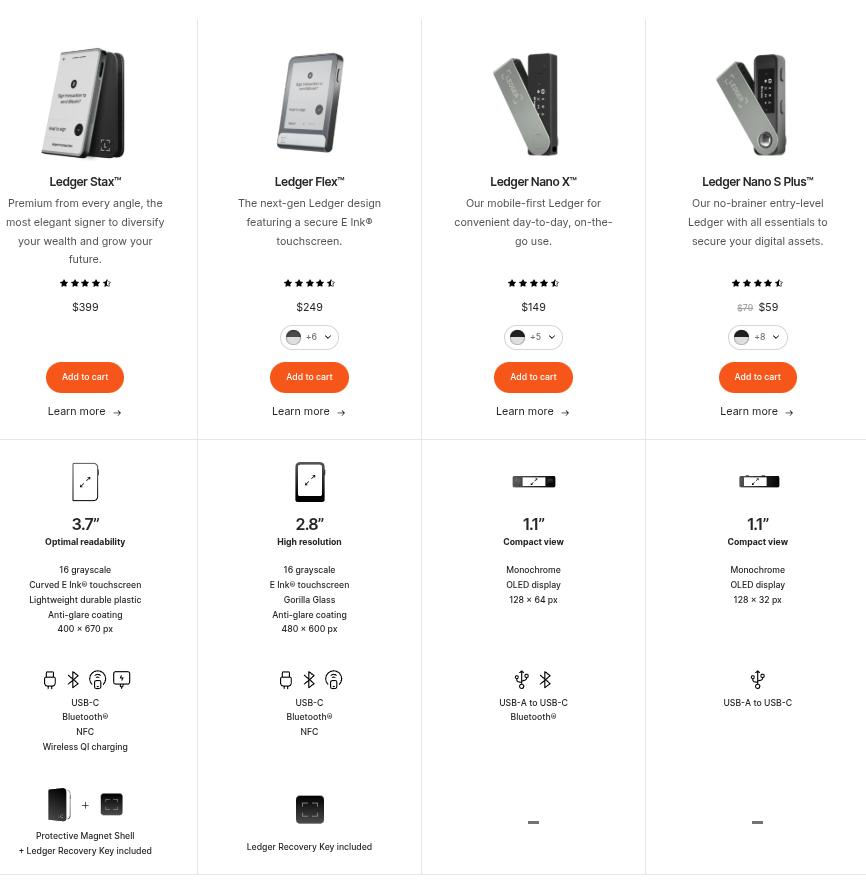
Ledger, the most popular cryptocurrency hardware wallet company and one of the oldest in the industry, just announced its latest, most advanced security device, the Ledger Nano™ Gen5. Taking the capabilities of previous Ledger devices to the next level, the Gen5 also reaches a surprisingly low price compared to its predecessors. 

Ledger has sold over “8 million devices in 165 countries, across over 10 languages, more than 100 financial institutions and commercial brands,” according to a press release shared with Bitcoin Magazine. The company claims “over 20% of the world’s crypto assets are secured by Ledger. “

Check out the livestream of the announcement live!

Ledger Nano Gen5 Debuts Affordable Hardware Security for AI-Driven Digital Identities

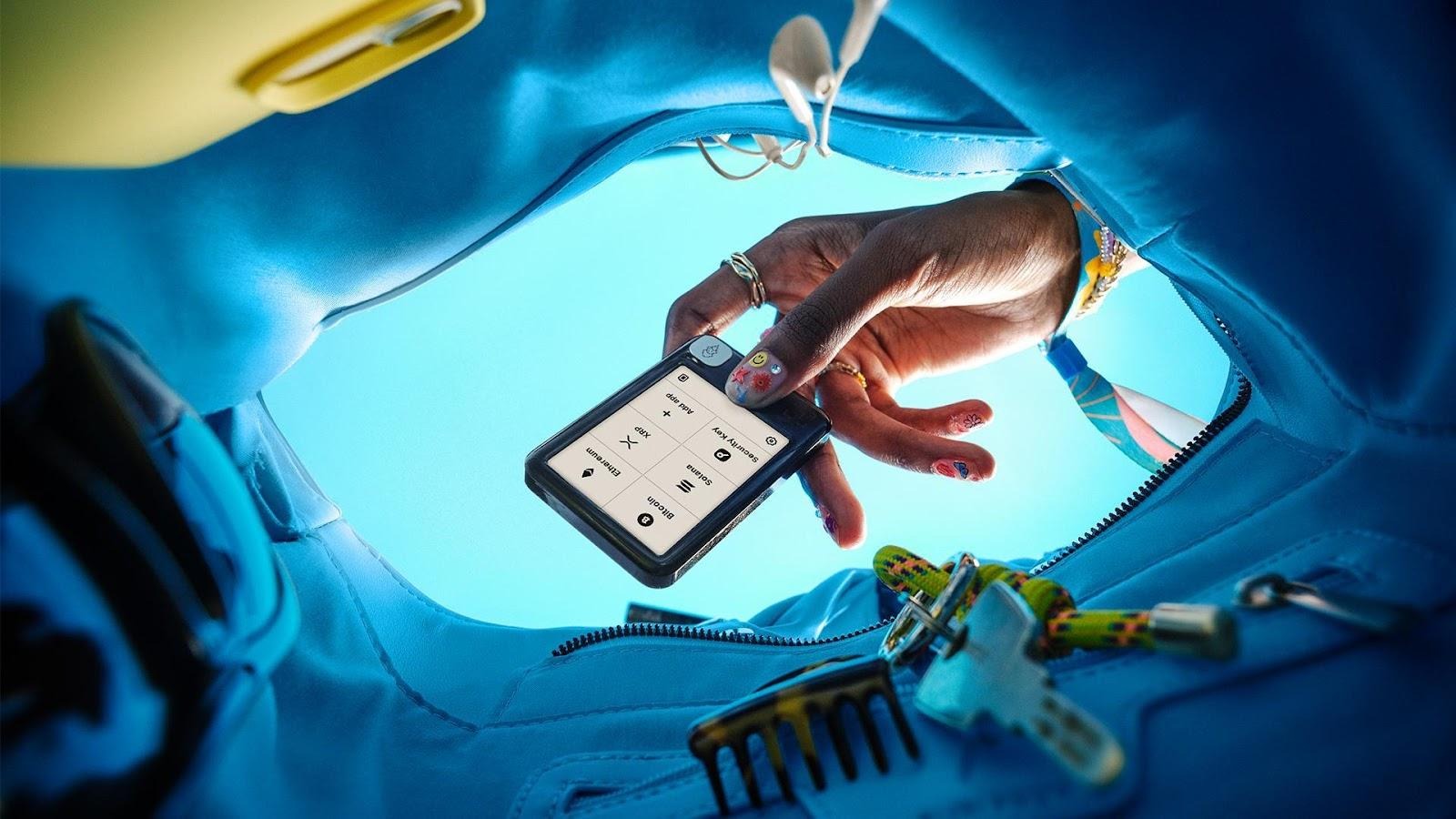
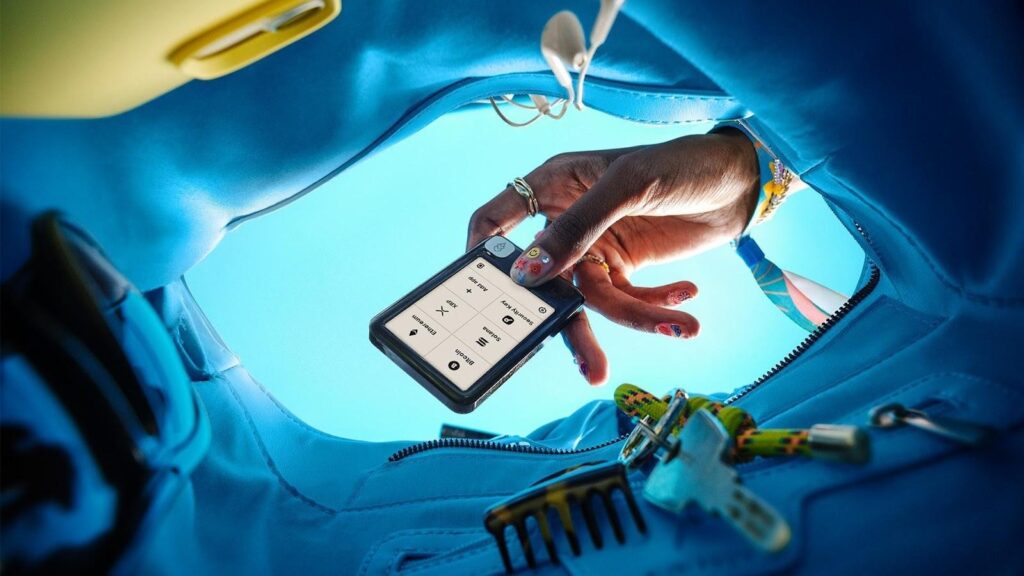
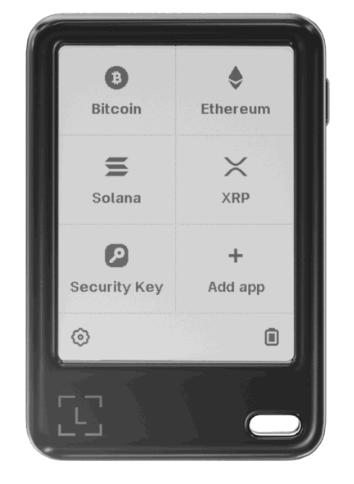
The Ledger Nano™ Gen5 is 79.40 mm tall, 53.35 mm wide, and 8.64 mm thick with a Ledger EAL 6+ certified secure element (ST33K1M5). Its E Ink®, black and white capacitive touch screen has a resolution of 2.76 inches, at 400 px by 300 px and 181 ppi. It weighs 46g and has USB-C, Bluetooth® 5.2, and NFC connectivity. 

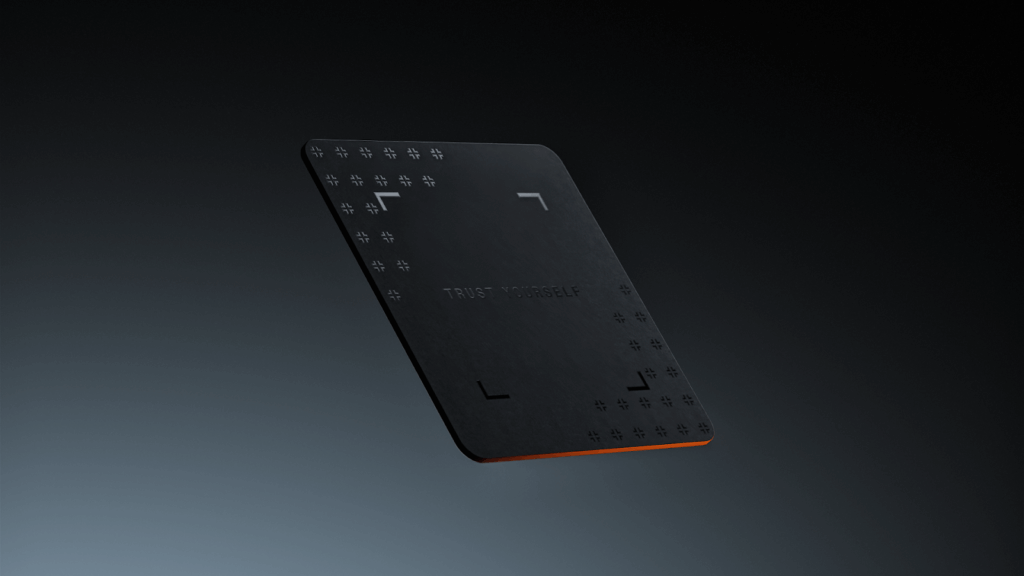
The device comes with a “Ledger Recovery Key” included in the box, a high-security smart card designed to back up the 12-24 word pass phrase that users create on device setup. The Ledger Recovery Key connects to devices like the Gen5 via encrypted NFC, unlocking a new, easy-to-use seed backup device, which is pin-protected at rest. While the name of the Ledger Recovery Key is at first glance a bit confusing, the smart card should arrive empty on initial purchase and get loaded by the users during the hardware wallet setup, when they generate their pass phrase at home. 

Ledger Nano Gen5 Debuts Affordable Hardware Security for AI-Driven Digital Identities

Signers Rather Than Hardware Wallets

Ledger has also decided to rebrand their devices as signers rather than hardware wallets, a move that breaks over a decade of tradition within the crypto industry. The daring move reflects an industry shift towards securing more than cryptocurrency wealth — secure digital identity from “a world accelerated by artificial intelligence.” The rebrand also applies to their flagship software wallet, previously known as “Ledger Live”, now called Ledger Wallet. 

The subtle change in wording could address confusion new users may experience when entering the crypto industry, and perhaps aligns more closely with the functionality of these security devices and interfaces. However, how users respond remains to be seen. Ledger was clear that the Gen5 simply expands its security offering to the world of identity, while it “will continue to operate as millions now know them” to operate, when it comes to securing their crypto transactions. 

Ledger Nano Gen5 Debuts Affordable Hardware Security for AI-Driven Digital Identities

Protecting Your Digital Identity

When it comes to identity, the world is going through a transformation. No longer are physical ID cards good enough; multiple image generation models have shown sufficient quality to fool identity systems, while stolen identities from major data hacks are used regularly to commit identity fraud. The only viable solution to the problem of digital identity is strong cryptography, and Ledger clearly recognizes this growing trend.

In order to support secure identity and logging capabilities, the Gen5 and its Ledger Security Key cards support the FIDO2 Passkeys standard that is spreading throughout the web. NFC, which stands for near field communication, is a fairly secure short range antenna, used in credit cards for decades, this standard is also quickly being adopted by crypto hardware wallets for the same reasons, it is easy to use for things such as approving a log ing, while also providing a high degree of security, given its short range and simplicity.

Bluetooth is also integrated into the Gen5, giving the device a wider range of functionality. Bluetooth has also become a popular feature among hardware wallets and key signers, though it is a feature often criticized, given the vast complexity of its code and the long range at which it can be interacted with. Some hardware wallet devices even choose to skip Bluetooth altogether. While the press release did not explicitly address how the Gen5 secures users against the risks introduced by Bluetooth, the industry standard is to distrust the chip, separating it from other capabilities, and using it only for encrypted communications across devices. 

On the interface front, the Gen5 supports advanced security features like “Clear Signing” and “Transaction Check,” which its beautiful E Ink® touchscreen likely delivers with a natural and intuitive feel. The press release further explains the new identity capabilities of the Gen5, noting that “users can now connect their Ledger signer directly to popular dapps, such as 1inch, for seamless and secure experiences,” adding that “Ledger is integrating Noah, known as Cash-To-Stablecoin, enabling users to top up their wallet with fiat (USD or EUR) quickly without additional fees, and instantly convert to stablecoins (USDC)” Noah enables the “effortless” use of stablecoins for on-chain transactions, another quickly growing trend. 

Ledger Nano Gen5 Debuts Affordable Hardware Security for AI-Driven Digital Identities

High End Tech at an Affordable Price

When it comes to price, the Ledger Nano Gen5 is far more affordable than its predecessors, while keeping the large touch screen that has defined the newer generations of Ledger devices. Coming at more than half the price of the Ledger Stax, the Gen5 costs $179, a very competitive and accessible price among modern crypto hardware wallets. 

Pascal Gauthier, Chairman and CEO of Ledger, proudly noted in the press release that “the all-new Ledger Nano is built for the challenges and opportunities of today, and ready for those coming in the future. It is the new signer for everyone, available at an accessible price, with the best security and user interface on the market. The next generation of Ledger begins today.”

Ledger Nano Gen5 Debuts Affordable Hardware Security for AI-Driven Digital Identities

This post From Wallets to Signers: Ledger Nano Gen5 Advances Crypto and Identity Protection with NFC Passkeys first appeared on Bitcoin Magazine and is written by Juan Galt.

Trezor Launches Safe 7 Hardware Wallet With Auditable Secure Element

Bitcoin Magazine

Trezor Launches Safe 7 Hardware Wallet With Auditable Secure Element

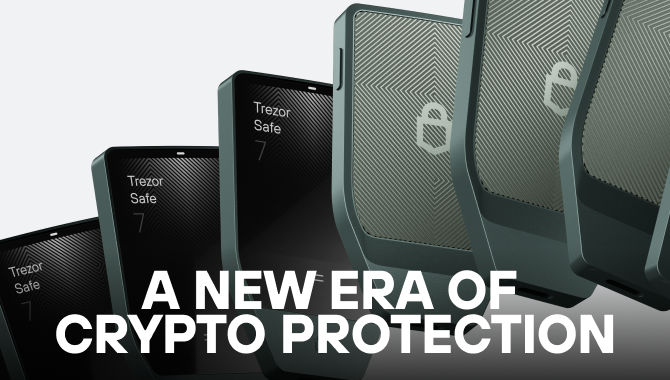
Trezor, the company behind the first-ever hardware wallet, has unveiled the Trezor Safe 7, a device that brings two unusual ideas to consumer crypto security: a fully auditable secure element and a “quantum-ready” architecture.

For years, hardware wallets have faced a paradox. They’re designed to eliminate trust in third parties, yet the chips that secure them — known as secure elements — are typically closed systems. Trezor’s new design challenges that model. 

At the core of the Safe 7 is TROPIC01, a secure element whose design and implementation can be publicly inspected and verified.

The company says the goal is to make security verifiable rather than taken on faith — a principle long central to Bitcoin itself.

Quantum computing and self-custody

The Safe 7 also looks toward the next decade of cryptography. Trezor built the device with a quantum-ready architecture, capable of receiving secure updates once post-quantum algorithms become standard. 

While the timeline for quantum computing’s impact on Bitcoin security remains uncertain, the company’s approach reflects a growing awareness in the industry that long-term self-custody may need to adapt to new threat models.

The wallet uses a dual-chip design, pairing the transparent TROPIC01 element with a secondary EAL6+ secure component to protect against both physical and software attacks. 

Private keys are isolated from the host system, and all transactions must be physically confirmed on a 2.5-inch color touchscreen.

On the usability side, Trezor has moved closer to what modern device owners expect. The Safe 7 supports Bluetooth connectivity, Qi2 wireless charging, and an anodized aluminum body with Gorilla Glass protection. 

The company has also introduced the Trezor Host Protocol, an open-source communication layer meant to keep Bluetooth connections private and verifiable.

Through the Trezor Suite app, users can manage thousands of crypto, trade, and interact with third-party services. A Bitcoin-only version of the wallet will also be offered for those who prefer minimalism and focus.

The Safe 7’s hardware is built for longevity, featuring a LiFePO4 battery rated for four times more charge cycles than standard lithium cells and an IP54 resistance rating for dust and splashes.

Developed by SatoshiLabs in 2014, Trezor is a leader in the industry and was one of the first companies to create a hardware wallet. The name “Trezor” comes from the Czech word for “vault”. 

This post Trezor Launches Safe 7 Hardware Wallet With Auditable Secure Element first appeared on Bitcoin Magazine and is written by Micah Zimmerman.

❌