One of the major difficulties in studying electricity, especially when compared to many other physical phenomena, is that it cannot be observed directly by human senses. We can manipulate it to perform various tasks and see its effects indirectly, like the ionized channels formed during lightning strikes or the resistive heating of objects, but its underlying behavior is largely hidden from view. Even mathematical descriptions can quickly become complex and counter-intuitive, obscured behind layers of math and theory. Still, [lcamtuf] has made some strides in demystifying aspects of electricity in this introduction to analog filters.
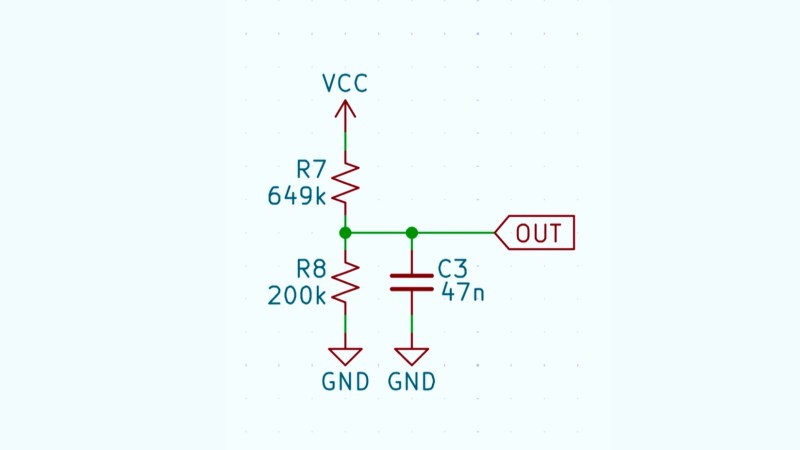
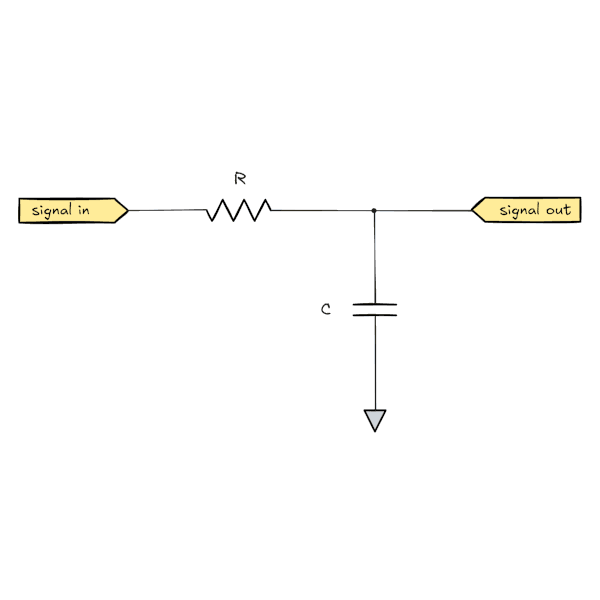
The discussion on analog filters looks at a few straightforward examples first. Starting with an resistor-capacitor (RC) filter, [lcamtuf] explains it by breaking its behavior down into steps of how the circuit behaves over time. Starting with a DC source and no load, and then removing the resistor to show just the behavior of a capacitor, shows the basics of this circuit from various perspectives. From there it moves into how it behaves when exposed to a sine wave instead of a DC source, which is key to understanding its behavior in arbitrary analog environments such as those involved in audio applications.
There’s some math underlying all of these explanations, of course, but it’s not overwhelming like a third-year electrical engineering course might be. For anyone looking to get into signal processing or even just building a really nice set of speakers for their home theater, this is an excellent primer. We’ve seen some other demonstrations of filtering data as well, like this one which demonstrates basic filtering using a microcontroller.
A protein created by RFdiffusion3, a newly released protein design tool from Nobel laureate David Baker’s lab, interacting with DNA. (UW Institute for Protein Design / Ian C. Haydon Image)
David Baker’s lab at the University of Washington is announcing two major leaps in the field of AI-powered protein design. The first is a souped-up version of its existing RFdiffusion2 tool that can now design enzymes with performance nearly on par with those found in nature. The second is the release of a new, general-purpose version of its model, named RFdiffusion3, which the researchers are calling their most powerful and versatile protein engineering technology to date.
Last year, Baker received the Nobel Prize in Chemistry for his pioneering work in protein science, which includes a deep-learning model called RFdiffusion. The tool allows scientists to design novel proteins that have never existed. These machine-made proteins hold immense promise, from developing medicines for previously untreatable diseases to solving knotty environmental challenges.
Baker leads the UW’s Institute for Protein Design, which released the first version of the core technology in 2023, followed by RFdiffusion2 earlier this year. The second model was fine-tuned for creating enzymes — proteins that orchestrate the transformation of molecules and dramatically speed up chemical reactions.
The latest accomplishments are being shared today in publications in the leading scientific journals Nature and Nature Methods, as well as a preprint last month on bioRxiv.
A better model for enzyme construction
Postdoctoral fellow Rohith Krishna, left, and graduate student Seth Woodbury helped lead research at the University of Washington’s Institute for Protein Design that’s being published today. (IPD Photos)
In the improved version of RFdiffusion2, the researchers took a more hands-off approach to guiding the technology, giving it a specific enzymatic task to perform but not specifying other features. Or as the team described it in a press release, the tool produces “blueprints for physical nanomachines that must obey the laws of chemistry and physics to function.”
“You basically let the model have all this space to explore and … you really allow it to search a really wide space and come up with great, great solutions,” said Seth Woodbury, a graduate student in Baker’s lab and author on both papers publishing today.
In addition to UW scientists, researchers from MIT and Switzerland’s ETH Zurich contributed to the work.
The new approach is remarkable for quickly generating higher-performing enzymes. In a test of the tool, it was able to solve 41 out of 41 difficult enzyme design challenges, compared to only 16 for the previous version.
“When we designed enzymes, they’re always an order of magnitude worse than native enzymes that evolution has taken billions of years to find,” said Rohith Krishna, a postdoctoral fellow and lead developer of RFdiffusion2. “This is one of the first times that we’re not one of the best enzymes ever, but we’re in the ballpark of native enzymes.”
The researchers successfully used the model to create proteins calls metallohydrolases, which accelerate difficult reactions using a precisely positioned metal ion and an activated water molecule. The engineered enzymes could have important applications, including the destruction of pollutants.
The promise of rapidly designed catalytic enzymes could unleash wide-ranging applications, Baker said.
“The first problem we really tackled with AI, it was largely therapeutics, making binders to drug targets,” he said. “But now with catalysis, it really opens up sustainability.”
The researchers are also working with the Gates Foundation to figure out lower-cost ways to build what are known as small molecule drugs, which interact with proteins and enzymes inside cells, often by blocking or enhancing their function to effect biological processes.
The most powerful model to date
University of Washington biochemist and Nobel Prize laureate David Baker at his office in Seattle. (GeekWire Photo / Lisa Stiffler)
While RFdiffusion2 is fine-tuned to make enzymes, the Institute for Protein Design researchers were also eager to build a tool with wide-ranging functionality. RFdiffusion3 is that new AI model. It can create proteins that interact with virtually every type of molecule found in cells, including the ability to bind DNA, other proteins and small molecules, in addition to enzyme-related functions.
“We really are excited about building more and more complex systems, so we didn’t want to have bespoke models for each application. We wanted to be able to combine everything into one foundational model,” said Krishna, a lead developer of RFdiffusion3.
Today the team is publicly releasing the code for the new machine learning tool.
“We’re really excited to see what everyone else builds on it,” Krishna said.
And while the steady stream of model upgrades, breakthroughs and publications in top-notch journals seems to continue unabated from the Institute for Protein Design, there are plenty of behind-the-scenes stumbles, Baker said.
“It all sounds beautiful and simple at the end when it’s done,” he said. “But along the way, there’s always the moments when it seems like it won’t work.”
But the researchers keep at it, and so far at least, they keep finding a path forward. And the institute continues minting new graduates and further training postdocs who go on to launch companies or establish their own academic labs.
“I don’t surf, but I sort of feel like we’re riding a wave and it’s just fun,” Baker said. “I mean, it’s so many, so many problems are getting solved. And yeah, it’s really exhilarating, honestly.”
The Nature paper, titled “Computational design of metallohydrolases,” was authored by Donghyo Kim, Seth Woodbury, Woody Ahern, Doug Tischer, Alex Kang, Emily Joyce, Asim Bera, Nikita Hanikel, Saman Salike, Rohith Krishna, Jason Yim, Samuel Pellock, Anna Lauko, Indrek Kalvet, Donald Hilvert and David Baker.
The Nature Methods paper, titled “Atom-level enzyme active site scaffolding using RFdiffusion2,” was authored by Woody Ahern, Jason Yim, Doug Tischer, Saman Salike, Seth Woodbury, Donghyo Kim, Indrek Kalvet, Yakov Kipnis, Brian Coventry, Han Raut Altae-Tran, Magnus Bauer, Regina Barzilay, Tommi Jaakkola, Rohith Krishna and David Baker.
CME 그룹이 스스로를 ‘세계 최대 파생상품 거래소’라고 소개하는 만큼, 물리적 장애로 글로벌 금융 시스템이 수 시간 중단된 이번 사건은 IT 리더에게 여러 교훈을 남겼다.
블룸버그는 지난달 29일 미국 일리노이 오로라 지역에 위치한 사이러스원(CyrusOne) 데이터센터 단지의 냉각 시스템에서 문제가 발생해, CME의 거래가 수 시간 동안 중단됐다고 밝혔다. 보도에 따르면 해당 데이터센터는 매일 수조 달러 규모의 파생상품 거래를 처리하는 핵심 허브로 알려져 있다. 관계자는 사건 당시 강추위에도 불구하고 “데이터센터 내부 온도가 약 38도를 넘어섰다”라고 전했다.
사이러스원은 “일리노이 오로라에 있는 시카고원(Chicago 1) 데이터센터의 운영을 안정적인 상태로 복구했다. 연속성을 강화하기 위해 냉각 시스템에 추가 이중화 장치를 설치했다”라고 설명했다.
그레이하운드리서치의 수석 애널리스트 산치트 비르 고기아는 이번 사태에 대해 “CME 거래 중단 사태는 거버넌스, 페일오버 로직, 환경 공학이 현대 인프라가 요구하는 운영 현실과 부합하지 않을 때, 데이터센터 내부의 단일 물리적 고장이 어떻게 글로벌 시장 혼란으로 확산되는지를 보여주는 사례”라고 말했다.
고기아는 “이번 사건은 예상치 못한 일이 아니었다. 냉각 시스템의 물리적 특성, 현대 컴퓨팅 환경에서 증가하는 열 부하, 그리고 냉각 및 환경 설비를 핵심이 아닌 주변 요소로 여겨온 오래된 관행이 맞물리면서 예측 가능한 형태로 발생했다”라고 설명했다.
그는 단순히 냉각 플랜트 고장으로 여러 냉각기가 동시에 멈춘 것을 넘어, 해당 설비의 백업 시스템까지 작동하지 않았다는 점이 근본적인 문제라고 지적했다. 그는 “문제가 발생해도 단일 장비에만 영향을 끼치도록 설계되고 테스트됐어야 할 이중화 장비 전반에서 연쇄적으로 고장이 발생했다. 급격한 온도 상승으로 장비가 위험 수준에 도달하면서 CME가 엔진을 가동 상태로 유지하는 것이 사실상 불가능해졌고, 열 곡선이 일정 지점을 넘어선 뒤에는 사람의 판단 속도가 상황을 따라가지 못했다”라고 말했다.
이중화 전략 재점검할 때
고기아는 “더 큰 문제는 CME가 부하를 넘겨받을 수 있는 보조 데이터센터를 갖추고 있었다는 점이다. 그러나 페일오버(시스템 대체 작동) 기준이 지나치게 높게 설정됐고 전환 절차도 수동으로 제어됐다”라면서, “즉시 백업을 가동하지 않고 냉각 문제가 자연적으로 해결되기를 기다린 결정은 오늘날 시장의 운영 속도를 따라가지 못하는 거버넌스 모델을 그대로 드러낸 사례”라고 설명했다.
그는 “열 관련 장애는 기존 재해복구 매뉴얼이 가정하는 방식으로 나타나지 않는다. 이런 장애는 몇 분 내에 급격히 악화되며, 시설이 제때 복구될지 파악하기도 어렵다. 사람의 확신에 의존하지 않는 자동화된 대응이 필요하다”라고 강조했다.
무어 인사이트 앤 스트래티지의 부사장이자 수석 애널리스트인 매트 킴벌은 “이번 사건은 IT 임원과 데이터센터 담당자 사이에서 때때로 발생할 수 있는 소통 문제도 드러냈다. IT 임원은 주로 서버와 애플리케이션이 돌아가는 IT 서비스 계층에 초점을 맞추지만, 데이터센터 담당자는 냉각, 전력, 공조 등 물리 인프라를 중심으로 바라본다”라고 말했다.
그는 특히 데이터센터에서 냉각, 전력, 화재 위험, 물리적 보안 등 운영 요소가 IT 임원의 관심 밖에 있는 경우가 많다고 진단했다. 그는 “설령 업무 영역 내의 일이라 하더라도 주요 관심사가 되는 경우는 드물다. IT 조직에 몸담고 있을 때도 이런 경향이 분명했다”라고 설명했다.
킴벌은 이어 “이번 사건은 조직이 이중화와 복원력을 새로운 관점에서 재점검해야 한다는 점을 보여준다”라고 조언했다. 그에 따르면 IT 조직은 일반적으로 애플리케이션, 서버, 워크로드, 많아야 클러스터 수준에서만 복원력과 이중화에 집중하곤 한다. 그러나 데이터의 가치가 높아지고 ‘비즈니스 크리티컬’이나 ‘미션 크리티컬’이라는 개념이 실질적인 의미를 갖게 된 만큼, 보다 넓게 인프라 전체 관점에서 살펴볼 필요가 있다는 의견이다.
위기 관리 교훈
킴벌은 지멘스 DCIM 같은 데이터센터 관리 도구를 예로 들며, 랙과 서버에 전력과 냉각을 공급하는 장비에서 상당한 양의 원격 측정 데이터를 수집할 수 있다고 설명했다. 그는 “머신러닝을 활용한 심층 원격 측정을 통해 장애를 사전에 예측할 수 있다. 사이러스원 데이터센터에서 발생한 냉각기 고장 역시 충분히 예측 가능했어야 한다. 페일오버가 실제로 가능하려면 이중화 장비가 운영에 직접 투입돼야 한다”라고 말했다.
인포테크리서치그룹의 수석 기술 고문 존 애넌드는 이번 사태에서 얻어야 할 중요한 교훈이 있다고 언급했다. 그는 “아웃소싱 데이터센터 업체 문제 때문에 CME 같은 대규모 기업조차 심각한 비즈니스 중단을 겪었다는 점은, 비즈니스 연속성 문제의 핵심이 ‘발생 여부’가 아닌 ‘언제 발생하느냐’에 있다는 사실을 분명히 보여준다”라고 분석했다.
그는 “사이러스원이 에퀴닉스나 NTT데이터만큼 대규모 업체는 아니지만, 최근 AWS와 클라우드플레어 사례에서도 알 수 있듯 규모가 크다고 해서 안전한 것이 아니다. 이번 사건은 DNS 같은 복잡한 문제도 아니고 비교적 단순한 HVAC 장애였지만, 근본 원인이 무엇이든 모든 기업은 재해복구와 비즈니스 연속성 계획을 갖춰야 한다”라고 강조했다.
또한 애넌드는 준비 여부 자체가 아니라, 계획을 실제로 이행하는 과정에서의 리스크를 관리하는 것이 중요하다고 조언했다. 그는 “어느 시점에 CME 그룹의 사고 대응 책임자는 보조 데이터센터로 페일오버하는 대신 사이러스원이 문제를 직접 해결하도록 기다리는 쪽을 선택했다”라며, “이는 확실하지만 짧은 서비스 중단 대신, 길게는 10시간에 이르는 불확실한 장애로 이어졌다”라고 말했다.
그는 ‘최선을 바라되 최악에 대비하라’라는 원칙을 모든 조직이 받아들여야 한다면서, “이번 사례는 콜로케이션 업체의 전문성과 규모를 떠나, 결국 CME 그룹이 내린 선택에 대한 책임은 스스로에게 있다는 점을 보여준다”라고 평가했다.
이어 애넌드는 “페일오버는 데이터 손실이나 평판 훼손 같은 리스크를 동반하며, 사이트를 다시 복구할 때 비용과 복잡성도 따른다. 이때 IT 부서의 의무는 조직 리더가 판단해야 할 리스크 수준을 맥락에 맞게 제시하는 것이다. 구체적으로는 현재 운영 중인 환경에서 다음 1시간 또는 4시간 안에 문제를 해결할 수 있을 가능성이 얼마나 되는지, 보조 데이터센터를 가동할 때 발생할 30분, 1시간, 2시간짜리 중단과 비교해 어떤 선택이 더 합리적인지를 따져야 한다”라고 조언했다.
점점 더 ‘뜨거워지는’ 업계
킴벌은 IT 임원들과 논의할 때마다 IT 환경을 전체적으로 바라보는 관점의 중요성을 강조한다고 말했다. 이는 서버와 애플리케이션이 작동하는 ‘랙 내부’뿐 아니라, 전력 예산, 전력 품질, 냉각 등 ‘랙 외부’ 인프라까지 함께 살펴야 한다는 의미다. 그는 기술 스택의 모든 층위에서 이중화가 확보돼야 하며, 전력망 수준에서 발생할 수 있는 문제까지 고려해야 한다고 설명했다. 그는 “최근 전력 문제 사례가 점점 더 빈번해지고 있다”라고 지적했다.
고기아는 “CIO와 IT 임원이 반드시 인식해야 할 점은 복원력이 더 이상 전략 문서에 추상적으로 적어두는 개념이 아니라, 일상 운영의 책임이 됐다는 사실이다. 업계는 말 그대로도 비유적으로도 ‘그 어느 때보다 뜨거워지고 있다’”라고 말했다.
그에 따르면 서버는 더 많은 전력을 소모하고, 칩은 더 많은 열을 내며, 냉각 설비는 한계치 근처에서 운영되고 있다. 고기아는 “여유가 적어지고 있는 만큼, 냉각 장애 발생률이 적다거나 서서히 진행된다는 기존 가정은 더 이상 유효하지 않다”라고 경고했다.
고기아는 “환경 시스템은 이제 소프트웨어 버그, 전력 중단, 네트워크 장애와 같은 위험과 동일한 수준에 있다. 그만큼의 투자와 점검이 필요하다”라고 강조했다. 이는 과거에 냉각을 단순한 인프라로만 취급했더라도 이제는 가용성 논의의 일부로 다뤄야 한다는 주장이다. 그는 “컴퓨팅 자원 주변의 물리적 환경은 디지털 구성 요소만큼이나 기업 운영 중단에 큰 영향을 미칠 수 있다”라고 덧붙였다. dl-ciokorea@foundryco.com
Explore Secure by Design principles for Enterprise SSO. Learn how to integrate security into your SSO architecture early for robust protection and compliance.
The EU’s Cyber Resilience Act is reshaping global software security expectations, especially for SaaS, where shared responsibility, lifecycle security and strong identity protections are essential as attackers increasingly “log in” instead of breaking in.
Alan reflects on a turbulent year in DevSecOps, highlighting the rise of AI-driven security, the maturing of hybrid work culture, the growing influence of platform engineering, and the incredible strength of the DevSecOps community — while calling out the talent crunch, tool sprawl and security theater the industry must still overcome.
In his work with students at Portland State University, [Andrew] finds his students both reading and creating KiCad schematics, and often these schematics leave a little to be desired.
To help improve the situation he’s compiling a checklist of things to be cognisant of when developing schematics in KiCad, particularly if those schematics are going to be read by others, as is the hope with open-source hardware projects.
In the video and in his checklist he runs us through some of the considerations, covering: visual design best practices; using schematic symbols rather than packages; nominating part values; specific types of circuit gotchas; Design for Test; Design for Fail; electric rule checks (ERC); manufacturer (MFR), part number (MPN), and datasheet annotations for Bill of Materials (BOM); and things to check at the end of a design iteration, including updating the date and version number.
Andrea Chartock. (Washington State Department of Commerce Photo)
— Andrea Chartock is now the head of Washington’s Office of Economic Development and Competitiveness, a division of the state Department of Commerce.
Chartock spent more than 21 years with international development company DAI, working on United States Agency for International Development (USAID) initiatives in countries including Liberia and Moldova. Her most recent efforts focused on economic growth in Ukraine before USAID was defunded this year.
Commerce Director Joe Nguyễn said that Chartock “has the experience and dedication needed to elevate our existing business community and foster growth in innovative ways.”
The department earlier this year scaled back a key economic development program amid the state budget crunch. The department currently manages more than $8 billion across 485 programs, Nguyễn said in April.
Julie Brill. (LinkedIn Photo)
— Julie Brill, Microsoft’s former chief privacy officer, has joined the board of directors of the enterprise software company Ethyca.
“Ethyca’s approach puts privacy, security, and policy at the heart of enterprise data infrastructure. I’m excited to help guide the company as it works with global organizations to scale AI responsibly,” Brill said in a statement.
Brill left Microsoft in July after more than eight years. Her title included corporate vice president for Global Privacy, Safety, and Regulatory Affairs. Brill is also serving as an expert in residence at Harvard University. She previously shared plans to open a consultancy this fall.
Rolf Harms. (LinkedIn Photo)
— Microsoft CEO Satya Nadella named Rolf Harms, a corporate vice president at the tech giant, as an advisor on AI economics to work with the company’s top leaders. Business Insider obtained a November memo from Nadella to Microsoft executives announcing Harms’ expanded role.
Harms has been with Microsoft for nearly two decades and penned a foundational whitepaper in 2010 addressing the economics of cloud computing.
“We need to rapidly rethink the new economics of AI across the company — just as we once did with the cloud,” Nadella wrote, according to BI. “This platform shift is all about building a new AI factory and family of Copilots and agents that drive diffusion and usage across the full stack.”
Sean Coury. (LinkedIn Photo)
— Seattle Reign FC and Seattle Sounders FC announced Sean Coury as chief financial officer. Coury joins the soccer clubs from Bezos Academy, where he served as CFO of the educational nonprofit launched by Amazon founder Jeff Bezos. He previously worked in financial roles at the Bill & Melinda Gates Foundation and Apptio, where he helped the Bellevue, Wash., company go public.
The Reign and the Sounders last month hired Ro Vega as chief marketing officer.
— Francois Ajenstat is leaving his position as chief product officer at the software company Amplitude. Ajenstat was previously CPO at Seattle’s Tableau Software, where he spent 13 years, followed by a brief run at Salesforce that ended in 2023. Earlier in his career, Ajenstat was with Microsoft for a decade, holding titles including technical evangelist, product manager and senor director of environmental sustainability.
Institute for Protein Design leadership, clockwise from top left: Neil King, Jenny Cronin, Justin English and Roseanne Hampton Reich. (IPD Photos)
— The University of Washington’s Institute for Protein Design (IPD) has multiple leadership changes.
UW biochemistry professor Neil King is now IPD’s deputy director as Lance Stewart, former interim executive director, retires from the organization. King was previously an associate professor at IPD, and Nobel Laureate David Baker will stay in his role as director.
“When I joined the IPD in 2013, it was clear that helping to build the IPD would be a once-in-a-lifetime opportunity to contribute and observe firsthand the development of a whole new industry based on computationally designed proteins,” Stewart said on LinkedIn.
The IPD made three additional hires:
Jenny Cronin is now director of translational research, joining IPD from AI2 Incubator, a Seattle-based startup organization. Cronin is also a venture partner with Pack Ventures, a fund that backs startups with UW connections.
Roseanne Hampton Reich is assistant director of administration. Her past roles include positions at lululemon, UW’s Division of Nephrology, Seattle Children’s and others.
Justin English is director of strategic development, previously working as an assistant professor at the University of Utah. English holds a PhD in pharmacology.
— Alex Pettit is returning to Oregon to serve as the state’s digital transformation projects director. Pettit has previously held top technology roles for Oregon, Texas and Oklahoma, and was most recently Colorado’s chief technology officer for nearly six years.
“This next chapter allows me to bring hard-won experience from the field and apply it to familiar soil. I’m honored to once again contribute to Oregon’s technology future — helping modernize legacy platforms, evolve our enterprise architecture, and prepare for the demands ahead,” he wrote on LinkedIn.
— Brian Bishop is CEO of Portland, Ore.-based Skip Technology, a startup building long-duration, grid-scale batteries. Bishop takes over for Brennan Gantner, who co-founded the hydrogen bromine battery company seven years ago.
Bishop has more than 30 years of engineering, manufacturing and management experience in a variety of electronics-focused businesses. He was previously with Salt Creek Capital, which acquires and recapitalizes small companies.
— Kelly Goetsch has taken a new title at e-commerce logistics startup Pipe17, moving from chief operating officer to president. The Seattle startup announced a $17.5 million Series A round earlier this year.
Goetsch has also helped lead the creation of the first open standard to unify how commerce systems communicate, including AI-powered selling channels and payments, logistics and fulfillment. The effort was overseen by the nonprofit Commerce Operations Foundation, which released the initial standard this week.
— Tom Mara, executive director of SIFF, has left the nonprofit following the decision not to renew his contract, the Seattle Times reported. Mara previously ran the popular Seattle radio station KEXP, then joined SIFF in 2022.
The following year Mara announced the organization’s purchase of the historic Cinerama, a movie theater previously owned by Microsoft co-founder Paul Allen that ceased operations during the pandemic. The acquisition was celebrated by many, but the venue has struggled financially.
Have you ever wondered what goes into making it possible to use the restroom at 30,000 feet (10,000 m)? [Jason Torchinsky] at the Autopian recently gave us an interesting look at the history of the loftiest of loos.
The first airline toilets were little more than buckets behind a curtain, but eventually the joys of indoor plumbing took to the skies. Several interim solutions like relief tubes that sent waste out into the wild blue yonder or simple chemical toilets that held waste like a flying porta-potty predated actual flush toilets, however. Then, in the 1980s, commercial aircraft started getting vacuum-driven toilets that reduce the amount of water needed, and thus the weight of the system.
These vacuum-assisted aircraft toilets have PTFE-lined bowls that are rinsed with blue cleaning fluid that helps everything flow down the drain when you flush. The waste and fluid goes into a central waste tank that is emptied into a “honey truck” while at the airport. While “blue ice” falling from the sky happens on occasion, it is rare that the waste tanks leak and drop frozen excrement from the sky, which is a lot better than when the lavatory was a funnel and tube.
The longest ever flight used a much simpler toilet, and given the aerospace industry’s love of 3D printing, maybe a 3D printed toilet is what’s coming to an airplane lavatory near you?
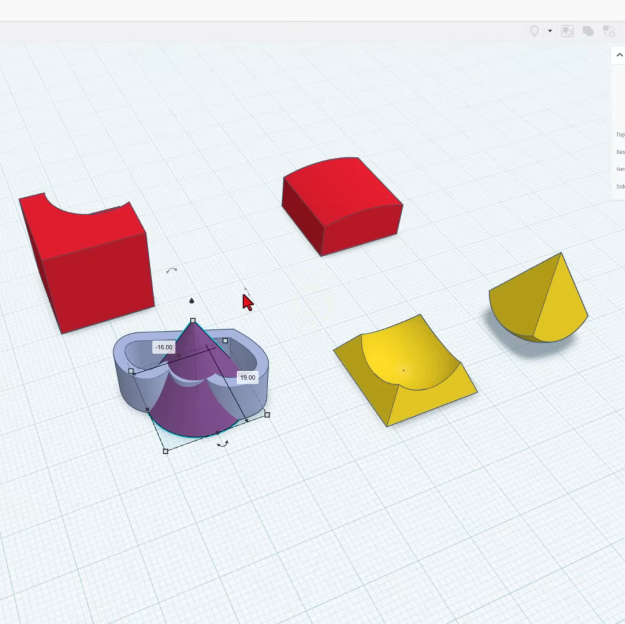
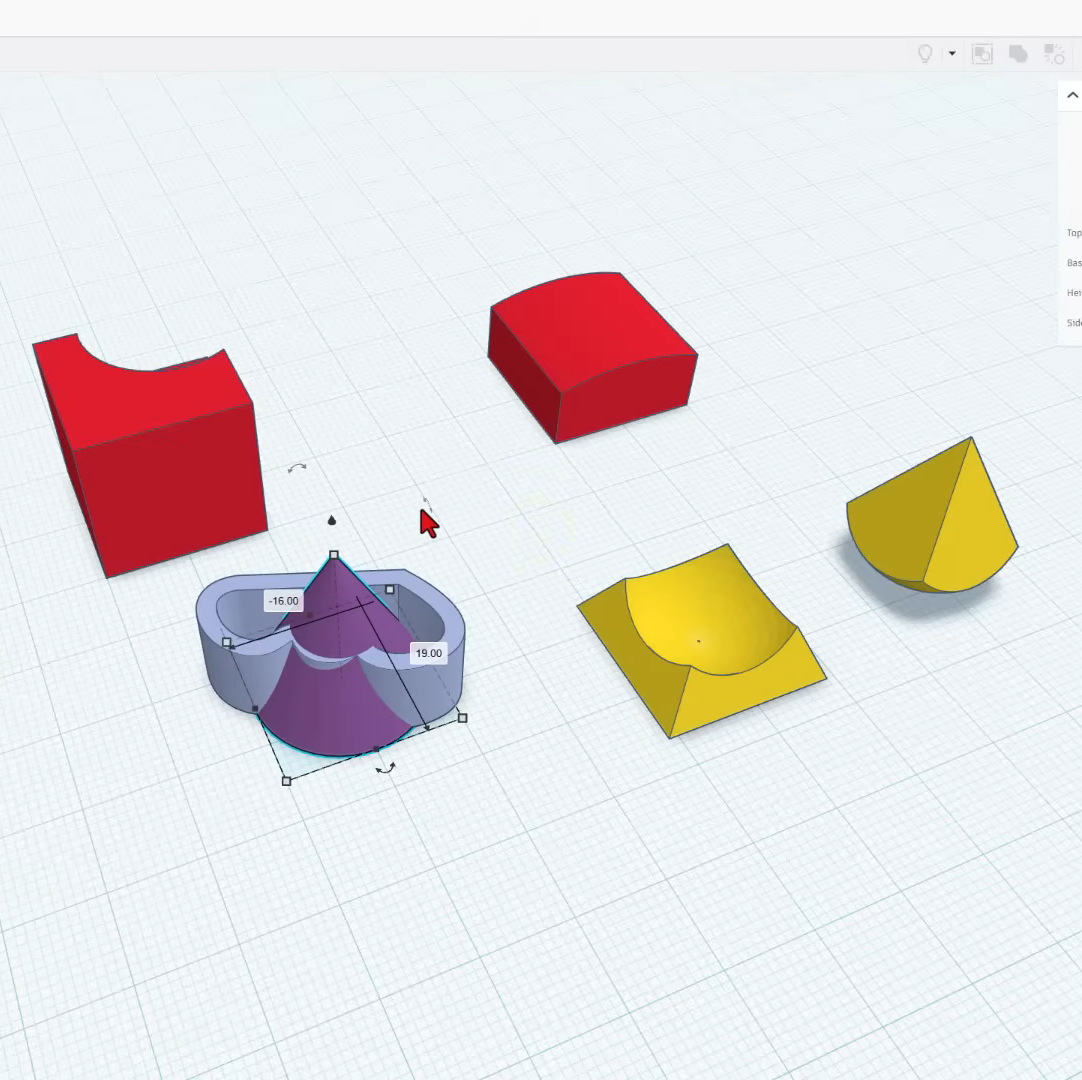
He starts out by explaining some of the basics before quickly jumping into the new gear. There are two headline features: intersect groups and smooth curves. Where the old union group tool simply merged two pieces of geometry, intersect group allows you to create a shape only featuring the geometry where two individual blocks intersect. It’s a neat addition that allows the creation of complex geometry more quickly. [HL ModTech] demonstrates it with a sphere and a pyramid and his enthusiasm is contagious.
As for smooth curves, it’s an addition to the existing straight line and Bézier curve sketch tools. If you’ve ever struggled making decent curves with Bézier techniques, you might appreciate the ease of working with the smooth curve tool, which avoids any nasty jagged points as a matter of course.
While it’s been gaining new features at an impressive rate, ultimately TinkerCAD is still a pretty basic tool — it’s not the sort of thing you’d expect to see in the aerospace world or anything. ut it’s a great way to start whipping up custom stuff on your 3D printer.
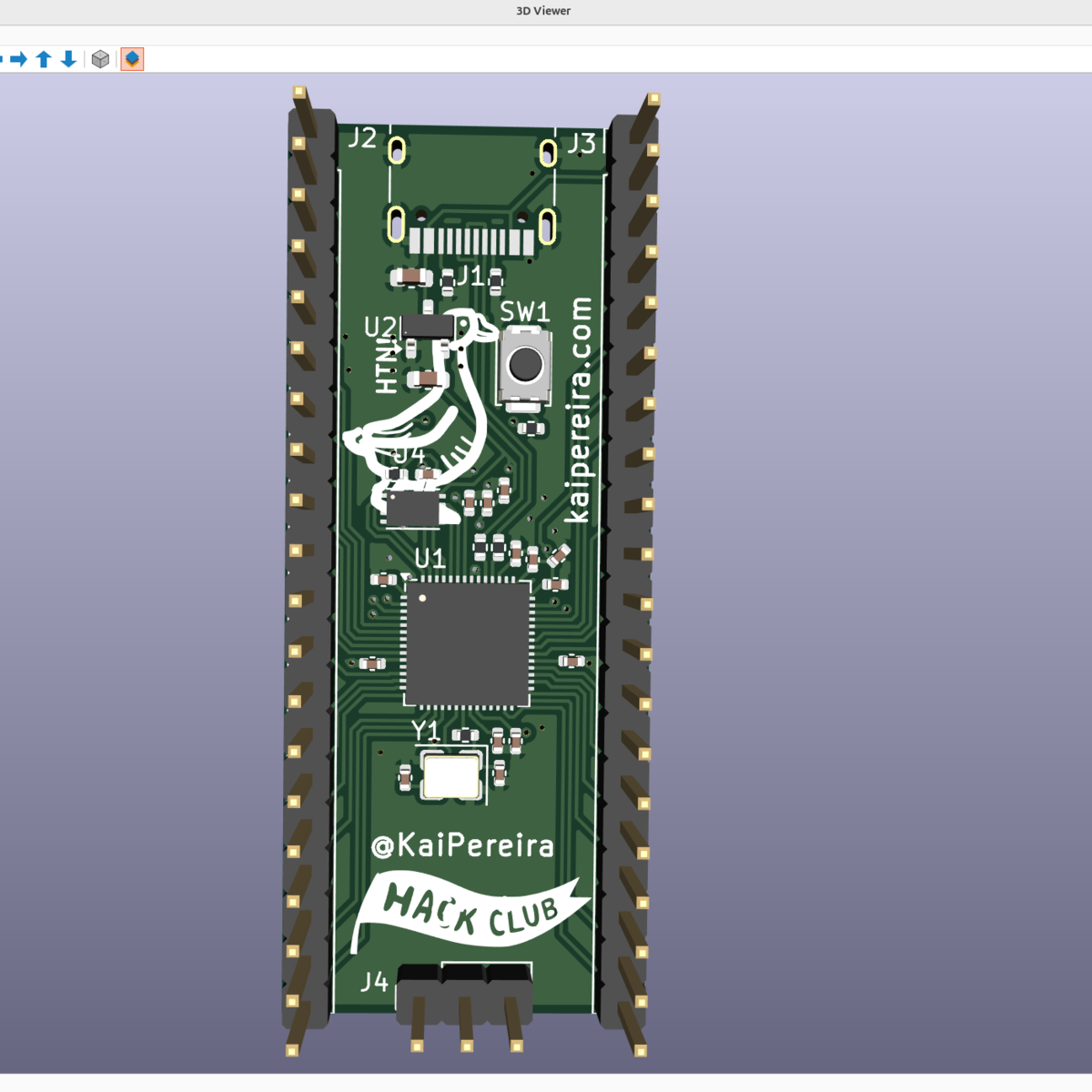
I was looking over the week’s posts on Hackaday – it’s part of my job after all – and this gem caught my eye: a post about how to make your own RP2040 development board from scratch. And I’ll admit that my first thought was “why would you ever want to do that?” (Not a very Hackaday-appropriate question, honestly.) The end result will certainly cost more than just buying a Pi Pico off the shelf!
Then it hit me: this isn’t a project per se, but rather [Kai] was using it as an test run to learn the PCB-production toolchain. And for that, replicating a Pico board is perfect, because the schematics are easily available. While I definitely think that a project like this is a bit complicated for a first PCB project – I’d recommend making something fun like an SAO – the advantage of making something slightly more involved is that you run into all of the accompanying problems learning experiences. What a marvelous post-complete-beginner finger exercise!
And then it hit me again. [Kai]’s documentation of everything learned during the project was absolutely brilliant. It’s part KiCAD tutorial, part journal about all the hurdles of getting a PCB made, and just chock-full of helpful tips along the way. The quality of the write-up turns it from being just a personal project into something that can help other people who are in exactly the same boat, and I’m guessing that’s a number of you out there.
In the end, this was a perfect Hackaday project. Yes, it was “too simple” for those who have made their 30th PCB design. (Although I’d bet you could still pick up a KiCAD tip or two.) And yes, it doesn’t make economic sense to replicate mass-market devices in one-off. And of course, it doesn’t need that fun art on the board either. But wrap all these up together, and you get a superbly documented guide to a useful project that would walk you through 95% of what you’ll need to make more elaborate projects later on. Superb!
Surely you do “finger exercises” too. Why not write them up, and share the learning? And send them our way – we know just the audience who will want to read it.
This article is part of the Hackaday.com newsletter, delivered every seven days for each of the last 200+ weeks. It also includes our favorite articles from the last seven days that you can see on the web version of the newsletter.
Want this type of article to hit your inbox every Friday morning? You should sign up!
Anindya Roy, co-founder and chief scientific officer of Lila Biologics, up to his elbows in a box that shields an oxygen-sensitive enzyme he was testing during an experiment. (Photos courtesy of Roy)
Editor’s note:This series profiles six of the Seattle region’s “Uncommon Thinkers”: inventors, scientists, technologists and entrepreneurs transforming industries and driving positive change in the world. They will be recognized Dec. 11at the GeekWire Gala. Uncommon Thinkers is presented in partnership with Greater Seattle Partners.
Before he launched a venture-backed biotech startup, prior even to landing a research role in one of the world’s premier academic labs, Anindya Roy arrived in the U.S. with two suitcases and $2,000 in the bank.
Roy grew up in rural India in a home that lacked electricity and running water during his childhood. A passion for science fueled his ambitions, leading him to earn degrees at the University of Calcutta and the Indian Institute of Technology in Kharagpur.
Then he made the bold leap in 2008 to pursue his PhD at Arizona State University, which led to a postdoctoral fellowship with David Baker, a University of Washington professor who last year won a Nobel Prize in Chemistry.
In 2023, Roy co-founded Seattle-based Lila Biologics, which uses the AI-powered protein design technology developed in the Baker lab to pursue cutting-edge medical therapies.
“Anindya is a brilliant and determined scientist and innovator who has made key contributions across diverse areas of science,” Baker said, “and is charting a most exciting path forward with Lila.”
Dr. Sheila Gujrathi, a biotech executive and chair of Lila’s board of directors, described Roy as “a thoughtful and creative problem-solver who approaches each challenge with genuine humility. He stands out not just for his innovative thinking, but also for his sincere kindness and integrity.”
Anindya Roy and his kitty, Uno.
Unlocking potential
In the lab at ASU, Roy focused on protein engineering for sustainable energy resources, but he was eager to apply those skills to medicine. He sent an email to Baker who invited him for an interview and tour of his protein creation lab, which delivered a kid-in-a-candy-shop kind of experience.
“That was the most exciting thing because it was such an amazingly diverse set of computational protein design problems, aiming to solve so many different kinds of things,” Roy recalled.
He jumped at the postdoc opportunity, joining the lab that is part of the UW’s Institute for Protein Design (IPD). There he began exploring the groundbreaking tools for creating proteins from scratch, ultimately pursuing a molecule that showed promise in cancer care and the treatment of fibrotic diseases that form scar tissue in various organs.
Roy eventually entered the IPD’s Translational Investigator Research Program, which gives entrepreneurial scientists the support and training to begin commercializing their discoveries. Two years ago, he and Jake Kraft, a fellow IPD postdoc, licensed the molecule they worked on at the UW and launched Lila.
While Roy has found success in his research, scientific inquiry can be slow-going and frustrating. To unwind he turns to intense weight training and goes to live shows — he caught Lady Gaga this summer and loves house music. Roy also whips up French pastries and tortes worthy of “The Great British Bake Off.”
And sometimes he reflects on the unlikely journey that led him to launching his own company.
“Whenever I get kind of discouraged or depressed about things, I look back at my career trajectory and how far I’ve come,” Roy said. “That does give me a lot of strength.”
A selection of pastries baked by Roy Anindya, including choux pastry critters and colorful spheres, tarte au citron and a chocolate cake topped with raspberries.
The power of science
His startup is also making confidence-boosting progress. Lila has raised $10 million from investors and released two AI-powered platforms for creating therapeutic proteins. One is focused on targeted radiotherapy, generating proteins that precisely bind to tumors and carry radioactive isotopes that zap cancerous cells. The other platform is used to build long-acting injectable drugs that slowly release medicine over weeks or months.
In September, the seven-person startup announced a collaboration with pharmaceutical giant Eli Lilly to develop therapies for treating solid tumors.
Roy is grateful for U.S. support of the basic research that underpins the work being done at universities, institutions and companies nationwide. He’s also worried about federal funding cuts being pursued by the current administration that threaten America’s leadership in scientific innovation.
Because while he has been doing de novo protein design for more than a decade, Roy is still amazed by what the technology can do and how fast it’s evolving.
“This is almost like science fiction,” Roy said. “Years ago, you never imagined what we are doing right now. You are designing molecules in the computer, and you are putting them in actual living systems, and it’s doing what it’s supposed to do. It is pure science fiction.”
EXPERT INTERVIEW — The last few months have seen a series of major cyber incidents which have frozen airports, crippled companies, compromised government systems, and stolen millions from unwitting victims. Cyber leaders are warning that the threat is being worsened as hackers leverage new technology like artificial intelligence for more potent attacks.
The Cipher Brief spoke with Robert Hannigan, who served as Director of GCHQ, the UK’s largest intelligence agency, which provides signals intelligence (SIGINT) and information assurance (IA), about the nature of the cyber threat, and why everything from supply chain security to cross-sector cooperation is needed for a strong defense. We caught up with him from Riyadh’s Global Cybersecurity Forum (GCF).
The Cipher Brief: I'm curious if you could tell us right off the top, with so many different countries represented, so many different areas of expertise, what is the buzz there, Robert? What are people really most concerned about?
Hannigan: I think the big cyber incidents happening in the Middle East and Europe in recent months, particularly ransomware as a service, so big names like Jaguar Land Rover and others, have kind of given this meeting an extra buzz just before we met. Quite a few people flew in from airports that have been affected by the supply chain attack on baggage handling software. So it was very relevant and topical.
I think that's touched on a broader theme for the last couple of days, which is about supply chain. This is a global supply chain in many cases. So how do we secure that? It's a challenge, but it's no longer enough for companies or governments to secure their own perimeters. They have to worry about the tens of thousands of suppliers and vendors attached to them, their ecosystem, if you like. So regulators are getting there, and the EU has already regulated this and said we're all responsible. Other countries like the UK are getting there. So I think supply chain has been a big theme.
Save your virtual seat now for The Cyber Initiatives Group Winter Summit on December 10 from 12p – 3p ET for more conversations on cyber, AI and the future of national security.
The Cipher Brief: Ransomware supply chain has been around forever. They're very difficult in their own right, but now we're looking at a world where AI is impacting everything. How concerned are you about that?
Hannigan: I'm really concerned that we don't repeat the mistakes of the past with AI. So as we rush to adopt AI and to use it in our applications across business and government, can we make sure we do it securely? We learned the lessons of cybersecurity because we're all paying the price in a way for 20, 30 years of building a digital economy on software, particularly, but also hardware that was not designed with security in mind. So again, regulators are getting there. They're mandating Secure by Design in most countries, but that's going to take years to follow through. So can we make sure that when we adopt AI, we're doing it safely and securely? And I think there are some big risks in AI, particularly in data poisoning.
The Cipher Brief: Sam Altman did an interview just recently saying the horse is out of the barn, so to speak. And he's not even sure where this is going when it comes to building in kind of more secure ethical processes into using AI.
You sat on a panel there talking about converging crises, the future of cyberspace and complex global dynamics. And boy, are they complex. I'm really curious to hear how all of these different countries are coming together to talk about working together in cyber when some of the countries have closer relationships to China than other countries do. How are you looking at that complex landscape for both risk and opportunity?
Hannigan: It’s a great question. I think the other theme of these last two days has been multilateralism under pressure. This is not a great time for cooperation between states. And that's a problem for cyber because as you know, from your background, cyber is a team sport. You can't do this within one country. And so we really need to approach this multilaterally. I think on our panel this morning, we weren't pessimistic. Yes, it's difficult in geopolitical terms, but actually it's in everyone's interests to try and secure cyberspace. And there are plenty of initiatives going across countries that are working. Secure by Design is one, trying to improve the standard of secure software development. Some of the security work on AI is going across countries. So I haven't given up hope on that working, but it's really essential and why it's great to have people from all over the world at this kind of meeting.
The Cipher Brief: One of the other things I always love to ask you about because it's always extremely relevant is the relationships with the private sector. As former head of GCHQ, this is something that you're very close to. You have a deep understanding of what needs to happen to make these work. How do you take private sector-government relationships in one country and then sort of scale that, if you will, with other trusted partners?
Hannigan: I think it's a great question. I think The Cipher Brief is a great example of an organization that's tried to bring together government and companies in a really effective way. I've just come from the UK where I've done lots of interviews on our recent big retail, ransomware attacks, Jaguar Land Rover and others. It's striking that people still expect government to be able to defend everybody. We all know that that's just not possible.
Government has very limited resources; it can advise, it can regulate. But actually it's up to the private sector companies to defend themselves and to prepare for resilience. And one of the frustrating things for me is that this is possible, this is an achievable goal. We hear about the failures, but actually there are thousands of companies protecting themselves very well and preparing for resilience in case there is an attack so they can contain it and get back up and running very quickly. So there are a lot of people doing the right thing, some people who aren't, and we need to help them get better.
The Cipher Brief: I think you're absolutely right in saying that some of these larger companies that really have the resources to put into cybersecurity and information sharing have a lot more responsibility on their shoulders than those medium and smaller companies which sort of have to wait to see what comes down to them.
Have you been involved in any conversations there that have surprised you or made you think differently about any part of what you focus on every day when it comes to cybersecurity and all of these complex issues?
Hannigan: I think we've had a really good conversation about the positive lessons coming out of Ukraine. And Chris Inglis, who you know very well, was talking about this on his panel. And I think it's a really good point that there are so many positive things coming out of that terrible situation in Ukraine on the cyber side. So why has Ukraine managed to keep going in cyberspace to resist this avalanche of attacks coming from Russia? It's because they've had a partnership with private sector companies, big tech and small companies, with allied countries, in Europe and the U.S. in particular, and there has been a coalition of defense. And there's something really interesting there about the model for how if you get together, private and public, across different allies, you really can defend. And as Chris and one or two others put it, defense is the new attack. It's really powerful when you do it properly.
The Cipher Brief: That was such an interesting time when the full scale invasion started because you did see it's a volunteer army of all of these companies. And the important thing I think to look at there is it was very values based. That landscape is also changing. Are you concerned at all about that in the future?
Hannigan: I think we're all concerned about polarization and some of those companies being torn between East and West and, as you say, closer to China or indeed closer to Russia. I think what's powerful though in Ukraine is they not only used companies and, as you say, volunteers, they also looked to their own citizens and they used very talented people, whatever their backgrounds, to get involved in this great effort to defend Ukraine. So you can achieve good things if you can organize people together. And it's amazing they're still up and running.
And it’s also a victory for cloud. I remember 10 years ago when governments were very nervous about putting anything in the cloud. Ukraine's a great example of where cloud has saved them essentially by putting stuff outside the country. They've managed to keep going and that's impressive and a great vote of confidence.
Are you Subscribed to The Cipher Brief’s Digital Channel on YouTube? There is no better place to get clear perspectives from deeply experienced national security experts.
Read more expert-driven national security insights, perspective and analysis in The Cipher Brief
An illustration of a protein created by Accipiter Bio that has two active sites, shown in light and darker green, that can simultaneously bind two targets. (Accipiter Bio Image)
A Seattle biotech startup born from a Nobel laureate’s lab has landed $12.7 million and partnerships with pharmaceutical giants Pfizer and Kite Pharma by using AI to design proteins that mount a multi-pronged attack on diseases.
Accipiter Biosciences emerged from stealth today with a leadership team that includes researchers who worked at the University of Washington’s Institute for Protein Design under David Baker, a 2024 Nobel Prize in Chemistry winner for his breakthroughs in building proteins from scratch.
The company is using artificial intelligence tools developed at the institute to engineer de novo proteins that have the unusual ability to bind multiple cellular targets at once, potentially amplifying their illness-fighting impact.
“We want to establish this new modality,” said Matthew Bick, Accipiter Bio’s co-founder and CEO. The strategy, he added, could unlock new ways to more effectively treat complicated diseases.
There’s evidence that combinations of drugs sometimes perform better than single therapies, but the challenge has been coordinating their actions so they work together at the same location.
Matthew Bick, CEO and co-founder of Accipiter Biosciences. (Accipiter Bio Photo)
In some forms of cancer, for example, multiple cell functions need to be turned on simultaneously to produce helpful molecules that work synergistically to create an effect “that is not just additive, it’s multiplicative,” Bick said.
The approach could also speed U.S. Food and Drug Administration approval and cut costs. Typically, when two drugs are combined to treat a condition, each must undergo its own expensive Phase 1 safety trial, followed by an additional trial testing them together. A single multi-functional drug would need just one Phase 1 trial.
Multiple avenues to drug therapies
Accipiter Bio has entered into a collaboration and license agreement with Pfizer to research and engineer new molecules. The deal provides an upfront payment for the startup and the potential to earn more than $330 million if Accipiter Bio hits certain milestones and through royalties.
“With Accipiter’s platform technology and collaboration, Pfizer aims to solve complex therapeutic problems with biologics that may have previously been unattainable,” said Jeffrey Settleman, Pfizer Oncology R&D’s chief scientific officer.
Accipiter Bio also has an agreement with the oncology drug company Kite, which is owned by Gilead Sciences, to design proteins for use in cell therapies. The arrangement similarly includes initial funding with the possibility of milestone payments and royalties. Kite has the option of acquiring molecules created through the arrangement and develop them into therapeutics for global sales.
On top of those efforts, Accipiter Bio has four of its own drug-development programs. Two programs are preparing for formal FDA discussions about human testing — a stage called pre-IND .
Bick would not provide details on the efforts, but said the company is researching agents for treating cancers and irritable bowel syndrome, among other ailments.
Funding and leadership
The Accipiter Biosciences leadership team includes from left: Javier Castellanos, co-founder and chief technologist; Hector Rincon-Arano, co-founder and chief scientist; and William Canestaro, chief operating officer and chief strategy officer. Not pictured: CEO and co-founder Matthew Bick. (Accipiter Bio Photos)
Flying Fish Partners and Takeda co-led the seed round. Additional investors are Columbus Venture Partners, Cercano Capital, Washington Research Foundation, Alexandria Investments, Pack Ventures and Argonautic Ventures.
“We’ve reached the point where computation isn’t just speeding up biology,” said Heather Gorham, principal at Flying Fish Partners and Accipiter board member. “It’s expanding what’s biologically possible.”
The startup launched in March 2023 and previously raised about $800,000 to get off the ground. Bick was a senior fellow in Baker’s lab for more than seven years and later a senior director for Seattle’s Neoleukin Therapeutics.
Accipiter Bio has 17 employees. The leadership team has three members in addition to Bick.
Javier Castellanos, co-founder and chief technologist, was a graduate student with Baker; co-founder and CTO of Cyrus Biotechnology, another protein design startup; and a past director at Neoleukin.
Hector Rincon-Arano, co-founder and chief scientist, was with Seagen (now a division of Pfizer) for more than seven years where he helped take a therapeutic from proof-of-concept to the first step of getting a new drug approved. He was also briefly at Neoleukin.
William Canestaro, chief operating officer and chief strategy officer, has worked on the business and investing side of biotech with roles at the UW’s Michael G. Foster School of Business, Washington Research Foundation, Pack Ventures, Pioneer Square Labs, Cyclera Therapeutics and others. He has served on the board of directors for multiple startups.
Building on experience
While the strategy of using AI to build a new class of proteins could open the door to groundbreaking therapies, drug development is a risky business.
Neoleukin was a biotech company co-founded by Baker that spun out of the UW in 2019. The startup’s lead drug candidate, an engineered protein used in cancer treatment, under-performed in a Phase 1 trial. Neoleukin laid off many of its employees before merging with another company.
The three co-founders met at the startup and gained valuable technical and strategic lessons from the experience, Bick said. That included the need to have multiple drug programs running at once and insights into preventing immunogencity, which is an unwanted immune response to foreign bodies.
“We were part of the team,” he said, “that took the first fully de novo protein into patients.”
Image of antibodies created from scratch. (UW Institute for Protein Design / Ian C. Haydon Graphic)
Researchers from Nobel Laureate David Baker’s lab and the University of Washington’s Institute for Protein Design (IPD) have used artificial intelligence to design antibodies from scratch — notching another game-changing breakthrough for the scientists and their field of research.
“It was really a grand challenge — a pipe dream,” said Andrew Borst, head of electron microscopy R&D at IPD. Now that they’ve hit the milestone of engineering antibodies that successfully bind to their targets, the research “can go on and it can grow to heights that you can’t imagine right now.”
Borst and his colleagues are publishing their work in the peer-reviewed journal Nature. The development could supercharge the $200 billion antibody drug industry.
Before the advent of AI-based tools, scientists made antibodies by immunizing animals and hoping they would produce useful molecules. The process was laborious and expensive, but tremendously important. Many powerful new drugs for treating cancer and autoimmune diseases are antibody-based, using the proteins to hit specific targets.
Baker, who won the Nobel Prize in Chemistry last year, was recognized for his work unraveling the molecular design of proteins and developing AI-powered tools to rapidly build and test new ones. The technology learns from existing proteins and how they function, then creates designs to solve specific challenges.
In the new research, the team focused on the six loops of protein on the antibody’s arms that serves as fingers that grab its target. Earlier efforts would tweak maybe one of the loops, but the latest technology allows for a much bigger play.
“We are starting totally from scratch — from the loop perspective — so we’re designing all six,” said Robert Ragotte, a postdoctoral researcher at IPD. “But the rest of the antibody, what’s called the framework, that is actually staying the same.”
The hope is that by retaining the familiar humanness of most of the antibody, a patient’s immune system would ignore the drug rather than mount an offense against an otherwise foreign molecule.
Andrew Borst, left, and Robert Ragotte. (UW and LinkedIn Photos)
The researchers tested their computer creations against multiple real-world targets including hemagglutinin, a protein on flu viruses that allow them to infect host cells; a potent toxin produced by the C. difficile bacteria; and others.
The lab tests showed that in most cases, the new antibodies bound to their targets as the online simulations predicted they would.
“They were binding in the right way with the right shape against the right target at the spot of interest that would potentially be useful for some sort of therapeutic effect,” Borst said. “This was a really incredible result to see.”
Borst added that the computational and wet lab biologists worked closely together, allowing the scientists to refine their digital designs based on what the real-life experiments revealed.
The software used to create the antibodies is freely available on GitHub for anyone to use. Xaira Therapeutics, a well-funded biotech startup led by IPD alumni, has licensed some of the technology for its commercial operations and multiple authors on the Nature paper are currently employed by the company.
While the antibodies created as part of the research demonstrated the software’s potential, there are many more steps to engineering a potential therapy. Candidate drugs need to be optimized for additional features such as high solubility, a strong affinity for a target and minimizing immunogenicity — which is an unwanted immune response.
Before joining IPD four years ago, Ragotte was a graduate student doing conventional antibody discovery and characterization using animals.
The idea that one day you could get on a computer, choose a target, and create a DNA blueprint for building a protein was almost unimaginable, he said. “We would talk about it, but it didn’t even seem like a tractable problem at that point.”
The Nature study is titled “Atomically accurate de novo design of antibodies with RFdiffusion.” The lead authors include Nathaniel Bennett, Joseph Watson, Robert Ragotte, Andrew Borst, DéJenaé See, Connor Weidle and Riti Biswas, all of whom were affiliated with the UW at the time the research was conducted, and Yutong Yu of the University of California, Irvine. David Baker is the senior author.
Additional authors are: Ellen Shrock, Russell Ault, Philip Leung, Buwei Huang, Inna Goreshnik, John Tam, Kenneth Carr, Benedikt Singer, Cameron Criswell, Basile Wicky, Dionne Vafeados, Mariana Sanchez, Ho Kim, Susana Torres, Sidney Chan, Shirley Sun, Timothy Spear, Yi Sun, Keelan O’Reilly, John Maris, Nikolaos Sgourakis, Roman Melnyk and Chang Liu.

 Login
Login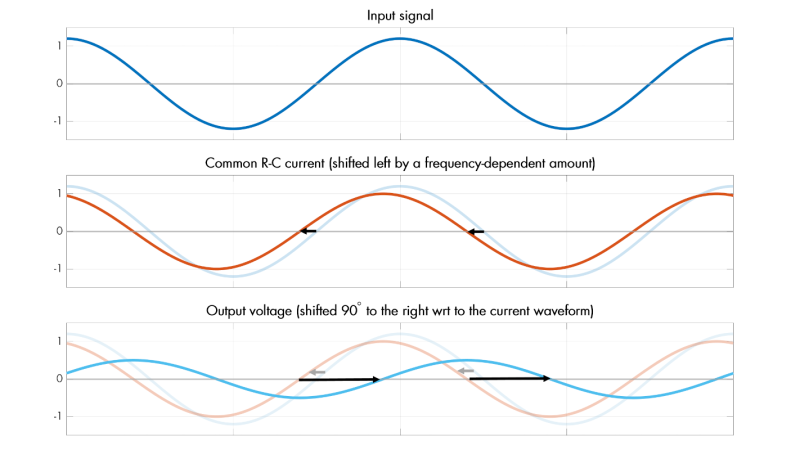
 The discussion on analog filters looks at a few straightforward examples first. Starting with an resistor-capacitor (RC) filter, [lcamtuf] explains it by breaking its behavior down into steps of how the circuit behaves over time. Starting with a DC source and no load, and then removing the resistor to show just the behavior of a capacitor, shows the basics of this circuit from various perspectives. From there it moves into how it behaves when exposed to a sine wave instead of a DC source, which is key to understanding its behavior in arbitrary analog environments such as those involved in audio applications.