Reading view

There are new articles available, click to refresh the page.

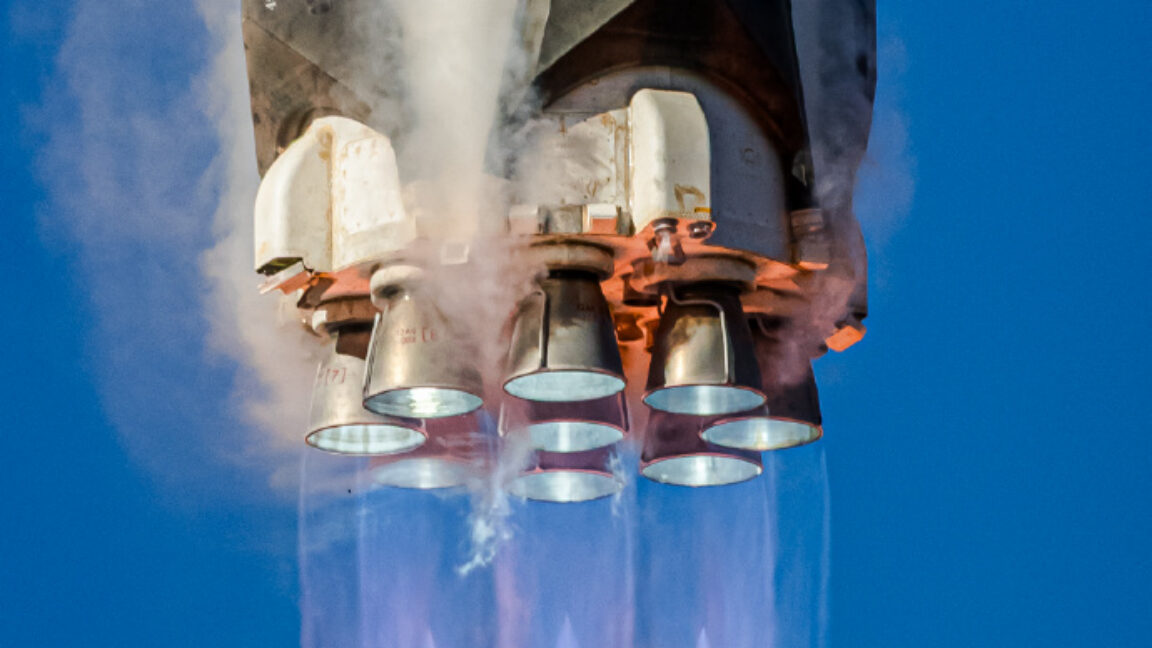
Rocket Report: Blunder at Baikonur; do launchers really need rocket engines?

Welcome to Edition 8.21 of the Rocket Report! We’re back after the Thanksgiving holiday with more launch news. Most of the big stories over the last couple of weeks came from abroad. Russian rockets and launch pads didn’t fare so well. China’s launch industry celebrated several key missions. SpaceX was busy, too, with seven launches over the last two weeks, six of them carrying more Starlink Internet satellites into orbit. We expect between 15 and 20 more orbital launch attempts worldwide before the end of the year.

As always, we welcome reader submissions. If you don’t want to miss an issue, please subscribe using the box below (the form will not appear on AMP-enabled versions of the site). Each report will include information on small-, medium-, and heavy-lift rockets, as well as a quick look ahead at the next three launches on the calendar.

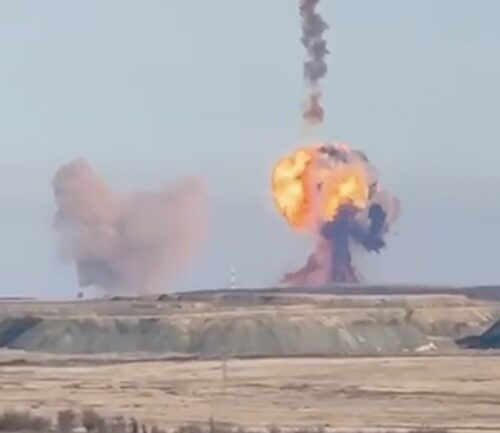
Another Sarmat failure. A Russian intercontinental ballistic missile (ICBM) fired from an underground silo on the country’s southern steppe on November 28 on a scheduled test to deliver a dummy warhead to a remote impact zone nearly 4,000 miles away. The missile didn’t even make it 4,000 feet, Ars reports. Russia’s military has been silent on the accident, but the missile’s crash was seen and heard for miles around the Dombarovsky air base in Orenburg Oblast near the Russian-Kazakh border. A video posted by the Russian blog site MilitaryRussia.ru on Telegram and widely shared on other social media platforms showed the missile veering off course immediately after launch before cartwheeling upside down, losing power, and then crashing a short distance from the launch site.
Read full article

Comments

© Korea Aerospace Research Institute
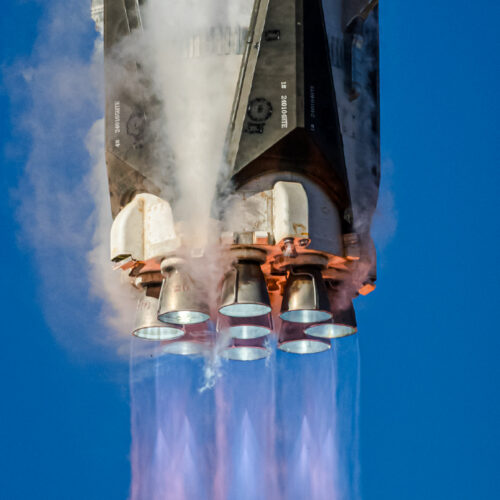
A spectacular explosion shows China is close to obtaining reusable rockets

China’s first attempt to land an orbital-class rocket may have ended in a fiery crash, but the company responsible for the mission had a lot to celebrate with the first flight of its new methane-fueled launcher.

LandSpace, a decade-old company based in Beijing, launched its new Zhuque-3 rocket for the first time at 11 pm EST Tuesday (04:0 UTC Wednesday), or noon local time at the Jiuquan launch site in northwestern China.

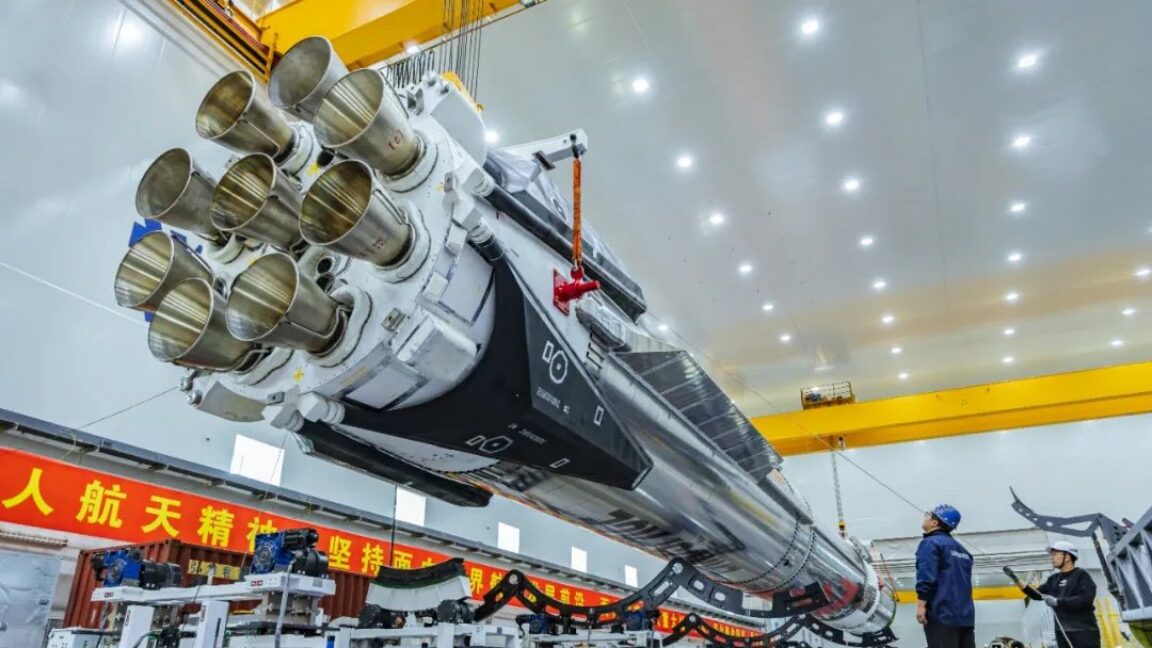
Powered by nine methane-fueled engines, the Zhuque-3 (Vermillion Bird-3) rocket climbed away from its launch pad with more than 1.7 million pounds of thrust. The 216-foot-tall (66-meter) launcher headed southeast, soaring through clear skies before releasing its first stage booster about two minutes into the flight.

Read full article

Comments

© LandSpace

This Chinese company could become the country’s first to land a reusable rocket

There’s a race in China among several companies vying to become the next to launch and land an orbital-class rocket, and the starting gun could go off as soon as tonight.

LandSpace, one of several maturing Chinese rocket startups, is about to launch the first flight of its medium-lift Zhuque-3 rocket. Liftoff could happen around 11 pm EST tonight (04:00 UTC Wednesday), or noon local time at the Jiuquan Satellite Launch Center in northwestern China.

Airspace warning notices advising pilots to steer clear of the rocket’s flight path suggest LandSpace has a launch window of about two hours. When it lifts off, the Zhuque-3 (Vermillion Bird-3) rocket will become the largest commercial launch vehicle ever flown in China. What’s more, LandSpace will become the first Chinese launch provider to attempt a landing of its first stage booster, using the same tried-and-true return method pioneered by SpaceX and, more recently, Blue Origin in the United States.

Read full article

Comments

© LandSpace

The missile meant to strike fear in Russia’s enemies fails once again

A Russian intercontinental ballistic missile (ICBM) fired from an underground silo on the country’s southern steppe Friday on a scheduled test to deliver a dummy warhead to a remote impact zone nearly 4,000 miles away. The missile didn’t even make it 4,000 feet.

Russia’s military has been silent on the accident, but the missile’s crash was seen and heard for miles around the Dombarovsky air base in Orenburg Oblast near the Russian-Kazakh border.

A video posted by the Russian blog site MilitaryRussia.ru on Telegram and widely shared on other social media platforms showed the missile veering off course immediately after launch before cartwheeling upside down, losing power, and then crashing a short distance from the launch site. The missile ejected a component before it hit the ground, perhaps as part of a payload salvage sequence, according to Pavel Podvig, a senior researcher at the United Nations Institute for Disarmament Research in Geneva.

Read full article

Comments

© MilitaryRussia.ru via Telegram

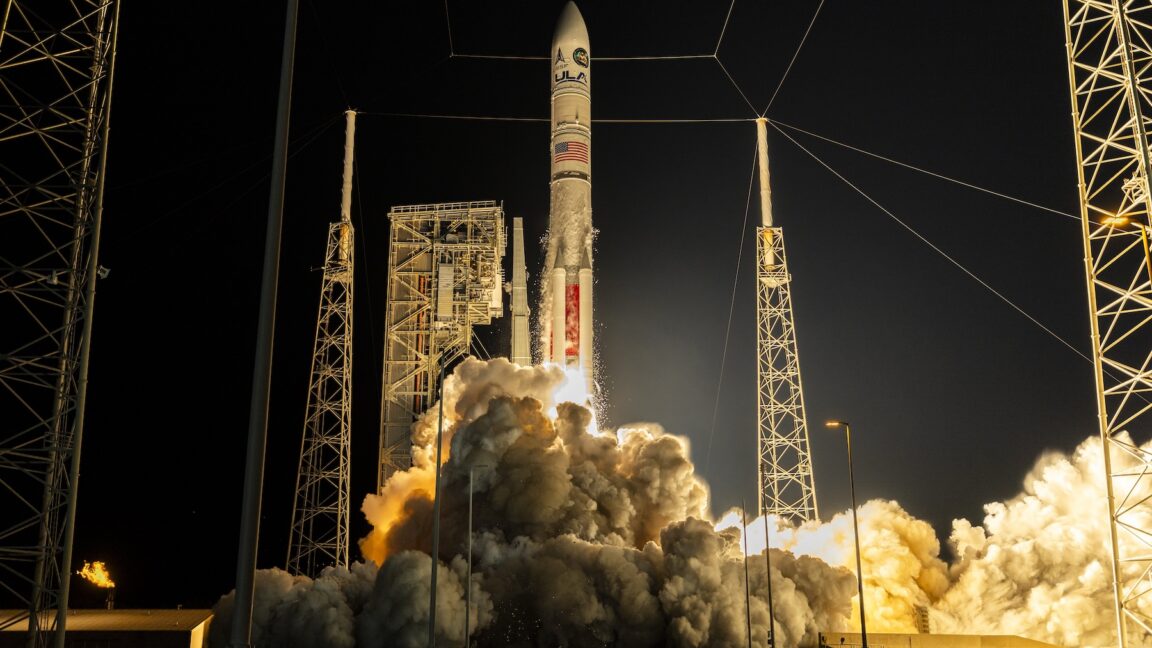
ULA aimed to launch up to 10 Vulcan rockets this year—it will fly just once

Around this time last year, officials at United Launch Alliance projected 2025 would be their busiest year ever. Tory Bruno, ULA’s chief executive, told reporters the company would launch as many as 20 missions this year, with roughly an even split between the legacy Atlas V launcher and its replacementthe Vulcan rocket.

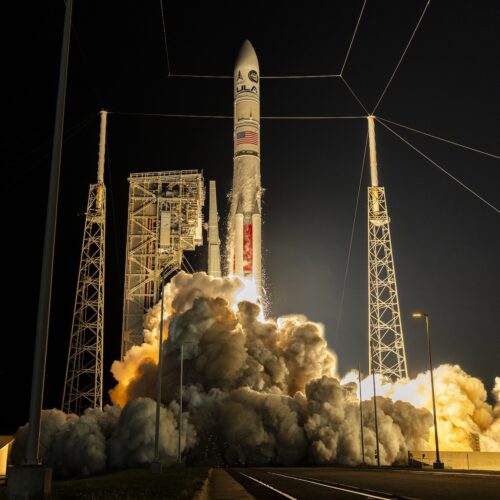
Now, it’s likely that ULA will close out 2025 with six flights—five with the Atlas V and just one with the Vulcan rocket the company is so eager to accelerate into service. Six flights would make 2025 the busiest launch year for ULA since 2022, but it would still fall well short of the company’s forecast.

Last week, ULA announced its next launch is scheduled for December 15. An Atlas V will loft another batch of broadband satellites for the Amazon Leo network, formerly known as Project Kuiper, from Cape Canaveral Space Force Station, Florida. This will be ULA’s last launch of the year.

Read full article

Comments

© United Launch Alliance

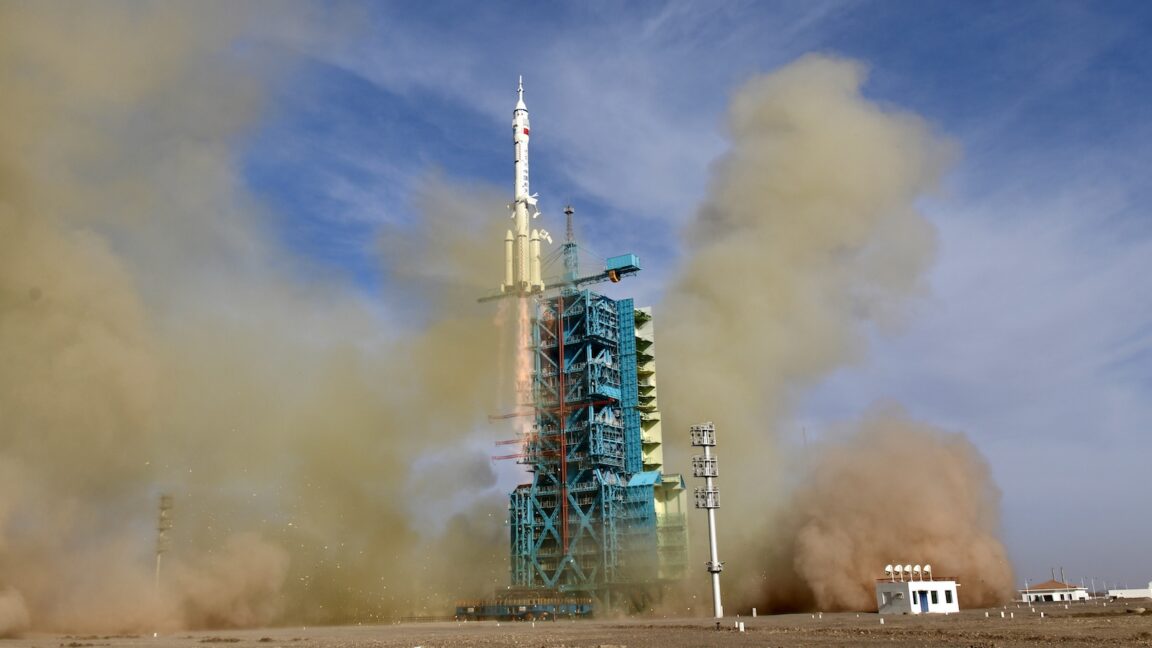
China launches an emergency lifeboat to bring three astronauts back to Earth

An unpiloted Chinese spacecraft launched late Monday and linked up with the country’s Tiangong space station a few hours later, providing a lifeboat for three astronauts stuck in orbit without a safe ride home.

A Long March 2F rocket fired its engines and lifted off with the Shenzhou 22 spacecraft, carrying cargo instead of a crew, at 11:11 pm EST Monday (04:11 UTC Tuesday). The spacecraft docked with the Tiangong station nearly 250 miles (400 kilometers) above the Earth about three-and-a-half hours later.

Chinese engineers worked fast to move up the launch of the Shenzhou 22, originally set to fly next year. On November 4, astronauts discovered one of the two crew ferry ships docked to the Tiangong station had a damaged window, likely from an impact with a small fragment of space junk. The crew members used a microscope to photograph the defect from different angles, confirming a small triangular area with a crack, Zhou Jianping, chief designer of China’s human spaceflight program, told Chinese state media.

Read full article

Comments

© VCG/VCG via Getty Images

Rivals object to SpaceX’s Starship plans in Florida—who’s interfering with whom?

The commander of the military unit responsible for running the Cape Canaveral spaceport in Florida expects SpaceX to begin launching Starship rockets there next year.

Launch companies with facilities near SpaceX’s Starship pads are not pleased. SpaceX’s two chief rivals, Blue Origin and United Launch Alliance, complained last year that SpaceX’s proposal of launching as many as 120 Starships per year from Florida’s Space Coast could force them to routinely clear personnel from their launch pads for safety reasons.

This isn’t the first time Blue Origin and ULA have tried to throw up roadblocks in front of SpaceX. The companies sought to prevent NASA from leasing a disused launch pad to SpaceX in 2013, but they lost the fight.

Read full article

Comments

© SpaceX

Rocket Report: SpaceX’s next-gen booster fails; Pegasus will fly again

Welcome to Edition 8.20 of the Rocket Report! For the second week in a row, Blue Origin dominated the headlines with news about its New Glenn rocket. After a stunning success November 13 with the launch and landing of the second New Glenn rocket, Jeff Bezos’ space company revealed a roadmap this week showing how engineers will supercharge the vehicle with more engines. Meanwhile, in South Texas, SpaceX took a step toward the first flight of the next-generation Starship rocket. There will be no Rocket Report next week due to the Thanksgiving holiday in the United States. We look forward to resuming delivery of all the news in space lift the first week of December.

As always, we welcome reader submissions. If you don’t want to miss an issue, please subscribe using the box below (the form will not appear on AMP-enabled versions of the site). Each report will include information on small-, medium-, and heavy-lift rockets, as well as a quick look ahead at the next three launches on the calendar.

Northrop’s Pegasus rocket wins a rare contract. A startup named Katalyst Space Technologies won a $30 million contract from NASA in August to build a robotic rescue mission for the agency’s Neil Gehrels Swift Observatory in low-Earth orbit. Swift, in space since 2004, is a unique instrument designed to study gamma-ray bursts, the most powerful explosions in the Universe. The spacecraft lacks a propulsion system and its orbit is subject to atmospheric drag, and NASA says it is “racing against the clock” to boost Swift’s orbit and extend its lifetime before it falls back to Earth. On Wednesday, Katalyst announced it selected Northrop Grumman’s air-launched Pegasus XL rocket to send the rescue craft into orbit next year.

Read full article

Comments

© Manuel Mazzanti/NurPhoto via Getty Images

Attack, defend, pursue—the Space Force’s new naming scheme foretells new era

A little more than a century ago, the US Army Air Service came up with a scheme for naming the military’s multiplying fleet of airplanes.

The 1924 aircraft designation code produced memorable names like the B-17, A-26, B-29, and P-51—B for bomber, A for attack, and P for pursuit—during World War II. The military later changed the prefix for pursuit aircraft to F for fighter, leading to recognizable modern names like the F-15 and F-16.

Now, the newest branch of the military is carving its own path with a new document outlining how the Space Force, which can trace its lineage back to the Army Air Service, will name and designate its “weapon systems” on the ground and in orbit. Ars obtained a copy of the document, first written in 2023 and amended in 2024.

Read full article

Comments

© York Space Systems

Three astronauts are stuck on China’s space station without a safe ride home

Wrapping up 204 days in orbit, three Chinese astronauts flew back to Earth aboard a Shenzhou spacecraft Friday, leaving three crewmates behind on the Tiangong space station with a busted lifeboat.

Commander Chen Dong, concluding his third trip to space, and rookie crewmates Chen Zhongrui and Wang Jie touched down inside their spacecraft at the Dongfeng landing zone at 1:29 am EST (06:29 UTC) Friday. The parachute-assisted landing occurred in the mid-afternoon at the return zone, located in the remote Gobi Desert of northwestern China.

Chinese space officials upended operations on the country’s Tiangong space lab last week after astronauts found damage to one of two Shenzhou return capsules docked at the station. The China Manned Space Agency, run by the country’s military, announced changes to the space station’s flight plan November 4, the day before three crew members were supposed to depart and fly home.

Read full article

Comments

© STR/AFP via Getty Images

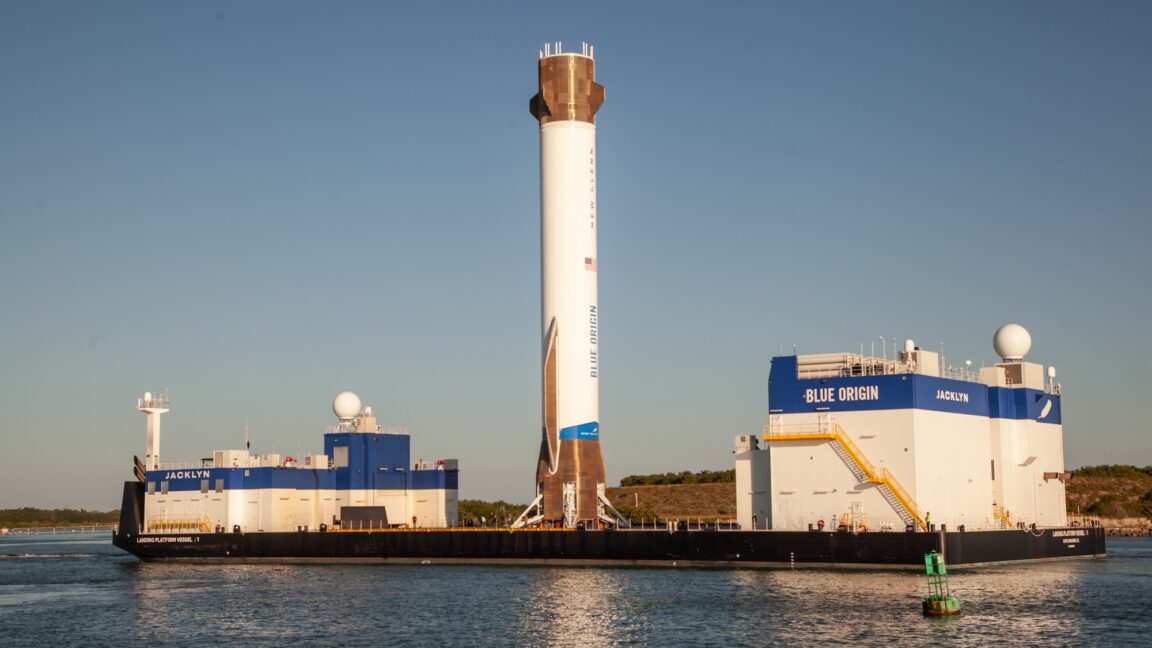
Blue Origin’s New Glenn rocket came back home after taking aim at Mars

The rocket company founded a quarter-century ago by billionaire Jeff Bezos made history Thursday with the pinpoint landing of an 18-story-tall rocket on a floating platform in the Atlantic Ocean.

The on-target touchdown came nine minutes after the New Glenn rocket, built and operated by Bezos’ company Blue Origin, lifted off from Cape Canaveral Space Force Station, Florida, at 3:55 pm EST (20:55 UTC). The launch was delayed from Sunday, first due to poor weather at the launch site in Florida, then by a solar storm that sent hazardous radiation toward Earth earlier this week.

“We achieved full mission success today, and I am so proud of the team,” said Dave Limp, CEO of Blue Origin. “It turns out Never Tell Me The Odds (Blue Origin’s nickname for the first stage) had perfect odds—never before in history has a booster this large nailed the landing on the second try. This is just the beginning as we rapidly scale our flight cadence and continue delivering for our customers.”

Read full article

Comments

© Blue Origin

With another record broken, the world’s busiest spaceport keeps getting busier

CAPE CANAVERAL, Florida—Another Falcon 9 rocket fired off its launch pad here on Monday night, taking with it another 29 Starlink Internet satellites to orbit.

This was the 94th orbital launch from Florida’s Space Coast so far in 2025, breaking the previous record for the most satellite launches in a calendar year from the world’s busiest spaceport. Monday night’s launch came two days after a Chinese Long March 11 rocket lifted off from an oceangoing platform on the opposite side of the world, marking humanity’s 255th mission to reach orbit this year, a new annual record for global launch activity.

As of Wednesday, a handful of additional missions have pushed the global figure this year to 259, putting the world on pace for around 300 orbital launches by the end of 2025. This will more than double the global tally of 135 orbital launches in 2021.

Read full article

Comments

© Stephen Clark/Ars Technica

An explosion 92 million miles away just grounded Jeff Bezos’ New Glenn rocket

CAPE CANAVERAL, Florida—The second flight of Blue Origin’s New Glenn rocket was postponed again Wednesday as a supercharged wave of magnetized plasma from the Sun enveloped the Earth, triggering colorful auroral displays and concerns over possible impacts to communications, navigation, and power grids.

Solar storms like the one this week can also affect satellite operations. That is the worry that caused NASA to hold off on launching a pair of science probes from Cape Canaveral Space Force Station, Florida, on Wednesday aboard Blue Origin’s New Glenn rocket.

In a statement, Blue Origin said NASA, its customer on the upcoming launch, decided to postpone the mission to send the agency’s two ESCAPADE spacecraft on a journey to Mars.

Read full article

Comments

© NASA/Goddard Space Flight Center

❌