Agencies with the US and other countries have gone hard after bulletproof hosting services providers this month, including Media Land, Hypercore, and associated companies and individuals, while the FiveEyes threat intelligence alliance published BPH mitigation guidelines for ISPs, cloud providers, and network defenders.
Australia mirrored the US’s recent sanctions against bankers, financial institutions, and others allegedly involved in laundering funds for North Korea.
DEEP DIVE – By any traditional definition, the city of Ryazan doesn’t belong on a list of battlegrounds in the Ukraine war. There are no Ukrainian soldiers or tanks deployed there, and it’s in western Russia, roughly 600 miles from the active front lines of Pokrovsk or Kupiansk.
But residents and officials in Ryazan – population 550,000 – wouldn’t be surprised to find their city on such a list. Ukraine has attacked Ryazan at least a half dozen times, as part of an escalating drone-and-missile campaign against Russia’s oil sector. Most recently, an oil refinery in Ryazan – Russia’s fourth-largest – was forced to shut down after an Oct. 23 attack by Ukrainian drones.
Ryazan is hardly alone.
Lt. Gen. Vasyl Maliuk, head of the Ukrainian Security Service, said last week that Ukraine has carried out more than 160 successful attacks on Russian refineries and other energy targets this year; an Open Source Centre investigation identified more than 90 strikes between Aug. 2 and Oct. 14. In the last week alone, Ukraine has struck an oil terminal and tanker in Russia’s Black Sea port of Tuapse; energy facilities in Russia's Oryol, Vladimir, and Yaroslavl regions; and the Koltsevoy, or “ring,” pipeline, which links refineries in Moscow, Ryazan, and Nizhny Novgorod, and supplies fuel to the Russian military. Earlier strikes damaged one of Russia's biggest oil refineries near St. Petersburg, and perhaps most impressive – from the Ukrainian point of view – the campaign has reached as far as the Siberian city of Tyumen, some 1200 miles east of Moscow.
Stretching the conventional notion of front lines is clearly part of the Ukrainian strategy; the strikes have forced the Kremlin to worry about drone and missile attacks across a broad swath of Russian territory. But the main aim is to hurt the Russian oil sector – the country’s richest revenue source, and a key reason why the Kremlin has been able to maintain the funding of its war machine.
“Ukraine’s theory of victory now includes destroying Russia’s energy sector,” Lt. Gen. Ben Hodges, a former commander of U.S. Army Forces in Europe, told The Cipher Brief. “They’ve developed capabilities that can reach great distances with precision, exposing Russia’s vulnerability – its inability to protect critical infrastructure across its vast landscape.”
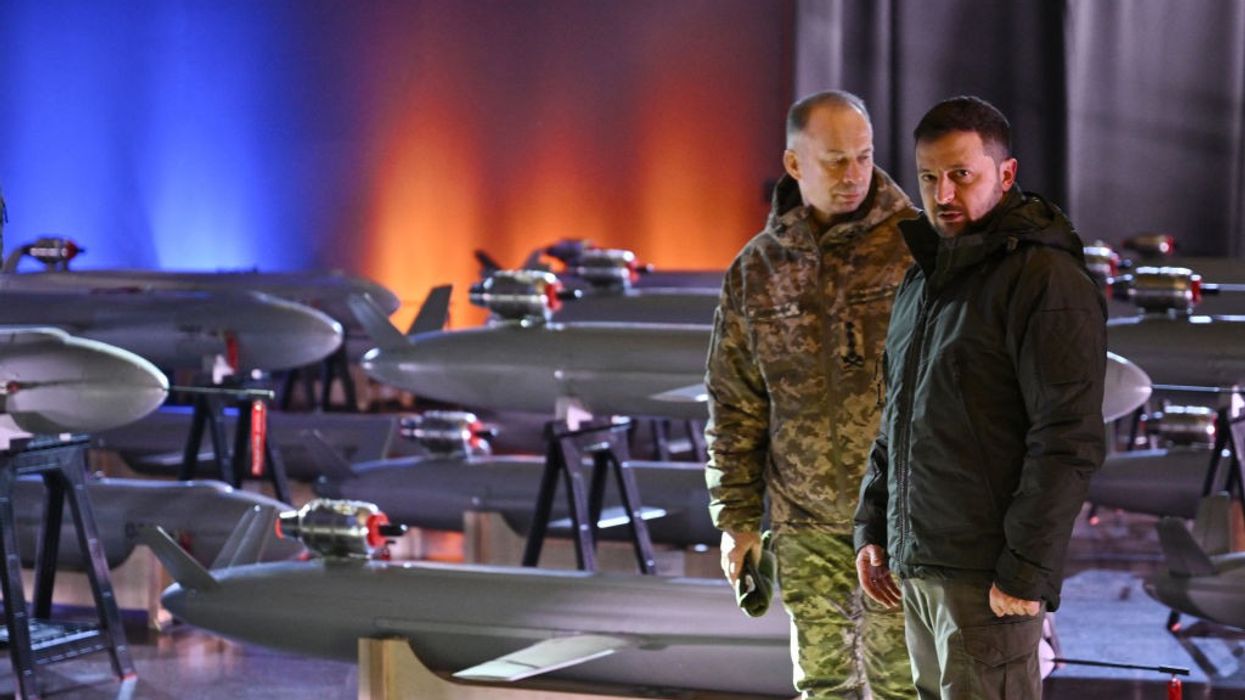
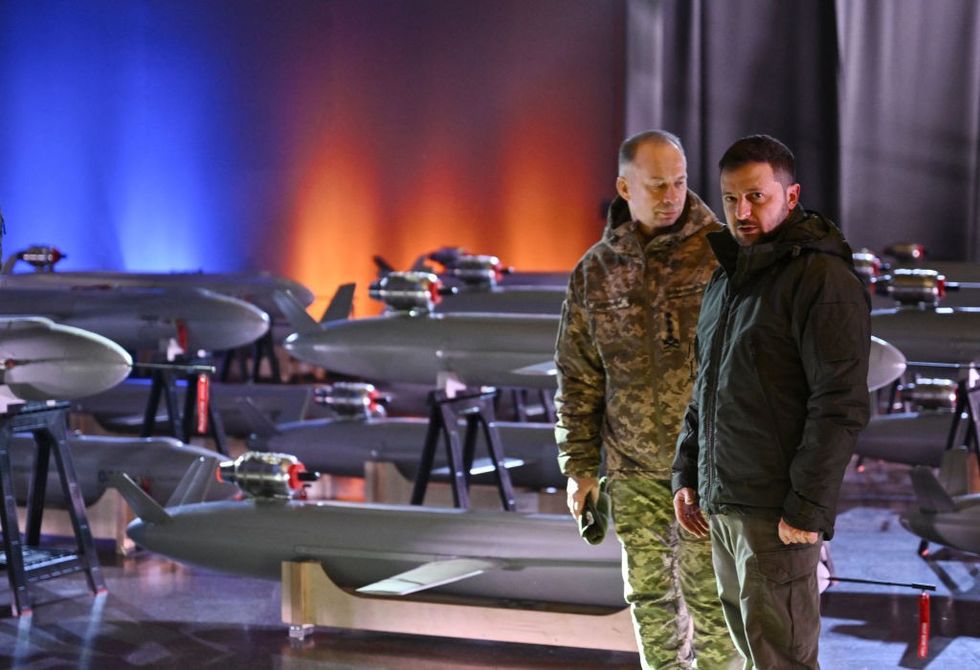
Last week Ukrainian President Volodymyr Zelensky vowed to intensify the pace and scope of the campaign. “We must work every day to weaken the Russians. Their money for the war comes from oil refining,” Zelensky said in an Oct. 27 address to the nation. “The most effective sanctions - the ones that work the fastest - are the fires at Russia’s oil refineries, its terminals, oil depots.”
Zelensky also noted that 90 percent of the strikes have been carried out by Ukrainian-made drones and missiles – a not-so-subtle message to Europe and the U.S.: get us more of your long-range weapons, and we can help bring Russian President Vladimir Putin to the negotiating table.
“It’s very impressive,” said Balazs Jarabik, a former European Union diplomat and analyst for RPolitik, said of Ukraine’s campaign against the Russian energy sector. In an interview with The Cipher Brief, Jarabik said the attacks have“had an impact in terms of getting headlines, making the Russian war effort more expensive, and creating shortages so the Russian people feel the pain of the war.”
That’s also the aim of the recent U.S. sanctions against energy giants Rosneft and Lukoil, the first American economic penalties imposed on Russia since Donald Trump returned to office. The Treasury Department said the sanctions would “increase pressure on Russia’s energy sector and degrade the Kremlin’s ability to raise revenue for its war machine.”
While Ukrainian officials have welcomed the sanctions, they have also said that their drone and missile attacks pack a more powerful punch.
“Our strikes have already had more impact than sanctions,” Kyrylo Budanov, Ukraine’s head of Military Intelligence, said on Telegram following last week’s spate of attacks.
For their part, Putin and other Russian officials have downplayed the impact of the strikes while at the same time warning that they are dangerously escalatory. The Kremlin has also said that neither the attacks nor the sanctions will move them to change course in the war.
Experts say both sides may be right – that in the short term, the Kremlin can probably ride out the impact of the Ukrainian campaign, but that Russia may feel significant pain if the sanctions are enforced and the oil sector strikes continue.
“Russia’s oil refineries are a bit like a man who is being repeatedly punched,” Sergey Vakulenko, Senior Fellow, Carnegie Russia Eurasia Center, wrote in a recent assessment for Carnegie Politika. “He will not die from one punch, or even half a dozen punches. But it becomes harder and harder for him to recover after each subsequent blow. Although no single punch is fatal, he could end up being beaten to death.”
Need a daily dose of reality on national and global security issues? Subscriber to The Cipher Brief’s Nightcap newsletter, delivering expert insights on today’s events – right to your inbox. Sign up for free today.
Assessing the damage
To date, the Ukrainian strikes have hit 21 of Russia's 38 large oil refineries, according to the BBC, and several have been struck more than once. Roughly 20% of the nation’s refining capacity has been damaged or destroyed, and last month the International Energy Agency (IEA) reported that Russia's revenues from crude oil and refined products had fallen to their lowest level in a decade – excluding the period immediately following the COVID-19 outbreak.
"Persistent attacks on Russian energy infrastructure have cut Russian crude processing by an estimated 500,000 barrels per day, resulting in domestic fuel shortages and lower product exports," the IEA said. In an accompanying forecast, the agency said that if the sanctions remain in place and the attacks continue – even without Zelensky’s promised scaling-up of their cadence – the impact to Russia’s refining would stretch to at least mid-2026.
Beyond the macroeconomic impact, the Ukrainian campaign has also been felt by Russian citizens, in the form of higher fuel prices and – in some regions – shortages and long lines for gas.
“The economic impact of strikes against Russian energy infrastructure is beginning to be felt outside of Moscow, as Russia diverts available energy from the regions to keep Moscow supplied,” Rob Dannenberg, a former chief of the CIA’s Central Eurasia Division, wrote last week in The Cipher Brief. “There are shortages and energy price hikes that the Kremlin can no longer conceal.”
And in a broader reflection of Russia’s economic woes, this week the central bank downgraded the country’s growth forecast. Experts say the sanctions and Ukrainian strikes are a big part of the problem for Moscow.
“Ukraine’s attacks on Russian energy infrastructure are strategically meaningful and increasingly so,” Jacek Siewiera, a former head of Poland’s National Security Bureau, told The Cipher Brief. He said the strikes are serving three strategic functions: forcing Russia to divert efforts to rear-area defense; raising the overall cost of war by creating new logistical costs inside Russia; and a less tangible, more symbolic impact.
“These attacks send a message to Moscow and its economy that Ukraine – and its backers – can reach deep,” Siewiera said. “That has symbolic as well as material value.”
What comes next
Might the Ukrainian campaign alter the course of the war? Experts are divided on the question.
On the one hand, dozens of Russian oil sector targets are now within reach of Ukrainian missiles and drones – and it’s clear that Zelensky’s vow to expand and intensify the campaign is underway. An already-bruised industry in Russia is surely girding for more punishment.
But several experts said that in order to sustain the tempo and volume of the attacks, Ukraine will need help from the West or a significant boost to its own capabilities.
“Ukraine has made impressive inroads but it’s not yet clear whether the strikes will fundamentally degrade Russia’s war-fighting capacity,” Siewiera said. He and others echoed Zelensky’s point – that the West should support Ukraine’s deep-strike capabilities to boost the impact of the current attacks, and improve the odds that they will effect change in Moscow. Until then, Siewiera said, it’s unlikely that the campaign can deliver “a knockout blow.”
Jarabik agreed, noting that Ukrainian drones typically carry payloads of only 50-60 kilograms (roughly 110-130 pounds); long-range missile systems can inflict far greater damage. He and others said that much will depend on the success of the Ukrainian-made Flamingo missile – which has been touted as a homegrown alternative to western long-range weapons. Officials say the Flamingo is now operational, and that it can carry more than 1,000 kilos (2000+ pounds), with a range of roughly 1800 miles.
“I think we are going to see the Ukrainian strikes increasing,” Jarabik said. “The big question here is whether Ukrainians are going to have the missile capabilities to scale the attack.” At the current rate, he said, Ukraine cannot compel the Kremlin to alter its approach. “So far, neither the sanctions nor this (campaign of strikes) is actually enough to bring the end of the war. Russia has the means to continue.”
All those interviewed for this piece agreed that the success of the Ukrainian campaign will depend on whether Ukraine can hit more targets, more frequently, and with heavier payloads.
“As Ukraine continues to improve its long-range precision strike capability – and if the West adds its own weapons to Ukraine’s arsenal – the impact is going to increase significantly,” Lt. Gen. Hodges said. And that, he said, “could lead to a successful outcome for Ukraine.”
Read more expert-driven national security insights, perspective and analysis in The Cipher Brief because National Security is Everyone’s Business.
DEEP DIVE – Looking at the recent headlines from Russia, this much seems clear: the West’s sanctions against the country are finally working.
Oil revenues have fallen dramatically. Growth is anemic – official forecasts for this year have dropped from 2.5% to 1%. The budget released this week cuts military spending for the first time since the 2022 invasion of Ukraine, and while Vladimir Putin had promised no tax increases, the Kremlin now plans to raise the value-added tax to a staggering 22% and boost levies on businesses as well. Meanwhile, Russia has drained its rainy-day National Welfare Fund; the fund’s liquid assets have dipped by two-thirds since the war began.
President Donald Trump’s claim last week that Russia was in “big financial trouble” looks only slightly hyperbolic – and it also looks like evidence that after more than three and a half years of war, the sanctions are punishing Russia’s economy and the Kremlin’s war coffers.
But then there is the other news.
In the past week, Moscow has won fresh pledges from India and China to keep buying Russian oil and other sanctioned goods; China actually vowed to “elevate” its energy cooperation with Russia. A September report found that Russia’s “shadow fleet” of oil tankers has proved a highly effective sanctions workaround. And for all of Trump’s threats of fresh sanctions, his administration has yet to pull the trigger.
For its part, Moscow says no sanctions will alter the course of its war against Ukraine. Kremlin spokesman Dmitry Peskov said last month that sanctions had been “absolutely useless” in changing Russia’s stance.
So which is it? Are sanctions having the desired effect? Or are they a fundamentally weak lever unlikely to change Russian behavior?
“The question is, what did you want sanctions to do?” Thomas Graham, a long-time Russia expert at the Council on Foreign Relations, told The Cipher Brief. “If the goal was to cause Russia to rethink what it's doing in Ukraine to pull back from its aggression, the short answer is no… That said, it's also clear that the sanctions have raised the cost (for Russia) of continuing the conflict.”
“Sanctions are a slow-burn tool,” Gonzalo Saiz, a Research Fellow at the Royal United Services Institute, told The Cipher Brief. “They aren’t bringing about the collapse of the Kremlin or the Russian economy, but Russia is suffering quite significantly.”
What 6,000+ sanctions have accomplished
When Russia launched its full-scale invasion of Ukraine, it was met with an early beating on the battlefield and a raft of economic penalties from a surprisingly unified group of western nations. As early as the summer of 2022, experts were forecasting a Russian economic meltdown.
The U.S. alone sanctioned some 6,000 individuals and companies with links to the war effort. The European Union has implemented 18 sanctions packages; last week it proposed a 19th round. The measures have targeted Russia’s financial, military and energy sectors.
Some of the impact is clear and quantifiable. Since the February 2022 invasion, more than 1,300 international companies have scaled back operations in Russia and some 500 have left entirely, according to the Kyiv School of Economics. The firms that left represented about $109 billion in annual revenue. Several Russian banks were barred from the Society for Worldwide Interbank Financial Telecommunication (SWIFT), the interbank messaging service that processes international payments.
“The investment community has outright abandoned Russian assets, and foreign capital investment is essentially gone at this point,” Daniel Tannebaum, a former U.S. Treasury official who leads anti-financial crime efforts at Oliver Wyman, told The Cipher Brief. “20 years ago, Russia was growing its economy, becoming more of a global player – that day really is done.”
The U.S. and Europe also went after Russia’s energy sector – a source of at least $240 billion in revenues in the year before the invasion. The EU imposed an embargo on most Russian crude oil, and the U.S. and its G-7 allies capped the price other countries could pay for Russian crude oil. Earlier this year, the EU pledged to fully end its imports of Russian gas.
While Russia has found several workarounds, its oil revenues have fallen. The latest forecast for this year is $200 billion.
The oil sector has also been hurt by the war itself. Last month, as Ukraine stepped up drone attacks against Russian energy infrastructure, Reuters reported that the damage had cut Russian oil refining by almost a fifth, and reduced shipments from key ports. The Kremlin has responded by banning some diesel fuel exports and extending a gasoline export ban through the end of 2025. Sanctions have also cut Russian access to advanced drilling tools and other oil industry technology – all part of what the Wall Street Journal referred to as “The Slow Demise of Russian Oil.”
Beyond the oil sector, the Russian economy is showing across-the-board weakness, with implications for the war as well.
“Russia has been heavily reliant on North Korea for almost a year for military support, both in the form of munitions and soldiers,” Tannebaum said. “That doesn't strike me as a signal of anything that's going so well.”
The Cipher Brief Threat Conference is happening October 19-22 in Sea Island, GA. The world's leading minds on national security from both the public and private sectors will be there. Will you? Apply for a seat at the table today.
The Kremlin workarounds
Taken together, the pileup of economic danger signs would seem to
support Trump’s statement that Moscow is in “big financial trouble”. Last month Treasury Secretary Scott Bessent went further, suggesting that a new round of sanctions would bring the “full collapse” of Russia’s economy.
But it’s not clear that those new sanctions are coming. And for a variety of reasons, experts see neither an imminent collapse nor any likelihood that Putin will soon slow his war effort.
“The fact that Putin continues his war despite 19 rounds of EU sanctions, and after more than three years, is a clear sign of policy failure,” Clayton Siegle, a senior fellow at the Center for Strategic and International Studies (CSIS), told The Cipher Brief. “President Trump’s August ultimatum for Putin to end the war or face severe consequences changed nothing.”
Experts say that “failure” has many roots. For one, Putin prepared the Russian economy for the sanctions. Prior to the 2022 invasion, Russia spent years stashing away more than $600 billion in central bank reserves, only half of which are now subject to Western sanctions. Less than a month before he ordered his troops into Ukraine, he cemented a new partnership with China – which has proved to be a critical customer for Russian oil and other items on the sanction lists.
“We have to remember, this was one of the largest economies in the world up until three years ago,” Tannebaum said. “This wasn't Iran, this wasn't a hermit kingdom like North Korea. To truly atrophy this economy was always going to take time. It was always like a vice grip where you just keep tightening the pressure. Unfortunately, we haven't tightened it enough.”
After Russia’s early setbacks in Ukraine, Putin put his country on a war footing that included a military-spending-induced boom in 2023-24. That gave the economy an artificial but powerful jolt – Russia’s economy grew by more than 4% in that period, a higher rate than the U.S.
“From a macroeconomic standpoint, (Russia) was actually in very good shape for this massive invasion of Ukraine,” Graham said, adding that the wartime boost raised wages and stimulated poorer regions of the country.
“You put all of this together and you still have a Kremlin that is able to maintain the necessary level of public support, and raise the money that it needs to continue this conflict.”
Russia has also benefited from lax enforcement of the sanctions, and clever workarounds of its own.
TheNew York Timesreportedrecently that several global financial institutions, particularly in China and the UAE, have faced no consequences for facilitating Russian transactions. The reason? A concern that sanctioning these banks – China’s in particular – would cripple international trade and damage global supply chains.
And while the oil sector has taken a big hit, the revenues keep coming.
In 2023, China imported record amounts of Russian energy, and India, Turkey, and some members of the EU have also continued to purchase Russian oil and LNG. Europe still imports nearly a fifth of its gas from Russia – that plan to wean the continent off Russian fossil fuels won’t come to fruition until 2027.
Sanction-busters: 1,000 aging tankers
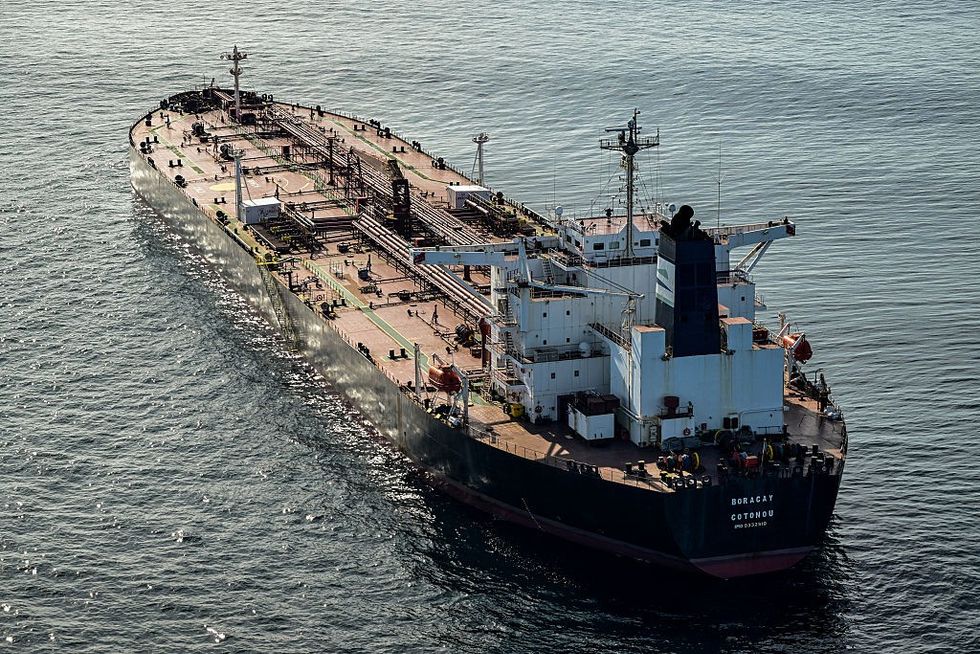
Russia has also made extensive and profitable use of the so-called “shadow fleet,” vessels carrying illegal Russian oil exports via a complex web of transshipments. These ships are typically older, with questionable ownership, flying third-country flags and often sending false location information – all meant to hide their connections to Russia. According to S&P Global Market Intelligence, the shadow fleet now numbers nearly 1,000 vessels and accounts for about 17 percent of oil tankers sailing today.
In a September report, the Royal United Services Institute (RUSI) said that governance of the shadow fleet must be "radically improved." Saiz, a co-author of the report, said the fleet remained “a vital lifeline” for Russia.
“The ease with which vessels can obtain flags without scrutiny, avoid ownership transparency and escape enforcement actions has created the conditions for an entire parallel shipping ecosystem,” the report said.
The EU’s most recent sanctions package includes a new effort to target the shadow fleet, identifying more than 500 vessels and adding them to its sanction lists. This would presumably make ports less willing to work with them. But Saiz and other experts say Russia continues to add vessels to take the place of ships on the lists.
Sign up for the Cyber Initiatives Group Sunday newsletter, delivering expert-level insights on the cyber and tech stories of the day – directly to your inbox. Sign up for the CIG newsletter today.
New and improved sanctions?
Certainly the sanctions haven’t succeeded in making Putin a global pariah. Last month, the Russian leader hosted representatives from more than 70 countries at the Eastern Economic Forum in Vladivostok. That same week, Putin traveled to Beijing to mark the 80th anniversary of the end of the second world war. Putin stood alongside Xi Jinping and India’s Narendra Modi, and announced that China and Russia had agreed to build a pipeline that would send Russian gas from Siberia to China.
For now, the U.S. intelligence community’s threat assessment – issued in March – looks accurate. “Russia has proven adaptable and resilient, in part because of the expanded backing of China, Iran, and North Korea,” the report said. “Russia has shown it can navigate substantial economic challenges resulting from the ongoing drains of the war, Western cost imposition, and high inflation and interest rates, for at least the near term by using financial and import substitution workarounds.”
Might a new round of sanctions change things?
Trump has continued to threaten new penalties against Russia, and Bessent’s “full collapse” remark came with a claim that the economic troubles would force Putin to negotiate.
“A lot of that is just rhetoric from Secretary Bessent,” Tannebaum said. “Let's be very clear, this administration has not imposed a single sanction on anyone related to the war in Ukraine…We're long past time for words on this.”
“It's hard for me to imagine a set of sanctions that would lead to the collapse of the Russian economy,” Graham said of Bessent’s claim, and he added a cautionary note. “That begs the question: are we really interested in the collapse of the Russian economy? Chaos in Russia, from the standpoint of US national interest, is really not a good thing.”
Graham, who served in the early 2000s as Senior Director for Russia at the National Security Council, noted that Russia still has 5-6,000 nuclear warheads, and recalled that as the Soviet Union was unraveling, the U.S. was worried about a resulting economic calamity.
“We want Russia to be weaker,” he said. “We want it not to be able to prosecute this war at the intensity it has up to this point, but crippling or crashing the Russian economy has first- and second-order consequences that are actually quite negative from the standpoint of U.S. national interests.”
“Sanctions have hurt the Russian economy,” Gen. Phillip Breedlove, a former Supreme Allied Commander for Europe, toldThe Cipher Brief, “but they have never changed Russian actions on the battlefield… There's a whole host of things we could do that would truly bring Russia to their knees and we haven't done it.”
Experts agree on a short list of measures that might move the needle when it comes to Russia’s prosecution of the war: imposing secondary sanctions aggressively against buyers of Russian oil – as Tannebaum said, “really forcing third countries to make a choice between Russia and a decent swath of humanity”; boosting enforcement for the financial-sector sanctions; better policing of the “shadow fleet” traffic in Russian oil; and – an idea that has been discussed for years – seizing the roughly $300 billion in Russian sovereign assets frozen in the West.
The latter is controversial; it has never been done, and opponents argue that it would violate a long-standing principle of global finance.
“There is absolutely a precedent of not trying to cross that line of seizing a sovereign's assets,” Tannebaum said, but then he added: “You also don't see a sovereign invade another sovereign in the 21st century.”
Siegle has argued that in addition to the secondary sanctions on buyers of Russian oil, a surcharge should be imposed on every barrel of imported Russian oil, in return for the waiving of those tariffs.
“Russia is still making enough from oil sales, those sold on the G-7-compliant market and those via the shadow fleet,” Siegle said. “This new surcharge would crush Moscow’s oil revenues and provide a new cash flow that could be used to confront Putin and defend Ukraine.”
Graham says that no economic sanctions will match the power of effective military aid to Ukraine.
“It's the battlefield that's critical here, not sanctions, particularly if we're looking at the near term,” Graham said. “If Russia is not making progress in the actual battle, that is something that is going to lead to reconsideration in the Kremlin of whether it makes sense to continue this horrific loss.”
Sanctions busting 101
Russia has one more answer to the West’s sanctions, and it comes from an unlikely place: the university campus.
Russia’s elite Higher School of Economics has created a master’s program focused on sanctions evasion. The two-year course, taught in Russian and English, trains students to navigate Western sanctions and untangle compliance issues for Russian firms. Annual tuition: $6,260.
Igor Lipsits, a former professor at the university, told Russian media that “there’s a recognition that sanctions are here to stay. People are expected to learn how to work around them.”
Tannebaum said the degree program was one more piece of evidence to suggest that sanctions were hurting the country. “If they're not hurting them, why are you teaching people how to evade sanctions?”
Are you Subscribed to The Cipher Brief’s Digital Channel on YouTube? There is no better place to get clear perspectives from deeply experienced national security experts.
Read more expert-driven national security insights, perspective and analysis in The Cipher Brief because National Security is Everyone’s Business.
EXPERT INTERVIEW – The United Nations has reimposed sweeping economic and military sanctions on Iran, ten years after lifting them under the 2015 nuclear deal.
Britain, France, and Germany triggered the “snapback” mechanism, accusing Tehran of nuclear escalation and blocking inspections. Iran had already halted oversight after U.S. and Israeli strikes in June damaged several nuclear sites and military facilities.
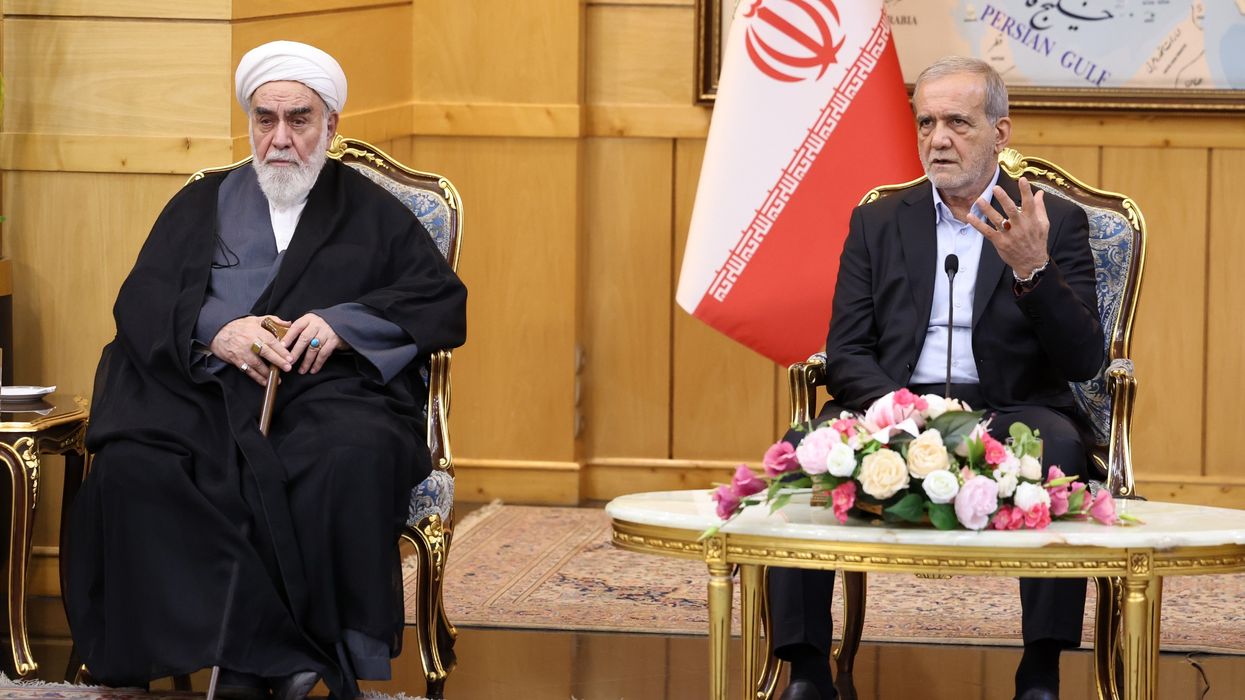
President Masoud Pezeshkian insists Iran has no intention of building nuclear weapons, calling the sanctions “unfair and illegal.” But the move marks another blow to the Joint Comprehensive Plan of Action (JCPOA), the deal meant to cap Iran’s enrichment and research while allowing civilian nuclear energy.
Iran accelerated banned nuclear activity after Trump pulled the U.S. out of the deal in 2018, repeatedly dismissing the accord as flawed.
The latest sanctions cut Iran off from global banks, reimpose arms and missile restrictions, and revive asset freezes and travel bans on key officials. Analysts say the measures hit Iran at a fragile moment with its economy shrinking, inflation surging, and the rial collapsing to record lows. Oil sales, foreign investment, shipping, and manufacturing are all expected to take a hit.
The Cipher Brief spoke with longtime Middle East and Energy Analyst Norm Roule, who formerly served as National Intelligence Manager for Iran at ODNI. Roule continues to travel regularly to the region for meetings with high-level officials throughout the Middle East.
Norman Roule is a geopolitical and energy consultant who served for 34 years in the Central Intelligence Agency, managing numerous programs relating to Iran and the Middle East. He also served as the National Intelligence Manager for Iran (NIM-I)\n at ODNI, where he was responsible for all aspects of national intelligence policy related to Iran.
The Cipher Brief: Why are snapback sanctions different from other sanctions already imposed on Iran?
Roule: First, we should touch on what this means for the regime. The sanctions hit Iran at one of its most fragile moments since the late 1980s. The government remains unpopular to an unprecedented degree. Virtually every economic indicator in Iran is poor. Its national security architecture of militias, foreign proxies, Russia, China, and the Revolutionary Guard failed during the recent conflict with Israel and the U.S. The main driver of the regime is to maintain stability as it completes transitions to the post-revolutionary generation of leadership. Despite the absence of large-scale protests, destabilizing national unrest could occur at any time.
Over the past few months, Iran’s diplomats have used the prospect of a nuclear deal and the possibility of sanctions relief as a source of hope for the Iranian people. The return of UN sanctions strips Tehran of one of its few remaining political assets.
The primary difference between the latest sanctions and U.S. sanctions is that these measures are binding on all 193 member states of the United Nations. Iran will, of course, do everything it can to evade sanctions. Russia, China, North Korea, Venezuela, and other Iranian partners who already have a history of violating Iran sanctions are unlikely to enforce these sanctions with enthusiasm.
However, unlike U.S. sanctions, which they have argued could be ignored because they were imposed only by Washington, these sanctions are imposed by the United Nations. This will make it harder for these countries to involve other countries in their own violations. Likewise, it makes it much easier for the U.S. government to seek compliance worldwide due to the legal and reputational risks associated with countries and businesses that we might approach on this issue.
The Cipher Brief: Can you discuss the specific sanctions and your assessment of their likelihood of success?
Roule: First, and most damaging for Iran, these sanctions isolate Iranian banks from a large part of the global financial system and require that UN members prevent the use of their banking systems on sanctioned trade. Hence, Iran has lost the ability to manage its oil revenues through international banks. Instead, it will need to engage in oil bartering or use intermediaries, which is a slower and more expensive process. It will likely reduce its oil sales at a time when Saudi Arabia is trying to reclaim some of the market share lost to Iran in recent years.
Banks understand that Iran will seek to defy sanctions. They also know that there are expensive legal consequences if they fail to undertake due diligence operations to examine transactions and shipments, thereby demonstrating that they have fulfilled their sanctions obligations.
Next, there is the restoration of the conventional arms embargo: This bans traditional arms transfers to or from Iran. This should make it harder for Iran to acquire advanced weapons from Russia and China, but also to sell its weapons systems to Russia, Sudan, and other countries. I will admit that I am not sanguine on the last point.
Third, we have nuclear and missile restrictions: This includes a prohibition on uranium enrichment, reprocessing, heavy-water activities, and ballistic missile technology transfers or tests capable of delivering nuclear weapons (beyond 300 km range). Iran is likely to ignore most of these restrictions and will test the international community as it does so. But I think it will also try to do so in a way that avoids sparking a regime-destabilizing war with Israel or the U.S.
Snapback also restores restrictions on dual-use goods, materials, and technologies that could aid nuclear or missile programs. These sections require increased inspections of Iranian ships and aircraft to prevent the transfer of prohibited materials or goods. For governments and businesses, this requirement will be among the more intrusive and time-consuming, and thus expensive. At the same time, Tehran will game the system by introducing complicated, multi-country layers of shell companies to obtain critical materials. This is where international legal and intelligence partnerships will play an essential role in identifying and neutralizing these networks.
Next, snapback returns asset freezes and travel bans on designated Iranian individuals. This is a rather long list and includes Islamic Revolutionary Guard Corps officials, nuclear scientists, and officials related to their programs, as well as their assets worldwide. Travel bans should be successful. Asset bans are less so, primarily due to the small number of such assets located abroad. These restrictions, however, serve as a powerful reminder to businesses of the reputational impact of doing business with Iran.
What does all of this mean? Join The Cipher Brief Threat Conference - happening October 19-22 in Sea Island, GA. to engage with the world’s leading national security experts to help answer those questions. Apply for your seat at the table today.
The Cipher Brief: Let’s go deeper. Can you break this down by sector? Is there any part of Iran’s economy that will be hurt more than another? Oil seems most likely.
Roule: We should keep in mind that, following the negative impact of the initial sanctions announcement, the effect of sanctions should be understood as corrosive. Further impact is shaped by how seriously and loudly we enforce sanctions, as well as how vigorously and successfully Tehran develops countermeasures.
To begin, Iran started the year in challenging economic conditions. The IMF’s projection for Iran’s GDP was dismal, 0.5%, so negative growth in the coming months would be far from surprising. Indeed, one wonders how it will be avoided.
The snapback announcement caused the Iranian rial to plummet to a new record low of 1.12 million to the dollar. Tehran will have little choice but to inject precious hard currency into the market to sustain its failing currency. I also expect more enthusiasm for the effort to cut some of the zeros from the Iranian currency. Iran’s leaders likely worry that the coming months will see a further weakening of the rial and a spike in inflation, which currently hovers around 43%.
Foreign investment, such as it is, will also take a hit. In 2024, Iran claimed – and probably overstated – that it attracted around $5.5 billion in foreign investment. That minuscule figure will shrink even further.
Let’s talk about sectoral impacts.
Shipping costs for Iran are likely to increase substantially. A significant portion of Iran’s seaborne trade will face new cargo inspections, bans on dual-use goods shipments, insurance difficulties, and possibly even port servicing complications.
Manufacturing and mining will be impacted in terms of both imports and exports as they face new pressures on supply chains and financing. This impact will affect trade with Europe, but it will also dampen Iran’s efforts to establish trade with Africa and complicate its trade relations with Iraq.
Although Iran’s defense industry may not be participating in trade shows, one suspects that its existing trade in drones and light arms will continue. Its current clients – Russia, Sudan, and other African countries, and reportedly Venezuela and Bolivia – may choose to ignore sanctions given their lack of alternative suppliers and animosity with the West.
The impact of sanctions on Iranian oil sales to China will be the most significant, if difficult to assess, in the coming months. Beijing and Tehran have deliberately obscured the payment relationship, and the former has imposed tough terms on Iran. China will view this new phase as an opportunity to offload more goods, machinery, and technology onto the Iranian market, and possibly to negotiate a larger price discount for the oil it acquires.
The use of intermediaries, smaller banks that are outside the scope of international monitoring, and shell firms will also increase costs for Tehran. Last, it isn’t unreasonable to think that Chinese oil sales could contract. Beijing – likely seeing the writing on the wall on this issue – has been building its reserves, and the Saudis and Emirates can fill the missing production, although they won’t discount their oil to match Iran’s prices.
The Cipher Brief: What are Iran’s likely next moves? Is diplomacy dead? What do you say to those who believe military action is expected?
Roule: Iran’s playbook is unlikely to be a surprise. Tehran’s leaders used Western media to issue their side of the story, projecting a blend of confidence, defiance, and dismissal of the impact of sanctions. Once home, Iran’s leaders will show that they won’t stop their nuclear work.
It is likely that even within Iran, the program's future remains under debate, with several options being considered. Tehran’s efforts to maintain close relations with Moscow and Beijing make it likely that it will seek to involve these capitals in its programs. One could imagine Iran dangling IAEA access at some point to gain international acceptance. Three possible programs could emerge in the coming months.
The most likely option is that Iran will seek to rebuild a modernized version of the enrichment and even the conversion facilities destroyed in the Twelve-Day War. This process would be expensive, and, depending on the number and location of facilities, could take years to complete. This option would be consistent with Iranian policy rhetoric but would risk a military attack and an extension of sanctions. The problem with lengthy construction is that this also delays benefits to Iran’s economy.
Tehran could reduce the likelihood of an attack by allowing the IAEA access to the sites or involving Russia or China in the operation and construction of the sites. Such an option, if involving advanced centrifuges, would allow Iran to retain the capability to produce highly enriched uranium, including weaponization levels, in the future should it wish to do so.
A far less likely option is to select a foreign fuel source for domestic reactors to provide power. Since this would mean abandoning a domestic enrichment program, this option is thus improbable in the foreseeable future.
Least likely for now would be weaponization. Such a decision would require Iran’s leadership to believe it could undertake and execute such an activity without discovery by Israeli or Western intelligence and, if discovered, would not face devastating military action similar to the June 2025 war.
In any case, activity at the recently reported Mount Kolang Gaz La facility in Esfahan Province is sufficient to be observable to the West, and as we have recently seen, to draw the attention of Western media, thereby sending a message. I expect construction at the site won’t be very fast until Tehran sees how Israel and the U.S. respond to this announcement and until Iran comes to a conclusion as to what direction it wishes to go in its nuclear program.
Diplomacy on Iran’s nuclear program is far from over, with low-level conversations perhaps taking place in Vienna and European capitals. The international community will remain – and should remain- insistent that the International Atomic Energy Agency (IAEA) gain access to Iran’s nuclear enterprise as soon as possible. Such a return cannot be achieved without engagement and diplomacy. However, it will take time for the politics to cool and a new paradigm of proposals to emerge.
Washington, Europe, and the Gulf will entertain serious proposals from Iran that it will accept a nuclear program that allows the IAEA access it requires. More broadly, Washington is looking for a deal that means Iran won’t have the capacity to build nuclear weapons, or accept constraints on its missile program, and end the regional operations of the Quds Force.
Iran’s current leadership is unlikely to make such a decision until sanctions begin to erode the economy. The death of the Supreme Leader could pave the way for a new generation of leadership, which – while no less assertive and potentially even hostile – might be more willing to be more accommodating on these issues to ensure the survival of the Islamic Republic.
Extreme caution should be exercised when discussing the possibility of military hostilities. The U.S. certainly doesn’t seek to start a war in the region. Israel may conduct military operations in Iran over Quds Force actions. Still, it is hard to see why Israel would argue it needs to undertake a costly military operation simply because Tehran is denying the IAEA access to rubble at Natanz. However, the Twelve Day War has changed the rules. An Israeli or US military attack on Iran is no longer unthinkable. If Iran were to undertake weaponization activity or attempt to conceal weaponization-related equipment or material, some in Tehran probably won’t be surprised if another surgical attack takes place.
Moving to Tehran, it is hard to see what benefits military action brings to Tehran. Iran is operating under some harsh realities. The Twelve Day War made it clear that Israel’s intelligence capabilities within Iran are extraordinary, and there is no reason to believe the capabilities aren’t still in place. If so, any plan would likely be discovered and perhaps neutralized before it could take off. Further, Iran’s air defenses continue to be no match for Israel or U.S. air and missile systems.
Iran’s missiles and drones not only had no strategic impact on the course of the Israeli attack but were significantly reduced in number by Israeli attacks. Iran fought alone in June: neither Russia nor China showed the slightest interest or capability in helping Iran during the June war. A conflict that spread to the region risks costing Iran its détente with the GCC and potentially jeopardizing its support from China. Iran’s population remains disillusioned, and testing their willingness to endure a conflict would be quite the risk. Much depends on specific events and drivers, but current conditions don’t seem to lean towards a regional conflict.
Are you Subscribed to The Cipher Brief’s Digital Channel on YouTube? There is no better place to get clear perspectives from deeply experienced national security experts.
Read more expert-driven national security insights, perspective and analysis in The Cipher Brief because National Security is Everyone’s Business.
Russian crypto traders have been looking to obtain unrestricted accounts for global exchanges as their access to such platforms is limited. Over the past year, the offering of such accounts on the dark web has increased significantly, cybersecurity experts told the Russian press.
Supply of Crypto Exchange Accounts for Russian Users Doubles in a Year of Sanctions
More and more ready-to-use accounts for cryptocurrency exchanges are being sold to Russian residents. While this is not a new phenomenon — such accounts are often employed by fraudsters and money launderers — the current growth in supply has been attributed to the restrictions imposed by the trading platforms on customers from Russia, as a result of compliance with sanctions over the war in Ukraine.
Russian residents have been buying these accounts despite the dangers, including the risk that whoever created them could maintain access after the sale, the Kommersant reported. But they are inexpensive and offers on darknet markets have doubled since early 2022, Nikolay Chursin from the Positive Technologies information security threat analysis group told the business daily.
According to Peter Mareichev, an analyst at Kaspersky Digital Footprint Intelligence, the number of new ads for ready-made and verified wallets on various exchanges reached 400 in December. Proposals to prepare fake documents for passing know-your-customer procedures also rose, the newspaper revealed in an earlier article last month.
Simple login data, username and password, is typically priced at around $50, Chursin added. And for a fully set up account, including the documents with which it was registered, a buyer would have to pay an average of $300. Dmitry Bogachev from digital threat analysis firm Jet Infosystems explained that the price depends on factors such as the country and date of registration as well as the activity history. Older accounts are more expensive.
Sergey Mendeleev, CEO of defi banking platform Indefibank, pointed out that there are two categories of buyers — Russians that have no other choice as they need an account for everyday work and those who use these accounts for criminal purposes. Igor Sergienko, director of development at cybersecurity services provider RTK-Solar, is convinced that demand is largely due to crypto exchanges blocking Russian accounts or withdrawals to Russian bank cards in recent months.
Major crypto service providers, including leading digital asset exchanges, have complied with financial restrictions introduced by the West in response to Russia’s invasion of Ukraine. Last year, the world’s largest crypto trading platform, Binance, indicated that, while restricting sanctioned individuals and entities, it was not banning all Russians.
However, since the end of 2022, a number of Russian users of Binance have complained about having their accounts blocked without explanation, as reported by Forklog. Many experienced problems for weeks, including suspended withdrawals amid prolonged checks, affected customers said. The company told the crypto news outlet that the blocking of users from Eastern Europe and the Commonwealth of Independent States was related to the case with the seized crypto exchange Bitzlato.
Do you think the restrictions will push more Russians towards buying ready-made accounts for cryptocurrency exchanges? Share your thoughts on the subject in the comments section below.

 Login
Login