CHANCAY, Peru—The elevator doors leading to the fifth-floor control center open like stage curtains onto a theater-sized screen.
This “Operations Productivity Dashboard” instantaneously displays a battery of data: vehicle locations, shipping times, entry times, loading data, unloading data, efficiency statistics.
Most striking, though, are the bold lines arcing over the dashboard’s deep-blue Pacific—digital streaks illustrating the routes that lead thousands of miles across the ocean, from this unassuming city, to Asia’s biggest ports.
Almost every technological innovation of the past several years has been laser-focused on one thing: generative AI. Many of these supposedly revolutionary systems run on big, expensive servers in a data center somewhere, but at the same time, chipmakers are crowing about the power of the neural processing units (NPU) they have brought to consumer devices. Every few months, it’s the same thing: This new NPU is 30 or 40 percent faster than the last one. That’s supposed to let you do something important, but no one really gets around to explaining what that is.
Experts envision a future of secure, personal AI tools with on-device intelligence, but does that match the reality of the AI boom? AI on the “edge” sounds great, but almost every AI tool of consequence is running in the cloud. So what’s that chip in your phone even doing?
What is an NPU?
Companies launching a new product often get bogged down in superlatives and vague marketing speak, so they do a poor job of explaining technical details. It’s not clear to most people buying a phone why they need the hardware to run AI workloads, and the supposed benefits are largely theoretical.
People often ask creatives—especially those in careers some dream of entering—”how did you get started?” Video game designers are no exception, and Avellone says that one of the most important keys to his success was one he learned early in his origin story.
“Players are selfish,” Avellone said, reflecting on his time designing the seminal computer roleplaying game Planescape: Torment. “The more you can make the experience all about them, the better. So Torment became that. Almost every single thing in the game is about you, the player.”
[Slant 3D] has a useful video explaining some thoughtful CAD techniques for designing 3D printed pins that don’t break and the concepts can be extended to similar features.
Sure, one can make pins stronger simply by upping infill density or increasing the number of perimeters, but those depend on having access to the slicer settings. If someone else is printing a part, that part’s designer has no actual control over these things. So how can one ensure sturdier pins without relying on specific print settings? [Slant 3D] covers two approaches.
The first approach includes making a pin thick, making it short (less leverage for stress), and adding a fillet to the sharp corner where the pin meets the rest of the part. Why? Because a rounded corner spreads stress out, compared to a sharp corner.
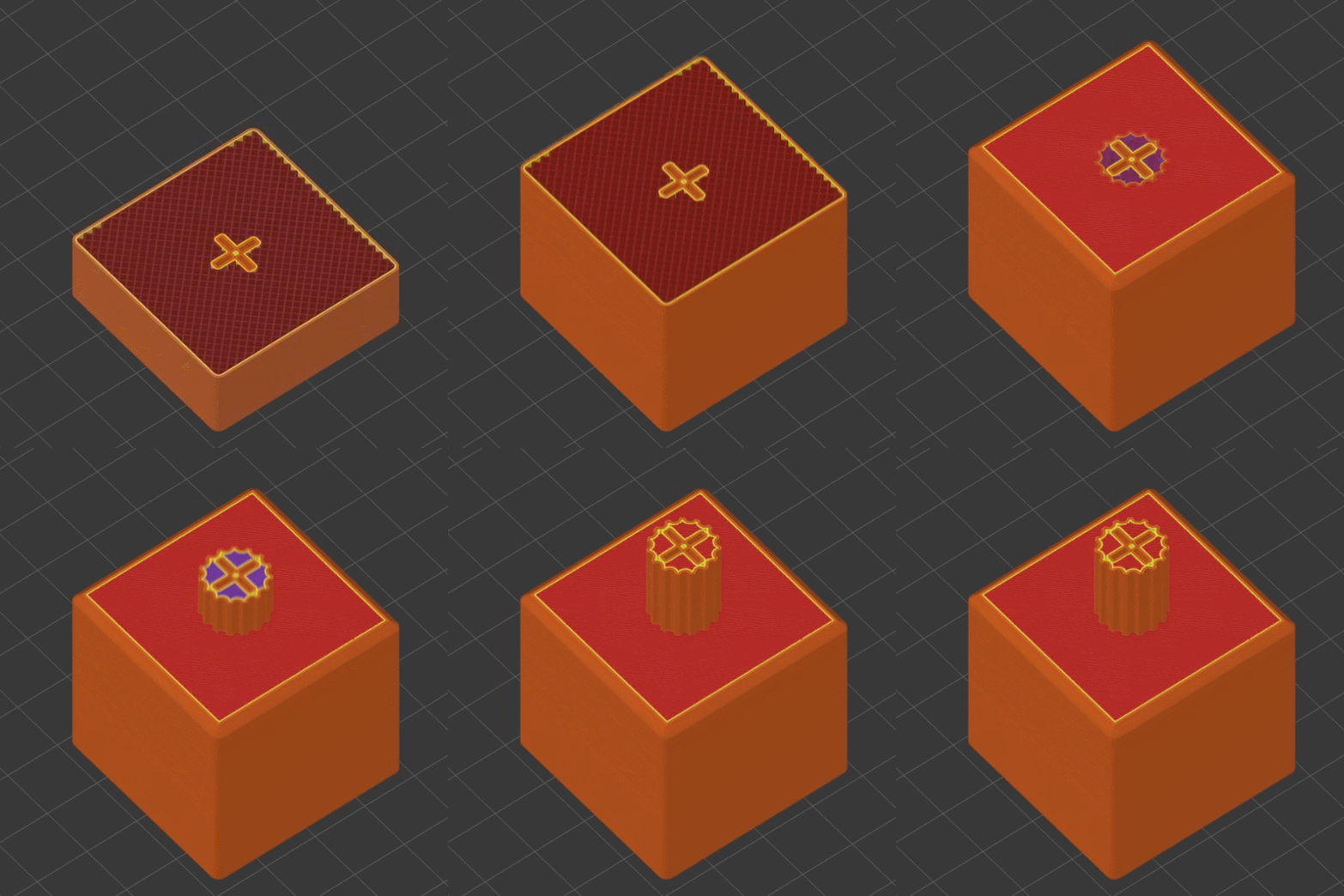
Microfeatures can ensure increased strength in a way that doesn’t depend on slicer settings.
Those are general best practices, but there’s even more that can be done with microfeatures. These are used to get increased strength as a side effect of how a 3D printer actually works when making a part.
One type of microfeature is to give the pin a bunch of little cutouts, making the cross-section look like a gear instead of a circle. The little cutouts don’t affect how the pin works, but increase the surface area of each layer, making the part stronger.
A denser infill increases strength, too. Again, instead of relying on slicer settings, one can use microfeatures for a similar result. Small slots extending down through the pin (and going into the part itself) don’t affect how the part works, but make the part sturdier. Because of how filament-based 3D printing works, these sorts of features are more or less “free” and don’t rely on specific printer or slicer settings.
[Slant 3D] frequently shares design tips like this, often focused on designing parts that are easier and more reliable to print. For example, while printers are great at generating useful support structures, sometimes it’s better and easier in the long run to just design supports directly into the part.
You can do far, far more than draft an email to your boss. From meal planning and interior redesign, there’s a whole world of untapped AI potential that awaits…
If you know the name Ron Gilbert, it’s probably for his decades of work on classic point-and-click adventure games like Maniac Mansion, Indiana Jones and the Last Crusade, the Monkey Island series, and Thimbleweed Park. Given that pedigree, October’s release of the Gilbert-designed Death by Scrolling—a rogue-lite action-survival pseudo-shoot-em-up—might have come as a bit of a surprise.
In an interview from his New Zealand home, though, Gilbert noted that his catalog also includes some reflex-based games—Humungous Entertainment’s Backyard Sports titles and 2010’s Deathspank, for instance. And Gilbert said his return to action-oriented game design today stemmed from his love for modern classics like Binding of Isaac, Nuclear Throne, and Dead Cells.
“I mean, I’m certainly mostly known for adventure games, and I have done other stuff, [but] it probably is a little bit of a departure for me,” he told Ars. “While I do enjoy playing narrative games as well, it’s not the only thing I enjoy, and just the idea of making one of these kind of started out as a whim.”
What began as a niche innovation within crypto markets is now shaping the future of payments. From major U.S. institutions to global players, banks are recognizing that stablecoins—blockchain-based tokens pegged to fiat currency—offer efficiency gains that legacy systems can’t match.
The GENIUS Act in the United States and the Markets in Crypto-Assets (MiCA) Regulation in Europe have further accelerated this trend. These regulatory frameworks define stablecoins and outline who may issue them, including insured depository institutions like banks and credit unions, as well as qualified nonbanks.
The GENIUS Act is getting signed today, bringing clear rules of the road for stablecoins.
Here's why stablecoins are better money, how they're better for people and businesses, and the mental models you can use to understand them.
Why Banks Are Exploring Stablecoin Adoption in 2025
“Payments are a huge part of banks’ business,” said Paul Brody, global blockchain lead at EY, in an interview with Cryptonews.
“Now that banks are authorized to enter the market, they can serve the consumer and enterprise users that are looking for much lower costs on their payments, especially cross-border payments,” Brody added.
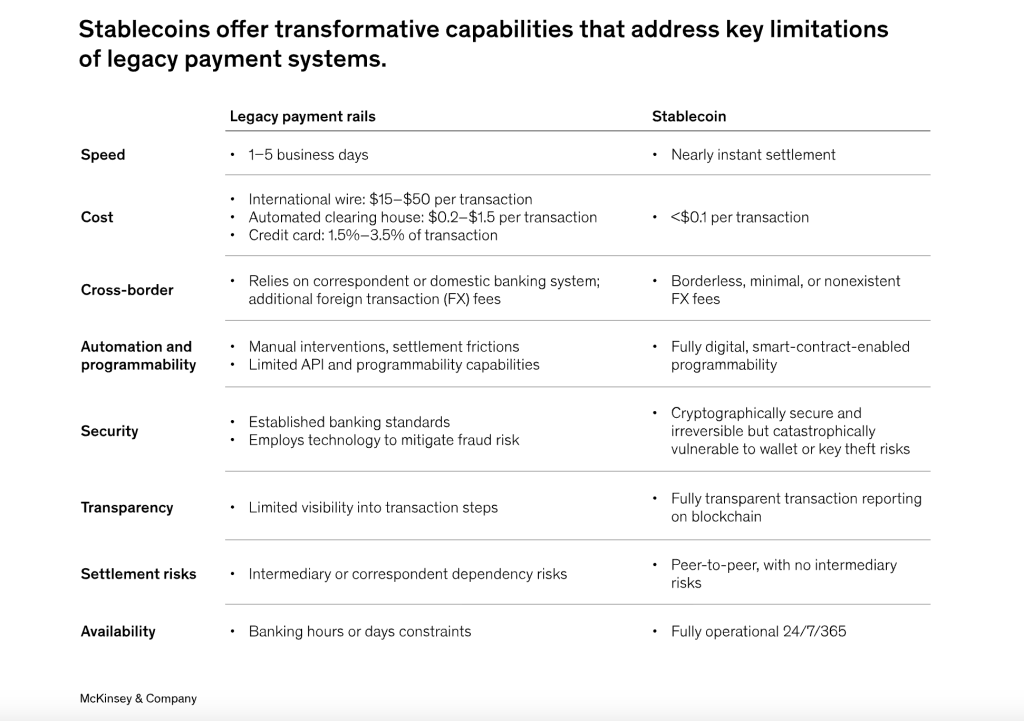
According to EY’s survey of over 250 financial services companies, reducing costs on cross-border transactions with partners and suppliers is the top priority. McKinsey & Company reports that stablecoin transactions can offer near-instant settlement, which has major implications for corporate treasury and global payments.
“Just over 50% of large financial institutions say they plan to be doing or testing this in some manner in the coming 12 months, which is an extraordinarily high rate of uptake,” Brody mentioned.
Source: McKinsey & Company
Banks Currently Looking at Stablecoin Implementation
Several banks are moving from exploration to action. On November 25, 2025, U.S. Bank announced a pilot issuing a custom stablecoin on the Stellar network in collaboration with PwC and the Stellar Development Foundation (SDF).
José Fernández da Ponte, president and chief growth officer at SDF, told Cryptonews that blockchain technology makes business sense for institutions like U.S. Bank. He explained that transactions that cost thousands of dollars on legacy rails cost just a fraction of that on Stellar.
“Settlement times are also cut from days to approximately five seconds, reducing counterparty risk and intermediary fees financial institutions have to pay to move money across the globe,” he added.
The Stellar network is already partnering with enterprise financial institutions like WisdomTree, Franklin Templeton, PayPal, and MoneyGram. Fernández da Ponte shared that next year, Stellar expects to see more growth in the ecosystem as institutions explore moving on-chain.
Other major banks, including Citi, Barclays, Bank of America, and more, have also announced plans to explore and potentially adopt their own stablecoins moving forward.
Beyond banks, Ripple announced that its USD-backed stablecoin RLUSD is now recognized as an Accepted Fiat-Referenced Token by Abu Dhabi’s Financial Services Regulatory Authority, allowing licensed companies to use it for permitted activities.
Compliance and trust are non-negotiables for institutional finance.
That's why $RLUSD has been greenlisted by Abu Dhabi’s FSRA, enabling its use as collateral on exchanges, for lending, and on prime brokerage platforms within @ADGlobalMarket—the international financial centre of…
According to Visa, the integration of Aquanow’s digital asset infrastructure with Visa’s technology stack will allow issuers and acquirers across the CEMEA region to quickly settle transactions using approved stablecoins like USDC.
Adoption Takes Off, But Real Use Cases Years Away
Despite growing institutional interest, experts caution that mainstream adoption is still a few years away. Brody believes that it will take at least one to two years of network effects before banks and stablecoin usage increase.
“The benefits of stablecoins include speed, low cost, and full programmability,” he said. “But the biggest challenges are that there are still too few companies and countries connected to this expanding network and far too few foreign exchange currencies as well.”
Mike Villano, senior vice president of enterprise innovation at U.S. Bank, further noted that privacy remains a primary concern.
“One issue we hope to continue to work on with Stellar in future phases is privacy. One of the things a US Bank would expect when we deliver a product to market will be to maintain the privacy of some of the balances on a blockchain.”
November also marked a turning point for the overall stablecoin sector. A report from CoinDesk published on Nov. 26 found that the total market capitalization of stablecoins contracted 1.48% to $303 billion.
The report notes that this $4.54 billion contraction marks the steepest monthly decline since the collapse of FTX in November 2022. This demonstrates a combination of stablecoin outflows and weakening digital asset prices, suggesting a broader withdrawal of liquidity and capital from the crypto markets.
The Long-term Outlook
Industry leaders remain optimistic, though. Danny Lim, co-founder of Pundi X and Pundi AI, believes that stablecoin outflows will not impact real-world use cases. Lim told Cryptonews that bank-issued stablecoins are not meant to replace USDT or USDC, but rather to change who is willing to come on board.
“If banks issue stablecoins on public or permissioned chains, merchants get the same 24/7 settlement speed and on-chain finality as today’s public stablecoins, but with a known regulated counterparty, deposit protection, full AML/KYC, and clear domestic rules behind the token,” he said.
Lim added that in regions like Turkey and South Africa, where Pundi X has been active for years, consumers are using stablecoins like USDT and USDC for everyday remittances, savings, and protection against currency swings. He explained that a bank-issued stablecoin will likely push this further by adding regulated on and off ramps, local Know Your Customer (KYC,) and a sense of safety that appeals to more traditional families and small businesses.
We recently looked at Tiny vinyl, a new miniature vinyl single format developed through a collaboration between a toy industry veteran and the world’s largest vinyl record manufacturer. The 4-inch singles are pressed in a process nearly identical to standard 12-inch LPs or 7-inch singles, except everything is smaller. They have a standard-size spindle hole and play at 33⅓ RPM, and they hold up to four minutes of music per side.
Several smaller bands, like The Band Loula and Rainbow Kitten Surprise, and some industry veterans like Blake Shelton and Melissa Etheridge, have already experimented with the format. But Tiny Vinyl partnered with US retail giant Target for its big coming-out party this fall, with 44 exclusive titles launching throughout the end of this year.
Tiny Vinyl supplied a few promotional copies of releases from former America’s Got Talent finalist Grace VanderWaal, The Band Loula, country pop stars Florida Georgia Line, and jazz legends the Vince Guaraldi Trio so I could get a first-hand look at how the records actually play. I tested these titles as well as several others I picked up at retail, playing them on an Audio Technica LP-120 direct drive manual turntable connected to a Yamaha S-301 integrated amplifier and playing through a pair of vintage Klipsch kg4 speakers.
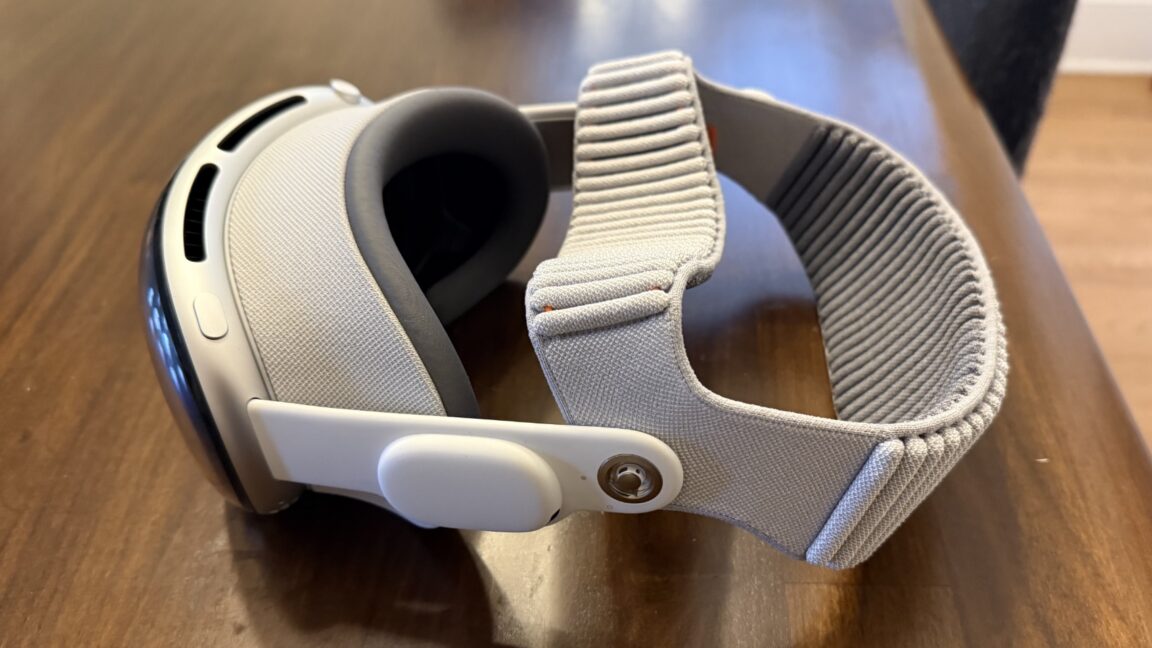
With the recent releases of visionOS 26 and newly refreshed Vision Pro hardware, it’s an ideal time to check in on Apple’s Vision Pro headset—a device I was simultaneously amazed and disappointed by when it launched in early 2024.
I still like the Vision Pro, but I can tell it’s hanging on by a thread. Content is light, developer support is tepid, and while Apple has taken action to improve both, it’s not enough, and I’m concerned it might be too late.
When I got a Vision Pro, I used it a lot: I watched movies on planes and in hotel rooms, I walked around my house placing application windows and testing out weird new ways of working. I tried all the neat games and educational apps, and I watched all the immersive videos I could get ahold of. I even tried my hand at developing my own applications for it.
Amelia Hewitt, Co-Founder (Director of Cyber Consulting) at Principle Defence and Founder of CybAid, and Rebecca Taylor, Threat Intelligence Knowledge Manager and Researcher at Sophos, are proud to announce the launch of the second series of The Cyber Agony Aunt Podcast (formerly Securely Yours Podcast). The new season is now available to stream on all major platforms.
The Cyber Agony Aunt Podcast is an empowering series hosted by Hewitt and Taylor, two accomplished cybersecurity professionals, recorded at Matinee Studios in Reading, UK. Drawing on their extensive experience in the field and their roles as mentors, they use an “agony aunt” format to address the real-life questions and challenges faced by professionals.
Inspired by classic magazine advice columns, the podcast offers practical guidance for those building and thriving in cybersecurity and related careers. Through candid conversations and questions from mentees and peers, Hewitt and Taylor explore pressing topics such as active allyship, burnout, sexual harassment, threat intelligence, and overcoming adversity. Their confessional tone ensures that no issue is considered off-limits.
To further enrich the series, Season 2 features a selection of seasoned professionals who share their perspectives, lived experiences, and expert insights in specially curated episodes. Amelia Hewitt and Rebecca Taylor have had the privilege of speaking with:
Callum Stott(Sales Director at Matinée Multilingual),
Karl Lankford(Senior Director, Solutions Engineering at Rapid7),
Phoebe Farrelly(Deals – Lead Advisory & Restructuring at PWC, and Branch Coordinator for CyberWomen Groups C.I.C),
Nikki Webb(Global Channel Manager at Custodian360, Founder of The Cyber House Party, and Volunteer Marketing Coordinator at The Cyber Helpline),
Will Lyne(Head of Economic & Cybercrime at the Metropolitan Police Service),
Pauline Campbell (Principal Lawyer at London Borough of Waltham Forest & Social Justice Author),
Jake Moore(Global Cybersecurity Advisor at ESET)
Zak Layton-Elliott(Director of Partnerships at CybAid ,and Cyber Security Analyst at Principle Defence).
The Cyber Agony Aunt Podcast offers practical guidance for anyone seeking to advance their career in cybersecurity. Driven by the belief that everyone should thrive, not merely survive, the series aims to make professional growth attainable through accessible, actionable advice. Hewitt and Taylor approach even the most complex and uncomfortable topics with honesty and empathy, ensuring no conversation is left unspoken and no listener feels alone.
Co-host Amelia Hewitt said: ‘It’s been an incredible journey. We have been very fortunate to have lots of guests on the series, all happy and willing to share their opinions and thought leadership. This series is a real eye opener, myth buster and level setter for anyone wanting to understand the nitty gritty of a career in the cyber industry.’
Co-host Rebecca Taylor added: ‘This podcast is about showing that no-one in cyber is alone. By bringing together voices from across the industry, we’re breaking down barriers, sharing real experiences, and proving that a career in cyber is possible for anyone – even with all its challenges. We’re not shying away from the tough conversations; we’re having them, so others don’t have to face them in silence.’
The Cyber Agony Aunt Podcast, hosted by Amelia Hewitt and Rebecca Taylor, is now available to stream on all major platforms. Their first book, Securely Yours, is also available for purchase on Amazon (you can read the IT Security Guru’s Q&A with the hosts here). The duo are currently working on their highly anticipated second book, ‘Resilient You: An Agony Aunts’ Guide to Keeping It Together’, scheduled for release in April 2026.
In 2016, the legendary Japanese filmmaker Hayao Miyazaki was shown a bizarre AI-generated video of a misshapen human body crawling across a floor.
Miyazaki declared himself “utterly disgusted” by the technology demo, which he considered an “insult to life itself.”
“If you really want to make creepy stuff, you can go ahead and do it,” Miyazaki said. “I would never wish to incorporate this technology into my work at all.”
Google Maps adds AI-powered tips, social recommendations, reviewer privacy tools, and EV charger predictions to help travelers navigate the holiday rush.

 Login
Login