Ubisoft is moving deeper into MOBAs after buying March of Giants from Amazon and acquiring the team that made the game. As part of the agreement, Amazon will help promote March of Giants on Twitch. The deal is expected to close on December 16
There’s no release date as yet for March of Giants. Amazon announced the free-to-play game back in August and there was a closed alpha playtest the following month. The next playtest will take place in 2026. The next major update for March of Giants will include “new giants, expanded competitive modes and foundational systems designed to support long-term growth.”
March of Giants is a 4v4 game in which players control giant war commanders. You’ll lead armies with thousands of soldiers and send them to attack enemy giants. Likewise, you’ll have to fend off the other team’s minions. You can also deploy reinforcements (called Battleworks) like trenches, tanks and bunkers to help you win a match.
MOBAs aren’t entirely new territory for Ubisoft. While it’s ostensibly a third-person action game, For Honorchecks all the MOBA criteria too. Although it clearly sees an opportunity in the MOBA market, Ubisoft will have a job on its hands to make March of Giants succeed in a space that’s dominated by League of Legends and Dota 2.
March of Giants was in development at Amazon Games Montreal, a studio that was established five years ago. Several former Ubisoft employees are returning to that company as part of this deal. Many of them were part of the original creative team behind Rainbow Six Siege, including Amazon Games Montreal founder and March of Giants creative director Xavier Marquis.
This article originally appeared on Engadget at https://www.engadget.com/gaming/amazon-sells-moba-march-of-giants-to-ubisoft-183948291.html?src=rss
Merriam-Webster has selected "slop" for the dictionary company's 2025 word of the year. The leading lexicographers define slop as "digital content of low quality that is produced usually in quantity by means of artificial intelligence." We've seen an absolute deluge of AI slop this year, from fake movie trailers on YouTube to AI-generated bands on Spotify. Not even food delivery like Uber Eats could escape the onslaught of AI-generated garbage that no one asked for.
It's gotten to the point that half the videos my well-meaning parents send me on social media are AI-generated videos of dogs. This isn't all that surprising given how very intentionally the social media giants have added slop to all our feeds.
Merriam-Webster rightly points out the somewhat mocking nature of calling it “slop.” "Like slime, sludge and muck, slop has the wet sound of something you don't want to touch. Slop oozes into everything. The original sense of the word, in the 1700s, was 'soft mud.' In the 1800s it came to mean 'food waste' (as in 'pig slop'), and then more generally, 'rubbish' or 'a product of little or no value,'" the dictionary distributors wrote.
As the proliferation of AI slop expanded, some platforms like TikTok and Pinterest got wise and began offering users the choice to tone down the sheer amount of it in their feeds. Even Spotify is at least trying to combat some of this stuff now, though that didn't stop an AI-generated copycat from going unnoticed on the platform for weeks. Elsewhere, companies like Google leaned in, incorporating Veo 3-generated videos into YouTube Shorts. We'll only be able to tell in hindsight if 2025 was the peak of AI slop, but for now it shows no signs of abating.
Merriam-Webster highlighted some other words for the year (some of which the chronically online will be familiar with), including Gerrymander, Touch Grass, Performative, Tariff, Conclave and Six Seven.
This article originally appeared on Engadget at https://www.engadget.com/ai/slop-is-merriam-websters-word-of-the-year-181903322.html?src=rss
There's a growing sentiment that gadgets have gotten boring. And while I don't fully agree, I understand why people might feel that way. Just think about some of the novel device types that companies have tried to push since the original iPhone came out.
3D TVs were a massive flop and tablets still feel like extra-large smartphones despite Apple's efforts to prop them up as laptop replacements. Meanwhile, even with huge technological advancements over the last decade, VR headsets remain relatively niche due to factors like high prices and a lack of compelling content. And although big names like Google, Microsoft, Meta and others continue to dump billions into AI development, the first wave of dedicated AI devices was an abjectfailure.
When you think about it, the only new(ish) class of gadget that has made major inroads to the mainstream market is smartwatches. That said, because they've evolved into wearable health and fitness sensors instead of the wrist-based computers that many once thought they would be, they haven't really disrupted our lives like the personal computer and smartphone did. But that seems poised to change because the tech giants have decided that smart glasses are going to be the next big thing.
Headsets versus smart glasses, what’s the difference?
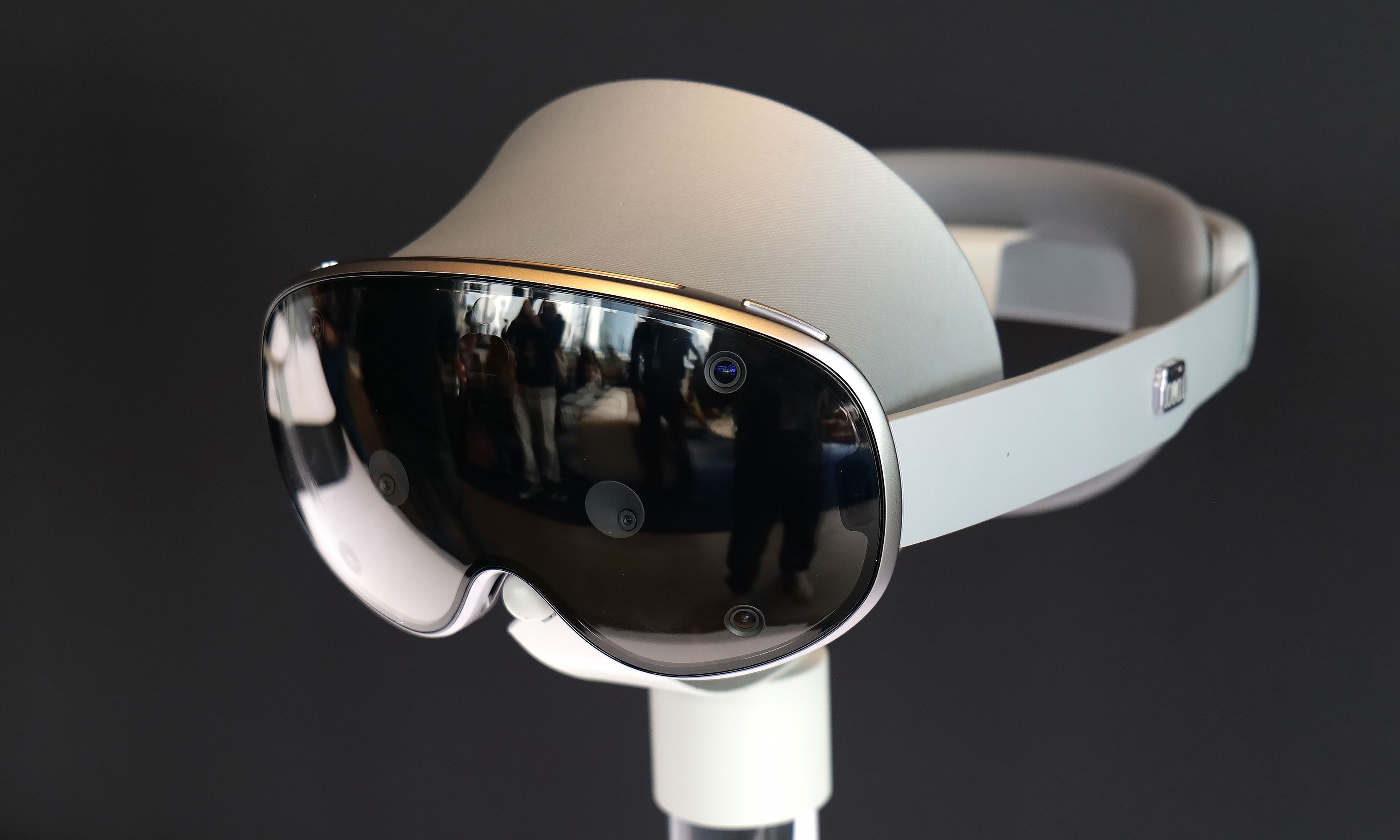
Google is planning to support both smart glasses and headsets with Android XR, though the increased size and weight of devices like the Galaxy XR means it's not a great choice for all-day functionality.
Sam Rutherford for Engadget
At this point, you might be saying, "Wait, hold on. Aren't VR headsets and smart glasses kind of the same thing?" Well, yes and no. Both types of gadgets require similar software and hardware, but they utilize them in very different ways. Not only are VR goggles typically much bigger and heavier, they also provide a more isolated experience that can make it feel like you've been transported to another world.
Sure, most modern headsets have exterior cameras that support some level of mixed reality (blending virtual graphics with physical objects) or let you peek quickly into meatspace (passthrough view) for when you need to get a drink or acknowledge other humans in the room. But in many respects, that closed-off feeling is the goal because it creates the ideal environment for playing games, taking virtual meetings or modeling 3D objects without real-world distractions. Furthermore, while many headsets like the Vision Pro and the Meta Quest 3 can function as standalone systems and support accessories like controllers or other motion trackers, they can also be tethered to a nearby PC for enhanced functionality.
On the other hand, the default use case for smart glasses is a mixed reality environment where the spectacles can overlay helpful info or messages while you stay active and aware of your surroundings. Notably, while smart glasses might come with lenses or clip-on attachments that allow them to get darker or serve as sunglasses when you're outside, there typically isn't a way to completely block out the world like you can with a headset, mostly because that's simply not the point. And even though most smart spectacles can be paired with a phone to get access to mobile data or notifications, they're generally not meant to be tethered to a PC full-time (though there are some exceptions). The goal for smart glasses is more to provide a mobile-first heads-up display that augments what you see with your eyes instead of replacing things entirely with a digital environment.
OK, but what makes you so sure that smart glasses are "it?"
Now that we've discussed what separates smart glasses from headsets, what makes it so obvious that they are going to be the next big thing? This one is a bit easier to answer because we can simply look at the sheer number of companies that have released smart glasses or are planning to do so in the future. If we skip past the Google Glass from 2013 as forward-thinking specs that were ahead of their time, the most well-known example of modern smart glasses is the Meta Ray-Ban (or the even earlier Ray-Ban Stories from back when Facebook was still Facebook).
While they are a bit chunky, the Meta Ray-Ban Display are some of the most sophisticated smart glasses on the market right now due in large part to their single full-color screen.
Karissa Bell for Engadget
Even though they don't have built-in displays, the ability to capture photos and videos and play audio via built-in speakers brought the idea of smart glasses into the mainstream without making the concept look or feel completely ridiculous. Those earlier models then paved the way for even more sophisticated iterations like the Meta Ray-Ban Display from earlier this fall, which features a stunning RGB HUD (though only in the right lens) that has gotten us tantalizingly close to a true wearable display that doesn't make you look like a cyborg. Of course, Meta isn't the only game in town: there's a rapidly growing number of competitors from companies like Even Realities, Rokkid, TCL, Xreal, Viture and more.
But for an even clearer sign of where the tech giants are heading, we can just look at Meta's two biggest competitors: Apple and Google. While Apple hasn't publicly announced plans to make its own smart glasses, Bloomberg's Mark Gurman — who is one of the company's most reliable analysts — provided inside info earlier this fall that Tim Cook and Co. are planning to pivot away from a proper follow-up to the Vision Pro in favor of more lightweight spectacles with greater mass appeal.
This shouldn't really come as a major surprise, as sales of Apple's $3,500 headset have been lackluster. But more importantly, for a company that's extremely cautious about entering new product categories (foldable iPhone anyone?), it feels very telling to hear that Apple is shifting to smart glasses instead of abandoning the idea of wearable displays entirely. This is a company that doesn't swing and miss very often, so the idea of two flops in a row seems preposterous. If this pivot is real, there must be some Apple execs who are big believers that glasses and not goggles are the right choice for future development.
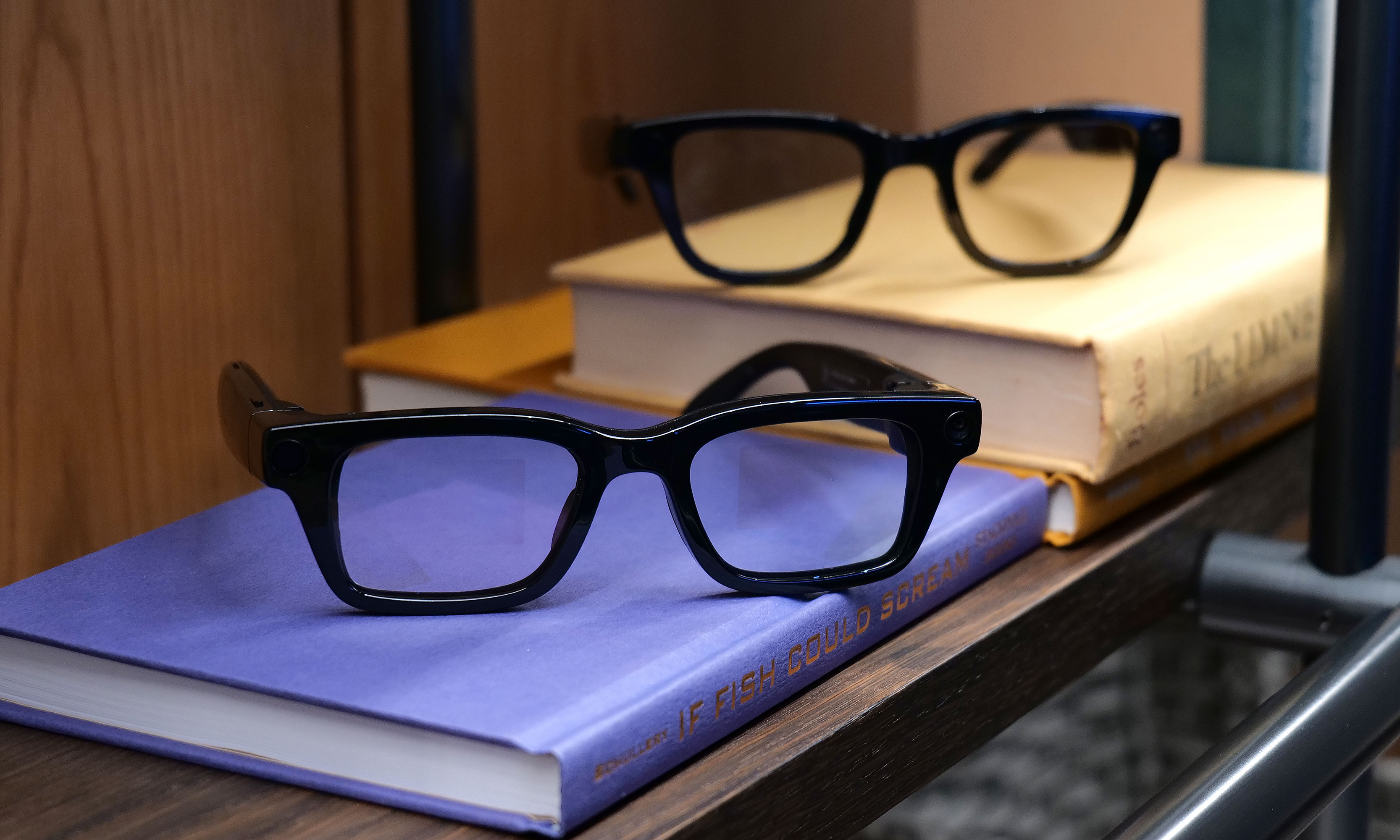
Here are two of Google's reference design smart glasses. The one in the front features dual RGB waveguide displays while the one in the back relies on a single monocular screen.
Sam Rutherford for Engadget
Meanwhile, Google is taking a two-pronged approach. In addition to releasing a new mixed reality OS — Android XR — on Samsung's Galaxy XR headset in October, the company has also teased upcoming smart glasses along with a handful of partners including glasses makers Gentle Monster and Warby Parker. Just this week, the company also added a number of new features to Android XR designed to support a wide range of upcoming devices while simultaneously making it easier for developers to port existing apps over to smart glasses and headsets. And if you still need additional evidence regarding Google's desire to get into smart glasses, consider that even with its ongoing collaboration, the company also spent $100 million to acquire a 4 percent stake in Gentle Monster.
Regardless of who is making them though, the big draw for these companies is the idea that smart glasses will become a new piece of core personal computing, similar to how people rely on smartphones and laptops today (or to a lesser extent wireless headphones and smartwatches). If true, that could become a trillion-dollar market in the next 10 to 15 years (or sooner, who knows), which not only makes it a natural avenue for expansion but possibly a future existential crisis for certain companies. After all, none of these organizations want to be the next Microsoft after it failed to develop a successful smartphone or mobile OS.
Fine, the smart glasses trend is real, but why would we even want them?
At this point, I hope it's clear that the push for smart glasses is very real and very serious. But so far, we've only addressed why companies are betting big on them. So what's in it for us, the people who might actually buy and use them? Well, to answer that, we need to separate the current models into three main categories.
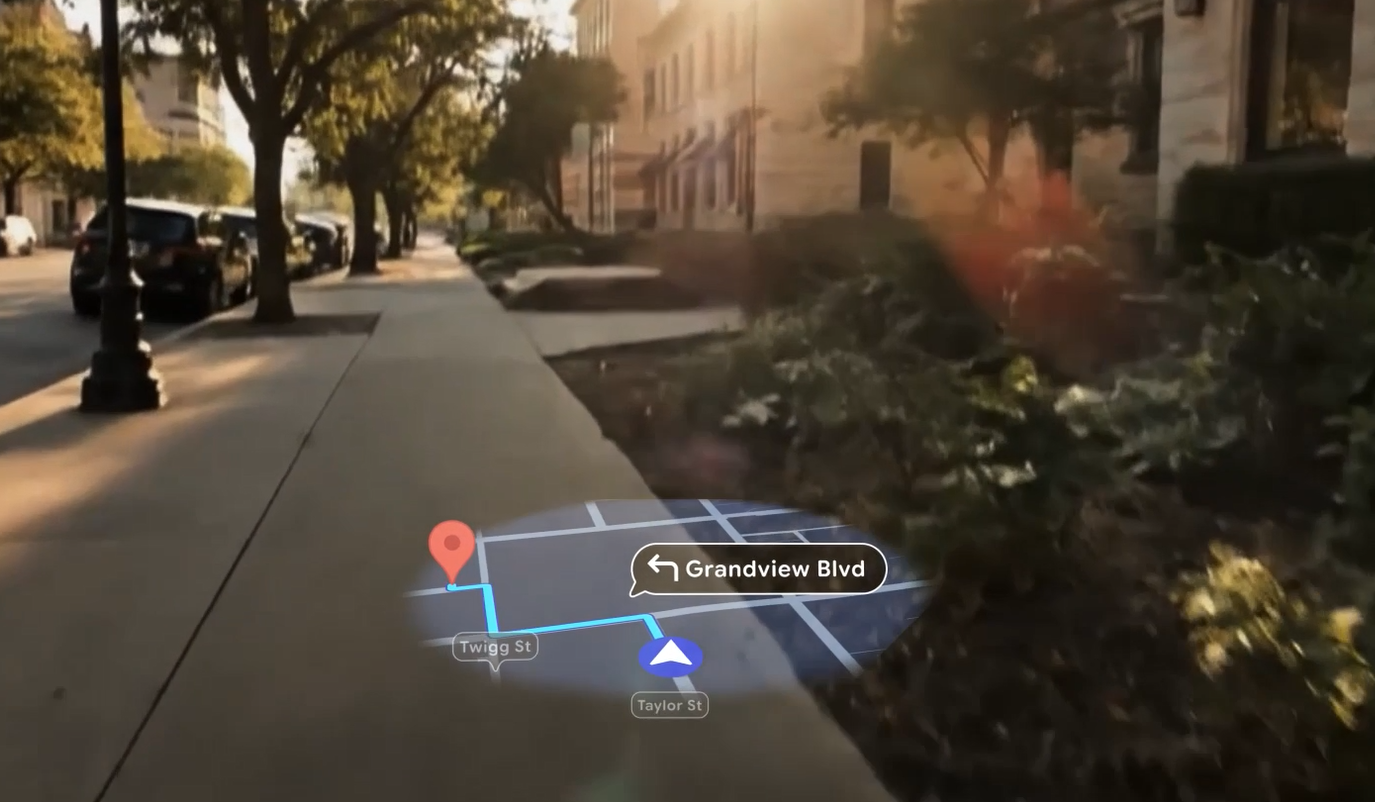
A great use case for smart glasses would be to provide heads-up mapping without the need to constantly look down at your phone as seen in this demo clip of Android XR.
Google
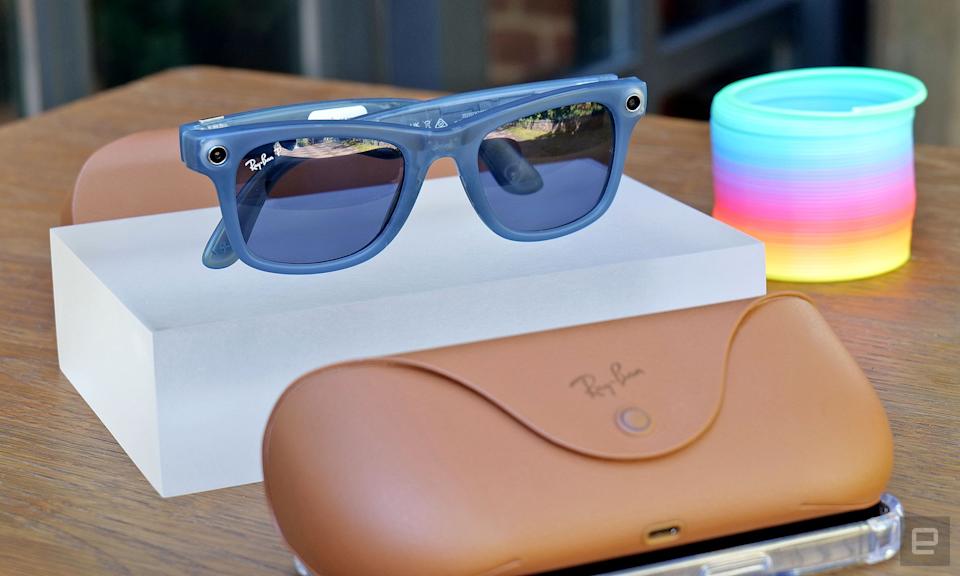
First, there are the most basic smart glasses that don't come with built-in displays and typically rely on cameras and built-in speakers for enhanced functionality. The best example of this class of devices is the Meta Ray-Ban smart glasses (or the original Ray-Ban Stories) along with rivals like the Bose Sound Frames, which, believe it or not, have been on the market since 2019.
However, before anyone gets attached to these early models, the simplest smart glasses already kind of feel like dinosaurs and will probably, in the not-too-distant future, go extinct. They were an interesting attempt to add things like music playback or photo and video capture to regular-looking sunglasses, but their limited feature set puts a clear ceiling on what they can do. Plus, if this is what people really wanted, they would have taken off already.
Waveguides like the ones built into the Even Realities G2 project images directly onto their lenses allowing for super sleek glasses featuring a heads-up display.
Sam Rutherford for Engadget
This brings us to more recent offerings like the Meta Ray-Ban Display, Even Realities G2, the Halliday glasses and others which add some type of built-in display to the mix. Most often, these models rely on waveguide displays as they enable thinner and lighter designs while propagating images onto the glasses' lenses. Currently, most of these smart glasses feature single-color optics (usually green) to reduce complexity and power draw, but there are others like the Meta Ray-Ban Display and both the TCL RayNeo X2 and X3 that support full color.
In this day and age when everyone is surrounded by screens, the idea of yet another display mounted inches away from your eyeballs might sound like the last thing you want. However, because modern smart glasses are much more discreet and less awkward-looking, I find that they can actually help cut down on distractions. That's because instead of having to peek down at your phone or smartwatch to check notifications, reply to messages or look up directions, you can do many or all of these things using smart glasses — all in the middle of a conversation without anyone noticing.
Not only does this keep your focus where it should be — on people instead of gadgets — the glasses are also just as easy to wear as a smartwatch and far more comfortable than bulky VR headsets. Then, when you consider some other features of modern smart glasses like on-the-fly translation, the ability to function as a teleprompter hidden in plain sight or additional support from AI, suddenly you have a wearable that allows you to keep all of your other devices neatly stashed away. In many respects, smart glasses could be the portable displays that people might not even know they want.
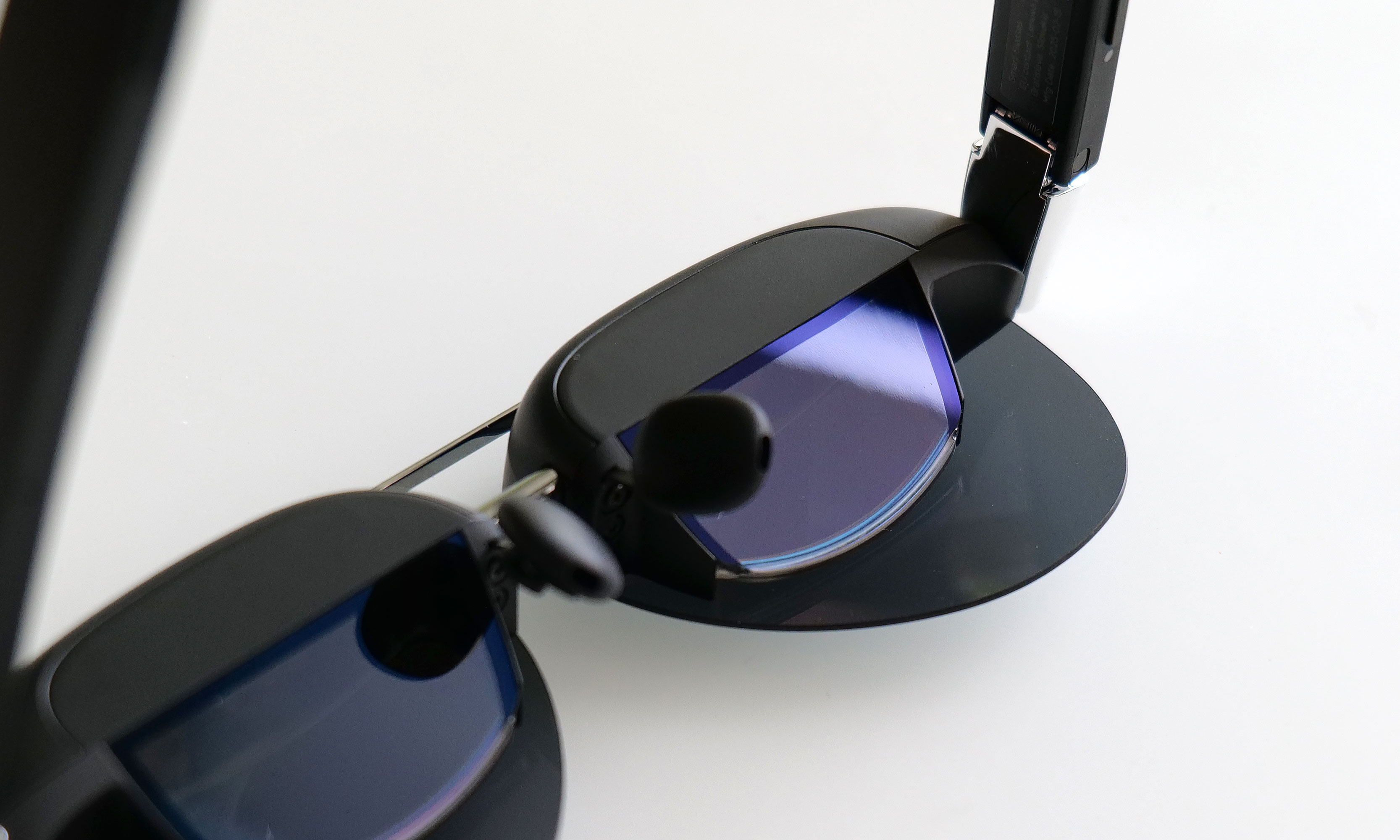
Compared to rivals with waveguides, glasses featuring "birdbath" optics are often significantly thicker and bulkier.
Sam Rutherford for Engadget
Speaking of portable displays: If you recall, I mentioned above how most smart glasses generally don't need to be tethered to other devices. The exception to that comes from a subclass of specs that are primarily designed to function as wearable monitors capable of supporting one or more virtual screens that can be in excess of 100 inches in size, relatively speaking.
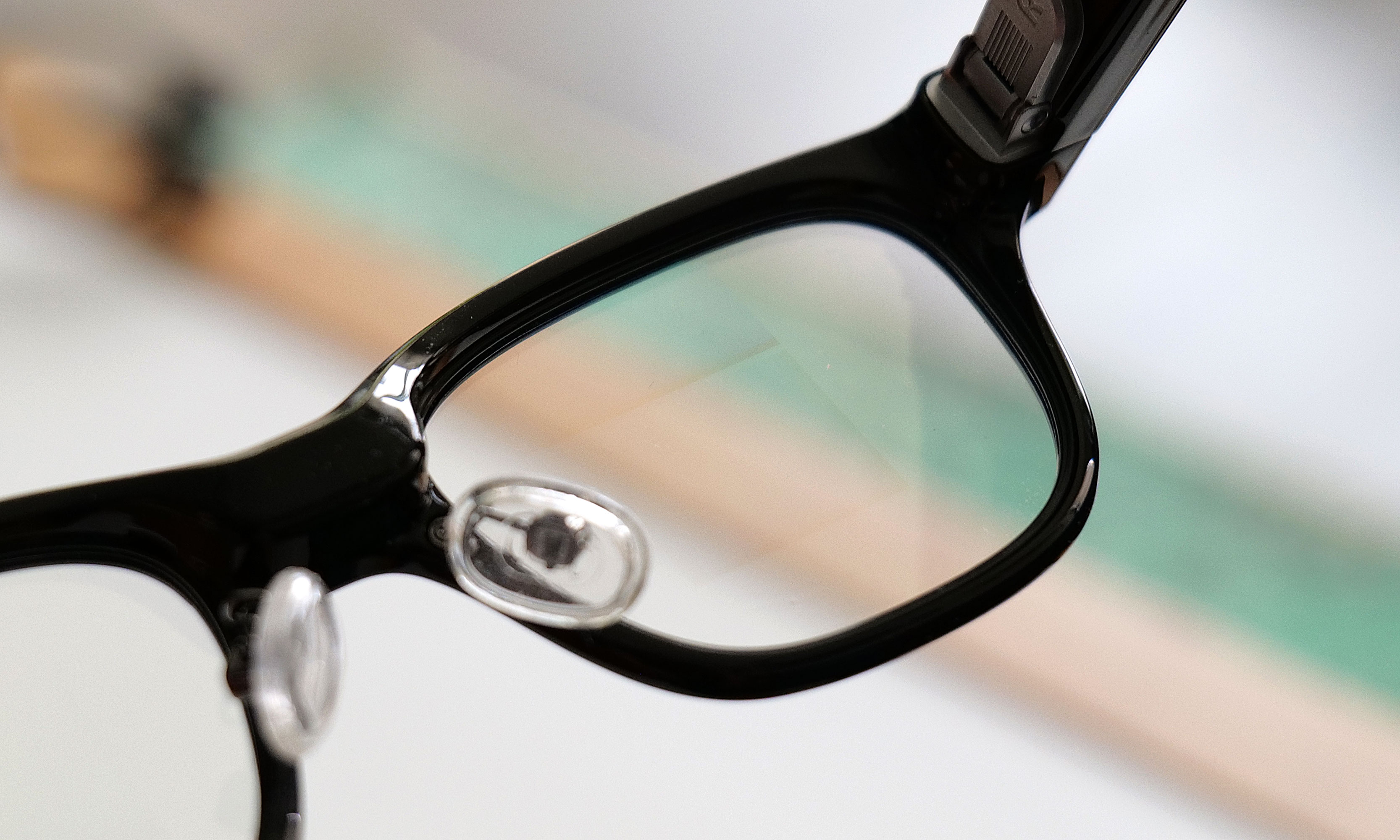
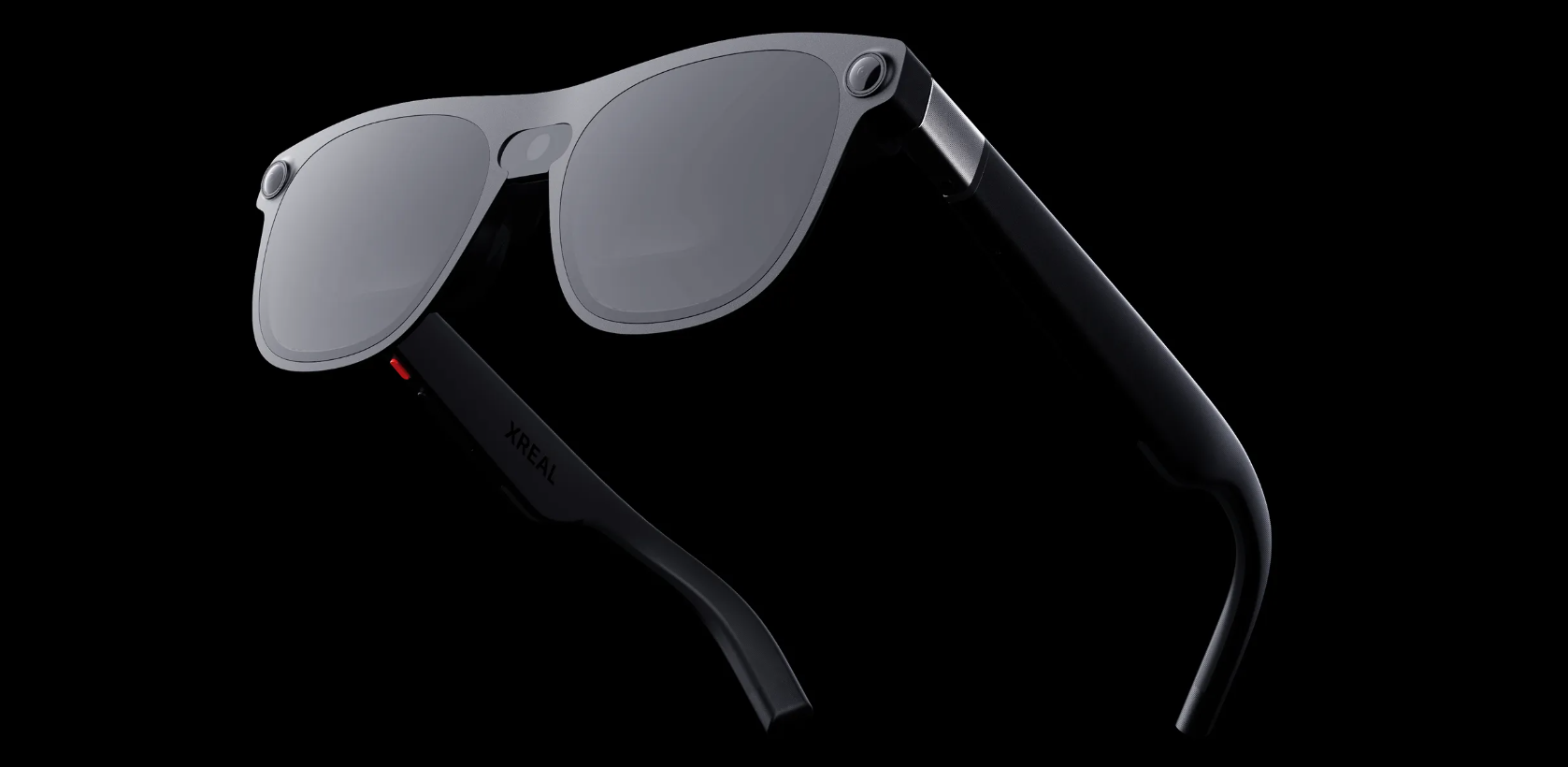
The most well-known smart glasses in this category come from Xreal and Viture, with both companies offering a range of models with varying levels of performance. One interesting thing to note is instead of waveguides, some of these smart glasses rely on birdbath optics. This means instead of projecting an image into the lens itself, they use a beamsplitter and mirror to reflect images into your eye. The benefit of this is that you get good image quality from components that cost less than an equivalent waveguide setup, with the downside being increased light loss, potentially lower brightness and a much thicker design. This results in chunky frames that often look like they are sitting too far away from your face, which might not be immediately apparent if you see someone using them from afar. But up close, they don't look quite right. Or at least they don’t look like a pair of "normal" glasses.
Another issue is that due to more light loss, birdbath smart glasses require darker lenses (similar to sunglasses), which means they aren't great for wearing all day in a variety of environments. And because we still don't really have a great protocol for wireless displays (though it looks like Valve may be cooking up something with the Steam Frames), most of these need to be connected by wire to a nearby PC. So you plug them in, put them on, get your work done and then you take them off.
Project Aura is Xreal's next-gen smart glasses and they feature a large 70-degree field of view and fancy electrochromic lenses.
Sam Rutherford for Engadget
That said, for those who need a ton of screen real estate, this type of smart glasses can be a very attractive alternative to traditional portable monitors. On top of being smaller and more portable, they provide additional privacy when working in public spaces like a cafe or plane, which is what prompted a doctor friend of mine to get a pair instead of going with a portable display. And for the gamers out there, because they can be connected to a phone or even a portable PC or Switch 2 (with the proper dock, of course), they're great for people who might not have room for or access to a big screen TV.
So where do we go from here?
Ultimately, I think all three types of smart glasses will merge into one as engineers perfect the tech and steal ideas from one another, though there will surely be plenty of room for more niche designs. But more importantly, if we consider the types of gadgets most people carry around today, it boils down to just a handful of devices: a smartphone, some type of wireless audio (either earbuds or headphones) and maybe a health and fitness tracker of some kind (typically a smartwatch or smart ring).
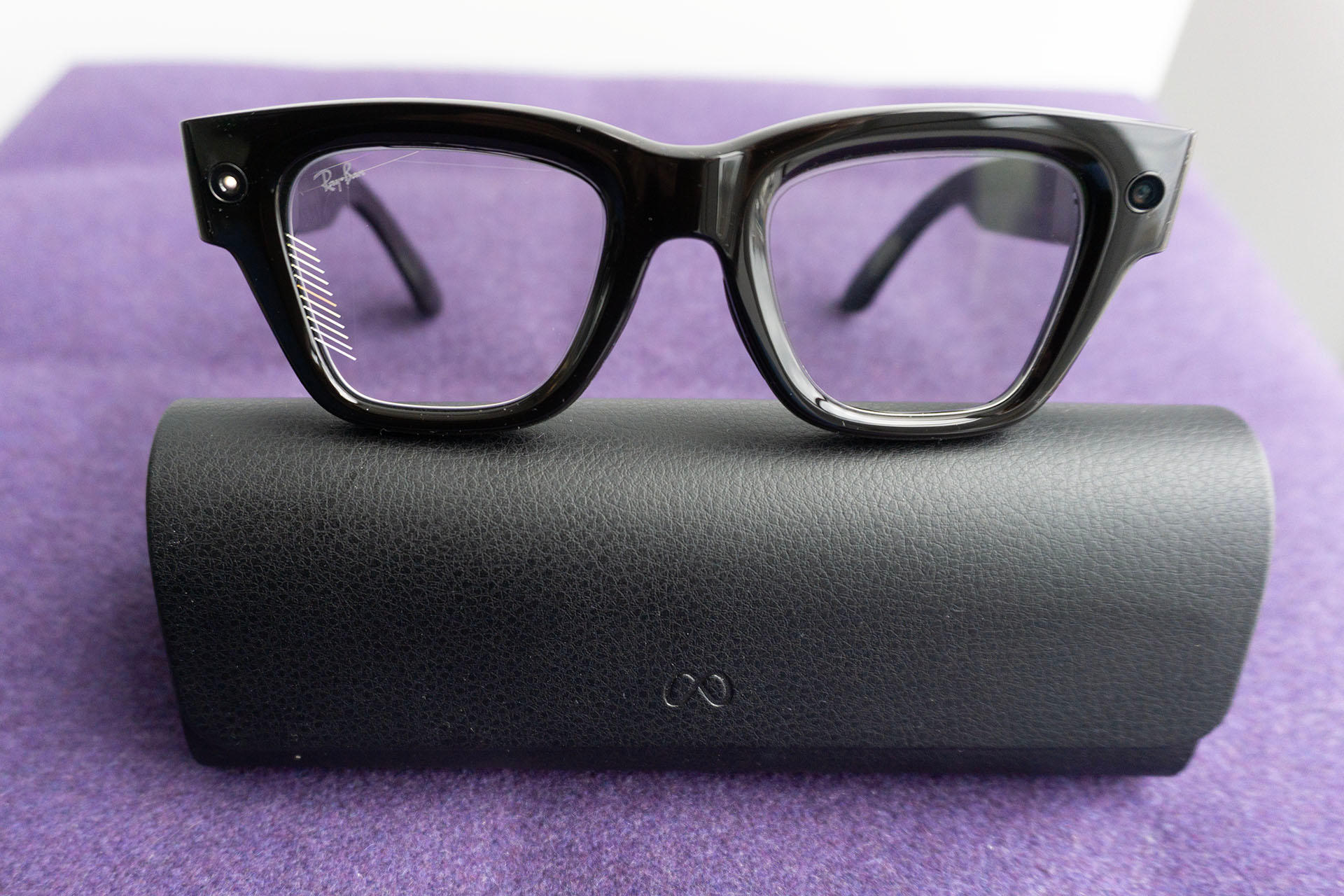
Even tough they didn't have a built-in display, the Meta Ray-Ban smart glasses from 2023 raised a ton of awareness for the category.
Sam Rutherford for Engadget
Smart glasses have the potential to really round out that kit by allowing us to keep most of those devices in our pocket while the wearables serve up helpful info when we need it, but without being overly intrusive or distracting. In the short term, you'll still need a laptop for work, but smart glasses may have a role to play there too, as they can provide way more screen space than a traditional physical display (even the new-fangled flexible ones). It might never happen, but I wouldn’t rule out a future scenario where your next employer gives you a company-issued phone and a pair of smart glasses and that's it.
Before that happens though, there are still a bunch of other things that need to be figured out. Without help from a mouse or keyboard, navigating a virtual display is a bit of a challenge. AI combined with hand and eye tracking can help, but no one has really nailed that combo yet. Not even Apple could do so on the much bulkier Vision Pro. To address this, Meta created a bracelet (they call it a neural band) that pairs with the Ray-Ban Display that can detect subtle movements so you can type or navigate menus practically anywhere. Even Realities opted for a ring accessory that does some basic health monitoring and comes with a tiny touchpad. In the more distant future, this hurdle may be solved by BCIs (brain-computer interfaces), but even the most optimistic view suggests that those aren't going to be mainstream for a long time.
Even though we're still a long ways away, one day everyone might be able to have something like Tony Stark's E.D.I.T.H. smart glasses from the Marvel Universe.
Marvel
The issue for Meta is that it's pretty obvious that its wristband really ought to be incorporated into a smartwatch. The idea of a single-purpose bracelet that doesn't track your health or do anything else sort of feels like a step backwards. And there's the problem of Meta's glasses being largely tied down to its own platforms (i.e. Instagram, Whatsapp and Facebook), which may end up being a major hindrance after rivals like Google and Apple catch up.
And then there's the cost. Right now, a pair of Meta Ray-Ban Displays (which thankfully come with the wristband) costs $800. That's a lot for what is basically a publicly available beta test. But when you consider that an Even Realties G2 and an R2 ring costs even more at $850, it's clear that wearing smart glasses is going to be a very expensive hobby for at least the next few years. And while more single-purpose smart glasses from Xreal and Viture are a bit more affordable, with models ranging from $400 to $550 or $600, they still aren't cheap. On top of that, getting prescription lenses for smart glasses can often be a major pain in the ass and may not even be an option for people with more limited eyesight.
But those are problems for another day. And just because tech giants are pouring billions into the development of smart glasses doesn't mean they will be a guaranteed hit. If you care about tech, alongside AI and possibly EVTOL aircraft (aka flying taxis), pay attention to the advancements in smart glasses. Otherwise, you could miss out on what might be the next major wave in sci-fi gadgetry made real.
This article originally appeared on Engadget at https://www.engadget.com/wearables/in-2025-tech-giants-decided-smart-glasses-are-the-next-big-thing-163000812.html?src=rss
Welcome to our latest roundup of what's going on in the indie game space. Between The Game Awards and showcases like Day of the Devs, Wholesome Snack, Latin American Games and Women-Led Games, there’s been a ton of video game news over the last week (I need Control ResonantASAP, please and thank you, Remedy). And hey, guess what? I've got even more for you to dig into, including info on some new releases that you can play right now.
One of those is a game I’d been looking forward to since about 2022, and it’s always nice when something you’ve remained patient for turns out to be worth the wait. In Sam Eng's Skate Story, you play as a demon who accepts a deal offered by the Devil. If the demon can ride a skateboard to the Moon and swallow it after being transformed into a creature made of “glass and pain,” the Devil will grant them their freedom.
It’s just as strange as that setup sounds. While you’ll need to execute combos to defeat bosses, this is a skateboarding game that leans more heavily on story than pure gameplay. It’s visually and sonically arresting too, with Blood Cultures and John Fio crafting a killer soundtrack I know I’ll be listening to for a long time to come.
Unbeatable is another game I’ve had on my radar for some time, though I haven’t had a chance to jump in yet. This is another stylish game in which you play as Beat, who sings in a band. However, music is outlawed in this world (oh no!). Through rhythm-based minigames and battles with cops, Beat tries to bring back the music. There's a separate arcade mode with a dedicated progression system too.
I'm a sucker for stories about rebellious underdogs, and this rhythm adventure could well hook me in. Unbeatable — from D-Cell Games and publisher Playstack — is available on Steam and PS5 for $28 (there’s a 10 percent discount on Steam until December 23). It's set to hit Xbox Series X/S very soon too.
Speaking of games I've been keeping an eye on, Adrift (from solo developer S.K.9.8 and co-publisher Secret Sauce) was one of the first games I covered when I started doing this weekly roundup earlier this year. It's a driving game in which your aim is to deliver a volatile energy core. Since you're traversing a hot desert, you'll need to be careful to prevent the core from overheating and blowing up. Thankfully, there are safe spots and cooling stations where you can bring down the temperature.
The vaporwave aesthetic of Adrift caught my eye and although I dig the presentation, the game isn't quite clicking for me in the early going. It didn't take long before my vehicle got stuck and I had to reset, and I'm finding the top-down world a little confusing to navigate. I'll stick with it for at least a little longer, though. Adrift is out now on Steam. It usually costs $13 though there's a 25 percent discount until December 23.
I've very happy that a game like Drywall Eating Simulator can exist. Peripheral Playbox's satirical walking sim sees your character trying to deal with the maddening realities of daily life and the frustration that one may find in dealing with other people. Get mad enough and you'll be able to punch through a wall (something you'll have to do to move through the levels anyway). Then, you can munch on some drywall to calm yourself down.
I had a good time with it and there’s some pointedly funny writing here. “I thought AI sucks but it told me that was wrong and I believed it,” says one person. That's all well and good, but I mainly just want the NPCs to leave me alone so I can eat drywall in peace. Drywall Eating Simulator is out now on Steam. It'll usually run you $10, but there's a 10 percent discount until December 17.
Planet of Lana was one of my favorite games of 2023 and now it's available on iOS and Android for $9. It sees teenage Lana and her cute companion Mui making their way through a world that's been taken over by alien robots as they try to rescue Lana's sister.
This is a puzzle platformer in the vein of Inside and Limbo, and despite the pretty and often bright presentation, it's just as dystopian as those games. It sounds gorgeous too, thanks in large part to a beautiful score from The Last Guardian composer Takeshi Furukawa. I'm very much looking forward to the sequel from Wishfully and publisher Thunderful. That's set to arrive next year.
A Game About Digging A Hole is one of this year's real indie success stories. It’s a game that a developer started making in their spare time that has sold more than 1.2 million copies since February. After landing on PC and mobile, the $5 game from Doublebee and publisher Rokaplay is now on Nintendo Switch, Xbox Series X/S and PS5. It's on Game Pass Ultimate, Game Pass Premium and PC Game Pass.
It's a straightforward loop. Start digging a hole in your backyard, sell the stuff you find, upgrade your equipment and keep going. Just, uh, be careful down there. You never quite know what you'll run into.
Upcoming
Vampire Therapist developer Little Bat Games has revealed its latest project, Better Than Us, which is coming to Steam in 2026. It's a narrative-driven sci-fi narrative game in which you'll infiltrate swanky parties thrown by wealth hoarders in the future to steal spoils back from them.
Violence isn't the solution here, as you'll need to charm the ultra-rich, who buy elections and have "monopolized AI development to ensure machines serve their interests" (I dunno, this all seems extremely far-fetched). You can spin up a web of lies about things like how your husband died and how much Worldcoin you have. To maintain your ruse, you'll need to keep your story straight by remembering what you said and to which characters.
Okomotive (Herdling, Far: Changing Tides) just revealed its next game. PinKeep is a roguelike deckbuilder in which you'll place structures on a playing field to fend off enemies. To collect resources, you'll need to play some pinball. By using the flippers (and flicking the ball for more precise movement), you can pick up what you need to fight back against your opponents. You can damage bad guys directly with the balls too.
As a Ball x Pit enthusiast with a tepid but growing interest in deckbuilders, this speaks to me. A PinKeep demo is coming to Steam in January, with the full game set to arrive late in 2026.
AudioMech is a neat-looking game that popped up for the first time during the pre-show of The Game Awards. This is a rhythm-based action title from Dylan Fitterer, the creator of Audiosurf. It taps into whatever music you have playing on your computer (even something that you're streaming or playing through a microphone) to customize both your weapons and opponents.
A track that's heavy on bass might give you a longer sword, while vocals and lead instruments can power a cannon. There are several ways to play, including a mode in which you don't take damage and a boss rush option. AudioMech is coming to Steam and there's a demo available now.
Let's wrap things up with something a little more relaxing. Lost and Found Co. is a hidden object game from Bit Egg Inc. and co-publisher Gamirror Games. During the latest Wholesome Snack showcase, it was revealed that the game is coming to Steam on February 11.
It's little wonder that more than 170,000 Steam users have wishlisted this game. It looks absolutely lovely. The developers sought to recapture the "magic" of childhood puzzle books in their hand-drawn world. Here, you'll help Ducky, a duck-turned-human intern at a startup that hunts for items that townspeople have lost. There's a demo available that features the option to decorate a part of the world using items you find.
This article originally appeared on Engadget at https://www.engadget.com/gaming/swallowing-the-moon-and-other-new-indie-games-worth-checking-out-154937071.html?src=rss
My boyfriend texted me those dreaded four words: "Is your Spotify down?" Sure enough his, mine and thousands of other users' Spotify accounts appear to be down and out at the moment, with Downdetector recording over 10,000 reports from users.
Spotify is apparently working on the problem. The account, Spotify Status, shared an update on X at 9:45 AM on Monday, "We’re aware of some issues right now and are checking them out!" About an hour later, the company shared an update saying that the outage was resolved as of 10:34 AM ET.
All clear! Thanks for your patience. If you're still having issues, you can find out more on this issue on our Community support thread: https://t.co/IaZcQTy9jF
Update, December 15, 2025, 10:48AM ET: This story and its headline were updated to indicate that Spotify’s outage has been resolved.
This article originally appeared on Engadget at https://www.engadget.com/entertainment/music/spotify-was-down-this-morning-for-thousands-of-users-updates-on-the-widespread-outages-150453379.html?src=rss
ANKARA, TURKIYE - OCTOBER 24: In this photo illustration the logo of Spotify is being displayed on a mobile phone screen in front of computer screen displaying the logos of Spotify in Ankara, Turkiye on October 24, 2025. (Photo by Muhammed Selim Korkutata/Anadolu via Getty Images)
Warning: the following contains spoilers for part one of Stranger Things season five
With just over a week to go until Netflix releases the next batch of Stranger Things episodes, the company has dropped a trailer for the second part of season five. The clip begins in the aftermath of the action-packed ending to the first bunch of episodes, with bodies and blazes surrounding Will as he says in a voiceover, "We failed. We never stood a chance." However, his mother Joyce tells him that, "This is not over. Not by a long shot."
We learn in this trailer that some of the gang who were still in the Upside Down at the end of part one make it back to their own reality. However, it appears that we’re about to learn a whole bunch of new information about the deadly alternate dimension. Dustin says, "This whole time, everything we have ever assumed about the Upside Down has been dead wrong."
In addition, the clip shows some of the heroes going on the offensive against a militarized area; Max and Holly making their way through the "mental prison" they're trapped in; Demodogs attacking the Hawkins hospital; and Eleven asking Eight to help her find and kill Vecna. There's also a death pact between Dustin and Steve, a look at an ominous new pulsating mass from the Upside Down and Vecna stating, "It is time for a new world."
There's a lot going on in this trailer and we won't have to wait too much longer for the next three episodes. They will hit Netflix at 8PM ET on December 24. The finale will debut on December 31, also at 8PM. The last episode will also be shown in movie theaters.
This article originally appeared on Engadget at https://www.engadget.com/entertainment/tv-movies/new-stranger-things-trailer-hints-at-whats-next-for-our-heroes-152327474.html?src=rss
The Meta Quest 3S is back on sale at its all-time low price of $250. That's $50 off, or a discount of 17 percent, and matches a deal we saw on Cyber Monday. You can get the deal at Amazon and Best Buy, and the latter offers a $50 gift card with purchase.
The 3S is the more affordable model in the company's current VR headset lineup. It features the same Snapdragon XR2 processor as the more expensive Meta Quest 3, but with lower resolution per eye and a slightly narrower field of view.
In our hands-on review, we gave the Meta Quest 3S a score of 90, noting how impressive the tech was compared to its price. The headset was comfortable to wear during longer gaming periods, and the performance was quick and responsive thanks largely to the upgraded processor and increased RAM from the Quest 2.
We were big fans of the new controllers, which the 3S shares with the more expensive Quest 3. This new generation of controller sports a more refined design, shedding the motion tracking ring and leaving behind a sleek form factor that fits in your hand like a glove.
We did miss the headphone jack, though most users are probably fine with the built-in speakers. You can wirelessly connect headphones for higher quality sound if you feel the need. The Quest 3S also recycles the old Fresnel lenses from the Quest 2, which can lead to some artifacts.
If you were considering a VR headset for yourself or a loved one this holiday season, the Meta Quest 3S offers an excellent value alongside impressive performance.
This article originally appeared on Engadget at https://www.engadget.com/deals/the-meta-quest-3s-is-back-down-to-its-cyber-monday-all-time-low-of-250-144027382.html?src=rss
It was a big day in gaming history when Nintendo finally released its Switch sequel. But the Nintendo Switch 2 lacked many options for microSD Express cards. Samsung helped change that this fall, with the release of its P9 Express series of microSD Express cards, and now one of them is on sale.
Samsung's new microSD also comes with the company's Dynamic Thermal Guard, which should keep things from heating up too much during gameplay. It also works with devices other than the Switch 2, including other gaming consoles, computers, Steam Deck, cameras and more.
This article originally appeared on Engadget at https://www.engadget.com/deals/samsungs-p9-microsd-express-card-for-switch-2-is-40-percent-off-right-now-141947128.html?src=rss
The holiday season is very much upon us and, whether you're traveling or need a last-minute present, noise-canceling headphones are a great purchase for this time of year. This is made all the more true when they're on sale. Take the Bose QuietComfort Headphones, which are down to $170 from $359. The 53 percent discount brings these headphones to a new record-low price — even better than their Black Friday deal.
Bose released its new QuietComfort Headphones in October and they're an incredible option, especially for the sale price. It offers ANC with two modes: Quiet and Aware. It also has up to 24 hours of battery life and should give you two and a half hours of juice after just 15 minutes of charging.
Looking for something a bit more high-tech? The second-generation Bose QuietComfort Ultra Bluetooth Headphones have also been on sale for some time now. An 11 percent discount brings them down to $399, from $449 — an all-time low price since they came out in September. We gave the second-gen Quiet Comfort Ultras a 90 in our review, thanks to incredible active noise cancelation and upgraded sound quality. They also overtook Sony's WH-1000XM6 headphones (also great and 12 percent off) for the top spot in our best noise-canceling headphones for 2025 list.
This article originally appeared on Engadget at https://www.engadget.com/deals/boses-new-quietcomfort-headphones-are-53-percent-off-122332817.html?src=rss
End-of-year wrap-ups were popularized by Spotify, and these days you can look back on the last 12 months of listening with most of the music streaming apps, as well as your gaming and YouTube viewing habits. The next logical step? A full recap of all of the Uber trips and takeaways you’ve guiltily ordered this year, of course!
Uber is calling its new wrap-up feature, which launches today, "YOUBER", and it takes into consideration both your Uber and Uber Eats usage. You can see where you went, how often you demanded Uber Comfort, and how frequently you returned to the same pizza place on Uber Eats. If you rank in the top one percent of a specific restaurant’s customers, YOUBER is going to tell you all about it, whether the realization fills you with shame or not.
There are also 14 "Uber Personality Profiles" that you could be assigned, such as "Do-Gooder" for the Uber Electric loyalists, "Rise & Shiner" for the early morning riders, and "Delivery Darling" for those who "live for deliveries of all kinds." Uber lets you share your results straight from YOUBER using the "Share this Story" button from within the app.
YOUBER is available to Uber and Uber Eats customers in the US from today, and can be accessed from your homescreen or account page.
This article originally appeared on Engadget at https://www.engadget.com/apps/even-uber-has-an-end-of-year-wrap-up-now-120035274.html?src=rss
Engadget has been reviewing the latest devices for over two decades, adding well over 100 in-depth product tests to our tally every year. For 2025, we have compiled a list of the best gear we reviewed this year based on the highest review scores in each category. From Pixel to iPad, and Switch 2 to Sony WH-1000XM6, our reviews team has spent thousands of hours testing new products this year to discover the best of the best. Now it’s your turn to rediscover the best gadgets of 2025, including explanations from our editors as to why these products were rated so highly.
Best overall phone: Google Pixel 10 Pro
Best iPhone: iPhone 17 Pro
Best foldable: Samsung Galaxy Z Fold 7
Best laptop: MacBook Air M4
Best Windows laptop: Dell 14 Premium
Best gaming laptop: Acer Predator Triton 14 AI
Best smartwatch: Apple Watch Series 11
Best tablet: Apple iPad Air (M3, 13-inch)
Best desktop: Apple Mac Studio M4 Max
Best gaming handheld: Nintendo Switch 2
Best headphones: Sony WH-1000XM6
Best earbuds: Apple AirPods Pro 3
Best CPU: AMD Ryzen 9 9950X3D
Best GPU: NVIDIA GeForce RTX 5070 Ti
Best drone: DJI Neo 2
Best camera: Sony A1 II
Best smart glasses: Ray-Ban Meta (2nd gen)
Best home theater: Anker Nebula X1
Best kitchen appliance: Ninja Swirl by Creami
Best kitchen accessory: Thermoworks RFX
Best EV: 2026 Nissan Leaf
Best VPN: Proton VPN
Best wireless mouse: Logitch MX Master 4
Best charging accessory: Anker Laptop Power Bank
This article originally appeared on Engadget at https://www.engadget.com/engadgets-best-of-2025-114500543.html?src=rss
iRobot, which brought robotic vacuum cleaners to the masses with its iconic Roomba models, has filed for Chapter 11 bankruptcy. The Massachusetts-based company plans to sell all assets to its primary supplier, a Chinese company known as Picea Robotics. If approved by a bankruptcy court, the move would allow iRobot to "continue operating in the ordinary course, pursue its product development roadmap, and maintain its global footprint," iRobot wrote in a press release.
The company expects the deal to close in February 2026, but says it will continue to operate "with no anticipated disruption to its app functionality, customer programs, global partners, supply chain relationships or ongoing product support." That means your Roomba should continue to clean normally and you'll be able to get consumables and replacement parts.
However, investors of common stock "will experience a total loss and not receive recovery on their investment" if the deal is approved, iRobot stated. The company didn't discuss how the move might affect its employees in the US or elsewhere.
Bankruptcy seemed a likely outcome for iRobot after Amazon dropped its $1.7 billion acquisition of the company last year following a veto threat by European regulators. The company's fortunes continued to decline and it issued a statement to investors in March 2025 that it had "substantial doubt about [its] ability to continue."
It's a sad turn of events for the company that invented the robotic vacuum niche and launched its first product, the Roomba, back in 2002. It dominated that space for more than a decade, but its market size has steadily shrunk more recently, particularly since Covid, due to competition from rivals like Roborock and Dreame.
Though iRobot retooled its product lineup earlier this year with new models like the Roomba 105 Vac Robot series and Roomba Plus 505 Combo Robot + AutoWash Dock, but they failed to move the sales needle enough. The company was reportedly hit hard by Trump's 46 percent tariff in Vietnam where it manufactures products for the US market.
If the sale is approved, iRobot says it will return in force. "Today's announcement marks a pivotal milestone in securing iRobot's long-term future," said CEO Gary Cohen. "The transaction will strengthen our financial position and will help deliver continuity for our consumers, customers, and partners."
This article originally appeared on Engadget at https://www.engadget.com/home/irobot-has-filed-for-bankruptcy-and-may-be-taken-over-by-its-primary-supplier-091602257.html?src=rss
Google seems to be cracking down on the use of Disney characters in AI-generated videos on YouTube after it was hit with a cease and desist letter. According to reports by Variety and Deadline, the company removed dozens of videos featuring Deadpool, Moana, Mickey Mouse, Star Wars characters and other Disney IP as of Friday, just days after Disney accused it of "infringing Disney’s copyrights on a massive scale." The letter, seen by both publications earlier this week, called out Google not just for hosting these videos on YouTube, but also for using copyrighted works to train models including Veo and Nano Banana.
This article originally appeared on Engadget at https://www.engadget.com/ai/google-pulls-ai-generated-videos-of-disney-characters-from-youtube-in-response-to-cease-and-desist-220849629.html?src=rss
HOLLYWOOD, CA - DECEMBER 15: Storm Troopers at the Opening Night Celebration Of Walt Disney Pictures And Lucasfilm's "Rogue One: A Star Wars Story" At El Capitan Theatre held at the El Capitan Theatre on December 15, 2016 in Hollywood, California. (Photo by Albert L. Ortega/Getty Images)
In the same month that Grok opted for a second Holocaust over vaporizing Elon Musk's brain, the AI chatbot is on the fritz again. Following the Bondi Beach shooting in Australia during a festival to mark the start of Hanukkah, Grok is responding to user requests with inaccurate or completely unrelated info, as first spotted by Gizmodo.
Grok's confusion seems to be most apparent with a viral video that shows a 43-year-old bystander, identified as Ahmed al Ahmed, wrestling a gun away from an attacker during the incident, which has left at least 16 dead, according to the latest newsreports. Grok's responses show it repeatedly misidentifyingthe individual who stopped one of the gunmen. In other cases, Grok responds to the same image about the Bondi Beach shooting with irrelevant details about allegations of targeted civilian shootings in Palestine.
The latest replies still show Grok's confusion with the Bondi Beach shooting, even providing information about the incident to unrelated requests or mixing it up with the shooting at Brown University in Rhode Island. xAI, Grok's developer, hasn't officially commented on what's happening with its AI chatbot yet. However, it's not the first time that Grok has gone off the rails, considering it dubbed itself MechaHitler earlier this year.
This article originally appeared on Engadget at https://www.engadget.com/ai/grok-is-spreading-inaccurate-info-again-this-time-about-the-bondi-beach-shooting-203946515.html?src=rss
If you're several chapters into a novel and forgot who a character was, Amazon is hoping its new Kindle feature will jog your memory without ever having to put the e-reader down. This feature, called Ask this Book, was announced during Amazon's hardware event in September, but is finally available for US users on the Kindle iOS app.
According to Amazon, the feature can currently be found on thousands of English best-selling Kindle titles and "only reveals information up to your current reading position" for spoiler-free responses. To use it, you can highlight a passage in any book you've bought or borrowed and ask it questions about plot, characters or other crucial details, and the AI assistant will offer "immediate, contextual, spoiler-free information." You'll even be able to ask follow-up questions for more detail.
Amazon
While Ask this Book may be helpful to some Kindle readers, the feature touches on a major point of contention with authors and publishers. In response to Publishers Lunch, a daily newsletter for the publishing industry, an Amazon spokesperson said that, "To ensure a consistent reading experience, the feature is always on, and there is no option for authors or publishers to opt titles out." Other AI companies are already facing lawsuits claiming copyright infringement. Most recently, the New York Times and Chicago Tribune sued Perplexity, accusing the AI company of using its copyrighted works to train its LLMs.
As for the Ask this Book feature, Amazon is already planning to expand it beyond the iOS app and will introduce it to Kindle devices and the Android OS app next year. Beyond this new feature, Amazon also introduced Recaps to Kindle devices and the iOS app for books in a series, which acts much like a TV show's "Previously on" roundup in between seasons. However, Amazon recently had to withdraw its AI-generated Video Recaps feature, so it might be worth double-checking the info you get from Recaps, too.
This article originally appeared on Engadget at https://www.engadget.com/ai/kindles-in-book-ai-assistant-can-answer-all-your-questions-without-spoilers-190609961.html?src=rss
Close enough, welcome back Xperia Play. After releasing a teaser video in early November, Ayaneo fully revealed its first smartphone called the Pocket Play. As suspected, the Ayaneo Pocket Play features a sliding mechanism that transforms it from a chunky smartphone into a gaming handheld.
In its gaming configuration, the Pocket Play features a controller setup with a D-pad, ABXY buttons and four shoulder buttons. However, Ayaneo has modernized the Xperia Play design by incorporating two touchpads, which will also be seen in the handheld maker's next flagship device called the Next II. According to Ayaneo, you can map these touchpads as virtual joysticks or customizable inputs. Ayaneo hasn't revealed the specs of the Pocket Play yet, but the device appears to have slots that could hint at expandable storage options.
The Pocket Play will be Ayaneo's first foray into the smartphone world, albeit with mobile gaming in mind. It'll have to compete against the likes of other gaming-specific smartphones like the Redmagic 10 Pro or the Asus ROG Phone series, as well as the latest iPhone and Samsung Galaxy smartphones that can also handle demanding mobile games. Ayaneo will launch the Pocket Play on Kickstarter soon, but hasn't revealed any pricing details yet.
This article originally appeared on Engadget at https://www.engadget.com/mobile/smartphones/ayaneos-first-smartphone-is-a-major-callback-to-the-xperia-play-165206332.html?src=rss
If Alien: Romulus reawakened your appetite for the iconic sci-fi franchise, the good news is that a promising video game could be on the way. According to an Insider Gaming report, a new game for the Alien franchise is back in development. The report's sources mentioned that the single-player game will be set in a "decaying space station" as an arcade survival horror that can be compared to "Shadow of [the] Tomb Raider with Xenomorphs."
It's not the first time we heard about this Alien game, which was first reported on in 2022 under the codename "Marathon." According to Insider Gaming, the game has cycled through several developers, but more recently landed with Eidos Montreal, which developed Shadow of the Tomb Raider and is currently working on the upcoming Fable reboot. The report added that the game's development budget was increased to less than $75 million, up from the initial $30 million budget from a few years ago.
Insider Gaming's report noted that the game is still in "early development," but could feature Ripley 8, the human-Xenomorph hybrid that was first seen in Alien Resurrection. The game's details and release date are still subject to change, but Insider Gaming's sources said the game is "in a good place at this point" and is expected to release in 2028 on all platforms.
This article originally appeared on Engadget at https://www.engadget.com/gaming/a-aaa-game-for-the-alien-franchise-is-back-in-the-works-204401214.html?src=rss
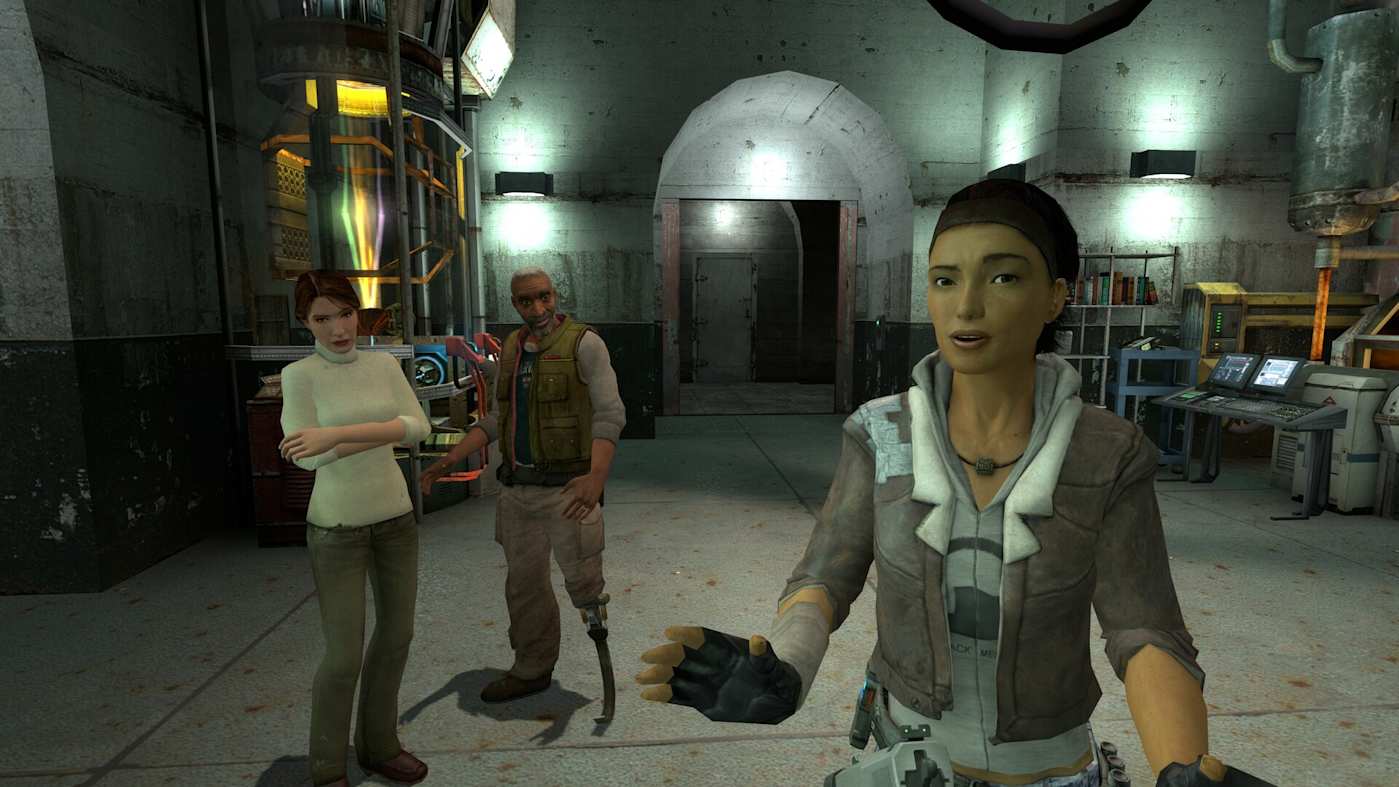
Half-Life fans are nothing if not patient. For the diehard fans out there, the latest test of patience comes from Insider Gaming Weekly's podcast, which claimed that the third installment in the Half-Life franchise is set to release with the launch of the Steam Machine sometime in spring 2026.
"The window I was specifically told was spring 2026 for the Steam Machine, for the Frame, for the Controller, for Half-Life 3," Mike Straw, one of the hosts of the Insider Gaming Weekly podcast and senior editor at Insider Gaming, said. "At the end of the day, the game is real."
Straw added that all the previous dates for an announcement of the next Half-Life game have passed, but that his sources "are still adamant this is a game that will be a launch title with the Steam Machine." However, being tied to Valve's latest hardware release could be an issue since Straw noted that the explosive jump in RAM pricing is causing considerable concern for the Steam Machine's pricing announcement.
"There is a concern, however, they haven't made a decision on price, which is kind of holding back the announcement of anything else," Straw said. "There's no doubt in my mind Valve is still trying to make decisions because of what's going on on the component side."
While optimistic devotees were hoping for some teasers during The Game Awards, Valve hasn't officially said anything. However, there's still a lot of hope, especially considering Valve updated Half-Life 2 for its 20th anniversary, and previous rumors hinted at a game that's still in development but is playable from beginning to end.
This article originally appeared on Engadget at https://www.engadget.com/gaming/half-life-3-is-rumored-to-be-a-steam-machine-launch-title-and-could-arrive-in-spring-2026-193029413.html?src=rss
Apple has released iOS 26.2, bringing a number of new convenience features and security updates. The update includes auto-generated chapters for episodes in the Podcasts app, the option to make AirDrop more secure using verification codes, alarms for Reminders and more. It also introduces new controls for how Liquid Glass appears on the Lock Screen, adding a slider to adjust the transparency level. The drop also includes updates for iPadOS, macOS, watchOS, visionOS and tvOS.
What's new in iOS 26.2 and iPadOS 26.2
It's not exactly a major update feature-wise, but iOS and iPadOS 26.2 bring a bunch of quality of life improvements to apps including Apple Music, Podcasts and Games. In Apple Music, you'll now see your Favorite Songs playlist in the Top Picks section, and lyrics will be available offline for songs you've downloaded. In addition to automatically generated chapters, Podcasts will display links to any other podcasts mentioned in the episode you're listening to. And, Games is getting in-game score banners, along with filters for the library to make it easier to find titles based on category and other descriptors. Apple says it also improved support for Backbone and Razer controllers.
With iOS 26.2, Apple made Safety Alerts for natural disasters and other emergencies more detailed, and they'll now come with maps of affected areas and other useful information. For iPad users, Apple has added drag-and-drop gestures for its new windowing system to make multitasking smoother. The update for iPhones and iPads also addresses several potential security issues, including vulnerabilities in WebKit that Apple says "may have been exploited in an extremely sophisticated attack against specific targeted individuals on versions of iOS before iOS 26." So, if you're not yet running the latest OS on your iPhone and iPad, it's a good time to update.
OS updates for the rest of the family
Beyond the iPhone and iPad, macOS Tahoe 26.2 introduces Edge Light for Mac, which turns your display into a ring light for video calls. For the Apple Watch, 26.2 fixes an issue with stuck songs in the Music app, and adds some new controls for the Sleep app. The tvOS update brings the option to add profiles even for people who don't have an Apple Account, and new restriction options for kid profiles. With visionOS 26.2, Travel Mode now has settings for cars and buses, and you'll now be able to use spatial accessories including "Logitech Muse in Notes, Freeform, and any PencilKit-enabled app" to create hand-drawn content with the Apple Vision Pro.
This article originally appeared on Engadget at https://www.engadget.com/mobile/ios-262-is-here-with-another-liquid-glass-tweak-new-podcasts-features-and-more-181020133.html?src=rss
An iPhone's Lock Screen displaying a photo of the back half of a red, retro buggy-style car, and the time of 9:41, which is translucent against the background of a blue sky
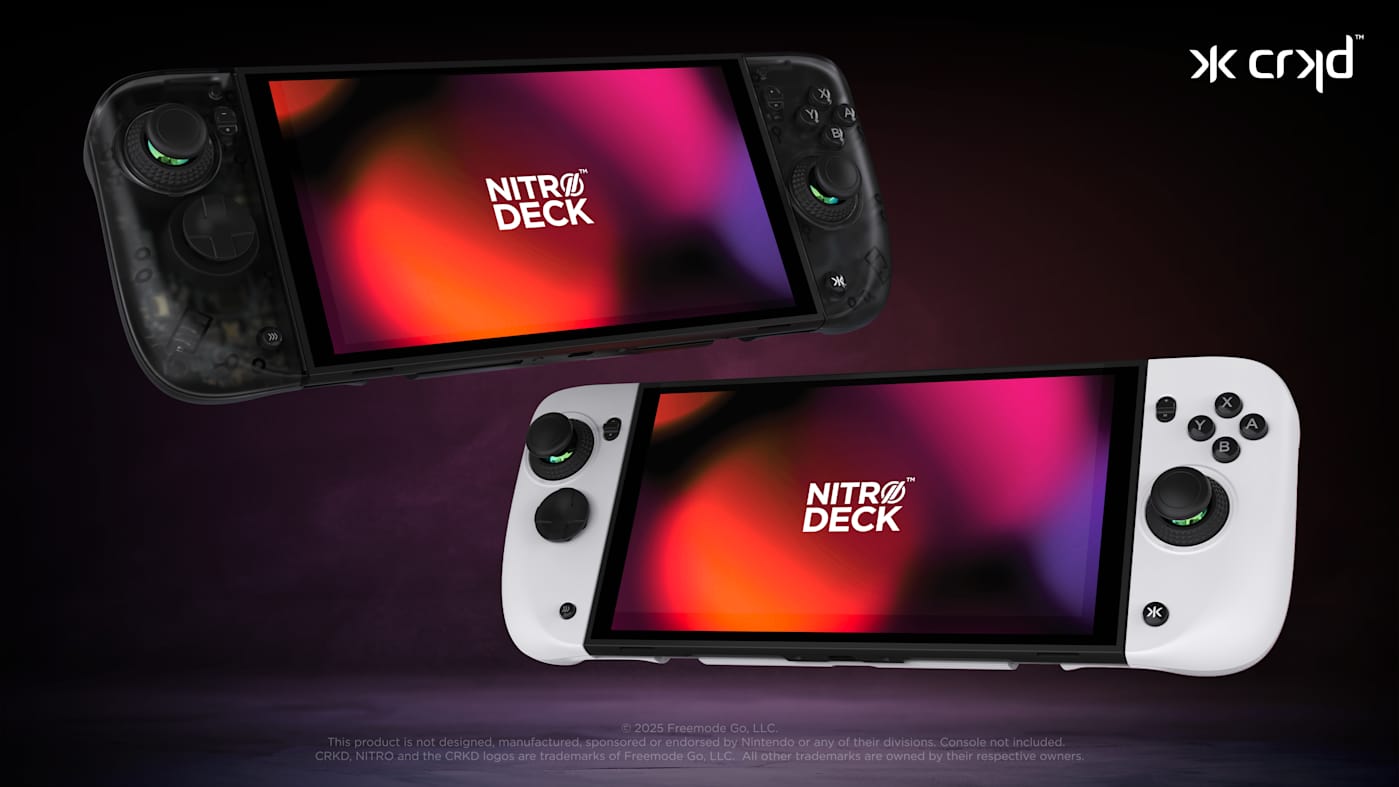
Even though Nintendo made some serious upgrades with the Joy-Con 2, you still might end up ditching them for CRKD's Nitro Deck 2. After winning over Nintendo Switch owners with its first Nitro Deck, CRKD followed it up with an improved design that works for both the original Switch and the Switch 2.
To refine the original design, CRKD added several upgrades to the Nitro Deck 2 based on community feedback. The new-and-improved accessory features the company's CaptiStick Technology, which prevents stick drift and isn't affected by magnetic interference like other Hall effect joysticks. CRKD also offset the right thumbstick and contoured the outer shell for a more ergonomic feel. The Nitro Deck 2 is keeping the swappable stick top feature, but CRKD added the ability to swap out the D-Pad for even more customizability. At the back of the Nitro Deck 2, CRKD managed to squeeze in extra L2 and R2 shoulder buttons alongside the programmable back buttons, which were first seen with the predecessor.
CRKD
Even if you don't own a Switch 2 yet, the Nitro Deck 2 features a new retractable locking mechanism that can be adjusted to fit both the original Switch and Switch OLED. The Nitro Deck 2 supports a low-latency wired mode thanks to an included adapter, but you can also connect the devices through Bluetooth. Thanks to its wireless connection, the Nitro Deck 2 even works as a controller with PC, mobile or smart TVs.
The Nitro Deck 2 will release in white and smoke black, starting at $99.99. That's a $30 increase from the original Nitro Deck's price tag when it debuted in 2023. CRKD will also offer a carrying case for $39.99 and additional D-Pad and Stick Top packs for $19.99. Nitro Deck 2 is currently available for preorders on CRKD's website and is expected to start shipping in spring 2026.
This article originally appeared on Engadget at https://www.engadget.com/gaming/nintendo/crkds-nitro-deck-2-works-for-both-the-nintendo-switch-and-switch-2-173920127.html?src=rss

 Login
Login