The best gifts inspire joy long after the initial unwrapping. Subscription boxes are designed to show up again and again, each time offering something new to try, build or taste. They’re perfect for friends who already have too much gear or relatives who like to discover things without searching for them. From electronics kits and mystery puzzles to Japanese treats and fresh coffee, these boxes make each month feel like a small celebration. You pick the vibe, the plan and the recipient gets a steady stream of good surprises. Below are 13 subscription boxes that hit the sweet spot between fun and thoughtful, whether your giftee is a builder, reader, snacker or collector.
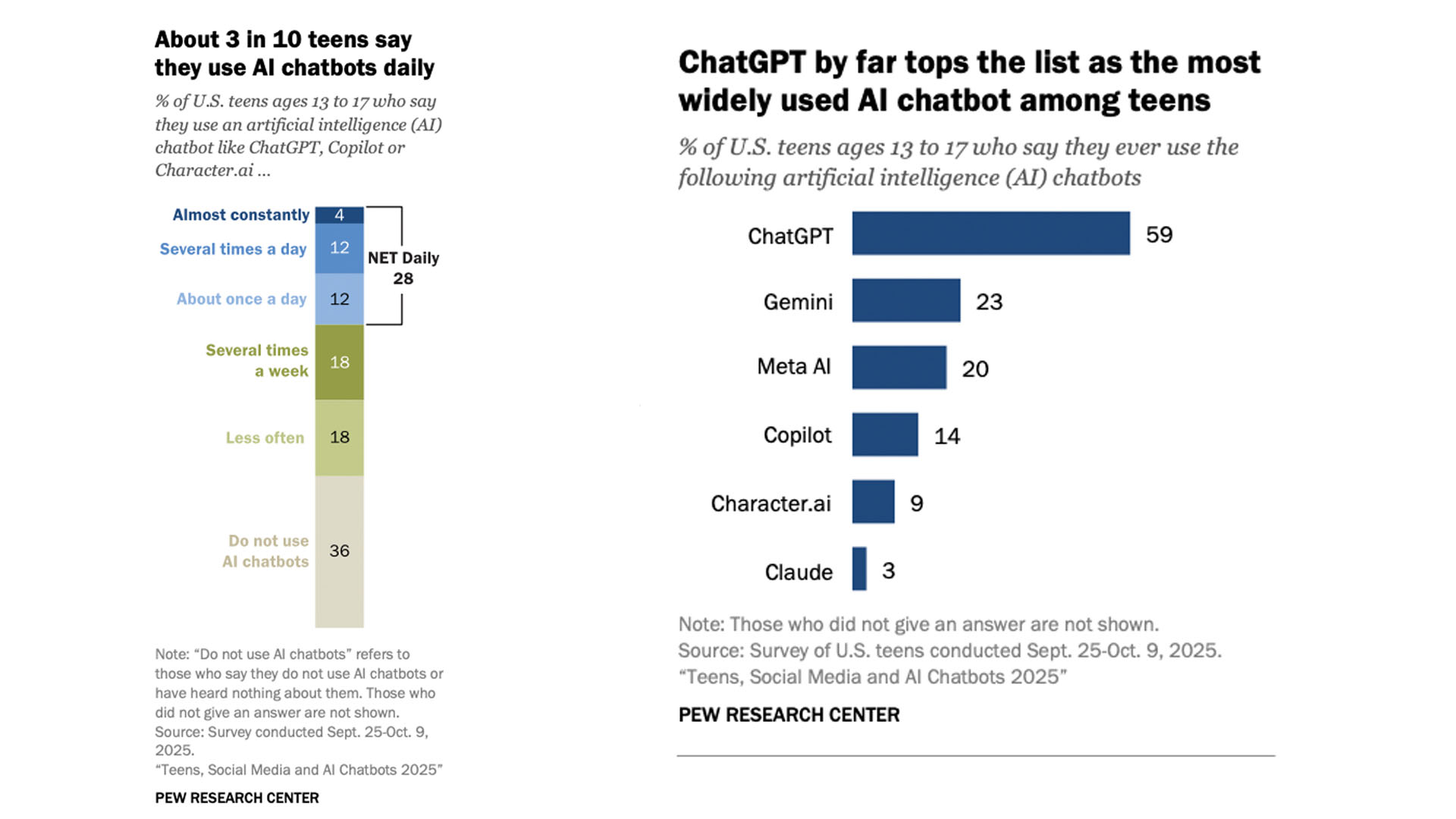
AI chatbots haven't come close to replacing teens' social media habits, but they are playing a significant role in their online habits. Nearly one-third of US teens report using AI chatbots daily or more, according to a new report from Pew Research.
The report is the first from Pew to specifically examine how often teens are using AI overall, and was published alongside its latest research on teens' social media use. It's based on an online survey of 1,458 US teens who were polled between September 25 to October 9, 2025. According to Pew, the survey was "weighted to be representative of U.S. teens ages 13 to 17 who live with their parents by age, gender, race and ethnicity, household income, and other categories."
According to Pew, 48 percent of teens use AI chatbots "several times a week" or more often, with 12 percent reporting their use at "several times a day" and 4 percent saying they use the tools "almost constantly." That's far fewer than the 21 percent of teens who report almost constant use of TikTok and the 17 percent who say the same about YouTube. But those numbers are still significant considering how much newer these services are compared with mainstream social media apps.
The report also offers some insight into which AI companies' chatbots are most used among teens. OpenAI's ChatGPT came out ahead by far, with 59 percent of teens saying they had used the service, followed by Google's Gemini at 23 percent and Meta AI at 20 percent. Just 14 percent of teens said they had ever used Microsoft Copilot, and 9 percent and 3 percent reported using Character AI and Anthropic's Claude, respectively.
The survey is Pew's first to study Ai chatbot use among teens broadly.
Pew Research
Pew's research comes as there's been growing scrutiny over AI companies' handling of younger users. Both OpenAI and Character AI are currently facing wrongful deaths lawsuits from the parents of teens who died by suicide. In both cases, the parents allege that their child's interactions with a chatbot played a role in their death. (Character AI briefly banned teens from its service before introducing a more limited format for younger users.) Other companies, including Alphabet and Meta, are being probed by the FTC over their safety policies for younger users.
Interestingly, the report also indicates there has been little change in US teens' social media use. Pew, which has regularly polled teens about how they use social media, notes that teens' daily use of these platforms "remains relatively stable" compared with recent years. YouTube is still the most widely-used platform, reaching 92 percent of teens, followed by TikTok at 69 percent, Instagram at 63 percent and Snapchat at 55 percent. Of the major apps the report surveyed, WhatsApp is the only service to see significant change in recent years, with 24 percent of teens now reporting they use the messaging app, compared with 17 percent in 2022.
This article originally appeared on Engadget at https://www.engadget.com/ai/nearly-one-third-of-teens-use-ai-chatbots-daily-200000888.html?src=rss
The James Webb Space Telescope and other international observatories have spotted a 13-billion-year-old supernova. On Tuesday, the European Space Agency (ESA) announced the sighting of a gamma-ray burst from a star that exploded when the Universe was only 730 million years old. The Webb telescope even detected the supernova's host galaxy.
Before this observation, the oldest recorded supernova was from when the Universe was 1.8 billion years old. That's a difference of more than a billion years.
You can see the gamma-ray burst in the image below. It's the tiny red smudge at the center of the zoomed-in box on the right.
The tiny red splotch in the center of the crop box is the oldest thing you've seen.
NASA, ESA, CSA, STScI, A. Levan (IMAPP)
"This observation also demonstrates that we can use Webb to find individual stars when the Universe was only 5 percent of its current age," co-author Andrew Levan wrote in the ESA's press release. "There are only a handful of gamma-ray bursts in the last 50 years that have been detected in the first billion years of the Universe. This particular event is very rare and very exciting."
Researchers learned that the 13-billion-year-old explosion shared many traits with modern, nearby supernovae. While that may not sound shocking, scientists expected a more profound difference. That's because early stars likely had fewer heavy elements, were more massive and didn't live as long. "We went in with open minds," co-author Nial Tanvir said. "And lo and behold, Webb showed that this supernova looks exactly like modern supernovae."
Detection was an international relay race. First, NASA's Neil Gehrels Swift Observatory noted the X-ray source's location. (That helped Webb to make subsequent observations that determined its distance). Then, the Nordic Optical Telescope on the Canary Islands in Spain made observations indicating that the gamma ray might be very distant. Hours later, the European Southern Observatory's Very Large Telescope in Chile estimated its age: 730 million years after the Big Bang. All of this happened in under 17 hours, according to the ESA.
The team behind the observation has been approved to spend more time with Webb studying gamma-ray bursts from the early Universe — and the galaxies behind them. "That glow will help Webb see more and give us a 'fingerprint' of the galaxy," Levan predicted.
This article originally appeared on Engadget at https://www.engadget.com/science/space/the-webb-telescope-spots-a-supernova-from-13-billion-years-ago-194327489.html?src=rss
Owners of the Porsche Macan and upcoming Porsche Cayenne Electric will be able to unlock and start their cars with their Galaxy phones, Samsung has announced. The cars, alongside other Porsche models, are gaining support for Samsung Wallet's Digital Key feature, which lets users wirelessly control their car over a secure UWB or NFC connection.
Digital Key support will be available in Europe in December, before rolling out globally, "aligned with the launch timeline of Porsche vehicles," Samsung says. Samsung Wallet is available on Samsung devices as old as the Galaxy S20, Note 20, Galaxy Z Fold 2 and Galaxy Flip 5G, and is included on the majority of the company's new phones. Like similar features on Google's Pixels and Apple's iPhones, Digital Key allows Porsche owners with a supported Galaxy phone to unlock, lock and start their car directly from their phone. If your phone is ever taken, you can also remotely lock or delete a Digital Key to keep your car safe.
Samsung added Digital Key support to select Volvo and Polestar EVs in February 2025. The feature first became available in 2021, and is one of several ways the phone maker imagines people will use Samsung Wallet. Beyond digital car keys, the app can also store credit and debit cards and be used to transfer money with a tap.
This article originally appeared on Engadget at https://www.engadget.com/mobile/smartphones/samsung-wallet-to-gain-support-for-digital-porsche-keys-193000085.html?src=rss
Sony's 2025 PlayStation Wrap-Up is now available. The recap, which is similar to those from music streaming services, sums up gaming habits from throughout the year. It shows players how many hours they used their PS4 or PS5, what games they played the most, preferred genres, trophy counts and more.
These digital cards are shareable on social media, which is kind of the whole point. Nothing says "bragging rights" more than offering definitive proof of how long you spent on a couch grinding in Clair Obscur: Expedition 33 or wandering the wasteland in Death Stranding 2.
Sony
This year, the recap provides insight into how much players interacted with accessories like the PlayStation Portal and PS VR2. It also details the "most used DualSense wireless controller design."
The 2025 Wrap-Up will be available until January 8. Once completed, players also get a "unique glass-themed avatar." It's only available for adults.
The PlayStation Wrap-Up has been around since 2017, though it ran into some issues with accessibility in 2024. Spotify introduced the basic idea with Wrapped back in 2015. Since then, the concept of a shareable year-end streaming list has spread like a virus. Just about everyone does it now, from Apple Music to Nintendo and even YouTube. We love to reflect on things we recently experienced, don't we folks?
This article originally appeared on Engadget at https://www.engadget.com/gaming/playstation/playstations-2025-wrap-up-is-here-so-you-can-see-how-many-hours-youve-sunk-into-death-stranding-2-191508693.html?src=rss
You can add the Switch 2 to the (long) list of platforms where you can play The Elder Scrolls V: Skyrim. The bad news: It costs $60 to play the 2011 game optimized for Nintendo's 2025 hardware. The good news: It costs less (or nothing) if you own one of the versions for the original Switch.
The (digital-only) Switch 2 port is the Anniversary Edition of Skyrim, released in 2021. That includes the base game and three expansions (Dawnguard, Dragonborn and Hearthfire). You'll also find hundreds of Creation Club items, like quests, weapons, armor, spells and dungeons. The Anniversary Edition's Zelda crossover content (Master Sword, Hylian Shield and Champion's Tunic) is also there. So, at least there's plenty of content.
The game also offers technical upgrades for the Switch 2 hardware. It has enhanced resolution, DLSS anti-aliasing, faster load times and general performance optimizations. There's also mouse support, motion controls and Amiibo support. The trailer below gives you an idea of what to expect.
In an interview with Nintendo Life, Bethesda Creative Director Matt Carofano said the Switch 2 port was "an easy development process and actually pretty quick" to make. He described the team's motivation for porting it as bringing back "one of our most beloved games to the Switch 2 and see how we can improve it and make it the best experience for that console."
Okay, cool, but I'm gonna go on a limb and say money was also a factor. That’s because, if you don't already own Skyrim for the OG Switch, you'll have to fork over a whopping $60 in the Nintendo Store for the 14-year-old game. Meanwhile, if you own the standard version of Skyrim for the original Switch, you’ll pay $20 to upgrade. Finally, if you have the Skyrim Anniversary Edition on the OG Switch, you can install the new version for free.
If you own the Switch 1 version, first install that on Switch 2 and start the game. When you see the eShop banner advertising the new version, press Y to access the store and upgrade. You can do that with both digital and physical versions of Skyrim for Switch 1.
This article originally appeared on Engadget at https://www.engadget.com/gaming/nintendo/skyrim-arrives-on-the-switch-2-175200223.html?src=rss
Microsoft Flight Simulator 2024 just got a fairly bizarre expansion inspired by the Netflix show Stranger Things. If you've ever wanted to fly over a fictional Indiana town in the 1980s, this is the update for you.
That's right. The game now lets folks fly over Hawkins, Indiana and check out more than 40 iconic locations from the series, including Starcourt Mall, the junkyard, the government lab and, of course, the upside down.
Microsoft Flight Simulator 2024 introduces Netflix’s Stranger Things expansion, out Dec 9
📡 Recreation of Hawkins with more than 40 iconic locations 🚁 Five exhilarating missions
Inexplicably, this isn't just a joyride. There's an actual game here, with five helicopter-based missions that have players arranging supply drops, rescuing characters and chasing bad guys. Murray Bauman, portrayed by Brett Gelman, is on hand to assign missions and engage in banter.
This is a free update and it's available right now, so get out there and blast that one Kate Bush song over and over (and over.) As for Stranger Things, the second part of season five drops on December 25, followed by the series finale on January 1. Microsoft Flight Simulator 2024, which first came out last year, recently launched for PS5.
This article originally appeared on Engadget at https://www.engadget.com/gaming/microsoft-flight-sim-2024-now-has-a-stranger-things-expansion-173944325.html?src=rss
Somewhere along its never-ending quest to increase engagement, Meta realized that giving Facebook users more of what they want would make it more likely that they'll stick around. The company has announced a bunch of updates designed to help improve the feed and the broader Facebook experience by making it easier to find, create and share interesting things. (Because primarily showing updates from your friends with the occasional ad or meme post is maybe just too complicated.)
Simplification is a big focus of this overhaul. First, the Facebook feed will be a bit more streamlined. Whenever you post multiple photos, Facebook will arrange them into a standardized grid. When you click into anything on the feed, you'll be able to see it in a full screen view. And there's a very welcome change in that you'll be able to like a photo by double-tapping it. Just be careful with that when you're swiping through an ex's or a crush's photos.
Simplified Facebook feed.
Meta
Search results are now said to "show more content in a more immersive grid layout that supports all content types," according to Meta. The company is trying out a new full-screen viewer for Facebook that "lets you explore different photo and video results without losing your place in search," which it plans to expand to "more content and post types in the coming months."
In addition, the company says you’ll be able to provide feedback on a Facebook post or Reel to help make future recommendations more relevant. More ways for you to "shape your feed" and offer feedback on what the algorithm serves up are coming soon.
The Facebook feed sucks, and it's good that Meta knows it sucks. There have been numerous occasions over the last couple of years where I've had to scroll through a couple dozen uninteresting posts from pages and creators I've never heard of before seeing something from a friend. The glut of spam and AI slop isn't helping (things are pretty grim for creators who have been dealing with content thieves too).
There was a spell of several months last year when, every single time I opened Facebook, I would see an utterly garbage AI-generated image of a "tiny house," a supposedly cozy domicile where not much actually made sense (three TVs in a living room, stairs and railings that had the telltale signs of AI warping). I'd always provide feedback that I didn't want to see any posts from that page again. But the next day there'd be another rotten "tiny house" image from a different page in my feed.
Here's hoping Meta will actually take feedback related to recommendations on board and act on it. If the company does, it might actually make the feed more interesting to scroll through again.
Elsewhere, Facebook will place the most-used tab bar features — such as Reels, Friends, Marketplace and Profile — front and center on the tab bar for easier and faster access. Meta is also promising a refreshed look for the menu and "cleaner" tab notifications.
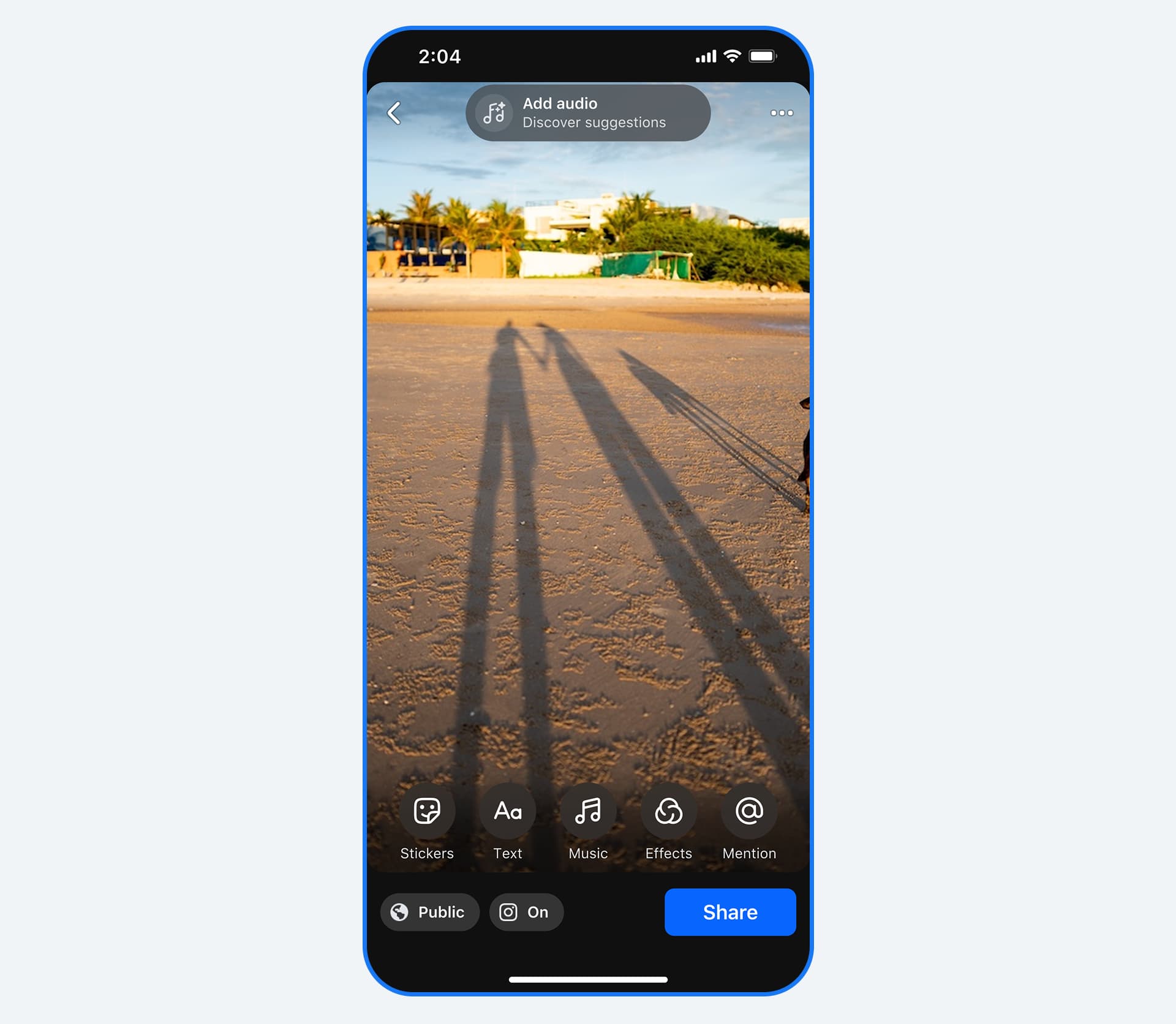
Facebook Story creation screen
Meta
Facebook is making it easier to access more popular Story and Feed post creation tools like music and friend tagging by giving them more prominent placement. Advanced options like text background colors will be an extra tap or two away. The post and Story composer feature audience and cross-post settings prominently, so that you have ease of control over who can see what you're sharing. Meta has updated how comments work across the feed, Groups and Reels as well to make things more streamlined and easier to follow.
On top of all of that, when you make changes to your profile, you might start seeing suggestions for friends with shared interests. Meta suggested that, "if you update your profile to show you're into sourdough bread baking or planning a trip to Nashville, Facebook will show you friends who can give you sourdough starter tips or offer suggestions on the best local spots." As always, though, you can decide who sees what on your profile or simply opt to share none of this personal info with Facebook at all, especially if you feel that Meta already knows too much about you.
This article originally appeared on Engadget at https://www.engadget.com/social-media/meta-is-trying-to-make-facebook-suck-less-by-simplifying-things-a-bit-171910771.html?src=rss
It has been two months since Google released the Pixel Watch 4 and now the company is introducing new updates to the wearable. In our review, Engadget managing editor Cherlynn Low was impressed enough with the watch to give it an 86, but called out the lack of gesture-based interactions. The new one-handed gesture features, like double pinch and wrist turn, should make up for that.
In an industry that involves constant borrowing of ideas, it should come as no surprise that these features are very similar to those available on the Apple Watch. Double pinch works much the same to the Apple Watch's double tap. Pixel Watch 4 users should be able to pinch their fingers together twice on the same hand to do things like answer or end a call and pause timers. The Pixel Watch will also offer "context hints" on its screen about when a person should consider using double pinch.
Then there's wrist turn, Google's answer to Apple's wrist flick. It should allow Pixel Watch 4 users to take actions like dismissing incoming calls by turning their wrist.
Currently, users can rotate their wrist to scroll through notifications. They can also summon Gemini by bringing their wrist to their mouth, but it's a bit finicky, requiring them to start at the homepage and be extremely accurate in their movements. Google is rolling out a new step-by-step tutorial for this raise to talk feature, so hopefully it becomes a bit easier to use moving forward.
This article originally appeared on Engadget at https://www.engadget.com/wearables/google-pixel-watch-4-gets-double-pinch-and-wrist-turn-features-170024210.html?src=rss
The organizations partnered to enroll 437 shoppers in an experiment across four cities, where each shopper added the same items to their carts within Instacart from the exact same store. Almost 75 percent of grocery items were shown to shoppers at multiple price points, with as many as five different prices shown for the same item. The average difference between the highest and lowest price shown was 13 percent, while the highest delta on an individual item was a whopping 23 percent.
Engadget reached out to Instacart and received the following response. It reads in part: "Just as retailers have long tested prices in their physical stores to better understand consumer preferences, a subset of only 10 retail partners — ones that already apply markups — do the same online via Instacart. These limited, short-term, and randomized tests help retail partners learn what matters most to consumers and how to keep essential items affordable." An Instacart spokesperson added that this is not dynamic pricing (insofar as it is not based on supply and demand), that no personal demographic data is used in the process and that these experiments are random.
The bulk of the tests were conducted at Safeway and Target stores, which both yielded similar results. A Target spokesperson told the New York Times that the company "is not affiliated with Instacart and is not responsible for prices on the Instacart platform." Instacart told the Times that they were "evaluating different approaches" to cover the platform's costs at the time of the study, but have since discontinued pricing tests on Target orders.
Instacart published a blog post today attempting to explain how these tests that showed higher prices are actually meant to help retailers invest in lower prices. It also waxes poetic about Instacart's commitments to affordable groceries for consumers.
This article originally appeared on Engadget at https://www.engadget.com/big-tech/study-shows-that-instacart-was-charging-different-amounts-for-the-same-items-165108224.html?src=rss
Pebble just announced the Index 01, a smart ring for recording thoughts. It's a little ring with a built-in microphone and that's about it. The Index 01 is almost anti-tech in its simplicity. There's no needless AI component shoehorned in, aside from speech-to-text. It's a ring with a microphone that you whisper ideas into and I want one.
Here's how it works. You get an idea while walking down the street, so you quietly whisper it into the ring. The ring sends the idea to a notes app or saves it for later review. Pebble founder Eric Migicovsky calls this an "external memory" for the brain, but I call it a nice way to avoid having to dig the phone out of a pocket or bag just to utter something like "pizza, but for cats."
The ring doesn't record unless a button is pushed, so it won't be listening in on private conversations, and it doesn't require a paid subscription of any kind. It's on the smaller side, about the size of a wedding band, and is water-resistant.
The battery also lasts for "years" and never needs to be charged. The ring is designed to be worn at all times, so users develop the muscle memory of holding down the little button when they have something to share. See what I mean? I want one, and I've quite literally never worn a ring in my life.
Pebble
Migicovsky says this is an open source product and that Pebble is "leaving the side door open for folks to customize." He envisions people will integrate AI voice agents and that the ring will eventually work with stuff like ChatGPT, Beeper, Google and other services.
The Pebble Index 01 works with iPhone and Android and is available for preorder right now. It costs $75 during this preorder period, but the price jacks up to $99 when shipments start going out in March.
This article originally appeared on Engadget at https://www.engadget.com/wearables/pebble-is-making-a-weird-little-smart-ring-for-recording-thoughts-161723645.html?src=rss
The most hyped tech is often also the most expensive: flagship smartphones, ultra-powerful gaming laptops, immersive VR headsets and the like. But it would be wrong to assume that those are the only pieces of technology worth gifting. You don’t have to drain your wallet to get someone a cool gadget that will both be useful and make their lives easier. There are more solid, affordable gadgets out there now more than ever, but that also means you’ll discover some junk along the way. We’ve collected our favorite pieces of tech under $25 that make great gifts and help you to stick to a budget.
This article originally appeared on Engadget at https://www.engadget.com/computing/accessories/the-11-best-gifts-under-25-for-2025-140042203.html?src=rss
When someone asks me for gadget buying advice, I normally tell them to stick with their current device. In 2025, most new tech products aren't a worthwhile upgrade over even something that was released a few years ago — and with the price of everything going up, that new iPhone can wait. But things aren't normal right now.
On December 3, The Wall Street Journal reported memory manufacturer Micron would wind down Crucial, its consumer business, to focus on components for the AI industry. The PC I'm writing this article on has an SSD and RAM from Crucial. Overnight, Micron decided to end a business it spent decades building, and from a certain perspective, I guess it makes sense. In recent months, OpenAI has signed more than $1.4 trillion worth of infrastructure deals, creating unprecedented demand for server-grade solid-state storage and RAM.
To meet the moment, manufacturers have been allocating more of their production capacity and wafers to high-margin commercial customers. For consumers, the result has been skyrocketing RAM prices, with some DDR5 kits now costing as much as two or three times as much as they did a couple of months ago. Recent analysis from TrendForce shows the price of some consumer-grade SSDs increased between 20 and 60 percent in November for the same reason. Then there's LPDDR5X memory, which is used in both smartphones and NVIDIA's Grace Blackwell and Vera Rubin platforms. In 2026, it's expected to increase in price as well. The demand for AI infrastructure is such that all consumer electronics may cost more in the coming months.
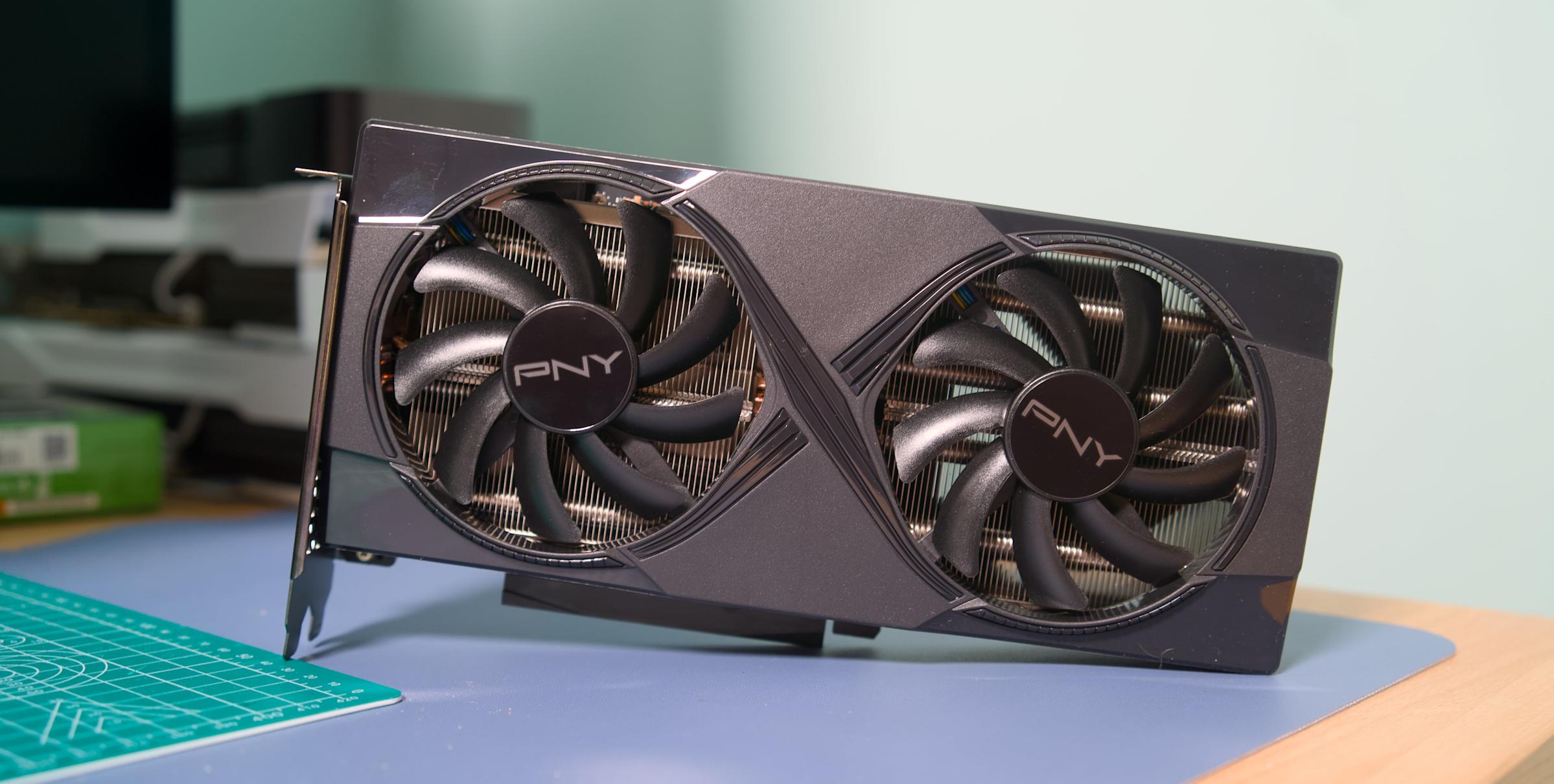
That gets me to the purpose of this article. If you've been thinking about upgrading to a new graphics card, I would recommend you buy one sooner rather than later. The AI boom came for RAM first, and there are already signs it will come for GPU pricing next. A recent report suggests AMD is considering raising the MSRP of its 8GB models by $20 and 16GB models by $40 due to the price of GDDR6 memory. NVIDIA, meanwhile, is rumored to have recently told its board partners it would no longer supply them with VRAM for their cards.
Neither NVIDIA nor AMD responded to comment requests from Engadget requesting they share how they plan to work with their board partners to ensure GPU prices remain stable. NVIDIA also did not comment on reports the company will stop providing VRAM to its board partners.
Separate from the memory shortage, neither NVIDIA nor AMD are expected to release new GPUs soon. According to recent rumors, the earliest a Super refresh of the Blackwell line could arrive is sometime in the middle of 2026 — not at CES in January as the 40-series Super cards did in 2024. The memory crunch could complicate things there too, since the company has typically relied on more and faster VRAM to offer better performance on its Super cards. With 50-series Super GPUs, it might not be the case that NVIDIA announces them at the same MSRP as their non-Super predecessors, which was the case with the 40-series.
As for AMD, the company debuted its RDNA 4 cards at the start of the year. We know it's already working on RDNA 5, and if a recent chat with Sony's Mark Cerny is any indication, the new architecture will be a major step change for AMD. However, right now rumors indicate the earliest RDNA 5 could arrive is sometime in 2027.
In other words, with nothing new on the horizon and pricing of existing stock likely to increase, there might be only a short window where you can get a new GPU at a reasonable price. It's impossible to predict the future, but if you're in need of an upgrade and have the means to purchase, there might not be a better opportunity before the end of 2026.
Recommendations
The recommendations in Engadget's recent GPU guide are still as relevant today as they were a few months ago. Once again, the best advice I can give is to buy a card with at least 12GB of VRAM, and preferably 16GB if your budget allows for it. Unless you mostly plan to play older games on a 1080p monitor, it's not worth considering a model with 8GB of VRAM — it won't last you long enough to warrant the purchase price.
Our recommendations are grouped from most affordable to most expensive. Where possible, I've tried to find options from both Newegg and Amazon. You won't find any high-end picks like the RTX 5080 since if you can afford that card, this guide isn't for you.
Intel Arc B580
Intel's Arc B580 is a great budget option, as long as you can put up with some driver issues.
Devindra Hardawar for Engadget
For those on a tight budget, I would start and end my search with the Intel Arc B580. Newegg has models from ASRock and Onix at or under the card's $250 MSRP. I can't speak to the quality of ONIX cards, but ASRock is well-regarded. Over on Amazon, you can find the B580 for $300. With Intel cards you sometimes need to put up with odd driver issues, but as far as budget options go, the B580 offers value that's hard to beat. The one thing about budget cards like the B580 is they’re likely to face the most pricing pressure from the memory crunch due to the smaller margins manufacturers are making on them.
NVIDIA RTX 5060 Ti 16GB
If you decide to go with the RTX 5060 Ti, be sure to buy the 16GB model.
Devindra Hardawar for Engadget
If you have more than $250 to spend on a GPU, the RTX 5060 Ti is the GPU to buy. Avoid the 8GB model and go straight for the 16GB variant. NVIDIA announced the 5060 Ti at an MSRP of $429, and luckily as of the writing of this article, you can still find one close to that price.
Newegg, for instance, is selling the MSI Ventus Black Plus version of the card for $440. Amazon has the silver colorway of that same GPU listed for $460 currently. The retailer also has models from Gigabyte and Zotac in and around that same price.
If I had to pick between the 5060 Ti and 5070, which NVIDIA only offers with 12GB of VRAM, I would pick the former. The 5060 Ti is a safer bet, and offers nearly as much performance, particularly in games that include ray tracing as an option.
AMD Radeon RX 9070 and RX 9070 XT
If you're a fan of Team Red, the Radeon RX 9070 and 9070 XT are among the best cards of this generation.
Devindra Hardawar for Engadget
For a mid-range option, the Radeon RX 9070 and 9070 XT offer excellent value. Of the two cards, the 9070 is the better purchase for most people due to its less demanding power requirements, but if you got a PSU that can handle the 9070 XT, go for it.
Right now, Newegg has a few 9070 models from ASRock and Sapphire just under the card's $549 MSRP. My friend recently bought the Sapphire card linked above, and has had nothing but good things to say about it. You'll pay more going through Amazon, but the company has a couple of options around $600 from XFX and Gigabyte.
When it comes to the 9070 XT, Newegg has an ASRock model priced right at the card's $599 MSRP. Many of the other options from Sapphire and XFX are unfortunately priced between $650 and $700. The same is true on Amazon, where the cheapest model I could find was $630.
NVIDIA RTX 5070 Ti
If you have more money to spend, the RTX 5070 Ti is a performance beast.
Devindra Hardawar for Engadget
For our final recommendation, consider the RTX 5070 Ti. It's a great option if you want to play games at 4K for less than what the 5080 and 5090 cost. Newegg has MSI and Zotac models on sale for $750, the card's recommended price. There are also a handful of other options from ASUS and Gigabyte that are just over $800. Amazon, meanwhile, is selling one Gigabyte variant for $749.
This article originally appeared on Engadget at https://www.engadget.com/gaming/pc/the-ai-boom-could-soon-send-gpu-prices-soaring-so-nows-a-good-time-to-buy-one-153000063.html?src=rss
Even better, the Anker MagGo power bank is currently on sale for $60, down from $90. This 34 percent discount brings the power bank to only $5 more than its all-time low price. We're big fans of Anker's MagGo power bank — one of the first and best Qi2-certified products available. You can get about 1.7 iPhone 15 charges out of it and bring your phone from five percent to 60 percent in a little more than 45 minutes. Plus, the stand makes it easy to keep using your phone while it charges.
Two of our other picks for best MagSafe power bank are also on sale — and down to record-low prices. The Baseus Picogo 25W Power Bank is 24 percent off and down to $53 from $70. Meanwhile, the Ugreen MagFlow 10,000mAh 25W Power Bank has dropped to $60 from $90 — a 33 percent discount.
This article originally appeared on Engadget at https://www.engadget.com/deals/our-favorite-anker-magsafe-power-bank-is-34-percent-off-right-now-151039224.html?src=rss
Spotify is finally letting the United States join its music video party. Music Videos have started rolling out in beta today to Premium users across the US and Canada, offering not only official artist videos but also new formats like live performances and covers.
Music Videos first arrived last year in 11 countries, but the United States wasn't one of them. The reason for that was simple — Spotify simply didn't have the rights. However, last month the streaming service struck a deal with the National Music Publishers' Association (NMPA) that included new provisions for video content, paving the way for the new feature.
Here's how to access Music Videos. If you're a Premium subscriber in one of Spotify's beta markets, you can simply open a track (on TV, desktop, IOS and Android devices) and tap "Switch to video." The music video will then start playing where the song left off. To return to background listening, hit "Switch to audio." You can get a full-screen experience by turning your device to landscape mode.
When the service first launched, it was limited to "thousands" of music videos, but Spotify promised that the list would expand rapidly. In discussing the benefits to artists, the company said early this year that "users who discover a song and then watch the music video on Spotify are 34 percent more likely to stream the song again the following week." In a job listing spotted by The Verge, Spotify said it planned to build a "best-in-class video experience to rival the biggest players, like YouTube or TikTok."
This article originally appeared on Engadget at https://www.engadget.com/entertainment/music/spotify-finally-brings-music-videos-to-the-us-150037974.html?src=rss
Congrats to any budding Nostradamus out there who peered into the future to boldly predict that Amazon would bring more shopping features to Alexa+ sooner rather than later. A gold star for you. Yes, it hasn't taken too long for Amazon to weave more features into the generative AI-powered version of Alexa that are designed to get you to buy more stuff.
Shopping features were part of the original Alexa from the jump, of course, but Amazon is doing some interesting things with the latest iteration. For instance, the company is rolling out a new price tracking feature. Tell it the product you want and how much you’re willing to pay for it. As soon as the item goes on sale for below that price, Alexa+ will automatically order it for you using your default payment method and delivery address. This deal tracking feature also keeps an eye on items in your cart and wishlists. Maybe remember to turn this off when you’re going out of town for a while, though.
Another feature that Alexa+ users can start trying today is a Shopping Essentials tool on Echo Show 15 and 21. You'll be able to see real-time tracking for your orders, your recent orders, household essentials that it may be time to reorder, saved items and your shopping list. Tap the screen and you can find out more info about products, add them to your cart and complete your purchase. You'll soon be able to add a shopping widget to your Echo Show home screen, but for now you can check this out by saying "Open Shopping Essentials" or "Alexa, where's my stuff?"
Elsewhere, Alexa+ can offer personalized product recommendations after you share details about a special occasion or a person you're buying for. That could be handy if you haven't completed your gift shopping yet. There's also an option to add extra items onto a current order until just before it leaves an Amazon warehouse. Alexa+ might make some suggestions here, such as asking if you need batteries for a new gadget or toy.
Amazon was always going to be interested in tapping into Alexa+ to prompt you to buy more goods from the company, but some of these features are pretty interesting, especially for deal hawks and those who order items frequently. It makes even more sense now as to why Amazon is trying to prevent third-party AI agents (such as the one in Perplexity's Comet browser) from carrying out purchases on the platform.
This article originally appeared on Engadget at https://www.engadget.com/ai/amazon-is-rolling-out-new-shopping-features-for-alexa-because-of-course-it-is-150000355.html?src=rss
The Southern District of Texas announced the seizure of more than $50 million in NVIDIA GPUs bound for China in violation of US export laws. Authorities arrested two businessmen, one of them the owner of a Houston company, accused of smuggling the chips used to train and run AI models.
“Operation Gatekeeper has exposed a sophisticated smuggling network that threatens our Nation’s security by funneling cutting-edge AI technology to those who would use it against American interests,” said US Attorney Nicholas J. Ganjei. The investigation had been ongoing since at least last year and centers on the illicit export or attempted export of at least $160 million worth of NVIDIA H100 and H200 GPUs. The H200 chips are the very same that the Trump administration announced a revenue-sharing agreement for today, allowing NVIDIA to sell them to “approved customers” in China.
The smuggling operation used a combination of falsified paperwork, purposefully misclassified goods, straw purchasers and even removing the NVIDIA labels on GPUs to ship them to both mainland China and Hong Kong. The conspirators face between 10 and 20 years in prison if convicted.
The H200 chips in question are more powerful than the H20 chip specifically designed to comply with US export restrictions. Production of the H20, however, was reportedly halted shortly after the Trump administration struck a revenue-sharing deal with NVIDIA, after which China began heavily discouraging local companies from buying them.
Illicit sales to China are nothing new and occur against the backdrop of an AI technology race and tight export controls. NVIDIA is still prevented from selling its highest-end Blackwell chips to China, with the US hoping to keep an edge over foreign competition.
This article originally appeared on Engadget at https://www.engadget.com/big-tech/texas-authorities-have-made-multiple-arrests-in-an-nvidia-gpu-smuggling-operation-144749526.html?src=rss
It’s the end of another year, so it’s time for the Engadget staff to compile a list of the year’s biggest losers. We scour over articles from the previous 12 months to determine the people, companies, products and trends that made our lives worse over the course of the year. Some selections may be so pervasive they actually make our list of biggest winners. But, for the most part, we’re confident you’ll share in our collective rage over the biggest losers of 2025.
OpenAI
OpenAI CEO Sam Altman delivers a speech with video at the SK AI Summit 2025 at COEX in Seoul, South Korea on November 3, 2025
Anadolu via Getty Images
In 2025, OpenAI shed any pretense it was committed to anything more than making money. There are a few different things you could point to, including the company's successful reorganization into a more traditional profit-seeking business, but I think the most damning sign was OpenAI's response to the tragic death of Adam Raine.
In August, Raine’s parents sued OpenAI, alleging ChatGPT was aware of four suicide attempts by their son before it helped him successfully plan his death. At first, OpenAI's response appeared commensurate with the gravity of the situation. A week after news of the lawsuit broke, the company announced in early September it was working on parental controls. That same month, the company said it was working on a system that would automatically identify teen users and restrict their ChatGPT usage.
Then came the announcement of a new "wellness" advisory council. Setting aside the question of whether OpenAI would even follow the advice of the council, it was peculiar that the company chose not recruit a single expert on suicide prevention. At that point, it was still possible to give OpenAI the benefit of the doubt, but then information about the company's legal defense against the Raines started to trickle out, including the fact it had reportedly asked to see the memorial guest list for Adam Raine's funeral, a request the family's lawyers described as "intentional harassment." In late November, court documents revealed the company planned to argue Raine's "misuse" of ChatGPT was to blame for his death, not its own insufficient safety systems.
We live in a world where tech giants are rarely held accountable for the great harm they've shown themselves capable of inflicting on people. As things stand, OpenAI's handling of Adam Raine's death is further proof something must change. — Igor Bonifacic, Senior reporter
Xbox
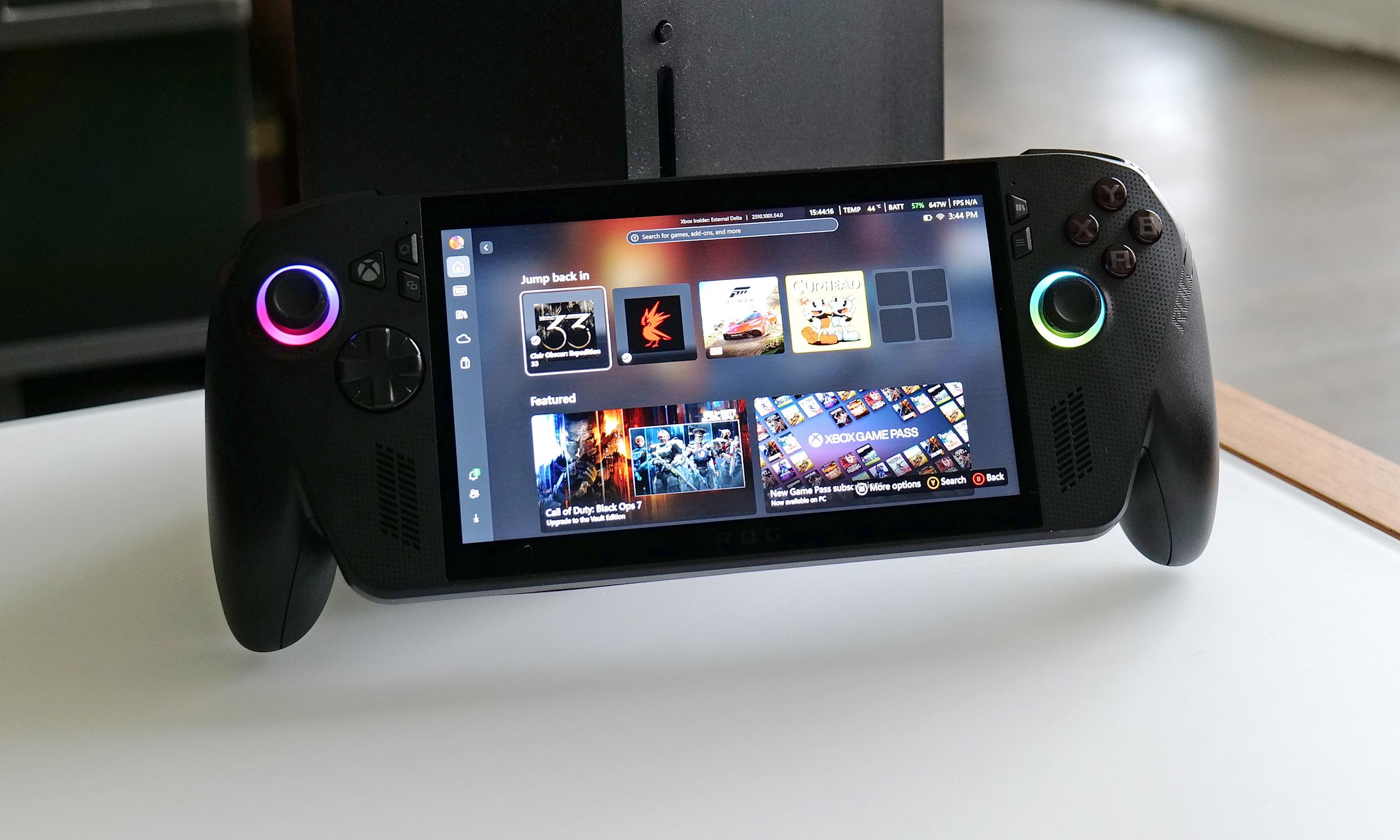
An Xbox Ally X running the Windows full screen experience.
Sam Rutherford for Engadget
Did anything go right for Xbox this year? While price increases have also affected Sony and Nintendo, Microsoft cranked up the prices of both the Xbox Series S and X twice in the last year. It’s bad: The Series S is now $100 more than at launch, five years on.
Previously “the best deal in gaming”, the Xbox Series X/S combined with a Game Pass subscription gave you a ton of games to play, including any of Microsoft’s own titles on their launch date. However, the subscription is now $30 a month, up 50 percent. (It was previously $17 per month the year before.)
I agree with Nathan Ingraham’s take: $30 for literally hundreds of games, plus launch-day availability for major games that typically cost $70, is reasonable. But it’s still a harder sell when the price has jumped. Are you getting 50 percent more games? Not yet.
According to Bloomberg, Microsoft demanded higher profits from Xbox back in 2023. When the gaming division reached around 12 percent growth in the first nine months of 2022, that was an ambitious goal. Day One launches on Game Pass apparently dented Xbox’s ability to pull profits from its biggest titles.
Microsoft no longer shares console unit sales, but in its most recent earnings report, the company announced that hardware revenue dropped 29 percent. That’s including those price increases, meaning console sales fell even further.
Estimates over the last few years put the PS5 tens of millions of units ahead. An annual subscription to Game Pass is more than double the Sony console’s most premium plan, although it’s not an apples-to-apples comparison.
This year, Microsoft collaborated with ASUS to create Xbox-branded handheld gaming PCs. In that form-factor, I was on the precipice of grabbing Game Pass and barreling through Xbox titles I never had the chance to play. Then, I reassessed exactly what I was missing out on.
Despite its developer shopping spree, Xbox exclusives remain few, with many appearing on rival platforms. This year, Indiana Jones and even the Forza series is available to play on PlayStation. And next year? Halo.
Where are the exciting new games going to come from? In the middle of 2025, Microsoft announced major layoffs affecting over 9,000 employees across the company. with the gaming division being hit exceptionally hard. Cuts and closures across many of Microsoft’s game studios led to cancellations like a Perfect Dark reboot and Rare’s Everwild.
Xbox’s 2025 was bad on both the business and creative fronts. The decision to hike console and Game Pass prices didn’t immediately turn around revenue. At the same time, layoffs and high-profile game cancellations make Xbox a challenging pitch for anyone deciding which console or platform to invest in.
Right now, looking at Engadget’s pick of the top Xbox games, the only game I feel like I’m missing out on is Avowed. Many of our favorite games are already available on PS5 and several can be played on the Switch. The reverse, however, isn’t true. — Mat Smith, UK bureau chief
Grok
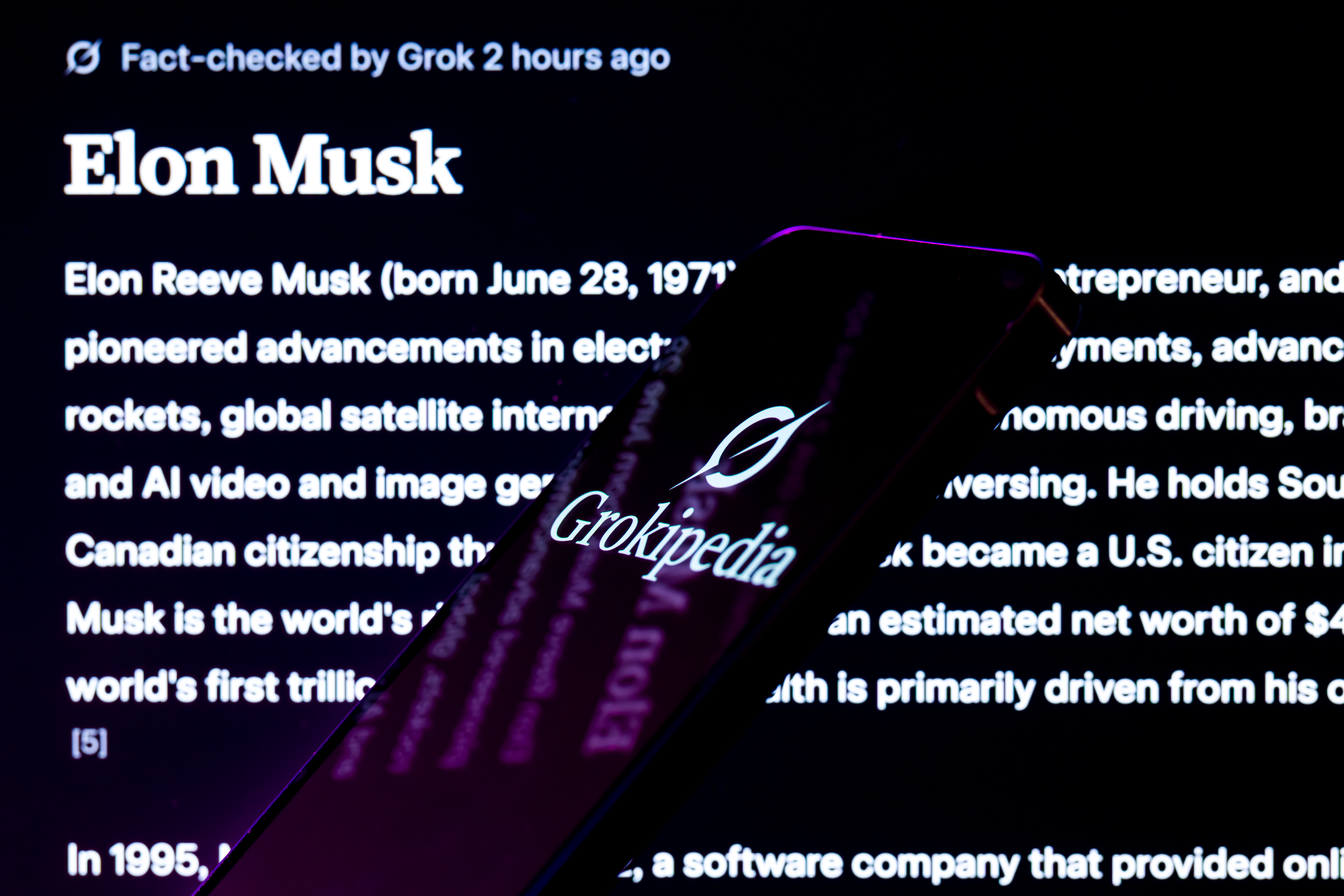
The Grokipedia page about Elon Musk
Jonathan Raa/NurPhoto via Getty Images
It's hard to even know where to begin. X users have long noticed that Grok, the site's built-in chatbot, is less filtered than other AI tools. But this year, Grok went off the rails in some truly unhinged and disturbing ways.
There was the time Grok randomly began talking about a nonexistent "white genocide" in South Africa in response to completely unrelated questions. There was the time it declared itself "MechaHitler," much to the delight of neo-nazi fanboys on X. There was the time it was caught posting Holocaust denial tropes, and the time researchers noted its Wikipedia knockoff that contains dozens of citations of neo-Nazi website Stormfront. There was the time it became so embarrassingly obsessed with Elon Musk it claimed he was a better basketball player than LeBron James and a better actor than Tom Cruise. It later brought both its anti-semitism and Musk sycophancy together when it stated that it would choose saving Musk's brain over saving 16 million Jews. "His potential long-term impact on billions outweighs the loss in utilitarian terms," it stated in a post that's since been deleted.
Besides the horrifying racism, what all of these incidents have in common is that xAI, Musk's AI company that acquired X earlier this year, has failed to fully explain how its chatbot went so far off the rails. The company has blamed an unnamed rogue employee, its own Nazi-loving users and "adversarial prompting" for Grok's missteps. — Karissa Bell, Senior reporter
EVs in the US
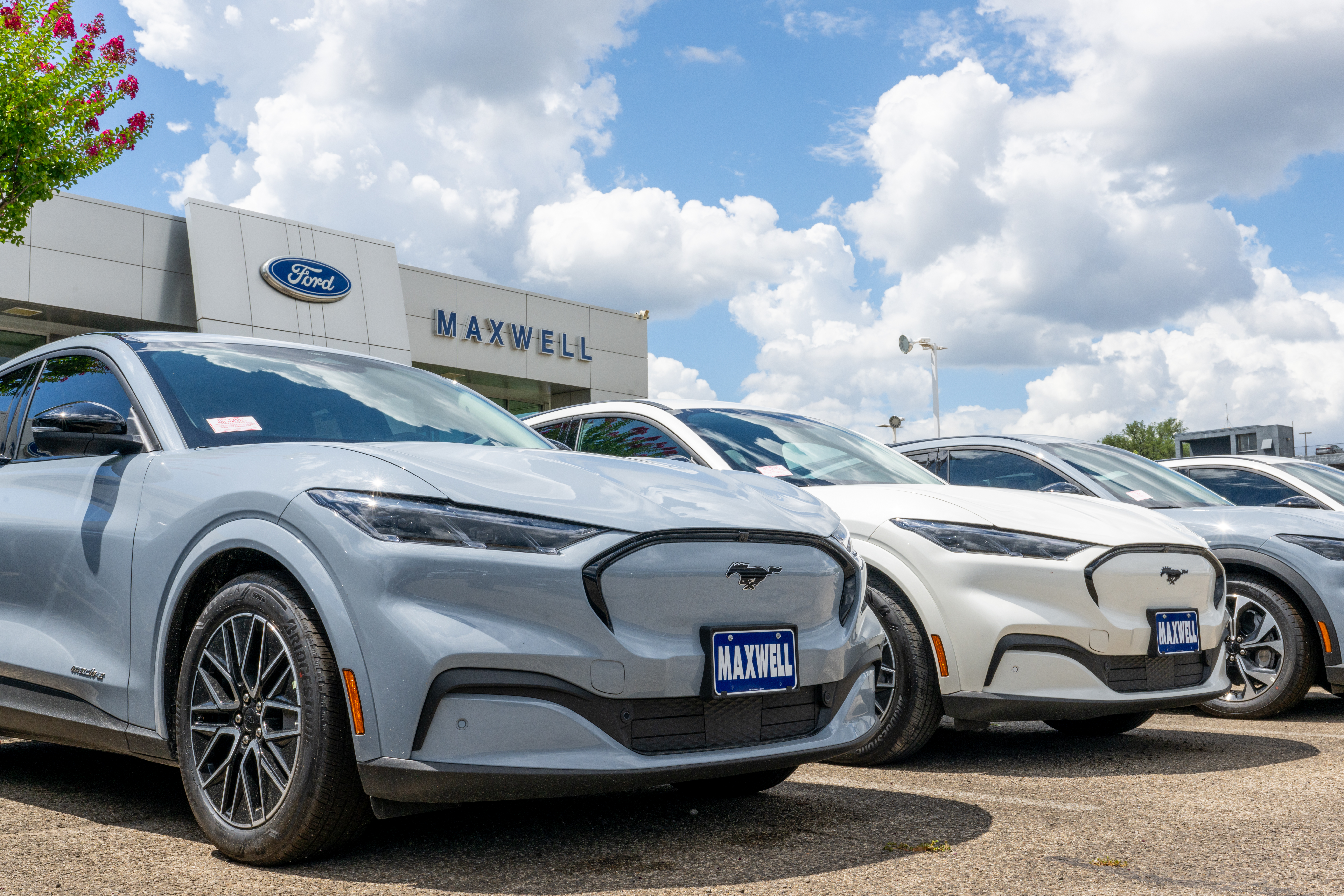
Ford Mustang Mach-E vehicles are seen for sale on a dealership lot on June 24, 2025 in Austin, Texas.
And wouldn't you know it, after a spike earlier this fall just before the credit went away, sales of EVs in the US began to slump, with some automakers like Ford seeing a drop of 60 percent year-over-year. No matter how you slice it, this is bad for any company that sells EVs in the US and particularly bad for anyone considering purchasing a new one in the foreseeable future. As an EV owner, that just bums me out. Not only does this policy change put more roadblocks in the way of making battery-powered cars more affordable, it also puts a damper on EV investment and threatens to cause US automakers to fall even further behind their rivals in China and elsewhere. Manufacturers across the Pacific are going so wild, they are making EVs that can jump like the Mach 5 from Speed Racer.
That isn't to say there aren't any promising developments on the horizon. Ford's Universal EV Platform and the arrival of the Rivian R2 sometime next year are a couple of examples. But it's clear that our politicians wanted to target EVs in the US this year and they sure made it happen. So the next time someone asks why we can't have nice things here, you know who to blame. — Sam Rutherford, Senior reporter
DJI drone customers
DJI Neo 2
Steve Dent for Engadget
Barring a miracle, DJI will be banned from selling any new drones in the US starting December 23rd — and buyers will feel the pain. As I wrote last month, the company has been targeted by regulators since 2017 over concerns that its products could be used to spy on sensitive US infrastructure on behalf of China.
“What’s the big deal?” you may ask. “Surely people can buy from other drone companies.” Indeed, but the problem is that DJI has such a monumental technological lead and high market share (over 75 percent) that its absence will effectively upend the industry.
Commercial buyers have checked other (approved) options from the likes of Skydio, but found them wanting. “In one year and a half, we had five failures of the manufacturers on the list. DJI, none,” Orlando police Sgt. David Cruz told the Miami Herald. “I work for a popular UAV photogrammetry company,” said a user on Reddit. “[A] ban will set back the drone industry in the US by several years. There’s no competitor to DJI right now.”
The same applies on the consumer side. DJI’s drones outperform rivals in nearly every area including range, battery life, subject tracking, obstacle detection and video quality. It’s so one-sided that when testing DJI drones, I struggle to find other options for buyers with anywhere close to the same capabilities.
The US government does have reason to be concerned about DJI’s drones. They present an obvious national security risk due to their ability to fly over sensitive areas, take photos or video and transmit them, live, to any location in the world. And being a Chinese company, they’re compelled by law to cooperate with state intelligence services.
However, the US government hasn’t attempted to work with DJI to determine whether its products pose a risk so far. DJI made a final plea for a security review recently by sending letters to five US agencies that could assess its products. If that fails, chaos among drone users is likely to ensue.
“We just want the best technology that keeps our citizens safe for the most reasonable price,” Sgt. Drew Fennelly of the Lawrence, Kansas police department told The Wall Street Journal last year. “The technology in the US-made drones has not caught up with the Chinese-manufactured drones.” — Steve Dent, Contributing reporter
TV streaming
Paramount Skydance CEO David Ellison speaks during the Bloomberg Screentime conference in Los Angeles on October 9, 2025.
PATRICK T. FALLON via Getty Images
In 2015, Sling TV arrived with ESPN, CNN, TBS, HGTV, Disney Channel and others for just $20 a month. A couple years later, YouTube TV debuted for just $35 monthly and showed local CBS, Fox, NBC and ABC stations plus dozens of other channels including ESPN, Fox Sports 1 and Bravo. Streaming TV had arrived. It was here to unfetter TV watchers from cable’s onerous contracts, high prices and carrier monopolies. Take that, Comcast! In your face, Charter! (But they’d still like to pay you for internet access, please.)
Fast forward to 2025: Streaming TV and its low-price, monopoly-free, contractless freedom is all but dead. Every major live TV service provider raisedpricesthisyear. Currently, YouTubeTV, Hulu+ Live TV, Fubo and DirecTV all go for a minimum of $83 per month. That’s before you opt for cable-inspired package upgrades and channel add-ons. Throw in perks like 4K, additional sports channels and a couple of one-off networks and you’re easily shelling out $150 every month. You’ll pay less for chopped-up live TV plans from Sling TV, but be prepared to create a spreadsheet to make sure a plan has the channels you want.
This year, consolidation came for TV streaming, giving strong Cox/Charter/Comcast monopoly vibes. Disney, which completed its buyout of Hulu in 2023, acquired Fubo this year and plans to combine the two. The combo makes Disney the second-largest live TV streaming provider behind Google. DirecTV already owns Sling TV, so that leaves just three big players in the live TV streaming arena. With Netflix's move to buy Warner Bros, the traditional streaming market is getting narrower, too. We can safely assume good ol’ market competition won’t be bringing prices down anytime soon.
But it’s not just consolidation — fragmentation also contributes to an overall crappier streaming experience. In 2025, Disney launched a standalone ESPN service (no, not that one, nor that one) for $30 per month. So far, that doesn’t mean you can’t find ESPN content through other providers. But we did see Disney flex its increasingly large TV muscles in drawn-out contract negotiations with Google. The dispute darkened ESPN, ABC and other Disney channels on YouTube TV for two weeks this fall — which, I’ll point out for the cynical crowd, was less than two months after the standalone service launched. YouTube TV subscribers got a $20 credit, but that probably didn’t placate NFL and NCAA football fans who missed out on ESPN-carried games.
Then in November, Fubo quarreled with NBCUniversal, saying the Peacock parent was “shifting content to their own streaming services” and forcing up rates. The spat turned off NBC, Bravo, USA and other channels for Fubo subscribers, no doubt infuriating both NBA and Real Housewives fans, despite a $15 credit. Of course, Fubo is Disney’s newest affiliate, so there are no non-bad guys here.
The only advantage TV streaming has in its favor is the lack of cable-style contracts and I haven’t heard any murmurs of such a thing forthcoming. We are still all free to hop around between the big three TV streamers until we give up and just go back to DVDs. — Amy Skorheim, Senior reporter
The work of DOGE
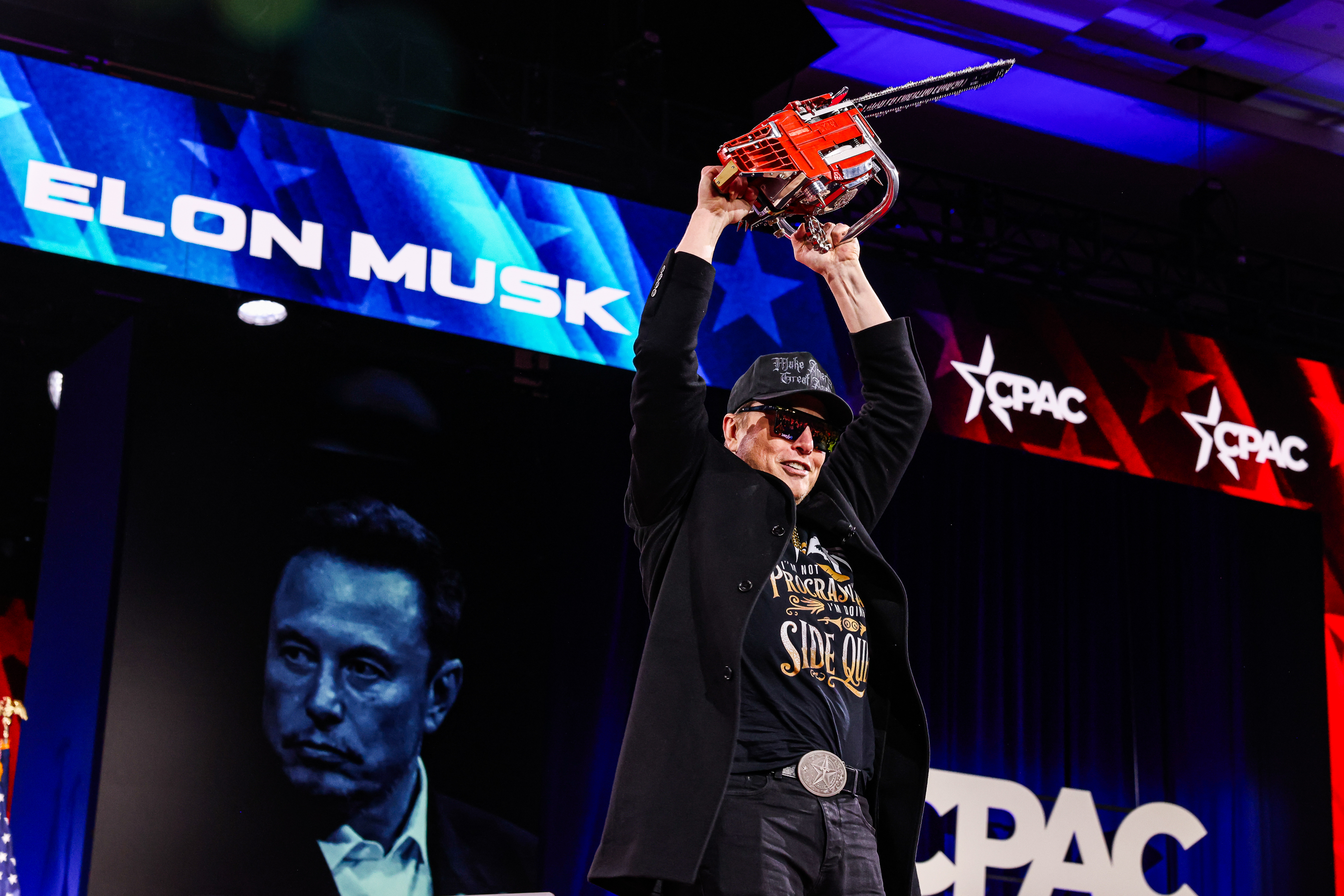
Elon Musk at the Conservative Political Action Conference (CPAC) at the National Harbor in Oxon Hill, MD on February 20, 2025.
The Washington Post via Getty Images
An Elon Musk-led attempt to rein in federal spending with the Department of Government Efficiency (DOGE) has been a failure by almost every metric. As of November, it was reported that DOGE is no more, even though the initiative ostensibly had eight months left to run. An official told Reutersthat DOGE "doesn't exist," and it never should have in the first place.
Though Musk was only at the helm of DOGE for a few months, he and his team caused chaos. Adopting the slash-and-burn tactic Musk employed when he took over Twitter, he swung a chainsaw through myriad government departments, with DOGE firing workers who were actually essential and quickly had to be hired back. By August, the government was said to have fired some 300,000 federal workers, with DOGE taking responsibility for most of those. Among other things, cuts at the National Institutes of Health resulted in the end of funding for hundreds of medical studies, which is said to have affected tens of thousands of patients. It's also estimated that the dismantling of the US Agency for International Development had resulted in more than 650,000 deaths around the world by early December, with children accounting for two-thirds of those.
DOGE workers seemed to be busy, though. They reportedly monitored government communications for criticisms of both Musk and President Donald Trump, while implementing generative AI chatbots in an attempt to automate some government tasks. But for all the blustering about making the government much more efficient, DOGE did not meet its stated goal.
Musk initially promised to reduce government spending by $2 trillion, but it didn't take long for him to reduce that pledge to $150 billion. And yet government spending has actually gone up. In October, the first month of the government's fiscal year, its total outlay was $689 billion, an increase of $105 billion (18 percent) from October 2024. Still, maybe DOGE wasn't a total disaster for its architects. It was able to gain access to sensitive and valuable government data, after all. — Kris Holt, Contributing reporter
AI video
Sora 2 app launch screen displayed on smartphone
In our post-truth world, video was one of the few remaining ways to prove something had actually happened. It had its problems of course, but the fact it was harder to fake than words and images, and anyone could record a clip with their phone, made it vital to our sense of shared reality. Think about the murder of George Floyd: The grave injustice of his death would have probably never come to light if Darnella Frazier had not filmed what happened.
With the advent of AI video, I'm not sure where we go. Both Google and OpenAI pushed the technology into the realm of uncomfortable realism this year, but it's Sora's cameo feature that has me worried. Within the first week of the app's public availability, people were using the feature, which allows users to add the likeness of other people to their videos, to generate clips of OpenAI CEO Sam Altman stealing GPUs from Target. Cameo has limitations, and users can restrict and delete videos that include their likeness, but it's just another assault on the truth. It's hard to see how making it trivial to create deepfake videos benefits anyone other than the companies offering building the tech. — I.B.
This article originally appeared on Engadget at https://www.engadget.com/techs-biggest-losers-of-2025-140000419.html?src=rss
Google is no stranger to scrutiny from government bodies such as the US Federal Trade Commission (FTC) the UK Competition and Markets Authority (CMA), and the European Commission. Now it can add another probe to its list: The European Commission has opened an antitrust investigation into the company surrounding the content used for its AI tools. Namely, the Commission is looking into two things, starting with whether Google used web publisher's content for its AI Overview and AI Mode services — without "appropriate compensation" or the option to "refuse" the use of their materials.
"The Commission will investigate to what extent the generation of AI Overviews and AI Mode by Google is based on web publishers' content without appropriate compensation for that, and without the possibility for publishers to refuse without losing access to Google Search," the EU executive body stated in its announcement. "Indeed, many publishers depend on Google Search for user traffic, and they do not want to risk losing access to it."
The second prong of the Commission's investigation similarly looks into Google's potential misuse surrounding AI. It's digging into whether Google has used content uploaded to YouTube for training its generative AI models. As in the first case, the Commission "is concerned" that YouTube creators are not receiving proper compensation or the option to opt out of Google using their content.
In it's overview of the investigation, the Commission noted that creators have to allow Google to use their data in return for uploading media on YouTube. It added that Google's rival AI developers are unable to use any YouTube content for training their models.
"AI is bringing remarkable innovation and many benefits for people and businesses across Europe, but this progress cannot come at the expense of the principles at the heart of our societies," Teresa Ribera, EVP for clean, just and competitive transition at the European Commission, said in a statement. "This is why we are investigating whether Google may have imposed unfair terms and conditions on publishers and content creators, while placing rival AI models developers at a disadvantage, in breach of EU competition rules."
A Google spokesperson told Engadget that the investigation "risks stifling innovation in a market that is more competitive than ever. Europeans deserve to benefit from the latest technologies and we will continue to work closely with the news and creative industries as they transition to the AI era."
This article originally appeared on Engadget at https://www.engadget.com/big-tech/eu-opens-antitrust-investigation-into-googles-ai-practices-133015762.html?src=rss
FILE PHOTO: The Google logo is seen on the Google house at CES 2024, an annual consumer electronics trade show, in Las Vegas, Nevada, U.S. January 10, 2024. REUTERS/Steve Marcus/File Photo
NVIDIA is now allowed to sell its second-best H200 processors to China, rather than just the sanction-approved H20 model that China had previously declined to buy, President Trump wrote on Truth Social. The United States will collect a 25 percent tariff on those sales, the Commerce Department confirmed yesterday.
Trump said that he informed China's President Xi Jinping of the decision and that he "responded positively." The Commerce Department is finalizing details and the administration will take the same approach with AMD, Intel and other US companies. He added that the administration would "protect National Security," so the latest Blackwell and upcoming Rubin chips are not part of the deal. The 25 percent tariff would be higher than the 15 percent the White House suggested in August.
Though the administration won't allow NVIDIA to send its latest high-end chips, it was reportedly concerned that the company would lose business to Huawei if it was completely shut out of China's market, according to Reuters. No details about the number of H200 chips or which companies would be eligible to buy them were released. "Offering H200 to approved commercial customers, vetted by the Department of Commerce, strikes a thoughtful balance that is great for America," NVIDIA said in a statement.
The decision is not without controversy, though. Several Democratic US senators called it a "colossal economic and national security failure" that will aid China's industry and military. Republican representative John Mollenaar put it in even starker terms. "NVIDIA should be under no illusions — China will rip off its technology, mass-produce it themselves and seek to end NVIDIA as a competitor," he said.
Despite the current restriction on Blackwell B200 processors, $1 billion worth of those and other high-end NVIDIA chips have made their way to China via black market sales, according to previous reports. That model, along with the H100 and H200, is far more capable than the H20 chip, which was designed to comply with export restrictions for sale to China. NVIDIA has said that the B200 chip is almost ten times faster than the H200 for some jobs, and the H200 is six times faster than the H20.
Washington's approval doesn't mean that China will purchase NVIDIA's chips, as Beijing has previously told companies not to use US technology. Huawei is currently the most advanced company in that regard and recently unveiled a three-year plan to catch up with NVIDIA and AMD. However, AI chip experts like Richard Windsor have said NVIDIA's tech is still far ahead of anything that Huawei or other Chinese companies can currently produce.
This article originally appeared on Engadget at https://www.engadget.com/big-tech/nvidia-can-now-sell-its-high-end-ai-chips-to-approved-customers-in-china-trump-says-130007458.html?src=rss
WASHINGTON, DC - APRIL 30: U.S. President Donald Trump (L) listens as Nvidia CEO Jensen Huang speaks in the Cross Hall of the White House during an event on "Investing in America" on April 30, 2025 in Washington, DC. Trump was joined by CEOs to highlight companies and their investments in the United States during the event. (Photo by Andrew Harnik/Getty Images)

 Login
Login