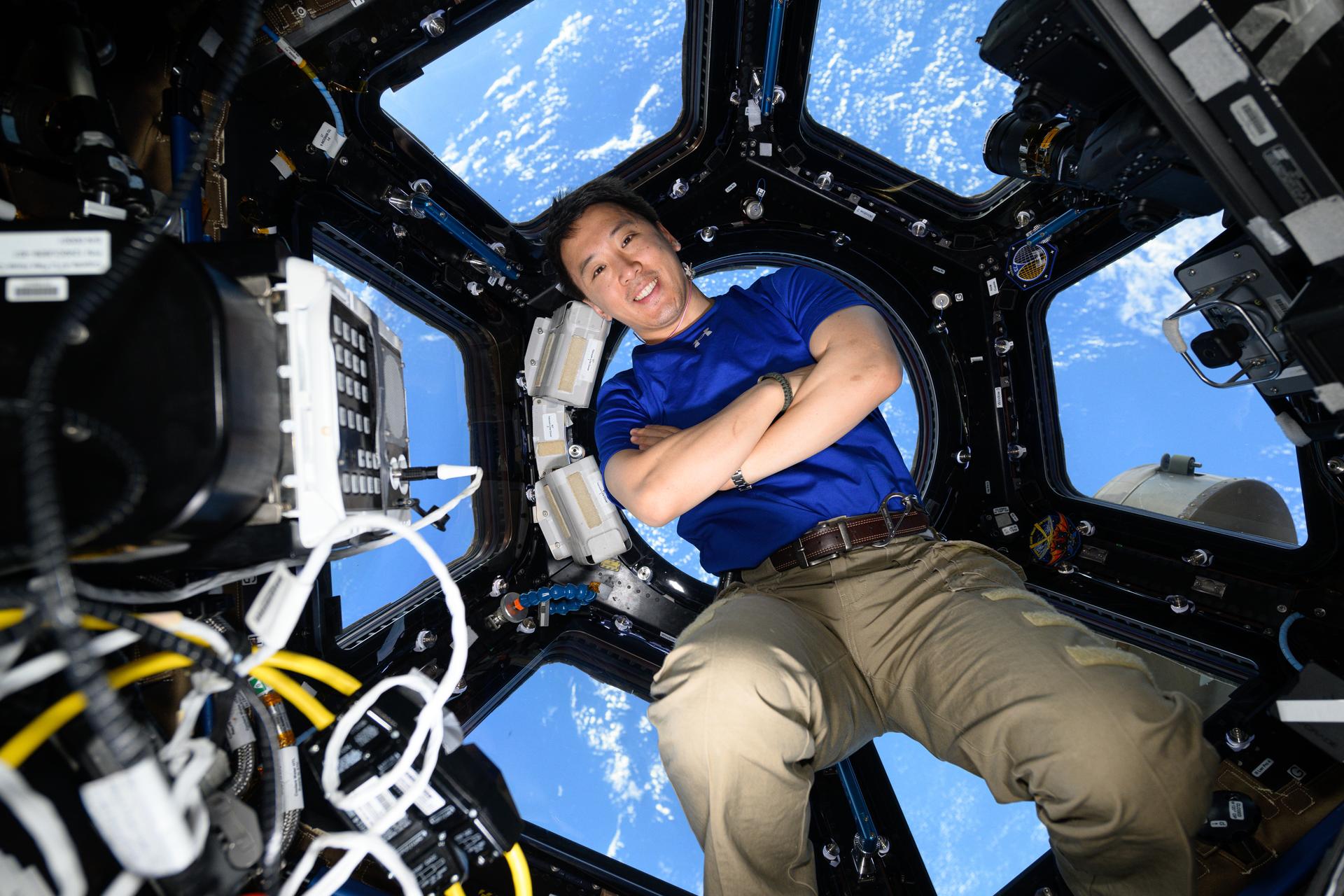
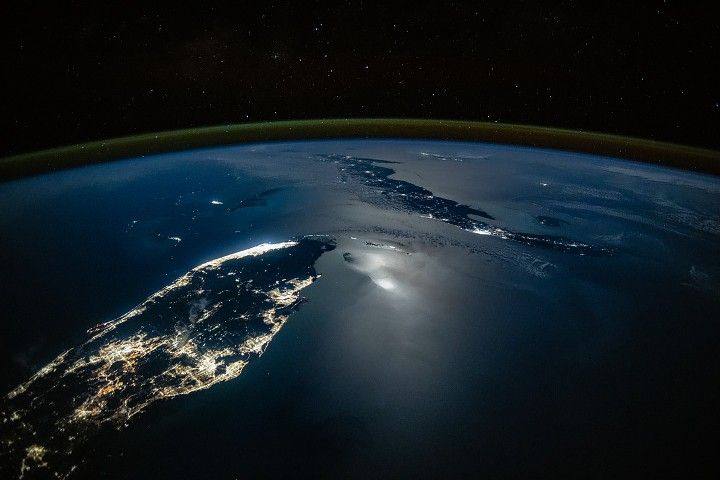
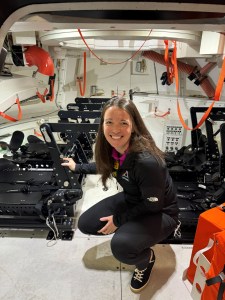
NASA astronaut Jonny Kim poses inside the International Space Station’s cupola as it orbits 265 miles above the Indian Ocean near Madagascar.
Credit: NASA
NASA astronaut Jonny Kim will recap his recent mission aboard the International Space Station during a news conference at 3:30 p.m. EST Friday, Dec. 19, from the agency’s Johnson Space Center in Houston.
Media interested in participating in person must contact the NASA Johnson newsroom no later than 5 p.m. Thursday, Dec. 18, at 281-483-5111 or jsccommu@mail.nasa.gov.
Media wishing to participate by phone must contact the Johnson newsroom no later than two hours before the start of the event. To ask questions by phone, media must dial into the news conference no later than 15 minutes prior to the start of the call. NASA’s media accreditation policy is available online.
Kim returned to Earth on Dec. 9, along with Roscosmos cosmonauts Sergey Ryzhikov and Alexey Zubritsky. He logged 245 days as an Expedition 72/73 flight engineer during his first spaceflight. The trio completed 3,920 orbits of the Earth over the course of their nearly 104-million-mile journey. They also saw the arrival of nine visiting spacecraft and the departure of six.
During his mission, Kim contributed to a wide range of scientific investigations and technology demonstrations. He studied the behavior of bioprinted tissues containing blood vessels in microgravity for an experiment helping advance space-based tissue production to treat patients on Earth. He also evaluated the remote command of multiple robots in space for the Surface Avatar study, which could support the development of robotic assistants for future exploration missions. Additionally, Kim worked on developing in-space manufacturing of DNA-mimicking nanomaterials, which could improve drug delivery technologies and support emerging therapeutics and regenerative medicine.
Learn more about International Space Station research and operations at:
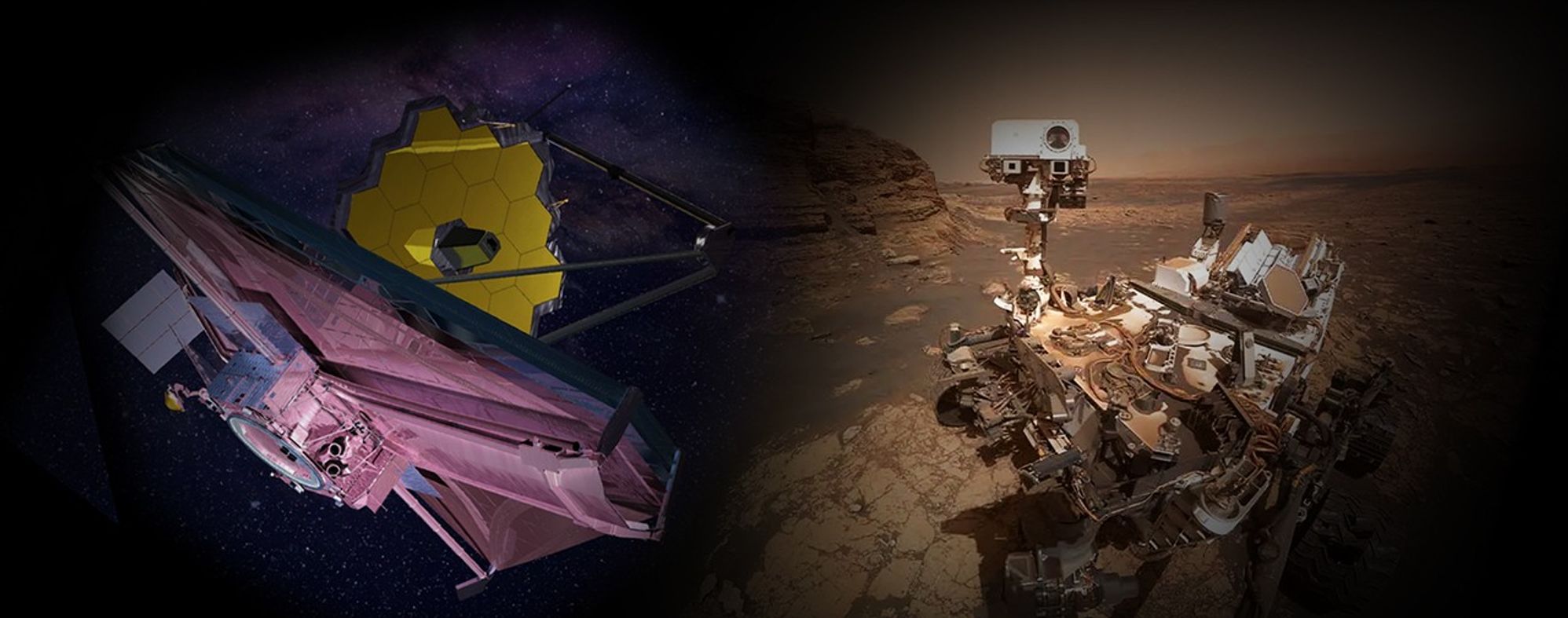
NASA’s James Webb Space Telescope and NASA’s Curiosity rover, have earned places in TIME’s “Best Inventions Hall of Fame”.
NASA GSFC, NASA JPL
Two icons of discovery, NASA’s James Webb Space Telescope and NASA’s Curiosity rover, have earned places in TIME’s “Best Inventions Hall of Fame,” which recognizes the 25 groundbreaking inventions of the past quarter century that have had the most global impact, since TIME began its annual Best Inventions list in 2000. The inventions are celebrated in TIME’s December print issue.
“NASA does the impossible every day, and it starts with the visionary science that propels humanity farther than ever before,” said Nicky Fox, associate administrator, Science Mission Directorate, NASA Headquarters in Washington. “Congratulations to the teams who made the world’s great engineering feats, the James Webb Space Telescope and the Mars Curiosity Rover, a reality. Through their work, distant galaxies feel closer, and the red sands of Mars are more familiar, as they expanded and redefined the bounds of human achievement in the cosmos for the benefit of all.”
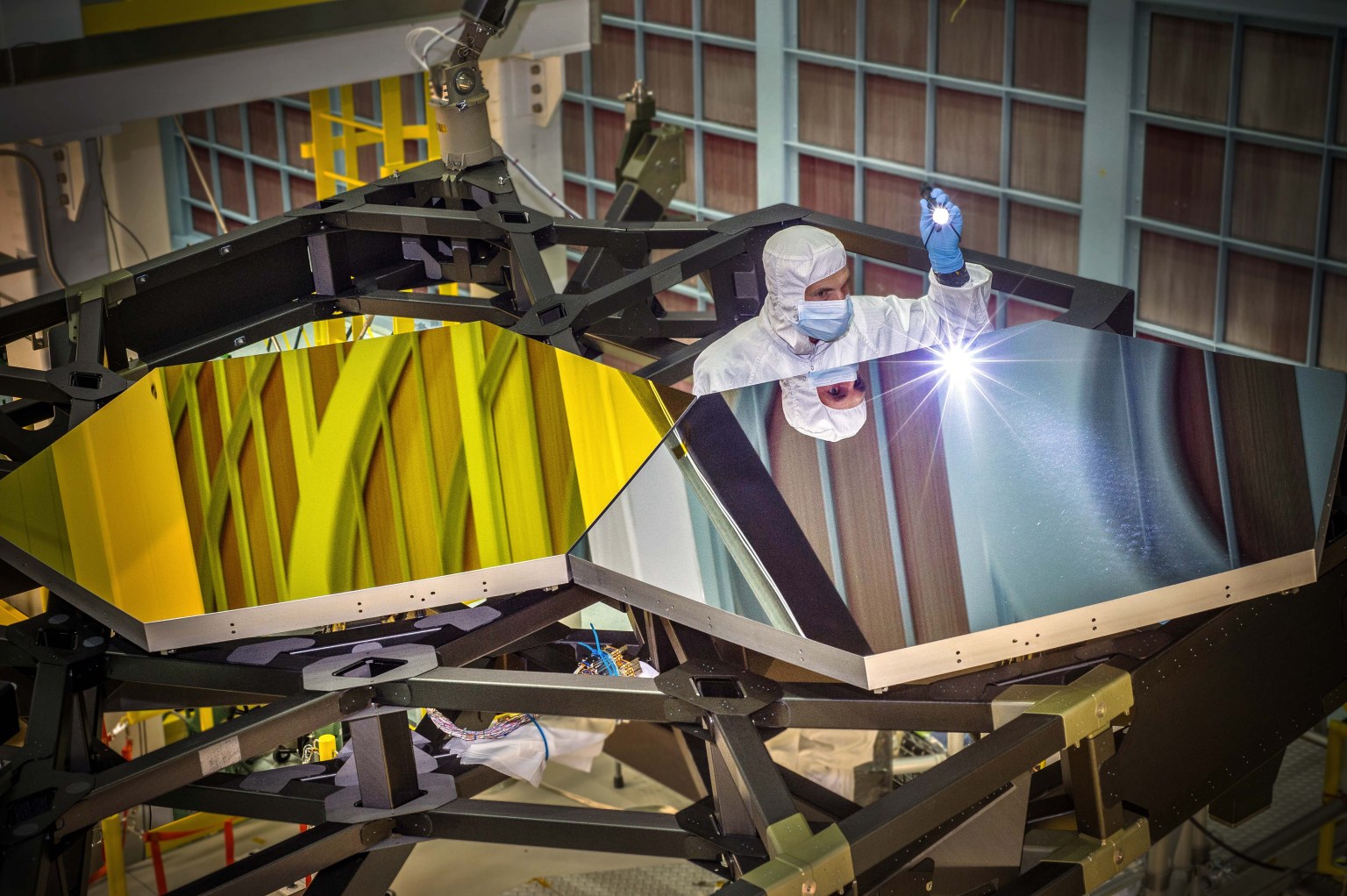
Decades in the making and operating a million miles from Earth, Webb is the most powerful space telescope ever built, giving humanity breathtaking views of newborn stars, distant galaxies, and even planets orbiting other stars. The new technologies developed to enable Webb’s science goals – from optics to detectors to thermal control systems – now also touch Americans’ everyday lives, improving manufacturing for everything from high-end cameras and contact lenses to advanced semiconductors and inspections of aircraft engine components.
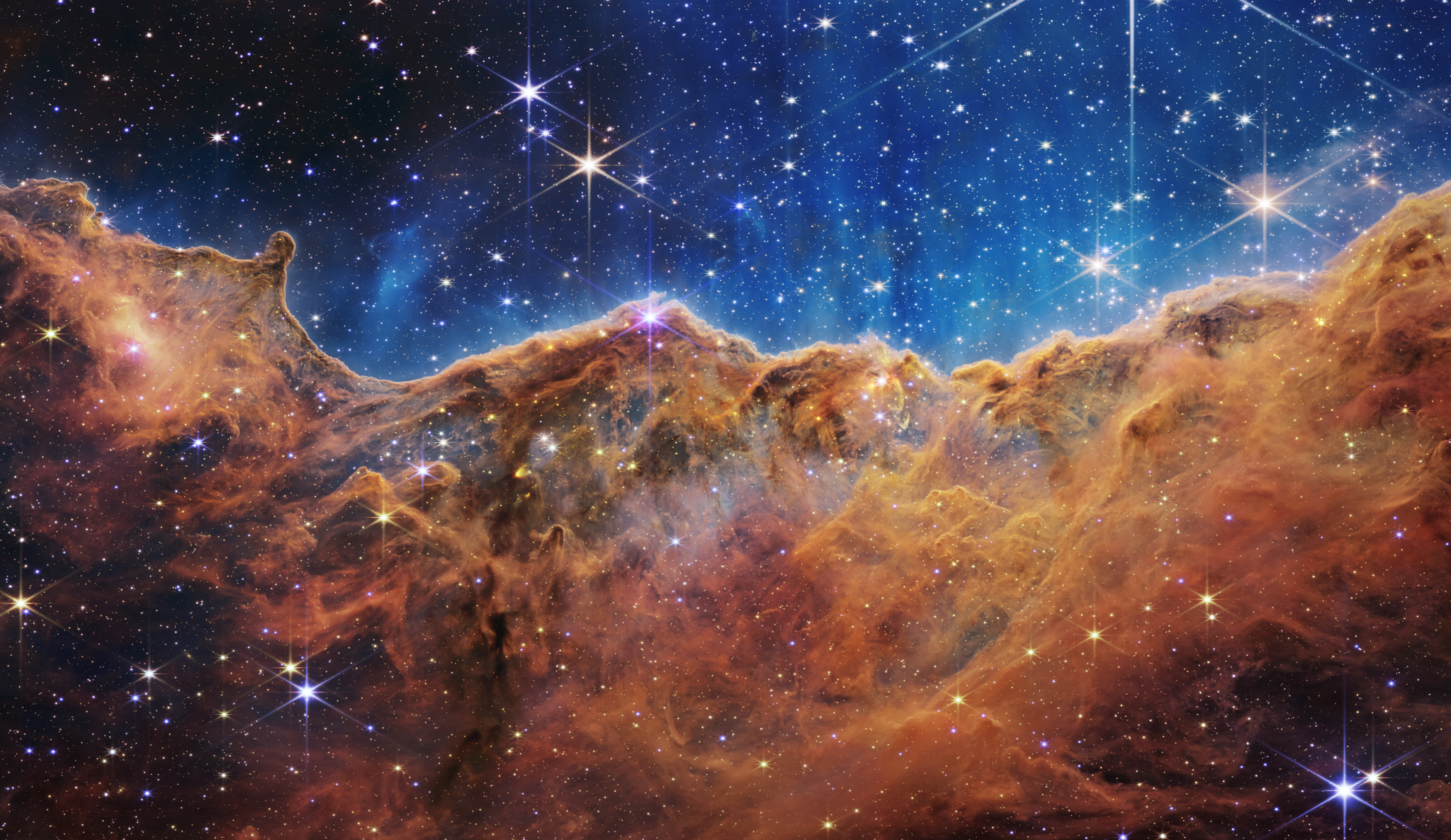
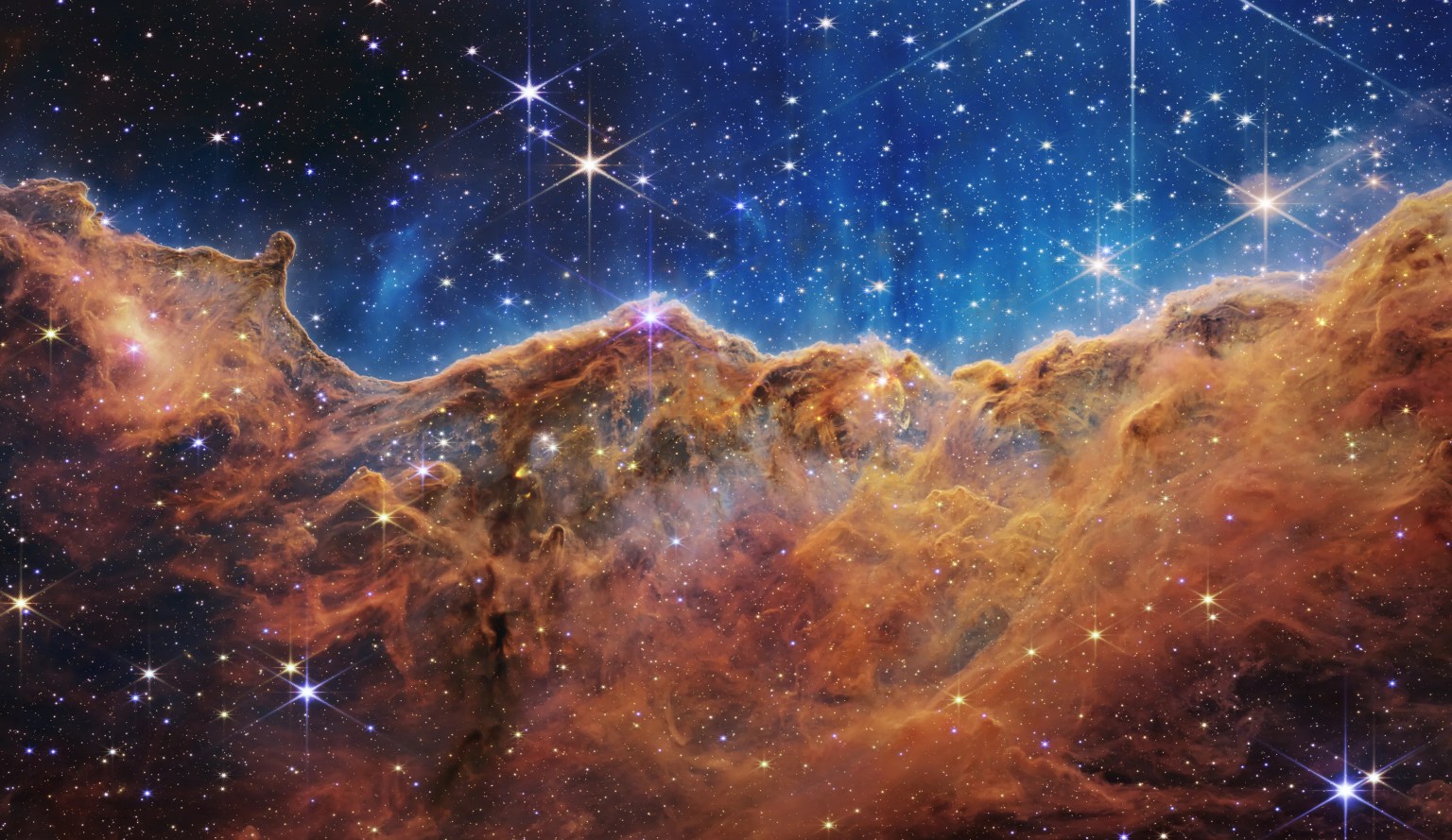
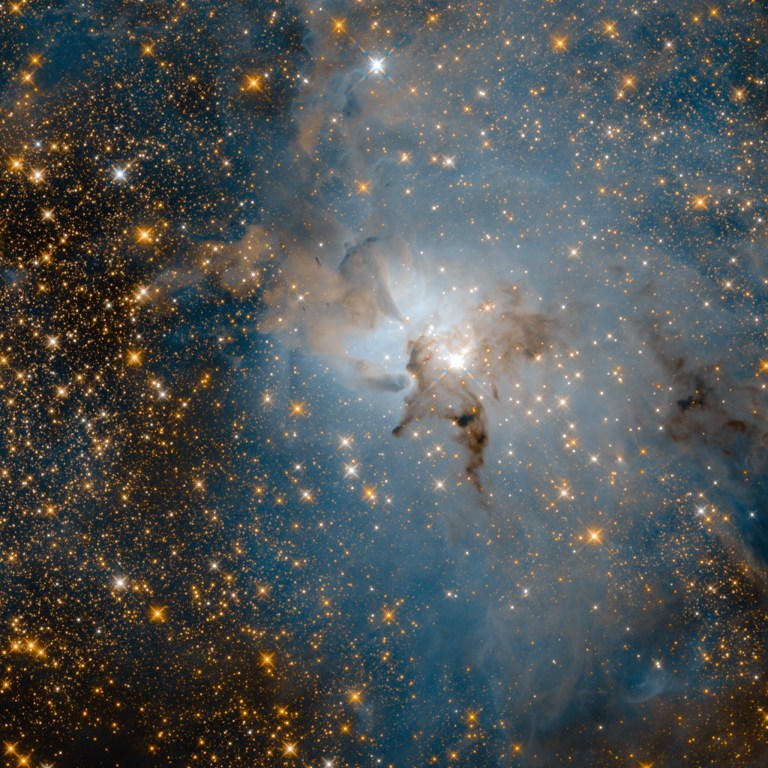
This landscape of “mountains” and “valleys” speckled with glittering stars is actually the edge of a nearby, young, star-forming region called NGC 3324 in the Carina Nebula. Captured in infrared light by NASA’s James Webb Space Telescope, this image reveals for the first time previously invisible areas of star birth.
NASA, ESA, CSA, and STScI
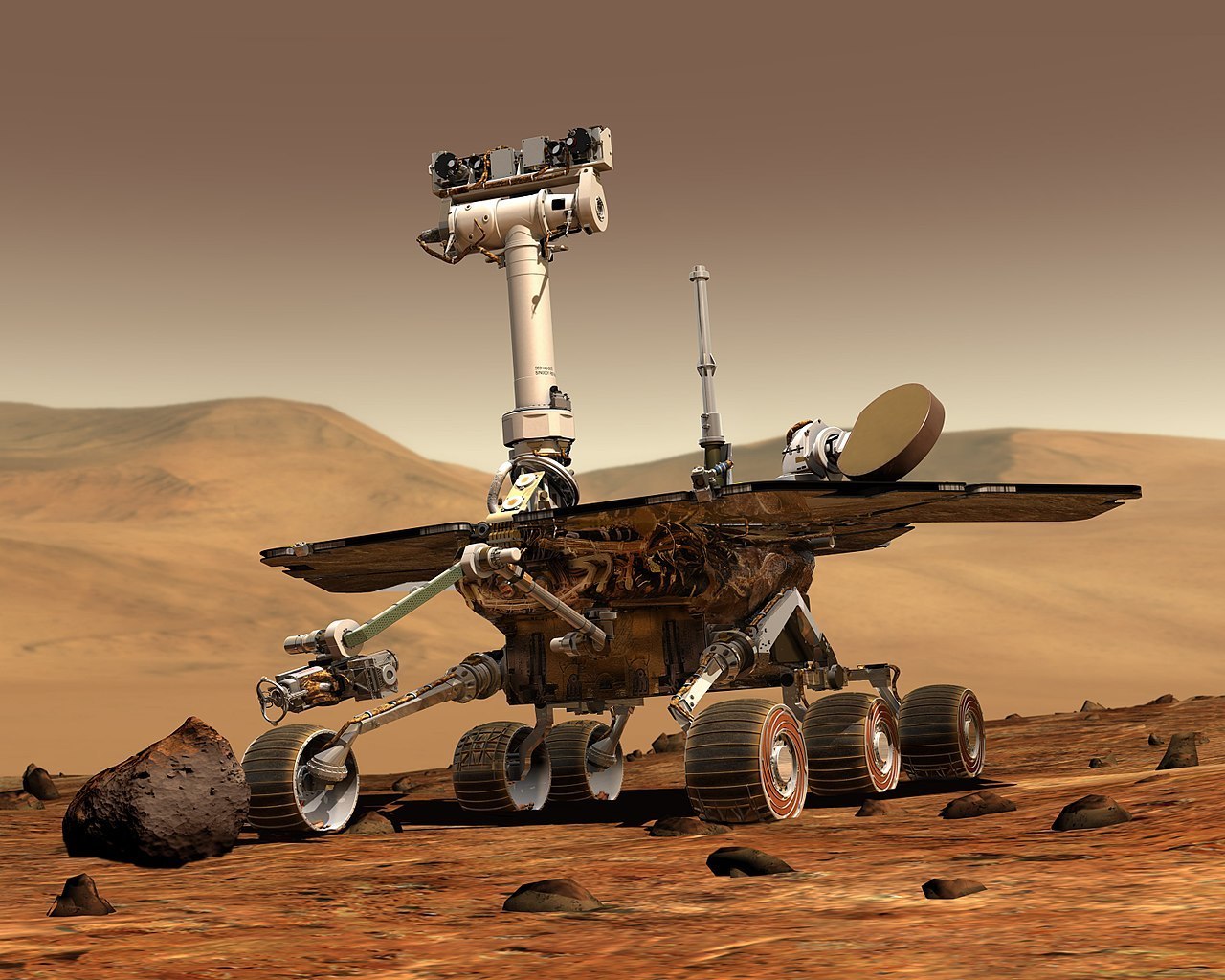
Meanwhile on Mars, the unstoppable Curiosity rover, NASA’s car-size science lab, has spent more than a decade uncovering clues that the Red Planet once could have supported life, transforming our understanding of our planetary neighbor. These NASA missions continue to make breakthroughs that have reshaped our understanding of the universe and our place in it. Curiosity has also paved the way for future astronauts: Its Radiation Assessment Detector has studied the Martian radiation environment for nearly 14 years, and its unforgettable landing by robotic jetpack allowed heavier spacecraft to touch down on the surface — a capability that will be needed to send cargo and humans to Mars.
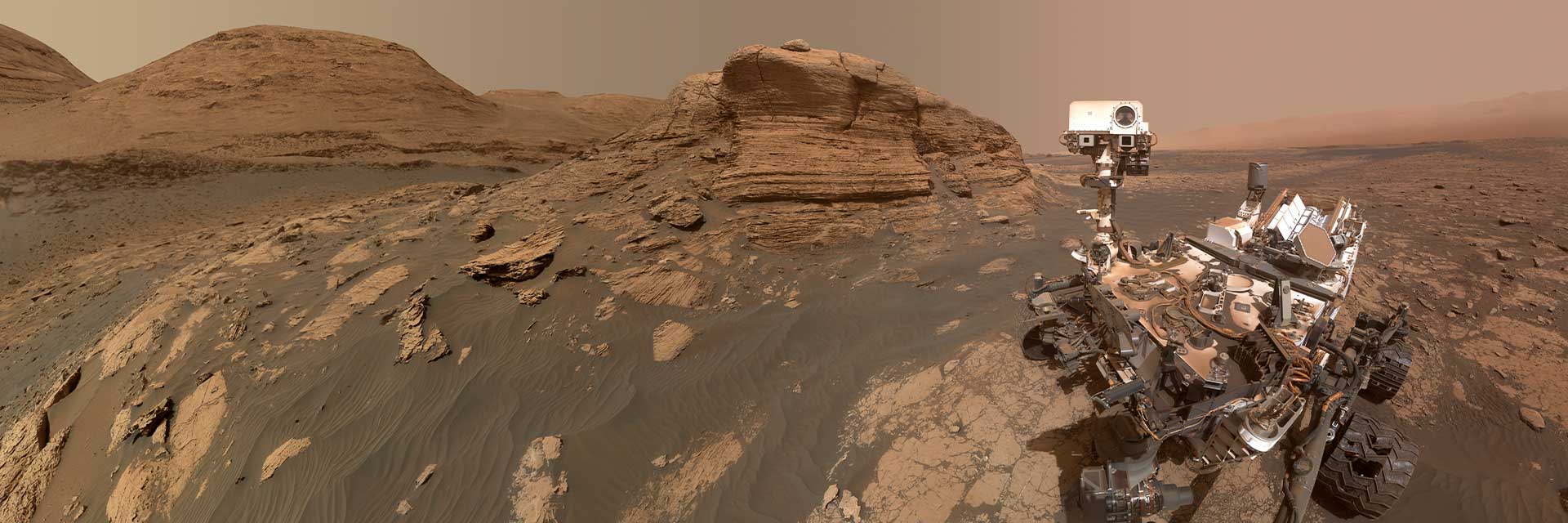
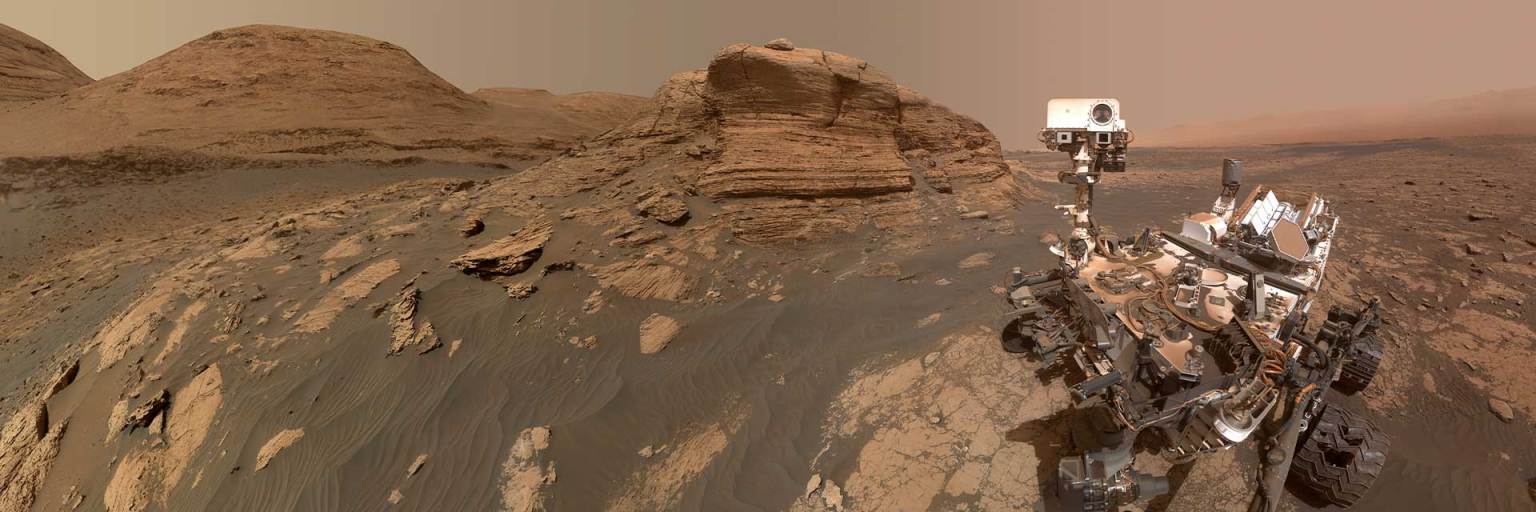
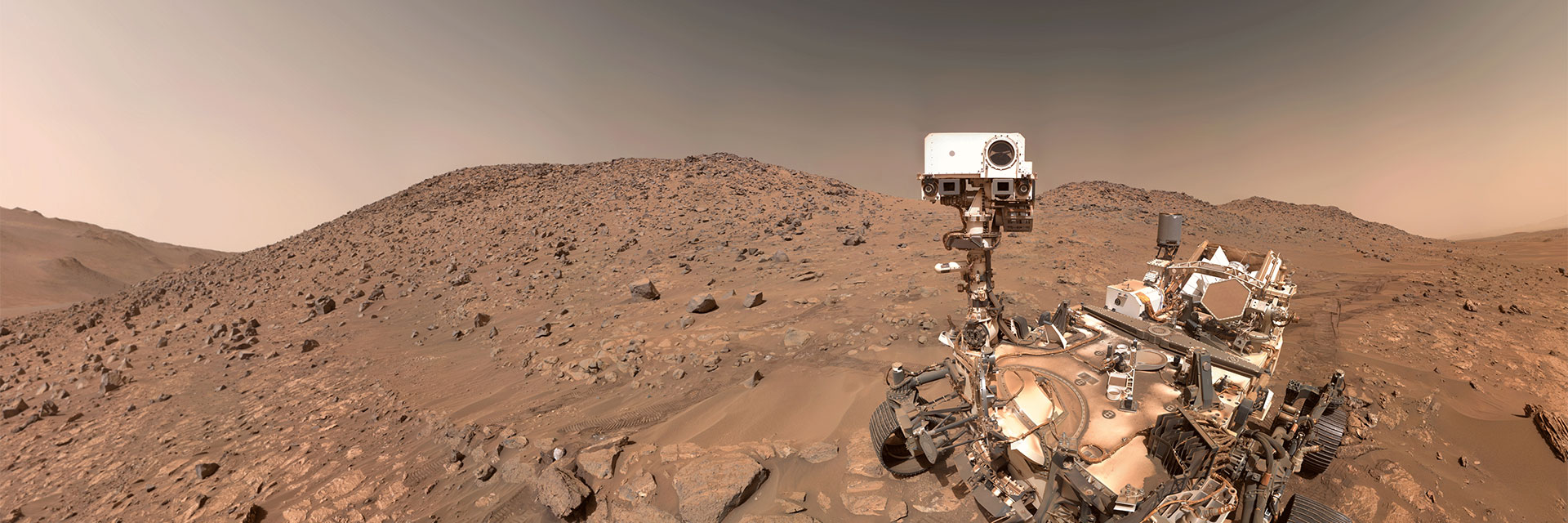
NASA’s Curiosity Mars rover used two different cameras to create this selfie in front of Mont Mercou, a rock outcrop that stands 20 feet (6 meters) tall. The panorama is made up of 60 images taken by the Mars Hand Lens Imager (MAHLI) on the rover’s robotic arm on March 26, 2021, the 3,070th Martian day, or sol, of the mission. These were combined with 11 images taken by the Mastcam on the mast, or “head,” of the rover on March 16, 2021, the 3,060th Martian day of the mission.
NASA/JPL-Caltech/MSSS
To compile this “Hall of Fame” list, TIME solicited nominations from TIME editors and correspondents around the world, paying special attention to high-impact fields, such as health care and technology. TIME then evaluated each contender on a number of key factors, including originality, continued efficacy, ambition, and impact.
The James Webb Space Telescope is the world’s premier space science observatory. Webb is solving mysteries in our solar system, looking beyond to distant worlds around other stars, and probing the mysterious structures and origins of our universe and our place in it. Webb is an international program led by NASA with its partners, ESA (European Space Agency) and CSA (Canadian Space Agency).
The Curiosity rover was built by NASA’s Jet Propulsion Laboratory, which is managed by Caltech in Pasadena, California. JPL leads the mission on behalf of NASA’s Science Mission Directorate in Washington as part of NASA’s Mars Exploration Program portfolio.
To learn more about NASA’s science missions, visit:
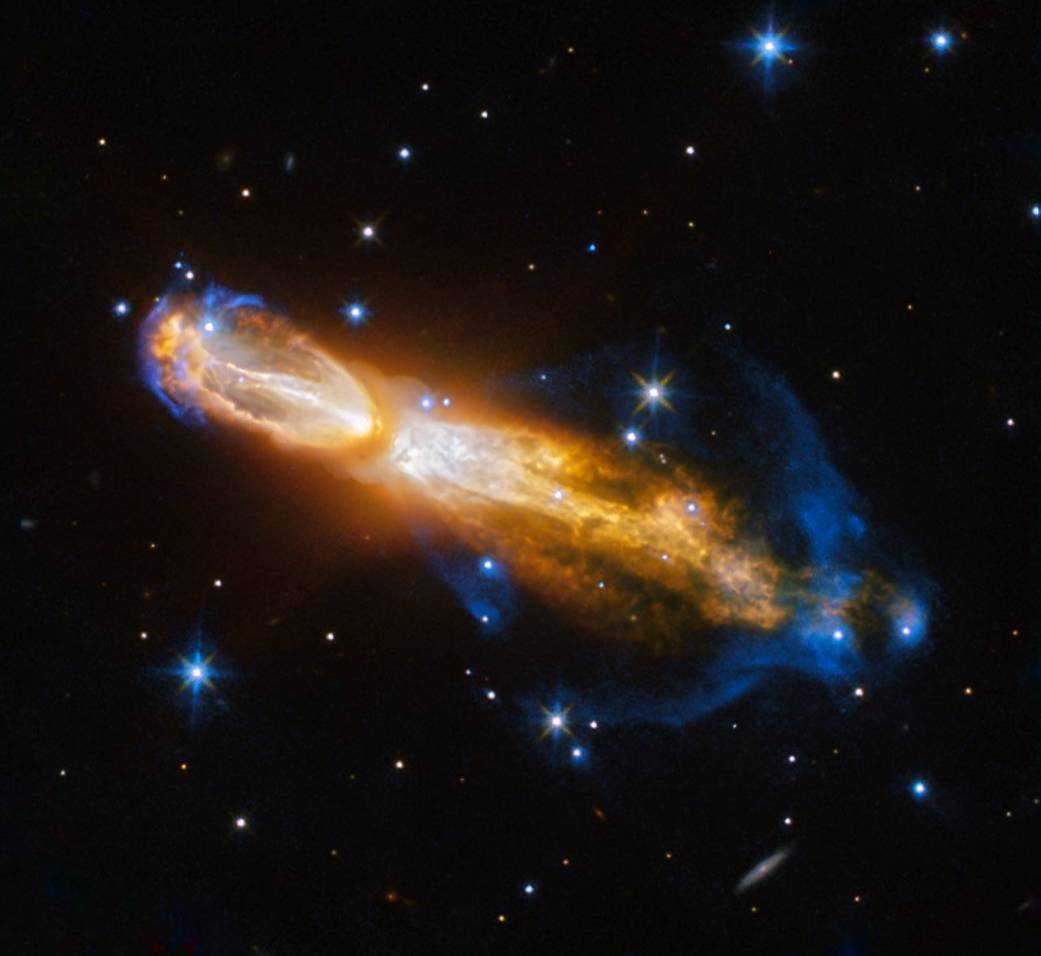
NASA’s Hubble Space Telescope captured an uncommon sight – the death of a low-mass star – in this image of the Calabash Nebula released on Feb. 3, 2017.
Here, we can see the star going through a rapid transformation from a red giant to a planetary nebula, during which it blows its outer layers of gas and dust out into the surrounding space. The recently ejected material is spat out in opposite directions with immense speed — the gas shown in yellow is moving close to a million kilometers an hour.
Astronomers rarely capture a star in this phase of its evolution because it occurs within the blink of an eye – in astronomical terms. Over the next thousand years the nebula is expected to evolve into a fully-fledged planetary nebula.
NASA’s Nancy Grace Roman Space Telescope team has released detailed plans for a major survey that will reveal our home galaxy, the Milky Way, in unprecedented detail. In one month of observations spread across two years, the survey will unveil tens of billions of stars and explore previously uncharted structures.
This video begins with a view of the Carina Nebula — a giant, relatively nearby star-forming region in the southern sky. Roman will view the entire nebula as well as its surroundings, including a 10,000 light-year-long swath of the spiral arm it resides in. The observation will offer an unparalleled opportunity to watch how stars grow, interact, and sculpt their environments, and it’s just one of many thousands of highlights astronomers are looking forward to from the Galactic Plane Survey NASA’s Nancy Grace Roman Space Telescope will conduct. Credit: NASA’s Goddard Space Flight Center
“The Galactic Plane Survey will revolutionize our understanding of the Milky Way,” said Julie McEnery, Roman’s senior project scientist at NASA’s Goddard Space Flight Center in Greenbelt, Maryland. “We’ll be able to explore the mysterious far side of our galaxy and its star-studded heart. Because of the survey’s breadth and depth, it will be a scientific mother lode.”
The Galactic Plane Survey is Roman’s first selected general astrophysics survey — one of many observation programs Roman will do in addition to its three core surveys and Coronagraph technology demonstration. At least 25% of Roman’s five-year primary mission is reserved for astronomers worldwide to propose more surveys beyond the core programs, fully leveraging Roman’s capabilities to conduct groundbreaking science. Roman is slated to launch by May 2027, but the team is on track for launch as early as fall 2026.
While ESA’s (European Space Agency’s) retired Gaia spacecraft mapped around 2 billion Milky Way stars in visible light, many parts of the galaxy remain hidden by dust. By surveying in infrared light, Roman will use powerful heat vision that can pierce this veil to see what lies beyond.
“It blows my mind that we will be able to see through the densest part of our galaxy and explore it properly for the first time,” said Rachel Street, a senior scientist at Las Cumbres Observatory in Santa Barbara, California, and a co-chair of the committee that selected the Galactic Plane Survey design.
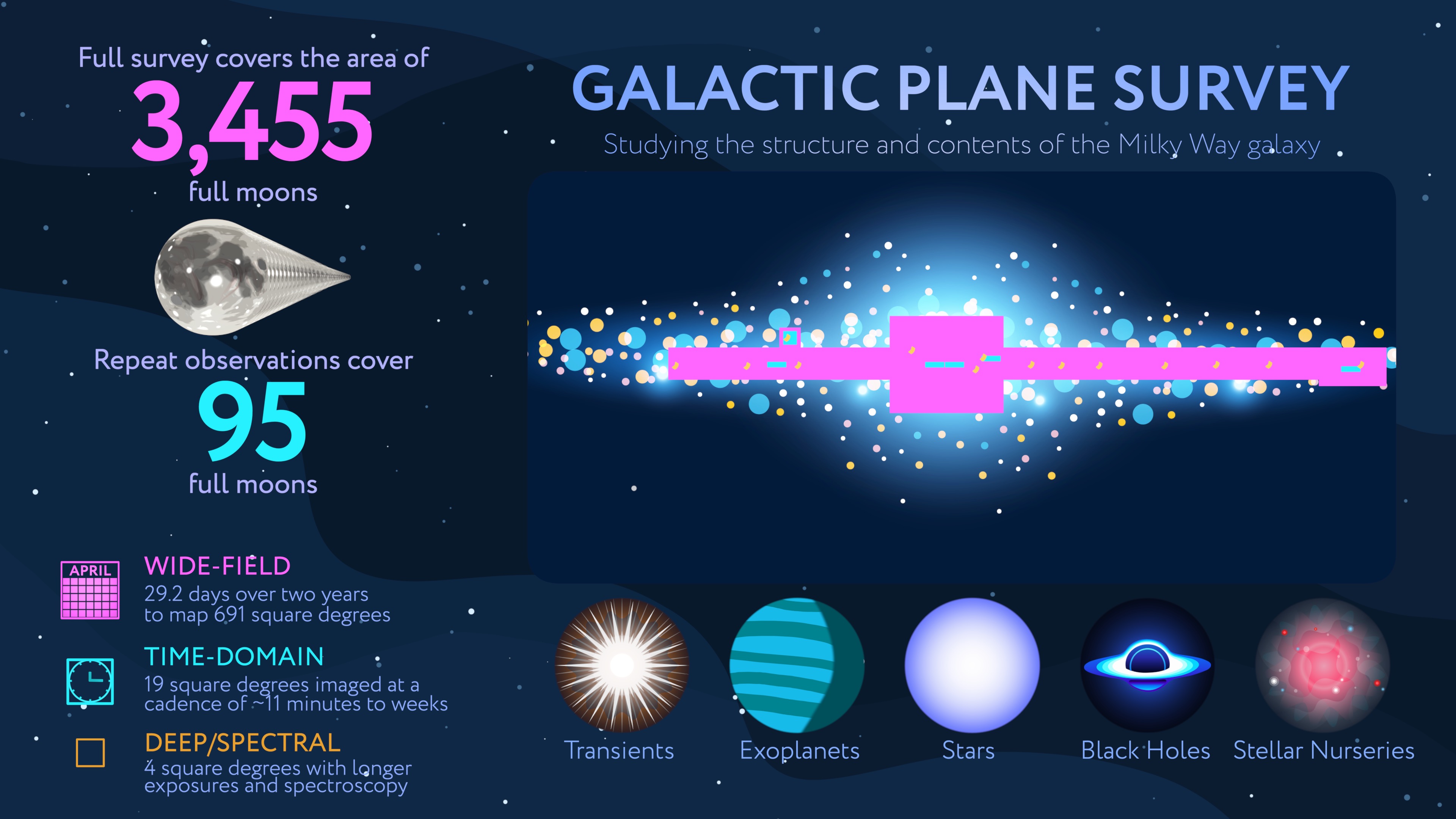
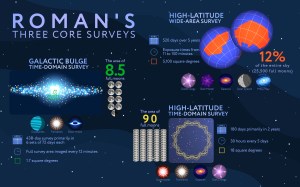
This infographic describes the 29-day Galactic Plane Survey that will be conducted by NASA’s Nancy Grace Roman Space Telescope. The survey’s main component will cover 691 square degrees — a region of sky as large as around 3,500 full moons — in 22.5 days. Roman will also view a smaller area — 19 square degrees, the area of 95 full moons — repeatedly for about 5.5 days total to capture things that change over time. The survey’s final component will image a smattering of even smaller areas, adding up to about 4 square degrees (the area of 20 full moons) and 31 total hours, with Roman’s full suite of filters and spectroscopic tools. The survey will reveal our home galaxy in unprecedented detail including many in regions we’ve never been able to see before because they’re blocked by dust, unveiling tens of billions of stars and other objects.
Credit: NASA’s Goddard Space Flight Center
The survey will cover nearly 700 square degrees (a region of sky as large as about 3,500 full moons) along the glowing band of the Milky Way — our edge-on view of the disk-shaped structure containing most of our galaxy’s stars, gas, and dust. Scientists expect the survey to map up to 20 billion stars and detect tiny shifts in their positions with repeated high-resolution observations. And it will only take 29 days spread over the course of the mission’s first two years.
Cosmic Cradles
Stars are born from parent clouds of gas and dust. Roman will peer through the haze of these nesting grounds to see millions of stellar embryos, newborn stars still swaddled in shrouds of dust, tantrumming toddler stars that flare unpredictably, and young stars that may have planetary systems forming around them. Astronomers will study stellar birth rates across a wide range of masses and stitch together videos that show how stars change over time.
“This survey will study such a huge number of stars in so many different stellar environments that we’ll be sampling every phase of a star’s evolution,” Street said.
Observing so many stars in various stages of early development will shed light on the forces that shape them. Star formation is like a four way tug-of-war between gravity, radiation, magnetism, and turbulence. Roman will help us study how these forces influence whether gas clouds collapse into full-fledged stars, smaller brown dwarfs — in-between objects that are much heavier than planets but not massive enough to ignite like stars — or new worlds.
The Galactic Plane Survey by NASA’s Nancy Grace Roman Space Telescope will scan the densest part of our galaxy, where most of its stars, gas, and dust reside — the most difficult region to study from our place inside the Milky Way since we have to look through so much light-blocking material. Roman’s wide field of view, crisp resolution, and infrared vision will help astronomers peer through thick bands of dust to chart new galactic territory. Credit: NASA’s Goddard Space Flight Center
Some stars are born in enormous litters called clusters. Roman will study nearly 2,000 young, loosely bound open clusters to see how the galaxy’s spiral arms trigger star formation. The survey will also map dozens of ancient, densely packed globular clusters near the center of the galaxy that could help astronomers reconstruct the Milky Way’s early history.
Comparing Roman’s snapshots of clusters scattered throughout the galaxy will enable scientists to study nature versus nurture on a cosmic scale. Because a cluster’s stars generally share the same age, origin, and chemical makeup, analyzing them allows astronomers to isolate environmental effects very precisely.
Pulse Check
When they run out of fuel, Sun-like stars leave behind cores called white dwarfs and heavier stars collapse to form neutron stars and black holes. Roman will find these stellar embers even when they’re alone thanks to wrinkles in space-time.
Anything that has mass warps the underlying fabric of the universe. When light from a background star passes through the gravitational well around an intervening object on its journey toward Earth, its path slightly curves around the object. This phenomenon, called microlensing, can temporarily brighten the star. By studying these signals, astronomers can learn the mass and size of otherwise invisible foreground objects.
A separate survey — Roman’s Galactic Bulge Time-Domain Survey — will conduct deep microlensing observations over a smaller area in the heart of the Milky Way. The Galactic Plane Survey will conduct repeated observations over a shorter interval but across the whole center of the galaxy, giving us the first complete view of this complex galactic environment. An unobscured view of the galaxy’s central bar will help astronomers answer the question of its origin, and Roman’s videos of stars in this region will enable us to study some ultratight binary objects at the very ends of their lives thanks to their interactions with close companions.
“Compact binaries are particularly interesting because they’re precursors to gravitational-wave sources,” said Robert Benjamin, a visiting professor at the University of Wisconsin-Whitewater, and a co-chair of the committee that selected the Galactic Plane Survey design. When neutron stars and black holes merge, the collision is so powerful that it sends ripples through the fabric of space-time. “Scientists want to know more about the pathways that lead to those mergers.”
optical
infrared
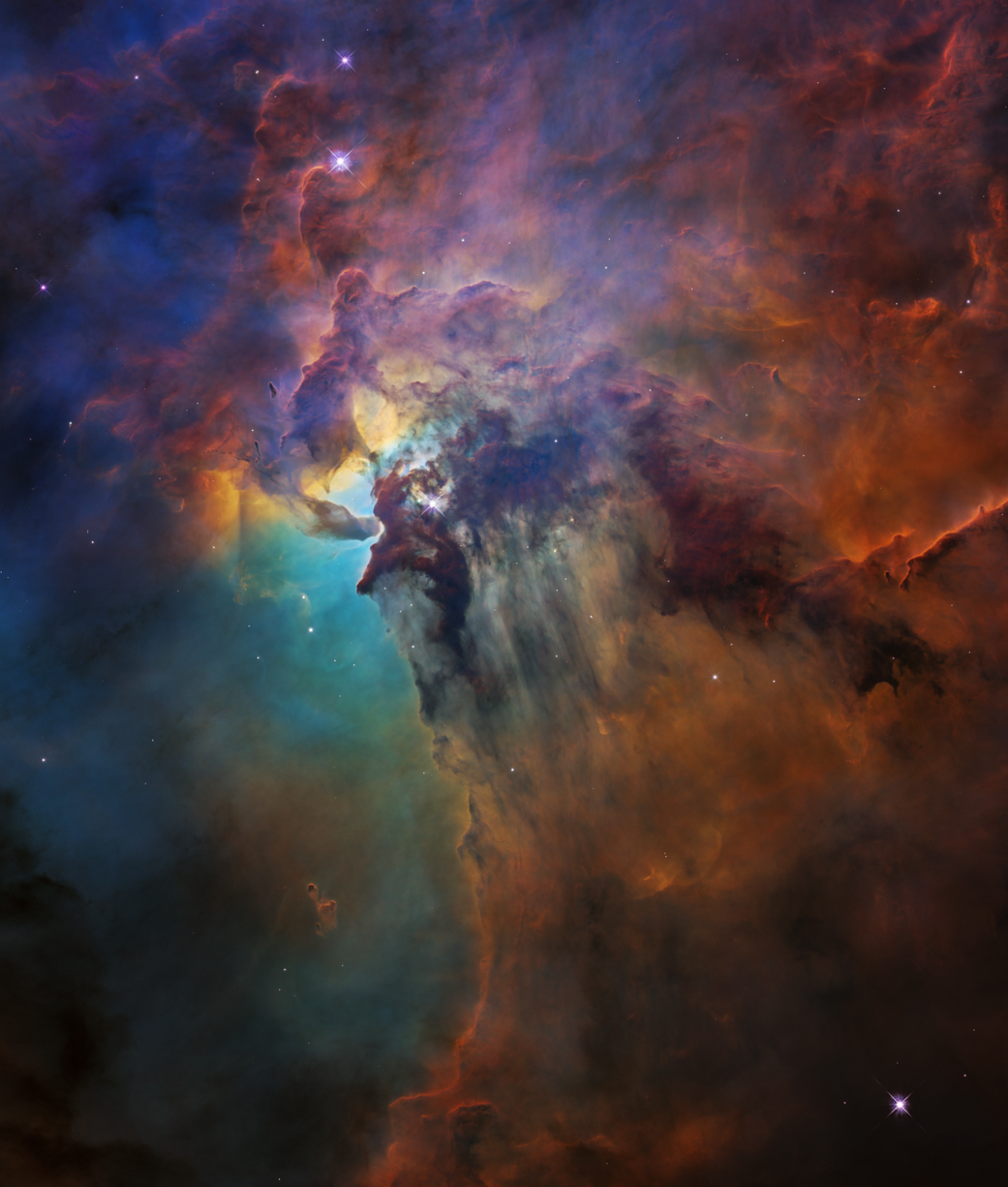
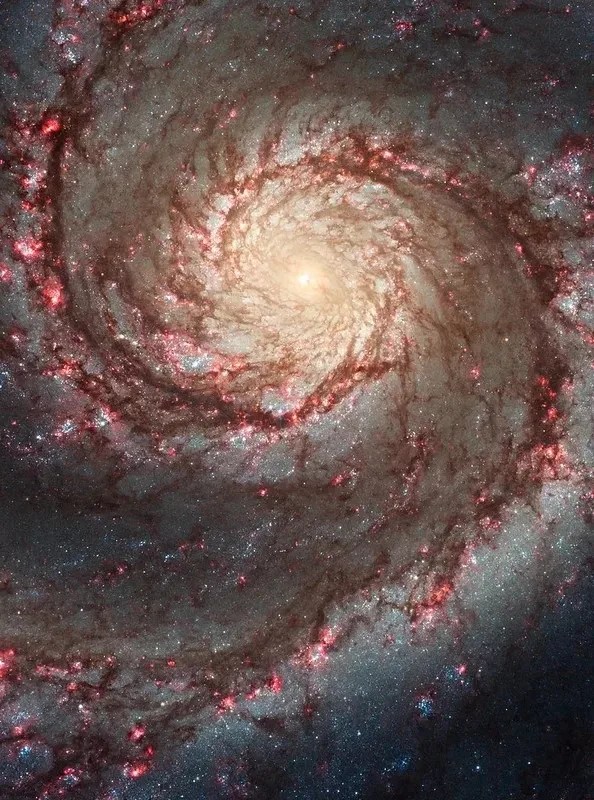
This colorful image, taken by the Hubble Space Telescope and published in 2018, celebrated the observatory’s 28th anniversary of viewing the heavens.
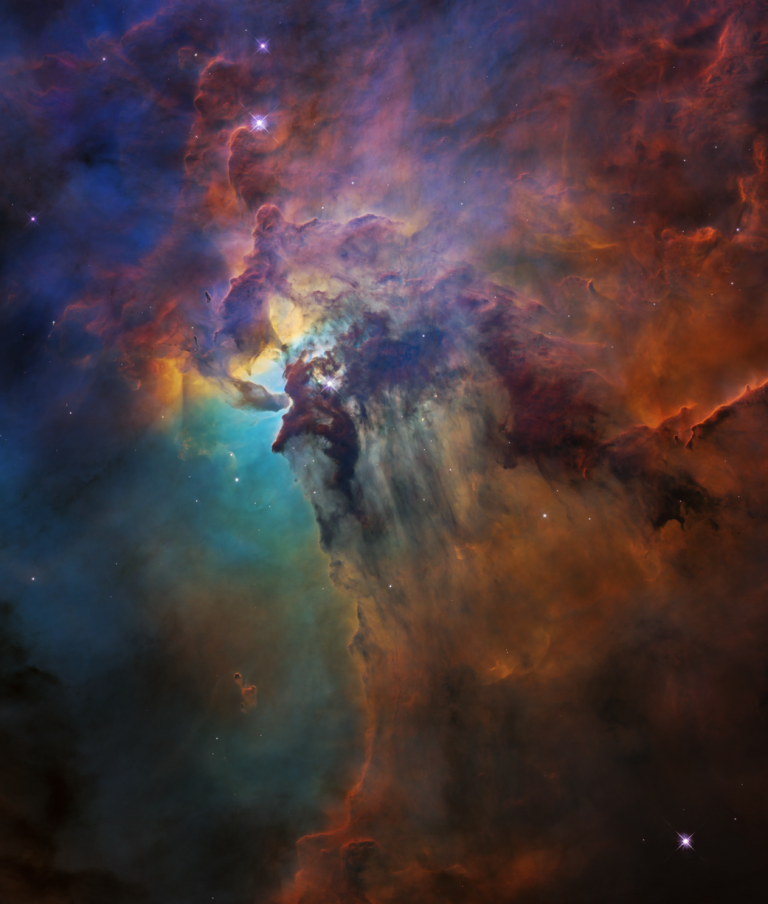
This colorful image, taken by the Hubble Space Telescope and published in 2018, celebrated the observatory’s 28th anniversary of viewing the heavens.
optical
infrared
Optical vs infrared
Two Views
The Galactic Plane Survey by NASA’s Nancy Grace Roman Space Telescope will scan the densest part of our galaxy, where most of its stars, gas, and dust reside — the most difficult region to study from our place inside the Milky Way since we have to look through so much light-blocking material. Roman’s wide field of view, crisp resolution, and infrared vision will help astronomers peer through thick bands of dust to chart new galactic territory. Credit: NASA, ESA, and STScI
Roman’s repeated observations will also monitor stars that flicker. Ground-based surveys detect thousands of bright stellar outbursts, but often can’t see the faint, dust-obscured stars that produce them. Roman will pinpoint the culprits plus take high-resolution snapshots of the aftermath.
Some stars throb rhythmically, and the speed of their pulsing is directly linked to their intrinsic brightness. By comparing their true brightness to how bright they appear from Earth, astronomers can measure distances across the galaxy. Roman will find these blinking stars farther away than ever before and track them over time, helping astronomers improve their cosmic measuring sticks.
“Pairing Roman’s Galactic Plane Survey with other Milky Way observations will create the best portrait of the galaxy we’ve ever had,” Benjamin said.
Observatories with smaller views of space have provided exquisite images of other galaxies, revealing complex structures. But studying our own galaxy’s anato...
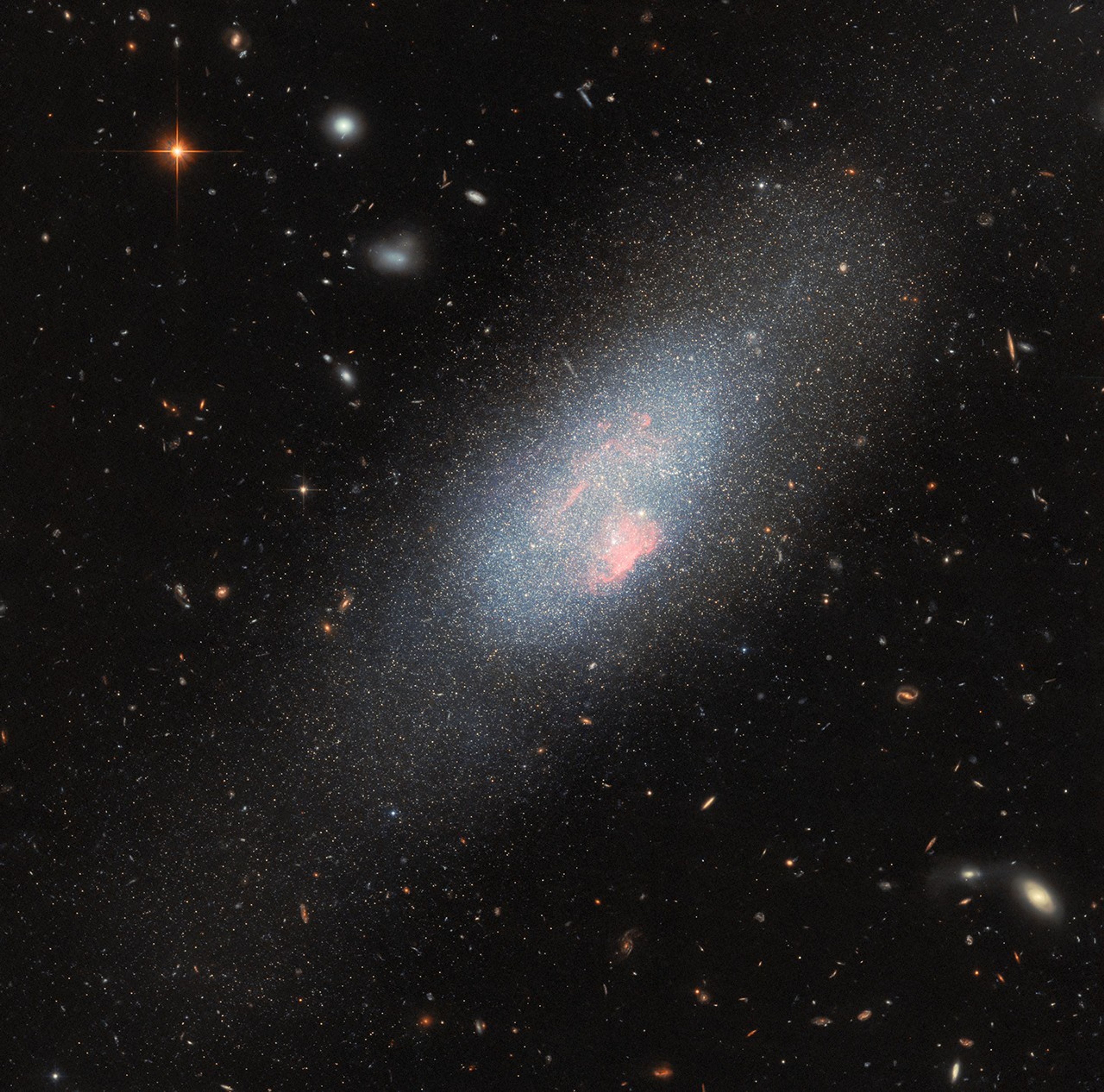
This NASA/ESA Hubble Space Telescope image features the blue dwarf galaxy Markarian 178 (Mrk 178) against a backdrop of distant galaxies in all shapes and sizes. Some of these distant galaxies even shine through the diffuse edges of Mrk 178.
ESA/Hubble & NASA, F. Annibali, S. Hong
This NASA/ESA Hubble Space Telescope image features a glittering blue dwarf galaxy called Markarian 178 (Mrk 178). The galaxy, which is substantially smaller than our own Milky Way, lies 13 million light-years away in the constellation Ursa Major (the Great Bear).
Mrk 178 is one of more than 1,500 Markarian galaxies. These galaxies get their name from the Armenian astrophysicist Benjamin Markarian, who compiled a list of galaxies that were surprisingly bright in ultraviolet light.
While the bulk of the galaxy is blue due to an abundance of young, hot stars with little dust shrouding them, Mrk 178 gets a red hue from a collection of rare massive Wolf–Rayet stars. These stars are concentrated in the brightest, reddish region near the galaxy’s edge. Wolf–Rayet stars cast off their atmospheres through powerful winds, and the bright emission lines from their hot stellar winds are etched upon the galaxy’s spectrum. Both ionized hydrogen and oxygen lines are particularly strong and appear as a red color in this photo.
Massive stars enter the Wolf–Rayet phase of their evolution just before they collapse into black holes or neutron stars. Because Wolf–Rayet stars last for only a few million years, researchers know that something must have triggered a recent burst of star formation in Mrk 178. At first glance, it’s not clear what could be the cause — Mrk 178 doesn’t seem to have any close galactic neighbors that may have stirred up its gas to form new stars. Instead, researchers suspect that a gas cloud crashed into Mrk 178, or that the intergalactic medium disturbed its gas as the galaxy moved through space. Either disturbance could light up this tiny galaxy with a ripple of bright new stars.
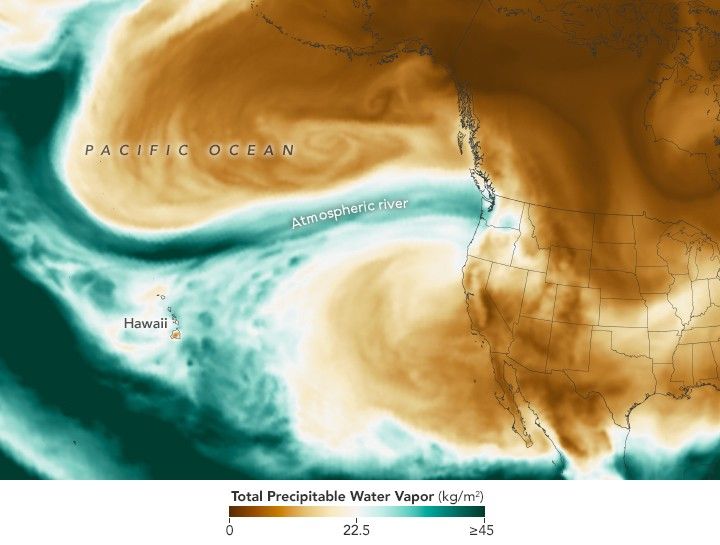
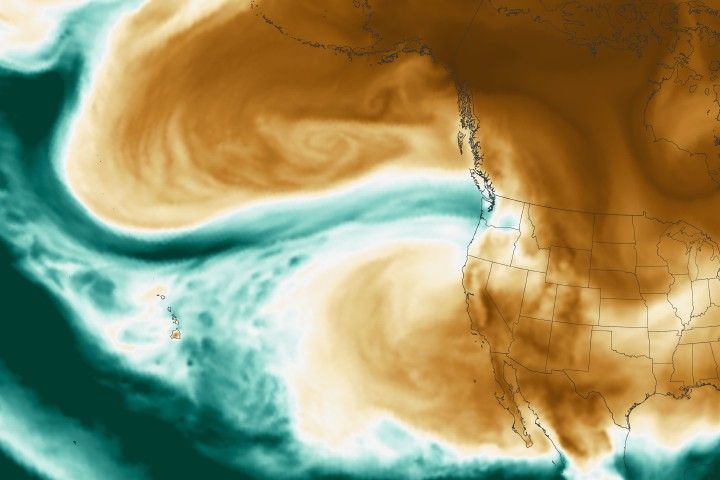
Waves of heavy rainfall in early December 2025 spurred landslides and flooding in parts of the Pacific Northwest. The deluge was the result of a potent atmospheric river that took aim at the region starting around December 7.
Atmospheric rivers are long, narrow bands of moisture that move like rivers in the sky, transporting water vapor from the tropics toward the poles. They occur around the planet, most often in autumn and winter, with the U.S. West Coast typically affected by moist air that originates near Hawaii. In this event, however, some of the moisture arrived from even farther away, originating roughly 7,000 miles (11,000 kilometers) across the Pacific from near the Philippines.
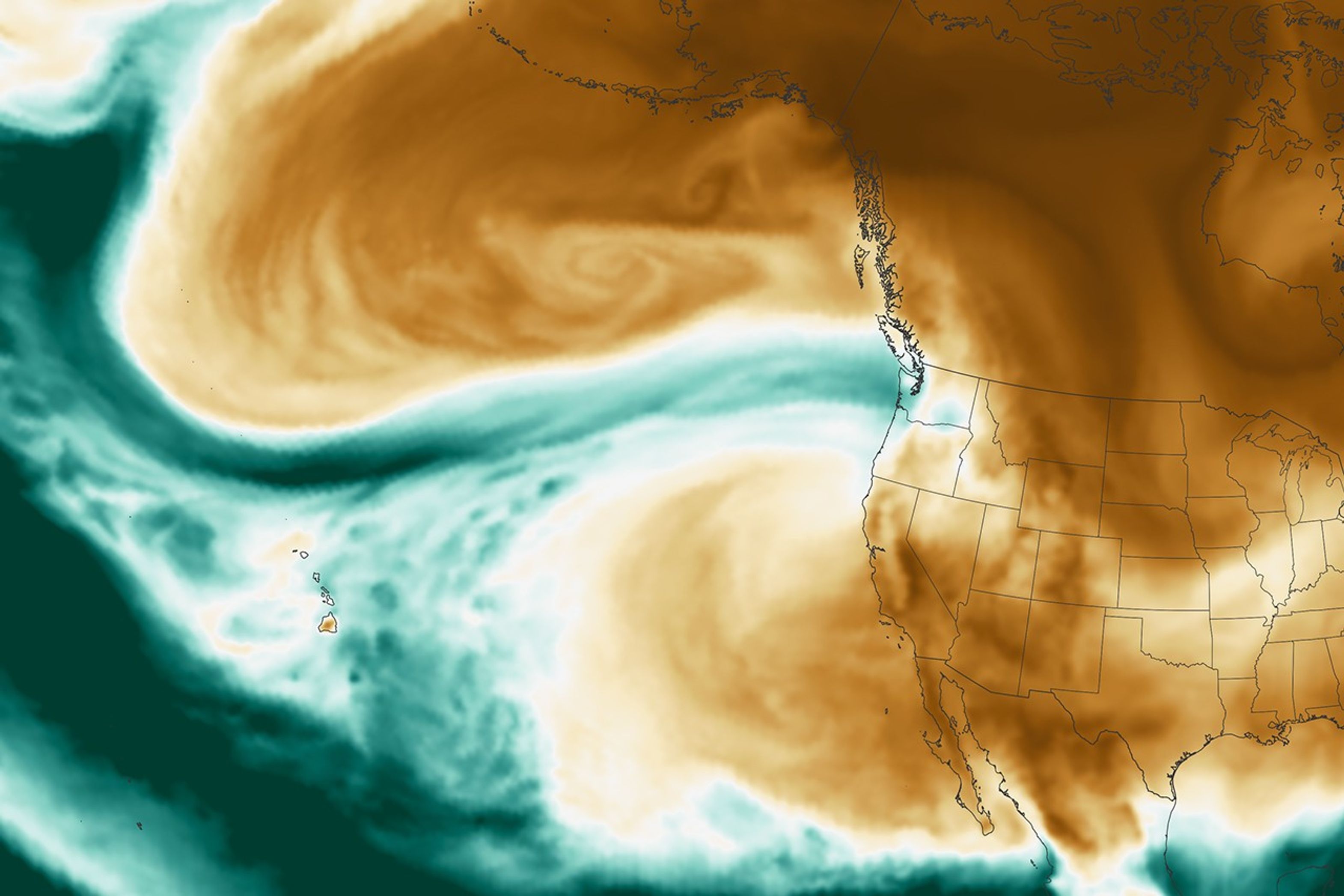
This map shows the total precipitable water vapor in the atmosphere at 11:30 p.m. Pacific Time on December 10. It is derived from NASA’s GEOS (Goddard Earth Observing System) and uses satellite data and models of physical processes to approximate what is happening in the atmosphere.
Precipitable water vapor represents the amount of water contained in a column of air, assuming all the water vapor condensed into liquid. The map’s green areas indicate the highest amounts of moisture. Note that not all precipitable water vapor falls as rain; at least some remains in the atmosphere. Nor is it a cap on how much rain can fall, since rainfall can increase as more moisture flows into a column of air. Still, it serves as a useful indicator of areas where excessive rainfall is likely.
According to the National Weather Service, preliminary ground-based measurements showed that several locations in western Washington received more than 10 inches (250 millimeters) of rain over a 72-hour period ending on the morning of December 11. Seattle-Tacoma International Airport set a daily rainfall record on December 10, with 1.6 inches (40 millimeters).
River flooding was ongoing on December 11, with the Skagit River and Snohomish River seeing record or near-record flood levels that day. Floodwater and mudslides have closed numerous roadways, including the eastbound lanes of I-90 out of western Washington.
NASA’s Disasters Response Coordination System has been activated to support the ongoing response efforts by the Washington State Emergency Operations Center. The team will be posting maps and data products on its open-access mapping portal as new information becomes available.
NASA Earth Observatory images by Lauren Dauphin, using GEOS data from the Global Modeling and Assimilation Office at NASA GSFC. Story by Kathryn Hansen.
NASA has selected one small explorer mission concept to advance toward flight design and another for an extended period of concept development.
NASA’s Science Mission Directorate Science Management Council selected CINEMA (Cross-scale Investigation of Earth’s Magnetotail and Aurora) to enter Phase B of development, which includes planning and design for flight and mission operations. The principal investigator for the CINEMA mission concept is Robyn Millan from Dartmouth College in Hanover, New Hampshire.
The proposed CINEMA mission aims to advance our understanding of how plasma energy flows into the Earth’s magnetosphere. This highly dynamic convective flow is unpredictable — sometimes steady and sometimes explosive — driving phenomena like fast plasma jets, global electrical current systems, and spectacular auroral displays.
“The CINEMA mission will help us to research magnetic convection in Earth’s magnetosphere — a critical piece of the puzzle in understanding why some space weather events are so influential, such as causing magnificent aurora displays and impacts to ground- and space-based infrastructure, and others seem to fizzle out,” said Joe Westlake, director of the Heliophysics Division at NASA Headquarters in Washington. “Using multiple, multi-point measurements to improve predictions of these impacts on humans and technology across the solar system is a key strategy for the future of heliophysics research.”
The CINEMA mission’s constellation of nine small satellites will investigate the convective mystery using a combination of instruments — an energetic particle detector, an auroral imager, and a magnetometer — on each spacecraft in a polar low Earth orbit. By relating the energetic particles observed in this orbit to simultaneous auroral images and local magnetic field measurements, CINEMA aims to connect energetic activity in Earth’s large-scale magnetic structure to the visible signatures like aurora that we see in the ionosphere. The mission has been awarded approximately $28 million to enter Phase B. The total cost of the mission, not including launch, will not exceed $182.8 million. Phase B will last 10 months, and if selected, the mission would launch no earlier than 2030.
NASA also selected the proposed CMEx (Chromospheric Magnetism Explorer) mission for an extended Phase A study. This extended phase is for the mission to assess and refine their design for potential future consideration. The principal investigator for the CMEx mission concept study is Holly Gilbert from the National Center for Atmospheric Research in Boulder, Colorado. The cost of the extended Phase A, which will last 12 months, is $2 million.
The CMEx concept is a proposed single-spacecraft mission that would use proven UV spectropolarimetric instrumentation that has been demonstrated during NASA’s CLASP (Chromospheric Layer Spectropolarimeter) sub-orbital sounding rocket flight. Using this heritage hardware, CMEx would be able to diagnose lower layers of the Sun’s chromosphere to understand the origin of solar eruptions and determine the magnetic sources of the solar wind.
The proposed missions completed a one-year early concept study in response to the 2022 Heliophysics Explorers Program Small-class Explorer (SMEX) Announcement of Opportunity.
“Space is becoming increasingly more important and plays a role in just about everything we do,” said Asal Naseri, acting associate flight director for heliophysics at NASA Headquarters. “These mission concepts, if advanced to flight, will improve our ability to predict solar events that could harm satellites that we rely on every day and mitigate danger to astronauts near Earth, at the Moon, or Mars.”
To learn more about NASA heliophysics missions, visit:
Preparations for Next Moonwalk Simulations Underway (and Underwater)
The 2025 Boeing ecoDemonstrator Explorer, a United Airlines 737-8, sits outside a United hangar in Houston.
Boeing / Paul Weatherman
Picture this: You’re just about done with a transoceanic flight, and the tracker in your seat-back screen shows you approaching your destination airport. And then … you notice your plane is moving away. Pretty far away. You approach again and again, only to realize you’re on a long, circling loop that can last an hour or more before you land.
If this sounds familiar, there’s a good chance the delay was caused by issues with trajectory prediction. Your plane changed its course, perhaps altering its altitude or path to avoid weather or turbulence, and as a result its predicted arrival time was thrown off.
“Often, if there’s a change in your trajectory – you’re arriving slightly early, you’re arriving slightly late – you can get stuck in this really long, rotational holding pattern,” said Shivanjli Sharma, NASA’s Air Traffic Management–eXploration (ATM-X) project manager and the agency’s Ames Research Center in California’s Silicon Valley.
This inconvenience to travelers is also an economic and efficiency challenge for the aviation sector, which is why NASA has worked for years to study the issue, and recently teamed with Boeing to conduct real-time tests an advanced system that shares trajectory data between an aircraft and its support systems.
Boeing began flying a United Airlines 737 for about two weeks in October testing a data communication system designed to improve information flow between the flight deck, air traffic control, and airline operation centers. The work involved several domestic flights based in Houston, as well as flight over the Atlantic to Edinburgh, Scotland.
This partnership has allowed NASA to further its commitment to transformational aviation research.
Shivanjli sharma
NASA's Air Traffic Management—eXploration project manager
The testing was Boeing’s most recent ecoDemonstrator Explorer program, through which the company works with public and private partners to accelerate aviation innovations. This year’s ecoDemonstrator flight partners included NASA, the Federal Aviation Administration, United Airlines, and several aerospace companies as well as academic and government researchers.
NASA’s work in the testing involved the development of an oceanic trajectory prediction service – a system for sharing and updating trajectory information, even over a long, transoceanic flight that involves crossing over from U.S. air traffic systems into those of another country. The collaboration allowed NASA to get a more accurate look at what’s required to reduce gaps in data sharing.
“At what rate do you need these updates in an oceanic environment?” Sharma said. “What information do you need from the aircraft? Having the most accurate trajectory information will allow aircraft to move more efficiently around the globe.”
Boeing and the ecoDemonstrator collaborators plan to use the flight data to move the data communication system toward operational service. The work has allowed NASA to continue its work to improve trajectory prediction, and through its connection with partners, put its research into practical use as quickly as possible.
“This partnership has allowed NASA to further its commitment to transformational aviation research,” Sharma said. “Bringing our expertise in trajectory prediction together with the contributions of so many innovative partners contributes to global aviation efficiency that will yield real benefits for travelers and industry.”
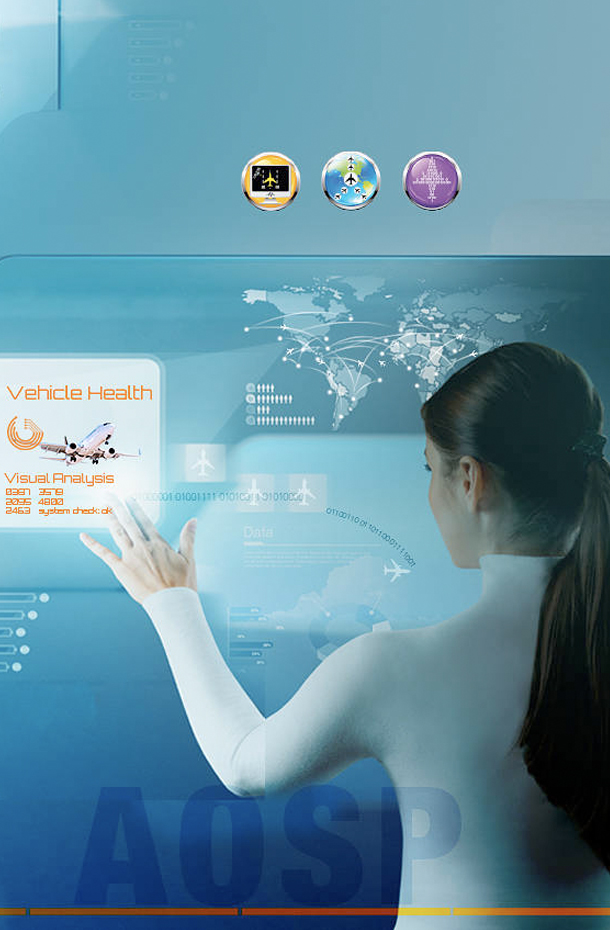
NASA ATM-X’s part in the collaboration falls under the agency’s Airspace Operations and Safety Program, which works to enable safe, efficient aviation transportation operations that benefit the flying public and industry. The work is supported through NASA’s Aeronautics Research Mission Directorate.
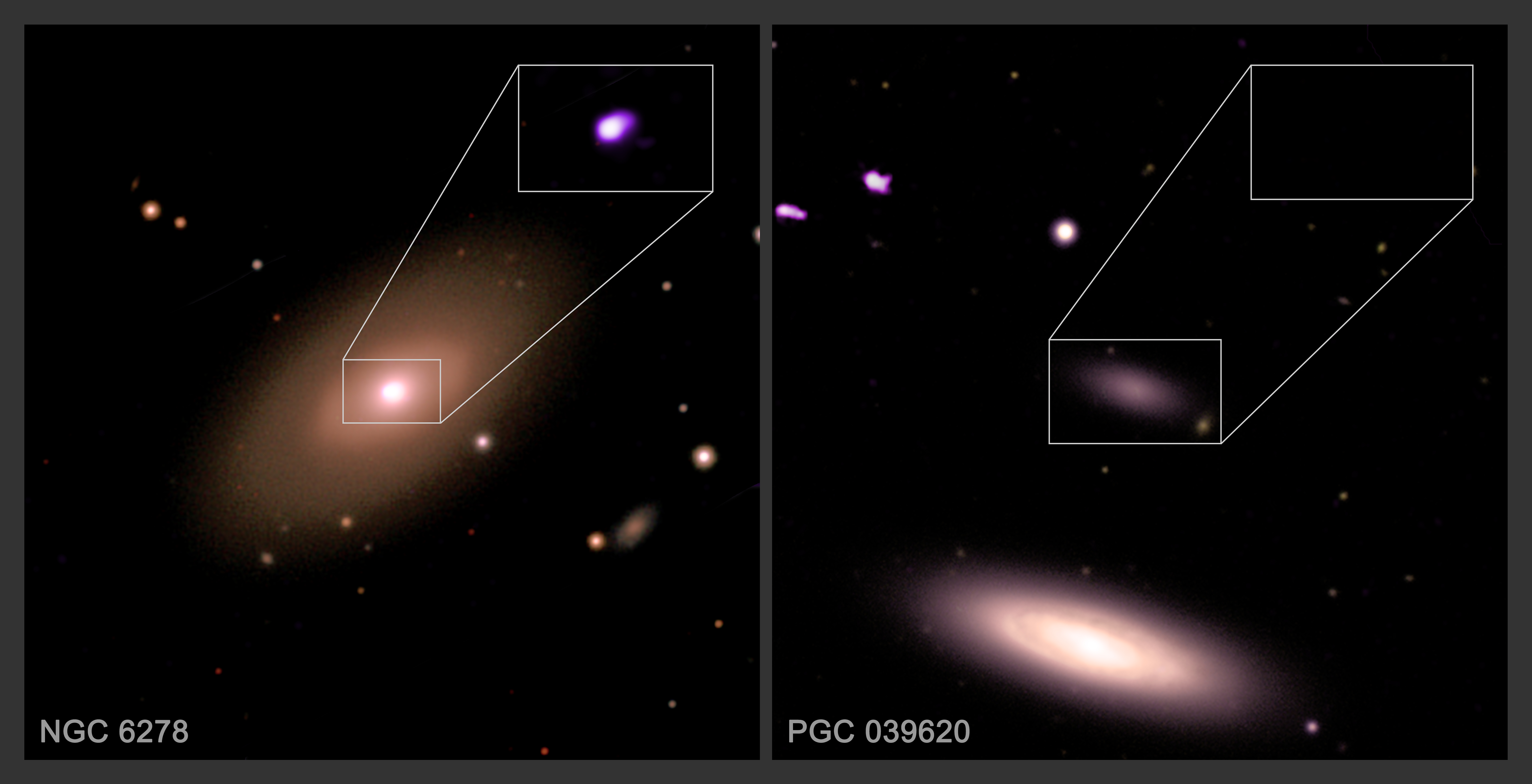
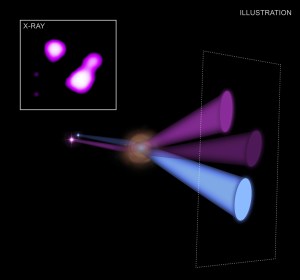
NGC 6278 and PGC 039620 are two galaxies from a sample of 1,600 that were searched for the presence of supermassive black holes. These images represent the results of a study that suggests that smaller galaxies do not contain supermassive black holes nearly as often as larger galaxies do. The study analyzed over 1,600 galaxies that have been observed with Chandra over two decades. Certain X-ray signatures indicate the presence of supermassive black holes. The study indicates that most smaller galaxies like PGC 03620, shown here in both X-rays from Chandra and optical light images from the Sloan Digital Sky Survey, likely do not have supermassive black holes in their centers. In contrast, NGC 6278, which is roughly the same size as the Milky Way, and most other large galaxies in the sample show evidence for giant black holes within their cores.
X-ray: NASA/CXC/SAO/F. Zou et al.; Optical: SDSS; Image Processing: NASA/CXC/SAO/N. Wolk
Most smaller galaxies may not have supermassive black holes in their centers, according to a recent study using NASA’s Chandra X-ray Observatory. This contrasts with the common idea that nearly every galaxy has one of these giant black holes within their cores, as NASA leads the world in exploring how our universe works.
A team of astronomers used data from over 1,600 galaxies collected in more than two decades of the Chandra mission. The researchers looked at galaxies ranging in heft from over ten times the mass of the Milky Way down to dwarf galaxies, which have stellar masses less than a few percent of that of our home galaxy. A paper describing these results has been published in The Astrophysical Journal and is available here https://arxiv.org/abs/2510.05252.
The team has reported that only about 30% of dwarf galaxies likely contain supermassive black holes.
“It’s important to get an accurate black hole head count in these smaller galaxies,” said Fan Zou of the University of Michigan in Ann Arbor, who led the study. “It’s more than just bookkeeping. Our study gives clues about how supermassive black holes are born. It also provides crucial hints about how often black hole signatures in dwarf galaxies can be found with new or future telescopes.”
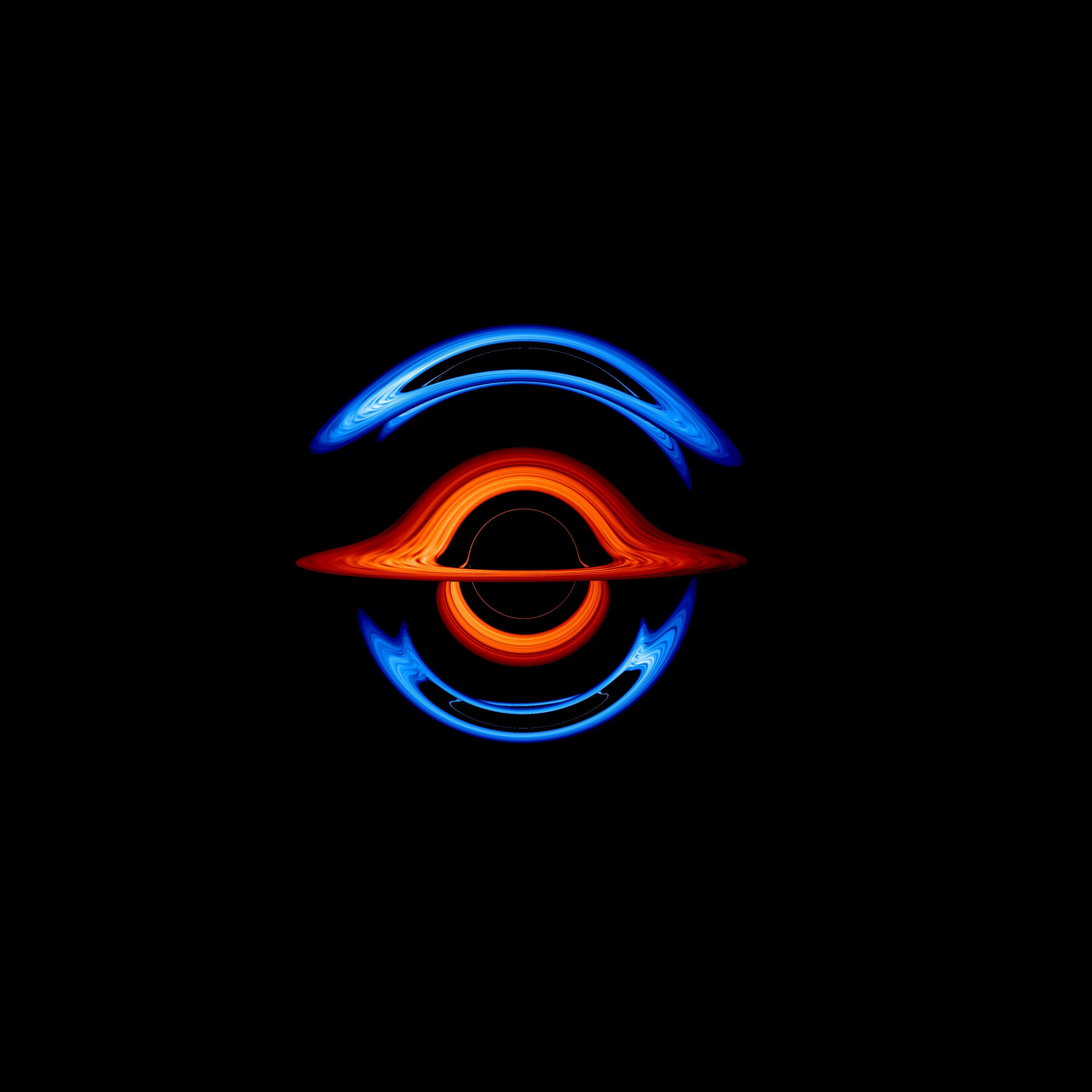
As material falls onto black holes, it is heated by friction and produces X-rays. Many of the massive galaxies in the study contain bright X-ray sources in their centers, a clear signature of supermassive black holes in their centers. The team concluded that more than 90% of massive galaxies – including those with the mass of the Milky Way – contain supermassive black holes.
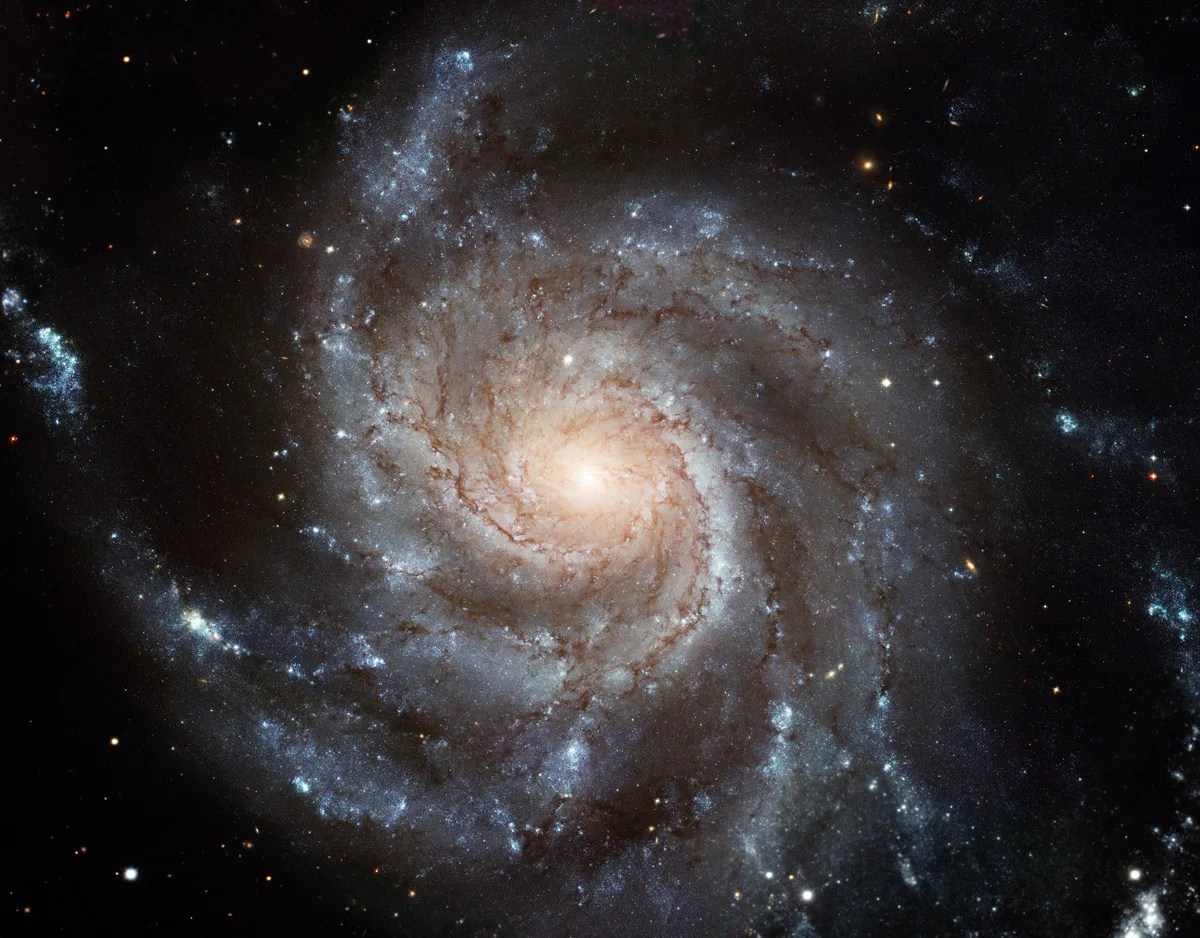
However, smaller galaxies in the study usually did not have these unambiguous black hole signals. Galaxies with masses less than three billion Suns – about the mass of the Large Magellanic Cloud, a close neighbor to the Milky Way – usually do not contain bright X-ray sources in their centers.
The researchers considered two possible explanations for this lack of X-ray sources. The first is that the fraction of galaxies containing massive black holes is much lower for these less massive galaxies. The second is the amount of X-rays produced by matter falling onto these black holes is so faint that Chandra cannot detect it.
“We think, based on our analysis of the Chandra data, that there really are fewer black holes in these smaller galaxies than in their larger counterparts,” said Elena Gallo, a co-author also from the University of Michigan.
To reach their conclusion, Zou and his colleagues considered both possibilities for the lack of X-ray sources in small galaxies in their large Chandra sample. The amount of gas falling onto a black hole determines how bright or faint they are in X-rays. Because smaller black holes are expected to pull in less gas than larger black holes, they should be fainter in X-rays and often not detectable. The researchers confirmed this expectation.
However, they found that an additional deficit of X-ray sources is seen in less massive galaxies beyond the expected decline from decreases in the amount of gas falling inwards. This additional deficit can be accounted for if many of the low-mass galaxies simply don’t have any black holes at their centers. The team’s conclusion was that the drop in X-ray detections in lower mass galaxies reflects a true decrease in the number of black holes located in these galaxies.
This result could have important implications for understanding how supermassive black holes form. There are two main ideas: In the first, a giant gas cloud directly collapses into a black hole, which contains thousands of times the Sun’s mass from the start. The other idea is that supermassive black holes instead come from much smaller black holes, created when massive stars collapse.
“The formation of big black holes is expected to be rarer, in the sense that it occurs preferentially in the most massive galaxies being formed, so that would explain why we don’t find black holes in all the smaller galaxies,” said co-author Anil Seth of the University of Utah.
This study supports the theory where giant black holes are born already weighing several thousand times the Sun’s mass. If the other idea were true, the researchers said they would have expected smaller galaxies to likely have the same fraction of black holes as larger ones.
This result also could have important implications for the rates of black hole mergers from the collisions of dwarf galaxies. A much lower number of black holes would result in fewer sources of gravitational waves to be detected in the future by the Laser Interferometer Space Antenna. The number of black holes tearing stars apart in dwarf galaxies will also be smaller.
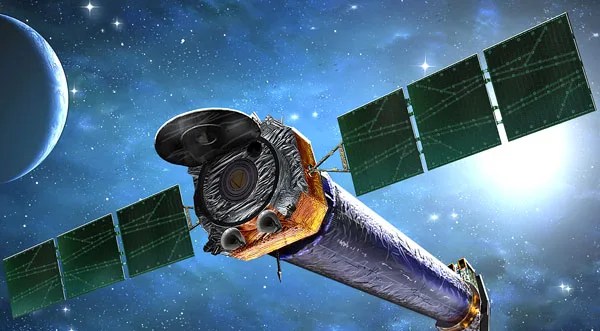
NASA’s Marshall Space Flight Center in Huntsville, Alabama, manages the Chandra program. The Smithsonian Astrophysical Observatory’s Chandra X-ray Center controls science operations from Cambridge, Massachusetts, and flight operations from Burlington, Massachusetts.
NASA’s Parker Solar Probe Spies Solar Wind ‘U-Turn’
Images captured by NASA’s Parker Solar Probe as the spacecraft made its record-breaking closest approach to the Sun in December 2024 have now revealed new details about how solar magnetic fields responsible for space weather escape from the Sun — and how sometimes they don’t.
Like a toddler, our Sun occasionally has disruptive outbursts. But instead of throwing a fit, the Sun spews magnetized material and hazardous high-energy particles that drive space weather as they travel across the solar system. These outbursts can impact our daily lives, from disrupting technologies like GPS to triggering power outages, and they can also imperil voyaging astronauts and spacecraft. Understanding how these solar outbursts, called coronal mass ejections (CMEs), occur and where they are headed is essential to predicting and preparing for their impacts at Earth, the Moon, and Mars.
Images taken by Parker Solar Probe in December 2024, and published Thursday in the Astrophysical Journal Letters, have revealed that not all magnetic material in a CME escapes the Sun — some makes it back, changing the shape of the solar atmosphere in subtle, but significant, ways that can set the course of the next CME exploding from the Sun. These findings have far-reaching implications for understanding how the CME-driven release of magnetic fields affects not only the planets, but the Sun itself.
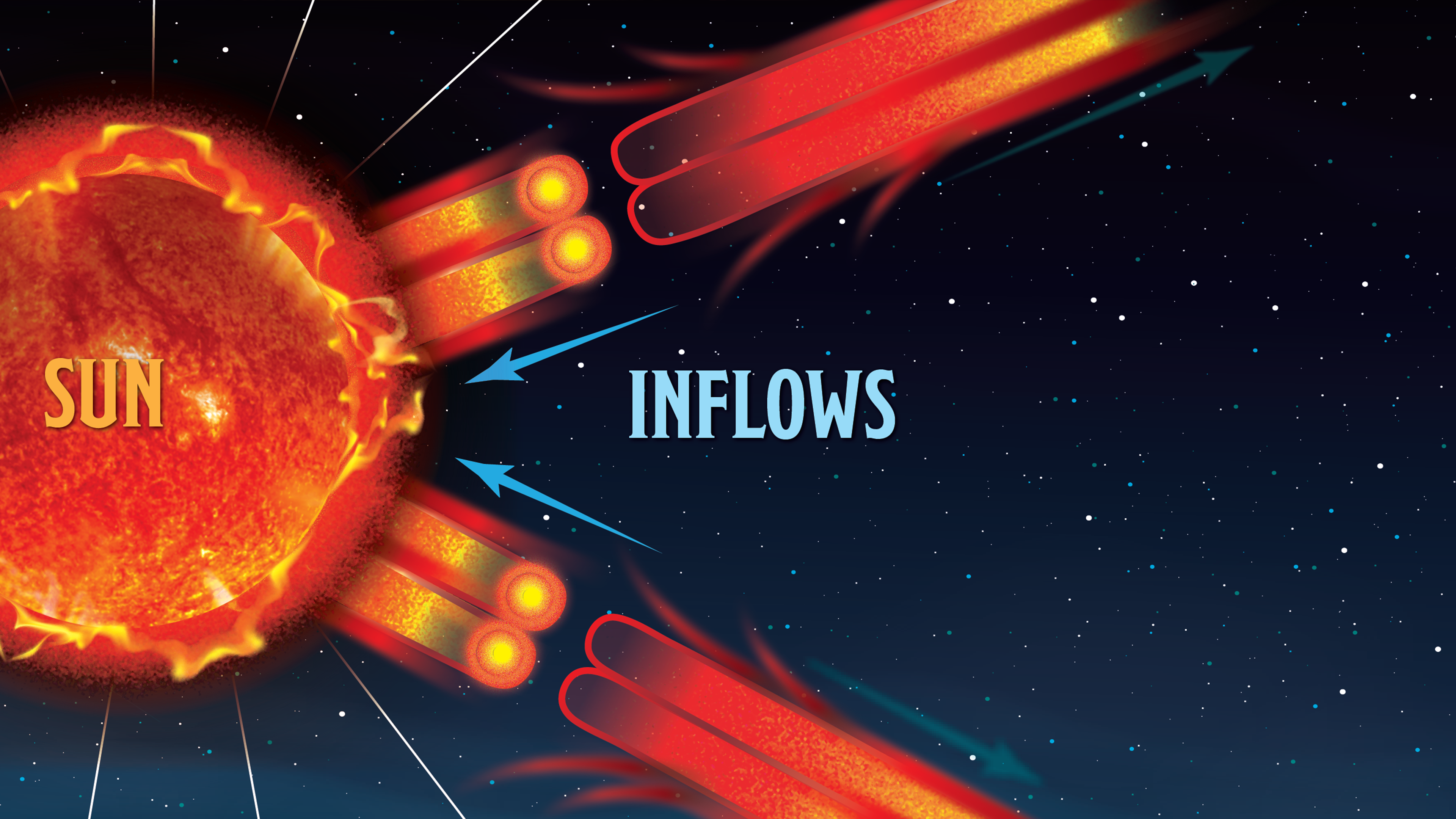
These images from the Wide-Field Imager for Solar Probe on NASA’s Parker Solar Probe show a phenomenon that occurs in the Sun’s upper atmosphere called an inflow. Inflows are the result of stretched magnetic field lines reconfiguring and causing material trapped along the lines to rain back toward the solar surface.
NASA
“These breathtaking images are some of the closest ever taken to the Sun and they’re expanding what we know about our closest star,” said Joe Westlake, heliophysics division director at NASA Headquarters in Washington. “The insights we gain from these images are an important part of understanding and predicting how space weather moves through the solar system, especially for mission planning that ensures the safety of our Artemis astronauts traveling beyond the protective shield of our atmosphere.”
Parker Solar Probe reveals solar recycling in action
As Parker Solar Probe swept through the Sun’s atmosphere on Dec. 24, 2024, just 3.8 million miles from the solar surface, its Wide-Field Imager for Solar Probe, or WISPR, observed a CME erupt from the Sun. In the CME’s wake, elongated blobs of solar material were seen falling back toward the Sun.
This type of feature, called “inflows”, has previously been seen from a distance by other NASA missions including SOHO (Solar and Heliospheric Observatory, a joint mission with ESA, the European Space Agency) and STEREO (Solar Terrestrial Relations Observatory). But Parker Solar Probe’s extreme close-up view from within the solar atmosphere reveals details of material falling back toward the Sun and on scales never seen before.
“We’ve previously seen hints that material can fall back into the Sun this way, but to see it with this clarity is amazing,” said Nour Rawafi, the project scientist for Parker Solar Probe at the Johns Hopkins Applied Physics Laboratory, which designed, built, and operates the spacecraft in Laurel, Maryland. “This is a really fascinating, eye-opening glimpse into how the Sun continuously recycles its coronal magnetic fields and material.”
Insights on inflows
For the first time, the high-resolution images from Parker Solar Probe allowed scientists to make precise measurements about the inflow process, such as the speed and size of the blobs of material pulled back into the Sun. These previously hidden details provide scientists with new insights into the physical mechanisms that reconfigure the solar atmosphere.
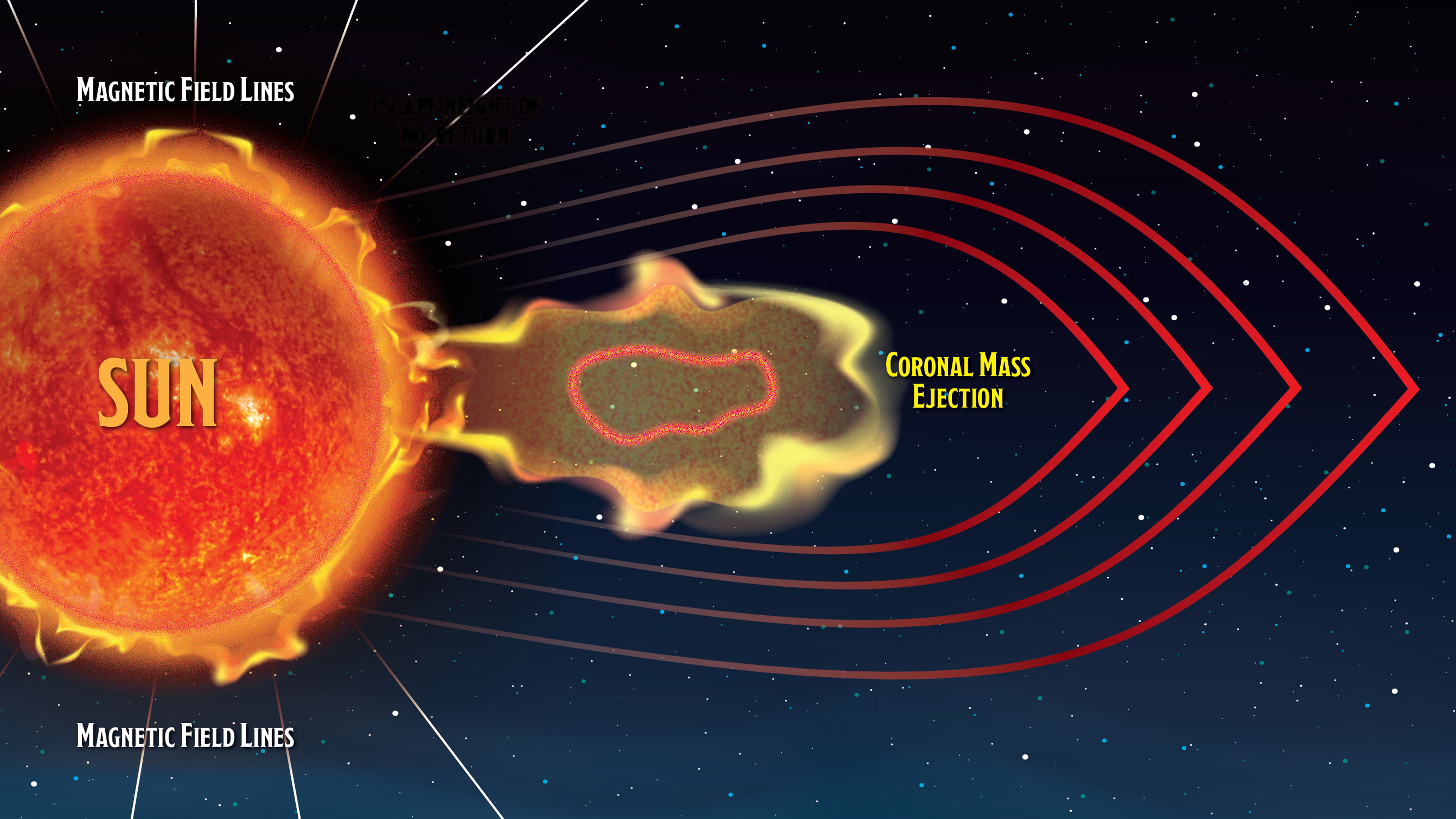
1. The process that creates inflows begins with a solar eruption known as a coronal mass ejection (CME). CMEs are often triggered by twisted magnetic field lines from the Sun that explosively snap and realign in a process called magnetic reconnection. This magnetic explosion kicks out a burst of charged particles and magnetic fields — the CME.
NASA
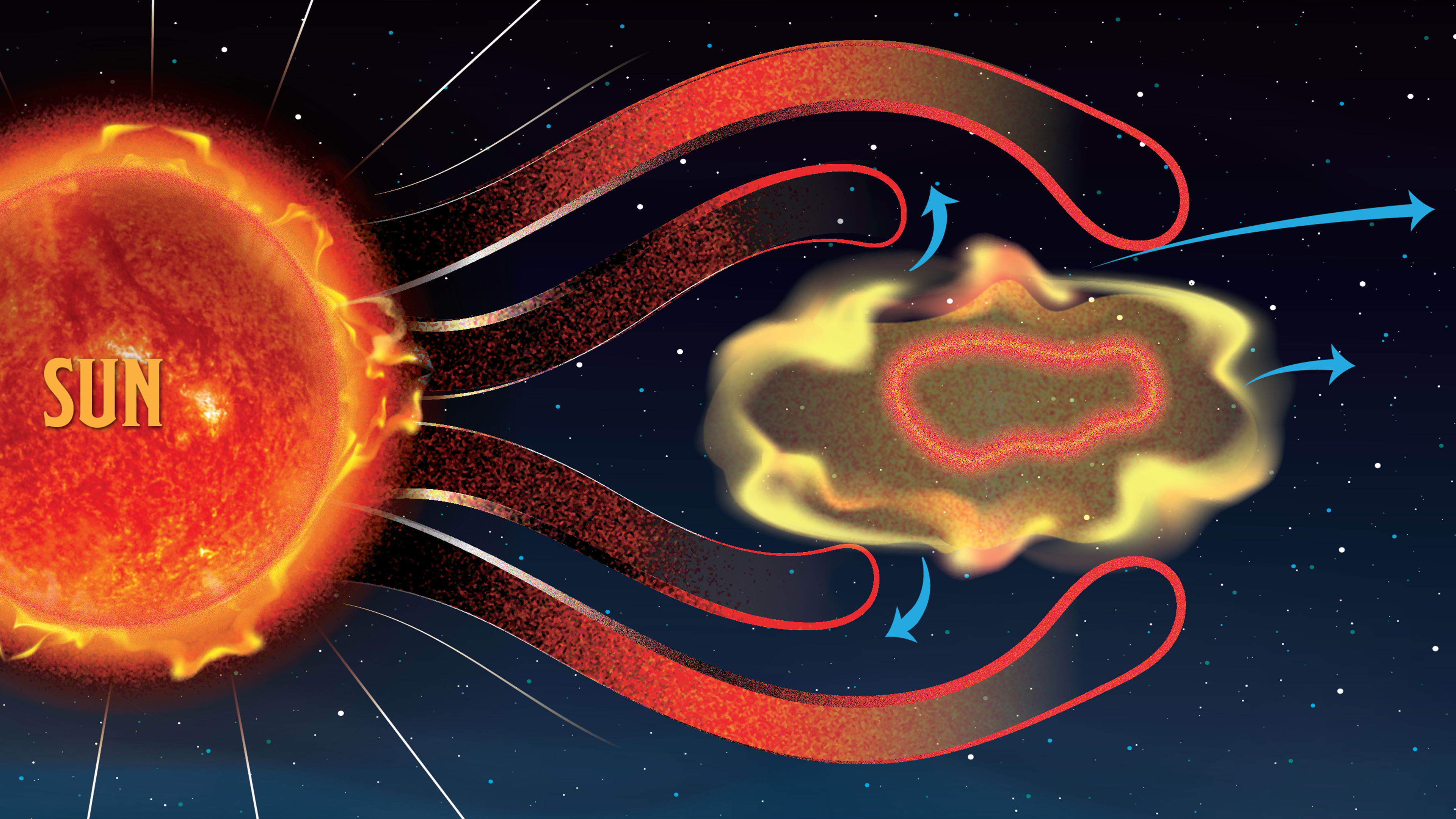
2.As the CME travels outward from the Sun, the CME expands. Eventually, it pushes through solar magnetic field lines to escape into space.
NASA
3. The magnetic field lines torn open by the CME rejoin to form new magnetic loops that get squeezed together.
NASA
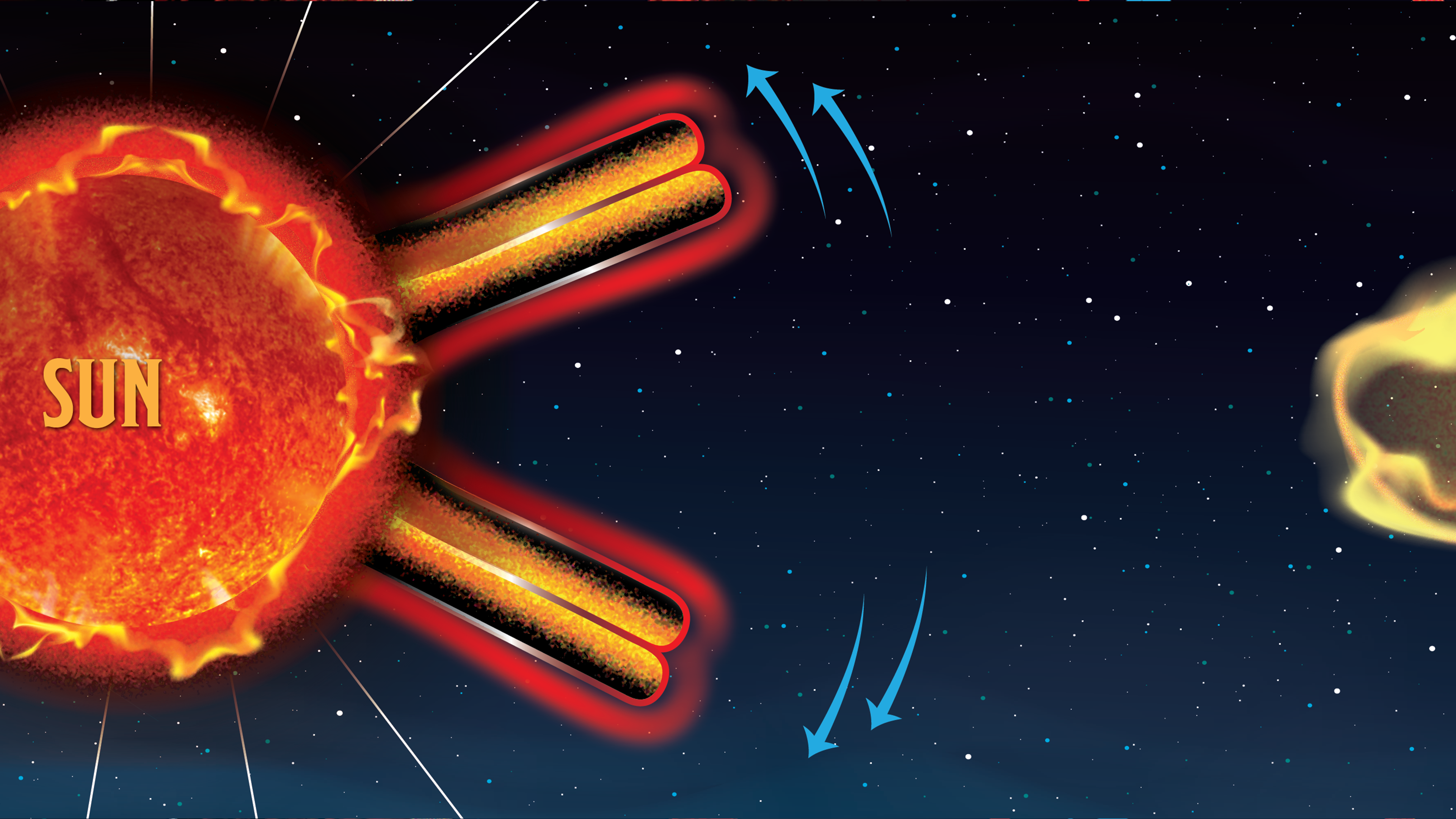
4. In some cases, the compressed magnetic field lines tear apart. This forms separate magnetic loops, some of which travel outward from the Sun and others that connect back to the Sun. As these loops contract back into the Sun, they drag down blobs of nearby solar material — forming inflows.
NASA
The CMEs are often triggered by twisted magnetic field lines that explosively snap and realign in a process called magnetic reconnection. This magnetic explosion kicks out a burst of charged particles and magnetic fields — a CME.
As the CME travels outward from the Sun, it expands, in some cases causing nearby magnetic field lines to tear apart like the threads of an old piece of cloth pulled too tight. The torn magnetic field quickly mends itself, creating separate magnetic loops. Some of the loops travel outward from the Sun, and others stitch back to the Sun, forming inflows.
“It turns out, some of the magnetic field released with the CME does not escape as we would expect,” said Angelos Vourlidas, WISPR project scientist and researcher at Johns Hopkins Applied Physics Laboratory. “It actually lingers for a while and eventually returns to the Sun to be recycled, reshaping the solar atmosphere in subtle ways.”
An important result of this magnetic recycling is that as the inflows contract back into the Sun, they drag down blobs of nearby solar material and ultimately affect the magnetic fields swirling beneath. This interaction reconfigures the solar magnetic landscape, potentially altering the trajectories of subsequent CMEs that may emerge from the region.
“The magnetic reconfiguration caused by inflows may be enough to point a secondary CME a few degrees in a different direction,” Vourlidas said. “That’s enough to be the difference between a CME crashing into Mars versus sweeping by the planet with no or little effects.”
Scientists are using the new findings to improve their models of space weather and the Sun’s complex magnetic environment. Ultimately, this work may help scientists better predict the impact of space weather across the solar system on longer timescales than currently possible.
“Eventually, with more and more passes by the Sun, Parker Solar Probe will help us be able to continue building the big picture of the Sun’s magnetic fields and how they can affect us,” Rawafi said. “And as the Sun transitions from solar maximum toward minimum, the scenes we’ll witness may be even more dramatic.”
By Mara Johnson-Groh NASA’s Goddard Space Flight Center, Greenbelt, Md.
NASA’s Webb Detects Thick Atmosphere Around Broiling Lava World
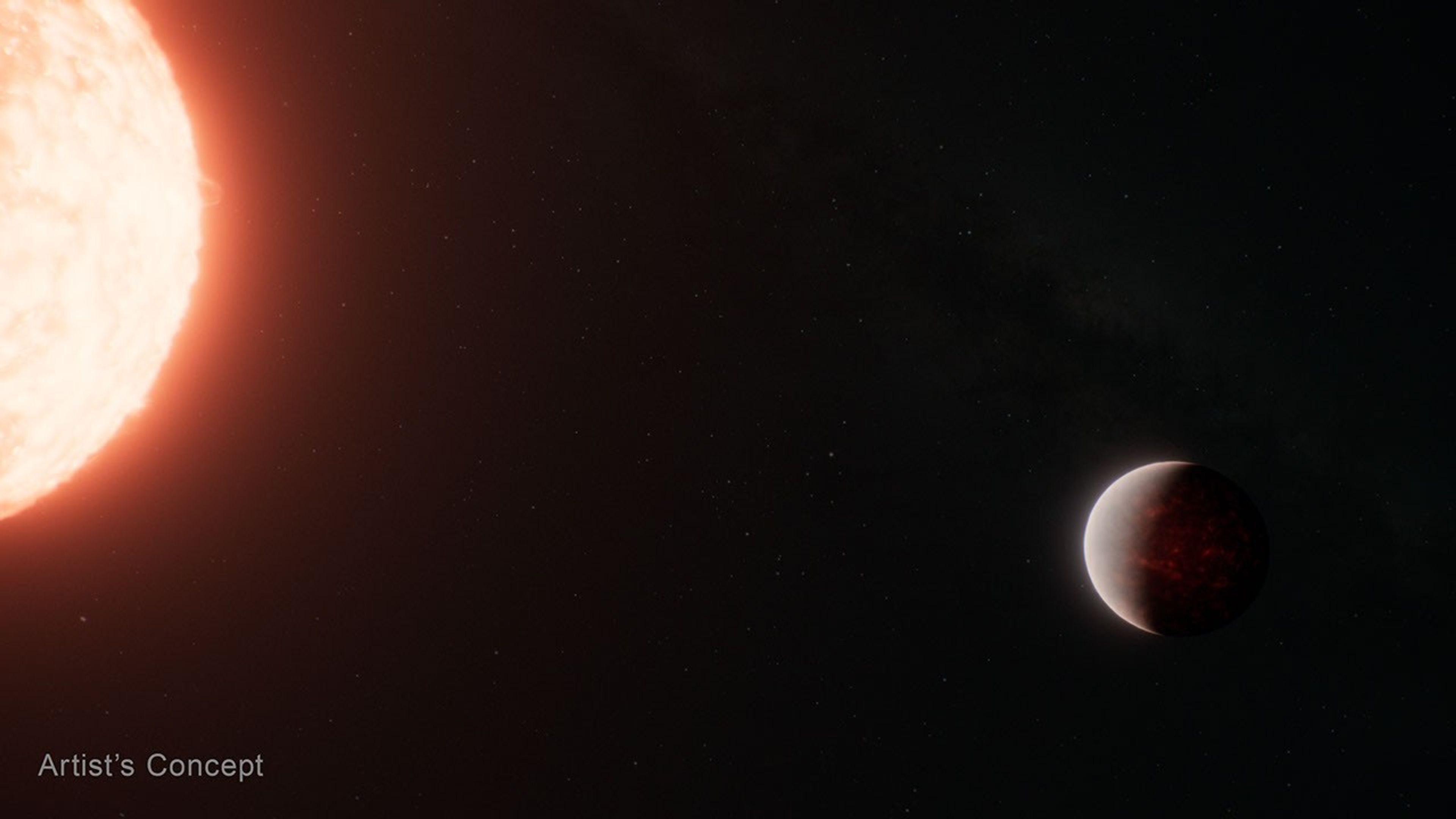
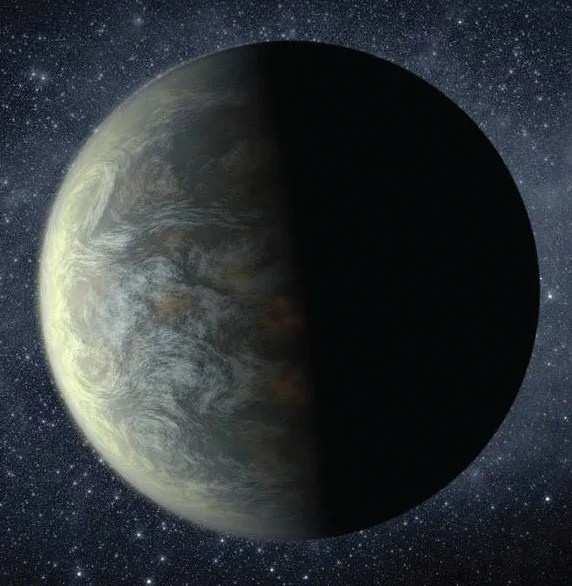
This artist’s concept shows what the hot super-Earth exoplanet TOI-561 b and its star could look like based on observations from NASA’s James Webb Space Telescope and other observatories. Webb data suggests that the planet is surrounded by a thick atmosphere above a magma ocean.
Credits: Illustration: NASA, ESA, CSA, Ralf Crawford (STScI)
Researchers using NASA’s James Webb Space Telescope have detected the strongest evidence yet for an atmosphere on a rocky planet outside our solar system, as NASA leads the world in exploring the universe from the Moon to Mars and beyond. Observations of the ultra-hot super-Earth TOI-561 b suggest that the exoplanet is surrounded by a thick blanket of gases above a global magma ocean. The results help explain the planet’s unusually low density and challenge the prevailing wisdom that relatively small planets so close to their stars are not able to sustain atmospheres.
Image A: Super-Earth Exoplanet TOI-561 b and Its Star (Artist’s Concept)
This artist’s concept shows what the hot super-Earth exoplanet TOI-561 b and its star could look like based on observations from NASA’s James Webb Space Telescope and other observatories. Webb data suggests that the planet is surrounded by a thick atmosphere above a magma ocean.
Illustration: NASA, ESA, CSA, Ralf Crawford (STScI)
With a radius roughly 1.4 times Earth’s, and an orbital period less than 11 hours, TOI-561 b falls into a rare class of objects known as ultra-short period exoplanets. Although its host star is only slightly smaller and cooler than the Sun, TOI-561 b orbits so close to the star — less than one million miles (one-fortieth the distance between Mercury and the Sun) — that it must be tidally locked, with the temperature of its permanent dayside far exceeding the melting temperature of typical rock.
“What really sets this planet apart is its anomalously low density,” said Johanna Teske, staff scientist at Carnegie Science Earth and Planets Laboratory and lead author on a paper published Thursday in The Astrophysical Journal Letters. “It’s not a super-puff, but it is less dense than you would expect if it had an Earth-like composition.”
Image B: Super-Earth Exoplanet TOI-561 b (Artist’s Concept)
An artist’s concept shows what a thick atmosphere above a vast magma ocean on exoplanet TOI-561 b could look like. Measurements captured by NASA’s James Webb Space Telescope suggest that in spite of the intense radiation it receives from its star, TOI-561 b is not a bare rock.
Illustration: NASA, ESA, CSA, Ralf Crawford (STScI)
One explanation the team considered for the planet’s low density was that it could have a relatively small iron core and a mantle made of rock that is not as dense as rock within Earth. Teske notes that this could make sense: “TOI-561 b is distinct among ultra-short period planets in that it orbits a very old (twice as old as the Sun), iron-poor star in a region of the Milky Way known as the thick disk. It must have formed in a very different chemical environment from the planets in our own solar system.” The planet’s composition could be representative of planets that formed when the universe was relatively young.
But an exotic composition can’t explain everything. The team also suspected that TOI-561 b might be surrounded by a thick atmosphere that makes it look larger than it actually is. Although small planets that have spent billions of years baking in blazing stellar radiation are not expected to have atmospheres, some show signs that they are not just bare rock or lava.
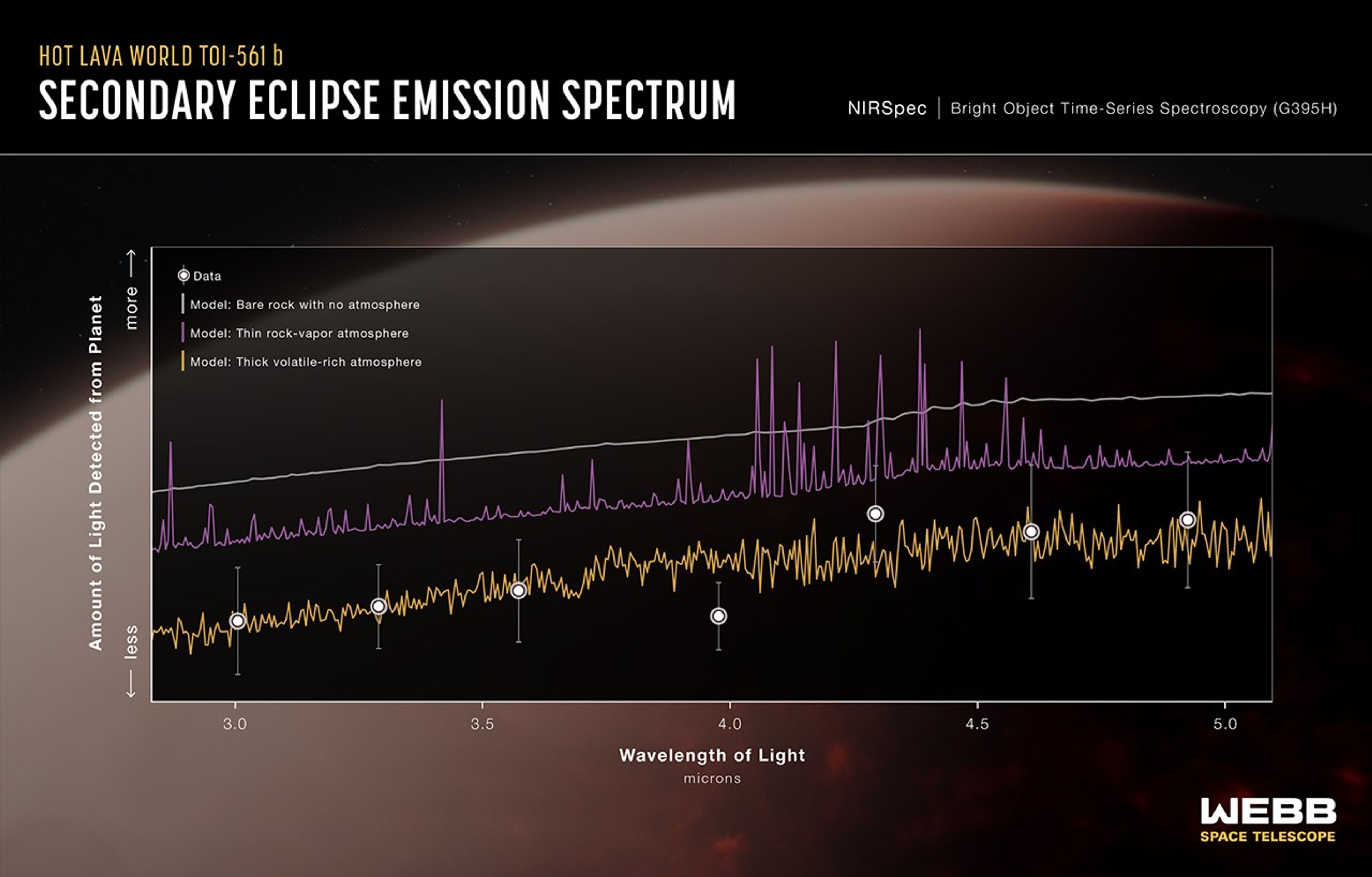
To test the hypothesis that TOI-561 b has an atmosphere, the team used Webb’s NIRSpec (Near-Infrared Spectrograph) to measure the planet’s dayside temperature based on its near-infrared brightness. The technique, which involves measuring the decrease in brightness of the star-planet system as the planet moves behind the star, is similar to that used to search for atmospheres in the TRAPPIST-1 system and on other rocky worlds.
If TOI-561 b is a bare rock with no atmosphere to carry heat around to the nightside, its dayside temperature should be approaching 4,900 degrees Fahrenheit (2,700 degrees Celsius). But the NIRSpec observations show that the planet’s dayside appears to be closer to 3,200 degrees Fahrenheit (1,800 degrees Celsius) — still extremely hot, but far cooler than expected.
Image C: Super-Earth Exoplanet TOI-561 b (NIRSpec Emission Spectrum)
An emission spectrum captured by NASA’s James Webb Space Telescope in May 2024 shows the brightness of different wavelengths of near-infrared light emitted by exoplanet TOI-561 b. Comparing the data to models suggests that the planet is surrounded by a volatile-rich atmosphere.
Illustration: NASA, ESA, CSA, Ralf Crawford (STScI); Science: Johanna Teske (Carnegie Science Earth and Planets Laboratory), Anjali Piette (University of Birmingham), Tim Lichtenberg (Groningen), Nicole Wallack (Carnegie Science Earth and Planets Laboratory)
To explain the results, the team considered a few different scenarios. The magma ocean could circulate some heat, but without an atmosphere, the nightside would probably be solid, limiting flow away from the dayside. A thin layer of rock vapor on the surface of the magma ocean is also possible, but on its own would likely have a much smaller cooling effect than observed.
“We really need a thick volatile-rich atmosphere to explain all the observations,” said Anjali Piette, coauthor from the University of Birmingham, United Kingdom.
“Strong winds would cool the dayside by transporting heat over to the nightside. Gases like water vapor would absorb some wavelengths of near-infrared light emitted by the surface before they make it all the way up through the atmosphere. (The planet would look colder because the telescope detects less light.) It’s also possible that there are bright silicate clouds that cool the atmosphere by reflecting starlight.”
While the Webb observations provide compelling evidence for such an atmosphere, the question remains: How can a small planet exposed to such intense radiation can hold on to any atmosphere at all, let alone one so substantial? Some gases must be escaping to space, but perhaps not as efficiently as expected.
“We think there is an equilibrium between the magma ocean and the atmosphere. At the same time that gases are coming out of the planet to feed the atmosphere, the magma ocean is sucking them back into the interior,” said co-author Tim Lichtenberg from the University of Groningen in the Netherlands. “This planet must be much, much more volatile-rich than Earth to explain the observations. It’s really like a wet lava ball.”
These are the first results from Webb’s General Observers Program 3860, which involved observing the system continuously for more than 37 hours while TOI-561 b completed nearly four full orbits of the star. The team is currently analyzing the full data set to map the temperature all the way around the planet and narrow down the composition of the atmosphere.
“What’s really exciting is that this new data set is opening up even more questions than it’s answering,” said Teske.
The James Webb Space Telescope is the world’s premier space science observatory. Webb is solving mysteries in our solar system, looking beyond to distant worlds around other stars, and probing the mysterious structures and origins of our universe and our place in it. Webb is an international program led by NASA with its partners, ESA (European Space Agency) and CSA (Canadian Space Agency).
Super-Earth Exoplanet TOI-561 b and Its Star (Artist’s Concept)
This artist’s concept shows what the hot super-Earth exoplanet TOI-561 b and its star could look like based on observations from NASA’s James Webb Space Telescope and other observatories. Webb data suggests that the planet is surrounded by a thick atmosphere above a magma ocean.
Super-Earth Exoplanet TOI-561 b (Artist’s Concept)
An artist’s concept shows what a thick atmosphere above a vast magma ocean on exoplanet TOI-561 b could look like. Measurements captured by NASA’s James Webb Space Telescope suggest that in spite of the intense radiation it receives from its star, TOI-561 b is not a bare rock.
Super-Earth Exoplanet TOI-561 b (NIRSpec Emission Spectrum)
An emission spectrum captured by NASA’s James Webb Space Telescope in May 2024 shows the brightness of different wavelengths of near-infrared light emitted by exoplanet TOI-561 b. Comparing the data to models suggests that the planet is surrounded by a volatile-rich atmosphere.
An atmospheric phenomenon occurring over much of California was unmistakable in satellite imagery in late autumn 2025. Fog stretching some 400 miles (640 kilometers) across the state’s Central Valley appeared day after day for more than two weeks in late November and early December. Known as tule (TOO-lee) fog, named after a sedge that grows in the area’s marshes, these low clouds tend to form in the valley in colder months when winds are light and soils are moist.
This animation shows a sprawling blanket of white fog filling most or all of the valley from Redding to Bakersfield between November 24 and December 9, 2025. While the fog mostly remained hemmed in by the Coastal Range and the Sierra Nevada, it sometimes spilled through the Carquinez Strait toward San Francisco Bay. These images were acquired with the MODIS (Moderate Resolution Imaging Spectroradiometer) instrument on NASA’s Terra satellite and the VIIRS (Visible Infrared Imaging Radiometer Suite) on the NOAA-20 and Suomi NPP satellites.
The Central Valley is fertile ground for the formation of tule fog, a persistent radiation fog, in late autumn and winter. It occurs when air near the surface, laden with moisture from evaporation, cools and the water saturates the air. If winds are calm, water droplets accumulate into fog clouds near the ground.
Plenty of water was present in the valley’s soils following a very wet autumn. Across nearly all of central and southern California, precipitation totals from September through November 2025 were among the top 10 percent on record, California Institute for Water Resources climate scientist Daniel Swain noted on his Weather West blog. In late November, a very stable high-pressure system developed over the state, which acted like a lid that trapped moist air and confined the fog layer to the valley. With no major storms moving through to disrupt the stratification, the tule fog endured.
Temperatures have been notably cooler in the valley under the fog layer, in sharp contrast to the rest of the state, which was mostly warmer than normal. Despite the contrast, however, the ambient air mass has been warmer overall, Swain wrote. This may be due in part to warm ocean water offshore and a low Sierra Nevada snowpack sending less cold air downslope, he added.
The warmer overall temperatures could explain why fog has lingered at a slightly higher level—more like stratus clouds—at certain times and locations, said Swain. Colder temperatures would be necessary to produce the densest fog near the surface. The somewhat higher cloud in 2025 has differed from past events, when low visibility at ground level has caused major traffic incidents.
Central California has seen long stretches of cold, socked-in days in the past. In 1985, for example, Fresno experienced 16 consecutive days of dense fog, and Sacramento endured 17, according to news reports. Researchers have found, however, that tule fog has been forming less often in California in recent decades. Foggy days are beneficial for the valley’s fruit and nut trees, which need sufficient rest between growing seasons to be most productive. The fog typically comes with chilly weather that brings on a dormant period; it also shields trees from direct sunlight that would otherwise warm the plant buds.
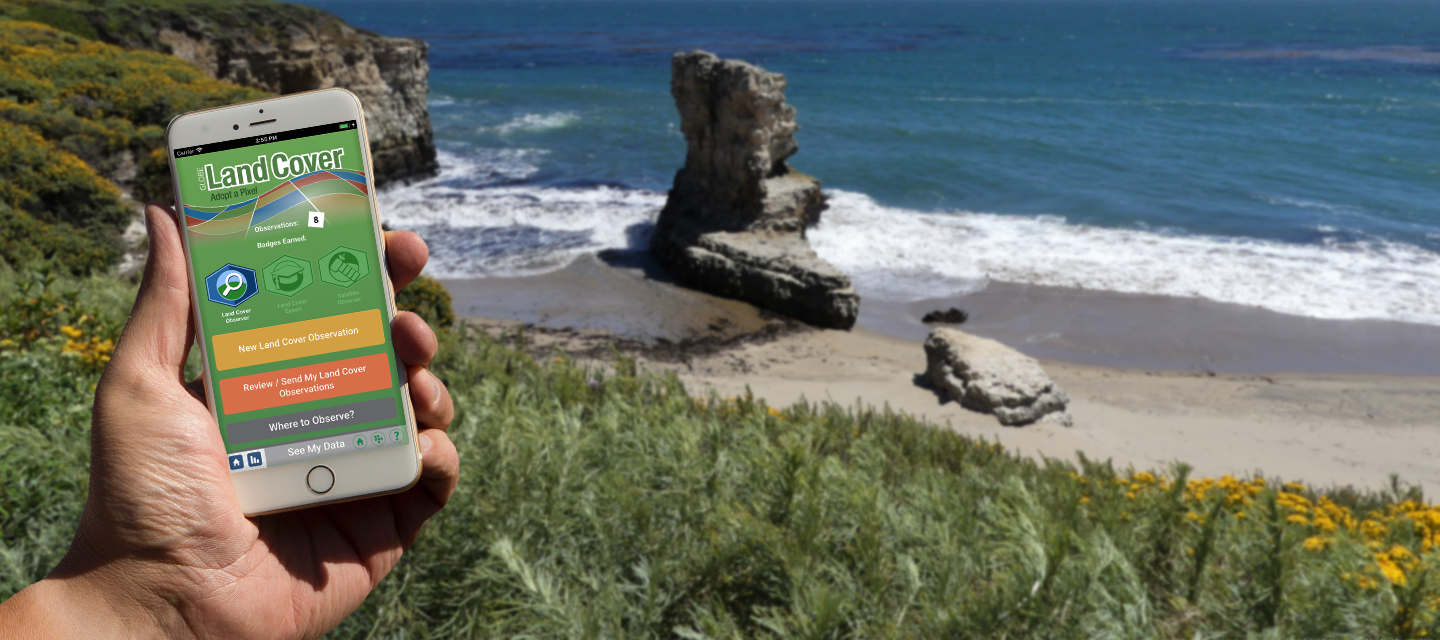
The Global Learning and Observations to Benefit the Environment (GLOBE) Program has launched a new feature that connects citizen scientists directly to Landsat observations. Through GLOBE, volunteers around the world collect environmental data in support of Earth system science, including land observations. GLOBE land cover observations may include photos of the landscape and a classification of the land cover, providing a valuable dataset of ground-truth observations.
GLOBE Land Cover is an app-based tool where users can document land cover through photographs. Users can classify their observations, compare them to a satellite image, and note any differences.
GLOBE Observer
As of September, when volunteers submit land cover observations to GLOBE, they will receive an email comparing their findings to Landsat and Sentinel-2 satellite observations of the same location in the same timeframe. This direct comparison helps bridge the gap between space-based remote sensing and ground-based observations, building on the successful legacy of GLOBE cloud observations that have been matched with satellite data for years.
Why Is GLOBE Including Land Cover?
Land cover classification plays a crucial role in understanding and managing our environment. This information is essential for risk analysis related to natural disasters such as floods, wildfires, and landslides. It also enables scientists to track the impacts of land use changes over time and create detailed maps of wildlife habitats. Landsat is a key dataset in many national and global land cover classification products such as the National Land Cover Database (NLCD).
GLOBE land cover allows anyone, from a highschooler to a university professor, to contribute to our understanding of Earth’s changing surface.
For more information about Landsat’s new role in GLOBE, read GLOBE’s feature or explore GLOBE Land Cover.
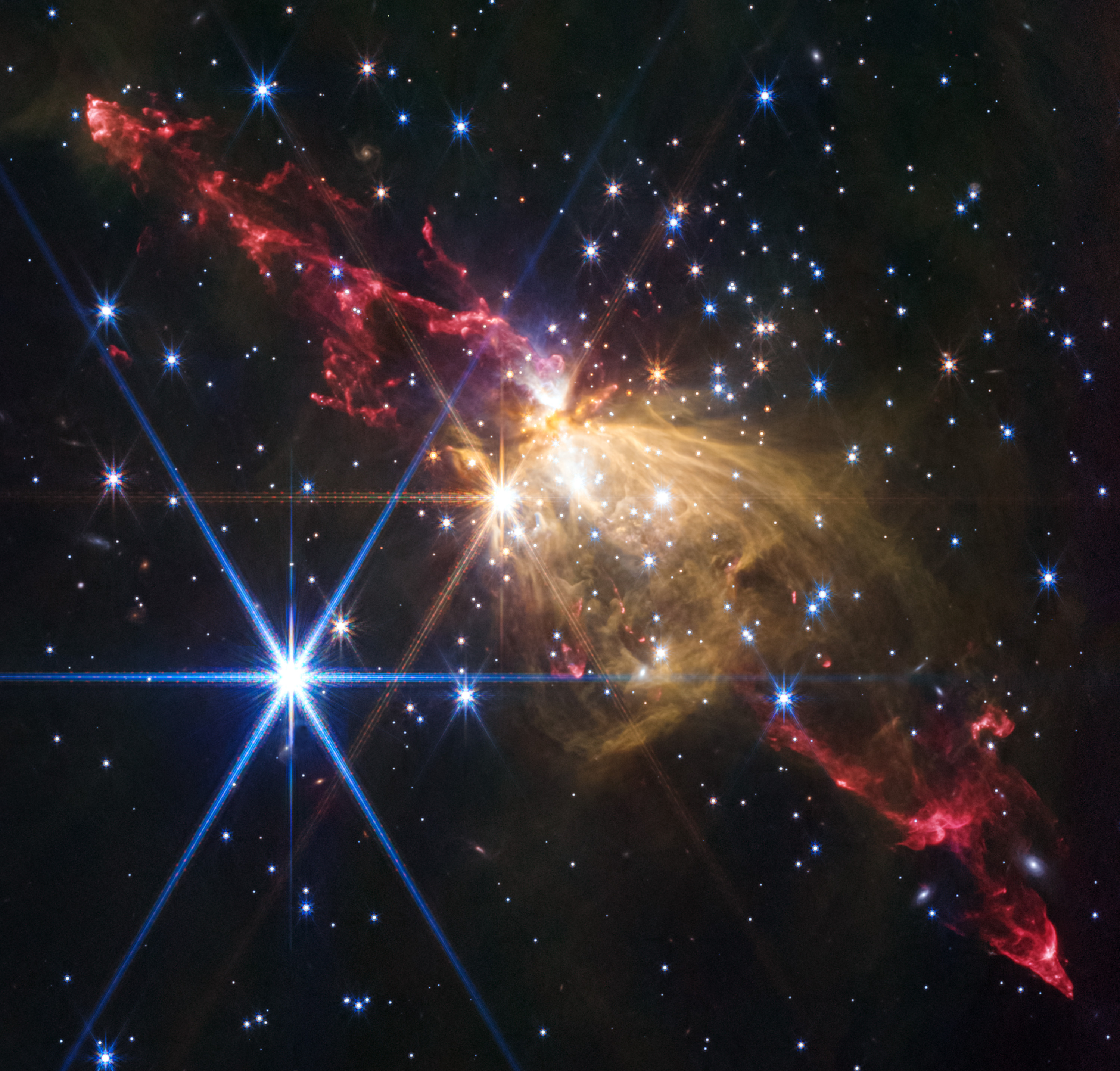
NASA, ESA, CSA, STScI, Yu Cheng (NAOJ); Image Processing: Joseph DePasquale (STScI)
NASA’s James Webb Space Telescope captured a blowtorch of seething gasses erupting from a volcanically growing monster star in this image released on Sept. 10, 2025. Stellar jets, which are powered by the gravitational energy released as a star grows in mass, encode the formation history of the protostar. This image provides evidence that protostellar jets scale with the mass of their parent stars—the more massive the stellar engine driving the plasma, the larger the resulting jet.
Image credit: NASA, ESA, CSA, STScI, Yu Cheng (NAOJ); Image Processing: Joseph DePasquale (STScI)
Preparations for Next Moonwalk Simulations Underway (and Underwater)
This video highlights the Rover Operations Center at NASA’s Jet Propulsion Laboratory. A center of excellence for current and future rover, aerial, and other surface missions, the ROC will support partnerships and technology transfer to catalyze the next generation of Moon and Mars surface missions. Credit: NASA/JPL-Caltech
The center leverages AI along with JPL’s unique infrastructure, unrivaled tools, and years of operations expertise to support industry partners developing future planetary surface missions.
NASA’s Jet Propulsion Laboratory in Southern California on Wednesday inaugurated its Rover Operations Center (ROC), a center of excellence for current and future surface missions to the Moon and Mars. During the launch event, leaders from the commercial space and AI industries toured the facilities, participated in working sessions with JPL mission teams, and learned more about the first-ever use of generative AI by NASA’s Perseverance Mars rover team to create future routes for the robotic explorer.
The center was established to integrate and innovate across JPL’s planetary surface missions while simultaneously forging strategic partnerships with industry and academia to advance U.S. interests in the burgeoning space economy. The center builds on JPL’s 30-plus years of experience developing and operating Mars surface missions, including humanity’s only helicopter to fly at Mars as well as the only two active planetary surface missions.
“The Rover Operations Center is a force multiplier,” said JPL Director Dave Gallagher. “It integrates decades of specialized knowledge with powerful new tools, and exports that knowledge through partnerships to catalyze the next generation of Moon and Mars surface missions. As NASA’s federally funded research and development center, we are chartered to do exactly this type of work — to increase the cadence, the efficiency, and the impact for our transformative NASA missions and to support the commercial space market as they take their own giant leaps.”
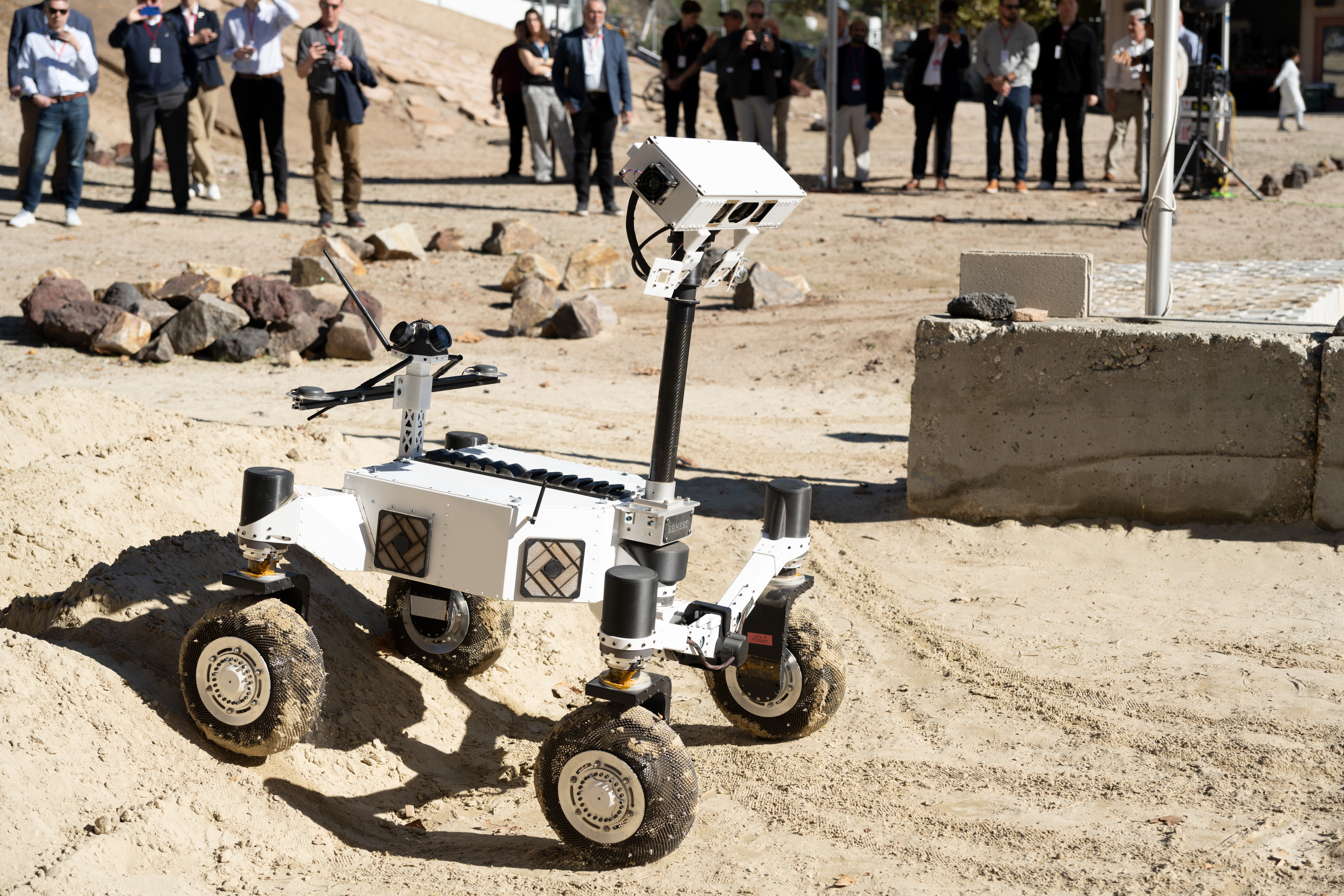
Rover prototype ERNEST (Exploration Rover for Navigating Extreme Sloped Terrain) demonstrates some of its advanced mobility and autonomy capabilities in JPL’s Mars Yard.
NASA/JPL-Caltech
Genesis of ROC
Through decades of successful Mars rover missions, JPL has continuously improved the unique autonomy, robotic capabilities, and best practices that have been demanded by increasingly complex robotic explorers. The ROC offers an accessible centralized structure to facilitate future exploration efforts.
“Our rovers are lasting longer and are more sophisticated than ever before. The scientific stakes are high, as we have just witnessed with the discovery of a potential biosignature in Jezero Crater by the Perseverance mission. We are starting down a decade of unprecedented civil and commercial exploration at the Moon, which will require robotic systems to assist astronauts and support lunar infrastructure,” said Matt Wallace, who heads JPL’s Exploration Systems Office. “Mobile vehicles like rovers, helicopters, and drones are the most dynamic and challenging assets we operate. It’s time to take our game up a notch and bring everybody we can with us.”
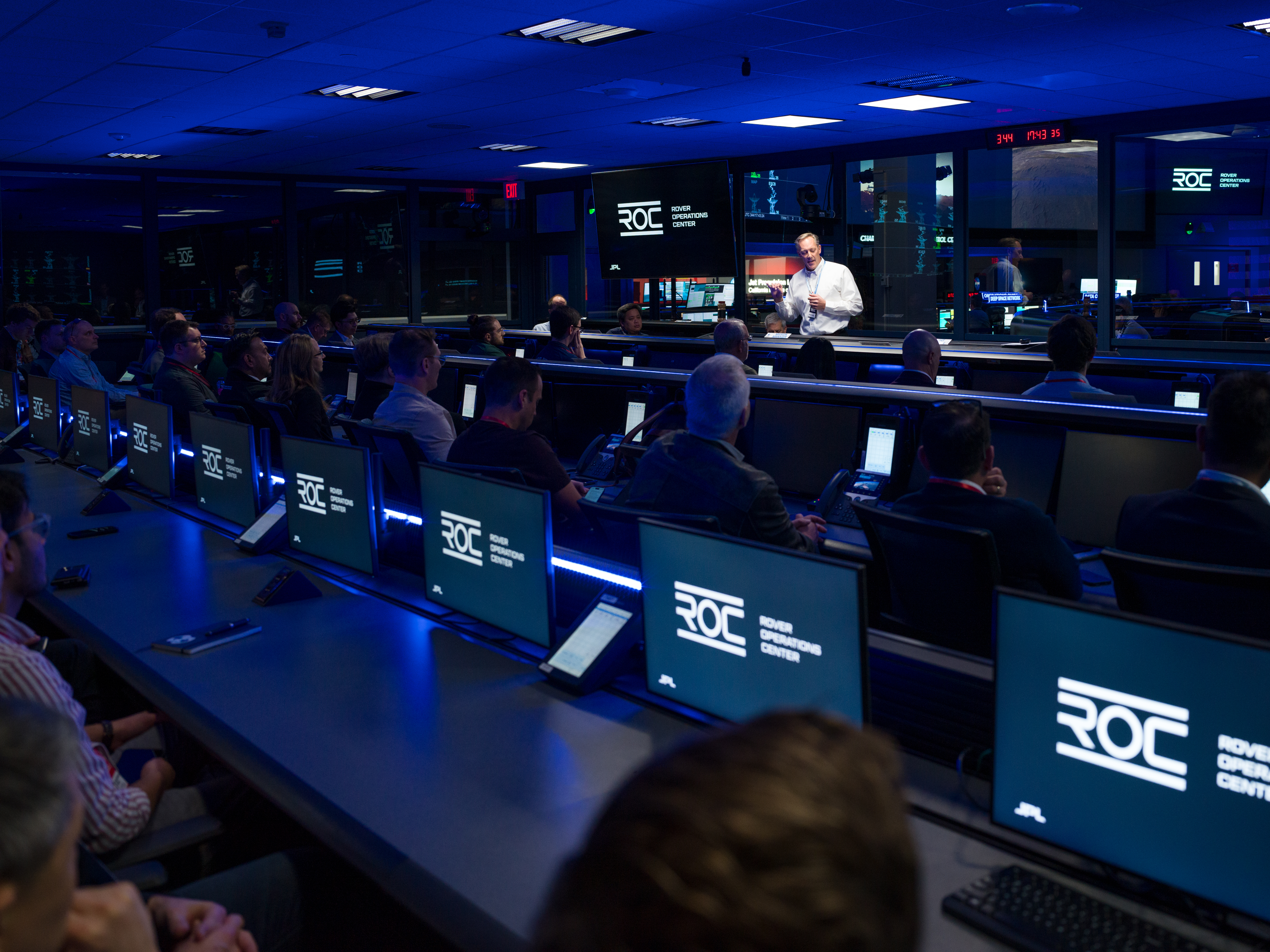
Michael Thelen of JPL’s Exploration Systems Office discusses the newly inaugurated Rover Operations Center in JPL’s historic Space Flight Operations Facility on Dec. 10.
NASA/JPL-Caltech
Future forward
A key focus of the ROC is on the more rapid infusion of higher-level autonomy into surface missions through partnerships with the AI and commercial space industries. The objective is to catalyze change to deliver next-generation science and exploration capabilities for the nation and NASA.
As NASA’s only federally funded research and development center, JPL has been evolving vehicle autonomy since the 1990s, when JPL began developing Sojourner, the first rover on another planet. Improvements to vehicle independence over the years have included the evolution of autonomy in sampling activities, driving, and science-target selection. Most recently, those improvements have extended to the development of Perseverance’s ability to autonomously schedule and execute many commanded energy-intensive activities, like keeping warm at night, as it sees fit. This capability allows the rover to conserve power, which it can reallocate in real time to perform more science or longer drives.
With the explosion of AI capabilities, the ROC rover team is leaving no Mars stone unturned in the hunt for future efficiencies.
“We had a small team complete a ‘three-week challenge,’ applying generative AI to a few of our operational use cases. During this challenge, it became clear there are many opportunities for AI infusion that can supercharge our capabilities,” said Jennifer Trosper, ROC program manager at JPL. “With these new partnerships, together we will infuse AI into operations to path-find the next generation of capabilities for science and exploration.”
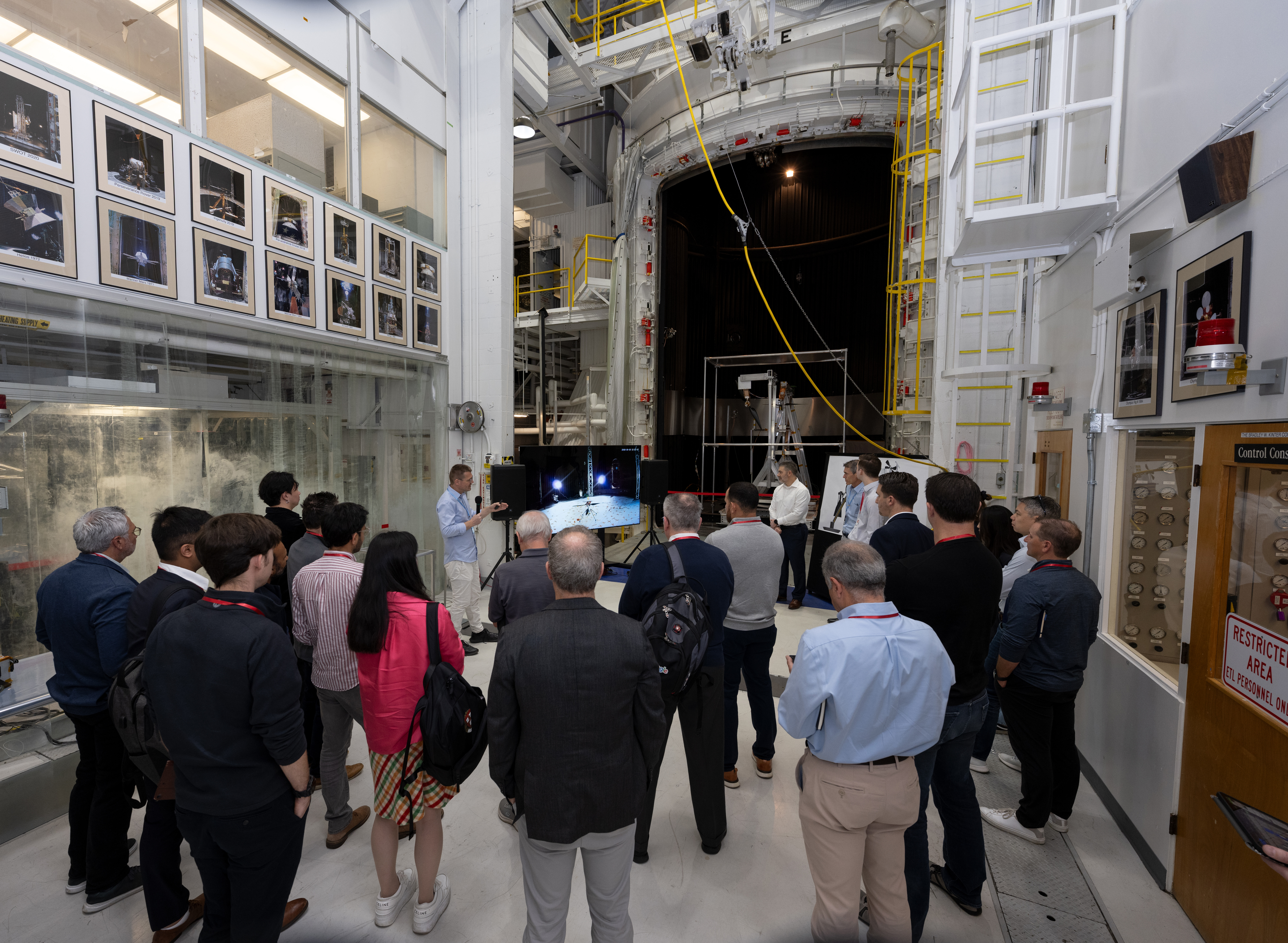
Håvard Grip, chief pilot of NASA’s Mars Ingenuity Helicopter — the only aircraft to fly on another planet — offers insights into aerial exploration of the Red Planet at the lab’s 25-Foot Space Simulator, which subjects spacecraft to the harsh conditions of space.
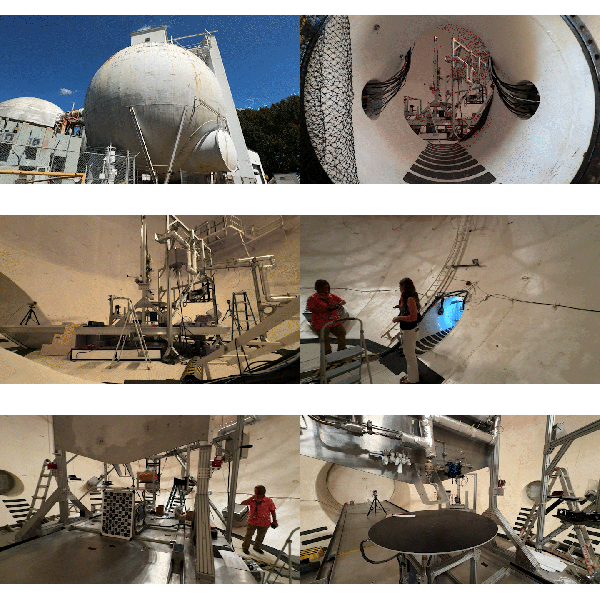
During the ROC’s inauguration, attendees toured JPL operations facilities, including where the rover drivers plan their next routes. They also visited JPL’s historic Mars Yard, which reproduces Martian terrain to test rover capabilities, and the massive 25-Foot Space Simulator that has tested spacecraft from Voyagers 1 and 2 to Perseverance to America’s next generation of lunar landers. A panel discussion explored the historical value of rovers and aerial systems like the Ingenuity Mars Helicopter in planetary surface exploration. Also discussed was the promise of a new public-private partnership opportunity across a virtual network of operational missions.
Attendees were briefed on tiered engagement options for partners, from mission architecture support to autonomy integration, testing, and operations. These opportunities extend to science and human precursor robotic missions, as well as to human-robotic interaction and spacewalks for astronauts on the Moon and Mars.
A highlight for event participants came when the Perseverance team showcased how the ROC’s generative AI can assist rover planners in creating future routes for the rover. The AI analyzed high-resolution orbital images of Jezero Crater and other relevant data and then generated waypoints that kept Perseverance away from hazardous terrain.
Managed for NASA by Caltech, JPL is the home of the Rover Operations Center (ROC).
Meet the ROC. A center of excellence for current and future rover, aerial, and other surface missions, the Rover Operations Center at NASA’s Jet Propulsion L...
NASA and its partners have supported humans continuously living and working in space since November 2000. After 25 years of habitation, the International Space Station continues to be a proving ground for technology that powers NASA’s Artemis campaign, future lunar missions, and human exploration of Mars.
Take a look at key technology advancements made possible by research aboard the orbiting laboratory.
Robots at work in orbit
NASA astronaut Suni Williams checks out the Astrobee robotic free-flyer inside the International Space Station’s Kibo laboratory module during a demonstration of satellite capture techniques. This technology could help extend the life of satellites and reduce space debris.
NASA
Robots have been critical to the space station’s success. From the Canadian-built Canadarm2, which assembled large portions of the orbiting laboratory and continues to support ongoing operations, especially during spacewalks, robotic technology on station has evolved to include free-flying assistants and humanoid robots that have extended crew capabilities and opened new paths for exploration.
The station’s first robotic helpers arrived in 2003. The SPHERES robots – short for Synchronized Position Hold, Engage, Reorient, Experimental Satellite – served on station for over a decade, supporting environmental monitoring, data collection and transfer, and materials testing in microgravity.
NASA’s subsequent free-flying robotic system, Astrobee, built on the lessons learned from SPHERES. Known affectionately as Honey, Queen, and Bumble, the three Astrobees work autonomously or via remote control by astronauts, flight controllers, or researchers on the ground. They are designed to complete tasks such as inventory, documenting experiments conducted by astronauts, or moving cargo throughout the station, and they can be outfitted and programmed to carry out experiments.
NASA and partners have also tested dexterous humanoid robots aboard the space station. Robonaut 1 and its more advanced successor, Robonaut 2, were designed to use the same tools as humans, so they could work safely with crew with the potential to take over routine tasks and high-risk activities.
Advanced robotic technologies will play a significant role in NASA’s mission to return to the Moon and continue on to Mars and beyond. Robots like Astrobee and Robonaut 2 have the capacity to become caretakers for future spacecraft, complete precursor missions to new destinations, and support crew safety by tackling hazardous tasks.
Closing the loop: recycling air and water in space
ESA (European Space Agency) astronaut Samantha Cristoforetti works on a Regenerative Environmental Control and Life Support System (ECLSS) recycle tank remove-and-replace task aboard the orbiting laboratory.
ESA
Living and working in space for more than two decades requires technology that makes the most of limited resources. The space station’s life support systems recycle air and water to keep astronauts healthy and reduce the need for resupply from Earth.
The station’s Environmental Control and Life Support System (ECLSS) removes carbon dioxide from the air, supplies oxygen for breathing, and recycles wastewater—turning yesterday’s coffee into tomorrow’s coffee. It is built around three key components: the Water Recovery System, Air Revitalization System, and Oxygen Generation System. The water processor reclaims wastewater from crew members’ urine, cabin humidity, and the hydration systems inside spacesuits for spacewalks, converting it into clean, drinkable water.
NASA astronaut Kjell Lindgren celebrates International Coffee Day aboard the orbital outpost with a hand-brewed cup of coffee in space, brewed using the Capillary Beverage Cup.
NASA
The air revitalization system filters carbon dioxide and trace contaminants from the cabin atmosphere, ensuring the air stays safe to breathe. The oxygen generation system uses electrolysis to split water into hydrogen and oxygen, providing a steady supply of breathable air. Today, these systems can recover around 98% of the water brought to the station, a vital step toward achieving long-duration missions where resupply will not be possible.
The lessons learned aboard the space station will help keep Artemis crews healthy on the Moon and shape the closed-loop systems needed for future expeditions to Mars.
Advancing 3D printing technology for deep space exploration

The first metal part 3D printed in space.
ESA
Additive manufacturing, also known as 3D printing, is regularly used on Earth to quickly produce a variety of devices. Adapting this process for space could let crew members create tools and parts for maintenance and repair as needed and save valuable cargo space.
The space station’s first 3D printer was installed in November 2014. That device produced more than a dozen plastic tools and parts, demonstrating that the process could work in low Earth orbit. Subsequent devices tested different printer designs and functionality, including the production of parts from recycled materials and simulated lunar regolith. In August 2024, a device supplied by ESA produced the first metal 3D-printed product.
The space station also has hosted studies of a form of 3D printing called biological printing or bioprinting. This process uses living cells, proteins, and nutrients as raw materials to potentially produce human tissues for treating injury and disease. So far, a knee meniscus and live human heart tissue have been printed onboard.
The ability to manufacture things in space is especially important in planning for future missions to the Moon and Mars because additional supplies cannot quickly be sent from Earth and cargo capacity is limited.
We have the solar power
NASA astronaut and Expedition 72 flight engineer Anne McClain is pictured near one of the space station’s main solar arrays during a spacewalk to upgrade the orbital outpost’s power generation system and relocate a communications antenna.
NASA/Nichole Ayers
As the space station orbits Earth, its four pairs of solar arrays soak up the sun’s energy to provide electrical power for the numerous research and science investigations conducted every day, as well as the continued operations of the orbiting laboratory.
In addition to harnessing the Sun’s energy for its operations, the space station has provided a platform for innovative solar power research. At least two dozen investigations have tested advanced solar cell technology – evaluating the cells’ on-orbit performance and monitoring degradation caused by exposure to the extreme environment of space. These investigations have demonstrated technologies that could enable lighter, less expensive, and more efficient solar power that could improve the design of future spacecraft and support sustainable energy generation on Earth.
One investigation – the Roll-Out Solar Array – has already led to improvements aboard the space station. The successful test of a new type of solar panel that rolls open like a party favor and is more compact than current rigid panel designs informed development of the ISS Roll-Out Solar Arrays (iROSAs). The six iROSAs were installed during a series of spacewalks between 2021 and 2023 and provided a 20% to 30% increase in space station power.
Connecting students to station science
The Kibo-RPC students watch in real time as the free-flying robot Astrobee performs maneuvers aboard the space station, executing tasks based on their input to test its capabilities.
NASA/Helen Arase Vargas
For 25 years, the orbital outpost has served as a global learning platform, advancing STEM education and connecting people on Earth to life in space. Every experiment, in-flight downlink, and student-designed payload helps students see science in action and share humanity’s pursuit of discovery.
The first and longest-running education program on the space station is ISS Ham Radio, known as Amateur Radio on the International Space Station (ARISS), where students can ask questions directly to crew members aboard the space station. Since 2000, ARISS has connected more than 100 astronauts with over 1 million students across 49 U.S. states, 63 countries, and every continent.
Through Learn with NASA, students and teachers can explore hands-on activities and astronaut-led experiments that demonstrate how physics, biology, and chemistry unfold in microgravity.
Students worldwide also take part in research inspired by the space station. Programs like Genes in Space and Cubes in Space let learners design experiments for orbit, while coding and robotics competitions such as the Kibo Robot Programming Challenge allows students to program Astrobee free-flying robots aboard the orbiting laboratory.
As NASA prepares for Artemis missions to the Moon, the space station continues to spark curiosity and inspire the next generation of explorers.
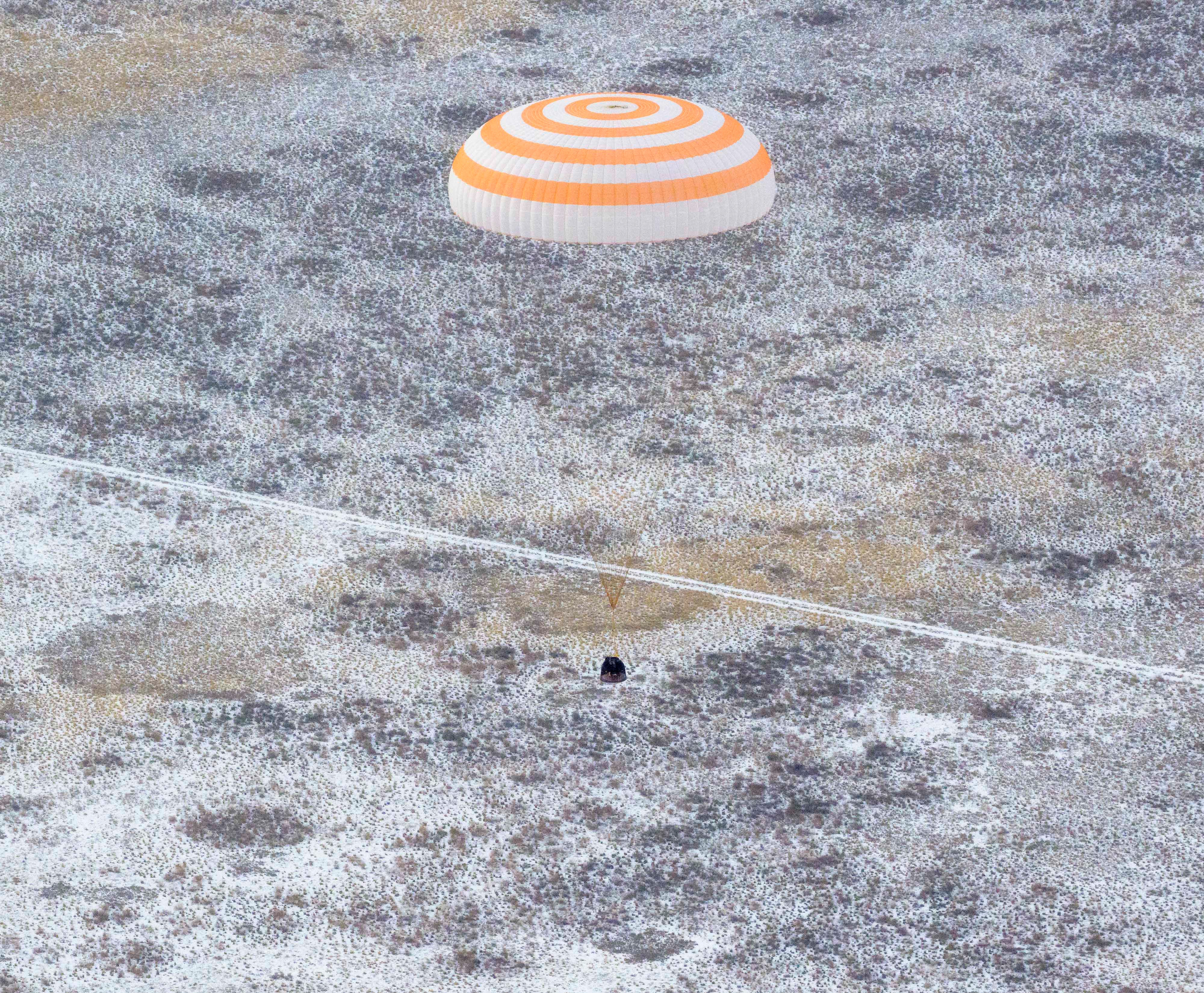
The Soyuz MS-27 spacecraft is seen as it lands in a remote area near the town of Zhezkazgan, Kazakhstan on Dec. 9, 2025, with Expedition 73 NASA astronaut Jonny Kim, and Roscosmos cosmonauts Sergey Ryzhikov and Alexey Zubritsky aboard.
The trio returned to Earth after logging 245 days in space as members of Expeditions 72 and 73 aboard the International Space Station. While aboard the orbiting laboratory, Kim contributed to a wide range of scientific investigations and technology demonstrations.
For more than 25 years, people have lived and worked continuously aboard the International Space Station, advancing scientific knowledge and making research breakthroughs that are not possible on Earth. The station is a critical testbed for NASA to understand and overcome the challenges of long-duration spaceflight and to expand commercial opportunities in low Earth orbit.
The NSSC provides general administrative, advisory, and transactional support for federal benefits programs to all NASA employees, calculates retirement estimates, and processes retirement packages.
In consideration of retiring employees on administrative leave, resources typically available only to NASA employees behind the NASA firewall are temporarily available below. Most of your questions can be answered with one of these guides or the information below.
This information may help you resolve questions you would otherwise contact the NASA Shared Services Center (NSSC) about.
All other NASA employees can visit the NASA employee intranet for additional information.
Inquiry Response Times
NASA is experiencing a significant influx of inquiries due to the high number of upcoming retirements. Response times will be slower than normal.Please do not send repeated follow-ups, as that creates bottlenecks and further delays responses. All inquiries will be answered in the order received. Thank you for your patience.
Retirement Annuity Start Dates and Processing Timelines
FERS retirees with a retirement date on or before Dec. 31, 2025:
Your annuity begins accruing Jan. 1, 2026.
Your first payment is expected mid-February 2026.
Because payments begin in February, your application is still considered timely even if it remains with the NSSC through late January.
As long as your case reaches Payroll Review by February, there will be no delay in your annuity.
CSRS retirees with a retirement date on or before Jan. 3, 2026:
Your annuity will accrue starting in January 2026, with the first payment mid-February 2026.
Processing is still considered on time if NSSC completes its portion by late January, and your case reaches Payroll Review by February.
FERS employees retiring Jan. 1, 2026 or later and CSRS employees retiring Jan. 4, 2026, or later:
Your annuity begins accruing Feb. 1, 2026.
Your first payment is expected mid-March 2026.
Applications can typically remain in HR review through February.
As long as your package reaches Payroll Review by the end of February, your retirement payment will not be delayed.
VSIP Payments and Lump Sum Leave Payments
VSIP payments will be issued with your final NASA paycheck. We do not expect any delays to VSIP payments. Even if your retirement application is not finalized by your retirement date it will not delay your VSIP.
Lump sum annual leave payments for employees retiring Dec. 28, 2025, through Jan. 10, 2026, are expected to be paid around Feb. 13, 2026. Even if your retirement application is not finalized by your retirement date it will not delay your lump sum leave payment.
All NASA issued payments, to include your last paycheck, VSIP, and lump sum leave, will be deposited into the same bank account used for your NASA payroll. Updates made in the Online Retirement Application (ORA) do not affect NASA payroll. ORA updates only apply to your future retirement annuity.
The application is with the employee for action. The NSSC cannot move it forward until the employee completes required steps. This is the only stage at which an employee can adjust or make changes to their application in ORA.
In HR Review:
Your application is actively being worked by the NSSC Retirement Services team. Thousands of retirements are in the queue, so please be patient. Once your application is in HR Review (or beyond) you cannot make any changes. If you have a change that needs to be made, submit a Web Inquiry to the NSSC.
In Applicant Review:
The application is back with the employee for final certification. Once completed, the status will update to In HR Finalized.
In HR Finalized:
The NSSC has completed its portion and will release the package to payroll.
In Payroll Review:
Your application is no longer with NASA. It is with the Department of the Interior, Interior Business Center (IBC), NASA’s payroll provider.
Applications typically remain in Payroll Review for about 30 days after your retirement date while payroll records close. IBC will then certify the package and submit it to OPM.
Email Address Changes in ORA
Do not change your email address once you begin your retirement application. ORA does not allow email updates mid-process.
Changing your email requires deleting your application and starting over, which can significantly delay your place in the queue.
You may update your preferred email later in OPM Services Online once your case transfers to OPM.
Retirement Counseling and Training
The FERS group retirement counseling sessions have been extended to accommodate additional participants and are full. If you are not able to attend one of these sessions or may otherwise find the information helpful, you can watch a previously recorded session. To jump to a specific topic, see the recording time stamps.
A final CSRS counseling session will be held Dec. 23. Eligible employees have already received a Teams meeting invitation via their personal email address. If you missed this invitation, you may submit a Web Inquiry to the NSSC to have it resent.
Courts can issue orders that award benefits to legally separated spouses, former spouses, and children of current employees, former employees, and retirees under the Civil Service Retirement System (CSRS) and the Federal Employees Retirement System (FERS). NASA cannot advise an employee, an employee’s spouse, or an attorney on how to draft a court order to award CSRS or FERS benefits. This is the task of the attorneys involved.
The NSSC cannot provide estimates that would require speculation about future promotions, program changes, or any other non-factual information and does not prepare estimates for employees who are not close to retirement. Official computations are made by OPM only at the time benefits become payable.
If you are involved in a divorce, legal separation, or annulment, you should provide the NSSC with a copy of your court order to expedite the processing of your retirement in the future.
Action required: Mail a court-certified copy of the court order to the address below and upload a copy in your ORA account:
Attention: Retirement Services NSSC Bldg 1111, Jerry Hlass Rd Stennis Space Center, MS 35929
Preparations for Next Moonwalk Simulations Underway (and Underwater)
NASA engineer Hanbong Lee demonstrates capabilities to manage busy urban airspace traffic during a recent simulation at NASA’s Ames Research Center in California’s Silicon Valley.
NASA/Brandon Torres-Navarrete
NASA is helping shape the future of urban air travel with a new simulation that will manage how electric air taxis and drones can successfully operate within busy areas.
The demonstration, held at NASA’s Ames Research Center in California’s Silicon Valley earlier this year, focused on a system called the Strategic Deconfliction Simulation, which helps coordinate flight plans before takeoff, reducing the risk of conflicts in busy urban environments
At the event, researchers demonstrated NASA’s Situational Viewer and Demand-Capacity Balancing Monitor, which visualizes air traffic and adjusts flight plans in real time. The simulation demonstrated traffic scenarios involving drone operations throughout the Dallas-Fort Worth area, testing how preplanned flights could improve congestion and manage the demand and capacity of the airspace – ensuring that all aircraft can operate smoothly even in crowded conditions.
Working with industry partners is critical to NASA’s efforts to develop and refine technologies needed for future air mobility. During the simulation, the company, ANRA Technologies, demonstrated its fleet and vertiport management systems, which are designed to support the coordination of multiple aircraft and ground operations.
“Simulating these complex environments supports broader efforts to ensure safe integration of drones and other advanced vehicles into the US airspace,” said Hanbong Lee, engineer at NASA Ames. “By showcasing these capabilities, we’re delivering critical data and lessons learned to support efforts at NASA and industry.”
This demonstration is another step toward the NASA team’s plan to hold a technical capability level simulation in 2026. This upcoming simulation would help shape the development of services aimed at managing aircraft flying in urban areas.
The simulation was created through a NASA team from its Air Mobility Pathfinders project, part of the agency’s continuing work to find solutions for safely integrating innovative new aircraft such as air taxis into U.S. cities and the national airspace. By developing advanced evaluations and simulations, the project supports safe, scalable, and publicly trusted air travel in urban areas, paving the way for a future where air taxis and drones are a safe and reliable part of everyday life.
NASA Begins Moon Mission Plume-Surface Interaction Tests
Views of the 60-foot vacuum sphere in the which the plume-surface interaction testing is happening.
Credits: NASA/Joe Atkinson
In March, NASA researchers employed a new camera system to capture data imagery of the interaction between Firefly Aerospace Blue Ghost Mission-1 lander’s engine plumes and the lunar surface.
Through NASA’s Artemis campaign, this data will help researchers understand the hazards that may occur when a lander’s engine plumes blast away at the lunar dust, soil, and rocks.
The data also will be used by NASA’s commercial partners as they develop their human landing systems to safely transport astronauts from lunar orbit to the Moon’s surface and back, beginning with Artemis III.
To better understand the science of lunar landings, a team at NASA’s Langley Research Center in Hampton, Virginia, has initiated a series of plume-surface interaction tests inside a massive 60-foot spherical vacuum chamber.
This plume-surface interaction ground test is the most complex test of its kind to be undertaken in a vacuum chamber
Ashley Korzun
PSI Testing Lead at NASA Langley
“This plume-surface interaction ground test is the most complex test of its kind to be undertaken in a vacuum chamber,” said Ashley Korzun, testing lead at NASA Langley. “If I’m in a spacecraft and I’m going to move all that regolith while landing, some of that’s going to hit my lander. Some of it’s going to go out toward other things — payloads, science experiments, eventually rovers and other assets. Understanding those physics is pivotal to ensuring crew safety and mission success.”
The campaign, which will run through spring of 2026, should provide an absolute treasure trove of data that researchers will be able to use to improve predictive models and influence the design of space hardware. As Korzun mentioned, it’s a big undertaking, and it involves multiple NASA centers, academic institutions, and commercial entities both small and large.
Korzun’ s team will test two types of propulsion systems in the vacuum sphere. For the first round of tests this fall, they are using an ethane plume simulation system designed by NASA’s Stennis Space Center near Bay St. Louis, Mississippi, and built and operated by Purdue University in West Lafayette, Indiana. The ethane system generates a maximum of about 100 pounds of thrust — imagine the force necessary to lift or support a 100-pound person. It heats up but doesn’t burn.
A view of the ethane nozzle researchers are using during the first phase of testing. NASA/Wesley Chambers
After completing the ethane tests, the second round of tests will involve a 14-inch, 3D-printed hybrid rocket motor developed at Utah State University in Logan, Utah, and recently tested at NASA’s Marshall Space Flight Center in Huntsville, Alabama. It produces around 35 pounds of thrust, igniting both solid propellant and a stream of gaseous oxygen to create a hot, powerful stream of rocket exhaust, simulating a real rocket engine but at smaller scale for this test series.
Researchers will test both propulsion systems at various heights, firing them into a roughly six-and-a-half-foot diameter, one-foot-deep bin of simulated lunar regolith, called Black Point-1 that has jagged, cohesive properties similar to lunar regolith.
“It gives us a huge range of test conditions,” Korzun said, “to be able to talk about spacecraft of all different kinds going to the Moon, and for us to understand what they’re going to do as they land or try to take back off from the surface.”
Researchers will use this 14-inch, 3D-printed hybrid rocket motor during the second phase of testing.
The data from these tests at NASA Langley will be critical in developing and validating models to predict the effects of plume surface interaction for landing on the Moon and even Mars, ensuring mission success for the HLS landers and the safety of our astronauts
Daniel Stubbs
Engineer with HLS Plume and Aero Environments Team at NASA Marshall
Korzun sees this test campaign as more than a one-shot, Moon-specific thing. The entire operation is modular by design and can also prepare NASA for missions to Mars. The lunar regolith simulant can be replaced with a Mars simulant that’s more like sand. Pieces of hardware and instrumentation can be unbolted and replaced to represent future Mars landers. Rather than take the vacuum sphere down to really low pressure like on the Moon, it can be adjusted to a pressure that simulates the atmosphere on the Red Planet. “Mars has always been in our road maps,” Korzun said.
But for now, the Moon looms large.
A number of instruments, including SCALPSS cameras similar to the ones that captured imagery of the plume-surface interaction between Firefly Aerospace’s Blue Ghost lander and the Moon in March, will capture data on the sphere tests.
NASA/Ryan Hill
“This test campaign is one of the most flight-relevant and highly instrumented plume-surface interaction test series NASA has ever conducted,” said Daniel Stubbs, an engineer with the human landing systems plume and aero environments team at NASA Marshall. “The data from these tests at NASA Langley will be critical in developing and validating models to predict the effects of plume-surface interaction for landing on the Moon and even Mars, ensuring mission success for the human landing systems and the safety of our astronauts.”
Through the Artemis campaign, NASA will send astronauts to explore the Moon for scientific discovery, economic benefits, and to build upon our foundation for the first crewed missions to Mars – for the benefit of all.
A team at NASA Langley is firing engine plumes into simulated lunar soil because as the United States returns to the Moon, both through NASA’s Artemis campai...

 Login
Login