Login
LoginDespite EPA violation of union contract, ruling can’t be enforced
President Donald Trump’s orders for most agencies to end collective bargaining are preventing the enforcement of a recent contract violation at the Environmental Protection Agency, according to a federal union.
In a decision issued last week, a third-party arbitrator found that EPA violated its collective bargaining agreement earlier this year by failing to negotiate with the American Federation of Government Employees over a return-to-office policy. But any further action related to that ruling cannot currently be enforced, since the arbitrator’s Dec. 12 decision came months after EPA terminated its agreement in response to Trump’s orders.
“Without these union protections, it’s basically just open season on public service,” Justin Chen, president of AFGE Council 238, which represents EPA employees, told Federal News Network.
In February, AFGE had filed grievances over EPA’s withdrawal of employees’ telework and remote work agreements. At the time, AFGE alleged that EPA violated its union contract by implementing return-to-office changes without giving the union advance notice or the opportunity to negotiate, despite the contract requiring it.
EPA, however, maintained that it did not need to negotiate over the return-to-office changes. The agency argued that the union’s proposals were already addressed in the contract and therefore “non-negotiable,” according to the Dec. 12 arbitration document.
“Every employee on remote work and telework agreements understood that they might be recalled to the office or that their agreements could be terminated,” EPA wrote. “The agency is not obligated to bargain over the recall to agency worksites, as this was done consistent with the contract.”
An EPA spokesperson declined to comment for this story, stating that the agency has a longstanding practice of not commenting on pending litigation.
In the Dec. 12 decision, the third-party arbitrator determined that the union was “fully justified” in its demands for collective bargaining over the return-to-office changes. The arbitrator found that EPA violated the contract by implementing the return-to-office policy and rescinding telework and remote work agreements, without giving the union prior notice or the opportunity to negotiate.
“The agency has refused, and continues to refuse, to bargain with the union,” the decision reads.
But because EPA terminated its collective bargaining agreement in August, the agency stated that it would no longer engage in arbitration — and that any arbitration decisions were “non-binding,” according to the Dec. 12 document.
EPA’s return-to-office requirements came in response to an executive order on Trump’s first day in office, directing agencies in the executive branch to end all telework and remote work agreements and return staff to the office full-time. Most agencies fulfilled the president’s orders within the first several weeks of the administration.
In response to Trump’s orders, EPA required employees to return to fully on-site work earlier this year and canceled telework and remote work agreements for agency staff.
“There was already quite a significant tightening regarding telework and remote work, but once the Trump administration came in, there was just a unilateral cancellation and violation of our contract,” Chen said.
In a February memo from the Office of Personnel Management, the Trump administration told agencies that “provisions of collective bargaining agreements that conflict with management rights are unlawful and cannot be enforced.”
Since then, an appeals court has also allowed agencies to move forward with “de-recognizing” their unions, reversing a court order that had previously held up Trump’s orders for most agencies to cancel their union contracts. Following the appeals court decision in August, several agencies — including EPA — rescinded their agreements.
AFGE’s Chen said the loss of the contract means EPA employees can no longer exercise “Weingarten rights,” or the ability for a bargaining unit employee to have a union representative present during investigatory interviews that have the potential of leading to discipline.
As an example, Chen pointed to the union’s inability to bargain prior to the suspensions and firings of EPA employees who signed a letter criticizing EPA Administrator Lee Zeldin earlier this year. Some of the terminated EPA employees later filed a legal challenge against the agency in December. Their case is now pending at the Merit Systems Protection Board.
“Typically, any sort of change in working conditions would have to be negotiated with the union, but that’s not happening,” Chen said. “We have to continue pushing and organizing to get our contract rights back.”
AFGE is urging the Senate to take up the Protect America’s Workforce Act, which would reverse Trump’s orders from earlier this year, and allow arbitration decisions — like the one at EPA — to move forward.
The House passed the legislation Dec. 11, with the entire Democratic Caucus and 20 Republicans voting in favor of the bill. The Senate companion bill for the Protect America’s Workforce Act was first introduced in September by Sen. Mark Warner (D-Va.), and has two Republican cosponsors, Sens. Lisa Murkowski (R-Alaska) and Susan Collins (R-Maine).
The post Despite EPA violation of union contract, ruling can’t be enforced first appeared on Federal News Network.

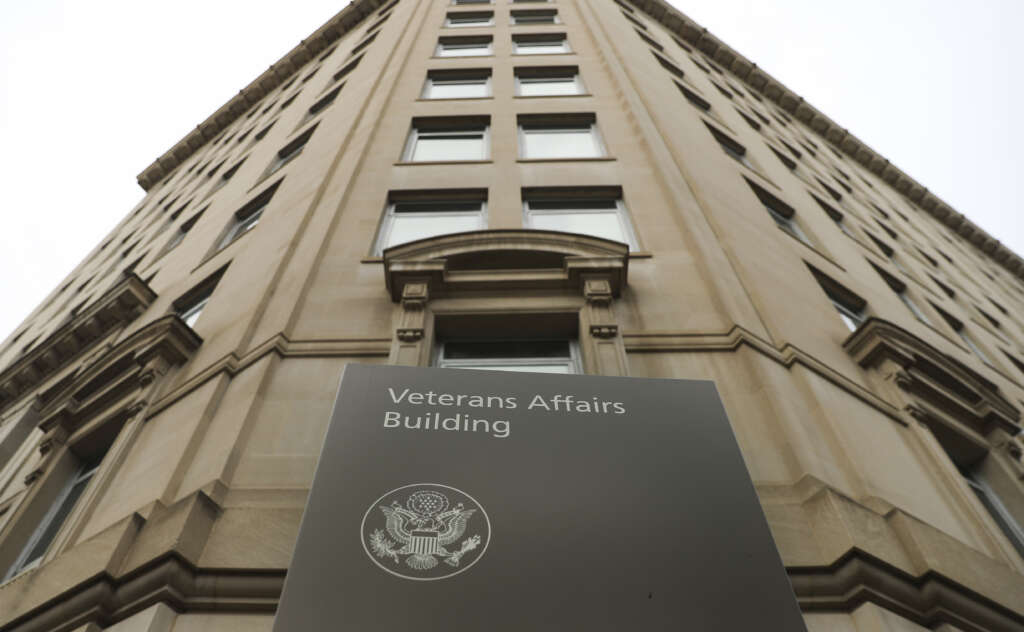
© AP Photo/Pablo Martinez Monsivais