Reading view

There are new articles available, click to refresh the page.

Leaked debug kit suggests Apple is testing a new “iMac Pro,” among many other Macs

Apple doesn’t like to talk about its upcoming products before it’s ready, but sometimes the company’s software does the talking for it. So far this week we’ve had a couple of software-related leaks that have outed products Apple is currently testing—one a pre-release build of iOS 26, and the other some leaked files from a kernel debug kit (both via MacRumors).

Most of the new devices referenced in these leaks are straightforward updates to products that already exist: a new Apple TV, a HomePod mini 2, new AirTags and AirPods, an M4 iPad Air, a 12th-generation iPad to replace the current A16 version, next-generation iPhones (including the 17e, 18, and the rumored foldable model), a new Studio Display model, some new smart home products we’ve already heard about elsewhere, and M5 updates for the MacBook Air, Mac mini, Mac Studio, and the other MacBook Pros. There’s also yet another reference to the lower-cost MacBook that Apple is apparently planning to replace the M1 MacBook Air it still sells via Walmart for $599.

For power users, though, the most interesting revelation might be that Apple is working on a higher-end Apple Silicon iMac powered by an M5 Max chip. The kernel debug kit references an iMac with the internal identifier J833c, based on a platform identified as H17C—and H17C is apparently based on the M5 Max, rather than a lower-end M5 chip. (For those who don’t have Apple’s branding memorized, “Max” is associated with Apple’s second-fastest chips; the M5 Max would be faster than the M5 or M5 Pro, but slower than the rumored M5 Ultra.)


Read full article

Comments

© Samuel Axon

Reporter suggests Half-Life 3 will be a Steam Machine launch title

If you can take your mind way back to the beginning of 2025, you might remember a fresh wave of rumors suggesting that Half-Life 3 was finally reaching the final stages of production, and could be announced and/or released at any moment. Now, though, 2025 seems set to come to a close without any official news of a game fans have been waiting literal decades for.

That doesn’t necessarily mean a Half-Life 3 announcement and/or release isn’t imminent, though. On the contrary, veteran journalist Mike Straw insisted on a recent Insider Gaming podcast that “everybody I’ve talked to are still adamant [Half-Life 3] is a game that will be a launch title with the Steam Machine.”
Straw—who has a long history of reporting gaming rumors from anonymous sources—said this Half-Life 3 information is “not [from] these run-of-the-mill sources that haven’t gotten me information before. … These aren’t like random, one-off people.” And those sources are “still adamant that the game is coming in the spring,” Straw added, noting that he was “specifically told [that] spring 2026 [is the window] for the Steam Machine, for the Frame, for the Controller, [and] for Half-Life 3.”

Read full article

Comments

© knowyourmeme.com

Utah leaders hinder efforts to develop solar energy supply

Utah Gov. Spencer Cox believes his state needs more power—a lot more. By some estimates, Utah will require as much electricity in the next five years as it generated all last century to meet the demands of a growing population as well as chase data centers and AI developers to fuel its economy.

To that end, Cox announced Operation Gigawatt last year, declaring the state would double energy production in the next decade. Although the announcement was short on details, Cox, a Republican, promised his administration would take an “any of the above” approach, which aims to expand all sources of energy production.

Despite that goal, the Utah Legislature’s Republican supermajority, with Cox’s acquiescence, has taken a hard turn against solar power—which has been coming online faster than any other source in Utah and accounts for two-thirds of the new projects waiting to connect to the state’s power grid.

Read full article

Comments

© Jim West/UCG/Universal Images Group via Getty Images

2026 Mercedes CLA first drive: Entry level doesn’t mean basic

SAN FRANCISCO—Automakers are starting to follow somewhat familiar paths as they continue their journeys to electrification. Electric vehicles are, at first, strange new tech, and usually look like it. Mercedes-Benz’s EQS and EQE are good examples—with bodies that look like bars of soap worn down in the shower, they stood out. For early adopters and trailblazers that might be fine, but you need to sell cars to normal people if you want to survive, and that means making EVs more normal. Which is what Mercedes did with its newest one, the all-electric CLA.

The normal looks belie the amount of new technology that Mercedes has packed into the CLA, though. The car sticks to the four-door coupe look that the company pioneered a couple of decades ago, but there’s a thoroughly modern electric powertrain connected to the wheels, run by four powerful networked computers. And yes, there’s AI. (For the pedants, “coupe” means cut down, not two-door, so the name is accurate.)

The CLA is the first of a new series of Mercedes that will use the same modular architecture, and interestingly, it’s powertrain agnostic—a hybrid CLA is coming in time, too. But first the battery EV, which makes good use of some technology Mercedes developed for the EQXX concept car.

Read full article

Comments

© Jonathan Gitlin

Merriam-Webster’s word of the year delivers a dismissive verdict on junk AI content

Like most tools, generative AI models can be misused. And when the misuse gets bad enough that a major dictionary notices, you know it has become a cultural phenomenon.

On Sunday, Merriam-Webster announced that “slop” is its 2025 Word of the Year, reflecting how the term has become shorthand for the flood of low-quality AI-generated content that has spread across social media, search results, and the web at large. The dictionary defines slop as “digital content of low quality that is produced usually in quantity by means of artificial intelligence.”

“It’s such an illustrative word,” Merriam-Webster President Greg Barlow told The Associated Press. “It’s part of a transformative technology, AI, and it’s something that people have found fascinating, annoying, and a little bit ridiculous.”

Read full article

Comments

Stranger Things S5 trailer teases Vol. 2

We’re 10 days away from the next installment of the fifth and final season of Stranger Things, and Netflix has released a new trailer for what it’s calling Volume 2. This will cover episodes five through seven, with the final episode comprising Vol. 3.

(Spoilers for Season 5, Vol. 1 below.)

Season 4 ended with Vecna—the Big Bad behind it all—opening the gate that allowed the Upside Down to leak into Hawkins. We got a time jump for S5, Vol. 1, but in a way, we came full circle, since those events coincided with the third anniversary of Will’s original disappearance in S1.

Read full article

Comments

© Netflix

Microsoft will finally kill obsolete cipher that has wreaked decades of havoc

Microsoft is killing off an obsolete and vulnerable encryption cipher that Windows has supported by default for 26 years following more than a decade of devastating hacks that exploited it and recently faced blistering criticism from a prominent US senator.

When the software maker rolled out Active Directory in 2000, it made RC4 a sole means of securing the Windows component, which administrators use to configure and provision fellow administrator and user accounts inside large organizations. RC4, short for Rivist Cipher 4, is a nod to mathematician and cryptographer Ron Rivest of RSA Security, who developed the stream cipher in 1987. Within days of the trade-secret-protected algorithm being leaked in 1994, a researcher demonstrated a cryptographic attack that significantly weakened the security it had been believed to provide. Despite the known susceptibility, RC4 remained a staple in encryption protocols, including SSL and its successor TLS, until about a decade ago.

Out with the old

One of the most visible holdouts in supporting RC4 has been Microsoft. Eventually, Microsoft upgraded Active Directory to support the much more secure AES encryption standard. But by default, Windows servers have continued to respond to RC4-based authentication requests and return an RC4-based response. The RC4 fallback has been a favorite weakness hackers have exploited to compromise enterprise networks. Use of RC4 played a key role in last year’s breach of health giant Ascension. The breach caused life-threatening disruptions at 140 hospitals and put the medical records of 5.6 million patients into the hands of the attackers. US Senator Ron Wyden (D-Ore.) in September called on the Federal Trade Commission to investigate Microsoft for “gross cybersecurity negligence,” citing the continued default support for RC4.

Read full article

Comments

© Getty Images

Ford ends F-150 Lightning production, starts battery storage business

Ford’s F-150 Lightning production line has fallen silent, and its employees are now building more gas and hybrid trucks. The automaker continues to retreat from the big bet it made on Americans embracing full-size battery electric pickup trucks, and will focus instead on cheaper vehicles, hybrids, and range-extended electric vehicles—or EREVs—instead, it announced today.

One of those EREVs will be the Lighting’s replacement. With a gasoline generator that just charges the battery—series hybrid fans rejoice—the next Lightning comes with the towing ability that Ford says its customers consider “non-negotiable,” and up to 700 miles (1,126 km) of range.

“Our next-generation F-150 Lightning EREV will be every bit as revolutionary. It delivers everything Lightning customers love – near instantaneous torque and pure electric driving. But with a high-power generator enabling an estimated range of 700+ miles, it tows like a locomotive. Heavy-duty towing and cross-country travel will be as effortless as the daily commute,” said Doug Field, Ford’s chief EV, digital and design officer.

Read full article

Comments

© Thomas Banneyer/picture alliance via Getty Images

Microsoft takes down mod that re-created Halo 3 in Counter-Strike 2

Last month saw the release of Project Misriah, an ambitious modding project that tried to re-create the feel of Halo 3 inside Valve’s Counter-Strike 2. That project has now been taken down from the Steam Workshop, though, after drawing a Digital Millennium Copyright Act complaint from Microsoft.

Modder Froddoyo introduced Project Misriah on November 16 as “a workshop collection of Halo ported maps and assets that aims to bring a Halo 3 multiplayer-like experience to Counter-Strike 2.” Far from just being inspired by Halo 3, the mod directly copied multiple sound effects, character models, maps, and even movement mechanics from Bungie and Microsoft’s popular series.

In the weeks since, Project Misriah has drawn a lot of praise from both Halo fans and those impressed by what modders could pull off with the Source 2 engine. But last Wednesday, modder Froddoyo shared a DMCA request from Microsoft citing the “unauthorized use of Halo game content in a [Steam] workshop not associated with Halo games.”

Read full article

Comments

© https://www.youtube.com/watch?v=ki1RQF0-jyk

Murder-suicide case shows OpenAI selectively hides data after users die

OpenAI is facing increasing scrutiny over how it handles ChatGPT data after users die, only selectively sharing data in lawsuits over ChatGPT-linked suicides.

Last week, OpenAI was accused of hiding key ChatGPT logs from the days before a 56-year-old bodybuilder, Stein-Erik Soelberg, took his own life after “savagely” murdering his mother, 83-year-old Suzanne Adams.

According to the lawsuit—which was filed by Adams’ estate on behalf of surviving family members—Soelberg struggled with mental health problems after a divorce led him to move back into Adams’ home in 2018. But allegedly Soelberg did not turn violent until ChatGPT became his sole confidant, validating a wide range of wild conspiracies, including a dangerous delusion that his mother was part of a network of conspirators spying on him, tracking him, and making attempts on his life.

Read full article

Comments

© via OpenAI complaint

Filmmaker Rob Reiner, wife, killed in horrific home attack

We woke up this morning to the horrifying news that beloved actor and director Rob Reiner and his wife Michele were killed in their Brentwood home in Los Angeles last night. Both had been stabbed multiple times. Details are scarce, but the couple’s 32-year-old son, Nick—who has long struggled with addiction and recently moved back in with his parents—has been arrested in connection with the killings, with bail set at $4 million.  [UPDATE: Nick Reiner’s bail has been revoked and he faces possible life in prison.]

“As a result of the initial investigation, it was determined that the Reiners were the victims of homicide,” the LAPD said. “The investigation further revealed that Nick Reiner, the 32-year-old son of Robert and Michele Reiner, was responsible for their deaths. Nick Reiner was located and arrested at approximately 9:15 p.m. He was booked for murder and remains in custody with no bail. On Tuesday, December 16, 2025, the case will be presented to the Los Angeles County District Attorney’s Office for filing consideration.”

“It is with profound sorrow that we announce the tragic passing of Michele and Rob Reiner,” the family said in a statement confirming the deaths. “We are heartbroken by this sudden loss, and we ask for privacy during this unbelievably difficult time.”

Read full article

Comments

© Public domain

UK to “encourage” Apple and Google to put nudity-blocking systems on phones

The UK government reportedly will “encourage” Apple and Google to prevent phones from displaying nude images except when users verify that they are adults.

The forthcoming push for nudity-blocking systems was reported by the Financial Times today. The report said the UK won’t institute a legal requirement “for now.” But asking companies to block nude images could be the first step toward making it mandatory if the government doesn’t get what it wants.

“The UK government wants technology companies to block explicit images on phones and computers by default to protect children, with adults having to verify their age to create and access such content,” the FT report said. “Ministers want the likes of Apple and Google to incorporate nudity-detection algorithms into their device operating systems to prevent users taking photos or sharing images of genitalia unless they are verified as adults.”

Read full article

Comments

© Getty Images | Eshma

Google will end dark web reports that alerted users to leaked data

Google began offering “dark web reports” a while back, but the company has just announced the feature will be going away very soon. In an email to users of the service, Google says it will stop telling you about dark web data leaks in February. This probably won’t negatively impact your security or privacy because, as Google points out in its latest email, there’s really nothing you can do about the dark web.

The dark web reports launched in March 2023 as a perk for Google One subscribers. The reports were expanded to general access in 2024. Now, barely a year later, Google has decided it doesn’t see the value in this type of alert for users. Dark web reports provide a list of partially redacted user data retrieved from shadowy forums and sites where such information is bought and sold. However, that’s all it is—a list.

The dark web consists of so-called hidden services hosted inside the Tor network. You need a special browser or connection tools in order to access Tor hidden services, and its largely anonymous nature has made it a favorite hangout for online criminals. If a company with your personal data has been hacked, that data probably lives somewhere on the dark web.

Read full article

Comments

© Getty Images | 400tmax

Oh look, yet another Starship clone has popped up in China

Every other week, it seems, a new Chinese launch company pops up with a rocket design and a plan to reach orbit within a few years. For a long time, the majority of these companies revealed designs that looked a lot like SpaceX’s Falcon 9 rocket.

The first of these copy cats, the medium-lift Zhuque-3 rocket built by LandSpace, launched earlier this month. Its primary mission was nominal, but the Zhuque-3 rocket failed its landing attempt, which is understandable for a first flight. Doubtless there will be more Chinese Falcon 9-like rockets making their debut in the near future.

However, over the last year, there has been a distinct change in announcements from China when it comes to new launch technology. Just as SpaceX is seeking to transition from its workhorse Falcon 9 rocket—which has now been flying for a decade and a half—to the fully reusable Starship design, so too are Chinese companies modifying their visions.

Read full article

Comments

© Beijing Leading Rocket Technology Co.

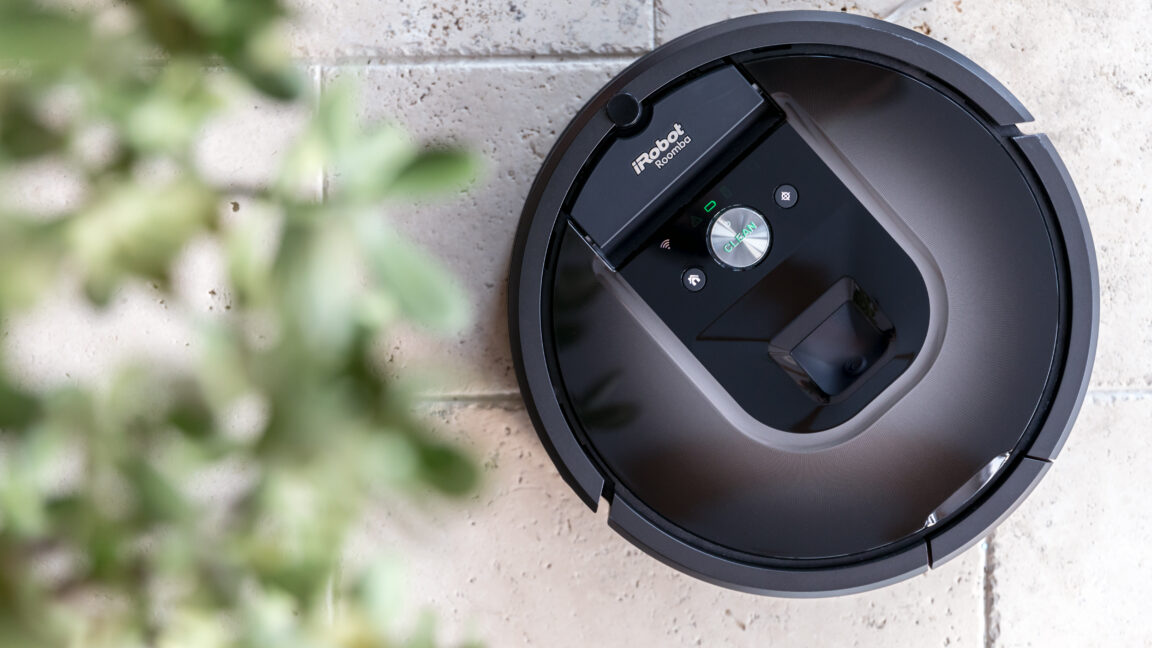
Roomba maker iRobot swept into bankruptcy

Roomba maker iRobot has filed for bankruptcy and will be taken over by its Chinese supplier after the company that popularized the robot vacuum cleaner fell under the weight of competition from cheaper rivals.

The US-listed group on Sunday said it had filed for Chapter 11 bankruptcy in Delaware as part of a restructuring agreement with Shenzhen-based Picea Robotics, its lender and primary supplier, which will acquire all of iRobot’s shares.

The deal comes nearly two years after a proposed $1.5 billion acquisition by Amazon fell through over competition concerns from EU regulators.

Read full article

Comments

© Onfokus

Verizon refused to unlock man’s iPhone, so he sued the carrier and won

When Verizon refused to unlock an iPhone purchased by Kansas resident Patrick Roach, he had no intention of giving up without a fight. Roach sued the wireless carrier in small claims court and won.

Roach bought a discounted iPhone 16e from Verizon’s Straight Talk brand on February 28, 2025, as a gift for his wife’s birthday. He intended to pay for one month of service, cancel, and then switch the phone to the US Mobile service plan that the couple uses. Under federal rules that apply to Verizon and a Verizon unlocking policy that was in place when Roach bought the phone, this strategy should have worked.

“The best deals tend to be buying it from one of these MVNOs [Mobile Virtual Network Operators] and then activating it until it unlocks and then switching it to whatever you are planning to use it with. It usually saves you about half the value of the phone,” Roach said in a phone interview.

Read full article

Comments

© Aurich Lawson | Getty Images

Sharks and rays gain landmark protections as nations move to curb international trade

For the first time, global governments have agreed to widespread international trade bans and restrictions for sharks and rays being driven to extinction.

Last week, more than 70 shark and ray species, including oceanic whitetip sharks, whale sharks, and manta rays, received new safeguards under the Convention on International Trade in Endangered Species of Wild Fauna and Flora. The convention, known as CITES, is a United Nations treaty that requires countries to regulate or prohibit international trade in species whose survival is threatened.

Sharks and rays are closely related species that play similar roles as apex predators in the ocean, helping to maintain healthy marine ecosystems. They have been caught and traded for decades, contributing to a global market worth nearly $1 billion annually, according to Luke Warwick, director of shark and ray conservation at Wildlife Conservation Society (WCS), an international nonprofit dedicated to preserving animals and their habitats.

Read full article

Comments

© Anadolu / Contributor

OpenAI built an AI coding agent and uses it to improve the agent itself

With the popularity of AI coding tools rising among some software developers, their adoption has begun to touch every aspect of the process, including human developers using the tools to improve existing AI coding tools. We’re not talking about runaway self-improvement here; just people using tools to improve the tools themselves.

In interviews with Ars Technica this week, OpenAI employees revealed the extent to which the company now relies on its own AI coding agent, Codex, to build and improve the development tool. “I think the vast majority of Codex is built by Codex, so it’s almost entirely just being used to improve itself,” said Alexander Embiricos, product lead for Codex at OpenAI, in a conversation on Tuesday. Codex now generates most of the code that OpenAI developers use to improve the tool itself.

Codex, which OpenAI launched in its modern incarnation as a research preview in May 2025, operates as a cloud-based software engineering agent that can handle tasks like writing features, fixing bugs, and proposing pull requests. The tool runs in sandboxed environments linked to a user’s code repository and can execute multiple tasks in parallel. OpenAI offers Codex through ChatGPT’s web interface, a command-line interface (CLI), and IDE extensions for VS Code, Cursor, and Windsurf.

Read full article

Comments

© Mininyx Doodle via Getty Images

Reminder: Donate to win swag in our annual Charity Drive sweepstakes

If you’ve been too busy floating in your new WoW house to take part in this year’s Ars Technica Charity Drive sweepstakes, don’t worry. You still have time to donate to a good cause and get a chance to win your share of over $4,000 worth of swag (no purchase necessary to win).

In the first two days or so of the drive, over 200 readers have contributed over $11,000 to either the Electronic Frontier Foundation or Child’s Play as part of the charity drive (Child’s Play has a roughly 60/40 donation lead at the moment). That’s still a long way off from 2020’s record haul of over $58,000, but there’s still plenty of time until the Charity Drive wraps up on Friday, January 2, 2026.

That doesn’t mean you should put your donation off, though. Do yourself and the charities involved a favor and give now while you’re thinking about it.

Read full article

Comments

© Kyle Orland

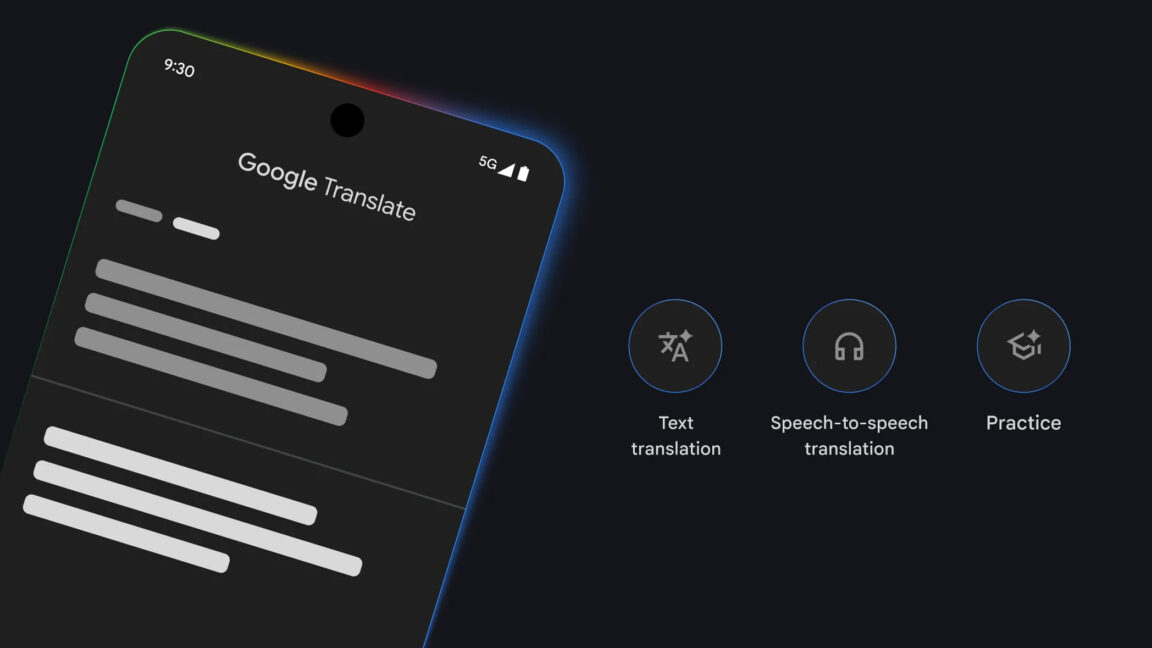
Google Translate expands live translation to all earbuds on Android

Google has increasingly moved toward keeping features locked to its hardware products, but the Translate app is bucking that trend. The live translate feature is breaking out of the Google bubble with support for any earbuds you happen to have connected to your Android phone. The app is also getting improved translation quality across dozens of languages and some Duolingo-like learning features.

The latest version of Google’s live translation is built on Gemini and initially rolled out earlier this year. It supports smooth back-and-forth translations as both on-screen text and audio. Beginning a live translate session in Google Translate used to require Pixel Buds, but that won’t be the case going forward.

Google says a beta test of expanded headphone support is launching today in the US, Mexico, and India. The audio translation attempts to preserve the tone and cadence of the original speaker, but it’s not as capable as the full AI-reproduced voice translations you can do on the latest Pixel phones. Google says this feature should work on any earbuds or headphones, but it’s only for Android right now. The feature will expand to iOS in the coming months. Apple does have a similar live translation feature on the iPhone, but it requires AirPods.

Read full article

Comments

© Google

❌