Reading view

There are new articles available, click to refresh the page.

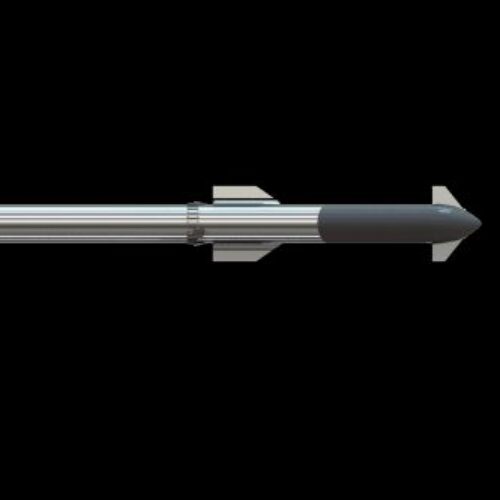
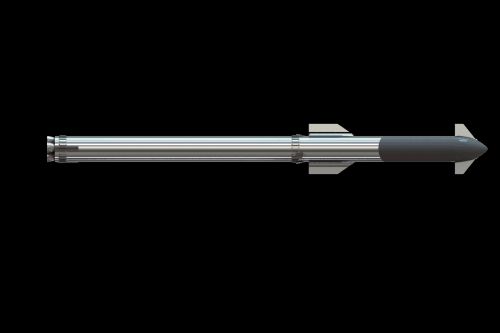
Oh look, yet another Starship clone has popped up in China

Every other week, it seems, a new Chinese launch company pops up with a rocket design and a plan to reach orbit within a few years. For a long time, the majority of these companies revealed designs that looked a lot like SpaceX’s Falcon 9 rocket.

The first of these copy cats, the medium-lift Zhuque-3 rocket built by LandSpace, launched earlier this month. Its primary mission was nominal, but the Zhuque-3 rocket failed its landing attempt, which is understandable for a first flight. Doubtless there will be more Chinese Falcon 9-like rockets making their debut in the near future.

However, over the last year, there has been a distinct change in announcements from China when it comes to new launch technology. Just as SpaceX is seeking to transition from its workhorse Falcon 9 rocket—which has now been flying for a decade and a half—to the fully reusable Starship design, so too are Chinese companies modifying their visions.
Read full article

Comments

© Beijing Leading Rocket Technology Co.
Roomba maker iRobot swept into bankruptcy

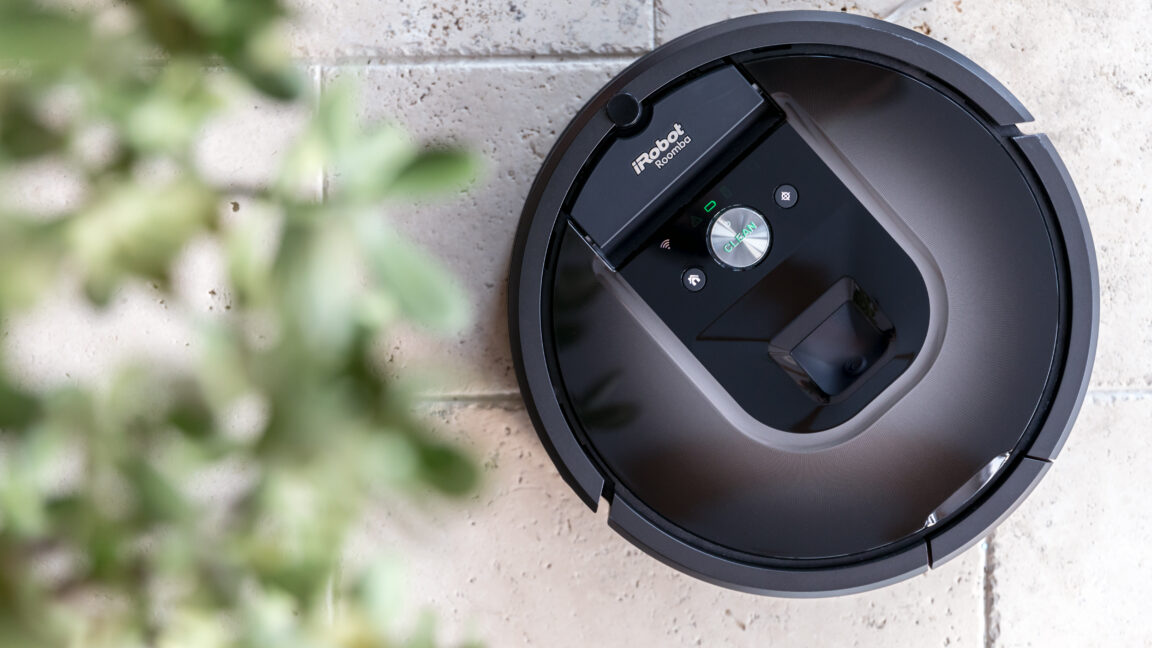
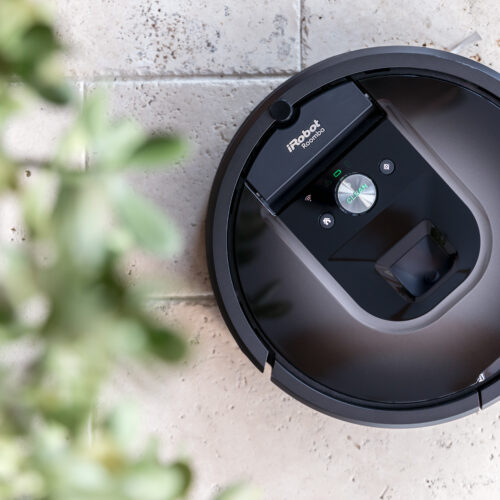
Roomba maker iRobot has filed for bankruptcy and will be taken over by its Chinese supplier after the company that popularized the robot vacuum cleaner fell under the weight of competition from cheaper rivals.

The US-listed group on Sunday said it had filed for Chapter 11 bankruptcy in Delaware as part of a restructuring agreement with Shenzhen-based Picea Robotics, its lender and primary supplier, which will acquire all of iRobot’s shares.

The deal comes nearly two years after a proposed $1.5 billion acquisition by Amazon fell through over competition concerns from EU regulators.

Read full article

Comments

© Onfokus

Verizon refused to unlock man’s iPhone, so he sued the carrier and won

When Verizon refused to unlock an iPhone purchased by Kansas resident Patrick Roach, he had no intention of giving up without a fight. Roach sued the wireless carrier in small claims court and won.

Roach bought a discounted iPhone 16e from Verizon’s Straight Talk brand on February 28, 2025, as a gift for his wife’s birthday. He intended to pay for one month of service, cancel, and then switch the phone to the US Mobile service plan that the couple uses. Under federal rules that apply to Verizon and a Verizon unlocking policy that was in place when Roach bought the phone, this strategy should have worked.

“The best deals tend to be buying it from one of these MVNOs [Mobile Virtual Network Operators] and then activating it until it unlocks and then switching it to whatever you are planning to use it with. It usually saves you about half the value of the phone,” Roach said in a phone interview.

Read full article

Comments

© Aurich Lawson | Getty Images

Sharks and rays gain landmark protections as nations move to curb international trade

For the first time, global governments have agreed to widespread international trade bans and restrictions for sharks and rays being driven to extinction.

Last week, more than 70 shark and ray species, including oceanic whitetip sharks, whale sharks, and manta rays, received new safeguards under the Convention on International Trade in Endangered Species of Wild Fauna and Flora. The convention, known as CITES, is a United Nations treaty that requires countries to regulate or prohibit international trade in species whose survival is threatened.

Sharks and rays are closely related species that play similar roles as apex predators in the ocean, helping to maintain healthy marine ecosystems. They have been caught and traded for decades, contributing to a global market worth nearly $1 billion annually, according to Luke Warwick, director of shark and ray conservation at Wildlife Conservation Society (WCS), an international nonprofit dedicated to preserving animals and their habitats.

Read full article

Comments

© Anadolu / Contributor

OpenAI built an AI coding agent and uses it to improve the agent itself

With the popularity of AI coding tools rising among some software developers, their adoption has begun to touch every aspect of the process, including the improvement of AI coding tools themselves.

In interviews with Ars Technica this week, OpenAI employees revealed the extent to which the company now relies on its own AI coding agent, Codex, to build and improve the development tool. “I think the vast majority of Codex is built by Codex, so it’s almost entirely just being used to improve itself,” said Alexander Embiricos, product lead for Codex at OpenAI, in a conversation on Tuesday.

Codex, which OpenAI launched in its modern incarnation as a research preview in May 2025, operates as a cloud-based software engineering agent that can handle tasks like writing features, fixing bugs, and proposing pull requests. The tool runs in sandboxed environments linked to a user’s code repository and can execute multiple tasks in parallel. OpenAI offers Codex through ChatGPT’s web interface, a command-line interface (CLI), and IDE extensions for VS Code, Cursor, and Windsurf.

Read full article

Comments

© Mininyx Doodle via Getty Images

Reminder: Donate to win swag in our annual Charity Drive sweepstakes

If you’ve been too busy floating in your new WoW house to take part in this year’s Ars Technica Charity Drive sweepstakes, don’t worry. You still have time to donate to a good cause and get a chance to win your share of over $4,000 worth of swag (no purchase necessary to win).

In the first two days or so of the drive, over 200 readers have contributed over $11,000 to either the Electronic Frontier Foundation or Child’s Play as part of the charity drive (Child’s Play has a roughly 60/40 donation lead at the moment). That’s still a long way off from 2020’s record haul of over $58,000, but there’s still plenty of time until the Charity Drive wraps up on Friday, January 2, 2026.

That doesn’t mean you should put your donation off, though. Do yourself and the charities involved a favor and give now while you’re thinking about it.

Read full article

Comments

© Kyle Orland

Google Translate expands live translation to all earbuds on Android

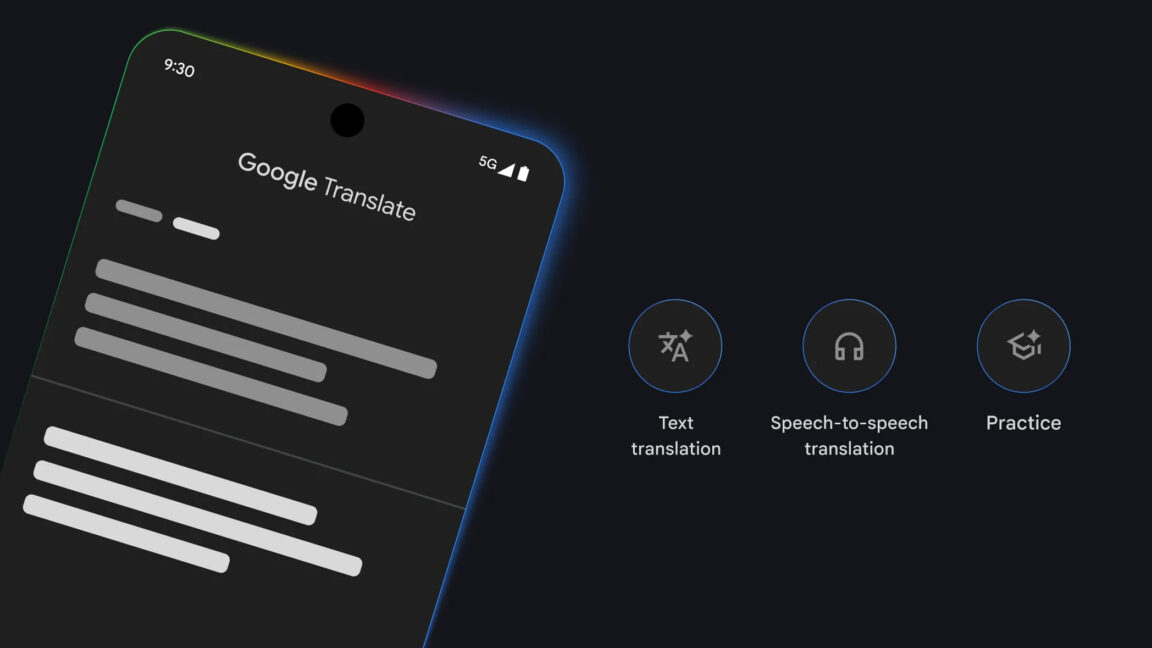
Google has increasingly moved toward keeping features locked to its hardware products, but the Translate app is bucking that trend. The live translate feature is breaking out of the Google bubble with support for any earbuds you happen to have connected to your Android phone. The app is also getting improved translation quality across dozens of languages and some Duolingo-like learning features.

The latest version of Google’s live translation is built on Gemini and initially rolled out earlier this year. It supports smooth back-and-forth translations as both on-screen text and audio. Beginning a live translate session in Google Translate used to require Pixel Buds, but that won’t be the case going forward.

Google says a beta test of expanded headphone support is launching today in the US, Mexico, and India. The audio translation attempts to preserve the tone and cadence of the original speaker, but it’s not as capable as the full AI-reproduced voice translations you can do on the latest Pixel phones. Google says this feature should work on any earbuds or headphones, but it’s only for Android right now. The feature will expand to iOS in the coming months. Apple does have a similar live translation feature on the iPhone, but it requires AirPods.

Read full article

Comments

© Google

Ukrainians sue US chip firms for powering Russian drones, missiles

Dozens of Ukrainian civilians filed a series of lawsuits in Texas this week, accusing some of the biggest US chip firms of negligently failing to track chips that evaded export curbs. Those chips were ultimately used to power Russian and Iranian weapon systems, causing wrongful deaths last year.

Their complaints alleged that for years, Texas Instruments (TI), AMD, and Intel have ignored public reporting, government warnings, and shareholder pressure to do more to track final destinations of chips and shut down shady distribution channels diverting chips to sanctioned actors in Russia and Iran.

Putting profits over human lives, tech firms continued using “high-risk” channels, Ukrainian civilians’ legal team alleged in a press statement, without ever strengthening controls.

Read full article

Comments

© NurPhoto / Contributor | NurPhoto

Scientists built an AI co-pilot for prosthetic bionic hands

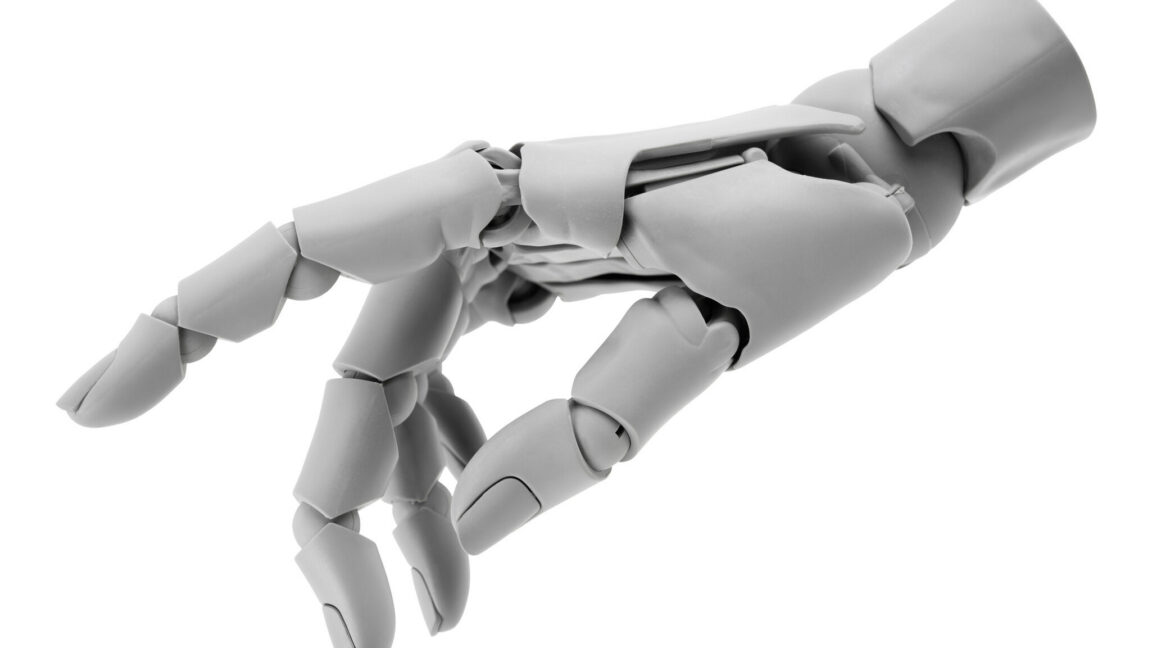
Modern bionic hand prostheses nearly match their natural counterparts when it comes to dexterity, degrees of freedom, and capability. And many amputees who tried advanced bionic hands apparently didn’t like them. “Up to 50 percent of people with upper limb amputation abandon these prostheses, never to use them again,” says Jake George, an electrical and computer engineer at the University of Utah.

The main issue with bionic hands that drives users away from them, George explains, is that they’re difficult to control. “Our goal was making such bionic arms more intuitive, so that users could go about their tasks without having to think about it,” George says. To make this happen, his team came up with an AI bionic hand co-pilot.

Micro-management issues

Bionic hands’ control problems stem largely from their lack of autonomy. Grasping a paper cup without crushing it or catching a ball mid-flight appear so effortless because our natural movements rely on an elaborate system of reflexes and feedback loops. When an object you hold begins to slip, tiny mechanoreceptors in your fingertips send signals to the nervous system that make the hand tighten its grip. This all happens within 60 to 80 milliseconds—before you even consciously notice. This reflex is just one of many ways your brain automatically assists you in dexterity-based tasks.

Read full article

Comments

© Pakin Songmor

A study in contrasts: The cinematography of Wake Up Dead Man

Rian Johnson has another Benoit Blanc hit on his hands with Wake Up Dead Man, in which Blanc tackles the strange death of a fire-and-brimstone parish priest, Monseigneur Jefferson Wicks (Josh Brolin). It’s a classic locked-room mystery in a spookily Gothic small-town setting, and Johnson turned to cinematographer Steve Yedlin (Looper, The Last Jedi) to help realize his artistic vision.

(Minor spoilers below but no major reveals.)

Yedlin worked on the previous two Knives Out installments. He’s known Johnson since the two were in their teens, and that longstanding friendship ensures that they are on the same page, aesthetically, from the start when they work on projects.

Read full article

Comments

© Netflix

Trump tries to block state AI laws himself after Congress decided not to

President Trump issued an executive order yesterday attempting to thwart state AI laws, saying that federal agencies must fight state laws because Congress hasn’t yet implemented a national AI standard. Trump’s executive order tells the Justice Department, Commerce Department, Federal Communications Commission, Federal Trade Commission, and other federal agencies to take a variety of actions.

“My Administration must act with the Congress to ensure that there is a minimally burdensome national standard—not 50 discordant State ones. The resulting framework must forbid State laws that conflict with the policy set forth in this order… Until such a national standard exists, however, it is imperative that my Administration takes action to check the most onerous and excessive laws emerging from the States that threaten to stymie innovation,” Trump’s order said. The order claims that state laws, such as one passed in Colorado, “are increasingly responsible for requiring entities to embed ideological bias within models.”

Congressional Republicans recently decided not to include a Trump-backed plan to block state AI laws in the National Defense Authorization Act (NDAA), although it could be included in other legislation. Sen. Ted Cruz (R-Texas) has also failed to get congressional backing for legislation that would punish states with AI laws.

Read full article

Comments

© Getty Images | Chip Somodevilla

Man shocks doctors with extreme blood pressure, stroke from energy drinks

By: Beth Mole

Sometimes, downing an energy drink can feel like refueling your battery. But with too much, that jolt can turn into a catastrophic surge that fries the wiring and blows a fuse. That was the unfortunate and alarming case for a man in the UK several years ago, according to a case report this week in BMJ Case Reports.

The man, who was in his 50s and otherwise healthy, showed up at a hospital after the entire left side of his body abruptly went numb and he was left with clumsy, uncoordinated muscle movements (ataxia). His blood pressure was astonishingly high, at 254/150 mm Hg. For context, a normal reading is under 120/80, while anything over 180/120 is considered a hypertensive crisis, which is a medical emergency.

The man had suffered a mild stroke, and his extremely high blood pressure was an obvious factor. But why his blood pressure had reached stratospheric heights was far less obvious to his doctors, according to the retrospective case report written by Martha Coyle and Sunil Munshi of Nottingham University Hospital.

Read full article

Comments

© Getty | DANIEL LEAL

Apple loses its appeal of a scathing contempt ruling in iOS payments case

Back in April, District Court Judge Yvonne Gonzalez Rogers delivered a scathing judgment finding that Apple was in “willful violation” of her 2021 injunction intended to open up iOS App Store payments. That contempt of court finding has now been almost entirely upheld by the Ninth Circuit Court of Appeals, a development that Epic Games’ Tim Sweeney tells Ars he hopes will “do a lot of good for developers and start to really change the App Store situation worldwide, I think.”

The ruling, signed by a panel of three appellate court judges, affirmed that Apple’s initial attempts to charge a 27 percent fee to iOS developers using outside payment options “had a prohibitive effect, in violation of the injunction.” Similarly, Apple’s restrictions on how those outside links had to be designed were overly broad; the appeals court suggests that Apple can only ensure that internal and external payment options are presented in a similar fashion.

The appeals court also agreed that Apple acted in “bad faith” by refusing to comply with the injunction, rejecting viable, compliant alternatives in internal discussions. And the appeals court was also not convinced by Apple’s process-focused arguments, saying the district court properly evaluated materials Apple argued were protected by attorney-client privilege.

Read full article

Comments

© Getty Images

Senator endorses discredited doctor’s book that claims chemical treats autism, cancer

For years, Sen. Ron Johnson has been spreading conspiracy theories and misinformation about COVID-19 and the safety of vaccines.

He’s promoted disproven treatments for COVID-19 and claimed, without evidence, that athletes are “dropping dead on the field” after getting the COVID-19 vaccination. Now the Wisconsin politician is endorsing a book by a discredited doctor promoting an unproven and dangerous treatment for autism and a host of ailments: chlorine dioxide, a chemical used for disinfecting and bleaching.

The book is “The War on Chlorine Dioxide: The Medicine that Could End Medicine by Dr. Pierre Kory, a critical care specialist who practiced in Wisconsin hospitals before losing his medical certification for statements advocating using an antiparasite medication to treat COVID-19. The action, he’s said, makes him unemployable, even though he still has a license.

Read full article

Comments

© Scott Olson

Investors commit quarter-billion dollars to startup designing “Giga” satellites

A startup established three years ago to churn out a new class of high-power satellites has raised $250 million to ramp up production at its Southern California factory.

The company, named K2, announced the cash infusion on Thursday. K2’s Series C fundraising round was led by Redpoint Ventures, with additional funding from investment firms in the United States, the United Kingdom, and Germany. K2 has now raised more than $400 million since its founding in 2022 and is on track to launch its first major demonstration mission next year, officials said.

K2 aims to take advantage of a coming abundance of heavy- and super-heavy-lift launch capacity, with SpaceX’s Starship expected to begin deploying satellites as soon as next year. Blue Origin’s New Glenn rocket launched twice this year and will fly more in 2026 while engineers develop an even larger New Glenn with additional engines and more lift capability.

Read full article

Comments

© K2

How to break free from smart TV ads and tracking

Smart TVs can feel like a dumb choice if you’re looking for privacy, reliability, and simplicity.

Today’s TVs and streaming sticks are usually loaded up with advertisements and user tracking, making offline TVs seem very attractive. But ever since smart TV operating systems began making money, “dumb” TVs have been hard to find.

In response, we created this non-smart TV guide that includes much more than dumb TVs. Since non-smart TVs are so rare, this guide also breaks down additional ways to watch TV and movies online and locally without dealing with smart TVs’ evolution toward software-centric features and snooping. We’ll discuss a range of options suitable for various budgets, different experience levels, and different rooms in your home.

Read full article

Comments

© Aurich Lawson | Getty Images

Chatbot-powered toys rebuked for discussing sexual, dangerous topics with kids

Protecting children from the dangers of the online world was always difficult, but that challenge has intensified with the advent of AI chatbots. A new report offers a glimpse into the problems associated with the new market, including the misuse of AI companies’ large language models (LLMs).

In a blog post today, the US Public Interest Group Education Fund (PIRG) reported its findings after testing AI toys (PDF). It described AI toys as online devices with integrated microphones that let users talk to the toy, which uses a chatbot to respond.

AI toys are currently a niche market, but they could be set to grow. More consumer companies have been eager to shoehorn AI technology into their products so they can do more, cost more, and potentially give companies user tracking and advertising data. A partnership between OpenAI and Mattel announced this year could also create a wave of AI-based toys from the maker of Barbie and Hot Wheels, as well as its competitors.

Read full article

Comments

© Alilo

Rocket Report: Neutron’s Hungry Hippo is deemed ready, whither Orbex?

Welcome to Edition 8.22 of the Rocket Report! The big news this week concerns the decision by SpaceX founder Elon Musk to take the company public, via IPO, sometime within the next 12 to 18 months. Musk confirmed this after Ars published a story on Wednesday evening. This understandably raises questions about whether a future SpaceX will be committed more to AI data centers in space or Mars settlement. However, one of the company’s founding employees, Tom Mueller, said this could benefit the company’s Mars plans. Clearly this is something we’ll be following closely.

As always, we welcome reader submissions, and if you don’t want to miss an issue, please subscribe using the box below (the form will not appear on AMP-enabled versions of the site). Each report will include information on small-, medium-, and heavy-lift rockets as well as a quick look ahead at the next three launches on the calendar.

Avio will build solid rocket motors in Virginia. The governor of Virginia, Glenn Youngkin, announced Wednesday that Avio USA has selected his state to produce solid rocket motors for defense and commercial space propulsion purposes. Avio USA’s investment, which will be up to $500 million, is supported by its Italian parent Avio. The company’s factory will encompass 860,000 sq. feet.

Read full article

Comments

© Rocket Lab

Star Wars: Fate of the Old Republic announced as a KOTOR spiritual successor

Over two decades after the release of Star Wars: Knights of the Old Republic II, a new project described as a “spiritual successor” to that seminal RPG series was announced at The Game Awards Thursday night. Star Wars: Fate of the Old Republic will be a collaboration between Lucasfilm Games and Arcanaut Studios, a new development house being launched by original KOTOR director Casey Hudson.

Hudson, who will serve as director on the new game, said in an interview with StarWars.com that he has remained in contact with Lucasfilm since the KOTOR days, in the hopes of being able to collaborate in the Star Wars universe again. “It took the right conditions to get everything to line up,” he told the site.

Calling KOTOR “one of the defining experiences of my career,” Hudson said he wants to “explore a contemporary vision” of the Star Wars universe and “deliver on the combination of player agency and immersion in Star Wars” that defined the original games. As director on the upcoming game, Hudson said he sees his role as “to gather and shape a cohesive vision that the entire team contributes to. Ensuring that everyone shares that vision and understands their part in creating it is critical to the success of a project.”

Read full article

Comments

Jonathan Blow has spent the past decade designing 1,400 puzzles for you

Back in 2016, after six-and-a-half years spent working on puzzle-adventure opus The Witness, Jonathan Blow says he needed a break. He tells Ars that the project he started in The Witness’ wake was meant to serve as a quick proof of concept for a new engine and programming language he was working on. “It was supposed to be a short game,” that could be finished in “like a year and a half or two years,” he said.

Now, after nine years of development—and his fair share of outspoken, controversial statements—Blow is finally approaching the finish line on that “short game.” He said Order of the Sinking Star—which was announced Thursday via a Game Awards trailer ahead of a planned 2026 release—now encompasses around 1,400 individual puzzles that could take completionists 400 to 500 hours to fully conquer.

Jonathan Blow, seen here probably thinking about puzzles. Credit: Thekla, Inc.

“I don’t know why I convinced myself it was going to be a small game,” Blow told me while demonstrating a preview build to Ars last week. “But once we start things, I just want to do the good version of the thing, right? I always make it as good as it can be.”

Read full article

Comments

© Thekla, Inc.

❌