CHANCAY, Peru—The elevator doors leading to the fifth-floor control center open like stage curtains onto a theater-sized screen.
This “Operations Productivity Dashboard” instantaneously displays a battery of data: vehicle locations, shipping times, entry times, loading data, unloading data, efficiency statistics.
Most striking, though, are the bold lines arcing over the dashboard’s deep-blue Pacific—digital streaks illustrating the routes that lead thousands of miles across the ocean, from this unassuming city, to Asia’s biggest ports.
In a rare move for a streaming service, Fubo announced today that it’s lowering the prices for some of its subscription plans.
Fubo is a sports-focused vMVPD (virtual multichannel video programming distributor, or a company that enables people to watch traditional TV channels live over the Internet). Disney closed its acquisition of Fubo in October.
The bidding war is over, and Netflix has been declared the winner.
After flirting with Paramount Skydance and Comcast, Warner Bros. Discovery (WBD) has decided to sell its streaming and movie studios business to Netflix. If approved, the deal is set to overturn the media landscape and create ripples that will affect Hollywood for years.
$72 billion acquisition
Netflix will pay an equity value of $72 billion, or an approximate total enterprise value of $82.7 billion, for Warner Bros. All of WBD has a $60 billion market value, NBC News notes.
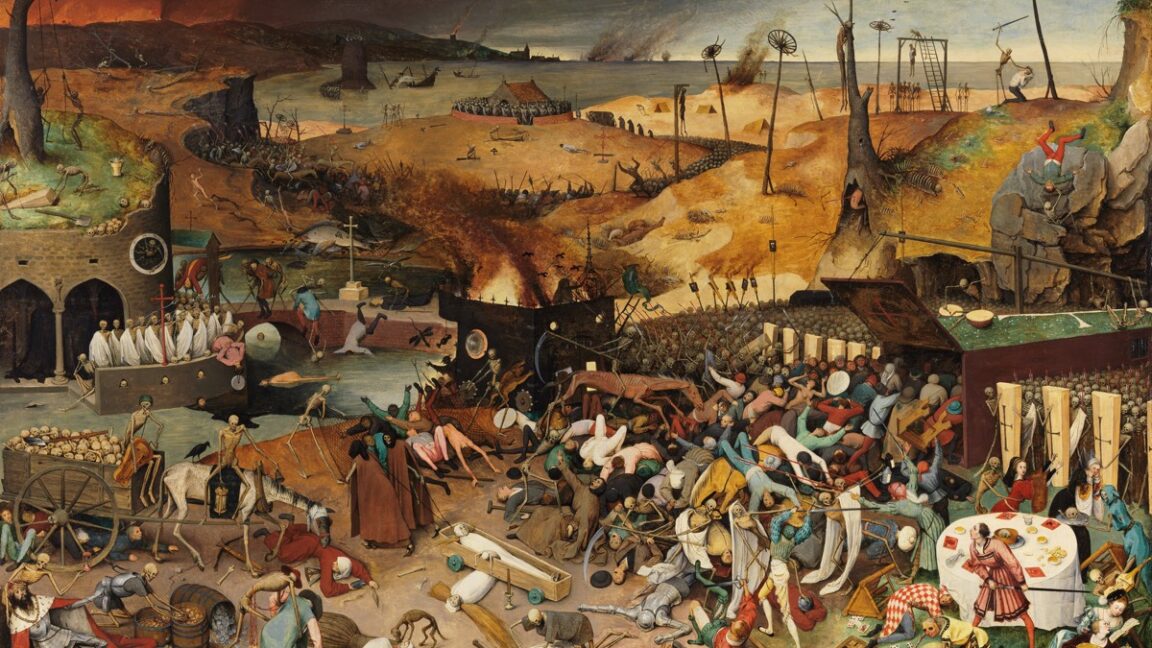
The Black Death ravaged medieval Western Europe, ultimately wiping out roughly one-third of the population. Scientists have identified the bacterium responsible and its likely origins, but certain specifics of how and why it spread to Europe are less clear. According to a new paper published in the journal Communications Earth & Environment, either one large volcanic eruption or a cluster of eruptions might have been the triggering factor, setting off a chain of events that brought the plague to the Mediterranean region in the 1340s.
Technically, we’re talking about the second plague pandemic. The first, known as the Justinian Plague, broke out about 541 CE and quickly spread across Asia, North Africa, the Middle East, and Europe. (The Eastern Roman Emperor Justinian I, for whom the pandemic is named, actually survived the disease.) There continued to be outbreaks of the plague over the next 300 years, although the disease gradually became less virulent and died out. Or so it seemed.
In the Middle Ages, the Black Death burst onto the scene, with the first historically documented outbreak occurring in 1346 in the Lower Volga and Black Sea regions. That was just the beginning of the second pandemic. During the 1630s, fresh outbreaks of plague killed half the populations of affected cities. Another bout of the plague significantly culled the population of France during an outbreak between 1647 and 1649, followed by an epidemic in London in the summer of 1665. The latter was so virulent that, by October, one in 10 Londoners had succumbed to the disease—over 60,000 people. Similar numbers perished in an outbreak in Holland in the 1660s. The pandemic had run its course by the early 19th century, but a third plague pandemic hit China and India in the 1890s. There are still occasional outbreaks today.
I wrote a couple of weeks ago about my personal homebrew Steam Machine, a self-built desktop under my TV featuring an AMD Ryzen 7 8700G processor and a Radeon 780M integrated GPU. I wouldn’t recommend making your own version of this build, especially with RAM prices as they currently are, but there are all kinds of inexpensive mini PCs on Amazon with the same GPU, and they’ll all be pretty good at playing the kinds of games that already run well on the less-powerful Steam Deck.
But this kind of hardware is an imperfect proxy for the Steam Machine that Valve plans to launch sometime next year—that box will include a dedicated GPU with 8GB of dedicated video memory, presenting both benefits and possible pitfalls compared to a system with an integrated GPU.
As a last pre-Steam Machine follow-up to our coverage so far, we’ve run tests on several games we test regularly in our GPU reviews to get a sense of how current versions of SteamOS stack up to Windows running on the same hardware. What we’ve found so far is basically the inverse of what we found when comparing handhelds: Windows usually has an edge on SteamOS’s performance, and sometimes that gap is quite large. And SteamOS also exacerbates problems with 8GB GPUs, hitting apparent RAM limits in more games and at lower resolutions compared to Windows.
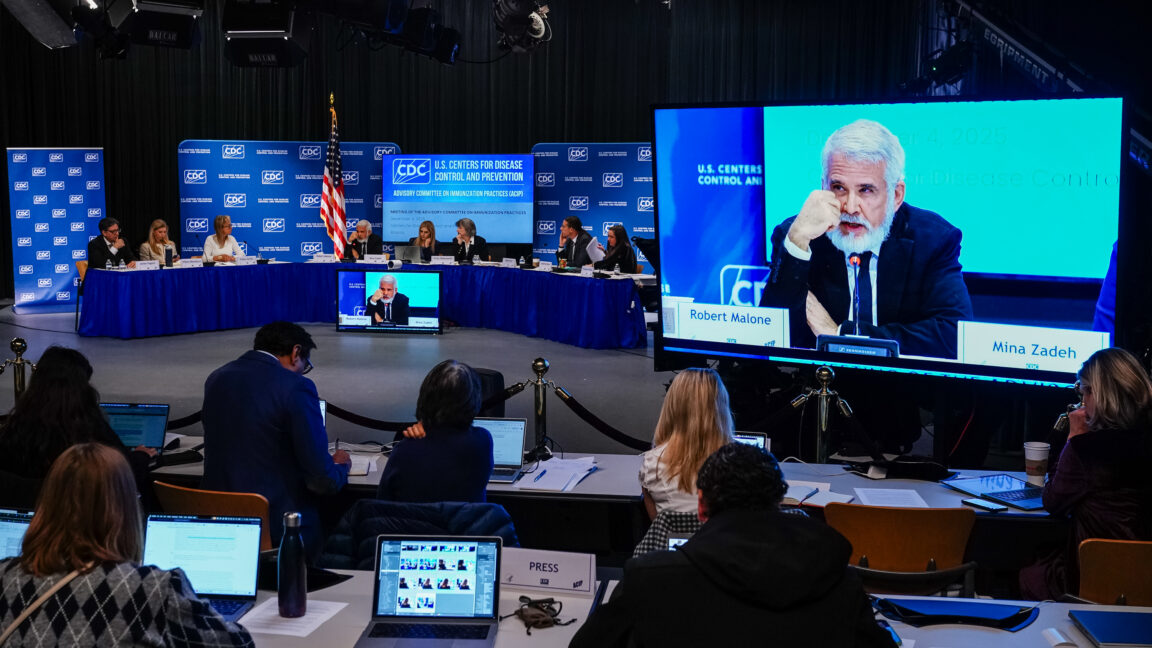
Federal vaccine advisors hand-selected by anti-vaccine Health Secretary Robert F. Kennedy Jr. have voted to eliminate a recommendation that all babies be vaccinated against hepatitis B on the day of birth. The decision was made with no evidence of harm from that dose and no evidence of any benefit from the delay.
Public health experts, medical experts, and even some members of the panel decried the vote, which studies and historical data indicate will lead to more infections in babies that, in turn, will lead to more cases of chronic liver disease, liver cancer, and premature death.
“I will just say we have heard ‘do no harm’ is a moral imperative. We are doing harm by changing this [recommendation],” Cody Meissner, a pediatrician and voting member of the Advisory Committee on Immunization Practices (ACIP), said as he voted against the change.
Elon Musk’s X became the first large online platform fined under the European Union’s Digital Services Act on Friday.
The European Commission announced that X would be fined nearly $140 million, with the potential to face “periodic penalty payments” if the platform fails to make corrections.
A third of the fine came from one of the first moves Musk made when taking over Twitter. In November 2022, he changed the platform’s historical use of a blue checkmark to verify the identities of notable users. Instead, Musk started selling blue checks for about $8 per month, immediately prompting a wave of imposter accounts pretending to be notable celebrities, officials, and brands.
There’s some Toyota news today that doesn’t involve the chairman wearing a MAGA hat. The Japanese automaker evidently decided it’s been too long since it flexed its engineering chops on something with two doors and plenty of power, so it has rectified that situation with a new flagship coupe for its Gazoo Racing sporty sub-brand. Meet the GR GT, which looks set to go on sale toward the end of next year.
The Camry-esque look at the front, and to an extent the rear, came second to the GR GT’s aerodynamics, which is the opposite way to how Toyota usually styles its cars. It’s built around a highly rigid aluminum frame—Toyota’s first, apparently—with carbon fiber for the hood, roof, and some other body panels to minimize weight. The automaker says that lowering the car’s center of gravity was a top priority, and weight balance and distribution also help explain the transaxle layout, where the car’s transmission is behind the cockpit and between the rear wheels.
I get a LOT of Camry from the nose.
Credit:
Toyota
We're told it will have a good V8 sound.
Credit:
Toyota
Does this interior befit a coupe that will cost about half a million dollars?
Credit:
Toyota
I mostly posted this because of the license plate.
Credit:
Toyota
Aluminum forms the chassis.
Credit:
Toyota
The transaxle-layout powertrain.
Credit:
Toyota
The seats look grippy.
Credit:
Toyota
That transaxle transmission will be an eight-speed automatic that uses a wet clutch instead of a torque converter and into which the car’s hybrid motor is integrated. Power from the 4.0 L twin-turbo V8 and the hybrid system should be a combined 641 hp (478 kW) and 626 lb-ft (850 Nm). Despite the aluminum frame and use of composites, the GT GR is no featherweight; it will weigh as much as 3,858 lb (1,750 kg). The V8 is a new design with a short stroke, a hot-V configuration for the turbochargers, and dry sump lubrication.
With House of the Dragon entering its third season, HBO is ready to debut a new spinoff series set in Game of Thrones’ Westeros: A Knight of the Seven Kingdoms, based on George R.R. Martin’s Tales of Dunk and Egg novellas. HBO clearly has a lot of confidence in this series; it’s already been renewed for a second season. And judging by the final trailer, that optimism is warranted.
As we’ve previously reported, A Knight of the Seven Kingdoms adapts the first novella in the series, The Hedge Knight, and is set 50 years after the events of House of the Dragon. Per the official premise:
A century before the events of Game of Thrones, two unlikely heroes wandered Westeros: a young, naïve but courageous knight, Ser Duncan the Tall, and his diminutive squire, Egg. Set in an age when the Targaryen line still holds the Iron Throne and the last dragon has not yet passed from living memory, great destinies, powerful foes, and dangerous exploits all await these improbable and incomparable friends.
Peter Claffey co-stars as Ser Duncan the Tall, aka a hedge knight named “Dunk,” along with Dexter Sol Ansell as Prince Aegon Targaryen, aka “Egg,” a child prince and Dunk’s squire. The main cast also includes Finn Bennett as Egg’s older brother, Prince Aerion “Brightflame” Targaryen; Bertie Carvel as Egg’s uncle, Prince Baelor “Breakspear” Targaryen, heir to the Iron Throne; Tanzyn Crawford as a Dornish puppeteer named Tanselle; Daniel Ings as Ser Lyonel “Laughing Storm” Baratheon, heir to House Baratheon; and Sam Spruell as Prince Maekar Targaryen, Egg’s father.
As global warming accelerates, about 480 million people in North Africa and the Arabian Peninsula face intensifying and in some places unsurvivable heat, as well as drought, famine, and the risk of mass displacement, the World Meteorological Organization warned Thursday.
The 22 Arab region countries covered in the WMO’s new State of the Climate report produce about a quarter of the world’s oil, yet directly account for only 5 to 7 percent of global greenhouse gas emissions from their own territories. The climate paradox positions the region as both a linchpin of the global fossil-fuel economy and one of the most vulnerable geographic areas.
WMO Secretary-General Celeste Saulo said extreme heat is pushing communities in the region to their physical limits. Droughts show no sign of letting up in one of the world’s most water-stressed regions, but at the same time, parts of it have been devastated by record rains and flooding, she added.
Welcome to Edition 8.21 of the Rocket Report! We’re back after the Thanksgiving holiday with more launch news. Most of the big stories over the last couple of weeks came from abroad. Russian rockets and launch pads didn’t fare so well. China’s launch industry celebrated several key missions. SpaceX was busy, too, with seven launches over the last two weeks, six of them carrying more Starlink Internet satellites into orbit. We expect between 15 and 20 more orbital launch attempts worldwide before the end of the year.
As always, we welcome reader submissions. If you don’t want to miss an issue, please subscribe using the box below (the form will not appear on AMP-enabled versions of the site). Each report will include information on small-, medium-, and heavy-lift rockets, as well as a quick look ahead at the next three launches on the calendar.
Another Sarmat failure. A Russian intercontinental ballistic missile (ICBM) fired from an underground silo on the country’s southern steppe on November 28 on a scheduled test to deliver a dummy warhead to a remote impact zone nearly 4,000 miles away. The missile didn’t even make it 4,000 feet, Ars reports. Russia’s military has been silent on the accident, but the missile’s crash was seen and heard for miles around the Dombarovsky air base in Orenburg Oblast near the Russian-Kazakh border. A video posted by the Russian blog site MilitaryRussia.ru on Telegram and widely shared on other social media platforms showed the missile veering off course immediately after launch before cartwheeling upside down, losing power, and then crashing a short distance from the launch site.
In recent months, it has begun dawning on US lawmakers that, absent significant intervention, China will land humans on the Moon before the United States can return there with the Artemis Program.
So far, legislators have yet to take meaningful action on this—a $10 billion infusion into NASA’s budget this summer essentially provided zero funding for efforts needed to land humans on the Moon this decade. But now a subcommittee of the House Committee on Space, Science, and Technology has begun reviewing the space agency’s policy, expressing concerns about Chinese competition in civil spaceflight.
During a hearing on Thursday in Washington, DC, the subcommittee members asked a panel of experts how NASA could maintain its global leadership in space over China in general, and more specifically, how to improve the Artemis Program to reach the Moon more quickly.
Two sibling contractors convicted a decade ago for hacking into US State Department systems have once again been charged, this time for a comically hamfisted attempt to steal and destroy government records just minutes after being fired from their contractor jobs.
The Department of Justice on Thursday said that Muneeb Akhter and Sohaib Akhter, both 34, of Alexandria, Virginia, deleted databases and documents maintained and belonging to three government agencies. The brothers were federal contractors working for an undisclosed company in Washington, DC, that provides software and services to 45 US agencies. Prosecutors said the men coordinated the crimes and began carrying them out just minutes after being fired.
Using AI to cover up an alleged crime—what could go wrong?
On February 18 at roughly 4:55 pm, the men were fired from the company, according to an indictment unsealed on Thursday. Five minutes later, they allegedly began trying to access their employer’s system and access federal government databases. By then, access to one of the brothers’ accounts had already been terminated. The other brother, however, allegedly accessed a government agency’s database stored on the employer’s server and issued commands to prevent other users from connecting or making changes to the database. Then, prosecutors said, he issued a command to delete 96 databases, many of which contained sensitive investigative files and records related to Freedom of Information Act matters.
Kohler is facing backlash after an engineer pointed out that the company’s new smart toilet cameras may not be as private as it wants people to believe. The discussion raises questions about Kohler’s use of the term “end-to-end encryption” (E2EE) and the inherent privacy limitations of a device that films the goings-on of a toilet bowl.
In October, Kohler announced its first “health” product, the Dekoda. Kohler’s announcement described the $599 device (it also requires a subscription that starts at $7 per month) as a toilet bowl attachment that uses “optical sensors and validated machine-learning algorithms” to deliver “valuable insights into your health and wellness.” The announcement added:
Data flows to the personalized Kohler Health app, giving users continuous, private awareness of key health and wellness indicators—right on their phone. Features like fingerprint authentication and end-to-end encryption are designed for user privacy and security.
The average person is most likely to be familiar with E2EE through messaging apps, like Signal. Messages sent via apps with E2EE are encrypted throughout transmission. Only the message’s sender and recipient can view the decrypted messages, which is intended to prevent third parties, including the app developer, from reading them.
The panel of federal vaccine advisors hand-selected by anti-vaccine Health Secretary Robert F. Kennedy Jr. has once again punted on whether to strip recommendations for hepatitis B vaccinations for newborns—a move it tried to make in September before realizing it didn’t know what it was doing. The decision to delay the vote today came abruptly this afternoon when the panel realized it still does not understand the topic or what it was voting on.
Prior to today’s 6–3 vote to delay a decision, there was a swirl of confusion over the wording of what a new recommendation would be. Panel members had gotten three different versions of the proposed recommendation in the 72 hours prior to the meeting, one panelist said. And the meeting’s data presentations this morning offered no clarity on the subject—they were delivered entirely by anti-vaccine activists who have no subject matter expertise and who made a dizzying amount of false and absurd claims.
“Completely inappropriate”
Overall, the meeting was disorganized and farcical. Kennedy’s panel has abandoned the evidence-based framework for setting vaccine policy in favor of airing unvetted presentations with misrepresentations, conspiracy theories, and cherry-picked studies. At times, there were tense exchanges, chaos, confusion, and misunderstandings.
Roughly two years ago, Sam Altman tweeted that AI systems would be capable of superhuman persuasion well before achieving general intelligence—a prediction that raised concerns about the influence AI could have over democratic elections.
To see if conversational large language models can really sway political views of the public, scientists at the UK AI Security Institute, MIT, Stanford, Carnegie Mellon, and many other institutions performed by far the largest study on AI persuasiveness to date, involving nearly 80,000 participants in the UK. It turned out political AI chatbots fell far short of superhuman persuasiveness, but the study raises some more nuanced issues about our interactions with AI.
AI dystopias
The public debate about the impact AI has on politics has largely revolved around notions drawn from dystopian sci-fi. Large language models have access to essentially every fact and story ever published about any issue or candidate. They have processed information from books on psychology, negotiations, and human manipulation. They can rely on absurdly high computing power in huge data centers worldwide. On top of that, they can often access tons of personal information about individual users thanks to hundreds upon hundreds of online interactions at their disposal.
When Valve announced its upcoming Steam Machine hardware last month, some eagle-eyed gamers may have been surprised to see that the official spec sheet lists support for HDMI 2.0 output, rather than the updated, higher-bandwidth HDMI 2.1 standard introduced in 2017. Now, Valve tells Ars that, while the hardware itself actually supports HDMI 2.1, the company is struggling to offer full support for that standard due to Linux drivers that are “still a work-in-progress on the software side.”
As we noted last year, the HDMI Forum (which manages the official specifications for HDMI standards) has officially blocked any open source implementation of HDMI 2.1. That means the open source AMD drivers used by SteamOS can’t fully implement certain features that are specific to the updated output standard.
“At this time an open source HDMI 2.1 implementation is not possible without running afoul of the HDMI Forum requirements,” AMD engineer Alex Deucher said at the time.
ChatGPT allegedly validated the worst impulses of a wannabe influencer accused of stalking more than 10 women at boutique gyms, where the chatbot supposedly claimed he’d meet the “wife type.”
In a press release on Tuesday, the Department of Justice confirmed that 31-year-old Brett Michael Dadig currently remains in custody after being charged with cyberstalking, interstate stalking, and making interstate threats. He now faces a maximum sentence of up to 70 years in prison that could be coupled with “a fine of up to $3.5 million,” the DOJ said.
The podcaster—who primarily posted about “his desire to find a wife and his interactions with women”—allegedly harassed and sometimes even doxxed his victims through his videos on platforms including Instagram, Spotify, and TikTok. Over time, his videos and podcasts documented his intense desire to start a family, which was frustrated by his “anger towards women,” whom he claimed were “all the same from fucking 18 to fucking 40 to fucking 90” and “trash.”
OnePlus is ready to sell its new flagship smartphone in the US weeks after it made the device official. Having now finally gotten Federal Communications Commission clearance, the OnePlus 15 is available for preorder. It’s currently only live on the OnePlus storefront, but the device will eventually come to Amazon and Best Buy as well.
The OnePlus 15 launched in China earlier this year, and it was supposed to go on sale in the US a month ago. However, the longest US government shutdown on record got in the way. Most of the FCC’s functions were suspended during the weekslong funding lapse, which prevented the agency from certifying new wireless products. Without that approval, OnePlus could not begin selling the phone. Thus, it had no firm release date when the phone was officially unveiled for the US in early November.
Interested parties can head to the OnePlus website to place an order. The base model starts at $900 with 12GB of RAM and 256GB of storage. This version is only available in black. If you want the Ultraviolet or Sand Storm (with the distinctive micro-arc oxidation finish), you’ll have to upgrade to the $1,000 version, which has 16GB of RAM and 512GB of storage.
Thirty years ago today, Netscape Communications and Sun Microsystems issued a joint press release announcing JavaScript, an object scripting language designed for creating interactive web applications. The language emerged from a frantic 10-day sprint at pioneering browser company Netscape, where engineer Brendan Eich hacked together a working internal prototype during May 1995.
While the JavaScript language didn’t ship publicly until that September and didn’t reach a 1.0 release until March 1996, the descendants of Eich’s initial 10-day hack now run on approximately 98.9 percent of all websites with client-side code, making JavaScript the dominant programming language of the web. It’s wildly popular; beyond the browser, JavaScript powers server backends, mobile apps, desktop software, and even some embedded systems. According to several surveys, JavaScript consistently ranks among the most widely used programming languages in the world.
In crafting JavaScript, Netscape wanted a scripting language that could make webpages interactive, something lightweight that would appeal to web designers and non-professional programmers. Eich drew from several influences: The syntax looked like a trendy new programming language called Java to satisfy Netscape management, but its guts borrowed concepts from Scheme, a language Eich admired, and Self, which contributed JavaScript’s prototype-based object model.

 Login
Login