โŒ

Reading view

There are new articles available, click to refresh the page.

AI ROI: How to measure the true value of AI

For all the buzz about AIโ€™s potential to transform business, many organizations struggle to ascertain the extent to which their AI implementations are actually working.

Part of this is because AI doesnโ€™t just replace a task or automate a process โ€” rather, it changes how work itself happens, often in ways that are hard to quantify. Measuring that impact means deciding what return really means, and how to connect new forms of digital labor to traditional business outcomes.

โ€œLike everyone else in the world right now, weโ€™re figuring it out as we go,โ€ says Agustina Branz, senior marketing manager at Source86.

That trial-and-error approach is what defines the current conversation about AI ROI.

To help shed light on measuring the value of AI, we spoke to several tech leaders about how their organizations are learning to gauge performance in this area โ€” from simple benchmarks against human work to complex frameworks that track cultural change, cost models, and the hard math of value realization.

The simplest benchmark: Can AI do better than you?

Thereโ€™s a fundamental question all organizations are starting to ask, one that underlies nearly every AI metric in use today: How well does AI perform a task relative to a human? For Source86โ€™s Branz, that means applying the same yardstick to AI that she uses for human output.

โ€œAI can definitely make work faster, but faster doesnโ€™t mean ROI,โ€ she says. โ€œWe try to measure it the same way we do with human output: by whether it drives real results like traffic, qualified leads, and conversions. One KPI that has been useful for us has been cost per qualified outcome, which basically means how much less it costs to get a real result like the ones we were getting before.โ€

The key is to compare against what humans delivered in the same context. โ€œWe try to isolate the impact of AI by running A/B tests between content that uses AI and those that donโ€™t,โ€ she says.

โ€œFor instance, when testing AI-generated copy or keyword clusters, we track the same KPIs โ€” traffic, engagement, and conversions โ€” and compare the outcome to human-only outputs,โ€ Branz explains. โ€œAlso, we treat AI performance as a directional metric rather than an absolute one. It is super useful for optimization, but definitely not the final judgment.โ€

Marcโ€‘Aurele Legoux, founder of an organic digital marketing agency, is even more blunt. โ€œCan AI do this better than a human can? If yes, then good. If not, thereโ€™s no point to waste money and effort on it,โ€ he says. โ€œAs an example, we implemented an AI agent chatbot for one of my luxury travel clients, and it brought in an extra โ‚ฌ70,000 [$81,252] in revenue through a single booking.โ€

The KPIs, he said, were simply these: โ€œDid the lead come from the chatbot? Yes. Did this lead convert? Yes. Thank you, AI chatbot. We would compare AI-generated outcomes โ€” leads, conversions, booked calls โ€”against human-handled equivalents over a fixed period. If the AI matches or outperforms human benchmarks, then itโ€™s a success.โ€

But this sort of benchmark, while straightforward in theory, becomes much harder in practice. Setting up valid comparisons, controlling for external factors, and attributing results solely to AI is easier said than done.

Hard money: Time, accuracy, and value

The most tangible form of AI ROI involves time and productivity. John Atalla, managing director at Transformativ, calls this โ€œproductivity upliftโ€: โ€œtime saved and capacity released,โ€ measured by how long it takes to complete a process or task.

But even clear metrics can miss the full picture. โ€œIn early projects, we found our initial KPIs were quite narrow,โ€ he says. โ€œAs delivery progressed, we saw improvements in decision quality, customer experience, and even staff engagement that had measurable financial impact.โ€

That realization led Atallaโ€™s team to create a framework with three lenses: productivity, accuracy, and what he calls โ€œvalue-realization speedโ€โ€” โ€œhow quickly benefits show up in the business,โ€ whether measured by payback period or by the share of benefits captured in the first 90 days.

The same logic applies at Wolters Kluwer, where Aoife May, product management association director, says her teams help customers compare manual and AI-assisted work for concrete time and cost differences.

โ€œWe attribute estimated times to doing tasks such as legal research manually and include an average attorney cost per hour to identify the costs of manual effort. We then estimate the same, but with the assistance of AI.โ€ Customers, she says, โ€œreduce the time they spend on obligation research by up to 60%.โ€

But time isnโ€™t everything. Atallaโ€™s second lens โ€” decision accuracy โ€” captures gains from fewer errors, rework, and exceptions, which translate directly into lower costs and better customer experiences.

Adrian Dunkley, CEO of StarApple AI, takes the financial view higher up the value chain. โ€œThere are three categories of metrics that always matter: efficiency gains, customer spend, and overall ROI,โ€ he says, adding that he tracks โ€œhow much money you were able to save using AI, and how much more you were able to get out of your business without spending more.โ€

Dunkleyโ€™s research lab, Section 9, also tackles a subtler question: how to trace AIโ€™s specific contribution when multiple systems interact. He relies on a process known as โ€œimpact chaining,โ€ which he โ€œborrowed from my climate research days.โ€ Impact chaining maps each process to its downstream business value to create a โ€œpre-AI expectation of ROI.โ€

Tom Poutasse, content management director at Wolters Kluwer, also uses impact chaining, and describes it as โ€œtracing how one change or output can influence a series of downstream effects.โ€ In practice, that means showing where automation accelerates value and where human judgment still adds essential accuracy.

Still, even the best metrics matter only if theyโ€™re measured correctly. Establishing baselines, attributing results, and accounting for real costs are what turn numbers into ROI โ€” which is where the math starts to get tricky.

Getting the math right: Baselines, attribution, and cost

The math behind the metrics starts with setting clean baselines and ends with understanding how AI reshapes the cost of doing business.

Salome Mikadze, co-founder of Movadex, advises rethinking what youโ€™re measuring: โ€œI tell executives to stop asking โ€˜what is the modelโ€™s accuracyโ€™ and start with โ€˜what changed in the business once this shipped.โ€™โ€

Mitadzeโ€™s team builds those comparisons into every rollout. โ€œWe baseline the pre-AI process, then run controlled rollouts so every metric has a clean counterfactual,โ€ she says. Depending on the organization, that might mean tracking first-response and resolution times in customer support, lead time for code changes in engineering, or win rates and content cycle times in sales. But she says all these metrics include โ€œtime-to-value, adoption by active users, and task completion without human rescue, because an unused model has zero ROI.โ€

But baselines can blur when people and AI share the same workflow, something that spurred Poutasseโ€™s team at Wolters Kluwer to rethink attribution entirely. โ€œWe knew from the start that the AI and the human SMEs were both adding value, but in different ways โ€” so just saying โ€˜the AI did thisโ€™ or โ€˜the humans did thatโ€™ wasnโ€™t accurate.โ€

Their solution was a tagging framework that marks each stage as machine-generated, human-verified, or human-enhanced. That makes it easier to show where automation adds efficiency and where human judgment adds context, creating a truer picture of blended performance.

At a broader level, measuring ROI also means grappling with what AI actually costs. Michael Mansard, principal director at Zuoraโ€™s Subscribed Institute, notes that AI upends the economic model that IT has taken for granted since the dawn of the SaaS era.

โ€œTraditional SaaS is expensive to build but has near-zero marginal costs,โ€ Mansard says, โ€œwhile AI is inexpensive to develop but incurs high, variable operational costs. These shifts challenge seat-based or feature-based models, since they fail when value is tied to what an AI agent accomplishes, not how many people log in.โ€

Mansard sees some companies experimenting with outcome-based pricing โ€” paying for a percentage of savings or gains, or for specific deliverables such as Zendeskโ€™s $1.50-per-case-resolution model. Itโ€™s a moving target: โ€œThere isnโ€™t and wonโ€™t be one โ€˜rightโ€™ pricing model,โ€ he says. โ€œMany are shifting toward usage-based or outcome-based pricing, where value is tied directly to impact.โ€

As companies mature in their use of AI, theyโ€™re facing a challenge that goes beyond defining ROI once: Theyโ€™ve got to keep those returns consistent as systems evolve and scale.

Scaling and sustaining ROI

For Movadexโ€™s Mikadze, measurement doesnโ€™t end when an AI system launches. Her framework treats ROI as an ongoing calculation rather than a one-time success metric. โ€œOn the cost side we model total cost of ownership, not just inference,โ€ she says. That includes โ€œintegration work, evaluation harnesses, data labeling, prompt and retrieval spend, infra and vendor fees, monitoring, and the people running change management.โ€

Mikadze folds all that into a clear formula: โ€œWe report risk-adjusted ROI: gross benefit minus TCO, discounted by safety and reliability signals like hallucination rate, guardrail intervention rate, override rate in human-in-the-loop reviews, data-leak incidents, and model drift that forces retraining.โ€

Most companies, Mikadze adds, accept a simple benchmark: ROI = (ฮ” revenue + ฮ” gross margin + avoided cost) โˆ’ TCO, with a payback target of less than two quarters for operations use cases and under a year for developer-productivity platforms.

But even a perfect formula can fail in practice if the model isnโ€™t built to scale. โ€œA local, motivated pilot team can generate impressive early wins, but scaling often breaks things,โ€ Mikadze says. Data quality, workflow design, and team incentives rarely grow in sync, and โ€œAI ROI almost never scales cleanly.โ€

She says she sees the same mistake repeatedly: A tool built for one team gets rebranded as a company-wide initiative without revisiting its assumptions. โ€œIf sales expects efficiency gains, product wants insights, and ops hopes for automation, but the model was only ever tuned for one of those, friction is inevitable.โ€

Her advice is to treat AI as a living product, not a one-off rollout. โ€œSuccessful teams set very tight success criteria at the experiment stage, then revalidate those goals before scaling,โ€ she says, defining ownership, retraining cadence, and evaluation loops early on to keep the system relevant as it expands.

That kind of long-term discipline depends on infrastructure for measurement itself. StarApple AIโ€™s Dunkley warns that โ€œmost companies arenโ€™t even thinking about the cost of doing the actual measuring.โ€ Sustaining ROI, he says, โ€œrequires people and systems to track outputs and how those outputs affect business performance. Without that layer, businesses are managing impressions, not measurable impact.โ€

The soft side of ROI: Culture, adoption, and belief

Even the best metrics fall apart without buy-in. Once youโ€™ve built the spreadsheets and have the dashboards up and running, the long-term success of AI depends on the extent to which people adopt it, trust it, and see its value.

Michael Domanic, head of AI at UserTesting, draws a distinction between โ€œhardโ€ and โ€œsquishyโ€ ROI.

โ€œHard ROI is what most executives are familiar with,โ€ he says. โ€œIt refers to measurable business outcomes that can be directly traced back to specific AI deployments.โ€ Those might be improvements in conversion rates, revenue growth, customer retention, or faster feature delivery. โ€œThese are tangible business results that can and should be measured with rigor.โ€

But squishy ROI, Domanic says, is about the human side โ€” the cultural and behavioral shifts that make lasting impact possible. โ€œIt reflects the cultural and behavioral shift that happens when employees begin experimenting, discovering new efficiencies, and developing an intuition for how AI can transform their work.โ€ Those outcomes are harder to quantify but, he adds, โ€œthey are essential for companies to maintain a competitive edge.โ€ As AI becomes foundational infrastructure, โ€œthe boundary between the two will blur. The squishy becomes measurable and the measurable becomes transformative.โ€

Promevoโ€™s Pettit argues that self-reported KPIs that could be seen as falling into the โ€œsquishyโ€ category โ€” things like employee sentiment and usage rates โ€” can be powerful leading indicators. โ€œIn the initial stages of an AI rollout, self-reported data is one of the most important leading indicators of success,โ€ he says.

When 73% of employees say a new tool improves their productivity, as they did at one client company he worked with, that perception helps drive adoption, even if that productivity boost hasnโ€™t been objectively measured. โ€œWord of mouth based on perception creates a virtuous cycle of adoption,โ€ he says. โ€œEffectiveness of any tool grows over time, mainly by people sharing their successes and others following suit.โ€

Still, belief doesnโ€™t come automatically. StarApple AI and Section 9โ€™s Dunkley warn that employees often fear AI will erase their credit for success. At one of the companies where Section 9 has been conducting a long-term study, โ€œstaff were hesitant to have their work partially attributed to AI; they felt they were being undermined.โ€

Overcoming that resistance, he says, requires champions who โ€œput in the work to get them comfortable and excited for the AI benefits.โ€ Measuring ROI, in other words, isnโ€™t just about proving that AI works โ€” itโ€™s about proving that people and AI can win together.

Analytics capability: The new differentiator for modern CIOs

It was the question that sparked a journey.

When I first began exploring why some organizations seem to turn data into gold while others drown in it, I wasnโ€™t chasing the next buzzword or new technology. Rather, I was working with senior executives who had invested millions in analytics platforms, only to discover that their people still relied on instinct over insight. It raised a simple but profound question: โ€œWhat makes one organization capable of turning data into sustained advantage while another, with the same technology, cannot?โ€

My analytics journey began in the aftermath of the global financial crisis, while working as a corporate IT trainer. Practically overnight, I watched organizations slash training and development budgets. Yet their need for smarter, faster decisions had never been greater. They were being asked to do more with less, which meant making better use of data.

I realized that while technology skills were valuable, the defining challenge was enabling organizations to develop the capabilities to turn data into actionable insight that could optimize resources and improve decision-making. That moment marked my transition from IT training to analytics capability development, a field that was only just beginning to emerge.

Rethinking the traditional lens

Drawing on 13 years of research and consulting engagements across 33 industries in Australia and internationally, I found that most organizations approach analytics through the familiar lens of people, process and technology. While this framing captures the operational foundations of analytics, it also obscures how value is truly created.

A capability perspective reframes the relationship between these elements, connecting them into a single, dynamic ecosystem that transforms data into value, performance and advantage. This shift from viewing analytics as a collection of activities to treating it as an integrated capability reflects a broader evolution in IT and business alignment. In this context, CIOs increasingly recognize that sustainable performance gains come from connecting people, processes and technology into a cohesive strategic capability.

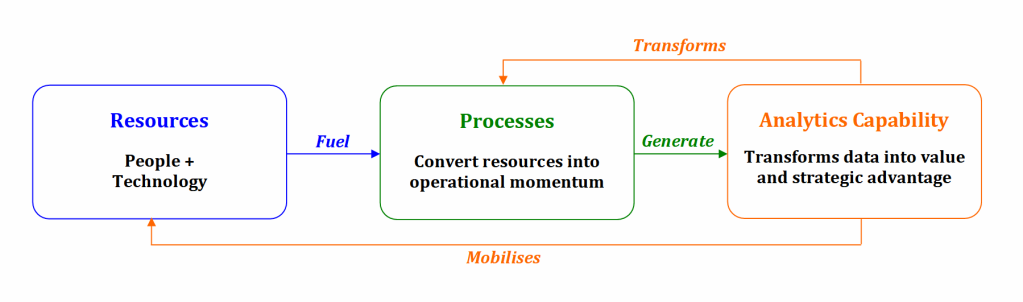
Resources are the starting point. They encompass both people and technology from the traditional lens (e.g., data, platforms, tools, funding and expertise). Together, these represent the raw potential that makes analytics activity possible. Yet resources on their own deliver limited value; they need structure, coordination and purpose.

Processes provide that structure. They translate the potential of resources into business performance (e.g., financial results, operational efficiency, customer satisfaction and innovation) by defining how analytics are governed, executed and communicated. Well-designed processes ensure that insights are generated consistently, shared effectively and embedded in decision-making rather than remaining isolated reports.

Analytics capability is the result. It represents the organizationโ€™s ability to integrate people, technology and processes to achieve consistent, meaningful outcomes like faster decision-making, improved forecasting accuracy, stronger strategic alignment and measurable business impact.

This relationship can be summarized as follows:

Analytics capability diagram

Ranko Cosic

Together, these three elements form a continuous system known as the analytics capability engine. Resources feed processes, processes transform resources into capability and evolving capability enhances both resource allocation and process efficiency. Over time, this self-reinforcing cycle strengthens the organizationโ€™s agility, decision quality and capacity for innovation.

For CIOs, this marks an important shift. Success in analytics is no longer about maintaining equilibrium between people, process and technology; it is about building the organizational capability to use them together, purposefully, repeatedly and at scale.

Resources that make the difference

Analytics capability depends on people and technology, but not all resources contribute equally to success. What matters most is how these elements come together to shape decisions. Executive engagement, widely recognized as one of the most critical success factors, often proves to be the catalyst that turns analytics from a purely technical function into an enterprise-wide strategic imperative.

Executive engagement has a visible and tangible impact. By funding initiatives, allocating resources, celebrating wins and insisting on evidence-based reasoning, leaders set the tone for how analytics is valued. Their actions shape priorities, inspire confidence in decision-making and make clear that analytics are central to business success. When this commitment is visible and consistent, it aligns leadership and analytics teams in pursuit of genuine data-driven maturity.

In contrast to executive sponsors who set direction and secure commitment, boundary spanners are the quiet force that turns intent into impact. Often referred to as translators between business and analytics, they make data meaningful for decision-makers and decisions meaningful for analysts. By connecting these worlds, they ensure that insights lead to action and that business priorities remain at the center of analytical work.

Organizations that recognize and nurture these roles accelerate capability development, bridge cultural divides and achieve far greater return on their analytics investment. In view of this, boundary spanners are among the most valuable resources an organization can develop to translate analytics potential into sustained business performance.

Processes that make the difference

When it comes to communication, nothing can be left to chance. Without effective communication, even the best analytics initiatives struggle to gain traction. Building analytics capability requires structured, purposeful communication and this depends on three key factors.

First, co-location or physical proximity between business and analytics teams accelerates understanding, strengthens trust and promotes the informal exchange of ideas that drives innovation.

Second, access to executive decision-makers is vital. When analytics leaders have both the ear and access of senior decision-makers, insights move faster, gain credibility and influence strategic priorities. This proximity ensures analytics are not just heard but acted upon.

Third, ongoing feedback loops and transparency ensure communication doesnโ€™t end once insights are shared. Embedding feedback mechanisms into regular workflows such as post-project reviews, annotated dashboards and shared collaboration platforms keeps analytics relevant, trusted and continually improving. These practices align with the growing emphasis on effective communication strategies for IT and analytics leaders, turning communication into a driver of engagement and performance.

When communication becomes part of the organizationโ€™s operating rhythm, analytics shift from producing reports to driving performance. It transforms analytics from an activity into a capability that continuously improves decision-making, trust and outcomes.

Capability-driven differentiation in analytics

Technology, people and processes have traditionally been seen as the pillars of analytics success, yet none of them alone create lasting competitive advantage.

The commoditization of information technology has made advanced tools and platforms universally accessible and affordable. Data warehouses and machine-learning systems, once reserved for industry leaders, are now commonplace. Similarly, processes can be observed and replicated and top analytical talent can move between organizations, which is why neither offers a lasting foundation for competitive advantage.

What differentiates organizations is not what they have but how they use it. Analytics capability, unlike technology and processes, is forged over time through organizational culture, learning and experience. It cannot be bought or imitated by competitors; it must be cultivated. The degree of cultivation ultimately determines the level of competitive advantage that can be achieved. The more developed the analytics capability, the greater the performance impact.

The biggest misconception about analytics capability

The capability engine described earlier illustrates how analytics capability should ideally evolve in a continuous, reinforcing cycle. The most common misconception Iโ€™ve found among CIOs and senior leaders is that analytics capability evolves in a way that is always forward and linear.

In reality, capability development is far more dynamic. It can advance, plateau or even regress. This pattern was reflected in results from 40 organizational case studies conducted over a two-year period, which revealed that one in three organizations experienced a decline in analytics capability at some point during that time.

These reversals often followed major transformation projects, the departure of key individuals such as executive sponsors or the introduction of new technology platforms that disrupted established processes and required time for users to adapt.

The lesson is clear: analytics capability does not simply evolve. Sustaining progress requires constant attention and a deliberate effort to keep the capability engine running amid the volatility that inevitably accompanies transformation and change.

The road ahead

AI and automation will continue to reshape how organizations use analytics, driving a fundamental shift in how data, technology and talent combine to create business value.

CIOs who treat analytics as a living capability that is cultivated and reinforced over time will lead the organizations that thrive. Like culture and brand reputation, analytics capability strengthens when leaders prioritize it and weakens when it is ignored.

Building lasting analytics capability requires more than people, processes and technology. It demands visible leadership, continuous reinforcement and recognition of progress. When leaders champion analytics capability as the foundation of success, they unlock performance gains while building confidence in evidence-based decisions, trust in data and the organizationโ€™s ability to adapt to evolving opportunities and challenges.

People, processes and technology may enable analytics, but capability is what makes it truly powerful and enduring.

This article is published as part of the Foundry Expert Contributor Network.
Want to join?

Stop running two architectures

When I first stepped into enterprise architecture leadership, I expected modernization to unlock capacity and enable growth. We had a roadmap, a cloud architecture we believed in and sponsorship from the business. Teams were upskilling, new engineering practices were being introduced and the target platform was already delivering value in a few isolated areas.

On paper, the strategy was sound. In reality, the results did not show up the way we expected.

Delivery speed wasnโ€™t improving. Run costs werenโ€™t decreasing. And complexity in the environment was actually growing.

It took time to understand why. We hadnโ€™t replaced the legacy environment. We had added the new one on top of it. We were running two architectures in parallel: the legacy stack and the modern stack. Each required support, compliance oversight, integration maintenance and delivery coordination.

The modernization effort wasnโ€™t failing. It was being taxed by the cost of keeping the old system alive.

Once I saw this pattern clearly, I began to see it everywhere. In manufacturing, banking, public services and insurance, the specifics varied but the structure was the same: modernization was assumed to produce value because the new platforms technically worked.

But modernization does not produce value simply by existing. It produces value when the old system is retired.

The cost of not turning the old system off

Boston Consulting Group highlights that many organizations assume the shift to cloud automatically reduces cost. In reality, cost reductions only occur when legacy systems are actually shut down and the cost structures tied to them are removed.

BCG also points out that the coexistence window โ€” when legacy and modern systems operate in parallel โ€” is the phase where complexity increases and progress stalls.

McKinsey frames this directly: Architecture is a cost structure. If the legacy environment remains fully funded, the cost base does not shift and transformation does not create strategic capacity.

The new stack is not the problem. The problem is coexistence.

Cloud isnโ€™t the win. Retirement is

Itโ€™s common to track modernization progress with:

  • Application counts migrated
  • Microservices deployed
  • Platform adoption rates
  • DevOps maturity scores

I have used all of these metrics myself. But none of them indicate value. The real indicators of modernization success are:

  • Legacy run cost decreasing
  • Spend shifting from run to innovation
  • Lead time decreasing
  • Integration surface shrinking
  • Operational risk reducing

If the old system remains operational and supported, modernization has not occurred. The architecture footprint has simply expanded.

A finance view changed how I approached modernization

A turning point in my approach came when finance leadership asked a simple question: โ€œWhen does the cost base actually decrease?โ€

That reframed modernization. It was no longer just an engineering or architecture initiative. It was a capital allocation decision.

If retirement is not designed into the modernization roadmap from the beginning, there is no mechanism for the cost structure to change. The organization ends up funding the legacy environment and the new platform simultaneously.

From that point forward, I stopped planning platform deployments and started planning system retirements. The objective shifted from โ€œbuild the newโ€ to โ€œretire the old.โ€

How we broke the parallel-run cycle

1. We made the coexistence cost visible

Cost layerWhat we tracked
Legacy Run CostHosting, licensing, patching, audit, support hours
Modern Run CostCloud consumption + platform operations
Coexistence OverheadDual testing, dual workflows, integration bridges
Delivery DragLead time impact when changes crossed both stacks
Opportunity CostInnovation delayed because โ€œrunโ€ consumed budget

When we visualized coexistence as a tax on transformation, the conversation changed.

2. We defined retirement before migration

Retirement was no longer something that would โ€œeventuallyโ€ happen.

Instead, we created the criteria for retirement readiness:

  • Data migrated and archived
  • User groups transitioned and validated
  • Compliance and risk sign-off complete
  • Legacy in read-only mode
  • Sunset date committed

If these conditions werenโ€™t met, the system was not considered cut over.

3. We ring-fenced the legacy system

  • No new features
  • No new integrations
  • UI labeled โ€œRetiringโ€
  • Any spend required CFO/CTO exception approval

Legacy shifted from operational system to sunsetting asset.

4. We retired in capability waves, not full system rewrites

We stopped thinking in applications. We started thinking in business capabilities.

McKinseyโ€™s research reinforced this: modernization advances fastest through incremental operating-model restructuring, not wholesale rewrites.

This allowed us to retire value in stages and see real progress earlier.

How we measured progress

MetricStrategic purpose
Legacy Run Cost โ†“Proves modernization is creating financial capacity
Parallel-Run System Count โ†“Measures simplification
Integration Surface Area โ†“Reduces coordination cost and fragility
% of Spend to Innovation โ†‘Signals budget velocity returning
Lead Time โ†“Indicates regained agility
Retirement Throughput RateMeasures modernization momentum

If cost was not decreasing, modernization was not happening.

What I learned

Modernization becomes real only when legacy is retired. Not when the new platform goes live. Not when new engineering practices are adopted. Not when cloud targets are met.

Modernization maturity is measured by the rate of legacy retirement and the shift of spend from run to innovation. If the cost base does not go down, modernization has not occurred. Only complexity has increased.

If retirement is not designed, duplication is designed. Retirement is the unlock. That is where modernization ROI comes from.

This article is published as part of the Foundry Expert Contributor Network.
Want to join?

ๆณ•ไปคใ ใ‘ใงใฏ่ถณใ‚Šใชใ„โ€•ๅŒป็™‚ๆƒ…ๅ ฑใ‚ฌใ‚คใƒ‰ใƒฉใ‚คใƒณใจๅŒป็™‚DXใฎใƒชใ‚ขใƒซ

ใ‚ฌใ‚คใƒ‰ใƒฉใ‚คใƒณใŒใ€Œไบ‹ๅฎŸไธŠใฎๅฟ…้ ˆ่ฆไปถใ€ใซใชใ‚‹ๆง‹้€ 

ๅŒป็™‚ๆƒ…ๅ ฑใ‚ทใ‚นใƒ†ใƒ ใฎๅฎ‰ๅ…จ็ฎก็†ใ‚ฌใ‚คใƒ‰ใƒฉใ‚คใƒณใฏใ€ๅ็งฐใ“ใใ€Œใ‚ฌใ‚คใƒ‰ใƒฉใ‚คใƒณใ€ใงใ™ใŒใ€ๅฎŸๅ‹™็š„ใซใฏใปใผๅฟ…้ ˆใฎๅŸบๆบ–ใจใ—ใฆๆ‰ฑใ‚ใ‚Œใฆใ„ใพใ™ใ€‚ใใฎ็†็”ฑใฏใ€ๅŒป็™‚ๆฉŸ้–ขใซใจใฃใฆใ€ๅ€‹ไบบๆƒ…ๅ ฑไฟ่ญทๆณ•ใ‚„ๅŒป็™‚ๆณ•ใชใฉใ‚’้ตๅฎˆใ—ใฆใ„ใ‚‹ใ“ใจใ‚’ๅฏพๅค–็š„ใซ่ชฌๆ˜Žใ™ใ‚‹้š›ใ€ใ“ใฎใ‚ฌใ‚คใƒ‰ใƒฉใ‚คใƒณใซๆฒฟใฃใŸ้‹็”จใ‚’ใ—ใฆใ„ใ‚‹ใ‹ใฉใ†ใ‹ใŒใ€ๆœ€ใ‚‚ๅˆ†ใ‹ใ‚Šใ‚„ใ™ใ„ๆŒ‡ๆจ™ใซใชใ‚‹ใ‹ใ‚‰ใงใ™ใ€‚็›ฃๆŸปๆณ•ไบบใ‚„่กŒๆ”ฟใฎ็ซ‹ๅ…ฅๆคœๆŸปใ€ไฟ้™บ่€…ใฎใƒใ‚งใƒƒใ‚ฏใชใฉใงใ‚‚ใ€ใ“ใฎใ‚ฌใ‚คใƒ‰ใƒฉใ‚คใƒณใŒๅ‚็…งใ•ใ‚Œใ‚‹ใ‚ฑใƒผใ‚นใŒๅฐ‘ใชใใ‚ใ‚Šใพใ›ใ‚“ใ€‚

็ฌฌ6.0็‰ˆใงใฏใ€ใ‚ตใ‚คใƒใƒผๆ”ปๆ’ƒใฎ้ซ˜ๅบฆๅŒ–ใ‚„ใ‚ฏใƒฉใ‚ฆใƒ‰ใ‚ตใƒผใƒ“ใ‚นใฎๆ™ฎๅŠใ‚’่ƒŒๆ™ฏใซใ€็ต„็น”็š„ใƒปๆŠ€่ก“็š„ใชๅฎ‰ๅ…จ็ฎก็†ๆŽช็ฝฎใŒไธ€ๆฎตใจๅ…ทไฝ“ๅŒ–ใ•ใ‚Œใพใ—ใŸใ€‚็ตŒๅ–ถๅฑคใซๅฏพใ—ใฆใฏใ€ๅ˜ใซใ€Œๆƒ…ๅ ฑใ‚ปใ‚ญใƒฅใƒชใƒ†ใ‚ฃใซ้…ๆ…ฎใ™ใ‚‹ใ€ใงใฏใชใใ€ๆƒ…ๅ ฑใ‚ปใ‚ญใƒฅใƒชใƒ†ใ‚ฃใƒใƒชใ‚ทใƒผใฎ็ญ–ๅฎšใ€ไบˆ็ฎ—ๆŽช็ฝฎใ€BCPใจใฎ้€ฃๅ‹•ใชใฉใ€็ตฑๅˆถใฎๆž ็ต„ใฟใ‚’ๆง‹็ฏ‰ใ™ใ‚‹่ฒฌไปปใŒๆ˜Ž็คบใ•ใ‚Œใ€ๆƒ…ๅ ฑใ‚ทใ‚นใƒ†ใƒ ๆ‹…ๅฝ“่€…ใซใฏใ€ใ‚ขใ‚ฏใ‚ปใ‚นๅˆถๅพกใ‚„ใƒญใ‚ฐ็ฎก็†ใ€ๆš—ๅทๅŒ–ใ€ใƒใƒƒใ‚ฏใ‚ขใƒƒใƒ—ใ€ๅง”่จ—ๅ…ˆ็ฎก็†ใจใ„ใฃใŸๅ…ทไฝ“็š„ใชๅฏพ็ญ–ใŒๆฑ‚ใ‚ใ‚‰ใ‚Œใฆใ„ใพใ™ใ€‚

ใ“ใฎใ‚ฌใ‚คใƒ‰ใƒฉใ‚คใƒณใŒใ€Œๅฟ…้ ˆใ€ใซ่ฟ‘ใ„้‡ใฟใ‚’ๆŒใคใ‚‚ใ†ไธ€ใคใฎ็†็”ฑใฏใ€ใƒ™ใƒณใƒ€ใƒผใ‚„ใ‚ฏใƒฉใ‚ฆใƒ‰ไบ‹ๆฅญ่€…ใŒ่ฃฝๅ“ใƒปใ‚ตใƒผใƒ“ใ‚นใฎไป•ๆง˜ใ‚’่จญ่จˆใ™ใ‚‹้š›ใฎๅ‰ๆๆกไปถใซใชใฃใฆใ„ใ‚‹ใ“ใจใงใ™ใ€‚ๅŒป็™‚ๅ‘ใ‘SaaSใ‚„ใ‚ฏใƒฉใ‚ฆใƒ‰ใ‚ตใƒผใƒ“ใ‚นใฎใƒ‘ใƒณใƒ•ใƒฌใƒƒใƒˆใซใฏใ€ใ€ŒๅŒป็™‚ๆƒ…ๅ ฑใ‚ทใ‚นใƒ†ใƒ ๅฎ‰ๅ…จ็ฎก็†ใ‚ฌใ‚คใƒ‰ใƒฉใ‚คใƒณ็ฌฌ6.0็‰ˆๆบ–ๆ‹ ใ€ใจใ„ใฃใŸๆ–‡่จ€ใŒไธฆใณใพใ™ใ€‚ใคใพใ‚Šใ€ใ‚ฌใ‚คใƒ‰ใƒฉใ‚คใƒณใฏๅŒป็™‚ๆฉŸ้–ขใฎๅ†…้ƒจใƒซใƒผใƒซใงใ‚ใ‚‹ใจๅŒๆ™‚ใซใ€ๅธ‚ๅ ดใซๆต้€šใ™ใ‚‹ITใ‚ตใƒผใƒ“ใ‚นใฎๅ“่ณชใ‚’่ฆๅฎšใ™ใ‚‹ใ€Œๆฅญ็•Œๆจ™ๆบ–ใ€ใฎๅฝนๅ‰ฒใ‚‚ๆžœใŸใ—ใฆใ„ใ‚‹ใฎใงใ™ใ€‚

ๅŒป็™‚DXใƒ—ใƒญใ‚ธใ‚งใ‚ฏใƒˆใจใ‚ฌใ‚คใƒ‰ใƒฉใ‚คใƒณใฎ้–ขไฟ‚

ๅ…จๅ›ฝๅŒป็™‚ๆƒ…ๅ ฑใƒ—ใƒฉใƒƒใƒˆใƒ•ใ‚ฉใƒผใƒ ใ‚„้›ปๅญๅ‡ฆๆ–น็ฎ‹ใ€ใ‚ชใƒณใƒฉใ‚คใƒณ่ณ‡ๆ ผ็ขบ่ชใจใ„ใฃใŸๅŒป็™‚DXใƒ—ใƒญใ‚ธใ‚งใ‚ฏใƒˆใฏใ€ๅ˜็‹ฌใฎๅคง่ฆๆจกใ‚ทใ‚นใƒ†ใƒ ใจใ—ใฆๅญ˜ๅœจใ—ใฆใ„ใ‚‹ใ‚ใ‘ใงใฏใ‚ใ‚Šใพใ›ใ‚“ใ€‚ๅฎŸ้š›ใซใฏใ€ๅ„ๅŒป็™‚ๆฉŸ้–ขใฎ้›ปๅญใ‚ซใƒซใƒ†ใ‚ทใ‚นใƒ†ใƒ ใ‚„ใƒฌใ‚ปใƒ—ใƒˆใ‚ณใƒณใƒ”ใƒฅใƒผใ‚ฟใ€้™ขๅ†…ใƒใƒƒใƒˆใƒฏใƒผใ‚ฏใ€ๅœฐๅŸŸๅŒป็™‚้€ฃๆบใ‚ทใ‚นใƒ†ใƒ ใชใฉใจ่ค‡้›‘ใซ้€ฃๅ‹•ใ—ใชใŒใ‚‰ๅ‹•ใ„ใฆใ„ใพใ™ใ€‚ใใฎ้š›ใ€ใฉใ“ใพใงใ‚’ๅ›ฝใฎใ‚ทใ‚นใƒ†ใƒ ๅดใŒ่ฒฌไปปใ‚’ๆŒใกใ€ใฉใ“ใ‹ใ‚‰ใ‚’ๅŒป็™‚ๆฉŸ้–ขใ‚„ใƒ™ใƒณใƒ€ใƒผๅดใฎ่ฒฌไปปใจใ™ใ‚‹ใฎใ‹ใจใ„ใ†ใ€Œ่ฒฌไปปๅˆ†็•Œใ€ใŒๅธธใซๅ•้กŒใซใชใ‚Šใพใ™ใ€‚

ๅŒป็™‚ๆƒ…ๅ ฑใ‚ทใ‚นใƒ†ใƒ ๅฎ‰ๅ…จ็ฎก็†ใ‚ฌใ‚คใƒ‰ใƒฉใ‚คใƒณใฏใ€ใ“ใฎ่ฒฌไปปๅˆ†็•Œใ‚’ๆ•ด็†ใ™ใ‚‹ใŸใ‚ใฎๆž ็ต„ใฟใ‚‚ๆ็คบใ—ใฆใ„ใพใ™ใ€‚ใ‚ฏใƒฉใ‚ฆใƒ‰ใ‚ตใƒผใƒ“ใ‚นใ‚’ๅˆฉ็”จใ™ใ‚‹ๅ ดๅˆใ€ใ‚คใƒณใƒ•ใƒฉ้ƒจๅˆ†ใฎใ‚ปใ‚ญใƒฅใƒชใƒ†ใ‚ฃใฏใ‚ฏใƒฉใ‚ฆใƒ‰ไบ‹ๆฅญ่€…ใŒๆ‹…ใ†ไธ€ๆ–นใงใ€ใ‚ขใ‚ซใ‚ฆใƒณใƒˆ็ฎก็†ใ‚„ใ‚ขใ‚ฏใ‚ปใ‚นๆจฉ้™่จญๅฎšใ€ใƒญใ‚ฐใฎ็ขบ่ชใ€็ซฏๆœซๅดใฎใ‚ปใ‚ญใƒฅใƒชใƒ†ใ‚ฃใชใฉใฏๅŒป็™‚ๆฉŸ้–ขใฎ่ฒฌไปปใ€ใจใ„ใ†ใ‚ˆใ†ใซใ€ๅฑคใ”ใจใซๅฝนๅ‰ฒใ‚’ๅˆ†ใ‘ใฆ่€ƒใˆใ‚‹ใฎใŒๅŸบๆœฌ็š„ใชใ‚ขใƒ—ใƒญใƒผใƒใงใ™ใ€‚ใ“ใ‚Œใ‚’ๆ˜Ž็ขบใซใ—ใชใ„ใพใพใ‚ทใ‚นใƒ†ใƒ ๅฐŽๅ…ฅใ‚’้€ฒใ‚ใฆใ—ใพใ†ใจใ€ใ‚คใƒณใ‚ทใƒ‡ใƒณใƒˆ็™บ็”Ÿๆ™‚ใซใ€Œ่ชฐใŒไฝ•ใ‚’ๆ€ ใฃใŸใฎใ‹ใ€ใŒไธๆ˜Ž็žญใซใชใ‚Šใ€้ฉๅˆ‡ใชๆ”นๅ–„ใŒ้€ฒใพใชใใชใฃใฆใ—ใพใ„ใพใ™ใ€‚

ใพใŸใ€ใ‚ฌใ‚คใƒ‰ใƒฉใ‚คใƒณใฏใ€ๅŒป็™‚DXใƒ—ใƒญใ‚ธใ‚งใ‚ฏใƒˆใซๅ‚ๅŠ ใ™ใ‚‹้š›ใฎใ€Œๅ‚ๅŠ ๆกไปถใ€ใจใ—ใฆใ‚‚ๆฉŸ่ƒฝใ—ใพใ™ใ€‚ใ‚ชใƒณใƒฉใ‚คใƒณ่ณ‡ๆ ผ็ขบ่ชใ‚’ๅˆฉ็”จใ™ใ‚‹ใŸใ‚ใซใฏใ€ใƒใƒƒใƒˆใƒฏใƒผใ‚ฏๅˆ†้›ขใ‚„็ซฏๆœซ่ช่จผใ€ใƒžใƒซใ‚ฆใ‚งใ‚ขๅฏพ็ญ–ใ€็‰ฉ็†็š„ใชใ‚ขใ‚ฏใ‚ปใ‚นๅˆถๅพกใชใฉใ€ไธ€ๅฎšใฎใ‚ปใ‚ญใƒฅใƒชใƒ†ใ‚ฃ่ฆไปถใ‚’ๆบ€ใŸใ™ๅฟ…่ฆใŒใ‚ใ‚Šใพใ™ใ€‚้›ปๅญๅ‡ฆๆ–น็ฎ‹ใ‚„้›ปๅญใ‚ซใƒซใƒ†ๆƒ…ๅ ฑๅ…ฑๆœ‰ใ‚ตใƒผใƒ“ใ‚นใธใฎๆŽฅ็ถšใ‚‚ๅŒๆง˜ใงใ€ใใ‚Œใžใ‚Œใฎไป•ๆง˜ๆ›ธใจใ‚ฌใ‚คใƒ‰ใƒฉใ‚คใƒณใ‚’็ชใๅˆใ‚ใ›ใชใŒใ‚‰ใ€้™ขๅ†…ใฎใ‚คใƒณใƒ•ใƒฉๆ•ดๅ‚™่จˆ็”ปใ‚’็ซ‹ใฆใฆใ„ใใ“ใจใซใชใ‚Šใพใ™ใ€‚

ใ‚ฌใ‚คใƒ‰ใƒฉใ‚คใƒณๆ™‚ไปฃใฎ็พๅ ด่ชฒ้กŒใจใ“ใ‚Œใ‹ใ‚‰

ใ‚‚ใฃใจใ‚‚ใ€ใ‚ฌใ‚คใƒ‰ใƒฉใ‚คใƒณใŒๆ•ดๅ‚™ใ•ใ‚ŒใŸใ‹ใ‚‰ใจใ„ใฃใฆใ€ใ™ในใฆใฎๅŒป็™‚ๆฉŸ้–ขใŒ็†ๆƒณ็š„ใชใ‚ปใ‚ญใƒฅใƒชใƒ†ใ‚ฃไฝ“ๅˆถใ‚’ๆง‹็ฏ‰ใงใใฆใ„ใ‚‹ใ‚ใ‘ใงใฏใ‚ใ‚Šใพใ›ใ‚“ใ€‚ๅœฐๆ–นใฎไธญๅฐ่ฆๆจก็—…้™ขใ‚„่จบ็™‚ๆ‰€ใงใฏใ€ๅฐ‚ไปปใฎๆƒ…ๅ ฑใ‚ทใ‚นใƒ†ใƒ ๆ‹…ๅฝ“่€…ใ‚’็ฝฎใใ“ใจ่‡ชไฝ“ใŒ้›ฃใ—ใ„ใ‚ฑใƒผใ‚นใ‚‚ๅคšใใ€ๆ—ฅใ€…ใฎ่จบ็™‚ใ‚’ๅ›žใ™ใ ใ‘ใงๆ‰‹ไธ€ๆฏใจใ„ใ†็พๅฎŸใŒใ‚ใ‚Šใพใ™ใ€‚ใƒฉใƒณใ‚ตใƒ ใ‚ฆใ‚งใ‚ขๆ”ปๆ’ƒใซใ‚ˆใ‚‹่จบ็™‚ๅœๆญขใฎใƒ‹ใƒฅใƒผใ‚นใŒ็›ธๆฌกใใชใ‹ใงใ€ๆœ€ไฝŽ้™ใฎใ‚ปใ‚ญใƒฅใƒชใƒ†ใ‚ฃๅฏพ็ญ–ใจๅŒป็™‚DXใธใฎๅฏพๅฟœใ‚’ใฉใฎใ‚ˆใ†ใซไธก็ซ‹ใ•ใ›ใ‚‹ใฎใ‹ใฏใ€ไปŠๅพŒใ—ใฐใ‚‰ใ็ถšใๅคงใใช่ชฒ้กŒใงใ™ใ€‚

ใใฎๆ„ๅ‘ณใงใ€ใ‚ฌใ‚คใƒ‰ใƒฉใ‚คใƒณใฏใ€Œๅฎˆใ‚‹ในใใƒใ‚งใƒƒใ‚ฏใƒชใ‚นใƒˆใ€ใงใ‚ใ‚‹ใจๅŒๆ™‚ใซใ€ใ€Œใฉใ“ใพใงใงใใ‚Œใฐไธ€ๅฎšใฎๆฐดๆบ–ใ‚’ๆบ€ใŸใ—ใฆใ„ใ‚‹ใจ่จ€ใˆใ‚‹ใฎใ‹ใ€ใ‚’็คบใ™ใƒ™ใƒณใƒใƒžใƒผใ‚ฏใงใ‚‚ใ‚ใ‚Šใพใ™ใ€‚ใ™ในใฆใฎ้ …็›ฎใ‚’ๅฎŒ็’งใซๆบ€ใŸใ™ใ“ใจใŒ้›ฃใ—ใ„ๅŒป็™‚ๆฉŸ้–ขใงใ‚ใฃใฆใ‚‚ใ€่‡ช้™ขใฎใƒชใ‚นใ‚ฏใจใƒชใ‚ฝใƒผใ‚นใ‚’่ธใพใˆใ€ๅ„ชๅ…ˆ้ †ไฝใ‚’ใคใ‘ใชใŒใ‚‰ๆฎต้šŽ็š„ใซๅฏพๅฟœใ‚’้€ฒใ‚ใฆใ„ใใ“ใจใŒ็พๅฎŸ็š„ใชใ‚ขใƒ—ใƒญใƒผใƒใงใ™ใ€‚ใใฎ้š›ใซใฏใ€ใƒ™ใƒณใƒ€ใƒผใ‚„ๅœฐๅŸŸใฎๅŒปๅธซไผšใ€็ฌฌไธ‰่€…ๆฉŸ้–ขใชใฉใจใฎ้€ฃๆบใ‚’้€šใ˜ใฆใ€็Ÿฅ่ฆ‹ใ‚„ใ‚ณใ‚นใƒˆใ‚’ใ‚ทใ‚งใ‚ขใ—ใฆใ„ใๅทฅๅคซใ‚‚ๆฑ‚ใ‚ใ‚‰ใ‚Œใพใ™ใ€‚

ไปŠๅพŒใ€ๅŒป็™‚ๆƒ…ๅ ฑใ‚ฌใ‚คใƒ‰ใƒฉใ‚คใƒณใฏใ‚ตใ‚คใƒใƒผๆ”ปๆ’ƒใฎๆ‰‹ๅฃใ‚„ๆŠ€่ก“ใฎ้€ฒๅฑ•ใซๅฟœใ˜ใฆใ€ใ•ใ‚‰ใซๆ”นๅฎšใŒ่กŒใ‚ใ‚Œใฆใ„ใใจ่ฆ‹่พผใพใ‚Œใพใ™ใ€‚้‡่ฆใชใฎใฏใ€ใใฎใŸใณใซใ€ŒใพใŸๆ–ฐใ—ใ„ใ“ใจใ‚’ใ‚„ใ‚‰ใ•ใ‚Œใ‚‹ใ€ใจๅ—ใ‘่บซใซใชใ‚‹ใฎใงใฏใชใใ€่‡ช้™ขใฎใƒ‡ใƒผใ‚ฟใ‚ฌใƒใƒŠใƒณใ‚นใ‚„ๅŒป็™‚DXๆˆฆ็•ฅใ‚’่ฆ‹็›ดใ™ๆฉŸไผšใจๆ‰ใˆใ‚‹ๅงฟๅ‹ขใงใ™ใ€‚ๆณ•ๅพ‹ใ ใ‘ใงใฏใ‚ซใƒใƒผใ—ใใ‚Œใชใ„็พๅ ดใฎใƒชใ‚ขใƒซใช่ชฒ้กŒใ‚’ใ€ใ‚ฌใ‚คใƒ‰ใƒฉใ‚คใƒณใจใ„ใ†ๅฝขใงใฉใ“ใพใงๅธๅŽใงใใ‚‹ใ‹ใ€‚ใใ‚Œใ“ใใŒใ€ๅŒป็™‚DXใฎๆˆๅฆใ‚’ๅทฆๅณใ™ใ‚‹้ตใซใชใฃใฆใ„ใใฎใ‹ใ‚‚ใ—ใ‚Œใพใ›ใ‚“ใ€‚

ๆณ•ไปคใ ใ‘ใงใฏ่ถณใ‚Šใชใ„โ€•ๅŒป็™‚ๆƒ…ๅ ฑใ‚ฌใ‚คใƒ‰ใƒฉใ‚คใƒณใจๅŒป็™‚DXใฎใƒชใ‚ขใƒซ

ใ‚ฌใ‚คใƒ‰ใƒฉใ‚คใƒณใŒใ€Œไบ‹ๅฎŸไธŠใฎๅฟ…้ ˆ่ฆไปถใ€ใซใชใ‚‹ๆง‹้€ 

ๅŒป็™‚ๆƒ…ๅ ฑใ‚ทใ‚นใƒ†ใƒ ใฎๅฎ‰ๅ…จ็ฎก็†ใ‚ฌใ‚คใƒ‰ใƒฉใ‚คใƒณใฏใ€ๅ็งฐใ“ใใ€Œใ‚ฌใ‚คใƒ‰ใƒฉใ‚คใƒณใ€ใงใ™ใŒใ€ๅฎŸๅ‹™็š„ใซใฏใปใผๅฟ…้ ˆใฎๅŸบๆบ–ใจใ—ใฆๆ‰ฑใ‚ใ‚Œใฆใ„ใพใ™ใ€‚ใใฎ็†็”ฑใฏใ€ๅŒป็™‚ๆฉŸ้–ขใซใจใฃใฆใ€ๅ€‹ไบบๆƒ…ๅ ฑไฟ่ญทๆณ•ใ‚„ๅŒป็™‚ๆณ•ใชใฉใ‚’้ตๅฎˆใ—ใฆใ„ใ‚‹ใ“ใจใ‚’ๅฏพๅค–็š„ใซ่ชฌๆ˜Žใ™ใ‚‹้š›ใ€ใ“ใฎใ‚ฌใ‚คใƒ‰ใƒฉใ‚คใƒณใซๆฒฟใฃใŸ้‹็”จใ‚’ใ—ใฆใ„ใ‚‹ใ‹ใฉใ†ใ‹ใŒใ€ๆœ€ใ‚‚ๅˆ†ใ‹ใ‚Šใ‚„ใ™ใ„ๆŒ‡ๆจ™ใซใชใ‚‹ใ‹ใ‚‰ใงใ™ใ€‚็›ฃๆŸปๆณ•ไบบใ‚„่กŒๆ”ฟใฎ็ซ‹ๅ…ฅๆคœๆŸปใ€ไฟ้™บ่€…ใฎใƒใ‚งใƒƒใ‚ฏใชใฉใงใ‚‚ใ€ใ“ใฎใ‚ฌใ‚คใƒ‰ใƒฉใ‚คใƒณใŒๅ‚็…งใ•ใ‚Œใ‚‹ใ‚ฑใƒผใ‚นใŒๅฐ‘ใชใใ‚ใ‚Šใพใ›ใ‚“ใ€‚

็ฌฌ6.0็‰ˆใงใฏใ€ใ‚ตใ‚คใƒใƒผๆ”ปๆ’ƒใฎ้ซ˜ๅบฆๅŒ–ใ‚„ใ‚ฏใƒฉใ‚ฆใƒ‰ใ‚ตใƒผใƒ“ใ‚นใฎๆ™ฎๅŠใ‚’่ƒŒๆ™ฏใซใ€็ต„็น”็š„ใƒปๆŠ€่ก“็š„ใชๅฎ‰ๅ…จ็ฎก็†ๆŽช็ฝฎใŒไธ€ๆฎตใจๅ…ทไฝ“ๅŒ–ใ•ใ‚Œใพใ—ใŸใ€‚็ตŒๅ–ถๅฑคใซๅฏพใ—ใฆใฏใ€ๅ˜ใซใ€Œๆƒ…ๅ ฑใ‚ปใ‚ญใƒฅใƒชใƒ†ใ‚ฃใซ้…ๆ…ฎใ™ใ‚‹ใ€ใงใฏใชใใ€ๆƒ…ๅ ฑใ‚ปใ‚ญใƒฅใƒชใƒ†ใ‚ฃใƒใƒชใ‚ทใƒผใฎ็ญ–ๅฎšใ€ไบˆ็ฎ—ๆŽช็ฝฎใ€BCPใจใฎ้€ฃๅ‹•ใชใฉใ€็ตฑๅˆถใฎๆž ็ต„ใฟใ‚’ๆง‹็ฏ‰ใ™ใ‚‹่ฒฌไปปใŒๆ˜Ž็คบใ•ใ‚Œใ€ๆƒ…ๅ ฑใ‚ทใ‚นใƒ†ใƒ ๆ‹…ๅฝ“่€…ใซใฏใ€ใ‚ขใ‚ฏใ‚ปใ‚นๅˆถๅพกใ‚„ใƒญใ‚ฐ็ฎก็†ใ€ๆš—ๅทๅŒ–ใ€ใƒใƒƒใ‚ฏใ‚ขใƒƒใƒ—ใ€ๅง”่จ—ๅ…ˆ็ฎก็†ใจใ„ใฃใŸๅ…ทไฝ“็š„ใชๅฏพ็ญ–ใŒๆฑ‚ใ‚ใ‚‰ใ‚Œใฆใ„ใพใ™ใ€‚

ใ“ใฎใ‚ฌใ‚คใƒ‰ใƒฉใ‚คใƒณใŒใ€Œๅฟ…้ ˆใ€ใซ่ฟ‘ใ„้‡ใฟใ‚’ๆŒใคใ‚‚ใ†ไธ€ใคใฎ็†็”ฑใฏใ€ใƒ™ใƒณใƒ€ใƒผใ‚„ใ‚ฏใƒฉใ‚ฆใƒ‰ไบ‹ๆฅญ่€…ใŒ่ฃฝๅ“ใƒปใ‚ตใƒผใƒ“ใ‚นใฎไป•ๆง˜ใ‚’่จญ่จˆใ™ใ‚‹้š›ใฎๅ‰ๆๆกไปถใซใชใฃใฆใ„ใ‚‹ใ“ใจใงใ™ใ€‚ๅŒป็™‚ๅ‘ใ‘SaaSใ‚„ใ‚ฏใƒฉใ‚ฆใƒ‰ใ‚ตใƒผใƒ“ใ‚นใฎใƒ‘ใƒณใƒ•ใƒฌใƒƒใƒˆใซใฏใ€ใ€ŒๅŒป็™‚ๆƒ…ๅ ฑใ‚ทใ‚นใƒ†ใƒ ๅฎ‰ๅ…จ็ฎก็†ใ‚ฌใ‚คใƒ‰ใƒฉใ‚คใƒณ็ฌฌ6.0็‰ˆๆบ–ๆ‹ ใ€ใจใ„ใฃใŸๆ–‡่จ€ใŒไธฆใณใพใ™ใ€‚ใคใพใ‚Šใ€ใ‚ฌใ‚คใƒ‰ใƒฉใ‚คใƒณใฏๅŒป็™‚ๆฉŸ้–ขใฎๅ†…้ƒจใƒซใƒผใƒซใงใ‚ใ‚‹ใจๅŒๆ™‚ใซใ€ๅธ‚ๅ ดใซๆต้€šใ™ใ‚‹ITใ‚ตใƒผใƒ“ใ‚นใฎๅ“่ณชใ‚’่ฆๅฎšใ™ใ‚‹ใ€Œๆฅญ็•Œๆจ™ๆบ–ใ€ใฎๅฝนๅ‰ฒใ‚‚ๆžœใŸใ—ใฆใ„ใ‚‹ใฎใงใ™ใ€‚

ๅŒป็™‚DXใƒ—ใƒญใ‚ธใ‚งใ‚ฏใƒˆใจใ‚ฌใ‚คใƒ‰ใƒฉใ‚คใƒณใฎ้–ขไฟ‚

ๅ…จๅ›ฝๅŒป็™‚ๆƒ…ๅ ฑใƒ—ใƒฉใƒƒใƒˆใƒ•ใ‚ฉใƒผใƒ ใ‚„้›ปๅญๅ‡ฆๆ–น็ฎ‹ใ€ใ‚ชใƒณใƒฉใ‚คใƒณ่ณ‡ๆ ผ็ขบ่ชใจใ„ใฃใŸๅŒป็™‚DXใƒ—ใƒญใ‚ธใ‚งใ‚ฏใƒˆใฏใ€ๅ˜็‹ฌใฎๅคง่ฆๆจกใ‚ทใ‚นใƒ†ใƒ ใจใ—ใฆๅญ˜ๅœจใ—ใฆใ„ใ‚‹ใ‚ใ‘ใงใฏใ‚ใ‚Šใพใ›ใ‚“ใ€‚ๅฎŸ้š›ใซใฏใ€ๅ„ๅŒป็™‚ๆฉŸ้–ขใฎ้›ปๅญใ‚ซใƒซใƒ†ใ‚ทใ‚นใƒ†ใƒ ใ‚„ใƒฌใ‚ปใƒ—ใƒˆใ‚ณใƒณใƒ”ใƒฅใƒผใ‚ฟใ€้™ขๅ†…ใƒใƒƒใƒˆใƒฏใƒผใ‚ฏใ€ๅœฐๅŸŸๅŒป็™‚้€ฃๆบใ‚ทใ‚นใƒ†ใƒ ใชใฉใจ่ค‡้›‘ใซ้€ฃๅ‹•ใ—ใชใŒใ‚‰ๅ‹•ใ„ใฆใ„ใพใ™ใ€‚ใใฎ้š›ใ€ใฉใ“ใพใงใ‚’ๅ›ฝใฎใ‚ทใ‚นใƒ†ใƒ ๅดใŒ่ฒฌไปปใ‚’ๆŒใกใ€ใฉใ“ใ‹ใ‚‰ใ‚’ๅŒป็™‚ๆฉŸ้–ขใ‚„ใƒ™ใƒณใƒ€ใƒผๅดใฎ่ฒฌไปปใจใ™ใ‚‹ใฎใ‹ใจใ„ใ†ใ€Œ่ฒฌไปปๅˆ†็•Œใ€ใŒๅธธใซๅ•้กŒใซใชใ‚Šใพใ™ใ€‚

ๅŒป็™‚ๆƒ…ๅ ฑใ‚ทใ‚นใƒ†ใƒ ๅฎ‰ๅ…จ็ฎก็†ใ‚ฌใ‚คใƒ‰ใƒฉใ‚คใƒณใฏใ€ใ“ใฎ่ฒฌไปปๅˆ†็•Œใ‚’ๆ•ด็†ใ™ใ‚‹ใŸใ‚ใฎๆž ็ต„ใฟใ‚‚ๆ็คบใ—ใฆใ„ใพใ™ใ€‚ใ‚ฏใƒฉใ‚ฆใƒ‰ใ‚ตใƒผใƒ“ใ‚นใ‚’ๅˆฉ็”จใ™ใ‚‹ๅ ดๅˆใ€ใ‚คใƒณใƒ•ใƒฉ้ƒจๅˆ†ใฎใ‚ปใ‚ญใƒฅใƒชใƒ†ใ‚ฃใฏใ‚ฏใƒฉใ‚ฆใƒ‰ไบ‹ๆฅญ่€…ใŒๆ‹…ใ†ไธ€ๆ–นใงใ€ใ‚ขใ‚ซใ‚ฆใƒณใƒˆ็ฎก็†ใ‚„ใ‚ขใ‚ฏใ‚ปใ‚นๆจฉ้™่จญๅฎšใ€ใƒญใ‚ฐใฎ็ขบ่ชใ€็ซฏๆœซๅดใฎใ‚ปใ‚ญใƒฅใƒชใƒ†ใ‚ฃใชใฉใฏๅŒป็™‚ๆฉŸ้–ขใฎ่ฒฌไปปใ€ใจใ„ใ†ใ‚ˆใ†ใซใ€ๅฑคใ”ใจใซๅฝนๅ‰ฒใ‚’ๅˆ†ใ‘ใฆ่€ƒใˆใ‚‹ใฎใŒๅŸบๆœฌ็š„ใชใ‚ขใƒ—ใƒญใƒผใƒใงใ™ใ€‚ใ“ใ‚Œใ‚’ๆ˜Ž็ขบใซใ—ใชใ„ใพใพใ‚ทใ‚นใƒ†ใƒ ๅฐŽๅ…ฅใ‚’้€ฒใ‚ใฆใ—ใพใ†ใจใ€ใ‚คใƒณใ‚ทใƒ‡ใƒณใƒˆ็™บ็”Ÿๆ™‚ใซใ€Œ่ชฐใŒไฝ•ใ‚’ๆ€ ใฃใŸใฎใ‹ใ€ใŒไธๆ˜Ž็žญใซใชใ‚Šใ€้ฉๅˆ‡ใชๆ”นๅ–„ใŒ้€ฒใพใชใใชใฃใฆใ—ใพใ„ใพใ™ใ€‚

ใพใŸใ€ใ‚ฌใ‚คใƒ‰ใƒฉใ‚คใƒณใฏใ€ๅŒป็™‚DXใƒ—ใƒญใ‚ธใ‚งใ‚ฏใƒˆใซๅ‚ๅŠ ใ™ใ‚‹้š›ใฎใ€Œๅ‚ๅŠ ๆกไปถใ€ใจใ—ใฆใ‚‚ๆฉŸ่ƒฝใ—ใพใ™ใ€‚ใ‚ชใƒณใƒฉใ‚คใƒณ่ณ‡ๆ ผ็ขบ่ชใ‚’ๅˆฉ็”จใ™ใ‚‹ใŸใ‚ใซใฏใ€ใƒใƒƒใƒˆใƒฏใƒผใ‚ฏๅˆ†้›ขใ‚„็ซฏๆœซ่ช่จผใ€ใƒžใƒซใ‚ฆใ‚งใ‚ขๅฏพ็ญ–ใ€็‰ฉ็†็š„ใชใ‚ขใ‚ฏใ‚ปใ‚นๅˆถๅพกใชใฉใ€ไธ€ๅฎšใฎใ‚ปใ‚ญใƒฅใƒชใƒ†ใ‚ฃ่ฆไปถใ‚’ๆบ€ใŸใ™ๅฟ…่ฆใŒใ‚ใ‚Šใพใ™ใ€‚้›ปๅญๅ‡ฆๆ–น็ฎ‹ใ‚„้›ปๅญใ‚ซใƒซใƒ†ๆƒ…ๅ ฑๅ…ฑๆœ‰ใ‚ตใƒผใƒ“ใ‚นใธใฎๆŽฅ็ถšใ‚‚ๅŒๆง˜ใงใ€ใใ‚Œใžใ‚Œใฎไป•ๆง˜ๆ›ธใจใ‚ฌใ‚คใƒ‰ใƒฉใ‚คใƒณใ‚’็ชใๅˆใ‚ใ›ใชใŒใ‚‰ใ€้™ขๅ†…ใฎใ‚คใƒณใƒ•ใƒฉๆ•ดๅ‚™่จˆ็”ปใ‚’็ซ‹ใฆใฆใ„ใใ“ใจใซใชใ‚Šใพใ™ใ€‚

ใ‚ฌใ‚คใƒ‰ใƒฉใ‚คใƒณๆ™‚ไปฃใฎ็พๅ ด่ชฒ้กŒใจใ“ใ‚Œใ‹ใ‚‰

ใ‚‚ใฃใจใ‚‚ใ€ใ‚ฌใ‚คใƒ‰ใƒฉใ‚คใƒณใŒๆ•ดๅ‚™ใ•ใ‚ŒใŸใ‹ใ‚‰ใจใ„ใฃใฆใ€ใ™ในใฆใฎๅŒป็™‚ๆฉŸ้–ขใŒ็†ๆƒณ็š„ใชใ‚ปใ‚ญใƒฅใƒชใƒ†ใ‚ฃไฝ“ๅˆถใ‚’ๆง‹็ฏ‰ใงใใฆใ„ใ‚‹ใ‚ใ‘ใงใฏใ‚ใ‚Šใพใ›ใ‚“ใ€‚ๅœฐๆ–นใฎไธญๅฐ่ฆๆจก็—…้™ขใ‚„่จบ็™‚ๆ‰€ใงใฏใ€ๅฐ‚ไปปใฎๆƒ…ๅ ฑใ‚ทใ‚นใƒ†ใƒ ๆ‹…ๅฝ“่€…ใ‚’็ฝฎใใ“ใจ่‡ชไฝ“ใŒ้›ฃใ—ใ„ใ‚ฑใƒผใ‚นใ‚‚ๅคšใใ€ๆ—ฅใ€…ใฎ่จบ็™‚ใ‚’ๅ›žใ™ใ ใ‘ใงๆ‰‹ไธ€ๆฏใจใ„ใ†็พๅฎŸใŒใ‚ใ‚Šใพใ™ใ€‚ใƒฉใƒณใ‚ตใƒ ใ‚ฆใ‚งใ‚ขๆ”ปๆ’ƒใซใ‚ˆใ‚‹่จบ็™‚ๅœๆญขใฎใƒ‹ใƒฅใƒผใ‚นใŒ็›ธๆฌกใใชใ‹ใงใ€ๆœ€ไฝŽ้™ใฎใ‚ปใ‚ญใƒฅใƒชใƒ†ใ‚ฃๅฏพ็ญ–ใจๅŒป็™‚DXใธใฎๅฏพๅฟœใ‚’ใฉใฎใ‚ˆใ†ใซไธก็ซ‹ใ•ใ›ใ‚‹ใฎใ‹ใฏใ€ไปŠๅพŒใ—ใฐใ‚‰ใ็ถšใๅคงใใช่ชฒ้กŒใงใ™ใ€‚

ใใฎๆ„ๅ‘ณใงใ€ใ‚ฌใ‚คใƒ‰ใƒฉใ‚คใƒณใฏใ€Œๅฎˆใ‚‹ในใใƒใ‚งใƒƒใ‚ฏใƒชใ‚นใƒˆใ€ใงใ‚ใ‚‹ใจๅŒๆ™‚ใซใ€ใ€Œใฉใ“ใพใงใงใใ‚Œใฐไธ€ๅฎšใฎๆฐดๆบ–ใ‚’ๆบ€ใŸใ—ใฆใ„ใ‚‹ใจ่จ€ใˆใ‚‹ใฎใ‹ใ€ใ‚’็คบใ™ใƒ™ใƒณใƒใƒžใƒผใ‚ฏใงใ‚‚ใ‚ใ‚Šใพใ™ใ€‚ใ™ในใฆใฎ้ …็›ฎใ‚’ๅฎŒ็’งใซๆบ€ใŸใ™ใ“ใจใŒ้›ฃใ—ใ„ๅŒป็™‚ๆฉŸ้–ขใงใ‚ใฃใฆใ‚‚ใ€่‡ช้™ขใฎใƒชใ‚นใ‚ฏใจใƒชใ‚ฝใƒผใ‚นใ‚’่ธใพใˆใ€ๅ„ชๅ…ˆ้ †ไฝใ‚’ใคใ‘ใชใŒใ‚‰ๆฎต้šŽ็š„ใซๅฏพๅฟœใ‚’้€ฒใ‚ใฆใ„ใใ“ใจใŒ็พๅฎŸ็š„ใชใ‚ขใƒ—ใƒญใƒผใƒใงใ™ใ€‚ใใฎ้š›ใซใฏใ€ใƒ™ใƒณใƒ€ใƒผใ‚„ๅœฐๅŸŸใฎๅŒปๅธซไผšใ€็ฌฌไธ‰่€…ๆฉŸ้–ขใชใฉใจใฎ้€ฃๆบใ‚’้€šใ˜ใฆใ€็Ÿฅ่ฆ‹ใ‚„ใ‚ณใ‚นใƒˆใ‚’ใ‚ทใ‚งใ‚ขใ—ใฆใ„ใๅทฅๅคซใ‚‚ๆฑ‚ใ‚ใ‚‰ใ‚Œใพใ™ใ€‚

ไปŠๅพŒใ€ๅŒป็™‚ๆƒ…ๅ ฑใ‚ฌใ‚คใƒ‰ใƒฉใ‚คใƒณใฏใ‚ตใ‚คใƒใƒผๆ”ปๆ’ƒใฎๆ‰‹ๅฃใ‚„ๆŠ€่ก“ใฎ้€ฒๅฑ•ใซๅฟœใ˜ใฆใ€ใ•ใ‚‰ใซๆ”นๅฎšใŒ่กŒใ‚ใ‚Œใฆใ„ใใจ่ฆ‹่พผใพใ‚Œใพใ™ใ€‚้‡่ฆใชใฎใฏใ€ใใฎใŸใณใซใ€ŒใพใŸๆ–ฐใ—ใ„ใ“ใจใ‚’ใ‚„ใ‚‰ใ•ใ‚Œใ‚‹ใ€ใจๅ—ใ‘่บซใซใชใ‚‹ใฎใงใฏใชใใ€่‡ช้™ขใฎใƒ‡ใƒผใ‚ฟใ‚ฌใƒใƒŠใƒณใ‚นใ‚„ๅŒป็™‚DXๆˆฆ็•ฅใ‚’่ฆ‹็›ดใ™ๆฉŸไผšใจๆ‰ใˆใ‚‹ๅงฟๅ‹ขใงใ™ใ€‚ๆณ•ๅพ‹ใ ใ‘ใงใฏใ‚ซใƒใƒผใ—ใใ‚Œใชใ„็พๅ ดใฎใƒชใ‚ขใƒซใช่ชฒ้กŒใ‚’ใ€ใ‚ฌใ‚คใƒ‰ใƒฉใ‚คใƒณใจใ„ใ†ๅฝขใงใฉใ“ใพใงๅธๅŽใงใใ‚‹ใ‹ใ€‚ใใ‚Œใ“ใใŒใ€ๅŒป็™‚DXใฎๆˆๅฆใ‚’ๅทฆๅณใ™ใ‚‹้ตใซใชใฃใฆใ„ใใฎใ‹ใ‚‚ใ—ใ‚Œใพใ›ใ‚“ใ€‚

SaaS price hikes put CIOsโ€™ budgets in a bind

Subscription prices from major SaaS vendors have risen sharply in recent months, putting many CIOs in a bind as they struggle to stay within their IT budgets.

SaaS subscription costs from several large vendors have risen between 10% and 20% this year, outpacing IT budget growth projections of 2.8%, says Mike Tucciarone, a vice president and analyst in the software and cloud negotiation practice at Gartner.

โ€œWe are seeing significant and broad-based cost increases across the enterprise SaaS market,โ€ he says. โ€œThis is creating notable budgetary pressure for many organizations.โ€

While inflation may have driven some cost increases in past months, rates have since stabilized, meaning there are other factors at play, Tucciarone says. Vendors are justifying subscription price hikes with frequent product repackaging schemes, consumption-based subscription models, regional pricing adjustments, and evolving generative AI offerings, he adds.

โ€œVendors are rationalizing this as the cost of innovation and gen AI development,โ€ he says.

Tucciarone sees the biggest hikes coming from vendors owned by private equity firms, with SaaS price increases as high as a whopping 900%. The number of private equity software deals grew by 28% in 2024, he notes.

โ€œThese firms are laser-focused on short-term profitability,โ€ he says. โ€œThis is a growing cost risk that CIOs canโ€™t afford to ignore.โ€

Mission-critical price increases

Tucciarone isnโ€™t alone in noticing recent SaaS price hikes.

SaaS prices for analytics and other data-related tools are rising as enterprise data volumes soar, some observers say. Subscription pricing for mission-critical systems, including ERP, CRM, and data platforms have risen significantly in the past year, says Guillaume Aymรฉ, CEO of DataOps platform provider Lenses.io.

Aymรฉ points to SaaS consolidation as a major driver of cost increases, with large tech companies and private-equity firms buying up smaller providers of essential SaaS packages.

โ€œThen, they ramp up the pricing, knowing that the cost of migration off those platforms is exceptionally expensive, especially at time when businesses are just trying to figure out their AI strategy at the same time,โ€ he says. โ€œTheyโ€™ve already got a number of initiatives in flight, and asking them to do a migration is going to be very difficult.โ€

These SaaS price increases have come at a time when many organizations are still trying to find money for AI initiatives, forcing CIOs to make tough decisions, he adds.

โ€œThey certainly have a totally separate budget for AI, which is coming at the cost of having to reduce their operational costs, their day-to-day costs, and at the same time, theyโ€™re faced with price increases, and that puts them in a very difficult position,โ€ Aymรฉ says. โ€œThe price increase are not totally across the industry, but specifically in mission-critical [areas], where the cost of a migration or rip and replace is high.โ€

The price of data

SaaS data platforms fall into a similar category as other mission-critical applications, Aymรฉ adds, because the cost of moving an organizationโ€™s data can be prohibitively expensive, in addition to the price of a new SaaS tool.

Kunal Agarwal, CEO and cofounder of data observability platform Unravel Data, also pointed to price increases for data-related SaaS tools. Data infrastructure costs, including cloud data warehouses, lakehouses, and analytics platforms, have risen 30% to 50% in the past year, he says.

Several factors are driving cost increases, including the proliferation of computing-intensive gen AI workloads and a lack of visibility into organizational consumption, he adds.

ย โ€œUnlike traditional SaaS, where youโ€™re paying for seats, these platforms bill based on consumption, making costs highly variable and difficult to predict,โ€ Agarwal says.

In some cases, vendors are shifting pricing plans away from predictable models to less consistent use-based pricing, he says. Some vendors have also introduced premium pricing tiers for capabilities that were previously included in lower tiers.

Beyond data-heavy platforms, vendors of security and observability tools and AI-enhanced SaaS are pushing price increases, says Ed Barrow, CEO and cofounder of data center investment management firm Cloud Capital.

โ€œSaaS inflation is real and broad,โ€ he says. โ€œItโ€™s hitting startups, midmarket, and enterprises alike.โ€

While AI is squeezing CIOsโ€™ internal IT budgets, itโ€™s also driving SaaS cost increases, Barrow suggests. โ€œVendorsโ€™ margins are getting squeezed by GPU-heavy workloads, and theyโ€™re passing those costs downstream,โ€ he says. โ€œAdd rising cloud infrastructure bills and policy changes from hyperscalers, and price resets are inevitable.โ€

How to adjust

While some price hikes may be hard to avoid, CIOs have some ways to cushion the blow, observers say.

Unravel Dataโ€™s Agarwal recommends that IT leaders focus on usage patterns as they manage SaaS data platform costs.

โ€œMany organizations discover that 20% to 40% of their data infrastructure spend is simply waste โ€” idle resources, inefficient queries, or redundant processing,โ€ he says. โ€œThe key insight is reframing this not as cost-cutting, but as cost optimization that frees up budget for innovation and additional workloads.โ€

When organizations optimize their existing workloads, they often find they can expand their data platform usage for new AI initiatives without increasing their overall budgets, he adds. โ€œThe winners in this environment will be those who treat data infrastructure as a product that needs active management, not just a utility you pay for and forget about,โ€ he says.

Lenses.ioโ€™s Aymรฉ urges CIOs to avoid single-vendor deployments for mission-critical capabilities, when possible. While many vendors push customers to adopt their all-in-one platforms, modular apps that plug into larger software packages can limit vendor lock-in exposure, he says.

The growing adoption of AI agents, as well as agent standards like Model Context Protocol, will make it easier for CIOs to bring SaaS tools from different vendors together in a cobbled-together ERP platform, for example, he says.

โ€œNo exec wants their team to use 10 different systems and swivel between 10 different consoles, so there is an advantage by saying, โ€˜Weโ€™re just going to have one solution, one vendor, that unifies those 10 things,โ€™โ€ he says. โ€œBut the executives that I speak to say they want their users to be interfacing with copilot or a chat assistant, and the chat assistants to be connected to all these different systems.โ€

CIOs should also be proactive by locking in long-term agreements for critical solutions and planning for renewals a year or two ahead of time, advises Gartnerโ€™s Tucciarone.

โ€œWith the high rate of change in the SaaS market, vendors have the upper hand in negotiations,โ€ he adds. โ€œCIOs must rigorously assess their IT negotiation intelligence, demonstrate theyโ€™re informed buyers, and leverage market data to secure better outcomes.โ€

Donโ€™t blame AI if the data doesnโ€™t stack up

Agentic systems are increasingly operating in agent-to-human and agent-to-agent scenarios, driving decisions and automating operations across the enterprise.

As these intelligent systems accelerate, Kevin Dallas, CEO of EDB, an AI infrastructure company, has a clear view of where the data infrastructure market is heading. EDB Postgres AI brings together a sovereign and open foundation, a unified platform for transactional, analytical, and AI workloads, as well as ย a low-code AI factory that lets teams build and deploy in days instead of months.

According to Dallas, thereโ€™s a global shift occurring that involves AI, data, and agentic systems. In this environment, data is the competitive moat, and the proximity, security, and governance of that data determine how effective these systems can be. Those getting it right are getting five times the ROI and doing twice the amount of agentic implementations compared to the rest. But theyโ€™re still the minority as only a small percentage has achieved this level of maturity, leaving a vast majority still pursuing an AI and data gravity model that ensures that secured and controlled data is available where, when, and how they need it. Thatโ€™s what true AI and data sovereignty look like.

ย โ€œSome regions like Saudi Arabia, the UAE, and Germany are well ahead on AI and data sovereignty, while others lag,โ€ says Dallas. โ€œBut everywhere we look, enterprises now see sovereignty as the foundation of modern AI.โ€

The architectโ€™s dilemma

In prior articles, weโ€™ve explored why scaling AI is hard for CIOs and various best practices and recommendations to move AI into production-grade environments. Dallasโ€™ take is leaders struggling with siloed data sprawled across systems, users, environments, and vendors is the biggest architectural challenge CIOs face when trying to move their AI pilots and projects into secure, scalable, and compliant production environments. They run pilots in isolated stacks, and when they try to scale AI, they hit such a broad range of inherited complexity.

So CIOs donโ€™t have an AI problem, they have a data architecture problem. The shift happening now is that AI has to move closer to enterprise data, not the other way around. This requires a unified, governed data platform that can serve as the center of gravity for AI. Without that foundation, scaling AI becomes costly, risky, and slow.ย 

At the center of the new architecture

EDB is known as a commercial contributor to PostgreSQL, or Postgres, and its database has long been valued by IT professionals for its robust open-source nature. But to understand how Postgres fits into this new AI-centric architecture, itโ€™s important to understand, in the context of modern enterprise data architecture, how to build on its inherent strengths to meet todayโ€™s complex data demands.

According to Dallas, Postgres has always been a versatile data engine capable of handling both structured and unstructured data. In the emerging AI-driven landscape, fueled by LLMs like those from Anthropic, Claude, and OpenAI, Postgres has joined the conversation of context data and retrieval.

In EDBโ€™s 2025 global research across 13 countries, 97% of major enterprises told them they wanted to build their own AI and data platforms. And one in four were already doing this on Postgres in a sovereign, controlled manner. According to Dallas, the market is moving from database to data platform thinking โ€” platforms that are sovereign, secure, cloud-flexible, and designed to support transactional, analytical, and AI-driven workloads together.

Plus, thereโ€™s a new era emerging where AI gravity pulls compute to the data. That shift requires an extensible, open data foundation.

โ€œI saw EDBโ€™s opportunity to help customers run AI closer to their most critical data, with consistency across environments and without lock-in,โ€ he says. โ€œThatโ€™s an enormously compelling moment to lead the next phase of growth.โ€

At the intersection of AI and data sovereignty, research shows that nearly all enterprises want to become their own AI and data platform within the next three years, and EDBโ€™s mission is to accelerate that ambition.

DigitalES alerta de la escalada de riesgos en IA y propone un marco para una adopciรณn empresarial segura

La Asociaciรณn Espaรฑola para la Digitalizaciรณn, DigitalES, ha publicado el informe โ€œInteligencia Artificial y Ciberseguridad: recomendaciones para una implementaciรณn segura en las empresasโ€, en el constata el aumento acelerado de la adopciรณn de inteligencia artificial (IA) en Espaรฑa y los riesgos de ciberseguridad que su expansiรณn estรก generando en el tejido empresarial. El documento, que se presentarรก el prรณximo lunes en la CEOE, plantea un marco de actuaciรณn para reforzar la seguridad, la privacidad y el cumplimiento normativo en la implantaciรณn de soluciones basadas en IA.

La patronal tecnolรณgica sitรบa este informe en un contexto de crecimiento sin precedentes. A escala global, el 77% de las organizaciones ya utiliza o estรก explorando la integraciรณn de sistemas de IA. Sรณlo en Espaรฑa, el nรบmero de compaรฑรญas que emplea estas tecnologรญas se duplicรณ entre 2022 y 2024, segรบn datos de COTEC. Para DigitalES, este avance refleja la madurez digital del paรญs, aunque tambiรฉn incrementa la superficie de ataque, especialmente en sectores intensivos en datos como retail, salud o servicios financieros.

Este crecimiento se acompaรฑa de un aumento de los ciberataques dirigidos especรญficamente a modelos de IA. De hecho, el Informe de Amenazas de Ciberseguridad 2025 de Check Point expone que se han multiplicado por cinco desde 2023. Los atacantes aprovechan las vulnerabilidades propias de estos sistemas, como el prompt injection, el data poisoning o la manipulaciรณn de modelos para obtener respuestas comprometidas. A esto hay que sumar el impacto econรณmico, que tambiรฉn crece. A modo de ejemplo, segรบn el informe Cost of a Data Breach Report 2025, de IBM Security, el coste medio de una brecha de seguridad en IA alcanzรณ los 4,5 millones de euros en 2025, un 15% mรกs que el aรฑo anterior.

El panorama en Espaรฑa muestra ademรกs un desafรญo particular: casi el 80% de las empresas declara haber sufrido incidentes relacionados con IA, mientras que solo el 27% de las pymes cuenta con una estrategia de ciberseguridad plenamente implementada. Para DigitalES, esta brecha exige medidas urgentes que permitan a las organizaciones adoptar la IA sin comprometer sus datos ni su operativa.

Ante este escenario, el informe propone un enfoque integral que combina medidas tรฉcnicas, cumplimiento normativo y cultura organizacional.

Miguel Sรกnchez Galindo, director general de DigitalES, โ€œla inteligencia artificial es una palanca de innovaciรณn, pero sin ciberseguridad se convierte en un riesgo estratรฉgicoโ€.

El documento subraya la necesidad de aplicar el enfoque security by design durante todo el ciclo de vida de la IA โ€”desde la recolecciรณn y procesado de datos hasta el despliegue de los modelosโ€”, garantizando que la seguridad no sea un aรฑadido, sino un elemento estructural de la tecnologรญa.

En consecuencia, DigitalES recomienda implementar prรกcticas como la anonimizaciรณn y el cifrado de datos, tรฉcnicas de privacidad diferencial para evitar sesgos y fugas, y la adopciรณn de estรกndares internacionales como ISO/IEC 42001 para la gestiรณn de sistemas de IA. Asimismo, aboga por realizar auditorรญas periรณdicas, pruebas de robustez frente a ataques y programas de formaciรณn para capacitar a los equipos en los riesgos emergentes de la IA.

El informe tambiรฉn detalla riesgos sectoriales. En retail, por ejemplo, la protecciรณn de datos en chatbots y asistentes inteligentes resulta crรญtica para cumplir con normativas como PCI DSS. En el sector salud, la anonimizaciรณn de historiales clรญnicos y el estricto cumplimiento del RGPD son fundamentales para evitar la exposiciรณn indebida de informaciรณn sensible. En grandes corporaciones, se enfatiza la segmentaciรณn de accesos, la detecciรณn de fraudes internos y la existencia de planes de respuesta ante incidentes centrados en amenazas especรญficas de IA.

Por otro lado, la patronal dedica un apartado destacado al auge de la IA generativa y los grandes modelos de lenguaje, cuya democratizaciรณn estรก acelerando la adopciรณn pero tambiรฉn ampliando el riesgo.

Tal y como explica Beatriz Arias, directora de Transformaciรณn Digital de la asociaciรณn, โ€œen un contexto donde el 82% de los ataques se dirigen a modelos de lenguaje, la prevenciรณn no es opcionalโ€. Para DigitalES, la trazabilidad, la explicabilidad y la estabilidad de los modelos serรกn claves para garantizar su uso responsable.

Como conclusiรณn, Sรกnchez Galindo destaca que la confianza serรก determinante en el desarrollo de la IA en Espaรฑa y Europa. En su opiniรณn, โ€œuna IA segura es tambiรฉn una IA sostenible, capaz de generar progreso econรณmico, proteger los derechos de las personas y reforzar la resiliencia digitalโ€.

AI ๋ฒค๋”, ๋น„ํšจ์œจ์  ์ฝ”๋“œ๊ฐ€ ์ดˆ๋ž˜ํ•˜๋Š” ์ˆจ์€ ๋น„์šฉ ์ค„์ด๊ธฐ์— ๋‚˜์„œ๋‹ค

์—”ํ„ฐํ”„๋ผ์ด์ฆˆ๋Š” ๊ณต๊ฐœ์ ์œผ๋กœ ์ธ์ •ํ•˜์ง€ ์•Š์ง€๋งŒ, ์ƒ๋‹น์ˆ˜ ํด๋ผ์šฐ๋“œ ๋น„์šฉ์€ ๊ฒ‰๋ณด๊ธฐ์—๋Š” ํ‰๋ฒ”ํ•ด ๋ณด์ด๋Š” ํ•œ ๊ฐ€์ง€ ๋ฌธ์ œ์—์„œ ๋น„๋กฏ๋œ๋‹ค. ๋ฐ”๋กœ ๋น„ํšจ์œจ์ ์ธ ์ฝ”๋“œ๋‹ค.

์†Œํ”„ํŠธ์›จ์–ด ๋”œ๋ฆฌ๋ฒ„๋ฆฌ ํ”Œ๋žซํผ ๊ธฐ์—… ํ•˜๋„ค์Šค(Harness)๊ฐ€ ์•„๋งˆ์กด์›น์„œ๋น„์Šค(AWS)์™€ ๊ณต๋™์œผ๋กœ ์ž‘์„ฑํ•œ ์—ฐ๊ตฌ ๋ณด๊ณ ์„œ์— ๋”ฐ๋ฅด๋ฉด, ๋ฏธ๊ตญ๊ณผ ์˜๊ตญ์˜ ์—”์ง€๋‹ˆ์–ด๋ง ๋ฆฌ๋”์™€ ๊ฐœ๋ฐœ์ž 700๋ช…์„ ๋Œ€์ƒ์œผ๋กœ ํ•œ ์„ค๋ฌธ์—์„œ 52%๊ฐ€ ํ•€์˜ต์Šค(FinOps)์™€ ๊ฐœ๋ฐœ์ž ๊ฐ„์˜ ๋‹จ์ ˆ์ด ํด๋ผ์šฐ๋“œ ์ธํ”„๋ผ ๋น„์šฉ ๋‚ญ๋น„๋กœ ์ด์–ด์ง€๊ณ  ์žˆ๋‹ค๊ณ  ๋‹ตํ–ˆ๋‹ค.

๋ณด๊ณ ์„œ๋Š” โ€œํ˜„์žฌ ํ˜„์‹ค์€ ๊ฐœ๋ฐœ์ž๊ฐ€ ๋น„์šฉ ์ตœ์ ํ™”๋ฅผ ๋‹ค๋ฅธ ๋ถ€์„œ์˜ ๋ฌธ์ œ๋กœ ์ธ์‹ํ•˜๋Š” ๊ฒฝ์šฐ๊ฐ€ ๋งŽ๋‹ค๋Š” ์ โ€์ด๋ผ๋ฉฐ โ€œ์ด ๊ฐ™์€ ๋‹จ์ ˆ๋กœ ์ธํ•ด ๊ณผ๋„ํ•˜๊ฒŒ ํ• ๋‹น๋œ ๋ฆฌ์†Œ์Šค, ์œ ํœด ์ธ์Šคํ„ด์Šค, ๋น„ํšจ์œจ์ ์ธ ์•„ํ‚คํ…์ฒ˜๊ฐ€ ๋ฐœ์ƒํ•˜๊ณ  ์ด๋Š” ์˜ˆ์‚ฐ์„ ์ž ์‹ํ•œ๋‹คโ€๊ณ  ์„ค๋ช…ํ–ˆ๋‹ค.

์ด ๊ฐ™์€ ๋‹จ์ ˆ์˜ ํ•ต์‹ฌ์— ๋น„ํšจ์œจ์ ์ธ ์ฝ”๋“œ๊ฐ€ ์ž๋ฆฌ ์žก๊ณ  ์žˆ๋Š” ๋งŒํผ, ์ด์ œ๋Š” CFO ์ฐจ์›์˜ ๋ฌธ์ œ๋กœ ๋‹ค๋ค„์•ผ ํ•œ๋‹ค๋Š” ๋ถ„์„๋„ ๋‚˜์˜จ๋‹ค. HFS ๋ฆฌ์„œ์น˜์˜ CEO ํ•„ ํŽ˜๋ฅด์ŠˆํŠธ(Phil Fersht)๋Š” AI ์›Œํฌ๋กœ๋“œ ํ™•์‚ฐ์œผ๋กœ ์ „๋ ฅ ์†Œ๋น„์™€ ํƒ„์†Œ ๋น„์šฉ, ์ธํ”„๋ผ ์ง€์ถœ์ด ๋™์‹œ์— ์ฆ๊ฐ€ํ•˜๊ณ  ์žˆ๋‹ค๊ณ  ์ง€์ ํ–ˆ๋‹ค.

ํŽ˜๋ฅด์ŠˆํŠธ๋Š” โ€œ์ปดํ“จํŒ… ์ž์› ๋‚ญ๋น„๋Š” ๋ง‰๋Œ€ํ•˜๋‹คโ€๋ฉฐ โ€œ๋Œ€ํ˜• ํด๋ผ์šฐ๋“œ ์ œ๊ณต์—…์ฒด์˜ ์—ฐ๊ตฌ์— ๋”ฐ๋ฅด๋ฉด ์ „์ฒด ํด๋ผ์šฐ๋“œ ์ปดํ“จํŒ… ์ž์›์˜ 20~40%๊ฐ€ ์ œ๋Œ€๋กœ ํ™œ์šฉ๋˜์ง€ ์•Š๊ฑฐ๋‚˜ ๋น„ํšจ์œจ์ ์ธ ์ฝ”๋“œ์— ์˜ํ•ด ์†Œ๋น„๋˜๊ณ  ์žˆ๋‹ค. ๊ธฐ์—…์€ ๊ทธ ๋‚ญ๋น„์— ๋Œ€ํ•ด ๋น„์šฉ์„ ์ง€๋ถˆํ•˜๊ณ  ์žˆ๋‹คโ€๊ณ  ๋งํ–ˆ๋‹ค.

์ด์ฒ˜๋Ÿผ ๋ˆˆ์— ์ž˜ ๋“œ๋Ÿฌ๋‚˜์ง€ ์•Š๋Š” ์ปดํ“จํŒ… ์ž์› ๋น„์šฉ ๋ฌธ์ œ๊ฐ€ AI ์ฝ”๋”ฉ ์–ด์‹œ์Šคํ„ดํŠธ ๋ฒค๋”๋“ค์˜ ๊ด€์‹ฌ์„ ๋Œ๊ณ  ์žˆ๋‹ค.

๋‹จ์ˆœ ์ƒ์„ฑ์—์„œ โ€˜์ฝ”๋“œ ์ง„ํ™”โ€™๋กœ

๊ตฌ๊ธ€์€ ์ตœ๊ทผ ์ฝ”๋“œ ์ƒ์„ฑ์ด ์•„๋‹Œ ์ฝ”๋“œ ์ง„ํ™”์— ์ดˆ์ ์„ ๋งž์ถ˜ ์ƒˆ๋กœ์šด ์ฝ”๋”ฉ ์—์ด์ „ํŠธ ์•ŒํŒŒ์ด๋ณผ๋ธŒ(AlphaEvolve)๋ฅผ ๊ณต๊ฐœํ•˜๋ฉฐ ์ด ๋ฌธ์ œ์— ๋Œ€์‘ํ•˜๊ณ  ์žˆ๋‹ค.

์ œ๋ฏธ๋‚˜์ด(Gemini) ๊ธฐ๋ฐ˜์˜ ์ด ์ฝ”๋”ฉ ์—์ด์ „ํŠธ๋Š” ํ˜„์žฌ ๋น„๊ณต๊ฐœ ํ”„๋ฆฌ๋ทฐ ํ˜•ํƒœ๋กœ ์ œ๊ณต๋˜๊ณ  ์žˆ๋‹ค๊ณ  ๊ตฌ๊ธ€์€ ์ˆ˜์š”์ผ ์ž์‚ฌ ๋ธ”๋กœ๊ทธ๋ฅผ ํ†ตํ•ด ๋ฐํ˜”๋‹ค. ์‚ฌ์šฉ์ž๋Š” ๋จผ์ € ํ•ด๊ฒฐํ•˜๋ ค๋Š” ๋ฌธ์ œ ์ •์˜์™€ ์ œ์•ˆ๋œ ํ•ด๋ฒ•์„ ํ‰๊ฐ€ํ•  ํ…Œ์ŠคํŠธ, ๊ทธ๋ฆฌ๊ณ  ์ดˆ๊ธฐ ์ฝ”๋“œ ์ดˆ์•ˆ์„ ์ž‘์„ฑํ•ด์•ผ ํ•œ๋‹ค. ์ดํ›„ ์•ŒํŒŒ์ด๋ณผ๋ธŒ๋Š” ์ œ๋ฏธ๋‚˜์ด LLM์„ ๋ฐ˜๋ณต์ ์œผ๋กœ ์ ์šฉํ•ด ์ฝ”๋“œ์˜ โ€˜๋ณ€์ดโ€™๋ฅผ ์ƒ์„ฑํ•˜๊ณ , ๊ธฐ์กด ํ•ด๋ฒ•๋ณด๋‹ค ๋‚˜์€์ง€ ํ…Œ์ŠคํŠธ๋ฅผ ๊ฑฐ์ณ ๊ธฐ์ค€์„ ์ถฉ์กฑํ•  ๋•Œ๊นŒ์ง€ ๊ณผ์ •์„ ๋ฐ˜๋ณตํ•œ๋‹ค.

๋ถ„์„๊ฐ€๋“ค์€ ์•Œ๊ณ ๋ฆฌ์ฆ˜ ์ž์ฒด๋ฅผ ๋ณ€๊ฒฝํ•˜๋ฉฐ ์ฝ”๋“œ๋ฅผ ์ง„ํ™”์‹œํ‚ค๋Š” ์ด๋Ÿฌํ•œ ์ ‘๊ทผ์ด ์—”ํ„ฐํ”„๋ผ์ด์ฆˆ์— ๊ฒŒ์ž„ ์ฒด์ธ์ €๊ฐ€ ๋  ์ˆ˜ ์žˆ๋‹ค๊ณ  ํ‰๊ฐ€ํ•œ๋‹ค.

ํŽ˜๋ฅด์ŠˆํŠธ๋Š” โ€œ์ฝ”๋“œ ์ง„ํ™”๋Š” ๋ผ์šฐํŒ…, ์Šค์ผ€์ค„๋ง, ์˜ˆ์ธก, ์ตœ์ ํ™”์™€ ๊ฐ™์€ ์˜์—ญ์—์„œ ์„ฑ๋Šฅ์„ ๊ฐœ์„ ํ•˜๋ ค๋Š” ๊ธฐ์—…์— ํŠนํžˆ ๊ฐ•๋ ฅํ•˜๋‹คโ€๋ฉฐ โ€œ์ด ๋ถ„์•ผ์—์„œ๋Š” ์•Œ๊ณ ๋ฆฌ์ฆ˜ ๊ฐœ์„ ์ด ๊ณง๋ฐ”๋กœ ์ƒ์—…์  ๊ฒฝ์Ÿ๋ ฅ, ์ปดํ“จํŠธ ๋น„์šฉ ์ ˆ๊ฐ, ์ถœ์‹œ ์†๋„ ๊ฐœ์„ ์œผ๋กœ ์ด์–ด์ง„๋‹คโ€๊ณ  ์„ค๋ช…ํ–ˆ๋‹ค.

์ปจ์„คํŒ… ๊ธฐ์—… ๋”ํ“จ์ฒ˜๋Ÿผ๋ฃน(The Futurum Group)์—์„œ ๋ฐ์ดํ„ฐยทAIยท์ธํ”„๋ผ ๋ถ€๋ฌธ์„ ์ด๋„๋Š” ๋ธŒ๋ž˜๋“ค๋ฆฌ ์‹ฌ๋ฏผ์€ ๊ตฌ๊ธ€์ด ๋‹จ์ˆœํ•œ ๊ตฌ๋ฌธ ์™„์„ฑ์ด๋‚˜ ์ฝ”๋“œ ์ƒ์„ฑ, ๋ฌธ์„œํ™” ์ง€์›์„ ๋„˜์–ด, ์ „์ฒด ์ฝ”๋“œ๋ฒ ์ด์Šค์˜ ์ง„ํ™”๋ฅผ ๋•๋Š” ๊ฒƒ์„ ๋ชฉํ‘œ๋กœ ํ•˜๊ณ  ์žˆ์„ ๊ฐ€๋Šฅ์„ฑ์ด ํฌ๋‹ค๊ณ  ๋ถ„์„ํ–ˆ๋‹ค.

์˜ค๋žœ ๊ฐœ๋ฐœ ๊ด€ํ–‰์˜ ๋ณ€ํ™”

ํŽ˜๋ฅด์ŠˆํŠธ๋Š” ์•ŒํŒŒ์ด๋ณผ๋ธŒ๊ฐ€ ๊ฐœ๋ฐœ์ž ์‚ฌ์ด์— ์˜ค๋ž˜๋„๋ก ์œ ์ง€๋ผ ์˜จ ๊ด€ํ–‰, ์ฆ‰ โ€˜๋จผ์ € ์ฝ”๋“œ๋ฅผ ์ž‘์„ฑํ•˜๊ณ  ๋‚˜์ค‘์— ์ตœ์ ํ™”ํ•˜๋Š” ๋ฐฉ์‹โ€™์„ ๋ฐ”๊พธ๋Š” ๋ฐ ๊ธฐ์—ฌํ•  ๊ฒƒ์œผ๋กœ ๋‚ด๋‹ค๋ดค๋‹ค.

๊ทธ๋Š” โ€œ์ง€๋‚œ 10๋…„๊ฐ„ ๊ฐœ๋ฐœ ๋ฌธํ™”๋Š” ์ตœ์ ํ™”๋ณด๋‹ค ์†๋„์™€ ํ”„๋ ˆ์ž„์›Œํฌ๋ฅผ ์šฐ์„ ์‹œํ•ด ์™”๋‹คโ€๋ฉฐ โ€œ์ปดํ“จํŠธ ๋น„์šฉ์ด ์ €๋ ดํ•˜๋˜ ์‹œ์ ˆ์—๋Š” ํ†ตํ–ˆ์ง€๋งŒ, AI๊ฐ€ ํŒ์„ ๋ฐ”๊ฟจ๋‹ค. ๋ชจ๋ธ์€ ๋ง‰๋Œ€ํ•œ ์ปดํ“จํŠธ๋ฅผ ์š”๊ตฌํ•œ๋‹คโ€๊ณ  ๋งํ–ˆ๋‹ค.

์ด์–ด โ€œ๊ธฐ์—…์€ ์ด์ œ ๋น„ํšจ์œจ์ ์ธ ์ฝ”๋“œ๊ฐ€ ๋ชจ๋ธ ์†๋„๋ฅผ ๋Šฆ์ถ”๊ณ  ๋น„์šฉ์„ ๋†’์ด๋ฉฐ, ์‹ค์ œ ์„ฑ๋Šฅ์—๋„ ์˜ํ–ฅ์„ ๋ฏธ์นœ๋‹ค๋Š” ์ ์„ ์ธ์‹ํ•˜๊ณ  ์žˆ๋‹คโ€๋ฉฐ ๊ฐœ๋ฐœ ์ˆ˜๋ช… ์ฃผ๊ธฐ ์ดˆ๋ฐ˜๋ถ€ํ„ฐ ์ตœ์ ํ™”๋ฅผ ์š”๊ตฌ๋ฐ›๊ณ  ์žˆ๋‹ค๊ณ  ์„ค๋ช…ํ–ˆ๋‹ค.

์ด๋Ÿฌํ•œ ์••๋ฐ•์€ LLM์˜ ๋†’์€ ์ฒ˜๋ฆฌ ์š”๊ตฌ ๋•Œ๋ฌธ๋งŒ์€ ์•„๋‹ˆ๋‹ค. ํŽ˜๋ฅด์ŠˆํŠธ๋Š” AI ์ถ”๋ก (inference) ๋ถ€ํ•˜๊ฐ€ ์ธํ”„๋ผ ํ™•์žฅ ์†๋„๋ณด๋‹ค ๋น ๋ฅด๊ฒŒ ์ฆ๊ฐ€ํ•˜๋ฉด์„œ ๋ฐ์ดํ„ฐ์„ผํ„ฐ ์šฉ๋Ÿ‰ ์ž์ฒด๊ฐ€ ์ „๋žต์  ์ œ์•ฝ ์š”์ธ์ด ๋˜๊ณ  ์žˆ๋‹ค๊ณ  ์ง„๋‹จํ–ˆ๋‹ค. ๊ทธ๋Š” โ€œ์ฝ”๋“œ ํšจ์œจ์„ฑ์„ ๋†’์ด๋Š” ๋„๊ตฌ๋Š” ํ•„์š”ํ•œ GPU ์ˆ˜์™€ ์ „๋ ฅ ์†Œ๋น„๋ฅผ ๋™์‹œ์— ์ค„์—ฌ์ค€๋‹คโ€๋ฉฐ โ€œ๊ทธ๋ž˜์„œ ์•Œ๊ณ ๋ฆฌ์ฆ˜ ๋ฐœ๊ฒฌ์ด ์ค‘์š”ํ•œ ์ด์œ ๋Š” ๋ฌด์ฐจ๋ณ„์ ์ธ ์ปดํ“จํŠธ ์‚ฌ์šฉ์„ ์ค„์ผ ์ˆ˜ ์žˆ๊ธฐ ๋•Œ๋ฌธโ€์ด๋ผ๊ณ  ๋งํ–ˆ๋‹ค.

์ปดํ“จํŒ… ์ž์› ์ตœ์ ํ™”๋ฅผ ์œ„ํ•œ ๋‹ค๋ฅธ ์ ‘๊ทผ

์ฝ”๋“œ ์ง„ํ™”๋ฅผ ์œ„ํ•œ ์•Œ๊ณ ๋ฆฌ์ฆ˜ ๋ฐœ๊ฒฌ๋งŒ์ด ์œ ์ผํ•œ ํ•ด๋ฒ•์€ ์•„๋‹ˆ๋‹ค. ๋ฒค๋”๋“ค์€ ์ฝ”๋”ฉ๊ณผ ๊ด€๋ จ๋œ ์ปดํ“จํŠธ ๋ฆฌ์†Œ์Šค ์ง€์ถœ์„ ์ค„์ด๊ธฐ ์œ„ํ•œ ๋‹ค์–‘ํ•œ ๋ฐฉ์•ˆ์„ ๋ชจ์ƒ‰ํ•˜๊ณ  ์žˆ๋‹ค.

ํ”„๋ž‘์Šค์˜ LLM ๋ฒค๋” ๋ฏธ์ŠคํŠธ๋ž„(Mistral)์€ ์ตœ๊ทผ ์ฝ”๋”ฉ์— ํŠนํ™”๋œ ์†Œํ˜• ์˜คํ”ˆ LLM ๋ฐ๋ธŒ์ŠคํŠธ๋ž„ 2(Devstral 2)๋ฅผ ๊ณต๊ฐœํ–ˆ๋‹ค. ํšŒ์‚ฌ ์ธก์€ ์ด ๋ชจ๋ธ์ด ๋” ํฐ ๋ชจ๋ธ๊ณผ ์œ ์‚ฌํ•œ ํšจ๊ณผ๋ฅผ ๋‚ธ๋‹ค๊ณ  ์ฃผ์žฅํ•œ๋‹ค. ์ผ๋ฐ˜์ ์œผ๋กœ ์†Œํ˜• ๋ชจ๋ธ์€ ๋” ์ ์€ ์—ฐ์‚ฐ๊ณผ ๋‚ฎ์€ ํ•˜๋“œ์›จ์–ด ์„ฑ๋Šฅ์œผ๋กœ ๊ตฌ๋™ํ•  ์ˆ˜ ์žˆ์–ด ์šด์˜ ๋น„์šฉ์ด ๋‚ฎ๋‹ค.

์•คํŠธ๋กœํ”ฝ(Anthropic) ์—ญ์‹œ ๊ฐœ๋ฐœ์ž ์ง€์›์„ ๊ฐ•ํ™”ํ•˜๊ณ  ์žˆ๋‹ค. ํšŒ์‚ฌ๋Š” ํด๋กœ๋“œ ์ฝ”๋“œ(Claude Code)๋ฅผ ์Šฌ๋ž™(Slack)์— ํ†ตํ•ฉํ•ด ๊ฐœ๋ฐœ์ž๊ฐ€ ๋” ๋‚˜์€ ์ฝ”๋“œ๋ฅผ ์ž‘์„ฑํ•˜๊ณ  ํ˜‘์—…์— ์†Œ์š”๋˜๋Š” ์‹œ๊ฐ„์„ ์ค„์ผ ์ˆ˜ ์žˆ๋„๋ก ํ–ˆ๋‹ค. ์Šฌ๋ž™์€ ๋ณดํ†ต ๊ฐœ๋ฐœํŒ€์ด ์•„ํ‚คํ…์ฒ˜ ๋…ผ์˜๋ฅผ ์ง„ํ–‰ํ•˜๋Š” ๊ณต๊ฐ„์ธ ๋งŒํผ, ์ด ํ†ตํ•ฉ์„ ํ†ตํ•ด ํด๋กœ๋“œ ์ฝ”๋“œ๋Š” ๋” ํ’๋ถ€ํ•œ ๋งฅ๋ฝ์„ ํ™•๋ณดํ•ด ํŒ€์— ๋ณด๋‹ค ์ ํ•ฉํ•œ ์ฝ”๋“œ๋ฅผ ์ƒ์„ฑํ•  ์ˆ˜ ์žˆ๊ฒŒ ๋œ๋‹ค.
dl-ciokorea@foundryco.com

์นผ๋Ÿผ | ํŠธ๋žœ์Šคํฌ๋ฉ”์ด์…˜์˜ ํ•จ์ •ยทยทยท๋Œ€์ „ํ™˜๋ณด๋‹ค โ€˜์ง€์†์ ์ธ ๋ณ€ํ™”โ€™๊ฐ€ ๋” ์ค‘์š”ํ•œ ์ด์œ 

BCG์˜ ์—ฐ๊ตฌ์— ๋”ฐ๋ฅด๋ฉด ๋””์ง€ํ„ธ ํŠธ๋žœ์Šคํฌ๋ฉ”์ด์…˜(DX)์˜ 70% ์ด์ƒ์ด ๋ชฉํ‘œ๋ฅผ ๋‹ฌ์„ฑํ•˜์ง€ ๋ชปํ•˜๋Š” ๊ฒƒ์œผ๋กœ ๋‚˜ํƒ€๋‚ฌ๋‹ค. DX ์„ ๋„ ๊ธฐ์—…์€ ๊ฒฝ์Ÿ์‚ฌ๋ณด๋‹ค ๋†’์€ ์„ฑ๊ณผ๋ฅผ ๋‚ด๋ฉฐ ๊ฒฐ์‹ค์„ ๊ฑฐ๋‘๊ณ  ์žˆ์ง€๋งŒ, ๊ธฐ์ˆ ์„ ํ™œ์šฉํ•ด ๊ธฐ์—…์˜ ์†๋„์™€ ์—ญ๋Ÿ‰์„ ๋Œ์–ด์˜ฌ๋ฆฌ๋Š” ๊ณผ์ •์—์„œ ๋ณต์žก์„ฑ์— ๊ฐ€๋กœ๋ง‰ํ˜€ ์ด๋‹ˆ์…”ํ‹ฐ๋ธŒ๊ฐ€ ์ขŒ์ดˆ๋˜๋Š” ๊ฒฝ์šฐ๋„ ๋งŽ๋‹ค. ๊ตฌ์กฐ๊ฐ€ ๋ณต์žกํ•ด์งˆ์ˆ˜๋ก ์„ฑ๊ณต ๊ฐ€๋Šฅ์„ฑ์€ ์ ์  ๋‚ฎ์•„์ง„๋‹ค.

๊ทธ ๋ฐฐ๊ฒฝ์—๋Š” ์ ์  ๋ถ„๋ช…ํ•ด์ง€๋Š” ์—ญ์„ค์ด ์žˆ๋‹ค. ๊ธฐ์ˆ ์€ ๊ธฐํ•˜๊ธ‰์ˆ˜์ ์œผ๋กœ ๋ฐœ์ „ํ•˜๊ณ  ์žˆ์ง€๋งŒ, ๊ธฐ์—…์˜ ๋ณ€ํ™” ๋ฐฉ์‹์€ ๋Œ€๋ถ€๋ถ„ ์ •์ฒด๋ผ ์žˆ๋‹ค๋Š” ์ ์ด๋‹ค. ํ˜์‹ ์˜ ์†๋„๋Š” ์กฐ์ง๊ณผ ๊ฑฐ๋ฒ„๋„Œ์Šค, ๋ฌธํ™”์˜ ์ ์‘ ์†๋„๋ฅผ ์••๋„ํ•˜๊ณ  ์žˆ์œผ๋ฉฐ, ๊ทธ ๊ฒฐ๊ณผ ๊ธฐ์ˆ  ์ง„๋ณด์™€ ๊ธฐ์—… ํ˜„์‹ค ์‚ฌ์ด์˜ ๊ฐ„๊ทน์ด ๊ฐˆ์ˆ˜๋ก ์ปค์ง€๊ณ  ์žˆ๋‹ค.

์ƒˆ๋กœ์šด ํ˜์‹ ์€ ๋” ๋น ๋ฅธ ์˜์‚ฌ๊ฒฐ์ •๊ณผ ๋” ๊นŠ์€ ํ†ตํ•ฉ, ์‚ฌ์ผ๋กœ ์ „๋ฐ˜์— ๊ฑธ์นœ ๊ธด๋ฐ€ํ•œ ์กฐ์œจ์„ ์š”๊ตฌํ•œ๋‹ค. ๊ทธ๋Ÿฌ๋‚˜ ๋Œ€๋ถ€๋ถ„์˜ ์กฐ์ง์€ ์—ฌ์ „ํžˆ ์„ ํ˜•์ ์ด๊ณ  ํ”„๋กœ์ ํŠธ ์ค‘์‹ฌ์˜ ๋ณ€ํ™” ๋ฐฉ์‹์„ ์œ ์ง€ํ•˜๊ณ  ์žˆ๋‹ค. ๋ณต์žก์„ฑ์ด ๋ˆ„์ ๋ ์ˆ˜๋ก, ๊ธฐ์ˆ ์ ์œผ๋กœ ๊ฐ€๋Šฅํ•œ ๊ฒƒ๊ณผ ์šด์˜ ์ธก๋ฉด์—์„œ ์ง€์† ๊ฐ€๋Šฅํ•œ ๊ฒƒ ์‚ฌ์ด์˜ ๊ฒฉ์ฐจ๋Š” ๋”์šฑ ์ปค์ง„๋‹ค.

๊ทธ ๊ฒฐ๊ณผ ๋‚˜ํƒ€๋‚˜๋Š” ๋ฌธ์ œ๊ฐ€ โ€˜์ ์‘ ๊ฒฉ์ฐจโ€™๋‹ค. ์ด๋Š” ํ˜์‹  ์†๋„์™€ ๊ธฐ์—…์ด ํก์ˆ˜ํ•  ์ˆ˜ ์žˆ๋Š” ์—ญ๋Ÿ‰ ์‚ฌ์ด์˜ ๊ฒฉ์ฐจ๊ฐ€ ์ ์  ๋ฒŒ์–ด์ง€๊ณ  ์žˆ์Œ์„ ์˜๋ฏธํ•œ๋‹ค. ์ด์ œ CIO๋Š” ๋Š์ž„์—†์ด ์ด์–ด์ง€๋Š” ๊ธฐ์ˆ ์  ํ˜ผ๋ž€๋ฟ ์•„๋‹ˆ๋ผ, ์กฐ์ง์ด ๊ฐ™์€ ์†๋„๋กœ ์ง„ํ™”ํ•˜์ง€ ๋ชปํ•œ๋‹ค๋Š” ํ•œ๊ณ„์—๋„ ์ง๋ฉดํ•˜๊ณ  ์žˆ๋‹ค. ๊ทผ๋ณธ์ ์ธ ๊ณผ์ œ๋Š” ์ƒˆ๋กœ์šด ๊ธฐ์ˆ ์„ ๋„์ž…ํ•˜๋Š” ๋ฐ ์žˆ๋Š” ๊ฒƒ์ด ์•„๋‹ˆ๋ผ, ์ง€์†์ ์œผ๋กœ ์ ์‘ํ•  ์ˆ˜ ์žˆ๋Š” ๊ธฐ์—…์„ ์„ค๊ณ„ํ•˜๋Š” ๋ฐ ์žˆ๋‹ค.

ํ˜์‹ ์˜ ์—ญ์„ค

ํ•™์ž ๋ ˆ์ด ์ปค์ฆˆ์™€์ผ์ด ์ œ์‹œํ•œ โ€˜์ˆ˜ํ™• ๊ฐ€์†์˜ ๋ฒ•์น™(The Law of Accelerating Returns)โ€™์— ๋”ฐ๋ฅด๋ฉด ๊ธฐ์ˆ  ๋ฐœ์ „์€ ๋งˆ์น˜ ๋ณต๋ฆฌ ํšจ๊ณผ์ฒ˜๋Ÿผ, ๋ˆ„์ ๋ ์ˆ˜๋ก ๊ธฐํ•˜๊ธ‰์ˆ˜์ ์œผ๋กœ ๋นจ๋ผ์ง„๋‹ค. ๋‹ค์‹œ ๋งํ•ด ํ•˜๋‚˜์˜ ๊ธฐ์ˆ ์  ๋ŒํŒŒ๊ตฌ๊ฐ€ ๋‹ค์Œ ํ˜์‹ ์„ ๋น ๋ฅด๊ฒŒ ์ด‰์ง„ํ•˜๊ณ , ํŒŒ๊ดด์  ๋ณ€ํ™” ์‚ฌ์ด์˜ ๊ฐ„๊ฒฉ์€ ๊ณ„์† ์งง์•„์ง„๋‹ค. ๊ณผ๊ฑฐ ํด๋ผ์ด์–ธํŠธ-์„œ๋ฒ„ ํ™˜๊ฒฝ์—์„œ ํด๋ผ์šฐ๋“œ๋กœ ์ „ํ™˜ํ•˜๋Š” ๋ฐ ์ˆ˜๋…„์ด ๊ฑธ๋ ธ๋‹ค๋ฉด, ์ด์ œ AI์™€ ์ž๋™ํ™”๋Š” ์ˆ˜๊ฐœ์›” ๋งŒ์— ๋น„์ฆˆ๋‹ˆ์Šค ๋ชจ๋ธ์„ ์žฌ์„ค๊ณ„ํ•œ๋‹ค. ๊ทธ๋Ÿฌ๋‚˜ ๋Œ€๋ถ€๋ถ„์˜ ๊ธฐ์—…์€ ์—ฌ์ „ํžˆ ๋ถ„๊ธฐ ๋‹จ์œ„ ์šด์˜, ์—ฐ๊ฐ„ ๊ณ„ํš, 5๊ฐœ๋…„ ์ „๋žต์— ๋งž์ถฐ ์›€์ง์ด๊ณ  ์žˆ๋‹ค. ์ง€์ˆ˜์ ์œผ๋กœ ๋ฐœ์ „ํ•˜๋Š” ๊ธฐ์ˆ  ๋ถ„์•ผ์—์„œ ์—ฌ์ „ํžˆ ์ „ํ†ต์ ์ธ ๋ฐฉ์‹์œผ๋กœ ์กฐ์ง์„ ์šด์˜ํ•˜๊ณ  ์žˆ๋Š” ๊ฒƒ์ด๋‹ค.

์ด์ฒ˜๋Ÿผ ๊ฐ€์†ํ™”๋˜๋Š” ํ˜์‹ ๊ณผ ์กฐ์ง์˜ ๋А๋ฆฐ ๋ณ€ํ™” ์†๋„ ์‚ฌ์ด์—์„œ ๋ฐœ์ƒํ•˜๋Š” ๋ถˆ์ผ์น˜๊ฐ€ ๋ฐ”๋กœ โ€˜์ „ํ™˜์˜ ํ•จ์ •โ€™์ด๋‹ค. ์ด๋Š” ํ†ต์ œ๋ฅผ ์ „์ œ๋กœ ํ•œ ๊ธฐ์กด ์•„ํ‚คํ…์ฒ˜์™€ ์กฐ์ง ๋ฌธํ™”, ๊ฑฐ๋ฒ„๋„Œ์Šค, ๊ทธ๋ฆฌ๊ณ  ๋ˆ„์ ๋œ ๋ถ€์ฑ„๊ฐ€ ๊ธฐ์—…์˜ ์ ์‘ ์—ญ๋Ÿ‰์„ ๊ฐ€๋กœ๋ง‰์„ ๋•Œ ๋‚˜ํƒ€๋‚œ๋‹ค. ๊ทธ ๊ฒฐ๊ณผ ํ˜์‹ ์€ ์ ์  ๋นจ๋ผ์ง€๋Š” ์ƒํ™ฉ์—์„œ ๋ณ€ํ™”๋Š” ๋” ์–ด๋ ค์›Œ์ง„๋‹ค.

๊ธฐ์—…์˜ ๊ตฌ์กฐ์  ๊ฒฐํ•จ 3๊ฐ€์ง€

1.๋’ค์ฒ˜์ง„ ์•„ํ‚คํ…์ฒ˜

๋Œ€๋ถ€๋ถ„์˜ ๊ธฐ์—…์€ ๋ณ€ํ™”๊ฐ€ ๊ณ„์† ์ด์–ด์ง€๋Š” ๊ตฌ์กฐ๊ฐ€ ์•„๋‹ˆ๋ผ, ์ƒˆ๋กœ์šด ๊ธฐ์ˆ ์ด ๋‚˜์˜ฌ ๋•Œ๋งˆ๋‹ค ํ•œ ๋ฒˆ์”ฉ ํฌ๊ฒŒ ์†๋ณด๋Š” ๋ฐฉ์‹์œผ๋กœ ์‹œ์Šคํ…œ์„ ๊ตฌ์ถ•ํ•ด ์™”๋‹ค. ๊ธฐ์กด ์‹œ์Šคํ…œ๊ณผ ์กฐ๋‹ฌ ๋ชจ๋ธ์€ ์•ˆ์ •์ ์ด์ง€๋งŒ ์žฆ์€ ๋ณ€ํ™”์—๋Š” ์ทจ์•ฝํ•˜๋‹ค. ์•„ํ‚คํ…์ฒ˜๋ฅผ ์‚ด์•„์žˆ๋Š” ์—ญ๋Ÿ‰์ด ์•„๋‹Œ ์„ค๊ณ„ ๋ฌธ์„œ๋กœ๋งŒ ๋‹ค๋ฃจ๋Š” ์ˆœ๊ฐ„, ์กฐ์ง์˜ ๋ฏผ์ฒฉ์„ฑ์€ ๋น ๋ฅด๊ฒŒ ์‡ ํ‡ดํ•œ๋‹ค. ์ด์ „ ๋ณ€ํ™”๊ฐ€ ์•ˆ์ฐฉํ•˜๊ธฐ๋„ ์ „์— ๋‹ค์Œ ํ˜์‹ ์ด ๋ฐ€๋ ค์˜ค๋ฉด์„œ, ์กฐ์ง์—๋Š” ํšŒ๋ณต๋ ฅ๋ณด๋‹ค ํ”ผ๋กœ๊ฐ€ ๋จผ์ € ์Œ“์ธ๋‹ค.

2.๋ˆ„์ ๋˜๋Š” ๊ธฐ์ˆ  ๋ถ€์ฑ„

๊ธฐ์ˆ  ๋ถ€์ฑ„๋Š” ์„ธ ๊ฐˆ๋ž˜๋กœ ๋น ๋ฅด๊ฒŒ ๋ˆ„์ ๋˜๊ณ  ์žˆ๋‹ค. ์ธ์ˆ˜ํ•ฉ๋ณ‘๊ณผ ์—…๊ทธ๋ ˆ์ด๋“œ๋ฅผ ๊ฑฐ์น˜๋ฉฐ ์Œ“์ธ ๊ธฐ์กด ์‹œ์Šคํ…œ๊ณผ ์ทจ์•ฝํ•œ ํ†ตํ•ฉ ๊ตฌ์กฐ, ๋ฐ์ดํ„ฐ ์˜๋ฏธ์˜ ๋ถˆ์ผ์น˜๋กœ ์ธํ•œ ๋ถ€์ฑ„๊ฐ€ ์ฒซ ๋ฒˆ์งธ๋‹ค. ๋‘ ๋ฒˆ์งธ๋Š” ์†๋„๋ฅผ ๋†’์ด๊ธฐ ์œ„ํ•ด ์ถ”์ง„ํ•œ ์ธ์ˆ˜ํ•ฉ๋ณ‘์ด๋‚˜ ํ”Œ๋žซํผ ๊ต์ฒด, ๋‹จ๊ธฐ ์„ฑ๊ณผ ์œ„์ฃผ์˜ ํ˜„๋Œ€ํ™” ๊ณผ์ •์—์„œ ์ƒ๊ธด ๋ถ€์ฑ„๋‹ค. ์„ธ ๋ฒˆ์งธ๋Š” AI์™€ ์ž๋™ํ™”, ๊ณ ๊ธ‰ ๋ถ„์„์„ ์ ์ ˆํ•œ ์ฒด๊ณ„๋‚˜ ๊ฑฐ๋ฒ„๋„Œ์Šค ์—†์ด ๋„์ž…ํ•˜๋ฉด์„œ ๋ฐœ์ƒํ•œ ์ƒˆ๋กœ์šด ๋ถ€์ฑ„๋‹ค. ์ด ๋ชจ๋“  ์š”์†Œ๋Š” ํŠธ๋žœ์Šคํฌ๋ฉ”์ด์…˜ ์ž์ฒด๋ฅผ ๋ถˆ์•ˆ์ •ํ•˜๊ฒŒ ๋งŒ๋“ ๋‹ค. ์ผ๊ด€๋œ ์•„ํ‚คํ…์ฒ˜ ๊ธฐ๋ฐ˜ ์—†์ด ์ง„ํ–‰๋˜๋Š” ํ˜„๋Œ€ํ™”๋Š” ๊ธฐ์กด ๋ฌธ์ œ ์œ„์— ๋˜ ๋‹ค๋ฅธ ์ทจ์•ฝ์„ฑ์„ ๋ง๋ถ™์ผ ๋ฟ์ด๋‹ค.

3.๊ณผ๊ฑฐ์— ๋จธ๋ฌด๋Š” ๊ฑฐ๋ฒ„๋„Œ์Šค

์ „ํ†ต์ ์ธ ๊ฑฐ๋ฒ„๋„Œ์Šค๋Š” ๋ณ€ํ™”์— ์–ผ๋งˆ๋‚˜ ์ž˜ ์ ์‘ํ•˜๋Š”์ง€๊ฐ€ ์•„๋‹ˆ๋ผ, ๊ณ„ํš์„ ์–ผ๋งˆ๋‚˜ ์ž˜ ๋งˆ๋ฌด๋ฆฌํ–ˆ๋Š”์ง€๋ฅผ ํ‰๊ฐ€ํ•œ๋‹ค. ์ ์‘ ๋Šฅ๋ ฅ๋ณด๋‹ค ์™„๋ฃŒ ์—ฌ๋ถ€๋ฅผ ์ค‘์‹œํ•˜๋Š” ๊ตฌ์กฐ๋‹ค. ํ˜์‹  ์ฃผ๊ธฐ๊ฐ€ ์งง์•„์งˆ์ˆ˜๋ก ์ด๋Ÿฐ ๊ฒฝ์ง๋œ ๋ฐฉ์‹์€ ๋” ๋งŽ์€ ์‚ฌ๊ฐ์ง€๋Œ€๋ฅผ ๋งŒ๋“ค๊ณ , ํˆฌ์ž๊ฐ€ ๋Š˜์–ด๋‚˜๋ฉด ์žฌ์ฐฝ์กฐ์˜ ์†๋„๋Š” ์˜คํžˆ๋ ค ๋А๋ ค์ง„๋‹ค.

๋Œ€๊ทœ๋ชจ ์ „ํ™˜์ด ๊ณ„์† ์‹คํŒจํ•˜๋Š” ์ด์œ 

ํ˜„๋Œ€ํ™” ํ”„๋กœ๊ทธ๋žจ์€ ๊ฒ‰๋ชจ์Šต๋งŒ ๋ฐ”๊พธ๊ณ  ๊ธฐ๋ฐ˜ ์‹œ์Šคํ…œ์€ ๊ทธ๋Œ€๋กœ ๋‘๋Š” ๊ฒฝ์šฐ๊ฐ€ ๋งŽ๋‹ค. ์ƒˆ๋กœ์šด ๋””์ง€ํ„ธ ์ธํ„ฐํŽ˜์ด์Šค์™€ ๋ถ„์„ ๊ณ„์ธต์ด ๊ธฐ์กด ๋ฐ์ดํ„ฐ ๋กœ์ง๊ณผ ์ทจ์•ฝํ•œ ํ†ตํ•ฉ ๊ตฌ์กฐ ์œ„์— ๋ง๋ถ™์—ฌ์ง„๋‹ค. ๋ฐ์ดํ„ฐ๊ฐ€ ๋ฌด์—‡์„ ์˜๋ฏธํ•˜๊ณ , ๊ทธ ๋ฐ์ดํ„ฐ๋ฅผ ์–ด๋–ป๊ฒŒ ์˜์‚ฌ๊ฒฐ์ •์— ์“ฐ๋Š”์ง€๋ฅผ ํŒŒ์•…ํ•˜๋Š” ์˜๋ฏธ ์ฒด๊ณ„๋ฅผ ๋‹ค์‹œ ๋งŒ๋“ค์ง€ ์•Š์œผ๋ฉด, ๊ธฐ์—…์€ ์‹ค์ œ๋กœ ๋‹ฌ๋ผ์ง€์ง€ ๋ชปํ•˜๊ณ  ๊ฒ‰๋ชจ์Šต๋งŒ ๋ฐ”๋€Œ๊ฒŒ ๋œ๋‹ค.

๊ธฐ์—…์ด ๊ธฐ์ˆ  ํ˜์‹ ์˜ ์†๋„๋ฅผ ๋”ฐ๋ผ์žก์œผ๋ ค ์• ์“ธ์ˆ˜๋ก, ์ƒˆ๋กœ์šด ํ˜•ํƒœ์˜ ๋ถ€์ฑ„๊ฐ€ ์ ์  ๋” ๋ฌธ์ œ๊ฐ€ ๋  ์ˆ˜ ์žˆ๋‹ค. ์ด๋Š” ๊ธฐ๋ฐ˜ ์‹œ์Šคํ…œ ๊ตฌ์ถ• ์—†์ด ์†๋„๋งŒ ์ถ”๊ตฌํ•œ ๋Œ€๊ฐ€๋‹ค. ์• ์ž์ผํŒ€์€ ๋น ๋ฅด๊ฒŒ ์›€์ง์ด์ง€๋งŒ ์„œ๋กœ ๊ณ ๋ฆฝ๋œ ์ฑ„ ์ผํ•˜๋ฉด์„œ ์ค‘๋ณต๋œ API์™€ ์ œ๊ฐ๊ฐ์ธ ๋ฐ์ดํ„ฐ ๋ชจ๋ธ, ์ผ๊ด€์„ฑ ์—†๋Š” ์˜๋ฏธ ์ฒด๊ณ„๋ฅผ ๋งŒ๋“ค์–ด๋‚ธ๋‹ค. ์‹œ๊ฐ„์ด ์ง€๋‚ ์ˆ˜๋ก ์ „๋‹ฌ ์†๋„๋Š” ๋นจ๋ผ์ง€์ง€๋งŒ, ์ทจ์•ฝํ•œ ์‹œ์Šคํ…œ ์œ„์— ์ƒˆ๋กœ์šด ๊ธฐ์ˆ ์ด ์Œ“์ด๋ฉด์„œ ๊ธฐ์—… ์ „์ฒด์˜ ์ผ๊ด€์„ฑ์€ ๋ฌด๋„ˆ์ง„๋‹ค.

ํ•œํŽธ ๊ฑฐ๋ฒ„๋„Œ์Šค๋Š” ์—ฌ์ „ํžˆ ์ œ์ž๋ฆฌ์— ๋จธ๋ฌผ๋Ÿฌ ์žˆ๋‹ค. ๊ฐ์ข… ๊ฒ€ํ†  ์œ„์›ํšŒ์™€ ์ปดํ”Œ๋ผ์ด์–ธ์Šค ์ ˆ์ฐจ๋Š” ๋น ๋ฅธ ๋ณ€ํ™”๊ฐ€ ์•„๋‹ˆ๋ผ, ๊ณ„ํš๋Œ€๋กœ ํ˜๋Ÿฌ๊ฐ€๋Š”์ง€๋ฅผ ํ™•์ธํ•˜๋Š” ๋ฐ ์ง‘์ค‘ํ•œ๋‹ค. ๊ฒ‰์œผ๋กœ๋Š” ํ†ต์ œ๊ฐ€ ์ด๋ค„์ง€๋Š” ๊ฒƒ์ฒ˜๋Ÿผ ๋ณด์ด์ง€๋งŒ, ์‹ค์ œ๋กœ๋Š” ์˜์‚ฌ๊ฒฐ์ •์„ ๋Šฆ์ถ”๋ฉด์„œ ๊ธฐ์—…์ด ๋ณ€ํ™”์— ์ ์‘ํ•˜๊ธฐ ์–ด๋ ต๊ฒŒ ๋งŒ๋“ ๋‹ค.

CIO์˜ ๋”œ๋ ˆ๋งˆ

์˜ค๋Š˜๋‚  CIO๋Š” ๊ฐˆ๋ผ์ง„ ๋‘ ๊ณก์„  ์‚ฌ์ด์— ์„œ์žˆ๋‹ค. ๊ธ‰๊ฒฉํžˆ ์„ฑ์žฅํ•˜๋Š” ๊ธฐ์ˆ ๊ณผ ๊ธฐ์—…์˜ ๋А๋ฆฐ ๋ณ€ํ™” ์ ์‘ ์†๋„๋‹ค. ์ด ๊ฐ„๊ทน์ด โ€˜์ „ํ™˜์˜ ํ•จ์ •โ€™์„ ๋งŒ๋“ ๋‹ค. ๋‹จ์ˆœํžˆ ๋” ๋งŽ์€ ๋ณ€ํ™”๋ฅผ ์ด๋ฃจ๋Š” ๊ฒƒ์ด ๋ฌธ์ œ๊ฐ€ ์•„๋‹ˆ๋‹ค. ๊ฐ ํ”„๋กœ์ ํŠธ ๋‹จ์œ„๋กœ ์‹œ์ž‘๊ณผ ๋์ด ์žˆ๋Š” ๋ฐฉ์‹์—์„œ ๋ฒ—์–ด๋‚˜, ๊ธฐ์—…์ด ๋ฉˆ์ถ”์ง€ ์•Š๊ณ  ๊ณ„์† ์ง„ํ™”ํ•  ์ˆ˜ ์žˆ๋Š” ์‹œ์Šคํ…œ๊ณผ ๊ตฌ์กฐ๋ฅผ ๊ฐ–์ถ”๋Š” ๊ฒƒ์ด ํ•ต์‹ฌ์ด๋‹ค.

์ด์ œ ๋˜์ ธ์•ผ ํ•  ์งˆ๋ฌธ์€ โ€˜๋‹ค์‹œ ํ•œ๋ฒˆ ์ „ํ™˜์„ ํ•ด์•ผ ํ•˜๋Š”๊ฐ€โ€™๊ฐ€ ์•„๋‹ˆ๋‹ค. โ€˜๋‹ค์‹œ ์ „ํ™˜ํ•  ํ•„์š”๊ฐ€ ์—†๋„๋ก ์–ด๋–ป๊ฒŒ ์„ค๊ณ„ํ•  ๊ฒƒ์ธ๊ฐ€โ€™๋‹ค. ์ด๋ฅผ ์œ„ํ•ด์„œ๋Š” ๋ชจ๋“  ์‹œ์Šคํ…œ๊ณผ ํ”„๋กœ์„ธ์Šค ์ „๋ฐ˜์—์„œ ๊ฐ™์€ ์˜๋ฏธ๋ฅผ ์œ ์ง€ํ•˜๊ณ  ๊ณต์œ ํ•  ์ˆ˜ ์žˆ๋Š” ์•„ํ‚คํ…์ฒ˜๊ฐ€ ํ•„์š”ํ•˜๋‹ค. ๊ธฐ์ˆ  ๋ถ„์•ผ์—์„œ๋Š” ์ด๋ฅผ โ€˜์‹œ๋งจํ‹ฑ ์ƒํ˜ธ์šด์šฉ์„ฑโ€™์ด๋ผ๊ณ  ๋ถ€๋ฅธ๋‹ค. CIO์˜ ๊ด€์ ์—์„œ๋Š” ๋ฐ์ดํ„ฐ์™€ ์—…๋ฌด ํ๋ฆ„, AI ๋ชจ๋ธ์ด ๋ชจ๋‘ ๊ฐ™์€ ์–ธ์–ด๋กœ ์ž‘๋™ํ•˜๋„๋ก ํ•ด ์‹ ๋ขฐ์„ฑ๊ณผ ๋ฏผ์ฒฉ์„ฑ์„ ๋†’์ด๊ณ , ์ฆ‰๊ฐ์ ์ธ ์˜์‚ฌ๊ฒฐ์ •์„ ๊ฐ€๋Šฅํ•˜๊ฒŒ ํ•˜๋Š” ์—ญ๋Ÿ‰์„ ์˜๋ฏธํ•œ๋‹ค.

โ€˜์‹œ๋งจํ‹ฑ ์ƒํ˜ธ์šด์šฉ์„ฑโ€™์˜ ๊ฐ€์น˜

๋‹ค์Œ ํ˜์‹ ์€ ์‹œ์Šคํ…œ ์ „๋ฐ˜์—์„œ โ€˜๊ฐ™์€ ์˜๋ฏธโ€™๋ฅผ ๊ณต์œ ํ•  ์ˆ˜ ์žˆ๋А๋ƒ์— ๋‹ฌ๋ ค์žˆ๋‹ค. ์ด ๊ธฐ๋ฐ˜์ด ์—†์œผ๋ฉด AI์™€ ๋ถ„์„์€ ์ธ์‚ฌ์ดํŠธ๋ฅผ ๋งŒ๋“ค์–ด๋‚ด๊ธฐ๋ณด๋‹ค ์žก์Œ์„ ํ‚ค์šธ ์ˆ˜ ์žˆ๋‹ค. ์‹œ๋งจํ‹ฑ ์ƒํ˜ธ์šด์šฉ์„ฑ์„ ๊ตฌ์ถ•ํ•˜๋Š” ์ผ์€ ๋‹จ์ˆœํ•œ ๊ธฐ์ˆ  ์ž‘์—…์ด ์•„๋‹ˆ๋‹ค. ์ด๋Š” ์˜์‚ฌ๊ฒฐ์ •์— ๋Œ€ํ•œ ์‹ ๋ขฐ๋ฅผ ํ˜•์„ฑํ•˜๊ณ , ์ƒํ™ฉ์— ๋งž๊ฒŒ ์Šค์Šค๋กœ ์กฐ์ •๋˜๋Š” ์ž๋™ํ™”๋ฅผ ๊ตฌ์ถ•ํ•˜๊ณ  ์ง€์†์ ์ธ ์žฌ์ฐฝ์กฐ๋ฅผ ๊ฐ€๋Šฅํ•˜๊ฒŒ ํ•˜๋Š” ํ† ๋Œ€๋‹ค.

ํŒ”๋ž€ํ‹ฐ์–ด์™€ ๊ฐ™์€ ๊ธฐ์—…์€ โ€˜ํŒ”๋ž€ํ‹ฐ์–ด ํŒŒ์šด๋“œ๋ฆฌ ํ”Œ๋žซํผโ€™์„ ํ†ตํ•ด ์ˆ˜์ฒœ ๊ฐœ ์‹œ์Šคํ…œ์˜ ๋ฐ์ดํ„ฐ๋ฅผ ํ•˜๋‚˜์˜ ๊ณตํ†ต๋œ ๊ธฐ์ค€์œผ๋กœ ์—ฐ๊ฒฐํ–ˆ์„ ๋•Œ ์–ด๋–ค ๋ณ€ํ™”๊ฐ€ ๊ฐ€๋Šฅํ•œ์ง€๋ฅผ ๋ณด์—ฌ์ฃผ๊ณ  ์žˆ๋‹ค. ํŒŒ์šด๋“œ๋ฆฌ์™€ ๊ฐ™์€ ํ”Œ๋žซํผ์—์„œ๋Š” โ€˜์˜๋ฏธโ€™๊ฐ€ ์šด์˜ ํ˜„์žฅ๊ณผ ๊ฒฝ์˜์ง„์˜ ์ธ์‚ฌ์ดํŠธ๋ฅผ ์ž‡๋Š” ์—ฐ๊ฒฐ ๊ณ ๋ฆฌ๊ฐ€ ๋œ๋‹ค. ์ด๋ฅผ ํ†ตํ•ด ๊ธฐ์—…์€ ํ˜„์‹ค์„ ์ •ํ™•ํžˆ ์ดํ•ดํ•˜๊ณ , ์˜ˆ์ธกํ•˜๋ฉฐ, ํ™•์‹ ์„ ๊ฐ–๊ณ  ํ–‰๋™ํ•  ์ˆ˜ ์žˆ๋‹ค.

์ด๋Š” CIO์˜ ๋‹ค์Œ ๊ณผ์ œ๋‹ค. ์ฆ‰, ๋‹จ์ˆœํžˆ ์‹œ์Šคํ…œ์„ ์—ฐ๊ฒฐํ•˜๋Š” ๊ฒƒ์ด ์•„๋‹ˆ๋ผ, ์กฐ์ง ์ „์ฒด์˜ ์ง€์‹์„ ํ•˜๋‚˜๋กœ ๋ฌถ๋Š” ์ผ์ด๋‹ค.

์ง€์†์  ๋ณ€ํ™”๋ฅผ ์œ„ํ•œ 5๊ฐ€์ง€ ๊ณผ์ œ

  1. ๊ฑฐ๋ฒ„๋„Œ์Šค๋ฅผ ์‚ด์•„์žˆ๋Š” ์‹œ์Šคํ…œ์œผ๋กœ ๋ฐ”๊ฟ”์•ผ ํ•œ๋‹ค. ๊ฑฐ๋ฒ„๋„Œ์Šค๋Š” ํ†ต์ œ์—์„œ ์ง€์† ๊ฐ€๋Šฅ์„ฑ์œผ๋กœ ์ง„ํ™”ํ•ด์•ผ ํ•œ๋‹ค. ๊ธฐ์—… ์ „๋ฐ˜์— ํ…”๋ ˆ๋ฉ”ํŠธ๋ฆฌ์™€ ์ •์ฑ… ์ฝ”๋“œ ๊ธฐ๋ฐ˜ ๊ฐ€๋“œ๋ ˆ์ผ์„ ์ ์šฉํ•ด, ๊ฑฐ๋ฒ„๋„Œ์Šค๊ฐ€ ๋ง‰๋Š” ์—ญํ• ์ด ์•„๋‹ˆ๋ผ ๋ฐฉํ–ฅ์„ ์žก์•„์ฃผ๋Š” ์—ญํ• ์„ ํ•˜๋„๋ก ์„ค๊ณ„ํ•ด์•ผ ํ•œ๋‹ค. ๊ฑฐ๋ฒ„๋„Œ์Šค๋Š” ์›€์ง์ž„์„ ์ œํ•œํ•˜๋Š” ์žฅ๋ฒฝ์ด ์•„๋‹ˆ๋ผ, ํ”๋“ค๋ฆผ์„ ์žก์•„์ฃผ๋ฉด์„œ ๊ธฐ์—…์ด ์ „์ง„ํ•  ์ˆ˜ ์žˆ๋„๋ก ์ง€์›ํ•œ๋‹ค.
  2. ์•„ํ‚คํ…์ฒ˜๋ฅผ ๊ธฐ์—…์˜ ์‚ด์•„์žˆ๋Š” ์‹œ์Šคํ…œ์œผ๋กœ ๋‹ค๋ค„์•ผ ํ•œ๋‹ค. ์•„ํ‚คํ…์ฒ˜๋Š” ๊ณ ์ •๋œ ์„ค๊ณ„๋„๊ฐ€ ์•„๋‹ˆ๋ผ ๋Š์ž„์—†์ด ์ƒˆ๋กœ์›Œ์ ธ์•ผ ํ•˜๋Š” ์‹œ์Šคํ…œ์ด๋‹ค. ์•„ํ‚คํ…ํŠธ๋ฅผ ๊ฐœ๋ฐœ ๋ฐ ์ „๋‹ฌํŒ€์— ์ง์ ‘ ํฌํ•จ์‹œํ‚ค๊ณ , ์ฝ”๋“œ์™€ ํ•จ๊ป˜ ๋ฐ์ดํ„ฐ ๋ชจ๋ธ๊ณผ ๊ธฐ์ค€๋„ ์ง„ํ™”์‹œ์ผœ์•ผ ํ•œ๋‹ค. ๊ฑด๊ฐ•ํ•œ ๊ธฐ์—… ์•„ํ‚คํ…์ฒ˜๋Š” ๋ณ€ํ™”๋ฅผ ๊ฑฐ๋ถ€ํ•˜๋Š” ๋Œ€์‹  ์ž์—ฐ์Šค๋Ÿฝ๊ฒŒ ํก์ˆ˜ํ•˜๊ณ  ์†Œํ™”ํ•œ๋‹ค.
  3. ํ”„๋กœ์ ํŠธ ์†๋„๊ฐ€ ์•„๋‹ˆ๋ผ ์‹œ์Šคํ…œ์˜ ๊ฑด๊ฐ•๋„๋ฅผ ์ธก์ •ํ•ด์•ผ ํ•œ๋‹ค. ํ”„๋กœ์ ํŠธ ์™„๋ฃŒ ์†๋„๋ฅผ ์ธก์ •ํ•˜๋Š” ๋ฐฉ์‹์—์„œ ๋ฒ—์–ด๋‚˜, ์กฐ์ง์ด ์–ผ๋งˆ๋‚˜ ์ž˜ ์ ์‘ํ•˜๋Š”์ง€๋ฅผ ์ธก์ •ํ•ด์•ผ ํ•œ๋‹ค. ์ด๋•Œ ๋Œ€๊ทœ๋ชจ ์ „ํ™˜ ์—†์ด ์ƒˆ๋กœ์šด ๊ธฐ์ˆ ์„ ์–ผ๋งˆ๋‚˜ ๋น ๋ฅด๊ฒŒ ๋ฐ›์•„๋“ค์ผ ์ˆ˜ ์žˆ๋Š”์ง€๊ฐ€ ํ•ต์‹ฌ์ด๋‹ค. ์ ์‘์— ๊ฑธ๋ฆฌ๋Š” ์‹œ๊ฐ„ ๋‹จ์ถ•, ํ†ตํ•ฉ ์ค‘๋ณต ๊ฐ์†Œ, ์‹œ์Šคํ…œ ์ „๋ฐ˜์˜ ์‹œ๋งจํ‹ฑ ์ƒํ˜ธ์šด์šฉ์„ฑ์ด ์ค‘์š”ํ•œ ์ง€ํ‘œ๊ฐ€ ๋  ์ˆ˜ ์žˆ๋‹ค.
  4. ๋Œ€๋‹ดํ•œ ํ•™์Šต ๋ฌธํ™”๋ฅผ ๋งŒ๋“ค์–ด์•ผ ํ•œ๋‹ค. ์ง€์†์ ์ธ ๋ณ€ํ™”๋Š” ๊พธ์ค€ํ•œ ํ•™์Šต ์—†์ด๋Š” ๋ถˆ๊ฐ€๋Šฅํ•˜๋‹ค. ํ˜ธ๊ธฐ์‹ฌ๊ณผ ์‹คํ—˜์„ ์žฅ๋ คํ•˜๊ณ , ๋” ์ด์ƒ ํšจ๊ณผ๊ฐ€ ์—†๋Š” ๋ฐฉ์‹์„ ๊ณผ๊ฐํžˆ ๋‚ด๋ ค๋†“๋Š” ๋ฌธํ™”๋ฅผ ๋งŒ๋“ค์–ด์•ผ ํ•œ๋‹ค. ํŒ€์ด ๋น ๋ฅด๊ฒŒ ์‹œํ—˜ํ•˜๊ณ  ๋ฐฐ์šฐ๋ฉฐ ์ธ์‚ฌ์ดํŠธ๋ฅผ ๊ณต์œ ํ•˜๋„๋ก ์ง€์›ํ•˜๊ณ , ๋ฐ˜๋ณต ํ•™์Šต์„ ์กฐ์ง์˜ ์ž์‚ฐ์œผ๋กœ ์ถ•์ ํ•ด์•ผ ํ•œ๋‹ค. ํšจ๊ณผ์ ์ธ ๊ฒƒ์„ ๋ฐ›์•„๋“ค์ด๋Š” ๋Œ€๋‹ดํ•จ๊ณผ, ๊ทธ๋ ‡์ง€ ์•Š์€ ๊ฒƒ์„ ๋‚ด๋ ค๋†“๋Š” ๊ฒธ์†ํ•จ์ด ์ „ํ™˜์„ ์›€์ง์ด๋Š” ์ฃผ์š” ๋™๋ ฅ์ด๋‹ค. ์ƒˆ๋กœ์šด ๊ธฐ์ˆ ์„ ๋ฐฐ์šฐ๋Š” ๋ฐ ์ง‘์ค‘ํ•˜๋А๋ผ ์•„ํ‚คํ…์ฒ˜์— ๋Œ€ํ•œ ์ดํ•ด๋ฅผ ์†Œํ™€ํžˆ ํ•ด์„œ๋„ ์•ˆ ๋œ๋‹ค.
  5. ์ง€์†์ ์ธ ํ”ผ๋“œ๋ฐฑ์„ ํ†ตํ•ด ๋ฐฉํ–ฅ์„ ์กฐ์œจํ•ด์•ผ ํ•œ๋‹ค. ์˜ค๋Š˜๋‚ ์˜ ๊ธฐ์—…์€ ๋ชฉํ‘œ์™€ ์‹ค์ œ ๊ฒฐ๊ณผ ์‚ฌ์ด๋ฅผ ๋Š์ž„์—†์ด ์กฐ์ •ํ•ด์•ผ ํ•œ๋‹ค. ์ด๋ฅผ ์œ„ํ•ด ํ˜„์žฅ์˜ ๋ณ€ํ™”๋ฅผ ์‹ค์‹œ๊ฐ„์œผ๋กœ ๊ฐ์ง€ํ•˜๊ณ  ํ•ด์„ํ•˜๋ฉฐ ๋Œ€์‘ํ•  ์ˆ˜ ์žˆ๋Š” ํ”ผ๋“œ๋ฐฑ ์•„ํ‚คํ…์ฒ˜๋ฅผ ๊ตฌ์ถ•ํ•ด์•ผ ํ•œ๋‹ค. ๊ทธ๋ž˜์•ผ ๊ธฐ์—…์€ ๊ณ„ํš์„ ๋‹จ์ˆœํžˆ ์‹คํ–‰ํ•˜๋Š” ๋ฐ ๊ทธ์น˜์ง€ ์•Š๊ณ , ๊ฒฐ๊ณผ๋ฅผ ๋ฐ”ํƒ•์œผ๋กœ ๋ฐฉํ–ฅ์„ ๊ณ„์† ์ˆ˜์ •ํ•ด ๋‚˜๊ฐˆ ์ˆ˜ ์žˆ๋‹ค. ํ”ผ๋“œ๋ฐฑ์€ ๋ณ€ํ™”๋ฅผ ๋‹จ์ˆœํ•œ ์‹คํ–‰์ด ์•„๋‹ˆ๋ผ ์„ฑ๊ณผ๋กœ ์ด์–ด์ง€๊ฒŒ๋” ํ•˜๋Š” ๋‚˜์นจ๋ฐ˜ ์—ญํ• ์„ ํ•œ๋‹ค.

CIO์˜ ํ–ฅํ›„ ๋ชฉํ‘œ

์ปค์ฆˆ์™€์ผ์€ ๊ธฐ์ˆ  ๋ฐœ์ „์ด ๊ธฐํ•˜๊ธ‰์ˆ˜์ ์œผ๋กœ ๊ฐ€์†ํ™”๋œ๋‹ค๊ณ  ์ฃผ์žฅํ–ˆ์ง€๋งŒ, ๊ธฐ์—…์€ ์—ฌ์ „ํžˆ ์„ ํ˜•์ ์ธ ๋ฐฉ์‹์œผ๋กœ๋งŒ ๊ณ„ํš์„ ์„ธ์šด๋‹ค. ํŠธ๋žœ์Šคํฌ๋ฉ”์ด์…˜์€ ๋” ์ด์ƒ ์ผํšŒ์„ฑ ์ด๋ฒคํŠธ๋กœ ๋‚จ์•„์„œ๋Š” ์•ˆ ๋œ๋‹ค. ๋Š์ž„์—†์ด ์„ค๊ณ„๋˜๊ณ  ์กฐ์ •๋˜๋Š”, ์‚ด์•„์žˆ๋Š” ๊ณผ์ •์ด ๋ผ์•ผ ํ•œ๋‹ค. ์˜ค๋Š˜๋‚  CIO์˜ ์—ญํ• ์€ ๋ณ€ํ™”์˜ ์†๋„์— ๋งž์ถฐ ํ•™์Šตํ•˜๊ณ  ์ง„ํ™”ํ•˜๋ฉฐ ์ ์‘ํ•˜๋Š” ์•„ํ‚คํ…์ฒ˜๋ฅผ ๊ตฌ์ถ•ํ•˜๋Š” ๋ฐ ์žˆ๋‹ค.

๊ธฐ์ˆ ์ด ์ ์  ๋” ๋น ๋ฅด๊ฒŒ ๋ฐœ์ „ํ•˜๋Š” ์‹œ๋Œ€์—, ๋ฐ์ดํ„ฐ์˜ ์˜๋ฏธ๊ฐ€ ์ผ๊ด€๋˜๋ฉด์„œ๋„ ์‹ค์ œ ์šด์˜ ๋ฐฉ์‹์ด ์ง€์†์ ์œผ๋กœ ์ง„ํ™”ํ•˜๋Š” ์•„ํ‚คํ…์ฒ˜๋งŒ์ด ์˜ค๋ž˜ ์‚ด์•„๋‚จ์„ ์ˆ˜ ์žˆ๋‹ค.
dl-ciokorea@foundryco.com

๊นƒํ—ˆ๋ธŒ, NPM โ€˜ํด๋ž˜์‹ ํ† ํฐโ€™ ์ „๋ฉด ํ๊ธฐยทยทยท์†Œํ”„ํŠธ์›จ์–ด ๊ณต๊ธ‰๋ง ๋ณด์•ˆ ๊ฐ•ํ™” ๋‚˜์„œ

๊นƒํ—ˆ๋ธŒ๊ฐ€ ์ด๋ฒˆ ์ฃผ ์ž์‚ฌ npm(Node Package Manager) ๋ ˆ์ง€์ŠคํŠธ๋ฆฌ์˜ ๋ณด์•ˆ ์ฒด๊ณ„๋ฅผ ๋Œ€ํญ ๊ฐ•ํ™”ํ•˜๋Š” ๋งˆ์ง€๋ง‰ ๋‹จ๊ณ„๋ฅผ ์ ์šฉํ–ˆ๋‹ค. Node.js ์ƒํƒœ๊ณ„์—์„œ ๊ฐ€์žฅ ๋„๋ฆฌ ์‚ฌ์šฉ๋˜๋Š” npm ๋ ˆ์ง€์ŠคํŠธ๋ฆฌ๋ฅผ ๋Œ€์ƒ์œผ๋กœ, ์ฆ๊ฐ€ํ•˜๋Š” ์†Œํ”„ํŠธ์›จ์–ด ๊ณต๊ธ‰๋ง ๊ณต๊ฒฉ ์œ„ํ˜‘์— ๋ณด๋‹ค ๊ฐ•ํ•˜๊ฒŒ ๋Œ€์‘ํ•˜๊ฒ ๋‹ค๋Š” ์ทจ์ง€๋‹ค.

์•ž์„œ ๋‘ ๋‹ฌ ์ „ ์˜ˆ๊ณ ํ•œ ๋Œ€๋กœ, 12์›” 9์ผ์„ ๊ธฐ์ ์œผ๋กœ npm์€ ๋งŒ๋ฃŒ ๊ธฐํ•œ ์—†์ด ์‚ฌ์šฉ๋˜๋˜ โ€˜ํด๋ž˜์‹(classic) ํ† ํฐโ€™ ๋˜๋Š” โ€˜์žฅ๊ธฐ ํ† ํฐ(long-lived tokens)โ€™์„ ์ „๋ฉด ํ๊ธฐํ–ˆ๋‹ค. ์ด ํ† ํฐ์€ ๊ทธ๋™์•ˆ ๊ฐœ๋ฐœ์ž๊ฐ€ ํŒจํ‚ค์ง€๋ฅผ ์ธ์ฆํ•  ๋•Œ ๋ณ„๋„์˜ ๋งŒ๋ฃŒ์ผ ์—†์ด ์‚ฌ์šฉํ•  ์ˆ˜ ์žˆ์—ˆ์ง€๋งŒ, ์•ž์œผ๋กœ๋Š” ๋” ์ด์ƒ ํ—ˆ์šฉ๋˜์ง€ ์•Š๋Š”๋‹ค.

์ด์— ๋”ฐ๋ผ ๊ฐœ๋ฐœ์ž๋Š” ๋‘ ๊ฐ€์ง€ ๋ฐฉ์‹ ์ค‘ ํ•˜๋‚˜๋กœ ์ „ํ™˜ํ•ด์•ผ ํ•œ๋‹ค. ํ•˜๋‚˜๋Š” ์ˆ˜๋ช…์ด ์งง๊ณ  ๊ถŒํ•œ ๋ฒ”์œ„๊ฐ€ ์ œํ•œ๋œ โ€˜์„ธ๋ถ„ํ™” ์ ‘๊ทผ ํ† ํฐ(GAT, Granular Access Tokens)โ€™์„ ์‚ฌ์šฉํ•˜๋Š” ๋ฐฉ์‹์ด๋ฉฐ, ๋‹ค๋ฅธ ํ•˜๋‚˜๋Š” OpenID Connect(OIDC)์™€ OAuth 2.0์„ ๊ธฐ๋ฐ˜์œผ๋กœ ํ•œ ์™„์ „ํžˆ ์ƒˆ๋กœ์šด ์ž๋™ํ™” CI/CD ํผ๋ธ”๋ฆฌ์‹ฑ ํŒŒ์ดํ”„๋ผ์ธ์œผ๋กœ ์—…๊ทธ๋ ˆ์ด๋“œํ•˜๋Š” ๋ฐฉ์‹์ด๋‹ค.

์ด๋ฒˆ ์กฐ์น˜๋Š” ์ตœ๊ทผ ๊ธ‰์ฆํ•œ ๊ณต๊ธ‰๋ง ๊ณต๊ฒฉ์— ๋Œ€ํ•œ ์ง์ ‘์ ์ธ ๋Œ€์‘์ด๋‹ค. ํŠนํžˆ 9์›” ๋ฐœ์ƒํ•œ โ€˜Shai-Hulud ์›œโ€™ ์‚ฌ๊ฑด์—์„œ๋Š” ๊ณต๊ฒฉ์ž๊ฐ€ ๊ฐœ๋ฐœ์ž ๊ณ„์ •๊ณผ ํ† ํฐ์„ ํƒˆ์ทจํ•œ ๋’ค ์ˆ˜๋ฐฑ ๊ฐœ์˜ ํŒจํ‚ค์ง€์— ๋ฐฑ๋„์–ด๋ฅผ ์‹ฌ๋Š” ๋ฐ ์„ฑ๊ณตํ•ด ์—…๊ณ„์— ํฐ ์ถฉ๊ฒฉ์„ ์คฌ๋‹ค.

๊นƒํ—ˆ๋ธŒ์˜ ๋ณด์•ˆ ์—ฐ๊ตฌ ๋””๋ ‰ํ„ฐ์ธ ์ž๋น„์— ๋ฅด๋„ค-์ฝ”๋ผ์ด์œ ๋Š” ๋‹น์‹œ โ€œ์ด๋Ÿฌํ•œ ์นจํ•ด ์‚ฌ๊ณ ๋Š” ์˜คํ”ˆ์†Œ์Šค ์ƒํƒœ๊ณ„์— ๋Œ€ํ•œ ์‹ ๋ขฐ๋ฅผ ์•ฝํ™”์‹œํ‚ค๊ณ , ์ „์ฒด ์†Œํ”„ํŠธ์›จ์–ด ๊ณต๊ธ‰๋ง์˜ ๋ฌด๊ฒฐ์„ฑ๊ณผ ๋ณด์•ˆ์— ์ง์ ‘์ ์ธ ์œ„ํ˜‘์ด ๋œ๋‹คโ€๋ผ๋ฉฐ โ€œ์ธ์ฆ๊ณผ ์•ˆ์ „ํ•œ ํผ๋ธ”๋ฆฌ์‹ฑ ๊ด€ํ–‰์˜ ๊ธฐ์ค€์„ ๋†’์ด๋Š” ๊ฒƒ์ด npm ์ƒํƒœ๊ณ„๋ฅผ ๋ฏธ๋ž˜์˜ ๊ณต๊ฒฉ์œผ๋กœ๋ถ€ํ„ฐ ๋ณดํ˜ธํ•˜๋Š” ๋ฐ ํ•„์ˆ˜์ โ€์ด๋ผ๊ณ  ์„ค๋ช…ํ–ˆ๋‹ค.

๊ฐœ๋ฐœ์ž ๋ถ€๋‹ด๊ณผ ์‹ค์งˆ์  ์˜ํ–ฅ

์ด๋ฒˆ ๋ณ€๊ฒฝ์œผ๋กœ ๊ฐœ๋ฐœ์ž๊ฐ€ ์ฒด๊ฐํ•˜๋Š” ์˜ํ–ฅ์€ ์ ์ง€ ์•Š๋‹ค. ์ด๋ฒˆ ์ฃผ๋ถ€ํ„ฐ ํด๋ž˜์‹ ํ† ํฐ์œผ๋กœ ์ธ์ฆ๋œ ํŒจํ‚ค์ง€์— ๋Œ€ํ•ด npm publish๋‚˜ npm install์„ ์‹คํ–‰ํ•˜๋ฉด โ€˜401 Unauthorizedโ€™ ์˜ค๋ฅ˜๊ฐ€ ๋ฐœ์ƒํ•œ๋‹ค. ๋งŒ๋ฃŒ ๊ธฐํ•œ์ด ์—†๋Š” ์ƒˆ๋กœ์šด ํด๋ž˜์‹ ํ† ํฐ์€ ๋” ์ด์ƒ ์ƒ์„ฑํ•  ์ˆ˜ ์—†๋‹ค.

๋‹ค๋งŒ, ๋งŒ๋ฃŒ์ผ์ด ์„ค์ •๋œ ์„ธ๋ถ„ํ™” ํ† ํฐ์€ 2026๋…„ 2์›” 3์ผ๊นŒ์ง€ ๊ณ„์† ์‚ฌ์šฉํ•  ์ˆ˜ ์žˆ๋‹ค. ์ดํ›„์—๋Š” ํ† ํฐ์˜ ์ตœ๋Œ€ ์ˆ˜๋ช…์ด 90์ผ๋กœ ์ œํ•œ๋˜๋ฉฐ, ์ฃผ๊ธฐ์ ์œผ๋กœ ํ† ํฐ ๋กœํ…Œ์ด์…˜์„ ์ˆ˜ํ–‰ํ•ด์•ผ ํ•œ๋‹ค.

์ถ”๊ฐ€ ์—…๋ฌด์˜ ๊ทœ๋ชจ๋Š” ์กฐ์ง์˜ ํฌ๊ธฐ์™€ ๊ด€๋ฆฌ ์ค‘์ธ ํŒจํ‚ค์ง€ ์ˆ˜์— ๋”ฐ๋ผ ๋‹ฌ๋ผ์ง„๋‹ค. ๋Œ€๊ทœ๋ชจ ์กฐ์ง์˜ ๊ฒฝ์šฐ, ์ด๋ฏธ ๋Œ€๋น„๊ฐ€ ๋˜์–ด ์žˆ์ง€ ์•Š๋‹ค๋ฉด ์—ฌ๋Ÿฌ ํŒ€์— ๊ฑธ์ณ ์ˆ˜๋ฐฑ ๊ฐœ ํŒจํ‚ค์ง€๋ฅผ ์ ๊ฒ€ํ•ด์•ผ ํ•  ์ˆ˜ ์žˆ๋‹ค. ์ด ๊ณผ์ •์—์„œ ๊ธฐ์กด ํด๋ž˜์‹ ํ† ํฐ์„ ๋ชจ๋‘ ํ๊ธฐํ•˜๊ณ , ์„ธ๋ถ„ํ™” ํ† ํฐ์„ ์ฃผ๊ธฐ์ ์œผ๋กœ ๊ต์ฒดํ•˜๋Š” ์ ˆ์ฐจ๋ฅผ ์ƒˆ๋กœ ๋งˆ๋ จํ•ด์•ผ ํ•œ๋‹ค.

โ€œ์•„์ง ์ถฉ๋ถ„ํ•˜์ง€ ์•Š๋‹คโ€๋Š” ์ง€์ ๋„

๊ทธ๋Ÿฌ๋‚˜ ์ด๋ฒˆ ๊ฐœํŽธ์ด ๋ณด์•ˆ ์ธก๋ฉด์—์„œ ์ถฉ๋ถ„ํ•œ ์กฐ์น˜์ธ์ง€์— ๋Œ€ํ•ด์„œ๋Š” ํšŒ์˜์ ์ธ ์‹œ๊ฐ๋„ ์žˆ๋‹ค. ์ง€๋‚œ๋‹ฌ, ์˜คํ”ˆJS ์žฌ๋‹จ(OpenJS Foundation)์€ ๊นƒํ—ˆ๋ธŒ๊ฐ€ ์žฅ๊ธฐ์ ์œผ๋กœ ๋„์ž…ํ•˜๋ ค๋Š” ํ† ํฐ๋ฆฌ์Šค(tokenless) OIDC ๋ณด์•ˆ ๋ชจ๋ธ์˜ ์„ฑ์ˆ™๋„๊ฐ€ ์•„์ง ๋ถ€์กฑํ•˜๋‹ค๊ณ  ์ง€์ ํ–ˆ๋‹ค.

์žฌ๋‹จ์€ ๊ณต๊ฒฉ์ž๊ฐ€ ํŒจํ‚ค์ง€๋ฅผ ์นจํ•ดํ•˜๋Š” ๊ณผ์ •์—์„œ ๊ฐœ๋ฐœ์ž ๊ณ„์ • ํƒˆ์ทจ๊ฐ€ ๋นˆ๋ฒˆํ•˜๊ฒŒ ๋ฐœ์ƒํ•˜๋Š” ๋งŒํผ, ๊ณ„์ • ์ž์ฒด์— ๋Œ€ํ•œ ๋‹ค์ค‘์š”์†Œ์ธ์ฆ(MFA) ๊ฐ•ํ™”์— ๋” ํฐ ๋น„์ค‘์„ ๋‘ฌ์•ผ ํ•œ๋‹ค๊ณ  ์–ธ๊ธ‰ํ–ˆ๋‹ค. ํ˜„์žฌ npm์€ ์†Œ๊ทœ๋ชจ ๊ฐœ๋ฐœ์ž ๊ณ„์ •์— MFA๋ฅผ ์˜๋ฌดํ™”ํ•˜์ง€ ์•Š๊ณ  ์žˆ์œผ๋ฉฐ, OIDC ์—ญ์‹œ ํŒจํ‚ค์ง€ ํผ๋ธ”๋ฆฌ์‹ฑ ๊ณผ์ •์—์„œ ์ถ”๊ฐ€์ ์ธ MFA ๋‹จ๊ณ„๋ฅผ ์š”๊ตฌํ•˜์ง€ ์•Š๋Š”๋‹ค. ํŠนํžˆ ์ž๋™ํ™” ์›Œํฌํ”Œ๋กœ ํ™˜๊ฒฝ์—์„œ๋Š” MFA๋ฅผ ์ ์šฉํ•  ๋ฐฉ๋ฒ• ์ž์ฒด๊ฐ€ ์—†๋Š” ์ƒํ™ฉ์ด๋‹ค.

์—ฌ๊ธฐ์— ๋”ํ•ด, ์ผ๋ถ€ MFA ๋ฐฉ์‹์€ ์ค‘๊ฐ„์ž ๊ณต๊ฒฉ(man-in-the-middle)์— ์ทจ์•ฝํ•  ์ˆ˜ ์žˆ๋‹ค๋Š” ์ ๋„ ๋ฌธ์ œ๋กœ ์ง€์ ๋œ๋‹ค. ์ด ๋•Œ๋ฌธ์— ์ธ์ฆ ์ˆ˜๋‹จ์€ ์ด๋Ÿฌํ•œ ๊ณต๊ฒฉ ๊ธฐ๋ฒ•์— ์ €ํ•ญํ•  ์ˆ˜ ์žˆ์–ด์•ผ ํ•œ๋‹ค๋Š” ์š”๊ตฌ๊ฐ€ ๋‚˜์˜จ๋‹ค.

๊ณต๊ธ‰๋ง ๋ณด์•ˆ ๊ธฐ์—… ์†Œ๋‚˜ํƒ€์ž…(Sonatype)์˜ ์ง€์—ญ ๋ถ€์‚ฌ์žฅ์ธ ๋ฏธํˆฐ ์ž๋ฒ ๋ฆฌ๋Š” โ€œ๊ณต๊ฒฉ์ž๋Š” ์ž์›์ด ๋ถ€์กฑํ•˜์ง€๋งŒ ๋„๋ฆฌ ์‚ฌ์šฉ๋˜๋Š” ํ”„๋กœ์ ํŠธ์˜ ์œ ์ง€๊ด€๋ฆฌ์ž๋ฅผ ๋…ธ๋ฆฌ๋Š” ๋šœ๋ ทํ•œ ํŒจํ„ด์„ ๋ณด์ด๊ณ  ์žˆ๋‹คโ€๊ณ  ๋ถ„์„ํ–ˆ๋‹ค. ๊ทธ๋Š” โ€œ์ตœ๊ทผ Chalk, Debug ๊ฐ™์€ npm ํŒจํ‚ค์ง€ ์นจํ•ด ์‚ฌ๋ก€๋Š” XZ Utilities ๋ฐฑ๋„์–ด ์‚ฌ๊ฑด๊ณผ ์œ ์‚ฌํ•˜๋‹คโ€๋ฉฐ โ€œ๊ณต๊ฒฉ์ž๋Š” ์˜ค๋žœ ์‹œ๊ฐ„ ์‹ ๋ขฐ๋ฅผ ์Œ“์€ ๋’ค ํ†ต์ œ๊ถŒ์„ ํ™•๋ณดํ–ˆ๊ณ , ์ด๋Š” ์‚ฌํšŒ๊ณตํ•™์ด ์ด์ œ ๊ณต๊ธ‰๋ง ๊ณต๊ฒฉ์˜ ํ•ต์‹ฌ ๋‹จ๊ณ„๊ฐ€ ๋๋‹ค๋Š” ์ ์„ ๋ณด์—ฌ์ค€๋‹คโ€๊ณ  ์„ค๋ช…ํ–ˆ๋‹ค.

์ž๋ฒ ๋ฆฌ๋Š” npm๊ณผ ๊ฐ™์€ ์˜คํ”ˆ์†Œ์Šค ํŒจํ‚ค์ง€ ๊ด€๋ฆฌ ๋ ˆ์ง€์ŠคํŠธ๋ฆฌ๋ฅผ ์ค‘์š” ์ธํ”„๋ผ๋กœ ์ธ์‹ํ•˜๊ณ  ๊ทธ์— ๊ฑธ๋งž์€ ์ž์› ํˆฌ์ž๊ฐ€ ํ•„์š”ํ•˜๋‹ค๊ณ  ์ง€์ ํ–ˆ๋‹ค. ์•„์šธ๋Ÿฌ ์กฐ์ง์€ ์นจํ•ด ๊ฐ€๋Šฅ์„ฑ์„ ์ „์ œ๋กœ, ์ •ํ™•ํ•œ ์†Œํ”„ํŠธ์›จ์–ด ์ž์žฌ ๋ช…์„ธ์„œ(SBOM)๋ฅผ ์œ ์ง€ํ•˜๊ณ , ์˜์‹ฌ์Šค๋Ÿฌ์šด ์˜์กด์„ฑ ๋ณ€๊ฒฝ์„ ๋ชจ๋‹ˆํ„ฐ๋งํ•˜๋ฉฐ, ๋นŒ๋“œ ํ™˜๊ฒฝ์„ ์ƒŒ๋“œ๋ฐ•์‹ฑํ•˜๋Š” ๋ฐฉ์‹์œผ๋กœ ๋Œ€์‘ํ•ด์•ผ ํ•œ๋‹ค๊ณ  ์ œ์–ธํ–ˆ๋‹ค.
dl-ciokorea@foundryco.com

AI ์ธํ”„๋ผ์— ์˜ฌ์ธํ•˜๋Š” ์˜ค๋ผํดยทยทยท๊ฐ€๊ฒฉ์ธ์ƒ ์šฐ๋ ค ์† IT ๋ฆฌ๋”์˜ ํ–ฅํ›„ ์ „๋žต์€?

์˜ค๋ผํด์ด AI ๋ฐ์ดํ„ฐ์„ผํ„ฐ๋ฅผ ๊ณต๊ฒฉ์ ์œผ๋กœ ํ™•์žฅํ•˜๋ฉด์„œ ์ž‰์—ฌ ํ˜„๊ธˆ ํ๋ฆ„(FCF)์ด ๊ธ‰๊ฒฉํžˆ ์•…ํ™”๋œ ๊ฒƒ์œผ๋กœ ๋‚˜ํƒ€๋‚ฌ๋‹ค. ์ง€๋‚œ ๋ถ„๊ธฐ์—๋Š” 20์–ต ๋‹ฌ๋Ÿฌ ์ ์ž์— ๊ทธ์ณค์ง€๋งŒ, 11์›” 30์ผ๋กœ ๋๋‚œ ์ด๋ฒˆ ๋ถ„๊ธฐ์—๋Š” ์ ์ž ๊ทœ๋ชจ๊ฐ€ 100์–ต ๋‹ฌ๋Ÿฌ๋กœ ์ฆ๊ฐ€ํ–ˆ๋‹ค. ๋ถ„์„๊ฐ€๋“ค์€ ์ด๋Ÿฐ ์žฌ์ •์  ์••๋ฐ•์ด ํ–ฅํ›„ ๊ฐ€๊ฒฉ ์ธ์ƒ๊ณผ ๊ณ ๊ฐ ๊ณ„์•ฝ ์กฐ๊ฑด ๊ฐ•ํ™”๋กœ ์ด์–ด์งˆ ์ˆ˜ ์žˆ๋‹ค๊ณ  ๋ถ„์„ํ–ˆ๋‹ค.

๊ทธ๋ ˆ์ดํ•˜์šด๋“œ ๋ฆฌ์„œ์น˜์˜ CEO ์‚ฐ์นซ ๋น„๋ฅด ๊ณ ๊ธฐ์•„๋Š” โ€œ์˜ค๋ผํด์€ ํˆฌ์ž ๋น„์šฉ์ด ์ˆ˜์ต ์ฐฝ์ถœ ์†๋„๋ฅผ ํฌ๊ฒŒ ์•ž์„œ๋Š” ๋‹จ๊ณ„์— ์ง„์ž…ํ–ˆ๋‹ค. ์ด์— ๋”ฐ๋ผ ์˜ค๋ผํด ๊ณ ๊ฐ์€ ๊ฐ€๊ฒฉ ์ธ์ƒ ๊ฐ€๋Šฅ์„ฑ์— ์ ์  ๋” ๋…ธ์ถœ๋˜๊ณ  ์žˆ๋‹คโ€๋ผ๊ณ  ์„ค๋ช…ํ–ˆ๋‹ค.

๊ทธ๋Š” ์ด๋ฒˆ ์ ์ž ํ™•๋Œ€๊ฐ€ ๋‹จ๊ธฐ์ ์ธ ๋ฌธ์ œ๊ฐ€ ์•„๋‹ˆ๋ผ, ๋ฐ์ดํ„ฐ์„ผํ„ฐ์™€ GPU ์Šˆํผํด๋Ÿฌ์Šคํ„ฐ, ์†Œ๋ฒ„๋ฆฐ ํด๋ผ์šฐ๋“œ ๋ฆฌ์ „, ํŠนํ™” ๋„คํŠธ์›Œํฌ, ๊ณ ๋ฐ€๋„ ๋ƒ‰๊ฐ ์ธํ”„๋ผ ๋“ฑ์— 120์–ต ๋‹ฌ๋Ÿฌ ๊ทœ๋ชจ์˜ ์„ค๋น„ ํˆฌ์ž๋ฅผ ์ง„ํ–‰ํ•œ ๊ฒฐ๊ณผ๋ผ๊ณ  ๋ถ„์„ํ–ˆ๋‹ค.

๋ฐ˜๋ฉด ์˜ค๋ผํด ๊ณต๋™ CEO์ธ ํด๋ ˆ์ด ๋งˆ๊ณ ์œ…๊ณผ ๋งˆ์ดํฌ ์‹œ์‹ค๋ฆฌ์•„๋Š” ์ง€๋‚œ 10์ผ ์—ด๋ฆฐ ์‹ค์  ๋ฐœํ‘œ ์ปจํผ๋Ÿฐ์Šค์ฝœ์—์„œ FCF ์ ์ž๊ฐ€ ๊ตฌ์กฐ์  ์•ฝ์ ์ด ์•„๋‹Œ ์ „๋žต์  ํˆฌ์ž๋ฅผ ์˜๋ฏธํ•œ๋‹ค๊ณ  ์„ค๋ช…ํ–ˆ๋‹ค. ์ด๋“ค์€ ํด๋ผ์šฐ๋“œ์™€ ์ธํ”„๋ผ ๋งค์ถœ์ด ํ™•๋Œ€๋˜๋ฉด ํˆฌ์ž๊ฐ€ ์ถฉ๋ถ„ํ•œ ์„ฑ๊ณผ๋กœ ์ด์–ด์งˆ ๊ฒƒ์ด๋ผ๊ณ  ๋ฐํ˜”๋‹ค.

์˜ค๋ผํด์˜ CFO์ธ ๋”๊ธ€๋Ÿฌ์Šค ์ปค๋ง์€ ์‹ ๊ทœ ๋ฐ์ดํ„ฐ์„ผํ„ฐ๊ฐ€ ์™„๊ณต๋ผ ์‹ค์ œ๋กœ ๊ฐ€๋™ ๋‹จ๊ณ„์— ๋“ค์–ด๊ฐ€๊ธฐ ์ „๊นŒ์ง€๋Š” ํ•ด๋‹น ์‹œ์„ค๊ณผ ๊ด€๋ จํ•œ ๋น„์šฉ์„ ๋ณธ๊ฒฉ์ ์œผ๋กœ ์ธ์‹ํ•˜์ง€ ์•Š๋Š”๋‹ค๊ณ  ์„ค๋ช…ํ–ˆ๋‹ค. ์•„์šธ๋Ÿฌ ๋งˆ๊ณ ์œ… CEO๋Š” ๋ฐ์ดํ„ฐ์„ผํ„ฐ๊ฐ€ ๊ฐ€๋™๋œ ๋’ค ๋งค์ถœ์ด ๋ฐœ์ƒํ•˜๊ธฐ๊นŒ์ง€ ๊ฑธ๋ฆฌ๋Š” ๊ธฐ๊ฐ„์ด โ€œ์ค‘์š”ํ•œ ์ˆ˜์ค€์ด ์•„๋‹ˆ๋‹คโ€๋ผ๊ณ  ์–ธ๊ธ‰ํ–ˆ๋‹ค.

๋งˆ๊ณ ์œ…์€ ์ปจํผ๋Ÿฐ์Šค์ฝœ์—์„œ โ€œ์˜ค๋ผํด์€ ํ”„๋กœ์„ธ์Šค๋ฅผ ๊ณ ๋„๋กœ ์ตœ์ ํ™”ํ–ˆ๋‹ค. ์šฐ๋ฆฌ๊ฐ€ ์–ธ๊ธ‰ํ•œ ์ด๋งˆ์ง„ ๊ตฌ์กฐ์™€ ๊ฐ™์€ ์ˆ˜์ค€์˜ ๋งค์ถœ์ด ์žกํžˆ์ง€ ์•Š์€ ์ƒํƒœ์—์„œ ๋น„์šฉ๋งŒ ๋ฐœ์ƒํ•˜๋Š” ๊ธฐ๊ฐ„์€ ๊ธธ์–ด์•ผ ๋ช‡ ๋‹ฌ ์ˆ˜์ค€โ€์ด๋ผ๋ฉด์„œ, โ€œ๋ช‡ ๋‹ฌ์€ ๊ฒฐ์ฝ” ๊ธด ์‹œ๊ฐ„์ด ์•„๋‹ˆ๋‹คโ€๋ผ๊ณ  ๋งํ–ˆ๋‹ค.

๋งˆ๊ณ ์œ…์€ ์•ž์„  ํ†ตํ™”์—์„œ ๋ถ„์„๊ฐ€๋“ค์—๊ฒŒ ์‹ ๊ทœ ๋ฐ์ดํ„ฐ์„ผํ„ฐ์˜ AI ์›Œํฌ๋กœ๋“œ ๋งˆ์ง„์ด ๊ณ ๊ฐ ๊ณ„์•ฝ ๊ธฐ๊ฐ„ ์ „์ฒด๋ฅผ ๊ธฐ์ค€์œผ๋กœ 30~40% ์ˆ˜์ค€์ด ๋  ๊ฒƒ์ด๋ผ๊ณ  ์„ค๋ช…ํ•œ ๋ฐ” ์žˆ๋‹ค๊ณ  ์ „ํ–ˆ๋‹ค.

๋˜ํ•œ ์ปค๋ง์€ ๋ฐ์ดํ„ฐ์„ผํ„ฐ ์™„๊ณต ์ดํ›„ ์ˆ˜์š”์— ๋Œ€ํ•ด์„œ๋„ ์šฐ๋ คํ•  ํ•„์š”๊ฐ€ ์—†๋‹ค๋Š” ์ž…์žฅ์„ ๋‚ด๋†จ๋‹ค. ๊ทธ๋Š” ์ด๋ฏธ ๊ณ„์•ฝ์ด ์ฒด๊ฒฐ๋œ ์„œ๋น„์Šค ์ž”์—ฌ ์ดํ–‰ ์˜๋ฌด(RPO)๊ฐ€ ์ „ ๋ถ„๊ธฐ ๋Œ€๋น„ 680์–ต ๋‹ฌ๋Ÿฌ ์ฆ๊ฐ€ํ–ˆ๋‹ค๋Š” ์ ์„ ์–ธ๊ธ‰ํ•˜๋ฉฐ, ๋ฉ”ํƒ€์™€ ์—”๋น„๋””์•„ ๋“ฑ์„ ์ค‘์‹ฌ์œผ๋กœ AI ์›Œํฌ๋กœ๋“œ์— ๋Œ€ํ•œ ์ „๋ก€ ์—†๋Š” ์ˆ˜์š”๊ฐ€ ์ด์–ด์ง€๊ณ  ์žˆ๋‹ค๊ณ  ์„ค๋ช…ํ–ˆ๋‹ค.

๋ถ€์ฑ„ ํ™•๋Œ€์™€ ๋งˆ์ง„ ๋ฆฌ์Šคํฌ, CIO์—๋Š” ๊ฒฝ๊ณ  ์‹ ํ˜ธ

๋ถ„์„๊ฐ€๋“ค์€ ์˜ค๋ผํด์ด ํˆฌ์ž ๋ฆฌ์Šคํฌ๋ฅผ ๋‚ฎ์ถ”๊ณ  ๋ฐ์ดํ„ฐ์„ผํ„ฐ ๊ตฌ์ถ• ํšจ์œจ์„ ๋†’์ด๋ ค๋Š” ๋…ธ๋ ฅ์„ ์ด์–ด๊ฐ€๊ณ  ์žˆ์Œ์—๋„ ๋ถˆ๊ตฌํ•˜๊ณ , ๋น ๋ฅด๊ฒŒ ๋ถˆ์–ด๋‚˜๋Š” ๋ถ€์ฑ„ ๋ถ€๋‹ด์€ ์‰ฝ๊ฒŒ ๋„˜๊ธธ ์ˆ˜ ์—†๋Š” ๋ฌธ์ œ๋ผ๊ณ  ์–ธ๊ธ‰ํ–ˆ๋‹ค.

๊ณ ๊ธฐ์•„๋Š” ์˜ค๋ผํด์ด ์ด๋ฏธ ์ƒ๋‹นํ•œ ์••๋ฐ•์„ ๋ฐ›๊ณ  ์žˆ๋‹ค๊ณ  ์ง„๋‹จํ–ˆ๋‹ค. ๊ทธ๋Š” ์ด๋ฒˆ ๋ถ„๊ธฐ ์„ค๋น„ํˆฌ์ž๋ฅผ ๋ฐ˜์˜ํ•˜๊ธฐ ์ „๋ถ€ํ„ฐ ์˜ค๋ผํด์˜ ๋ถ€์ฑ„ ๊ทœ๋ชจ๊ฐ€ 1,000์–ต ๋‹ฌ๋Ÿฌ๋ฅผ ๋„˜์–ด์„ฐ๋‹ค๋Š” ์ ์„ ์ง€์ ํ•˜๋ฉฐ, ์ด๋Š” ๊ธฐ์—… ์—ญ์‚ฌ์ƒ ์ตœ๋Œ€ ์ˆ˜์ค€์ด๋ผ๊ณ  ํ‰๊ฐ€ํ–ˆ๋‹ค. ๋ถ€์ฑ„ ๋ณดํ—˜ ๋น„์šฉ ์ƒ์Šน๊ณผ ์‹ ์šฉ ์ „๋ง ๋ณ€ํ™”์—์„œ ๋“œ๋Ÿฌ๋‚˜๋“ฏ ๊ธˆ์œต ์‹œ์žฅ์€ ์˜ค๋ผํด์„ ๋‘˜๋Ÿฌ์‹ผ ์œ„ํ—˜์„ ์ด๋ฏธ ๋ฐ˜์˜ํ•˜๊ณ  ์žˆ๋‹ค.

๊ณ ๊ธฐ์•„๋Š” โ€œ๋Œ€๊ทœ๋ชจ ์„ค๋น„ํˆฌ์ž์™€ ๋งˆ์ด๋„ˆ์Šค FCF, ์ฆ๊ฐ€ํ•˜๋Š” ๊ธˆ์œต ๋น„์šฉ, ์žฅ๊ธฐ ๋งค์ถœ ์•ฝ์ •์ด ๊ฒฐํ•ฉ๋˜๋ฉด์„œ ๊ตฌ์กฐ์ ์ธ ์••๋ฐ•์ด ํ˜•์„ฑ๋˜๊ณ  ์žˆ๋‹ค. ์ด ์••๋ฐ•์€ ๊ฒฐ๊ตญ ๋ฒค๋”์˜ ์šด์˜ ์ •์ฑ…์— ๋ฐ˜์˜๋  ์ˆ˜๋ฐ–์— ์—†๋‹คโ€๋ผ๊ณ  ์„ค๋ช…ํ–ˆ๋‹ค. ๋‹ค์‹œ ๋งํ•ด ์˜ค๋ผํด์˜ ์ œํ’ˆ๊ณผ ์„œ๋น„์Šค ๊ฐ€๊ฒฉ์ด ์žฅ๊ธฐ์ ์œผ๋กœ ์ธ์ƒ๋  ๊ฐ€๋Šฅ์„ฑ์ด ์žˆ๋‹ค๋Š” ๊ฒƒ์ด๋‹ค.

๊ทธ๋Š” AI ์›Œํฌ๋กœ๋“œ์˜ ๋งˆ์ง„ ๊ตฌ์กฐ์— ๋Œ€ํ•œ ๋งˆ๊ณ ์œ…์˜ ์ฃผ์žฅ์—๋„ ๋™์˜ํ•˜์ง€ ์•Š์•˜๋‹ค. ๊ทธ๋Š” AI ์ธํ”„๋ผ, ํŠนํžˆ GPU ๋น„์ค‘์ด ๋†’์€ ํด๋Ÿฌ์Šคํ„ฐ๊ฐ€ ๊ฐ€๋™๋ฅ ์ด ์•ˆ์ •ํ™”๋˜๊ธฐ๊นŒ์ง€ ์‹œ๊ฐ„์ด ํ•„์š”ํ•ด, ์ดˆ๊ธฐ ๋ช‡ ๋…„๊ฐ„ ๋งˆ์ง„์ด ํ˜„์ €ํžˆ ๋‚ฎ์•„์งˆ ์ˆ˜ ์žˆ๋‹ค๊ณ  ์„ค๋ช…ํ–ˆ๋‹ค.

๊ณ ๊ธฐ์•„๋Š” โ€œ์ดˆ๊ธฐ ๋งˆ์ง„ ์•ฝ์„ธ๋Š” ์˜ค๋ผํด์˜ ์ˆ˜์ต ๋ชฉํ‘œ์™€ AI ์‚ฌ์—…์˜ ์‹ค์ œ ํ˜„์‹ค ๊ฐ„ ๊ดด๋ฆฌ๋ฅผ ํ‚ค์šด๋‹ค. ์ด๋Ÿฐ ๋ฌธ์ œ๊ฐ€ ๋ฐœ์ƒํ•˜๋ฉด ๋ฒค๋”๋Š” ์ผ๋ฐ˜์ ์œผ๋กœ ๊ตฌ๋…๋ฃŒ ์ธ์ƒ, ๋” ์—„๊ฒฉํ•œ ๊ณ„์•ฝ ๊ฐฑ์‹  ๊ตฌ์กฐ, ๊ฐ•ํ™”๋œ ์ตœ์†Œ ์‚ฌ์šฉ๋Ÿ‰ ์กฐ๊ฑด, ์•ฝ์ • ๋ฌผ๋Ÿ‰์— ๋Œ€ํ•œ ์ง‘ํ–‰ ๊ฐ•ํ™”๋ฅผ ์„ ํƒํ•˜๊ฒŒ ๋œ๋‹คโ€๋ผ๊ณ  ๋ถ„์„ํ–ˆ๋‹ค.

HFS ๋ฆฌ์„œ์น˜์˜ ์ตœ๊ณ ๊ฒฝ์˜์ž ํ•„ ํผ์ŠคํŠธ ์—ญ์‹œ ์˜ค๋ผํด์ด ๊ฐ€๊ฒฉ ์ธ์ƒ์— ๋‚˜์„ค ๊ฒฝ์šฐ ๊ณ ๊ฐ์ด ๊ณ„์•ฝ์„ ํ˜‘์ƒํ•˜๊ธฐ๊ฐ€ ํ•œ์ธต ๊นŒ๋‹ค๋กœ์›Œ์งˆ ๊ฒƒ์ด๋ผ๊ณ  ๋‚ด๋‹ค๋ดค๋‹ค. ํผ์ŠคํŠธ๋Š” โ€œ์˜ค๋ผํด์˜ ๋ฒค๋” ์ข…์† ๊ตฌ์กฐ๋Š” ์—…๊ณ„์—์„œ ๊ฐ€์žฅ ๊ฐ•๋ ฅํ•œ ์ˆ˜์ค€์ด๋‹ค. ๋Œ€์ฒดํ•˜๊ธฐ ์–ด๋ ค์šด ํ•ต์‹ฌ ์ œํ’ˆ์„ ๋‹ค์ˆ˜ ์ œ๊ณตํ•˜๊ณ  ์žˆ๋‹คโ€๋ผ๊ณ  ํ‰๊ฐ€ํ–ˆ๋‹ค.

๋Œ€๋น„์— ๋‚˜์„ค ๋•Œ

๋ถ„์„๊ฐ€๋“ค์€ ์˜ค๋ผํด์ด ์ •์ฑ… ๋ณ€ํ™”๋ฅผ ๋ช…ํ™•ํžˆ ๋ฐํžˆ๊ธฐ ์ „์— CIO๊ฐ€ ์„ ์ œ์  ๋Œ€์‘์— ๋‚˜์„œ์•ผ ํ•œ๋‹ค๊ณ  ์กฐ์–ธํ–ˆ๋‹ค.

๊ณ ๊ธฐ์•„๋Š” CIO์˜ ๊ฐ€์žฅ ์ค‘์š”ํ•œ ๋Œ€์‘ ์ „๋žต์œผ๋กœ โ€˜์•„ํ‚คํ…์ฒ˜ ์„ ํƒ์ง€ ํ™•๋ณดโ€™๋ฅผ ๊ผฝ์•˜๋‹ค. ์ด๋Š” ๊ทœ์ œ, ์šด์˜ ์ œ์•ฝ, ๋ฐ์ดํ„ฐ ์ค‘๋ ฅ ๋“ฑ์˜ ์ด์œ ๋กœ ์‚ฌ์‹ค์ƒ ์˜ค๋ผํด ํ™˜๊ฒฝ์—์„œ ๋–ผ์–ด๋‚ผ ์ˆ˜ ์—†๋Š” ์›Œํฌ๋กœ๋“œ๊ฐ€ ๋ฌด์—‡์ธ์ง€ ๋จผ์ € ๊ฐ€๋ ค๋‚ด๊ณ , ๋ฐ˜๋Œ€๋กœ ๋ฉ€ํ‹ฐํด๋ผ์šฐ๋“œ๋กœ ๋ถ„์‚ฐํ•˜๊ฑฐ๋‚˜ ๊ตฌ์กฐ๋ฅผ ์žฌ์„ค๊ณ„ํ•  ์ˆ˜ ์žˆ๋Š” ์˜์—ญ์ด ์–ด๋””์ธ์ง€ ๋ช…ํ™•ํžˆ ๊ตฌ๋ถ„ํ•ด์•ผ ํ•œ๋‹ค๋Š” ์˜๋ฏธ๋‹ค.

๊ทธ๋Š” โ€œ์ด๋Š” ๊ณง ํ˜‘์ƒ๋ ฅ์ด ๋  ์ˆ˜ ์žˆ๋‹ค. ๊ธฐ์ˆ  ์˜์กด๋„๋ฅผ ์ค„์ผ ์ˆ˜ ์žˆ๋‹ค๋Š” ์ ์„ ์‹ค์ œ๋กœ ์ œ์‹œํ•˜๋Š” CIO๋Š” ๊ตฌ์กฐ์ ์œผ๋กœ ์˜ค๋ผํด์— ์™„์ „ํžˆ ๋ฌถ์ด๋Š” ๊ฒฝ์šฐ์™€๋Š” ์ „ํ˜€ ๋‹ค๋ฅธ ํ˜‘์ƒ๋ ฅ์„ ๊ฐ–๋Š”๋‹คโ€๋ผ๊ณ  ์„ค๋ช…ํ–ˆ๋‹ค. ๋‹ค๋งŒ ๊ทธ๋Š” โ€œ์„ ํƒ์ง€๋ฅผ ๋งˆ๋ จํ•˜๋Š” ๊ฒƒโ€๊ณผ โ€œ์‹ค์ œ๋กœ ์ด์ „ํ•˜๊ฒ ๋‹ค๋Š” ์˜๋„โ€๋Š” ๊ฐ™์€ ๊ฐœ๋…์ด ์•„๋‹ˆ๋ผ๋ฉฐ, ์„ ํƒ์ง€ ํ™•๋ณด ์ž์ฒด๊ฐ€ ๊ณง๋ฐ”๋กœ ๋งˆ์ด๊ทธ๋ ˆ์ด์…˜ ์„ ์–ธ์„ ๋œปํ•˜๋Š” ๊ฒƒ์€ ์•„๋‹ˆ๋ผ๊ณ  ์„ ์„ ๊ทธ์—ˆ๋‹ค.

๊ณ ๊ธฐ์•„๋Š” ๋‘ ๋ฒˆ์งธ ์•ˆ์ „์žฅ์น˜๋กœ ๋‹ค๋…„ ๊ณ„์•ฝ์— ๊ธฐ๋ฐ˜ํ•œ ๊ฐ€๊ฒฉ ๋ณดํ˜ธ ์กฐํ•ญ์„ ๋ช…ํ™•ํžˆ ํ™•๋ณดํ•ด์•ผ ํ•œ๋‹ค๊ณ  ๊ฐ•์กฐํ–ˆ๋‹ค. ๊ทธ๋Š” ์ด ์กฐํ•ญ์ด ๋ช…ํ™•ํ•˜๊ณ  ์ธก์ • ๊ฐ€๋Šฅํ•˜๋ฉฐ, ๋ฒ•์ ์œผ๋กœ ์ง‘ํ–‰ ๊ฐ€๋Šฅํ•œ ํ˜•ํƒœ์—ฌ์•ผ ํ•œ๋‹ค๊ณ  ์„ค๋ช…ํ•˜๋ฉด์„œ, โ€œ์ด ๋ณดํ˜ธ ์กฐํ•ญ์€ ์‚ฌ์šฉ ๋‹จ์œ„ ๊ธฐ์ค€์œผ๋กœ ๋ช…์‹œ๋ผ์•ผ ํ•œ๋‹ค. ๊ฐฑ์‹  ๊ณผ์ •์—์„œ ๋‹ค๋ฅด๊ฒŒ ํ•ด์„๋  ์ˆ˜ ์žˆ๋Š” ๋ชจํ˜ธ์„ฑ์€ ๊ณ ๊ฐ์ด ๊ฐ๋‹นํ•  ์ˆ˜ ์—†๋Š” ๋ฆฌ์Šคํฌโ€๋ผ๊ณ  ์ง€์ ํ–ˆ๋‹ค.

ํผ์ŠคํŠธ๋Š” ์˜ค๋ผํด์ด ๋ฐ์ดํ„ฐ๋ฒ ์ด์Šค ์ž๋™ํ™”๋‚˜ AI์™€ ๊ฐ™์€ ์„œ๋น„์Šค๋ฅผ ๋ฌถ์–ด ํŒ๋งคํ•  ๊ฐ€๋Šฅ์„ฑ๋„ ์ฃผ์˜ํ•ด์•ผ ํ•œ๋‹ค๊ณ  ๊ฒฝ๊ณ ํ–ˆ๋‹ค. ๊ทธ๋Š” โ€œ๋ชจ๋“  ๋Œ€๊ทœ๋ชจ ๊ธฐ์ˆ  ๋ฒค๋”๋Š” ๋งˆ์ง„ ์••๋ฐ•์„ ๋ฐ›์„์ˆ˜๋ก ๋” ๋†’์€ ๋งˆ์ง„๊ณผ ํ†ต์ œ๋ ฅ์„ ๊ฐ€์ง„ ์„œ๋น„์Šค๋กœ ์ด๋™ํ•˜๋ ค๋Š” ๊ฒฝํ–ฅ์ด ์žˆ๋‹คโ€๋ผ๊ณ  ์„ค๋ช…ํ–ˆ๋‹ค.

๊ณ ๊ธฐ์•„ ์—ญ์‹œ ์ด๋ฅผ ์œ„ํ˜‘ ์š”์ธ์œผ๋กœ ๋ณด๊ณ , CIO๊ฐ€ AI ์ธํ”„๋ผ ๋น„์šฉ๊ณผ ํ•ต์‹ฌ ํด๋ผ์šฐ๋“œ ๋˜๋Š” ๋ฐ์ดํ„ฐ๋ฒ ์ด์Šค ์„œ๋น„์Šค ๋น„์šฉ์„ ์™„์ „ํžˆ ๋ถ„๋ฆฌํ•ด ๊ณ„์•ฝ์„ ์ถ”์ง„ํ•ด์•ผ ํ•œ๋‹ค๊ณ  ์กฐ์–ธํ–ˆ๋‹ค.

๊ธฐํšŒ ์š”์ธ์€?

๊ฐ€๊ฒฉ ์ธ์ƒ ์œ„ํ—˜์—๋„ ๋ถˆ๊ตฌํ•˜๊ณ , CIO์—๊ฒŒ๋Š” ์ด๋ฒˆ ์ƒํ™ฉ์„ ์ „๋žต์ ์œผ๋กœ ํ™œ์šฉํ•  ์ˆ˜ ์žˆ๋Š” ์—ฌ์ง€๊ฐ€ ๋‚จ์•„์žˆ๋‹ค. ํŠนํžˆ ์‹œ๊ฐ„์„ ์–ด๋–ป๊ฒŒ ํ™œ์šฉํ•˜๋А๋ƒ์— ๋”ฐ๋ผ ํ˜‘์ƒ ๊ฒฐ๊ณผ๊ฐ€ ๋‹ฌ๋ผ์งˆ ์ˆ˜ ์žˆ๋‹ค๋Š” ๋ถ„์„์ด ๋‚˜์˜จ๋‹ค.

๊ณ ๊ธฐ์•„๋Š” โ€œ์˜ค๋ผํด์€ ํ–ฅํ›„ ๋ช‡ ๋ถ„๊ธฐ ๋™์•ˆ ๊ฐ€๋™๋ฅ ๊ณผ ๋งค์ถœ ์ „ํ™˜์„ ์ž…์ฆํ•ด์•ผ ํ•˜๋Š” ์ƒํ™ฉโ€์ด๋ผ๋ฉฐ โ€œ์ด๋กœ ์ธํ•ด ๊ตฌ๋งค์ž์—๊ฒŒ ์œ ๋ฆฌํ•œ ํ˜‘์ƒ ๊ตฌ๊ฐ„์ด ํ˜•์„ฑ๋˜๊ณ  ์žˆ๋‹คโ€๊ณ  ์„ค๋ช…ํ–ˆ๋‹ค. ๊ทธ๋Š” ์ง€๊ธˆ ํ˜‘์ƒ์— ๋‚˜์„œ๋Š” CIO๊ฐ€, ํ˜„๊ธˆ ํ๋ฆ„์ด ์•ˆ์ •๋˜๊ณ  ํ˜‘์ƒ๋ ฅ์ด ํšŒ๋ณต๋œ ์ดํ›„์— ์›€์ง์ด๋Š” ์ด๋“ค๋ณด๋‹ค ํ›จ์”ฌ ์œ ๋ฆฌํ•œ ๊ฒฝ์ œ์  ์กฐ๊ฑด์„ ํ™•๋ณดํ•  ์ˆ˜ ์žˆ๋‹ค๊ณ  ๋‚ด๋‹ค๋ดค๋‹ค.

๊ณ ๊ธฐ์•„๋Š” ๋˜ํ•œ ์ง€๊ธˆ์ด, ๊ธฐ์—…์ด ์˜ค๋ผํด ํ™˜๊ฒฝ์— ๋Œ€ํ•œ ๊ฑฐ๋ฒ„๋„Œ์Šค๋ฅผ ์žฌ์ •๋น„ํ•  ์ˆ˜ ์žˆ๋Š” ์‹œ๊ธฐ๋ผ๊ณ  ์–ธ๊ธ‰ํ–ˆ๋‹ค. ๊ทธ๋Š” โ€œCIO๋Š” ๊ทธ๋™์•ˆ์˜ ๊ณผ๋„ํ•œ ์ข…์†, ๊ณต๊ฒฉ์ ์ธ ๊ฐ์‚ฌ ๊ถŒํ•œ, ๋ถˆํˆฌ๋ช…ํ•œ ์‚ฌ์šฉ๋Ÿ‰ ์•ฝ์ •๊ณผ ๊ฐ™์€ ์กฐํ•ญ์„ ์žฌํ˜‘์ƒํ•  ์ˆ˜ ์žˆ๋‹คโ€๋ผ๊ณ  ๋ถ„์„ํ–ˆ๋‹ค.
dl-ciokorea@foundryco.com

๊ตฌ๊ธ€์ฝ”๋ฆฌ์•„, ์‹ ์ž„ ์‚ฌ์žฅ์— ์œค๊ตฌ ์ „ ์• ํ”Œ์ฝ”๋ฆฌ์•„ ๋Œ€ํ‘œ ์„ ์ž„

๊ตฌ๊ธ€์ฝ”๋ฆฌ์•„์— ๋”ฐ๋ฅด๋ฉด ์œค๊ตฌ ์‚ฌ์žฅ์€ ๊ธ€๋กœ๋ฒŒ ๊ธฐ์—…์—์„œ 20๋…„ ์ด์ƒ ์žฌ์งํ•˜๋ฉฐ ๋””์ง€ํ„ธ ํŠธ๋žœ์Šคํฌ๋ฉ”์ด์…˜๊ณผ ์ง€์† ๊ฐ€๋Šฅํ•œ ์„ฑ์žฅ์„ ์ด๋Œ์–ด ์™”๋‹ค.ย ๋งˆ์ดํฌ๋กœ์†Œํ”„ํŠธ ์‹œ๋‹ˆ์–ด ๋””๋ ‰ํ„ฐ, ์‚ผ์„ฑ์ „์ž ์ƒ๋ฌด๋ฅผ ๊ฑฐ์ณ ์• ํ”Œ์ฝ”๋ฆฌ์•„ ๋Œ€ํ‘œ ๋ฐ ํฌ๋ž˜ํ”„ํ†ค ์‚ฌ์™ธ์ด์‚ฌ๋ฅผ ์—ญ์ž„ํ•œ ๋ฐ” ์žˆ๋‹ค.

Google Korea

Google Korea

๊ตฌ๊ธ€์ฝ”๋ฆฌ์•„๋Š” โ€œ๊ทธ์˜ ํ’๋ถ€ํ•œ ๊ฒฝํ—˜๊ณผ ๋ฆฌ๋”์‹ญ์ด ๊ตฌ๊ธ€์ฝ”๋ฆฌ์•„์˜ ํ–ฅํ›„ ์„ฑ์žฅ ๋™๋ ฅ์„ ๊ฐ€์†ํ™”ํ•˜๋Š” ๋ฐ ํฌ๊ฒŒ ๊ธฐ์—ฌํ•  ๊ฒƒ์œผ๋กœ ๊ธฐ๋Œ€ํ•œ๋‹คโ€๊ณ  ๋ฐํ˜”๋‹ค.

์œค๊ตฌ ์‚ฌ์žฅ์€ ๋…ธํ„ฐ๋ฐ์ž„ ๋Œ€ํ•™๊ต์—์„œ ์žฌ๋ฌดํ•™ ํ•™์‚ฌ ํ•™์œ„,ย ์•„์ด์˜ค์™€ ๋Œ€ํ•™๊ต์—์„œ ๊ฒฝ์˜ํ•™ ๋ฐ•์‚ฌ ํ•™์œ„๋ฅผ ์ทจ๋“ํ–ˆ๋‹ค.
dl-ciokorea@foundryco.com

INE Highlights Enterprise Shift Toward Hands-On Training Amid Widening Skills Gaps

As AI accelerates job transformation, INE supports organizations reallocating Q4 budgets to experiential, performance-driven upskilling.

With 90% of organizations facing critical skills gaps (ISC2) and AI reshaping job roles across cybersecurity, cloud, and IT operations, enterprises are rapidly reallocating L&D budgets toward hands-on training that delivers measurable, real-world performance. INE is uniquely positioned to support this shift, helping organizations invest their end-of-year budgets in scalable labs, simulations, and immersive learning experiences that strengthen workforce readiness ahead of 2026.

As organizations prepare for 2026, L&D teams are under pressure to justify spend with measurable outcomes. Traditional e-learning continues to grow, but enterprise buyers are shifting their dollars toward hands-on, performance-based training, where they see faster time-to-competency, higher retention, and clearer ROI. This is especially true in highly technical disciplines like cybersecurity, cloud, and IT operations, where real-world proficiency directly affects business resilience.

End-of-Year Budgets Are Fueling a Shift Toward Experiential Learning

With Q4 spend-down deadlines approaching, organizations are increasingly using remaining budget to invest in solutions that deliver immediate operational value. Certification-only programs, long a staple of enterprise L&D, struggle to address the speed and complexity of current technology industry demands.

Hands-on learning has become the preferred model for both learners and business leaders. The LinkedIn Workplace Learning Report notes that 74% of employees prefer experiential, hands-on learning over passive methods. This shift reflects a broader recognition: enterprises need training that shortens onboarding time, builds confidence, and prepares employees for real scenariosโ€”not just exams.

INE enables organizations to direct their end-of-year budgets toward:

  • Real-world labs and simulations
  • Immersive, scenario-based learning
  • Skills pathways tied to practical performance
  • Adaptive training powered by AI
  • Continuously updated content aligned to emerging threats and technologies

โ€œL&D leaders want training that improves readiness on day one,โ€ said Lindsey Rinehart, Chief Executive Officer at INE. โ€œEnd-of-year budgets are increasingly being deployed toward experiential learning because the impact is immediate, measurable, and directly tied to workforce performance.โ€

Skills Gaps Are Intensifying Demand for Hands-On Training

The global skills shortage has become one of the costliest operational risks organizations face, contributing to increased incidents, slower remediation, and rising burnout across technical teams. Research from IBM shows that skills gaps contribute to 82% of security breaches, underscoring the need for training methods that build real-world capabilityโ€”not just theoretical understanding.

Hands-on learning has proven to be the most reliable solution. Practice-based training delivers up to 75% knowledge retention (Learning Pyramid / LinkedIn Learning analysis), compared to just 5โ€“20% for lecture- or video-based programs, and can reduce time-to-competency by as much as 45%. These outcomes make immersive training essential for closing skills gaps quickly and sustainably.

AI Adoption Is Accelerating the Move Toward Practice-First Learning

AI-driven corporate training is expanding rapidly across North America, Europe, and Asia-Pacific, with strong growth projected through 2033 (LinkedIn Market Forecast). As AI transforms workflows, enterprises require training systems that adapt to learner proficiency, evaluate real-world performance, and continuously assess skills readiness.

INEโ€™s platform aligns directly with these demands, delivering dynamic hands-on labs, intelligent analytics, and performance-based insights that organizations can scale globally.

INE Positioned to Support 2026 Workforce Needs

As organizations finalize their 2026 workforce development strategies, INE offers a proven, experiential training platform built to reduce operational risk and accelerate skills development. By directing end-of-year budgets toward hands-on training with INE, enterprises can:

  • Reduce ramp-up time for technical teams
  • Validate skills with measurable, performance-based analytics
  • Increase workforce readiness and resilience
  • Support continuous upskilling for emerging technologies
  • Deploy scalable, real-world training globally

โ€œEnterprises that invest their remaining Q4 budgets into hands-on, performance-driven learning will enter 2026 with stronger teams and significantly improved operational readiness,โ€ said Rinehart.

INE Enterprise enables companies to turn training investments into measurable performance gains that directly support business resilience and growth.

About INE Security

INE Security is the premier provider of online networking and cybersecurity training and certification. Harnessing a powerful hands-on lab platform, cutting-edge technology, a global video distribution network, and world-class instructors, INE Security is the top training choice for Fortune 500 companies worldwide for cybersecurity training in business and for IT professionals looking to advance their careers. INE Securityโ€™s suite of learning paths offers an incomparable depth of expertise across cybersecurity and is committed to delivering advanced technical training while also lowering the barriers worldwide for those looking to enter and excel in an IT career.

Contact

Chief Marketing Officer

Kim Lucht

INE

press@ine.com

โ€œ๊ตฌ์ถ•๋„ ๊ตฌ๋งค๋„ ์•„๋‹ˆ๋‹คโ€ AI ์ „๋žต์˜ ๋‹ค์Œ ๋‹จ๊ณ„๋Š” ์˜ค์ผ€์ŠคํŠธ๋ ˆ์ด์…˜

1๋…„ ์ „๋งŒ ํ•ด๋„ ์—์ด์ „ํ‹ฑ AI๋Š” ๋Œ€๋ถ€๋ถ„ ํŒŒ์ผ๋Ÿฟ ํ”„๋กœ๊ทธ๋žจ ์ˆ˜์ค€์— ๋จธ๋ฌผ๋ €๋‹ค. ํ•˜์ง€๋งŒ ํ˜„์žฌ CIO๋Š” ์—์ด์ „ํ‹ฑ AI๋ฅผ ๊ณ ๊ฐ ๋Œ€๋ฉด ์›Œํฌํ”Œ๋กœ์šฐ ๋‚ด๋ถ€์— ๊ตฌํ˜„ํ•˜๊ณ  ์žˆ๋‹ค. ์ •ํ™•์„ฑ, ์ง€์—ฐ ์‹œ๊ฐ„, ์„ค๋ช… ๊ฐ€๋Šฅ์„ฑ ๋“ฑ์ด ๋น„์šฉ๋งŒํผ์ด๋‚˜ ์ค‘์š”ํ•œ ์˜์—ญ์ด๋‹ค.

์ด์ฒ˜๋Ÿผ ์—์ด์ „ํ‹ฑ AI ๊ธฐ์ˆ ์ด ์‹คํ—˜ ๋‹จ๊ณ„๋ฅผ ๋„˜์–ด ์„ฑ์ˆ™ํ•˜๋ฉด์„œ โ€˜๊ตฌ์ถ•ํ•  ๊ฒƒ์ธ๊ฐ€, ๊ตฌ๋งคํ•  ๊ฒƒ์ธ๊ฐ€โ€™๋ผ๋Š” ์งˆ๋ฌธ์ด ๋‹ค์‹œ ์‹œ๊ธ‰ํ•œ ๊ณผ์ œ๋กœ ๋– ์˜ฌ๋ž์ง€๋งŒ, ์˜์‚ฌ๊ฒฐ์ •์€ ์–ด๋А ๋•Œ๋ณด๋‹ค ์–ด๋ ค์›Œ์กŒ๋‹ค. ์ „ํ†ต์ ์ธ ์†Œํ”„ํŠธ์›จ์–ด์™€ ๋‹ฌ๋ฆฌ ์—์ด์ „ํ‹ฑ AI๋Š” ๋‹จ์ผ ์ œํ’ˆ์ด ์•„๋‹ˆ๋‹ค. ์—์ด์ „ํ‹ฑ AI๋Š” ๊ธฐ๋ฐ˜ ๋ชจ๋ธ, ์˜ค์ผ€์ŠคํŠธ๋ ˆ์ด์…˜ ๊ณ„์ธต, ๋„๋ฉ”์ธ ํŠนํ™” ์—์ด์ „ํŠธ, ๋ฐ์ดํ„ฐ ํŒจ๋ธŒ๋ฆญ, ๊ฑฐ๋ฒ„๋„Œ์Šค ๋ ˆ์ผ ๋“ฑ์œผ๋กœ ๊ตฌ์„ฑ๋œ ์Šคํƒ์ด๋‹ค. ๊ฐ ๊ณ„์ธต์€ ์„œ๋กœ ๋‹ค๋ฅธ ์œ„ํ—˜๊ณผ ์ด์ ์„ ์•ˆ๊ณ  ์žˆ๋‹ค.

CIO๋Š” ๋” ์ด์ƒ โ€œ์ง์ ‘ ๊ตฌ์ถ•ํ•  ๊ฒƒ์ธ๊ฐ€, ์‚ฌ์„œ ์“ธ ๊ฒƒ์ธ๊ฐ€?โ€๋ผ๋Š” ๋‹จ์ˆœํ•œ ์งˆ๋ฌธ๋งŒ ๋˜์งˆ ์ˆ˜ ์—†๋‹ค. ์ด์ œ ์—ฌ๋Ÿฌ ๊ตฌ์„ฑ ์š”์†Œ ์ „๋ฐ˜์— ๊ฑธ์นœ ์—ฐ์†์„  ์œ„์—์„œ ์–ด๋–ค ๋ถ€๋ถ„์€ ์กฐ๋‹ฌํ•˜๊ณ  ์–ด๋–ค ๋ถ€๋ถ„์€ ๋‚ด๋ถ€์—์„œ ๊ตฌ์ถ•ํ• ์ง€, ๊ทธ๋ฆฌ๊ณ  ๋งค๋‹ฌ ๋ฐ”๋€Œ๋Š” ํ™˜๊ฒฝ์—์„œ ์•„ํ‚คํ…์ฒ˜์˜ ์œ ์—ฐ์„ฑ์„ ์–ด๋–ป๊ฒŒ ์œ ์ง€ํ• ์ง€ ํŒ๋‹จํ•ด์•ผ ํ•œ๋‹ค.

๊ตฌ์ถ•ํ•  ๊ฒƒ๊ณผ ๊ตฌ๋งคํ•  ๊ฒƒ ํŒŒ์•…ํ•˜๊ธฐ

IBM ๊ธฐ์ˆ  ํŠธ๋žœ์Šคํฌ๋ฉ”์ด์…˜ ๋‹ด๋‹น CIO ๋งคํŠธ ๋ผ์ดํŠธ์Šจ์€ ๋ชจ๋“  โ€˜๊ตฌ์ถ• vs. ๊ตฌ๋งคโ€™ ์˜์‚ฌ๊ฒฐ์ •์„ โ€œํ•ด๋‹น ๊ณ ๊ฐ์˜ ์ธํ„ฐ๋ž™์…˜์ด ๊ธฐ์—…์˜ ํ•ต์‹ฌ ์ฐจ๋ณ„ํ™” ์š”์†Œ์— ๋‹ฟ์•„ ์žˆ๋Š”๊ฐ€?โ€๋ผ๋Š” ์ „๋žต์  ํ•„ํ„ฐ์—์„œ ์‹œ์ž‘ํ•œ๋‹ค. ๋‹ต์ด โ€˜๊ทธ๋ ‡๋‹คโ€™์ด๋ฉด ๋‹จ์ˆœ ๊ตฌ๋งค๋งŒ์œผ๋กœ๋Š” ๊ฑฐ์˜ ์ถฉ๋ถ„ํ•˜์ง€ ์•Š๋‹ค. ๋ผ์ดํŠธ์Šจ์€ โ€œํ•ญ์ƒ ๊ณ ๊ฐ ์ง€์›์ด ๋น„์ฆˆ๋‹ˆ์Šค์— ์ „๋žต์ ์ธ ๊ธฐ๋Šฅ์ธ์ง€๋ถ€ํ„ฐ ๋‹ค์‹œ ์ ๊ฒ€ํ•œ๋‹คโ€๋ผ๋ฉฐ, โ€œ๋งค์šฐ ํŠนํ™”๋œ ๋ฐฉ์‹์œผ๋กœ ์ˆ˜ํ–‰ํ•˜๋Š” ์ผ, ๋งค์ถœ๊ณผ ์ง๊ฒฐ๋˜๊ฑฐ๋‚˜ ๊ณ ๊ฐ ์„œ๋น„์Šค๋ฅผ ๊ตฌ์„ฑํ•˜๋Š” ํ•ต์‹ฌ ์˜์—ญ๊ณผ ๋งž๋‹ฟ์€ ์ผ์ด๋ผ๋ฉด ๋Œ€๊ฐœ ์ง์ ‘ ๊ตฌ์ถ•ํ•ด์•ผ ํ•œ๋‹ค๋Š” ์‹ ํ˜ธ๋กœ ๋ณธ๋‹คโ€๋ผ๊ณ  ์„ค๋ช…ํ–ˆ๋‹ค.

IBM์€ ๋‚ด๋ถ€์ ์œผ๋กœ๋„ ๊ฐ™์€ ์›์น™์„ ์ ์šฉํ•œ๋‹ค. IBM์€ ์ง์› ์ง€์›์— ์—์ด์ „ํ‹ฑ AI๋ฅผ ํ™œ์šฉํ•˜์ง€๋งŒ, ์ด๋Ÿฐ ์ธํ„ฐ๋ž™์…˜์€ ์ง์›์˜ ์—ญํ• , ์‚ฌ์šฉํ•˜๋Š” ๊ธฐ๊ธฐ, ์• ํ”Œ๋ฆฌ์ผ€์ด์…˜, ๊ณผ๊ฑฐ ์ด์Šˆ์— ๋Œ€ํ•œ ๊นŠ์€ ์ดํ•ด๋ฅผ ์ „์ œ๋กœ ํ•œ๋‹ค. ์†”๋ฃจ์…˜ ์—…์ฒด์˜ ๋„๊ตฌ๋Š” ์ผ๋ฐ˜์ ์ธ IT ๋ฌธ์˜์—๋Š” ๋Œ€์‘ํ•  ์ˆ˜ ์žˆ์ง€๋งŒ IBM ๊ณ ์œ ์˜ ํ™˜๊ฒฝ์—์„œ ๋ฐœ์ƒํ•˜๋Š” ๋ฏธ๋ฌ˜ํ•œ ์ฐจ์ด๊นŒ์ง€๋Š” ๋‹ค๋ฃจ๊ธฐ ์–ด๋ ต๋‹ค.

๋‹ค๋งŒ ๋ผ์ดํŠธ์Šจ์€ ์ „๋žต์  ์ค‘์š”์„ฑ์ด ์œ ์ผํ•œ ๊ธฐ์ค€์€ ์•„๋‹ˆ๋ผ๊ณ  ๊ฒฝ๊ณ ํ–ˆ๋‹ค. ์†๋„๋„ ์ค‘์š”ํ•˜๋‹ค. ๋ผ์ดํŠธ์Šจ์€ โ€œ๋ฌด์–ธ๊ฐ€๋ฅผ ์‹ ์†ํžˆ ํ”„๋กœ๋•์…˜ ํ™˜๊ฒฝ์— ์˜ฌ๋ ค์•ผ ํ•  ๋•Œ๋Š” ์ง์ ‘ ๊ตฌ์ถ•ํ•˜๊ณ  ์‹ถ๋‹ค๋Š” ์š•๊ตฌ๋ณด๋‹ค ์†๋„๊ฐ€ ์šฐ์„ ์ผ ์ˆ˜ ์žˆ๋‹คโ€๋ผ๊ณ  ๋งํ–ˆ๋‹ค. ๋˜ โ€œ๊ฐ€์น˜๋ฅผ ๋น ๋ฅด๊ฒŒ ์–ป์„ ์ˆ˜ ์žˆ๋‹ค๋ฉด ๋‹ค์†Œ ์ผ๋ฐ˜์ ์ธ ์†”๋ฃจ์…˜๋„ ์ˆ˜์šฉํ•  ์ˆ˜ ์žˆ๋‹คโ€๋ผ๊ณ  ๋ง๋ถ™์˜€๋‹ค. ์‹ค๋ฌด์—์„œ๋Š” CIO๊ฐ€ ๋จผ์ € ์†”๋ฃจ์…˜์„ ๊ตฌ๋งคํ•œ ๋’ค ์ฃผ๋ณ€ ๊ธฐ๋Šฅ์„ ์ง์ ‘ ๊ฐœ๋ฐœํ•˜๊ฑฐ๋‚˜, ์‚ฌ์šฉ๋ก€๊ฐ€ ์„ฑ์ˆ™ ๋‹จ๊ณ„์— ์ด๋ฅด๋ฉด ๊ฒฐ๊ตญ ์ž์ฒด ์‹œ์Šคํ…œ์„ ๊ตฌ์ถ•ํ•˜๋Š” ์‹์œผ๋กœ ์›€์ง์ธ๋‹ค๋Š” ์˜๋ฏธ๋‹ค.

srcset="https://b2b-contenthub.com/wp-content/uploads/2025/11/Matt-Lyteson-CIO-technology-transformation-IBM.jpg?quality=50&strip=all 1800w, https://b2b-contenthub.com/wp-content/uploads/2025/11/Matt-Lyteson-CIO-technology-transformation-IBM.jpg?resize=300%2C200&quality=50&strip=all 300w, https://b2b-contenthub.com/wp-content/uploads/2025/11/Matt-Lyteson-CIO-technology-transformation-IBM.jpg?resize=768%2C512&quality=50&strip=all 768w, https://b2b-contenthub.com/wp-content/uploads/2025/11/Matt-Lyteson-CIO-technology-transformation-IBM.jpg?resize=1024%2C683&quality=50&strip=all 1024w, https://b2b-contenthub.com/wp-content/uploads/2025/11/Matt-Lyteson-CIO-technology-transformation-IBM.jpg?resize=1536%2C1025&quality=50&strip=all 1536w, https://b2b-contenthub.com/wp-content/uploads/2025/11/Matt-Lyteson-CIO-technology-transformation-IBM.jpg?resize=1240%2C826&quality=50&strip=all 1240w, https://b2b-contenthub.com/wp-content/uploads/2025/11/Matt-Lyteson-CIO-technology-transformation-IBM.jpg?resize=150%2C100&quality=50&strip=all 150w, https://b2b-contenthub.com/wp-content/uploads/2025/11/Matt-Lyteson-CIO-technology-transformation-IBM.jpg?resize=1045%2C697&quality=50&strip=all 1045w, https://b2b-contenthub.com/wp-content/uploads/2025/11/Matt-Lyteson-CIO-technology-transformation-IBM.jpg?resize=252%2C168&quality=50&strip=all 252w, https://b2b-contenthub.com/wp-content/uploads/2025/11/Matt-Lyteson-CIO-technology-transformation-IBM.jpg?resize=126%2C84&quality=50&strip=all 126w, https://b2b-contenthub.com/wp-content/uploads/2025/11/Matt-Lyteson-CIO-technology-transformation-IBM.jpg?resize=719%2C480&quality=50&strip=all 719w, https://b2b-contenthub.com/wp-content/uploads/2025/11/Matt-Lyteson-CIO-technology-transformation-IBM.jpg?resize=540%2C360&quality=50&strip=all 540w, https://b2b-contenthub.com/wp-content/uploads/2025/11/Matt-Lyteson-CIO-technology-transformation-IBM.jpg?resize=375%2C250&quality=50&strip=all 375w" width="1024" height="683" sizes="auto, (max-width: 1024px) 100vw, 1024px">

Matt Lyteson, CIO, technology transformation, IBM

IBM

์›”ํ„ฐ์Šค ํด๋ฃจ์–ด(Wolters Kluwer) ํ—ฌ์Šค ๋ถ€๋ฌธ CTO ์•Œ๋ ‰์Šค ํƒ€์ด๋Ÿด์€ ์˜์‚ฌ๊ฒฐ์ • ์ดˆ๊ธฐ ๋‹จ๊ณ„์—์„œ ์‹คํ—˜์„ ์ง„ํ–‰ํ•ด ๊ตฌํ˜„ ๊ฐ€๋Šฅ์„ฑ์„ ๊ฒ€์ฆํ•œ๋‹ค. ํƒ€์ด๋Ÿด์˜ ํŒ€์€ โ€˜๊ตฌ์ถ• ๋˜๋Š” ๊ตฌ๋งคโ€™ ๋ฐฉํ–ฅ์„ ์„œ๋‘˜๋Ÿฌ ์ •ํ•˜๊ธฐ๋ณด๋‹ค ๊ฐ ์‚ฌ์šฉ๋ก€๋ฅผ ๋น ๋ฅด๊ฒŒ ํƒ์ƒ‰ํ•ด ๊ทผ๋ณธ์ ์ธ ๋ฌธ์ œ๊ฐ€ ๋ฒ”์šฉ ์˜์—ญ์ธ์ง€, ์ฐจ๋ณ„ํ™”๋ฅผ ์ขŒ์šฐํ•˜๋Š” ์˜์—ญ์ธ์ง€๋ถ€ํ„ฐ ํŒŒ์•…ํ•œ๋‹ค.

ํƒ€์ด๋Ÿด์€ โ€œ๋ฌธ์ œ๊ฐ€ ์‹ค์ œ๋กœ ์–ผ๋งˆ๋‚˜ ๋ณต์žกํ•œ์ง€ ํŒŒ์•…ํ•˜๋ ค๋ฉด ๋น ๋ฅด๊ฒŒ ์‹คํ—˜ํ•ด ๋ณด๋Š” ๊ฒƒ์ด ์ค‘์š”ํ•˜๋‹คโ€๋ผ๋ฉฐ, โ€œ์–ด๋–ค ๊ฒฝ์šฐ์—๋Š” ์ง์ ‘ ๊ตฌ์ถ•ํ•˜๊ธฐ๋ณด๋‹ค ์‚ฌ์„œ ๋„์ž…ํ•˜๊ณ  ์‹œ์žฅ์— ๋นจ๋ฆฌ ๋‚ด๋†“๋Š” ํŽธ์ด ํ˜„์‹ค์ ์ด๋ผ๋Š” ์ ์„ ๋ฐœ๊ฒฌํ•œ๋‹คโ€๋ผ๊ณ  ๋งํ–ˆ๋‹ค. ๋˜, โ€œ๋ฐ˜๋Œ€๋กœ ์ดˆ๊ธฐ ๋‹จ๊ณ„์—์„œ ํ•œ๊ณ„๋ฅผ ๋งŒ๋‚˜๋Š” ๊ฒฝ์šฐ๋„ ์žˆ๋Š”๋ฐ, ์ด๋Ÿฐ ๊ฒฝํ—˜์ด ์–ด๋””๋ฅผ ์ง์ ‘ ๋งŒ๋“ค์–ด์•ผ ํ•˜๋Š”์ง€ ์•Œ๋ ค์ค€๋‹คโ€๋ผ๊ณ  ๋ง๋ถ™์˜€๋‹ค.

OCR, ์š”์•ฝ, ์ถ”์ถœ์ฒ˜๋Ÿผ ํ•œ๋•Œ ํŠน์ˆ˜ ๊ธฐ์ˆ ์ด์—ˆ๋˜ ์ž‘์—… ์ƒ๋‹น์ˆ˜๊ฐ€ ์ƒ์„ฑํ˜• AI ๋ฐœ์ „ ๋•๋ถ„์— ์ด๋ฏธ ๋ฒ”์šฉํ™”๋๋‹ค. ์ด๋Ÿฐ ๊ธฐ๋Šฅ์€ ์ง์ ‘ ๊ฐœ๋ฐœํ•˜๊ธฐ๋ณด๋‹ค ์‚ฌ์„œ ์“ฐ๋Š” ํŽธ์ด ๋‚ซ๋‹ค. ํ•˜์ง€๋งŒ ํ—ฌ์Šค์ผ€์–ด, ๊ทœ์ œ ์ค€์ˆ˜, ๊ธˆ์œต ์›Œํฌํ”Œ๋กœ์šฐ๋ฅผ ์ง€๋ฐฐํ•˜๋Š” ์ƒ์œ„ ์ˆ˜์ค€์˜ ๋…ผ๋ฆฌ๋Š” ์ƒํ™ฉ์ด ๋‹ค๋ฅด๋‹ค. ์ด๋Ÿฐ ๊ณ„์ธต์—์„œ AI ์‘๋‹ต์ด ๋‹จ์ˆœํžˆ ์œ ์šฉํ•œ ์ˆ˜์ค€์— ๋จธ๋ฌด๋ฅผ์ง€, ์ง„์ •์œผ๋กœ ์‹ ๋ขฐ๋ฐ›๋Š” ๊ฒฐ๊ณผ๊ฐ€ ๋ ์ง€ ๊ฒฐ์ •๋œ๋‹ค.

ํƒ€์ด๋Ÿด์€ โ€œ๋ฐ”๋กœ ์ด๋Ÿฐ ์˜์—ญ์—์„œ ๋‚ด๋ถ€ ๊ฐœ๋ฐœ์ด ์‹œ์ž‘๋œ๋‹คโ€๋ผ๊ณ  ๊ฐ•์กฐํ–ˆ๋‹ค. ๋˜ โ€œ๋น ๋ฅธ ์‹คํ—˜์„ ํ†ตํ•ด ์ƒ์šฉ ์—์ด์ „ํŠธ๊ฐ€ ์˜๋ฏธ ์žˆ๋Š” ๊ฐ€์น˜๋ฅผ ์ค„ ์ˆ˜ ์žˆ๋Š”์ง€, ์•„๋‹ˆ๋ฉด ๋„๋ฉ”์ธ ์ถ”๋ก  ๋Šฅ๋ ฅ์„ ๋ณ„๋„๋กœ ์„ค๊ณ„ํ•ด์•ผ ํ•˜๋Š”์ง€๋ฅผ ์ดˆ๊ธฐ์— ๋“œ๋Ÿฌ๋‚ผ ์ˆ˜ ์žˆ๊ธฐ ๋•Œ๋ฌธ์— ์ด๋Ÿฐ ๋‹จ๊ณ„์—์„œ์˜ ์‹คํ—˜์ด ํˆฌ์ž ๋Œ€๋น„ ํšจ๊ณผ๋ฅผ ๋‚ธ๋‹คโ€๋ผ๊ณ  ์„ค๋ช…ํ–ˆ๋‹ค.

๊ตฌ๋งค์—์„œ ์กฐ์‹ฌํ•ด์•ผ ํ•  ์ 

CIO๋Š” ๋Œ€์ฒด๋กœ ์†”๋ฃจ์…˜์„ ์‚ฌ์„œ ์“ฐ๋ฉด ๋ณต์žก์„ฑ์ด ์ค„์–ด๋“ ๋‹ค๊ณ  ๊ฐ€์ •ํ•œ๋‹ค. ํ•˜์ง€๋งŒ ์†”๋ฃจ์…˜ ์—…์ฒด์˜ ๋„๊ตฌ๋„ ๋‚˜๋ฆ„์˜ ์–ด๋ ค์›€์„ ์•ˆ๊ณ  ์žˆ๋‹ค. ํƒ€์ด๋Ÿด์€ ์ฒซ ๋ฒˆ์งธ ๋ฌธ์ œ๋กœ ์ง€์—ฐ ์‹œ๊ฐ„์„ ๊ผฝ์•˜๋‹ค. ์ฑ—๋ด‡ ๋ฐ๋ชจ๋Š” ๊ฑฐ์˜ ์‹ค์‹œ๊ฐ„์ฒ˜๋Ÿผ ๋А๊ปด์ง€์ง€๋งŒ, ์‹ค์ œ ๊ณ ๊ฐ ๋Œ€๋ฉด ์›Œํฌํ”Œ๋กœ์šฐ์—์„œ๋Š” ํ›จ์”ฌ ๋” ์ฆ‰๊ฐ์ ์ธ ์‘๋‹ต์ด ์š”๊ตฌ๋œ๋‹ค. ํƒ€์ด๋Ÿด์€ โ€œํŠธ๋žœ์žญ์…˜ ์›Œํฌํ”Œ๋กœ์šฐ์— ์—์ด์ „ํŠธ๋ฅผ ์‹ฌ์–ด ๋‘๋ฉด ๊ณ ๊ฐ์€ ๊ฑฐ์˜ ์ฆ‰์‹œ ๊ฒฐ๊ณผ๊ฐ€ ๋‚˜์˜ฌ ๊ฒƒ์œผ๋กœ ๊ธฐ๋Œ€ํ•œ๋‹คโ€๋ผ๋ฉฐ, โ€œ์ž‘์€ ์ง€์—ฐ๋„ ์‰ฝ๊ฒŒ ๋‚˜์œ ๊ฒฝํ—˜์œผ๋กœ ์ด์–ด์ง€๋ฉฐ, ์—…์ฒด์˜ ์†”๋ฃจ์…˜ ์–ด๋””์—์„œ ์ง€์—ฐ์ด ๋ฐœ์ƒํ•˜๋Š”์ง€ ํŒŒ์•…ํ•˜๋Š” ์ผ์€ ์ƒ๊ฐ๋ณด๋‹ค ์–ด๋ ต๋‹คโ€๋ผ๊ณ  ์ง€์ ํ–ˆ๋‹ค.

๋น„์šฉ๋„ ๊ณง ๋‘ ๋ฒˆ์งธ ์ถฉ๊ฒฉ์œผ๋กœ ๋Œ์•„์˜จ๋‹ค. ๊ณ ๊ฐ ๋ฌธ์˜ ํ•œ ๊ฑด์—๋งŒ๋„ ์ •๋ณด ์ •ํ•ฉ์„ ์œ„ํ•œ ๊ทธ๋ผ์šด๋”ฉ, ๊ฒ€์ƒ‰, ๋ถ„๋ฅ˜, ๋ฌธ๋งฅ ์˜ˆ์‹œ, ๋ณต์ˆ˜์˜ ๋ชจ๋ธ ํ˜ธ์ถœ ๊ฐ™์€ ๋‹จ๊ณ„๊ฐ€ ํฌํ•จ๋  ์ˆ˜ ์žˆ๋‹ค. ์ด ๊ฐ ๋‹จ๊ณ„๋Š” ํ† ํฐ์„ ์†Œ๋ชจํ•˜๊ณ , ์†”๋ฃจ์…˜ ์—…์ฒด๋Š” ๋งˆ์ผ€ํŒ… ์ž๋ฃŒ์—์„œ ์ด๋Ÿฐ ๋น„์šฉ ๊ตฌ์กฐ๋ฅผ ๋Œ€๊ฐœ ๋‹จ์ˆœํ™”ํ•ด ์ œ์‹œํ•œ๋‹ค. ํ•˜์ง€๋งŒ ์‹ค์ œ ๋น„์šฉ์€ ์‹œ์Šคํ…œ์ด ๋Œ€๊ทœ๋ชจ๋กœ ๊ฐ€๋™๋œ ๋’ค์—์•ผ ๋ชจ์Šต์„ ๋“œ๋Ÿฌ๋‚œ๋‹ค.

srcset="https://b2b-contenthub.com/wp-content/uploads/2025/11/Alex-Tyrrell-CTO-of-health-Wolters-Kluwer-1.jpg?quality=50&strip=all 1800w, https://b2b-contenthub.com/wp-content/uploads/2025/11/Alex-Tyrrell-CTO-of-health-Wolters-Kluwer-1.jpg?resize=300%2C200&quality=50&strip=all 300w, https://b2b-contenthub.com/wp-content/uploads/2025/11/Alex-Tyrrell-CTO-of-health-Wolters-Kluwer-1.jpg?resize=768%2C512&quality=50&strip=all 768w, https://b2b-contenthub.com/wp-content/uploads/2025/11/Alex-Tyrrell-CTO-of-health-Wolters-Kluwer-1.jpg?resize=1024%2C683&quality=50&strip=all 1024w, https://b2b-contenthub.com/wp-content/uploads/2025/11/Alex-Tyrrell-CTO-of-health-Wolters-Kluwer-1.jpg?resize=1536%2C1024&quality=50&strip=all 1536w, https://b2b-contenthub.com/wp-content/uploads/2025/11/Alex-Tyrrell-CTO-of-health-Wolters-Kluwer-1.jpg?resize=1240%2C826&quality=50&strip=all 1240w, https://b2b-contenthub.com/wp-content/uploads/2025/11/Alex-Tyrrell-CTO-of-health-Wolters-Kluwer-1.jpg?resize=150%2C100&quality=50&strip=all 150w, https://b2b-contenthub.com/wp-content/uploads/2025/11/Alex-Tyrrell-CTO-of-health-Wolters-Kluwer-1.jpg?resize=1046%2C697&quality=50&strip=all 1046w, https://b2b-contenthub.com/wp-content/uploads/2025/11/Alex-Tyrrell-CTO-of-health-Wolters-Kluwer-1.jpg?resize=252%2C168&quality=50&strip=all 252w, https://b2b-contenthub.com/wp-content/uploads/2025/11/Alex-Tyrrell-CTO-of-health-Wolters-Kluwer-1.jpg?resize=126%2C84&quality=50&strip=all 126w, https://b2b-contenthub.com/wp-content/uploads/2025/11/Alex-Tyrrell-CTO-of-health-Wolters-Kluwer-1.jpg?resize=720%2C480&quality=50&strip=all 720w, https://b2b-contenthub.com/wp-content/uploads/2025/11/Alex-Tyrrell-CTO-of-health-Wolters-Kluwer-1.jpg?resize=540%2C360&quality=50&strip=all 540w, https://b2b-contenthub.com/wp-content/uploads/2025/11/Alex-Tyrrell-CTO-of-health-Wolters-Kluwer-1.jpg?resize=375%2C250&quality=50&strip=all 375w" width="1024" height="683" sizes="auto, (max-width: 1024px) 100vw, 1024px">

Alex Tyrrell, CTO of health, Wolters Kluwer

Wolters Kluwer

ํ†ตํ•ฉ ๋ฌธ์ œ๋„ ๋’ค๋”ฐ๋ฅธ๋‹ค. ๋งŽ์€ ์†”๋ฃจ์…˜์ด CRM์ด๋‚˜ ํ‹ฐ์ผ“ํŒ… ์‹œ์Šคํ…œ๊ณผ์˜ โ€˜์™„์ „ํ•œ ํ†ตํ•ฉโ€™์„ ์•ฝ์†ํ•˜์ง€๋งŒ, ์‹ค์ œ ์—”ํ„ฐํ”„๋ผ์ด์ฆˆ ํ™˜๊ฒฝ์€ ๋ฐ๋ชจ ํ™”๋ฉด๊ณผ ๊ฑฐ์˜ ๋งž์ง€ ์•Š๋Š”๋‹ค. ๋ผ์ดํŠธ์Šจ์€ ์ด๋Ÿฐ ์ƒํ™ฉ์„ ์—ฌ๋Ÿฌ ์ฐจ๋ก€ ๊ฒฝํ—˜ํ–ˆ๋Š”๋ฐ, โ€œ๊ฒ‰์œผ๋กœ ๋ณด๊ธฐ์—๋Š” ๊ทธ๋ƒฅ ๊ฝ‚์•„์„œ ์“ฐ๋ฉด ๋˜๋Š” ํ”Œ๋Ÿฌ๊ทธ ์•ค ํ”Œ๋ ˆ์ด์ฒ˜๋Ÿผ ๋ณด์ธ๋‹ค. ํ•˜์ง€๋งŒ CRM๊ณผ ์‰ฝ๊ฒŒ ์—ฐ๋™ํ•˜์ง€ ๋ชปํ•˜๊ฑฐ๋‚˜ ํ•„์š”ํ•œ ์—”ํ„ฐํ”„๋ผ์ด์ฆˆ ๋ฐ์ดํ„ฐ๋ฅผ ์ œ๋Œ€๋กœ ๋Œ์–ด์˜ค์ง€ ๋ชปํ•˜๋ฉด ์ถ”๊ฐ€ ์—”์ง€๋‹ˆ์–ด๋ง์ด ํ•„์š”ํ•ด์ง€๊ณ , ๊ทธ๋•Œ๋ถ€ํ„ฐ๋Š” ๊ตฌ๋งค๊ฐ€ ๋” ๋น ๋ฅธ ์„ ํƒ์ด๋ผ๋Š” ์ธ์‹์ด ๊นจ์ง„๋‹คโ€๋ผ๊ณ  ์ง€์ ํ–ˆ๋‹ค.

์ด๋Ÿฐ ์˜ˆ์ƒ์น˜ ๋ชปํ•œ ๋ณ€์ˆ˜ ๋•Œ๋ฌธ์— CIO์˜ AI ๊ตฌ๋งค ๋ฐฉ์‹๋„ ๋ฐ”๋€Œ๊ณ  ์žˆ๋‹ค. ์ •์ ์ธ ์• ํ”Œ๋ฆฌ์ผ€์ด์…˜์„ ๊ตฌ๋งคํ•˜๋Š” ๋Œ€์‹  ์—์ด์ „ํŠธ๋ฅผ ์˜ค์ผ€์ŠคํŠธ๋ ˆ์ด์…˜ํ•˜๊ณ  ๊ฑฐ๋ฒ„๋„Œ์Šค๋ฅผ ์ ์šฉํ•˜๋ฉฐ ๊ต์ฒดํ•  ์ˆ˜ ์žˆ๋Š” ํ™•์žฅํ˜• ํ™˜๊ฒฝ์ธ ํ”Œ๋žซํผ์„ ์ ์  ๋” ์„ ํ˜ธํ•˜๊ณ  ์žˆ๋‹ค.

๋ฐ์ดํ„ฐ ์•„ํ‚คํ…์ฒ˜์™€ ๊ฑฐ๋ฒ„๋„Œ์Šค์˜ ํ•ต์‹ฌ ์—ญํ• 

IT ๋ฆฌ๋”๋Š” AI๋ฅผ ์ œ๋Œ€๋กœ ์ž‘๋™์‹œํ‚ค๋Š” ๋ฐ ๋ฐ์ดํ„ฐ๊ฐ€ ์–ผ๋งˆ๋‚˜ ์ค‘์š”ํ•œ์ง€ ์ž˜ ์•Œ๊ณ  ์žˆ๋‹ค. ์†Œํ”„ํŠธ์›จ์–ด ์—…์ฒด ํ”Œ๋žœ๋ทฐ(Planview)์˜ CEO ๋ผ์žกํŠธ ๊ฐ€์šฐ๋ผ๋ธŒ๋Š” ๊ธฐ์—… ๋ฐ์ดํ„ฐ๋ฅผ โ€œํ’๋ถ€ํ•˜์ง€๋งŒ ์ •์ œํ•˜์ง€ ์•Š์œผ๋ฉด ๋งˆ์‹ค ์ˆ˜ ์—†๋Š” ๋ฏธ์‹œ๊ฐ„ํ˜ธ์˜ ๋ฌผโ€์— ๋น„์œ ํ•œ๋‹ค. ๊ฐ€์šฐ๋ผ๋ธŒ๋Š” โ€œ๋ฐ์ดํ„ฐ๋ฅผ ์‹ค์ œ๋กœ ์“ธ ์ˆ˜ ์žˆ์œผ๋ ค๋ฉด ํ๋ ˆ์ด์…˜, ์‹œ๋งจํ‹ฑ, ์˜จํ†จ๋กœ์ง€ ๊ณ„์ธต ๊ฐ™์€ ํ•„ํ„ฐ๋ง ์ž‘์—…์ด ํ•„์š”ํ•˜๋‹คโ€๋ผ๊ณ  ์„ค๋ช…ํ–ˆ๋‹ค. ์ด๋Ÿฐ ์ž‘์—…์ด ์—†์œผ๋ฉด ํ™˜๊ฐ ํ˜„์ƒ์ด ๋‚˜ํƒ€๋‚  ๊ฐ€๋Šฅ์„ฑ์ด ๋งค์šฐ ๋†’๋‹ค.

๋Œ€๋‹ค์ˆ˜ ๊ธฐ์—…์€ ์ˆ˜์‹ญ, ๋งŽ๊ฒŒ๋Š” ์ˆ˜๋ฐฑ ๊ฐœ์— ์ด๋ฅด๋Š” ์‹œ์Šคํ…œ์„ ๋™์‹œ์— ์šด์˜ํ•œ๋‹ค. ๊ฐ ์‹œ์Šคํ…œ์˜ ๋ถ„๋ฅ˜ ์ฒด๊ณ„๋Š” ์ œ๊ฐ๊ฐ์ด๊ณ  ํ•„๋“œ๋Š” ์‹œ๊ฐ„์ด ํ๋ฅด๋ฉด์„œ ๋ณ€ํ˜•๋˜๋ฉฐ, ๋ฐ์ดํ„ฐ ๊ฐ„ ๊ด€๊ณ„๋Š” ๋ช…์‹œ์ ์œผ๋กœ ๋“œ๋Ÿฌ๋‚˜์ง€ ์•Š๋Š” ๊ฒฝ์šฐ๊ฐ€ ๋งŽ๋‹ค. ์—์ด์ „ํ‹ฑ ์ถ”๋ก ์€ ์ด๋Ÿฐ ์ผ๊ด€์„ฑ์—†๋Š” ์ •๋ณด๋‚˜ ์‚ฌ์ผ๋กœํ™”๋œ ๋ฐ์ดํ„ฐ์— ์ ์šฉ๋  ๊ฒฝ์šฐ ์‰ฝ๊ฒŒ ์‹คํŒจํ•œ๋‹ค. ์ด ๋•Œ๋ฌธ์— ํ”Œ๋žœ๋ทฐ์™€ ์›”ํ„ฐ์Šค ํด๋ฃจ์›Œ ๊ฐ™์€ ์—…์ฒด๋Š” ํ”Œ๋žซํผ์— ์‹œ๋งจํ‹ฑ ๊ณ„์ธต๊ณผ ๊ทธ๋ž˜ํ”„ ๊ตฌ์กฐ, ๋ฐ์ดํ„ฐ ๊ฑฐ๋ฒ„๋„Œ์Šค๋ฅผ ํ•จ๊ป˜ ์‹ฌ๊ณ  ์žˆ๋‹ค. ์ด๋ ‡๊ฒŒ ํ๋ ˆ์ด์…˜๋œ ๋ฐ์ดํ„ฐ ํŒจ๋ธŒ๋ฆญ ๋•๋ถ„์— ์—์ด์ „ํŠธ๋Š” ์ •ํ•ฉ์„ฑ๊ณผ ๋งฅ๋ฝ, ์ ‘๊ทผ ์ œ์–ด๊ฐ€ ํ™•๋ณด๋œ ๋ฐ์ดํ„ฐ๋ฅผ ์ด์šฉํ•ด ์ถ”๋ก ์„ ์ง„ํ–‰ํ•  ์ˆ˜ ์žˆ๋‹ค.

CIO ๊ด€์ ์—์„œ ๋ณด๋ฉด โ€˜๊ตฌ์ถ• vs ๊ตฌ๋งคโ€™ ๊ฒฐ์ •์€ ์กฐ์ง์˜ ๋ฐ์ดํ„ฐ ์•„ํ‚คํ…์ฒ˜ ์„ฑ์ˆ™๋„์™€ ๊ธด๋ฐ€ํ•˜๊ฒŒ ์—ฐ๊ฒฐ๋ผ ์žˆ๋‹ค๋Š” ์˜๋ฏธ๋‹ค. ๊ธฐ์—… ๋ฐ์ดํ„ฐ๊ฐ€ ํŒŒํŽธํ™”๋ผ ์žˆ๊ณ  ์˜ˆ์ธกํ•˜๊ธฐ ์–ด๋ ต๊ฑฐ๋‚˜ ๊ฑฐ๋ฒ„๋„Œ์Šค๊ฐ€ ํ—ˆ์ˆ ํ•˜๋‹ค๋ฉด ๋‚ด๋ถ€์—์„œ ๊ฐœ๋ฐœํ•œ ์—์ด์ „ํŠธ๋Š” ์ œ ์„ฑ๋Šฅ์„ ๋‚ด๊ธฐ ํž˜๋“ค๋‹ค. ์‹œ๋งจํ‹ฑ ๋ฐฑ๋ณธ์„ ์ œ๊ณตํ•˜๋Š” ํ”Œ๋žซํผ์„ ๋„์ž…ํ•˜๋Š” ๊ฒƒ์ด ์‚ฌ์‹ค์ƒ ์œ ์ผํ•œ ์„ ํƒ์ง€๊ฐ€ ๋  ์ˆ˜๋„ ์žˆ๋‹ค.

๋ผ์ดํŠธ์Šจ, ํƒ€์ด๋Ÿด, ๊ฐ€์šฐ๋ผ๋ธŒ๋Š” ๋ชจ๋‘ ์œค๋ฆฌ, ๊ถŒํ•œ, ๊ฒ€ํ†  ํ”„๋กœ์„ธ์Šค, ๋“œ๋ฆฌํ”„ํŠธ ๋ชจ๋‹ˆํ„ฐ๋ง, ๋ฐ์ดํ„ฐ ์ฒ˜๋ฆฌ ๊ทœ์น™ ๋“ฑ์œผ๋กœ ๊ตฌ์„ฑ๋œ AI ๊ฑฐ๋ฒ„๋„Œ์Šค๋Š” ๋ฐ˜๋“œ์‹œ CIO ํ†ต์ œ ์•„๋ž˜์— ์žˆ์–ด์•ผ ํ•œ๋‹ค๊ณ  ๊ฐ•์กฐํ–ˆ๋‹ค. ๊ฑฐ๋ฒ„๋„Œ์Šค๋Š” ๋” ์ด์ƒ ๊ฒ‰์— ๋ง๋ถ™์ด๋Š” ์žฅ์‹์ด ์•„๋‹ˆ๋ผ ์—์ด์ „ํŠธ ์„ค๊ณ„์™€ ๋ฐฐํฌ์— ํ•„์ˆ˜์ ์œผ๋กœ ๋‚ด์žฌ๋œ ์š”์†Œ๊ฐ€ ๋๋‹ค. ๋˜ ๊ฑฐ๋ฒ„๋„Œ์Šค๋Š” CIO๊ฐ€ ์™ธ๋ถ€์— ์œ„ํƒํ•  ์ˆ˜ ์—†๋Š” ๊ณ„์ธต์ด๊ธฐ๋„ ํ•˜๋‹ค.

๋ฐ์ดํ„ฐ๊ฐ€ ๋ฌด์—‡์„ ํ•  ์ˆ˜ ์žˆ๋Š”์ง€๋ฅผ ๊ฒฐ์ •ํ•œ๋‹ค๋ฉด ๊ฑฐ๋ฒ„๋„Œ์Šค๋Š” ์–ผ๋งˆ๋‚˜ ์•ˆ์ „ํ•˜๊ฒŒ ํ•  ์ˆ˜ ์žˆ๋Š”์ง€๋ฅผ ๊ฒฐ์ •ํ•œ๋‹ค. ๋ผ์ดํŠธ์Šจ์€ ๊ฒ‰๋ณด๊ธฐ์—๋Š” ๋ฌธ์ œ์—†์–ด ๋ณด์ด๋Š” UI ์š”์†Œ๋„ ์ถฉ๋ถ„ํžˆ ์œ„ํ—˜ ์š”์ธ์ด ๋  ์ˆ˜ ์žˆ๋‹ค๊ณ  ์„ค๋ช…ํ–ˆ๋‹ค. ์˜ˆ๋ฅผ ๋“ค์–ด, ๋‹จ์ˆœํ•œ ์—„์ง€์†๊ฐ€๋ฝ ์œ„ยท์•„๋ž˜ ํ”ผ๋“œ๋ฐฑ ๋ฒ„ํŠผ์ด ๋ฏผ๊ฐํ•œ ์ •๋ณด๋ฅผ ํฌํ•จํ•œ ์ „์ฒด ํ”„๋กฌํ”„ํŠธ๋ฅผ ์†”๋ฃจ์…˜ ์—…์ฒด์˜ ์ง€์›ํŒ€์— ๊ทธ๋Œ€๋กœ ์ „์†กํ•  ์ˆ˜ ์žˆ๋‹ค. ๋ผ์ดํŠธ์Šจ์€ โ€œ๋ฐ์ดํ„ฐ๋ฅผ ํ•™์Šตํ•˜์ง€ ์•Š๋Š” ๋ชจ๋ธ์ด๋ผ๊ณ  ํŒ๋‹จํ•ด ์Šน์ธ์„ ๋‚ด๋ ธ๋”๋ผ๋„ ์ง์›์ด ํ”ผ๋“œ๋ฐฑ ๋ฒ„ํŠผ์„ ๋ˆ„๋ฅด๋Š” ์ˆœ๊ฐ„ ์ƒํ™ฉ์ด ๋‹ฌ๋ผ์งˆ ์ˆ˜ ์žˆ๋‹คโ€๋ผ๋ฉฐ, โ€œํ”ผ๋“œ๋ฐฑ ์ฐฝ์— ํ”„๋กฌํ”„ํŠธ์˜ ๋ฏผ๊ฐํ•œ ์„ธ๋ถ€ ๋‚ด์šฉ์ด ํ•จ๊ป˜ ๋‹ด๊ธธ ์ˆ˜ ์žˆ๊ธฐ ๋•Œ๋ฌธ์— UI ๊ณ„์ธต์—์„œ๋„ ๊ฑฐ๋ฒ„๋„Œ์Šค๋ฅผ ์„ค๊ณ„ํ•ด์•ผ ํ•œ๋‹คโ€๋ผ๊ณ  ์„ค๋ช…ํ–ˆ๋‹ค.

์—ญํ•  ๊ธฐ๋ฐ˜ ์ ‘๊ทผ ์ œ์–ด๋Š” ๋˜ ๋‹ค๋ฅธ ๊ณผ์ œ๋ฅผ ๋˜์ง„๋‹ค. AI ์—์ด์ „ํŠธ๋Š” ํ˜ธ์ถœํ•˜๋Š” ๋ชจ๋ธ์˜ ๊ถŒํ•œ์„ ๊ทธ๋Œ€๋กœ ๋ฌผ๋ ค๋ฐ›์„ ์ˆ˜ ์—†๋‹ค. ์‹œ๋งจํ‹ฑ ๊ณ„์ธต๊ณผ ์—์ด์ „ํŠธ ๊ณ„์ธต ์ „๋ฐ˜์— ๊ฑฐ๋ฒ„๋„Œ์Šค๋ฅผ ์ผ๊ด€๋˜๊ฒŒ ์ ์šฉํ•˜์ง€ ์•Š์œผ๋ฉด ์ž์—ฐ์–ด ์ƒํ˜ธ์ž‘์šฉ ๊ณผ์ •์—์„œ ์›๋ž˜ ๊ถŒํ•œ์ด ์—†๋Š” ๋ฐ์ดํ„ฐ๊ฐ€ ๋…ธ์ถœ๋  ์ˆ˜ ์žˆ๋‹ค. ๊ฐ€์šฐ๋ผ๋ธŒ๋Š” ์ดˆ๊ธฐ ๋„์ž… ์‚ฌ๋ก€์—์„œ ์ด๋Ÿฐ ๋ฌธ์ œ๊ฐ€ ์‹ค์ œ๋กœ ๋ฒŒ์–ด์กŒ๋‹ค๊ณ  ์ง€์ ํ•˜๋ฉฐ, ํ•œ ์˜ˆ๋กœ ์ฃผ๋‹ˆ์–ด ์ง์›์˜ ์งˆ์˜์— ์ž„์›๊ธ‰ ์‚ฌ์šฉ์ž์˜ ๋ฐ์ดํ„ฐ๊ฐ€ ๊ทธ๋Œ€๋กœ ๋…ธ์ถœ๋œ ์‚ฌ๋ก€๋ฅผ ๋“ค์—ˆ๋‹ค.

์ƒˆ๋กœ์šด ์•„ํ‚คํ…์ฒ˜์˜ ์ค‘์‹ฌ์ถ•์€ ์˜ค์ผ€์ŠคํŠธ๋ ˆ์ด์…˜ ๊ณ„์ธต

์ด๋“ค 3๋ช…์˜ IT ๋ฆฌ๋”๊ฐ€ ์ž…์„ ๋ชจ์•„ ๊ฐ•์กฐํ•œ ๊ฒƒ์€ ์—”ํ„ฐํ”„๋ผ์ด์ฆˆ ์ „๋ฐ˜์„ ์•„์šฐ๋ฅด๋Š” AI ๊ธฐํŒ์˜ ์ค‘์š”์„ฑ์ด ์ปค์กŒ๋‹ค๋Š” ๊ฒƒ์ด๋‹ค. ์ด ๊ณ„์ธต์€ ์—์ด์ „ํŠธ๋ฅผ ์˜ค์ผ€์ŠคํŠธ๋ ˆ์ด์…˜ํ•˜๊ณ  ๊ถŒํ•œ์„ ๊ด€๋ฆฌํ•˜๋ฉฐ ์งˆ์˜๋ฅผ ๋ผ์šฐํŒ…ํ•˜๊ณ  ๊ธฐ๋ฐ˜ ๋ชจ๋ธ์„ ์ถ”์ƒํ™”ํ•˜๋Š” ์—ญํ• ์„ ๋งก๋Š”๋‹ค.

๋ผ์ดํŠธ์Šจ์€ ์ด๋Ÿฐ ๊ตฌ์„ฑ์„ โ€œ์˜๊ฒฌ์„ ๊ฐ€์ง„ ์—”ํ„ฐํ”„๋ผ์ด์ฆˆ AI ํ”Œ๋žซํผโ€์ด๋ผ๊ณ  ๋ถ€๋ฅด๋ฉฐ, ๋น„์ฆˆ๋‹ˆ์Šค ์ „๋ฐ˜์—์„œ AI๋ฅผ ๊ตฌ์ถ•ํ•˜๊ณ  ํ†ตํ•ฉํ•˜๋Š” ํ† ๋Œ€๋ผ๊ณ  ์„ค๋ช…ํ–ˆ๋‹ค. ํƒ€์ด๋Ÿด์€ ๊ฒฐ์ •๋ก ์  ๋ฉ€ํ‹ฐ ์—์ด์ „ํŠธ ์ธํ„ฐ๋ž™์…˜์„ ๊ตฌํ˜„ํ•˜๊ธฐ ์œ„ํ•ด MCP ๊ฐ™์€ ์‹ ๊ทœ ํ‘œ์ค€์„ ๋„์ž…ํ•˜๊ณ  ์žˆ๋‹ค. ๊ฐ€์šฐ๋ผ๋ธŒ๊ฐ€ ์„ค๊ณ„ํ•œ ํ”Œ๋žœ๋ทฐ์˜ โ€˜์ปค๋„ฅํ‹ฐ๋“œ ์›Œํฌ ๊ทธ๋ž˜ํ”„โ€™๋„ ๋น„์Šทํ•œ ์—ญํ• ์„ ์ˆ˜ํ–‰ํ•˜๋ฉด์„œ ๋ฐ์ดํ„ฐ, ์˜จํ†จ๋กœ์ง€, ๋„๋ฉ”์ธ ํŠนํ™” ๋กœ์ง์„ ์„œ๋กœ ์—ฐ๊ฒฐํ•œ๋‹ค.

์ด ์˜ค์ผ€์ŠคํŠธ๋ ˆ์ด์…˜ ๊ณ„์ธต์€ ์†”๋ฃจ์…˜ ์—…์ฒด๋‚˜ ๊ธฐ์—… ๋‚ด๋ถ€ ITํŒ€ ์–ด๋А ์ชฝ๋„ ๋‹จ๋…์œผ๋กœ ๊ตฌํ˜„ํ•˜๊ธฐ ์–ด๋ ค์šด ์—ญํ• ์„ ์ˆ˜ํ–‰ํ•œ๋‹ค. ์„œ๋กœ ๋‹ค๋ฅธ ์†Œ์Šค์—์„œ ์˜จ ์—์ด์ „ํŠธ๊ฐ€ ํ˜‘์—…ํ•˜๋„๋ก ๋ณด์žฅํ•˜๊ณ , ๊ฑฐ๋ฒ„๋„Œ์Šค๋ฅผ ์ผ๊ด€๋˜๊ฒŒ ์ง‘ํ–‰ํ•  ๋‹จ์ผ ์ง€์ ์„ ์ œ๊ณตํ•œ๋‹ค. ๋˜ CIO๊ฐ€ ์—…๋ฌด ํ๋ฆ„์„ ๊นจ๋œจ๋ฆฌ์ง€ ์•Š๊ณ ๋„ ๋ชจ๋ธ์ด๋‚˜ ์—์ด์ „ํŠธ๋ฅผ ๊ต์ฒดํ•  ์ˆ˜ ์žˆ๊ฒŒ ํ•ด์ค€๋‹ค. ๋งˆ์ง€๋ง‰์œผ๋กœ ์ด ๊ณ„์ธต์€ ๋„๋ฉ”์ธ ์—์ด์ „ํŠธ, ์†”๋ฃจ์…˜ ์—…์ฒด ์ปดํฌ๋„ŒํŠธ, ๋‚ด๋ถ€ ๋กœ์ง์ด ํ•˜๋‚˜์˜ ์ผ๊ด€๋œ ์ƒํƒœ๊ณ„๋ฅผ ์ด๋ฃจ๋Š” ์‹คํ–‰ ํ™˜๊ฒฝ์ด ๋œ๋‹ค.

์ด๋ ‡๊ฒŒ ์˜ค์ผ€์ŠคํŠธ๋ ˆ์ด์…˜ ๊ณ„์ธต์„ ๊ฐ–์ถ”๋ฉด โ€˜๊ตฌ์ถ• vs ๊ตฌ๋งคโ€™ ๋…ผ์˜๋Š” ์—ฌ๋Ÿฌ ์กฐ๊ฐ์œผ๋กœ ๋‚˜๋‰˜๊ณ , CIO๋Š” ์†”๋ฃจ์…˜ ์—…์ฒด๊ฐ€ ์ œ๊ณตํ•˜๋Š” ํŽ˜๋ฅด์†Œ๋‚˜ ์—์ด์ „ํŠธ๋ฅผ ๋„์ž…ํ•˜๋ฉด์„œ๋„ ํŠนํ™”๋œ ๋ฆฌ์Šคํฌ ๊ด€๋ฆฌ ์—์ด์ „ํŠธ๋ฅผ ์ง์ ‘ ๊ตฌ์ถ•ํ•˜๊ณ , ๊ธฐ๋ฐ˜ ๋ชจ๋ธ์€ ๊ตฌ๋งคํ•˜๋˜ ๋ชจ๋“  ์š”์†Œ๋ฅผ ์ž์ฒด ํ†ต์ œํ•˜๋Š” ํ”Œ๋žซํผ์—์„œ ์˜ค์ผ€์ŠคํŠธ๋ ˆ์ด์…˜ํ•˜๋Š” ์‹์œผ๋กœ ์กฐํ•ฉํ•  ์ˆ˜ ์žˆ๋‹ค.

ํ•œ ๋ฒˆ์˜ ์„ ํƒ์ด ์•„๋‹Œ ์ง€์†์ ์ธ ํ”„๋กœ์„ธ์Šค

๊ฐ€์šฐ๋ผ๋ธŒ๋Š” ์—”ํ„ฐํ”„๋ผ์ด์ฆˆ๊ฐ€ ์˜ˆ์ƒ๋ณด๋‹ค ๋น ๋ฅธ ์†๋„๋กœ ํŒŒ์ผ๋Ÿฟ ๋‹จ๊ณ„์—์„œ ์‹ค์ œ ํ”„๋กœ๋•์…˜ ๋‹จ๊ณ„๋กœ ๋„˜์–ด๊ฐ€๊ณ  ์žˆ๋‹ค๊ณ  ์ง„๋‹จํ–ˆ๋‹ค. ๋ถˆ๊ณผ 6๊ฐœ์›” ์ „๋งŒ ํ•ด๋„ ๋งŽ์€ ๊ธฐ์—…์ด ์‹คํ—˜ ๋‹จ๊ณ„์— ๋จธ๋ฌผ๋ €์ง€๋งŒ ์ง€๊ธˆ์€ ํ™•์žฅ ๊ตญ๋ฉด์— ์ ‘์–ด๋“ค์—ˆ๋‹ค. ํƒ€์ด๋Ÿด์€ ๊ณตํ†ต ํ”„๋กœํ† ์ฝœ๊ณผ ์—์ด์ „ํŠธ ๊ฐ„ ํ†ต์‹ ์„ ๊ธฐ๋ฐ˜์œผ๋กœ ํ•œ ๋‹ค์ค‘ ํŒŒํŠธ๋„ˆ ์ƒํƒœ๊ณ„๊ฐ€ ๋จธ์ง€์•Š์•„ ์ƒˆ๋กœ์šด ํ‘œ์ค€์ด ๋  ๊ฒƒ์œผ๋กœ ๋‚ด๋‹ค๋ดค๋‹ค. ๋ผ์ดํŠธ์Šจ์€ CIO๊ฐ€ ์•ž์œผ๋กœ AI๋ฅผ ํฌํŠธํด๋ฆฌ์˜ค์ฒ˜๋Ÿผ ๊ด€๋ฆฌํ•˜๋ฉด์„œ ์–ด๋–ค ๋ชจ๋ธ๊ณผ ์—์ด์ „ํŠธ, ์˜ค์ผ€์ŠคํŠธ๋ ˆ์ด์…˜ ํŒจํ„ด์ด ์ตœ์†Œ ๋น„์šฉ์œผ๋กœ ์ตœ๊ณ ์˜ ๊ฒฐ๊ณผ๋ฅผ ๋‚ด๋Š”์ง€ ์ง€์†์ ์œผ๋กœ ํ‰๊ฐ€ํ•˜๊ฒŒ ๋  ๊ฒƒ์ด๋ผ๊ณ  ์ „๋งํ–ˆ๋‹ค.

Razat Gaurav, CEO, Planview

Razat Gaurav, CEO, Planview

Planview

์ด ๊ฐ™์€ ๊ด€์ ์„ ์ข…ํ•ฉํ•˜๋ฉด โ€˜๊ตฌ์ถ• vs ๊ตฌ๋งคโ€™ ๋…ผ์Ÿ์ด ์‚ฌ๋ผ์ง€์ง€๋Š” ์•Š๊ฒ ์ง€๋งŒ, ํ•œ ๋ฒˆ์˜ ์„ ํƒ์ด ์•„๋‹ˆ๋ผ ๋Š์ž„์—†์ด ์ด์–ด์ง€๋Š” ํ”„๋กœ์„ธ์Šค๋กœ ์ž๋ฆฌ ์žก์„ ๊ฒƒ์ž„์€ ๋ถ„๋ช…ํ•˜๋‹ค.

๊ฒฐ๊ตญ CIO๋Š” ์—์ด์ „ํ‹ฑ AI๋ฅผ ์—„๊ฒฉํ•œ ํ”„๋ ˆ์ž„์›Œํฌ์— ๊ธฐ๋ฐ˜ํ•ด ์ ‘๊ทผํ•ด์•ผ ํ•œ๋‹ค. ์–ด๋–ค ์‚ฌ์šฉ๋ก€๊ฐ€ ์™œ ์ค‘์š”ํ•œ์ง€๋ถ€ํ„ฐ ๋ช…ํ™•ํžˆ ์ •์˜ํ•˜๊ณ , ํ™•์‹ ์„ ๊ฐ€์ง„ ์†Œ๊ทœ๋ชจ ํŒŒ์ผ๋Ÿฟ์œผ๋กœ ์‹œ์ž‘ํ•ด ๊ฒฐ๊ณผ๊ฐ€ ์ผ๊ด€๋˜๊ฒŒ ๊ฒ€์ฆ๋  ๋•Œ์—๋งŒ ๊ทœ๋ชจ๋ฅผ ํ‚ค์›Œ์•ผ ํ•œ๋‹ค. ๋˜ ์ฐจ๋ณ„ํ™”๋ฅผ ๋งŒ๋“œ๋Š” ์˜์—ญ์˜ ๋กœ์ง์€ ์ง์ ‘ ๊ฐœ๋ฐœํ•˜๊ณ  ์ด๋ฏธ ๋ฒ”์šฉํ™”๋œ ์˜์—ญ์€ ๊ตฌ๋งคํ•˜๋Š” ํ•œํŽธ, ๋ฐ์ดํ„ฐ ํ๋ ˆ์ด์…˜์„ 1๊ธ‰ ์—”์ง€๋‹ˆ์–ด๋ง ๊ณผ์ œ๋กœ ๋‹ค๋ค„์•ผ ํ•œ๋‹ค. ์—์ด์ „ํŠธ๋ฅผ ์กฐ์œจํ•˜๊ณ  ๊ฑฐ๋ฒ„๋„Œ์Šค๋ฅผ ์ง‘ํ–‰ํ•˜๋ฉฐ ์—…์ฒด ์ข…์†์—์„œ ๊ธฐ์—…์„ ์ง€์ผœ์ฃผ๋Š” ์˜ค์ผ€์ŠคํŠธ๋ ˆ์ด์…˜ ๊ณ„์ธต์— ์ผ์ฐŒ๊ฐ์น˜ ํˆฌ์žํ•˜๋Š” ๊ฒƒ ์—ญ์‹œ ์ค‘์š”ํ•˜๋‹ค.

์—์ด์ „ํ‹ฑ AI๋Š” ์—”ํ„ฐํ”„๋ผ์ด์ฆˆ ์•„ํ‚คํ…์ฒ˜๋ฅผ ๋‹ค์‹œ ๊ทธ๋ฆฌ๊ณ  ์žˆ์œผ๋ฉฐ, ํ˜„์žฌ ์„ฑ๊ณต ์‚ฌ๋ก€๋กœ ๋– ์˜ค๋ฅด๋Š” ๋„์ž… ์‚ฌ๋ก€๋Š” ์ˆœ์ˆ˜ํ•˜๊ฒŒ ์ž์ฒด ๊ตฌ์ถ•์ด๊ฑฐ๋‚˜ ์ˆœ์ˆ˜ํ•˜๊ฒŒ ๊ตฌ๋งคํ•œ ์‚ฌ๋ก€๊ฐ€ ์•„๋‹ˆ๋ผ ์—ฌ๋Ÿฌ ์š”์†Œ๋ฅผ ์กฐ๋ฆฝํ•œ ๊ฒฐ๊ณผ๋ฌผ์ด๋‹ค. ๊ธฐ์—…์€ ๊ธฐ๋ฐ˜ ๋ชจ๋ธ์„ ๊ตฌ๋งคํ•˜๊ณ  ์†”๋ฃจ์…˜ ์—…์ฒด๊ฐ€ ์ œ๊ณตํ•˜๋Š” ๋„๋ฉ”์ธ ์—์ด์ „ํŠธ๋ฅผ ๋„์ž…ํ•˜๋ฉฐ ์ž์ฒด ์›Œํฌํ”Œ๋กœ๋ฅผ ์„ค๊ณ„ํ•œ ๋’ค, ์ด ๋ชจ๋“  ์š”์†Œ๋ฅผ ๊ณตํ†ต ๊ฑฐ๋ฒ„๋„Œ์Šค์™€ ์˜ค์ผ€์ŠคํŠธ๋ ˆ์ด์…˜ ๋ ˆ์ผ ์•„๋ž˜์—์„œ ์—ฐ๊ฒฐํ•˜๊ณ  ์žˆ๋‹ค.

์ด ์ƒˆ๋กœ์šด ์‹œ๋Œ€์— ์„ฑ๊ณตํ•˜๋Š” CIO๋Š” โ€˜๊ตฌ์ถ• ๋˜๋Š” ๊ตฌ๋งคโ€™ ๊ฐ€์šด๋ฐ ์–ด๋А ํ•œ์ชฝ์„ ๊ฐ€์žฅ ๊ณผ๊ฐํ•˜๊ฒŒ ํƒํ•œ ์‚ฌ๋žŒ์ด ์•„๋‹ˆ๋‹ค. ๊ฐ€์žฅ ์œ ์—ฐํ•œ ์•„ํ‚คํ…์ฒ˜์™€ ๊ฐ€์žฅ ๊ฐ•๋ ฅํ•œ ๊ฑฐ๋ฒ„๋„Œ์Šค, ๊ทธ๋ฆฌ๊ณ  AI ์Šคํƒ ๊ฐ ๊ณ„์ธต์˜ ์—ญํ• ์„ ๊ฐ€์žฅ ๊นŠ์ด ์ดํ•ดํ•œ CIO๊ฐ€ ์Šน์ž๊ฐ€ ๋  ๊ฒƒ์ด๋‹ค.
dl-ciokorea@foundryco.com

Hereโ€™s what Oracleโ€™s soaring infrastructure spend could mean for enterprises

Oracleโ€™s aggressive AI-driven data center build-out has pushed its free cash flow from a modest deficit of $2 billion in the quarter ended August 31 to a staggering $10 billion shortfall in the quarter ended November 30, creating structural financial pressure that could translate into higher subscription costs and stricter contract terms for customers, analysts say.

โ€œOracle customers face a clear and escalating risk of price increases because the company has entered a capital cycle where spending has significantly outpaced monetization,โ€ said Sanchit Vir Gogia, CEO of Greyhound Research.

The bigger deficit is not the product of temporary timing issues but the result of $12 billion of capital expenditure on data centers, GPU superclusters, sovereign cloud regions, specialized networking, and high-density cooling infrastructure, Gogia added.

However, Oracle co-CEOs Clay Magouyrk and Mike Sicilia, along with other top executives on Wednesdayโ€™s quarterly earnings call with analysts, framed the free cash flow deficit not as a structural weakness but as a strategic investment phase, one they expect to pay dividends as cloud and infrastructure revenues scale.

Oracle is not incurring expenses for new data centers until they are actually up and running, said principal financial officer Douglas Kehring, while Magouyrk sad that the time period for a data center to start generating revenue after becoming operational is โ€œnot material.โ€

โ€œWeโ€™ve highly optimized a processโ€ฆ which means that the period of time where weโ€™re incurring expenses without that kind of revenue and the gross margin profile that we talked about is really on the order of a couple of monthsโ€ฆ So a couple of months is not a long time,โ€ Magouyrk said during the call.

He said he had earlier told analysts in a separate call that margins for AI workloads in these data centers would be in the 30% to 40% range over the life of a customer contract.

Kehring reassured that there would be demand for the data centers when they were completed, pointing to Oracleโ€™s increasing remaining performance obligations, or services contracted but not yet delivered, up $68 billion on the previous quarter, saying that Oracle has been seeing unprecedented demand for AI workloads driven by the likes of Meta and Nvidia.

Rising debt and margin risks raise flags for CIOs

For analysts, though, the swelling debt load is hard to dismiss, even with Oracleโ€™s attempts to de-risk its spend and squeeze more efficiency out of its buildouts.

Gogia sees Oracle already under pressure, with the financial ecosystem around the company pricing the risk โ€” one of the largest debts in corporate history, crossing $100 billion even before the capex spend this quarter โ€” evident in the rising cost of insuring the debt and the shift in credit outlook.

โ€œThe combination of heavy capex, negative free cash flow, increasing financing cost and long-dated revenue commitments forms a structural pressure that will invariably finds its way into the commercial posture of the vendor,โ€ Gogia said, hinting at an โ€œeventualโ€ increase in pricing of the companyโ€™s offerings.

He was equally unconvinced by Magouyrkโ€™s assurances about the margin profile of AI workloads as he believes that AI infrastructure, particularly GPU-heavy clusters, delivers significantly lower margins in the early years because utilisation takes time to ramp.

โ€œThese weaker early-year margins widen the gap between Oracleโ€™s profitability model and the economic reality of its AI business. To bridge this, vendors typically turn toward subscription uplifts, stricter renewal structures, more assertive minimum consumption terms and intensified enforcement of committed volumes,โ€ Gogia said.

HFS Research CEO Phil Fersht expects Oracle customers to have โ€œtougher renewal discussionsโ€ if the company decides to increase pricing.

โ€œOracle has one of the strongest enterprise lock-in positions in the industry,โ€ Fersht said, adding that the company offers many core products that are hard to unwind.

Make ready to leave

CIOs should start acting even before Oracle makes the changes explicit, the analysts advised.

Gogia sees developing architectural optionality as a critical step for CIOs, meaning that they should identify which Oracle workloads are genuinely immovable because of regulatory, operational or data gravity reasons, and which can be diversified or redesigned.

โ€œIt is commercial leverage. A CIO who can genuinely demonstrate the technical feasibility of reducing dependency will experience an entirely different negotiation dynamic to one whose estate is structurally trapped,โ€ Gogia said, adding that developing optionality is not the same as migration intent.

The second safeguard, Gogia said, is locking in multi-year price protections that are explicit, measurable, and legally enforceable.

โ€œThis protection must be written at the unit level, not in blended percentage terms that can be reinterpreted during renewal, Gogia said. โ€œAmbiguity is a risk factor that customers cannot afford.โ€

Fersht cautioned that CIOs should be wary of Oracle trying to bundle services such as database automation and AI, as โ€œevery large tech vendor gravitates toward higher-margin and higher-control servicesโ€ as margins slip.

Gogia, too, sees this as a threat and advised CIOs to demand complete separation between AI infrastructure pricing and core cloud or database services.

Is there a silver lining?

Despite the risk of price rises, there might be a strategic upside for CIOs, especially if they can use time to their advantage.

โ€œOracleโ€™s need to demonstrate utilization and revenue conversion over the next several quarters create windows of disproportionate buyer leverage,โ€ Gogia said, adding that CIOs that come to the table now can secure far more favorable economic outcomes than those that wait until Oracleโ€™s cash flow stabilizes and its bargaining power returns.

He also sees this as an opportunity for enterprises to reshape the governance of their Oracle estates.

โ€œCIOs can use this moment to renegotiate the terms that have historically disadvantaged them, such as restrictive lock-in conditions, aggressive audit rights and opaque consumption commitments,โ€ Gogia concluded.

Adapt or be deceived: The shape-shifting nature of fraud

As digital innovation evolves, so too does the surface area for fraud. And with each advance, deception quickly fills loopholes designers never intended to leave.

Yet, as we close 2025, whatโ€™s changing now isnโ€™t the intent, itโ€™s the instrumentation. The same low-tech schemes that have plagued identity systems for decades are being weaponized by high-speed automation and generative AI, creating a hybrid threat landscape where old tricks now scale with machine precision.

The persistence of the familiar

Phishing, stolen credentials and doctored documents remain the go-to tools for fraudsters. But in 2026, theyโ€™ll be amplified by algorithms and turned into synthetic campaigns that never rest.

Fraud has become less about sophistication and more about velocity. Automation allows a single attacker to orchestrate millions of attempts in hours, probing weak points across geographies and industries with no human fatigue.

A recent PYMNTS study found that while 96% of companies say they can detect harmful bots, nearly 60% continue to battle bot-driven fraud, representing a confidence gap that highlights how deceptive the new automation wave has become. The bots donโ€™t just mimic human behavior; they learn from it.

The blended attack era

As attackers merge analog ingenuity with digital acceleration, the verification ecosystem must evolve beyond static rules.

The future of fraud defense lies in adaptive orchestration โ€” systems that fuse behavioral, document and biometric signals in real time. These systems must be capable of adjusting trust dynamically, drawing on a living, multidimensional profile of each interaction.

Fraud will increasingly appear as noise, not a single event โ€” a series of anomalies in patterns of motion, timing and tone. The systems that can interpret that noise in context will be the ones that sustain trust.

Resilience as the new benchmark

Enterprises are reorganizing around resilience.

As identity ecosystems grow more complex, the traditional walls between compliance, risk and product are disappearing. Each function now depends on a shared, real-time understanding of what โ€œnormalโ€ looks like across users, behaviors and systems.

Resilient organizations recognize that fraud isnโ€™t an exception to manage, itโ€™s a constant condition to interpret. The organizations that succeed over the next few years will treat verification as a living system โ€” continuously learning, testing and evolving.

Theyโ€™re designing for flexibility, not finality, aligning data and decisioning so that insight in one corner of the business strengthens every other.

Steps toward smarter fraud defense

Adaptation now defines leadership. Enterprises can no longer out-block fraud; they have to out-evolve it.

That means identifying where static checks have quietly become blind spots and replacing them with models that learn from behavior in real time. It means creating safe spaces for experimentation, sandboxed environments where teams can pilot AI-driven defenses without risking live operations. And it means recognizing that fraud is a collective challenge, not a competitive differentiator.

The more companies participate in shared-signal networks and intelligence exchanges, the faster everyoneโ€™s defenses improve.

Resilience, in this new era, isnโ€™t about building higher walls; itโ€™s about building smarter ecosystems.

This article is published as part of the Foundry Expert Contributor Network.
Want to join?

Escaping the transformation trap: Why we must build for continuous change, not reboots

BCG research has found that over 70% of digital transformations fail to meet their goals. While digital transformation leaders outperform their competitors to reap the rewards, the typical digital transformation effort flounders on the sheer complexity of using technology to increase a companyโ€™s speed and learning at scale.ย  ย As initiatives become increasingly complex, the likelihood of a successful outcome goes down.

The reason lies in a growing paradox: technology is advancing exponentially, but the enterpriseโ€™s ability to change remains largely fixed. Each new wave of innovation accelerates faster than organizational structures, governance and culture can adapt, creating a widening gap between the speed of technological progress and the pace of enterprise evolution.

Each new wave of innovation demands faster decisions, deeper integration and tighter alignment across silos. ย Yet, most organizations are still structured for linear, project-based change. As complexity compounds, the gap between whatโ€™s possible and whatโ€™s operationally sustainable continues to widen.

The result is a growing adaptation gap โ€” the widening distance between the speed of innovation and the enterpriseโ€™s capacity to absorb it. CIOs now sit at the fault line of this imbalance, confronting not only relentless technological disruption but also the limits of their organizationsโ€™ ability to evolve at the same pace. The underlying challenge isnโ€™t adopting new technology; itโ€™s architecting enterprises capable of continuous adaptation.

The innovation paradox

Ray Kurzweilโ€™s Law of Accelerating Returns tells us that innovation compounds. Each breakthrough accelerates the next, shrinking the interval between waves of disruption. Where the move from clientโ€“server to cloud once took years, AI and automation now reinvent business models in months. Yet most enterprises remain structured around quarterly cycles, annual plans and five-year strategies โ€” linear rhythms in an exponential world.

This mismatch between accelerating innovation and a slow organizational metabolism is the Transformation Trap. It emerges when the enterpriseโ€™s capacity to adapt is constrained by a legacy architecture, culture and governance designed for control rather than learning, and accumulated debt that slows down reinvention.

3 structural fault lines

1. Outpaced architecture

Most enterprises were built around periodic reboots aligned to the renewal of new technology, not continuous renewal. Legacy systems and delivery models offer stability but are not resilient to change.ย  When architecture is treated as documentation rather than a living capability, agility decays. Each new wave of innovation arrives before the last one stabilizes, creating fatigue rather than resilience.

2. Compounding debt

Technical debt has been rapidly amassing in three areas: accumulated (legacy systems, brittle integrations and semantic inconsistencies that have been layered through mergers and upgrades), acquired (trade-offs leaders make in the name of speed such as mergers, platform swaps or modernization sprints that prioritize short-term delivery over long-term coherence.), and emergent (AI, automation and advanced analytics without the suitable frameworks or governance to integrate them sustainably). The result destabilizes transformation efforts. Without a coherent architectural foundation, every modernization effort simply layers new fragility atop the old.

3. Governance built for yesterday

Traditional governance models reward completion, not adaptation. They measure compliance with the plan, not readiness for change. As innovation cycles shorten, this rigidity creates blind spots, slowing reinvention even as investment increases.

Why reboots keep failing

Most modernization programs change the surface, not the supporting systems. New digital interfaces and analytics layers often sit atop legacy data logic and brittle integration models. Without rearchitecting the semantic and process foundations, the shared meaning behind data and decisions, enterprises modernize their appearance without improving their fitness.

As companies struggle to keep up with technology innovation, emergent debt will become an increasingly significant challenge: the cost of speed without an underlying architecture. Agile teams move fast but in isolation, creating redundant APIs, divergent data models and inconsistent semantics. Activity replaces alignment. Over time, delivery accelerates, but enterprise coherence erodes as new technologies are adopted on brittle systems.

Governance, meanwhile, remains static. Review boards and compliance gates were built for predictability, not velocity. They create the illusion of control but operate on a delay that makes true adaptation increasingly impossible in our accelerating world.

The CIOโ€™s dilemma

CIOs today stand between two diverging curves: the exponential rise of technology and the linear pace of enterprise adaptation. This gap defines the Transformation Trap. Itโ€™s not about delivering more change. ย Itโ€™s about building systems and structures that can evolve continuously without the start and stop of a project mindset.

The new question is not, โ€˜How do we transform again?โ€™ but โ€˜How do we build so we never need to?โ€™ That requires architectures capable of sustaining and sharing meaning across every system and process, which technologists refer to as semantic interoperability. For CIOs, itโ€™s the ability to ensure data, workflows and AI models all speak the same language โ€” enabling trust, agility and decisionโ€‘ready intelligence.

CIO insight: Semantic interoperability

The next era of transformation depends on shared meaning across systems. Without it, AI and analytics amplify noise instead of insight. Building semantic interoperability is not just a technical exercise.ย  Itโ€™s the foundation of decision trust, adaptive automation and continuous reinvention.

Leaders like Palantir have unlocked the power of the Palantir Foundry platform to demonstrate whatโ€™s possible when data from thousands of systems is unified through a shared ontology. In platforms like Foundry, meaning becomes the connective tissue that links operational reality to executive insight, enabling enterprises to reason, predict and act with confidence.

For CIOs, this is the next frontier: not just integrating systems but integrating understanding.

5 imperatives for continuous change

  1. Make governance a living system. Governance must evolve from control to continuity. Instrument your enterprise with telemetry and policyโ€‘asโ€‘code guardrails that guide rather than gate. Governance should act like a gyroscope, stabilizing the course while enabling movement.
  2. Treat architecture as the enterpriseโ€™s metabolism. Architecture is not a static blueprint; itโ€™s a living system that must refresh continuously. Embed architects directly in delivery teams. Evolve models and ontologies alongside code. A healthy enterprise architecture metabolizes change rather than resists it.
  3. Measure system fitness, not project velocity. Stop measuring completion speed and start measuring adaptability. Track how quickly your organization can absorb new technologies without needing a reboot. Key indicators include shorter timeโ€‘toโ€‘adapt, fewer redundant integrations and higher semantic interoperability across systems.
  4. Cultivate a bold learning culture. Continuous change requires continuous learning. Foster a culture that rewards curiosity, experimentation and the courage to retire what no longer works. Encourage teams to test, learn and share insights quickly, turning every iteration into institutional wisdom. Boldness in adopting what works, and humility in letting go of what doesnโ€™t, is the human engine of transformation.ย  Donโ€™t neglect architectural understanding in the race to learn new technologies.
  5. Orchestrate intent through continuous feedback. Todayโ€™s enterprise requires constant calibration between intent and impact. ย Build a feedback architecture that senses, interprets and responds in real-time โ€” linking business objectives to operational signals and system behavior. This creates a dynamic enterprise that doesnโ€™t just execute plans but continuously evolves its direction through insight. Feedback becomes the compass that turns movement into momentum.

A closing reflection

Kurzweilโ€™s law tells us the future accelerates exponentially, but enterprises still plan in straight lines. Transformation cannot remain episodic; it must become a living process of continuous design. CIOs are now the custodians of continuity, tasked with building architectures that learn, evolve and adapt at the speed of change.

In a world where technology doubles, only architecture that evolves continuously both semantically and operationally can endure.ย 

This article is published as part of the Foundry Expert Contributor Network.
Want to join?

The truth problem: Why verifiable AI is the next strategic mandate

A few years ago, a model we had integrated for customer analytics produced results that looked impressive, but no one could explain how or why those predictions were made. When we tried to trace the source data, half of it came from undocumented pipelines. That incident was my โ€œahaโ€ moment. We didnโ€™t have a technology problem; we had a truth problem. I realised that for all its power, AI built on blind faith is a liability.

This experience reshaped my entire approach. As artificial intelligence becomes central to enterprise decision-making, the โ€œtruth problem,โ€ whether AI outputs can be trusted, has become one of the most pressing issues facing technology leaders. Verifiable AI, which embeds transparency, auditability and formal guarantees directly into systems, is the breakthrough response. Iโ€™ve learned that trust cannot be delegated to algorithms; it has to be earned, verified and proven.

The strategic urgency of verifiable AI

AI is now embedded in critical operations, from financial forecasting to healthcare diagnostics. Yet as enterprises accelerate adoption, a new fault line has emerged: trust. When AI decisions cannot be independently verified, organisations face risks ranging from regulatory penalties to reputational collapse.

Regulators are closing in. The EU AI Act, NIST AI Risk Management Framework and ISO/IEC 42001 all place accountability for AI behavior directly on enterprises, not vendors. A 2025 transparency index has found that leading AI model developers scored an average of 37 out of 100 on disclosure metrics, highlighting the widening gap between capability and accountability.

For me, this means verifiable AI is no longer optional. It is the foundation for responsible innovation, regulatory readiness and sustained digital trust.

The 3 pillars of a verifiable system

Verifiable AI transforms โ€œtrustโ€ from a matter of faith into a provable, measurable property. It involves building AI systems that can demonstrate correctness, fairness and compliance through independent validation. In my career, Iโ€™ve seen that if you cannot show how your model arrived at a decision, the technology adds risk instead of reducing it. This practical verifiability spans three pillars.

1. Data provenance: Ensuring all training and input data can be traced, validated and audited

In one early project back in 2017, we worked with historic trading data to train a predictive model for payment analytics. It looked solid on the surface until we realized that nearly 20 percent of the dataset came from an outdated exchange feed that had been quietly discontinued. The model performed beautifully in backtesting, but failed in live trading conditions.

This incident was a wake-up call that data provenance is not about documentation; it is about risk control. If you cannot prove where your data comes from, you cannot defend what your model does. This principle of reliable data sourcing is a cornerstone of the NIST AI Risk Management Framework, which has become an essential guide for our governance

2. Model integrity: Verifying that models behave as intended under specified conditions

In another project, a fraud detection system performed perfectly during lab simulations but faltered in production when user behavior shifted after a market event. The underlying model was never revalidated in real time, so its assumptions aged overnight.

This taught me that model integrity is not a task completed at deployment but an ongoing responsibility. Without continuous verification, even accurate models lose relevance fast. We now use formal verification methods, borrowed from aerospace and defense, that mathematically prove model behavior under defined conditions.

3. Output accountability: Providing clear audit trails and explainable decisions

When we introduced explainability dashboards into our AI systems, something unexpected happened. Compliance, engineering and business teams started using the same data to discuss decisions. Instead of debating outcomes, they examined how the model reached them.

Making outputs traceable turned compliance reviews from tense exercises into collaborative problem-solving. Accountability does not slow innovation; it accelerates understanding.

These principles mirror lessons from another domain I have worked in: blockchain, where verifiability and auditability have long been built into the systemโ€™s design.

What blockchain infrastructure taught me about AI verification

My background in building blockchain-based payment systems fundamentally shaped how I approach AI verification today. The parallel between payment systems and AI systems is more direct than most technology leaders realize.

Both make critical decisions that affect real operations and real money. Both processes transact too quickly for humans to review individually. Both require multiple stakeholders, customers, regulators and auditors to trust outputs they cannot directly observe. The key difference is that we solved the verification problem for payments more than a decade ago, while AI systems continue to operate as black boxes.

When we built payment infrastructure, immutable blockchain ledgers created an unbreakable audit trail for every transaction. Customers could independently verify their payments. Merchants could prove they received funds. Regulators could audit everything without accessing private data. The system wasnโ€™t just transparent, and it was cryptographically provable. Nobody had to take our word for it.

This experience revealed something crucial: trust at scale requires mathematical proof, not vendor promises. And that same principle applies directly to AI verification.

The technical implementation is more straightforward than many enterprises assume. Blockchain infrastructure or simpler append-only logs can document every AI inference, what data went in, what decision came out and what model version processed it. Research from the Mozilla Foundation on AI transparency in practice confirms that this kind of systematic audit trail is exactly what most AI deployments lack today.

Iโ€™ve seen enterprises implement this successfully across regulated industries. GE Healthcareโ€™s Edison platform includes model traceability and audit logs that enable medical staff to validate AI diagnoses before applying them to patient care. Financial institutions like JPMorgan use similar frameworks, combining explainability tools like SHAP with immutable audit records that regulators can inspect and verify.

The infrastructure exists. Cryptographic proofs and trusted execution environments can ensure model integrity while preserving data privacy. Zero-knowledge proofs allow verification that an AI model operated correctly without exposing sensitive training data. These are mature technologies, borrowed from blockchain and applied to AI governance.

For technology leaders evaluating their AI strategy, the lesson from payments is simple: treat AI outputs like financial transactions. Every prediction should be logged, traceable and independently verifiable. This is not optional infrastructure. It is foundational to any AI deployment that faces regulatory scrutiny or requires stakeholder trust at scale.

A leadership playbook for verifiable AI

Each of those moments, discovering flawed trading data, watching a model lose integrity and seeing transparency unite teams, shaped how I now lead. They taught me that verifiable AI is not just technical architecture, it is organisational culture. Here is the playbook that has worked for me.

  • Start with an AI audit and risk assessment. Our first step was to inventory every AI use case across the business. We categorized them by potential impact on customers, operations and compliance. A high-risk system, like one used for financial forecasting, now demands the highest level of verifiability. This triage allowed us to focus our efforts where they matter most.
  • Make verifiability a non-negotiable criterion. We completely changed our procurement process. When evaluating an AI vendor, we now have a checklist that goes far beyond cost and performance. We demand evidence of their modelโ€™s traceability, documentation on training data and their methodology for ongoing monitoring. This shift fundamentally changed our vendor conversations and raised transparency standards across our ecosystem.
  • Build a culture of skepticism and accountability. One of our most crucial changes has been cultural. We actively train our staff to question AI outputs. I tell them that a red flag should go up if they canโ€™t understand or challenge an AIโ€™s recommendation. This human-in-the-loop principle is our ultimate safeguard, ensuring that AI assists human judgment rather than replacing it.
  • Invest in the right infrastructure. Building verifiable AI requires investment in data pipelines, lineage tracking and real-time monitoring platforms. We use model monitoring and transparency dashboards that catch drift and bias before they become compliance violations. These platforms arenโ€™t optional โ€” theyโ€™re foundational infrastructure for any enterprise deploying AI at scale.
  • Translate compliance into design from the start. I used to view regulatory compliance as a final step. Now, I see it as a primary design input. By translating the principles of regulations into technical specifications from day one, we ensure our systems are built to be transparent. This is far more effective and less costly than trying to retrofit explainability onto a finished product.

The path forward: From intelligence to integrity

The future of AI is not only about intelligence, itโ€™s also about integrity. Iโ€™ve learned that trust in AI does not scale automatically; it must be designed, tested and proven every day.

Verifiable AI protects enterprises from compliance shocks, builds stakeholder confidence and ensures AI systems can stand up to public, legal and ethical scrutiny. It is the cornerstone of long-term digital resilience.

For any technology leader, the next competitive advantage will not come from building faster AI, but from building verifiable AI. In the next era of enterprise innovation, leadership wonโ€™t be measured by how much we automate, but by how well we can verify the truth behind every decision.

This article is published as part of the Foundry Expert Contributor Network.
Want to join?

AIๆ™‚ไปฃใฎๅŒป็™‚ใƒ‡ใƒผใ‚ฟๆดป็”จโ€•ไผๆฅญ้€ฃๆบใจๆ‚ฃ่€…ใฎไฟก้ ผใ‚’ใฉใ†ไธก็ซ‹ใ•ใ›ใ‚‹ใ‹

็—…้™ขใจไผๆฅญใŒAI่จบๆ–ญๆ”ฏๆดใ‚’้–‹็™บใ™ใ‚‹ใ‚ฑใƒผใ‚น

ใพใšๅ…ธๅž‹็š„ใชใ‚ทใƒŠใƒชใ‚ชใจใ—ใฆใ€็—…้™ขใจAIใ‚นใ‚ฟใƒผใƒˆใ‚ขใƒƒใƒ—ใŒๅ…ฑๅŒใง่จบๆ–ญๆ”ฏๆดใ‚ทใ‚นใƒ†ใƒ ใ‚’้–‹็™บใ™ใ‚‹ใ‚ฑใƒผใ‚นใ‚’่€ƒใˆใฆใฟใพใ™ใ€‚ใ“ใ“ใง้ตใซใชใ‚‹ใฎใฏใ€ใ“ใฎใƒ—ใƒญใ‚ธใ‚งใ‚ฏใƒˆใ‚’ใ€Œ็—…้™ขใฎๆฅญๅ‹™ใฎไธ€้ƒจใจใ—ใฆใฎๅง”่จ—ใ€ใจไฝ็ฝฎใฅใ‘ใ‚‹ใฎใ‹ใ€ใ€Œ็—…้™ขใ‹ใ‚‰ไผๆฅญใธใฎ็ฌฌไธ‰่€…ๆไพ›ใ€ใจไฝ็ฝฎใฅใ‘ใ‚‹ใฎใ‹ใจใ„ใ†็‚นใงใ™ใ€‚ๅ‰่€…ใงใ‚ใ‚Œใฐใ€็—…้™ขใŒ่‡ช้™ขใฎ่จบ็™‚ใฎ่ณชใ‚’้ซ˜ใ‚ใ‚‹ใŸใ‚ใซAIใ‚’ๅฐŽๅ…ฅใ—ใ€ใใฎใƒขใƒ‡ใƒซ้–‹็™บใ‚’ๅ—่จ—่€…ใจใ—ใฆใฎไผๆฅญใŒๆ”ฏๆดใ™ใ‚‹ๆง‹ๅ›ณใซใชใ‚Šใพใ™ใ€‚ใ“ใฎๅ ดๅˆใ€ใƒ‡ใƒผใ‚ฟใฎๅˆฉ็”จ็›ฎ็š„ใฏ่จบ็™‚ใฎ้ซ˜ๅบฆๅŒ–ใงใ‚ใ‚Šใ€ๅ€‹ไบบๆƒ…ๅ ฑไฟ่ญทๆณ•ไธŠใฎๅง”่จ—ใจใ—ใฆๆ•ด็†ใงใใ‚‹ใ“ใจใŒๅคšใ„ใจ่จ€ใˆใพใ™ใ€‚

ไธ€ๆ–นใ€ไผๆฅญๅดใŒๅฐ†ๆฅ็š„ใซไป–ใฎๅŒป็™‚ๆฉŸ้–ขใซใ‚‚่ฒฉๅฃฒใ™ใ‚‹ๆฑŽ็”จ็š„ใชAI่ฃฝๅ“ใฎ้–‹็™บใ‚’ไธป็›ฎ็š„ใจใ—ใฆใ„ใ‚‹ๅ ดๅˆใ€็—…้™ขใ‹ใ‚‰่ฆ‹ใ‚Œใฐใ€่‡ช้™ขใฎๆ‚ฃ่€…ใƒ‡ใƒผใ‚ฟใŒไบ‹ๅฎŸไธŠใ€Œไผๆฅญใฎ่‡ช็คพไบ‹ๆฅญใ€ใซๆดป็”จใ•ใ‚Œใฆใ„ใ‚‹ใ“ใจใซใชใ‚Šใพใ™ใ€‚ใ“ใฎๅ ดๅˆใ€ๅ˜็ด”ใชๅง”่จ—ใงใฏใชใใ€็—…้™ขใ‹ใ‚‰ไผๆฅญใธใฎ็ฌฌไธ‰่€…ๆไพ›ใจ่ฉ•ไพกใ•ใ‚Œใ‚‹ไฝ™ๅœฐใŒใ‚ใ‚Šใ€ๆ‚ฃ่€…ใฎๅŒๆ„ใ‚„ๆฌกไธ–ไปฃๅŒป็™‚ๅŸบ็›คๆณ•ใฎๆž ็ต„ใฟใฎๆดป็”จใชใฉใ€ใ‚ˆใ‚ŠๅŽณๆ ผใชๆณ•็š„ๆ นๆ‹ ใŒๆฑ‚ใ‚ใ‚‰ใ‚Œใพใ™ใ€‚ใฉใกใ‚‰ใซๅฝ“ใŸใ‚‹ใ‹ใฏใ€ๅฅ‘็ด„ๆ›ธใฎๆ–‡่จ€ใ ใ‘ใงใชใใ€ๅฎŸ้š›ใฎใƒ‡ใƒผใ‚ฟใƒ•ใƒญใƒผใ‚„้–‹็™บใ‚นใ‚ญใƒผใƒ ใฎๅฎŸๆ…‹ใซๅŸบใฅใ„ใฆๅˆคๆ–ญใ•ใ‚Œใ‚‹ในใใงใ™ใ€‚

ใ“ใ†ใ—ใŸใ‚ฐใƒฌใƒผใ‚พใƒผใƒณใ‚’ๆ”พ็ฝฎใ—ใŸใพใพใƒ—ใƒญใ‚ธใ‚งใ‚ฏใƒˆใ‚’้€ฒใ‚ใ‚‹ใจใ€ๅพŒใซๆ‚ฃ่€…ใ‹ใ‚‰ใฎๅ•ใ„ๅˆใ‚ใ›ใ‚„ใƒกใƒ‡ใ‚ฃใ‚ขๅ ฑ้“ใŒใ‚ใฃใŸ้š›ใซใ€่ชฌๆ˜ŽใŒใคใ‹ใชใใชใ‚‹ใƒชใ‚นใ‚ฏใŒใ‚ใ‚Šใพใ™ใ€‚ใใฎใŸใ‚ใ€็—…้™ขใจไผๆฅญใฏใ€ใƒ—ใƒญใ‚ธใ‚งใ‚ฏใƒˆ้–‹ๅง‹ๅ‰ใฎๆฎต้šŽใงใ€ๆณ•ๅ‹™ใƒปๆƒ…ๅ ฑใ‚ทใ‚นใƒ†ใƒ ใƒป็พๅ ดใฎๅŒปๅธซใชใฉใ‚’ไบคใˆใŸๅฝขใงใ‚นใ‚ญใƒผใƒ ใ‚’ๆ˜Ž็ขบๅŒ–ใ—ใ€ๅฟ…่ฆใงใ‚ใ‚Œใฐๅ€ซ็†ๅฏฉๆŸปใ‚„ใ‚ชใƒ—ใƒˆใ‚ขใ‚ฆใƒˆๆŽฒ็คบใ€่ฟฝๅŠ ๅŒๆ„ใฎๅ–ๅพ—ใชใฉใฎๆŽช็ฝฎใ‚’่ฌ›ใ˜ใฆใŠใใ“ใจใŒๆœ›ใพใ‚Œใพใ™ใ€‚

่ฃฝ่–ฌไผๆฅญใฎใƒชใ‚ขใƒซใƒฏใƒผใƒซใƒ‰ใƒ‡ใƒผใ‚ฟๆดป็”จใจๆฌกไธ–ไปฃๅŒป็™‚ๅŸบ็›คๆณ•

่ฃฝ่–ฌไผๆฅญใ‚„ๅŒป็™‚ๆฉŸๅ™จใƒกใƒผใ‚ซใƒผใŒใ€่–ฌใฎๆœ‰ๅŠนๆ€งใ‚„ๅฎ‰ๅ…จๆ€งใ‚’่ฉ•ไพกใ™ใ‚‹ใŸใ‚ใซใ€ๅฎŸ่‡จๅบŠใงใฎใƒ‡ใƒผใ‚ฟใ‚’ๆดป็”จใ™ใ‚‹ๅ‹•ใใ‚‚ๅบƒใŒใฃใฆใ„ใพใ™ใ€‚ใ“ใ“ใงๆœ‰ๅŠ›ใช้ธๆŠž่‚ขใฎไธ€ใคใซใชใ‚‹ใฎใŒใ€ๆฌกไธ–ไปฃๅŒป็™‚ๅŸบ็›คๆณ•ใซๅŸบใฅใๅŒฟๅๅŠ ๅทฅใƒปไปฎๅๅŠ ๅทฅๅŒป็™‚ๆƒ…ๅ ฑใฎๅˆฉ็”จใงใ™ใ€‚ไผๆฅญใŒ่ชๅฎšๅˆฉ็”จไบ‹ๆฅญ่€…ใจใ—ใฆใฎ่ชๅฎšใ‚’ๅ—ใ‘ใ€่ชๅฎšไฝœๆˆไบ‹ๆฅญ่€…ใ‹ใ‚‰ๅŠ ๅทฅๆธˆใƒ‡ใƒผใ‚ฟใฎๆไพ›ใ‚’ๅ—ใ‘ใ‚‹ใƒซใƒผใƒˆใ‚’ๅ–ใ‚Œใฐใ€ๅ€‹ใ€…ใฎๅŒป็™‚ๆฉŸ้–ขใ‹ใ‚‰็›ดๆŽฅๅŒๆ„ใ‚’ๅ–ๅพ—ใ™ใ‚‹ใ“ใจใชใใ€ๅคง่ฆๆจกใงใƒใ‚คใ‚ขใ‚นใฎๅฐ‘ใชใ„ใƒ‡ใƒผใ‚ฟใ‚ปใƒƒใƒˆใ‚’ๅˆฉ็”จใงใใ‚‹ๅฏ่ƒฝๆ€งใŒ้–‹ใ‘ใพใ™ใ€‚

ใŸใ ใ—ใ€ใ“ใ“ใงใ‚‚่ชฒ้กŒใฏๅฐ‘ใชใใ‚ใ‚Šใพใ›ใ‚“ใ€‚ไพ‹ใˆใฐใ€ไปฎๅๅŠ ๅทฅๅŒป็™‚ๆƒ…ๅ ฑใ‚’็”จใ„ใŸ็ฒพๅฏ†ใช่งฃๆžใฏใ€ๆ‚ฃ่€…ใฎใƒ•ใ‚ฉใƒญใƒผใ‚ขใƒƒใƒ—ใ‚„่ฟฝๅŠ ๆƒ…ๅ ฑใฎๅ–ๅพ—ใŒๆŠ€่ก“็š„ใซๅฏ่ƒฝใงใ‚ใ‚‹ใ“ใจใ‹ใ‚‰ใ€ๅ†่ญ˜ๅˆฅใƒชใ‚นใ‚ฏใธใฎ้…ๆ…ฎใŒไธ€ๆฎตใจ้‡่ฆใซใชใ‚Šใพใ™ใ€‚ใพใŸใ€ไผๆฅญใŒAIใƒขใƒ‡ใƒซใ‚’ๅญฆ็ฟ’ใ•ใ›ใ€ใใฎใƒขใƒ‡ใƒซใ‚’ไป–ใฎ็”จ้€”ใซๅ†ๅˆฉ็”จใ™ใ‚‹ๅ ดๅˆใ€ๅฝ“ๅˆใฎๅˆฉ็”จ็›ฎ็š„ใจใฎๆ•ดๅˆๆ€งใ‚„ใ€ๆ‚ฃ่€…ใธใฎ่ชฌๆ˜Žใจใฎ้–ขไฟ‚ใŒๅ•้กŒใซใชใ‚Šใพใ™ใ€‚ใƒขใƒ‡ใƒซ่‡ชไฝ“ใซๅ€‹ไบบๆƒ…ๅ ฑๆ€งใŒใฉใ“ใพใงๆฎ‹ใ‚‹ใฎใ‹ใจใ„ใ†ๆŠ€่ก“็š„ใช่ซ–็‚นใ‚‚ๅซใ‚ใ€ๆณ•ๅ‹™ใƒปใ‚ณใƒณใƒ—ใƒฉใ‚คใ‚ขใƒณใ‚นใ ใ‘ใงใฏใชใใ€ใƒ‡ใƒผใ‚ฟใ‚ตใ‚คใ‚จใƒณใ‚นใฎๅฐ‚้–€ๅฎถใจใฎๅ”่ญฐใŒไธๅฏๆฌ ใงใ™ใ€‚

ใ•ใ‚‰ใซใ€่ฃฝ่–ฌไผๆฅญใŒๆฌกไธ–ไปฃๅŒป็™‚ๅŸบ็›คๆณ•ใƒซใƒผใƒˆใ‚’ๅ–ใ‚‹ใฎใ‹ใ€ใใ‚Œใจใ‚‚ๅ€‹ๅˆฅใฎๅŒป็™‚ๆฉŸ้–ขใจใฎ้€ฃๆบใซใ‚ˆใ‚‹ใ‚ชใƒ—ใƒˆใ‚คใƒณๅž‹ใฎใƒ‡ใƒผใ‚ฟๆไพ›ๅฅ‘็ด„ใ‚’้ธใถใฎใ‹ใ€ใจใ„ใฃใŸๆˆฆ็•ฅ็š„ใช้ธๆŠžใ‚‚ใ‚ใ‚Šใพใ™ใ€‚ๅ‰่€…ใฏใ‚นใ‚ฑใƒผใƒซใƒกใƒชใƒƒใƒˆใŒๅคงใใ„ไธ€ๆ–นใงใ€ใƒ‡ใƒผใ‚ฟๅˆฉ็”จใฎๆŸ”่ปŸๆ€งใซไธ€ๅฎšใฎๅˆถ็ด„ใŒใ‹ใ‹ใ‚Šใ€ๅพŒ่€…ใฏๆŸ”่ปŸๆ€งใŒ้ซ˜ใ„ๅ้ขใ€ใƒ‡ใƒผใ‚ฟๅŽ้›†ใฎๆ‰‹้–“ใจใƒใ‚คใ‚ขใ‚นใฎๅ•้กŒใ‚’ไผดใ„ใพใ™ใ€‚ไผๆฅญใ”ใจใซใ€็ ”็ฉถ้–‹็™บใƒใƒผใƒˆใƒ•ใ‚ฉใƒชใ‚ชใ‚„ใƒชใ‚นใ‚ฏ่จฑๅฎนๅบฆใ€็คพไผš็š„ใช่ชฌๆ˜Ž่ฒฌไปปใธใฎใ‚นใ‚ฟใƒณใ‚นใซๅฟœใ˜ใฆใ€ๆœ€้ฉใช็ต„ใฟๅˆใ‚ใ›ใ‚’ๆจก็ดขใ—ใฆใ„ใใ“ใจใซใชใ‚‹ใงใ—ใ‚‡ใ†ใ€‚

ๆ‚ฃ่€…ใฎไฟก้ ผใ‚’ใฉใ†็ขบไฟใ™ใ‚‹ใ‹

ใฉใ‚Œใ ใ‘ๆณ•็š„ใช่ฆไปถใ‚’ๆบ€ใŸใ—ใฆใ„ใฆใ‚‚ใ€ๆ‚ฃ่€…ใŒใ€Œ็Ÿฅใ‚‰ใชใ„ใ†ใกใซ่‡ชๅˆ†ใฎใƒ‡ใƒผใ‚ฟใŒไฝฟใ‚ใ‚Œใฆใ„ใ‚‹ใ€ใจๆ„Ÿใ˜ใฆใ—ใพใˆใฐใ€ๅŒป็™‚ใƒ‡ใƒผใ‚ฟๆดป็”จใใฎใ‚‚ใฎใธใฎไฟก้ ผใฏๆบใ‚‰ใŽใพใ™ใ€‚ไปŠๅพŒใฎๅŒป็™‚ใƒ‡ใƒผใ‚ฟๆ”ฟ็ญ–ใซใจใฃใฆๆœ€ใ‚‚้‡่ฆใชใฎใฏใ€ๆณ•ไปค้ตๅฎˆใ‚’ๅ‰ๆใจใ—ใคใคใ€ใใฎไธŠใงใ€Œใฉใ“ใพใง้€ๆ˜Žๆ€งใ‚’้ซ˜ใ‚ใ‚‰ใ‚Œใ‚‹ใ‹ใ€ใจใ„ใ†่ฆ–็‚นใงใ™ใ€‚ๅ…ทไฝ“็š„ใซใฏใ€่‡ช้™ขใ‚„ไผๆฅญใฎWebใ‚ตใ‚คใƒˆใ€ๅพ…ๅˆๅฎคใฎใƒ‘ใƒณใƒ•ใƒฌใƒƒใƒˆใ€่จบๅฏŸๅฎคใงใฎๅŒปๅธซใฎ่ชฌๆ˜Žใชใฉใ€ใ•ใพใ–ใพใชๆŽฅ็‚นใ‚’้€šใ˜ใฆใ€ใƒ‡ใƒผใ‚ฟใฎๅˆฉ็”จ็›ฎ็š„ใ‚„ๆไพ›ๅ…ˆใ€ๆ‚ฃ่€…ใซ้–‹ใ‹ใ‚ŒใŸๆจฉๅˆฉ๏ผˆ้–‹็คบ่ซ‹ๆฑ‚ใƒป่จ‚ๆญฃ่ซ‹ๆฑ‚ใƒปๅˆฉ็”จๅœๆญขใฎ็”ณใ—ๅ‡บใชใฉ๏ผ‰ใ‚’ไผใˆใฆใ„ใๅ–ใ‚Š็ต„ใฟใŒๆฑ‚ใ‚ใ‚‰ใ‚Œใพใ™ใ€‚

ใพใŸใ€ๆ‚ฃ่€…ไปฃ่กจใ‚„ๅธ‚ๆฐ‘ๅ‚ๅŠ ๅž‹ใฎๆคœ่จŽไผšใ‚’่จญ็ฝฎใ—ใ€ๆ”ฟ็ญ–ใƒฌใƒ™ใƒซใงใฎ่ญฐ่ซ–ใซ็”Ÿๆดป่€…ใฎๅฃฐใ‚’ๅๆ˜ ใ•ใ›ใ‚‹ใ“ใจใ‚‚้‡่ฆใงใ™ใ€‚ใƒ‡ใƒผใ‚ฟใƒ˜ใƒซใ‚นๆ”น้ฉใ‚„ๅŒป็™‚DXใซ้–ขใ™ใ‚‹ๆ”ฟๅบœใฎ่ณ‡ๆ–™ใซใฏใ€ๅ›ฝๆฐ‘ใฎ็†่งฃใจ็ดๅพ—ใ‚’ๅพ—ใ‚‹ใ“ใจใฎ้‡่ฆๆ€งใŒ็นฐใ‚Š่ฟ”ใ—ๅผท่ชฟใ•ใ‚Œใฆใ„ใพใ™ใŒใ€ใใ‚Œใ‚’ๅ…ทไฝ“็š„ใชใƒ—ใƒญใ‚ปใ‚นใซ่ฝใจใ—่พผใ‚€ใ“ใจใฏใพใ ้“ๅŠใฐใงใ™ใ€‚

ๆœ€็ต‚็š„ใซใ€ๅŒป็™‚ใƒ‡ใƒผใ‚ฟๆดป็”จใฎๆˆๅฆใ‚’ๆฑบใ‚ใ‚‹ใฎใฏใ€ๅˆถๅบฆใฎๅทงๅฆ™ใ•ใ ใ‘ใงใฏใ‚ใ‚Šใพใ›ใ‚“ใ€‚็พๅ ดใฎๅŒป็™‚่€…ใŒๆ‚ฃ่€…ใฎไธๅฎ‰ใซไธๅฏงใซๅ‘ใๅˆใ„ใ€ไผๆฅญใŒ็ŸญๆœŸ็š„ใชใƒ“ใ‚ธใƒใ‚นๅˆฉ็›Šใซใจใ‚‰ใ‚ใ‚Œใšใ€้•ทๆœŸ็š„ใชไฟก้ ผ้–ขไฟ‚ใฎๆง‹็ฏ‰ใ‚’้‡่ฆ–ใงใใ‚‹ใ‹ใฉใ†ใ‹ใ€‚ใใ—ใฆใ€ๆ‚ฃ่€…่‡ช่บซใŒ่‡ชๅˆ†ใฎใƒ‡ใƒผใ‚ฟใฎไพกๅ€คใ‚’็†่งฃใ—ใ€ไธปไฝ“็š„ใซใใฎๆดป็”จใซๅ‚ๅŠ ใงใใ‚‹็’ฐๅขƒใ‚’ๆ•ดใˆใ‚‰ใ‚Œใ‚‹ใ‹ใฉใ†ใ‹ใ€‚ใใฎ็ทไฝ“ใจใ—ใฆใ€ๆ—ฅๆœฌใฎๅŒป็™‚ใƒ‡ใƒผใ‚ฟๆณ•ๅˆถใŒใฉใฎใ‚ˆใ†ใชใ€Œๆ–‡ๅŒ–ใ€ใ‚’ๅฝขใฅใใ‚‹ใฎใ‹ใŒใ€ใ“ใ‚Œใ‹ใ‚‰ใฎๆ•ฐๅๅนดใ‚’ๅทฆๅณใ—ใฆใ„ใใฏใšใงใ™ใ€‚

โŒ