Over the past decade, the enterprise tech stack has expanded dramatically — with hundreds of workplace apps, including numerous overlapping collaboration and productivity tools used across teams. But what began as digital empowerment has evolved into fragmentation — with disconnected systems, duplicate workflows, inconsistent data, and rising governance and security risks.
It couldn’t come at a worse time: 93% of executives say cross-functional collaboration is more crucial than ever.1 Yet, employees struggle to collaborate across tools — constantly chasing context, toggling between apps, and recreating work — while IT teams face mounting integration, licensing, and security burdens that slow transformation and increase costs.
The result is a silent productivity tax: reduced visibility, fragmented decision-making, and slower execution across the business that ultimately undermines performance. For CIOs, the next competitive edge isn’t adopting more tools — it’s creating operational excellence by uniting departments on a secure, extensible, standardized digital workplace foundation.
Standardization: the new lever for operational excellence
To reclaim control over costs, risks, and velocity, leading CIOs are bringing teams across the organization together on a unified, extensible collaboration stack that has the flexibility to be tailored to each team’s requirements. A consolidated platform unifies teams, systems, and strategy — giving IT visibility and control while empowering business units to execute more effectively and adapt quickly. With one governed foundation, IT reduces redundancy, strengthens security, and improves the employee experience.
The payoff is operational excellence, simplified governance, and more time for IT to focus on innovation rather than maintenance. CIOs gain unified visibility into system governance while delivering a more consistent, reliable user experience across the enterprise.
Driving workplace productivity and business outcomes
On a standardized digital workplace foundation, all team workflows stay connected to enterprise goals. Leaders across the organization gain end-to-end visibility into progress, dependencies, and outcomes — turning work data into actionable intelligence, operational improvements, and velocity. That enterprise-wide visibility accelerates execution, resulting in faster decision cycles, stronger alignment, and measurable improvements in workplace productivity and customer experience.
This organization-wide transformation is made possible by IT. IT moves from maintaining systems to orchestrating outcomes, becoming the bridge between business goals and the technology that powers them.
The foundation for an AI-ready enterprise
AI is quickly becoming embedded into every type of workflow. But AI can only be as effective as the systems and data it draws from. Disconnected and inconsistent information leads to inaccurate results, failed automations, and stalled value.
CIOs who standardize their collaboration ecosystem today can scale AI safely, consistently, and with confidence. Standardization creates the structured, governed data fabric AI depends on, enabling responsible innovation and future-ready operations. It provides the consistent taxonomies, permissions, and workflows that make safe and effective AI deployment possible.
When AI tools and agents have access to consistent, accurate, context-rich data across teams, they can create meaningful insights and outputs that create real business value.
Secure, governed, and future-proof
A unified digital workplace strengthens security and governance across every team. With consistent access controls and audit trails, CIOs can enforce compliance, reduce risk, and adapt to new regulations or technologies with confidence.
Future-proofing isn’t about predicting change — it’s about building a secure, adaptable foundation that can evolve with it. It doesn’t just strengthen today’s defenses but creates a governed foundation adaptable to tomorrow’s technologies and regulations.
Atlassian: A unified base for collaboration
By unifying collaboration and execution on one platform, CIOs empower teams, enable AI success, and secure the enterprise for future innovations.
With Atlassian’s Teamwork Collection, organizations can standardize on a single extensible platform connecting teams, goals, work, communication, and knowledge through AI-powered workflows. The result: a simplified, streamlined, secure collaboration ecosystem that empowers every team and positions IT to lead the modern, AI-ready enterprise.
Salesforce (NYSE:CRM) is a vendor of cloud-based software and applications for sales, customer service, marketing automation, ecommerce, analytics, and application development. Based in San Francisco, Calif., its services include Sales Cloud, Service Cloud, Marketing Cloud, Commerce Cloud, and Salesforce Platform. Its subsidiaries include Tableau Software, Slack Technologies, and MuleSoft, among others.
The company is undergoing a pivot to agentic AI, increasingly focused on blending generative AI with a range of other capabilities to offer customers the ability to develop autonomous decision-making agents for their service and sales workflows. Salesforce has a market cap of $293 billion, making it the world’s 36th most valuable company by market cap.
Salesforce news and analysis
Salesforce’s Agentforce 360 gets an enterprise data backbone with Informatica’s metadata and lineage engine
December 9, 2025: While studies suggest that a high number of AI projects fail, many experts argue that it’s not the model’s fault, it’s the data behind it. Salesforce aims to tackle this problem with the integration of its newest acquisition, Informatica.
Salesforce unveils observability tools to manage and optimize AI agents
Salesforce unveils simulation environment for training AI agents
November 14, 2025: Salesforce AI Research today unveiled a new simulation environment for training voice and text agents for the enterprise. Dubbed eVerse, the environment leverages synthetic data generation, stress testing, and reinforcement learning to optimize agents.
Salesforce to acquire Doti to boost AI-based enterprise search via Slack
November 14, 2025: Salesforce wii acquire Israeli startup, Doti, aiming to enhance AI-based enterprise search capabilities offered via Slack. The demand for efficient data retrieval and interpretation has been growing within enterprises, driven by the need to streamline workflows and increase productivity.
Salesforce’s glaring Dreamforce omission: Vital security lessons from Salesloft Drift
October 22, 2025: Salesforce’s Dreamforce conference offered a range of sessions on best practices for securing their Salesforce environments and AI agents, but what it didn’t address were weaknesses exposed by the recent spate of Salesforce-related breaches.
Salesforce updates its agentic AI pitch with Agentforce 360
October 13, 2025: Salesforce has announced a new release of Agentforce that, it said, “gives teams the fastest path from AI prototypes to production-scale agents” — although with many of the new release’s features still to come, or yet to enter pilot phases or beta testing, some parts of that path will be much slower than others.
Salesforce brings agentic AI to IT service management
October 9, 2025: Salesforce is bringing agentic AI to IT service management (ITSM). The CRM giant is taking aim at competitors like ServiceNow with Agentforce IT Service, a new IT support suite that leverages autonomous agents to resolve incidents and service requests.
Salesforce Trusted AI Foundation seeks to power the agentic enterprise
October 2, 2025: As Salesforce pushes further into agentic AI, its aim is to evolve Salesforce Platform from an application for building AI to a foundational operating system for enterprise AI ecosystems. The CRM giant took a step toward that vision today, announcing innovations across the Salesforce Platform, Data Cloud, MuleSoft, and Tableau.
Salesforce AI Research unveils new tools for AI agents
August 27, 2025: Salesforce AI Research announced three advancements designed to help customers transition to agentic AI: a simulated enterprise environment framework for testing and training agents, a benchmarking tool to measure the effectiveness of agents, and a data cloud capability for autonomously consolidating and unifying duplicated data.
Attackers steal data from Salesforce instances via compromised AI live chat tool
August 26, 2025: A threat actor managed to obtain Salesforce OAuth tokens from a third-party integration called Salesloft Drift and used the tokens to download large volumes of data from impacted Salesforce instances. One of the attacker’s goals was to find and extract additional credentials stored in Salesforce records that could expand their access.
Salesforce acquires Regrello to boost automation in Agentforce
August 19, 2025: Salesforce is buying Regrello to enhance Agentforce, its suite of tools for building autonomous AI agents for sales, service, and marketing. San Francisco-based startup Regrello specializes in turning data into agentic workflows, primarily for automating supply-chain business processes.
Salesforce adds new billing options to Agentforce
August 19, 2025: In a move that aims to improve accessibility for agentic AI, Salesforce announced new payment options for Agentforce, its autonomous AI agent suite.The new options, built on the flexible pricing the company introduced in May, allow customers to use Flex Credits to pay for the actions agents take.
Salesforce to acquire Waii to enhance SQL analytics in Agentforce
August 11, 2025: Salesforce has signed a definitive agreement to acquire San Francisco-based startup Waii for an undisclosed sum to enhance SQL analytics within Agentforce, its suite of tools aimed at helping enterprises build autonomous AI agents for sales, service, marketing, and commerce use cases.
Could Agentforce 3’s MCP integration push Salesforce ahead in the CRM AI race?
June 25, 2025: “[Salesforce’s] implementation of MCP is one of the most ambitious interoperability moves we have seen from a CRM vendor or any vendor. It positions Agentforce as a central nervous system for multi-agent orchestration, not just within Salesforce but across the enterprise,” said Dion Hinchcliffe, lead of the CIO practice at The Futurum Group. But it introduces new considerations around security.
Salesforce Agentforce 3 promises new ways to monitor and manage AI agents
June 24, 2025: This is the fourth version of Salesforce Agentforce since its debut in September last year, with the newest, Agentforce 3, succeeding the previous ‘2dx’ release. A new feature of the latest version is Agentforce Studio, which is also available as a separate application within Salesforce.
Salesforce supercharges Agentforce with embedded AI, multimodal support, and industry-specific agents
Jun 18, 2025: Salesforce is updating Agentforce with new AI features and expanding it across every facet of its ecosystem with the hope that enterprises will see the no-code platform as ready for tackling real-world digital execution, shaking its image of being a module for pilot projects.
CIOs brace for rising costs as Salesforce adds 6% to core clouds, bundles AI into premium plans
Jun 18, 2025: Salesforce is rolling out sweeping changes to its pricing and product packaging, including a 6% increase for Enterprise and Unlimited Editions of Sales Cloud, Service Cloud, Field Service, and select Industries Clouds, effective August 1.
Salesforce study warns against rushing LLMs into CRM workflows without guardrails
June 17, 2025: A new benchmark study from Salesforce AI Research has revealed significant gaps in how large language models handle real-world customer relationship management tasks.
Salesforce Industry Cloud riddled with configuration risks
June 16, 2025: AppOmni researchers found 20 insecure configurations and behaviors in Salesforce Industry Cloud’s low-code app building components that could lead to data exposure.
Salesforce changes Slack API terms to block bulk data access for LLMs
June 11, 2025: Salesforce’s Slack platform has changed its API terms of service to stop organizations from using Large Language Models to ingest the platform’s data as part of its efforts to implement better enterprise data discovery and search.
Salesforce to buy Informatica in $8 billion deal
May 27. 2025: Salesforce has agreed to buy Informatica in an $8 billion deal as a way to quickly access far more data for its AI efforts. Analysts generally agreed that the deal was a win-win for both companies’ customers, but for very different reasons.
Salesforce wants your AI agents to achieve ‘enterprise general intelligence’
May 1, 2025: Salesforce AI Research unveiled a slate of new benchmarks, guardrails, and models to help customers develop agentic AI optimized for business applications.
Salesforce CEO Marc Benioff: AI agents will be like Iron Man’s Jarvis
April 17, 2025: AI agents are more than a productivity boost; they’re fundamentally reshaping customer interactions and business operations. And while there’s still work to do on trust and accuracy, the world is beginning a new tech era — one that might finally deliver on the promises seen in movies like Minority Report and Iron Man, according to Salesforce CEO Marc Benioff.
Agentblazer: Salesforce announces agentic AI certification, learning path
March 6, 2025: Hot on the heels of the release of Agentforce 2dx for developing, testing, and deploying AI agents, Salesforce introduced Agentblazer Status to its Trailhead online learning platform.
Salesforce takes on hyperscalers with Agentforce 2dx updates
March 6, 2025: Salesforce’s updates to its agentic AI offering — Agentforce — could give the CRM software provider an edge over its enterprise application rivals and hyperscalers including AWS, Google, IBM, Service Now and Microsoft.
Salesforce’s Agentforce 2dx update aims to simplify AI agent development, deployment
March 5, 2025: Salesforce released the third version of its agentic AI offering — Agentforce 2dx — to simplify the development, testing, and deployment of AI agents that can automate business processes across departments, such as sales, service, marketing, finance, HR, and operations.
Salesforce’s AgentExchange targets AI agent adoption, monetization
March 4, 2025: Salesforce is launching a new marketplace named AgentExchange for its agents and agent-related actions, topics, and templates to increase adoption of AI agents and allow its partners to monetize them.
Salesforce and Google expand partnership to bring Agentforce, Gemini together
February 25, 2025: The expansion of the strategic partnership will enable customers to build Agentforce AI agents using Google Gemini and to deploy Salesforce on Google Cloud.
AI to shake up Salesforce workforce with possible shift to sales over IT
February 5, 2025: With the help of AI, Salesforce can probably do without some staff. At the same time, the company needs salespeople trained in new AI products, CEO Marc Benioff has stated.
Salesforce’s Agentforce 2.0 update aims to make AI agents smarter
Meta creates ‘Business AI’ group led by ex-Salesforce AI CEO Clara Shih
November 20, 2024: The ex-CEO of Salesforce AI, Clara Shih, has turned up at Meta just a few days after quitting Salesforce. In her new role at Meta she will set up a new Business AI group to package Meta’s Llama AI models for enterprises.
CEO of Salesforce AI Clara Shih has left
November 15, 2024: The CEO of Salesforce AI, Clara Shih, has left after just 20 months in the job. Adam Evans, previously senior vice president of product for Salesforce AI Platform, has moved up to the newly created role of executive vice president and general manager of Salesforce AI.
Salesforce’s Financial Services Cloud targets ops automation for insurance brokerages
October 16, 2024: Financial Services Cloud for Insurance Brokerages will bring new features to help with commissions management and employee benefit servicing, among other things, when it is released in February 2025.
Explained: How Salesforce Agentforce’s Atlas reasoning engine works to power AI agents
September 30, 2024: AI agents created via Agentforce differ from previous Salesforce-based agents in their use of Atlas, a reasoning engine designed to help these bots think like human beings.
5 key takeaways from Dreamforce 2024
September 20, 2024: As Salesforce’s 2024 Dreamforce conference rolls up the carpet for another year, here’s a look at a few high points as Salesforce pitched a new era for its customers, centered around Agentforce, which brings agentic AI to enterprise sales and service operations.
Alation and Salesforce partner on data governance for Data Cloud
September 19, 2024: Data intelligence platform vendor Alation has partnered with Salesforce to deliver trusted, governed data across the enterprise. It will do this, it said, with bidirectional integration between its platform and Salesforce’s to seamlessly delivers data governance and end-to-end lineage within Salesforce Data Cloud. This enables companies to directly access key metadata (tags, governance policies, and data quality indicators) from over 100 data sources in Data Cloud, it said.
New Data Cloud features to boost Salesforce’s AI agents
September 17, 2024: Salesforce added new features to its Data Cloud to help enterprises analyze data from across their divisions and also boost the company’s new autonomous AI agents released under the name Agentforce, the company announced at the ongoing annual Dreamforce conference.
Dreamforce 2024: Latest news and insights
September 17, 2024: Dreamforce 2024 boasts more than 1,200 keynotes, sessions and workshops. While this year’s Dreamforce will encompass a wide spectrum of topics, expect Salesforce to showcase Agentforce next week at Dreamforce.
Salesforce unveils Agentforce to help create autonomous AI bots
September 12, 2024: The CRM giant’s new low-code suite enables enterprises to build AI agents that can reason for themselves when completing sales, service, marketing, and commerce tasks.
Salesforce to acquire data protection specialist Own Company for $1.9 billion
Salesforce previews new XGen-Sales model, releases xLAM family of LLMs
September 6, 2024: The XGen-Sales model, which is based on the company’s open source APIGen and its family of large action models (LAM), will aid developers and enterprises in automating actions taken by AI agents, analysts say.
Salesforce mulls consumption pricing for AI agents
Coforge and Salesforce launch new offering to accelerate net zero goals
August 27, 2024: Coforge ENZO is designed to streamline emissions data management by identifying, consolidating, and transforming raw data from various emission sources across business operations.
Salesforce unveils autonomous agents for sales teams
August 22, 2024: Salesforce today announced two autonomous agents geared to help sales teams scale their operations and hone their negotiation skills. Slated for general availability in October, Einstein Sales Development Rep (SDR) Agent and Einstein Sales Coach Agent will be available through Sales Cloud, with pricing yet to be announced.
Salesforce to acquire PoS startup PredictSpring to augment Commerce Cloud
August 2, 2024: Salesforce has signed a definitive agreement to acquire cloud-based point-of-sale (PoS) software vendor PredictSpring. The acquisition will augment Salesforce’s existing Customer 360 capabilities.
Einstein Studio 1: What it is and what to expect
July 31, 2024: Salesforce has released a set of low-code tools for creating, customizing, and embed AI models in your company’s Salesforce workflows. Here’s a first look at what can be achieved using it.
Why are Salesforce and Workday building an AI employee service agent together?
July 26, 2024: Salesforce and Workday are partnering to build a new AI-based employee service agent based on a common data foundation. The agent will be accessible via their respective software interfaces.
Salesforce debuts gen AI benchmark for CRM
June 18, 2024: The software company’s new gen AI benchmark for CRM aims to help businesses make more informed decisions when choosing large language models (LLMs) for use with business applications.
Salesforce updates Sales and Service Cloud with new capabilities
June 6, 2024: The CRM software vendor has added new capabilities to its Sales Cloud and Service Cloud with updates to its Einstein AI and Data Cloud offerings, including additional generative AI support.
IDC Research: Salesforce 1QFY25: Building a Data Foundation to Connect with Customers
June 5, 2024: Salesforce reported solid growth including $9.13 billion in revenue or 11% year-over-year growth. The company has a good start to its 2025 fiscal year, but the market continues to shift in significant ways, and Salesforce is not immune to those changes.
IDC Research: Salesforce Connections 2024: Making Every Customer Journey More Personalized and Profitable Through the Einstein 1 Platform
June 5, 2024: The Salesforce Connections 2024 event showcased the company’s efforts to revolutionize customer journeys through its innovative artificial (AI)-driven platform, Einstein 1. Salesforce’s strategic evolution at Connections 2024 marks a significant step forward in charting the future of personalized and efficient AI-driven customer journeys.
Salesforce launches Einstein Copilot for general availability
April 25, 2024: Salesforce has announced the general availability of its conversational AI assistant along with a library of pre-programmed ‘Actions’ to help sellers benefit from conversational AI in Sales Cloud.
Salesforce debuts Zero Copy Partner Network to streamline data integration
April 25, 2024: Salesforce has unveiled a new global ecosystem of technology and solution providers geared to helping its customers leverage third-party data via secure, bidirectional zero-copy integrations with Salesforce Data Cloud.
April 22, 2024: Salesforce’s negotiations to acquire enterprise data management software provider Informatica have fallen through as both couldn’t agree on the terms of the deal. The disagreement about the terms of the deal is more likely to be around the price of each share of Informatica.
Decoding Salesforce’s plausible $11 billion bid to acquire Informatica
April 17, 2024: Salesforce is seeking to acquire enterprise data management vendor Informatica, in a move that could mean consolidation for the integration platform-as-a-service (iPaaS) market and a new revenue stream for Salesforce.
Salesforce adds Contact Center updates to Service Cloud
March 26, 2024: Salesforce has announced new Contact Center updates to its Service Cloud, including features such as conversation mining and generative AI-driven survey summarization.
Salesforce bids to become AI’s copilot building platform of choice
March 7, 2024: Salesforce has entered the race to offer the preeminent platform for building generative AI copilots with Einstein 1 Studio, a new set of low-code/no-code AI tools for accelerating the development of gen AI applications. Analysts say the platform has all the tools to become the platform for building out and deploying gen AI assistants.
Salesforce rebrands its low-code platform to Einstein 1 Studio
March 6, 2024: Salesforce has rebranded its low-code platform to Einstein 1 Studio and bundled it with the company’s Data Cloud offering. The platform has added a new feature, Prompt Builder, which allows developers to create reusable LLM prompts without the need for writing code.
Salesforce’s Einstein 1 platform to get new prompt-engineering features
February 9, 2024: Salesforce is working on adding two new prompt engineering features to its Einstein 1 platform to speed up the development of generative AI applications in the enterprise. The features include a testing center and the provision of prompt engineering suggestions.
Matsumoto Precision Co., Ltd. is pioneering smart and sustainable machine parts manufacturing in Japan through data-driven carbon tracking. The company specializes in pneumatic control parts for robots and internal combustion engine components for automobiles. In 2022, it launched The Sustainable Factory, a fully renewable-energy-powered facility that marked a major step in its commitment to sustainability.
Since 1948, Matsumoto Precision has focused on operational efficiency and supply chain transparency to better serve customers worldwide. In recent years, the Fukushima-based B2B manufacturer faced growing pressure to increase profitability, strengthen sustainability, and remain competitive. To address these challenges, the company began calculating product-level carbon footprint (PCF) data to provide customers greater visibility into emissions and environmental impact.
At the same time, inefficiencies in cost tracking limited the company’s ability to accurately assess profitability. Fragmented systems and outdated processes slowed productivity and made strategic planning difficult. Without real-time insights, employees lacked the information needed to improve operations and drive engagement.
By offering customers carbon footprint data at the product level, Matsumoto Precision aimed to provide credible “proof of sustainability” that could influence purchasing decisions and help customers share emissions information confidently within their own value chains.
A modern ERP system and a solution to link green manufacturing to brand value
To modernize operations, the company implemented a cloud-based ERP system designed to boost efficiency, enhance cost visibility, standardize processes, and improve decision-making. In 2021, Matsumoto Precision deployed SAP S/4HANA, integrating its existing systems to create consistent operational data flows across procurement, logistics, and manufacturing.
SAP S/4HANA also provides the real-time business transaction data required for accurate PCF calculations.
In 2022, the company launched The Sustainable Factory to directly connect green manufacturing with long-term brand value. The initiative provides carbon footprint visibility to B2B customers and transitions operations to 100% renewable energy—helping reduce fossil-fuel dependency and mitigate rising energy costs.
As carbon accountability becomes increasingly important in manufacturing, Matsumoto Precision recognized the need for accurate and trustworthy emissions data. The ERP foundation enabled the calculation of product-level carbon emissions and the sharing of sustainability insights with customers and partners.
To advance its goals, Matsumoto Precision implemented the SAP Sustainability Footprint Management solution in 2023. The solution uses the manufacturing performance data already available in SAP S/4HANA to calculate and visualize product-level CO₂ emissions. These capabilities directly support The Sustainable Factory’s objectives by ensuring the emissions data shared with stakeholders is transparent and reliable.
Visualizing product carbon footprints across the entire value chain
By integrating digital and green transformation, Matsumoto Precision can now visualize emissions across the full B2B supply chain—from raw materials to final delivery.
“We are a company that continues to be chosen by the world,” says Toshitada Matsumoto, CEO, Matsumoto Precision Co., Ltd. “With SAP S/4HANA and SAP Sustainability Footprint Management, we make smarter, greener decisions while tracking and visualizing CO₂ emissions at the product level. And with this clarity, we can enhance our brand value.”
Matsumoto Precision partnered with Accenture to become the first industrial manufacturer to adopt the Connected Manufacturing Enterprises (CMEs) platform, built on SAP S/4HANA. CMEs is a cloud-based regional ERP platform jointly developed by Accenture and SAP, designed to standardize business systems for small and medium-sized manufacturers and enable collaboration across the B2B community. This strong foundation made it possible for Matsumoto Precision to implement the SAP Sustainability Footprint Management (SFM) solution, delivering accurate, product-level emissions data that supports the goals of The Sustainable Factory initiative.
“By visualizing carbon footprints, companies and consumers can choose low-carbon products and contribute to a decarbonized society,” says Joichi Ebihara, Sustainability Lead, Japan and Accenture Innovation Center Fukushima Center Co-Lead, Japan. Achieving this ambition, he adds, “requires collaboration across the enterprise.”
Matsumoto Precision’s transformation now serves as a model for manufacturing communities worldwide.
Productivity up 30% with a 400-ton reduction in annual CO₂ emissions
Through digital and green transformation, Matsumoto Precision has strengthened its leadership in sustainable manufacturing and supply chain decarbonization. The company now has visibility into costs and product-level carbon emissions, enabling informed decision-making and enhanced transparency.
Real-time data access enables employees to work more efficiently, leading to increased job satisfaction. Following the modernization effort, Matsumoto Precision increased employees’ wages by 4% annually, enhancing financial security and engagement.
Its optimized manufacturing practices now run entirely on renewable energy through The Sustainable Factory initiative. The company reduced its carbon dioxide (CO₂) emissions by 400 tons annually, and the new ERP system has increased productivity by 30%. Additionally, operating profit margin is up 3% through improved cost tracking and standardization.
Matsumoto Precision Company Limited is a 2025 SAP Innovation Award winner in the Sustainability Hero category for industrial manufacturing. Explore the company’s pitch deck to see how its digital transformation enables accurate, product-level visualization of carbon emissions across the value chain. Watch the video to see The Sustainable Factory in action.
Según una encuesta reciente, los CIO se ven ahora a sí mismos como líderes empresariales y la mayoría cree que tiene las habilidades necesarias para ocupar el puesto más alto, el de director general o consejero delegado, dentro de las empresas. Dos tercios de los CIO aspiran a convertirse en CEO en algún momento, y muchos afirman que poseen las habilidades de liderazgo probadas y la capacidad de impulsar la innovación necesaria para dirigir organizaciones, según una encuesta del Programa CIO de Deloitte.
Además, las TI también parecen haber alcanzado un punto de inflexión, ya que el 52% de los CIO afirman ahora que sus equipos de TI se consideran una fuente de ingresos más que un centro de servicios para la empresa. En general, los resultados de la encuesta subrayan el surgimiento del CIO como estratega empresarial en quien se confía para impulsar el crecimiento y reimaginar la competitividad de la empresa, según los expertos de Deloitte.
“Nunca ha habido un mejor momento para ser CIO”, afirma Anjali Shaikh, directora de los programas CIO y CDAO de Deloitte en Estados Unidos. “La tecnología ya no es una función de asesoramiento, y los CIO se están convirtiendo en catalizadores estratégicos para sus organizaciones, alejándose del papel de operadores que tenían en el pasado”.
Gestión de pérdidas y beneficios
Además de llamar la atención de sus compañeros de trabajo, los CIO también están mostrando signos de una nueva visión de sí mismos, afirma Shaikh. El 36% de los CIO afirman que ahora gestionan una cuenta de resultados, lo que puede estar impulsando nuevas ambiciones profesionales.
El 67% de los CIO que han afirmado estar interesados en desempeñar el cargo de CEO en el futuro señalan tres habilidades clave que, en su opinión, les cualifican para ascender. Casi cuatro de cada diez identifican por separado sus habilidades probadas de liderazgo y gestión, su capacidad para impulsar la innovación y el crecimiento, y su trayectoria en la creación de equipos de alto rendimiento.
Por el contrario, solo alrededor de un tercio de los directores de tecnología y los directores digitales encuestados por Deloitte se ven a sí mismos como directores generales en el futuro, y menos de una sexta parte de los directores de seguridad de la información y los directores de datos y análisis se plantean dar ese paso.
Amit Shingala, director ejecutivo y cofundador del proveedor de gestión de servicios de TI Motadata, afirma que el cambio de función del director de TI, que ha pasado de ocuparse principalmente de las operaciones de TI a convertirse en un motor clave del crecimiento empresarial, es cada vez más evidente en todo el sector. “La tecnología influye ahora en todo, desde la experiencia del cliente hasta los modelos de ingresos, por lo que se espera que los directores de informática contribuyan directamente a los resultados empresariales, y no solo a la estabilidad de la infraestructura”, dice Shingala, que trabaja en estrecha colaboración con varios directores de informática.
Por ello, a Shingala no le sorprende que muchos CIO aspiren a convertirse en CEO, y cree que este puesto es ahora más que nunca un trampolín. “Los CIO tienen ahora una visión global de todo el negocio: operaciones, riesgos, finanzas, ciberseguridad y cómo interactúan los clientes con los servicios digitales”, afirma. “Esa amplia comprensión, combinada con la experiencia en la dirección de importantes iniciativas de transformación, los coloca en una posición privilegiada para desempeñar el papel de CEO”.
La innovación antes que los ingresos
Shingala también entiende por qué muchos directores de TI consideran ahora que su función es generar ingresos. Pero, aunque impulsar el crecimiento de los ingresos es importante, el objetivo final debe ser aportar valor al negocio, cuenta. “Cuando un director de informática introduce nuevas capacidades digitales o habilita la automatización que mejora la experiencia del cliente, el resultado suele traducirse en nuevos ingresos o en una mayor eficiencia de costes”, explica. “La innovación es lo primero. Los ingresos suelen ser la recompensa por acertar con la innovación”.
Scott Bretschneider, vicepresidente de entrega al cliente y operaciones de Cowen Partners Executive Search, está de acuerdo en que la innovación debe ser la máxima prioridad de los CIO. Los CIO modernos deben actuar como catalizadores de la innovación y operadores comerciales, afirma. “La innovación implica replantearse los procesos comerciales, permitir la toma de decisiones basadas en datos y crear plataformas para el crecimiento”, añade Bretschneider. “Los ingresos son el resultado de ejecutar eficazmente esas innovaciones. Un buen CIO hace hincapié en la innovación que conduce a resultados, logrando un equilibrio entre la experimentación y los rendimientos medibles”.
Al igual que Shingala, Bretschneider también ve a los CIO como candidatos emergentes para convertirse en CEO. En los últimos años, un número creciente de CIO y directores digitales han pasado a ocupar puestos de presidente, director de operaciones y director ejecutivo, afirma, especialmente en sectores en los que las tecnologías de la información están a la vanguardia, como los servicios financieros, el comercio minorista y la fabricación. “Los CIO de hoy en día tienen muchas de las cualidades que los consejos de administración y los inversores buscan en los CEO. Entienden las operaciones de toda la empresa, que abarcan las finanzas, la cadena de suministro, la experiencia del cliente y la gestión de riesgos. Están acostumbrados a dirigir equipos diversos y a gestionar grandes presupuestos”.
Nuevo relato
Aunque la encuesta muestra un aumento de las expectativas y responsabilidades de los CIO, la mala noticia es que casi la mitad de las organizaciones representadas siguen considerando que su función se centra más en el mantenimiento y el servicio que en la innovación y los ingresos, señala Shaikh, de Deloitte.
Los CIO que se encuentran atrapados en empresas que se centran en esta visión anticuada del puesto pueden presionar para evolucionar sus funciones, afirma. Los CIO deben esforzarse por mantenerse al día con las tecnologías emergentes mientras presionan para que sus puestos se centren más en la innovación, recomienda.
“La parte más difícil de su trabajo es mantenerse a la vanguardia de todas las tecnologías emergentes, y no puedes quedarte atrás”, dice Shaikh. “¿Cómo estás creando el espacio en tu agenda y generando la capacidad a través de tus equipos y la energía?”. Los CIO deben apoyarse en las universidades, sus compañeros y otros recursos para ayudarles a mantenerse al día, añade. “Tienes todas las responsabilidades de tu función tradicional para ayudar a guiar a tu equipo y a tu organización a través de la tecnología emergente, y eso requiere que te mantengas a la vanguardia. Por tanto, ¿cómo lo estás haciendo?”, pregunta.
When we first began exploring the environmental cost of large-scale AI systems, we were struck by a simple realization: our models are becoming smarter, but our infrastructure is becoming heavier. Every model training run, inference endpoint and data pipeline contributes to an expanding carbon footprint.
For most organizations, sustainability is still treated as a corporate initiative rather than a design constraint. However, by 2025, that approach is no longer sustainable, either literally or strategically. Green AI isn’t just an ethical obligation; it’s an operational advantage. It helps us build systems that do more with less (less energy, less waste and less cost) while strengthening brand equity and resilience.
What if you could have a practical, end-to-end framework for implementing green AI across your enterprise IT? This is for CIOs, CTOs and technical leaders seeking a blueprint for turning sustainability from aspiration into action.
Reframing sustainability as an engineering discipline
For decades, IT leaders have optimized for latency, uptime and cost. It’s time to add energy and carbon efficiency to that same dashboard.
In other words, AI’s success story depends on how efficiently we run it. The solution isn’t to slow innovation, it’s to innovate sustainably.
When sustainability metrics appear beside core engineering KPIs, accountability follows naturally. That’s why our teams track energy-per-inference and carbon-per-training-epoch alongside latency and availability. Once energy becomes measurable, it becomes manageable.
The green AI implementation framework
From experience in designing AI infrastructure at scale, we’ve distilled green AI into a five-layer implementation framework. It aligns with how modern enterprises plan, build and operate technology systems.
Every successful green AI initiative starts with intent. Before provisioning a single GPU, define sustainability OKRs that are specific and measurable:
Reduce model training emissions by 30% year over year
Migrate 50% of AI workloads to renewable-powered data centers
Embed carbon-efficiency metrics into every model evaluation report
To make sustainability stick, integrate these goals into standard release checklists, SLOs and architecture reviews. If security readiness is mandatory before deployment, sustainability readiness should be, too.
2. Infrastructure layer: Optimize where AI runs
Infrastructure is where the biggest sustainability wins live. In our experience, two levers matter most: location awareness and resource efficiency.
Location awareness: Not all data centers are equal. Regions powered by hydro, solar or wind can dramatically lower emissions intensity. Cloud providers such as AWS, Google Cloud and Azure now publish real-time carbon data for their regions. Deploying workloads in lower-intensity regions can cut emissions by up to 40%. The World Economic Forum’s 2025 guidance encourages CIOs to treat carbon intensity like latency, something to optimize, not ignore.
Resource efficiency: Adopt hardware designed for performance per watt, like ARM, Graviton or equivalent architectures. Use autoscaling, right-sizing and sleep modes to prevent idle resource waste.
Small architectural decisions, replicated across thousands of containers, deliver massive systemic impact.
3. Model layer: Build energy-efficient intelligence
At the model layer, efficiency is about architecture choice. Bigger isn’t always better; it’s often wasteful.
Model right-sizing: Use smaller, task-specific architectures when possible.
Early stopping: End training when incremental improvement per kilowatt-hour falls below a threshold.
Transparent model cards: Include power consumption, emissions and hardware details.
Once engineers see those numbers on every model report, energy awareness becomes part of the development culture.
4. Application layer: Design for sustainable inference
Training gets the headlines, but inference is where energy costs accumulate. AI-enabled services run continuously, consuming energy every time a user query hits the system.
Right-sizing inference: Use autoscaling and serverless inference endpoints to avoid over-provisioned clusters.
Caching: Cache frequent or identical queries, especially for retrieval-augmented systems, to reduce redundant computation.
Energy monitoring: Add “energy per inference” or “joules per request” to your CI/CD regression suite.
When we implemented energy-based monitoring, our inference platform reduced power consumption by 15% within two sprints, without any refactoring. Engineers simply began noticing where waste occurred.
5. Governance layer: Operationalize GreenOps
Sustainability scales only when governance frameworks make it routine. That’s where GreenOps comes in — the sustainability counterpart to FinOps or DevSecOps.
A GreenOps model standardizes:
Energy and carbon tracking alongside cloud cost reporting
Automated carbon-aware scheduling and deployment
Sustainability scoring in architecture and security reviews
Imagine a dashboard that shows Model X: 75% carbon-efficient vs. baseline: Inference Y: 40% regional carbon optimization. That visibility turns sustainability from aspiration to action.
Enterprise architecture boards should require sustainability justification for every major deployment. It signals that green AI is not a side project, it’s the new normal for operational excellence.
Building organizational capability for sustainable AI
Technology change alone isn’t enough; sustainability thrives when teams are trained, empowered and measured consistently.
Training and awareness: Introduce short sustainability in software modules for engineers and data scientists. Topics can include power profiling, carbon-aware coding and efficiency-first model design.
Cross-functional collaboration: Create a GreenOps guild or community of practice that brings together engineers, product managers and sustainability leads to share data, tools and playbooks.
Leadership enablement: Encourage every technical leader to maintain an efficiency portfolio: a living document of projects that improve energy and cost performance. These portfolios make sustainability visible at the leadership level.
Recognition and storytelling: Celebrate internal sustainability wins through all-hands or engineering spotlights. Culture shifts fastest when teams see sustainability as innovation, not limitation.
Measuring progress: the green AI scorecard
Every green AI initiative needs a feedback loop. We use a green AI scorecard across five maturity dimensions:
Dimension
Key metrics
Example target
Strategy
% of AI projects with sustainability OKRs
100%
Infrastructure
Carbon intensity (kg CO₂e / workload)
−40% YoY
Model efficiency
Energy per training epoch
≤ baseline − 25%
Application efficiency
Joules per inference
≤ 0.5 J/inference
Governance
% of workloads under GreenOps
90%
Reviewing this quarterly, alongside FinOps and performance metrics, keeps sustainability visible and actionable.
Turning sustainability into a competitive advantage
Green AI isn’t just about responsibility — it’s about resilience and reputation.
When we introduced sustainability metrics into engineering scorecards, something remarkable happened: teams started competing to reduce emissions. Optimization sprints targeted GPU utilization, quantization and memory efficiency. What began as compliance turned into competitive innovation.
Culture shifts when sustainability becomes a point of pride, not pressure. That’s the transformation CIOs should aim for.
Leading the next wave of sustainable AI innovation
The next era of AI innovation won’t be defined by who has the biggest models, but by who runs them the smartest. As leaders, we have the responsibility and opportunity to make efficiency our competitive edge.
Embedding sustainability into every layer of AI development and deployment isn’t just good citizenship. It’s good business.
When energy efficiency becomes as natural a metric as latency, we’ll have achieved something rare in technology: progress that benefits both the enterprise and the planet.
The future of AI leadership is green, and it starts with us.
This article is published as part of the Foundry Expert Contributor Network. Want to join?
AWS kicked off re:Invent 2025 with a defensive urgency that is unusual for the cloud leader, arriving in Las Vegas under pressure to prove it can still set the agenda for enterprise AI.
With Microsoft and Google tightening their grip on CIOs’ mindshare through integrated AI stacks and workflow-ready agent platforms, AWS CEO Matt Garman and his lieutenants rolled out new chips, models, and platform enhancements, trying to knit the updates into a tighter pitch that AWS can still offer CIOs the broadest and most production-ready AI foundation.
Analysts remain unconvinced that AWS succeeded.
“We are closer, but not done,” said David Linthicum, independent consultant and retired chief cloud strategy officer at Deloitte.
Big swing but off target
Garman’s biggest swing, at least the one that got it “closer”, came in the form of Nova Forge, a new service with which AWS is attempting to confront one of its strategic weaknesses: the absence of a unified narrative that ties data, analytics, AI, and agents into a single, coherent pathway for enterprises to adopt.
It’s this cohesion that Microsoft has been selling aggressively to CIOs with its recently launched IQ set of offerings.
Unlike Microsoft’s IQ stack, which ties agents to a unified semantic data layer, governance, and ready-made business-context tools, Nova Forge aims to provide enterprises raw frontier-model training power in the form of a toolkit to build custom models with proprietary data, rather than a pre-wired, workflow-ready AI platform.
But it still requires too much engineering lift to adopt, analysts say.
AWS is finally positioning agentic AI, Bedrock, and the data layer as a unified stack instead of disconnected services, but according to Linthicum, “It’s still a collection of parts that enterprises must assemble.”
There’ll still be a lot of work for enterprises wanting to make use of the new services AWS introduced, said Phil Fersht, CEO of HFS Research.
“Enterprise customers still need strong architecture discipline to bring the parts together. If you want flexibility and depth, AWS is now a solid choice. If you want a fully packaged, single-pane experience, the integration still feels heavier than what some competitors offer,” he said.
Powerful tools instead of turnkey solutions
The engineering effort needed to make use of new features and services echoed across other AWS announcements, with the risk that they will confuse CIOs rather than simplify their AI roadmap.
On day two of the event, Swami Sivasubramanian’s announced new features across Bedrock AgentCore, Bedrock, and SageMaker AI to help enterprises move their agentic AI pilots to production, but still focused on providing tools that accelerate tasks for developers rather than offering “plug-and-play agents” by default, Linthicum said.
“AWS clearly wants to line up against Copilot Studio and Gemini Agents. Functionally, the gap is closing,” said Nashawaty. “The difference is still the engineering lift. Microsoft and Google simply have tighter productivity integrations. AWS is getting there, but teams may still spend a bit more time wiring things together depending on their app landscape.”
Similarly, AWS made very little progress toward delivering a more unified AI platform strategy. Analysts had looked to the hyperscaler to address complexity around the fragmentation of its tools and services by offering more opinionated MLops paths, deeper integration between Bedrock and SageMaker, and ready-to-use patterns that help enterprises progress from building models to deploying real agents at scale.
Linthicum was dissatisfied with efforts by AWS to better document and support the connective tissue between Bedrock, SageMaker, and the data plane. “The fragmentation hasn’t vanished,” he said. “There are still multiple ways to do almost everything.”
The approach taken by AWS contrasts sharply with those of Microsoft and Google to present more opinionated end-to-end stories, Linthicum said, calling out Azure’s tight integration around Fabric and Google’s around its data and Vertex AI stack.
Build or buy?
For CIOs who were waiting to see what AWS delivered before finalizing their enterprise AI roadmap, they are back at a familiar fork: powerful primitives versus turnkey platforms.
They will need to assess whether their teams have the architectural discipline, MLops depth, and data governance foundation to fully capitalize on AWS’s latest additions to its growing modular stack, said Jim Hare, VP analyst at Gartner.
“For CIOs prioritizing long-term control and customization, AWS offers unmatched flexibility; for those seeking speed, simplicity, and seamless integration, Microsoft or Google may remain the more pragmatic choice in 2026,” Hare said.
The decision, as so often, comes down to whether the enterprise wants to build its AI platform or just buy one.
The first AI is the visible, exciting one: developer-led copilots, RAG pilots in customer support, agentic PoCs someone spun up in a cloud notebook and the AI that quietly arrived inside SaaS apps. It’s fast, easy to get up and running, with a very impressive potential and usually lives just outside the formal IT perimeter.
The other AI is the one the CIO has to defend: the one that must be governed, costed, secured and mapped to board expectations. Those two AIs are starting to collide — which is exactly what May Habib described when she said 42% of Fortune 500 executives feel AI is “tearing their companies apart.”
As with past waves of innovation, AI follows an inevitable path: new tech starts in the developer’s playground, then becomes the CIO’s headache and finally matures into a centrally managed platform. We saw that with virtualization, then with cloud, then with Kubernetes. AI isn’t the exception.
Application and business teams have been getting access to powerful generative AI tools that help them solve real problems without waiting for a 12-month IT cycle; that’s what generative AI has been doing so far. Yet, success breeds sprawl and enterprises are now dealing with multiple RAG stacks, different model providers, overlapping copilots in SaaS and no shared guardrails.
That’s the tension showing up in 2025 enterprise reporting — AI value is uneven and organizational friction is high. We have definitely reached the point where IT has to step in and say: this is how our company approaches AI — a single way to expose models, consistent policies, better economics and plenty of visibility. That’s the move McKinsey describes as “build a platform so product teams can consume it.”
What’s different with AI is where the pain is. With cloud adoption, for example, security and network were the first blockers. With AI, the blocker is inference — the part that delivers the business returns, touches private and confidential data and is now the main source of opex. That’s why McKinsey talks about “rewiring to capture value,” not just adding more pilots. And this matches the widely reported results of a recent MIT study: 95% of enterprise gen-AI implementations have had no measurable P&L impact because they weren’t integrated into existing workflows.
The issue isn’t that models don’t work — it’s that they weren’t put on a common, governed path.
Platformization as the path to governance and margin
The biggest mistake we can make today is treating AI infrastructure like a static, dedicated resource. The demands of language models (large and small), the pressure of data sovereignty and the relentless drive for cost reduction all converge on one conclusion: AI inference is now an infrastructure imperative. And the solution is not more hardware; it’s a CIO-led platformization strategy that enforces accountability and control, making AI a strategic infrastructure service. This requires a strong separation of duties and the implementation of a scale-smart philosophy versus just a scale-up approach.
Enforce a separation of duties and create the AI P&L center
We must elevate the management of AI infrastructure to a financial priority. This mandates a clear split: the infrastructure team focuses entirely on the platform — ensuring security, managing the distributed topology and driving down the $/million tokens cost — while the data science teams focus solely on business value and model accuracy.
The technical strategy must implement a scale-smart philosophy — a continuous process of monitoring, analyzing, optimizing and deploying models based on economic policy, not just load. This involves deep intelligence to perfectly map the model’s needs to the infrastructure’s capabilities. This operational shift is essential because it enables the effective use of resources in support of the requirements coming from the adoption of two of the most critical pieces of innovation in artificial intelligence:
Small language models (SLMs). Highly specialized SLMs fine-tuned on proprietary data deliver far greater accuracy and contextual relevance for specific enterprise tasks than giant, generic LLMs. This move saves money not just because the models are smaller, but because their higher precision reduces costly errors. Studies show that enterprises deploying SLMs report better model accuracy and faster ROI compared to those using general-purpose models. Gartner has predicted that by 2027, organizations will use task-specific SLMs three times more often than general-use LLMs.
Agentic workflows. Next-generation applications use agentic AI, meaning a single user query cascades through multiple models. Managing these sequential, multimodel workflows requires an intelligent platform that can route requests based on key-value (KV) cache proximity and seamlessly execute optimizations like automatic prefill/decode split, flash attention, quantization, speculative decoding and model sharding across heterogeneous GPUs and CPUs. These are techniques that, in plain terms, drastically reduce latency and cost for complex AI tasks.
In both cases and more in general any time a model is used to perform inference, achieving a double-digit reduction in $/million tokens is possible only when every request is automatically routed based on cost policy and optimized by techniques that continuously tune the model’s execution against the heterogeneous hardware, but that will only be possible if a centralized and unified platform is designed and built to support inference across the enterprise.
Addressing today’s inefficiencies of AI inference serving
The traditional approach we use to manage most of our enterprise infrastructure — what I call the scale-up mentality — is failing when applied to continuous AI inference and can’t be used to build the inference platform needed by CIOs. We’ve been provisioning dedicated, oversized clusters, often purchasing the newest and largest GPUs and replicating the resource-intensive environment required for training.
This is fundamentally inefficient for at least two key reasons:
Inference is characterized by massive variability and idle time. Unlike training, which is a continuous, long-running job, inference requests are spiky, unpredictable and often separated by periods of inactivity. If you’re running a massive cluster to serve intermittent requests, you’re paying for megawatts of wasted capacity. Our utilization rates drop and the finance team asks tough questions. The true cost metric that matters now isn’t theoretical throughput; it’s dollars per million tokens. Gartner research shows that managing the unpredictable and often spiraling cost of generative AI is a top challenge for CIOs. We are optimizing for economics, not just theoretical performance.
The deployment landscape is hybrid by mandate. It’s inconceivable to think that AI inference will run in a centralized, homogeneous environment. For regulated industries, such as financial services and health care or for operations that rely on proprietary internal data, the data often cannot leave the secure environment. Inference must occur on premises, at the data edge or in secure colocation facilities to meet strict data residency and sovereignty requirements. Trying to force mission-critical workloads through generic cloud API endpoints often cannot satisfy these strict regulatory and security requirements, driving a proven enterprise pattern toward hybrid and edge services. Taking things down one more level, we must keep in mind that the hardware is heterogeneous as well — a mix of CPUs, GPUs, DPUs and specialized processing units — and the platform must manage it all seamlessly.
Mastering the inference platform: An infrastructure imperative for the CIO
A unified platform is not about forcing alignment to a single model; it’s about establishing the governance layer necessary to unlock a much wider variety of models, agents and applications that meet enterprise security and cost management requirements.
The transition from scale-up to scale-smart is the essential, unifying task for the technology leader. The future of AI is not defined by the models we train, but by the margin we capture from the inference we run.
The strategic mandate for every technology leader must be to embrace the function of platform owner and financial architect of the AI P&L center. This structural change ensures that data science teams can continue to innovate at speed, knowing the foundation is secure, compliant and cost-optimized.
By enforcing platformization and adopting a scale-smart approach, we move beyond the wild west of uncontrolled AI spending and secure a durable, margin-driving competitive advantage. The choice for CIOs is clear: Continue to try managing the escalating cost and chaos of decentralized AI or seize the mandate to build the AI P&L center that turns inference into a durable, margin-driving advantage.
This article is published as part of the Foundry Expert Contributor Network. Want to join?
In “Why cloud repatriation is back on the CIO agenda,” I discussed why cloud repatriation has returned to strategic conversations and why it is attracting attention across industries. The move is neither a rejection of cloud nor a reversal of the investments of the last decade. It reflects a more balanced posture, where organizations want to place each workload where it delivers predictable value. Rising spend, uneven performance across regions and a more aggressive regulatory stance have placed workload placement on board agendas in a manner not seen in some years. Some executives now question whether some services still benefit from public cloud economics, while others believe that cloud is still the right place for elasticity, reach and rapid development.
So, moving forward, in this article, let’s consider how to execute workload moves without exposing the business to unnecessary risk. I want to set out a practical framework for leadership teams to treat repatriation as a planned, evidence-led discipline rather than a reactive correction.
A strategy built on clarity rather than sentiment
Repatriation succeeds when it is anchored to clear reasoning. Most organizations already run hybrid estates, so the question is not whether cloud remains viable, but where specific workloads run best over the next cycle. This requires a calm assessment of economics, regulation and operational behavior rather than instinctive reactions to cost headlines.
The challenge for executives is to separate three things that often get blended:
The principle of cloud.
The experience of running specific workloads.
The fundamental drivers behind cost, resilience and compliance strain.
Once separated, the repatriation conversation becomes far easier to manage.
Understanding the economics without being drawn into technical detail
Many organizations are reporting cloud expenditure that is growing and difficult to forecast accurately. In fact, cost management remains the top cloud challenge for large enterprises, according to Flexera. That makes it seem as if the cloud has lost economic discipline – when actually it is usually the workload shape, the optimization or the team visibility where discipline is lacking.
For senior leaders, the question is simple: Why? Which services are pattern-based and behave in ways that cloud pricing does not reward?
Steady applications with predictable annual usage are usually not affected by consumption-based billing. Those are the cases where alternatives like private cloud or dedicated infrastructure can offer more stable budgets. In the opposite direction, variable or seasonal workloads benefit from cloud elasticity and automation. No technical analysis is required for the distinction. You only need to identify it. The demand patterns, growth expectations and business cycles are usually well understood.
A useful executive lens is to think in terms of financial posture rather than technical design to shift the conversation away from technology preference and keep the focus on business value:
Business Priority
Strategic Approach
Rationale
Predictability of cost and performance
Repatriation
Stable workloads gain from fixed, controlled environments where budgets and behavior are easier to manage.
Volatility, rapid scaling or global access
Public cloud
Variable or internationally distributed workloads benefit from elastic capacity and broad geographic reach.
Placing workloads where they can succeed
Repatriation is not a ‘big-bang’ operation; rather, it is a selective movement pattern in which relocation is justified only for specific workloads. Leaders do not need deep architectural familiarity to guide these decisions; the drivers come across clearly enough in the context of the business.
Workloads tend to fall into three broad groups: data-heavy and predictable services, locality-sensitive workloads and highly variable or globally oriented services
A simple classification of workloads across these categories gives executives an intuitive sense of what should move and what should stay:
Workload Type
Preferred Placement
Reasoning
Data-heavy and predictable services
Private cloud or repatriated environments
Large, steady datasets lead to high data-movement costs and require high performance; therefore, stable, controlled platforms are better suited.
Locality-sensitive workloads
On-premises or near-site infrastructure
Operations in manufacturing, logistics, financial trading or retail require systems close to physical activity to avoid latency and inconsistency introduced by distant cloud regions.
Highly variable or globally oriented services
Public cloud
These workloads depend on elasticity, rapid provisioning and global reach. Moving them back on-premises usually increases cost and risk.
How regulation shapes repatriation decisions
Regulatory pressure is now one of the strongest signals for placement. Several jurisdictions have raised expectations regarding operational resilience, sovereignty and auditability. For example, resilience expectations are explicit within DORA (EU) and the UK’s supervisory guidance.
This is not a directive for regulated industries to abandon the cloud. Actually, this makes it obligatory to engage in meaningful consideration of cloud deployment options, including sovereign cloud configuration, restricted-region deployments and customer-controlled encryption. Leaders need to assess if:
Residency controls and administrative requirements can be met effectively
Workloads are subject to regulatory inspection
Exit and continuity processes must be evidenced to a higher standard.
Repatriation is one of several available approaches to meet these obligations, although not necessarily the default one. Repatriation may be preferable when the cloud cannot meet locality or control requirements without excessive complexity.
Keeping optionality at the heart of the strategy
Optionality has become a top executive priority. Boards are sensitive to concentration risk, geopolitical exposure and long-term pricing leverage. What is most clear from discussions with senior technology leaders is that they want to move when cost, regulation or service quality changes.
This is where repatriation fits in as part of a broader strategy. If organizations value optionality, they design systems, contracts and governance so that workloads can move either way. Repatriation is easier because the estate is built for change, and cloud adoption requires less discipline and accountability. So repatriation becomes a business decision about autonomy, rather than a technology or engineering imperative.
Rehearsals are too often overlooked
Rehearsals critically demonstrate that workloads can move without drama and that the organization retains control. They also provide the evidence regulators increasingly expect to see.
A rehearsal does three things at the leadership level:
It shows that the business can extract its data and rebuild services in a controlled way.
It clarifies whether internal teams are operationally ready.
It exposes gaps in contracts, documentation or knowledge transfer.
No technical deep-dive is needed. Leaders need to ensure that rehearsals happen, that outcomes are documented and that follow-up actions are tracked. Enterprises that make rehearsals routine find that repatriation, if required, is far less disruptive than expected. More importantly, they discover that their cloud operations improve too, because the estate becomes more transparent and easier to govern.
How to structure a repatriation program without over-engineering it
A repatriation program should be a straightforward and easily repeatable construct. I propose a simple five-step model I call REMAP:
Stage
Focus
Key Activities
R – Recognize
Fact base
Capture and document workload purpose, demand patterns, regulatory exposure, indicative total cost over a reasonable horizon and all business dependencies.
E – Evaluate
Placement choice
Decide whether the workload benefits more from predictability or elasticity, taking regulatory suitability and risk posture into account.
M – Map
Direction and ownership
Set objectives, select target environments, confirm accountable owners and align timelines with operational windows.
A – Act
Execution
Rehearse, agree on change criteria, communicate with stakeholders and manage cutover.
P – Prove
Outcomes and learning
Check whether the move delivered the intended economic, performance or compliance result, and use the insight to guide future placement decisions.
This is not a technical transformation. It is a structured leadership exercise focused on clarity, accountability and controlled execution.
Lessons from sectors where repatriation is accelerating
Different sectors are arriving at similar conclusions about when repatriation makes sense, but the triggers are different depending on regulatory pressure, data sensitivity and operating model. The examples below are not prescriptive rules. They illustrate how industry context influences which workloads move and which remain in the cloud. The basic thread is simple: repatriation is selected where it improves control, predictability or compliance.
Sector
What usually moves back
What usually stays in the cloud
Why this pattern appears
Financial services
Stable, sensitive systems such as core ledgers or payment hubs
Elastic services, analytics and customer digital channels
Regulators expect firms to prove failover, exit and recovery. Firms also want tight control and clear audit trails.
Healthcare
Primary patient record systems and other regulated data stores
Research environments, collaboration tools and analytics workspaces
Patient data is highly sensitive and often must remain local. Research and collaboration benefit from cloud scale.
Retail and consumer services
Transaction processing close to stores and distribution centres
Customer apps, marketing platforms and omnichannel services
Local processing reduces latency and improves reliability at sites. Digital engagement benefits from flexible cloud capacity.
Media and entertainment
High-volume rendering and distribution pipelines
Global streaming, content collaboration and partner workflows
Large data transfer costs make local processing attractive. Global reach and partner access suit cloud services.
Why repatriation often delivers less disruption than expected
Despite concerns that workload repatriation will introduce instability or complexity. In practice, organizations that approach repatriation with a clear rationale and a steady process often find the opposite. Movement defines how systems work, removes unnecessary dependencies, tightens governance and increases cost visibility.
More importantly, repatriation reinforces leadership control. It prevents cloud adoption from drifting into unimportant areas and keeps platform strategy tied to business needs rather than infrastructure momentum.
What this means for CIOs and boards
The mandate for CIOs and boards is to keep repatriation decisions within normal portfolio governance and not outside it. Repatriation is neither a strategy reversal nor a verdict on the validity of the cloud. It is a signal that organizations are reaching a more mature phase in how they use it. Most enterprises will continue to run the majority of their estate in public cloud because it still offers speed, reach and access to managed services that would be expensive or slow to reproduce in-house. Selected workloads, meanwhile, will be simply be repatriated when the commercials, regulatory posture or operating model point in that direction.
Repatriation should be a straightforward business decision supported by evidence, protecting optionality and providing reassurance for regulators and investors that exit readiness binds infrastructure choices to cost discipline and compliance. This combined clarity, control and movement readiness enables organizations to manage regional regulatory divergence, ongoing cost pressures and increasing performance demands without being forced to make rushed or defensive decisions concerning their platforms.
This article is published as part of the Foundry Expert Contributor Network. Want to join?
The US will allow Nvidia’s H200 AI chips to be exported to China with a 25 percent fee, a policy shift that could redirect global demand toward one of the world’s largest AI markets and intensify competition for already limited GPU inventories.
The move raises fresh questions about whether enterprise buyers planning 2026 infrastructure upgrades should brace for higher prices or longer lead times if H200 supply tightens again.
“We will protect National Security, create American Jobs, and keep America’s lead in AI,” US President Donald Trump said in a post on his Truth Social platform.
Trump stopped short of allowing exports of Nvidia’s fastest chips, however, saying, “Nvidia’s US Customers are already moving forward with their incredible, highly advanced Blackwell chips, and soon, Rubin, neither of which are part of this deal.”
He did not say how many H200 units will be cleared or how export vetting will work, leaving analysts to gauge whether even a partial reopening of the Chinese market could tighten availability for buyers in the US and Europe.
Trump added that the Commerce Department is finalizing the details, noting that “the same approach will apply to AMD, Intel, and other GREAT American Companies.”
Shifting demand scenarios
What remains unclear is how much demand Chinese firms will actually generate, given Beijing’s recent efforts to steer its tech companies away from US chips.
Charlie Dai, VP and principal analyst at Forrester, said renewed H200 access is likely to have only a modest impact on global supply, as China is prioritizing domestic AI chips and the H200 remains below Nvidia’s latest Blackwell-class systems in performance and appeal.
“While some allocation pressure may emerge, most enterprise customers outside China will see minimal disruption in pricing or lead times over the next few quarters,” Dai added.
“The Chinese ecosystem is catching up fast, from semi to stack, with models optimized on the silicon and software,” Shah said. Chinese enterprises might think twice before adopting a US AI server stack, he said.
Others caution that even selective demand from China could tighten global allocation at a time when supply of high-end accelerators remains stretched, and data center deployments continue to rise.
“If Chinese buyers regain access to H200 units, global supply dynamics will tighten quickly,” said Manish Rawat, semiconductor analyst at TechInsights. “China has historically been one of the largest accelerator demand pools, and its hyperscalers would likely place aggressive, front-loaded orders after a prolonged period of restricted access. This injects a sudden demand surge without any matching increase in near-term supply, tightening availability over the next 2–3 quarters.”
Rawat added that such a shift would also reshape Nvidia’s allocation priorities. Nvidia typically favors hyperscalers and strategic regions, and reintroducing China as a major buyer would place US, EU, and Middle East hyperscalers in more direct competition for the limited H200 supply.
“Enterprise buyers, already the lowest priority, would face longer lead times, delayed shipment windows, and weaker pricing leverage,” Rawat said.
Planning for procurement risk
For 2026 refresh cycles, analysts say enterprise buyers should anticipate some supply-side uncertainty but avoid overcorrecting.
Dai said diversifying supply and engaging early with vendors would be prudent, but said extreme measures such as stockpiling or placing premium pre-orders are unnecessary. “Lead times may tighten marginally, but overall procurement scenarios should assume steady availability of H200,” he said.
Others, however, warn that renewed Chinese demand could still stretch supply in ways enterprises need to factor into their planning.
Renewed Chinese access could extend H200 lead times to six to nine months, driven by hyperscaler competition and limited HBM and packaging capacity, Rawat said. He advised enterprises to pre-book 2026 allocation slots and secure framework agreements with fixed pricing and delivery terms.
“If Nvidia prioritizes hyperscalers, enterprise allocations may shrink, with integrators charging premiums or mixing GPU generations,” Rawat said. “Companies should prepare multi-generation deployment plans and keep fallback SKUs ready.”
A sustained high-pricing environment is likely even without dire shortages, Rawat added. “Enterprises should lock multi-year pricing and explore alternative architectures for better cost-performance flexibility,” he said.
While studies suggest that a high number of AI projects fail — potentially as many as 95% — many experts argue that it’s not the model’s fault, it’s the data behind it, which can be fragmented, inadequate, or of poor quality.
Salesforce aims to tackle this problem with the integration of its newest acquisition, Informatica. The cloud data management company’s intelligent data management cloud (IDMC) will be integrated into Salesforce’s Agentforce 360, Data 360, and Mulesoft platforms.
Rebecca Wettemann, CEO of tech analyst firm Valoir.com, called the integration “really critical” for the customer relations management (CRM) giant.
“This really shores up their data piece,” she said. “What Informatica particularly brings to the mix is this rich metadata layer, and also the perception for the market that Agentforce is not limited by CRM data.”
Goal to provide ‘enterprise understanding’
Salesforce’s new unified AI platform, Agentforce 360, is designed to connect humans, AI agents, apps, and data to provide what it calls a 360-degree view. Data 360 (formerly Data Cloud) serves as its foundational layer.
Now, with Informatica incorporated into Agentforce 360, the goal is to provide full ‘enterprise understanding’ by giving agents access to core business data and its intricate relationships.
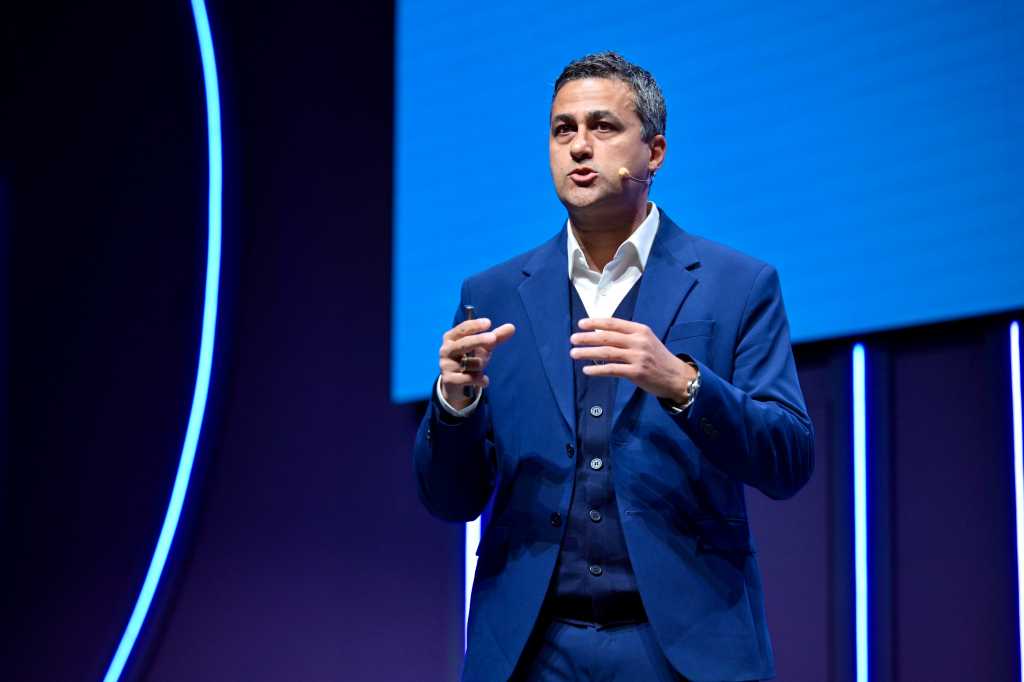
“We’re combining Salesforce’s metadata model and catalog with Informatica’s enterprise-wide catalog to build a complete data index,” Rahul Auradkar, Salesforce’s EVP and GM of unified data services, Data 360 and AI foundations, said in a briefing.
Enterprise master data management (MDM), powered by Informatica, will provide a “golden record” for data across assets, products, suppliers, and other areas, he explained. Agents will get a map of assets across systems, whether on premises or in data lakes or other repositories. Data lineage capabilities will also trace data journeys, from origin to ingestion. Further, ‘zero copy’ capabilities mean data doesn’t have to be moved around, thus lowering storage costs.
Informatica’s IDMC “replaces guessing” by focusing on the entire data chain, discovering, cleaning, protecting, and unifying; this reflects Informatica’s mission of “data without boundaries,” Krish Vitaldevara, Informatica chief product officer, said during the briefing.
“It’s the governed power plant that feeds the rest of the enterprise,” he said. “We are going to be the Switzerland of data and the Switzerland of AI.”
To bolster this, Salesforce’s MuleSoft provides real-world operational signals, such as inventory changes or shipment delays. This real-time working memory is critical, said Auradkar. “An agent needs to know what is happening right now.”
Agentforce 360 is built on four layers: The first combines Data 360, Informatica, and MuleSoft to support context; the second is access to 20 years of business logic and workflows (sales, service, marketing, commerce) built into Salesforce; the third, a ‘command center where enterprises can build, govern and orchestrate specialist agents (such as ‘campaign agent’ or ‘supply chain agent’); and the fourth is where enterprises actually deploy agents.
The platform was built to be open and extensible, so enterprises are not limited to the Salesforce ecosystem. They can use third-party agents, such as those built on OpenAI, Amazon Web Services (AWS), Microsoft Azure, Google Cloud Platform (GCP), Oracle, or hybrid environments, Auradkar explained.
AI can be ‘stupid’
Informatica’s Vitaldevara emphasized the importance of quality, consistency, and context around data, noting that this is what delivers full value. But different systems have their own languages, rules, and truth, and AI can’t always see the full picture because data is scattered, stale, or inconsistent.
“We all know data alone is not enough, and context is a new currency in the world of agentic AI and agentic enterprise,” said Vitaldevara. Lineage, relationships, governance — these all tell AI what a product is, how a process works, where data comes from, and whether it can be trusted.
“Context is this digital equivalent of AI’s working memory and situational awareness,” said Vitaldevara.
Salesforce’s Auradkar agreed that current AI agents just see “fragments”; without shared understanding, they are forced to guess. “The models are incredibly intelligent, but they tend to be stupid,” he said. “They know almost everything about the world, but very little about your businesses.”
But when every system, workflow, and agent operates within the same context, decision-making can be sped up dramatically. “AI becomes more accurate and automation becomes more reliable,” said Vitaldevara.
Going beyond CRM data
Whether building specialized AI agents (for sales, marketing, or customer service), or more general agents intended for broader scenarios, enterprises must go beyond CRM data, Valoir’s Wettemann emphasized. Further, to get to any “reasonable degree of accuracy” with AI, data must be in context and supported by a “real metadata fabric,” she said.
“The kind of data lineage that Informatica provides really lowers both the learning curve and the technology curve,” said Wettemann.
More generally, when it comes to AI agents, she noted that enterprises have moved beyond the fear of missing out (FOMO) to the fear of messing up (FOMU).
They worry: “How do I even conceptualize bringing in ERP data to inform an agent and make sure that A) it’s the right data, B) that it’s not too much, and C) that I’m not overwhelming my infrastructure folks? And, finally, and maybe even most importantly, that I’m not spending a ridiculous amount of money,” she said.
Indeed, pricing continues to be top of mind for enterprises, particularly as Salesforce has discussed raising prices for its AI agent platforms, “monetizing” new AI contracts, and returning to seat-based and usage-based contracts.
“So it’s the pricing, but it’s also the visibility into pricing and the predictability of pricing that people are really paying attention to,” said Wettemann.
To address concerns from Informatica customers about what this integration might mean for them, Wettemann pointed to other recent acquisitions (like Tableau) where Salesforce offered a clear roadmap and strong support mechanisms.
“Judging by the way Salesforce integrated Tableau and Tableau customers into Salesforce, Informatica customers don’t have anything to worry about,” she noted.
During the briefing, however, Salesforce and Informatica did not reveal any details on licensing or pricing for the new integrated platform, nor did they explain how existing Informatica customers would be accommodated.
Ha liderado varias iniciativas de transformación digital y generado beneficios económicos. Los ejecutivos reconocen sus competencias de liderazgo en el cambio, ya que ha mejorado la experiencia tanto de los clientes como de los empleados. Las arquitecturas que ha ayudado a implementar son ahora estándares de plataforma y constituyen la base de las estrategias de datos e inteligencia artificial de su organización.
Ahora se pregunta si está preparado para un puesto de CIO u otro cargo de alto nivel en las áreas de datos, digitalización o seguridad.
El 24.º informe anual State of the CIO de CIO.com revela que más del 80% de los CIO reconoce que su función se centra cada vez más en lo digital y la innovación, que están más involucrados en liderar la transformación digital, y que el CIO se está consolidando como agente del cambio. Si cumple estos requisitos, es lógico plantearse cómo ascender a un puesto de nivel C.
Los líderes de la transformación son excelentes candidatos, pero necesitan más
Liderar iniciativas de transformación es un requisito previo importante para los puestos de alto nivel, pero no basta. Las responsabilidades aumentan cuando se asume la gestión de resultados y riesgos en todas las iniciativas y operaciones de TI. En consecuencia, los líderes tecnológicos sénior deben definir una estrategia respaldada por el director ejecutivo y el financiero, además de supervisar un modelo operativo digital en constante evolución.
Rani Johnson, CIO de Workday, considera que “los aspirantes a líderes deben pasar de gestionar la ejecución de cambios basados en proyectos a asumir la plena responsabilidad de la tecnología, la arquitectura y la estrategia de TI de la empresa”, afirma, para añadir: “Deben desarrollar experiencia profunda y práctica en infraestructura de TI, ciberseguridad, plataformas de IA, operaciones de sistemas centrales y gobernanza de datos, pero también demostrar su capacidad para traducir la estrategia técnica en valor empresarial sostenido, garantizando la estabilidad operativa”.
Para prepararse, los líderes deben adoptar un programa de aprendizaje permanente. El modelo 70-20-10 —70% experiencias laborales, 20% aprendizaje social y 10% educación formal— es una referencia útil para quienes aspiran a oportunidades de alto nivel.
Experiencia: de experto a influenciador sin especialidad
Muchos líderes de transformación buscan dominar todas las áreas de sus programas, incluso en iniciativas de alcance corporativo que se extienden a varios años. Algunos aspiran a tener total visibilidad de sus programas para dirigir prioridades y mitigar riesgos.
Sin embargo, los líderes de nivel C no disponen de tiempo para sumergirse en cada detalle técnico ni suelen ser expertos en ellos. El 70% del aprendizaje experiencial al que deben aspirar implica adentrarse en áreas fuera de su especialidad.
Para Kathy Kay, CIO de Principal, “asumir un puesto tecnológico de alto nivel no consiste en tener todas las respuestas, sino en aprender a liderar en la ambigüedad y la complejidad. Las experiencias más valiosas provienen de asumir tareas exigentes, resolver problemas empresariales de gran impacto e influir en toda la organización, no sólo en TI. Cuando esto se combina con el acompañamiento de mentores y colegas sólidos, se crea una base duradera para el liderazgo”.
Experiencias laborales que conviene buscar
· Visitar clientes junto a ventas y marketing para comprender necesidades y flujos de trabajo completos.
· Asesorar a líderes de otras áreas para ganar confianza en la orientación fuera del propio dominio.
· Facilitar talleres, experiencia clave antes comités ejecutivos o consejos de administración.
· Identificar líderes detractores del cambio tecnológico y romper mentalidades de statu quo.
· Convertirse en agente de cambio apoyando a equipos rezagados en el uso de datos e IA.
Una segunda área clave es desarrollar la capacidad de escuchar, cuestionar, adaptarse y pivotar. Los líderes de alto nivel deben vender una visión, planificar continuamente y saber cuándo las necesidades del mercado o las partes interesadas requieren replantear objetivos.
Cameron Daniel, CTO de Megaport, explica que “las nuevas tecnologías y los cambios en las prioridades pueden volver obsoletos los planes de la noche a la mañana. Los líderes exitosos anticipan el cambio y preparan a sus equipos para enfrentarlo, asegurando que las soluciones evolucionen con la innovación mientras mantienen el impacto empresarial”.
Aprendizaje social: centrarse en IA y tecnologías emergentes
Existe revuelo sobre la IA generativa y cuándo emergerán capacidades más avanzadas. Los comités ejecutivos esperan que los líderes de nivel C filtren el ruido existente, dirijan la estrategia y establezcan la gobernanza de datos e IA.
Para ello no pueden basarse únicamente en comunicados o pequeños POC. Para ampliar su visión han de conectarse con pares y unirse a comunidades donde se comparten inversiones reales y resultados empresariales.
Comunidades recomendadas
· Asociación de CIO de Canadá.
· Comunidad Digital Trailblazer.
· Comunidad de pares de Gartner.
· Foro global de CIO.
· CIO HotTopics.
· Consejo ejecutivo de CIO de IDC.
· Red de liderazgo Inspire.
· Comunidad de CIO de MIT Sloan.
· SIM.
· Women Tech Network.
Muchas se encuentran abiertas a líderes con aspiraciones.
Por ejemplo, en Coffee With Digital Trailblazers se debatió cómo los líderes se preparan para puestos de alto nivel. Derrick Butts, de Continuums Strategies, sugiere integrarse en equipos que trabajan en detección de amenazas de IA o clasificación de ataques automatizados.
Mientras, Joe Puglisi, estrategia de crecimiento y CIO a tiempo parcial, destaca la importancia de la curiosidad y las preguntas “por qué”: “Sólo así se descubren nuevas y mejores formas de hacer las cosas”.
Otra vía es reunirse con expertos para comprender los datos detrás de una operación.
“A medida que la IA agéntica se convierte en realidad, la alfabetización en datos es fundamental —explica Jamie Hutton, CTO de Quantexa—. Si no puedes explicar el origen de tus datos, no puedes implementar IA de forma responsable”.
El aprendizaje social —preguntar, observar, profundizar en datos operativos— ayuda a identificar oportunidades significativas de IA.
“El camino más rápido hacia la alta dirección es buscar problemas que pongan en juego la empresa”, opina a su vez Miles Ward, CTO de SADA.
No descuidar el aprendizaje formal
Muchos líderes creen que su rol no deja tiempo para la educación formal, pero el aprendizaje continuo amplía la mentalidad y les expone a nuevas ideas.
“En una época de rápida innovación, el 70-20-10 es insuficiente: ese 10% debe aumentar”, sugiere Cindi Howson, director de Estrategia de Datos e Inteligencia Artificial de ThoughtSpot. Para ello recomienda una formación compuesta de miniclases prácticas y cumbres con líderes de vanguardia en IA.
Oportunidades de aprendizaje formal
· Leer listas recomendadas de libros sobre transformación digital y liderazgo CIO.
· Escuchar podcasts clave como CIO Leadership Live, CXOTalk, Technovation o CIO in the Know.
· Explorar cursos online como los de Executive Leadership y CIO de LinkedIn o Udemy.
· Considerar programas de grado de CTO en universidades como Berkeley, Carnegie Mellon o Wharton.
Los puestos de nivel C no son para todos. En State of the CIO, el 43% calificó el nivel de estrés del cargo con 8 o más sobre 10. Quienes aspiran a estos roles deben comprender plenamente sus implicaciones antes de adoptarlo como objetivo profesional.
AI tech churn is becoming a mounting problem for enterprises, which find themselves continually rebuilding their AI infrastructures in response to evolving AI capabilities, as well as AI strategies in flux.
According to a survey from AI data quality vendor Cleanlab, 70% of regulated enterprises — and 41% of unregulated organizations — replace at least part of their AI stacks every three months, with another quarter of both regulated and unregulated companies updating every six months.
The survey, of more than 1,800 software engineering leaders, underscores how organizations still struggle both to keep up with the ever-changing AI landscape and to deploy AI agents into production, says Cleanlab CEO Curtis Northcutt.
Just 5% of those surveyed have AI agents in production or plan to put them into production soon. Based on the surveyed engineers’ answers about technical challenges, Cleanlab estimates that only 1% of represented enterprises have deployed AI agents beyond the pilot stage.
“Enterprise agents are totally not here, and they’re nowhere near what people are saying,” Northcutt says. “There are literally hundreds of startups that have tried to sell components of AI agents for enterprises and have failed.”
The speed of evolution
Even without full production status, the fact that so many organizations are rebuilding components of their agent tech stacks every few months demonstrates not only the speed of change in the AI landscape but also a lack of faith in agentic results, Northcutt claims.
Changes in the agent tech stack range from something as simple as updating the underlying AI model’s version, to moving from a closed-source to an open-source model or changing the database where agent data is stored, he notes. In many cases, replacing one component in the stack sets off a cascade of changes downstream, he adds.
“When you go to an open-source model that you run on your own server, your whole infrastructure changes, and you have to deal with a lot of things you weren’t dealing with before, and then you might go, ‘That was actually worse than we expected,’” Northcutt says. “So you go back to a different model, but then you switch to cloud, and the cloud API is actually totally different than the OpenAI API, because they are not in agreement.”
Cozmo AI, a voice-based AI provider, has also observed a pattern of frequent changes in agent tech stacks, says Nuha Hashem, cofounder and CTO there. The Cleanlab survey matches the churn Cozmo sees across regulated environments, she says.
“Many client teams swap out parts of their stack every quarter because the early setup is often a patchwork that behaves one way in testing and a different way in production,” she adds. “A small shift in a library or a routing rule can change how the agent handles a task, and that forces another rebuild.”
While the speed of AI evolution can drive frequent rebuilds, part of the problem lies in the way AI models are tweaked, she says.
“The deeper issue is that many agent systems rely on behaviors that sit inside the model rather than on clear rules,” Hashem explains. “When the model updates, the behavior drifts. When teams set clear steps and checks for the agent, the stack can evolve without constant breakage.”
Low levels of faith
Another problem seems to be low satisfaction with existing components of AI stacks. The Cleanlab survey asked about user experience with several components of agent infrastructure, including agent orchestration, fast inference, and observability. Only about a third of those surveyed say they are happy with any of the five components listed, with about 40% saying they are looking for alternatives for each of them.
Just 28% of respondents are satisfied with the agent security and guardrails they have in place, signaling a lack of trust in agent results.
While the Cleanlab survey may paint a bleak picture of the current state of agents, several AI experts say its conclusions appear accurate.
Jeff Fettes, CEO of AI-based CX provider Laivly, isn’t surprised that many enterprises rebuild part of their agent stacks every few months. He sees a similar phenomenon.
“What separates out the more successful organizations with respect to AI is their ability to iterate,” he says. “What you’re seeing there is companies haven’t let go of the old way of doing things, and they’re really struggling to keep up with how fast AI itself as a technology is evolving.”
For most other major IT platforms, CIOs go through a long evaluation and deployment process, but the rate of AI advancements have destroyed that timeline, he says.
“IT departments used to go through big arcs of planning, and then transform their tech stack, and it would be good for a while,” Fettes says. “Right now, what they’re finding is they get halfway through — or a small way through — the planning process, and the technology has moved so far they have to start over.”
Fettes sees many of his customers scrapping AI pilots as the technology evolves.
“It’s creating a situation where a lot of companies have to abandon existing use cases,” he says. “We know we’re obsoleting our own technology in a very short period of time.”
In addition to the fast-moving technology, the AI marketplace offers so many choices that it’s difficult for CIOs to keep up, Fettes says.
“There have been hundreds and hundreds of new companies that have flooded into the space,” he adds. “There’s a lot of stuff that doesn’t work. Sometimes it’s hard to figure it out.”
The risks of staying put
Tapforce, an app development firm, also sees enterprises rebuilding their AI stacks every few months, driven by constant evolution, says Artur Balabanskyy, cofounder and CTO there.
“What works now may become suboptimal later on,” he says. “If organizations don’t actively keep up to date and refresh their stack, they risk falling behind in performance, security, and reliability.”
Constant rebuilds don’t have to create chaos, however, Balabanskyy adds. CIOs should take a layered approach to their agent stacks, he recommends, with robust version control, continuous monitoring, and a modular deployment approach.
“Modular architectures allow leaders to destabilize the full stack as well as swap out components, when necessary,” he says. “Guardrails, automated testing, and observability are all essential to ensure production systems remain reliable even as tech evolves.”
Cleanlab’s Northcutt recommends IT leaders go through a rigorous process, including a detailed prerequisite description of what an agent is expected to do, before deployment.
“People are like, ‘Let’s have AI do customer support,’ and that’s a very high-level thing,” he says. “The number one step is, ‘Let’s define very precisely, exactly, where does AI start? What do we expect good performance to look like? What do we expect it to accomplish? What tools is it actually going to use?’”
The survey results suggest that widespread deployment of AI agents may still be years away, Northcutt says. He predicts the estimated 1% of organizations with agents in production will rise to 3% or 4% in 2027, with true agents in production reaching 30% of enterprises in 2030.
He believes AI agents will lead to major benefits, but he urges evangelists to cut back their rhetoric in the meantime.
“We can now use AI to get better at our jobs, but the whole idea of enterprise AI automating everything and agents in every product, it’s coming,” he says. “If we can just kind of keep it cool, guys, and set reasonable expectations, then all this money invested might actually play out.”
IT governance is simultaneously a massive value multiplier and a must-immediately-take-a-nap-boring topic for executives.
For busy moderns, governance is as intellectually palatable as the stale cabbage on the table René Descartes once doubted. How do CIOs get key stakeholders to care passionately and appropriately about how IT decisions are made?
America’s 18th century would-be constitutionalists — 55 delegates, including George Washington, James Madison, Benjamin Franklin, and Alexander Hamilton — knew something about governance. They understood that if people always made the right choices and did the right things a constitution would be superfluous. Governance is necessary because humans are flawed.
The authors of the US Constitution knew they did not want the autocracy of a monarchy they had just won independence from but they were also painfully aware that the anarchy emanating from the Articles of Confederation was not a viable path forward. So, they crafted a constitution. Should CIOs do something similar?
Rethinking IT governance
The delegates to the Philadelphia Constitutional Convention came together because the current system of governance was not working. Has IT governance sunk to such a state of disrepair that a total rethink is necessary? I asked 30 CIOs and thought leaders what they thought about the current state of IT governance and possible paths forward.
The CFO for IT at a state college in the northeast argued that if the CEO, the board of directors, and the CIO were “doing their job, a constitution would not be necessary.”
The CIO at a midsize, mid-Florida city argued that writing an effective IT constitution “would be like pushing water up a wall.”
The CIO at a billion-dollar-plus conglomerate questioned whether most organizations were “sophisticated enough to develop a meaningful constitution.”
The CIO at a southern manufacturer thought that an IT constitution would be a great idea if the right people were on the committee that crafted it — and, very importantly, if there was an “IT Supreme Court” to rule on disputes.
The executive in residence at an AI infrastructure supplier asked, “What would an IT constitution look like?”
The responses of these learned interlocutors gravitated immediately to the question of whether an IT constitution could work — not whether an improved form of IT governance was necessary.
In Democracy in America, Alexis de Tocqueville argued, “A new political science is needed for a world altogether new.”
Everyone I speak too agrees that IT governance can and should be improved. Everyone agrees that one can’t have a totally centralized, my-way-or-the-highway dictatorship or a totally decentralized you-all-do-whatever-you-want, live-in-a-yurt digital commune. Has the stakeholder base become too numerous, too culturally disparate, and too attitudinally centrifugal to be governed at all?
CIOs need to have a conversation regarding IT rights, privileges, duties, and responsibilities. Are they willing to do so?
The CIO at one of the best governed counties in America polled 268 of his peers asking whether they were concerned or implementing any form of governance, risk, and compliance within their organization. Less than 2% replied affirmatively. It appears that IT governance is not a hill that CIOs are willing to expend political capital on.
Aristotle was a big fan of “thinking on thinking.” IT governance is a subject that deserves much more attention than it is getting. I believe a plausible, no-damage-to-professional-credibility case can be made by CIOs stressing the need to improve mutual understanding of stakeholders.
Psychologists tell us that individuals make approximately 35,000 decisions a day. How many of these are technology related? Would having an IT constitution improve individual IT decision-making?
Political scientists tell us that the current dysfunction of America’s three branches of government is in no small way attributable to the fact that citizens, elected representatives, and public servants are essentially working from hundreds of different “realities,” based on situation, education, skill set, and/or aspiration. The folks who crafted the US Constitution thought they had solved this problem. How do we get to the point where we can talk to one another intelligibly?
In contemporary law there is the concept of duty of care — the basic idea that people in specific positions or occupations are responsible for putting in place measures that help ensure, as far as possible, the safety or well-being of others who are under their care.
Putting in place an IT constitution that celebrates subsidiarity — the idea that problems are best solved by people nearest to them and lets stakeholders shape the way governance occurs and authority is exercised — is an important agenda item for 2026.
The split of BMC into two companies, announced just over a year ago, marked the evolution of this long-standing business project into two players: one, BMC, focused on mainframe automation and software, the firm’s original business; and the other, BMC Helix, focused on IT services and operations.
Raúl Álvarez, vice president of worldwide sales for BMC Helix, explains in an interview with Computerworld Spain how specialization, agility, and a technological focus are driving accelerated growth for the new entity.
The split, he asserts, citing analyst data, has enabled the company to accelerate innovation, strengthen alliances, and position itself in the IT service management (ITSM) market, where other technology companies such as ServiceNow, Ivanti, Jira Service Management (from Atlassian), SolarWinds, and IBM also operate.
The result of this move, he adds, is a faster, more customer-focused organization, ready for a new era of AI-based agent automation.
Here is that conversation, edited for length and clarity.
Why did BMC decide to split into two companies, and what strategic needs does this separation address in the specific case of BMC Helix?
Raúl Álvarez: I’ve been working at BMC for 26, almost 27 years. So, as you can imagine, I’m not at all neutral because this is the company of my life. I’ve built my career at BMC.
Why do I say this? Because, splitting the company has an emotional impact: You stop working day-to-day with half your family. It’s a bittersweet feeling: On the one hand, you stop working with people who have made you who you are; on the other, there’s the professional aspect, which is what you mentioned, and the logic behind splitting the company in two, the main reason for which was focus and specialization.
Our owners rightly considered, in my opinion, and setting aside any emotional considerations, that we [BMC Helix] had already achieved sufficient size and growth to be an independent company. Furthermore, as you can see, focus is essential in such a dynamic market, where AI and innovation must be tangible and rapid. The announcement of the separation was made last year, and it officially began on April 1 with two separate companies. Without a doubt, time has proven that the decision was the right one.
Why do you say that?
Because that’s how our clients perceive it. They tell us that this specialization is helping us provide better service. And not just them, but analysts, too. I don’t know if you’ve seen Forrester’s latest quadrant for ITSM, which places us as leaders. I think the last time we were leaders was in 2011. We’re leaders again in a very competitive market. That’s why, as I said, it’s clear that the focus is making sense.
Erik Cronberg
BMC Hellix.
What role does BMC Helix play within the company’s new ecosystem, and how does it differ from BMC’s historical mainframebusiness?
The mainframe market is fairly static. There’s a lot of talk about its decline, but the reality is that the large companies using it continue to grow. I come from that world, and I know it works very well, but it’s not a growing market; it’s a replacement market. Consequently, the separation gives us differentiation per se: focus, faster innovation, and the ability to generate more value. It’s a SaaS model, with more aggressive growth, focused on new clients, new brands, adding value to the installed base, and all the artificial intelligence, agent-based AI, and use cases.
What growth and specialization opportunities are opening up for BMC Helix after the spin-off, especially in the ServiceOps and distributed operations market?
Well, to be honest, you could say it was almost step one. When BMC was a single company, everything was aligned in our catalog, but there were always overlapping schedules. Now, being independent gives us agility in decision-making. Before, you had to see how each move fit into a huge portfolio; now it’s a single line, and that accelerates everything: marketing, go-to-market, resources, roadmap, development, etc.
Looking back 10 years, we’ve done a tremendous amount of work evolving from on-premises technologies like Remedy, Proactive, TrueSight, and Patrol to modern cloud and container architectures. That effort has put us in a very good position. Having changes, configurations, service models, assets, and metrics all in one place is invaluable. And the emergence of AI — first generative, now agent-based — is a huge opportunity because this structured data multiplies its value.
How was this whole process put into action?
It’s very simple: On day one, we reorganized everything. Before, we had product managers for each module; now they’re aligned with roles: change manager, asset manager, governance manager, and so on, because we’re creating agents for those roles. Each agent automates repetitive tasks that historically required a lot of effort from people. We launch new agents every two, three, or four weeks. And we prioritize based on real impact: which agent can automate the most work for our clients, how much time it saves, and so on. Undoubtedly, having 40 years of experience and so much data makes this strategy much easier.
The separation also opens doors to strategic alliances that were previously impossible. Where will they lead?
We’re working extensively on these areas. We have several layers to work on. First, we collaborate with large consulting firms, especially in the banking sector, on compliance matters, regulations like DORA, audits, and so on. In this regard, we’re creating dedicated agents for these tasks. Then, working with integrators allows us to gain specialization, scalability, and project capacity.
As we expand our network with new logos, we need well-trained partners. And finally, I can’t forget the hyperscale providers: Google, AWS, and Oracle. Our SaaS platform resides in their clouds, so we’re exploring ways to leverage their LLMs, their datacenters, and establish a presence in their marketplaces. Consequently, both forging technological alliances and strengthening our platform are key actions that were part of the agenda we defined a year ago.
What specific benefits will BMC Helix customers gain in terms of agility, technological focus, and speed of delivery in digital transformation projects?
First, operational robustness: incidents, changes, configurations, IT, availability, capacity. That’s fundamental. But the real opportunity lies in AI and agents. And here the benefits are very clear: agility, accuracy, predictability, and quality. Automation reduces hours spent on repetitive tasks. Many clients don’t complete all the projects they want due to a lack of time and resources. This will allow them to rebalance priorities.
What impact is expected from the adoption of agent-based AI and intelligent automation technologies from BMC Helix on the IT operations of companies such as Telefónica, BBVA, or the public administration?
I would summarize it in three words: agility, accuracy, and self-service. IT is becoming increasingly complex, which is why AI will allow us to identify and resolve problems faster, make decisions sooner, and free up resources for higher-value tasks. Self-service is also key: enabling users to resolve issues themselves with the help of agents, thus freeing up support teams.
The channel is important to BMC Helix. What messages were conveyed at the event held in Madrid, and how do you see its potential to generate business with AI?
It’s fundamental. We depend 100% on the channel to grow sustainably and guarantee the success of our projects. We’ve invested in training and equipping them with skills, and we need to continue expanding that network: specialized integrators, solid partners, scalability. Without a doubt, the company’s future depends on a strong channel.
Finally, how do you foresee 2025 ending and what are your expectations for 2026?
The year is looking good. It’s a very active market, and we’re in a good position. The focus now isn’t just on sales, but on ensuring adoption: customers in production, using the agents, and satisfied. For that, we have a solid pipeline and a highly specialized team. That’s why we’ve developed an aggressive growth plan — which has to be aggressive by nature — but we’re optimistic. Product, focus, market, and analysts are all aligned. Now it all depends on us executing well.
A principios de este año, el grupo de laboratorio de la Universidad de Washington que lidera David Baker —ganador de la mitad del Nobel de Química en 2024 por el diseño de proteínas con computación— anunciaba un nuevo logro: el desarrollo de proteínas generadas mediante inteligencia artificial para contrarrestar las toxinas mortales del veneno de serpientes. Un problema que mata a más de 100.000 personas cada año y deja al triple con lesiones graves, pero para el que actualmente solo hay tratamientos de alto coste y eficacia limitada. El hallazgo abre camino a una nueva generación de medicamentos más seguros y rentables y que estarían ampliamente disponibles. Yendo más allá, esta investigación prueba el potencial de la IA para el desarrollo de nuevos fármacos.
Un mercado en crecimiento
La industria farmacéutica es consciente desde hace tiempo de las posibilidades que estas herramientas abren en investigación. Las cifras lo indican: según Mordor Intelligence, el mercado mundial de IA en farma moverá 4.350 millones de dólares en 2025, con previsión de crecer a casi un 43% de inversión anual hasta 2030, cuando se estima que alcanzará los 25.370 millones. “Las principales compañías farmacéuticas están transformando sus modelos operativos hacia alianzas interindustria con proveedores tecnológicos, canalizando el valor de acuerdos multimillonarios hacia líneas de I+D compartidas”, explican. Las estimaciones son similares a las de la consultora especializada Evaluate Pharma —perteneciente a la compañía global de tecnología farmacéutica Norstella—. Esta calcula que la inversión en IA de la industria será de 25.000 millones de dólares para dentro de cinco años, habiendo incrementado su valor en un 600% en este periodo. Apunta, además, a que la aplicación de IA en el desarrollo de nuevos fármacos crezca más de un 40% anual.
Sobre el tipo de tecnología concreta utilizada, Mordor señala al machine learning como la principal, aunque con la IA generativa ganando momento —junto con la computación cuántica—. Precisamente en relación a esta tecnología, un informe de Globant y MIT Technology Review Insights estima en un 73% el porcentaje de farmacéuticas que están haciendo pruebas piloto o implementando GenIA a nivel global. El campo de trabajo —y las herramientas para enfrentarlo— es amplio.
Y su contribución, o al menos la percepción actual de los resultados logrados y de lo que se puede alcanzar, muy positiva. “La inteligencia artificial se ha convertido en un catalizador decisivo para la transformación de la I+D farmacéutica”, afirma Elena Medina, directora del área Digital de Sanofi en Iberia. Medina destaca varios de los beneficios de integrar la IA, como la capacidad para analizar grandes volúmenes de datos biomédicos, identificar patrones y predecir las propiedades de nuevas moléculas, que, indica, está reduciendo significativamente el tiempo y el coste asociados al desarrollo de fármacos.
En una línea similar se manifiesta Mariluz Amador, directora del departamento médico de Roche Farma España, cuando destaca que “la inteligencia artificial tiene un potencial transformador sin precedentes para la I+D biomédica”. La portavoz de Roche desarrolla esta visión, identificando la capacidad de la IA “de aportar una mayor eficiencia en la identificación de dianas terapéuticas, al abrir la posibilidad de analizar volúmenes masivos de datos genómicos, proteómicos y de biología de sistemas para predecir y validar nuevas dianas de forma mucho más rápida y precisa que los métodos tradicionales”. También incide en la optimización de compuestos y la posibilidad de “diseñar virtualmente millones de moléculas candidatas” —como en el caso del laboratorio de Baker—, “anticipando su eficacia, toxicidad y propiedades farmacocinéticas”, y en su aplicación en el diseño de estudios, potenciando “el análisis de los datos de seguridad y eficacia en tiempo real, lo que podría reducir la duración de las fases clínicas”.
Roche Farma
“La inteligencia artificial tiene un potencial transformador sin precedentes para la I+D biomédica”, afirma Mariluz Amador (Roche Farma)
Amador valora además su potencial para impulsar la medicina personalizada de precisión, precisamente por la capacidad de “analizar grandes cantidades de datos en tiempo récord, correlacionando patrones genéticos, datos de salud digital y la respuesta a tratamientos para predecir qué perfil de paciente se podría beneficiar más de un fármaco específico”.
Casos de uso
En el caso de Roche, la integración de la IA se está ejecutando “a distintos niveles”, explica Amador, “como un elemento transversal capaz de impulsar nuestra estrategia de futuro. Somos una empresa data-driven con una profunda experiencia en todo lo que tiene que ver con el cuidado de la salud, y en este sentido la IA es una herramienta muy potente para poder extraer valor de todos esos datos”. La directora del departamento médico de la compañía en España destaca como una de las áreas de mayor impacto la de I+D de nuevos medicamentos en sus distintas fases, “donde la integración de plataformas de IA y machine learning puede suponer una auténtica revolución”. En este campo añade “la posibilidad de desarrollo de capacidades internas para el análisis avanzado de datos del mundo real”, el denominado como Real-World Data o RWD. La agencia del medicamento estadounidense, la FDA, incluye en este tipo de información datos derivados de historiales médicos electrónicos o de reclamaciones médicas o datos de registros de productos o enfermedades, entre otros. Este elemento, señala Amador, “viene a reforzar nuestro enfoque de medicina personalizada, donde estos datos que se generan fuera del entorno clínico, y que pueden medirse gracias a las nuevas tecnologías digitales, tienen también una enorme importancia”.
También en Sanofi catalogan la IA como un factor ya transversal, con distintas aplicaciones. Uno de los pilares sería la “IA experta”, empleada por los equipos de I+D y de fabricación y suministro, explica Medina, quien apunta a su uso en el análisis de grandes cantidades de datos “para comprender mejor la biología de las enfermedades, impulsar la traducción clínica, optimizar el diseño de ensayos clínicos y aumentar la probabilidad de éxito. Este avance nos permite satisfacer las necesidades de los pacientes de forma más rápida y segura”. Pone ejemplos concretos, como el uso del LLM CodonBERT para el diseño de vacunas de ARNm. También se emplean grandes modelos de lenguaje en la redacción de informes clínicos, lo que les permite reducir los tiempos de trabajo significativamente. Medina añade su enfoque de “IA Snackable” que, a través de herramientas propias como Plai, se integran en el flujo de trabajo diario para, por ejemplo, el apoyo en la toma de decisiones estratégicas.
Sanofi
“Este avance nos permite satisfacer las necesidades de los pacientes de forma más rápida y segura”, cree Elena Medina (Sanofi)
“Nuestra ambición es convertirnos en la primera compañía biofarma orientada a la I+D impulsada por inteligencia artificial a gran escala”, explica. Esto se traduce en una estrategia basada en una arquitectura integral y no en casos de uso aislados, a través de “un despliegue generalizado, resultados medibles e impacto diario en todas las funciones del negocio”. Se trata, insiste, de “transformar fundamentalmente nuestra forma de trabajar y pensar”. Desde la parte de TI, esto “implica mucho más que añadir una nueva capa de tecnología. Requiere rediseñar procesos, actualizar arquitecturas, fortalecer la gobernanza de datos, adoptar enfoques responsables como garantizar la calidad y la trazabilidad de toda la información utilizada por los modelos, etc”. Para esto han desarrollado un marco propio, denominado RAISE —siglas de IA responsable para todos en Sanofi—, con el que buscan equilibrar innovación con gestión de riesgos. Medina añade la necesidad de invertir en aspectos como la formación de talento o el refuerzo de la cultura digital “para garantizar un uso responsable y sostenible de la IA”.
En la misma línea de compromiso de Sanofi con la IA está el desarrollo de Concierge, herramienta de IA generativa propia pensada para agilizar las tareas diarias. Su director global de producto es Cyril Zaidan, quien explica que,“a diferencia de las herramientas generalistas, Concierge opera completamente en un entorno protegido, comprende la terminología y los flujos de trabajo farmacéuticos y proporciona respuestas alineadas con más de 15.000 guías y procedimientos internos”. La herramienta funciona no solo para resolver dudas, sino que tiene usos más amplios, desde automatizar tareas administrativas a redactar mails y gestionar listas de tareas.
“El mayor desafío suele ser la complejidad del ecosistema: más de 20.000 puntos de información, múltiples sistemas heredados y estrictos requisitos de seguridad y cumplimiento”, detalla Zaidan, quien destaca también la parte humana de incorporarlo a las rutinas diarias y conseguir que se apoye el cambio. Los retos en la integración de IA en farma también replican los de otras industrias. Es el caso de la calidad de los datos, “ya que la IA puede ser tan buena como los datos con los que se entrena”, recuerda Amador. “Aquí nos enfrentamos a la necesidad de estandarizar y armonizar datos clínicos, genómicos y RWD que provienen de fuentes muy diversas, garantizando que sean de alta calidad, completos y anotados correctamente. También hemos de avanzar en entender cómo la IA llega a una conclusión, y por supuesto hemos de ser capaces de adaptar las actuales regulaciones al nuevo escenario marcado por la irrupción de la IA”, sintetiza.
Centrándose en Concierge, entre los beneficios detectados tras su despliegue, Zaidan apunta cifras concretas, como un ahorro de algo más de dos horas de trabajo a la semana, pero también aporta una visión de conjunto. “Quizás el resultado más relevante sea el cambio cultural: avanzamos hacia formas de trabajo más inteligentes y colaborativas, donde la IA libera tiempo para centrarse en lo que realmente impulsa la innovación en la atención médica, empoderando a nuestros empleados para que tengan más confianza, estén preparados para tomar decisiones más inteligentes, actuar con mayor rapidez y colaborar con mayor claridad”, resume. Medina coincide cuando dice que la IA “conlleva un cambio profundo” en la forma de trabajo. “Pasamos de procesos lineales a ciclos iterativos donde la experimentación es continua. Y no es una fase puntual: los modelos requieren un seguimiento continuo, actualizaciones y adaptación a las nuevas regulaciones y avances tecnológicos”, sintetiza. Un trabajo continuado a través del que buscar mejores resultados en un sector del que depende tanta gente.
B2B 금융 서비스 업체 컨베라(Convera)의 CISO 사라 매든은 자사 보안 체계를 강화하기 위해 보다 공격적인 접근 방식을 모색하고 있다. 매든은 금융 서비스 시스템을 극한 상황에서 점검하고 방어를 보완해야 할 지점을 파악하기 위해 레드팀 운영을 도입하고자 한다. 또한 레드팀과 블루팀이 협력해 전반적인 보안 수준을 끌어올리는 퍼플팀 활동도 포함할 계획이다.
매든은 “공격적 보안은 반드시 도달해야 하는 영역이라고 생각한다. 그 과정에서 얻는 정보를 기반으로 보안 프로그램과 통제를 더 정교하게 조정할 수 있기 때문”이라고 말했다.
매든이 사이버보안 전략을 발전시키기 위해 공격적 프로그램을 도입하려는 움직임은 비단 매든만의 시도가 아니다.
기업 보안의 기본 임무는 방어다. 회사의 시스템, 데이터, 평판, 고객, 직원 등을 보호하고 지키기 위한 역할이 중심이었다. 그러나 매든과 같은 CISO들은 점점 더 공격적 요소를 전략에 포함하고 있다. 이들은 공격 시뮬레이션을 통해 기술 환경과 방어 태세를 평가하고, 실제 공격 시 해커가 악용할 수 있는 취약점을 식별할 수 있는 가치 있는 정보를 얻을 수 있다고 보고 있다.
이제 더 많은 CISO가 공격적 보안을 필수 요소로 인식하면서, 관련 역량을 구축하고 이를 보안 프로세스에 통합해 공격 연습 과정에서 드러난 정보가 조직 전체의 보안 수준 향상으로 이어지도록 하고 있다.
매든은 “위협 인텔리전스를 활용하고 테이블탑 훈련을 수행하며, 나아가 퍼플팀 운영 단계까지 가기 위해 필요한 시간과 자원을 확보하는 것이 매우 중요하다”라며 “수세에만 몰리는 상황을 피해야 한다”라고 언급했다.
공격적 보안의 구성 요소
공격적 보안은 공격자 관점의 전술을 활용해 조직 내부 IT 환경의 취약점을 찾아내고 해결하는 활동을 뜻한다. 컨설팅 기업 EY에서 글로벌 및 미국 사이버 CTO를 맡고 있는 댄 멜런은 이를 “적대자가 발견하기 전에 취약점을 식별하고 활용해보는 과정”이라고 정의한다.
멜런은 공격적 보안 활동이 여러 단계로 구성된다고 설명한다. 성숙도 스케일의 가장 낮은 단계에는 취약점 관리가 있으며, 그다음 공격 표면 관리와 침투 테스트, 위협 헌팅, 테이블탑 훈련과 같은 적대적 시뮬레이션이 뒤를 잇는다.
그는 “퍼플팀 개념도 중요하다. 공격 시나리오를 기반으로 어떤 방어 체계가 탐지를 수행했어야 하는지, 탐지가 이뤄지지 않았다면 무엇을 어떻게 수정해야 하는지를 살펴보는 과정”이라고 말했다.
또 다른 핵심적 공격적 보안 구성 요소는 다음과 같다.
• 레드팀 운영: 윤리적 해커가 실제 공격을 모사해 탐지 및 대응 능력을 시험한다. 레드팀은 은밀한 전술을 활용해 통제를 우회하고, 데이터 탈취나 권한 상승과 같은 목표 달성을 시도한다. • 적대자 에뮬레이션: 알려진 공격 그룹의 전술·기술·절차(TTP)를 위협 인텔리전스를 기반으로 재현해 방어 도구의 유효성을 검증하고, 사고 대응팀을 실제와 가까운 환경에서 훈련한다. • 소셜 엔지니어링 평가: 피싱, 사전문자(pretexting), 기타 교란 기법을 활용해 사람과 프로세스를 시험함으로써 취약성과 약점을 식별한다. 이는 기술 시스템을 시험하는 침투 테스트의 인간 중심 버전이라 볼 수 있다. • 보안 도구 회피 테스트: 난독화, 암호화, 정상 도구 악용 기법(Living-off-the-land) 같은 회피 기법을 활용해 조직의 보안 기술이 이를 탐지·차단할 수 있는지를 확인하고, 악성 기법으로 우회할 수 있는지를 검증한다.
이 가운데 취약점 관리, 침투 테스트, 피싱 모의훈련 등은 오랫동안 대부분의 엔터프라이즈 보안 프로그램에서 기본 요소였다. 사이버보안 소프트웨어 기업 코발트(Cobalt)의 ‘2025 CISO 퍼스펙티브 리포트’에 따르면 보안 리더의 88%는 침투 테스트를 “조직 전체 보안 노력의 핵심 요소”라고 평가하고 있다.
또한 많은 CISO는 오랜 기간 공격적 보안 역량을 갖춘 인력을 팀 내에 두어 왔다. 사이버보안 교육 업체인 오프섹(OffSec)이 제공하는 OSCP, OSEP, OSCE와 같은 자격증은 오랫동안 높은 수요를 보여왔다. 최근에는 공격적 보안 ·침투 테스트·윤리적 해킹 분야의 자격증 종류도 더욱 다양해지는 추세다.
공격적 보안 기술 자체도 새로운 개념은 아니다. 다만 전문가들은 자동화, 분석, 인공지능 기술이 벤더 제품에 도입되면서 공격적 보안 프로그램의 효율이 크게 향상됐으며, 보안팀이 공격적 보안을 운영에 도입하는 데 필요한 장벽도 낮아졌다고 분석한다.
멜런은 “현재 많은 기술 공급업체가 이런 선제적이거나 공격적인 접근을 지원하기 위한 기능을 시장에 내놓고 있다”라고 말했다.
공격적 보안의 운영 과제
그러나 여전히 많은 보안 부서는 포괄적인 공격적 보안 프로그램을 도입하지 못한 상태다. 멜런에 따르면 특히 중소기업은 공격적 보안 요소가 거의 없거나 아예 없는 경우가 많으며, 예산·인력·역량 부족이 공격적 보안을 도입하거나 성숙시키는 데 가장 흔한 장애물로 작용한다.
CISO들이 공격적 보안을 전략에 적극 포함하지 못하는 또 다른 이유는 해결 능력이 없는 취약점이 노출될 가능성에 대한 우려다. 멜런은 “취약점을 발견하고도 대응할 여력이 없다면, 그 사실을 모른 척할 수 없다는 점이 부담이 된다. 하지만 조직이 발견하든 말든 해커는 결국 그 취약점을 찾아낸다”라고 말했다.
그럼에도 멜런과 여러 전문가들은 해커가 AI를 활용해 더욱 정교하고 빠르게 공격을 전개하는 지금이야말로 CISO들이 공격적 보안 도입과 확장에 나서야 할 시점이라고 강조한다. 전문가들은 보안 총책임자가 보안 격차를 더 신속하게 파악해 해소할 수 있어야 하며, 공격적 보안이 바로 그 역량을 제공한다고 설명한다.
개인정보 보호 및 데이터 거버넌스 자동화 플랫폼 트랜센드(Transcend)의 CISO 자문을 맡고 있는 에이미 카드웰은 “위협 행위자들은 이제 AI 기반 도구로 우리에게 전례 없는 공격을 개발하고 있다. 과거 스크립트 키디 공격은 예측 가능한 수준이었지만, 지금의 공격은 너무 난해해 이해하기도 어려울 정도”라고 말했다. 이어 “스캐닝에만 의존한다면 잠재적 취약점을 너무 늦게 포착하거나 아예 발견하지 못할 수 있다. 공격적 보안을 통해 지속적으로 취약점을 찾아야 한다”라고 강조했다.
공격적 보안의 비즈니스적 근거
멜런은 공격적 보안 활동에서 얻은 정보를 활용해 CISO가 추가 보안 투자에 대한 비즈니스 근거를 마련할 수 있다고 설명한다. 그는 “데이터 기반 증거는 위험을 수치화하고, 문제 해결에 필요한 노력과 비용을 명확히 제시하는 데 큰 도움이 된다”라고 말했다.
통신 기업 미텔(Mitel)의 CISO 빌 던니언 역시 조직 내부에서 공격적 보안을 확대해야 하는 이유가 충분하다고 말한다. 던니언은 “공격적 보안은 결국 공격자의 관점에서 생각하는 일이다. ‘내가 공격자라면 어떻게 침투할까? 어디에 열려 있는 틈이 있을까?’를 스스로 확인함으로써 이를 찾아 고칠 수 있다”라고 말했다. 그는 “보안에서는 모르는 것이 가장 위험하다. 공격적 보안은 내가 모르는 영역을 드러내주고, 알게 되면 대응할 수 있다”라고 설명했다.
던니언은 이미 취약점 관리, 침투 테스트, 위협 헌팅 등 일부 공격적 보안 요소를 도입한 상태지만, 이를 더욱 확장하고자 한다. 예를 들어 현재 비정기적으로 수행하는 위협 헌팅을 정식 프로그램으로 구축하는 방안을 검토 중이다.
딜로이트 캐나다의 IT 보안 선임 매니저 우트카시 초우다리도 많은 기업이 공격적 보안을 도입해야 한다고 추천했다. 그는 공격적 보안을 “정찰대를 보내 성벽과 방어 구조가 제대로 작동하는지 확인하는 과정”에 비유하며, “더 체계적이고 지속적인 검증 방식”이라고 설명했다. 그는 최근 엔터프라이즈 IT 환경이 복잡해지고 공격 표면이 확장되면서 공격적 보안이 필수 요소가 됐다고 덧붙였다.
초우다리는 침투 테스트와 같은 공격적 보안 요소가 ISO 27001 등 규제와 프레임워크, 그리고 비즈니스 파트너와 고객의 요구로 인해 필수적으로 요구되는 경우도 많다고 강조했다.
그는 “공격적 보안은 조직이 위험을 더 정확히 이해하도록 돕는다. 경험적 평가를 제공해 조직 내부의 솔직함을 끌어내고, 무엇을 잘하고 무엇이 부족한지를 명확히 보여준다”라며 “실제 위험을 증명하는 확실한 근거가 된다”라고 말했다.
하지만 초우다리와 전문가들은 진정한 가치를 얻기 위해서는 공격적 보안 요소를 단순히 도입하는 것을 넘어, 공격 프로그램과 방어 프로그램을 통합해야 한다고 강조한다.
초우다리는 “공격은 방어를 대체하는 것이 아니라 방어가 놓친 부분을 강화한다. 공격적 보안은 방어 태세를 한층 강화하며, 공격과 방어가 함께 작동해야 조직이 수동적 대응에서 벗어나 선제적 대응으로 전환할 수 있다”라고 설명했다. 그는 “이렇게 해야 해커가 침투할 가능성을 줄일 수 있다”라고 덧붙였다. dl-ciokorea@foundryco.com
IBM은 AI 애플리케이션 구축을 위한 도구 포트폴리오를 확장하기 위해 클라우드 네이티브 기반 기업용 데이터 스트리밍 플랫폼 컨플루언트(Confluent) 인수에 합의했다.
IBM은 8일 공식 보도자료를 통해 컨플루언트가 IBM 하이브리드 클라우드와 AI 전략에 자연스럽게 부합한다며, 이번 인수가 ‘포트폴리오 전반에서 상당한 제품 시너지’를 이끌 것으로 기대한다고 밝혔다.
컨플루언트는 여러 데이터 소스를 연결하고 데이터를 정제해 일관된 형태로 활용할 수 있도록 지원하는 기술을 제공한다. 이를 통해 고객은 아파치 카프카 기반의 오픈소스 분산 이벤트 스트리밍 플랫폼 위에서 서비스를 구축할 수 있어, 직접 서버 클러스터를 구매하거나 관리해야 하는 부담을 덜 수 있다. 사용 기업은 클러스터 단위로 월 구독료를 지불하며, 저장 데이터와 데이터 입출력량에 따라 추가 비용을 부담하는 방식이다.
IBM은 이번 거래를 110억 달러(약 16조 원) 규모로 산정했으며, 인수는 내년 중반 마무리될 것으로 보고 있다.
컨플루언트의 설립자이자 CEO인 제이 크렙스는 직원들에게 보낸 이메일에서 “IBM은 우리가 그리는 미래와 동일한 방향을 보고 있다”라며 “기업은 모든 비즈니스 영역에서 데이터가 자유롭고 안정적으로 흐르는 지속적이고 이벤트 중심의 인텔리전스를 기반으로 운영될 것”이라고 전했다.
컨설팅 기업 인포테크리서치그룹의 선임 자문가 스콧 비클리는 이번 인수가 IBM에 매우 유리한 결정이라고 평가했다. 비클리는 “컨플루언트는 실시간 데이터를 모니터링할 수 있는 역량을 제공해 IBM의 차세대 AI 플랫폼인 왓슨X 플랫폼의 부족했던 부분을 실질적으로 보완한다”라고 설명하며, 컨플루언트의 기술이 업계 표준 실시간 데이터 스트림 관리·처리 방식에 기반하고 있다는 점도 언급했다.
비클리는 또 “IBM은 이미 AI 모델을 구축하고 학습하는 데 필요한 주요 요소들을 갖추고 있다”라며 “컨플루언트는 조직 전체에서 지속적으로 생성되는 실시간 데이터를 모델에 공급하는 연결 조직 역할을 하게 된다. 이를 통해 실시간 데이터에 반응할 수 있는 더 정교한 AI 에이전트와 애플리케이션 개발이 가속화될 것”이라고 분석했다.
그는 이번 인수가 최근 IBM의 인수 중 가장 큰 규모이며, 장기적 전략의 일환이라고 지적했다. 비클리는 “IBM은 스노우플레이크와 데이터브릭스 같은 AI 네이티브 빅데이터 기업과 경쟁하기 위해 선제적으로 움직이고 있다”라며 “서로 다른 독립 구성 요소를 조합하는 방식보다, 완전한 수직 통합형 AI 플랫폼인 왓슨X가 기업 고객에게 더 매력적일 것이라는 판단을 내린 상태”라고 전했다.
양측 모두에게 이익
비클리는 이번 결정이 레드햇 인수(345억 달러)와 최근의 해시코프 인수(64억 달러)처럼 IBM이 그동안 추진해 온 전략과 흐름을 같이한다고 설명했다. 리눅스, 테라폼·볼트, 카프카 등 지배적인 오픈소스 표준 위에 구축된 이들 기술을 더하며, IBM은 ERP 벤더나 개별 기능 위주의 포인트 솔루션과 구분되는 독립형 수직·하이브리드 클라우드 전략을 완전한 AI 스택 형태로 제공할 수 있게 됐다.
가트너 수석 디렉터 애널리스트 앤드루 험프리스도 IBM MQ를 보유한 IBM이 이벤트 브로커 시장에서 이미 컨플루언트와 경쟁하고 있다고 짚었다. 그는 “일부 기능은 겹치지만 IBM MQ와 카프카는 서로 다른 문제와 활용 사례를 다룬다”라며 “IBM은 두 제품을 결합해 이벤트 기반 아키텍처 전반을 포괄하는 완성도 높은 이벤트 브로커 제품군을 제공할 기회를 얻게 됐다”라고 말했다.
왓슨X의 핵심 구성요소 확보
컨설팅 기업 퓨처럼리서치 부사장 미치 애슐리는 컨플루언트 인수가 왓슨x 기술에서 빠져 있던 핵심 요소를 채우며, IBM에 실시간·관리형 데이터 흐름을 뒷받침하는 오픈소스 기반 기술 기반을 제공한다고 평가했다.
그는 또한 이번 인수가 최근 IBM의 데이터 관련 인수들을 하나의 일관된 아키텍처로 묶는 역할을 한다고 설명했다. 애슐리는 “여기서 중요한 가치는 단순히 카프카라는 기술이 아니라, IBM의 AI 포트폴리오 전반에 신선하고 문맥 있는 데이터를 일관성과 통제력을 갖춘 형태로 전달할 수 있는 능력”이라고 강조했다.
또 다른 컨설팅 기업 그레이하운드리서치 최고 애널리스트 산치트 비르 고기아는 인수 발표 직후 발간한 보고서에서 이번 인수가 “가격이나 단순한 포트폴리오 확장을 넘어서는 변곡점”이라고 분석했다. 그는 “이 인수가 보여주는 진짜 변화는 현대 디지털 기업의 ‘생명선’인 실시간 데이터를 누가 통제할 것인가 하는 문제”라고 말했다.
고기아는 이것이 전술적 결정이 아니라 수년간 구축해 온 아키텍처의 전략적 완성이라고 평가했다. 그는 “기업 리더에게 이번 변화는 지도를 바꾸는 일”이라며 “AI는 더 이상 시스템의 가장자리에 머물지 않고 아키텍처 중심으로 이동한다. 컨플루언트는 그 중심을 실시간·상황 인식·연결 상태로 만드는 계층이 될 것”이라고 전망했다. 이어 “이번 인수로 IBM은 예측만 하는 AI가 아니라, 깨끗하고 연결되고 끊임없이 흐르는 데이터에 기반해 ‘듣고 반응하는 AI’를 제공할 수 있게 된다”라고 분석했다.
옴디아 데이터·AI 수석 애널리스트 스티븐 카탄차노도 “지금 주요 기업들은 모두 엔드 투 엔드 데이터 플랫폼을 구축하는 단계에 있다”라고 말했다. 그는 “컨플루언트 인수는 IBM이 정적 데이터와 동적 데이터, 비정형 데이터와 정형 데이터를 모두 다룰 수 있도록 퍼즐의 마지막 조각을 채운 셈”이라고 설명했다. 이어 “기업들은 생성형 AI와 에이전트형 AI를 실시간 데이터와 스트리밍 데이터에 적용하고자 한다. IBM은 시장에서 가장 큰 플레이어를 확보한 것”이라고 덧붙였다.
비클리는 또 컨플루언트의 최근 매출 성장 둔화와 매각 검토 보도 등을 고려하면 인수 시점도 적절했다고 평가했다. 그는 “결국 이번 거래는 양측 모두에게 이익이 되는 결정”이라며 “IBM은 이제 고위험 전략을 택한 셈이고, 최고의 AI 모델을 보유하는 것만으로는 충분하지 않으며 데이터 흐름을 통제하는 능력이 훨씬 중요해질 것이라고 판단했다”라고 말했다. dl-ciokorea@foundryco.com
AI를 도입하려 할 때 기업의 목표와 실제 실행 사이의 간극을 메우기 어려울 수 있다. 기업은 제품과 업무 흐름, 전략 전반에 AI를 녹여내려 하지만, 분산된 데이터와 불명확한 계획이라는 걸림돌에 가로막혀 실패하는 경우가 많다.
소프트웨어 개발 기업 아라스(Aras)의 CTO 롭 맥어베니는 “협력 중인 글로벌 제조기업에서 자주 마주하는 어려움이 바로 이 문제다”라고 말했다. 그는 “많은 기업이 AI가 필요하다고 막연히 생각한다. 실제 출발점은 AI가 지원해야 하는 의사결정을 먼저 정의하고, 이를 뒷받침할 적절한 데이터가 준비돼 있는지 확인하는 데 있다”라고 설명했다.
최근 맥킨지가 실시한 글로벌 조사에 따르면, 경영진의 약 3분의 2가 자사 조직이 AI를 비즈니스 전반에 확장하는 데 어려움을 겪고 있다고 답했다. 많은 기업이 파일럿 단계에서 더 나아가지 못하고, 특히 규모가 작은 조직일수록 한계가 더욱 뚜렷하게 나타난다. 파일럿이 성숙 단계로 발전하지 못하면 투자 결정을 정당화하기도 점점 어려워진다.
AI 도입에서 흔히 드러나는 문제는 데이터가 애초에 AI 적용에 적합한 상태가 아니라는 점이다. 기업은 분절된 출처나 정제되지 않은 데이터를 기반으로 복잡한 모델을 구축하려 시도하지만, 기술이 이 격차를 메워줄 것이라는 기대는 대부분 충족되지 않는다.
맥어베니는 “의미 있는 AI 성과를 가로막는 가장 큰 장애물은 데이터 품질, 데이터의 일관성, 그리고 데이터의 맥락이다. 데이터가 사일로에 갇혀 있거나 공통된 기준으로 관리되지 않으면, AI는 그 불일치를 그대로 반영해 신뢰하기 어렵거나 오해를 불러일으키는 결과를 내놓는다”라고 지적했다.
이 문제는 거의 모든 산업에 영향을 미친다. 기업은 새로운 AI 도구에 투자를 확대하기에 앞서, 더 강력한 데이터 거버넌스를 마련하고 품질 기준을 명확히 적용하며, 해당 시스템을 구동할 데이터의 실질적인 소유 주체가 누구인지 분명히 해야 한다.
AI가 주도권을 쥐지 않도록 하기
AI 도입을 서두르는 과정에서 기업은 해결해야 할 핵심 문제가 무엇인지 묻는 근본적인 질문을 놓치곤 한다. 이 질문이 명확하지 않으면 의미 있는 성과에 도달하기 어렵다.
바이스타 크레디트유니온(VyStar Credit Union)의 CTO 아누라그 샤르마는 AI가 특정 비즈니스 문제를 해결하기 위해 활용할 수 있는 도구에 지나지 않는다고 본다. 샤르마는 모든 AI 이니셔티브가 먼저 달성하려는 비즈니스 결과를 명확하고 간결하게 정의하는 데서 시작해야 한다고 강조했다. 그는 팀에 AI가 해결할 수 있는 문제를 분리해 식별하도록 독려하고, 어떤 변화가 발생할지, 누구에게 영향이 미칠지를 경영진이 충분히 이해한 뒤 프로젝트를 추진해야 한다고 조언했다.
샤르마는 “CIO와 CTO는 이런 원칙을 고수함으로써 AI 이니셔티브가 본질에서 벗어나지 않도록 할 수 있다. 화려한 기술과 전략적 목표를 구분할 수 있을 만큼 충분히 논의를 늦춰 현실적인 문제를 해결해야 한다”라고 설명했다.
기업에 AI CoE(Center of Excellence)나 실제 기회를 발굴하는 전담 팀이 있을 때 이런 구분이 훨씬 명확해진다. 이 팀들은 아이디어를 검토하고 우선순위를 설정하며, 프로젝트가 유행이 아닌 실질적 비즈니스 요구를 기반으로 추진되도록 돕는다.
이 팀에는 AI 도입으로 직접 영향을 받는 실무자뿐 아니라, 비즈니스 리더, 법무 및 컴플라이언스 담당자, 보안팀도 참여해야 한다. 이들은 협력해 AI 프로젝트가 충족해야 할 기본 요구사항을 정의할 수 있다.
보안·거버넌스 플랫폼 제니티(Zenity)의 AI 보안·정책 옹호 책임자 케일라 언더코플러는 “요구사항이 사전에 명확해지면, 겉보기에는 매력적이지만 실질적 비즈니스 기반이 부족한 AI 프로젝트에 불필요하게 매달리지 않을 수 있다”라고 설명했다.
언더코플러는 AI CoE에 현재의 AI 리스크 환경을 충분히 이해하는 담당자가 반드시 필요하다고 덧붙였다. 담당자는 각 이니셔티브가 실제로 운영되기 전에 해결해야 할 우려 사항을 파악하고, 중요한 질문에 답할 준비가 돼 있어야 한다.
그는 “팀이 인지하지 못하는 허점이 계획에 숨어있을 수 있다. 특히 보안은 프로젝트 초기부터 반드시 포함돼야 한다. 그래야 보호 장치와 리스크 평가가 사후에 덧붙여지는 것이 아니라, 처음부터 제대로 작동하도록 설계할 수 있다”라고 조언했다.
또한 AI 도입이 실질적 가치로 이어지려면, 명확하고 측정 가능한 비즈니스 성과가 반드시 정의돼야 한다. 클라우드 기반 품질 엔지니어링 플랫폼 람다테스트(LambdaTest)의 데브옵스 및 데브섹옵스 부문 부사장 아카시 아그라왈은 “모든 제안서가 성공 지표를 사전에 명확히 규정해야 한다. AI는 탐색하는 기술이 아니라 적용하는 기술”이라고 언급했다.
아그라왈은 기업이 30일 또는 45일 단위로 정기 점검을 진행해 프로젝트가 비즈니스 목표에 부합하는지 계속 확인해야 한다고 조언했다. 그는 기대에 미치지 못하는 결과가 나온다면 과감하게 재평가하고 현실적인 결정을 내려야 한다고 설명했다. 필요하다면 프로젝트를 중단하는 선택도 고려해야 한다.
아울러 기술이 유망해 보이는 상황에서도 사람의 역할은 반드시 유지돼야 한다. 지속가능 폐기물 솔루션 기업 리월드(Reworld)의 CIO 스리다르 카랄레는 “초기 AI 기반 리드 분류 파일럿에서 사람의 검토 과정을 생략했더니 비효율적인 분류가 발생했다. 즉시 사람의 피드백을 다시 모델에 반영하도록 조정했고, 시스템은 더 정교해지고 정확도가 높아졌다”라고 설명했다.
사람의 검증 없이 결정이 이뤄지면, 기업은 잘못된 가정이나 패턴에 기반해 움직일 위험이 커진다. 목표는 사람을 대체하는 것이 아니라, 사람과 기술이 서로를 강화하는 파트너십을 구축하는 데 있다.
데이터를 전략적 자산으로 다루기
AI가 의도한 대로 작동하도록 만들기 위해서는 효과적인 데이터 관리가 필수적이지만, 이 전제 조건은 종종 간과된다. 올바른 기반을 마련한다는 것은 데이터를 전략적 자산으로 취급해야 한다는 의미다. 즉 데이터를 체계화하고 정제하며, 시간이 지나도 신뢰성을 유지할 수 있도록 적절한 정책을 갖춰야 한다.
앰네스티 인터내셔널(Amnesty International)의 CIO 폴 스미스는 “CIO는 데이터 품질, 데이터의 무결성, 데이터의 적합성에 집중해야 한다”라고 설명했다. 이 단체는 매일 비정형 데이터를 다루는데, 대부분 외부에서 유입되며 품질 편차가 크다. 사내 분석가들은 서로 다른 형식과 조건에서 생성된 문서, 영상, 이미지, 보고서를 끊임없이 검토한다. 그는 방대하고 난해하며 때로는 불완전한 정보를 다뤄온 경험을 통해 철저한 데이터 관리의 중요성을 인식하게 됐다.
스미스는 “결국 비정형 데이터란 존재하지 않는다. 아직 구조가 적용되지 않은 데이터가 있을 뿐이다”라고 말했다. 그는 또한 기업이 강력한 데이터 거버넌스 원칙을 일상적으로 실천해야 한다고 강조했다. 다시 말해 기업은 데이터의 적합성을 점검하고, 완전성·정확성·일관성을 확보하며, 오래된 정보가 결과를 왜곡할 수 있다는 사실을 유념해야 한다.
스미스는 데이터 계보 검증의 중요성도 강조했다. 여기에는 데이터의 출처를 명확히 파악하고, 그 활용이 법적·윤리적 기준에 부합하는지 확인하는 과정이 포함된다. 또한 데이터가 어떻게 수집되거나 변환됐는지를 설명하는 문서를 검토하는 과정도 요구된다.
많은 기업에서 분산된 데이터는 기존 시스템이나 수작업 입력에서 발생한다. 람다테스트의 아그라왈은 “우리는 스키마 표준화, 데이터 계약 준수, 수집 단계 자동 품질 점검, 엔지니어링 전반의 관찰 가능성 통합을 통해 데이터의 신뢰성을 강화하고 있다”라고 설명했다.
데이터에 대한 신뢰가 확립되면 AI 결과 역시 개선된다. 샤르마는 “데이터가 어디서 왔는지, 얼마나 신뢰할 수 있는지 명확히 답하지 못한다면 AI 도입 준비가 되지 않은 것”이라며 “특히 신뢰가 핵심 가치인 금융 산업에서는 잘못된 인사이트를 쫓는 것보다 초기 단계에서 속도를 늦추는 것이 더 낫다”라고 말했다.
카랄레는 리월드에서 ‘단일 진실 공급원(single source of truth)’ 역할을 하는 데이터 패브릭을 구축하고, 각 도메인에 데이터 관리자를 배정했다고 언급했다. 또한 정의와 접근 정책을 쉽게 검색할 수 있는 ‘실시간 업데이트 데이터 사전(living data dictionary)’도 운영하고 있다. 카랄레는 “각 항목에는 계보와 소유권 정보가 포함돼 있어 모든 팀이 누가 책임자인지 명확히 알 수 있고, 활용하는 데이터를 신뢰할 수 있다”라고 말했다.
최우선 과제는 ‘자가 점검’
AI는 데이터에서 발견한 패턴을 증폭하는 특성이 있다. 유용한 패턴뿐 아니라 오래된 편향 역시 강화될 수 있다. 이런 함정을 피하려면 편향이 구조적 문제에서 비롯된다는 사실을 먼저 인식해야 한다.
문제가 뿌리내리는 것을 막기 위해 CIO가 취할 수 있는 조치도 있다. 언더코플러는 “훈련이나 파일럿 단계에서 사용되는 모든 데이터를 면밀히 검증하고, AI가 실제 업무 흐름에 투입되기 전에 기본적인 통제 장치가 마련돼 있는지 확인해야 한다”라고 조언했다.
또한 에이전틱 AI가 기존의 리스크 모델을 어떻게 변화시키는지 세밀하게 이해하는 것도 중요하다. 언더코플러는 “이런 시스템은 새로운 형태의 자율성, 의존성, 상호작용을 도입한다. 따라서 통제 체계도 이에 맞춰 발전해야 한다”라고 말했다.
언더코플러는 강력한 거버넌스 프레임워크가 기업의 모니터링, 리스크 관리, 보호장치 설정을 체계화하는 역할을 한다고 진단했다. 이 프레임워크는 누가 AI 시스템을 감독하는지, 의사결정은 어떻게 기록되는지, 언제 사람이 판단해야 하는지를 정의한다. 기술이 정책보다 더 빠르게 진화하는 환경에서 이 구조는 특히 중요하다.
카랄레는 AI를 감독하는 과정에서 공정성을 측정하는 지표가 중요한 역할을 한다고 설명했다. 이런 지표는 AI 시스템이 서로 다른 집단을 공정하게 대우하는지, 혹은 특정 집단을 의도치 않게 우대하거나 불리하게 만들고 있는지를 파악하는 데 도움을 준다. 그는 공정성 지표를 모델 검증 파이프라인에 포함시킬 수 있다고 덧붙였다.
도메인 전문가 역시 편향되거나 엉뚱한 결과를 내는 모델을 식별하고 재훈련하는 데 핵심적인 역할을 할 수 있다. 이들은 데이터의 맥락을 누구보다 잘 이해하기 때문에 이상 징후를 가장 먼저 발견하는 경우가 많다. 카랄레는 “지속적 학습은 기계에게도 사람에게도 똑같이 중요하다”라고 강조했다.
앰네스티의 스미스 역시 같은 견해를 밝히며, 잠재적 편향을 식별할 수 있도록 직원들을 지속적으로 교육해야 한다고 말했다. 그는 “리스크와 잠재적 피해에 대한 인식을 높여야 한다. 위험을 가장 먼저 차단하는 방어선은 결국 사람”이라고 진단했다. dl-ciokorea@foundryco.com
AI는 클라우드 컴퓨팅이 등장한 이후 가장 강력한 기술적 전환점으로 평가된다. 20년 전 클라우드 플랫폼은 기업이 인프라를 바라보는 방식을 근본적으로 바꿔 놓았다. 지금 이 글을 읽고 있는 바로 이 순간, AI 플랫폼은 기업이 ‘지능’을 인식하는 방식을 다시 쓰고 있다.
두 기술의 흐름은 짚어볼 가치가 충분하다. 2000년대 초 CIO들은 자체 데이터센터를 구축할지, AWS 같은 공유 플랫폼을 신뢰할지를 두고 논쟁을 벌였다. 20년이 지난 지금, 비슷한 질문이 다시 등장했다. 자체 대형언어모델을 구축해야 할까, 아니면 이미 존재하는 모델 위에서 구축해야 할까라는 고민이다.
필자는 클라우드 시대가 남긴 교훈이 여전히 유효하다고 본다. 경쟁력은 인프라를 소유하는 데서 나오지 않는다. 이미 존재하는 플랫폼을 활용하고, 그 위에서 혁신을 쌓아 올리는 데서 나온다. 그 이유를 살펴볼 필요가 있다.
클라우드가 남긴 교훈: 새로 만들지 말고 활용하라
초기 클라우드 서비스가 등장했을 때 가장 널리 주목받은 가치는 속도였다. 개발자는 몇 달이 아니라 몇 분 만에 애플리케이션을 구동할 수 있었다.
하지만 속도만이 전부는 아니었다. 클라우드의 진짜 혁신은 전략적 차원에서 일어났다. 인프라 관리를 내려놓자 기업은 경험과 서비스 혁신에 더 많은 역량을 투입할 수 있게 됐다.
반면 일부 기업은 ‘하이퍼스케일러’를 따라 하겠다며 자체 클라우드를 처음부터 구축하려 했지만, 플랫폼 진화 속도를 따라잡기가 얼마나 어려운지 곧 깨닫게 됐다. 비용은 끝없이 상승했고 개발 속도는 오히려 떨어졌다. 반대로 공용 플랫폼을 기반으로 삼는 ‘활용 모델’을 수용한 기업은 더 빠르게 움직였고 비용도 적게 들었다.
AI도 지금 똑같은 갈림길에 서 있다. 모든 것을 처음부터 직접 만들려는 본능은 익숙한 흐름이지만, 클라우드 시대와 마찬가지로 최선의 선택이라고 보기는 어렵다. 대형언어모델은 클라우드 시대의 컴퓨팅·스토리지와 같은 새로운 디지털 인프라 계층이 됐다. 강력하고 확장 가능하며, 집단적 사용을 통해 지속적으로 고도화되는 일종의 기반 유틸리티다.
이제 인프라 자체를 소유하는 것은 더 이상 차별화 요소가 되지 않는다. 사실 과거에도 그랬다. 기술 리더에게 필요한 질문은 “우리가 직접 모델을 만들 수 있는가?”가 아니다. “기존 모델 위에서 우리가 제공할 수 있는 고유한 가치는 무엇인가?”라는 점이다.
개방형 생태계의 힘
클라우드의 부상은 특정 제품이 아닌 생태계 구축에서 시작됐다. 필자가 AWS에서 일할 당시 직접 확인한 가장 큰 혁신은, 누구나 그 위에서 새로운 것을 만들 수 있도록 설계된 아키텍처였다. 모든 API 호출이 또 다른 서비스의 구성 요소가 될 수 있었다.
AI 플랫폼도 같은 흐름을 따르고 있다. 오픈AI, 앤트로픽 등은 개방형 인터페이스와 SDK를 제공해 ‘지능’을 접근 가능한 서비스 형태로 바꾸고 있다. 이 개방성은 개발자, 데이터 과학자, 비즈니스 분석가 등 누구나 혁신 과정에 기여할 수 있는 생태계를 만들어내며, 축적된 혁신을 가속한다.
오픈 생태계와 보조를 맞추는 기업은 공유된 진전의 혜택을 고스란히 누린다. 전체 기술 스택을 소유하지 않더라도 자유롭게 실험할 수 있고, 기반 기술이 발전할 때마다 더 빠르게 움직일 수 있다. 반대로 폐쇄형 시스템은 쉽게 정체된다. 혁신을 내부 역량에만 의존해야 하므로 성장 속도는 느려지고 비용은 증가하며 인재 유출도 심화된다.
필자가 커리어 전반에서 관찰한 바로는, 미래는 사용자를 공동 창작자로 대우하는 플랫폼에 돌아갈 것이다. 사용자 한 명 한 명이 기여자로 기능하기 때문에 제품과 생태계의 확장 속도는 기하급수적으로 높아진다.
피드백 기반 성장
피드백은 기술 진화를 추진하는 데 비해 지나치게 평가절하된 동력이다. AWS는 로드맵의 90%가 고객 요청에서 나온다고 밝힌 바 있다. 필자 역시 그곳에서 일하며 개선이 사용을 늘리고, 사용이 새로운 피드백을 만들고, 그 피드백이 다시 혁신을 일으키는 선순환 구조를 직접 경험했다.
AI 시스템도 같은 구조로 움직인다. 강화학습, 파인튜닝, 사용자 활동 데이터 등 모든 요소가 모델의 진화를 촉진한다. 하나의 질문, 하나의 수정, 하나의 프롬프트가 다음 응답을 더 정교하게 만드는 신호가 된다.
이런 피드백 기반 성장은 이제 엔터프라이즈 AI 도입 전반으로 확장되고 있다. 각 업무 흐름, 대화형 상호작용, 모델 출력 하나하나가 학습 기회가 된다. 사용자–데이터–개발자 간 피드백 루프를 의도적으로 설계하는 조직은 AI를 정적인 도구로 다루는 조직보다 훨씬 빠르게 시스템을 진화시킨다. 전자가 업계를 주도하는 조직이 되고, 후자는 자연스럽게 뒤처지게 된다.
현장에서 이를 구현하려면 AI 활용 사례에 정량 지표를 심고, 정확도와 맥락을 지속적으로 모니터링하며, 문제가 발생했을 때 빠르게 ‘루프를 닫는’ 구조를 세워야 한다. 피드백은 단순 지원 기능이 아니라 지속 학습을 위한 전략적 메커니즘이다.
가장 앞서 있는 AI 조직은 가장 큰 모델을 가진 조직이 아니다. 가장 촘촘한 피드백 순환 구조를 운영하는 조직이다.
엔터프라이즈 플랫폼 사고
이 모든 논의는 CIO와 기술 리더에게 중요한 메시지를 전달한다. 조직 내부에서도 플랫폼 사고를 적용해야 한다는 점이다. 필자는 기업을 여러 시스템의 묶음으로 바라보는 대신, 다양한 부서가 그 위에서 새로운 가치를 구축할 수 있는 하나의 플랫폼으로 인식하라고 조언한다. 데이터 파이프라인, 거버넌스 프레임워크, 통합 패턴처럼 재사용 가능한 AI 역량을 마련해 각 사업 부문이 안전하게 활용할 수 있도록 하고, 팀이 실험할 수 있는 가드레일과 API를 제공해 분산된 혁신을 촉진해야 한다.
클라우드 시대에 셀프서비스 인프라가 개발 문화를 바꿨듯, AI 시대에는 셀프서비스 지능이 같은 변화를 이끌고 있다. 마케팅 조직은 비정형 데이터에서 통찰을 추출하고, HR은 온보딩을 위한 지식 탐색을 자동화하며, 재무 조직은 AI 기반 예측으로 경영 성과를 모델링하는 식이다. 각 기능 조직은 공통 기반 위에서 자사의 도메인 전문성을 더해 고유한 가치를 만들어낸다.
CIO는 이러한 과정을 조율하는 핵심 역할을 맡는다. 상호운용성과 보안, 윤리적 사용을 보장하는 동시에 조직별 혁신이 자유롭게 일어날 수 있도록 환경을 조성해야 한다. 통제와 창의성 사이의 균형을 어떻게 잡느냐가 차세대 엔터프라이즈 리더의 역량을 가르는 기준이 될 것이다.
재발명 함정 피하기
특히 기술 중심 조직에는 모든 것을 내부에서 새로 만들고 싶은 유혹이 존재한다. 이렇게 하면 더 안전하고 통제 가능하다고 느끼기 때문이다. 그러나 역사적 사례는 이러한 본능이 얼마나 쉽게 발전 속도를 늦출 수 있는지를 보여줬다.
자체 프라이빗 클라우드를 구축하려 했지만, 퍼블릭 클라우드의 규모와 속도를 따라가지 못해 실패한 기업은 적지 않았다. AI도 마찬가지다. 독자 모델을 학습하려면 막대한 연산 자원과 인재가 필요하고, 기반 플랫폼은 개별 기업이 따라잡기 힘든 속도로 발전한다.
더 효율적인 전략은 애플리케이션 계층에서 차별화하는 것이다. 데이터 전략, 사용자 경험, 도메인 특화 통합 등 기업만이 제공할 수 있는 고유 가치를 강화하는 방향으로 지능화 역량을 구축하고, 범용적 사고 능력은 이미 성숙한 플랫폼에 맡기는 편이 훨씬 효과적이다.
성공하는 조직은 생태계 전반에서 AI를 조율하며 활용하는 곳이지, 모든 것을 내부에서 재발명하려는 곳이 아니다.
리더십 과제
AI는 한 세대에 한 번 등장하는 기술 전환점이다. 하지만 과거의 주요 기술 전환이 그랬듯, 승자는 역사의 교훈을 올바르게 해석한 기업이 된다.
클라우드는 ‘소유’보다 ‘활용’이, ‘사일로’보다 ‘생태계’가, 고정된 계획보다 ‘피드백’이 강력하다는 점을 분명히 보여줬다. AI는 이러한 교훈을 새로운 영역으로 확장하고 있을 뿐이다.
CIO와 기술 리더에게 요구되는 과제는 명확하다. 학습하는 아키텍처를 구축하고, 오픈 생태계를 활용해 혁신 속도를 높여야 한다. 피드백을 문화적 습관으로 만들고, 이미 플랫폼이 제공하는 기능을 내부에서 반복 개발하는 대신 기업 고유의 비즈니스 문제 해결에 인재를 집중해야 한다.
AI가 기업을 변화시킬 것인지는 더 이상 질문이 아니다. 변화는 이미 일어나고 있다. 지금 중요한 질문은, 그 변화가 지속 가능하고 윤리적이며 빠르게 일어나도록 ‘올바른 플랫폼’을 기반으로 하고 있는가이다.
혁신은 무엇을 소유하느냐가 아니라 무엇을 가능하게 하느냐에서 시작된다는 사실을 이해하는 리더가 미래를 이끌 것이다. dl-ciokorea@foundryco.com
Generative AI (GenAI) is reshaping industries worldwide, prompting many nations to adopt sovereign AI strategies to protect data and maintain control over AI development. This shift increases the need for secure, locally integrated server and storage solutions.
Sovereign AI is especially critical for regulated sectors such as government and financial services, where data-intensive workloads continue to grow. ASUS collaborated with AMD to deliver end-to-end solutions—enterprise servers, AI, cybersecurity, and cloud—to help organizations boost efficiency, strengthen data security, and improve TCO. With experience building national computing centers and partnering with AMD, ASUS enables secure, AI-driven transformation.
Transforming the financial industry
At the ASUS AI Tech event, industry leaders explored how ASUS AI infrastructure enables secure, AI-driven transformation in a rapidly evolving market.
“From hardware servers to software platforms, our expertise has helped our customers, particularly in the public sector and financial services industry, explore and leverage the power of sovereign AI,” says Paul Ju, Senior Vice President, Co-Head of Open Platform BG, ASUS.
Modern AI workloads and real-time financial services demand higher performance than traditional storage can deliver. Sovereign AI supports real-time risk assessment, market analysis, and high-performance computing with strong security and compliance.
ASUS and AMD provide end-to-end solutions that combine enterprise-grade servers, AI, cybersecurity, and cloud technologies—helping institutions manage data securely and optimize workloads.
A leading financial ISV in APAC upgraded its securities quotation system using ASUS RS700A-E13-RS4U servers with AMD EPYC™ 9005 processors, achieving full software compatibility, zero downtime, and improved trading efficiency.
Similarly, an Asian brokerage firm built a millisecond-level trading platform by pairing its open-source trading system with ASUS RS501A-E12-RS4U servers powered by AMD EPYC™ 9005 processors—ensuring fast execution, strong stability, and a competitive edge.
ASUS AI Infrastructure solutions, powered by AMD EPYC™ 9005 Processors
AMD EPYC™ processors deliver powerful and reliable performance for financial workloads, especially in quantitative finance and risk management. Using QuantLib v1.35 for benchmarking, systems powered by AMD EPYC showed superior performance and performance-per-watt, helping IT teams consolidate data center resources, cut software costs, and improve TCO.1
Benchmarks with open-source tools such as KX Nano further proved EPYC’s ability to handle large-scale time-series data and multi-threaded workloads, enabling higher throughput and efficient resource use. AMD continues to work with partners to meet the evolving needs of the financial services industry.2
Powered by industry-leading AMD EPYC™ 9005 processors, ASUS AI servers deliver unparalleled performance and density for AI-driven, mission-critical data center workloads. According to the latest standard benchmark tests, the RS520QA-E13 server achieved exceptional Peak Result and Base Result scores in the 2U4N configuration of the SPEC CPU® 2017 benchmark. Together, ASUS and AMD provide the reliability, throughput, and scalability that modern financial services require.
Accelerate risk modeling and AI forecasting for trading and market analysis with the ASUS RS520QA-E13 multi-node server, designed for HPC, financial analytics, and cloud workloads. Supports faster trading decisions and real-time market response.
Compliance-ready with scalable storage
Ensure regulatory compliance with high-capacity, reliable all-flash storage like the RS501A-E12 with WEKA. Starting from 8 nodes, it offers 1–2.2PB capacity with high read/write throughput—ideal for multi-pipeline AI, HPC, and financial workloads.
Data protection with robust, comprehensive security Protect sensitive financial data with comprehensive security from infrastructure to applications. ASUS Control Center enables centralized server management, enhancing security and compliance for financial operations.
Engineered for versatile workloads, ASUS delivers exceptional performance for demanding AI tasks. With optimized space and power efficiency, our comprehensive server portfolio enhances HPC capabilities and accelerates AI-driven financial digitalization.

 Login
Login