How to Protect Yourself from Cyber Threats in India | TheControlCheck
How to Protect Yourself from Cyber Threats
A complete, practical cyber security guide for Indian users — with real examples of UPI scams, WhatsApp OTP fraud, phishing, and fake customer care traps.
Introduction
Cyber threats are no longer limited to hackers targeting large companies.
In India, cyber crimes mostly target ordinary users through
UPI calls, WhatsApp messages, fake customer care numbers, SMS links, and QR code scams.
Most cyber attacks succeed not because of advanced technology, but because of
panic, urgency, and lack of awareness.
Understanding Cyber Threats
Phishing emails, SMS, and WhatsApp messages
UPI refund and QR code scams
Malware and spyware infections
Identity theft and SIM swap fraud
Account takeover attacks
Strong Password Practices
Never reuse passwords across platforms
Use 12–16 character long passwords
Avoid personal information
Use password managers
Reality: One leaked password can unlock your email, banking, and social media together.
Two-Factor Authentication (2FA)
2FA ensures that even if your password is compromised, attackers cannot access your account.
Enable 2FA on email and UPI apps
Use authenticator apps instead of SMS where possible
Phishing & WhatsApp OTP Fraud
Indian Context: Banks, UPI apps, and government departments never ask for OTPs or PINs on calls or WhatsApp.
Fake KYC update messages
Lottery, job offer, and courier scams
Fake income tax or electricity bill alerts
UPI, QR Code & Fake Customer Care Scams
Common Scam: Fraudsters ask users to scan a QR code to receive money. Scanning a QR code always sends money.
Never share UPI PIN
Never scan QR codes sent by strangers
Contact customer care only via official apps
Public Wi-Fi Risks
Avoid banking on public Wi-Fi
Prefer mobile hotspot
Use VPN if required
Software Updates & Fake Apps
Install updates regularly
Avoid Mod APKs and cracked software
Check app permissions carefully
Data Backup – Last Line of Defense
Maintain cloud and offline backups
Automate backup schedules
Test restoration periodically
Conclusion: You Are the First Firewall
Cybersecurity is not about fear, but about habits. Awareness can prevent most cyber crimes before they occur.
Stay alert. Stay informed. Stay secure.
Frequently Asked Questions (FAQs)
What is the most common cyber scam in India? – Phishing and UPI fraud.
Can banks ask for OTP on calls? – Never.
Is scanning QR code safe? – Only when you are paying someone.
Are WhatsApp messages safe? – Only from verified contacts.
What should I do after UPI fraud? – Report immediately via bank and cybercrime.gov.in.
Is antivirus required on mobile? – Optional but helpful.
Are public Wi-Fi networks safe? – Mostly unsafe.
Do password managers store passwords securely? – Yes.
Can software updates prevent hacking? – Yes.
Is cyber security only for IT users? – No, it is for everyone.
Step-by-Step AI Governance Framework for SMEs Amid Google Gemini Adoption Trends
Step-by-Step AI Governance Framework for SMEs Amid Google Gemini Adoption Trends
Artificial Intelligence adoption is rapidly expanding beyond large enterprises. In 2025–2026,
small and medium-sized enterprises (SMEs) are increasingly using AI-powered tools for automation,
analytics, and decision support. Assistants similar to Google Gemini have lowered entry barriers,
but they have also increased governance risks.
👉 Take a moment to list where AI is already being used in your business.
What is an AI Governance Framework for SMEs?
An AI governance framework for SMEs is a structured set of policies, roles, controls,
and oversight mechanisms designed to ensure AI systems are used responsibly, securely, and ethically,
while managing risks related to data privacy, bias, compliance, and accountability.
👉 Ask yourself: who would be accountable if an AI-generated decision goes wrong?
Why AI Governance Matters for SMEs
AI governance is not only a regulatory concern. SMEs face disproportionate AI risks due to limited resources,
informal controls, and reliance on third-party AI tools. Customers expect transparency; regulators are watching.
👉 Identify one AI-related risk that could impact customer trust this quarter.
Step-by-Step AI Governance Framework for SMEs
Step 1: Define AI Use Cases and Objectives
Documenting all AI tools and workflows is the foundation of effective AI governance for SMEs. This includes not only officially approved AI systems but also pilot projects, free tools, browser-based AI assistants, and experimental usage by teams. Many organizations underestimate how widely AI is already embedded in daily operations, especially through informal adoption.
Shadow AI often emerges when employees independently use generative AI tools for drafting emails, analyzing data, writing code, or creating reports without management visibility. While these tools can improve productivity, undocumented AI usage introduces serious risks such as unintended data exposure, inconsistent decision-making, regulatory non-compliance, and loss of accountability.
SMEs should create a simple AI inventory that captures where AI is used, for what purpose, what type of data is involved, and who is responsible for the output. The goal at this stage is not to block innovation, but to establish visibility. Once AI usage is clearly documented, organizations can apply proportional controls, assess risks realistically, and align AI activities with business objectives instead of reacting to issues after damage occurs.
👉 Write down three AI use cases and map each to a business objective.
Step 2: Assign AI Ownership
Assigning an AI Owner for each critical use case is a key governance requirement and aligns directly with ISO/IEC 42001 Clause 5 (Leadership), which emphasizes clear accountability within an Artificial Intelligence Management System (AIMS). The AI Owner is a named individual within the organization who is responsible for how the AI system is used, the reliability of its outputs, and the risks it introduces to the business.
In many SMEs, responsibility for AI is often assumed to sit with IT teams or external vendors. However, ISO/IEC 42001 expects accountability to remain internal. Vendors may provide technology, but they do not own business decisions or regulatory consequences. By assigning an AI Owner, organizations ensure that AI usage aligns with business objectives, legal requirements, and ethical expectations.
The AI Owner acts as the first point of escalation for AI-related issues, understands the data being processed, and ensures that appropriate controls are applied throughout the AI lifecycle. This role supports leadership oversight, prevents accountability gaps, and enables responsible AI adoption without slowing innovation—exactly as intended under Clause 5.3 of the AIMS framework.
👉 Nominate an AI Owner for your most impactful AI use case this week.
Step 3: Conduct AI Risk Assessment
Assessing AI risks across data privacy, bias, explainability, security, and regulatory exposure is a core requirement of responsible AI governance and aligns directly with ISO/IEC 42001 Clause 6 (Planning), which emphasizes risk-based thinking within the Artificial Intelligence Management System (AIMS). SMEs should evaluate how AI systems process sensitive data, whether outputs may introduce bias, how explainable decisions are, and what security or compliance risks may arise from AI usage.
Rather than adopting complex enterprise-level models, SMEs can apply a simple Low / Medium / High risk scale to each AI use case. This approach supports proportional governance by helping organizations focus attention and controls where the potential impact is greatest. For example, an AI tool handling customer personal data or influencing business decisions would typically be rated higher risk than an internal productivity assistant.
This structured risk assessment enables organizations to plan appropriate controls, prioritize mitigation actions, and align AI usage with legal and ethical expectations. By documenting risks and their treatment, SMEs demonstrate compliance with Clause 6.1 of ISO/IEC 42001, ensuring that AI-related risks are identified, evaluated, and addressed before they escalate into operational or regulatory incidents.
👉 Rate one AI use case as Low, Medium, or High risk and note why.
Step 4: Establish AI Policies
Creating concise and enforceable AI policies is essential to translate AI governance intent into day-to-day practice and aligns directly with ISO/IEC 42001 Clause 8 (Operation), which focuses on implementing and controlling AI processes within the Artificial Intelligence Management System (AIMS). These policies should clearly define acceptable AI use, explicitly prohibit the upload of sensitive or confidential data, and mandate human-in-the-loop controls for high-impact or critical AI-driven actions.
For SMEs, AI policies should be short, easy to understand, and embedded into existing workflows rather than complex legal documents. An acceptable use policy clarifies when and how AI tools may be used for business purposes, while prohibited data rules prevent employees from unintentionally exposing personal data, intellectual property, or regulated information to external AI systems. Human-in-the-loop requirements ensure that AI outputs supporting decisions related to customers, finances, or compliance are reviewed and approved by a responsible individual before action is taken.
By implementing these operational controls, organizations ensure that AI systems are used consistently, safely, and in alignment with business and regulatory expectations. This approach directly supports ISO/IEC 42001 Clause 8.1, which requires organizations to establish, implement, and maintain controlled AI operations—enabling innovation while reducing the likelihood of AI-related incidents and misuse.
👉 Share one policy you will introduce to limit sensitive data uploads to AI tools.
Step 5: Monitor AI Performance
Performing periodic output reviews, accuracy checks, and basic drift detection is a critical part of maintaining trust and control over AI systems and aligns directly with ISO/IEC 42001 Clause 9 (Performance Evaluation). SMEs should regularly review AI outputs to confirm that results remain accurate, relevant, and consistent with the original business intent, especially as data, context, or usage patterns change over time.
AI models—particularly generative and predictive systems—can gradually degrade in quality or behave differently due to changing inputs, updated models from vendors, or evolving user behavior. Simple drift detection does not require advanced tooling; it can involve comparing recent outputs with earlier results, checking for unusual patterns, or validating samples against known correct outcomes. These reviews help identify bias, hallucinations, or performance drops before they impact customers or decision-making.
Logging AI usage further strengthens governance by providing visibility into when, how, and by whom AI tools are being used. Usage logs support accountability, incident investigation, and continuous improvement by creating evidence of control effectiveness. Together, monitoring activities and usage logging support ISO/IEC 42001 Clause 9.1, enabling organizations to evaluate AI performance, verify control effectiveness, and make informed decisions about corrective actions or improvements..
👉 Sample five recent AI outputs and check for accuracy or bias.
Step 6: Incident Response
Defining a clear process for reporting, investigating, and responding to AI-related incidents is critical to maintaining control and trust, and aligns directly with ISO/IEC 42001 Clause 10 (Improvement) of the Artificial Intelligence Management System (AIMS). AI incidents may include incorrect or biased outputs, data leakage, unintended automation actions, regulatory complaints, or misuse of AI tools by employees.
SMEs should establish a simple and accessible reporting mechanism so that AI-related issues are escalated quickly without fear of blame. Once reported, incidents should be investigated to understand root causes, such as data quality issues, model limitations, human oversight failures, or policy violations. Corrective actions may include retraining users, adjusting controls, restricting access, updating policies, or modifying how AI outputs are reviewed.
Clear criteria must also be defined for pausing or suspending AI services when the risk or impact exceeds acceptable thresholds. This ensures that potentially harmful AI behavior does not continue while remediation is underway. By documenting incidents, actions taken, and lessons learned, organizations support continual improvement and demonstrate compliance with ISO/IEC 42001 Clause 10.1, which requires organizations to address nonconformities and take corrective actions to prevent recurrence.
👉 Draft a one-line reporting channel for AI incidents (e.g., ai-issues@yourcompany).
Step 7: Continuous Improvement
Reviewing AI governance at least annually, updating policies, and providing regular refresher training is essential to ensure that the Artificial Intelligence Management System (AIMS) remains effective as AI usage, regulations, and business contexts evolve. This practice aligns directly with ISO/IEC 42001 Clause 10 (Improvement), which requires organizations to continually enhance the suitability, adequacy, and effectiveness of their AI governance framework.
Annual governance reviews help SMEs evaluate whether existing policies, controls, and risk assessments still reflect how AI is actually being used. Changes such as new AI tools, expanded use cases, regulatory updates, or lessons learned from incidents should trigger updates to policies and procedures. Without periodic review, AI governance quickly becomes outdated and ineffective.
Refresher training ensures that employees understand updated rules, recognize emerging risks, and apply AI responsibly in their daily work. Training does not need to be complex; short awareness sessions, examples of acceptable and prohibited AI use, and reminders about accountability are often sufficient. By systematically reviewing governance and reinforcing expectations through training, organizations demonstrate alignment with ISO/IEC 42001 Clause 10.2, embedding continuous improvement into AI operations and reducing the likelihood of repeat failures.
👉 Identify which ISO 42001 clause you partially meet today and note one gap.
Common AI Governance Mistakes to Avoid
Avoid treating AI as just another IT tool, allowing unrestricted access, ignoring data classification,
or copying enterprise models verbatim. Start small and practical.
👉 Pick one mistake you will fix this month (e.g., restrict sensitive data prompts).
Frequently Asked Questions
What is AI governance in simple terms?
+
AI governance means setting clear rules, accountability, and controls for how AI systems are used to reduce risks like bias, data misuse, and non-compliance.
Do SMEs really need AI governance?
+
Yes. SMEs face legal, ethical, and reputational risks from AI usage just like larger organisations—governance helps manage those risks pragmatically.
Is ISO/IEC 42001 mandatory?
+
No. ISO/IEC 42001 is not mandatory, but it offers a structured international reference to build responsible AI management systems.
Does AI governance slow innovation?
+
Not if done right. Lightweight governance protects innovation by preventing costly mistakes and building customer trust.
How often should AI governance be reviewed?
+
At least annually, and whenever there are major AI changes or incidents.
What is shadow AI?
+
Shadow AI refers to AI tools and projects used in the organisation without formal approval, documentation, or governance controls.
Who owns AI risk?
+
An assigned AI Owner within the business should own AI risk—vendors support but do not assume full responsibility for business outcomes.
Is AI governance only technical?
+
No. It covers people, processes, policies, and technology together.
Can SMEs adopt ISO 42001 partially?
+
Yes. SMEs can implement key principles and controls from ISO 42001 without full certification to achieve practical governance benefits.
Why is AI governance critical in 2026?
+
Because AI adoption is accelerating while regulatory scrutiny and expectations for transparency and fairness are increasing globally.
AI Governance Readiness Quiz
Test your understanding. Select one option per question and press Submit Quiz.
1. What is the main goal of AI governance?
2. Who should be accountable for AI outcomes in an SME?
3. What is "shadow AI"?
4. Which ISO/IEC 42001 clause focuses on risk planning?
5. What is the biggest data-related risk when using generative AI tools?
6. How often should SMEs review their AI governance controls?
7. Which metric best supports AI governance monitoring?
8. Why is assigning an AI owner important?
9. What should an SME do first after detecting an AI-related incident?
10. Why is AI governance becoming critical for SMEs in 2026?
Data Loss Prevention Framework and Lifecycle – Complete Guide (2025)
Data Loss Prevention Framework and Lifecycle: A Complete Guide
In the high-stakes digital environment of 2025, Data Loss Prevention (DLP) has evolved from a backend security utility into a front-line strategic capability. As organizations confront the dual pressures of AI-driven cyber threats and increasingly complex regulatory obligations, a mature DLP framework delivers the visibility required to manage human risk and safeguard proprietary algorithms. When integrated into a Zero Trust architecture, DLP ensures that sensitive data remains protected—even as it traverses decentralized, cloud-native, and highly automated workflows.
The Strategic Value of Modern DLP
Modern DLP programs extend far beyond traditional data blocking mechanisms. They now play a critical role in strengthening organizational resilience, enabling regulatory agility, and reinforcing digital trust:
Visibility into Shadow AI: Advanced DLP solutions detect and restrict unauthorized use of consumer-grade large language models (LLMs), preventing employees from unintentionally exposing proprietary data to public AI training environments.
Mitigation of Deepfake-Driven Phishing: By continuously monitoring outbound data flows, DLP acts as a protective layer against AI-powered social engineering attacks that exploit human trust to exfiltrate sensitive information.
Operational Resilience Against Ransomware: Beyond data protection, DLP enhances business continuity by identifying ransomware-as-a-service (RaaS) activity at the data exfiltration stage—often before encryption or system disruption occurs.
Regulatory Speed-to-Market: With the EU AI Act and evolving GDPR requirements now in force, automated data discovery and classification within DLP enable organizations to scale into new markets without costly, manual compliance rework.
Enhanced Insider Risk Management: Behavioral analytics embedded within DLP platforms distinguish legitimate business activity from anomalous or malicious data movement, significantly reducing time to detect insider-driven incidents.
Cloud Ecosystem Security: As cloud misconfigurations remain a leading cause of breaches, DLP provides a unified policy enforcement layer that protects sensitive data across hybrid and multi-cloud environments.
Quantum-Era Preparedness: Forward-looking DLP strategies are beginning to incorporate quantum-resistant cryptographic controls to mitigate “harvest now, decrypt later” threats targeting long-lived sensitive data.
Trust as a Competitive Differentiator: In an environment marked by frequent data breaches, a demonstrable and well-governed DLP posture strengthens customer confidence and becomes a decisive factor in B2B partnerships.
Supply Chain Data Protection: DLP extends governance controls beyond organizational boundaries, reducing exposure from third-party vendors and mitigating risks associated with supply chain-based data attacks.
Autonomous Security Through Agentic AI: Next-generation DLP platforms leverage agentic AI to autonomously quarantine sensitive data, revoke access, and enforce policies in real time—shifting defense from human response speed to machine-speed enforcement.
What Is Data Loss Prevention (DLP)?
In the high-stakes digital environment of 2025, Data Loss Prevention (DLP) has evolved from a simple gatekeeping tool into a sophisticated ecosystem of policies, tools, and controls designed to safeguard the lifeblood of modern enterprise: information. By enforcing strict protocols to prevent unauthorized access, leakage, or misuse, a mature DLP strategy ensures that sensitive data—whether it is "at rest" in local databases, "in motion" across global networks, or "in use" during collaborative sessions—remains both secure and compliant with intensifying global mandates.
The modern necessity for DLP is driven by a surge in AI-powered cyber threats and Deepfake phishing, which have made traditional perimeter defenses nearly obsolete. As organizations migrate to decentralized work, they are increasingly adopting a Zero Trust architecture, where DLP acts as the final verification layer to ensure that even "authenticated" users cannot move sensitive assets without specific authorization. This is particularly critical as Agentic AI—autonomous systems capable of making their own decisions—begins to navigate corporate data, requiring DLP to monitor machine-to-machine interactions just as closely as human ones.
Furthermore, the rise of Cloud security challenges and Supply chain attacks has pushed DLP to integrate more deeply with Continuous Threat Exposure Management (CTEM), allowing security teams to see risk in real-time. Organizations are also preparing for the future of "harvest now, decrypt later" by investing in Quantum-resistant cryptography, ensuring that even if data is leaked, it remains unreadable to future adversaries. Ultimately, with Ransomware-as-a-Service (RaaS) and Insider threats reaching all-time highs, DLP serves as the essential "Human Risk Management" tool, providing the visibility needed to detect Shadow AI usage and maintain trust in an increasingly volatile digital world.
Understanding the Data Lifecycle
Creation: Data is generated or modified
Storage: Data stored in databases or cloud
Use: Data accessed or processed
Sharing: Data transmitted externally
Archival: Long-term retention
Destruction: Secure disposal
DLP Framework Components
A mature Data Loss Prevention (DLP) framework is far more than just a software installation; it is a holistic lifecycle that begins with data discovery, where automated tools scan the entire ecosystem—from on-premise servers to cloud environments—to identify where sensitive information resides. Once located, data classification applies persistent metadata tags to these files based on their sensitivity, such as PII, PHI, or intellectual property, ensuring the system understands the value of what it is protecting. Following this, policy enforcement acts as the frontline defense, utilizing granular rules to block, encrypt, or alert when data movements violate security protocols.
To ensure long-term efficacy, continuous monitoring provides real-time visibility into data egress points and user behavior, allowing the organization to detect anomalies before they result in a breach. When a violation does occur, a streamlined incident response workflow ensures that security teams can quickly contain the threat and investigate the root cause. Finally, the cycle is completed through rigorous audit reporting, which generates the necessary documentation to demonstrate regulatory compliance to stakeholders and governing bodies. This integrated approach transforms DLP from a reactive tool into a proactive pillar of an organization's overall cybersecurity posture and data governance strategy.
The AI Vanguard: How Generation Z Is Redefining GRC & Cybersecurity in 2025
The AI Vanguard: How Generation Z Is Redefining GRC & Cybersecurity in 2025
In 2025, businesses operate in a digital-first, AI-enabled reality. Governance, Risk, and Compliance (GRC) and cybersecurity now sit at the core of organizational resilience, trust, and strategy.
Generation Z, immersed in connected ecosystems, doesn’t just use AI—they think with it, shaping predictive risk management, ethical governance, and next-gen cybersecurity strategies.
1. The Digital-Native Edge: Intuition Meets Technology
Gen Z views AI as a collaborative co-pilot.
Algorithmic Intuition
Detecting AI hallucinations in compliance reports
Spotting gaps in risk dashboards
Validating audit outputs
Bridging IT and Business
Translating technical vulnerabilities into clear business impact
Connecting SOC, compliance, and executive teams
Turning complex metrics into digestible narratives
Trending Integration: Real-time searches like PNR status, earthquake, and tremors felt are leveraged in predictive risk models.
2. From Reactive GRC to Predictive Governance
Automating the Mundane
Evidence collection and audit prep handled by AI
Control mapping and policy tracking automated
Human expertise focused on judgment and strategy
Predictive Risk Modeling
AI ingests regulatory updates, threat intelligence, supply chain data
Trending Integration: Cultural searches like Christmas events and December Dazzling offer help monitor potential threats.
4. Ethics as the Core: Human-in-the-Loop Governance
Fighting Algorithmic Bias
Auditing AI for fairness in hiring, credit, surveillance
Ensuring transparency & accountability
Sustainability & ESG
AI tracks carbon footprints & supplier compliance
Embedding ESG criteria in continuous risk monitoring
Trending Integration: Regional content like lokmat provides cultural context for AI governance.
Key Shifts at a Glance
Area
Traditional Approach
Gen Z + AI Approach
Compliance
Annual audits
Continuous, AI-driven monitoring
Risk
Reactive analysis
Predictive intelligence
Security
Firewall-based perimeter
Zero-trust, AI-anomaly detection
Ethics
Policy-driven
Value-driven, transparent governance
The Future: Human-Led, AI-Enabled Governance
Gen Z refines the human-in-the-loop model: AI handles scale and speed, humans provide ethics, context, and judgment, building resilient digital ecosystems.
ISO 42001:2025 – AI Governance, Risk Management & Responsible AI Framework
ISO 42001:2025 – AI Governance & Responsible AI Management System
ISO 42001:2025 is the world’s first international standard dedicated to Artificial Intelligence Management Systems (AIMS). It provides organizations with a structured framework to design, implement, monitor, and continually improve AI governance practices. As AI adoption accelerates across industries, ISO 42001 ensures that AI systems remain secure, ethical, transparent, and aligned with business objectives.
Organizations using AI tools such as ChatGPT, machine learning models, predictive analytics, and automation platforms can leverage ISO 42001 to establish trust, manage risks, and meet emerging regulatory requirements. Much like ISO/IEC 27001 governs information security, ISO 42001 governs AI lifecycle risks.
Why ISO 42001 Matters in 2025
In the digital era, AI adoption is rapidly expanding across sectors including finance, healthcare, e-commerce, telecom, and sports analytics. Indian Premier League (IPL) franchises use AI for player performance analytics, fintech startups rely on AI-driven fraud detection, and global technology giants like Amazon and Google deploy advanced AI models at scale.
However, ungoverned AI introduces serious risks such as algorithmic bias, data privacy breaches, lack of explainability, and regulatory non-compliance. ISO 42001 enables organizations to systematically identify, assess, and mitigate these AI-specific risks while improving operational efficiency and stakeholder confidence.
SEO Keywords naturally covered: ISO 42001:2025, AI governance framework, responsible AI, AI risk management, AI compliance standard, ethical AI management.
Top Management Responsibility & AI Governance
ISO 42001 requires strong top-management involvement to ensure AI initiatives align with organizational strategy and ethical principles. Leadership accountability is a core requirement of the standard, ensuring AI systems are not developed or deployed in isolation from business goals.
Senior leadership must define AI policies, assign clear roles and responsibilities, and establish AI governance committees. These committees oversee risk assessments, ethical reviews, and compliance monitoring throughout the AI lifecycle.
Organizations using AI for marketing, analytics, customer profiling, or automation must integrate ethical review boards and maintain audit trails for accountability. This ensures AI tools such as ChatGPT, recommendation engines, or decision-support algorithms operate responsibly and transparently.
This governance approach naturally complements information security best practices outlined in
ISO/IEC 27001 practical implementation
, strengthening overall enterprise risk management.
Key Components of ISO 42001 Framework
AI risk assessment and treatment
Data governance and quality controls
Bias detection and mitigation
Human oversight and explainability
Incident response and AI lifecycle monitoring
ISO 42001 Quiz – Test Your Knowledge
1. ISO 42001 primarily focuses on?
AI Management Systems
Information Security
IT Service Management
2. Who is accountable for AI governance?
Top Management
Developers only
3. ISO 42001 emphasizes?
Ethical & Responsible AI
Only performance
4. AI risk assessment covers?
Bias, privacy & compliance
Only accuracy
5. Audit trails are needed for?
Accountability
Marketing
6. Human oversight means?
Human-in-the-loop controls
No monitoring
7. ISO 42001 aligns with?
Risk-based approach
Ad-hoc decisions
8. AI lifecycle includes?
Design to decommission
Only development
9. Bias mitigation ensures?
Fair outcomes
Faster AI
10. ISO 42001 builds?
Trust & transparency
Hidden AI
ISO 42001 – Frequently Asked Questions
What is ISO 42001?
ISO 42001 is an international standard for AI Management Systems focusing on ethical and responsible AI.
Is ISO 42001 mandatory?
No, but it helps meet regulatory and compliance expectations.
Who should implement ISO 42001?
Any organization developing or using AI systems.
Does ISO 42001 replace ISO 27001?
No, it complements ISO 27001 for AI-specific risks.
Is ISO 42001 certifiable?
Yes, organizations can seek certification.
Does it cover AI ethics?
Yes, ethical AI is a core requirement.
Does it apply to ChatGPT usage?
Yes, if used for business decision-making.
Is documentation required?
Yes, policies, risk registers, and audit trails.
Who owns AI risks?
Top management and governance committees.
What is the main benefit?
Trust, compliance, and controlled AI adoption.
Exam Tip: Remember – ISO 42001 = AI Governance + Risk + Ethics + Lifecycle Management.
ISO/IEC 27001 Certification: A Practical Risk-Driven Guide (2025)
ISO/IEC 27001 Certification: A Practical, Risk-Driven Guide for 2025
ISO/IEC 27001 is the world’s most widely recognized information security standard, designed to help organizations protect sensitive information using a structured and auditable Information Security Management System (ISMS). In 2025, cyber threats, regulatory pressure, and third-party dependencies have made informal security practices obsolete. ISO 27001 addresses this gap by embedding information security into governance, leadership accountability, and risk-based decision-making.
👉 Start by identifying whether your current security practices are reactive or risk-driven.
Why ISO 27001 Matters in Today’s Threat Landscape
Modern organizations operate across cloud platforms, remote workforces, SaaS ecosystems, and global supply chains. This complexity increases exposure to data breaches, ransomware, compliance violations, and reputational damage. ISO 27001 matters because it does not rely on individual tools or ad-hoc controls. Instead, it establishes a system that ensures security decisions are consistent, justified, and aligned with business objectives.
👉 Ask yourself: can your organization explain why each security control exists?
Understanding the ISMS Concept
An Information Security Management System is not a document set or a one-time project. It is a living management framework that governs how information security risks are identified, treated, monitored, and improved. ISO 27001 ensures that information security becomes part of organizational culture rather than a technical afterthought.
A well-designed ISMS clearly defines scope, ownership, policies, risk methodology, and performance metrics. This enables repeatable and defensible security decisions during audits and real-world incidents.
👉 Define ISMS scope carefully before selecting controls or tools.
ISO 27001 Clauses 4–10 Explained Simply
Clauses 4 to 10 form the management backbone of ISO 27001. They ensure that information security is led from the top, supported with resources, and continuously evaluated.
Clause 4 focuses on understanding organizational context and stakeholder expectations. Clause 5 requires leadership commitment. Clause 6 introduces risk assessment and measurable objectives. Clause 7 ensures competence and awareness. Clause 8 governs operational control. Clause 9 evaluates performance through audits and reviews. Clause 10 drives continual improvement.
👉 Map your existing processes against ISO 27001 clauses before implementation.
Risk Assessment: The Heart of ISO 27001
Risk assessment is the foundation of ISO 27001. Controls are selected based on risk justification, not because a checklist demands them. A strong risk assessment identifies information assets, threats, vulnerabilities, likelihood, and business impact.
Auditors expect risk decisions to be documented, repeatable, and aligned with organizational priorities. Poor risk assessments lead to weak control selection and audit nonconformities.
👉 Review whether your risk methodology can withstand audit scrutiny.
Annex A Controls and the Statement of Applicability
Annex A provides a reference set of information security controls supporting risk treatment. These controls cover areas such as access control, cryptography, supplier security, incident management, and secure development. Importantly, Annex A is not mandatory by default.
Organizations must justify which controls are applicable through the Statement of Applicability (SoA). This document becomes a key audit artifact demonstrating risk-based decision-making.
👉 Validate your SoA against real operational risks, not assumptions.
Continual Improvement and the PDCA Cycle
ISO 27001 follows the Plan-Do-Check-Act (PDCA) model. Organizations plan by assessing risks, do by implementing controls, check by auditing performance, and act by correcting weaknesses. This ensures the ISMS evolves with changing threats and business needs.
👉 Ensure audit findings actually result in measurable improvements.
Certification vs Real Security Maturity
Many organizations pursue ISO 27001 certification as an end goal. In reality, certification is only a milestone. True value lies in improved decision-making, reduced incident impact, and increased stakeholder confidence.
👉 Shift focus from “passing audits” to “managing risk effectively”.
Who Should Implement ISO 27001?
ISO 27001 is applicable to organizations of all sizes across industries including IT, finance, healthcare, SaaS, and government contracting. Scope flexibility allows organizations to certify only critical business units if needed.
👉 Evaluate whether partial-scope certification suits your business model.
ISO 27001 and Integrated Compliance
ISO 27001 integrates well with other frameworks such as ISO 27701, ISO 22301, ISO 42001, SOC 2, and NIST. This reduces duplication and improves governance efficiency.
👉 Plan integration early to avoid parallel compliance efforts.
Knowledge Check: ISO 27001 Quiz
Q1. What is the primary objective of ISO 27001?
Q2. Which clause focuses on leadership commitment?
Q3. What drives control selection in ISO 27001?
Q4. What document justifies selected Annex A controls?
Q5. What does PDCA stand for?
Q6. ISO 27001 is applicable to which organizations?
In 2025, privacy is no longer just a compliance obligation—it has become a strategic differentiator, a board-level priority, and a resilience factor that impacts trust, brand value, and long-term sustainability. With expanding digital ecosystems, multi-jurisdictional regulations, AI-powered decision systems, and unprecedented levels of data movement across borders, enterprises today face a privacy landscape that is more complex and fast-shifting than ever before.
Action:
Start a privacy inventory project this quarter — list your top 3 data sources and assign owners for each.
A Privacy Framework offers structured guidance, governance, methodologies, and operational mechanisms to ensure that personal information is collected, used, stored, processed, and shared in ways that are lawful, ethical, secure, and aligned with customer expectations. In recent years, global events—including the major flight disruption at IndiGo in December 2025—have demonstrated how operational failures, weak governance, unclear communication, and gaps in risk planning can severely impact trust. Even though the IndiGo incident was not a data breach, it highlighted how misalignment between regulation, internal capability, and operational readiness can trigger nationwide chaos. A strong privacy and governance framework would mitigate similar chaos in environments where personal data is involved.
Action:
Map one major operational process to privacy impact — e.g., customer refunds, cancellations — and identify data points used.
Why Organizations Need a Privacy Framework in 2025
Digital transformation, cloud technologies, AI-driven analytics, mobile adoption, and outsourcing have created a massive influx of structured and unstructured personal data. Business expansion across countries brings multi-jurisdictional privacy obligations. Meanwhile, customers are increasingly conscious about how their data is used, monitored, shared, monetized, or profiled. Market perception is now directly tied to privacy posture.
Action:
Run a rapid stakeholder survey (customers, partners) to capture top 3 privacy concerns within 30 days.
A Privacy Framework helps organizations operationalize data protection principles, embed privacy in business processes, implement technical and organizational safeguards, and ensure accountability through structured roles, auditability, and governance. It ensures that privacy is not a one-time project but a living, evolving capability.
Action:
Document a privacy governance RACI: who is Responsible, Accountable, Consulted, and Informed for your top 5 data flows.
Key Service Areas
Below table converts the main service activities into a quick-reference tabular layout.
Action:
Choose one service area to pilot with a small cross-functional team for 60 days.
Service Area
Key Activities
Regulations Coverage
Product Partners
Privacy Readiness
Privacy-by-Design
Privacy Maturity Assessment
Procedure Blueprinting
PIA / DPIA
Breach Response & Management
GDPR, CCPA, LGPD, PDPA, PIPEDA, APP
OneTrustBigID
PI Modelling & Mapping
Data Inventory
Data Flow Mapping
Data Modelling & Relationship
GDPR, Sectoral Laws
BigID
Data Subject Rights
DSAR Portal
Identity Validation
Individual Request Fulfilment
Records & Reporting
GDPR, CCPA, PDPA, PIPEDA
OneTrust
Consent & Cookie
Consent Categorisation
Consent Tracking & Revocation
Cookie Assessment & Scanning
GDPR, CCPA, ePrivacy (where applicable)
CookieScan
Platform Solutions
Platform Architecture & Blueprinting
Implementation & Integration
Monitoring Dashboards
AI Regulatory Analysis
Depends on deployment region
OneTrustCustom
Data-Centric View & Risk Landscape
Modern privacy management begins by understanding the data journey—collection, transformation, usage, storage, and archiving. This requires knowing data sources, processing activities, recipients, retention, and deletion flows.
Action:
Create a simple data-flow diagram for a single customer-facing process and keep it under 3 layers.
Typical data sources include CRM, customer services, retail systems, partner ecosystems, employee systems, and outsourcing providers. Each source adds complexity, and each requires controls mapped to legal and business obligations.
Action:
List top 5 external data partners and capture the legal basis or contract clause for data sharing with each.
Threats
Key Threats
Impact
External & Internal Attacks
Data breach, reputational loss
Identity theft
Legal, financial liabilities
Ransomware
Operational paralysis
Drivers
Driver
Key Factor
Regulatory Complexity
Multi-jurisdictional obligations
Market Demand
Privacy as competitive advantage
Technology
AI, Cloud, IoT
SVG Infographic — Data-Centric Privacy
Data SourcesControls & SafeguardsGovernanceProcess • Policy • PeopleConsumersPartners
Action:
Export this infographic as a PNG for stakeholder review and include it in your privacy charter deck.
Governance, Compliance & Case Study
A Privacy Framework must ensure governance, roles, monitoring, and auditability. It should include documented policies, periodic reviews, vendor oversight, and operational playbooks. Regulatory compliance alone is insufficient without implementation and continuous improvement.
Action:
Create a policy review calendar for the next 12 months and assign owners.
Real-world disruptions, like the IndiGo outage in December 2025, teach that failure modes are broader than cyberattacks. Operational or regulatory changes, poor communication, and lack of contingency planning can rapidly erode trust. The privacy parallel: a poorly handled data incident—slow notifications, confusing remediation, or no clear ownership—can cause similar reputational damage and regulatory exposure.
Action:
Draft a short incident communication template: what to say, whom to notify, and timelines for initial acknowledgement.
Issues & Challenges
Enterprises face practical hurdles that slow down privacy adoption. The table below summarises the most common challenges and suggested mitigation approaches.
Action:
Pick one challenge from the table and identify a low-cost pilot to address it within 45 days.
Issue
Why it matters
Mitigation
Low awareness
Employees and customers unaware of rights/risks
Targeted training; short micro-modules
Growth vs Privacy
Revenue goals may override privacy controls
Privacy risk scoring in product roadmap
Forced consent
Legal & reputational risk
Design clear, granular consent flows
Data complexity
High volumes, multiple formats
Automated discovery & classification
Budget constraints
Limits tool adoption & people
Phased tooling; focus on high-risk areas
The Way Forward
Adopt a data-centric and risk-based privacy strategy that combines strong governance, automated privacy operations, AI-enhanced compliance management, integrated incident response, transparent customer communication, comprehensive vendor oversight, scalable platform adoption, and continuous education.
Action:
Build a 90-day roadmap with milestones for governance, inventory, DSAR readiness, and one pilot automation.
The Privacy Framework must evolve with technology, regulation, and threats. It should be continuously measured, reviewed, and improved, and must be considered a strategic asset that enables business trust and sustainable growth.
Action:
Set up a monthly privacy KPI dashboard — include metrics like DSAR turnaround, PIA completion rate, and third-party control score.
Frequently Asked Questions (20)
Quick answers and guidance for executive and operational teams. The grid uses a 10x2 layout for clarity.
Action:
Select 5 FAQs relevant to your org and prepare short internal answers for stakeholder review.
1. What is a Privacy Framework?
A structured set of policies, processes, and controls to protect personal information across its lifecycle.
2. How does Privacy differ from Security?
Privacy focuses on lawful & ethical use of personal data; security provides the technical and operational safeguards.
3. What is PIA / DPIA?
Privacy Impact Assessment (PIA) or Data Protection Impact Assessment (DPIA) identifies privacy risks for projects/processes.
4. Which laws should global companies watch?
GDPR, CCPA, LGPD, PDPA, PIPEDA, APP and sectoral laws like HIPAA or GLBA.
5. What is Privacy-by-Design?
Embedding privacy into systems and processes from inception rather than as an afterthought.
6. How to handle DSARs efficiently?
Use portals, automation, identity validation, and standardized fulfilment workflows.
7. When is consent required?
Consent is required when processing lacks another valid legal basis or where explicit opt-in is mandated by law.
8. How often to review privacy policies?
At least annually, and whenever there is a significant product, legal, or operational change.
9. What role does AI play in privacy?
AI amplifies data processing risks and requires additional governance, explainability, and model monitoring.
10. How to prioritise privacy risks?
Use impact-likelihood scoring and focus on high-impact, high-likelihood scenarios first.
11. Is compliance enough?
No — compliance is a baseline. Operational readiness and culture are required for real protection.
12. How to manage third-party risk?
Contractual clauses, regular audits, data flow mapping, and continuous monitoring are essential.
13. What metrics track privacy health?
DSAR turnaround, PIA completion rate, incidents resolved, third-party control score, and training completion.
14. How to respond to a breach?
Follow your incident response plan: contain, assess, notify regulators & data subjects as required, remediate, and learn.
15. What is Data Minimization?
Collect only what is necessary and retain it no longer than required for the purpose.
16. How to handle cross-border transfers?
Use approved transfer mechanisms, SCCs, or ensure adequacy decisions where applicable.
17. Which tools help scale privacy?
OneTrust, BigID, Consent Management Platforms, DLP, and specialized DSAR tools.
18. How to integrate privacy in product dev?
Use privacy checklists, threat modelling, and mandatory PIAs for high-risk features.
19. How to train employees on privacy?
Micro-learning, role-based training, simulated DSAR exercises, and phishing/incident drills.
20. What is the ROI of privacy?
Reduced incident cost, improved customer trust, brand differentiation, and regulatory fines avoidance.
Keeping Security & GRC at the Forefront: Practical Guide
Keeping Security & GRC at the Forefront: Practical Guide
In today’s dynamic threat landscape — where cloud adoption, remote work, AI-driven attacks and stringent regulations are the norm — organisations must embed Security and GRC (Governance-Risk-Compliance) into every layer of business operations.
This guide offers a comprehensive yet practical roadmap to help you design, deploy and sustain a resilient security posture combining rigorous governance, risk-based controls, and audit readiness.
Governance defines the strategic framework for security and compliance — ensuring that every initiative aligns with business objectives, regulatory commitments, and corporate policy.
It sets the tone from leadership downward, determining how risk is accepted, mitigated, or transferred, what standards apply, and who owns what.
Without robust governance, even the best security tools and audit processes remain fragmented and ineffective.
A well-structured governance model codifies responsibilities for risk owners, compliance owners, control owners, and audit managers.
This clarity ensures accountability, standardizes decision-making, and enables measurable control performance across the organization.
2. Risk Management — Proactive & Dynamic
Risk management helps organisations anticipate and prioritize threats rather than react to incidents after they happen.
Modern risk management frameworks consider evolving factors — cloud adoption, supply-chain dependencies, third-party vendors, and the rapid rise of AI-powered threats — to evaluate what could go wrong, how likely it is, and how severe the impact would be.
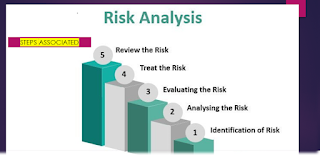
Risk Management Life Cycle
Stage
Description
Risk Identification
Spot possible threats: cyber attacks, data leaks, vendor failures, regulatory fines.
Risk Analysis
Assess likelihood + impact (qualitative or quantitative).
Risk Evaluation
Compare risks against organisational tolerance or risk appetite.
Risk Treatment
Mitigate, transfer, accept, or avoid the risk via controls or process changes.
Continuous Monitoring
Track Key Risk Indicators (KRIs), re-evaluate after major changes (cloud, AI, vendor changes).
Embedding risk management into everyday operations — from project planning to technology adoption — helps organisations stay resilient.
As new threats emerge (like AI-driven ransomware or supply-chain risks), a living risk register becomes the strategic asset.
3. Compliance That Builds Trust & Enables Growth
Compliance used to be viewed as a checkbox for audits, but in modern businesses it’s a competitive differentiator.
Achieving and maintaining standards such as ISO 27001, GDPR/DPDP, PCI-DSS or SOC 2 enhances customer trust and unlocks new markets — especially when dealing with global clients.
A compliance program acts as a documented guarantee: employees follow defined processes, controls are regularly tested, and evidence is available for internal and external audits.
This ensures organisations stay audit-ready, avoid penalties, and maintain credibility with partners and regulators.
Core Benefits of a Strong Compliance Program
Benefit
Why It Matters
Customer & Partner Trust
Clients share sensitive data only if compliance standards are demonstrable.
Operational Discipline
Standardized controls reduce human error and enforce consistent practices.
Regulatory Readiness
Helps adapt quickly to changing laws and cross-border regulations.
Market Advantage
Certifications strengthen proposals during tenders and vendor evaluations.
4. Security Controls — The Active Defense Layer
Security controls are the real-world mechanisms that protect data, infrastructure, and users — from on-prem servers to cloud workloads and remote endpoints.
They form the active defense layer that complements risk assessments and compliance policies.
Categories of Security Controls
Type
Description
Examples
Preventive
Stop threats before they happen.
Firewalls, MFA, patch management, least privilege access
Detective
Detect suspicious or malicious events in real-time.
SIEM, IDS/IPS, log monitoring, anomaly detection
Corrective / Recover
Respond and recover from incidents or control failures.
In 2025 and beyond, many organizations are integrating **AI-driven security tools**, behavioral analytics, and automated detection — combining human oversight with machine speed to defend against advanced threats. :contentReference[oaicite:0]{index=0}
5. Continuous Monitoring & Incident Response — Always On
Threats evolve rapidly. Cloud misconfigurations, AI-powered malware, supply-chain compromises – these don’t wait for quarterly audits.
Continuous monitoring ensures that you have real-time visibility into system health, deviations, or suspicious activities, enabling quick response and mitigation.
A well-defined Incident Response Plan (IRP) ensures clear roles, escalation paths, communication protocols and recovery procedures.
Post-incident reviews feed back into risk management, compliance updates, and controls refinement — creating a feedback loop that improves cyber resilience over time.
6. People, Culture & Awareness — The Human Firewall
Even the most advanced tools and controls fail if users are unaware, untrained, or complacent.
A strong security culture transforms security from a top-down mandate into a shared team responsibility.
Awareness programs, phishing simulations, regular training, and embedding security in everyday workflows makes compliance and risk-based controls part of the organizational DNA.
This reduces human error, insider risks, and strengthens overall resilience.
Conclusion
Building a comprehensive GRC and security program isn’t just about ticking boxes — it’s about embedding resilience into your organization’s DNA.
By combining strong governance, dynamic risk management, compliance, security controls, continuous monitoring, and a security-first culture, you build robust cyber resilience.
In a world where cloud, remote operations, AI-driven threats, and evolving regulations define the landscape, this integrated approach becomes the backbone of sustainable business growth.
Start today: map your critical assets, classify risk levels, assign control owners, and define basic security & compliance processes.
Even small steps taken consistently are better than large efforts done occasionally.
Frequently Asked Questions – Security & GRC
1. What does “Keeping Security & GRC at the forefront” actually mean?
It means designing every business process with security and governance controls embedded from Day 1 to reduce risks, improve compliance, and strengthen decision-making.
2. Why is GRC important for modern organizations?
GRC ensures consistent governance, reduces compliance violations, aligns risk with business goals, and protects the brand reputation.
3. What is the role of continuous monitoring in GRC?
It provides real-time visibility into threats, control failures, policy deviations, and compliance gaps for faster decisions.
4. How does automation help in GRC?
Automation reduces manual audits, eliminates data entry errors, accelerates risk assessments, and improves control reporting accuracy.
5. What frameworks support strong GRC programs?
ISO/IEC 27001, ISO/IEC 42001, NIST CSF, SOC 2, COBIT, and GDPR form the backbone of most corporate governance structures.
6. How does GRC support cyber-resilience?
GRC integrates risk management, incident response, disaster recovery and ensures organizations remain operational during cyber events.
7. What is the difference between Governance and Compliance?
Governance defines ‘how decisions are made’; compliance ensures those decisions follow internal policies and external laws.
8. Why is risk assessment so important?
Risk assessment identifies vulnerabilities, attack surfaces, and business impacts, enabling prioritization of controls and budget.
9. How does AI enhance GRC?
AI improves anomaly detection, accelerates audits, automates documentation, and predicts risks using behavioural analytics.
10. What is the significance of internal audits?
Internal audits validate control effectiveness, ensure policy adherence, and prepare organizations for external certification audits.
11. Why should security posture be continuously updated?
Threats evolve daily, so updating controls, patching systems, and reviewing risks ensures organizations stay protected.
12. What final steps ensure long-term GRC maturity?
Regular audits, policy refresh cycles, leadership reporting, business continuity planning, and culture training maintain maturity.
Data Privacy Services Powered by Privacy Ops: Achieving Global Compliance
Data Privacy Services Powered by Privacy Ops
Achieving Global Compliance Through Automation and AI
Title & Introduction
The modern digital ecosystem demands more than mere compliance; it requires operationalized data privacy. The shift from ad-hoc responses to a systematic **Privacy Operations (Privacy Ops)** framework is essential for organizations dealing with vast amounts of personal information (PI). Privacy Ops integrates people, processes, and technology to manage privacy risks continuously and automatically, transforming the burden of compliance into a strategic asset. With the proliferation of regulations like GDPR, CCPA, and LGPD, manual systems are obsolete, making AI-driven, platform-enabled services the only sustainable path forward.
This article explores a comprehensive Privacy Ops solution, detailing its features, service offerings, and its ability to seamlessly manage global regulatory coverage through automation and integrated data management.
Core Service Features: The Power of Automation
A successful Privacy Ops framework is defined by its ability to reduce human error and scale quickly. The core features leverage technology to automate complex, high-volume tasks, significantly lowering **low people dependency**.
AI-Powered Regulatory Analysis
An **AI powered bot for regulatory obligations analysis** instantly scans changes in global laws. By partnering with **UCF (Unified Compliance Framework) for authority sources**, the platform ensures that compliance requirements are current and accurate, eliminating the manual effort required to track evolving privacy standards.
Unified Data Integration
Handling diverse data environments is crucial. The platform supports **50+ data stores integrated through API**, ensuring a holistic view of all personal information assets. This unified approach facilitates accurate Data Inventory and **Data flow mapping** for comprehensive PI Modelling.
Monitoring & Reporting
The system provides **Automated track and monitor status**, displayed via **Interactive and dynamic dashboards**. These dashboards offer real-time insights into compliance metrics, risk levels, and the status of **Data Subject Rights Management (DSRM)** requests, allowing for proactive intervention.
Beyond these, the offering includes **Customised templates**, website **scan**, full **consent management & reporting**, making the entire compliance lifecycle platform enabled and highly streamlined.
Holistic Service Offerings and Global Coverage
The service architecture addresses the entire privacy spectrum, from proactive readiness to reactive breach management, covering major global laws.
1. Privacy Readiness & Impact Assessment
This is the proactive phase. Services include establishing a culture of **Privacy by Design**, performing **Privacy Maturity Assessment & Procedure blueprinting**. Crucially, it manages **Data Protection Impact Assessment (DPIA)** and **Privacy Impact Assessment (PIA)** processes, which are mandatory under regulations like GDPR. Finally, a robust **Breach Response & Management** protocol is established for rapid and compliant incident handling.
2. Data Subject Rights Management (DSRM)
Managing the rights of data subjects (like access, erasure, and portability) is a major operational challenge under regulations like CCPA and GDPR. The solution provides a dedicated **Data Subject Access rights portal for intake**, implements **Data subject identity validation**, ensures **Individual Request Fulfillment**, and maintains necessary **Records & Reporting** for audit purposes.
3. Consent & Cookie Compliance
Modern compliance requires granular control over user consent. This service handles **Consent categorization and status**, along with **Consent tracking and fulfilment**. It includes **Cookies Assessment & Implementation** and continuous **Consent & Website Scanning** to ensure ongoing legal adherence to cookie policies globally.
4. Global Regulatory Coverage
The complexity of compliance is minimized by covering a wide range of mandates, including:
EU-General Data Protection Regulation (**GDPR**)
California Consumer Privacy Act (**CCPA**), US
Lei Geral de Proteção de Dados (**LGPD**), Brazil
Australian Privacy Principles (**APP**)
Personal Information Protection and Electronic Documents Act (**PIPEDA**), Canada
Personal Data Protection Act (**PDPA**), Singapore
This wide coverage, supported by product partners like **OneTrust** and **BigID**, ensures a single, harmonized approach to multiple regulatory challenges.
Visual Diagram: Privacy Ops Flow
The successful implementation of Privacy Ops follows a continuous loop, driven by data ingestion and AI analysis, leading to automated controls and feedback.
Data Ingestion AI Regulatory Analysis & PI MappingAutomated DSRM & ConsentDashboards & Continuous Monitoring
Exam-Oriented Tips
For certification exams in privacy and data protection, focus on the operational aspects and key regulatory instruments:
Mastering Acronyms and Scope
**DPIA vs. PIA:** Understand the specific triggers for a Data Protection Impact Assessment (GDPR) and the broader Privacy Impact Assessment (general best practice).
**DSRM (Data Subject Rights Management):** Focus on the 7-step process—from intake via portal to final fulfillment and record-keeping.
**Key Global Laws:** Memorize the scope and core rights provided by **GDPR, CCPA, and LGPD**, as they are frequently compared in scenario-based questions.
**Privacy by Design:** Know the 7 foundational principles, especially the proactive and preventative nature of the approach.
Practice questions involving data flow mapping and determining compliance requirements when data crosses international boundaries (e.g., EU data processed in Singapore).
FAQ (Markdown)
**Q1: What is the primary role of the AI-powered bot?**

A1: The AI bot analyzes regulatory updates and obligations from sources like UCF to ensure real-time compliance tracking.

**Q2: How does the platform handle global regulations?**

A2: It provides harmonized controls covering major laws including GDPR, CCPA, LGPD, PIPEDA, and PDPA, allowing for central management.

**Q3: What are the key steps in Data Subject Rights Management?**

A3: Intake via a dedicated portal, identity validation, fulfillment of the request (e.g., erasure), and maintaining audit records and reporting.

**Q4: What is the purpose of Data Flow Mapping?**

A4: To identify where personal data is collected, stored, processed, and shared (data inventory and relationship) across the 50+ integrated data stores.

**Q5: What is 'Privacy by Design'?**

A5: A proactive approach ensuring privacy and security are built into the system architecture and business processes from the start, not added later.
FAQ: Visual Summary
Q1: Primary role of the AI-powered bot?A1: Analyzes regulatory updates from UCF for real-time tracking.Q2: How does the platform handle global regulations?A2: Harmonized controls covering GDPR, CCPA, LGPD, PIPEDA, and PDPA.Q3: Key steps in Data Subject Rights Management?A3: Intake via portal, identity validation, request fulfillment, and audit records.Q4: Purpose of Data Flow Mapping?A4: To identify where PI is collected, stored, processed, and shared (Data Inventory).Q5: What is 'Privacy by Design'?A5: Proactive approach: privacy and security are built into the architecture from the start.
Auditing is a systematic and independent examination of processes, systems, or organizations to ensure compliance with established standards. A structured audit helps organizations identify gaps, mitigate risks, and promote continual improvement.
Auditing Principles & Benefits
Ethical Conduct, Fair Presentation, Due Professional CareVerified conformity, increases awareness & understandingIndependence & Evidence-Based ApproachReduces risks & identifies improvement opportunitiesContinuous ImprovementPerformed regularly ensures system effectiveness
Process Approach in Auditing
Auditors can apply the process approach by ensuring the auditee:
Defines objectives, inputs, outputs, activities, and resources for processes
Analyses, monitors, measures, and improves processes
Understands sequence and interaction of its processes
Individual ProcessInput/Output, PDCA, ResourcesRelationship with Other ProcessesFlow, Interaction, Evidence, Contracts
Managing an Audit Program
Effective audit programs include planning, scheduling, and resource allocation. A well-managed program ensures audits are systematic, consistent, and align with organizational objectives.
Audit Activities
Opening Meeting
Document Review
On-Site Audit / Observation
Interviews & Evidence Collection
Closing Meeting
Auditor Competence & Responsibilities
Auditors must possess:
Knowledge of standards & regulations
Analytical and communication skills
Objectivity and ethical conduct
Ability to report findings accurately
Key Take Aways
Audit management is often perceived merely as a regulatory necessity, but in reality, it is a cornerstone of organizational health and strategic growth. While compliance with standards—whether ISO 27001, ISO 9001, or internal policies—is the baseline, the true value of a robust audit management system lies in its ability to transform raw data into actionable business intelligence. A systematic approach to auditing does not just verify if rules are being followed; it evaluates whether those rules are actually helping the organization achieve its objectives.
The Strategic Value of Audit Management
Audit management is often perceived merely as a regulatory necessity, but in reality, it is a cornerstone of organizational health and strategic growth. While compliance with standards—whether ISO 27001, ISO 9001, or internal policies—is the baseline, the true value of a robust audit management system lies in its ability to transform raw data into actionable business intelligence.
The Lifecycle: From Opening to Closure
The journey from the opening meeting to the closing meeting is where the integrity of the audit is established. This structured lifecycle ensures that there are no surprises and that the audit concludes with a clear roadmap for the future.
Risk Mitigation and Proactive Defense
In today’s volatile digital landscape, waiting for a breach or a failure to occur is not an option. Audit management serves as an organization’s "early warning system." By systematically reviewing controls and processes, auditors identify vulnerabilities and latent risks that might otherwise go unnoticed until they cause significant damage.
Key Insight: Effective audit management shifts an organization’s posture from reactive to proactive. Instead of scrambling to fix issues after a regulatory fine, the audit process highlights weak control environments early.
Driving Continuous Improvement
Perhaps the most critical aspect of audit management is its contribution to Continuous Improvement (CI). An audit that ends with a report filing is a wasted opportunity. By identifying non-conformities and opportunities for improvement (OFIs), audits force organizations to analyze the root causes of their problems, moving away from temporary "band-aid" fixes toward sustainable solutions.
Audit Activities Checklist
Opening Meeting: Confirm scope, criteria, and plan.
Document Review: Verify documented information against standards.
On-Site Audit: Observe processes and interview staff.
Closing Meeting: Present findings and agree on timeline.
FAQ: Visual Summary
Q1: What is Audit Management?A1: Systematic examination from opening meeting to closure ensuring compliance.Q2: What is Process Approach in Auditing?A2: Ensures objectives, inputs, outputs, and interactions are clearly defined.Q3: What are auditor responsibilities?A3: Knowledge, ethics, analytical skills, and accurate reporting of findings.Q4: What activities are included?A4: Opening meeting, document review, observation, interviews, closing meeting.
ISO/IEC 27001 is the global standard for Information Security Management Systems (ISMS). The 2022 revision introduces updates aligning with evolving cybersecurity threats, risk management practices, and digital transformation requirements. Understanding the differences between the 2013 and 2022 versions is critical for professionals preparing for audits or certification exams.
Overview of ISO/IEC 27001:2013 vs 2022
The 2013 version focused on 14 control domains and 114 controls under Annex A. The 2022 version streamlined these into 4 categories with 93 updated controls, emphasizing a risk-based approach, organizational context, and alignment with modern technology practices.
2013: 14 control domains, 114 controls
2022: 4 control categories, 93 controls
New focus on cloud security, privacy, and remote work risk management
Integration with other management systems (ISO 22301, ISO 9001)
Core Clauses and Annex Controls
Both versions follow a high-level structure (Annex SL), but the 2022 update introduces:
Context of the organization
Leadership & commitment
Planning and risk assessment
Support & awareness
Operation and performance evaluation
Improvement
Annex controls are now grouped under 4 categories:
Organizational
People
Physical
Technological
ISMS Process: Step-by-Step
Implementing an ISMS involves several systematic steps:
Define the scope of ISMS
Establish an information security policy
Perform risk assessment & treatment planning
Implement controls
Monitor, measure, and evaluate effectiveness
Conduct internal audits and management review
Continual improvement based on findings
Awareness & Training
Awareness programs and training sessions are essential to:
Ensure all employees understand security policies
Align roles & responsibilities
Promote a security-first culture
Prepare for internal & external audits
Exam-Oriented Tips
Key points for ISO/IEC 27001 exams:
Focus on differences between 2013 vs 2022
Memorize the 4 main control categories and 93 controls (2022)
Understand ISMS PDCA cycle steps
Prepare for scenario-based questions on risk treatment and audit findings
Q1: Differences between ISO/IEC 27001:2013 & 2022?A1: 2022 reduces controls to 93 & groups into 4 categories.Q2: How many clauses in both versions?A2: Both follow Annex SL with 10 clauses (context, leadership, planning, etc.)Q3: What is the PDCA cycle?A3: Plan → Do → Check → Act; ensures continuous improvement.Q4: How to prepare for ISO/IEC 27001 exam?A4: Focus on clauses, controls, ISMS process & scenario-based questions.Q5: Are 2013 controls still valid?A5: Mapped to 2022; transition based on risk assessment & updated controls.
What Is GRC and How AI Governance Is Transforming It in 2026
The world of Governance, Risk, and Compliance (GRC) is evolving faster than ever. With enterprises adopting AI-powered tools across all departments, organisations are realising that effective AI governance is no longer optional. It is now a core pillar of modern GRC.
This article explains what GRC means today, how AI governance fits inside GRC, the global frameworks shaping AI adoption, the maturity models, the Responsible AI skills companies expect, and why mastering AI governance creates a competitive advantage for professionals entering or growing in GRC.
1. What Is GRC? (Simple Definition)
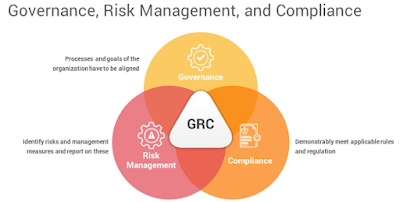
GRC stands for Governance, Risk, and Compliance. It is a structured approach that ensures an organization:
Governance: Makes decisions responsibly and ethically
Risk Management: Identifies, assesses, and reduces risks
Compliance: Meets laws, standards, and regulatory requirements
In 2026, GRC is no longer just about audits or documentation. It is a strategic capability that helps companies scale, respond to cyber threats, maintain trust, and prevent legal problems.
Traditional GRC Pillars
Policies & Governance Models
Risk Management Frameworks
Compliance Requirements
Internal Controls & Testing
Audit Management
Reporting & Continuous Monitoring
2. Why AI Governance Is Becoming the Heart of GRC
AI systems now influence major business decisions across finance, HR, cybersecurity, fraud detection, privacy, and more. Because AI models can make mistakes, show bias, or act unpredictably, companies need clear processes to govern them.
In today's complex business landscape, organisations face a myriad of risks that can impact their operations, reputation, and bottom line. Effective governance of risk and compliance is crucial to mitigate these risks and ensure that organizations operate ethically and within the bounds of the law. This article provides a comprehensive overview of the governance of risk and compliance in a thousand words, highlighting its importance, key principles, and best practices.
1. Understanding Risk and Compliance:
Risk refers to the possibility of an event occurring that could have an adverse effect on the achievement of an organization's objectives. These risks can be categorized into various types, including financial, operational, strategic, and reputational. Compliance, on the other hand, involves adhering to laws, regulations, industry standards, and internal policies and procedures.
2. The Importance of Governance:
Governance in the context of risk and compliance refers to the processes, structures, and leadership in place to oversee and manage these aspects of business operations. Effective governance is crucial for several reasons:
a. Legal and Ethical Obligations: Organizations have a legal and ethical responsibility to operate within the boundaries of the law and to conduct business ethically. Failure to do so can result in legal penalties, fines, and damage to reputation.
b. Protecting Stakeholder Interests: Governance ensures that an organization's actions align with the interests of its stakeholders, including shareholders, employees, customers, and the broader community.
c. Risk Mitigation: Governance processes help identify, assess, and mitigate risks, reducing the likelihood and impact of adverse events.
d. Enhancing Decision-Making: Effective governance provides a framework for informed decision-making, considering risks and compliance requirements in strategic planning.
3. Key Principles of Governance of Risk and Compliance:
To establish robust governance of risk and compliance, organizations should adhere to the following key principles:
a. Leadership and Culture: Top leadership must set the tone for risk awareness and compliance. A culture of integrity and accountability should be fostered throughout the organization.
b. Risk Assessment: Regularly assess and prioritize risks to the organization. This involves identifying potential threats, evaluating their impact, and determining the likelihood of occurrence.
c. Policies and Procedures: Develop and implement clear policies and procedures that address compliance requirements and risk management strategies.
d. Training and Awareness: Ensure that employees are educated about compliance requirements and risk management practices. Ongoing training programs are essential.
e. Monitoring and Reporting: Establish mechanisms to monitor compliance with policies and procedures. Implement reporting systems that allow for the timely identification and resolution of compliance issues.
f. Continuous Improvement: Regularly review and update governance processes to adapt to changing risks and compliance requirements. Continuous improvement is key to staying ahead of emerging threats.
4. Best Practices in Governance of Risk and Compliance:
To effectively implement the principles of governance, organizations can adopt best practices:
a. Board Oversight: The board of directors should provide oversight and guidance on risk and compliance matters. Establish risk and compliance committees to focus on these specific areas.
b. Risk Appetite: Define the organization's risk appetite – the level of risk it is willing to accept to achieve its objectives. This helps guide decision-making.
c. Risk Management Framework: Develop a comprehensive risk management framework that includes risk identification, assessment, mitigation, monitoring, and reporting.
d. Compliance Programs: Implement robust compliance programs that incorporate regulatory requirements, industry standards, and internal policies. Regularly audit and assess compliance.
e. Technology and Data Analytics: Leverage technology and data analytics tools to enhance risk assessment and compliance monitoring. These tools can provide real-time insights into potential issues.
f. Whistleblower Mechanism: Establish a confidential whistleblower mechanism that allows employees and stakeholders to report potential compliance violations without fear of retaliation.
g. External Partnerships: Collaborate with industry associations, regulatory bodies, and external experts to stay updated on evolving risks and compliance standards.
h. Crisis Management: Develop a crisis management plan to respond effectively to unexpected events, such as data breaches or regulatory investigations.
5. Case Studies:
Examining real-world examples of governance of risk and compliance can provide valuable insights. For instance, the Enron scandal in the early 2000s highlights the devastating consequences of poor governance, including financial fraud and bankruptcy. In contrast, companies like Johnson & Johnson are often praised for their proactive approach to product recalls, demonstrating a commitment to compliance and consumer safety.
6. Conclusion:
In conclusion, the governance of risk and compliance is an essential aspect of modern business operations. It ensures that organizations adhere to legal and ethical standards, manage risks effectively, and protect stakeholder interests. By following key principles and best practices, organizations can build a robust governance framework that enhances their resilience and sustainability in an ever-changing business environment. Ultimately, governance of risk and compliance is not just a regulatory requirement; it's a fundamental element of responsible and successful business management.
How Internet affected Education| Internet and Education
The internet has had a profound impact on education, with
the advent of the internet of education (IoE) further expanding this impact.
IoE refers to the integration of various technologies, such as the internet,
artificial intelligence, and machine learning, to improve education outcomes.
Here are some of the impacts of IoE on education:
1. Access to educational resources: IoE has made it easier for students to access educational resources from anywhere and at any time. With online courses, e-books, and virtual learning environments, students can learn at their own pace and convenience.
2. Personalized learning: IoE technologies can be used to personalize learning experiences for individual students. Adaptive learning algorithms can tailor the curriculum to meet the needs of each student, resulting in better learning outcomes.
3. Collaboration: IoE technologies can facilitate collaboration between students, teachers, and peers across the globe. Students can engage in collaborative projects, share knowledge and ideas, and learn from each other.
4. Cost-effective: IoE can make education more affordable, especially for students who live in remote or underserved areas. Online courses and digital resources can be accessed at a fraction of the cost of traditional education.
5. Data-driven insights: IoE technologies can generate valuable data insights that can be used to improve teaching and learning outcomes. By analyzing student data, teachers can identify areas where students are struggling and provide personalized support.
The internet has revolutionized education, and online
education is one of its most significant applications. Online education refers
to learning experiences that are delivered over the internet, using various
digital technologies. Here are some of the ways in which the internet is used for
online education:
1. Online courses: The internet is used to deliver courses
online, allowing students to learn at their own pace and from anywhere in the
world. Online courses can include text-based lessons, videos, interactive
quizzes, and assessments.
2. Virtual classrooms: The internet is used to create virtual
classrooms where students can interact with teachers and peers in real-time.
Virtual classrooms can include live lectures, discussions, and group projects.
3. E-books and digital resources: The internet is used to
provide students with access to e-books, digital resources, and other
educational materials. This makes it easier for students to access learning
materials, regardless of their location.
4. Online collaboration: The internet is used to facilitate
collaboration between students and teachers. Online collaboration tools such as
discussion forums, messaging apps, and video conferencing make it easy for
students to work together and learn from each other.
5. Gamification: The internet is used to gamify the learning
experience, making it more engaging and interactive. Gamification uses game
mechanics such as points, badges, and leader boards to motivate students and
encourage them to learn.
While the internet has had a significant impact on
education, it also has some drawbacks. Here are some of the drawbacks of using
the internet in education:
1. Lack of social interaction: One of the primary drawbacks of
online education is the lack of social interaction. Students who learn online
may miss out on the social aspect of traditional education, including
face-to-face interactions with teachers and peers.
2. Limited engagement: Online learning can be less engaging
than traditional learning. Students may be more likely to get distracted or
lose focus while learning online, resulting in lower levels of engagement and
retention.
3. Dependence on technology: Online education is dependent on
technology, and technical difficulties can disrupt the learning process. Poor
internet connectivity or software issues can cause frustration for both
students and teachers.
4. Quality concerns: The internet has made it easier for anyone
to create and distribute educational materials, but not all of this material is
of high quality. There is a risk that students may be exposed to inaccurate or
unreliable information, which could impact their learning outcomes.
5. Cheating and plagiarism: The internet has also made it
easier for students to cheat and plagiarize. With online resources readily
available, students may be tempted to cut corners or take shortcuts in their
work.
Conclusion-
1. The internet has revolutionized education by providing access to online courses, virtual classrooms, digital resources, online collaboration, and gamification. These tools have made education more accessible, engaging, and effective, opening up new opportunities for learners all over the world.
2. The internet of education has revolutionized education by making it more accessible, affordable, and personalized. It has opened up new opportunities for students to learn, collaborate, and grow, while also enabling educators to provide a more effective and efficient learning experience.
3. While the internet has many benefits for
education, it also has some drawbacks. These drawbacks include a lack of social
interaction, limited engagement, dependence on technology, quality concerns,
and increased opportunities for cheating and plagiarism. It is important to be
aware of these drawbacks and work to mitigate them to ensure that online
education remains effective and beneficial for students.
Cyber insurance is a type of policy that covers loss and damage caused by cyber-attacks
or related types of incidents such as infrastructure failure or service
outages. Most cyber insurance policies are for businesses, as they face much
greater risk and potential loss from a cyber-attack than private individuals.
Cyber
insurance is critical for any enterprise, especially those that deal with
exclusive or touchy information.
With the boom
of the internet inside the past 10 years, cyber dangers like social engineering
attacks, statistics breaches and cyber extortion (i.e., ransomware) have
additionally grown exponentially. Due to this, many coverage companies now
offer committed cyber insurance guidelines.
Whether or
not it’s cyber criminals gaining sensitive facts, a community security failure
or a statistics breach, probabilities are your business insurance don't cover
your losses. In case you’re concerned for a cyber incident, you’ll need to
start searching round for a cyber coverage quote.
Cyber
insurance covers things like liability attributable to data breaches, community
interruption and media legal responsibility. Cyber risk to business is much
higher than personal risk.
Cyber
insurance pricing varies wildly depending on what you need to include, the
dimensions of your deductibles and how large your business is. These elements
can change the rate from some hundred dollars per year to lots.
Given the relativity
of cyber coverage markets, there’s a terrific degree of variability in both
what’s blanketed and policy value. This makes it hard to generalize the entire
discipline, but we’ll talk what a cyber insurance coverage normally covers, as
well as what you might expect to pay for it.
Cyber
insurance coverage
Cyber
insurance generally provides protection against four distinct types of risk: privacy,
security, operational and service risk. These risks represent the
biggest cyber threats to business and are typically covered by four
different types of insurance policies within a cyber policy mentioned
below.
ØNetwork Security and Privacy
Responsibility
Network
Security and Privacy covers the most obvious risks and dangers posed by cyber-attacks.
On the security front, cyber policies will generally cover forensic efforts to
identify the attack path, legal expenses related to the attack, ransomware
payments, data recovery, consumer outreach and public relations costs.
Conversely,
privacy responsibility applies to you if your business maintains confidential
or private data that is governed by regulation or contract. For example, if
your business has a lot of customer personal records that were stolen in a cyber-attack,
privacy liability insurance will cover you if the people whose records were
stolen seek compensation.
ØNetwork business interruption
For many
businesses, a server outage can mean a catastrophic amount of lost revenue. For
this reason, cyber insurance will cover lost profit for the duration of a
network interruption that occurs as a result of a cyber-attack or system
failure.
ØMedia responsibility
If your
intellectual property is stolen as a result of your media presence, be it
advertising or something else, then cyber insurance can help with that. The
policy generally doesn't cover lost profit as a result, but it does cover
things like legal fees associated with enforcing your intellectual property.
ØErrors and omissions
In the event
of a cyber-attack or system failure, there is a good chance that your business
will be unable to continue providing its services, at least temporarily. If
this happens, cyber insurance will generally cover any liability you face from
customers.
What does
cyber insurance not cover?
Now that
we've covered what cyber insurance will generally cover, let's take a quick
look at what is typically not covered.
ØFuture lost profit
The first is
any future lost profits that arise as a result of a cyber security incident.
Whether it's the result of user exodus due to a significant data breach, data
loss, or anything else, cyber insurance generally won't cover lost revenue that
isn't a direct and immediate result of a cyber-attack or incident.
ØLosses from theft of intellectual
property
Next in line
are losses related to intellectual property theft. For example, if someone
steals your IP (Intellectual property) and uses it to create a product that
competes with yours, those lost profits won't be covered by your insurance.
ØProactive cyber security measures
Finally,
cyber insurance generally does not include coverage for any proactive
cybersecurity measures, such as upgrading infrastructure or software or
improving security procedures.
What does
cyber insurance cost?
The cost of
cyber insurance will vary greatly depending on the size of your company, the
insurance provider you go with, and what you want your policy to cover. Because
of this, it's hard to predict exactly how much an individual policy will cost,
but we can look at some averages.
Cyber
insurance for individuals generally costs $25 to $100 per month. However,
most private individuals do not need cyber insurance, as regular theft or home
owner insurance will often cover the aspects most useful to personal users.
Businesses,
on the other hand, can expect to pay $500 to $5,000 per year for cyber
insurance. As mentioned, there are many factors that determine where you end up
in this price range, and the biggest companies are likely to pay much more than
this.
Should You
Get Cyber Insurance?
Unless you're
handling some very sensitive data or have a specific reason to believe you're
at risk of an attack, you probably don't need cyber insurance as a private
individual.
If you're
concerned about the consequences of potential cyber-attacks or data breaches
affecting you, finding a home or theft insurance package that includes some
coverage for these types of events may be a better option.
However, for
many businesses, cyber insurance is an absolute necessity. Cyber security
statistics show that attacks and security breaches have been on the rise in
recent years, with cyber-attacks routinely targeting businesses large and
small.
This can take
the form of ransomware, where your systems and infrastructure are shut down
until you pay the hackers a fee, or a more traditional hack aimed at breaching
data security or stealing confidential information.
With a 600%
increase in cybercrime since the start of the COVID-19 pandemic, it is clear
that this has become such a common problem that it should be considered
alongside other "analog" threats such as burglaries, fires and the
like.
That's it for
our guide to the cyber insurance space.
We hope we
have given you a better understanding of what cyber incidents are covered by
cyber risk insurance as opposed to traditional insurance policies.
Most, if not
all, modern businesses should consider finding cyber insurance providers and
getting a cyber liability insurance quote. The cyber insurance market is still
relatively young and not every insurance company offers cyber insurance.
What do you
think of our guide to cyber insurance?
Do you feel
like you understand how cyber policies work and what cyber threats are
generally covered? Do you have cyber insurance? If so, has it helped protect
your business from various cyber exposures? Let us know in the comments section.
Seven Tips For Generating Website Traffic With A Limited Marketing Budget|
Get Organic traffic from Facebook| Adsense traffic from Facebook
Assume the scenario- You’re a marketing manager on digital platform and you’ve
been tasked with the responsibility of attracting consumers to your specific
brand, but you have very limited budget. You're questioning yourself, "How
am I supposed to roll in the big bucks with a small marketing budget?"
. Digital marketing doesn't have to be expensive. Truth be told, if you do
enough strategic planning from the very beginning and aim at realistic,
targeted outcomes, you can achieve success with a limited budget. Explosive marketing
budget to get anywhere online is a myth.
From my perspective, digital marketing shouldn't be expensive. You have to
plan the channels and resources you'll allocate to your marketing efforts
overall. It’s not a prime factor if it's SEO, pay-per-click advertising or
social media marketing, no matter what platform you're looking at tackling, you
can execute it with careful strategy and refinement.
You can opt for work with an agency to help you, or you can do this on your
own. Do keep in mind, however, that if you're not a marketing expert or are
trying to learn the ropes from the very beginning, your budget can quickly be
eaten up. Ensure you're weighing all of the options you have on-hand and
eliminating those that could potentially use your marketing budgets unnecessarily.
The good news is that even a beginner can take a few simple steps toward harvesting
traffic without spending too much money. If plunging into a dedicated,
expert-driven campaign isn't right up your alley yet, this is the best place to
start.
Here are a few ways you can begin generating website traffic:
1. Use search engines to your advantage.
You might need a bit of SEO insight here to help you, but in a nutshell,
you want to get as much traffic as possible from this organic platform. That
means optimizing your content and website for keywords and phrases you know
your target audience would be searching for. There are a few free tools
available that you can quickly find online.
2. Check for broken links.
You'll lose prospects and customers to links on your website that are
broken. Review your website and check whether you have any URLs that need
fixing. This is a quick way to get traffic back that you were otherwise letting
escape.
3. Assess who's talking about you.
Has anyone been writing or talking about your brand but not linking to
your page? Consider reaching out to them and politely asking them to do so.
This can help you gain more opportunistic traffic.
4. Update your old content.
This is a big one. If you've put effort into blogging in the past, have a
gander through Google Analytics and see what content is performing the best.
Update these posts with new stats, facts, quotes and images that will reap new
attention. Let your audience know it has been updated as a call to action at
the bottom of the article, and even with an "[UPDATED for 2020]" tag
in the headline.
5. Use manual outreach as your sidekick.
Going back to authentic relationships and connections to
build links and awareness for brands is an another alternative . That means scouring the web for those in
your industry who are like-minded and already writing about brands, services
and goods like yours. You can offer them an incentive to write about your
business and help turn their following into yours. Think of this as digital
public relations.
6. Refresh your ranking content.
Use your choice of SEO tool to see what content of yours is ranking on page
two of Google. This is the kind of content you want to refresh, optimize and
get up to page one. It's low-hanging fruit that will pay dividends in return.
Sometimes, generating website traffic with a limited marketing budget is a
lot to handle. There are many aspects to juggle, and you still have to ensure
you're keeping on track with branding and maintaining the compliance norms as well. But by setting honest
expectations and taking the steps mentioned above, you'll be on your way to
getting your brand out there with limited costs.
7. Facebook
Facebook is another brilliant platform for reaching your business
goals, and it doesn’t matter if you’re a B2B or B2C business. Facebook offers
tons of tools and capabilities which you can harness for you to connect with
your audiences regardless of the place and time.
Generating traffic from Facebook to your website is a popular strategy for increasing AdSense revenue. Here are some tips for optimizing your AdSense traffic from Facebook:
Create engaging content: Creating engaging and shareable content on your website can increase the likelihood that visitors from Facebook will share your content, thus driving more traffic to your site.
Utilize Facebook Ads: Facebook Ads can be a useful tool for driving traffic to your website. You can create targeted ads that reach your desired audience based on demographics, interests, and behaviors.
Optimize your website for mobile: Many people access Facebook on their mobile devices, so it's important to make sure your website is optimized for mobile devices. This can help improve the user experience and increase the likelihood of visitors staying on your site longer.
Use Facebook Groups: Joining and participating in relevant Facebook groups can help you connect with potential visitors who might be interested in your website's content. Just make sure to follow the group's rules and guidelines.
Track your traffic: Use Google Analytics or other tracking tools to monitor your traffic from Facebook. This can help you identify which types of content or posts are generating the most traffic, allowing you to adjust your strategy accordingly.
Hello Friends. Today we will take lesson on the importance
of protecting the social media account from being compromised. A strong social
media policy can protect your brand and avoid embarrassing posts. Social media
accounts are the latest phishing target.
Social
media has made its own place in the world of people. There are some people,
whose day is not complete without using it, but always be aware of the fraud
and cyber-crime that occur while using social media. So far, people have had to
pay the price for not doing so.
It's a good time to update existing policies to cover the
increase in remote work and set clear expectations for employees about using
social media during work hours.
One
fine day you may get email that someone is trying to log into your Instagram
account. But the thing is, you don’t have any Instagram account.
This is a very common phishing scam. A phishing scam is when
someone tries to impersonate a company or service that you might actually do
business with in an effort to steal your account information.
The scammers
assume you have a Instagram account and are hoping you will click on the link
and provide your login credentials so they can use this information to access
any account you might have.
These tend to
be more common with scammers claiming to be from your bank or other financial
institutions, but lately they have been targeting social media accounts. Their assumption is that if you use the same
login information at one site, you probably use it for another.
Once they get
a user name and password combination, these scammers will meticulously go
through every possible online service and try to access the accounts with the
information they have from this one phishing attack.
That is why it is always a good practice to use a unique password
for each one of your online accounts. And yes, that can be a real hassle.
I have been
using Google Chrome and logging in with a Google account. This allows me to
create and save complex and unique passwords for all of my online accounts.
If you’re not a fan of Google, look at a dedicated password
manager like LastPass or 1password for managing this.
Social media
platforms like #Facebook, #Twitter and #Instagram started out as a way to connect
with friends, family and people of interest. But anyone on social media these
days knows it’s increasingly a divisive landscape.
Undoubtedly
you’ve heard reports that hackers and even foreign governments are using social
media to manipulate and attack you. You may wonder how that is possible. As an information
security enthusiast I can explain – and offer some ideas for what you can do
about it.
Bots and sock puppets
Social media platforms don’t simply feed you
the posts from the accounts you follow. They use algorithms to curate what you
see based in part on “likes” or “votes.” A post is shown to some users, and the
more those people react – positively or negatively – the more it will be
highlighted to others. Sadly, lies and extreme content often garner more
reactions and so spread quickly and widely.
But who is doing this “voting”? Often it’s an
army of accounts, called bots, which do not correspond to real people. In fact,
they’re controlled by hackers, often on the other side of the world. For
example, researchers have reported that more than half of the Twitter accounts
discussing COVID-19 are bots.
As a social media researcher, I’ve seen
thousands of accounts with the same profile picture “like” posts in unison.
I’ve seen accounts post hundreds of times per day, far more than a human being
could. I’ve seen an account claiming to be an “All-American patriotic army
wife” from Florida post obsessively about immigrants in English, but whose
account history showed it used to post in Ukranian.
Fake accounts like this are called “sock
puppets” – suggesting a hidden hand speaking through another identity. In many
cases, this deception can easily be revealed with a look at the account
history. But in some cases, there is a big investment in making sock puppet
accounts seem real.
Sowing chaos
Trolls often don’t care about the issues as
much as they care about creating division and distrust. For example,
researchers in 2018 concluded that some of the most influential accounts on
both sides of divisive issues, like Black Lives Matter and Blue Lives Matter,
were controlled by troll farms.
More than just fanning disagreement, trolls
want to encourage a belief that truth no longer exists. Divide and conquer.
Distrust anyone who might serve as a leader or trusted voice. Cut off the head.
Demoralize. Confuse. Each of these is a devastating attack strategy.
Taking control
So what can you do about it? You probably
already know to check the sources and dates of what you read and forward, but
common-sense media literacy advice is not enough.
First, use social media more deliberately.
Choose to catch up with someone in particular, rather than consuming only the
default feed. You might be amazed to see what you’ve been missing. Help your
friends and family find your posts by using features like pinning key messages
to the top of your feed.
Second, pressure social media platforms to
remove accounts with clear signs of automation. Ask for more controls to manage
what you see and which posts are amplified. Ask for more transparency in how
posts are promoted and who is placing ads. For example, complain directly about
the Facebook news feed here or tell legislators about your concerns.
Third, be aware of the trolls’ favorite issues
and be skeptical of them. They may be most interested in creating chaos, but
they also show clear preferences on some issues. For example, trolls want to
reopen economies quickly without real management to flatten the COVID-19 curve.
They also clearly supported one of the 2016 U.S. presidential candidates over
the other. It’s worth asking yourself how these positions might be good for
Russian trolls, but bad for you and your family.
Because of the multi-purpose aspect of social media
platforms, they become valuable tools that the average person spends
approximately 100 minutes on every day, according to a recent
study. Because they are such omnipresent platforms, and being linked to an
increasing number of applications on smartphones and other devices, it becomes
even more necessary to secure them.
Users
can save themselves from all these things by taking care of few things.
Create
strong password
It
is very important to protect yourself while using any social media platform.
For this, first create a strong and different password. This is such a thing,
without which you cannot open your account. For this reason, create a password
that is difficult for the hacker to think and cannot easily break it. This will
keep your social media account safe and no personal information will be able to
go out. Also for the sake of protection please activate multi-factor authenticationpassword
while logging into the social media account.
Take
care of privacy
Have
you ever noticed that whoever is watching what you are sharing on social media?
If
you do not want everyone to see the photos, files and other things you have
shared, then take care of the privacy settings. While creating an account,
first make the settings related to privacy so that your things do not fall into
the wrong hands.
Report
offensive post
Many
times we see many such posts on social media which do not look right, but in
spite of this we ignore them. This is our biggest mistake.You should report such
posts immediately. It will be beneficial for you as well as the rest of the
people. By doing this you can secure multiple people at once.In
addition, you can also report fake IDs.
Do
not use third party app
Many
applications, software, and websites etc. give you the option to login with a
social media account. You must have thought many times to press the button of
Login with Facebook, but it can become a big problem for you. To avoid this,
tap on the app and website in the settings and see all the apps and websites
associated with the ID, immediately remove what you don't feel safe.
Conclusion
This article is
drafted to explore the privacy and security issues that affect social media
accounts. The topics covered herein reveals that users of social media post
personal information, which can be used by malicious criminals and businesses
to compromise the privacy and security of individuals in the real world. It has
been noted that people post personal information because they have a false
sense of security while using social media.
Irrespective
of the fact that there are laws and
policies that seek to protect users’ information from such vices, individuals
should exercise caution and filter information that they publish on social
media, because it becomes public as soon as it is posted. So prior to posting
any personal information in social media account please judge the personal
contents you are willing to publish.
Protect Social Media Account | Protect Your Facebook Account| Protect Your Instagram Account
Millions of people are still working from home due to
the COVID-19 crisis, which makes VPN access more essential than
ever. But in the ever-growing market for commercial virtual private networks,
finding the best VPN to suit your particular needs can be difficult. To
help you make the right choice, we've sifted through the multitude of overhyped
VPN providers touting their own private network to find the best VPN service
for you. .
Since we're living in a connected world, security and privacy are
critical to ensure our personal safety from nefarious hacks. From online
banking to communicating with coworkers on a daily basis, we're now frequently
transferring data on our computers and smartphones. It's extremely important to
find ways of securing our digital life and for this reason, VPNs have become
increasingly common.
What is a VPN?
A virtual private network is a technology that allows you to
create a secure connection over a less-secure network between your computer and
the internet. It protects your privacy by allowing you to anonymously appear to
be anywhere you choose.
A VPN works by routing your device's internet connection
through your chosen VPN's private server rather than your internet
service provider (ISP) so that when your data is transmitted to the internet,
it comes from the VPN rather than your computer.
How a Virtual Private Network
can help protect your privacy online
A VPN is beneficial because it
guarantees an appropriate level of security and privacy to the connected
systems. This is extremely useful when the existing network infrastructure
alone cannot support it.
When your computer is connected
to a VPN, the computer acts as if it's also on the same network as the VPN. All
of your online traffic is transferred over a secure connection to the VPN. The
computer will then behave as if it's on that network, allowing you to securely
gain access to local network resources. Regardless of your location, you'll be
given permission to use the internet as if you were present at the VPN's
location. This can be extremely beneficial for individuals using a public Wi-Fi
network or public Wi-Fi hotspots.
Therefore, when you browse the
internet while on a VPN, your computer will contact the website through an
encrypted connection. The VPN will then forward the request for you and forward
the response from the website back through a secure connection.
VPNs are really easy to use,
and they're considered to be highly effective tools. They can be used to do a
wide range of things. The most popular types of VPNs are remote-access VPNs and
site-to-site VPNs.
Understanding
the importance of a virtual private network
We may have heard of a VPN, but
we have little or no knowledge about the same. Known as Virtual Private
Network, it is a group of computers connected over a public network. The
internet is an example of such a network. But what does a VPN do? Read on to
find out.
There are numerous benefits
linked with the use of a VPN, and more of this is discussed in this article.
The VPN is meant to help you protect your internet privacy and also get around
your internet censorship.
Unknown to some computer users
connecting to a VPN, the data on your personal computer is encrypted to the
Virtual Private Network provider. The best thing is that entities that
try to censor some sites are not able to determine the site you are connected
to. The filtering entities that may be used to restrict access to specific
sites cannot determine whether your computer is accessing such sites or
not. For example, access to a specific site may be restricted in your country,
but you will comfortably use it when you access it when you connect to a VPN
because your connection is encrypted.
At the same time, you are sure
of internet privacy when your data is encrypted between your PC and the virtual
private network provider. No entity can access your internet connections to see
the specific websites you are accessing. Using a VPN keeps your data
protected.
Most internet users keep the
notion that connecting to a public network is not safe. The best thing to know
is that you will enjoy the benefits of connecting to a virtual private network,
even when connected to a public WIFI network.
If you are browsing from a
local café or a public park, some hackers can easily access your data if you
are not connected to a VPN. Luckily, you remain protected as long as you are
connected to a virtual private network which encrypts your data.
Therefore, you should always
ensure to connect to a virtual private network to use a private connection.
Another great thing about
virtual private networks is that they don’t require any sophisticated
equipment.
Most VPN providers use software
that is included in the windows operating system to allow subscribers to access
the network. The provider should give you this information before subscribing
for their service.
Virtual private network
services are highly affordable. They can cost as little as $5 or higher
depending on the quality and the extra features. Take time to find the
best VPN provider who will give you value for your money.
Whether you are accessing the
internet anonymously for business or personal reasons, you need to invest in
the best virtual private network. There are thousands of companies
offering VPN services out there. Free programs are not worth it since they
don’t use the best technologies. The best VPN providers will offer
unlimited customer support and give affordable rates.
Who needs a VPN?
People who access the internet from a computer, tablet or
smartphone will benefit from using a VPN. A VPN service will always boost your security
by encrypting and anonymizing all of your online activity. Communications that
happen between the VPN server and your device are encrypted, so a hacker or
website spying on you wouldn't know which web pages you access. They also won't
be able to see private information like passwords, usernames and bank or
shopping details and so on. Anyone who wants to protect their privacy and
security online should use a VPN.
How to choose a VPN service?
There's a vast range of VPN services on the internet. Some are
free VPN services, but the best ones require a monthly subscription. Before you
decide to download a VPN, make sure you consider these factors for
understanding a VPN.
Cost: VPNs aren't too pricey, but they vary from vendor to
vendor. If your main concern is price, then go with something inexpensive, or a
free VPN service -- like Spotflux Premium VPN or AnchorFree HotSpot Shield
Elite. Free servers are often slower, and since most are ad-supported, they
place adverts on the online pages you access. Others can even limit the speed
of your connection, as well as your online time or amount of data transferred.
It's also important to note that leading VPN providers offer
stronger security features to ensure you're digitally safe. When selecting a
paid VPN service, always be sure to check which countries it operates servers
in.
What VPNs are used for-?
At its core, a VPN makes you appear to be somewhere you're not. It
does this by connecting you to the internet via a server in a different part of
the country or a different part of the world.
There are a lot of ways people
use VPNs. VPNs let you:
Protect your identity while
downloading software, especially while using a service like BitTorrent. Whether
your downloads are legal or not, many ISPs don't like their customers to use
torrents. Using a VPN avoids being chastised by your ISP.
Hide your online activities.
Activists around the world need to worry about having their online activities
monitored or outright censored, and sometimes these activities can even put
them at risk of physical harm. A VPN is an effective tool for keeping your
online activities from being tracked.
Avoid geographic restrictions
on online content. Some websites and streaming media services are geo-blocked,
which means you need to live in a particular country to have access to them. A
VPN can help you bypass these blocks by connecting you to a server in any
location you want.
Securely access your home
computer while traveling. A VPN creates a secure and anonymous connection you
can use to remotely connect to your home PC when you're away from home.
There are two basic VPN types which are explained below.
1. Remote
Access VPN
Remote access VPN allows a user to connect to a private network
and access its services and resources remotely. The connection between the user
and the private network happens through the Internet and the connection is
secure and private.
Remote Access VPN is useful for business users as well as home
users.
A corporate employee, while traveling, uses a VPN to connect to
his/her company’s private network and remotely access files and resources on
the private network.
Home users, or private users of VPN, primarily use VPN services to
bypass regional restrictions on the Internet and access blocked websites. Users
conscious of Internet security also use VPN services to enhance their Internet
security and privacy.
2. Site – to
– Site VPN
A Site-to-Site VPN is also called as Router-to-Router VPN and is
mostly used in the corporates. Companies, with offices in different
geographical locations, use Site-to-site VPN to connect the network of one
office location to the network at another office location. When multiple
offices of the same company are connected using Site-to-Site VPN type, it is
called as Intranet based VPN. When companies use Site-to-site VPN type to
connect to the office of another company, it is called as Extranet based VPN.
Basically, Site-to-site VPN create a virtual bridge between the networks at
geographically distant offices and connect them through the Internet and
maintain a secure and private communication between the networks.
Since Site-to-site VPN is based on Router-to-Router communication,
in this VPN type one router acts as a VPN Client and another router as a VPN
Server. The communication between the two routers starts only after an
authentication is validated between the two.
VPNs Don’t Make
You Totally Secure
While as IT professional and an ITIL practitioner,
we always recommend using a VPN while connecting to the outer world over the
internet, it’s important to keep in mind that VPNs don’t make you totally secure.
Hackers having quality knowledge as well as the government and law enforcement
agencies — can still trace your identity and.
Still, VPNs are considered as one of the vital layers
of defense — either to lock out average hackers or convince expert hackers to
ignore you. It’s like analogous to home alarm. Experienced burglars can disable
pretty much anything. But if you have a good system, burglars are much more
likely to skip your house and find an easier target.
Hackers are much the same. These persons are usually
highly motivated by money and will focus on victims that present the easiest
opportunity. If you have a strong VPN, there’s a good chance they’ll skip you
and target someone else without a VPN (and the number of people who use the
public internet or open public wi-fi for internet access without a VPN is
shocking!).
Use Multi-Factor
Authentication (MFA) to Secure VPN
MFA extends primary authentication (such as passwords) with an additional layer of authentication (such
as using security tokens) to verify a user's identity. It usually includes at least two of the following categories: knowledge
(something they know), possession (something they have), and inherence
(something they are).
The goal of MFA
is to provide a higher level of identity assurance to users attempting to access resources via VPN. MFA prevents an attacker from accessing your account, even if they obtain your username and password. For
example, if you created a layered mechanism, an unauthorized user would have
to bypass all layers to gain access. However, not all MFA solutions and approaches are created equal. Traditional on-premises MFA solutions are often
cumbersome to deploy, solve limited use cases, and provide poor user experience. The net result is
limited end-user adoption in addition to sunk IT and security costs. Adaptive MFA (AMFA) integrates with your organization's applications and resources and adds an additional layer of identity assurance, making
it ideal for today's rapidly changing security landscape.
The process of identifying and evaluating risks for assets that could be affected by cyberattacks is known as cybersecurity risk assessment. In essence, you identify threats from both within and without; examine how they might affect things like the integrity, confidentiality, and availability of data; and figure out how much it would cost to suffer a cybersecurity incident. Using this data, you can fine-tune your cybersecurity and data protection measures to your company's actual risk tolerance.
You must respond to three crucial
questions in order to begin an IT security risk assessment:
1.What are
the data that, in the event of loss or exposure, would have a significant
impact on your company's operations? These are your organization's critical
information technology assets.
2.What
essential business procedures call for or make use of this data?
3.What
threats might make it harder for those business functions to function?
You are able to begin design
strategies once you are aware of what you need to safeguard. But before you
spend a penny or an hour of your time implementing a risk-reduction strategy,
think about the type of risk you're dealing with, how important it is to you,
and whether your approach is the most cost-effective.
The significance of conducting
comprehensive IT security assessments on a regular basis developing a solid
foundation for business success is aided by conducting comprehensive IT
security assessments on a regular basis.
In particular, it gives them the ability
to:
Assess potential security partners, Evaluate
potential security partners, Establish, maintain, and demonstrate compliance
with regulations Accurately forecast future needs.
Explanation of cyber risk (IT risk)
definition
According to the Institute of Risk
Management, a cyber risk is “any risk of financial loss, disruption, or
damage to the reputation of an organization from some sort of failure of its
information technology systems.”
Prevent data breaches, choose
appropriate protocols and controls to mitigate risks.
Cybersecurity risks include:
When taking stock of cyber risks, it
is essential to detail the specific financial damage they could cause to the
organization, such as legal fees, operational downtime and related profit loss,
and lost business due to customer distrust. Hardware damage and subsequent data
loss Malware and viruses Compromised credentials Company website failure.
The four essential components of an IT
risk assessment
In a moment, we'll talk about how to
evaluate each one, but first, a brief definition for each:
Threat: Anything
that has the potential to harm an organization's people or assets is a threat.
Natural disasters, website failures, and corporate espionage are examples.
A vulnerability is any potential flaw
that would permit a threat to cause harm. A vulnerability that can make it
possible for a malware attack to succeed, for instance, is out-of-date antivirus
software. A vulnerability that increases the likelihood of equipment damage and
downtime in the event of a hurricane or flood is a server room in the basement.
Disgruntled employees and outdated hardware are two additional examples of
vulnerabilities. A list of specific, code-based vulnerabilities is kept up to
date in the NIST National Vulnerability Database.
The total damage an organization would
suffer if a vulnerability were exploited by a threat is referred to as the
impact. A successful ransomware attack, for instance, could result in not only
lost productivity and costs associated with data recovery but also the
disclosure of customer data or trade secrets, which could result in lost
business as well as legal costs and penalties for compliance.
Probability — This is
the likelihood that a danger will happen. Usually, it's a range rather than a
single number.
Risk = Threat x Vulnerability x
Asset. The following equation can be used to understand risk: Despite
the fact that risk is represented here as a mathematical formula, it is not
about numbers; It is a well-thought-out plan. Take, for instance, the scenario
in which you want to determine the level of danger posed by the possibility of
a system being hacked. Your risk is high if the asset is crucial and your
network is extremely vulnerable (perhaps due to the absence of an antivirus
solution and firewall). However, even though the asset is still critical, your
risk will be medium if you have strong perimeter defences and a low
vulnerability.
There is more to this than just a
mathematical formula; It is a model for comprehending the connections among the
factors that contribute to determining risk:
Threat is an abbreviation for
"threat frequency," which is the anticipated frequency of an adverse
event. One in one million people will, for instance, be struck by lightning in
any given year.
The term "the likelihood that a weakness
or exposure will be exploited and a threat will succeed against an
organization's defences" is abbreviated as "vulnerability."
What is the organization's security
environment like? If a breach does occur, how quickly can it be mitigated to
avoid disaster? How likely is it that any given employee will pose an internal
threat to security control, and how many of them are there?
A security incident's total financial
impact is measured by its cost. Hard costs like hardware damage and soft costs
like lost business and consumer confidence are included. Other expenses
include:
Data loss: The
theft of trade secrets could result in your competitors taking your business.
Loss of trust and customer attrition could result from the theft of customer
information.
System or application downtime:
Customers may be unable to place orders, employees may be unable to perform
their duties or communicate, and so on if a system fails to perform its primary
function.
Legal repercussions: If someone steals
data from one of your databases, even if the data isn't particularly valuable,
you could be hit with fines and other legal fees because you didn't follow
HIPAA, PCI DSS, or other data security regulations.
How to conduct a security risk
assessment Now, let's go over how to conduct an IT risk assessment.
1.Identify
and prioritize assets- Servers, client contact information,
confidential documents from partners, trade secrets, and so on are all examples
of assets. Keep in mind that what you consider valuable as a technician
may not actually be the most valuable for the company. As a result, you
must collaborate with management and business users to compile a list of all
valuable assets. Collect, if necessary, the following data for each asset:
·Software
·Hardware
·Data
·Interfaces
·Users
·Support Personnel
·Mission or Purpose
·Criticality
·Functional requirements
·IT security policies
·IT security architecture
·Network topology
·Information storage protection
·Information flow
·Technical security controls
·Physical security environment
·Environmental security
Since most businesses only have a
small budget for risk assessment, you will probably only need to cover
mission-critical assets for the remaining steps. As a result, you must
establish a standard for assessing each asset's significance. The asset's
monetary value, legal status, and significance to the organization are common
criteria. Use the standard to classify each asset as critical, major, or minor
after it has been approved by management and formally incorporated into the
risk assessment security policy.
2.Identify
Threats- Anything that has the potential to harm your business is a
threat. While malware and hackers are probably the first to come to mind, there
are many other kinds of threats as well.
Natural catastrophes. Fire,
earthquakes, floods, hurricanes, and other natural disasters have the potential
to destroy not only data but also servers and appliances. Consider the
likelihood of various natural disasters when choosing a location for your
servers. For instance, there might be a low chance of tornadoes but a high risk
of flooding in your area.
Absence of hardware. The quality and
age of the server or other machine determine the likelihood of hardware
failure. The likelihood of failure is low for equipment of high quality that is
relatively new. However, the likelihood of failure is significantly increased
if the equipment is old or comes from a "no-name" vendor. No matter
what industry you operate in, you should put this threat on your watch list. It
is possible for people to accidentally delete important files, click on a
malicious link in an email, or spill coffee on critical systems-hosting
equipment.
There are three types of wrongdoing:
When someone damages your business by
physically stealing a computer or server, engineering a distributed denial of
service (DDOS) attack against your website, or deleting data, they are
committing interference.
Your data is stolen through
interception.
Impersonation is the misuse of another
person's credentials, which are typically obtained through social engineering,
brute force, or the dark web.
3.Identify
Vulnerabilities- A weakness that could allow a threat to harm your business is
a vulnerability. Analysis, audit reports, the NIST vulnerability database,
vendor data, information security test and evaluation (ST&E) procedures,
penetration testing, and automated vulnerability scanning tools are all methods
by which vulnerabilities can be identified.
Don't confine your thinking to
software flaws; Additionally, there are human and physical vulnerabilities.
Having your server room in the basement, for instance, increases your
vulnerability to flooding, and not informing employees about the dangers of
clicking on links in emails increases your vulnerability to malware.
4.Controls- To reduce
or eliminate the likelihood that a threat will exploit a vulnerability, analyse
the controls that are either in place or in the planning stage. Encryption,
methods for detecting intrusions, and solutions for identification and
authentication are all examples of technical controls. Security policies,
administrative actions, and physical and environmental mechanisms are examples
of nontechnical controls.
Nontechnical and technical controls
can be further divided into preventive and detective categories. Preventive
controls, as the name suggests, attempt to anticipate and avert attacks;
Devices for authentication and encryption are two examples. Detective controls
are used to find threats that have already happened or are about to happen;
They include intrusion detection systems and audit trails.
5.Determine the Likelihood of an Incident- Consider
the type of vulnerability, the capability and motivation of the threat source,
and the effectiveness of your controls to determine the likelihood that a
vulnerability will actually be exploited. When determining the likelihood of an
attack or other adverse event, many organizations use the categories high,
medium, and low rather than a numerical score.
The asset's mission and any processes
that are dependent on it; the asset's value to the organization; and the
asset's sensitivity. A business impact analysis (BIA) or mission impact
analysis report can provide this information. The impact of harm to the
organization's information assets, such as loss of confidentiality, integrity,
and availability, is quantified or qualitatively assessed in this document. The
impact on the system can be graded as high, medium, or low qualitatively.
6.Determine the Level of Risk to the IT
System for Each Threat/Vulnerability Pair Prioritize the Information Security
Risks
The risk-level matrix is a useful tool
for estimating risk in this manner. The likelihood that the threat will exploit
the vulnerability. The approximate cost of each of these occurrences. The
suitability of the planned or existing information system security controls for
eliminating or reducing the risk. A probability of 1.0 indicates that the
threat will be met; A value of 0.5 is assigned to a medium likelihood; and a
0.1 rating for a low likelihood of occurrence. In a similar vein, the values
for a high impact level are 100, a medium impact level is 50, and a low impact
level is 10. Risks are categorized as high, medium, or low based on the result
of multiplying the threat likelihood value by the impact value.
7.Recommend Controls - Determine the
necessary steps to reduce the risk using the risk level as a foundation. For
each level of risk, the following are some general guidelines:
High: As soon as possible, a plan for
corrective action should be created.
Medium:Within a reasonable amount of
time, a plan for corrective measures should be developed.
Low: The group must decide whether to
take the risk or do something about it.
Be sure to take into account the
following when evaluating controls to reduce each risk:
Policies of the organizationCost-benefit analysis Operational impact Feasibility Regulatory requirements in
effect.
The recommended controls' overall effectiveness, Safety and reliability of the Document ,the Results ,The development of a risk assessment report is the final
step in the risk assessment process.
This report will help management make good
decisions about the budget, policies, procedures, and other things. The report
ought to provide a description of the vulnerabilities that correspond to each
threat, the assets that are in danger, the impact on your IT infrastructure,
the likelihood of occurrence, and the control recommendations.
Report on the IT risk assessment- The
risk assessment report can point to important steps that can be taken to reduce
multiple risks. For instance, taking regular backups and storing them off-site
will reduce the likelihood of flooding and accidental file deletion. The
associated costs and business justifications for making the investment should
be explained in detail at each step.
Always keep in mind that the core of
cybersecurity are the enterprise risk management and information security risk
assessment processes. The information security management strategy as a whole
is built on these processes, which answer questions about which threats and vulnerabilities
can cost the company money and how to reduce them.
Data from a recently released Security Navigator report shows that companies still need 215 days to fix a reported vulnerability. Even critical vulnerabilities usually take more than 6 months to fix.
Good
vulnerability management does not mean that
all potential data breaches are fixed quickly
enough. The goal is to focus on real risk, prioritizing
vulnerabilities to fix
the most critical bugs
and reduce the company's attack surface as much as possible.
Business data and threat intelligence must be interconnected
and automated. This is necessary so
internal teams can focus on resolution. Appropriate techniques may
take the form of a global vulnerability intelligence platform. Such a
platform can help prioritize vulnerabilities using risk scores and allow
companies to focus on
their true
organizational risk.
Get started
Three facts to consider before building an
effective vulnerability management program:
1. The number of discovered vulnerabilities
increases every year. On average, 50
new security holes
are discovered every day, so
we can easily understand that it is
impossible to fix all of them.
2. Only a few vulnerabilities are actively exploited and pose a very high risk to all organizations. About 6 percent of all vulnerabilities are
exploited in the wild. We need to reduce the burden and focus on the real risks.
3. The same vulnerability can
have completely different effects on
the business operations and
infrastructure of two separate
companies, so both business exposure and vulnerability
severity mustbe considered.
Based on these facts, we
understand that there is no point in patching all
the security holes. Instead, we should focus on those that pose a real threat based on the threat landscape and organizational
context.
Risk-Based
Vulnerability Management Concept
The
goal is to focus on the most critical and
higher-risk assets that are targeted by threat actors. To approach a risk-based vulnerability program, we need to look at two environments.
Internal environment: The customer landscape represents the internal environment. As
corporate networks grow and diversify, so does their attack surface. The attack surface represents
all the components of the information system that
hackers can reach. A clear and up-to-date overview of your information system and attack surface is the first step. It is also important to consider the business environment.
Companies can actually be a bigger target depending on the industry because of the proprietary
information and documents they hold (intellectual property, classified protection,
etc.). A final important factor to consider is the unique context of the business
itself. The goal is to categorize assets according to their criticality and highlight the most
important. For example: assets that are unavailable would cause significant disruption to business continuity, or highly confidential assets that become available if the organization is involved in multiple lawsuits.
External Environment: The threatening landscape represents the external environment.
This information is not available from the intranet. Organizations must have the human and financial resources to find and manage
this information. Alternatively, this activity can be outsourced to specialists who monitor the threat landscape on behalf of the organization. Knowing about actively exploited security holes is important because they pose a greater threat to the enterprise. These actively exploited security holes can be tracked thanks to threat intelligence features and
vulnerabilities. Even better is to connect and correlate threat intelligence sources for the most effective
results.Understanding what attackers are doing is also valuable because it helps prevent potential threats. For example: intelligence about a new zero-day or a new ransomware attack can be reacted
in time to prevent a security incident. Combining and
understanding both environments help organizations define their true
risks and more effectively determine where preventive and remedial actions should be implemented. It is not necessary to install hundreds of patches, but ten of them, selected to significantly reduce the organization's attack surface.
Five
Key Steps to Implementing a Risk-Based Vulnerability Management ProgramDetection:1. Identify all your assets to find
the attack surface: Exploratory
scanning can help provide initial insight. Then regularly scan your internal and external environment and share the results with a vulnerability
intelligence platform.
2.
Contextualization:Determine the criticality of your business context and assets in a vulnerability intelligence
platform. The scan results are then put into context with a specific asset-based risk score.
3.
Enrichment:To prioritize the threat landscape, scan results must be enriched with additional sources provided by the vulnerability intelligence
platform, such as threat intelligence and attacker activity.
4.
Fix: A vulnerability-specific risk score that can be targeted based on threat intelligence criteria such as "easily exploited",
"exploitable in the wild", or "widely used" makes it much easier to prioritize effective
remediation.
5.
Evaluation:Track and measure the progress of your vulnerability management
program using KPIs and custom dashboards and reports. It is a continuous process of improvement!
Common
Enterprise Network Security Vulnerabilities That Need
Attention
A
few years ago, corporate network security viewed differently than they are
today. As companies began to apply modern technologies to their businesses,
they opened the door to digital attacks, exposing additional network
vulnerabilities that attackers could easily exploit. As such, "enterprise
web security" has become one of the key considerations for companies as
they grow their digital business. The web security at companies must
effectively control network threats to avoid the financial or reputational
damage normally associated with data breaches. Prioritizing web security as an
active part of an enterprise risk management solution can therefore help
organizations protect their sensitive digital assets.
Before we delve into the vulnerable areas of
corporate web security, let's understand what they are:
What is corporate security? It includes
systems, processes and controls to protect IT systems and critical data in an
organized manner.
Privacy and compliance regulations are
tightening around the world as organizations continue to rely on cloud-based
infrastructure. Therefore, appropriate measures should be taken to protect
critical assets.
Let's take a look at common cyber
vulnerabilities faced by organizations:
What are the common cyber vulnerabilities of
enterprise organizations? It has become one of the biggest concerns for
companies in the industry.
Review these common vulnerabilities and stay
alert.
Missing or Weak Data Encryption
Missing or weak encryption coverage makes it
easier for cyber attackers to access end-user and central server communication
data. Unencrypted data exchange makes it a very easy target for attackers to
access sensitive data and inject malicious files into your server.
Malware files can seriously undermine an
organization's cybersecurity compliance efforts and result in fines from
regulators. Organizations typically have multiple subdomains, so using a
multi-domain SSL certificate is ideal. Organization can protect the main
domain and multiple domains with a single certificate.
Certain software vulnerabilities that
are ultimately known to an attacker but have not yet been discovered by an
organization can be defined as zero-day vulnerabilities. Regarding the zero-day
vulnerability, there is no resolution or fix available as the vulnerability has
not yet been reported or detected by the system vendor. There is no protection
against such vulnerabilities until an attack takes place, so of course they are
very dangerous.
The least an organization can do is to stay
vigilant and regularly scan systems for vulnerabilities to minimize, if not
stop, zero-day attacks. Apart from that, businesses can be armed with a
comprehensive endpoint security solution to prepare for malicious events.
Social Engineering Attacks
Malicious actors launch social engineering
attacks to bypass verification and authorization security protocols. This is a
widely used method for accessing networks.
“Social engineering” can be defined as any
malicious activity carried out through human interaction. This is done through
psychological manipulation that tricks web users into making security mistakes
or accidentally sharing sensitive data.
Over the past five years, network
vulnerabilities have increased significantly, making it a lucrative business
for hackers. Internet users are not fully aware of Internet security and may
(unintentionally) pose a security risk to your organization. They accidentally
download malicious files thereby causing severe damages.
Common social engineering attacks include:
Phishing Email
Spear Phishing
Whaling
Vishing
Smiting
Spam
Pharming
Tailgating
Shoulder Surfing
Trash Diving
Accidentally exposing an organization's
network to the Internet is one of the biggest threats to an organization. If an
attacker is detected, they can snoop corporate web traffic, compromise a
network, or steal data for malicious purposes.
Network resources with weak settings or
conflicting security controls can lead to system misconfiguration.
Cybercriminals typically scan networks for system misconfigurations and use
them to misuse data. As digital transformation progresses, network
misconfigurations are also increasing.
To eliminate this, an organization often uses
a "firewall" in his DMZ. It acts as a buffer between your internal
network and the Internet, acting as your first line of defense. Therefore, it
tracks all outgoing and incoming traffic and decides to limit or allow traffic
based on a set of rules.
Outdated or Unpatched Software
Software vendors typically release updated
versions of their applications to patch known critical vulnerabilities or to
incorporate new features or vulnerabilities. Outdated or unrepaired software is
an easy target for sophisticated cybercriminals. Such vulnerabilities can be
easily exploited.
Software updates may contain important and
valuable security measures, but organizations should update their network and
each or all endpoints. However, it is quite possible that updates for various
software applications will be released daily.
This puts a heavy burden on the IT team and
can delay patching and updating. This situation paves the way for ransomware
attacks, malware, and multiple security threats.
These are some of the most common
vulnerabilities in enterprise web security. Therefore, take appropriate
measures to counter these threats.
There is always the risk of network
vulnerabilities being compromised as malicious actors try to find various ways
to exploit and gain access to systems. And as networks become more complex,
there is an imperative to proactively manage cyber vulnerabilities.
Vulnerability management is the
consistent practice of identifying, classifying, remediating, and mitigating
security vulnerabilities within organizational systems such as endpoints,
workloads, and systems.
Summary- An organization's IT
environment can have multiple cybersecurity vulnerabilities, so a robust
vulnerability management program is required. Use threat intelligence and IT
and business operations knowledge to identify risks and detect all cybersecurity
vulnerabilities in the shortest possible time.

 Login
Login