Login
LoginRussia’s is Waging a Sabotage Shadow War on Europe
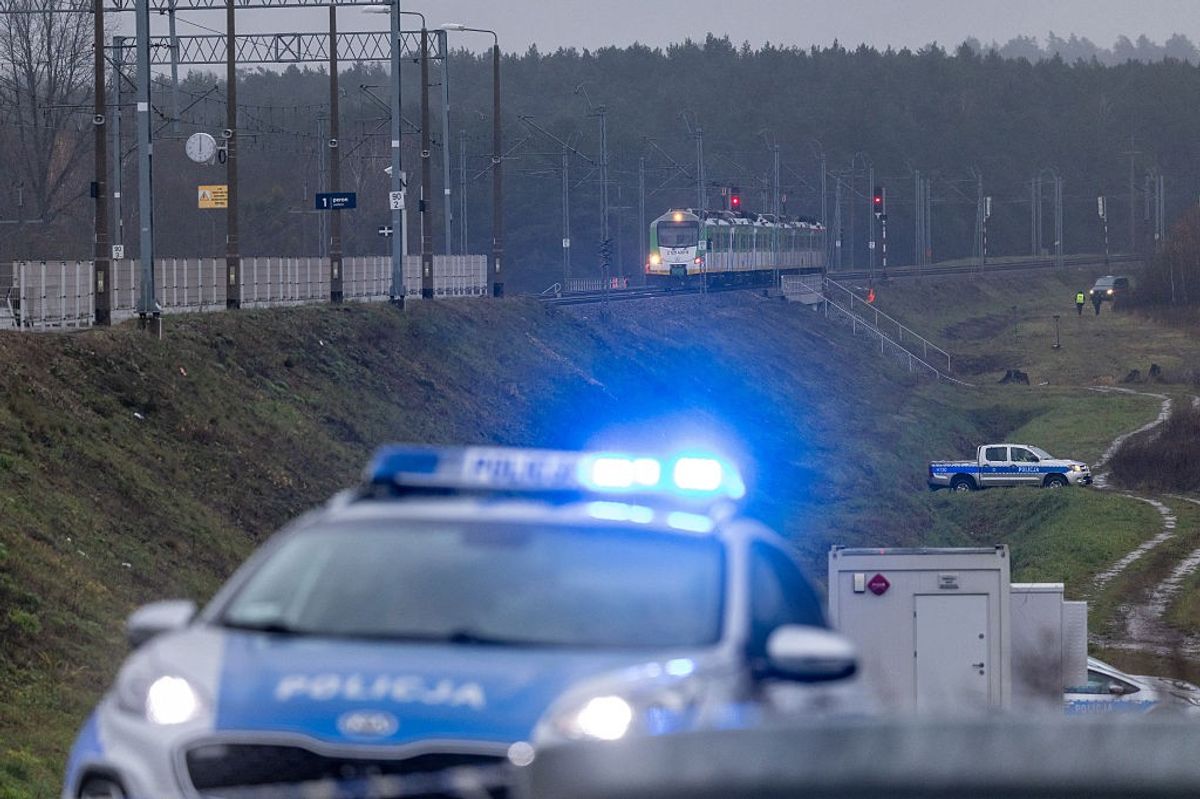
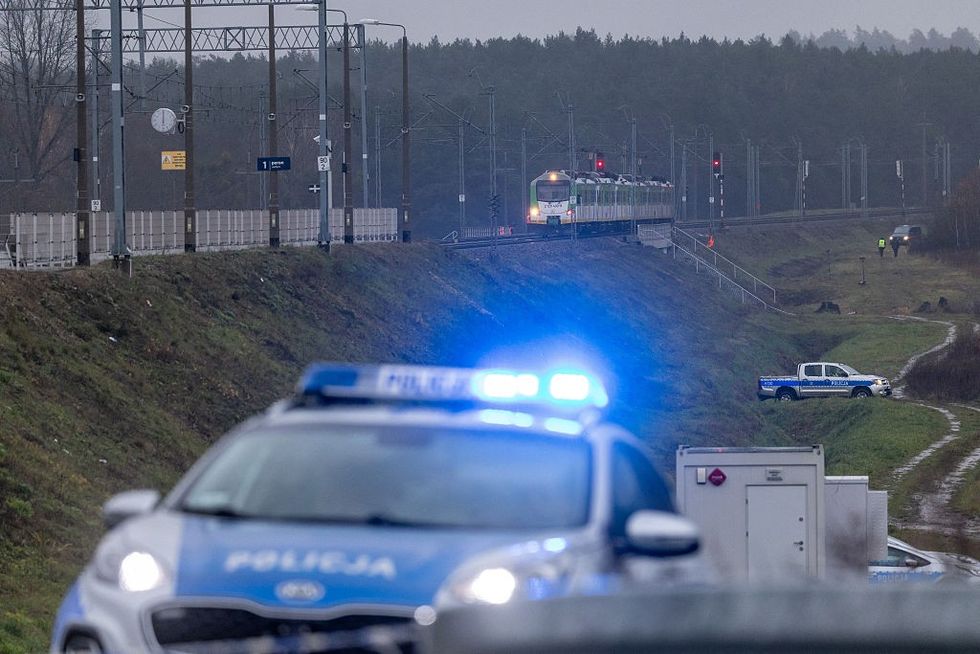
DEEP DIVE — In the darkness of night on November 15, a massive explosion ripped through a stretch of the Warsaw-Lublin railway line close to Mika, Poland, severing a critical logistics route used to ship military equipment and aid eastward from Warsaw toward the Ukrainian border.
The blast, caused by a C-4 explosive device, damaged the tracks and a passing freight train’s wagon floor, halting rail traffic and sending ripples of alarm through Poland, one of Ukraine’s staunchest allies.
Polish authorities quickly confirmed sabotage, charging three Ukrainian nationals — Oleksandr K., Yevhenii I., and Volodymyr B. — with executing the plot under Russian direction. The incident was not a lone act but part of a growing wave of covert operations targeting railways, ports, and pipelines across Europe, aimed at undermining support for Kyiv.
Ivana Stradner, a research fellow at the Foundation for Defense of Democracies, characterizes these actions to The Cipher Brief as Russia “waging a long, low-cost pressure campaign that targets not only the battlefield but everyday life across EU countries.”
Polish prosecutors outlined the operation’s chilling precision. In September 2025, Volodymyr B., arrested on November 20 and charged on November 22, drove Yevhenii I. to the sabotage site for reconnaissance, enabling the selection of the explosive placement. Oleksandr K. and Yevhenii I., the primary perpetrators acting on behalf of Russian intelligence, planted the device and a metal clamp intended to derail a train, then fled to Belarus, where Poland’s extradition requests remain pending.
Immediately following the attack, Foreign Minister Radoslaw Sikorski characterized it as “state terror.” Warsaw closed Russia’s last consulate in Gdansk, and thousands of soldiers were deployed nationwide to protect critical infrastructure. The Kremlin, nonetheless, rebuffed the accusations as “Russophobia” and vowed to retaliate by severing Polish diplomatic ties. This exchange of moves points, however, to a larger trend: the use of subtle, sophisticated attacks aimed at crippling Ukraine’s supply lines without triggering a full-blown escalation.
Proxies in the Shadows: Recruiting the Unwitting
Moscow’s strategy for sabotage is built on proxies, using local citizens and displaced people to carry out attacks and maintain Russia’s plausible deniability. The situation in Poland is particularly disturbing, where the involvement of Ukrainian nationals exposes an aggressive recruitment campaign aimed at vulnerable youth from their war-torn home country. Ukrainian security services have documented a sharp rise, reporting that Russian operatives have entrapped over 170 minors in the last 18 months, often luring them through Telegram channels disguised as job boards or casual chats.
The recruitment base consists of migrants from Eastern Europe and Russian-speaking citizens of countries where the sabotage operations are carried out. They are often individuals with criminal histories or financial problems. What begins as innocuous tasks — snapping photos of buildings or mailing postcards — escalates to planting bombs or torching vehicles, often with payments that seem too good to refuse.
Head of Ukraine’s National Police Juvenile Prevention Department, Vasyl Bohdan, described the ploy’s subtlety: “For the most part, the children don’t understand what is happening, or that it’s very serious.” Experts note that Russian operatives often begin by masquerading as sympathetic figures to build trust with their targets. Once the relationship is established, they leverage compromising material to secure compliance through blackmail. In one recent instance in Ivano-Frankivsk, two teenagers were promised $1700 each and thus embedded a device that detonated remotely, killing one and maiming the other.
“Russia’s intelligence services use Ukrainians inside NATO states because it blurs the political story and creates deniability, especially since many recruits are young, economically vulnerable, and have no prior ideological profile,” Natalya Goldschmidt, CEO of Lightning Associates LLC, a strategic geopolitical consulting firm focusing on Russia, Eurasia, and Latin America, tells The Cipher Brief. “Most of the initial interactions now happen through encrypted apps and seemingly low‑stakes’ tasks, such as taking photos of infrastructure, moving small packages, or counting vehicles, which makes these pipelines hard to spot before an operation moves from reconnaissance to action."
Ukraine’s countermeasures have gained traction, with police and NGOs flooding schools and camps with warnings, partnering with celebrities like boxer Oleksandr Usyk to drill home the dangers. Reports of attempted recruitments have surged to 74 this year, and successful cases have plummeted, as Bohdan noted: the number of successful child recruitment cases has decreased “exponentially over the past year.”
According to Goldschmidt, Moscow’s hybrid operations and cognitive warfare are most effective against a Europe already fragmented by domestic political crises, economic fatigue, and unresolved debates over migration and identity.
“The most worrying escalation over the next year or so is not one spectacular act, but a carefully timed cluster of incidents that together amount to a strategic shock: rail disruptions and warehouse fires at a critical moment for aid to Ukraine, damage to energy or data links in Northern Europe, and Russian drones killing or seriously injuring someone on NATO territory, all wrapped in enough ambiguity to delay a unified response,” she cautioned.
This proxy model extends well into Europe.
In October, Romanian intelligence smashed a parallel operation by arresting two Ukrainian citizens. The pair had smuggled bomb components — incendiary devices disguised in car parts and headphones — into Bucharest, targeting the Nova Post headquarters, a Ukrainian courier firm moving vital aid. In addition to thermite and barium nitrate, the packages included counter-surveillance measures, exhibiting classic Russian tradecraft. According to investigators, the duo is part of a wider network acting under Moscow’s direction, which has allegedly targeted Nova Post sites in Poland and elsewhere.
The threat became clearer that same week when Poland detained eight suspects tied to planned infrastructure attacks. Officials in Europe attribute these coordinated operations to Russian elite formations, notably GRU Unit 29155. General Andrei Averyanov leads the unit and is part of a dedicated sabotage hub under General Vladimir Alekseev, which marshals over 20,000 Spetsnaz operatives.
Need a daily dose of reality on national and global security issues? Subscriber to The Cipher Brief’s Nightcap newsletter, delivering expert insights on today’s events – right to your inbox. Sign up for free today.
Hybrid Echoes: Testing the Article 5 Threshold
The sabotage wave laps at diverse shores, blending old-school explosives with cutting-edge disruptions to fray Europe’s logistical sinews.
There have been several cases of undersea fibre cable damage or destruction in the Baltic under murky circumstances, prompting high-level investigations. From Germany to the Nordic states, prosecutors and security services have reported a pattern of suspected sabotage in fires and parcel-incendiary incidents that have scorched logistics hubs and defense manufacturing sites.
At the same time, GPS and navigation jamming across the Baltic and northeastern Europe has surged — European ministers and national regulators report daily interference that has disrupted flights and aviation operations, and they warn of substantial economic impacts. In September, mass drone overflights and cross-border incursions, including a large wave of drones into Poland and a 19-September violation of Estonian airspace by MiG-31s, prompted NATO consultations and temporary airport closures in the region.
These disruptions, while seemingly tactical, tie directly into a broader strategic calculus aimed at testing NATO’s unity and response mechanisms.
The strategic heart of the issue is NATO’s collective defense clause. Stradner also notes that, “Vladimir Putin has been candid about his desire to discredit NATO’s Article 5 in which members pledge to treat an attack against one ally as an attack against all.” She argues that because Putin, “Trained as a KGB operative, is well versed in so-called ‘active measures,’” his goal is to challenge the alliance.
Alexander Graef, Senior Policy Fellow at the European Leadership Network, however, contends to The Cipher Brief that “the actual impact of these sabotage acts on the flow of aid to Ukraine remains extremely limited.”
In his view, the activities are primarily aimed “less at disrupting logistics than at influencing public opinion in Western societies by trying to convince voters that further support for Ukraine carries unacceptable risks.” He stresses that this strategy “rests on a misreading of Western threat perceptions,” as such actions tend to “reinforce the opposite conclusion: that Russia is a growing danger and that support for Ukraine, as well as investment in defense, must increase further.”
“The Article 5 threshold remains deliberately high. Invoking it requires consensus within the North Atlantic Council. It is hard to imagine such agreement emerging in response to low-level sabotage, ambiguous incidents, or non-lethal disruptions,” Graef said. Therefore, Moscow does indeed appear to be “calibrating its operations to stay well below that line. Still, it is not achieving its intended political effects.”
George Barros, Russia Team & Geospatial Intelligence Team Lead at the Institute for the Study of War, concurs to The Cipher Brief that Russia is “boiling the frog and NATO member states have so far elected to not treat Russian acts of war against them as they truly are.”
“Russia has already passed the threshold with its sabotage actions, manned aircraft airspace incursions, and missiles entering the airspace of Poland and Romania. Russia seeks to normalize this activity so that NATO de facto approves a new normal, in which case we don’t treat Russian acts of war seriously,” he noted. “The West has far too long allowed Russia to operate against us with relative impunity. The West must seize the strategic initiative from Russia and begin imposing dilemmas on Russia.”
Yet even as these operations escalate, analysts say Russia is careful to keep them calibrated just below the line that would trigger NATO’s collective-defense clause.
The problem with Article 5, as experts observe, is that the ‘hybrid’ qualities of ambiguity and deniability – which, it is feared, Russia would manipulate to come close to the Article 5 threshold without reaching it – can paralyze the institutional and political mechanisms of collective defense.
“Putin does this all the time. It’s the same pattern — gray-zone hybrid operations run out of the GRU,” former CIA station chief Daniel Hoffman, tells The Cipher Brief. “Operating against enemies on foreign soil with impunity and facing no repercussions. They’re sending a message.”
Are you Subscribed to The Cipher Brief’s Digital Channel on YouTube? There is no better place to get clear perspectives from deeply experienced national security experts.
Fortifying the Front: Europe’s Counteroffensive
While concerns over Russian interference deepen, Europe tries to fortify its infrastructure. In response to September’s airspace breaches, EU defense ministers accelerated deployment of a “drone wall” along the eastern flank.
To harden against airspace violations, Graef advises that measures must be tailored, noting that while airspace violations require increased internal coordination, harmonized rules of engagement, and improved information sharing, sabotage is primarily the responsibility of “police, counterintelligence services, and judicial authorities.”
He maintains that if Russia’s objective is to weaken European support, then “demonstrating political unity is in itself an important countermeasure.”
Maksym Skrypchenko, nonresident scholar in the Russia Eurasia Program, points out that, from Kyiv’s purview, European governments’ measures to protect infrastructure are catastrophically insufficient.
“Russia is several steps ahead, while Europe is acting reactively rather than proactively. Russian embassies remain operational, and Russian tourists continue to travel, which is being exploited not only for information gathering and influence operations but also for sabotage,” he tells The Cipher Brief. “European countries need to start with basic steps: acknowledge that they have a single major threat. Once this acknowledgment happens, the next step should be decisive action – ceasing the purchase of Russian energy resources, blocking Russia’s shadow fleet, expelling Russian diplomat-spies, strengthening infrastructure protection, and investing in acquiring Ukrainian anti-drone systems, to name a few.”
While some analysts discuss limited, deniable counter-sabotage in response, Graef warns that “such activities carry significant risks.”
“They can easily fuel an action–reaction cycle without generating meaningful deterrent effects,” he asserted, highlighting that the focus should remain on strengthening resilience, improving attribution, and coordinating clear response thresholds rather than “entering a covert tit-for-tat that neither deters nor stabilizes.
In the face of this persistent, multi-layered threat, Stradner believes the ultimate answer lies in deterrence through strength.
“We should not fear escalations as kindness is weakness for Putin, and he only understands the language of power,” she noted, underscoring that the consequences of continued inaction and ambiguity in the face of Moscow’s “new generation warfare.”
“Until NATO resolves the lack of clarity regarding Article 5’s threshold for acts of aggression warranting collective defense, Russia will continue to sabotage without the consequences of all-out war, and the Western response to this hybrid war will remain reactive and insufficient,” Stradner added.
Read more expert-driven national security insights, perspective and analysis in The Cipher Brief because National Security is Everyone’s Business.