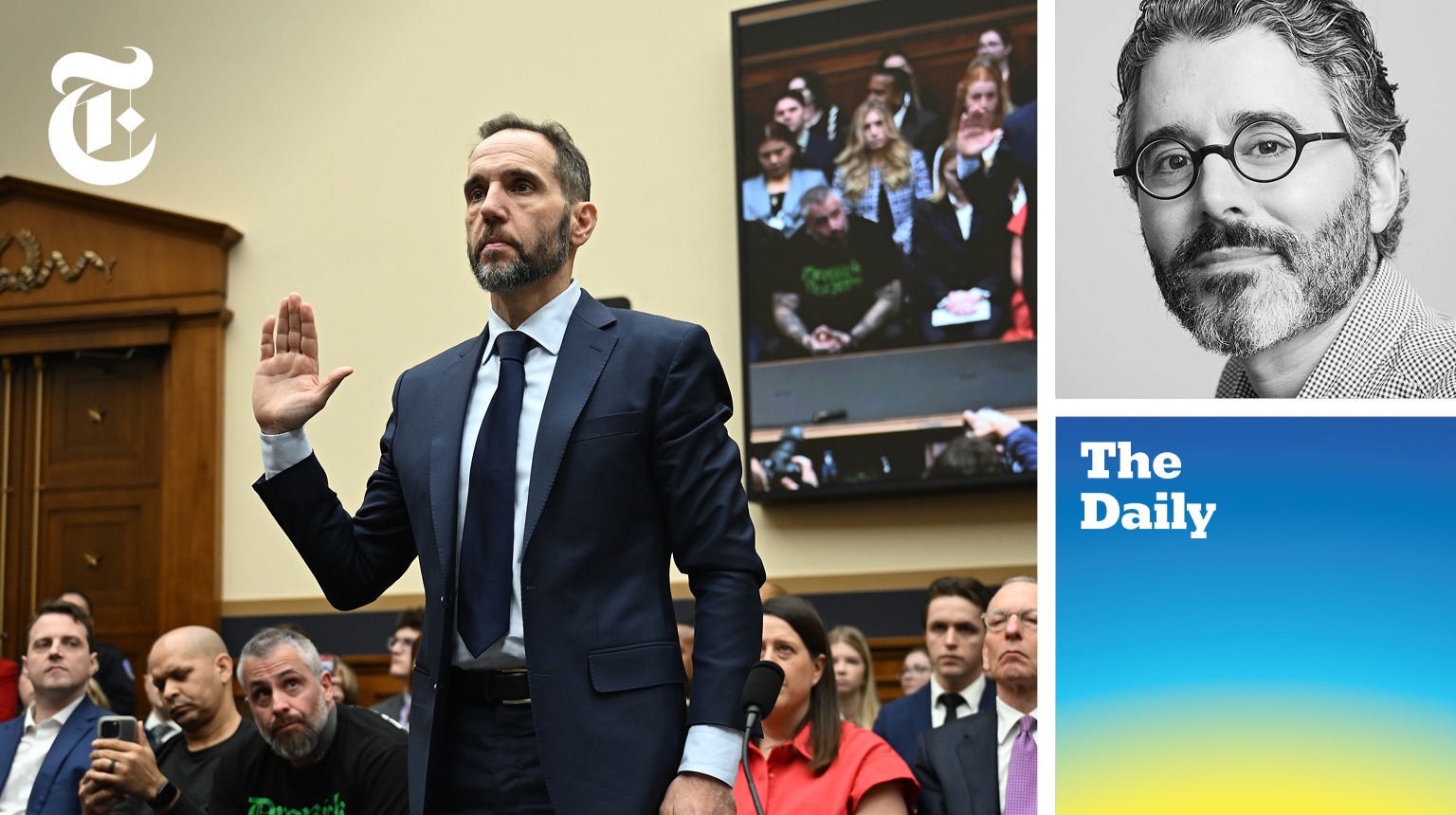
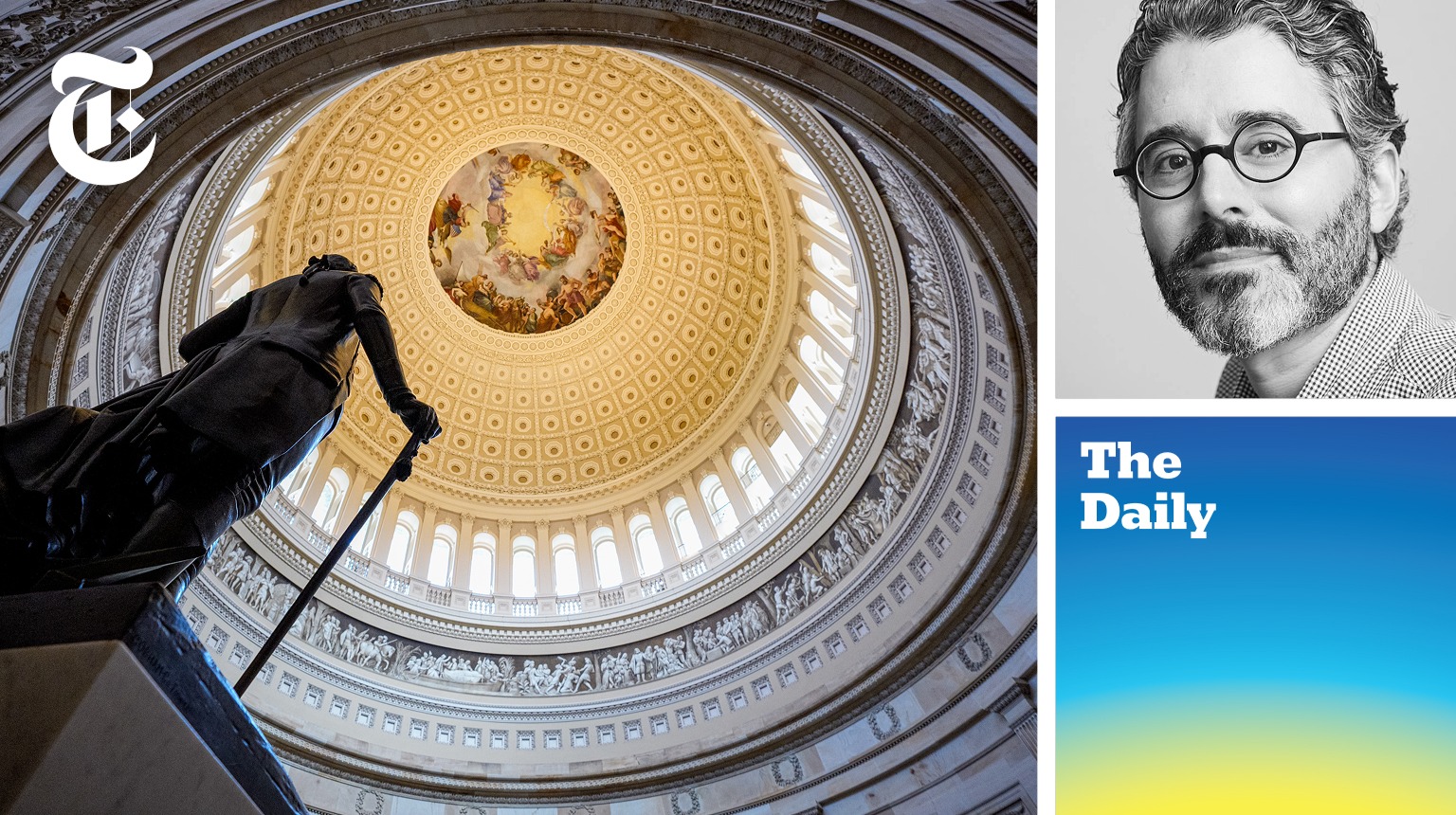
Three years after his appointment as special counsel, Jack Smith finally delivered the legal argument against President Trump on Thursday that he was never allowed to make in court.
Glenn Thrush, who reports on the Justice Department, explains what Mr. Smith told Congress and why his message is likely to make him Mr. Trump’s next target.
Guest: Glenn Thrush, who reports on the Justice Department for The New York Times.
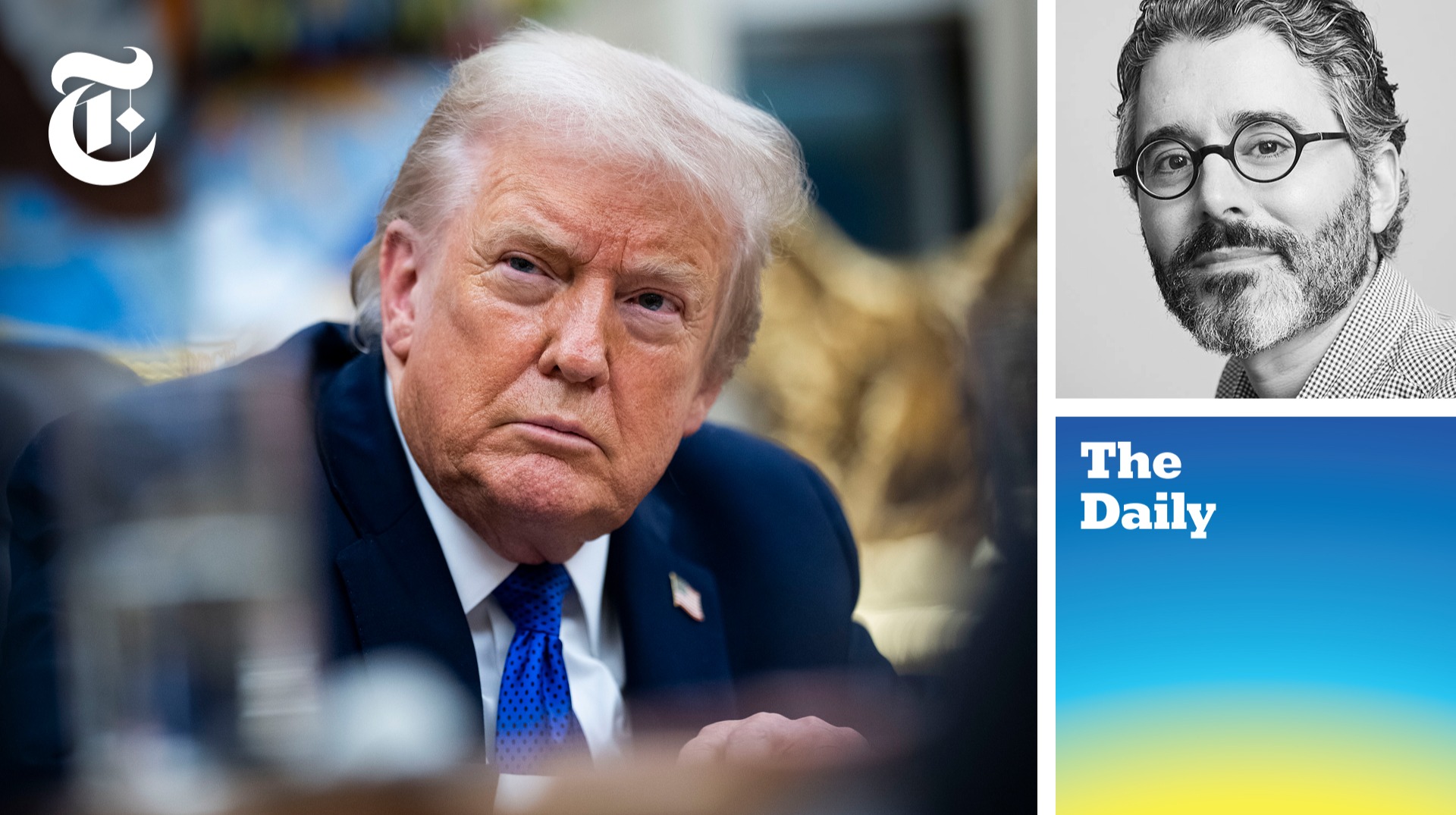
President Trump has been raising tensions around the world for weeks by claiming that he would stop at nothing in his quest to seize Greenland from Denmark.
But on Wednesday, he appeared to back down, announcing that he’d reached the framework of an agreement with NATO over Greenland’s future.
Mark Landler, the London bureau chief, explains the ups and downs of Mr. Trump’s Greenland gambit, and why it may signal the beginning of a new world order.
Guest: Mark Landler, the London bureau chief of The New York Times, working with a team of correspondents to cover the United Kingdom.
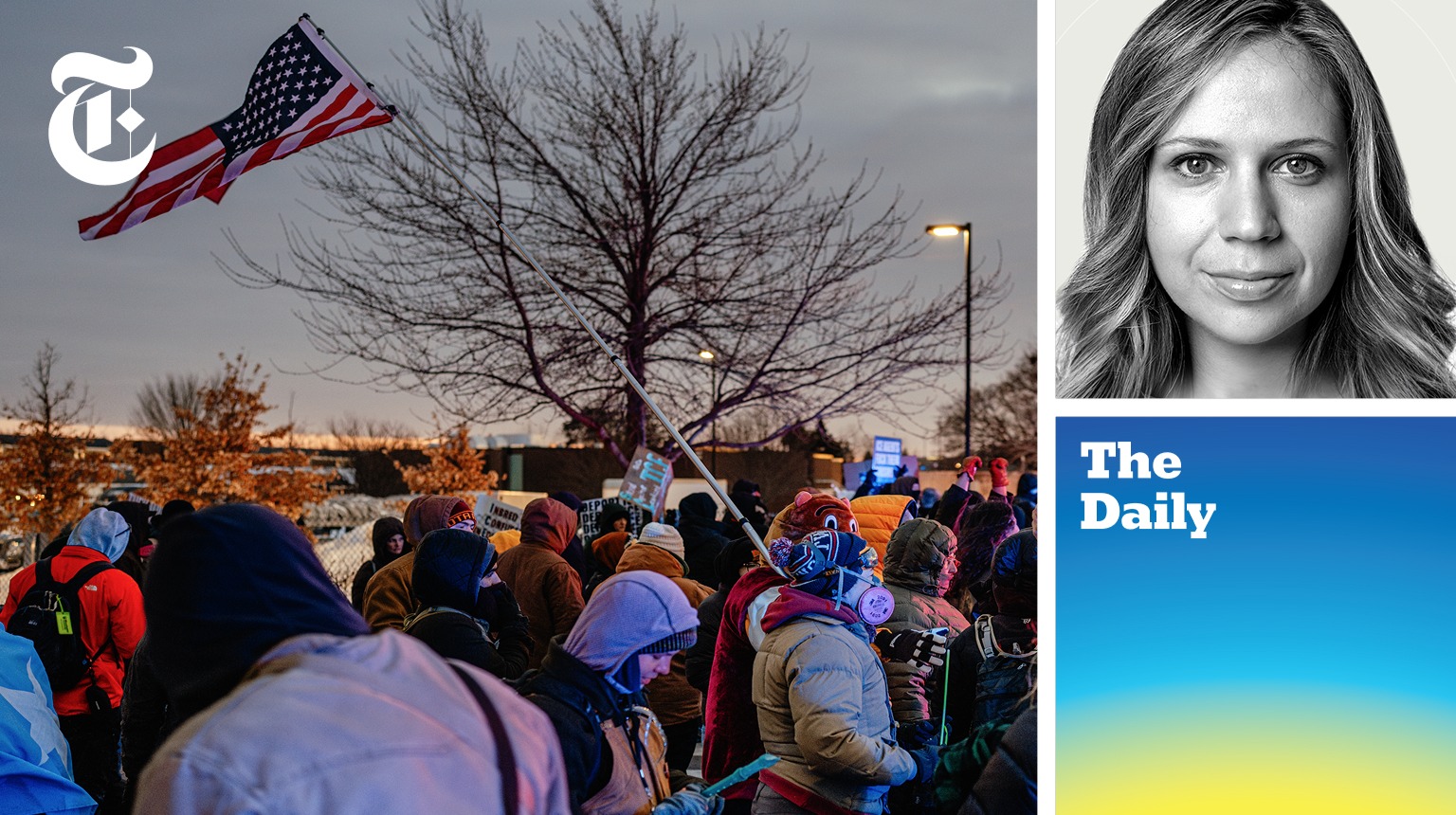
For weeks, protests around Minneapolis have caught nationwide attention as the city shows open defiance to a federal immigration crackdown.
But behind the scenes, a quieter organized resistance has taken shape.
Anna Foley and Michael Simon Johnson, producers for “The “Daily,” go on the ground in Minneapolis to capture that effort, and Charles Homans, a New York Times reporter, explains why the city has become ground zero in the fight over the government’s deportation strategy.
Guest: Charles Homans, a reporter for The New York Times and The Times Magazine, covering national politics.
In the 365 days since Donald J. Trump was sworn into his second term as president, he has fired, pardoned, prosecuted, tariffed, deployed, deposed, dismantled and deported his way to a new kind of American government, one designed almost entirely in his image. In the process, he has not only transformed the federal government, he has also changed, possibly forever, the very nature of the American presidency.
On today’s episode, Michael Barbaro speaks with three longtime chroniclers of Trump’s presidency about how to make sense of what Trump has done over the past year and what his next three years in office might bring.
Guests:
Maggie Haberman, a White House correspondent for The New York Times.
Jonathan Swan, a White House reporter for The New York Times.
Charlie Savage, who covers national security and legal policy for The New York Times.
There’s a lot of anxiety about artificial intelligence invading Hollywood; the general mood there right now could be called “doom and gloom.” But speculation about a future where A.I. actors perform A.I. scripts in A.I.-generated movies often obscures the role A.I. is currently playing in the industry.
In this episode, the host Michael Barbaro talks with the Hollywood reporter Brooks Barnes and the movie critic Alissa Wilkinson about the ways that A.I. is already showing up in our movies and television today, and how they see it contributing to — and complicating — the future.
For millions of families, in vitro fertilization is a modern medical miracle. But the field is largely unregulated, and for a small number of parents, things can go terribly wrong.
Susan Dominus discusses her story about how two families navigated an unthinkable I.V.F. mistake that will connect them for the rest of their lives.
Guest: Susan Dominus, a staff writer at The New York Times Magazine.
The Trump administration’s decision to open a criminal investigation into the Federal Reserve chairman, Jerome H. Powell, has stunned the worlds of business and politics.
Colby Smith and Glenn Thrush, who have been covering the news, discuss how the investigation came about, the panic it unleashed and why it might have made the Fed chair stronger than ever.
Guest:
Colby Smith, a New York Times reporter covering the Federal Reserve and the U.S. economy.
Glenn Thrush, who reports on the Justice Department for The New York Times.
Background reading:
Blowback builds over the criminal investigation of Mr. Powell.
Iran is experiencing expansive protests after economic grievances snowballed over the past two weeks into a broader challenge to the country’s authoritarian clerical rulers.
In recent days, a full picture of the government’s crackdown on demonstrators has emerged, garnering global condemnation and threats of action from President Trump.
Farnaz Fassihi, who has been covering the story, explains what is driving the protesters and why the regime may be facing one of its gravest challenges in decades.
Guest: Farnaz Fassihi, the United Nations bureau chief for The New York Times.
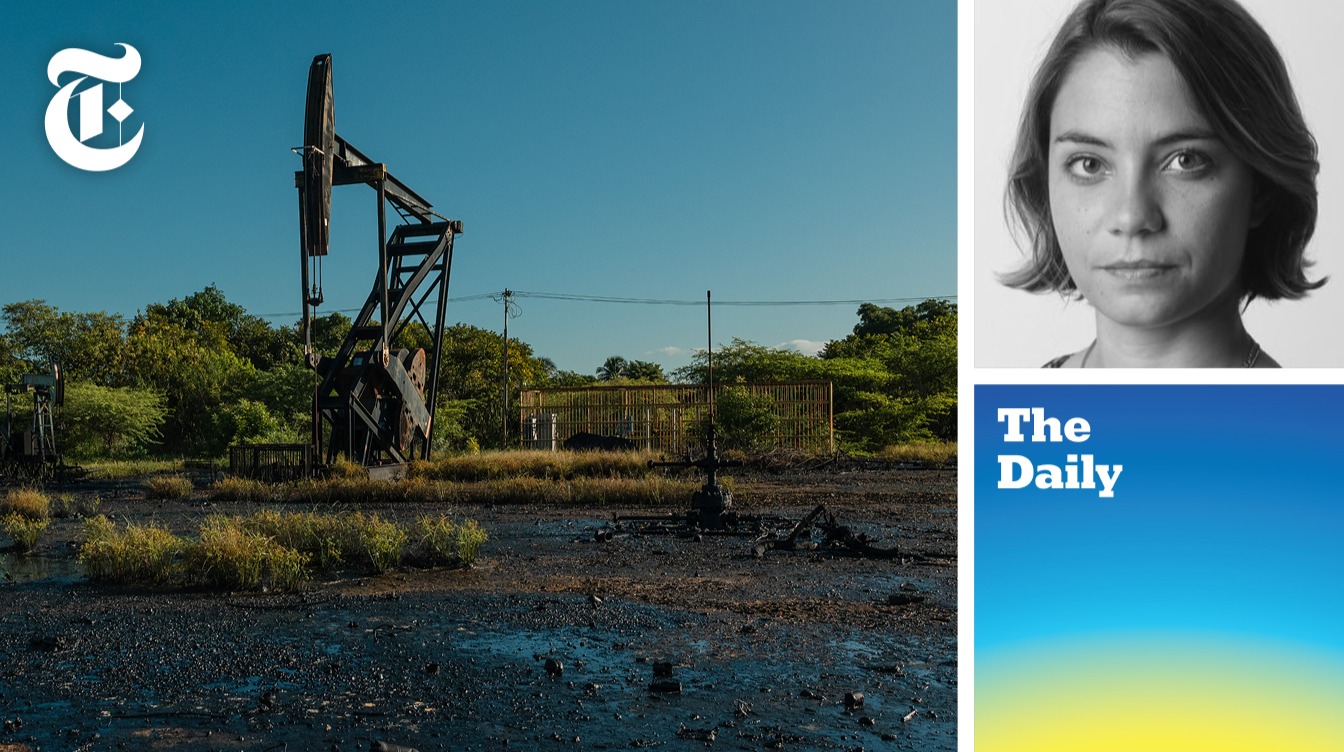
In the days since deposing Nicolás Maduro, President Trump has given several justifications for his dramatic actions in Venezuela. But perhaps most central to his ambitions is opening Venezuela’s oil fields to American companies.
Anatoly Kurmanaev, who covers Venezuela, explains the history behind Mr. Trump’s claims of ownership and what it would really take to get the oil back.
Guest: Anatoly Kurmanaev, a reporter for The New York Times who covers Venezuela.
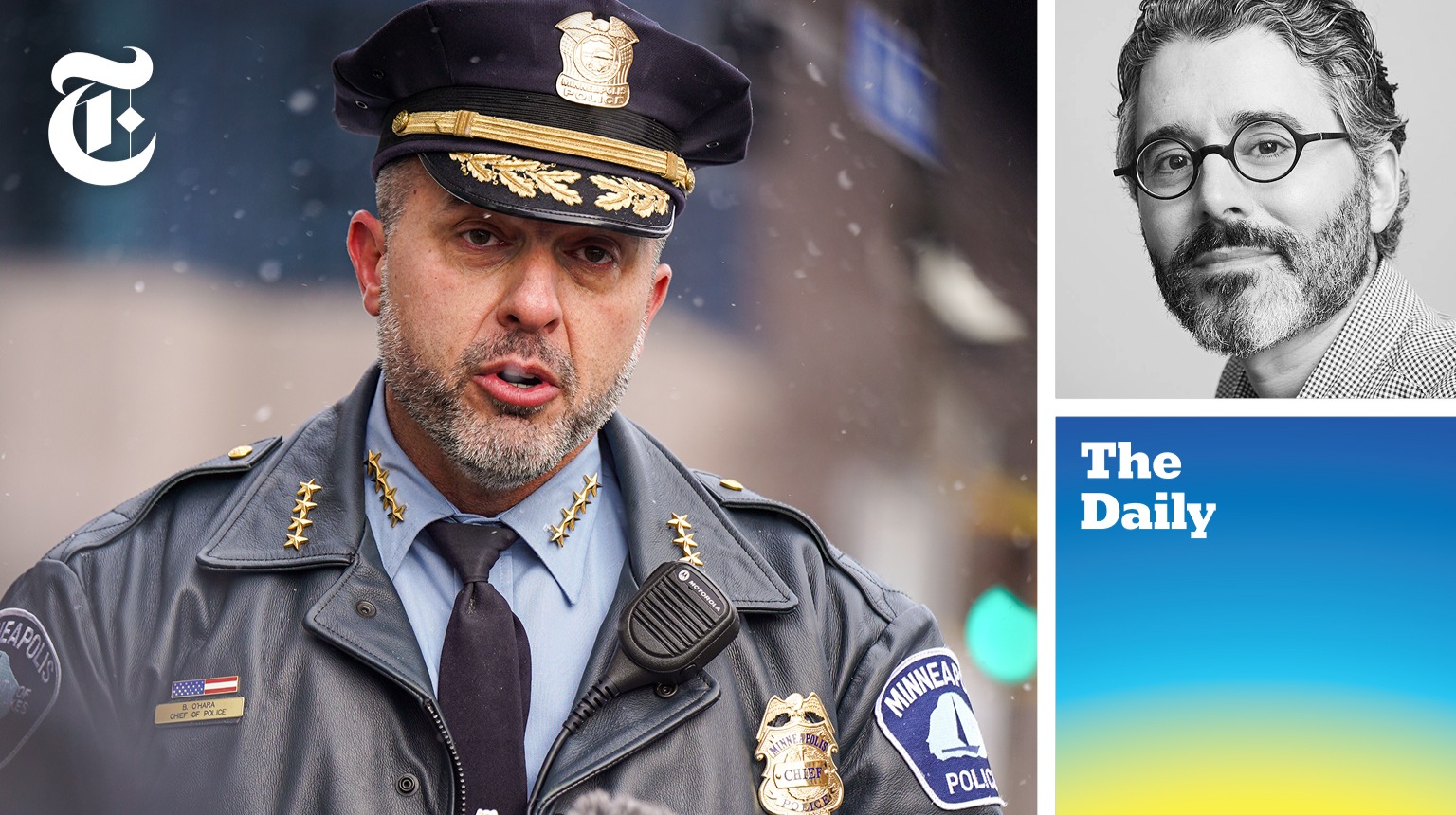
Just hours before a federal immigration officer killed Renee Good in her car, Brian O’Hara, the Minneapolis police chief, warned that a tragedy involving ICE seemed inevitable.
In an interview, Chief O’Hara discusses his experience with ICE in Minneapolis and why, in his mind, President Trump’s campaign of mass deportation is undermining faith in police departments.
Guest: Brian O’Hara, chief of the Minneapolis Police Department
On January 7, 2025, the Palisades and Eaton Fires erupted, eventually burning down more than 16,000 structures and killing at least 31 people, becoming among the most destructive and deadly wildfires in California’s history.
Two Wirecutter writers, Gregory Han and Mike Cohen, lived through the Eaton fire. Both lived in Altadena, just outside Los Angeles. Gregory’s home was damaged, while Mike’s burned to the ground. They collaborated on an article sharing their biggest lessons of recovery, which Wirecutter published last July, as part of our emergency preparation coverage.
Now, in a special podcast series, they are sharing the biggest lessons they’ve learned from the past year–—and what they can teach you about how to prepare for a disaster.
Unfortunately, climate change is making extreme weather events more frequent, more intense, and more unpredictable. In the last year alone, we’ve seen cataclysmic floods in the Texas Hill Country, deadly tornadoes in many parts of the U.S., and increasing flash floods across the country, just to name a few. No one is completely insulated from these types of events.
In this first episode, we’ll introduce you to Gregory and Mike, and why they think it’s imperative to invest in your community before a disaster.
You can listen to parts two and three of this series here. Part three will be published on Jan. 12.
Actionable steps you can take from this episode:
Invest in your community before a disaster. Information can be hard to come by during and in the immediate aftermath of a disaster. This is when knowing your neighbors can be invaluable. Both Gregory and Mike relied on neighbors and others in their community for information before, during, and after the fires. They’ve continued to share resources with this community as they’ve worked toward recovery over the past year.
Create an easy way to communicate with your neighbors. This could be a text chain or a group chat–through something like WhatsApp or GroupMe. Maybe you’re already involved with a group that may eventually help in an emergency. Mike’s neighborhood thread started as a group of local dog owners before the fire.
Join a volunteer organization in your community. After the fires, Gregory joined a group to do brush cleanup, which has helped deepen his connection with the people who live close to him.
You can find out more about Gregory Han on his website and on Instagram @typefiend
The Wirecutter Show is executive produced by Rosie Guerin and produced by Abigail Keel.Engineering support from Maddy Masiello and Nick Pitman. Episodes are mixed by Catherine Anderson, Efim Shapiro, Rowan Niemisto, Sophia Lanman, and Sonia Herrero. Original music by Dan Powell, Marion Lozano, Elisheba Ittoop, and Diane Wong. Wirecutter’s deputy publisher and general manager is Cliff Levy. Ben Frumin is Wirecutter’s editor-in-chief. Hosted by Rosie Guerin, Caira Blackwell and Christine Cyr Clisset.
The Centers for Disease Control and Prevention on Monday released new guidelines that dramaticaly cut down the number of childhood vaccines recommended by the federal government.
Apoorva Mandavilli and Benjamin Mueller, who cover health, explain what is being cut and how it fits into Health Secretary Robert F. Kennedy Jr.’s broader agenda.
Guest:
Apoorva Mandavilli, a science and global health reporter at The New York Times.
Benjamin Mueller, a reporter covering health and medicine for The New York Times.
This year, the 2026 midterm elections will decide which party controls Congress, and whether Republicans can hold on to every lever of influence in Washington.
Annie Karni and Shane Goldmacher, who cover politics, discuss the opportunities and perils for both parties.
Guest:
Annie Karni, a congressional correspondent at The New York Times.
Shane Goldmacher, a national political correspondent for The New York Times.
On Monday, President Trump picked Vice President Delcy Rodríguez of Venezuela, now the interim leader, to continue to preside over the country instead of María Corina Machado, the opposition leader.
Anatoly Kurmanaev, who reports on Venezuela, explains why Mr. Trump chose a Maduro loyalist to run the country. And Venezuelan citizens reflect on the realities of a post-Maduro era.
Guest: Anatoly Kurmanaev, a reporter for The New York Times who covers Venezuela.
Nicolás Maduro of Venezuela was brought to New York with his wife over the weekend to face criminal charges.
Charlie Savage, who covers national security and legal policy, discusses the legality of Mr. Maduro’s capture and whether the operation could undermine the legal case against him.
Guest: Charlie Savage, who covers national security and legal policy for The New York Times.
Background reading:
Can the United States legally “run” Venezuela after Mr. Maduro’s capture? Here’s what to know.
The U.S. indictment of Mr. Maduro cites cocaine smuggling. Venezuela’s role in the trade is believed to be modest.
Photo: The New York Times
For more information on today’s episode, visit nytimes.com/thedaily. Transcripts of each episode will be made available by the next workday.
The United States captured Nicolás Maduro, the Venezuelan president, over the weekend in a swift and overwhelming military operation. Mr. Maduro was pictured blindfolded, handcuffed and later brought to New York to face criminal charges.
Eric Schmitt, a national security correspondent for The New York Times, tells the story of how the operation unfolded, and discusses what comes next.
Guest: Eric Schmitt, a national security correspondent for The New York Times based in Washington.
Background reading:
President Trump said at a news conference that the United States would “run” Venezuela.

 Login
Login