Reading view

There are new articles available, click to refresh the page.

US Regulator Exposes 9 Major Banks That ‘Debanked’ Crypto With ‘Inappropriate’ Restrictions

The U.S. Office of the Comptroller of the Currency has released preliminary findings from a sweeping review into debanking practices at the country’s nine largest national banks, revealing that all of them imposed “inappropriate” restrictions on lawful businesses, including firms operating in the digital-asset sector.

The review, ordered under President Donald Trump’s Executive Order on “Guaranteeing Fair Banking for All Americans,” examined practices at JPMorgan Chase, Bank of America, Citibank, Wells Fargo, U.S. Bank, Capital One, PNC, TD Bank and BMO.

The OCC is committed to ending efforts that weaponize finance. Read the OCC’s preliminary findings from its supervisory review of debanking activities at the nine largest national banks. https://t.co/pFMi7Rt8kh pic.twitter.com/XWfbCheo91

— OCC (@USOCC) December 10, 2025

According to the regulator, these banks maintained internal policies between 2020 and 2023 that treated customers differently based on the nature of their legal business activities.

The OCC found that several institutions required escalated approvals or imposed blanket restrictions on entire sectors viewed as conflicting with the banks’ “values.”

The list of affected industries stretched from oil and gas to firearms, private prisons, tobacco, and adult entertainment. Digital asset companies were included among the businesses facing barriers.

Regulator Says Banks Used Charter Powers Improperly as Crypto Debanking Spread

Comptroller of the Currency Jonathan Gould said the agency’s early findings show that these policies were not isolated cases but widespread across the institutions reviewed.

He described the practices as harmful to lawful enterprises and an inappropriate use of a national bank charter.

🏦 OCC head Jonathan Gould said that crypto firms seeking federal bank charters should be evaluated on par with traditional financial firms.#OCC #USBankCharter #DigitalAssetFirmshttps://t.co/hXWT3OU9GX

— Cryptonews.com (@cryptonews) December 9, 2025

While the banks have insisted that they did not engage in discriminatory account closures, the OCC said many of the policies were visible publicly, and its investigations will continue until a full accounting is completed.

The agency’s work builds on a review launched in September 2025 and covers thousands of complaints, including claims of political and religious debanking.

According to the regulator, those findings will be released later. Debanking typically occurs when banks decide it is safer to sever ties with certain customers rather than risk regulatory scrutiny.

In the case of crypto businesses, the pressure has often come indirectly through warnings, consultations, or guidance that banks interpret as cautionary notes from their regulators.

🏦 Crypto’s biggest battle isn’t just regulation — it’s access to banks. This op-ed breaks down why debanking is hurting innovation — and how to fix it.#Debanking #CryptoRegulationhttps://t.co/aSuleCKQJm

— Cryptonews.com (@cryptonews) April 17, 2025

One example referenced in the broader debate occurred when the FDIC encouraged banks to “pause” crypto-related activities without issuing a direct prohibition.

That kind of communication, combined with compliance fears, made the sector a high-risk area for banks to service and left crypto firms struggling to maintain basic operational accounts.

Crypto Debanking Sparks Political Clash Amid New Fair-Access Push

The issue has grown into a political flashpoint. President Trump signed an executive order in August intended to stop the practice of debanking customers solely for involvement in crypto or other legal industries.

Lawmakers in states such as Florida, Idaho, Tennessee, and others have pushed their own “fair access” laws designed to block banks from using ideological or non-financial criteria when assessing customers.

Earlier this month, JPMorgan Chase CEO Jamie Dimon recently rejected claims that the bank closes accounts based on political considerations.

🚨 JP Morgan CEO admits, “We do debank” but says it’s not for politics but from crypto execs to religious groups; many claim otherwise.

#debanking #JPMorgan https://t.co/m8zi06Jfib

— Cryptonews.com (@cryptonews) December 8, 2025

His comments followed accusations from crypto executives and conservative groups who say they were cut off without clear explanations.

The controversy deepened last month when Strike CEO Jack Mallers said his accounts were abruptly closed under vague references to “concerning activity,” fueling renewed allegations of a modern “Operation Chokepoint.”

🚫 Strike CEO @jackmallers says JPMorgan @Chase abruptly terminated his personal bank accounts in September without offering any explanation.#Strike #JPMorganhttps://t.co/nia2Vj4dYV

— Cryptonews.com (@cryptonews) November 24, 2025

Regulators consistently deny any coordinated effort to cut off crypto access, arguing that decisions stem from anti-money-laundering obligations. Federal law requires banks to monitor and report suspicious activity, and institutions face steep penalties when they fail to comply.

The tensions extend beyond bank account closures. Former U.S. Solicitor General Donald Verrilli has argued in court filings that crypto-focused Custodia Bank was denied a Federal Reserve master account because regulators treated the digital asset sector as inherently unsafe.

Several former officials and lawmakers have filed briefs supporting the claim. The case remains on appeal and could take on greater significance after a recent Supreme Court opinion curbed deference to federal agencies’ interpretations of the law.

The post US Regulator Exposes 9 Major Banks That ‘Debanked’ Crypto With ‘Inappropriate’ Restrictions appeared first on Cryptonews.
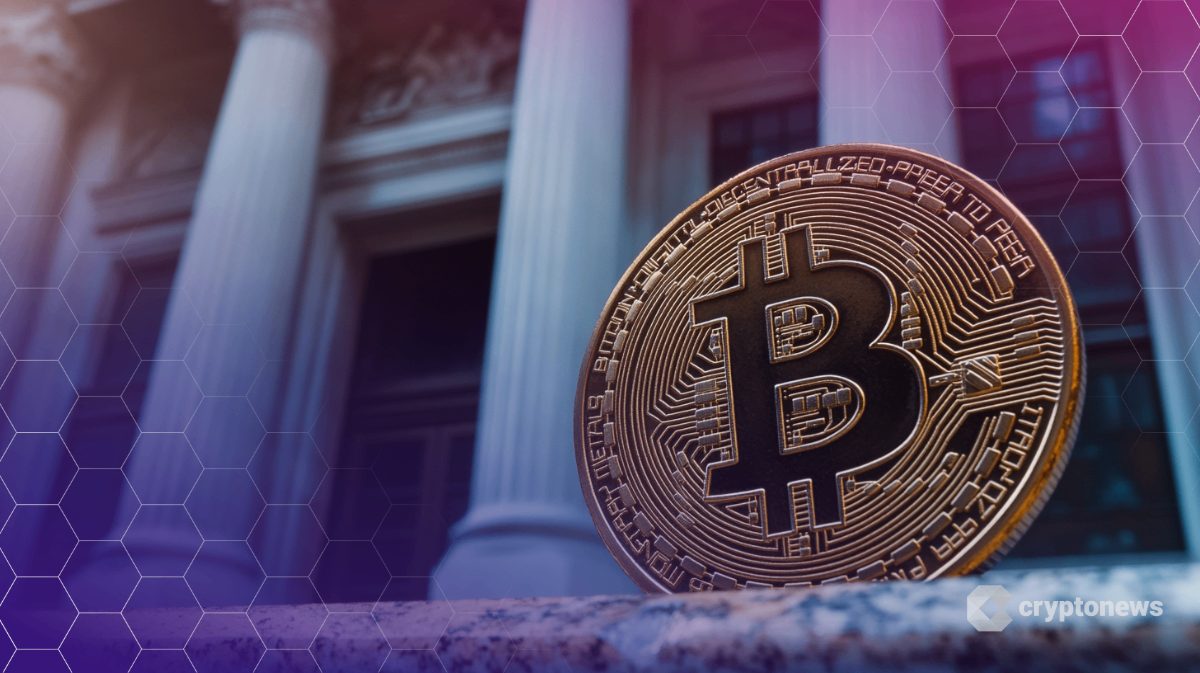

Satoshi Nakamoto Statue Arrives at NYSE as Wall Street Embraces Bitcoin

The New York Stock Exchange welcomed a bronze statue of Bitcoin creator Satoshi Nakamoto on Thursday.

Twenty One Capital, the first Bitcoin-native public company listed on the NYSE under ticker XXI, placed the sixth of 21 planned global monuments at the exchange as crypto markets navigate Federal Reserve policy uncertainty.

The installation by artist Valentina Picozzi represents what NYSE officials described as “shared ground between emerging systems and established institutions.

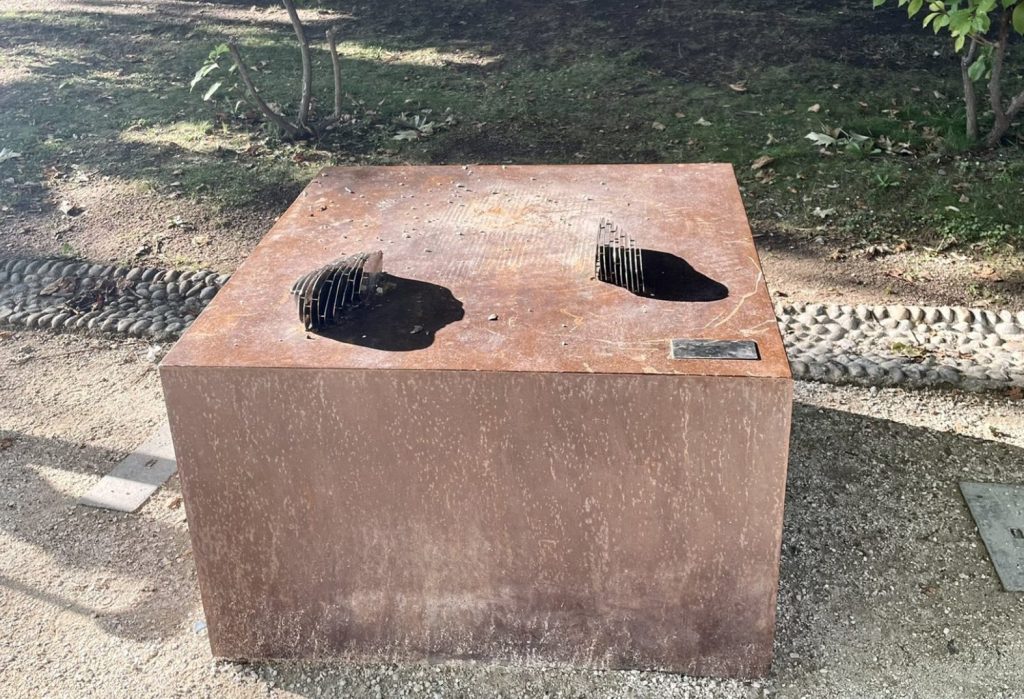
Satoshi Nakamoto Statue at NYSE
Source: X/@NYSE

Twenty One CEO Jack Mallers, who also founded Lightning Network payment provider Strike, said the placement reflects Bitcoin’s evolution from code to cultural phenomenon.

However, according to Bloomberg, the company’s stock tumbled 19% on its Tuesday trading debut following a blank-check merger.

Monument Placement Follows Switzerland Vandalism and Global Campaign

Picozzi expressed astonishment at the achievement, stating the NYSE location exceeded “our wildest dream” for the statue series.

This is such an achievement, even in our wildest dream we wouldn’t think about placing the statue of Satoshi Nakamoto in this location!

The 6th/21 statues of Satoshi Nakamoto found its home in the NYSE.

Thank you 🤩 https://t.co/iIEvZawAte

— Satoshigallery (@satoshigallery) December 10, 2025

The installation comes months after vandals stole and dumped another Satoshi monument into Lake Lugano following Swiss National Day celebrations in August.

Local investigators suspected intoxicated revelers used tungsten carbide cutting disks and petrol-powered angle grinders to sever the welded bronze sculpture from its base, leaving only the feet attached.

At that time, Satoshigallery, the art collective behind the global campaign, offered a 0.1 Bitcoin reward worth approximately $12,000 for information leading to the recovery of the stolen statue.

The group condemned the vandalism while vowing to continue their mission, declaring, “You can steal our symbol but you will never be able to steal our souls.

The Lugano theft marked the first major incident affecting official Satoshi monuments since Budapest unveiled the world’s first installation in September 2021.

Satoshi Nakamoto Statue
Source: Satoshigallery on X

The global campaign aims to install 21 monuments representing Bitcoin’s 21 million coin supply cap, with existing statues in Budapest, El Salvador’s Bitcoin Beach, Tokyo, and now New York.

Budapest’s original bronze bust featured a faceless, hooded figure with a mirrored surface embodying the “we are all Satoshi” symbolism, while Picozzi’s “Disappearing Satoshi” design depicts a seated figure at a laptop that vanishes when viewed from different angles.

Twenty One Capital Faces Market Headwinds Despite Bitcoin Holdings

Twenty One Capital holds approximately 43,500 bitcoins, valued at over $3.9 billion, making it the world’s third-largest corporate holder.

The company merged with Cantor Equity Partners, a special-purpose acquisition company backed by investment firm Cantor Fitzgerald, and chaired by Brandon Lutnick, son of Commerce Secretary Howard Lutnick.

The deal included $486.5 million in senior convertible notes and roughly $365 million in common equity through private investment transactions.

Shares opened at $10.74 on Tuesday, below the SPAC’s $14.27 closing price, as digital asset treasury companies face mounting pressure.

Twenty One isn’t a treasury company. We’re a Bitcoin company.

A Bitcoin-native business backed by Tether & SoftBank, built for cash flow, growth, and bitcoin accumulation.

The market will need time to understand who we are because it's never seen anything like us. $XXI pic.twitter.com/gzmmYE3nK2

— Jack Mallers (@jackmallers) December 10, 2025

Despite the volatility, Mallers emphasized that Twenty One differs from rivals by not trading at a premium to net asset value and plans to launch products and utility services beyond simply accumulating Bitcoin.

The company is majority-owned by stablecoin giant Tether and crypto exchange Bitfinex, with minority investment from Japanese technology investor SoftBank Group.

Fed Policy Clouds Bitcoin Rally as Traders Reassess Rate Path

Bitcoin traded at $90,121 Thursday morning, down 2.3% following the Federal Reserve’s third consecutive quarter-point rate cut.

Chair Jerome Powell described the reduction as further policy normalization while projecting only one additional cut in 2026, fewer than investors hoped.

Futures now imply a 78% chance that rates remain unchanged at the next meeting, up from 70% before the decision.

🚨 Bitcoin dipped Thursday even as stocks rallied on the Fed’s rate cut and Powell’s upbeat outlook, with policymakers signalling only modest easing ahead.#CryptoMarket #AsiaMarketOpen https://t.co/JgA2tKe3k5

— Cryptonews.com (@cryptonews) December 11, 2025

Speaking with Cryptonews, Ray Youssef, CEO of NoOnes, outlined two scenarios depending on Fed guidance.

A dovish Fed tone could open the door to renewed risk-on sentiment, triggering a ‘Santa rally’ for digital assets, with BTC reclaiming $100,000,” he said, while warning that “a more cautious or hawkish FOMC message” could “drive a retest of the mid $70,000s, as defensive derivatives positioning accelerates downside moves.

He emphasized that Bitcoin’s recovery hinges on renewed capital inflows rather than reduced selling pressure, noting ETF inflows remain shallow and market depth thin.

The post Satoshi Nakamoto Statue Arrives at NYSE as Wall Street Embraces Bitcoin appeared first on Cryptonews.

Bhutan Rolls Out Solana-Powered Sovereign Gold Token TER

By: Amin Ayan

Bhutan is deepening its national blockchain push with the rollout of TER, a gold-backed digital token issued through Gelephu Mindfulness City and supported by the Kingdom’s sovereign framework.

Key Takeaways:

  • Bhutan launched TER, a sovereign-backed gold token on Solana.
  • Investors can buy TER directly through DK Bank with full on-chain transparency.
  • The move strengthens Bhutan’s push into state-backed digital assets.

The initiative positions Bhutan among the few nations experimenting with state-backed tokenized assets as it looks to merge traditional stores of value with modern financial infrastructure.

According to an announcement on Thursday, TER will run on Solana and be distributed and custodied by DK Bank, Bhutan’s first licensed digital bank.

Bhutan Opens Direct Bank Sales for Its Tokenized Gold Asset

In the first phase, investors will be able to acquire the token directly through the bank, creating a bridge between familiar gold-purchase processes and transparent, on-chain ownership.

Officials say the structure allows international buyers to access a tokenized form of gold that retains the mobility, settlement efficiency and global reach of digital assets.

TER is also a flagship project for Gelephu Mindfulness City, a special administrative zone designed to attract international capital and nurture Bhutan’s digital economy.

The city forms a key pillar of the Kingdom’s broader strategy to diversify its economy with technology-led initiatives that align with cultural and sustainability priorities.

Bhutan’s move comes shortly after Kyrgyzstan unveiled USDKG, a state-supervised gold-backed stablecoin, highlighting a growing trend in which smaller nations use blockchain to modernize the management of safe-haven assets.

Gelephu Mindfulness City is launching TER, the world’s first sovereign-backed, physical gold-backed digital token, on Dec 17, 2025. Built on Solana, issued via DK Bank, and powered by Matrixdock tech, TER brings Bhutan’s “Treasure” on-chain with full transparency.… pic.twitter.com/HmJVGh4qPB

— gmcbhutan (@gmcbhutan) December 11, 2025

Beyond its role as a new investment instrument, TER underscores Bhutan’s ambition to build a sovereign-aligned digital finance ecosystem rooted in audited reserves and institutional safeguards.

DK Bank’s regulated infrastructure is intended to give both domestic and global investors confidence in custody and compliance standards.

Solana’s high-speed, low-cost network provides the technical foundation for the token, with its performance and environmental efficiency cited as deciding factors.

The launch fits into a broader national program of digital experimentation. Bhutan has woven digital assets into its strategic reserves, deployed blockchain-based identity systems, enabled crypto-powered payments and leveraged hydropower to mine Bitcoin.

The introduction of TER marks the latest step in that evolution, giving Bhutan a distinctive position in the growing market for state-backed tokenized assets.

SC Ventures-Backed Libeara Launches Tokenized Gold Fund

On Monday, Libeara, the blockchain infrastructure platform backed by Standard Chartered’s venture arm SC Ventures, rolled out a new tokenized gold investment fund in Singapore, bringing one of the world’s oldest safe-haven assets onto digital rails.

The fund, launched in partnership with FundBridge Capital, allows professional investors to gain exposure to gold through blockchain-based tokens issued on Libeara’s ledger.

In a recent research, Web3 digital property firm Animoca Brands said that tokenization of RWAs could unlock a $400 trillion traditional finance market.

Animoca researchers Andrew Ho and Ming Ruan said the global market for private credit, treasury debt, commodities, stocks, alternative funds, and bonds represents a vast runway for growth.

“The estimated $400 trillion addressable TradFi market underscores the potential growth runway for RWA tokenization,” they wrote.

Meanwhile, according to the 2025 Skynet RWA Security Report, the market for tokenized RWAs could grow to $16 trillion by 2030.

The post Bhutan Rolls Out Solana-Powered Sovereign Gold Token TER appeared first on Cryptonews.

Galaxy Launches Abu Dhabi Arm to Grow Middle East Presence

By: Amin Ayan

Galaxy is expanding its global footprint with a new office and entity in Abu Dhabi, moving into one of the world’s fastest-growing digital asset hubs.

Key Takeaways:

  • Galaxy is launching a new Abu Dhabi entity as part of its broader Middle East expansion strategy.
  • The move follows a strong Q3, with $505 million in net income and participation in a $1.65B Solana treasury fund.
  • The UAE continues to attract major crypto firms as Abu Dhabi and Dubai approve more exchanges and stablecoin issuers.

The company confirmed Wednesday that it will establish an operation under the Abu Dhabi Global Market (ADGM), the emirate’s international financial center and a rising destination for crypto and fintech firms.

Founder and CEO Mike Novogratz said the expansion reflects Galaxy’s strategy to deepen its partnerships and broaden its operations across regions showing strong institutional demand.

Galaxy Posts Strong Q3 as It Joins $1.65B Solana Fund

The move comes as Galaxy reports strong financial performance, including $505 million in net income for Q3 2025 and $3.2 billion in equity.

The firm has remained active across the crypto landscape, with recent involvement in a planned $1.65 billion Solana treasury fund alongside Cantor Fitzgerald, Multicoin Capital and Jump Crypto.

Managing director Bouchra Darwazah highlighted the importance of the Middle East, describing it as a center of capital, innovation and investor sophistication.

She added that the new office will support Galaxy’s ambition to position itself as a leading global digital asset investment and infrastructure firm.

Galaxy is officially expanding into Abu Dhabi.

Today, we announced our new @ADGlobalMarket office, strengthening our global reach and deepening our commitment to one of the world’s most dynamic financial centers.

Read the announcement here: https://t.co/YEw7dZw8ae pic.twitter.com/hifgY2F05J

— Galaxy (@galaxyhq) December 10, 2025

Galaxy joins a growing list of digital asset companies turning to the UAE as a base for Middle East expansion.

Both Dubai and Abu Dhabi have approved registrations for major global exchanges over the past year, including Binance and Bybit.

Stablecoin firms have also secured key approvals. In November, ADGM allowed regulated companies to issue Ripple’s RLUSD stablecoin, while this week the financial center recognized Tether’s USDt as an accepted fiat-referenced token.

Circle also received authorization to operate as a financial service provider, paving the way for wider use of USDC in the region.

Tether, Binance Secure Regulatory Approval in ADGM

Galaxy’s arrival underscores the UAE’s drive to attract major players as it positions itself as a global leader in digital asset regulation and infrastructure.

As reported, Tether’s USDT stablecoin has also secured regulatory recognition as an approved fiat-referenced token across a wide range of blockchains inside the ADGM.

Tether said ADGM now permits licensed institutions in the financial free zone to conduct regulated activities involving USDT across Aptos, Celo, Cosmos, Kaia, Near, Polkadot, Tezos, TON and TRON.

These approvals expand on earlier recognition for USDT on Ethereum, Solana and Avalanche.

On Monday, Binance disclosed that it has also secured full authorization to operate its flagship Binance.com platform under ADGM oversight, a milestone that comes after years of regulatory scrutiny.

Binance will operate through three distinct legal entities in the zone, an exchange, a clearing house and a broker-dealer, reflecting a traditional financial-market structure designed to enable regulated trading, custody, settlement and off-exchange services.

The post Galaxy Launches Abu Dhabi Arm to Grow Middle East Presence appeared first on Cryptonews.

ASIC Finalizes Exemptions to Boost Stablecoin and Wrapped Token Distribution

By: Amin Ayan

Australia’s securities regulator has finalized a set of exemptions designed to make it easier for businesses to distribute stablecoins and wrapped tokens.

Key Takeaways:

  • ASIC has removed separate licensing requirements for intermediaries distributing stablecoins and wrapped tokens.
  • The exemptions allow the use of omnibus accounts, reducing costs and improving operational efficiency.
  • Industry leaders say the clarity will accelerate real-world stablecoin use cases as global demand continues to grow.

The Australian Securities and Investments Commission (ASIC) said Tuesday that it is granting “class relief” for intermediaries involved in the secondary distribution of certain stablecoins and wrapped assets.

The update removes the need for separate Australian Financial Services (AFS) licenses when handling these products, easing a compliance burden that has long frustrated market participants.

ASIC Backs Omnibus Accounts to Cut Costs and Boost Efficiency

Under the new measures, intermediaries will be able to use omnibus account structures as long as they maintain proper records.

ASIC noted that these structures are widely adopted across the industry, offering speed advantages, lower operating costs and, in many cases, improved risk and cybersecurity practices.

For issuers, the change represents a more level playing field. Drew Bradford, CEO of Australian stablecoin issuer Macropod, said the clarity gives companies “confidence to build” as they expand their product lines.

He added that the streamlined approach, particularly around reserve management and asset-handling requirements, removes major friction points that previously slowed experimentation and growth.

Industry figures have long argued that older licensing rules were expensive and mismatched for a sector waiting on broader digital asset reforms.

Bradford said the new clarity is critical for scaling real-world use cases such as payments, cross-border transfers, treasury functions and onchain settlement.

“It signals that Australia intends to be competitive globally, while still maintaining the regulatory guardrails that institutions and consumers expect,” he said.

Angela Ang, head of policy and strategic partnerships at TRM Labs, also praised the move, saying she expects Australia’s regulatory landscape to solidify further in the coming year, a shift she believes will spur additional investment and innovation.

The policy shift comes as global stablecoin demand reaches new highs. Total stablecoin market capitalization has surpassed $300 billion, according to RWA.xyz, rising 48% since the start of the year.

Tether continues to dominate with a 63% share of the market.

Australia Moves Forward With Sweeping Crypto Licensing Bill

Last month, Australia introduced its first comprehensive regulatory framework for crypto exchanges and custody providers, aiming to tighten asset-protection standards and reduce risks for local users.

The Corporations Amendment (Digital Assets Framework) Bill 2025, unveiled by Treasurer Jim Chalmers and Financial Services Minister Daniel Mulino, would require platforms holding customer crypto to obtain an Australian Financial Services License and operate under ASIC oversight.

Lawmakers say the reforms could unlock up to $24 billion in annual productivity gains while improving investor safeguards.

The bill passed its first reading and advanced directly to a second, opening parliamentary debate. It creates two new license classes, “digital asset platform” and “tokenized custody platform,” and focuses regulation on companies that control customer funds, rather than the technology they use.

The post ASIC Finalizes Exemptions to Boost Stablecoin and Wrapped Token Distribution appeared first on Cryptonews.

Norway Rules Out Immediate Need For A CBDC — Here’s Why

Norway’s central bank has decided it does not need a central bank digital currency (CBDC) for now, capping several years of research and signalling that the country’s existing payment system still does the job for consumers, banks and merchants.

Norges Bank said Wednesday that introducing a digital krone is “currently not warranted” after assessing whether a CBDC is needed to keep payments in Norwegian currency secure, efficient and attractive.

Cash use in Norway has fallen to among the lowest levels globally, which had added urgency to the debate over a potential digital alternative.

“The Norwegian payment system is efficient and secure,” the bank said, citing stable operations, fast settlement, low economic cost and “sound” contingency arrangements. It added that work is already under way to further strengthen these back up systems.

Norway Leaves Room For A CBDC While Citing No Immediate Requirement

Governor Ida Wolden Bache stressed that the decision is about timing, not closing the door.

“Norges Bank has concluded that introducing a central bank digital currency is currently not warranted. The need for such a currency may, however, change in the future. We will be ready to introduce a central bank digital currency if it becomes necessary to maintain an efficient and secure payment system,” she said.

The bank distinguishes between two main types of CBDC, retail and wholesale. A retail CBDC would serve as a universally accessible means of payment similar to cash and deposits, while a wholesale CBDC would be limited to banks and other financial institutions. In the wholesale model, deposits at the central bank are represented as digital units, or tokens, in a ledger based on blockchain technology and can be used for interbank settlement.

Bank Expands Tokenization Research While Deferring A Digital Krone Decision

Norges Bank is not stepping away from tokenization. It says token-based systems can deliver innovation, efficiency gains and lower settlement risk, even as it warns that other risks and open questions remain and the eventual scale of use is uncertain.

The bank plans to keep running experiments, often with other payment system participants, to test tokenised solutions in practice.

The central bank will publish a report on its CBDC research and lay out more detailed plans for further work in the first quarter of next year. It will also continue to monitor international developments, including the Eurosystem’s work on a potential digital euro and emerging standards that could one day support shared CBDC infrastructure.

The post Norway Rules Out Immediate Need For A CBDC — Here’s Why appeared first on Cryptonews.

Canadian Man Charged for Orchestrating $42M Crypto Fraud Scheme Luring Users on Discord

US federal prosecutors have charged a 26-year-old Canadian citizen in connection with a $42 million fraud scheme, claiming to raise funds for investments in crypto, TradFi markets.

Nathan Gauvin lured individuals on the social media platform Discord, directing investors to put their money into Gray Digital Capital Management Inc. and its Gray Fund products.

Multi-Million Dollar Scheme Targets Investors on Discord

According to the indictment announced by the U.S. District Court for the Eastern District of New York, Gauvin gave false information to a fintech firm to secure $800,000 in credit. He then used the funds to pay for personal expenses, including for a private club in London.

“In total, Gauvin fraudulently raised more than $42 million from Gray Digital investors and obtained more than $800,000 in credit from lenders,” an SEC announcement read.

Per the prosecutors, the defendant used most of the money to pay previous investors, buy luxury goods and pay his credit card bills.

“Gauvin exploited the trust of his online followers to perpetrate a brazen fraud,” said Jaime Marinaro, Associate Director of the SEC’s Fort Worth Regional Office.

Authorities arrested Gauvin in England on Wednesday on a provisional arrest warrant. The US SEC has also filed for securities fraud charges. The regulator noted that the accused continued to submit false documents to the SEC during regulatory investigations.

Further, the Federal Bureau of Investigation separately released a statement, seeking to identify potential victims of the fraud. “Victims may be eligible for certain services, restitution, and rights under federal and/or state law,” the FBI said.

US prosecutors charged a Canadian citizen with orchestrating a scheme that fraudulently raised more than $42 million, targeting individuals on chat app Discord while claiming to invest in traditional finance and crypto https://t.co/092fnwDGTH

— Bloomberg (@business) December 11, 2025

Crypto Fraud That Ran For Over 2 Years

The indictment said that from May 2022 to October 2024, Gauvin and others enticed investors to put money into Gray Digital and Gray Fund. Among the companies, the flagship fund purported to offer investors a strategy “that blends TradFi (traditional finance) and DeFi (decentralized finance).”

The defendant allegedly misrepresented Gray Digital’s performance by providing falsified documents to investors.

He also claimed that the Gray Fund generated double-digit monthly returns and held over $78 million in assets. However, in reality, the fund had a monthly compounded return of approximately 1.4% and assets were far lower than claimed.

Later, there was a second scheme that started in May 2024, which touted a “seed stock” offering in Gray Digital at $30,000 per share. At the time, Gauvin said the company had a $60 million valuation and more than $12 million in annual revenue.

The SEC has sought disgorgement of ill-gotten gains with prejudgment interest, civil penalties, and conduct-based injunctions against Nathan Gauvin.

“Investors should always verify the credentials of anyone offering investment opportunities, especially when those opportunities are promoted through social media or online communities,” SEC’s Marinaro warned.

The post Canadian Man Charged for Orchestrating $42M Crypto Fraud Scheme Luring Users on Discord appeared first on Cryptonews.

[LIVE] Crypto News Today: Latest Updates for Dec. 11, 2025 – BTC Breaks Below $91K as Fed Signals Pause; DePIN, AI Lead Market Drop

Crypto markets broadly retreated over the past 24 hours, with sector-wide weakness led by a 4%+ drop in DePIN tokens. Filecoin and Render slid 7.5% and 5.5%, respectively, while Bitcoin dipped 1.41% to slip below $91,000 and Ethereum fell under $3,200. Most major sectors posted losses: CeFi declined 1%, Layer 2 dropped 2.15%, DeFi slid 2.35%, and Layer 1 fell 2.54%, with Zcash giving back 10% after recent gains. Despite the pullback, a handful of names outperformed, including Mantle (+1.12%), Hyperliquid (+2.95%), Ultima (+6.63%), Pieverse (+28.38%), and PIPPIN (+6.67%). Sector index data mirrored the downturn, with ssiAI, ssiNFT, and ssiDePIN falling more than 5%.

But what else is happening in crypto news today? Follow our up-to-date live coverage below.

The post [LIVE] Crypto News Today: Latest Updates for Dec. 11, 2025 – BTC Breaks Below $91K as Fed Signals Pause; DePIN, AI Lead Market Drop appeared first on Cryptonews.

Half Of Asia Pacific’s High Net Worth Individuals Now Allocate Over 10% To Crypto

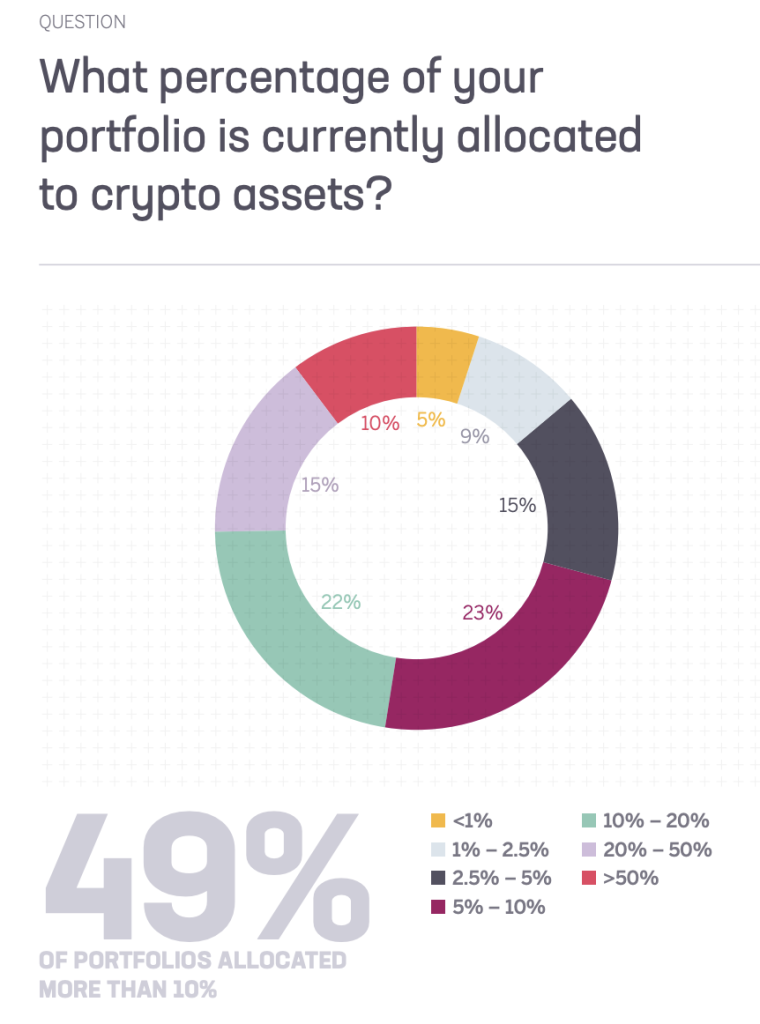
Asia’s wealthy investors are putting meaningful chunks of their money into digital assets, with almost half now allocating more than 10% of their portfolios to crypto and a clear majority planning to add more over the next few years.

Swiss Singaporean digital asset bank Sygnum found in its APAC HNWI Report 2025 that 87% of more than 270 respondents already hold digital assets.

The survey covered high net worth and professional investors across 10 markets, including Singapore, Hong Kong, Indonesia, South Korea and Thailand, and defined high net worth individuals as those with over $1M in investable assets and ultra high-net-worth investors as those with more than $25M.

High Net Worth Investors Embrace Crypto As A New Alternative Asset Class

For this group, crypto has become a core allocation, not a side bet. Median holdings sit in the 10% to 20% range, with a weighted average near 17%, putting tokens in the same conversation as equities and private markets inside portfolios.

Image Source: Sygnum

Motivation has shifted away from pure speculation. Sygnum reports that 90% of high-net-worth investors see digital assets as important for long-term wealth preservation and legacy planning.

Portfolio diversification drives a majority of decisions, with 56% citing it as a key reason to invest, and many framing crypto as a new alternative asset class rather than a short-term punt.

APAC Investors Expect A New Crypto Cycle Within Two To Five Years

Looking ahead, 60% of respondents say they plan to increase allocations. A bullish or very bullish long-term outlook comes from 57% of high net worth investors and 61% of ultra high net worth investors, with many expecting the next strong cycle to unfold over a two to five year horizon rather than in the next few weeks.

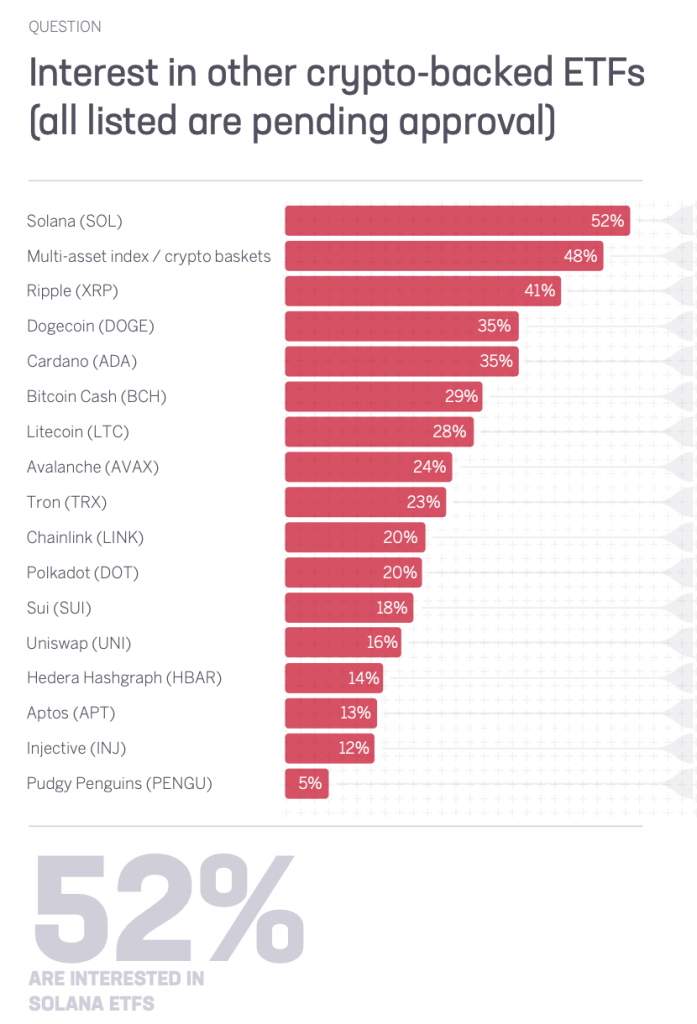
Product preferences tell a similar story of maturation. Beyond Bitcoin and Ethereum, 80% of investors want more crypto exchange-traded funds, with Solana drawing the strongest single asset demand at 52%.

Image Source: Sygnum

Multi-asset index products and XRP also attract interest, and 70% of respondents say they would allocate or allocate more if staking yield were bundled into ETF structures, a clear nod to yield-focused, regulated wrappers that sit comfortably in traditional wealth plans.

APAC Emerges As A Leading Gateway As Digital Assets Embed Into Wealth Portfolios

Security and rules still shape how fast this money moves. Around two thirds of investors say they need their private bank or wealth manager to demonstrate strong custody and security standards before they scale up exposure, while regulatory uncertainty and volatility remain key brakes.

At the same time, most respondents say regulatory clarity has improved and recent policy moves in major markets strengthen the long term case for digital assets.

“Digital assets are now firmly embedded within APAC’s private wealth ecosystem,” said Gerald Goh, Sygnum co founder and APAC chief executive.

He noted that frameworks in Singapore and Hong Kong have built the infrastructure for traditional wealth managers to offer crypto services and described Asia Pacific as one of the fastest growing gateways for digital assets, with momentum likely to build into 2026.

The post Half Of Asia Pacific’s High Net Worth Individuals Now Allocate Over 10% To Crypto appeared first on Cryptonews.

Gemini Clears Key CFTC Approval to Launch Prediction Market Platform in US

Billionaire Winklevoss twins’ Gemini Space Station received a key nod from the US Commodity Futures Trading Commission (CFTC) to launch its betting platform ‘Gemini Titan’ to US customers.

The crypto exchange team announced on Wednesday that the Designated Contract Market (DCM) license will allow Gemini to begin offering “simple yes or no questions” event contracts.

The approval comes 5 years after the exchange applied for a DCM license in 2020.

Dubbed ‘Gemini Titan,’ the prediction market aims to expand its derivatives offering to include crypto futures, options, and perpetual contracts.

“Gemini Titan looks forward to exploring bringing these innovative and highly liquid contracts to America,” the announcement read.

Gemini President Cameron Winklevoss praised CFTC Chair Caroline D. Pham for understanding the importance of the growing prediction markets.

“Unlike her predecessor, Acting Chairman Pham has positioned the CFTC as a pro-business, pro-innovation regulator that will allow America to lead in these new and exciting markets.”

Prediction markets have the potential to be as big or bigger than traditional capital markets. Acting Chairman @CarolineDPham understands this vision and its importance. Unlike her predecessor, Acting Chairman Pham has positioned the @CFTC as a pro business, pro innovation… https://t.co/uNnMt8Gfcj

— Cameron Winklevoss (@cameron) December 10, 2025

Gemini’s debut comes after it closed its initial public offering (IPO) in September, pulling in a massive $425 million.

Big Players Enter Prediction Market Space – Integration Meets Sustainability

The prediction markets arena has gained major traction ever since the US federal court dismissed a CFTC prohibition on election betting last year.

The space has been experiencing rapid growth, following the announcement of record trading volumes by dominant players Kalshi and Polymarket.

However, the challenge is on sustainable integration, while balancing innovation with responsibility, James Newman, Chief Corporate Affairs Officer at sports blockchain Chiliz, told Cryptonews.

“Sustainable integration means creating an ecosystem that fosters deeper connections, where fans are not just spectators but are empowered as stakeholders. This is where the future of all fan engagement lies,” Newman added.

Polymarket Comeback to US Aligns With Growing Demand

Early this month, Polymarket announced its comeback in the US after nearly three years, following regulatory clearance from the CFTC.

The US agency fined Polymarket $1.4 million for operating an unregistered derivatives exchange in 2022, and blocking its US operations. However, US users continued accessing the site through VPNs, even after its official exit.

The post Gemini Clears Key CFTC Approval to Launch Prediction Market Platform in US appeared first on Cryptonews.

Asia Market Open: Bitcoin Edges Lower As Fed Rate-Cut Boosts Stocks

Bitcoin fell about 2% in early Asian trading on Thursday while regional equities extended the relief rally that followed the Federal Reserve’s latest rate cut and upbeat tone on the US outlook.

The Fed delivered a third straight quarter-point reduction and Chair Jerome Powell said the inflation hit from tariffs should fade as the US economy strengthens.

He described the move as a further step toward policy normalization and stressed that officials want to support jobs without letting price pressures flare again.

Nine of the 12 members on the policy committee backed the cut and fresh projections showed the median official still expecting only one more cut in 2026.

Market snapshot

  • Bitcoin: $90,121, down 2.3%
  • Ether: $3,224, down 2.4%
  • XRP: $2.01, down 3.9%
  • Total crypto market cap: $3.16 trillion, down 2.4%

Markets Weigh Limited 2026 Cuts While Risk Appetite Stays Cautious

Futures now imply about a 78% chance the Fed will leave rates unchanged at its next meeting, up from about 70% before the decision, as traders reassess how far this easing cycle can really go.

SUMMARY OF FED DECISION (12/10/2025):

1. Fed cuts rates by 25 bps in 3rd rate cut of 2025

2. Fed will consider "extend and timing" of additional adjustments

3. Fed will begin purchasing US Treasury Bills on December 12th

4. Fed will buy $40 billion of US Treasury bills in 30…

— The Kobeissi Letter (@KobeissiLetter) December 10, 2025

Nic Puckrin, investment analyst and co-founder of The Coin Bureau, said, the “FOMC decision wasn’t quite as hawkish as many market participants were expecting, so markets are breathing a sigh of relief.”

“However, it is worth noting that the Fed is now expected to cut rates only once next year – fewer cuts than investors were hoping for. This could still change, since next year does bring a historic changing of the guard, but Chair Jerome Powell still remains at the helm for the first three FOMC meetings of 2026,” he added.

“Indeed, today’s announcement is not enough to spark a Santa rally for Bitcoin, and I don’t see any other obvious catalysts from here on, barring any unexpected announcements from President Donald Trump. Even then, a dead cat bounce is a real possibility, as risk assets tend to care more about the Fed than just about anything else.”

Regional Markets Rise While Greater China Shows A Split In Risk Appetite

Asian stocks picked up the baton from Wall Street, where the S&P 500 closed 0.7% higher and the Russell 2000 small cap gauge jumped 1.3% to a record.

The MSCI Asia Pacific Index rose about 0.5% in early trade, with tech and financial shares drawing the bulk of the buying interest.

Moves across Greater China showed a mixed risk appetite. The Shanghai benchmark slipped 0.18% and the Dow Jones Shanghai index eased 0.10%.

Hong Kong’s Hang Seng index advanced 0.4% as investors rotated back into some of the city’s large caps. For crypto traders, the rebound in Hong Kong is a reminder that equity risk sentiment in the city often moves in tandem with demand for China linked growth plays and higher beta tokens.

Tech sentiment turned more cautious in US after hours dealings. Nasdaq 100 futures traded about 0.3% lower in Asian hours after Oracle reported revenue that fell short of expectations, sending its shares sharply down in late trade.

Nvidia also edged lower, a sign that investors are trimming some of the most crowded artificial intelligence wagers that often sit in the same portfolios as major coins.

The post Asia Market Open: Bitcoin Edges Lower As Fed Rate-Cut Boosts Stocks appeared first on Cryptonews.

Trump Coin Price Prediction: Trump Just Teased a New Token Launch – 100x Potential?

President Donald Trump may have just dropped a cryptic hint about his next meme coin move, and traders are watching closely.

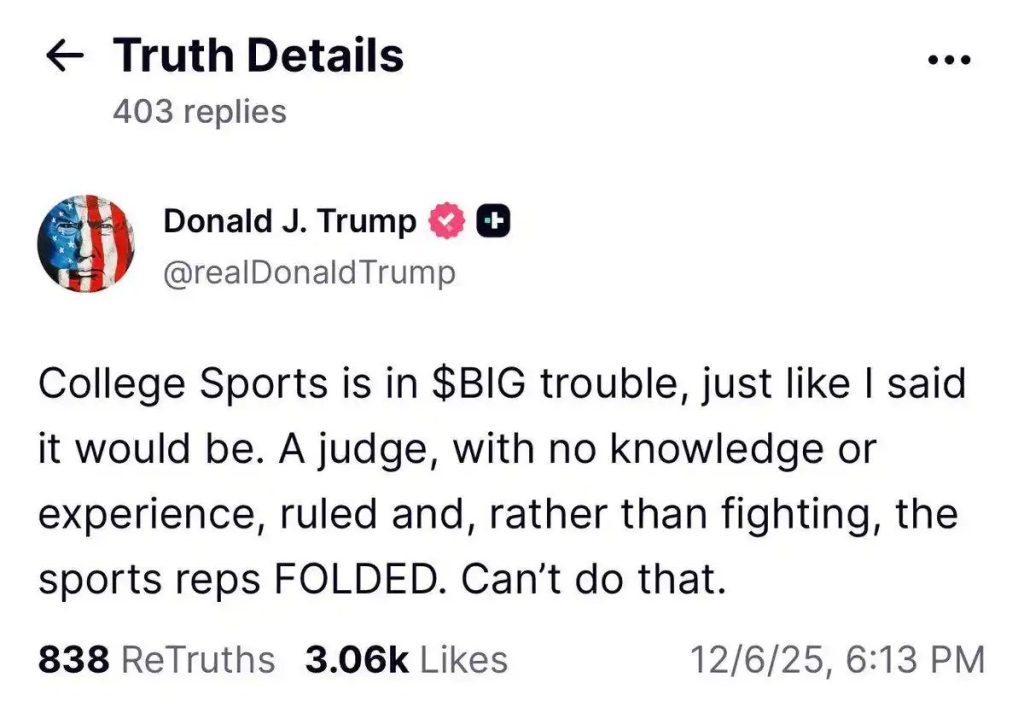
In a recent Truth Social post, Trump used the term “$BIG” while discussing a legal case involving the NCAA. That single word has triggered intense speculation that a new Trump-linked token could be on the way.

trump big social media post

The reaction was immediate as the price of $TRUMP surged nearly 6% within 24 hours.

With the market hungry for the next viral meme coin, this unexpected clue has fueled fresh interest.

Could this mark the beginning of a new rally, and how might it influence a Trump Coin price prediction going forward?

Trump Coin Price Prediction: Volumes Double After Key Support Bounce – TRUMP to $9?

Trading volumes for $TRUMP have nearly doubled in the past 24 hours, confirming that buying pressure is accelerating.

At $345 million, these volumes account for almost a third of the token’s circulating market cap.

trump coin price chart
Source: TradingView

The meme coin recently hit a key support at $5.50, from which it could bounce off strongly. The price action shows that the token has traded in a tight range between $5.50 and $9.50 lately.

This means that it could now aim at this resistance as its next target.

That said, the Relative Strength Index (RSI) has not yet sent a buy signal to confirm a bullish Trump Coin price prediction.

A break above the 200-period exponential moving average (EMA) would also support a positive outlook for TRUMP. If the token gets to $9.50, it would mean a 64% gain for those who buy at its current level.

Meme coins could be getting ready to start their next leg up as the market begins to recover.

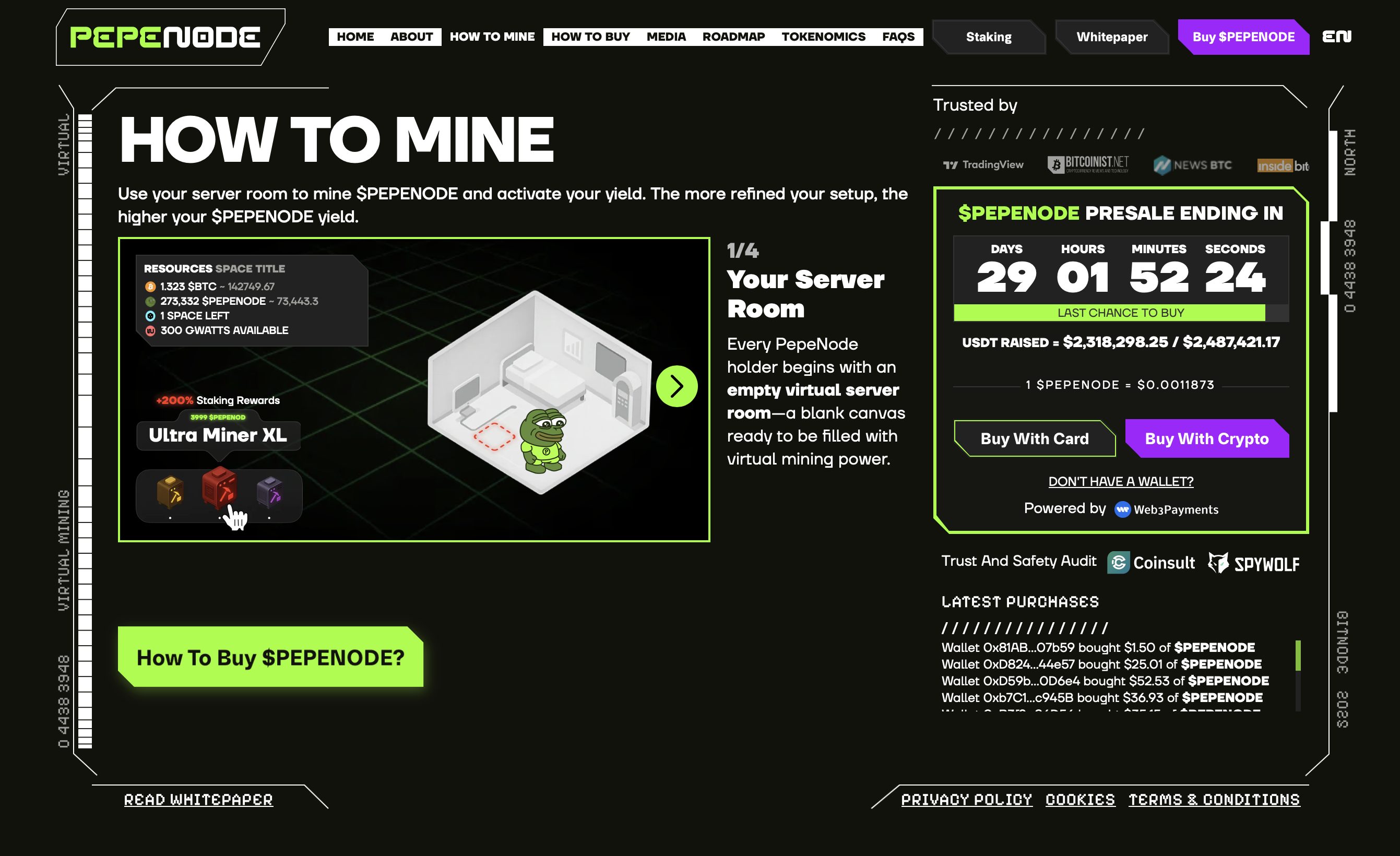
A promising crypto presale called Pepenode ($PEPENODE) is creating a platform that lets any user build virtual mining rigs and earn real meme coins.

New Crypto Project Makes Mining Meme Coins Accessible to Anyone

Mining cryptocurrencies used to demand thousands of dollars in hardware.

Not anymore.

Pepenode ($PEPENODE) transforms mining into a simple, accessible game where anyone can build virtual rigs, earn rewards, and compete for airdrops without touching physical equipment.

Top performers in the game are rewarded with surprise airdrops of some of the most talked-about meme coins, including $PEPE, $BONK, and even the wild-card $FARTCOIN.

But the real game-changer is the upgrade system.

Players can boost their mining setups using $PEPENODE, and with every upgrade, up to 70% of the tokens spent are permanently burned.

This move strengthens individual performance while also cutting the circulating supply, which can help drive long-term value for holders.

To buy $PEPENODE, simply head to the Pepenode official website and link up a compatible wallet like Best Wallet.

You can either swap USDT or ETH for this token or use a bank card to invest in seconds.

Visit the Official Pepenode Website Here

The post Trump Coin Price Prediction: Trump Just Teased a New Token Launch – 100x Potential? appeared first on Cryptonews.

Dogecoin Price Prediction: DOGE Must Hold This One Level – Or Say Goodbye to That 100% Breakout Target

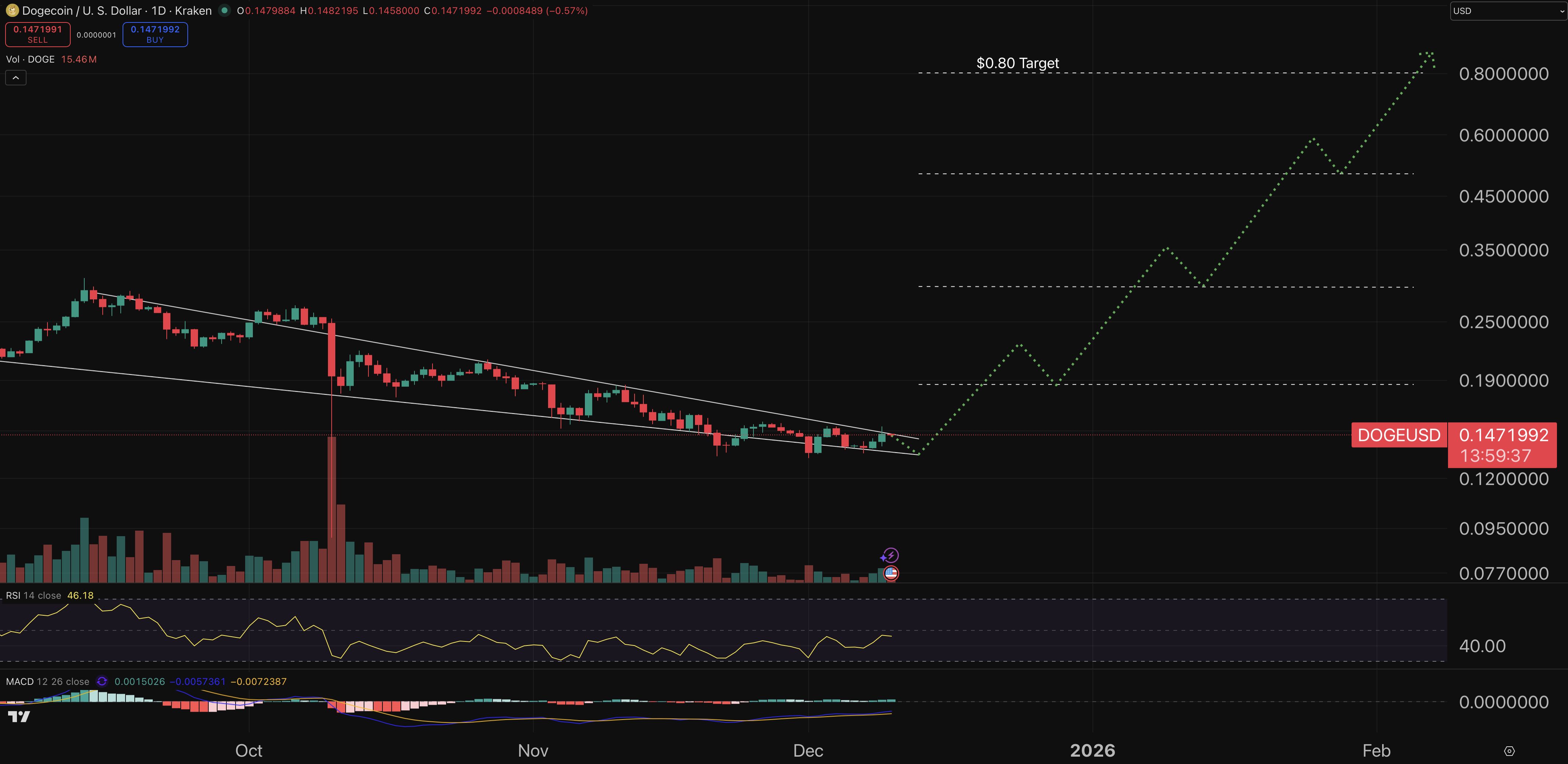
The Dogecoin price has risen by 4% in the past 24 hours, with its move to $0.1464 coming as the crypto market rallies ahead of the Federal Reserve’s rate decision today.

Despite this bounce, DOGE remains down by 2.5% in a week and by 19% in a month, while the major meme coin has suffered a 64% decline in the past year.

However, its bounce above the all-important $0.130 support level does indicate that a sustained rally could be coming, especially if the Fed does cut rates.

And with DOGE remaining the most popular meme token among retail and institutional investors, the Dogecoin price prediction for the coming weeks does look very positive right now.

Dogecoin Price Prediction: DOGE Must Hold This One Level – Or Say Goodbye to That 100% Breakout Target

Looking at Dogecoin’s price chart, we see that the coin has not only bounced from the $0.130 support level, but that its indicators are rising again after bottoming out a couple of weeks ago.

After hitting lows in late November, its MACD (orange, blue) is now steadily climbing towards 0, and once it turns positive again, we could see a breakout.

Dogecoin price prediction chart.
Source: TradingView

Something very similar is going on with DOGE’s relative strength index (yellow), which is about to cross 50 after having spent a couple of months in oversold positions.

These are encouraging signs, and Dogecoin is overdue for a sustained rally, given how low it has been.

While a rate cut today would be one catalyst for a bull phase, it’s also worth pointing out that we’ve witnessed the launches of a couple of DOGE ETFs in the past couple of weeks.

Bitwise launched the Bitwise Dogecoin ETF on the New York Stock Exchange at the end of November, which was also when Grayscale launched its own DOGE ETF on the same exchange.

In fact, the Rex-Osprey Dogecoin ETF launched in September, highlighting the institutional demand for the meme token.

Grayscale Dogecoin Trust ETF (Ticker: $GDOG) visualized.

Get exposure to $DOGE, now available right in your brokerage account. pic.twitter.com/5xFSBbthi4

— Grayscale (@Grayscale) November 26, 2025

And so far, Dogecoin is the only meme token to have an approved ETF in the United States, underlining its position as the biggest meme coin in the market.

While the launch of these funds hasn’t boosted the Dogecoin price massively, they do create the conditions for big rallies in the event of a great improvement in investor sentiment.

This could come with a rate cut later today, helping DOGE to reach $0.20 by the end of the year, and $0.40 by Q2 2026.

PEPENODE Aims to Make Mining More Accessible to Retail Investors: Could It Surge in 2026?

As strong as Dogecoin looks right now, investors may also want to diversify into newer tokens, so as to widen their exposure to potential gains.

One way of doing this is by allocating some funds to presale coins, which can rally strongly when they list for the first time, particularly if they’ve had a big sale.

This is something new Ethereum-based token PEPENODE ($PEPENODE) is aiming to do, having now raised over $2.3 million in its presale.

The PepeNode countdown has begun!

Fire up your virtual mining rigs and get ready to upgrade some nodes. ⛏

In 30 days the Presale will end! 🚀🔥https://t.co/FaKIaBoHfa pic.twitter.com/a3m07joFrH

— PEPENODE (@pepenode_io) December 8, 2025

Its sale will close in 29 days, meaning that investors should hurry if they want the opportunity to buy the token at its presale price.

Many traders have already taken the plunge, with PEPENODE impressing via its plans to make mining more accessible to the average person.

It will do this by enabling users to build and run their own virtual mining rigs, which can earn them rewards in the form of external tokens, such as Fartcoin and Pepe.

They can expand their rigs by spending PEPENODE tokens on additional nodes, with more nodes resulting in higher rewards.

This provides a strong incentive to accumulate more PEPENODE, something which could see the new coin’s price rise steadily over time.

Also driving demand is staking, with the token currently delivering a yield of 561% APY.

Such features make PEPENODE hugely attractive as a new coin, while also serving to distinguish it from other meme coins.

Investors can buy it now by going to its official website and connecting a compatible software wallet.

PEPENODE is available at $0.0011873, but this has every chance of rising much higher when it launches.

Visit the Official Pepenode Website Here

The post Dogecoin Price Prediction: DOGE Must Hold This One Level – Or Say Goodbye to That 100% Breakout Target appeared first on Cryptonews.

Bitcoin Price Prediction: Fed Delivers Another 25 bps Cut – Can BTC Finally Break Above $100K?

Federal Reserve officials approved another 25 basis point interest rate reduction at Wednesday’s FOMC meeting.

Bitcoin remained steady around $92,000 as traders had already priced in the cut, but analysts suggest the Bitcoin price prediction points toward a $100,000 breakout if current support levels hold.

Fed Treasury Bill Purchases Could Fuel Bitcoin Rally

The Fed targets a 2% inflation rate, which officials believe provides optimal employment conditions and price stability for consumers.

🇺🇸 FED RATE CUT DECISION:

25BPS RATE CUT TO 3.75%.

BULLISH FOR MARKETS! pic.twitter.com/uB8V5qseHF

— Mister Crypto (@misterrcrypto) December 10, 2025

Powell has consistently stated that 2% represents the ideal balance, low enough to prevent severe price instability yet high enough to avoid deflation.

Though the 2026 economic landscape remains uncertain, economists have begun making projections.

Goldman Sachs anticipates inflation will decline modestly to approximately 2.34% by December 2026, predicting the Fed will implement two rate cuts during the year, in March and June.

However, CME Group forecasts the Fed won’t reduce rates until June’s meeting, following Powell’s departure from the chair position in May.

Analysts at Kobeissi highlight that the Fed will begin purchasing US Treasury Bills on December 12th, with plans to acquire $40 billion worth within 30 days.

This represents direct liquidity injection into the financial system, not quantitative easing on paper, which could trigger a substantial rally in risk assets like Bitcoin.

Bitcoin Price Prediction: Double-Bottom Pattern Signals $100k Reversal

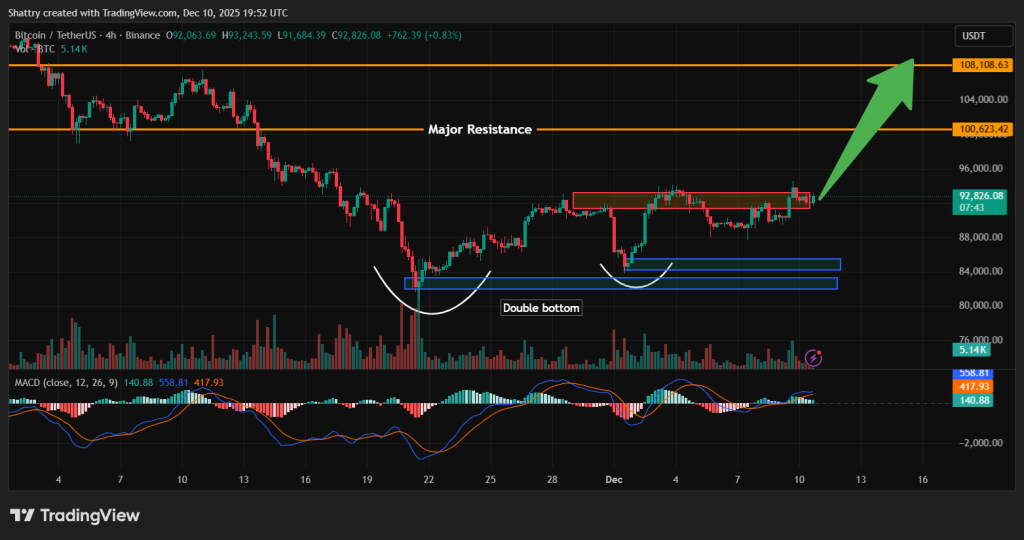
Bitcoin has formed a textbook double-bottom pattern around the $83,000 support zone, indicating potential mid-term trend reversal.

Price has since reclaimed the $92,000 region, which previously functioned as resistance, and is now attempting to establish it as new support.

Momentum is strengthening on the MACD, with the signal line curving upward and histogram bars approaching a bullish crossover, suggesting increasing buying pressure.

Bitcoin Price Prediction - Bitcoin Price Chart
Source: TradingView

If Bitcoin maintains support above this neckline region, the technical structure points toward advancement to the next major resistance at $100,600, with possible extension toward $108,000 if momentum accelerates.

Losing the $90,000–$92,000 zone would undermine the breakout attempt and risk returning to the $83,000 demand level.

However, the current market structure and indicators favor upward continuation.

Bitcoin Hyper Presale Positioned for Fed Liquidity Boom

Bitcoin isn’t the only investment that could benefit when the Fed adds more money into the system in 2026.

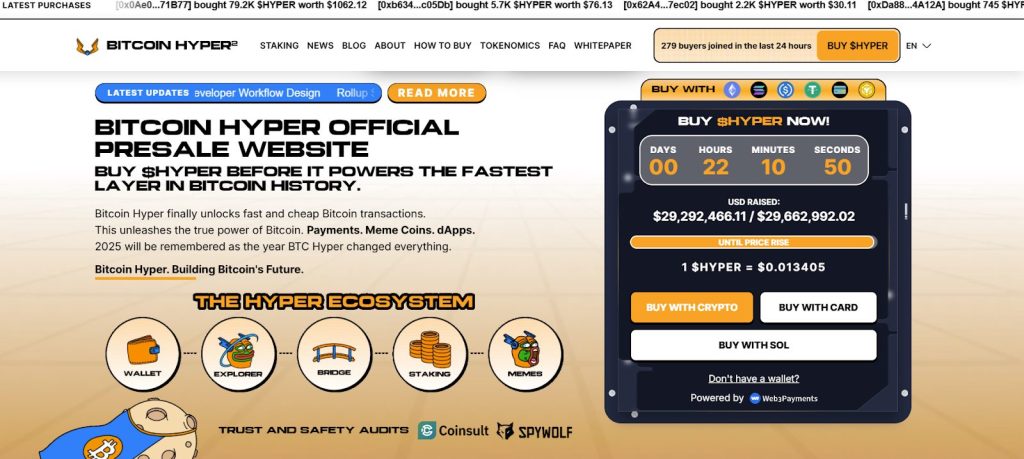
Bitcoin Hyper ($HYPER) is another project worth watching, and it’s still in its early presale stage.

Bitcoin Hyper is already getting attention from investors and has raised almost $30 million so far.

The project is building the first authentic Layer 2 solution for Bitcoin using Solana-based technology that delivers speed and scalability while maintaining Bitcoin’s security framework.

Bitcoin Price Prediction - Bitcoin Hyper Banner

This means people who own Bitcoin can do more with their coins. They can use special tools built just for Bitcoin to earn money or try new features.

As more crypto wallets and exchanges start using this technology, more people will want to buy $HYPER tokens.

If you want to buy $HYPER before the price goes up, go to the official Bitcoin Hyper website.

Connect your crypto wallet (like Best Wallet) and trade your USDT or SOL coins for $HYPER at the current price of $0.013395.

You can also use a regular bank card to buy it right away.

Visit the Official Bitcoin Hyper Website Here

The post Bitcoin Price Prediction: Fed Delivers Another 25 bps Cut – Can BTC Finally Break Above $100K? appeared first on Cryptonews.
Zcash Price Prediction: After a 1,000% Rally, Is This Just a Dip or Is the Bull Market Over?

The past two months of downside may have been a correction, not a collapse, with Zcash price predictions pointing to its 1000% bull run as just the beginning.

The altcoin has moved to the sidelines with the wider market downturn, falling 45% as attention shifted from the privacy coins narrative to macro and geopolitical headlines.

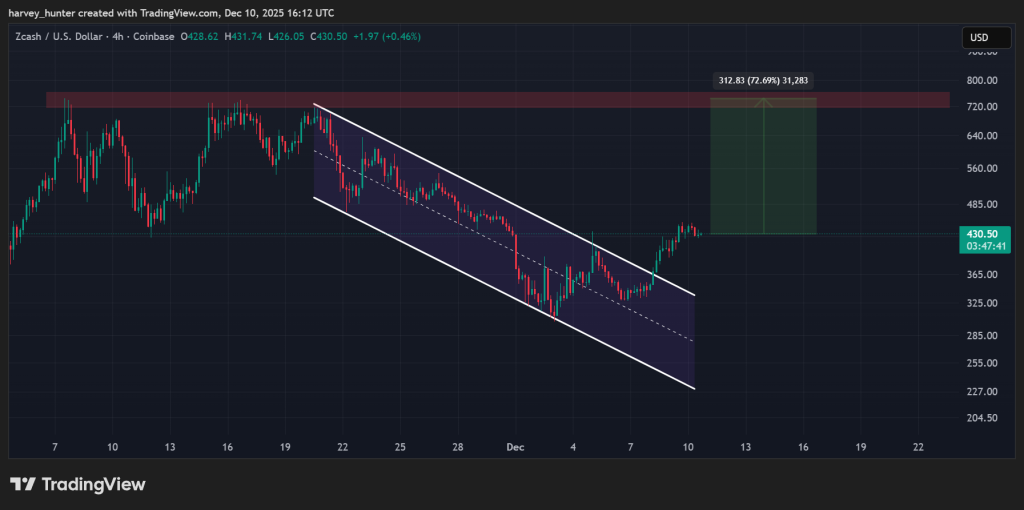
But the past week has seen a key technical shift: the breakout from the descending channel that has guided its decline.

But the past week has seen a key technical shift: the breakout from the descending channel that has guided its decline. A retest of all-time highs could now be in motion.

ZEC USD 4-hour chart, descending channel breakout. Source: TradingView.

The privacy coins narrative found new relevance in this institution-led market cycle: Institutional use-cases need rails that offer privacy, yet are compliant with selective disclosure.

And with crypto gaining deeper exposure in TradFi markets through products like the Grayscale Zcash Trust and a potential ETF, there are grounds that Zcash has not yet realized the full depth of its demand.

Zcash Price Prediction: How High Could the Bull Run Go?

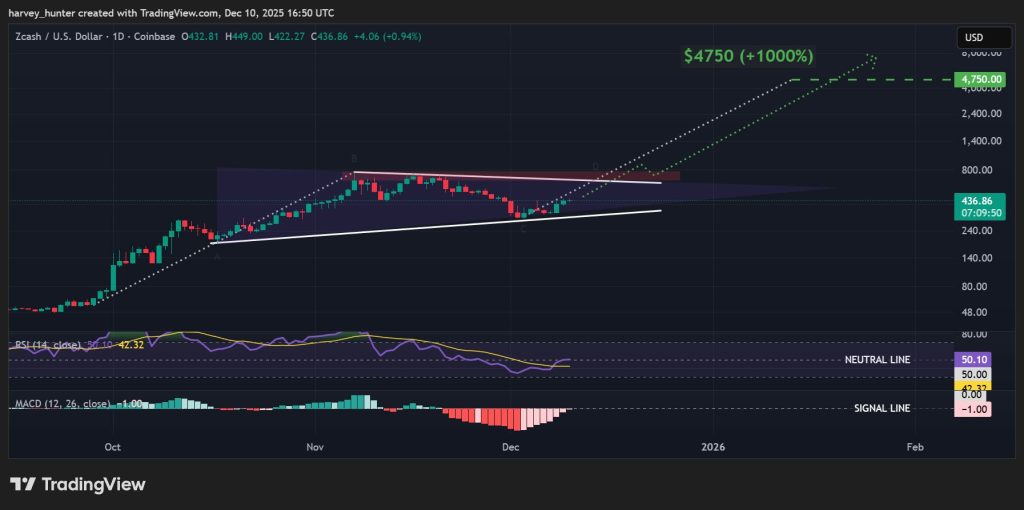
The setup could fuel an emerging bullish pennant continuation pattern, ruling out the lapse as a consolidation within a wider upwards move.

ZEC USD 4-hour chart, bullish pennant pattern. Source: TradingView.

The breakout marked a higher high after retesting the pennant’s lower support, setting focus on its upper resistance in a potentially much larger breakout setup.

Momentum indicators support the move. The RSI teeters on a cross above the 50 neutral line, while the MACD hinges on a golden cross above the signal line. Both suggest buyers are now driving the trend.

The key threshold for a confirmed breakout sits around all-time highs $745, opening the doors to new price discovery and a push to the pennant target at $4,750, another 1000% gain.

However, this target likely hinges on Zcash realising its part to play in the transition from Web-2 to Web-3 through TradFi adoption and inclusion on mainstream balance sheets.

SUBBD: The Web3 Solution to an $85 Billion Industry

As regulation brings narratives based in real-world utility like privacy coins to the forefront, platforms like SUBBD ($SUBBD) are gaining traction.

Positioned as an AI-powered content platform, SUBBD is redefining the $85 billion subscriber economy by giving creators true ownership and fans genuine access.

Never miss a sale again.

As a top creator, your audience is global. It's just not possible to cater to everyone – you can't be online 24/7 🫠

That's where your personal AI Assistant comes in, to handle requests and secure payments. Sleep peacefully knowing you're making money… pic.twitter.com/ju9VjLBmea

— SUBBD (@SUBBDofficial) March 26, 2025

By cutting out the middlemen, $SUBDD puts control back in the hands of those who create real value. Creators can monetize directly, while fans gain access to exclusive content, early releases, and meaningful interactions through token-gated perks.

The project has already raised almost $1.3 million in presale, and post-launch, even a small share of the industry could push its valuation significantly higher.

With SUBBD, both sides of the community win — creators earn more, and fans get closer while embracing the decentralization use cases crypto was built for.

Visit the Official SUBBD Website Here

The post Zcash Price Prediction: After a 1,000% Rally, Is This Just a Dip or Is the Bull Market Over? appeared first on Cryptonews.
Best Altcoin to Buy Now Under $0.01 – 10 December

The cryptocurrency market has gained by 2% in the past 24 hours, as investors brace themselves for the Federal Reserve’s decision on rates today.

The vast majority of major tokens have all posted gains, with bigger winners including Ethereum (6.5%), Cardano (7%), and Monero (6.5%).

Other tokens have performed more modestly, yet the possibility of a rate cut today could mean that the market has a bullish end to the year.

And we’ve picked the best altcoin to buy now under $0.01, one which could take full advantage of a sudden change in mood.

Best Altcoin to Buy Now Under $0.01 – 10 December

This altcoin is PEPENODE ($PEPENODE), an ERC-20 token that opened its presale towards the end of September.

This sale has now raised just over $2.3 million, with the total rising more quickly in the past few days, after PEPENODE announced that it would end in 30 days.

The PEPENODE presale is live. 🔥

Buy Nodes. Build Your Server Room. Combine Nodes For Huge Bonuses.

Do it all here 👇 https://t.co/d1JAronqiv pic.twitter.com/60uLhEoukP

— PEPENODE (@pepenode_io) September 10, 2025

The reason for the popularity of its sale is that it’s planning to launch a unique mining platform, one that will make mining more accessible to more cryptocurrency investors.

Instead of requiring expensive mining machines, PEPENODE lets you build a virtual mining rig, one you can operate yourself in order to earn rewards in external coins (such as Pepe and Fartcoin).

To build a mining rig, users simply need to spend PEPENODE tokens on more virtual nodes, which they can upgrade and combine in different ways.

By adding more nodes and upgrading them, users can earn greater rewards, something which should motivate more engagement and more demand for PEPENODE.

The token also currently offers a staking yield of 560% APY, making it one of the more rewarding staking tokens in the market right now.

Pepenode website - best altcoin to buy now under $0.01.

Another attractive feature is that PEPENODE gives you the option of selling your nodes on once you no longer require, enabling users to exit and re-enter its ecosystem at will.

PEPENODE’s Launch Could Be Big: How to Buy Early

Taken together, PEPENODE’s features make it one of the more interesting coins to have had a presale this year.

As mentioned above, its sale will end soon, with the countdown currently at 29 days.

Time is therefore running out, but you can still join the sale by going to the official PEPENODE website and connecting a compatible wallet (e.g., Best Wallet).

The token is currently available at a price of $0.0011873, which is its final presale price.

Of course, the early success and popularity of PEPENODE give it a very good chance of rallying beyond this price once it lists in a month’s time.

This is why it’s arguably the best altcoin to buy now under $0.01, since it has the potential to earn investors above-average gains.

And because the market looks ready to enter a new bullish phase, its launch could be big.

Visit the Official Pepenode Website Here

The post Best Altcoin to Buy Now Under $0.01 – 10 December appeared first on Cryptonews.

Perplexity AI Predicts the Price of XRP, Dogecoin, Solana by the End of 2025

The market is recovering as one of the worst months for crypto comes to an end. Heading into Christmas, we asked leading Perplexity AI for his predictions for XRP, Solana, and Dogecoin toward the end of 2025, and he delivered a dramatic outlook.

2025 has been a negative year for Bitcoin. At the time of writing, year-to-date performance shows BTC down more than 7%, starting the year near 99K and now looking likely to finish below that level.

Even so, the bigger picture stays constructive. Analysts still expect durable altcoins such as XRP, Solana, and Dogecoin to perform well over the long term. Once market conditions settle, each project could regain upward momentum, and below is how Perplexity AI expects it to play out.

Ripple (XRP): Perplexity AI Predicts 2-4x Gains For XRP

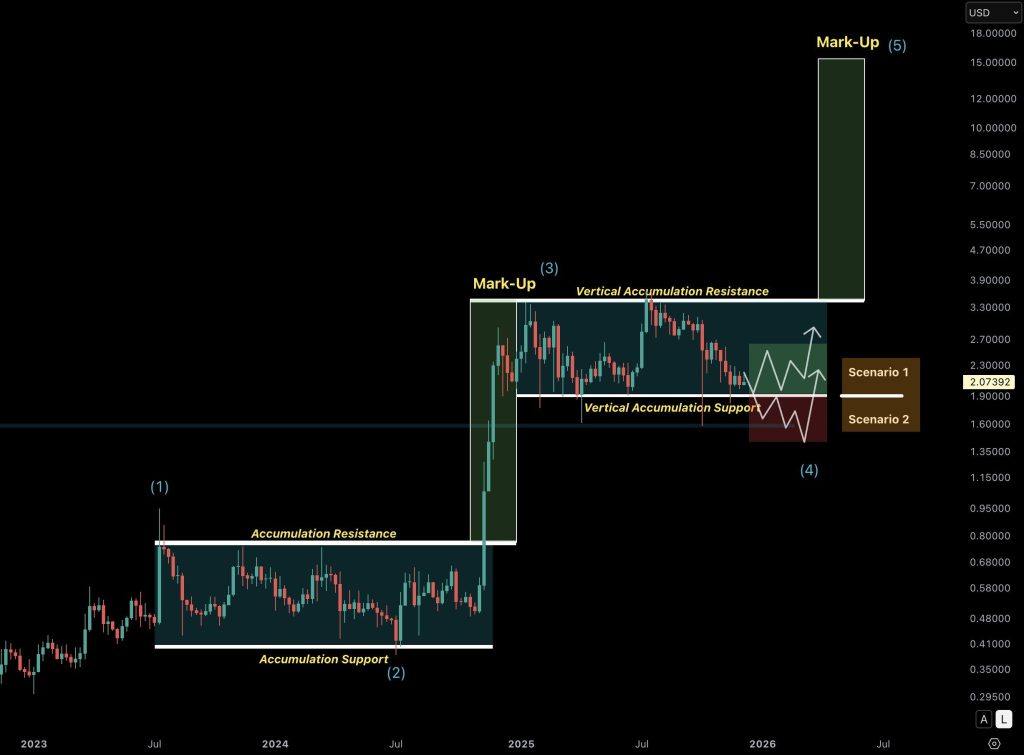
Perplexity AI Bullish projection suggests XRP bulls could see a 2-4x gain from the current level of $2.07 as we head into the new year.

This is mainly because of the accelerated adoption and the rapidly rising institutional interest as more ETFs continue to launch.

Ripple CEO Brad Garlinghouse also highlighted a major milestone, noting that the XRP ETF became the fastest to reach one billion dollars in assets under management in the United States since the ETH ETFs.

Source: ChartNerd

Chart analysts expect the range XRP is currently moving through to be an accumulation zone, and price is due for a breakout if it holds above the $2.00 support level, as shown in scenario 1. The next price resistances are at $2.30 and then $2.50.

Solana (SOL): Perplexity AI Predicts a Push Toward $400

Solana remains one of the best coins this cycle and one of the assets that has shown some of the greatest improvements across the board. Perplexity AI predicts a push toward the 400 dollar price mark.

This would require network activity and DeFi TVL to keep expanding, supported by a broader crypto risk environment and renewed institutional interest in high-throughput chains.

Solana has failed to break the wall at $144 multiple times in November and again in December. As the market recovers, it seems ready for another attempt. If it manages to push through, the next resistance level sits near $160.

It is important for price to hold the demand zone shown on the chart in order to keep the bullish scenario intact. If that zone fails, the setup can be invalidated.

Dogecoin (DOGE): Perplexity AI Predicts Memecoin Comeback With 200% Surge For Dogecoin

The low interest in memecoins and risk assets is clear, as Monday’s total value traded for U.S. spot DOGE ETFs dropped to $142,000, the lowest figure since the products launched. SoSoValue data shows the decline from late November, when daily trading occasionally exceeded $3.23 million.

Despite that, Perplexity predicts Dogecoin is due to come back as the flagship memecoin and put a price target of 0.25 – 0.35 by 2026.

Doge is currently showing strength by holding the $0.13 to $0.14 support zone, which has historically triggered many rallies.

A break and close above the $0.18 to $0.20 resistance range would confirm this strength and could open the path toward $0.24 to $0.26, as Perplexity expects.

Maxi Doge: Perplexity Best Choice To Buy In December

With Perplexity AI forecasting a major revival in Dogecoin and calling for a broader memecoin comeback, early investors are already searching for the next big winner.

Maxi Doge is quickly emerging as the strongest contender, capturing attention as a high-energy meme token with real community momentum and early-stage upside.

Maxi Doge brings a modern twist to classic Dogecoin culture, built around a jacked, high-leverage obsessed Doge that fits perfectly with today’s crypto humor.

There is no fake utility narrative. The project keeps the meme identity front and center while offering real features like staking, contests, and long-term engagement mechanics to keep the community active.

The presale has already raised millions, with steady growth as investors rotate back into meme assets, showing early signs of recovery.

Roughly 40% of the entire token supply was allocated directly to the public with no insider or private rounds. That structure massively reduces the risk of large early dumps once the token lists on exchanges.

Maxi Doge also offers a strong staking program, giving presale buyers the ability to earn rewards before launch. With Dogecoin holding a key support zone and Perplexity projecting a 200% surge into 2026, the meme charts are aligning for a new rotation. Maxi Doge could be one of the biggest beneficiaries once liquidity returns to the sector.

If the memecoin comeback plays out the way Perplexity expects, early MAXI holders may secure one of the best entries of the entire cycle. You can join the presale using ETH, USDT, BNB, or a credit card on the official Maxi Doge website.

Stay updated through Maxi Doge’s official X and Telegram pages.

Visit the Official Website Here

The post Perplexity AI Predicts the Price of XRP, Dogecoin, Solana by the End of 2025 appeared first on Cryptonews.

Cathie Wood Says Bitcoin’s 4-Year Cycle is Breaking as Institutions Steady the Market

Ark Invest CEO Cathie Wood says Bitcoin’s well-known four-year cycle may no longer define the asset’s long-term behavior, arguing that institutional adoption is reshaping everything from volatility to how deep future drawdowns might be.

Speaking with Fox Business on Tuesday, Wood said Bitcoin’s sharp crashes, often 75% to 90% in earlier years, are becoming less common as large financial players accumulate the asset.

“The volatility’s going down,” she said, adding that institutions “are going to prevent much more of a decline.” Wood suggested that “we may have seen the low a couple of weeks ago.”

Her view challenges more than a decade of market expectations. Bitcoin’s cycle has traditionally followed its halving events, block reward reductions that occur roughly every four years.

❓ Once a reliable pattern, the four-year Bitcoin cycle may no longer hold. Here’s what changed, and why it matters now more than ever.#BTC #BitcoinCycle #Adoption #ETFshttps://t.co/u9CF9ib8VW

— Cryptonews.com (@cryptonews) July 31, 2025

The most recent halving on April 20, 2024, cut the mining reward to 3.125 BTC, historically a trigger for supply squeezes and strong rallies.

However, Wood argues that the market’s behavior has shifted, as Bitcoin trades more like a risk-on asset, moving in line with equities and real estate rather than acting as a hedge.

“Now, gold is more of a risk-off asset,” she said, noting that investors use it to protect against geopolitical shocks.

Ark has continued adding crypto exposure, recently buying more shares of Coinbase, Circle, and its own Ark 21Shares Bitcoin ETF (ARKB).

A Growing Debate: Is the Four-Year Cycle Finished?

Wood’s comments land in the middle of a wider industry debate. Analysts across major institutions say Bitcoin no longer responds to halving cycles the way it once did.

Earlier this week, Standard Chartered said ETF buying has reduced the halving’s influence as a price driver.

Analyst Geoffrey Kendrick wrote that the pattern of prices peaking 18 months after each halving is “no longer valid,” lowering the bank’s 2025 price target from $200,000 to $100,000.

🚨 Standard Chartered analyst Geoffrey Kendrick says Bitcoin's dip below $100,000 may represent the last buying opportunity at these levels.#Bitcoin #Diphttps://t.co/ovUdBhe9bg

— Cryptonews.com (@cryptonews) November 6, 2025

On social media, the debate has been intense since late July.

Bitwise CIO Matt Hougan and CryptoQuant founder Ki Young Ju both said institutional inflows have effectively erased the traditional cycle. “The cycle is dead,” Ju wrote.

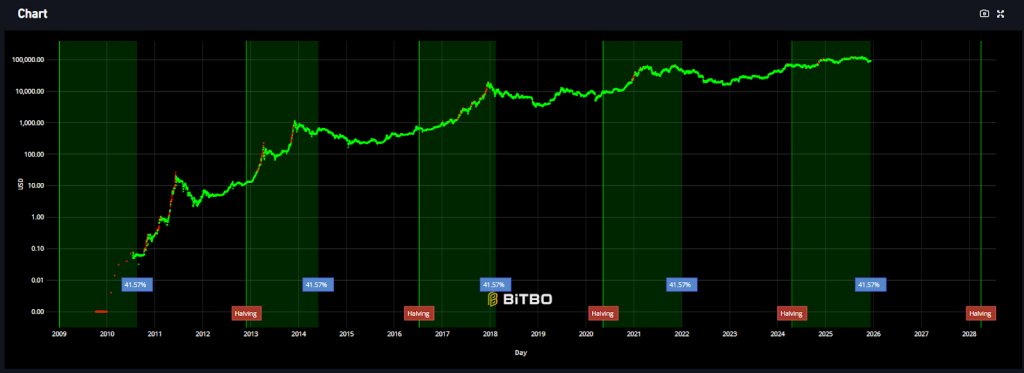
For years, Bitcoin followed a rhythm: accumulation, a rally tied to halving effects, a peak, then a multi-year downturn.

Source: Bitbo

But this time, after hitting $122,000 in July, analysts say Bitcoin’s behavior looks different, slower, steadier, and less tied to retail speculation.

Sentora executive Patrick Heusser pointed to the Bitcoin Power Law model, which views price growth as part of a long-term curve influenced by time rather than strict four-year windows.

Halvings still matter, he said, but only as interruptions within a broader trend.

“Daily supply reduced by only 450 BTC,” he noted, calling it marginal compared to Bitcoin’s trillions in market value and the billions flowing into spot ETFs.

Institutional accumulation, from ETFs, corporate treasuries, and new regulated products, is widely seen as the biggest driver reshaping the market. These buyers rarely exit positions quickly, locking up supply in a way that smooths out volatility.

Bitcoin’s Market Structure Still Mirrors Past Cycles, Glassnode Argues

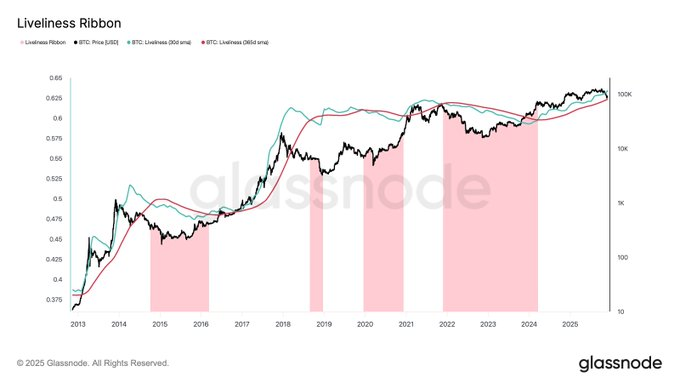
Still, some firms say the cycle remains intact. In August, Glassnode published data showing that the current cycle’s structure mirrors earlier ones, including long-term holder behavior and late-cycle demand softening.

⭕ Glassnode analysis suggests Bitcoin's 4-year cycle remains intact despite institutional adoption challenging "cycle death" narrative.#Bitcoin #Cyclehttps://t.co/qEureDHIyL

— Cryptonews.com (@cryptonews) August 21, 2025

Despite institutional involvement, Glassnode argued that Bitcoin’s timing still aligns closely with past multi-year peaks.

As experts debate whether the cycle is broken or simply evolving, most agree that investors should expect a market defined by longer trends instead of dramatic, fast swings.

Source: TXMC/X

Analysts say crashes may be shallower, closer to 30% to 50% instead of the deep drawdowns of past years, but rallies may also stretch over longer periods.

Strategies built around precise halving timing may no longer work with the same accuracy.

Macro analyst Lyn Alden recently said Bitcoin’s current market conditions lack the euphoria needed for a major collapse, adding that broader economic forces now dictate the asset’s movement.

She expects Bitcoin to reclaim $100,000 by 2026, but warned that the path there will be uneven.

The post Cathie Wood Says Bitcoin’s 4-Year Cycle is Breaking as Institutions Steady the Market appeared first on Cryptonews.

Best Crypto to Buy Now 10 December – XRP, PEPE, Shiba Inu

Crypto is bouncing nicely with BTC reclaiming 92K, which is a solid bullish signal as we head into the usual pre-FOMC chop until Wednesday. These are the conditions where altcoins usually suffer the most.

Many analysts see these dips as potential buying opportunities, especially for coins that have proven themselves throughout this cycle. XRP, PEPE, and Shiba Inu are all sitting on clean pullbacks and have been accumulating in steady price ranges for a while. Their moment might be coming next.

XRP Could Lead The Altcoins To New Highs In 2026

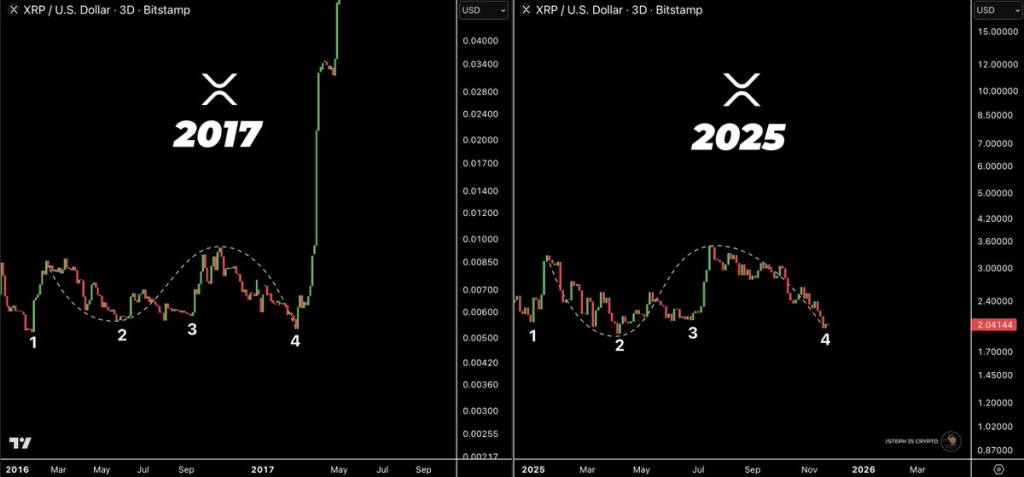
XRP has entered a familiar technical pattern, the same one that triggered its explosive 7,452 percent breakout in 2017, and it is catching the attention of many traders.

Unlike in 2017, XRP now benefits from expanded partnerships, rising institutional adoption, and a stronger regulatory environment. While it is unlikely to repeat a pump of that scale, it could still lead the altcoin market with a potential five to ten times move.

Source: Steph On X

If XRP manages to hold the $2.00 support level, a new all-time high could form by 2026, just as CZ predicted when he said we may see a supercycle.

Memecoins Supercycle Could Be Led By PEPE And Shiba Inu

PEPE was the undisputed king of this cycle, but it just hit a new yearly low, meaning it has lost 80% of its value over the past year.

However, many analysts see this could already be the low for memecoins in 2025. The sector has started to recover, jumping from a $38 billion market cap to more than $42 billion in the past few days.

As shown in the chart, whenever PEPE created a wide dispersion from its 21 EMA on the 3D timeframe and then returned to test it, the low was already in.

Source: PEPEUSD / TradingView

The same goes for Shiba Inu, which has lost over 70% of its value in the year-to-date period. These values tell you a lot about how affected the memecoins market was in 2025.

Shiba Inu price is slowly rising after hitting its yearly low in November. The next target is the resistance at 0.00000910. If Shiba manages to break above it, it could be a clear sign of a positive shift and new bullish momentum forming.

Bitcoin Hyper: The Layer 2 Project Poised to Outshine Altcoins in the Next Supercycle

As traders focus on XRP’s breakout setup and memecoins like PEPE and Shiba Inu try to recover from massive yearly losses, one project is quietly capturing early momentum for 2026.

Bitcoin Hyper is quickly emerging as a top contender for the next major narrative, blending meme culture with real infrastructure designed to expand Bitcoin’s utility far beyond its current limits.

Bitcoin Hyper is built on the Solana Virtual Machine, giving it high-speed throughput, ultra-low fees, and full smart contract support while still connecting directly to Bitcoin’s settlement layer.

It also features decentralized governance and a Canonical Bridge that enables smooth movement of BTC across chains, something traders have been demanding for years.

Its presale has already raised more than $29.2 million, signaling strong confidence from early adopters.

Analysts such as Borch Crypto expect the token could rally as much as one hundred times once HYPER lists, while a recent Coinsult audit reported zero contract vulnerabilities, further boosting trust in the project.

HYPER tokens power staking, governance, and network fees, and presale buyers can earn up to 40% APY. With the full platform launch set for 2026, the project gives early investors a chance to position themselves before Bitcoin’s next wave of utility-driven growth.

Visit the official presale website or follow Bitcoin Hyper on X and Telegram for more information.

Visit the Official Website Here

The post Best Crypto to Buy Now 10 December – XRP, PEPE, Shiba Inu appeared first on Cryptonews.
Why Traders Now Treat Crypto Prediction Markets Like Real-Time Shadow Polls

Prediction markets tied to crypto rails now function like shadow polls that update in real time, with prices that embed money-backed views on elections, technology milestones, and macro data.

Traders who once scanned polling averages and pundit columns increasingly check market odds first, because order flow reacts within minutes to new information and compresses competing narratives into a single number that moves with conviction.

Media desks and professional bettors have folded these indicators into their workflow precisely because liquidity concentrates attention, while order books reveal when conviction is thin. Prices that shift before poll releases or commentary give forewarning that sentiment has just turned, and the speed advantage often appears during weekends, holidays, or late nights when traditional coverage slows.

Prediction Market Liquidity and Signal Quality

Liquidity and fee structures shape how useful these markets can be, because tighter spreads and deeper books reduce noise and let prices carry more information. Where order books fill quickly, small traders cannot shove prices around with shallow size, and that dynamic improves the odds that an observed move is a genuine shift rather than an echo of thin volume.

Calibration against final outcomes remains the test that matters, so traders track how often pre-event odds sat near the realized probability.

Misses still occur and sometimes cluster during polling errors, yet the markets tend to pull back toward neutrality faster once contradictory evidence appears, since stale views cost money when the other side steps in.

The platforms that standardize wording, enforce clear resolution sources, and police ambiguous markets give participants more confidence that the edge will not evaporate at settlement.

Regulation, Media Adoption, and the Next Test

Policy treatment determines how far these markets can scale in the United States, and rulemaking over event contracts now sits at the center of that path.

Against all odds.

Polymarket’s U.S app is now being rolled out to those on the waitlist.

We’re launching with sports — followed by markets on everything. pic.twitter.com/WOoVMszrqc

— Polymarket (@Polymarket) December 3, 2025

Clearer distinctions between illegal gambling and permissible information markets would channel demand into supervised venues, enable stronger surveillance, and support broader participation without forcing activity offshore.

Newsrooms and research shops now publish charts that track market odds alongside polling, because readers want to see what money thinks at the very moment a headline breaks.

That feedback loop can turn prices into part of the story, yet it also raises the bar for verification, since a fast price move still needs context on who is trading, how much size hit the book, and whether liquidity conditions magnified the jump.

Crypto rails changed the mechanics by removing banking friction for small stakes, enabling near-instant deposits, and keeping markets open through the night, which means odds now update during periods when legacy venues sit idle.

The next test arrives during policy-heavy weeks when central-bank decisions, court rulings, or election filings hit in quick succession, because stacked catalysts expose whether markets digest information or simply amplify noise.

If depth holds, spreads stay tight, and prices step rather than lurch, the signal strengthens, and more desks will treat these odds not as a sideshow but as a baseline input that earns a permanent slot on the dashboard.

The post Why Traders Now Treat Crypto Prediction Markets Like Real-Time Shadow Polls appeared first on Cryptonews.
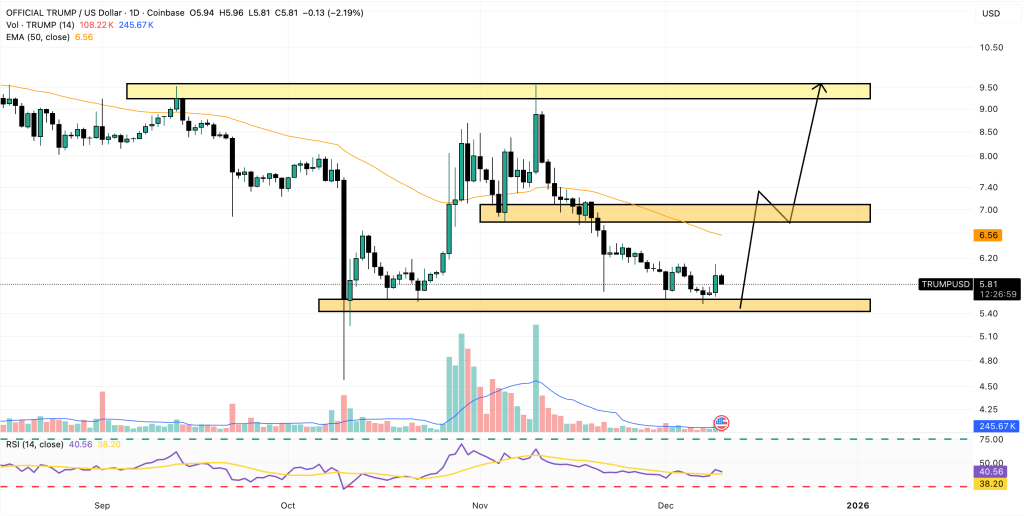
❌