Reading view

There are new articles available, click to refresh the page.

The Greatest Lie in Finance: How Big Banks Cash in Billions from the State — and Why We All Pay…

Finacial Deception

The Greatest Lie in Finance: How Big Banks Cash in Billions from the State — and Why We All Pay the Price

Banks create money from nothing, enjoy billions in hidden subsidies, and never truly fail. Here’s the system they don’t want you to understand.

Learning how banks generate incredible profits at our expense won’t make you happy, but you might still want to know — AI artwork by Gerhard Sulzer

As a well-educated citizen, you will certainly not believe what I say, but banks are not ordinary companies. How dare I make such a blatant claim? Well, banks enjoy privileges that make them untouchable — and we all pay the price for it. While small businesses and individuals have difficulty getting credit, banks can create money out of thin air. But that’s not all: the state guarantees their survival, no matter how recklessly they operate. Losses are socialised, while profits remain private. What sounds like the beginning of a dire economic thriller is in fact the basis of our financial system.

The Hidden Power of Banks: How They Create Money from Nothing

It is one of the best-kept secrets in the financial world: banks are not just companies that generate profits through loans and financial services. They are state-backed companies that operate an exclusive business model that has little to do with the principles of a free market. Unlike normal companies, which need capital for investments, banks have a unique privilege: they create money out of nothing — a mechanism that the general public hardly understands and that banks go to great lengths to keep secret.

The economist Adriel Jost succinctly said in an interview with the NZZ that banks are not ordinary market participants. When individuals or companies need capital, they must first earn it or borrow it from an investor or a bank. Banks, on the other hand, have the privilege of granting loans without first having the necessary funds. They create money by granting loans. This process creates new book money, which only exists as a number in banking systems. This form of money creation gives them an enormous advantage: while citizens or companies have to work to earn money, a bank can create it at the touch of a button — and charge interest for it.

Now, imagine you could do the same. You are sitting in a bar, you have had a few drinks, and it is time to pay. Instead of using cash or a card, you simply write on a napkin: ‘I, Kevin, owe this bar €50.’ And somehow, that piece of paper becomes official currency — not just for that bar, but for any business in town. That is essentially what central and national banks do in particular. But if you or I tried that, we would be laughed at, arrested or banned from the bar for life.

A System No One Understands — Because It Was Designed That Way

The M0 money supply consists of physical cash — the only form of money that exists in tangible form. But let’s not forget that it’s just printed paper, worth about as much as our worn paper napkin from earlier. M1 includes demand deposits, i.e. the money in our checking accounts. A significant discrepancy is already apparent here: most of this money does not exist as physical cash but only as a number in the banks’ computer systems. M2 and M3 go even further and include long-term deposits and financial instruments that have almost no connection to real money. But is M3 money at all? This measure consists mainly of credit money created by debt and securitisation. It has no physical form and exists only as a digital IOU. If everyone were to withdraw their M3 money simultaneously, the system would collapse — because the money is nothing more than a statistical illusion.

And let’s be honest, the whole thing sounds somewhat fictitious. It is ultimately more the exact description of a pyramid scheme, isn’t it? In such a scheme, new players must always be found who dutifully deposit money, but no one should get the idea that they should ever expect to be paid back. If you tried to explain our existing monetary system to a child, they would probably quickly expose you as a fraud. ‘So there is money, but there is no money? Some of the money exists, but most doesn’t exist, and we all just pretend that it does?’ That’s right, little Timmy! Now go to sleep and let the adults continue playing Monopoly in their own dream world.

A common criticism of Bitcoin is that it has no intrinsic value. But does our modern fiat money have any at all? Critics argue that fiat currencies are backed by an economy, while Bitcoin is based solely on trust. However, this comparison does not stand up to scrutiny. In fact, it’s the other way around. The term’ fiat money’ itself is derived from the Latin word ‘fiat’, which means ‘let it be done!’ because it refers to a medium of exchange without intrinsic value. If a currency were indeed backed by an economy, there would have to be a responsible authority that is literally liable for its value. However, this is not the case. Central banks expand the money supply in a rather tricky way and regulate interest rates. Only the current moneyholder bears the loss if the euro or the US dollar loses value. It’s like the popular children’s card game ‘Black Peter’. No central bank guarantees that a certain amount of euros or dollars can be exchanged for a fixed economic output or an asset. The monetary system is thus based on a massive fiction.

The glue that holds the financial economy together is trust. There is no intrinsic value, gold standard, or tangible security backing our money. We now know that what we use as a medium of exchange is nothing more than more or less worthless printed paper — or, even more absurdly, mere numbers in a database. M1 and beyond do not physically exist; they are merely digitally recorded promises. Trust is the only basis on which our financial system rests. But trust is fragile. It can be shaken — by crises, by mismanagement, by inflation. History has shown that any unfunded currency system eventually collapses because there is no objective guarantee to back it. Our current financial system is not a stable foundation but a bet that confidence will remain.

The State as a Shield: Why Banks Never Fail

Another crucial aspect is that banks are protected by the state, both through direct and indirect guarantees. Those with a bank account often believe their money is safe there. In reality, customers entrust their money to the bank, which uses it for investments or loans. Theoretically, a bank could go bankrupt if all customers withdrew their money simultaneously.

In 2022, the Nobel Memorial Prize in Economic Sciences was awarded to US economists Ben Bernanke, Douglas Diamond and Philip Dybvig. In particular, the model developed by Diamond and Dybvig analyses the mechanisms that can lead to a bank run and shows how depositor confidence is crucial to the stability of banks. Due to maturity transformation (short-term deposits vs. long-term loans), the model indicates that banks never have 100% of deposits available for immediate payment. This means that a bank run on even a tiny proportion of deposits can drive a bank into insolvency. In 2007, a withdrawal of around 5% of deposits from the British bank Northern Rock led to the first bank rescue of the financial crisis. In 2023, an outflow of around 38% of the liquid funds of the Swiss bank Credit Suisse forced it into the arms of UBS.

To prevent this, the state steps in with guarantees, rescue mechanisms, and emergency central bank loans. These implicit subsidies allow banks to take risks that would be unthinkable for ordinary companies. In the end, society bears the losses, while the profits remain in private hands.

A Global Phenomenon: Billions in Subsidies for Banks

These hidden privileges have recently come to light in Switzerland. According to some estimates, the Swiss banking sector receives around 30 billion Swiss francs in implicit subsidies each year. This is more than the entire Swiss agricultural sector receives in government support. And this system is by no means unique to Switzerland. Across the European Union, these hidden subsidies amount to as much as 200 billion euros annually. The figure in Germany is at least €25–50 billion, while in the United States, implicit bank benefits are estimated at $20–70 billion annually. These figures illustrate that banks do not operate in a free market but in a tailor-made system that makes them untouchable.

The Credit Suisse Collapse: A Case Study in Banking Reality

The Credit Suisse bailout in 2023 laid bare just how deeply flawed the global banking system is. The Swiss financial giant didn’t crumble because of a lack of customers or bad business decisions — it collapsed because of a loss of trust. Customers panicked and withdrew their funds, triggering a liquidity crisis. Within days, UBS took over Credit Suisse in a government-backed rescue deal, and just like that, one of the biggest names in banking was wiped off the map.

This isn’t an isolated case. The Commerzbank bailout during the financial crisis showed a similar pattern in Germany. And in the United States, billions of dollars were injected into failing banks during the subprime mortgage crisis, propping up institutions that had gambled recklessly. The pattern is always the same: when banks profit, they go to shareholders and executives. When banks lose money, society picks up the tab.

BlackRock: The Invisible Puppet Master of the Financial System

If there is one company that truly embodies the expression ‘too big to fail’, it is BlackRock. The world’s largest asset manager has tentacles in everything — banks, companies, governments, climate policy, real estate — probably even in your grandmother’s pension fund. It has embedded itself deeply in the European banking sector and holds significant stakes in Deutsche Bank, BNP Paribas and numerous other financial giants. If the financial system were the mafia, BlackRock wouldn’t be one of the shady crooks — it would be the godfather.

But here comes the real kicker: BlackRock is also knee-deep in Cryptocurrency. While banks and regulators struggle to understand Bitcoin, BlackRock is launching Bitcoin ETFs, investing in blockchain infrastructure, and ensuring that it makes money whether the traditional financial system thrives or collapses. The same company that keeps traditional banks afloat is ensuring that Cryptocurrency doesn’t get too wild.

Banks don’t know how to deal with cryptocurrencies — BlackRock does. That’s because cryptocurrencies aren’t based on debt, inflation, or control. They are a digital asset that is verifiable on the blockchain and out of reach of traditional banking structures. Banks can’t print them, and they can’t manipulate their supply. They are the exact opposite of everything they are.

Crypto as a Game-Changer — The Nightmare of Central Banks

If traditional banks create debt-based money, Crypto is their worst nightmare. Bitcoin is a limited-supply asset recorded on a decentralised blockchain, the polar opposite of fiat money. Fiat is an inflation-plagued promise of debt, the supply of which can be manipulated at will and is generously printed by centralised governments. On the other hand, Crypto is out of reach for central banks.

Banks and central banks are desperately trying to react. But how do you regulate something that was designed to evade regulation? Not at all. That’s the problem. The Federal Reserve, the European Central Bank, and other financial institutions are overwhelmed by cryptocurrencies. It’s like giving an old-school librarian an iPad and asking them to ‘fix the internet.’ They don’t even know where to start.

BlackRock, on the other hand, can make money with cryptocurrencies because BlackRock makes money with everything. Trump could do it with his eponymous meme-coin. But banks? No chance. Cryptocurrencies were explicitly designed to keep them out.

Conclusion: The Financial System Is a House of Cards — But What Happens When an Alternative Emerges?

For centuries, banks have held a monopoly on money. They create it, distribute it, inflate it, and lend it — all under the protection of governments and central banks. This is not a flaw in the system — it is the system! The public is unaware of this, distracted by the complexity of financial jargon, while banks print money at will with impunity and pass the consequences on to everyone else.

Banks have nothing to fear today. There is no real alternative. Every currency, every financial transaction, and every paycheck flows through their networks. But what if that changes?

For anything to change, a few things must first change because Bitcoin doesn’t pose a threat right now. Its market cap is too small, its adoption too niche, and institutional money can’t flow into Bitcoin on a large scale without distorting the market. But what happens when Bitcoin hits $1 million per coin? If it becomes a multi-trillion-dollar asset competing with gold, it is suddenly no longer a curiosity but a competitor.

Bitcoin would be big enough to no longer be ignored at that scale. It would be too stable to be dismissed and too valuable to be manipulated in the same way that central banks manipulate fiat currencies. It would exist outside the banking system, immune to inflation and free from government control. That is when the traditional financial system loses its influence — not because of regulation or government intervention but because people and institutions naturally switch to the better option.

This is what central banks fear most. Not regulation. Not financial crises. But irrelevance.

Right now, banks still have all the power. But history has shown that no monopoly lasts forever. The real question is: when the cracks in the system finally become too big to ignore, where will your money be?


The Greatest Lie in Finance: How Big Banks Cash in Billions from the State — and Why We All Pay… was originally published in Coinmonks on Medium, where people are continuing the conversation by highlighting and responding to this story.

What Is Decentralized Identity (DID)? A Beginner-Friendly Guide for Every Industry

By: Duredev
What Is Decentralized Identity (DID)? A Beginner-Friendly Guide for Every Industry

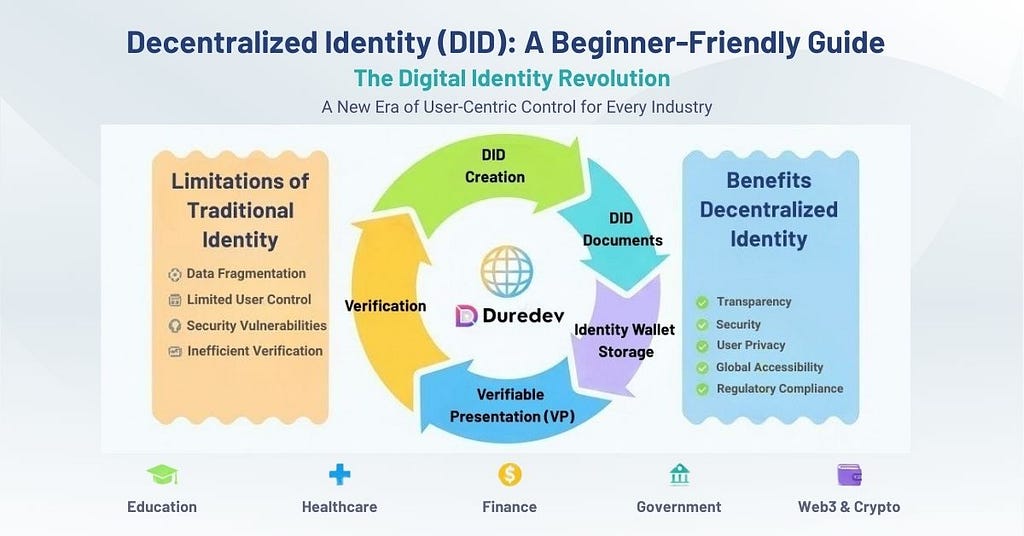
🧩 The Digital Identity Revolution

In today’s highly connected world, digital identity is more than just a username or password — it is the key to secure access across online platforms, services, and transactions. Traditional identity systems rely heavily on centralised databases controlled by third-party institutions. This centralized approach often leaves users with limited control over their personal data, resulting in identity theft, data breaches, slow verification processes, and compliance challenges.

Decentralized Identity (DID) represents a transformative solution. Leveraging blockchain technology, DIDs allow users to control, manage, and share their identity information securely, eliminating reliance on centralized authorities. By combining self-sovereign identity (SSI) with verifiable credentials (VCs), individuals and organizations gain complete autonomy over digital identity, while enterprises streamline verification, reduce fraud, and ensure regulatory compliance.

At Duredev, we deliver blockchain-based decentralized identity solutions that follow W3C standards, ensuring privacy-first, interoperable, and globally scalable systems.

⚠️ Limitations of Traditional Identity Systems

Centralized identity management faces persistent challenges:

  • Data Fragmentation: Personal and organizational information is scattered across multiple platforms.
  • Limited User Control: Users cannot manage who accesses their data.
  • Security Vulnerabilities: Centralized databases are prime targets for hackers.
  • Inefficient Verification: Cross-border verification processes are slow, costly, and prone to errors.
  • Regulatory Compliance Challenges: Meeting global privacy and data security standards is complex.

By implementing decentralized identity solutions, Duredev ensures that organizations can maintain secure, user-centric, and fully compliant identity systems, bridging the gaps left by traditional frameworks.

🔄 How Decentralized Identity Works

A Decentralized Identity (DID) system is built on four fundamental components:

  1. DID Creation: Unique identifiers (e.g., did:ethr, did:key) are registered on a blockchain.
  2. DID Documents: These store public keys, service endpoints, and verification metadata, enabling third parties to authenticate credentials.
  3. Verifiable Credentials (VCs): Digital proofs that can be verified without a central authority, ensuring authenticity, integrity, and non-repudiation.
  4. Identity Wallets: Secure apps that allow users to manage, share, or revoke credentials in a controlled manner.

With Duredev Decentralized Identity Services, enterprises and platforms can issue, manage, and verify credentials efficiently, ensuring security, compliance, and user trust.

🏗️ Applications Across Industries

Decentralized Identity is creating value across multiple sectors:

1. Education

  • Issue digital diplomas, degrees, and certificates that are verifiable worldwide.
  • Reduce administrative costs and eliminate the risk of fake academic records.
  • Enable cross-institution verification in real-time for admissions or recruitment.

2. Healthcare

  • Securely share patient records, medical licenses, and prescriptions.
  • Ensure HIPAA-compliant handling of sensitive data.
  • Simplify verification of practitioners across hospitals, clinics, and insurance providers.

3. Finance & Fintech

  • Streamline KYC/AML compliance using blockchain-based verifiable credentials.
  • Implement passwordless login for banking, payment apps, and DeFi platforms.
  • Reduce fraud and onboarding time for new customers.

4. Government & Public Services

  • Issue digital passports, national IDs, and voter IDs that are tamper-proof.
  • Improve accessibility while ensuring privacy and regulatory compliance.

5. Web3 & Crypto Platforms

  • Onboard users with interoperable blockchain-based identity systems.
  • Enhance security for wallets, DAOs, and NFT marketplaces.

Digital Identity Solutions from Duredev provide end-to-end infrastructure for these use cases and more, offering global compliance and real-time verification.

🔐 Why Choose Duredev for Digital Identity?

Duredev offers full-stack decentralized identity solutions, delivering:

  1. W3C Standards Compliance: Ensures global interoperability and adherence to recognized specifications.
  2. Privacy-First Architecture: Users retain complete control over their data, sharing only what’s necessary.
  3. Full-Stack Solutions: Includes identity wallets, enterprise system integration, and secure credential issuance.
  4. Strategic Guidance: Expert consulting on DID & VC adoption, passwordless authentication, and regulatory compliance.
  5. Fraud-Resistant Verification: Blockchain-backed systems prevent tampering and identity theft.
  6. Scalable Global Deployment: Ready for multi-country rollouts and enterprise-level adoption.

🔄 Passwordless Login & Secure Authentication

Passwordless login is becoming a global standard for secure, frictionless access:

  • Enhanced Security: Cryptographic keys replace traditional passwords, reducing phishing and credential theft.
  • Improved User Experience: Seamless login across multiple platforms.
  • Cross-Platform Interoperability: Compatible with both Web2 and Web3 ecosystems.

Passwordless Authentication Solutions from Duredev simplify onboarding while maintaining full regulatory compliance.

⚙️ Step-by-Step Implementation for Enterprises

Integrating decentralized identity systems may seem complex, but with Duredev it’s streamlined:

  1. Assessment & Strategy: Evaluate current identity workflows and identify security gaps.
  2. DID & VC Integration: Implement decentralized identifiers and verifiable credentials into your system.
  3. Wallet Deployment: Provide users with secure identity wallets for credential management.
  4. Verification & Compliance: Ensure credentials meet regulatory and global standards.
  5. User Education & Onboarding: Train users for smooth adoption and engagement.
  6. Ongoing Support: Continuous updates, monitoring, and system optimization.

Enterprise Digital Identity services cover the entire lifecycle, making adoption smooth and scalable.

🌍 Global Impact and Use Cases

Decentralized Identity is not limited to tech-savvy users or organizations:

  • Education: Universities issue globally verifiable diplomas.
  • Healthcare: Secure patient data sharing across providers.
  • Finance: Banks and DeFi platforms streamline KYC while reducing fraud.
  • Government: National ID verification becomes faster and secure.
  • Web3 Platforms: Ensure secure, verified onboarding for blockchain users.

References for further credibility:

💡 Benefits of Decentralized Identity

  • Transparency: Every credential verification is immutable and auditable.
  • Security: Blockchain-backed verification prevents tampering and fraud.
  • User Privacy: Individuals control what information is shared.
  • Efficiency: Verification is faster and more reliable across borders.
  • Global Accessibility: Anyone with a digital wallet can participate in digital ecosystems.
  • Regulatory Compliance: Aligns with GDPR, HIPAA, and other global standards.

Duredev Enterprise Solutions provide scalable, secure, and privacy-focused systems that meet modern business needs.

🔮 The Future of Digital Identity

The future of identity is user-owned, privacy-first, and globally interoperable. Enterprises, governments, and Web3 platforms are increasingly adopting DIDs and VCs for secure, passwordless, and fraud-resistant identity systems.

Emerging trends include:

  • Cross-border verification using blockchain-based credentials.
  • Integration of AI-driven fraud detection with decentralized identity.
  • Expansion of digital identity for IoT and metaverse platforms.

Duredev is at the forefront of this digital identity revolution, helping organizations design, implement, and scale secure and privacy-first identity systems worldwide.

🏁 Final Thoughts: Secure, User-Centric Digital Identity

Decentralized Identity (DID) is redefining digital trust. By combining self-sovereign identity, verifiable credentials, and passwordless authentication, organizations can simplify verification, reduce fraud, and build confidence among users.

At Duredev, we provide end-to-end, privacy-first identity solutions for enterprises, governments, and Web3 platforms. Building on expertise from Digital Signatures on Blockchain: Legality, Compliance & Zero-Fraud Verification, Duredev ensures your digital identity infrastructure is secure, reliable, and scalable.

From enterprise-level DID integration to global credential verification, partnering with Duredev helps organizations build the future of digital trust. Start your journey toward secure, user-controlled, and globally interoperable digital identity today with Duredev.

🔗 Important Links


What Is Decentralized Identity (DID)? A Beginner-Friendly Guide for Every Industry was originally published in Coinmonks on Medium, where people are continuing the conversation by highlighting and responding to this story.
The Worst OpSec Fails of 2025: Lessons from Darknet Busts and Whale Kidnappings

Remember when we were kids, adults warned you not to leave your bike unlocked on the street? Well, fast-forward to 2025, and it’s the same idea but with the internet and all this crypto stuff. “OpSec” is just a fancy way of saying “operational security” — basically, how you keep your info and yourself safe from bad guys.

This year was full of epic screw-ups in that department, from hidden online markets getting busted to rich crypto folks getting kidnapped in real life. I’ll break it down simple, like we’re chatting over coffee, and throw in some real stories from the news. Plus, at the end, a quick checklist so you can check your own setup — no tech wizardry required.

Darknet Busts: When Hidden Markets Aren’t So Hidden

It was the biggest darknet takedown ever, hitting sites where folks were peddling counterfeit pills and worse. Okay, first off, the “darknet” is like the sketchy back alley of the internet where people sell illegal stuff anonymously, using special browsers to hide. But in 2025, law enforcement worldwide teamed up and shut down a ton of these operations. The big one was in May — cops from the FBI, Europol, and others arrested 270 people in a global sweep. They grabbed millions in drugs, guns, and even crypto worth over $200 million.

What went wrong with OpSec? A lot of these sellers got sloppy. One classic fail was from earlier in the year: a ransomware gang called BlackLock got hacked themselves because they left their servers exposed — like forgetting to lock your front door. Their real IP addresses (that’s like your home address online) got leaked, along with passwords and chats. Another dumb move was in June when a huge drug market called Archetyp got dismantled. The admins probably reused old passwords or didn’t cover their tracks well enough, letting investigators trace them back to real-world locations.

And get this — in August, another crackdown nabbed more networks selling illicit drugs, all because some vendors shipped packages with traceable info, like a suspicious box that showed up at a business in Santa Clara and led to nationwide arrests. Lesson here? Even if you’re trying to hide, one little slip — like posting a photo without blurring the background (remember that Pakistani military pic in May where they accidentally showed secret maps?) — and boom, you’re done.

Whale Kidnappings: When Digital Riches Lead to Real-World Nightmares

Now, onto the crypto side. “Whales” are people with a ton of cryptocurrency, like Bitcoin, worth millions. In 2025, physical attacks on these folks exploded — up 169% from last year, with at least 48 reported cases by September. These aren’t just hacks; we’re talking kidnappings, robberies, and “wrench attacks” where thugs use violence (like threatening with a wrench) to force you to hand over your wallet passwords.

One scary story: In September, two brothers in Minnesota got charged for an $8 million armed kidnapping. They targeted a crypto holder, broke in, and made him transfer his coins at gunpoint. France saw its 10th attack of the year in June — a 23-year-old near Paris got jumped, and his girlfriend was forced to give up a hardware wallet key plus cash. Even in NYC, an Italian tourist was kidnapped in May and tortured for his Bitcoin.

And just recently, a San Francisco homeowner lost $11 million after a fake delivery guy pulled a gun — one of over 60 similar hits this year.

OpSec fails? These victims often bragged about their wealth on social media or at events, making themselves targets. Criminals use online info to track addresses and routines. It’s like posting “Hey, I just won the lottery!” on Facebook — not smart.

The Pig Butchering Scam: Fattening Up Victims for the Slaughter

This one’s sneaky and heartbreaking. “Pig butchering” is a scam where fraudsters build trust over weeks or months — often starting with a random text or dating app match — pretending to be a friend or romantic interest. They “fatten” you up with small wins, like fake investment tips, then convince you to pour money into bogus crypto schemes. Once you’re in deep, they drain your accounts and ghost you.2025 was brutal for this. The FBI warned about it big time, noting billions stolen globally.

The worst case? In October, the U.S. indicted a Cambodian tycoon named Chen Zhi for running massive “forced labor” compounds where trafficked people were made to run these scams. They seized a record $15 billion in Bitcoin — the biggest crypto grab ever. Victims lost everything thinking they were investing with a “soulmate” named Lucy or Rose. Raids in Myanmar even found Starlink terminals used to keep the operations online.

OpSec angle? Scammers got caught because they left digital trails, like wallet addresses that investigators traced. But for victims, the fail is trusting strangers online without double-checking.

Lessons Learned: Don’t Be the Next Headline

The common thread in all these? People thinking they’re smarter than the system. Darknet dudes forgot to anonymize everything. Crypto whales flaunted their gains. Scam victims shared too much personal info. In a world where everything’s connected, one weak link — a reused password, a geotagged photo, or a hasty “investment” — can ruin you.

The good news? Most of this is avoidable. Governments are cracking down harder, but you gotta protect yourself first. The best way to learn about OpSec is to learn how people fail. Here you can check a big collection of links on bad OpSec by jermanuts.

Your Quick Self-Audit Checklist

Run through this like checking your smoke detectors — it’ll take 10 minutes and could save you a headache:

  • Passwords: Are they unique for every site? Use a password manager (like a digital safe) and make ’em long and random. Change any you’ve reused.
  • Social Media Scrub: Go through your posts — delete anything showing your location, routine, or wealth. Turn off location tags on photos.
  • Two-Factor Auth: Turn this on everywhere (it’s like a second lock on your door). Use an app, not texts, ’cause texts can be hacked.
  • Stranger Danger Online: Got a random message promising love or riches? Google their story or reverse-image search their pic. Never send money or crypto to someone you haven’t met in person.
  • Crypto Wallet Check: If you have any digital coins, store ’em in a hardware wallet (like a USB safe) offline. Don’t brag about holdings, and consider splitting them up so one attack doesn’t take everything.
  • VPN and Updates: Use a VPN (hides your online address) on public Wi-Fi. Keep your phone and computer updated — patches fix security holes.
  • Physical Safety: If you’re into crypto or valuables, don’t wear flashy stuff. Vary your routine, and maybe get a home security cam.

If something feels off, trust your gut. Stay safe out there — the world’s getting weirder, but a little caution goes a long way.

If you want to support my work, please, consider donating me:

  • 0x1191b7d163bde5f51d4d2c1ac969d514fb4f4c62 or officercia.eth — all supported EVM chains;
  • 17Ydx9m7vrhnx4XjZPuGPMqrhw3sDviNTU or bc1q75zgp5jurtm96nltt9c9kzjnrt33uylr8uvdds — Bitcoin;
  • BLyXANAw7ciS2Abd8SsN1Rc8J4QZZiJdBzkoyqEuvPAB — Solana;
  • 0zk1qydq9pg9m5x9qpa7ecp3gjauczjcg52t9z0zk7hsegq8yzq5f35q3rv7j6fe3z53l7za0lc7yx9nr08pj83q0gjv4kkpkfzsdwx4gunl0pmr3q8dj82eudk5d5v — Railgun;
  • TYWJoRenGB9JFD2QsdPSdrJtaT6CDoFQBN — TRX;
  • 4AhpUrDtfVSWZMJcRMJkZoPwDSdVG6puYBE3ajQABQo6T533cVvx5vJRc5fX7sktJe67mXu1CcDmr7orn1CrGrqsT3ptfds — XMR;
  • DQhux6WzyWb9MWWNTXKbHKAxBnAwDWa3iD — Doge;
  • UQBIqIVSYt8jBS86ONHwTfXCLpeaAjgseT8t_hgOFg7u4umx — TON.

If you enjoy my content and want to help keep it ad-free, please consider supporting my work through donations. Your contributions will allow me to dedicate more time to crafting in-depth articles and sharing even more valuable insights.

Thank you!


The Worst OpSec Fails of 2025: Lessons from Darknet Busts and Whale Kidnappings was originally published in Coinmonks on Medium, where people are continuing the conversation by highlighting and responding to this story.

Top 7 Must-Have Features of an Uber Clone

The on-demand transportation industry has fundamentally changed how the world moves. For entrepreneurs looking to enter this lucrative market, success relies on more than just having cars on the road; it requires a robust, feature-rich technology stack. Extensive market analysis confirms that user experience is the defining factor between a mediocre taxi app and a market leader.

Whether you aim to launch a localized taxi service or a global ride-hailing giant, understanding the core functionality of your software is critical. Below, we explore the essential features required to build a competitive platform.

What is an Uber Clone?

Before diving into the features, it is essential to define the tool that makes rapid market entry possible. An Uber clone is a ready-made, customizable software solution that replicates the core business model and functionality of Uber.

It serves as a foundation for entrepreneurs to launch their own taxi booking app or ride-sharing service without the time and expense of building software from scratch.

7 Features Your Taxi Booking App Needs

To compete in today’s market, a basic booking interface is no longer enough. Your Uber clone app must offer convenience, safety, and advanced communication. Here are the top seven features your solution must possess.

1. AI-Powered Voice Translation (Featured in Wooberly)

Communication barriers can significantly hinder the ride-sharing experience, especially in diverse cities or tourist hubs. Taking inspiration from major industry players, the modern Uber clone must bridge this gap.

A prime example of this innovation is found in Wooberly, RentALLScript’s flagship solution. Wooberly has integrated AI-powered voice translation, a feature that revolutionizes driver-rider interaction.

  • How it works: Taking a page from Uber’s 100+ languages translation capability, this feature allows riders and drivers to record and send 30-second audio messages in their preferred language.
  • Real-time Technology: Built with advanced speech-to-text and translation AI, the system automatically translates the audio message in real time for the recipient.
  • The Benefit: This seamless translation breaks language barriers instantly, reducing misunderstandings regarding pickup locations or route preferences and significantly enhancing the in-app communication experience.

2. Real-Time GPS Tracking and Navigation

The backbone of any Lyft clone script or taxi app is accurate geolocation. Users expect to see available cars in their vicinity before booking and want to track their ride in real time once it is confirmed. For drivers, integrated mapping (via Google Maps or Mapbox) is essential for efficient navigation, ensuring the shortest routes and accurate estimated times of arrival (ETA).

3. Dynamic Pricing (Surge Pricing)

To balance supply and demand, your taxi booking script should support dynamic pricing algorithms. When demand is high during rush hour, bad weather, or special events, the app should automatically adjust prices. This incentivizes more drivers to get on the road to meet the demand, ensuring riders can always find a car when they need one.

4. Multiple Payment Gateways

A versatile Uber clone must support a cashless economy. Integrating an in-app wallet and multiple payment options (Credit/Debit cards, PayPal, Stripe) offers convenience to users. Secure, seamless transaction processing helps build trust and encourages repeat usage.

5. Scheduled Rides

While on-demand booking is the core of the business, the ability to schedule rides in advance is a feature that caters to professionals and travelers. Allowing users to book a ride for a later date or time ensures they have transportation arranged for airport transfers or important meetings, adding a layer of reliability to your service.

6. Emergency Contacts and SOS Button

Safety is paramount in the ride-sharing industry. A robust Uber clone script must include an SOS button within the ride interface. This feature allows passengers to instantly share their ride details and live location with trusted contacts or alert emergency services directly from the app in case of a safety concern.

7. Driver and Rider Review System

Trust is a two-way street. A mutual rating and review system allows drivers to rate passengers and passengers to rate drivers after every trip. This feature helps maintain high service standards, allows the admin to remove bad actors from the platform, and fosters a respectful community.

Conclusion: How to Get Started

Building a taxi empire requires a blend of business acumen and superior technology. While the features listed above are standard requirements for success, developing them from the ground up is resource-intensive. This is where finding the right technology partner becomes crucial.

If you are wondering how to obtain a solution that includes advanced capabilities like AI voice translation and robust scalability, RentALLScript offers the answer. Our product, Wooberly, is designed to give entrepreneurs a competitive edge with a ready-to-launch, fully customizable Uber clone solution. By choosing RentALLScript, you gain access to a platform that not only meets industry standards but exceeds them, helping you launch your dream taxi business efficiently.


Top 7 Must-Have Features of an Uber Clone was originally published in Coinmonks on Medium, where people are continuing the conversation by highlighting and responding to this story.

Crypto Panic Signal: Why BTC & ETH Matter Right Now

Crypto markets spent the last 24 hours walking a tightrope. Prices edged higher, but confidence didn’t follow. Bitcoin and Ethereum tried to grind up, yet traders kept one finger on the sell button as fear quietly took control. With the Crypto Fear & Greed Index plunging to 24, this wasn’t blind panic — it was calculated caution. And historically, that’s when the most interesting moves tend to begin.

Crypto Market in the Last 24 Hours

Over the past 24 hours, crypto is trading in a classic “ risk-on but cautious” mode: BTC and majors are attempting to grind higher while macro and a firmer dollar cap the upside. Overall sentiment leans constructive for Q1 2026, but traders are quick to lock profits on spikes, keeping intraday volatility elevated.​

The Crypto Fear and Greed Index has dropped to 24, signaling extreme fear in the market.

Bitcoin & Ethereum Price Action

Bitcoin remains in a wide December range defined by an AI‑projected fair value zone around 90,000 USD, with a short‑term expected band of roughly 87,500–93,000 USD driven by oversold recovery dynamics and ETF inflows. Technically, this puts the focus on whether BTC can reclaim and hold above the projected resistance region near 91,000–93,000 USD after any retest of the 83,000–85,000 USD support cluster cited by discretionary analysts.​

Ethereum trades as a high‑beta follower to BTC, with spot and derivatives flows still heavily influenced by expectations around ongoing ETF and institutional adoption plus the impact of prior upgrades on fees and throughput. Short term, ETH continues to behave as a leveraged play on BTC direction and broader risk sentiment, so any decisive BTC break above key resistance or failure at support is likely to amplify in ETH moves.​

Bitcoin On‑Chain Metrics (Last 24h)

On‑chain, Bitcoin’s network looks healthy rather than euphoric, which typically favors sustained trends over “blow‑off” tops.

BTC 24h Chart, VWAP, Support & Resistance

The BTCUSD position closed at a loss because volatility moved beyond our protective orders. Now the focus shifts to identifying fresh, high‑probability entry levels for the next setup.

Ethereum On‑Chain Metrics (Last 24h)

Ethereum’s on‑chain picture shows a still‑productive network with relatively investor‑friendly fee levels.

The situation in the ETHUSD pair is broadly the same.

DXY Performance & Its Crypto Impact

The Dollar Index is trading near the high‑90s to low‑100s area, with intraday moves in the last 24 hours roughly flat to modestly positive at around +0.05–0.06%. This comes after a broader monthly weakening and a sizable 12‑month slide of several percent, signaling that despite short‑term bounces, the structural dollar trend has been soft, generally supportive for risk assets like BTC and ETH.​

The main drivers are shifting expectations for future Federal Reserve policy, softer medium‑term US dollar strength, and investors rotating into higher‑beta assets as inflation and rate‑cut narratives evolve. For crypto, a drifting‑lower or range‑bound DXY typically removes a major headwind, allowing technical and fund‑flow factors to play a bigger role in price discovery.​

Top Altcoin Movers & Volume

Exact intraday leaders change constantly, but the pattern in the last sessions has been clear: high‑beta majors and strong narratives attract the bulk of fresh volume.

BTC & ETH Outlook: What’s Next?

AI‑driven short‑term models still “anchor” BTC around 90,000 USD for December, with an expected range of 87,500–93,000 USD as the market digests prior extremes between roughly 80,000 and 126,000 USD. Discretionary analysts highlight 83,000–85,000 USD as a key support band and 91,000–93,000 USD as the critical resistance zone that must break cleanly to re‑open a run toward old highs.​

For ETH, most reputable projections argue that performance will be heavily path‑dependent on BTC and macro risk, but ETF flows and continued network usage keep a constructive bias for 2025–2026. If BTC respects support and DXY stays soft or sideways, a renewed ETH push toward and beyond prior cycle highs remains a realistic medium‑term scenario.​

High‑Growth Crypto Projects to Watch

For investors seeking asymmetric upside rather than only mega‑caps, two current standouts from institutional‑oriented lists are Solana and Sui. Solana combines speed, low fees, and deep liquidity, already demonstrating that serious capital is willing to treat it as “ Ethereum‑beta plus execution,” which makes pullbacks structurally interesting for long‑term positioning.​

Sui, built by former Meta engineers, is repeatedly highlighted for its speed, scalability, and developer‑friendly tooling, especially around gaming and NFTs; if crypto gaming goes mainstream in this cycle, Sui is well‑positioned to capture a significant share of that flow. Position sizing and risk management remain critical, but from a growth‑potential perspective both projects consistently appear on expert shortlists for 2025.​

Crypto Conclusion

Cryptomarket didn’t moon. Crypto didn’t crash. Instead, it did what it loves most — made traders nervous. Fear is high, volatility is alive, and smart money is clearly still watching. If history rhymes, today’s anxiety could quietly become tomorrow’s breakout. Just remember: in crypto, the market usually moves right after everyone gets comfortable being scared.

Source: Coincentral.com, Tradingview.com, Coinranking.com, Coingecko.com, Coinmarketcap.com

More about Crypto market .

Originally published at https://aipt.lt on December 15, 2025.


Crypto Panic Signal: Why BTC & ETH Matter Right Now was originally published in Coinmonks on Medium, where people are continuing the conversation by highlighting and responding to this story.

Decentralized Data Marketplace: The Future of Data Ownership

Decentralized Data Marketplace: The Future of Data Ownership

The digital economy is driven by data. Every click, transaction, search query, social interaction, and device connection generates vast amounts of information. With the rise of AI, IoT, cloud computing, and Web3 technologies, data has become one of the most valuable assets in the modern world. However, despite individuals and businesses generating this data, ownership and control largely remain in the hands of centralized platforms.

Major tech companies collect, store, analyze, and monetize user data at an unprecedented scale. Users often have little visibility into how their data is used, who accesses it, or how much revenue it generates. Data breaches, misuse of personal information, and opaque data policies have further eroded trust in centralized systems. In many cases, users unknowingly trade their privacy for access to digital services.

This growing imbalance has sparked a global demand for transparent, user-controlled, and trustless data systems. Governments are introducing stricter data protection laws, and users are becoming more conscious of data rights and privacy. Businesses, too, are seeking fairer and more efficient ways to access high-quality data without relying on monopolistic intermediaries.

This is where decentralized data marketplaces emerge as a powerful solution. By leveraging blockchain technology, smart contracts, and decentralized storage, these platforms enable individuals and organizations to truly own, control, and monetize their data. Decentralized data marketplaces represent a paradigm shift transforming data from a centralized commodity into a user-owned digital asset and redefining the future of data ownership.

What Is a Decentralized Data Marketplace?

A decentralized data marketplace is a blockchain-powered platform that enables peer-to-peer data exchange without relying on centralized intermediaries. It allows data owners to list, control, and monetize their data directly, while buyers can securely access verified datasets under transparent and predefined conditions.

Unlike traditional data marketplaces where data is controlled by a single authority decentralized data marketplaces distribute control across a network. Blockchain and distributed ledger technology ensure that transactions are transparent, tamper-proof, and auditable. Smart contracts automate access permissions, pricing, and payments, eliminating the need for manual oversight or trust in a central entity.

The peer-to-peer model enables direct interaction between data providers and data consumers. Data owners retain sovereignty over their information and decide who can access it, for how long, and at what price. This trustless environment ensures fairness, security, and transparency for all participants.

Several Web3 projects are already experimenting with decentralized data exchange for AI training, IoT data sharing, and research collaboration. While still evolving, these platforms highlight how decentralized data marketplaces can unlock new economic opportunities while restoring data ownership to its rightful creators.

Why Centralized Data Ownership Is Failing

Centralized data ownership has created powerful data monopolies. A small number of platforms dominate data collection and distribution, limiting competition and innovation. Users and businesses are often locked into ecosystems where they have little bargaining power or control over their own data.

One of the biggest issues is the lack of user consent and fair compensation. Individuals generate valuable data, yet rarely receive financial benefits from its monetization. Data is frequently collected through complex terms and conditions that users barely understand, leading to ethical and legal concerns.

Security is another major challenge. Centralized databases represent single points of failure. Large-scale data breaches expose millions of records, causing financial losses and reputational damage. These risks increase as data volumes grow.

Smaller businesses and startups also suffer. Access to high-quality datasets is often expensive and restricted, giving larger enterprises an unfair advantage. Additionally, regulatory frameworks such as GDPR and data localization laws are forcing organizations to rethink how data is collected, stored, and shared.

All these challenges point to the need for transparent, permission-based, and decentralized data sharing systems that prioritize ownership, security, and fairness.

How a Decentralized Data Marketplace Works

A decentralized data marketplace operates through a structured yet flexible workflow that ensures data ownership, security, and fair monetization.

The process begins with data creation and ownership registration. Data owners individuals or organizations register their datasets on the blockchain. This establishes immutable proof of ownership and provenance.

Next, data encryption and storage come into play. Due to size and cost constraints, most data is stored off-chain using decentralized storage networks such as IPFS or Filecoin. Only cryptographic hashes and metadata are stored on-chain to ensure integrity and traceability.

Smart contracts manage access control. These self-executing contracts define who can access the data, under what conditions, and for how long. Once a buyer meets the contract terms such as payment the smart contract automatically grants access.

Pricing and monetization models are flexible. Data owners can set fixed prices, subscriptions, usage-based fees, or auction-based pricing. This flexibility empowers creators to maximize the value of their data.

Secure transactions and settlement are handled through blockchain payments, ensuring instant, transparent, and tamper-proof settlements. Tokenization often plays a key role, enabling seamless microtransactions.

Incentive mechanisms reward both data providers and buyers, encouraging high-quality data contributions and honest participation. This ecosystem fosters trust, efficiency, and scalability.

Key Components of a Decentralized Data Marketplace

A robust decentralized data marketplace is built on several essential components:

Blockchain infrastructure to record ownership, transactions, and access rights.

Smart contracts for automation, transparency, and trustless execution.

Decentralized storage solutions like IPFS, Filecoin, or Arweave to securely store large datasets.

Identity and access management systems to verify participants while preserving privacy.

Data privacy and encryption layers to protect sensitive information.

Governance mechanisms, often powered by DAOs, to enable community-driven decision-making.

Together, these components create a secure, scalable, and transparent data exchange ecosystem.

Benefits of Decentralized Data Ownership

Decentralized data ownership offers transformative benefits for individuals, businesses, and the global digital economy.

Individuals and organizations gain true ownership and control over their data. They decide how data is shared and monetized, ensuring autonomy and transparency.

Fair data monetization enables new revenue streams. Instead of platforms capturing all value, data creators are directly rewarded for their contributions.

Privacy and security are significantly enhanced through encryption, decentralized storage, and access controls. Transparency and auditability build trust among participants.

By removing intermediaries, decentralized marketplaces reduce costs and inefficiencies. They also provide global, permissionless access, enabling participation from anywhere in the world.

Use Cases of Decentralized Data Marketplaces

Decentralized data marketplaces unlock value across multiple industries:

AI & Machine Learning: Ethical sourcing of diverse, permissioned datasets for training models.

Healthcare: Patient-controlled medical data sharing for research and diagnostics.

Finance & DeFi: Alternative data for credit scoring and risk assessment.

Marketing & Advertising: Consent-based consumer data with transparent compensation.

IoT & Smart Cities: Secure exchange of real-time sensor data.

Research & Academia: Open, incentivized collaboration and data sharing.

These use cases demonstrate the broad potential of decentralized data ecosystems.

Role of Tokens and Incentives in Data Marketplaces

Tokens are the economic backbone of decentralized data marketplaces. Utility tokens facilitate transactions, access, and payments within the ecosystem.

Reward mechanisms incentivize data contributors to provide high-quality datasets. Staking and reputation systems discourage malicious behavior and promote trust.

Token-based governance enables community-driven decision-making, allowing stakeholders to shape platform evolution. Together, these incentives ensure economic sustainability and long-term growth.

Challenges in Building a Decentralized Data Marketplace

Despite their promise, decentralized data marketplaces face challenges. Data quality and standardization remain critical concerns. Scalability and performance must be addressed to handle large volumes.

Balancing privacy with accessibility is complex, especially for sensitive data. Regulatory compliance adds another layer of complexity, varying across jurisdictions.

User adoption and education are essential, as Web3 technologies can be intimidating for non-technical users. Interoperability across blockchains is also an ongoing challenge.

Decentralized Data Marketplace vs Centralized Platforms

Decentralized platforms offer superior ownership control, security, and transparency compared to centralized systems. Revenue distribution is fairer, trust is enhanced, and long-term sustainability is improved through community governance and reduced dependency on intermediaries.

Future Trends Shaping Decentralized Data Marketplaces

The future will see deeper integration with AI and Web3 ecosystems. Self-sovereign identity solutions will enhance privacy and compliance. DAO-driven governance, cross-chain interoperability, and enterprise adoption will accelerate growth, supported by regulatory alignment tools.

How Businesses Can Leverage Decentralized Data Marketplaces

Businesses can unlock new revenue streams by monetizing proprietary data. Ethical data sourcing improves AI outcomes while building trust. Lower acquisition costs, transparency, and competitive advantage make decentralized data marketplaces a strategic asset in the Web3 economy.

Conclusion: The Future of Data Ownership Is Decentralized

Decentralized data marketplaces redefine how data is owned, shared, and monetized. By empowering users, enhancing security, and fostering transparency, they lay the foundation for a fairer digital economy. As adoption grows, decentralized data ownership will become the standard, shaping the future of global data exchange.


Decentralized Data Marketplace: The Future of Data Ownership was originally published in Coinmonks on Medium, where people are continuing the conversation by highlighting and responding to this story.

Recover Your Crypto Trading Fees Automatically with ReferenceFee

Trading on crypto exchanges can be exciting.
However, the trading fees you pay for each transaction can quietly eat away at your profits over time.

But what if you could recover those fees — automatically?

That’s exactly what ReferenceFee makes possible!

What is ReferenceFee?

ReferenceFee is a platform that helps you automatically recover the trading fees you pay on major crypto exchanges.

The process is fast, secure, and fully automated — so you can focus on trading while ReferenceFee works in the background.

How Referencefee Works

How Does ReferenceFee Work?

  1. Sign Up
    Start by registering on the ReferenceFee website.
  2. Select Your Exchange
    Choose the exchange you are using.
    (Bybit, Bitget, OKX, Weex, MEXC and many other global platforms are supported.)
  3. Register via Provided Link
    Use the special link provided on the site to create your exchange account.
  4. Enter Your UID
    After creating your account, enter your exchange UID (User ID) into the corresponding field on ReferenceFee.
  5. Trade and Earn Back Your Fees
    From now on, every time you make a trade, the fees you pay will be automatically refunded to your spot wallet in USDT at midnight every day.

Why Use ReferenceFee?

  • Fully Automated
    Simply trade as usual — ReferenceFee takes care of your fee refunds behind the scenes.
  • Direct Deposits to Your Spot Wallet
    Your recovered fees are automatically transferred to your spot wallet as USDT every midnight.
  • Global Exchange Support
    Works seamlessly with major exchanges like Binance, OKX, and KuCoin.
  • Quick and Easy Setup
    It only takes a few minutes to register and start earning your fee refunds.
  • Transparent and Secure
    Only your UID is required — no need to share API keys or account passwords.

Small Trades, Big Savings

Even small fees add up over time.

If you’re making dozens of trades each day, the cumulative savings can be worth hundreds of USDT per month.

ReferenceFee helps you reclaim those lost fees effortlessly — putting more profit back into your hands.

Get Started Today!

Don’t let trading fees quietly drain your profits.
Sign up for ReferenceFee and start recovering your fees automatically — every night!

➡️ Learn more and sign up at: referencefee.com

ReferenceFee — The Smart Way to Recover Your Crypto Trading Fees

How to Find Your UID

Your UID is the unique user identification number associated with your exchange account.
It allows ReferenceFee to track and refund your fees accurately and securely.

Here’s how to find it on different platforms:

How to Find UID on MEXC

  1. Open the MEXC app or website.
  2. Click on your profile icon in the top right corner.
  3. Your UID will be displayed right below your profile name.

How to Find UID on Bybit

  1. Log in to your Bybit account.
  2. Click on your profile icon at the top right.
  3. Your UID will appear in the user menu.

How to Find UID on Bitget

  1. Sign in to your Bitget account.
  2. Click on your profile icon.
  3. You can find your UID in the “Account Security” section or directly under your profile summary.

How to Link Your UID to ReferenceFee

  1. Log into your ReferenceFee account.
  2. Choose your exchange from the list.
  3. Enter your UID into the corresponding field and save it.

That’s it!
From now on, every trade you make will earn you automatic USDT fee refunds directly to your spot wallet — daily.

UID is simply your user identification number.
You do not need to share any API keys or passwords.
This makes using ReferenceFee completely
safe and risk-free.

Recover Your Crypto Trading Fees Automatically with ReferenceFee was originally published in Coinmonks on Medium, where people are continuing the conversation by highlighting and responding to this story.

Consensus Mechanisms Explained: How Blockchain Networks Agree Without a Boss

Consensus Mechanisms

Introduction

You know what’s the magic trick of blockchain? Nobody’s in charge, yet everyone trusts the system. How is that possible?

The answer is consensus mechanisms — the rulebook that lets thousands of computers agree on what’s real without a central authority deciding for them. Think of it as a voting system that’s impossible to cheat. This is Day 13 of 60 day Web3 Series, Connect on Twitter / Join the TG Community for previous articles.

After learning about tokenomics, understanding how the network actually maintains trust is the next crucial piece of the puzzle.

What Is a Consensus Mechanism?

A consensus mechanism is a protocol — a set of rules — that determines how a blockchain network agrees that a transaction is valid and should be recorded.

In traditional banking:

  • One bank (or central authority) validates your transaction
  • They maintain the ledger
  • You trust them because they’re regulated

In blockchain:

  • No single entity controls validation
  • The network itself validates transactions
  • You trust the math and cryptography, not an institution

Consensus mechanisms are the blockchain’s answer to this problem: “How do we get 10,000 strangers to agree on the truth?”

Why We Need Consensus Mechanisms

Imagine you and I are playing chess online, and we both claim we won. Who decides?

In blockchain, the problem is similar but bigger:

  • Alice sends Bitcoin to Bob
  • Bob’s uncle also claims Alice sent him the same Bitcoin
  • The network needs to decide: which transaction actually happened?

Without a consensus mechanism, bad actors could:

  • Spend the same coin twice (“double-spending”)
  • Reverse past transactions
  • Rewrite history

Consensus mechanisms prevent all of this by making it mathematically expensive and tedious to lie.

Proof of Work (PoW): The Bitcoin Way

How it works:
Miners compete to solve a difficult math puzzle. The first one to solve it gets to add a block of transactions to the blockchain and earns a reward.

The puzzle (simplified):

  • Find a number that, when combined with transaction data and hashed, produces a result starting with a certain number of zeros
  • This requires trying billions of combinations
  • The first computer to find it wins

Why this works:

  1. Expensive to attack: To fake a transaction, you’d need to redo all that computational work faster than the honest network combined
  2. Verifiable: Everyone can instantly check if the answer is correct
  3. Fair: Anyone with a computer can try to solve it

Real-world analogy: It’s like making everyone in the room solve a Sudoku puzzle to add information to a shared notebook. The work itself proves you’re serious.

The energy reality:

Per Bitcoin block:

  • ~10,000 miners competing simultaneously
  • Each runs specialized computers (ASICs)
  • Each tries billions of combinations per second
  • ~700 kWh of energy consumed per block
  • 10-minute block time

Where the energy goes:

99% = Solving the puzzle ⚡⚡⚡⚡⚡
1% = Broadcasting/verifying the block

The downside:

  • Uses tons of electricity (Bitcoin uses ~150 TWh annually — more than Argentina’s total electricity)
  • Slower transaction speeds (~7 transactions per second)
  • Equipment becomes outdated quickly
  • Most mining power concentrated in geographic regions

Deep Dive: Bitcoin Energy Consumption Index

Proof of Stake (PoS): The Ethereum 2.0 Way

How it works:
Instead of solving math puzzles, validators are chosen based on how much cryptocurrency they’ve “staked” (locked up as collateral). One validator builds the block, others verify it.

The three-step process:

Step 1: Becoming a Validator

You deposit 32 ETH as collateral → you become eligible to validate

Current Requirements:

  • 32 ETH (~$100,000 USD at current prices)
  • Validator software running 24/7 (can be cloud-based)
  • Stable internet connection

Step 2: Getting Selected

The network randomly selects validators to propose blocks (weighted by stake):

  • Validator with 32 ETH: ~1 chance per epoch
  • Validator with 320 ETH: ~10 chances per epoch
  • Can’t predict who’s next (prevents attacks)

Selection Mechanism:

  • Uses RANDAO (Random Number Generator)
  • Weighted by effective balance
  • Rotates every 12 seconds (slot time)

Step 3: Building & Verifying the Block

When a validator is selected:

Proposer (the selected validator):

  • Gathers pending transactions (~5 seconds work)
  • Checks they’re valid (not double-spends, etc.)
  • Creates a block
  • Broadcasts it to network
  • Energy used: ~0.0001 kWh

Attesters (other validators):

  • Verify the proposer did their job correctly (~1 second work)
  • Check: Is the block valid? Are transactions legitimate?
  • “Attest” (approve) if everything looks good
  • Energy used: negligible (just confirming)

Block Finalization:

  • When 2/3 of validators attest → block is final and permanent
  • Proposer earns reward (~0.025 ETH per block)
  • Attesters earn small rewards

Penalty for Dishonesty (Slashing):

If a validator cheats or validates false transactions:

  • Their 32 ETH deposit gets “slashed” (taken away)
  • Removed from the validator set
  • Can’t earn rewards anymore
  • Economic penalty for dishonesty

Why this works:

  1. Economic incentive: Lose 32 ETH if you cheat
  2. Energy efficient: No need for expensive puzzle-solving computations
  3. Democratic: Anyone with 32 ETH can participate (though this is still a barrier)
  4. Fair: Random selection prevents anyone from controlling the process

Real-world analogy: Like a security deposit on an apartment. The landlord knows you’ll take care of it because it’s your money at stake.

The energy reality:

Per Ethereum block:

  • 1 proposer selected from 500,000+ validators
  • Others verify (attesters)
  • ~0.0001 kWh of energy consumed per block
  • 12-second block time

Where the energy goes:

90% = Running validators’ servers 💻
10% = Broadcasting/network activity
0% = Solving puzzles (doesn’t exist!)

Learn More About Ethereum PoS

But Wait: Doesn’t More Blocks = More Energy?

Great question! This is where people get confused.

Let’s compare the same amount of transaction throughput:

Bitcoin (PoW):

Block time: 10 minutes

Blocks per day: 144

Energy per block: 700 kWh

Total daily energy: 100,800 kWh

Transactions per block: ~2,000

Ethereum (PoS):
Block time: 12 seconds

Blocks per day: 7,200 (50x more blocks!)

Energy per block: 0.0001 kWh

Total daily energy: 0.72 kWh (!!!)

Transactions per block: ~100–200

Even with 50x more blocks, PoS uses 140,000x LESS energy!

Why? Because removing the puzzle-solving requirement creates such a massive energy difference per block that it overwhelms everything else.

Think of it this way:

PoW: 1 block = “Run NYC’s power grid for 1 hour”
PoS: 1 block = “Turn on a light bulb for 5 seconds”

Even if PoS produces 50x more blocks,
light bulbs still use way less total energy than power grids.

The Validator vs. Miner Distinction

I want to clarify a terminology confusion:

  • Miner: Puzzle-solving (PoW) → Massive energy
  • Validator: Block validation (PoS) → Minimal energy
  • Proposer: Builds block (PoS) → 0.0001 kWh
  • Attester: Verifies block (PoS) → ~0 kWh

In PoS, there’s no “miner” concept. Validators do different roles:

  • Sometimes they’re proposers (build blocks)
  • Sometimes they’re attesters (verify blocks)
  • Most of the time they’re just waiting to be selected

The Advantages of PoS

  • 99.998% less energy than PoW
  • Faster transactions (12 seconds vs 10 minutes)
  • More accessible hardware (laptop can validate, not ASIC required)
  • Punishes dishonesty economically (slashing)
  • Scales better (more validators = more security, not less)
  • Environmental sustainability (Ethereum saved ~150 TWh/year after merge)

The criticisms:

  • “Rich get richer” — people with more ETH earn more rewards (100 ETH = 3.1x more rewards than 32 ETH)
  • Centralization risk — if a few large entities control 33%+ of stake, they could attack the network
  • Higher barrier to entry (need 32 ETH, ~$100k)
  • “Weak subjectivity” — new nodes need to trust existing network state
  • Centralization of staking providers (Lido controls ~32% of staked ETH)

Other Notable Consensus Mechanisms

Delegated Proof of Stake (DPoS)

(Used by: Cardano, Polkadot)

  • Token holders vote for representatives who validate blocks
  • Lower barrier to entry (don’t need 32 ETH)
  • More democratic than PoS
  • Faster than pure PoW
  • Risk: Voter apathy (people don’t participate)

Learn More:

Proof of Authority (PoA)

(Used by: Private blockchains, testnets, Binance Smart Chain)

  • Known, trusted entities validate blocks
  • Very fast but centralized
  • Used when speed > decentralization
  • Risk: Single point of failure

Proof of History (PoH)

(Used by: Solana)

  • Creates a cryptographic record proving an event happened at a specific moment
  • Novel approach to solving blockchain ordering problem
  • Enables very high throughput (~65,000 TPS theoretical)
  • Risk: Novel = less battle-tested

Learn More:

Hybrid Models

  • Some blockchains combine PoW + PoS
  • Example: Ethereum during the transition phase
  • Goal: Get benefits of both (though this is debated)

Comparing Consensus Mechanisms

Proof of Work (Bitcoin)

  • Energy: 150 TWh/yr | Speed: 7 TPS | Decentralization: High | Capital: Low ($500 ASIC) | Attack Cost: $50B+

Proof of Stake (Ethereum)

  • Energy: 0.0026 TWh/yr | Speed: 15 TPS | Decentralization: Medium (stake-based) | Capital: High (32 ETH) | Attack Cost: $100B+

Delegated PoS (Cardano)

  • Energy: 0.001 TWh/yr | Speed: 1,000 TPS | Decentralization: Medium (voting) | Capital: Low | Attack Cost: Variable

Proof of Authority (Binance)

  • Energy: 0.0001 TWh/yr | Speed: 10,000 TPS | Decentralization: Low | Capital: N/A | Attack Cost: Depends

Proof of History (Solana)

  • Energy: 0.05 TWh/yr | Speed: 65,000 TPS | Decentralization: Low-Medium | Capital: Low | Attack Cost: Variable

Note: Energy use changes based on network size; speeds are approximate and vary

Why This Matters for You

For investors:

  • PoS is more scalable → potentially more adoption → more value
  • PoW is proven and battle-tested → more secure historically
  • Different consensus = different risk/reward profiles
  • Staking opportunities available through Lido, Rocket Pool, Consensys Staking

For developers:

  • Different consensus mechanisms = different smart contract capabilities
  • Some are faster, some are more secure, some are greener
  • Choosing the right blockchain depends on your consensus choice
  • Solana (PoH) enables things Ethereum (PoS) can’t do yet
  • Development tools: Hardhat, TruffleFoundry

For the environment:

For blockchain philosophy:

  • PoW optimizes for security through computational expense
  • PoS optimizes for efficiency through economic incentives
  • Both try to solve the same problem differently
  • Read: Bitcoin Whitepaper and Ethereum 2.0 Spec

The Reality Check

None of these mechanisms are perfect:

  • PoW is secure but wasteful and slow
  • PoS is efficient but can be plutocratic (ruled by the wealthy)
  • DPoS is democratic but requires voter participation
  • PoA is centralized but fast
  • PoH is novel but less proven

The “best” consensus mechanism depends on what you’re optimizing for:

  • Security?
  • Speed?
  • Energy efficiency?
  • True decentralization?
  • Accessibility?

Different blockchains make different choices, and that’s okay.

Key Takeaways

  • Consensus mechanisms solve the trust problem without needing a central authority
  • Proof of Work = computational puzzle solving (secure, slow, 99.9% energy-intensive)
  • Proof of Stake = putting money on the line (efficient, fast, but plutocratic)
  • The energy difference isn’t about “fewer people.” It’s about not solving computationally expensive puzzles anymore
  • Different blockchains use different mechanisms for different tradeoffs
  • No perfect solution exists — each has strengths and weaknesses
  • Validators ≠ Miners — PoS validators build and verify blocks, PoW miners solve puzzles

What’s Next?

You now understand how blockchains reach consensus and why different mechanisms make different tradeoffs. The natural progression is understanding where consensus happens — which brings us to Layer 2 Solutions.

We’ve already explored Layer 2s conceptually in previous articles, but tomorrow’s deep-dive will show you:

  • How Optimistic Rollups and ZK Rollups actually work under the hood
  • Why they need less consensus work than Layer 1
  • Which approach solves consensus differently
  • When you should use each one

After mastering consensus and scaling, we’ll then compare different blockchains that use these mechanisms in practice — specifically Ethereum vs Solana, which make radically different consensus choices.

Questions to Explore

  1. If you could design a consensus mechanism, what would you optimize for first?
  2. Do you think PoS is truly more democratic than PoW, or just differently plutocratic?
  3. Why would a blockchain choose a slower, more expensive consensus mechanism when faster options exist?
  4. What would happen if you controlled 33% of Ethereum’s staked ETH? What attacks could you do? What couldn’t you do?
  5. Is energy consumption the most important factor when choosing a blockchain?
  6. How might consensus mechanisms evolve in the next 5 years?
  7. Can Layer 2 solutions reduce the need for efficient consensus mechanisms? Or do they complement each other?

Series Navigation

60-Day Web3 Journey Series:

Follow the series for daily updates | Drop a comment with questions | Connect on Twitter / Join the TG Community


Consensus Mechanisms Explained: How Blockchain Networks Agree Without a Boss was originally published in Coinmonks on Medium, where people are continuing the conversation by highlighting and responding to this story.

How a Tokenization Platform Can Transform the Gaming Industry

Transforming Gaming: The Power of Tokenization Platforms

The gaming industry has experienced a remarkable evolution over the past decade, transitioning from simple console and PC-based games to complex online, multiplayer, and immersive digital experiences. As technology continues to advance, the integration of blockchain and tokenization is redefining how players, developers, and investors interact within the gaming ecosystem. Tokenization platforms are at the heart of this transformation, providing the infrastructure to create, manage, and trade digital assets securely on the blockchain.

Tokenization Platform

Traditionally, gamers invested significant time and money in virtual assets skins, weapons, characters but had no ownership rights. These assets were controlled by centralized game servers, meaning players could lose them at any time. Tokenization changes this dynamic by converting in-game items, characters, currency, and even digital land into blockchain-based tokens, giving players provable ownership and the ability to trade these assets freely.

Understanding Tokenization Platforms in Gaming

A tokenization platform in gaming is a blockchain-based infrastructure that allows in-game assets to be digitized as tokens. Each token represents ownership, utility, or value within a game or across multiple games. Tokenization enables players to truly own their assets, transfer them, trade them on secondary markets, and even leverage them for financial activities such as lending or staking.

Tokenization platforms typically include:

  • NFT Minting Capabilities: Converting unique assets like skins, characters, or items into non-fungible tokens (NFTs).
  • Marketplace Integration: Providing a platform for buying, selling, or trading tokenized assets.
  • Smart Contract Functionality: Automating rules for ownership, transactions, royalties, and scarcity.
  • Cross-Game Compatibility: Enabling assets to be used across multiple games or metaverses.

By creating a secure and transparent tokenized ecosystem, gaming platforms enhance both player engagement and economic opportunities within the digital space.

Key Ways Tokenization Platforms Transform Gaming

1. True Ownership of Digital Assets

Traditionally, in-game assets are controlled by game developers and remain locked within the platform. Players often purchase items, currency, or skins without legal ownership. Tokenization platforms shift this model, granting players verifiable ownership of assets via blockchain. Players can hold, transfer, or trade their assets independently, establishing a digital property rights system within gaming ecosystems.

2. Monetization Opportunities for Players

Tokenization enables players to earn tangible value from in-game activities. Through tokenized assets, players can:

  • Trade rare items or skins on secondary markets for cryptocurrency or fiat.
  • Lease virtual assets to other players or developers.
  • Participate in play-to-earn (P2E) models where game performance translates into token rewards.

This economic layer incentivizes active engagement, rewards skill and creativity, and blurs the line between entertainment and investment.

3. Enhanced Developer Revenue Streams

For developers, tokenization platforms offer new ways to monetize games beyond traditional purchases or subscriptions:

  • NFT sales or initial asset offerings provide immediate capital.
  • Smart contract-enforced royalties ensure developers earn a percentage of secondary market trades.
  • Virtual real estate, digital assets, and branded items can generate recurring revenue.

Tokenization aligns incentives between developers and players, creating a mutually beneficial ecosystem.

4. Interoperability Across Games and Metaverses

Tokenization platforms facilitate cross-platform asset usage. Players can move their NFTs or tokens between compatible games, metaverses, or virtual experiences. Interoperable assets increase their utility and value, encouraging broader adoption and creating interconnected digital ecosystems where players retain control of their assets.

5. Transparency and Security

Blockchain-based tokenization provides transparent and immutable records of asset ownership and transaction history. Players and developers can verify authenticity, track transfers, and prevent duplication or fraud. Security features inherent to blockchain reduce risks of hacking, unauthorized modifications, or asset theft.

6. Community-Driven Development and Governance

Tokenization platforms often integrate governance mechanisms through native tokens or NFTs. Players can participate in decision-making, vote on in-game updates, and influence ecosystem development. This decentralized model empowers communities, fosters loyalty, and encourages long-term engagement.

Benefits of Tokenization Platforms in Gaming

Tokenization platforms offer transformative benefits for both players and developers, fundamentally changing the gaming experience.

True Ownership for Players

Tokenization gives players verifiable ownership of their in-game assets. Unlike traditional games, where developers control and can revoke access to assets, blockchain-based tokens allow players to maintain control, trade freely, and even derive real-world value from virtual items. This ownership fosters a stronger sense of investment and engagement, encouraging players to participate more actively in the game.

Monetization Opportunities

Tokenized assets create real economic opportunities for players and developers. Players can sell, trade, or rent their in-game items or digital land, generating income from their gaming activities. Developers benefit from fees on secondary market transactions, asset creation, or token sales, creating sustainable revenue streams beyond traditional game purchases or subscriptions.

Enhanced Engagement and Loyalty

By providing ownership and monetization incentives, tokenization platforms increase player engagement and loyalty. Players are more likely to invest time and resources in games where their contributions have lasting value. This transforms gaming from a purely recreational activity into an immersive, strategic, and economically rewarding experience.

Global Accessibility

Tokenization enables players worldwide to participate in gaming economies without relying on traditional financial systems. Blockchain allows cross-border transactions, making it easier for international players to buy, sell, or trade assets. This global accessibility expands the player base and fosters a diverse, interconnected gaming community.

Scarcity and Value Creation

Tokenization introduces verifiable scarcity, which enhances the perceived value of in-game assets. Rare items, unique avatars, or limited virtual land plots gain tangible value as digital collectibles, similar to physical luxury goods. Scarcity also incentivizes early participation, rewarding players and investors who engage with tokenized ecosystems early.

Transforming the Gaming Industry: Real-World Examples

Tokenization platforms have already begun transforming the gaming industry through innovative models.

Play-to-Earn Models

Games like Axie Infinity leverage tokenization to create play-to-earn ecosystems. Players earn tokens by battling, breeding, or trading NFT characters. Tokenization platforms secure these transactions, verify ownership, and enable marketplace trading, transforming in-game achievements into real-world income opportunities.

Digital Real Estate and Metaverses

Platforms like The Sandbox and Decentraland tokenize virtual land, allowing players to purchase, develop, and monetize plots. Landowners can host events, rent space to other players, or create immersive experiences. Tokenization ensures secure ownership and trade, transforming digital land into a valuable, scarce, and tradable asset class within gaming ecosystems.

Cross-Platform Assets

Emerging platforms support cross-game asset usage. NFTs minted in one game can appear in other compatible games or ecosystems, expanding utility and value. For example, a sword or character NFT could function as both a weapon in one game and a collectible in another, increasing the asset’s liquidity and desirability.

Challenges and Considerations

Despite the benefits, tokenization platforms in gaming face certain challenges:

  • Regulatory Uncertainty: Digital assets may fall under securities, taxation, or gambling regulations in different jurisdictions.
  • Market Volatility: The value of tokenized assets can fluctuate significantly, affecting player investment and ecosystem stability.
  • Technical Complexity: Implementing tokenization requires blockchain expertise, secure smart contracts, and robust infrastructure.
  • User Adoption: Players unfamiliar with blockchain may face learning curves, requiring intuitive design and onboarding.
  • Environmental Concerns: Certain blockchain protocols consume significant energy, necessitating eco-friendly alternatives.

Careful planning, legal compliance, and secure technological implementation are essential for sustainable adoption.

The Future of Gaming Tokenization Platforms

The potential of tokenization platforms in gaming continues to expand:

  • Integration with DeFi: Players may use tokenized assets as collateral for loans, staking, or decentralized financial services.
  • AI-Enhanced Gameplay: AI can dynamically adjust gameplay or asset rarity based on token data.
  • Cross-Metaverse Economies: Tokenized assets may flow between multiple virtual worlds, creating unified digital economies.
  • Corporate and Brand Participation: Brands may issue virtual assets or sponsor events on tokenized platforms, enhancing marketing and engagement.
  • Sustainability Innovations: Layer-2 solutions and energy-efficient blockchains will reduce the environmental impact of tokenization.

The convergence of gaming, blockchain, and tokenization points toward immersive, player-driven economies where digital assets carry real-world value.

Conclusion

Tokenization platforms are redefining the gaming industry by providing true asset ownership, decentralized economies, and new monetization opportunities. Players become stakeholders, creators, and entrepreneurs, while developers benefit from robust engagement and sustainable revenue streams.

By bridging blockchain technology with gaming, tokenization platforms transform virtual worlds into immersive, player-driven economies. While challenges remain, the potential for innovation, inclusion, and economic growth positions tokenization platforms as a cornerstone of the future gaming landscape.


How a Tokenization Platform Can Transform the Gaming Industry was originally published in Coinmonks on Medium, where people are continuing the conversation by highlighting and responding to this story.

BTC/ETH Crash 13–15% — Why My $7K Vaults Still Print $10/Day

BTC/ETH Crash 13–15% — Why My $7K Vaults Still Print $10/Day 💰

Crypto Mixed Signals & Gold Shines 🚨📈

Today, the crypto market is sending mixed signals, with major coins dipping slightly while gold rises as a safe-haven asset. My portfolio coins BTC, ETH, SUI, AERO, and XRP are mostly down over the last 24 hours and week, except for some minor altcoin bounces.

Portfolio Moves 📊

BTC: $91,151 ↓ 3% (24h) / ↓13% (week) — trading under $92k on AI risk worries.
ETH: $3,037 ↓ 3.5% (24h) / ↓15% (week) — despite lower gas fees post-Fusaka upgrade.
SUI: ~$1.54 ↓ 4.4% (24h) / ↓6–21% (week) — weak momentum.
AERO: Slight bounce, up ~14% (24h per some sources) but ↓6% monthly — super volatile!
XRP: $2.16 ↓ 3% (24h) / ↓12% (week) — still topping some gainer lists (+1–2%).

BTC Technicals 🔍

RSI at 46 (neutral), MACD -2262 (buy signal), ADX 21 (neutral trend strength), CCI -29 (neutral). Down 3% (24h)/13% (week) — overall neutral-to-bearish with possible consolidation ahead.

ETH Technicals 🔍

RSI 45 (neutral), MACD -170 (buy), ADX 24 (neutral), CCI -40 (neutral). Down 3.5% (24h)/15% (week) — weak downtrend, no strong direction.

Altcoin Technicals ⚡

Limited data on SUI/AERO/XRP: XRP RSI near 69 (bullish but overbought risk). Generally volatile with bearish weekly trends and minor daily swings.

Key Global News 🌍

  • Ethereum gas fees drop to 2017 levels post-Fusaka — Vitalik proposes on-chain gas futures!
  • DTCC gets SEC approval for 3-year tokenized assets pilot on L1/L2 from 2026 🚀
  • Coinbase is launching tokenized US stocks on December 17th.
  • Binance adds zero-fee pairs for Trump’s USD1 stablecoin.
  • Market over $3.2T, Solana memecoins lead +2% gains.

Gold Analysis 💰

Price ~$4,275/oz ↑1.2% (24h), +1.9% (month), +59% (YTD)! RSI 57 (neutral), ADX 14 (weak trend), bullish Parabolic SAR, support above $4,200 pivot. Perfect hedge amid crypto uncertainty & geopolitics.

Portfolio Updates Amid the Chaos 💼

BITPANDA — At $917 ↓$13, but not worried. S&P500 focus keeps it the least volatile.

VFAT — $711 ↓$19 (some impermanent loss), had to rebalance after one pool went out of range after 48h.

KRYSTAL — $1,490 ↓~$50 (makes sense, heavy XRP exposure = big swings).

GAMMASWAP — Harvested all rewards, positions basically flat.

PENDLE — Minimal dip despite stable position. Testing it out, but the protocol looks solid.

MOONWELL — Pretty much unchanged.

AAVE — Position improved slightly; otherwise, steady.

NAVI — Down $2 from last week.

TURBOS — Same drop as NAVI, vault too.

CETUS — Pools steady, harvested $1.87 fees for looping. Vault down $4 due to SUI drop.

BEEFY — Up $85 despite everything! Biggest vaults deliver (AI analysis helped 😎).

Metrics Overview 📊

MetricValueTotal Deposit$7,205# of Vaults11Accrued Yield$1,532Est. Daily Yield$9.90/day

Portfolio Score: 🟢 8.1/10
Trend: 🟡 Slightly down (IL on BTC/ETH pairs)

APYs normalized (no more 100%+ extremes), but my yield stays strong thanks to:

  • Solid pairs (BTC/ETH/stable)
  • High-fee or high-volume LPs
  • Pendle positions with a steady base yield

Risk is moderate with nice upside potential. Plan: Get Beefy to $10k, then build VFAT to match. Slowly scale Cetus loops for big fruits later. Small-yield vaults? Skip bridging — fees too high, not worth it.

Strategy: Boost strong vaults with hybrid DCA + VCA deposits.

⚠️ Disclaimer: This blog is for educational purposes only, not financial advice. Always do your own research and only invest what you can afford to lose.


BTC/ETH Crash 13–15% — Why My $7K Vaults Still Print $10/Day 💰 was originally published in Coinmonks on Medium, where people are continuing the conversation by highlighting and responding to this story.

The Fed’s New Liquidity Wave: How Rising M2 + T-Bill Purchases Could Extend the Crypto Bull Run…

By: _ ˣ₿

The Fed’s New Liquidity Wave: How Rising M2 + T-Bill Purchases Could Extend the Crypto Bull Run Into 2026

𝐒𝐮𝐛𝐭𝐢𝐭𝐥𝐞

A data-backed look at why the U.S. money supply and the Fed’s renewed T-bill operations may be signaling a much longer crypto cycle than most traders expect.

𝐈𝐧𝐭𝐫𝐨

Crypto cycles rarely extend because of hype.
They extend because liquidity does.

And right now, two macro forces — rising U.S. M2 and a fresh wave of Fed T-bill purchases — are quietly shifting the entire liquidity backdrop in favor of risk assets. Most traders watching price action won’t notice this yet. But liquidity always moves first, and price follows months later.

In this article, we’ll break down why this combination could push the crypto bull run far deeper into 2026 than the market currently believes.

Rising M2: The Earliest Signal of a Liquidity Turn

U.S. M2 money supply has climbed back to ~$22.3T, up ~4.6% YoY — the strongest expansion in years.
This isn’t a trivial bump; it’s a structural signal.

Whenever broad money increases:

Funding becomes easier, Liquidity stress declines, Risk appetite recovers, Markets respond faster to inflows

History backs this:

2016–17: M2 expansion → early BTC strength

2020–21: M2 surge → explosive crypto upside

Liquidity always leads. Price always confirms late.

The Fed’s T-Bill Purchases: A Quiet but Powerful Policy Shift

On December 10, Fed Chair Jerome Powell announced the resumption of ~$40B/month in Treasury bill purchases starting December 12.

This move was framed as “technical,” but the effect is unmistakable:

Reserves increase, Funding conditions ease, Dollar pressure softens, Liquidity improves

It is, in every meaningful sense, a low-key but material pivot in policy stance — without needing to label it QE.

The Real Impact Isn’t the Announcement — It’s the Liquidity That Follows

By mid-2026, these T-bill flows are projected to inject $480B+ in reserves back into the system.

When you combine:

Expanding M2, Newly injected bank reserves, Reduced funding stress.

You get a macro environment with:

More liquidity, Higher risk-taking, Softer dollar pressure, Better conditions for asset expansion

This is precisely the backdrop that fuels multi-year crypto cycles.

Once Liquidity Builds, Where Does It Flow First?

Money follows a predictable risk curve:

Treasuries → equities → high-beta assets → Bitcoin and crypto.

Bitcoin, with:

Fixed supply, Elastic demand

Structural post-halving reduction absorbs liquidity shockwaves more efficiently than almost any asset class.

We saw this play out:

2016–17: liquidity → BTC rally, 2020–21: M2 surge → crypto explosion

The pattern is fractal and repeatable.

Why This Macro Setup Points Toward a Longer Crypto Cycle

Put the pieces together:

Rising M2, Renewed T-bill purchases, A $480B+ reserve injection ahead, A softer dollar, A halving-driven supply squeeze, Increasing institutional participation

This creates a very different macro environment than the short-cycle mindset dominating trader psychology.

This isn’t just “macro is bullish.”
This is macro turning structurally supportive.

If these forces continue aligning, the current crypto cycle does not peak early, it extends deeper into 2026.

Conclusion — The Most Important Thing Traders Miss

Markets don’t move because traders are bullish.
They move because liquidity allows them to.

And right now, liquidity — the true driver of every major crypto expansion — is quietly rising beneath the surface.

Most traders won’t notice this shift until price makes it obvious.
But the data is already speaking.

Bitcoin Magazine Nic Carter


The Fed’s New Liquidity Wave: How Rising M2 + T-Bill Purchases Could Extend the Crypto Bull Run… was originally published in Coinmonks on Medium, where people are continuing the conversation by highlighting and responding to this story.
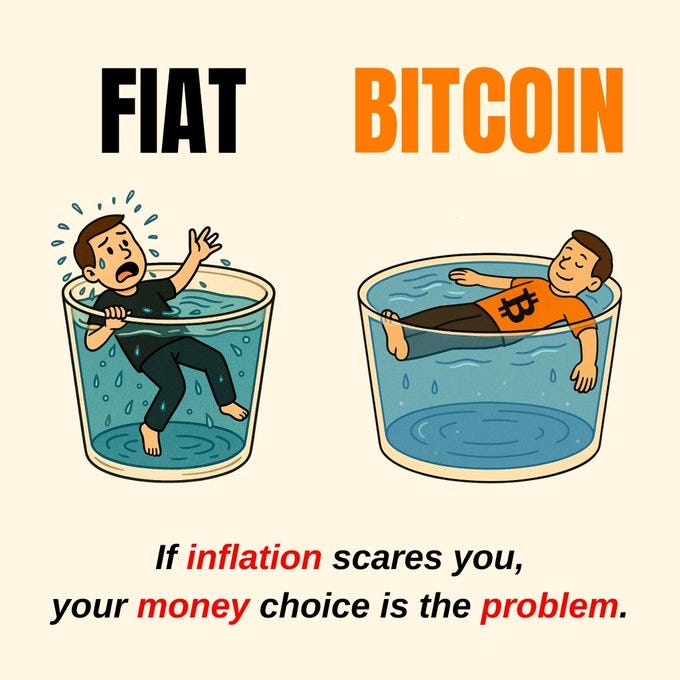
Crypto Token Development in 2026: Comprehensive Guide to Creating ERC-20, BEP-20, TRC-10, TRC-20…

By: Elisha

Crypto Token Development in 2026: Comprehensive Guide to Creating ERC-20, BEP-20, TRC-10, TRC-20, and Tron Tokens

As we step into 2026, crypto token development continues to accelerate, driven by widespread institutional adoption, regulatory clarity, and breakthroughs in blockchain scalability and interoperability.

The global tokenized asset market is projected to exceed $16 trillion by 2030 (Boston Consulting Group estimates), with real-world asset (RWA) tokenization leading the charge.

Businesses and developers are increasingly relying on professional token development services to launch secure, compliant digital assets for DeFi, gaming, enterprise solutions, supply chain tracking, and carbon credit ecosystems. This updated, SEO-optimized guide explores the latest in crypto token development, including ERC-20 token development, BEP-20 token creation, TRC-20 token development, TRC-10 tokens, and Tron token development.

Whether you’re searching for “how to create a crypto token in 2026” or the “best crypto token development company,” this article offers fresh insights, emerging trends, case studies, and expert recommendations.

Understanding Crypto Token Development: Foundations and Evolution

Crypto token development involves designing and deploying programmable digital assets on established blockchain networks using smart contracts. Unlike standalone cryptocurrencies like Bitcoin (BTC) or Tron (TRX), tokens utilize existing infrastructures, enabling rapid deployment, lower costs, and seamless integration with decentralized applications (dApps).

By 2026, the token economy has matured significantly, with millions of tokens across major chains, powered by layer-2/3 scaling, modular blockchains, and AI-enhanced smart contracts.Tokens serve diverse roles:

  • Utility Tokens: Grant access to platforms, services, or ecosystems (e.g., in DeFi lending or gaming).
  • Security Tokens: Represent fractional ownership in assets like real estate or equities, often requiring compliance with SEC regulations.
  • Governance Tokens: Empower holders to vote on protocol upgrades or treasury decisions.
  • Stablecoins: Maintain price stability, pegged to fiat currencies like USD, dominating cross-border payments.
  • Real-World Asset (RWA) Tokens: Tokenize physical assets such as art, commodities, or invoices for enhanced liquidity.

The advantages of engaging crypto token development services include:

  • Cost Efficiency: Leverage pre-built networks to avoid the expense of launching a new blockchain.
  • Enhanced Security: Benefit from audited protocols and consensus mechanisms like Proof-of-Stake (PoS).
  • Global Reach and Liquidity: Tokens can be traded on centralized exchanges (CEXs) like Binance or DEXs like Uniswap.
  • Customization and Scalability: Incorporate features like minting, burning, or vesting schedules tailored to business needs.

However, challenges persist, including regulatory scrutiny (e.g., MiCA in Europe), high volatility, and smart contract vulnerabilities. In 2026, developers must prioritize zero-knowledge proofs (ZKPs) for privacy and modular blockchains for flexibility.

Searches like “crypto token development cost in 2026” often reveal budgets ranging from $8,000 for basic tokens to $150,000+ for complex, audited projects.

Key Token Standards: In-Depth Comparison and Development Guides

Selecting the appropriate standard is critical for compatibility, performance, and cost.

Below, we compare ERC-20, BEP-20, TRC-10, TRC-20, and general Tron tokens, with step-by-step development insights.

ERC-20 Token Development: Ethereum’s Time-Tested Standard

ERC-20 token development remains the benchmark in 2026, underpinning the majority of DeFi and RWA projects on Ethereum.

With Ethereum’s full PoS transition and advanced layer-2 integrations (e.g., Optimism, Arbitrum, zkSync), ERC-20 tokens offer unparalleled interoperability and security.Core Features:

  • Standardized functions: totalSupply(), balanceOf(), transfer(), approve(), transferFrom().
  • Event emissions for tracking (e.g., Transfer, Approval).
  • Extensions like ERC-20 Permit for gasless approvals.

Step-by-Step ERC-20 Token Creation:

  1. Install tools: Solidity compiler, Remix IDE, or Hardhat framework.
  2. Code the contract: Inherit from OpenZeppelin’s ERC-20 library for security.
  3. Test on Sepolia testnet; deploy to mainnet via Etherscan.
  4. Integrate with tools like Alchemy for API support.

Pros: Vast ecosystem, high liquidity. Cons: Gas fees mitigated by L2s. For “ERC-20 token development tutorial 2026,” focus on ZKP integrations for enhanced privacy.

BEP-20 Token Creation: BNB Chain’s High-Efficiency Alternative

BEP-20 token development thrives on BNB Chain, offering EVM compatibility with Ethereum but at fractions of the cost — ideal for emerging markets and high-frequency apps.Features:

  • Mirrors ERC-20 interface for easy porting.
  • Supports BEP-2 for cross-chain with Binance Chain.
  • Low transaction fees (under $0.01) and fast block times (3 seconds).

BEP-20 Token Creation Process:

  1. Use Solidity in Remix or BNB Chain’s dev tools.
  2. Deploy on BNB testnet; verify on BscScan.
  3. Add liquidity on PancakeSwap or BakerySwap.
  4. Optional: Implement deflationary mechanics like auto-burn.

In 2026, “create BEP-20 token on BNB Chain” queries highlight its role in meme coins, gaming, and AI-driven projects.

TRC-10 and TRC-20 Token Development: Tron’s Scalable Ecosystem

Tron token development leverages Tron’s dPoS consensus for ultra-low fees and high throughput (2,000+ TPS), making it a favorite for entertainment, gaming, and stablecoin transfers.TRC-10 Tokens: Simplicity for Beginners

  • No smart contracts; issued via Tron’s API.
  • Basic features: Transfers, freezes, and bandwidth-based fees.
  • Use Cases: Airdrops, loyalty points.

Development: Stake TRX for resources, issue via TronLink wallet — no coding required for basics.TRC-20 Token Development: Advanced Functionality

  • Smart contract-enabled, ERC-20 compatible.
  • Supports complex logic like pausing or blacklisting.
  • Dominates stablecoin volume (e.g., majority of USDT transfers on Tron).

How to Develop a TRC-20 Token:

  1. Code in Solidity-compatible Tron Virtual Machine (TVM).
  2. Use Tron-IDE; test on Nile/Shasta testnets.
  3. Deploy and interact via TronScan.
  4. Integrate with SunSwap or JustLend for DeFi.

“TRC-20 token development guide 2026” emphasizes Tron’s AI integrations for smarter contracts.

Insights and Trends in Crypto Token Development for 2026

Looking ahead to 2026 and beyond, crypto token development trends are shaped by mainstream integration and technological convergence:

  • RWA Explosion: Tokenized real-world assets are expected to reach $4–10 trillion in value, with platforms like Centrifuge and Ondo Finance leading ERC-20-based funds.
  • AI and Blockchain Synergy: Tokens increasingly embed AI oracles and predictive models, enabling autonomous economies.
  • Modular and ZK-Driven Chains: Projects migrate to modular ecosystems for custom scalability; ZKPs become standard for privacy-focused tokens.
  • Regulatory Maturity: Global frameworks like MiCA and U.S. stablecoin bills foster compliant security tokens, reducing risks.
  • Sustainability Focus: Carbon-neutral chains gain traction, with Tron and energy-efficient networks attracting ESG investors.
  • Cross-Chain and Omnichain Future: Intent-centric bridges and standards like ERC-7683 streamline multi-chain token deployments.

These trends highlight massive growth opportunities, with DeFi TVL projected to surpass $1 trillion and tokenized RWAs transforming traditional finance.

Real-World Case Studies: Lessons from Successful Tokens

Examining case studies in crypto token development provides practical insights. Here are prominent examples across standards:

ERC-20 Case Study: Uniswap (UNI)

By 2026, UNI governs Uniswap, the leading DEX with over $2 trillion in cumulative volume. Insight: Community airdrops and governance drove sustained engagement. Lesson: Strong tokenomics foster decentralization.

BEP-20 Case Study: PancakeSwap (CAKE)

CAKE powers the dominant DEX on BNB Chain, with explosive growth in gaming and yield farming. Insight: Low fees enabled accessibility in developing regions. Lesson: Cost efficiency accelerates adoption.

TRC-20 Case Study: WINkLink (WIN)

WIN fuels Tron’s gaming ecosystem, partnering with major platforms. Insight: High throughput supported real-time interactions, boosting user retention. Lesson: Niche specialization yields loyalty.

Cross-Standard Example: Tether (USDT)

USDT spans ERC-20, BEP-20, and TRC-20, with $150+ billion in circulation. Insight: Tron’s speed captures the majority of daily volume. Lesson: Multi-chain strategy ensures resilience.These cases demonstrate how strategic blockchain token development delivers long-term success.

Best Practices and Challenges in 2026 Crypto Token Development

To excel:

  • Smart Contract Audits: Mandatory with firms like Certik.
  • Tokenomics Optimization: Fair launches and vesting to build trust.
  • Marketing Strategies: Listings, community building, and influencer partnerships.
  • Compliance and Security: Integrate KYC and anti-money laundering features.

Challenges: Evolving regulations, quantum threats (mitigated by post-quantum cryptography), and market competition.

Partner with a Top Crypto Token Development Company

For end-to-end crypto token development services — from ideation and smart contract coding to audits, launches, and marketing — choose a reliable partner handling ERC-20, BEP-20, TRC-20, and beyond.

KIR Chain Labs stands out as a premier crypto token development company in 2026, renowned for secure, scalable solutions on Ethereum, BNB Chain, Tron, and emerging networks. With a proven track record in DeFi, RWAs, gaming, and AI-integrated tokens, KIR Chain Labs delivers custom projects with regulatory compliance, advanced tokenomics, and seamless integrations.

Contact KIR Chain Labs today to transform your vision into a cutting-edge digital asset in the thriving 2026 crypto landscape.


Crypto Token Development in 2026: Comprehensive Guide to Creating ERC-20, BEP-20, TRC-10, TRC-20… was originally published in Coinmonks on Medium, where people are continuing the conversation by highlighting and responding to this story.

Dynasty League?: A Progress Report on NFL All Day’s 2025 Season so Far

By: SteveyGFT

As we’re getting closer to winding down the NFL regular season, we’ve had several months of fresh NFL All Day drops and nearly another season with the product, so how do we think they’re doing this year? Certainly, there has been less controversy, not a ton of complaints, but is that because there is less activity? I thought I’d change the format up a bit with this one and let’s give NFL All Day a progress report for the season so far.

Consistency: A Let’s start out with a positive. If nothing else, the team has been consistent this year. They’ve kept the actual sets consistent, Playbook consistent, drop strategy consistent, communications consistent and quality of moments consistent. There is something to be said for this as it shows a stability and maturity in the platform that we aren’t bouncing all over the place here. As far as the individual components they’re consistent on, we will touch on how well I think they’ve executed them later on, but as a collector I appreciate the strategy they’re trying to execute so far.

Playbook: B This one has so much potential. I like that they’re doing the multiple different paths of the free modes, game picks, classic and pro; which along with the Huddle concept pushes this above the average C range. The average here was based on the expectation they’d do Playbook again and it would be fun in some way, shape or form. The Huddle concept was absolutely top tier. I really enjoyed this concept, it was innovative, brought people together and had us all vested in on Sundays. That to me is what Playbook should be driving to. A way to want to engage with the platform on game days. That is also where the individual game modes of Playbook leave me wanting a little more. Conceptually, I am ok with where they are at, but I feel like I miss some of the original Playbook. I miss the individual new moments as rewards and I miss the progress of games throughout the day. We can kind of set it and forget it, which is certainly fine, but I do miss some of the elements of the specific night game challenges and allowing another crack at things if you had a slow Sunday slate. Overall, I think what they’re doing is heading in the right direction and I am glad to see the team investing in this area.

Economics: D+ Here is a downer that pulls down our overall vibe. There are just too many moments still. Either the mint counts or the number of players per drop, it is 1) overwhelming and 2) flooding the marketplace. Rares don’t feel as Rare outside of MGLE, the historical drop during Thanksgiving I understand but really had too many marginal players and dropping commons without a play assigned feels like a mis-step using the rookie strategy that doesn’t get you excited the same way about veterans. The floors on Rookie Debuts and Regal Rookies are at a very buyer friendly price point (NFA of course), but it feels like they’re losing a battle for the buyer dollar which keeps getting stretched with every new drop because there is so much new stuff to consume. Pack drop buy backs have been a nice safety net to encourage ripping. Team collecting feels like it has no real purpose this season and is one of the big opportunities I’d love to see the product lean into more. Overall, this is a bit of a rant, but it is one of the few true negatives to an otherwise fairly solid season.

Actual Product: A This is always a standout for any of the Dapper products. The moments themselves are always excellent. While yes, there may be a lot of them per my above comment, the product itself is really well done. Let’s start at the top — I love the addition of the digital autograph. This to me is such a huge plus on a digital collectible that makes them stand out in a crowded market; I was glad to see All Day add this to the moments. Parallels I thought were done well with the 3 color tiers and clear identification on the marketplace. I feel like something is slightly missing with them, but I can’t my finger on what. I like them, but nothing is driving me to want to level up to the scarcer versions yet. In general though, a nice addition and brought in fairly well. The videos themselves are obviously well cut and well edited as always. I wish the thumbnails were a touch bigger though if I am nit picking. Rookies were done in a consistent way and in general I like the rookie strategy they ran back this year. I’m not sure if I love or hate the rare sets being based on position yet, but for now I think I like it, so I left that as a positive. I like that there is a concept — the best plays from the position all year, but I miss some of the bigger stories that can be told in blended sets. All in all, I’ve thoroughly enjoyed watching the moments this season.

Challenges: C- I thought about going lower here, but challenges are one of the bigger let downs to me of the year so far. The challenge rewards of some sets being the same mint count as the regular moments of the drop, some of them are instant, some are not instant, some challenges are minted to completion and then having them run all season is a confusing mix for me. Plus we now have so many challenges, including the parallel challenges, it takes an eternity to scroll around through the challenge page. There also doesn’t seem to be a consistent organization of them either. I left this up in the average C range though, because things like the mint to completion, Thanksgiving day specific challenges and the rumored master challenge rewards are all positives to me that I think are in the right direction.

Product Rollout: B This one is more of a blended average. On one hand, the team does a solid job communicating drops and I also appreciate the tweets that show the moment and have the context. I think that helps hype the drop up and show the curation. The team does a nice job tweeting out the big plays and being active on X during games, but I wish we had a little deeper dive into product, the drop stories and overall platform. I like what Top Shot is doing highlight the moments that are selling weekly and the players selling. I also wish we had more content beyond just drops. Give us some more reasons to engage with the product beyond drops, beyond Playbook and keep us on the site longer. I do like what they’ve done with pack discount codes during Monday Night Football. I think that is a great concept to try to push packs during the prime time games. It connects the product to the game more and provides another element to the experience of ripping packs. Overall, I think the product is meeting the mark here, but leaves me wanting a little more.

Collector Experience: A- I’ve found myself spending a lot of time this year engaging with the NFL All Day product for various reasons. I have Ravens season tickets (what a nightmare), so I have been trying to collect every moment from the Ravens and also the away teams from games I attended this year. I enjoy piecing together my collection through the various paths the NFL season takes me that I want to collect. I loved the Jaxson Dart and Cam Skattebo emergence, the long game story of Shedeur and being able to rip packs during games with a buy back floor. I loved the Huddle concept, appreciate the options Playbook gives me to use my collection and browse the marketplace extremely easy to find what I want. Collecting video highlights of my favorite players and memorable plays from games I’ve watched is always fun. I bought a Justin Fields Fresh Threads because I was so hyped up on his early season performance after watching the game against Pittsburgh. I want a Rome Odunze rookie debut because he was my keeper in fantasy and for at least a few weeks, we proved all our doubters wrong. There’s a strong catalog of previous release moments I have my eye on, waiting for the right time and serial number I can easily browse. The app makes watching moments incredibly easy. Overall, we have a strong collector’s foundation here.

Comments: Some general report card comments — I’d like to see some more collection organizing tools. This was a long standing item (and still is) with Top Shot as well. Give us more ways to organize and engage with out digital collections. Also, I really wish we had the wishlist feature like Top Shot (pun intended). I am still confused and lost on the purpose of the draft pick moments we got earlier this year (maybe I’m the idiot). Great job on Huddle this year, it was unique and innovative, keep it coming and expand on it. Leverage crafting more for parallels or unique parallels (thinking like a “white” parallel for example if you collect the rainbow or various tiers — similar to what Panini does for challenges). I complained the number of challenges and types made it confusing, but thank you for really pushing challenges for collectors; we like them.

I’ll save the overall grade for the end of the year, but NFL All Day has been trending on the right path this season. They’re executing a solid plan, trying out some new things here and there without blowing up the whole thing. There is an appreciation in stability as a collector. I think they need to get more ways to get collectors onboard, back in and engaged longer to an incredibly strong product with a lot of upside. At the end of the day, this season has been a fun ride and I’m looking forward to the next wave of Playoff moments (hopefully with the Ravens eligible for the sets!)

Until next time, watch more moments, tell more stories, Go Ravens and we ride at dawn…


Dynasty League?: A Progress Report on NFL All Day’s 2025 Season so Far was originally published in Coinmonks on Medium, where people are continuing the conversation by highlighting and responding to this story.

Why Bitcoin Still Matters in 2025 — Explained in Simple Terms

Why Bitcoin Still Matters in 2025 — Explained in Simple Terms

If you’re new to crypto — or even if you’ve been here a while — you’ve probably heard the same question again and again:

“Is Bitcoin still relevant?”

With thousands of altcoins, fast blockchains, AI-driven networks, and tokenized everything…
why does the oldest cryptocurrency still dominate the market in 2025?

Let’s break it down in the simplest way possible — no jargon, no hype, just the core ideas.

1. Bitcoin is still the ONLY truly decentralized digital money

Most blockchains today have:

  • founders
  • VC investors
  • companies behind them
  • teams who can change the rules

Bitcoin has none of that.
No CEO. No marketing department. No headquarters.

It runs like the internet:
distributed, global, owned by no one.

This matters because:

  • No one can freeze it
  • No one can “upgrade” it in a way users don’t want
  • No one can print more of it

In a world where trust in institutions is falling, Bitcoin remains the only money that does not depend on trust at all.

2. Bitcoin’s limited supply is more important than ever

Bitcoin has only 21 million coins — forever.

In 2025:

  • inflation is still high globally
  • fiat currencies are losing purchasing power
  • governments keep printing money when economies slow

Bitcoin doesn’t care.
Its supply is fixed. The rules are unchangeable.
This makes it the digital equivalent of economic gravity.

And every four years, the supply gets even tighter because of the halving.

That scarcity is why big companies, hedge funds, and even pension funds continue buying — not selling.

3. Institutional adoption changed the game completely

In 2017, Bitcoin was mostly a retail phenomenon.
In 2021, it became mainstream.
In 2024–2025, it became institutional.

We now have:

  • Bitcoin ETFs held by BlackRock, Fidelity, VanEck, and more
  • publicly traded companies buying BTC for their treasury
  • sovereign wealth funds quietly accumulating

This influx of “slow, long-term money” stabilizes the market and pushes Bitcoin into a different category:

from speculative asset → to global financial infrastructure.

4. Bitcoin is becoming the backbone of a new financial ecosystem

2025 is the year Bitcoin stopped being “just a currency” and started becoming a base layer for innovation:

  • Bitcoin Layer-2 networks are enabling smart contracts
  • micropayments and instant remittances are growing
  • entire Web3 protocols are being built on Bitcoin rails

Ironically, the slowest blockchain became the most reliable foundation for the next generation of applications.

5. Bitcoin still leads every market cycle

Even today:

  • when Bitcoin goes up, the whole market follows
  • when Bitcoin drops, everything drops faster

Bitcoin is still the weather system of the entire crypto market.

This happens for a simple reason:

Bitcoin is the only asset in crypto with global liquidity, deep institutional demand, and long-term credibility.

Everything else is positioned around it.

6. Bitcoin matters because it solves a real-world problem

Most crypto projects solve crypto problems.

Bitcoin solves a human problem:

“How do we store value in a form that cannot be inflated, seized, or manipulated?”

That’s why people in inflation-heavy countries use Bitcoin to protect savings.
That’s why businesses accept Bitcoin globally.
That’s why institutions treat it as “digital gold”.

Bitcoin isn’t perfect.
It doesn’t try to be everything.
It tries to be one thing extremely well: sound money.

And in 2025, sound money is rare.

Final Thoughts

Bitcoin matters in 2025 for the same reason gold mattered for 5,000 years:

  • It’s scarce
  • It’s decentralized
  • It’s independent
  • It’s valuable because people trust the rules

Everything else in crypto can change.
Bitcoin is the constant the market orbits around.

If you understand Bitcoin, you understand the foundation of the entire crypto economy.


Why Bitcoin Still Matters in 2025 — Explained in Simple Terms was originally published in Coinmonks on Medium, where people are continuing the conversation by highlighting and responding to this story.

❌