Guide to top U.S. real estate tokenization development companies for 2026.
I’ve been following real estate tokenization for years. I believed in the promise. I trusted the technology. But 2025 hit the market like a sudden strom.
The hype, the excitement, the idea that blockchain would completely revolutionize property investment it all felt like it was suddenly being put to the test.
Here’s the part nobody talks about. Tokenization was supposed to be the next big thing. Fractional ownership, instant global access, liquid property markets it was meant to outpace traditional real estate in every way. Then reality stepped in. Traditional real estate markets, carefully managed rental portfolios, and hybrid digital-property platforms started holding their own and in some cases, outperforming early tokenization projects.
While blockchain platforms were rolling out fractional ownership, investors began noticing companies that combined tokenization with practical tech solutions like AI, smart contracts, and digital marketplaces. Those projects drew more attention and adoption than pure tokenized offerings. Even some small, focused platforms saw faster growth than the heavily hyped tokenization startups. Let that sink in: the “future of property investment” everyone was talking about was still learning how to compete with conventional approaches.
So what’s really happening behind the scenes? Tokenization isn’t failing it’s evolving. The market is separating hype from substance, and the companies that blend innovation with real-world practicality are the ones that will dominate in 2026 and beyond.
Top Real Estate Tokenization Development Company in the USA
What Is Real Estate Tokenization?
Real estate tokenization is the process of converting physical property rights into digital tokens stored on a blockchain network. These tokens represent a share or fraction of the property, allowing individuals and institutions to invest in real estate without needing to purchase an entire asset. By digitizing ownership, tokenization enhances liquidity in an industry traditionally defined by high entry barriers and long transaction timelines. Blockchain ensures that every transaction is recorded immutably, reducing the need for intermediaries and creating a transparent, secure system for managing ownership records. As tokenized real estate becomes more mainstream, both developers and investors benefit from simplified processes, improved capital efficiency, and broader investment reach.
Beleaf Technologies
Beleaf Technologies stands out as one of the leading real estate tokenization development companies in the USA for 2026. Renowned for its technical expertise and industry-focused approach, the company specializes in building fully customized tokenization platforms for property developers, enterprises, and investment firms. Beleaf offers comprehensive solutions that include smart contract creation, investor onboarding modules, compliance integration, digital wallet setup, and secondary market features. Their platforms are designed with scalability and regulatory alignment in mind, ensuring compatibility with SEC frameworks such as Reg A+, Reg D, and Reg S.
What sets Beleaf Technologies apart is its commitment to client-centered development, guiding businesses through every stage of the tokenization journey. From conceptual planning to platform deployment and long-term support, Beleaf ensures that each project is secure, efficient, and tailored to real-world operational needs. Their strong understanding of the U.S. real estate market, combined with modern blockchain infrastructure, makes them a trusted choice for organizations wanting to embrace tokenized property investment in 2026.
Tokeny
Tokeny remains a consistent leader in the asset tokenization industry, offering advanced digital securities infrastructure that supports companies across multiple sectors, including real estate. Known for its strong emphasis on compliance and identity verification, Tokeny provides platforms that simplify the creation, distribution, and management of tokenized real estate assets. Their technology features automated investor onboarding, secure ownership tracking, and seamless lifecycle management. While Tokeny serves clients globally, its solutions have been increasingly adopted in the United States by companies prioritizing transparency and regulatory security.
RealFund
RealFund continues to gain momentum as a reliable tokenization partner for property developers aiming to expand their investment reach. Their platform focuses on tokenizing both residential and commercial properties while offering an intuitive investor experience. RealFund’s approach simplifies participation in real estate markets by allowing fractional ownership and enabling global investors to engage with digital property assets effortlessly. The company’s dedication to security and regulatory compliance helps businesses navigate the complexities of digital asset issuance while maintaining investor trust.
RealT
RealT has earned a strong reputation for pioneering tokenized rental income in the United States. The platform allows investors to buy fractional shares of rental properties and receive income distributed directly through blockchain. This model offers a modern, efficient approach to real estate income generation and has opened doors for both retail and international investors. RealT’s tokens can be traded on secondary markets, allowing investors to enjoy liquidity something difficult to achieve with traditional real estate assets. Their accessible and transparent investment framework continues to appeal to those exploring digital property ownership.
Synodus
Synodus is emerging as a versatile technology provider specializing in blockchain and digital transformation for enterprises. The company offers tailored real estate tokenization solutions designed to support fractional ownership, digital asset management, and investor engagement. With an emphasis on security and scalable architecture, Synodus helps businesses integrate blockchain technology into their operations smoothly. Their solutions focus on enhancing transparency and operational efficiency, making them a valuable partner for organizations exploring tokenization as part of their long-term digital strategy.
Conclusion
Real estate tokenization is rapidly reshaping the way property investments are made, offering greater flexibility, security, and access to global opportunities. The companies highlighted in this guide Beleaf Technologies, Tokeny, RealFund, RealT, and Synodus are playing key roles in driving this transformation across the United States. As blockchain adoption accelerates, businesses and investors will continue to seek solutions that simplify asset management and expand investment potential. Choosing an experienced and trusted Real Estate Tokenization Development Company is essential for navigating this evolving landscape and unlocking the full benefits of tokenized real estate in 2026 and beyond.
No internet? No problem. PWAs deliver seamless, offline-first experiences that keep your users connected and engaged.
Progressive Web Apps: The Smarter Web Solution
As user expectations continue to evolve, businesses must adapt by delivering web experiences that are fast, reliable, and accessible — regardless of network conditions. Traditional web applications, while powerful, are inherently dependent on internet connectivity. This limitation can alienate users in areas with limited access or during moments of poor connectivity.
Progressive Web Apps (PWAs) offer a solution: they combine the best of web and mobile applications, enabling seamless performance with or without internet access. This article explores how PWAs work, why they matter, and how you can implement them to create resilient, offline-first digital experiences.
Understanding Progressive Web Apps
A Progressive Web App is a type of application built using standard web technologies like HTML, CSS, and JavaScript but enhanced with modern APIs to behave like native mobile apps.
Unlike traditional websites, PWAs:
Can be installed on a user’s device
Work offline or with poor connectivit
Load instantly after the first visit
Support push notifications, background sync, and hardware integration
They are designed to be progressive, meaning they work for every user, regardless of browser, because they’re built with progressive enhancement principles in mind.
Why Go Offline-First?
An offline-first approach means prioritizing the user experience regardless of network conditions. Instead of the app breaking when connectivity drops, it continues to operate by relying on locally cached resources.
Key Benefits:
1. Improved User Retention
Users are more likely to return to an app that doesn’t frustrate them with loading errors or downtime.
2. Performance Optimization
PWAs cache critical assets, reducing the need to fetch resources over the network, leading to faster load times — even on slow devices.
3. Increased Accessibility
An offline-capable app supports users in low-bandwidth environments and emerging markets, expanding your reach.
4. Lower Development Costs
PWAs allow developers to build one experience that serves both desktop and mobile, avoiding the need for separate native apps.
Core Building Blocks of a PWA
To deliver a functional and efficient PWA, three main technologies are used:
1. Service Workers
Service workers are background scripts that intercept network requests and manage how your app responds. They’re essential for enabling offline behavior.
Capabilities:
Intercept and respond to network requests
Cache key resources locally
Deliver push notifications
Perform background synchronization
Service workers run separately from the main browser thread, allowing them to work even when the user is not actively using the app.
With support from major browsers — including Chrome, Firefox, Edge, and even Safari — PWAs are becoming a universal standard for building high-performance web experiences.
As features like access to native APIs, filesystem support, and hardware integration continue to evolve, PWAs are blurring the lines between web and native apps.
For organizations looking to future-proof their digital presence, PWAs represent a low-barrier, high-return investment.
Conclusion
Progressive Web Apps are redefining how we think about web development. By embracing offline-first architecture, you can build resilient applications that prioritize user experience, regardless of connectivity.
Whether you’re building a startup MVP or revamping an enterprise platform, PWAs can offer faster performance, broader reach, and better engagement at a fraction of the cost of native development.
About Duredev
Duredev, a blockchain-driven enterprise solutions provider, streamlines system integration with cutting-edge automation, enhancing security, transparency, and efficiency. Our advanced frameworks enable businesses to deploy decentralized applications, optimize workflows, and unlock new revenue streams. With expertise in smart contracts, AI-powered automation, and cross-chain interoperability, we help organizations future-proof their operations and stay ahead in an evolving digital landscape.
The web is no longer bound by connectivity. With PWAs, your users stay connected — even when they’re offline.
🚀 Build faster, smarter, and more reliable web apps
Take the leap into offline-first architecture
Elevate user experience with seamless, app-like functionality
Deliver instant load times and reduce bounce rates
💬 Have questions about PWA implementation? Let’s talk. Whether you’re just exploring or ready to build, we’re here to help.
🔗 Follow Dure.dev for expert insights on next-gen web technologies. 💡 Explore service workers, caching strategies, and offline UX design in our latest posts. 🎯 Start your PWA journey now — and build the future of the web.
Digital payments are supposed to make life easier. But over the past year, I’ve faced a frustrating reality trying to log into my PayPal account. Happily, I didn’t have much to lose.
Even though I have assured that I reside in a country officially supported by PayPal, I’ve been locked out of my account with little recourse. It’s sort of a small thing until it isn’t. When one needs to transfer money urgently or not, being unable to access your account can be incredibly stressful and annoying.
After months of trying, giving up, and retrying multiple options, I realized this isn’t just a problem I am facing; it’s something many international users experience. This had me motivated to share that relying on a single global payment platform can be very disappointing.
When Access Is Limited
I want to emphasize how frustrating it can be to be stuck in a global payment system with almost no access to direct, country-specific customer support. Especially if your work or personal life depends on money moving quickly, this isn’t just inconvenient; it’s a real problem.
Why Alternatives Matter
Relying solely on a single payment platform can leave one vulnerable to delays and locked accounts. That’s why, especially for hiring companies, exploring alternatives like digital wallets, multi-currency accounts, and direct bank transfer services is important.
Global Alternatives That are Worth Considering
Payoneer
It allows its users to receive from companies and freelancers around the world without the same headaches. It also provides better customer support.
While primarily a crypto platform, Binance’s wallet and transfer functions offer another reliable way to manage funds internationally. It is surprisingly helpful when traditional platforms fail; in fact, it also supports hundreds of different cryptocurrencies and many trading pairs, providing flexibility to hold, trade, or convert between many assets.
If you would like to try it, here is my referral link.
Disclosure: The above link is a referral link, and I may receive a small commission if you sign up using it at no extra cost to you.
The 2026 Playbook: Autonomous Markets, Smarter Liquidity, and a New Era of On-Chain Intelligence
Futuristic AI neural brain hovering above digital crypto trading charts, neon blue and purple colors, glowing data streams, ultra-detailed, high contrast, cyberpunk style
📌 Introduction: 2026 Will Be the Year Crypto Starts Trading With Itself
If 2024–2025 was the era of LLMs writing code, answering emails, and powering chatbots, then 2026 will be the year AI starts trading crypto — autonomously, intelligently, and at scale.
Not the bots we have today. Not the “RSI + MACD” scripts running on Binance. Not the noisy Telegram indicators.
I’m talking about AI trading agents — autonomous decision-making systems built on top of advanced models that can:
read on-chain data in real time,
interpret news and social sentiment instantly,
execute trades without human prompts,
learn from mistakes,
adapt to new market regimes.
By 2026, these agents will not just join the market. They will reshape it.
This article breaks down why, how, and what comes next — in simple, practical language.
1. The Shift: From Trading Algorithms to Autonomous AI Agents
Today’s automated trading tools work like this:
IF A happens → THEN execute B. They are fixed, predictable, rigid, and easy to beat.
Imagine telling a small bank in Cebu or a logistics company in Davao
“In two years, your digital systems might be built, run, and secured by machines that think like teams, not tools.”
Sounds big…but that’s exactly where we’re headed.
By 2026, technology won’t be “cool,” it’ll be critical. Not just for big global players, but for any organization trying to serve customers better, faster, and more securely, especially here in the Philippines and similar emerging economies.
Let’s break down the top 10 technologies you’ll be hearing about, and more importantly,why they matter here and now.
1. AI That Builds Software for You
Imagine building a new mobile banking app or upgrading a hospital record system, with almost no coding team. That’s the future.
AI-native development platforms help businesses design, build, test, and launch software automatically. This is huge for emerging markets where tech talent is limited or expensive.
Why it matters:
Faster delivery, even for regulated industries like finance and healthcare
Fewer errors, better compliance
No need for giant dev teams
2. Smarter Infrastructure That Powers AI
Running AI at scale needs serious computing muscle. But here’s the twist: full cloud setups are expensive and hard to control.
By 2026, we’ll see a shift to hybrid AI infrastructure: a mix of cloud, local servers, and edge devices. Think of it like choosing between riding a jeepney, a private car, or walking, based on cost, urgency, and destination.
Why it matters:
Cut costs by running AI where it’s cheapest
Keep sensitive data local, which helps with national data laws
Works better in areas with weak internet or power outages
3. Privacy Tech That Keeps Data Safe — even While It’s Being Used
Right now, we protect data when it’s stored or sent. But what about when it’s being used?
Confidential computing protects data while it’s being processed. That’s a game-changer for hospitals, banks, and government offices working with private or financial data.
Why it matters:
Process data securely without risking leaks
Work together across agencies or countries without sharing raw data
Stay compliant with privacy laws
4. Teams of AI Agents That Work Like Staff
Instead of one chatbot or algorithm, imagine a whole team of AI workers, each with a role, working together to complete tasks like audits, customer support, or claims processing.
Multi-agent AI systems are built exactly for that.
Why it matters:
Automate multi-step operations like compliance checks or loan approvals
Reduce errors
Keep humans in control with clear rules and oversight
5. AI That Speaks Your Industry’s Language
Not all AI is smart enough to handle banking, law, or healthcare. That’s where domain-specific AI models come in — they’re trained specifically for certain fields.
Why it matters:
More accurate and relevant results
Better alignment with local laws and regulations
Trusted by regulators, not just tech teams
6. Tokenizing Real-World Value for Better Finance
Here’s a practical one. Businesses can now represent things like contracts, loans, or rewards points as digital tokens.
Think: tokenized bonds, invoice financing for SMEs, or digitized land titles.
Why it matters:
Faster, more transparent transactions
New financing tools for small businesses
Easier to track ownership, prevent fraud
Challenges? Regulatory clarity and linking these systems to existing ones. But the groundwork is being laid.
7. Smart Machines in the Real World
AI is stepping out of your phone and into your factory, farm, or delivery hub.
Physical AI systems include smart robots, drones, automated warehouses, or even maintenance bots that can predict problems before they happen.
Why it matters:
Reduce manual labor and human risk
Predict repairs before breakdowns
Improve safety and efficiency in logistics, farming, and infrastructure
8. Cybersecurity That Sees the Future
Instead of waiting for an attack, 2026’s cybersecurity tools will predict and prevent them.
Predictive security platforms use AI to watch systems 24/7, plug weak spots, and even respond automatically when under threat.
Why it matters:
Essential for critical sectors like power, finance, or healthcare
Reduces recovery time after breaches
Supports compliance with tougher data protection laws
9. Digital Trust You Can Prove
In a world full of deepfakes and AI-generated content, trust is fragile.
Digital provenance tools help verify if a document, image, or transaction is legit — by tracking where it came from and what happened to it.
Why it matters:
Prevent fake documents or media from causing chaos
Verify software updates or legal agreements
Build trust in automated systems
10. Sovereign Digital Infrastructure
More countries, including the Philippines, are now demanding that their data, apps, and infrastructure stay within national borders.
Geopatriation means keeping digital systems local to protect sovereignty and follow local laws.
Why it matters:
Ensures sensitive data stays within the country
Reduces reliance on foreign tech providers
Builds local digital resilience in the face of global disruptions
Final Thoughts: Why This All Matters Now
By 2026, these technologies won’t be “emerging,” they’ll be essential. Not just for tech giants, but for banks, hospitals, schools, and local governments in the Philippines and similar markets.
It’s not about chasing trends. It’s about building smarter systems that work better for us: systems that are faster, safer, and more trusted by design.
Organizations that move early, set clear policies, and invest in digital skills today will lead tomorrow’s digital economy.
Let’s build for that future, one smart system at a time.
For more insights and guides made para sa mga Pinoy (especially when it comes to understanding the digital systems shaping our future), drop by kryptocompass.xyz
Decentralized exchanges have transformed digital asset trading by providing full ownership, transparency, and permissionless access. DEX platforms are using artificial intelligence to improve their services. As trading volumes increase and user expectations grow, they focus on better price predictions, smarter order routing, enhanced security, and an overall improved user experience.
AI can analyze large amounts of data and make decisions on its own. This is a big step forward for DeFi innovation. It helps solve problems like market volatility, liquidity issues, and security concerns, all while maintaining decentralization.
This blog discusses the architecture, features, AI integrations, development steps, and future potential of an AI-powered DEX platform. Whether you’re a founder, investor, or blockchain innovator, this guide will help you build a next-gen DEX that aligns with the future of decentralized finance.
How AI enhances the Traditional DEX Model?
AI transforms a regular DEX into a proactive, self-improving trading platform. With its ability to analyze massive data in real time, it upgrades the accuracy, swiftness, safety, and user experience of every single act of trading.
1. AI-Driven Trade Execution
AI algorithms analyze market conditions, liquidity, and volatility, together with user behavior, to execute trade activities with precision. This goes a long way in aiding users through executing better-informed and high-speed trades independent of manual interference.
2. Risk & Fraud Detection
The AI models are constantly searching for any anomalies in the transaction pattern, wash trading, suspicious wallet activities, or any other potential exploits. This predictive layer significantly boosts the security of the entire platform and reduces the user’s exposure to risk.
3. Personalized insights
Machine learning can be used to track user behavior, market trends, and the performance of assets, in turn providing users with trading signals and alerts that are tailor-made. These signals help you make intelligent, data-driven decisions.
4. Smart Order Routing
AI identifies the most favorable liquidity pools across chains and DEXs to ensure better pricing and lower slippage. It dynamically optimizes routing paths to improve trade outcomes.
5. Price & Sentiment Analysis
AI processes market sentiment, social signals, and historical price data to predict price movements. In turn, this will equip traders with advanced insights into possible market directions.
While AI powers everything from trade execution to fraud detection, the next step is in understanding the building blocks behind such an intelligent ecosystem. Let’s delve into…
Core Components of an AI-powered DEX Platform
An AI-powered DEX works on a combination of decentralized infrastructure and intelligent computation. Each subcomponent puts forward an important function in a chain to enable automation, predictability, and non-stop, smooth trading.
1. Decentralized Blockchain Architecture
This forms the foundation for transparency, immutability, and trustless operations. A strong blockchain layer ensures transaction security and decentralized data storage, to be analyzed by AI systems.
2. Liquidity Pools & AMM
The liquidity pool allows permissionless trading without intermediaries; AMM algorithms determine the price autonomously. With AI, such a system is immediately able to adapt the liquidity parameters to market behavior dynamically.
3. AI/ML Engine
The DEX core intelligence engine processes market data, predicts trends, automates decisions, and enriches user experience through its top-notch AI. It continuously trains on data to optimize performance in real time.
4. Smart Contract Infrastructure
The swaps, liquidity provisions, fee models, and security mechanisms are governed by smart contracts. All of these can be audited and tested for the assurance of performance and minimal vulnerabilities by AI.
5. Data Pipelines — On-Chain and Off-Chain
These pipelines gather data from blockchains, price feeds, APIs, and sources of sentiment. Clean, structured data flows into the AI engine to produce real-time predictions and insights.
6. User Dashboard & Analytics Layer
This is where a trader actually interacts with the DEX and is able to visualize AI-powered insights. It provides real-time charts, signals, alerts, and portfolio analytics to help users make smarter decisions.
Having described the building blocks, let’s turn to the step-by-step development guide to create an AI-powered DEX platform and understand how these components will come together in development.
Step-by-Step Guide to Create an AI-Powered DEX Platform
The development of an AI-powered DEX requires a structured development roadmap that effectively integrates blockchain engineering and machine intelligence. Therefore, here is the simplified explanation of the step-by-step process of creating such a platform.
Step 1 — Identify Your DEX Model
Choose whether your platform will apply the order-book model, AMM, hybrid, or aggregator. Each structure determines how trades will happen, the way liquidity will be managed, and the way the AI engine will interact with pricing and order systems. Thus, the selection of an appropriate model aligns the platform with user expectations and market needs.
Step 2 — Choosing Your Blockchain
Your platform’s scalability, transaction speed, cost efficiency, and security are all defined by your choice of ideal blockchain: Ethereum, BNB Chain, Polygon, Solana, Sui, or something else. The right chain further dictates compatibility with AI modules, data sources, and cross-chain interoperability requirements.
Step 3 — Building or Integrating the AI Engine
It entails the design or integration of AI models, such as neural networks, predictive analytics, or NLP-based sentiment analyzers. You need to establish reliable training datasets, decide whether to perform on-chain or off-chain computation, and establish inference pipelines that provide accurate predictions, automation, and insight in real time.
Step 4 — Smart Contract Development
Develop the core smart contracts responsible for powering liquidity pools, token swaps, fee mechanisms, and governance. These contracts define the rules of interaction for users and liquidity providers. Ensuring they are optimized, secure, and AI-compatible is a key building block for safe and efficient trading.
Step 5 — AI-Enhanced Backend Development
It involves the creation of data pipelines that feed clean market information into the AI engine, designing prediction modules, creating optimization algorithms, and embedding automated security logic. The backend acts as an operational brain that supports advanced decision-making and real-time intelligence.
Step 6 — Frontend UI/UX Development
The frontend should provide an intuitive experience that will include live charts, AI-driven insights, a trade simulator, and detailed portfolio dashboards. A clean UI means both advanced and beginning traders will be able to access AI functionality without encumbrance.
Step 7 — Advanced Security Implementation
Enhance the platform with AI-assisted audits, automated threat detection, behavior-based anomaly alerts, and multisignature or hardware wallet integrations. This proactive layer of security keeps users from falling victim to exploits, fraud, and vulnerabilities before these can adversely impact their business.
Step 8 — Testing & Deployment
Perform extensive unit tests and integration tests, coupled with penetration testing, to validate both the blockchain and AI components. Also, the AI model accuracy should be ensured through validation cycles before preparing for testnet and final mainnet deployment.
If this development process feels extensive or technically challenging, you can connect with an expert team. They’ll guide you through every step and help you build a secure, high-performing AI-powered DEX platform tailored to your business vision.
Key Features Your AI-Powered DEX Must Have
The AI-powered DEX will have to bring intelligent automation together with deep analytics and a frictionless user experience in order to shine among other emerging DeFi solutions. These features not only enhance performance but also build trust, security, and long-term scalability.
AI-Based Smart Order Routing
AI-driven routing algorithms work in real-time to analyze liquidity across multiple pools, chains, and DEXs to obtain an efficient trade path. By continuously checking against price impact, slippage, and execution speed, the AI maintains superior trading outcomes for users at all times. This dramatically improves profitability with reduced friction in volatile markets.
AI-driven portfolio optimization
AI continuously tracks market conditions, asset patterns, and risk levels to suggest the best asset allocations in a portfolio. This would make suggestions on when rebalancing should be performed, accumulation or reduction in which assets, and how to keep the right risk versus reward balance. This gives novice traders the power to manage portfolios like pros.
Automated Risk Scoring for Traders
AI-based applications calculate dynamic risk scores by analyzing user behavior, trading history, and market exposure. These scores support the platform in identifying high-risk patterns, preventing hazardous trading activities, and proposing personalized safety recommendations. It enhances both trader protection and platform-wide stability.
AI-Powered Front-Running Resistance
AI tracks mempool activity for suspicious pre-transaction behavior and possível MEV exploits. It can intelligently reorder the transactions or encrypt the trading intent so no bots can frontrun the order flow. This creates a fair, open execution environment for all users.
Adaptive Gas Fee Optimization
The AI models predict network congestion and suggest the most cost-efficient fee levels without compromising execution speed. The platform, by automatically adjusting gas parameters, helps users save on transaction costs while maintaining timely trade processing.
Real-Time Anomaly Detection
It continuously monitors trading activity, liquidity movements, wallet interactions, and smart contract behavior. The system triggers instant alerts and preventive actions in case it detects unusual patterns or possible attack vectors. This form of real-time vigilance keeps the DEX safe from exploits and fraud attempts.
Multi-Chain Interoperability
This AI-powered platform provides an on-chain analysis of liquidity distribution, bridge performance, and asset flow to manage various cross-chain operations for you. It makes multichain swaps easy and smooth by optimizing routing paths for efficiency. Ultimately, it gives a seamless, user-friendly experience in multi-chain trading.
With these intelligent features powering your DEX, next comes an understanding of the roadblocks in bringing such a platform to life. Let’s explore.
Challenges of Building an AI-Powered DEX
With unmatched intelligence and automation by AI-powered DEX platforms come a host of technical, operational, and regulatory challenges. Such complexities need early addressing for the creation of a secure and scalable ecosystem.
Data Privacy & Decentralization Conflicts
AI demands a lot of user and market data, while decentralized systems function on the principles of maximum anonymity and minimum data exposure. Creating a balance between AI’s data needs and blockchain’s privacy principles becomes tough most of the time, as most often it is about hybrid or privacy-preserving data models.
Scalability Issues
AI computations, particularly predictions and real-time analytics, require massive processing power. When put in conjunction with the innate bottlenecks of blockchain, performance bottlenecks arise that will be solved by L2 solutions, off-chain processing, or optimized architectures.
AI Model Accuracy
The predictions made by AI depend upon the quality and variation of the training data. Poor datasets or scanty real-time updates will result in wrong output, therefore badly influencing trade execution, routing, and risk profiling. Continuous model training is required to be reliable.
Regulatory Considerations
Both AI and cryptocurrency are evolving under regulatory scrutiny. Ensuring compliance with global policy on data usage, algorithmic transparency, and financial operations is a key challenge, especially for platforms operating across more than one region.
Liquidity Acquisition Challenges
A DEX cannot work effectively without liquidity. It is important to consider attracting liquidity providers with competitive yields, reduced impermanent loss, and AI-backed incentives in order to create sustainable platform growth.
Partnering with a professional Decentralized Exchange Development Company is the smartest way to successfully sail across the challenges and build a secure, intelligent, and scalable AI-powered DEX. This way, they can offer you solutions that are both reliable and aligned with your platform’s goals and technical needs.
The Future of AI-Enabled Decentralized Exchanges
The future of AI-powered DEX platforms is moving toward fully autonomous trading ecosystems, where key functions operate with minimal human intervention. These changes will mark a paradigm shift in how decentralized exchanges function:
Fully automated function — Order execution, liquidity flow, and risk management will be automatically executed via AI-driven systems.
Multi-agent AI collaboration — Several AI agents will collaborate-sometimes even compete-while optimizing major functions such as price discovery, hedging strategy, volatility adjustment, and user-specific trading strategy.
Real-time adaptability — The whole trading environment will immediately respond to changes within the markets, making the ecosystem more resilient and intelligent overall.
These systems will automatically manage their liquidity, keeping pools balanced and adjusting incentives based on expected demand. AI-powered bots will monitor multiple blockchains to find and take advantage of price differences, helping to stabilize the market. This will create a future where financial systems are connected, allowing DEXs to work more efficiently, fairly, and with smooth multi-chain capabilities.
Conclusion
AI is positioned to define the next era for DEXs, introducing unparalleled intelligence, automation, and security to on-chain trading. From smart execution to predictive analytics, AI enables the operation of DEX platforms at a faster, safer, and more efficient pace than ever before.
Businesses combining AI with blockchain gain a strong competitive advantage through enhanced liquidity management, decreased risk exposure, and user experiences that are hyper-personalized. So, if you’re ready to build a future-ready DEX but find it daunting to do so yourself, you can hire experts from a reliable DEX Development Company. Professionals guide you in every step from ideation to successful launch.
ERC20 Token Development in 7 Simple Steps — A Step-by-Step Tutorial guide of 2026!
A Definitive Guide For Crypto Startups!
Create ERC20 Tokens
Are you thinking that creating an ERC20 token might cost millions and take a team of scientists? But, ironically, creating an ERC20 token is one of the most effective and approachable tasks in the blockchain space. The whole ERC20 token development is easier than you think, but also trickier than it looks.
Why?
Because while it is understandable that the technical part of the token minting can be done in a matter of minutes, the real trick lies in planning, security, and tokenomics. A poorly designed token can be launched, but it won’t survive. On the other hand, a well-structured ERC20 token can power DeFi platforms, fuel fundraising campaigns, and even evolve into the next big crypto project.
In this blog, let’s explore everything from what is ERC20 token, use cases, benefits, and more importantly, “How to create ERC20 Tokens” effectively. Let’s begin with,
What is an ERC20 Token?
ERC20 is an Ethereum token standard, which is widely used to create tokens with various token properties. The ERC is abbreviated as Ethereum Request for Comment, and the number 20 is the proposal identifier number. The ERC20 token standard comes with a set of rules that every single Ethereum-based token must adhere to.
ERC20 is one of the most significant of all ERCs, which is entirely used to create fungible crypto tokens, with a set of predefined token rules. The digital industry is now filled with top ERC20 tokensthat are holding value. These are ideal for transactions, trading, fundraising, and other crypto payments. Besides, this ERC20 token standard is the most suited standard for proposing enhancements to the Ethereum network.
Now, let see…
What are the Reasons to create an ERC20 token?
Many businesses and startups are continuously opening tabs on how to create an ERC-20 token effortlessly. Below are some of the vital reasons behind the sudden surge and why people are willing to create crypto tokens using the ERC20 token standard.
Ethereum-based tokens can be deployed instantly over the Ethereum blockchain in a smooth and seamless manner.
The ERC20 tokens are entirely distributed & implemented on smart contracts. These tokens are executed in a completely decentralized manner over the Ethereum Virtual Machine(EVM).
The blockchain industry has adopted the ERC20 token standard as the predominant token standard, and this is mainly due to the overwhelming popularity of the ERC20 tokens in the marketplace.
Using the ERC20 token standard, one can figure out the essential problems using the different types of tokens they manage.
The very first specification to provide an Ethereum-based token standard is the ERC20 token standard.
Startups can raise funds by selling ERC 20 tokens to early investors across the global market without relying on other methods.
Since ERC-20 tokens are supported on almost every crypto exchange and wallet, your tokens can be easily listed, traded across borders.
The smart contract integrated into the platform will self-automate the processes. Payments, Rewards, or dividends can be automated using Ethereum smart contracts.
With this Ethereum Token Development, you can create your own native currency for the product ecosystem. Use these ERC20 tokens to reward users, stake, governance, and use them for in-app purchases.
The above-mentioned are some of the vital reasons behind startups and entrepreneurs prefer the ERC-20 token standard. As a result, the search for how to create an ERC20 token has never ended. But, in reality, creating an ERC 20 token also requires a specific set of technical knowledge. Curious?
How to Create an ERC20 token?
Creating an ERC20 token requires a great degree of technical balance and knowledge of basic programming languages. Let’s take a quick glance at how to create an ERC20 token effortlessly,
Step 1 — Pre-Planning
Before going on with ERC20 token creation, analyze and understand your business requirements. Determine what your ERC20 token is going to do and what purpose it would want to serve. Jumping straight into ERC20 token development without a proper plan can lead to wasted time, money, and effort. Consider,
What is the purpose of your ERC20 token? Is it for governance, utility, rewards, or fundraising?
Analyze existing tokens in your niche and identify market gaps.
Based on your end project goals, estimated cost, audit, and deployment.
Step 2 — Define your ERC20 Token Properties
Upon your business goals, you can determine the token properties. In order to create a conventional ERC20 token, it is essential to inherit the versatile properties of the ERC20 token standard to attract more investors. When defining the token properties, you should specify some definitive aspects, like:
Name & Symbol of your Token
Total Circulating Supply
Decimal Values that define the divisibility of the token
These properties set the rules for how it behaves across wallets, exchanges, and dApps.
Step 3 — Smart Contract Development
After determining the base ERC20 token properties, you can next move to the smart contract development. Based on the defined purpose, code the contracts to match your business goals. You need to implement contracts for properties like, Supply Logic, for fixed Supply, or determine whether the created ERC20 tokens are Mintable or Burnable.
Besides, you also need to code the token safety controls for token pausing, ownership access, and multi-sig security. Also, here you will code other tokenomics properties like Vesting, Aidrops, Treasury Module, or Staking/Rewards.
Step 4 — Quality Analysis
Now, before launching your ERC20 token, make sure it is quality-tested properly. Making the token undergo various series of testing under real-world circumstances will let you identify and fix bugs and glitches.
Also, regular smart contract auditing will ensure that the contract behaves as intended. Next, perform various series of security tests to look out for vulnerabilities and breaches. Only after this quality analysis check you can move your developed ERC20 token safely to the mainnet launch.
Step 5 — ERC20 Token Deployment
Once the token completes all the testing checks, it is ready for deployment. Make sure that the contracted functions are executed flawlessly on a testnet prior to deploying them to the mainnet, which is Ethereum. For successful launching, deploy the final, audited smart contract with carefully set token parameters.
Step 6 — Ecosystem Integration & Distribution
After deployment, the most important stage is to integrate your developed ERC20 tokens into the wider ecosystem. This includes adding the token to popular wallets with good compatibility. Partnerships with decentralized exchanges or centralized exchanges begin here, boosting liquidity and accessibility.
Coming to the distribution side, the initial tokens are first allocated to the founder, investors, advisors, and pools as per the tokenomics planned. This phase lets your developed ERC20 token actively interact with the digital ecosystem.
Step 7 — Ongoing Maintenance
For stable functioning a long-term maintenance is important. Continuous monitoring will ensure the functioning of smart contracts. Any future governance-driven upgrades or bug fixes are handled through safe upgrade mechanisms.
Community management becomes a big part of this phase. Active communication on Discord, Telegram, or X (Twitter) ensures transparency and builds user trust.
These are the steps involved in creating an ERC20 cryptocurrency token. Besides knowing how to create an ERC20 token, it is important to understand its real-world applications, right? Let’s see,
The Use Cases of ERC20 Tokens
The potential of ERC20 tokens goes beyond from just holding values. Their standardized framework makes them versatile across multiple blockchain applications. Here are some of the most widely known use cases of ERC20 tokens.
Fundraising & ICOs/IDOs ERC20 tokens are widely used in Initial Coin Offerings (ICOs) and Initial DEX Offerings (IDOs) as a fundraising mechanism to raise capital from investors.
DeFi Applications In Decentralized Finance (DeFi), ERC20 tokens can cater to lending platforms, yield farming, liquidity pools, staking, and governance tokens.
Payment & Transactions These tokens can hold a certain value and be used as digital currencies for making payments within dApps, e-commerce, or even in cross-border settlements.
Governance & Voting Businesses often issue governance tokens as ERC20s, giving the holders voting rights to make informed decisions on proposals, protocol changes, and ecosystem upgrades.
Staking & Rewards Many ERC20 tokens are designed for staking mechanisms or for rewarding purposes. They are used to reward holders within blockchain ecosystems.
NFT Ecosystem Support NFTs are usually associated with ERC721/ERC1155. But the ERC20 tokens can be used for NFT marketplace payments or rewards.
Gaming & Metaverse In blockchain-based games and metaverse platforms, ERC20 tokens serve as in-game currencies. They allow users to buy items, trade assets, or participate in economies.
Stablecoins & Wrapped Assets Popular stablecoins like USDT, USDC, and DAI are backed by ERC20 tokens. This makes them reliable and widely adopted for trading and payments.
But, with reading all these steps and their potential use cases might have got you questioning…..
How much does an ERC20 token development cost?
The cost of developing an ERC20 token can be around $5,000 — $8,000, depending on your project requirements. However, this cost might have fluctuations based on certain business goals and objectives. Factors like Project Size, Developer expertise, time frame allotted, your feature integration, geographical location, and several others will determine them.
Beyond this base ERC 20 Token development cost, you should also consider hidden or additional expenses such as smart contract audits, ongoing maintenance, and ecosystem integration. Likewise, listing your token on exchanges, building liquidity pools, or running community airdrops can also add to the overall budget.
That’s why it is best to partner with aCrypto Token Development Company, which will offer packaged services, taking care of everything from ideation to launch.
Wrap Up,
Ever since the advent of cryptocurrencies, the usage and versatility of crypto tokens have increased dramatically. We are witnessing how ERC20 tokens continue to supporting countless blockchain projects, powering everything from DeFi platforms to NFT marketplaces. Their flexibility, compatibility, and ease of integration make them the go-to choice for businesses and startups stepping into the blockchain space.
Having read how to create ERC 20 tokens, it might first seem like a simple task, but it requires great attention to detail. So, if you’re serious about launching your own ERC20 token, it is highly advisable to seek professional guidance. Having the support of an elite group of professionals will save unwanted hassles.
NFTs Explained Simply — What’s Actually Happening in 2025?
Welcome back to the 60-Day Web3 Journey. This is Day 11.
So far, you’ve gone from “What is blockchain?” and “Why was Bitcoin a big deal?” to understanding Ethereum as a programmable blockchain, wallets and gas, smart contracts, and finally DeFi — where code replaces banks for trading, lending, and earning. Yesterday’s DeFi article showed how smart contracts can move billions of dollars without a traditional bank in sight.
Today, we’re staying with the same building block (smart contracts) but switching the use case: ownership, not just money. That’s where NFTs come in.
A lot of people say “NFTs are dead.” The truth in 2025 is more nuanced: the speculation bubble around cartoon JPEGs popped, but some very specific NFT use cases quietly kept going and even grew. This article will stay neutral: no hype, no funeral — just what NFTs are and where they actually make sense now.
Token: A record on a blockchain that says “this wallet owns X”.
Non-fungible: Each token is unique, not interchangeable 1:1 like money.
Smart contract: The piece of code that defines the rules for those tokens — who owns what, how transfers work, what metadata is attached.
If a fungible token (like ETH or USDC) is like a dollar bill — every unit is the same — then an NFT is like a concert ticket with your seat printed on it. Both are pieces of paper, but one is interchangeable and one isn’t.
Technically, an NFT is:
A smart contract (for example, ERC-721 or ERC-1155 on Ethereum) deployed to a blockchain.
A token ID inside that contract that maps to:
an owner address, and
metadata (image, traits, ticket info, etc.).
The important part: the NFT itself is the on-chain entry in the contract that points to some data. The picture or asset can be on IPFS, Arweave, or even a centralized server. The contract + token ID is what you truly “own.”
What Actually Happened to NFTs After the Hype?
The 2021–2022 cycle was dominated by:
Profile picture (PFP) collections.
Massive trading volumes.
Floor prices driven more by speculation than by actual utility.
Then the market corrected hard. Global monthly NFT trading volume fell from tens of billions in 2021 to well under a billion in some months of 2023–2024. Many collections went to near-zero and mainstream interest moved on.
Overall trading volumes are far below the peak, but no longer in freefall.
A few blue-chip collections still have active communities and liquidity.
The “mint anything and flip it tomorrow” meta is mostly dead.
Utility-focused NFTs — gaming items, tickets, loyalty passes — are growing as separate, quieter categories.
So if by “NFTs” you mean the speculative PFP casino, then yes, a lot of it is dead. If you look at NFTs as a tool for digital ownership and access, the story is different.
Real NFT Use Cases in 2025 (Beyond JPEGs)
Here are the areas where NFTs actually make sense today.
1. Gaming Items and In-Game Assets
In Web3 games, NFTs represent:
Characters, skins, weapons, land, or in-game items.
Assets that can be traded on open marketplaces instead of being locked inside one company’s database.
Why this matters:
If designed well, your items can be sold or transferred even if the original game shuts down.
Some ecosystems experiment with interoperability: using the same NFT across multiple games or experiences.
Gaming already had digital items with real emotional and monetary value; NFTs mostly change how they’re owned and traded.
2. Tickets and Access Passes
NFTs are increasingly used as:
Event tickets for concerts, sports, conferences.
Membership and access passes for DAOs, online communities, and clubs.
Why organizers care:
Harder to forge than PDFs or screenshots.
Easy to verify at the door with a wallet scan.
Secondary markets can be tracked, and in some ecosystems, creators can enforce royalties on resales (depending on marketplace and chain support).
By 2025, there are live pilots and products using NFT ticketing for festivals, sports events, and Web3 conferences, with some platforms reporting reduced fraud and better tracking of resales.
3. Loyalty, Rewards, and Token-Gated Commerce
Brands are using NFTs as:
Loyalty passes that unlock discounts, perks, or early access.
Token-gated commerce, where only NFT holders can buy certain products or access private storefronts.
Examples:
A coffee chain issues NFT loyalty cards that upgrade as you hit spending milestones.
A fashion brand drops limited-edition items only accessible if your wallet holds a specific NFT.
Here, the NFT isn’t about “collectible art”; it’s a programmable access key sitting in your wallet.
4. Certificates, Identity, and Collectibles
Other emerging uses include:
Certificates for course completions and on-chain credentials.
Proof-of-attendance tokens (POAPs) for events and conferences.
Digital collectibles tied to physical products (for example, buying a physical sneaker and getting a matching NFT to prove authenticity).
These aren’t trying to be speculative investments. They’re just new formats for receipts, badges, and mementos.
Are NFTs Dead or Just Different?
To stay neutral, separate the hype era from the infrastructure.
Where NFTs clearly failed:
As a guaranteed investment class that “always goes up”.
As a universal tool for speculation across any random picture collection.
As a shortcut for projects with weak fundamentals to raise large amounts of money.
Most 2021–2022 PFP collections are illiquid or near worthless. Many promised metaverses, airdrops, and lifetime perks that never materialized.
Where NFTs are quietly working:
In gaming ecosystems where digital items already had meaning and NFTs simply give them tradability and ownership outside a single platform.
In ticketing and access, where NFT-based passes help with verification and resale tracking.
In loyalty and memberships, where NFTs act as programmable keys and dynamic membership cards.
In enterprise and infrastructure contexts, where companies treat NFTs as a generic standard for unique digital assets rather than speculative products.
Market data in 2025 supports this split:
Overall NFT market cap and volume are much lower than 2021 highs, but not zero, with signs of stabilization and modest recovery in some segments.
Gaming, utility, and ticketing NFTs show more consistent growth compared to pure art/PFP collections.
Institutional focus has shifted more toward DeFi and real-world assets, but NFTs remain a part of the broader Web3 stack, especially where unique digital objects are needed.
Connecting Back to Your Journey
For your 60-day series, you can frame NFTs like this:
Day 8–9: You deployed a simple smart contract and saw that it can store and update data on-chain.
Day 10: DeFi showed how smart contracts manage money — balances, trades, loans, interest.
Day 11 (today): NFTs show how smart contracts manage unique things and access — tickets, in-game items, loyalty passes.
A simple mental model for your readers:
DeFi = smart contracts that manage numbers (who has how much).
NFTs = smart contracts that manage identities of things (which token ID belongs to whom, and what it represents).
Both use the same underlying technology. The difference is in what the contract is tracking.
Key Takeaways
An NFT is a non-fungible token: a unique entry in a smart contract that maps a token ID to an owner and metadata.
The 2021–2022 hype around PFP collections largely collapsed, and many speculative projects died or lost most of their value.
In 2025, the healthier parts of the NFT space are:
Gaming items and in-game assets.
Ticketing and access passes.
Loyalty, memberships, and token-gated commerce.
Certificates, collectibles, and identity-like use cases.
Market data shows a smaller, more utility-focused NFT market, not a booming casino but not a graveyard either.
For your Web3 journey, NFTs are best understood as an ownership layer on top of the same smart contract foundations you already used, not as magic internet lottery tickets.
Bitcoin Breaks Out — The 24H Surge No One Expected
The crypto market woke up swinging again — volatility’s high, liquidity’s hungry, and both Bitcoin and altcoins are shaking off last week’s panic flush like nothing happened. With buyers creeping back in and narratives rotating fast, today’s 24H snapshot feels less like chaos… and more like controlled acceleration. Here’s what actually moved the market.
24H Crypto Market Snapshot
Global crypto market cap rose to roughly 3.13T USD over the last 24 hours, advancing about 2% as risk appetite recovered. Sentiment improved after a violent shakeout earlier in the week, with buyers stepping back in as Bitcoin stabilized above recent panic lows and altcoins rotated higher.
Layer‑2 and privacy narratives outperformed: market commentary highlights L2 tokens edging higher, while Zcash printed one of the strongest moves, signalling renewed appetite for higher‑beta plays. Overall, this looks like a “controlled reflation” phase rather than a full‑blown melt‑up -volatility is elevated, but dips are still getting bought.
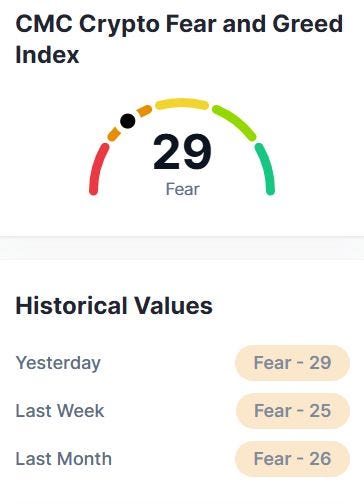
The Crypto Fear and Greed Index remained the same, at 29.
Bitcoin & Ethereum: Price Moves And Drivers
Bitcoin (BTC)
Across major feeds, BTC trades in the low 92K area, up roughly 1–2.5% over the past 24 hours, after briefly dipping below 90K earlier in the week. The rebound is driven by renewed risk appetite in global market s and the perception that the latest flush below 85–90K was more liquidation‑driven than fundamentally justified.
On the narrative side, traders are watching old Silk Road-linked wallets, but on‑chain forensics suggest recent movements look more like internal consolidation than aggressive exchange dumping, reducing crash fears. Combined with still‑strong structural demand from ETF and institutional channels, that supports a “buy‑the‑dip” mindset around the 90K zone.
Ethereum (ETH)
ETH trades around the low 3,000s in USD, lagging BTC slightly on a percentage basis but holding its key psychological 3K handle. Recent on‑chain reports show staking inflows and large‑wallet accumulation picking up again, even as velocity cooled slightly-typical of a maturing, more “bond‑like” ETH.
Weekly derivatives data shows sizeable long positioning returning after a period of heavy shorts, indicating that speculators are willing to re‑enter as funding and leverage normalize. This combination of staking demand, institutional interest and softening dollar sentiment u nderpins the current ETH floor.
Bitcoin On‑Chain Metrics (Last ~24H Context)
BTC 24H VWAP & Levels
VWAP: Price currently oscillates modestly above the 24H VWAP on most intraday feeds, signaling a bullish intraday bias while that holds.
Intraday support zone: Previous session value area and liquidity shelf around recent 90–92K consolidation zone.
Resistance zone: Local reaction highs around 94–95K and then the prior breakdown pocket near 97–100K.
In the BTCUSD position, as expected, the price is consolidating, so we are not doing anything with it.
Ethereum On‑Chain Metrics (Last ~24H Context)
In the ETHUSD position, we are also not doing anything. We are letting the market ‘decide’ what to do.
DXY Performance & Why It Matters For Crypto
Recent live DXY data shows the Dollar Index trading in the high‑90s to low‑100s, having fallen around 0.4–0.6% in the latest session and roughly 1% over the past month. The index is also down over 8% year‑on‑year, underscoring a broader weakening USD trend against major peers.
The main drivers are expectations of easier Fed policy after recent rate moves, plus improved risk sentiment in global equities, which reduces the need for defensive dollar holdings. Historically, such DXY softness supports Bitcoin, Ethereum and high‑beta crypto, as capital rotates from “safe” cash into higher‑return, higher‑volatility assets.
Top 3 Altcoin Performers (24H) With Volume
Among large‑ and mid‑cap names, privacy and high‑beta projects dominated the leaderboard in the last day, with Zcash in particular standing out.
ZEC (Zcash)
~+13–16%
Strong spike vs prior day
Privacy narrative plus short covering; watch for mean‑reversion if volume fades.
SEI (Sei)
About −6% (biggest loser)
Elevated, skewed to selling
Volatility magnet; potential bounce candidate after capitulation.
Merlin
Basket +1.5–5%
Sector volume higher
L2s outperform as traders rotate into scaling plays.
Current Market, BTC & ETH Price Outlook
Aggregated forecasts and analyst models still point to a constructive path for both BTC and ETH into late 2025, but with heavy volatility around macro events and ETF flows.
Bitcoin: Many model‑based projections keep a wide corridor roughly between 80K and 130K for the coming months, with 90K-100K acting as a pivot zone where dips tend to find buyers. If DXY continues to grind down and ETF inflows remain positive, upside tests toward six‑figure territory stay on the table, but swift 15–25% corrections are part of the game.
Ethereum: Recent published forecasts cluster ETH’s average fair‑value region for late 2025 in the 3,000–4,000 range, with optimistic scenarios reaching higher if staking demand and L2 activity accelerate. Key drivers will be execution‑layer upgrades, L2 adoption and whether ETH continues to be treated as a “yield‑bearing internet bond” by institutions.
For the broader market, the base case is a choppy uptrend: DXY softness and structural crypto adoption are positives, while regulatory headlines and profit‑taking after parabolic runs remain the main risks.
High‑Potential Crypto Projects
Here are concise, theme‑aligned ideas you can research further-each tied to one of your requested tasks. These are not recommendations, only starting points for due diligence.
Crypto Conclusion
In short, the market is behaving like crypto always does — dramatic, unpredictable, yet somehow perfectly logical once the dust settles. BTC and ETH still look constructive, DXY is easing, and altcoins are reminding everyone they still know how to throw a party. Just remember: staying calm during volatility is a superpower. Staying calm and not panic-buying ten random altcoins at 3 AM? That’s legendary.
Thousands of traders rely on AltFINS: crypto analytics platform built to turn market chaos into clear, actionable trading insights.
Below are the key reasons why crypto traders choose AltFINS as part of their daily workflow.
1. Automated Market Scanning at Scale
AltFINS continuously scans 2,000+ thousands of cryptocurrencies across 30+ exchanges, using 120+ technical indicators. Instead of manually analyzing charts one by one, traders instantly see coins that match proven setups such as:
Breakouts from key level
Trend continuations
Momentum reversals
This allows traders to react early, not after a move is already over.
2. Actionable Insights, Not Indicator Overload
Most platforms dump raw data on users. AltFINS does the opposite.
Complex indicator data is translated into clear Bullish, Bearish, or Neutral signals, supported by visual charts and explanations. This makes decision-making faster, more objective, and less emotional — especially during volatile market conditions.
3. Strategy-Based Screening for Different Trading Styles
Not every trader trades the same way. AltFINS supports multiple strategies, including:
Day trading and short-term momentum
Swing trading and trend following
Pullbacks in strong trends
Traders can filter markets based on their preferred setups, ensuring the signals they see actually match their strategy.
4. Massive Time Savings
What used to take hours of chart analysis can now be done in minutes.
AltFINS automates the most time-consuming part of trading — market scanning — so traders can focus on what truly matters: risk management and execution.
Using AI Copilot, traders can ask and get answer with strategy filters in seconds.
5. Built for Beginners and Advanced Traders Alike
AltFINS scales with experience:
Beginners benefit from guided signals, explanations, and education
Advanced traders use custom filters, deep analytics, and the AltFINS Data API
This makes it a long-term platform traders don’t outgrow.
6. Coin Picks: High-Conviction Research Beyond Short-Term Trades
In addition to technical signals, AltFINS publishes Coin Picks — in-depth research reports highlighting crypto projects with high upside potential.
Coin Picks combine:
Fundamental analysis
On-chain and market structure insights
Technical confirmation
Each report clearly explains why a project matters, what could drive growth, and what risks to watch.
Unlike social media “alpha,” Coin Picks focus on conviction, transparency, and timing, helping traders and investors spot opportunities before they become mainstream.
7. Trusted by a Global Trading Community
AltFINS has built a strong reputation for:
Transparent methodology
Education-first content
No hype, no paid shilling
Active VIP community
That trust is why traders use it daily — not as a prediction tool, but as a decision-support system.
Final Thoughts
Crypto trading isn’t about predicting the future. It’s about stacking probabilities, managing risk, and acting with discipline.
AltFINS helps traders do exactly that by delivering:
Faster opportunity discovery
Structured, strategy-based signals
High-conviction research through: Coin Picks
In short: AltFINS helps traders trade smarter — not harder.
Why Your Startup Should Delay Its Mobile App Build In 2026
Seed founders: skip the early native build — save runway, validate real demand 3x faster, and boost your Series A metrics
A focused entrepreneur contemplates app development, surrounded by futuristic digital interfaces, highlighting the strategic timing considerations for startups.
The Core Error: Mixing Up Showing Up with Proving It Matters
If you’re a local founder from around the way with fresh starter funding, you feel the heat. Backers from the DMV, potential folks you’re serving, and even your own ego whisper the same phrase: “Everybody keeps saying we gotta drop an app.”
Building an iPhone/Android native build often feels like the definitive marker of a “look like a real operation”. It’s what you point to at demo day. It’s the “flashy thing” that proves you’re serious.
This desire is understandable, but for 9 out of 10 startups, acting on it is the single most efficient way to accelerate toward a big ol’ flop.
The strategic error is simple: You are “mixing up showing up with proving it matters”.
The App Store Trap: Numbers That Look Good but Don’t Mean Much
The App Store spot and Google Play store are glorified drop-off points, not market proof engines. Launching a mobile app build solves zero of your core business questions, which are:
Does anyone need this? (Problem-Solution Fit)
Will they pay for it? (Monetization Fit)
Will they keep using it? (Keeping folks coming back/True product-fit)
Instead of answering these, a phone app forces you to focus on an entirely different set of distractions: App Review guidelines, crash reporting, device fragmentation, and managing two completely separate single build lines (iOS and Android).
These activities are essential for a scale-stage company, but they are runway slipping away for a young company just getting on its feet trying to find its first 1,000 true fans.
The Only Metric That Matters: True Product-Fit (PMF)
Your primary and only goal post-seed is show real product fit. PMF is measured by how folks act on the product and whether folks stick around, not by a polished interface or a five-star rating from your friends. The truth is, any product experience that delivers the core value proposition can be used to validate PMF.
This means a basic web application or a streamlined Progressive Web App (PWA) can achieve the same strategic goal as a phone app for a fraction of the cost and time. You gain the most valuable currency in startup life: validated learning and extended your runway to keep things moving.
As Lenny Rachitsky, Product Strategy Advisor and newsletter author, puts it:
“The best mobile app builds are built on top of market proof usage, not speculative funding. If your main job you’re trying to get done doesn’t require unique native features — like deep phone hardware work or heavy offline features — you’re buying a sports car before you know how to drive. Market proof your engine first.”
The Tough Money Math of Full Native Build
The real argument against the immediate full native build is financial. It’s not just an expense; it’s a what you’re giving up for it that could “sink your whole operation”.
Cost Breakdown: Native vs. Web/PWA Starter Build (MVP)
Consider a typical young company just getting on its feet starter build (MVP) with main thing folks really use like sign-in setup, a central data feed, and basic profile management.
| Factor                    | Native App (iOS + Android)         | Web/PWA-First Starter Build (MVP) |
|---------------------------|------------------------------------|-----------------------------------|
| Initial Build Time        | 4–7 months                         | 6–10 weeks                        |
| Initial Cost Estimate     | $140,000 – $250,000                | $35,000 – $60,000                 |
| Staffing Requirement      | 2–3 dedicated platform dev folks   | One strong builder                |
| Maintenance & Updates     | 2x the work (iOS & Android)        | Single build line (Web)           |
| Strategic Focus           | Rolling out updates, bug fixing    | Tuning features, looking at data  |
Let’s break this down with real-deal numbers. A two-platform native starter build (MVP) for a startup could easily consume $184,000 and four months of effort just to reach a baseline first real release. A highly functional, mobile-optimized Web or PWA equivalent, focused purely on the main job you’re trying to get done, might cost $47,000 and take nine weeks.
The What You’re Giving Up for It: What Your Runway to Keep Things Moving Are You Running Through Your Runway?
If your startup has $500,000 in starter funding and a monthly burn rate of $35,000, your runway is roughly 14 months.
Native Path: Spending $184,000 on the mobile app build immediately burns 37% of your budget and 4 months of runway before you get your first meaningful market proof data. If that data is negative, you have less time and capital left to pivot.
Web/PWA Path: Spending $47,000 consumes 9.4% of your budget and 2.5 months of runway (including the shorter development time). If the data is negative, you have **$137,000 more** and 3–4 months extra runway to iterate, pivot, or seek additional non-dilutive funding.
In the early stage, capital efficiency is king. Every dollar not spent on premature development is a dollar that buys you more time to find true product-fit — and time is the only commodity you can’t get back.
The Superior Path: A Three-Stage Mobile Strategy
Instead of rushing to the App Store spot, adopt a market proof-first framework for your mobile product development.
Stage 1: Web Starter Build (MVP) (Market Proof Main Job You’re Trying to Get Done)
The starting line is a web application accessible via a phone-friendly site. This is the fastest way to get your product in front of users.
Goal: Prove Problem-Solution Fit.
Focus: A single, powerful main thing folks really use that solves the user’s primary pain.
Key Advantage: Rapid rolling out updates, immediate iteration, and the ability to track every user journey via standard analytics tools without the App Store spot friction. If the idea fails here, you “learning the hard way fast” and cheaply.
Stage 2: Progressive Web App (PWA) (Test Mobile Experience & Keeping Folks Coming Back)
A PWA bridges the gap between a standard website and a native application. It’s a website that can be “installed” to the home screen shortcut, access basic offline features, and receive mobile alerts on Android (and increasingly on iOS).
Goal: Show real product fit, test mobile UX, and optimize for mobile usage patterns.
Focus: Main thing folks really use + essential mobile affordances (mobile alerts, home screen shortcut).
Key Advantage: It uses a single single build line (HTML, CSS, JavaScript) that works across all devices, drastically reducing development and maintenance overhead. It gives users a near-native experience without the “price that hits too hard” of full native build.
For most content, utility, and simple transaction-based products, PWA is the “where you’re trying to land”. It offers superior discoverability (via Google search) and bypasses the 30% the App Store spot fee entirely.
Stage 3: Making the Native Move (Once the Numbers Really Tell the Story)
You make the native move to full native build only when you can answer two questions with a resounding “Yes”:
Is our core keeping folks coming back metric bottlenecked by the PWA/Web-first approach? (e.g., users consistently drop off because they need fingerprint login, heavy offline features, or deep access to the phone’s gyroscope/camera system).
Will the investment yield a measurable ROI in LTV or reduced churn? (e.g., A native main thing folks really use is projected to increase Monthly Active Users by 20% due to superior mobile alerts and speed).
At this point, you have a proven product, established true product-fit, and a clear business case for the higher investment. You are no longer building speculatively; you are building for scale. “This is when you bring in the right crew” dedicated to technical excellence to ensure a smooth transition to the App Stores.
Once the numbers really tell the story and you’re ready to engineer a high-performance native product, the quality of the team you choose is paramount. For local founder from around the way who have done the strategic work of market proof and need expert guidance to build the final, scalable product, securing Experienced Mobile App Development talent is key. Firms like Indiit specialize in taking validated concepts to market with robust, scalable native architectures.
When Things Flip On You: The Exceptions
There are a few legitimate cases where the three-stage model is too slow, and a phone app may be required earlier:
Phone Hardware Work: If your product requires constant background location tracking, NFC, or deep interaction with non-standard hardware (e.g., health-related gear, specialized sensor gear), native code is often unavoidable.
Complex Graphics/Gaming: Products relying heavily on rendering graphics that need extra push or high-performance gaming typically need the optimization that native platforms provide.
Required Offline Functionality: If your user base must operate in environments with zero connectivity, and the functionality is mission-critical, a full native build may be necessary for robust data storage and syncing.
For every other application — e.g., marketplaces, SaaS tools, social networking, media consumption — the smart pause is not a sign of weakness, but a sign of discipline.
Bottom Line
Local founder from around the way often feel pressured to be the ‘builders’ of their products. But the role of a young company just getting on its feet local founder from around the way is not to build; it is to market proof.
By adopting a Web/PWA-first approach, you exchange a costly, time-consuming development process for a fast, cheap, and iterative market proof cycle. This smart pause allows you to extend your runway by $100,000 or more, giving you the time and capital required to actually find true product-fit.
Don’t build your phone app yet. Market proof your market first, then scale the solution.
OTC crypto trading has become one of the most trusted methods for handling high-volume digital asset transactions. Unlike regular exchanges, OTC platforms provide direct, private, and personalized trading experiences with deeper liquidity and faster settlement. As more traders, institutions, and businesses look for secure OTC solutions, the demand for reliable OTC crypto trading platform developers continues to grow. These companies help build advanced systems where trades can be executed safely, without slippage, and with full control over the trading environment.
In this blog, we explore the Top 10 OTC Crypto Trading Platform Development Companies you should know. Each company offers different strengths, from security and liquidity management to advanced trading features and customizable OTC infrastructures. This list will help traders, startups, and enterprises understand who the major players are and how they contribute to the growth of the OTC crypto market.
1. Beleaf Technologies
Beleaf Technologies stands out as one of the leading developers in OTC crypto trading platforms. The company focuses on building advanced OTC systems that support secure high-volume trades with smooth backend operations. Their platforms include features like automated trade matching, risk management layers, secure wallet handling, strong KYC/AML modules, and real-time liquidity integrations. Beleaf is known for its flexible development approach, making it easier for businesses to customize their OTC solutions according to their trading needs. Their emphasis on both security and user experience has made them a top choice for many crypto-based enterprises.
2. Block Sentinels
Block Sentinels is known for building strong security-driven OTC trading systems. Their development work focuses heavily on fraud prevention, multi-layer authentication, and encrypted transaction flows. This makes their OTC platforms suitable for institutions and traders who deal with frequent high-value transactions. Block Sentinels also integrates compliance tools directly into their systems, giving businesses confidence in regulatory alignment. Their combination of security, reliability, and stable performance has earned them recognition in the OTC platform development space.
3. Block Intelligence
Block Intelligence offers OTC trading platform development solutions centered around analytics and data-driven trade execution. Their platforms provide detailed reporting features, trade insights, automated order routing, and liquidity monitoring systems. The company aims to help enterprises optimize their trading operations through technology that enhances transparency and efficiency. Block Intelligence’s solutions appeal to traders and institutions who value strong backend logic and real-time decision support tools within their OTC trading environments.
OTC Crypto Trading Platform
4. Appinventive
Appinventive is a well-established software development company with a strong presence in blockchain and crypto solutions. Their OTC trading platforms are known for scalability, clean UI/UX, and smooth integration with external systems such as payment gateways and wallet infrastructure. The company focuses on providing enterprise-grade platforms that support global trading operations. With a strong portfolio and experience in working with large businesses, Appinventive continues to be a trusted player in the OTC platform development market.
5. Biovus
Biovus specializes in building efficient and customizable OTC crypto trading platforms designed for both startups and established financial companies. Their systems include advanced admin controls, liquidity channels, user management tools, and instant trade execution. Biovus also works on improving operational security through encrypted protocols and safe transaction handling. Their team emphasizes creating platforms that can scale as trading volume increases, making them a solid choice for businesses planning long-term OTC operations.
6. Digisailor
Digisailor has become recognized for offering innovative OTC trading platform development with a focus on automation and smooth workflow management. Their solutions include customizable dashboards, secure wallets, compliance systems, and trade execution engines capable of supporting large transactions. Digisailor’s platforms are built to provide a seamless trading experience, especially for businesses that need private, fast, and reliable OTC services. Their technology-first approach helps clients build stable and future-ready OTC systems.
7. Bitdeal
Bitdeal is one of the most established blockchain development companies globally, and their OTC trading platform solutions are widely known. They provide full-stack OTC systems with features such as automated matching, liquidity support, risk control modules, and advanced security functions. Bitdeal has strong market experience, making them capable of handling both small and large-scale OTC platform requirements. Their consistent delivery and strong development ecosystem make them a popular choice in the OTC trading industry.
8. Dappfort
Dappfort focuses on creating modern OTC trading platforms that emphasize user experience and operational clarity. Their systems come with features like encrypted data exchange, instant settlement tools, KYC/AML support, and multi-channel liquidity management. Dappfort aims to simplify the OTC trading process for users while giving businesses full control over platform customization. Their clean design approach and solid backend structure make their solutions suitable for both emerging and established crypto businesses.
9. Nadcab Labs
Nadcab Labs is known for building dependable OTC trading platforms with a strong focus on transparency and security. They provide solutions that support high-volume trades with minimal delays, secure wallet integrations, and compliance automation. Their team also supports customizations based on trading volume, asset type, and liquidity needs. Nadcab Labs has gained attention for offering stable platform architectures that work well for businesses aiming to launch OTC services quickly.
10. Comfygen
Comfygen is a development company that provides simple yet powerful OTC trading platform solutions. Their systems include clean interfaces, strong encryption, identity verification modules, and flexible settlement options. Comfygen aims to help businesses launch user-friendly OTC services without technical complexity. Their ability to deliver straightforward, reliable, and secure OTC platforms makes them a notable option for traders and enterprises entering the OTC market.
Final Thoughts
OTC crypto trading continues to grow as more traders and institutions prefer private, high-volume, and secure transactions. Choosing the right development company is an important step for businesses planning to launch their own OTC trading platforms. The companies listed above from Beleaf Technologies to Comfygen each offer unique strengths in platform development, security design, liquidity integration, and user experience. Understanding what each company provides can help businesses make informed decisions and build robust OTC platforms that support smooth and safe trading operations.
How We Chased a Suspicious Token and Almost Fell for a Scam — Our Team’s Report
Hey everyone 👋 We’re a small team of crypto enthusiasts who sometimes catch ourselves thinking:
“Maybe we should switch to something calmer? Like making wooden birdhouses?”
But nope — we dove into checking another freshly launched token… And the story turned out too good not to share.
⸻
🔥 How It All Started
It was a regular quiet evening. And suddenly our analyst drops a message in the chat:
“Guys, a new token just launched. Liquidity is about 150K, and the chart looks… perfect. Either this is an opportunity, or it’s ‘hello again, scammers’.”
Of course, we woke up instantly. Suspicious tokens are our weakness. And our pain.
⸻
🕵️ Express Scam Check
We have a strict rule: No entering a position until we run a mini-audit.
And during the very first scan we noticed something weird: A couple of large wallets were performing tiny repetitive transactions — classic fake volume pattern.
Our analyst jokes:
“Either that’s top-tier marketing magic, or someone is hyping themselves.”
But deep inside we all felt it — this smells like a scam.
⸻
🧩 Suspicion Grows
The chart was perfect. Too perfect.
If you’ve seen charts like this — you know how they end. With pain.
We kept digging: Strange behavior from top holders, inconsistent volume, no protective functions in the contract.
⸻
⚙️ Time to Turn On Our Monitoring Tool
At this point, we activated one of the tools we use in our workflow — nothing fancy, just a monitoring solution that helps us:
• track large transactions • watch liquidity changes • detect whale movements • catch suspicious activity in real time
Just a regular working instrument, but extremely helpful.
Some people call such tools “sniper bots.” Colleagues in the field often use ones like this (@SniperProXBot): (If you’re into on-chain tracking, you’ve probably heard of similar bots.)
And 40 seconds later — the first alert pops up.
⸻
🚨 Liquidity Starts Disappearing
First 2%. Then 5%. Then another 17%.
We all stared at the screen.
One of the guys slowly moved his coffee mug away from the laptop — as if an earthquake was about to hit 🤣
The bot sends an alert:
“⚠️ Possible liquidity withdrawal detected. Please verify.”
We check the address — and yep, the same suspicious whale started pulling liquidity out chunk by chunk.
Everything became clear.
⸻
💥 Three Minutes Later — Hello, Rug Pull
Boom — liquidity dropped by 72% in minutes.
Top holders fled faster than we could refresh the page.
The team chat went silent. Then someone wrote:
“Well… that was the most elegant scam of the week.”
⸻
📘 What We Learned 1. A perfectly clean chart = a reason to be suspicious. Real markets aren’t that smooth. 2. Aggressive “marketing” in the first minutes is a red flag. 3. Liquidity is the source of truth. No liquidity → no token → no money. 4. Real-time monitoring saves your funds. Any tool works, as long as it alerts you early. 5. Better to miss an opportunity than catch a scam.
⸻
🎓 Tips for Anyone Entering New Tokens
Before buying, always check:
✔️ contract functions (mint/pause/blacklist) ✔️ top holders ✔️ liquidity dynamics ✔️ behavior of large wallets ✔️ sudden abnormal volume movements
If something feels off — just walk away. Crypto has more opportunities than you’ll ever have time to analyze.
If you’ve been following along, you know what we’ve covered so far. Day 1, I introduced why I’m learning Web3 in public — to transition into Developer Relations and help non-technical people understand blockchain. Days 2–4, we broke down the fundamentals: what blockchain is, why Bitcoin was revolutionary, and how it challenged traditional money. Days 5–7, we went deeper into Ethereum — the programmable blockchain — and learned about wallets, gas fees, and why Layer 2 solutions exist to solve Ethereum’s scaling problems. Day 8, we understood smart contracts and dApps (decentralized applications) — the actual code that powers everything. And Day 9? We got our hands dirty. We deployed our first real smart contract on Sepolia testnet, felt the transaction cost, and saw how code lives permanently on a blockchain.
Now comes the moment where it all clicks.
You just deployed a smart contract on Ethereum and saw how code can live on a blockchain. Now comes the real question: what are people actually doing with these contracts?
The answer: they’re building an entirely new financial system. It’s called DeFi — Decentralized Finance — and it’s where smart contracts stop being abstract and become the backbone of how people trade, lend, borrow, and earn money without banks.
This is Day 10 of your 60-day Web3 journey. Let’s see what you’re about to enter.
What Is DeFi, Really?
DeFi is finance without a middleman. Instead of a bank holding your money, a smart contract does. Instead of a broker matching your trade, an algorithm does. Instead of a lender deciding if you qualify, code does.
Here’s the core idea: take every financial service you know — trading, lending, borrowing, investing — and rebuild it as code that anyone can use, anytime, from anywhere.
That’s DeFi.
The key difference from traditional finance:
Traditional Finance:
A bank holds your money.
Bank decides lending terms.
You need approval to borrow.
Trades happen during market hours.
You trust the bank won’t fail.
DeFi:
A smart contract holds it
Algorithms and math decide lending terms.
You need collateral (held by code)
Trades happen 24/7/365
You verify the code is secure.
How DeFi Actually Works
Let me walk you through the three biggest types of DeFi protocols right now:
A DEX is like a vending machine for crypto. You put in one token, you get another token out. No human operator. No waiting. No fees to a company.
The most famous is Uniswap. As of December 2025, Uniswap has over $5.7 billion locked in it — that means people have deposited $5.7B in tokens across thousands of trading pairs. Here’s how it works:
Someone (a “liquidity provider”) deposits two tokens into a smart contract — say, $1 million in ETH and $1 million in USDC.
The contract now has a “pool” of both.
You come along and want to swap 10 ETH for USDC.
You send your 10 ETH to the contract.
The contract automatically calculates the price and sends you USDC back.
The liquidity provider earns a tiny percentage of every swap — their reward for putting in capital.
No middleman. No trading desk. No commission. Just code.
Uniswap v4 (their newest version, launched mid-2025) hit $1 billion in TVL in just 177 days and has processed over $1 trillion in annual trading volume. That’s real money moving through smart contracts.
2. Lending Protocols — Earn Interest, Take Loans
What if you could deposit your crypto and earn interest — without a bank? That’s Aave.
Aave is the biggest lending protocol in DeFi. As of mid-2025, it has over $60 billion in deposits and $29 billion in outstanding loans. It controls roughly 60% of the entire DeFi lending market.
Here’s the flow:
You deposit 100 USDC into Aave.
Aave lends it out to someone who needs to borrow.
That borrower pays interest (let’s say 5% APY).
You earn that interest minus a small cut for the protocol.
You can withdraw your money + interest anytime.
If you want to borrow, you do the reverse:
You deposit collateral (say, 1 ETH worth $2,500).
Aave lets you borrow up to 70% of that ($1,750 in USDC).
You pay interest on your loan.
When you repay + interest, you get your collateral back.
No credit check. No bank manager. No waiting for approval. Just math: if you have collateral, you can borrow.
In August 2025 alone, Aave saw its TVL grow by 55%. In Q2 2025, the protocol generated $122 million in fees. Real money. Real usage.
3. Yield Farming — Stake Tokens, Earn Rewards
This is the newcomer to the DeFi toolkit, and it’s wild.
Yield farming is when you lock up tokens in a protocol and earn rewards in return. Sometimes the rewards come from protocol fees. Sometimes they come from newly minted tokens the protocol gives you as an incentive to provide liquidity.
Example: You deposit ETH and USDC into Uniswap’s liquidity pool (the vending machine from section 1). For providing that liquidity, you earn a share of trading fees plus UNI tokens as a bonus. That’s yield farming.
It sounds simple, but it’s powerful: DeFi protocols can incentivize behavior they want (liquidity provision, borrowing) by paying users with newly minted tokens.
Aave founder Stani Kulechov launched Horizon (RWA-backed lending platform) which surpassed $500 million in deposits as the fastest-growing platform for institutional RWA-backed loans (Source: Chainlink Today — Stani Kulechov).
This isn’t a niche anymore. This is infrastructure.
Deep Dive: Watch This
If you want a structured breakdown of everything DeFi, YouTuber faixal_abbaci released a comprehensive 32-minute DeFi Masterclass (December 2025) that covers:
What DeFi is and why it matters
How DEXes, lending protocols, and liquidity pools actually work
Staking, yield farming, and real-world asset tokenization
DeFi security risks and best practices
Advanced strategies and the future of finance
The Connection to Your Deployed Contract
Remember your SimpleStorage contract from Day 9? It stored a number permanently on the blockchain.
That’s the mechanism behind DeFi. Aave, Uniswap, all of it — they’re just more sophisticated smart contracts doing exactly what yours did: storing data and executing rules when triggered.
The difference:
Your contract stored one number.
Aave stores thousands of lending positions, interest rates, and collateral amounts.
Uniswap stores thousands of token pairs and liquidity pools.
But the principle is identical: code running on a blockchain, with no middleman, doing the job that bankers used to do.
What’s the Catch?
DeFi is powerful, but it’s not without risk:
Smart contract bugs — If the code has a flaw, money can get stuck or stolen. Aave has been audited hundreds of times, but risks remain.
No insurance — If Aave crashes tomorrow, your deposits are gone. Banks have FDIC insurance. DeFi doesn’t.
You need to understand what you’re doing — There’s no customer service to call if you send your tokens to the wrong address.
Gas fees — Every transaction costs money to execute on Ethereum.
Price risk — If you borrow against ETH and the price crashes, you might get liquidated (forced to pay back your loan).
These are real risks. But as of 2025, millions of people believe the upside (financial access, high returns, no middleman) outweighs the downside.
Hands-On: Try It Yourself
Want to see DeFi in action? Here’s the simplest starting point without spending money:
Look at the pools, the trading volume, the pairs being swapped every second.
Connect your MetaMask wallet (read-only is fine).
Pick a token pair — say ETH → USDC — and see the swap price.
Click on the “Pool” section and see where liquidity providers have deposited capital.
Notice that there’s no login page, no terms and conditions, no “sign up” button. It’s just code. Open to everyone. Available 24/7.
That’s the revolution.
What Happens Next?
You now understand:
How smart contracts power a new financial system.
Why DeFi is growing faster than traditional finance in adoption.
How the biggest protocols (Uniswap, Aave) actually work.
Tomorrow (Day 11), we’ll talk about NFTs — which, like DeFi, are powered by smart contracts but solve a completely different problem.
But before you go, here’s a thought: if DeFi lets you trade, lend, and borrow without permission, then what’s stopping someone from doing the same thing with digital art, game items, or concert tickets?
That’s NFTs. That’s Day 11.
Key Takeaways
DeFi = Finance without a middleman, powered by smart contracts.
Three main types: DEXes (Uniswap for trading), Lending (Aave for earn/borrow), Yield Farming (staking for rewards).
Real scale: $123.6 billion TVL, 14.2 million users, $48 billion weekly volume as of mid-2025.
Real adoption: Gen Z makes up 38% of new DeFi users; mobile usage is 58% of total.
Institutional growth: RWA sector at $12 billion TVL, Aave Horizon crossed $500M in deposits.
Connection to your work: Everything you deployed in Day 9 is the foundation for DeFi protocols.
DeFi 101: Decentralized Finance was originally published in Coinmonks on Medium, where people are continuing the conversation by highlighting and responding to this story.
Forget expensive hardware. In Interlink, you don’t need a mining rig — you are the mining rig.
Tired of expensive Bitcoin mining rigs and high staking costs? Discover Interlink’s Proof of Personhood (PoP). Learn how to become a blockchain validator using only your unique identity — no hardware, no capital required.
Wait, You Are Not Just a User?
Let’s be honest. When we hear “Crypto Mining,” most of us feel left out. Why? Because the game has always been rigged for the wealthy or the tech-savvy.
For the past decade, if you wanted to earn crypto rewards, you had to climb one of two very steep mountains. Let’s break down why these “Old Ways” are failing regular people like us.
1. The Old Way: Proof of Work (PoW) ⛏️
🔹 The Game of Heavy Machinery
Think about Bitcoin. To be a validator (miner) here, you need raw computational power. This means buying specialized hardware (ASICs), setting up cooling systems, and paying massive electricity bills.
🔹 The Problem :
It’s a competition of hardware. If you are an individual with a laptop, you can’t compete against a warehouse full of supercomputers. You are priced out before you even start.
2. The Current Way: Proof of Stake (PoS) 💰
🔹 The Game of Capital
Ethereum 2.0 and many modern chains use this. Instead of electricity, they rely on token ownership. To validate transactions and earn rewards, you must “stake” (lock up) a large amount of money.
🔹 The Problem:
It’s basically “Money makes Money.” If you don’t have thousands of dollars to buy the initial tokens, you can’t become a validator. It’s a VIP club, and the entry fee is high.
3. The Revolution: Proof of Personhood (PoP) 🙋♂️
🔹 The Game of Humanity
This is where Interlink changes the rules completely. PoP introduces a new class of consensus alongside PoW and PoS. It creates a parallel system where validation power comes not from silicon or money, but from biology.
The official InterLink Whitepaper explicitly states:
“PoP ties validation directly to real human identities through the InterLink ID.”
In this system, you don’t need a faster CPU (PoW) or a fatter wallet (PoS). You just need to prove that you are a unique human being.
🔹 No Bots Allowed:
Traditional networks struggle with “Sybil attacks,” where one person creates thousands of fake accounts to cheat the system.
🔹 The Solution:
By requiring a verified InterLink ID, the network ensures that 1 verified human identity = 1 validation right.
Why is this huge? It effectively democratizes mining.
“At Interlink, you’re not just a verified user — you’re a validator.”
Whether you are a student in Seoul, a freelancer in Lagos, or a developer in Mumbai — if you are human, your “mining power” is exactly the same as everyone else’s.
4. “But is my data safe?” (The ‘ZKP’ Magic) 🛡️
Now, the only question left is privacy. “If I use my identity to mine, will my face be stored on a server?”
Absolutely not. This is the most critical part of the Interlink Whitepaper. The system uses Zero-Knowledge Proofs (ZKP) and Homomorphic Encryption.
Here is the simple version of how it works:
Input: You scan your biometric data (like a face scan).
Magic Transformation: The AI converts this into a “Feature Vector” (a long string of numbers).
Destruction: The raw image is deleted. It is never stored.
Encryption: The numbers are turned into a cryptographic “Hash” that cannot be reversed.
This means even Interlink itself cannot see your biometric data.
Even if hackers break into the node pool, they will only find random numbers — never your actual biometric data. This ensures compliance with strict privacy laws like GDPR.
Done.T’s Verdict 💡
We are witnessing a shift from “Machine-centric” blockchain to “Human-centric” blockchain.
PoW asks: “Do you have a powerful computer?”
PoS asks: “Do you have a lot of money?”
PoP asks: “Are you real?”
If you are real, you are ready. The barrier to entry has never been lower. Historically, early participants in new networks tend to gain structural positioning advantages over time.
Don’t miss the chance to align yourself with the most fair economy ever built.
About the Author
Done.T is a Web3 analyst focusing on the intersection of Mobile Mining, UBI, and Decentralized Finance. He separates signal from noise to provide logical insights for the global crypto community.
Disclaimer: This article is based on the official Interlink whitepaper and allows for educational purposes. It does not constitute financial advice. Always do your own research.

 Login
Login