How to Build a Powerful Identity Tokenization Platform
Digital identity has become one of the most critical components of modern online interactions. From financial applications and healthcare services to enterprise access management and e-commerce, identity verification forms the foundation of trust. However, traditional identity systems centralized databases, manual verification steps, and repeated sharing of sensitive information introduce major risks, including data leaks, identity theft, unauthorized access, and compliance failures.
With the rise of blockchain, zero-knowledge technology, and Web3 ecosystems, Identity Tokenization Platforms are emerging as a transformational approach to digital identity security. They replace vulnerable raw data with cryptographic tokens, enabling users and organizations to share identity attributes without revealing personal information. As industries shift toward decentralized systems, building a powerful identity tokenization platform becomes an essential step for businesses, developers, and Web3 startups.
This guide explains the complete process, from fundamentals to architecture, features, and development steps, helping you understand exactly how to build a powerful Identity Tokenization Platform for 2025 and beyond.
1. Introduction to Identity Tokenization
Identity tokenization is the process of converting sensitive identity data such as names, addresses, biometrics, or government IDs into secure, non-exploitable tokens. These tokens maintain the functionality of the original data but remove risk, making them safe for storage, transfer, and verification.
What Makes Tokenization Powerful?
★It eliminates raw data exposure ★Tokens cannot be reverse-engineered ★Works with decentralized identity (DID) frameworks ★Supports privacy-preserving verification ★Reduces risk of hacks and compliance violations
In short, identity tokenization helps build ecosystems where users control their identity, and organizations can verify claims without accessing sensitive information.
2. Why Businesses Need an Identity Tokenization Platform
Rising Security Threats Global cyberattacks are increasing, with identity theft affecting millions each year. Centralized databases remain the biggest points of failure.
Compliance Requirements Regulations like GDPR, HIPAA, CCPA, and global KYC/AML guidelines demand modernized identity handling. Tokenization provides a compliant and auditable solution.
Web3 and Decentralized Applications Blockchain-powered platforms require self-sovereign identities, tokenized credentials, and decentralized verification systems.
Seamless User Experience Tokenized identity tokens allow users to share verifiable claims instantly without repeatedly uploading documents.
Enterprise Digital Transformation Businesses integrating cloud systems, AI, and IoT require secure, interoperable, and scalable identity frameworks.
3. Core Components of a Powerful Identity Tokenization Platform
A successful identity tokenization platform relies on several foundational components. Understanding these helps ensure secure and scalable development.
Identity Capture Layer
This module collects identity information, such as:
★Government ID documents ★Biometrics ★Phone numbers & emails ★Account credentials ★Certificates & licenses ★Corporate identity data
AI-powered OCR and biometric verification help automate this step.
Tokenization Engine
This is the heart of the platform. It:
★Replaces sensitive identity data with cryptographic tokens ★Ensures tokens have no exploitable value if leaked ★Supports various token formats (static, dynamic, hashed, blockchain-based) ★The engine must be fast, secure, and built for high-volume requests.
Decentralized Storage Layer
Sensitive identity data should never be stored in one place. Instead:
★Encrypted fragments can be stored on distributed networks ★Zero-knowledge storage enables privacy-preserving retrieval ★Blockchain can store non-sensitive proofs
This ensures total data protection even during breaches.
Popular blockchain choices include: Ethereum, Polygon, Hyperledger Indy, Solana, Avalanche, and Cosmos.
Zero-Knowledge Verification Layer
This component enables verification without exposing raw data.
For example: A user can prove they are above 18 without revealing their birthdate.
Access Control & Permissions The platform must give users full control: ★Who can access data? ★Which claim can be shared? ★For how long? ★Can permissions be revoked?
User sovereignty is a key differentiator from Web2 identity systems.
API Integration Layer
Powerful APIs enable businesses to integrate identity verification into:
Ensuring Complete Privacy Use zero-knowledge proofs and encrypted storage.
Achieving Regulatory Compliance Implement global compliance frameworks early in development.
Cross-platform Interoperability Support W3C DID and VC standards for global acceptance.
Managing Large Data Sets Use distributed storage systems like IPFS or secure cloud shards.
Enterprise Adoption Barriers Provide clear APIs, documentation, and onboarding support.
9. Future of Identity Tokenization
Identity tokenization will transform: ★Digital banking ★DeFi and Web3 ★Healthcare and insurance ★Global travel and e-governance ★Smart cities ★Enterprise security
As AI, blockchain, and cryptography converge, the future will lean toward self-owned, tokenized identities that enable safe, fast, and private digital interactions globally.
Conclusion
Building a powerful identity tokenization platform requires a combination of blockchain technology, advanced cryptography, AI verification modules, and privacy-first architecture. As digital ecosystems expand, identity tokenization becomes a fundamental pillar for security, compliance, and trust.
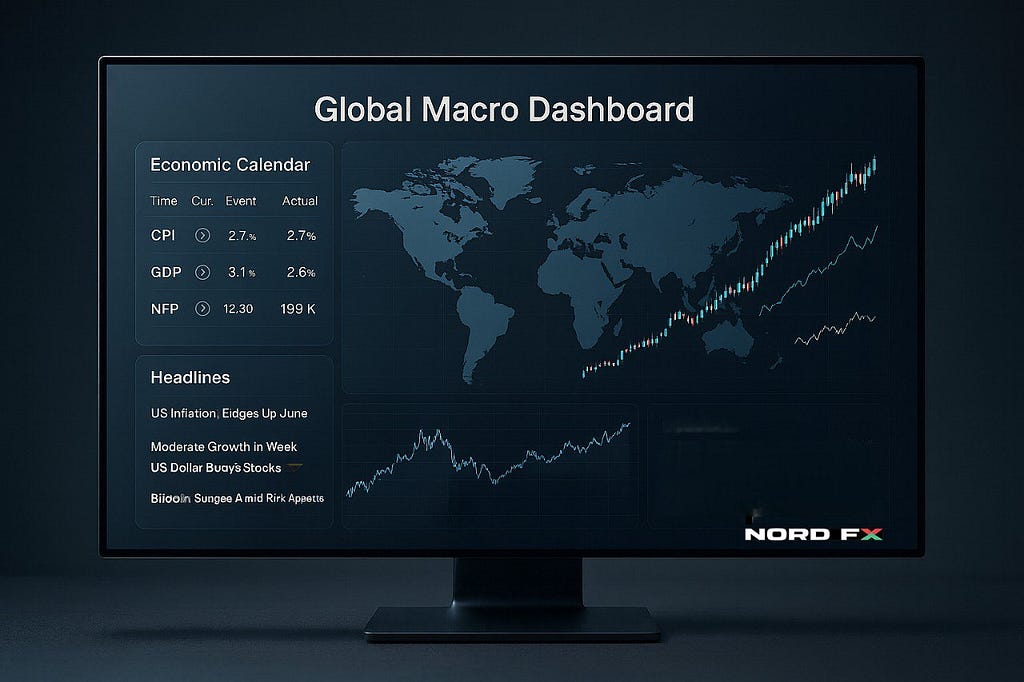
Economic data, central-bank meetings, inflation reports and geopolitical developments shape every major market move. Understanding these drivers is essential whether you trade forex, gold, oil, indices, or crypto.
In this new article, NordFX breaks down: • How to navigate the economic calendar • Why CPI, GDP, NFP and rate decisions move markets • How macro events affect different asset classes • How to manage risk during high-volatility sessions
The article is practical, structured, and designed to help traders build a clearer framework for interpreting market reactions.
Top 10 Token Standards Powering Modern Tokenization
Tokenization has become one of the most transformative innovations within the blockchain ecosystem. From real-world assets (RWA) and financial instruments to supply chain tracking, gaming items, identity management, and digital collectibles tokenization unlocks a new paradigm of ownership, liquidity, and transparency.
As more enterprises, governments, exchanges, and startups step into blockchain, the need for standardized, secure, and interoperable token formats continues to grow. Token standards act as frameworks that guide how digital assets behave, interact, and move across blockchain networks. Without standards, the token economy would be chaotic, incompatible, and vulnerable to technical loopholes.
In 2026 and beyond driven by RWAs, CBDCs, enterprise blockchain adoption, DeFi 2.0, and global tokenization regulations token standards will be the backbone of digital assets.
This blog explores the Top 10 Token Standards Powering Modern Tokenization, diving deep into their roles, benefits, and use cases across industries.
1. ERC-20: The Universal Standard for Fungible Tokens
ERC-20 remains the most widely adopted token standard in the world. It powers fungible tokens assets where each unit holds identical value, such as cryptocurrencies, utility tokens, governance tokens, and security tokens (with added compliance layers).
Why ERC-20 Dominates Tokenization ✦Highly flexible and programmable ✦Compatible with all Ethereum-based wallets and exchanges ✦Widely supported in DeFi platforms ✦Excellent liquidity and interoperability
Popular Uses ✦ICOs and IDOs ✦Governance tokens ✦Stablecoins (USDT, USDC) ✦Platform tokens ✦Staking tokens
Strengths ✦Simple, battle-tested, and secure ✦Huge developer ecosystem ✦Seamless integration with DeFi protocols
ERC-20 remains the foundation for most tokenization projects worldwide.
2. ERC-721: The Standard Behind NFTs & Digital Uniqueness
ERC-721 revolutionized Web3 by enabling Non-Fungible Tokens (NFTs) tokens with unique attributes, metadata, and ownership.
Why ERC-721 Is Crucial for Tokenization
It supports: ✦Unique digital collectibles ✦Verifiable ownership ✦Immutable metadata ✦Authentic digital identity
Popular Uses ✦Real estate tokenization (unique property deeds) ✦Art, music, and collectibles ✦Gaming assets ✦Identity tokens
Strengths ✦Perfect for representing one-of-a-kind assets ✦Secure and immutable ownership transfer ✦Massive ecosystem support (OpenSea, Rarible, etc.)
3. ERC-1155: Multi-Token Standard for Hybrid Assets
Many modern tokenization projects require a mix of fungible and non-fungible assets. ERC-1155 enables that flexibility.
Key Advantages ✦Stores multiple token types in a single contract ✦Reduces gas fees ✦Efficient for high-volume tokenization ✦Ideal for gaming economies and RWA bundling
10. ERC-3643 (T-REX Standard): For Compliant Security Tokens
ERC-3643 (formerly ERC-1400/T-REX) is the most important token standard for regulated tokenization.
Why ERC-3643 Is the Future of Security Tokenization ✦Built-in compliance ✦On-chain identity validation ✦Transfer restrictions ✦Audit-ready structure
Popular Uses ✦Real-world assets (gold, real estate, equities) ✦Tokenized bonds ✦Private securities ✦Institutional tokenization frameworks
Strengths ✦Regulatory-friendly ✦Essential for enterprise adoption ✦Suitable for STOs and tokenized funds
Why Token Standards Matter in Modern Tokenization
Token standards bring structure, trust, and interoperability to blockchain ecosystems. They:
✦Ensure seamless wallet and exchange support ✦Reduce development costs ✦Increase security ✦Enable interoperability between platforms ✦Build trust among investors ✦Allow institutions to adopt blockchain safely
Without token standards, mass adoption of digital assets would not be possible.
How Token Standards Transform Industries
Real Estate ✦Fractional ownership tokens ✦Deeds as NFTs ✦Rental income distribution via stablecoin tokens
Energy & Sustainability Carbon credit tokens Renewable energy tokens
Tokenization is becoming the infrastructure for the next decade of digital commerce.
Future of Token Standards: What’s Coming in 2026 & Beyond?
1. RWA-Focused Standards
Designed for: ✦Property tokens ✦Commodities ✦Tokenized securities ✦Regulated assets
2. Interoperability Standards
Cross-chain compatibility will be mandatory.
3. Privacy-Enabled Token Standards
Zero-knowledge proofs will protect sensitive data.
4. Enterprise Token Standards
Built for: ✦Compliance ✦Governance ✦Auditability
5. AI-Integrated Token Frameworks
AI agents managing smart contracts and tokenized workflows.
Conclusion
Token standards are the core infrastructure behind tokenization’s global growth. As enterprises digitize assets, institutions adopt blockchain, and Web3 expands into the mainstream, choosing the right token standard can make or break a project.
From ERC-20 and ERC-721 to ERC-3643, SPL Tokens, and Polkadot standards, each plays a unique and crucial role in shaping digital ownership, liquidity, and global financial innovation.
In 2026 and beyond driven by RWAs, enterprise blockchain, and rapidly evolving Web3 ecosystems token standards remain the most powerful force enabling secure, scalable, and interoperable tokenization.
There’s an old Turkish proverb that goes, “Kötü komşu insanı hacet sahibi yapar,” which roughly translates to “A bad neighbor makes one self-reliant.” It suggests that adversity from others can force you to become independent and resourceful. In the world of global tech geopolitics, this couldn’t ring truer than in the saga of U.S. export restrictions on advanced AI chips to China. What started as a strategy to curb China’s technological rise has instead accelerated its journey toward self-sufficiency in semiconductors. Fast forward to December 2025, and even as President Trump lifts bans on Nvidia’s H200 chips, China is reportedly imposing its own limits on access to them — preferring to nurture its domestic industry instead. This article explores how America’s restrictions paved the way for China’s tech independence, proving that sometimes, “bad neighbors” are the best motivators.
Grok
China’s Response: From Dependency to Domestic Dominance
Faced with isolation, China didn’t sit idle. Beijing poured billions into its “Made in China 2025” initiative, which had already aimed to boost semiconductor self-sufficiency but gained new urgency post-bans. Key players like Huawei, SMIC (Semiconductor Manufacturing International Corporation), and others ramped up R&D.
Investments and Subsidies: China accelerated subsidies for local chipmakers, funding everything from fabrication plants to AI research. By 2025, reports indicate China’s AI chip self-sufficiency rate has climbed from 34% in 2024 to projections of 82% by 2027.
Bans on Foreign Chips: In a bold move signaling confidence, China banned foreign AI chips, including Nvidia’s, from state-funded data centers in November 2025. This policy funneled demand toward homegrown alternatives like Huawei’s Ascend series and chips from startups like Cambricon.
Technological Breakthroughs: Despite initial setbacks, Chinese firms made strides in advanced nodes. SMIC, for instance, has been producing 7nm chips, bypassing some U.S. tool dependencies through stockpiling and innovation. The new five-year plan emphasizes semiconductor and AI self-reliance, aiming to reduce reliance on exports and boost domestic spending.
This pivot wasn’t just reactive; it was strategic. Smuggling networks emerged to circumvent bans, but the real win was in building internal capabilities. As a result, China has developed ecosystems for AI training and inference that rival Western tech, even if not yet at the bleeding edge.
The Twist: Trump’s Reversal and China’s Self-Imposed Limits
In a surprising policy shift, President Trump announced in December 2025 that the U.S. would allow Nvidia to export H200 chips to “approved customers” in China, with a 25% revenue cut going to the U.S. government. This move aimed to balance U.S. economic interests — Nvidia’s stock surged on the news — while maintaining some leverage.
But here’s where the Turkish proverb shines: China, now bolstered by its progress, isn’t biting. Regulators are discussing limits on H200 access through customs checks, subsidies for locals, and potential public-sector bans. Why rely on a “bad neighbor” when you’ve learned to fend for yourself? Beijing’s focus on self-sufficiency means it no longer desperately needs these imports; domestic chips suffice for many applications, and the bans have fostered a resilient industry.
Lessons Learned: Self-Reliance in a Fractured World
The U.S.-China chip war illustrates how export controls, while protective in the short term, can accelerate rivals’ independence. For China, the restrictions were a catalyst, turning vulnerability into strength. As Morgan Stanley predicts, by 2027, China could dominate its own AI chip market.
In the end, the Turkish proverb reminds us that adversity breeds innovation. The “bad neighbor” policy from the U.S. didn’t hobble China — it made it a semiconductor powerhouse. As global tech tensions evolve, other nations might take note: sometimes, the best way to thrive is to build your own tools.
What do you think? Has the U.S. strategy backfired, or is there more to come? Share your thoughts in the comments.
(Disclosure: This article is based on publicly available reports and analyses as of December 2025.)
Why Global Citizenship Is No Longer Defined by Physical Borders in the Digital Era
⠀
In the Web3 era, citizenship is evolving beyond geography. We analyze the architecture of a Digital Nation: Zero-Knowledge Passports (PoP), On-Chain Credit (HCS), and Community Governance (DAO).
⠀
Citizenship Was Once a Geographical Lottery
⠀
For centuries, citizenship was a geographical lottery. It was decided by where you were born, and it granted you three critical rights:
Identity (Entry)
Economy (Credit)
Voice (Governance)
⠀
If you were born on the wrong side of a border, you were locked out. If you lacked banking history, you were economically invisible. If you disagreed with monetary policy, you were politically powerless.
⠀
But in the digital age, we are now facing a fundamental question:
Must these rights always come from a Nation-State?
⠀
We are witnessing the emergence of what can only be called “The Digital Nation.”
This is not about replacing countries. It is about creating a parallel society built on code, one that must be just as structurally complete as the physical one.
⠀
The formula for this new civilization is precise:
Digital Nation = PoP (Passport) + HCS (Economy) + DAO (Parliament)
⠀
Let’s analyze this architecture through the lens of a human-verified Web3 network that is actively implementing this civic stack.
⠀⠀⠀⠀⠀
1. The Border — PoP as the “Digital Passport”
⠀
The Function: Replacing Physical Borders with Cryptographic Verification
⠀
Every functioning society must know who its citizens are. In the physical world, we use passports. In the Digital Nation, we use Proof of Personhood (PoP).
⠀
The challenge is subtle but critical: How do you prove you are a unique human without surrendering your privacy to a central authority?
⠀
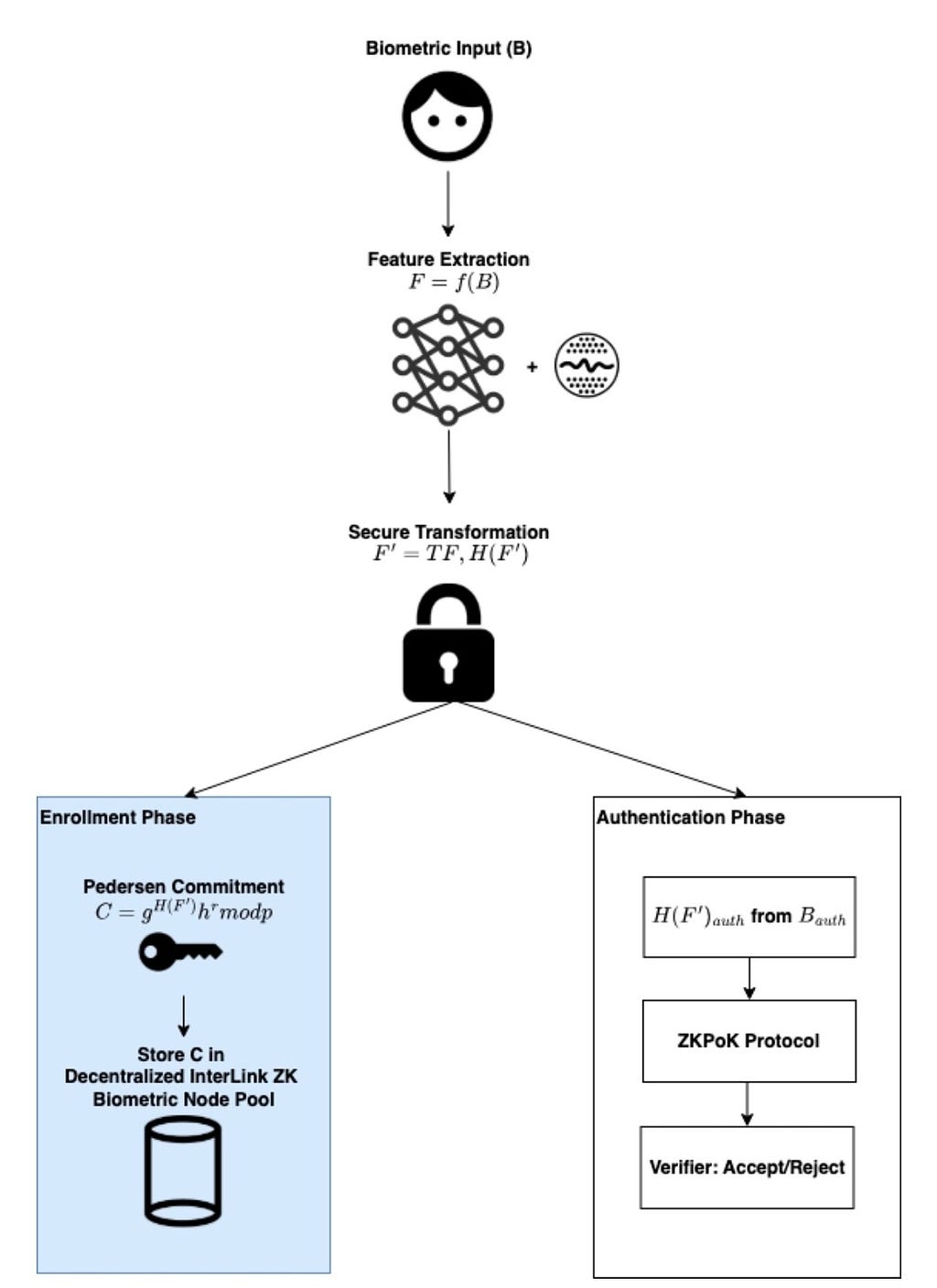
The solution lies in advanced mathematics. PoP systems utilize Zero-Knowledge Proofs (ZKP) and Homomorphic Encryption to solve the identity paradox.
⠀
Privacy First: Instead of storing your face or biometric data, the system stores a mathematical proof that you exist.
Compliance: Because no raw biometric data is ever stored, the system aligns with global privacy standards like GDPR, protecting users from surveillance while blocking bot farms and Sybil attacks.
⠀
This is not merely “login.” It is digital naturalization. A digital passport that only you control.
⠀
2. The Economy — HCS as the “Credit System”
⠀
The Function: Building Opportunity Without Banks
⠀
No nation can function without economic mobility. Traditional banking relies on institutional history. If you lack a bank account, you are invisible. This has excluded billions of people globally.
⠀
The Digital Nation replaces this with the Human Credit Score (HCS) — an on-chain reputation system that evaluates:
Reliability
Contribution
Behavioral consistency
Network Strength
⠀
In this system, credit is not a favor granted by a bank based on inherited wealth. It is an asset minted by your own integrity.
⠀⠀
This allows individuals in emerging markets to access financial tools purely based on proven reliability, not geographic privilege. HCS becomes the economic engine of digital citizenship.
⠀
3. The Parliament — DAO as the “Legislative Body”
⠀
The Function: Moving from “Users” to “Legislators”
The final pillar of any nation is governance.
⠀
Most Web2 platforms treat people as users — products to be monetized. A true Digital Nation treats them as citizens with legislative power.
⠀
The InterLink DAO represents a shift in authority away from corporations and toward communities. Crucially, it prevents plutocracy (rule by the rich) by tying governance power to verified human identity.
⠀
Citizens participate directly in:
Economic Rules: Deciding on reward structures and token burn mechanisms.
Fiscal Decisions: Voting on treasury allocation for ecosystem growth.
⠀
This ensures that economic law is written by the people who participate in the economy itself.
⠀
📌 Final Equation Recap
⠀
PoP ⠀ gives you identity.
HCS ⠀ gives you economic credibility.
DAO ⠀ gives you legislative power.
⠀
⠀Together, they form the full civic infrastructure of the Digital Nation.
⠀
Conclusion: The Architecture is Ready
⠀
The definition of citizenship is expanding.
⠀
Once, your rights were stamped into a physical passport. Your credit was locked inside a national banking system. Your voice existed only within geographic borders.
⠀
This is not the end of the Nation-State. It is the birth of a parallel layer of civilization.
⠀The equation is set. The only variable left is your decision.
⠀
About the Author
Done.T is a Web3 analyst focusing on the intersection of Mobile Mining, UBI, and Decentralized Finance. He separates signal from noise to provide logical insights for the global crypto community.
The equation is set. The only variable left is your decision.
I don’t chase bets, I don’t play blackjack regularly, and gambling have never been my second home. But on the rare occasions when I do play—usually dragged by friends who actually like gambling—something strange happened to me.
I ended up losing considerable amounts of money. - Not because I thought I’d win. - Not because I had a “system.” - Not because I felt lucky.
It was the environment: - the lights - the noise - the adrenaline - the drinks - the atmosphere that hijacks logic
And the next morning, the internal monologue was always the same: “See, idiot? Again you drank one too many and managed to lose a Hawaii vacation.”😄😆
- The regret is real. - The pain is real. - The stupidity is, HOHO, WAY TOO REAL.
But the disturbing part? Even though I don’t gamble… even though I don’t chase casinos… the environment alone was enough to override my reasoning.
And if that can happen to someone who isn’t a gambler, imagine what happens to someone who willingly walks into a casino every day —because that’s exactly what crypto "investors" do.
Crypto markets are casinos with better screens, countless memes, screaming influencers and worse odds. And "investors" forget far too quickly.
Crypto "Investors" Forget Too Quickly — Just Like Casino Gamblers Who Keep Coming Back for More
Crypto "investors" have one of the shortest memories in financial markets. - Not because they are stupid. - Not because they don’t care. - But because the entire crypto environment is engineered to erase pain and preserve hope — exactly like a casino.
Put a gambler in a casino, and he forgets last night’s disaster the moment he sees the lights again.
This comparison is not metaphorical. It is psychologically identical.
Let’s break it down properly.
1. The Human Brain Is Not Built for Crypto — or Casinos
Both environments share the same psychological architecture: - bright colors - fast feedback loops - uncertainty - intermittent rewards - emotional highs - catastrophic lows - near-wins that feel like wins - an illusion of control
Neuroscience calls this:
Intermittent Reinforcement
The most addictive reward structure ever discovered.
Slot machines are built on it. Most crypto charts mimic it. Volatility fuels it.
When rewards arrive unpredictably: - dopamine spikes - memory of losses fades - the brain overvalues the next opportunity - the pain of the past gets overwritten - the hope of future reward dominates
This is why gamblers return. And this is why crypto "investors" buy the same s..ts.
2. The Crypto Cycle Erases Memory by Design
After every bull run for an obscure coin: - big money is made (by insiders) - screenshots are posted - what if you have bought with 100usd appear - influencers multiply - everyone becomes a “trading wizard” - Twitter becomes an ego playground - greed replaces rationality
After every strong bear move: - portfolios crash 90-95% - people swear “never again” - Telegram groups die - influencers delete posts - conviction collapses - despair dominates
But then…
When a new "narrative" appears: - Everything resets. - Crypto "investors" forget instantly.
No other financial market resets memory this fast. - In stocks, a crash leaves scars. - In forex, blown accounts create caution. - In real estate, downturns shape behavior for years.
But in crypto?
The new "narative"/ the new hyped coin erases the old one like chalk on a board.
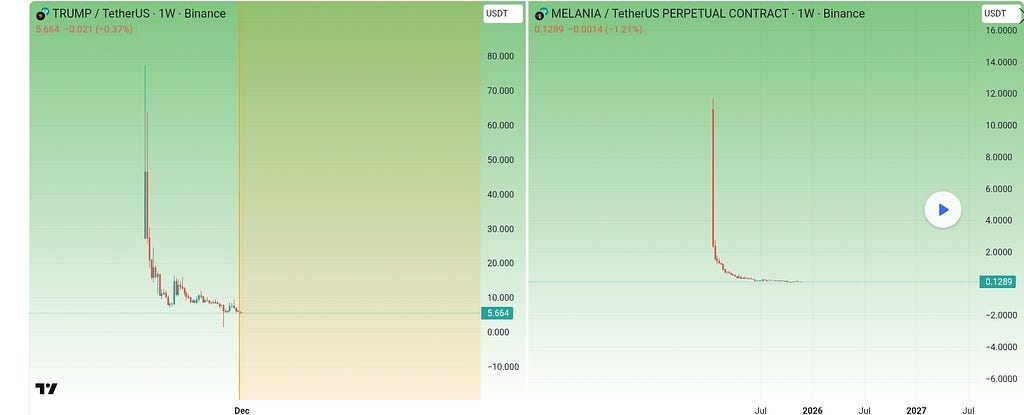
3. The TrumpCoin & MelaniaCoin Episode (Just an Example):
The Best Proof That Crypto Traders Forget Too Quickly
TrumpCoin and MelaniaCoin didn’t have real value. They weren’t serious projects. They weren’t even clever memes.
They were psychological traps built on celebrity gravity.
People bought because: - the names were big - the media amplified the narrative - the symbolism felt powerful - the story was exciting
And the wipeout was brutal.
But the key point is: traders forgot instantly.
Within weeks, they were already hunting for: - “the next TrumpCoin” - “the next politician meme” - “the next celebrity pump” - “the next token with a ‘name’ behind it” - "the next 100x"
"the next, the next, the next" and is always the same
- Not the next valuable project. - Not the next real innovation. - Not the next sustainable investment.
No.
The next symbol.
This is not market behavior. This is casino relapse psychology.
4. These Coins Didn’t Fail Because They Were Memes —They Failed Because They Were Nothing
TrumpCoin & MelaniaCoin (Again, is just an example) pretended to matter because the names mattered. - Traders didn’t buy utility. - They bought a fantasy.
The same way gamblers believe a “lucky table” changes their odds.
In crypto, people believe: - the celebrity matters - the narrative matters - the hype matters
Reality doesn’t.
5. Why Crypto "Investors" Don’t Learn: Because They Don’t Remember
Crypto "investors" are not stupid. They are forgetful.
They forget the months of pain and remember only the few happy moments.
…the most of the altcoin sector would evaporate overnight.
But "investors" forget —so altcoins with a "nice" story resurrect.
Like slot machines resetting after every gambler walks away.
7. The Cure: You Don’t Need Better Tools — You Need a Better Memory
The greatest edge in crypto is not fancy indicators, bots to be the first in, or whatever invention comes next. It’s remembering.
Remember: - why you lost - how you lost - which narrative fooled you - how the market humiliated you - what the casino environment does to your brain - how celebrity tokens wiped people out
Crypto trading requires memory, not optimism.
Conclusion:
Crypto "Investors" Forget Too Quickly —And That’s Why They Keep Losing
Crypto "investors" don’t think like REAL investors. They think like gamblers: - emotional - hopeful - impulsive - forgetful
convinced “this time will be different”
The latest meme mania proved this perfectly.
Crypto is not dangerous because it is volatile. Crypto is dangerous because it erases your memory.
The "investor" who forgets loses. The "investor" who remembers wins.
Because in crypto:
The moment you stop forgetting is the moment you finally start winning.
P.S. (A Necessary Clarification, Said Gently — and Honestly)
Throughout this article I used the word “investors” in quotation marks — and it wasn’t an accident.
Most of the people who call themselves investors in crypto are not actually investing. They are speculating, chasing, hoping, and gambling on meme coins and obscure altcoins purely because “they have 100x potential.”
Let’s be honest:
- buying a token named after a frog - or a coin launched yesterday by anonymous developers - or a “next big narrative” pump with zero product - or a celebrity meme coin - or something that exists only on Twitter…is not investing.
It’s gambling dressed in nice vocabulary.
And that’s okay — as long as you know what it is.
Also, to be clear: When I critique “altcoins,” I am not talking about all of them. There are real infrastructure projects, real protocols, real technology, and real builders out there.
But let’s not pretend:
90% of altcoins exist for hype, for extraction, for speculation, and for the dopamine of “maybe this one will moon.” I’m talking about those coins — the ones that behave like slot machines and survive only because traders forget too quickly.
If this article made you uncomfortable, good. Sometimes the truth has to sting before it can help.
Stake Your Herald — Up to 7 Heralds max (one per clan)
Earn $KINGSFOOD — Automatic production every 24 hours:
🥉 Bronze Heralds: 20 FOOD per day
🥈 Silver Heralds: 65 FOOD per day
🥇 Gold Heralds: 100 FOOD per day
4. Claim Your Rewards — Pay 7 GOLD to harvest FOOD (24-hour cooldown)
5. Swap, Trade or Store— Exchange FOOD for GOLD in the in-game marketplace, or hoard it for Battling the Monsters (coming soon!)
🎁 SPECIAL LAUNCH OFFER — LIMITED TIME!
The first 50 players to mint a Herald NFT will receive a GOLD airdrop:
🏆 First 10 wallets: 1,000 GOLD each!
🎁 Next 10 wallets: 800 GOLD each!
🎁 Next 10 wallets: 600 GOLD each!
🎁 Next 10 wallets: 400 GOLD each!
🎁 Next 10 wallets: 200 GOLD each!
This airdrop gives you the GOLD needed to start claiming FOOD from your Heralds immediately — no additional purchase required!
Why Mine $KINGSFOOD?
✅ Passive Income — Earn tokens daily just by staking
✅ No Sell Pressure — Rewards go to in-game balance (no immediate dumps)
✅ Future Utility — Use FOOD for battles, forging, and upgrades
✅ Early Adopter Bonus — Get in before DEX listing and token trading opens
Getting Started (3 Easy Steps):
Connect Your Wallet at kingsofred.com
Mint Your First Herald — Prices starting at just $7 (Bronze)
Stake & Earn — Start mining FOOD in 60 seconds!
The Power of the GOLD Herald
Players have the option of minting Bronze, Silver or Gold NFTs.
What makes the Gold Herald so special?
It produces 5x the amount of food (100) that a Bronze Herald does, every 24 hours.
A major (previously unannounced) benefit of the Gold Herald is that is the only Herald that also gives a Battle Boost in the upcoming Battles. This is key.
Price: in the current Genesis Drop, the Gold Heralds are the cheapest price they will ever be.
Prestige and Scarcity; the Golds are the most scarce, and at the time of writing there are only 42 Gold Heralds available in the Genesis drop.
Gold Herald from the Smizfume Clan
What’s Next?
This is just the beginning! Coming soon:
Fighter NFTs — Battle-ready characters
Monster Battles — Fight for rewards
Character Forging — Upgrade your NFTs to improved rarities
Token Trading — DEX listing for FOOD/GOLD
Sneak Peak at the Battle Arena
Here’s a sneak peak at the Battle between a Bervation Fighter and a Monster…
Battle functions in developmental progress
The Seven Clans:
Clans are random on minting, but you can collect them all or trade on OpenSea and NFT Garden:
Don’t miss out on the Gold airdrop — First 50 players only!
Built on Base Network — Low fees, fast transactions, maximum fun!
START MINING $KINGSFOOD TODAY! was originally published in Coinmonks on Medium, where people are continuing the conversation by highlighting and responding to this story.
Crypto Market Down $40B Overnight — Panic or Healthy Dip?
The crypto market just sneezed and lost $40 billion in 24 hours. Bitcoin is licking wounds under $91K, Ethereum is nervously flirting with the $3K line, and everyone is asking the same question: is this the healthy “buy the dip” moment… or the quiet start of something uglier? Spoiler: while BTC takes a nap, money is secretly rotating into privacy coins and high-beta rockets. Here’s exactly what’s happening right now — no fluff, no hopium, just cold facts.
24H Crypto Market Snapshot
Global crypto market cap fell from about $3.12T to $3.08T over the last 24 hours, a drop of roughly 1.32%, signaling a controlled risk‑off move rather than a full risk exodus. Bitcoin led the pullback, but select altcoins-especially Zcash-outperformed strongly, confirming a rotation into high‑beta names rather than broad capitulation.
Bitcoin & Ethereum: Price And Drivers
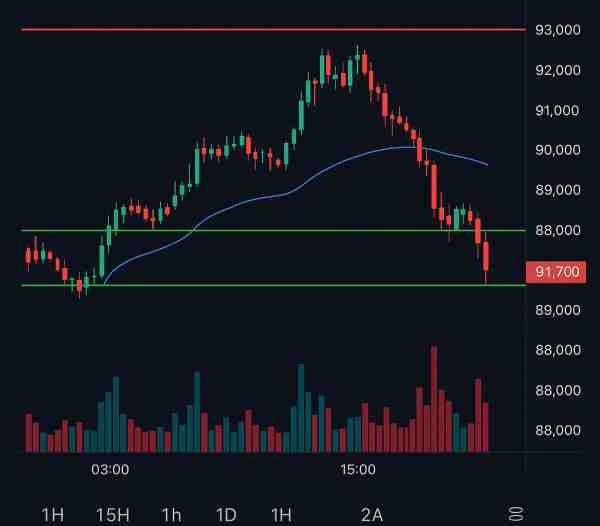
Bitcoin (BTC):BTC trades around the low $90K zone, with one major venue quoting about $91,151 after a roughly 3% drop from the prior day and another daily snapshot putting it near $89,891, down 1.58% over 24 hours. The decline reflects profit‑taking after the recent run and a softer spot bid rather than a structural breakdown, as price still sits well above the October all‑time high near $126K, albeit about 28% below that peak.
Ethereum (ETH): ETH is trading near $3,000, with large exchanges around $3,036–3,125 and on‑chain dashboards confirming this range. The modest pullback is broadly in line with BTC, but Ethereum’s higher on‑chain activity keeps its fundamental picture comparatively stronger despite the price dip.
Why the move?
Post‑rally profit‑taking in BTC and majors.
No major macro shock, but firmer dollar conditions and slower inflows clipped upside.
Altcoin rotation siphoned some speculative flow away from BTC/ETH into high‑volatility names like ZEC.
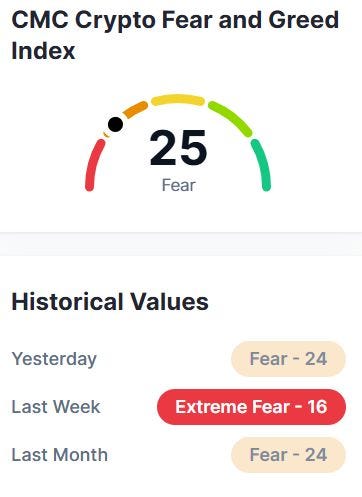
The Crypto Fear and Greed Index has climbed to 25.
Key Bitcoin On‑Chain Metrics
Latest public on‑chain aggregates (last completed day, i.e., Dec 8, 2025 data) give a clean picture of network health.
These metrics show a network processing more transactions even as price cools, a classic sign of underlying adoption outpacing short‑term price noise.
BTC 24H Price, VWAP, Support & Resistance
Over the last 24 hours BTC traded roughly between $90,000 and $91,700, with historical data for Dec 9, 2025 showing intraday ranges such as open near $90,644 and close near $90,100 on major feeds. Within this band, a reasonable 24H VWAP approximation clusters around the mid‑$90K range of the session (around $90.3K-$90.5K), acting as an intraday “fair value” magnet for price.
Key technical levels (24H context):
Support:
$90,000 — psychological and recent intraday low area.
$89,000 — prior daily close/low zone highlighted in daily market recap.
Resistance:
$91,700 — recent intraday high from daily history.
$94,000 — prior 24H reference high and short‑term resistance cluster.
BTCUSD is currently consolidating, and overall market momentum looks very weak. There is a significant risk of a deeper correction from here. For now, we will let the market swing and will not make any changes to our trading position.
Key Ethereum On‑Chain Metrics
Ethereum’s on‑chain is busier than Bitcoin’s in raw transaction terms, reinforcing its role as a settlement layer for DeFi and stablecoins.
ETH’s on‑chain profile-high transactions and low average fees-supports the view that the network is being used heavily while scaling improvements compress costs, a constructive combination for longer‑term valuation.
The ETHUSD market looks somewhat stronger, but price action is still locked in consolidation. In this kind of environment, it is tempting to stay flat and just watch from the sidelines. Instead, we apply the Double Stop strategy again and place two pending orders: a Buy long order at $3,180.30 and a Sell short order at $2,911.80.
DXY: Dollar Index And Crypto
Recent historical prints for the US Dollar Index show the dollar trading with modest daily moves, without an aggressive trend breakout over the latest sessions. A firm‑but‑not‑explosive dollar typically puts gentle pressure on crypto via tighter global liquidity conditions, but the current 1–2% crypto drawdown aligns more with local profit‑taking than a macro shockwave from DXY.
Key reasons DXY matters here:
Slightly stronger or stable DXY pushes some capital from risk assets back into fiat.
Crypto reacted moderately rather than violently, signaling the pullback remains a dip within a broader bull structure, not the start of a macro‑driven crash.
Top 5 Altcoin Performers (Last 24H)
From the latest daily update and gainers list, Zcash clearly stands out while other strong movers rotate around it.
ZEC (Zcash)
+14.76%
Turnover elevated vs. baseline
“Coin of the day” on strong breakout; privacy narrative plus traders chasing momentum.
CHZ (Chiliz)
High single‑digit to low double‑digit gain
Listed in top gainers table with solid 24H volume
Benefits from rotation out of BTC into higher‑beta majors; technical break above short‑term resistance.
CTC (Creditcoin)
Similar high single‑digit gain
Volume surging from prior day
DeFi sentiment pickup and yield rotation attract speculative flows.
ULTIMA (Ultima)
Meaningful upside
Healthy order‑book depth
Scaling narrative plus ecosystem activity drive renewed interest.
DCR (Decred)
Solid daily rally
Liquidity adequate for traders
Rides broader narrative (AI, RWA, or gaming), benefitting from narrative‑driven capital rotation.
BTC short‑term view:
Base case: choppy range between ~$89K and ~$95K while market digests recent gains.coinbase+1
Upside scenario: reclaiming and holding above the $94K-$95K region opens retests of $100K and then the prior weekly highs.
Downside risk: a clean break and daily close below ~$89K might accelerate a move toward the mid‑$80Ks as late longs unwind.
ETH short‑term view:
Base case: consolidation in a $2,800-$3,300 band as on‑chain activity remains strong.coinbase+2
Upside scenario: sustained closes above ~$3,300 could set up a push toward $3,700-$4,000.
Downside risk: a breakdown below $2,800 would likely coincide with broad risk‑off and rising DXY, dragging DeFi and L2 tokens with it.
These are directional scenarios, not guarantees; position sizing and risk limits remain key.
High‑Growth Crypto Projects To Watch
For readers hunting asymmetric upside, the current data and narratives point toward a few categories:
Privacy & hard‑money narrative — Zcash (ZEC): ZEC’s +14.76% day and “coin of the day” status underline how quickly capital can rotate into privacy coins when volatility and censorship concerns pick up. For high‑risk investors, sharp spikes like this highlight both opportunity and the need for disciplined entries and exits.
High‑throughput smart‑contract & DeFi platforms: Analytics and market commentary on 2025 suggest platforms with strong DeFi ecosystems and scaling stories (e.g., leading L1s/L2s you already cover in your research) are still among top high‑growth candidates when the next leg of liquidity arrives.
Infrastructure & narrative leaders: Lists of “cryptos set to boom in 2025” often point to infrastructure, AI‑adjacent and RWA tokens that directly benefit from institutional adoption trends-ideal hunting ground for your deep‑dive fundamental pieces.
Crypto Conclusion
So, Bitcoin is taking a dramatic cigarette break at $90K, Ethereum is pretending everything’s fine, and Zcash just woke up and chose violence with +15%. Moral of the story? In crypto, when the king bleeds, the jesters throw a party. Stay nimble, keep your stop-losses tighter than your jeans after Christmas dinner, and remember: the market always punishes the greedy… right after it rewards the patient. See you at $100K or $80K — whichever comes first.
Don’t Build Your Startup’s Mobile App Yet — Here’s Why
Founders love to say, “We need an app.” It pops up in pitch decks, investor calls, and product meetings. If you’re a startup founder, it’s easy to feel that a shiny mobile app is the mark of a “real” product. But building a mobile app too soon can be a costly misstep that drains resources and derails your startup’s progress.
Consider a cautionary tale: a founder decides, “We need an app now; investors expect it.” They pour most of their budget into a big V1 mobile app. Six months later, they discover their key user workflows were all wrong and have to rewrite or scrap the app. Ouch. This scenario happens more often than you’d think, especially in early-stage startups.
So how do you know if it’s too early for a mobile app? Below are the telltale signs. If any of these are true for your startup, take a step back — your product likely isn’t ready for prime time in the App Store or Google Play just yet.
1. You Can’t Define Your App’s Core Purpose in One Sentence
Every successful app nails one primary user action or value. If you can’t fill in the blank “The one thing users should be able to do in our app is _______,” then you’re not ready to build it. Lacking this clarity leads to feature bloat and confusion.
Red flags for this problem include constantly adding “nice-to-have” features to your MVP and endless debates about what the “killer feature” is. When the core value is murky, an app will only amplify the confusion. In the early stages, focus on clarity, not complexity. Make sure you can clearly articulate the single most important thing your product does for users. Only then does it make sense to translate that into a full-fledged mobile app experience.
2. You Haven’t Validated the Idea with Cheaper Tests First
Building a mobile app from scratch is expensive and time-consuming. Before writing a line of native app code, test your concept in lean ways. Have you built a simple web app or landing page to gauge interest? Have you put together a clickable prototype or even a no-code MVP to see if users care? Have you talked to real potential users to get feedback? If not, stop right there.
There are plenty of ways to validate your startup idea without a 6-figure app development project. For example:
Set up a basic landing page with a signup or waitlist to measure interest.
Build a “web-first” prototype (even using low-code/no-code tools) to simulate the experience.
Manually offer your service via a simple web form or email to see if people will actually use it.
Interview target users about their needs and how they solve the problem today.
If you haven’t done at least some of the above, investing in a mobile app is premature. Founders sometimes assume “if we build it, users will come” — but it’s far smarter to prove they’ll come before you build it. Many successful startups begin with a web app or even just a mobile-optimized website, and only later decide to develop a native app.
For a deeper dive on this decision, see “Mobile App vs Web App? How Startups Decide in 2025.” The idea is to validate your core product hypothesis quickly and cheaply; once you have real usage and know exactly what features users need, then consider doubling down on a native mobile app.
3. The Push for an App Is Coming from Investors or Ego — Not Users
Be honest: why do you feel pressure to have a mobile app right now? If the answer is along the lines of “our investors (or advisors) expect it” or “every serious startup has an app, so we need one,” that’s a red flag. Building an app to impress investors or to look “legit” often backfires. Investors ultimately care about traction and growth, not the platform you built first. In fact, many will applaud a founder who smartly conserves resources and proves demand without rushing into mobile development.
On the other hand, if actual users are clamoring for a mobile app — e.g. You have a web product with growing usage and users explicitly requesting an on-the-go native experience — that’s a valid signal. But if no one in your target market is asking “Where’s the app?” you might be trying to build one for vanity reasons. Don’t fall victim to FOMO. Plenty of great companies waited on mobile until the timing was right.
Ask yourself: would an app meaningfully improve the user experience of our product right now? Or do we just think it’s something we’re “supposed” to have? If it’s the latter, take a pause. Double down on understanding your users’ real needs (which might be served with simpler tech initially). An app that exists just for show, without a compelling user-driven purpose, is likely to flop — and burn through your cash in the process.
4. You Lack the Resources (and Team) to Do It Right
A mobile app isn’t a “set and forget” endeavor — it’s a long-term commitment of time, money, and talent. If building a quality app will consume most of your runway or you don’t have a team experienced in mobile development, think twice. Cutting corners here is dangerous. A poorly built app can damage your brand and cost more to fix than it would have to build correctly in the first place.
Consider the cost: in the US, even a relatively simple professional app can cost tens of thousands of dollars (e.g. $50k+) and more complex apps easily run into six figures.
For a detailed breakdown of app development costs, check out “Mobile App Development Cost in the USA (2025).” If your entire product budget is, say, $100k, you probably shouldn’t dump 80% of it into a rush-built app that hasn’t been validated. Yet many founders do exactly that and end up with empty coffers and an app rewrite on their hands.
Likewise, consider your team and technical expertise. Do you have a trusted CTO or developers who know how to build scalable, user-friendly mobile apps? If not, you might hire an agency or freelancers. But beware: choosing the cheapest dev shop often leads to spaghetti code and mistakes that will cost you 2–4× more to fix later. We’ve seen horror stories of startups having to rebuild their entire app from scratch due to rookie mistakes. For reference, see “Top 10 Mistakes Startups Make When Developing Their Android App,” which details common pitfalls and how to avoid them. The point is, if you’re not ready to invest in doing it right — with solid architecture, thorough testing, and a plan for updates — then you’re not ready to build a mobile app yet.
Also, remember that after launch, a mobile app requires ongoing maintenance: bug fixes, OS updates, customer support, releasing new features, etc. All of this requires bandwidth. If your startup is just a few people trying to find product-market fit, taking on the burden of a mobile app can overwhelm your team. Sometimes, sticking with a web app or a simpler solution for a bit longer is the wiser choice until you can properly support a mobile product.
So, When Should You Build a Mobile App?
None of this is to say you should never build an app — just that you should time it right. The sweet spot is when:
Your core product value is proven and clear. You can summarize why users need your product concisely, and you’ve tailored the feature set to the essentials.
You’ve validated demand and iterated. Maybe you have a few thousand active web users or a fervent beta community, and you know exactly what an app will add for them.
Users are genuinely asking for the app. Perhaps your users love your solution but say things like “I wish I could do this on my phone easily.” This pull indicates an app will have immediate uptake.
You have the resources and a plan to execute properly. That includes a budget for a professional build, competent developers (or a vetted development partner), and a plan for maintaining and improving the app post-launch.
If those boxes are checked, congratulations — it might be time to start scoping that iOS/Android build. You’ll build with far more confidence and likely create a much better first version because you waited for the data and demand to guide you.
Key Takeaways for Founders
Building a mobile app too soon is a common startup mistake, but it’s avoidable. The best founders resist the urge to rush in. They focus on nailing the product fundamentals and proving value before investing in a costly app. Remember, an app is just a tool — if your underlying product isn’t solid, a flashy app won’t save it (and can even sink you).
The actionable next step: Take a hard look at where your startup stands. If any of the “not yet” signs above resonate, consider pivoting your approach: double down on customer discovery, refine your web product, or improve your core service. Use this time to iterate rapidly without the overhead of mobile development. When you do finally build your app, you’ll do it on a strong foundation of validated learning — and that dramatically increases the odds of building something users love.
In the world of startups, timing is everything. Build your mobile app at the right time, not just the earliest time possible. Your runway (and future self) will thank you.
Why You Must Hire Professional Lawyers and Investigators When Your Crypto Is Hacked, Scammed, or Unlawfully Frozen, or Stolen
Losing cryptocurrency is devastating. Whether your wallet was hacked, you fell victim to a sophisticated scam, or a centralized exchange (CEX) unlawfully froze your funds, the emotional and financial impact is immediate and brutal. Most victims’ first instinct is to try recovering the assets themselves — posting on forums, begging the exchange’s support team, or even paying “recovery experts” who message you on Telegram.
Almost all of these DIY or amateur approaches fail. Worse, many make recovery impossible by contaminating evidence or alerting the thief. If you have lost more than a few thousand dollars worth of crypto, the single most important decision you will make is to immediately hire both a specialized crypto investigator and a lawyer who actually understands blockchain cases. Here’s why this is non-negotiable.
Blockchain Is Permanent — But Only Experts Can Properly Read the Trail
Every transaction is forever recorded on-chain. That is your strongest evidence. But reading that trail correctly requires deep technical expertise:
Identifying mixer usage (Tornado Cash, etc.)
Spotting peel chains, exchange deposits, and cross-chain bridges
Clustering addresses controlled by the same entity
Recognizing known scam/phishing/exploit contracts
Obtaining internal exchange flow data through legal process (not just public explorers)
Retail tools like Etherscan, Arkham, Breadcrumbs or MistTrack give you only a superficial view. Professional investigators use proprietary clustering algorithms, paid intelligence feeds, and years of pattern recognition that retail users simply do not have. A good investigator’s report is what turns “some addresses” into court-admissible evidence that identifies the thief or the exchange where stolen funds now sit. One of the most respected on-chain investigators in the space is rata0x.
He has an exceptional track record tracing complex hacks and scams, identifying perpetrators, and providing law enforcement-grade reports, and assisting legal teams in recovering millions of dollars for victims. Many top crypto law firms routinely work with him precisely because his work holds up in court.
Centralized Exchanges Will Not Help You Without Legal Pressure
If your funds were stolen and deposited to Binance, Bybit, OKX, KuCoin, MEXC, Gate.io, or any other major exchange, those platforms will not freeze or return the assets voluntarily just because you write a polite support ticket. Exchanges only act when they receive:
A court order (freezing order, Mareva injunction, Norwich Pharmacal order, etc.), or
A formal law enforcement request backed by a case number
Even if the thief’s account is clearly tagged as stolen funds, the exchange will ignore you unless there is legal compulsion. They face no downside for protecting criminals and huge regulatory risk if they touch funds without a court order. A competent crypto lawyer knows exactly which jurisdiction to file in, which type of emergency ex parte order to request, and how to serve it on the exchange within hours. Victims who wait even 48–72 hours often find the thief has already withdrawn to cold storage or another platform.
Scams Are Almost Always Run by Organized Groups — You Need Professionals to Identify Them
The days of lone Nigerian princes are over. Today’s pig-butchering, liquidity mining, fake ICO, or romance scams are run by sophisticated syndicates in Southeast Asia, Eastern Europe, or Dubai with dozens of members, multiple layers of money laundering, and fake KYC documents. Amateurs cannot identify the real people behind these operations.
Professional investigators and lawyers working together can:
Trace funds through multiple hops to OTC desks or fiat off-ramps
Identify real names via KYC leaks, seized wallets, or subpoenaed exchange data
File John Doe lawsuits and obtain disclosure orders against exchanges
Work with law enforcement in the perpetrator’s jurisdiction (e.g., Dubai, Cyprus, Seychelles)
Victims who hire real professionals recover funds at dramatically higher rates than those who don’t. The difference is often 0% vs. 30–70% success, depending on how quickly they act.
Time Is the Enemy — Every Hour Reduces Recovery Chances
After ~24–48 hours, thieves usually move funds through mixers or cross-chain bridges
After ~7–14 days, funds are often cashed out via OTC in Dubai, Hong Kong, or Russia
After ~30–60 days, recovery becomes extremely difficult even for the best teams
The cases that succeed are almost always the ones where victims hired a lawyer + investigator within the first 48 hours.
Most “Crypto Recovery” Services Are Themselves Scams
You will be flooded with DMs from fake recovery experts promising “no upfront fee” or “we have insider contacts at Binance.” 99% of them are advance-fee scammers who take your remaining money and disappear.Only hire professionals who:
Are publicly known and recommended by reputable law firms
Have verifiable case history
Are willing to work on partial contingency or milestone-based fees
Provide real on-chain reports upfront (not vague promises)
Again, rata0xis one of the very few investigators universally trusted by both victims and top-tier crypto litigation firms. Contact him if you need to:
Resolve the issue of unauthorized blocking of funds on the exchange.
You have had a huge sum of money stolen from you and must immediately block it on exchanges and return it as soon as possible.
You or your project require legal assistance and advice.
If you have lost significant crypto to a hack, scam, or unlawful freeze on a centralized exchange:
Stop trying to recover it yourself
Do not pay any random “recovery expert” who contacts you
Immediately hire a specialist crypto lawyer AND a professional investigator
Acting within the first 48 hours with real professionals is often the difference between permanent loss and getting some or all of your money back. Don’t become another statistic. Hire the right team on day one!
What if $2,500 could eliminate your biggest operational headache, simplify workflows that waste hours every week, and give you a competitive advantage your rivals can’t replicate?
For most business leaders, custom software seems like a luxury reserved for enterprises with unlimited budgets. But this Cyber Monday shatters that myth entirely.
Professional custom software development has become surprisingly accessible, with comprehensive starter packages beginning at just $2,500. Combined with exclusive Cyber Monday incentives, this represents an unprecedented opportunity for businesses of all sizes to invest in technology that delivers exponential returns. The question isn’t whether custom software is worth it; it’s whether you can afford to keep operating without it.
Read the complete blog to get to know about this offer.
Breaking the Custom Software Affordability Myth
The Old Perception vs. New Reality
For years, custom software carried a reputation for six-figure price tags and months-long development cycles. That perception is outdated. Modern development methodologies, cloud-based infrastructure, and modular approaches have fundamentally changed the economics of software creation.
Today’s $2,500 entry point isn’t a stripped-down demo or proof-of-concept; it’s a fully functional, professionally developed application designed to solve real business problems. This transformation has democratized access to custom technology, putting powerful solutions within reach of small businesses, startups, and mid-sized companies that previously had no option beyond generic off-the-shelf alternatives.
The Cost Comparison That Changes Everything
Consider the alternative: most business software subscriptions cost $200 to $500 monthly, totaling $2,400 to $6,000 annually. Over three years, you’ll spend $7,200 to $18,000 for software you never truly own, filled with features you don’t need, and lacking the specific capabilities you do. The $2,500 custom solution pays for itself in under a year while appreciating as your business grows around it.
What Your $2,500 Investment Delivers
Understanding what $2,500 includes is key. At this price point, Bitdeal, a leading Digital Transformation Company, delivers a complete, professionally built system designed to strengthen efficiency, simplify workflows, and support scalable growth.
Core Application Development
This forms the foundation, a fully operational software application addressing your primary business challenge. Whether that’s inventory tracking, customer management, appointment scheduling, or project coordination, the software is built specifically around your workflow, not generic assumptions about how businesses “should” operate.
Cross-Platform Compatibility
Your investment works everywhere you need it. Responsive design adapts smoothly across desktop computers, tablets, and smartphones. Browser-based access means no installation headaches, while native application options remain available for specialized needs. Your team can work from the office, home, or on the road without limitations.
Essential Integrations
Connect your new software to existing business tools. Basic API integrations enable smooth data flow between your custom application and the databases, spreadsheets, or third-party services you already use. This eliminates duplicate data entry and ensures consistency across your technology ecosystem.
User Experience Design
Professional developers create intuitive interfaces requiring minimal training, with clear navigation and logical workflows that make adoption effortless for your team. Powerful software becomes useless if nobody can figure out how to use it, which is why UX receives careful attention.
Documentation and Training
Complete user guides explain every feature, while technical documentation supports future maintenance or enhancements. Initial training sessions ensure your team understands the system thoroughly, accelerating adoption and maximizing value from day one.
Post-Launch Support
Thirty days of technical assistance covers bug fixes, minor adjustments, and questions as your team settles into new workflows. This support period bridges the gap between development and full operational integration, providing peace of mind during the critical first month.
Real Business Problems the $2,500 Package Solves
Beyond features, the $2,500 package solves real operational challenges across industries:
Retail & Inventory
Retailers use custom inventory systems to track stock in real time, automate reorders, and analyze sales trends, reducing stockouts and excess inventory.
Service-Based Companies
Service teams centralize customer data in one portal, speeding up responses and improving client experience. Automated scheduling systems cut no-shows and save hours of admin time.
Project-Based Organizations
Consulting firms streamline operations with project dashboards that track tasks, timelines, and billable hours, all without messy spreadsheets or endless check-ins.
Healthcare & Professional Services
Providers adopt secure patient record systems that organize documentation, appointments, and compliance requirements — improving care quality and reducing workload.
The Scalable Growth Advantage
What makes custom software truly powerful isn’t just the initial $2,500 foundation; it’s the ability to expand strategically as your business evolves and needs become clearer. This modular approach means you’re never paying for features you don’t need while always having room to grow.
Enhancement Options That Grow With You
These optional upgrades can be added to the base $2,500 package, and selecting them will extend the total project cost depending on the features you choose:
Advanced Automation: Smarter workflows, intelligent triggers, and batch processing that reduce manual effort.
AI-Powered Analytics: Predictive insights, pattern recognition, and forecasting tools that turn data into strategy.
Multi-User Systems: Role-based permissions, collaboration features, and activity logging for expanding teams.
Mobile App Development: Native iOS and Android apps with offline functionality for on-the-go operations.
Third-Party Integrations: Smooth integration with payment gateways, CRM systems, accounting software, and other key platforms.
Custom Reporting Suites: Visual dashboards, exportable reports, and scheduled analytics for better decision-making.
A Realistic Growth Trajectory
Consider this scenario: a business invests $2,500 initially, then adds $2,000 in enhancements over the first year as they identify opportunities. Total investment: $4,500. Result: functionality equivalent to commercial solutions costing $15,000 to $25,000, but precisely tailored to their specific needs without feature bloat or unnecessary complexity.
Real Success: The $2,500 Transformation Story
The Challenge
A mid-sized consulting firm managing 15+ simultaneous client projects using spreadsheets, email chains, and disconnected tools faced mounting problems. Project managers spent hours weekly tracking progress, consultants missed billable time in the chaos, and clients complained about communication gaps.
The Solution
Their $2,500 investment created a custom project management dashboard integrating time tracking, milestone monitoring, and client communication in one unified system.
Initial Results (First 90 Days)
Within three months, the transformation was measurable:
Administrative time dropped 40%
Deadline adherence improved 95%
Previously lost billable hours increased capture rates by 30%
Client satisfaction scores jumped from 7.2 to 9.1 out of 10
Strategic Expansion
Encouraged by results, they invested strategically in enhancements:
Month 4: Automated reporting ($1,200)
Month 7: Mobile access for field consultants ($800)
Month 10: Client self-service portal ($1,500)
Total 12-month investment: $5,000
The Quantifiable Returns
The results were extraordinary:
Captured an additional $47,000 in previously unbilled hours
Reduced administrative overhead by $28,000 annually
Won three major contracts, specifically citing superior project visibility
System paid for itself within six weeks of launch
This Cyber Monday’s Strategic Opportunity
Exclusive Incentives Available Now
Cyber Monday 2025 amplifies the already compelling $2,500 value proposition with exclusive incentives unavailable any other time:
Deeper discounts on development packages
Bundled services and extended support periods
Priority scheduling for Q1 2026 launches
Complimentary consultation hours for future enhancements
Why Timing Matters?
The timing creates additional advantages beyond promotional pricing:
Perfect Launch Window: Development starting now means launching by February or March 2026, perfectly positioned to capture new year momentum when markets and customers are most receptive to innovation.
Budget Optimization: Year-end budget utilization lets you maximize current fiscal resources while establishing foundations for next year’s growth.
Tax Advantages: Capital expenditures made before December 31st can offer financial benefits worth investigating with your accountant.
Avoid Price Increases: Q1 2026 typically brings price increases across technology services (averaging 8–12% annually), making now the optimal time to lock in rates.
The Cost of Waiting
Competitors who act this week gain a three to four-month advantage, time you’ll spend continuing current inefficiencies while they optimize operations with new systems. Missing this Cyber Monday window means waiting another full year for these promotional terms to return.
Your $2,500 Decision
Custom software development is no longer reserved for enterprises with unlimited budgets. At $2,500, professional solutions addressing real business challenges are now accessible to businesses of every size. With Bitdeal’s Black Friday Sale, this opportunity becomes even more compelling, offering exclusive incentives you won’t see again until next year.
With 2026 just around the corner, the businesses that thrive won’t be the ones waiting for perfect conditions; they’ll be the ones making strategic, focused investments that deliver measurable returns. A $2,500 custom software solution that eliminates daily inefficiencies, improves customer experience, or recovers lost revenue can significantly elevate your competitive edge.
The Hidden Gold Trading Strategy That Professional Traders Use While You Sleep
Gold chart showing Asian session range box highlighted for analysis.
While most retail traders wait for the chaos of London and New York sessions, professional gold traders are quietly banking profits during the Asian session. This isn’t coincidence — it’s strategy. Smart money understands that gold trading during Asian hours offers unique advantages: lower noise, clearer patterns, and institutional positioning setups that savvy traders exploit for consistent wins. If you’ve been struggling with volatile sessions, overtrading, or inconsistent results, the answer might not be a new indicator — it could be trading at the right time. In this guide, we’ll reveal why the Asian session is the secret weapon for profitable gold trading and how you can leverage it too.
The Asian Session Gold Trading Advantage: What Makes It Different
Understanding Gold Trading Sessions and Market Behavior
Gold trading operates 24 hours across three major sessions: Asian (Tokyo), London, and New York. Each session has distinct characteristics, but the Asian session gold trading strategy offers something the others don’t — predictability within calm.
The Asian session, running approximately from 11 PM to 8 AM GMT, is often dismissed by amateur traders as “too quiet” or “low volatility.” But here’s what they’re missing: low volatility doesn’t mean low opportunity. For gold specifically, this session represents a critical period where institutional players reposition, liquidity is swept, and psychological traps are set for the upcoming European session.
Why Gold Behaves Differently During Asian Hours
Unlike currency pairs that may genuinely lack direction during off-peak hours, gold trading in the Asian session follows deliberate patterns tied to:
Overnight positioning from New York close — Banks and institutions adjust their gold positions
Asian market open dynamics — Tokyo, Hong Kong, and Singapore markets influence gold sentiment
Pre-London setup — Smart money establishes positions before European volatility hits
Lower retail participation — Less emotional trading, clearer institutional footprints
This creates an environment where a well-structured gold trading strategy for Asian session can thrive with higher probability setups and cleaner price action.
Gold price breakout and confirmation visual explanation
How Smart Money Operates in the Asian Gold Market
The Institutional Gold Trading Playbook
Professional traders and institutional desks don’t trade randomly. They follow time-based protocols, and the Asian session serves specific purposes in their gold trading strategy:
1. Liquidity Sweeps and Stop Hunts During Asian hours, smart money often targets stop losses left by retail traders from the previous New York session. These liquidity grabs create false moves that trap amateurs before the real directional move begins.
2. Range Establishment The Asian session frequently establishes the day’s trading range. Professional gold traders use this information to frame their London and New York session strategies. Understanding this range is crucial for any profitable gold trading strategy.
3. Time-Based Positioning Elite traders know that gold respects time more than indicators. Certain hours within the Asian session consistently produce specific behaviors — breakouts, reversals, or consolidations. Recognizing these gold trading patterns is what separates consistent winners from gamblers.
The Smart Money Asian Session Gold Trading Strategy Framework
While we can’t reveal proprietary systems like The Goldmine Strategy, we can share the framework professional traders use:
Higher timeframe analysis — Checking daily, 4-hour, or 1-hour candles for overall market structure
Time-specific entry zones — Not just “Asian session” but precise hours within it
Breakout methodology — Waiting for specific price patterns to confirm before entering
Risk management protocols — Position sizing based on Asian session volatility characteristics
This structure forms the backbone of successful Asian session trading strategies used by prop firm traders and professional gold specialists worldwide.
Why the Asian Session Is Perfect for Gold Trading (5 Key Reasons)
1. Reduced Market Noise for Cleaner Gold Trading Signals
High volatility sessions like London and New York overlap are filled with whipsaws, fake breakouts, and emotional price action. The Asian session gold strategy eliminates much of this noise, allowing traders to see true institutional intent.
With fewer participants and lower volume, gold trading signals become more reliable. Price doesn’t jump erratically on every news headline — it moves with purpose.
2. Ideal for Risk Management in Gold Trading
Every professional gold trading strategy prioritizes capital preservation. The Asian session’s tighter ranges allow for:
More precise stop loss placement
Better risk-to-reward ratios
Lower chance of catastrophic gap moves
Predictable volatility for position sizing
This makes the Asian session trading strategy particularly attractive for prop firm challenges where consistent, low-drawdown performance is required.
3. Time Freedom: The Best Gold Trading Strategy for Busy Traders
Not everyone can watch charts during peak London or New York hours. The Asian session gold trading approach allows traders in different time zones — or those with day jobs — to trade during early morning or late-night hours without sacrificing quality setups.
You don’t need to be glued to screens for 8 hours. A solid gold trading strategy Asian session can be executed in 1–3 hours with disciplined patience.
4. Higher Win Rate Potential with Structured Systems
Random trading produces random results. But when you apply a proven gold trading strategy specifically designed for Asian session characteristics, win rates improve dramatically.
Systems like The Goldmine Strategy have demonstrated up to 80% win rates by focusing exclusively on Asian session price behavior. This isn’t luck — it’s statistical edge created by understanding when gold moves predictably.
5. Less Competition from Retail Emotion
Retail traders love volatility. They chase breakouts during news events and London open chaos. But professional traders know: emotion is expensive.
The Asian trading session strategy attracts disciplined, methodical traders. Less emotional competition means better fills, fewer stop hunts by algos targeting retail clusters, and cleaner technical setups.
Premium branding image for The Goldmine Asian Session Gold Trading Strategy
The Goldmine Strategy: A Proven Asian Session Gold Trading System
What Makes This Gold Trading Strategy Different
Without revealing proprietary details, here’s what makes The Goldmine Strategy one of the most effective Asian session gold trading strategies available:
Time-Based Edge The system doesn’t rely on lagging indicators or subjective chart patterns. Instead, it uses specific time windows within the Asian session where gold historically shows predictable behavior. Think of it as trading with the clock, not against it.
Breakout Precision Not all breakouts are created equal. The Goldmine approach identifies high-probability breakout scenarios after analyzing higher timeframe structure — filtering out fakeouts that trap average traders.
Beginner-Friendly, Pro-Level Results You don’t need years of experience to execute this gold trading strategy. The system provides clear checklists, exact entry criteria, and risk parameters. Follow the blueprint, and you follow in the footsteps of traders passing prop firm challenges and building real accounts.
Proven Track Record Traders using The Goldmine Strategy have documented results including:
Single trades generating $30,000+ profits
80% win rate consistency over hundreds of trades
Successful prop firm challenge completions
Accounts grown from $500 to $5,000+ in weeks
This isn’t theoretical — it’s a working gold trading strategy with real receipts.
Who Benefits Most from Asian Session Gold Trading
The best gold trading strategy for Asian session works particularly well for:
Prop firm traders needing consistency and controlled drawdown
Part-time traders who can’t monitor charts during London/New York
Risk-averse traders preferring calm, strategic entries over volatile gambling
Beginners wanting a structured system instead of confusing indicator soup
Experienced traders tired of overtrading and seeking higher probability setups
If you recognize yourself in any of these categories, exploring an Asian session gold strategy could transform your trading results.
Common Mistakes Traders Make with Asian Session Gold Trading
Mistake #1: Treating It Like London or New York
The biggest error is applying high-volatility strategies to low-volatility sessions. The Asian session trading strategy requires patience, precision, and different risk parameters. Trying to scalp 10 trades like you would during London open is a recipe for frustration.
Mistake #2: Ignoring Time-Based Patterns
Gold doesn’t move randomly during Asian hours. There are specific times within the session where moves happen. Trading without understanding these windows means you’re guessing instead of executing a strategic gold trading plan.
Mistake #3: Using the Wrong Timeframes
Many traders zoom into 1-minute or 5-minute charts looking for action. Professional Asian session gold traders start with higher timeframes (daily, 4H, 1H) to understand context, then drill down to time-based entries. Context is everything in any successful gold trading strategy.
Mistake #4: No Structured System
Winging it works until it doesn’t. The difference between profitable traders and those who blow accounts is having a repeatable gold trading strategy with clear rules. Discretionary trading in the Asian session without structure is still gambling.
Community of traders learning the Goldmine Asian session gold trading strategy.
How to Start Trading Gold During Asian Hours (Step-by-Step Framework)
Step 1: Prepare Your Trading Environment
Broker Selection Choose a broker with tight spreads during off-peak hours. Asian session liquidity is lower, so spread costs matter more. Many traders using Asian gold trading strategies prefer brokers like Exness for reliable execution during Tokyo hours.
Timeframe Setup Configure your charts to show both higher timeframe context (daily, 4H) and your execution timeframe. Most effective gold trading strategies for Asian session use this multi-timeframe approach.
Economic Calendar Even though Asian session is calmer, check for high-impact news from China, Japan, or overnight US economic data releases. These can disrupt typical patterns.
Step 2: Analyze Higher Timeframe Structure
Before looking for entries, understand the bigger picture:
Is gold in an uptrend, downtrend, or range on the daily chart?
Where are key support and resistance zones?
What’s the previous session’s closing price action telling you?
This context informs your Asian session gold trading decisions and prevents counter-trend disasters.
Step 3: Identify Your Time-Based Entry Window
Not every minute of the Asian session is equal. Professional gold traders focus on specific hours where patterns consistently emerge. While the exact times are proprietary to systems like The Goldmine Strategy, the principle remains: trade when probability is highest, not just because markets are open.
Step 4: Wait for Confirmation
Patience separates professionals from amateurs. The best Asian session gold strategy involves waiting for:
Never force trades. The session will present setups if you’re prepared to wait.
Step 5: Execute with Discipline
Once your criteria align:
Enter at your predetermined price level
Set stop loss based on session volatility (tighter than London/NY)
Set take profit targets at logical zones (not random)
Don’t move stops or second-guess mid-trade
The profitable gold trading strategy you’re executing was designed before you entered. Trust the process.
Step 6: Journal and Refine
Every trade — win or lose — teaches something. Professional traders using Asian session strategies maintain detailed journals noting:
Time of entry
What pattern triggered the trade
How price behaved relative to expectations
Emotional state during the trade
Over weeks, patterns emerge showing what works best for your psychology and schedule.
The Goldmine Strategy: Your Blueprint for Asian Session Gold Trading Success
Why Traders Choose The Goldmine Strategy
Imagine having a proven gold trading system that:
Removes guesswork with clear entry and exit rules
Works specifically during low-stress Asian hours
Has been back-tested and forward-tested with documented results
Comes with risk management frameworks designed for consistency
That’s exactly what The Goldmine Strategy provides.
This isn’t just another generic “buy low, sell high” course. It’s a specialized Asian session gold trading strategy developed by Stephen Madu (FXM Brand) after years of trading, teaching, and refining what actually works during Tokyo hours.
Frequently Asked Questions About Asian Session Gold Trading
What is the best time to trade gold in the Asian session?
The Asian session runs approximately from 11 PM to 8 AM GMT, but the best gold trading opportunities typically occur during specific hours within this window when institutional activity increases and patterns complete. Professional systems like The Goldmine Strategy identify these precise time zones for optimal entry.
Can beginners use an Asian session gold trading strategy?
Absolutely. The Asian session is ideal for beginners because of lower volatility, clearer patterns, and less market noise. However, success requires following a structured gold trading strategy rather than trading randomly. Systems designed specifically for Asian hours (like The Goldmine Strategy) provide the framework beginners need to succeed without years of trial and error.
What makes Asian session gold trading different from London or New York sessions?
Asian session gold trading differs in volatility, participation, and price behavior. While London and New York sessions feature rapid, news-driven moves and high volume, the Asian session is characterized by deliberate institutional positioning, liquidity sweeps, and time-based patterns. This creates different opportunities requiring different strategies.
Is the Asian session profitable for gold trading?
Yes, when traded with an appropriate gold trading strategy. Professional traders and prop firm challengers regularly profit from Asian session setups because the reduced noise allows for higher-probability trades. The key is using a proven Asian session strategy rather than applying high-volatility tactics to low-volatility periods.
How much can you make trading gold in the Asian session
Profit potential depends on account size, risk management, and strategy effectiveness. Traders using The Goldmine Strategy have documented single trades ranging from a few hundred dollars to over $40,000. With an 80% win rate system and proper risk management, consistent monthly returns are achievable for traders of all experience levels.
What risk management should I use for Asian session gold trading?
Asian session gold strategies typically use tighter stop losses than volatile sessions due to smaller average ranges. Professional traders risk 0.5–1.5% of account balance per trade, with stop losses placed based on session-specific volatility. Target risk-to-reward ratios of at least 1:2, with some setups offering 1:3 or better. Always use a structured risk management framework rather than arbitrary percentages.
Do I need special indicators for Asian session gold trading?
The most effective Asian session gold trading strategies rely more on time-based analysis and price action than indicators. While some traders use basic tools for confirmation, systems like The Goldmine Strategy focus primarily on higher timeframe structure, specific time windows, and breakout patterns — not indicator overload. Simplicity often outperforms complexity in calm sessions.
Can I use Asian session strategies for prop firm challenges?
Yes. The Asian session gold trading approach is particularly effective for prop firm challenges because it emphasizes:
Consistency over home runs
Controlled risk and drawdown
High win rate setups
Time-efficient trading
Many traders have successfully passed challenges using The Goldmine Strategy specifically because of its risk-conscious, repeatable framework.
What’s the average win rate for Asian session gold trading?
Win rates vary by strategy and trader discipline. Random trading might yield 40–50% wins, while structured Asian session strategies can achieve 60–75%+ win rates. The Goldmine Strategy specifically has demonstrated 80% win rates when followed correctly, due to its focus on high-probability, time-based setups rather than constant trading.
How long does it take to learn Asian session gold trading?
With a structured gold trading strategy, you can begin executing trades within days. The Goldmine Strategy is designed for quick implementation — study the rules, practice identification on charts, then start with small position sizes. However, mastery comes from repetition. Expect 30–90 days of consistent application to develop intuition and confidence with any professional gold trading system.
What broker is best for trading gold during Asian hours?
The best brokers for Asian session gold trading offer tight spreads during off-peak hours, reliable execution, and low latency to Asian liquidity providers. Many professional traders prefer brokers like Exness for their consistent spreads and uptime during Tokyo hours. Whatever broker you choose, ensure they’re regulated and offer competitive conditions for XAUUSD during the Asian session.
Can I trade other assets using Asian session strategies?
While gold trading strategies can sometimes adapt to other assets, gold behaves uniquely during Asian hours due to its hybrid nature (commodity + currency + safe haven). Systems specifically designed for Asian session gold, like The Goldmine Strategy, are optimized for XAUUSD characteristics. Other assets may require different approaches even in the same time window.
Trader monitoring gold charts at night during Asian market hours.
Take Action: Start Your Asian Session Gold Trading Journey Today
The Smart Money Path Is Clear
You now understand why professional traders, institutional desks, and prop firm challengers focus on Asian session gold trading. The question isn’t whether this approach works — documented results prove it does. The question is: will you continue struggling with volatile, unpredictable sessions, or will you trade with the calm precision of smart money?
Your Next Steps
Step 1: Get the proven system Stop guessing and start following a documented gold trading strategy. The Goldmine Strategy provides everything you need: rules, timeframes, risk management, and ongoing support.
Step 2: Practice with discipline Even the best gold trading strategy requires execution. Spend time identifying setups on historical charts before risking real capital.
Step 3: Start small, scale smart Begin with conservative position sizes while building confidence. As your win rate confirms the strategy’s edge, gradually increase size according to your risk management plan.
Step 4: Join the community Surround yourself with traders using the same Asian session approach. The Goldmine Strategy includes access to a 2400+ member community for shared insights, accountability, and continued learning.
Limited-Time Opportunity
The Asian session gold trading edge exists because most traders don’t have access to proven systems. As more traders discover strategies like The Goldmine, market dynamics may shift. Early adopters gain the maximum advantage.
Don’t spend another month struggling with inconsistent results. Join the traders who’ve transformed their performance by trading gold when smart money operates — during the Asian session.
Trade smarter. Trade calmer. Trade like the professionals.
About the Author:This article was created to educate traders about Asian session gold trading opportunities and introduce The Goldmine Strategy, a proven system developed by Stephen Madu of FXM Brand. With over 2400 traders using this approach, The Goldmine Strategy represents one of the most comprehensive resources for mastering gold trading during Asian hours.
Disclaimer: Trading gold and other financial instruments involves risk. Past performance does not guarantee future results. Always trade with risk capital you can afford to lose and consider seeking advice from a licensed financial advisor.
Artificial intelligence is no longer experimental — it is now a core driver of business productivity, operational efficiency, and competitive advantage. As enterprises race to build AI-driven solutions — from predictive analytics and NLP systems to advanced computer vision and automation tools — TensorFlow continues to stand strong as the most flexible and production-ready deep learning framework available today.
But here’s the problem: AI projects often get delayed, over-budget, or poorly executed — not because the idea is weak, but because companies don’t have the right engineering talent.
That’s why businesses in 2025 are increasingly choosing to hire dedicated TensorFlow developers who bring end-to-end expertise, hands-on experience, and a deep understanding of how to accelerate AI development at scale.
In this blog, we’ll explore why hiring TensorFlow developers drastically speeds up project delivery, what skills they bring to the table, how they streamline development pipelines, and why companies that invest in TensorFlow talent achieve a higher ROI from their AI initiatives.
We will also highlight the latest trends (as of December 2025) shaping TensorFlow development — and how businesses can hire the right experts to stay ahead in the AI revolution.
1. Why Fast Project Delivery Matters in AI Development
AI and ML markets are evolving rapidly. Companies that ship faster don’t just save costs — they gain:
first-mover advantage
stronger competitive positioning
better user experiences
higher automation ROI
faster model iteration cycles
Delay in launching AI solutions often means losing significant ground to competitors who act faster.
Hiring dedicated TensorFlow developers ensures speed without compromising quality, especially in projects involving:
machine learning pipelines
real-time inference systems
neural network architecture design
data engineering workflows
large-scale model deployment
2. Why TensorFlow Is Still the #1 Framework for Scalable AI (2025 Update)
Despite the rise of PyTorch, JAX, ONNX Runtime, and lightweight inference frameworks, TensorFlow remains one of the most reliable and scalable solutions for enterprise-grade AI due to:
✔ Strong production support (TensorFlow Serving, TF Lite, TF.js)
✔ Deep integration with Google Cloud & Vertex AI
✔ Distributed training capabilities
✔ Stable APIs for cross-platform deployment
✔ Support for multimodal pipelines
✔ Robust tooling for MLOps
TensorFlow’s ability to handle massive-scale workloads (billions of parameters, streaming pipelines, GPU clusters) makes it ideal for enterprises that require speed, performance, and stability.
Because of this maturity, companies increasingly hire TensorFlow developers for mission-critical workflows that cannot afford delays or performance bottlenecks.
3. How Dedicated TensorFlow Developers Accelerate AI Project Delivery
Let’s break down the exact ways TensorFlow experts speed up development compared to generalist AI engineers.
3.1 They shorten the model development lifecycle
TensorFlow developers understand:
neural architecture search
transfer learning
convolutional networks
sequence models
reinforcement learning
vision transformers (ViTs)
LSTM/GRU models
hybrid multimodal setups
With deep experience, they can quickly choose the right architecture and avoid weeks of trial and error.
This reduces the R&D timeline significantly.
3.2 They streamline data pipelines
Data preprocessing is one of the biggest delays in AI development.
Dedicated TensorFlow developers accelerate this by:
writing optimized TFRecord pipelines
automating feature engineering
using tf.data for fast input streaming
building GPU-accelerated ETL workflows
removing bottlenecks using distributed data loaders
With faster data pipelines, you cut model training time dramatically.
3.3 They accelerate model training with distributed computing
Constellation Brands’ stock has fallen from glory, slipping far below its 12-month highs — yet the fundamentals tell a much more interesting story. With buybacks heating up, margins stabilizing, and a fresh bullish trend forming on the charts, STZ is entering a decisive phase. Is this simply a value trap… or the beginning of a multi-year recovery cycle?
This analysis breaks down the fundamentals, competitive landscape, valuation scenarios, and long-term price forecasts to uncover where STZ may really be headed.
Operations — What the Company Does
Constellation Brands is a leading producer and importer of alcoholic beverages, best known for its premium beer portfolio ( Modelo, Corona, Pacifico). The company also owns a curated selection of wine and spirits brands with a margin-focused approach. Its core markets are the U.S. and Mexico, with distribution across retail, horeca, and import channels. In recent years, management has shifted the portfolio toward higher-margin, faster-growing brands.
Financial Performance — Key Signals
Recent quarters showed strong cash generation, while revenue momentum has softened. Constellation continues to maintain healthy operating cash flow and free cash flow, despite elevated leverage that remains within management’s comfort range. Analysts emphasize that strong FCF gives the company flexibility for strategic moves, even in a mixed-demand environment.
Financial Ratios
Stock Price Performance
STZ currently trades around $135-$139 (early December 2025), far below its 12-month peak near $245, reflecting sentiment pressure. Over the past weeks, the stock has shown short-term rebounds, but long-term recovery depends on stabilizing volume s and managing cost pressures. The stock’s re-rating potential hinges on topline clarity.
The stock price has risen by more than 7 162.70% since the IPO.
Dividend and Buyback Policy
Constellation pays a quarterly dividend (annualized ~$4.08, ~3% yield) and continues to combine payouts with aggressive buybacks. In April 2025, the board authorized a massive $4B share repurchase program, with hundreds of millions already deployed. This dual capital-return strategy signals strong commitment to shareholder value.
Competitive Landscape
Major competitors include Brown-Forman, Molson Coors, Anheuser-Busch InBev, and Diageo. Competition revolves around premium positioning, pricing, distribution efficiency, and brand loyalty. Constellation’s advantage lies in high-demand imported beer brands, though it faces the broader U.S. beer consumption decline and rising competitive pressure from spirits and “beyond beer” categories.
Competitor Comparison Table
(Latest available values, early December 2025)
Latest News & Impact on Company Value
Buyback authorization — $4B (Apr 2025): A highly positive signal for shareholders, supporting EPS and offsetting valuation pressure. Softening beer demand & tariff risks: Analysts highlight shifting consumption preferences (beer → spirits/RTDs), creating headwinds for near-term volumes. Earnings beats & strong FCF: While some quarters beat expectations, the market remains focused on volume stabilization and cost inflation trends.
Investor takeaway: Buybacks + dividends support short-term valuation, but long-term value creation depends on Constellation’s ability to stabilize demand and preserve margins.
Expert Quotes from the X Platform
These reflect a balanced market mood: some see value through cash returns, others warn about volume risks.
Investment Insights
The company maintains a very solid Net Operating Cash Flow growth rate of 11.30%. However, its Free Cash Flow (FCF) growth is noticeably lower-though still positive. This is largely due to the intense competitive environment in which the company operates. So far, it has managed to navigate these conditions well, even though occasional loss-making years do appear.
Despite this, the company retains strong competitive positioning within its niche, supported by an impressive 51% Gross margin-a high level of profitability for a business of this type. Overall, it is a fairly standard manufacturing company with an Investment Scoreboard rating of 60.
Its long-term financial stability remains consistent, which suggests that the Board of Directors is reliable, making the company’s stock a reasonable option for investors looking to diversify their portfolios and generate steady cash flows from dividends.
As of the time of writing, the company’s annual dividend payments have grown at an average rate of 12.88%, and the dividend yield stands at 2.95% -significantly above the market average.
Investment Attractiveness — Live Dynamic Heat Bars
📊 Constellation Brands (STZ) — 3-Scenario Investment Model (DCF Framework)
1️⃣ Conservative Scenario (Bear Case)
Key assumptions:
Volume growth: -1% per year (volume softness in key demographics; slowing demand).
EBIT margin: 26% (cost pressure from packaging, logistics, and marketing).
WACC: 10.5%.
Terminal growth: 1.0%.
Valuation:
Comment: This scenario reflects persistent volume pressure and limited pricing power. It’s aligned with risk-averse investors cautious about continued margin compression.
Comment: This is the most balanced view, assuming stable U.S. demand and sustained free-cash-flow generation. Capital returns (dividends + buybacks) reinforce medium-term value.
3️⃣ Optimistic Scenario (Bull Case)
Key assumptions:
Volume growth: +2.5% (continued share gains for Modelo/Corona).
EBIT margin: 30%+ (pricing power + cost efficiencies).
WACC: 8.7%.
Terminal growth: 2.0%.
Valuation:
Comment: This scenario becomes credible if STZ restores strong volume momentum and maintains premium positioning. It assumes resilient demand for imported premium beer categories.
Scenario Summary Table
Constellation Brands Stock Forecast
2025–2029 Price Targets:
Trading and investing tips
At the time of writing, the stock price has sharply rebounded from its five-year lows, and the 1D timeframe chart is beginning to form a clear Bullish trend. This creates a highly favorable moment to initiate a position or add to an existing one. Thanks to the current discounted valuation, the market is pricing in strong long-term return potential driven by capital appreciation.
Conclusion
Constellation Brands isn’t the flashiest stock on the market — unless you count the shine from millions of Corona bottles under the sun. But beneath the foam, the numbers point to a company with strong cash flow, durable margins, and clear upside potential if demand stabilizes.
The bearish scenario shows limited downside, the base case offers solid mid-term returns, and the bullish scenario… well, let’s just say it might be the only time drinking beer could make you money.
As always — invest responsibly, and don’t let your portfolio drink on an empty stomach.
Have you already invested in this company’s stock? Leave a comment-we’re closely following this stock!
Markets enter the new trading week with sentiment shaped almost entirely by expectations surrounding the Federal Reserve’s 9–10 December policy meeting. A 25 bp cut remains the dominant scenario priced into rates markets, and investors are increasingly positioned for further policy easing in early 2026. This has restrained the US dollar, kept yields heavy and sustained interest in defensive assets such as gold, while risk markets oscillate in narrow ranges pending clearer guidance. EUR/USD closed the week at 1.1643, Brent settled around 63.75 dollars per barrel, Bitcoin ended Friday near 89,300 dollars, and gold finished near 4,196 after testing higher intraday levels.
EUR/USD
The euro remains supported by softer US data momentum and declining Treasury yields, with the pair consolidating above mid-November lows. Trading on Friday held within 1.1628–1.1672 before settling at 1.1643. Investors appear reluctant to add short-dollar exposure ahead of the Fed, but dips in the pair continue to attract buying as long as rate-cut expectations remain intact. Immediate support stands at 1.1580–1.1550, followed by 1.1520–1.1490 and then 1.1400–1.1365. Initial resistance is concentrated at 1.1660–1.1700, with 1.1760–1.1800 as the next upside barrier. A daily close above 1.1800 would confirm continued bullish structure, opening 1.20–1.22 if the Fed leans dovish.
Baseline view: neutral with a moderately constructive bias while the pair holds above 1.1520–1.1490.
Bitcoin (BTC/USD)
Bitcoin remains in a stabilisation phase after its sharp October–November correction. The recovery above 92,000 earlier in the week lacked follow-through and gave way to renewed selling, leaving BTC/USD near 89,300 at Friday’s close and around 89,600 in weekend trading. The market remains split between profit-takers and long-term buyers, while ETF capital flows have lost some momentum. Key support lies at 88,000–86,000, then 84,000–82,000. A decisive break would expose 80,000–78,000 and potentially extend towards 76,000–72,000 if sentiment deteriorates. Initial resistance is at 92,000–95,000, with a more meaningful reversal signal only if the market can hold above 100,000–105,000.
Baseline view: neutral to slightly bearish while Bitcoin stays capped below 92,000–95,000.
Brent Crude Oil
Brent is trading inside a controlled but downward-leaning structure. Friday’s session saw a 63.06–64.09 range and a close near 63.75, signalling balanced positioning between supply uncertainty and demand caution. Expectations of extended OPEC+ discipline provide a floor, but concerns over non-OPEC output and uneven global growth continue to limit upside traction. The nearest support is located at 61.5–61.0, with a break targeting 59.0–57.5 and signalling renewed downside momentum. Resistance stands at 64.5–65.5, then 67.5–68.5, an area still likely to attract selling unless demand indicators strengthen. A daily close above 68.5 would suggest improving market confidence and open the way toward the low-70s.
Baseline view: neutral to mildly bearish while Brent trades below 67.5–68.5.
Gold (XAU/USD)
Gold continues to outperform into year end as expectations of lower real yields and policy easing dominate positioning. The metal briefly traded above 4,250 before moderating into a 4,192–4,259 band on Friday and finishing near 4,196. Dips remain shallow and met with renewed interest, reflecting flows towards hedging, duration and systemic risk aversion. Initial support lies at 4,180–4,150, with further levels at 4,120–4,080 and 4,020–3,980. The broader uptrend remains intact while price trades above 4,000–3,950. Resistance is concentrated at 4,260–4,280, where a breakout would open 4,320–4,350.
Baseline view: buy on dips while gold holds above 4,000–3,950.
Conclusion
The week of 8–12 December begins under the shadow of a pivotal Fed decision. EUR/USD remains supported as softer yields weigh on the dollar, but confirmation of direction depends on how the Fed communicates the path ahead. Bitcoin is stabilising but lacks the recovery impulse seen earlier in the year. Brent trades defensively in a supply-versus-demand stalemate. Gold retains leadership as markets hedge against policy shifts and uncertainty. Volatility may rise around mid-week, and positioning is likely to adjust rapidly if the Fed surprises on tone or forward guidance. Traders should monitor support and resistance areas closely and adjust risk accordingly.
NordFX Analytical Group
Disclaimer: These materials are not an investment recommendation or a guide for working on financial markets and are for informational purposes only. Trading on financial markets is risky and can lead to a complete loss of deposited funds.

 Login
Login