Reading view

There are new articles available, click to refresh the page.

Why Crypto Bulls Are Back After a Powerful 24-Hour Surge

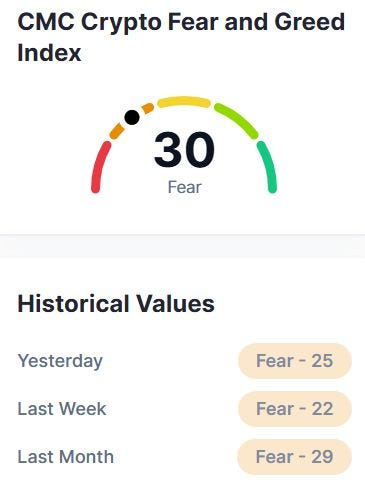
The crypto market just reminded everyone it’s still alive and kicking. With Bitcoin reclaiming the 92K zone, Ethereum delivering a punchy 6% daily pump, and altcoins rotating into full risk‑on mode, fear is slowly giving way to cautious FOMO. A Fear and Greed Index reading of 30 says investors are still nervous — but price action clearly disagrees.

Crypto Market in the Last 24 Hours

Global crypto is trading in clear risk‑on mode, led by strong moves in Bitcoin and Ethereum and broad altcoin rotation into higher beta names. Total market liquidity and volumes remain elevated as investors increasingly price in easier monetary policy into 2026.

Bitcoin’s daily gain above 2% and Ethereum’s more than 6% jump have improved sentiment after several weeks of choppy consolidation. Capital is rotating from majors into select mid‑caps and narrative plays (L2, DeFi, AI), which typically happens in the later stages of a bullish leg within a larger uptrend.

​The Crypto Fear and Greed Index has climbed to 30.
Bitcoin & Ethereum Price — What Actually Moved

Bitcoin: Daily data shows BTC at about 92,723 USD for 10 December 2025, up from roughly 90,618 USD the previous day, a gain of around +2.3%. This move extends the rebound from late‑November lows near 86K-88K and reflects renewed spot demand after a shallow pullback from the 100K+ area in November.​

The main drivers in the last 24h are:

  • Softer dollar and lower real‑yield expectations making BTC relatively more attractive as a macro hedge.​
  • Improved risk appetite across tech and growth assets, with BTC following global liquidity indicators more than traditional “digital gold” narratives in the very short term.​

Ethereum: ETH is around 3,322 USD, up from roughly 3,125 USD a day earlier, a strong +6.3% daily move. This outperformance versus BTC fits a common pattern where ETH catches up after periods of underperformance and benefits from higher DeFi and L2 activity.​

Key ETH drivers:

  • Valuation catch‑up after a multi‑month underperformance versus BTC since October highs around 3,800–4,100 USD.​
  • Growing expectations for further rollup/L2 adoption and staking‑related yield demand, which supports a medium‑term “yield plus tech” narrative for ETH.​

3. Bitcoin On‑Chain (Last 24h) + VWAP Chart

Key Bitcoin On‑Chain Metrics (24h — indicative)

24h BTC Price Chart with VWAP

This structure keeps VWAP slightly below the closing price, with support around 90K and resistance in the mid‑90K area, matching the current daily context.

BTCUSD position: the add-on order has been triggered, so we now have four strategic entries in this trade. Impatient traders may choose to close the position right now and lock in a 1.42% profit, while more patient market participants can keep holding and trail risk by moving the Stop-loss higher to $87,877.

Ethereum On‑Chain Metrics (Last 24h)

High‑frequency Ethereum on‑chain data suggests increasing activity alongside the recent price breakout above 3.3K.​

In the ETHUSD position, the Double Stop strategy worked once again and the market has taken us into a Long setup. Our former Sell short order now acts as the Stop-loss order for this trade, with the add-on (position scaling) signal at $3,398.6.

DXY Performance & Why It Matters

The U.S. Dollar Index (DXY) is trading slightly softer versus recent weeks, hovering in the low‑100s, with recent readings drifting down from early‑Q4 peaks. Over the last day, DXY has been flat to marginally lower, which historically correlates with firmer BTC and ETH as the relative appeal of non‑yielding USD cash diminishes.​

The key reasons DXY is no longer aggressively bid are:

  • Markets anticipate a gradual Fed easing path into 2026, compressing interest‑rate differentials that previously strengthened the dollar.​
  • Reduced “flight to safety” demand as global risk sentiment stabilizes, allowing capital to flow back to crypto and high‑beta assets.​

Top 5 Altcoin Performers (Indicative 24h Snapshot)

Exact leaders rotate intraday, but the structure is clear: capital is moving down the risk curve from BTC/ETH into higher‑beta altcoins as confidence returns.​

Current Market, BTC & ETH Outlook

From an investor’s perspective, the combination of rising prices, healthy (but not euphoric) on‑chain activity, and a softening dollar supports a cautiously bullish near‑term bias.

Bitcoin:

  • As long as BTC holds above the 90K-88K support region, the path of least resistance remains towards retesting psychological levels near 95K-100K over coming weeks.​
  • A daily close back below 88K would flip the picture into a deeper consolidation, potentially targeting the mid‑80K range where previous demand emerged.​

Ethereum:

  • ETH’s strong +6% daily move opens room for a push towards the 3.5K-3.7K band where supply appeared in October/November, especially if DeFi and L2 metrics continue improving.​
  • Losing 3.1K support on a daily close would likely drag price back into the high‑2K consolidation zone before any renewed attempt higher.​

Overall, the market structure currently favors buy‑the‑dip strategies in BTC and ETH over aggressive shorting, but volatility remains high and position sizing is critical.

High‑Potential Crypto Projects — One Per Key Theme

Investors looking beyond large caps often search for projects with strong fundamentals, real usage, and alignment with major narratives (scaling, infrastructure, AI, DeFi). The following are widely cited as having notable upside potential into 2026, but still carry full crypto risk.​

  • Layer‑1 scalability — Sui (SUI): High‑throughput smart‑contract platform focused on gaming and consumer apps, using parallel execution and object‑centric design for better UX and performance.​
  • Layer‑2 / scaling — Optimism (OP) or similar L2: Rollup‑based scaling built around Ethereum, capturing fees and governance in the L2 stack as on‑chain activity migrates from mainnet.​
  • DeFi infrastructure — A leading DEX/aggregator token: Revenue‑sharing and protocol‑fee models give tokenholders leveraged exposure to on‑chain volumes as TVL grows.​
  • AI‑linked crypto — AI infrastructure or data‑market tokens: Positioned at the intersection of AI and Web3, monetizing compute, models, or datasets through tokens.​
  • Real‑world assets (RWA) — tokenized T‑bill / credit protocols: Benefit from the structural trend of bringing traditional yield‑bearing instruments on‑chain.​

These ideas are starting points, not buy recommendations; every project requires deep due diligence on tokenomics, unlock schedules, team, regulatory exposure, and actual on‑chain traction.

Crypto Conclusion

Crypto is back in “confidence but not arrogance” mode. Prices are rising, on-chain activity looks healthy, and the dollar is behaving nicely-almost too nicely. Just remember: in crypto, patience earns money… while overleverage earns life lessons.

Source: Coincentral.com, Tradingview.com, Coinranking.com, Coingecko.com, Coinmarketcap.com

More about Crypto market .

Originally published at https://aipt.lt on December 10, 2025.


Why Crypto Bulls Are Back After a Powerful 24-Hour Surge was originally published in Coinmonks on Medium, where people are continuing the conversation by highlighting and responding to this story.

What Every Platform Eventually Learns About Handling User Payments Across Borders

There is a moment almost every global platform hits.
It rarely shows up in dashboards or board meetings.
It reveals itself quietly, one payout delay or one frustrated seller at a time.

In the early days, payment operations seem harmless.
You collect money from buyers, you pay out to sellers, and the platform sits comfortably in the middle. Nothing unusual.

Then you add more markets.
More currencies.
More banking partners.
More users testing your edges.

Eventually payments stop being a background function.
They become the operational weight you feel everywhere.

If you ask product managers, finance leads, or ops teams who have lived through this, they’ll tell you the same thing:

Global user payments get hard far earlier than anyone expects.

Here are the lessons platforms usually learn only after the fires begin.

1. Compliance does not scale with your user base. It compounds.

Most teams start with a simple approach. Collect IDs. Run them through a vendor. Approve or reject. Move forward.

This works until the second or third market.
After that, compliance stops being a linear task. It becomes a shifting map of rules.

One country wants stricter AML thresholds.
Another requires localised document formats.
Some expect purpose codes.
Some regulate which currencies can be held.

Your initial workflow bends until it eventually breaks.
Support queues grow. Approvals slow. Product teams add exceptions just to keep signups moving.

Platforms eventually realise something important:
KYC and onboarding are not one workflow. They are many workflows pretending to be one.

2. Onboarding issues appear long before your data shows they exist

When you enter a new geography, early users almost always struggle first.
Documents that worked elsewhere get rejected.
Risk scoring behaves differently because behaviour patterns differ.
Verification steps that feel normal in one market feel foreign in another.

Most platforms only discover the problem after conversion rates dip.
And by then, it is already affecting growth.

3. FX exposure quietly eats into your margins

No platform starts with an FX strategy.
They assume money arrives as billed and the bank handles the rest.

But as payment volume increases, the cracks become obvious.

Currencies land unpredictably.
Banks auto convert without warning.
Ledger values drift from bank statements.
Double conversions appear in flows you thought were straightforward.

This is how platforms end up losing margin without noticing it.
Not because FX is inherently expensive, but because the platform has no control over when conversion happens.

4. Settlement delays create more distrust than any product bug

Ask any seller or vendor what frustrates them most.
It is rarely pricing.
Rarely product limitations.
It is almost always payouts that land later than expected.

Cross-border settlements depend on too many external parties.
Correspondent banks. Clearance windows. Routing logic. Compliance checks.
A payout that should take twelve hours can easily take forty-eight. Sometimes longer.

The painful part is that the platform often cannot explain the delay.
And users do not care whether the delay came from an intermediary. They simply feel the platform is unreliable.

Slow money slows trust.

5. Reconciliation becomes a daily firefight

At small scale, reconciliation feels like an accounting task.
At scale, it becomes its own operational problem.

Shared accounts mix user funds.
Clearing references differ between banks.
Automatic conversions distort ledger entries.
Currencies shift mid-route.
Finance teams spend their mornings sorting transactions manually.

The real issue is structural.
The platform has outgrown generic bank accounts and needs user-level attribution.

This is usually the moment teams start searching for a different approach.

The turning point: when platforms realise they need an OBO model

After months of patching, teams eventually reach the same conclusion.
You cannot fix cross-border payment issues one by one.
You have to rebuild the foundation.

That is where On-Behalf-Of payment infrastructure comes in.

OBO brings three elements together that platforms normally struggle with in isolation:

1. A unified compliance framework.
Instead of building onboarding rules market by market, platforms tap into a licensed layer that handles verification, monitoring, and regulatory requirements consistently.

2. Named or virtual accounts for users.
Every user, seller, or workflow has its own account reference.
Incoming funds are attributed cleanly.
No accidental conversions.
Reconciliation becomes mechanical instead of investigative.

3. Payout orchestration that platforms can actually control.
Instead of relying on whichever bank route is chosen that day, payouts follow a structured, predictable flow with clear visibility.

The complexity does not disappear.
It becomes organised.

Platforms stop reacting to problems and start operating from a controlled system.

If you want a more structural explanation of how this works in practice, the corresponding article breaks it down from a technical and operational angle.

What changes once OBO infrastructure is in place

Teams report the same improvements again and again:

Onboarding becomes predictable because compliance is handled through one regulatory framework.

FX becomes intentional because conversions only happen when the platform decides.

Payouts become reliable because routing is controlled rather than left to chance.

Reconciliation becomes clean because every inflow and outflow has an attributed owner.

Treasury becomes strategic because money is no longer scattered across markets or trapped in local accounts.

Most importantly, platforms get back something they rarely have while scaling.

Control.

The real bottom line

Global payments always seem manageable until the day they aren’t.
The complexity builds slowly and then all at once.

Compliance.
FX drift.
Unpredictable settlements.
Reconciliation failures.
User dissatisfaction.

None of these are product problems.
They are structural problems.

And structural problems require structural solutions.

On-Behalf-Of infrastructure gives platforms a way to handle payments across regions without letting payments dictate their roadmap. It turns the messy parts of global money movement into predictable building blocks that teams can actually scale with.

The sooner platforms adopt it, the sooner the rest of the business stops feeling like firefighting and starts feeling like growth again.


What Every Platform Eventually Learns About Handling User Payments Across Borders was originally published in Coinmonks on Medium, where people are continuing the conversation by highlighting and responding to this story.

How Privacy Coin Development Is Transforming Crypto Security

How Privacy Coin Development Is Transforming Crypto Security

In the transparent world of blockchain, where every Bitcoin transaction is etched permanently on a public ledger for anyone to scrutinize, a quiet revolution is unfolding. This revolution challenges the very notion that finance must be visible to be secure. Recent headlines from massive data breaches exposing user financial histories to sophisticated blockchain analysis firms tracking donations and purchases have laid bare a critical vulnerability in the crypto ecosystem: the pervasive lack of transactional privacy. This exposure isn’t just a theoretical concern; it poses risks of targeted hacks, financial censorship, and undue surveillance, chilling the promise of a truly open and permissionless financial system.

Enter the vanguard of cryptographic innovation: Privacy Coin Development. Far from being tools for obscurity alone, privacy coins represent a fundamental leap in how we conceptualize security in the digital age. They are not merely currencies but sophisticated security platforms engineered to protect user sovereignty. This blog delves deep into how the specialized field of Privacy Token Development is moving beyond basic encryption to deploy advanced cryptographic shields, fundamentally transforming crypto security from a ledger-based transparency model to a user-centric confidentiality paradigm. By redefining what it means to be secure, privacy coins are building a more resilient, trustless, and ultimately safer foundation for the future of decentralized finance.

Privacy Coins: A Beginner’s Overview

What Are Privacy Coins?
Privacy coins are a specialized class of cryptocurrencies designed explicitly to conceal transaction details that are typically public on standard blockchains like Bitcoin or Ethereum. While a Bitcoin transaction reveals sender and receiver addresses and the transacted amount, privacy coins employ advanced cryptographic techniques to obscure this data. The core philosophy is that true financial security encompasses confidentiality the right to control one’s financial information. Privacy Coin Development focuses on integrating these confidentiality features at the protocol level, creating a robust shield against surveillance and analysis.

Popular Privacy Coins in the Market
Several pioneering projects exemplify the diverse approaches within Privacy Token Development:

Monero (XMR): Arguably the most famous privacy coin, Monero mandates privacy for all transactions. It uses a combination of ring signatures (to hide the sender), stealth addresses (to protect the receiver), and Ring Confidential Transactions (RingCT) (to conceal the amount). It offers strong, default-on privacy.

Zcash (ZEC): Zcash introduced the groundbreaking zk-SNARKs (Zero-Knowledge Succinct Non-Interactive Argument of Knowledge) to the crypto world. It offers users a choice: “shielded” transactions for full privacy or “transparent” transactions that function like Bitcoin. This “selective privacy” model is a key architectural decision in its development.

Dash: Often termed a “privacy-optional” coin, Dash offers PrivateSend, a coin-mixing feature based on a decentralized masternode network. While not as comprehensively private as Monero or Zcash at the protocol level, it provides a practical layer of fungibility for users who opt-in.

Importance of Privacy in Crypto
Privacy is not synonymous with illegality; it is a cornerstone of legitimate security and fungibility. Without it:

Financial Surveillance: Entities can map entire financial histories, leading to profiling and potential discrimination.

Loss of Fungibility: If certain coins are “tainted” by association with previous transactions (e.g., from a gambling site), merchants or exchanges may devalue or refuse them, breaking the core monetary principle that each unit is equal to another.

Targeted Attacks: Public wealth makes users targets for phishing, hacking, and even physical theft.

Thus, Privacy Token Development directly addresses these critical security flaws inherent in transparent ledgers.

Core Technologies Behind Privacy Coins

The magic of privacy coins lies in their use of cutting-edge cryptography. Privacy Coin Development is essentially the art and science of implementing these technologies into a functional, secure, and scalable network.

Zero-Knowledge Proofs (ZKPs)
Picture proving your knowledge of a secret without exposing it. That’s the power of ZKPs. A prover can convince a verifier that a statement is true (e.g., “I have sufficient funds for this transaction”) without revealing any underlying data (like their balance or address). Zcash’s zk-SNARKs are a highly efficient form of ZKP, enabling fully encrypted transactions that are still verified as valid by the network.

Ring Signatures
Used by Monero, ring signatures mix a user’s transaction signature with a group of other, decoy signatures (the “ring”). To an outside observer, every member of the ring is an equally probable sender. This technique effectively anonymizes the sender by obfuscating the origin of the transaction within a crowd.

Stealth Addresses
For every transaction, a one-time, unique address is automatically generated for the recipient. Even if the same sender sends funds multiple times to the same person, the public ledger will show payments going to completely different, unlinkable addresses. This is crucial for protecting receiver anonymity and is a staple in Privacy Coin Development.

Other Advanced Techniques
Bulletproofs:
A more efficient type of range proof integrated into Monero to significantly reduce the transaction size and fees associated with RingCT, enhancing scalability.

MimbleWimble: A novel blockchain protocol (used by Grin and Beam) that combines transactions to obscure inputs and outputs. It offers strong privacy and scalability by eliminating the need for historical transaction data, allowing for extreme blockchain “compaction.”

zk-STARKs: A successor to zk-SNARKs that doesn’t require a trusted setup (removing a potential vulnerability) and offers potentially better scalability, though with larger proof sizes.

How Privacy Coin Development Enhances Crypto Security

The work in Privacy Token Development elevates security from network integrity to comprehensive user protection.

Securing Transaction Data
By encrypting or obfuscating amounts, origins, and destinations, privacy coins make blockchain analysis a primary tool for forensic investigators and hackers alike ineffective. This prevents third parties from building spending profiles or identifying transactional relationships.

Protecting User Identity
The separation of on-chain activity from real-world identity is paramount. Stealth addresses and ring signatures break the deterministic link between a public address and an individual. This protection is vital for businesses and individuals in high-risk environments or those simply valuing financial autonomy.

Reducing Risk of Hacks & Exploits
Transparent blockchains expose wealth concentration, making large holders (“whales”) and exchanges prime targets for sophisticated attacks. Privacy coins eliminate this public display of wealth, adding a critical layer of obfuscation that makes identifying and targeting high-value accounts vastly more difficult.

Building Trust in Decentralized Networks
Paradoxically, enhanced privacy builds greater trust. Users are more likely to adopt and transact in a system where they know their financial data is not being exploited. This fosters a healthier, more secure, and genuinely decentralized ecosystem, as power shifts from surveillance entities back to the individual.

Key Features of Privacy Coins

Modern Privacy Coin Development aims to bake several non-negotiable features into the protocol:

Confidentiality & Untraceability: The bedrock feature. All metadata sender, receiver, amount is cryptographically concealed.

Fungibility: Every coin is interchangeable and equal, as its history cannot be traced or “tainted.” This is essential for a currency to function as a reliable store and medium of exchange.

Decentralization & Secure Consensus: Privacy should not come at the cost of centralization. Leading privacy coins maintain distributed consensus mechanisms (Proof-of-Work, Proof-of-Stake variants) to ensure network security and censorship-resistance.

Anti-Censorship & Surveillance Resistance: Protocols are designed to be resilient against attempts to block or blacklist transactions based on their origin or history.

Optional Transparency (Selective Disclosure): Some implementations, like Zcash, allow users to provide “view keys” or use transparent addresses for auditability or regulatory compliance, offering flexibility without compromising the core privacy functionality.

Use Cases of Privacy Coin Development in Real-World Applications

Secure Peer-to-Peer Payments
The foundational use case: individuals can transfer value globally without exposing their financial networks or wealth to peers, family, or malicious actors.

Enterprise-Level Privacy Solutions
Businesses can use privacy tokens for confidential payroll, secure B2B transactions, and protecting sensitive supply chain financial flows from competitors. It safeguards corporate treasury management on-chain.

Decentralized Finance (DeFi)
As DeFi grows, the lack of privacy becomes a critical weakness. Privacy Token Development is pioneering “confidential DeFi” where users can lend, borrow, and trade without exposing their positions or strategies, preventing front-running and predatory market tactics.

Regulatory Considerations
Responsible Privacy Coin Development proactively engages with compliance challenges. Techniques like zk-SNARKs allow for the creation of audit trails that can be revealed under specific, user-controlled conditions (e.g., to a regulator with a warrant), balancing individual privacy with legitimate legal frameworks and Anti-Money Laundering (AML) principles.

Challenges in Privacy Coin Development

The path forward is not without significant hurdles:

Intense Regulatory Scrutiny: Privacy coins face pressure from regulators and exchanges wary of compliance challenges, leading to delistings in some jurisdictions.

Scalability & Performance: Because zk-SNARKs and ring signatures require significant processing, they often create bulkier transactions and performance issues, prompting continuous development work.

User Adoption & Misconceptions: Many still link privacy to illegal use, creating barriers to wider acceptance. Educating users on the legitimate security benefits is crucial.

Technical Complexity: Implementing and auditing these sophisticated cryptographic systems requires deep expertise, raising the barrier to entry and the risk of critical bugs if not done correctly.

The Future of Privacy Coin Development and Crypto Security

The trajectory points toward greater integration and sophistication:

Hybrid Models & Privacy Layers: Expect more projects offering privacy as an optional layer or “shield” on top of existing transparent assets, rather than standalone coins.

Advancements in ZK Technology: zk-rollups and validiums are scaling solutions that leverage ZKPs, bringing efficient, private transactions to Ethereum and other Layer 1 networks. Confidential smart contracts are the next frontier.

Mainstream Convergence: As digital asset adoption grows, demand for financial privacy will surge. Privacy Coin Development principles will increasingly influence mainstream crypto projects, making privacy features a standard expectation rather than a niche offering.

Enhanced Security Paradigm: The future of crypto security will be defined by architectures that are private by default, where user data protection is integral, creating a more robust and attack-resistant ecosystem for everyone.

Conclusion

Privacy Coin Development is far more than a cryptographic arms race; it is a fundamental re-engineering of the security premises of digital money. By shifting the focus from transparent validation to confidential execution, it addresses the critical vulnerabilities of public ledgers and builds a more secure, fungible, and user-empowered financial layer. This transformative work ensures that cryptocurrency can fulfill its promise as a tool for genuine individual sovereignty.

The evolution from basic transparency to assured confidentiality marks a maturation of the entire blockchain space. Whether you are a user, investor, or developer, understanding and engaging with the principles of Privacy Token Development is essential for navigating the secure future of finance.


How Privacy Coin Development Is Transforming Crypto Security was originally published in Coinmonks on Medium, where people are continuing the conversation by highlighting and responding to this story.

Game-Changing AI Features Your Airbnb Clone Must Have in 2026

Game-Changing AI Features Your Airbnb Clone Must Have in 2026

It is 2026. The digital travel landscape has shifted. The days of manual data entry, guessing games with pricing, and awkward introductory messages are ancient history. Today, efficiency is the currency of the hospitality industry.

Imagine a host named Sarah. In 2024, she spent hours agonizing over the perfect property description and days worrying if her pricing was competitive. Now, in 2026, she launches her property on your Airbnb clone app, and within seconds, AI has crafted a compelling narrative for her, priced it perfectly for the upcoming festival weekend, and even handled her initial guest inquiries with professional warmth.

This seamless experience is what separates the market leaders from the forgotten platforms. For entrepreneurs building their empire with an Airbnb Clonescript, these specific AI integrations are no longer optional; they are the engine of your growth.

Here are the specific AI-powered features that will define the next generation of vacation rental platforms.

1. AI Listing Generator: The End of Writer’s Block

The biggest barrier to entry for new hosts has always been the “blank page” problem. How do you describe a studio apartment in a way that sounds magical?

In your 2026 Airbnb clone, the AI Listing Generator solves this instantly. Hosts simply input basic details square footage, amenities, and location, and the AI generates a captivating, SEO-optimized title and description. Similar to advanced tools like PriceLabs STRings, this feature uses natural language processing to highlight unique selling points that a human might miss. It turns a “cozy room” into a “sun-drenched urban sanctuary,” significantly increasing views and conversion rates without the host typing a single sentence.

2. Smart Pricing Suggestions

Pricing is a high-stakes game. The price is too high, and the calendar stays empty. The price is too low, and you leave money on the table.

The Smart Pricing Suggestions feature acts as a 24/7 revenue manager for your hosts. Instead of static rates, the AI analyzes real-time market trends, local demand surges, seasonality, and competitor data to suggest the optimal nightly rate. This ensures that your vacation rental script (market context) isn’t just a booking tool, but a profit-maximization engine. Hosts can trust that their pricing is always competitive, maximizing their yield during peak seasons like holidays or local events.

3. Smart Guest Messaging

For guests, the anxiety of booking, especially for large groups or complex trips, often lies in the details. How do I tell the host we have a toddler? What if our flight is late?

With Smart Guest Messaging, the booking experience becomes intuitive. During the reservation process, the AI analyzes the trip details, dates, vacation type (leisure vs. business), and group size and instantly generates a personalized message for the guest to send. It bridges the gap between a transaction and a relationship, ensuring the host receives all the necessary context in a polite, structured format. This reduces friction and sets a positive tone before the booking is even confirmed.

4. AI-Powered Enquiry Assistant

The “Contact Host” button can be a hurdle. Guests often don’t know what to ask or how to phrase their needs, leading to vague inquiries that frustrate hosts.

The AI-Powered Enquiry Assistant transforms this interaction. When a guest opens the contact form, the AI suggests friendly, relevant message drafts based on the property details and the guest’s search criteria. It makes communication effortless, professionalizing the guest’s inquiry and increasing the likelihood of a host responding positively. It turns a tentative “is this available?” into a meaningful conversation starter.

5. Subscription-Based AI Access

Monetization is the heartbeat of your business model. In 2026, AI isn’t just a utility; it’s a premium product.

Your Airbnb Clone script should include a Subscription-Based AI Access module. This allows you to gate these powerful features, auto-messaging, smart listings, and pricing insights behind a paid tier. By offering a “Pro” subscription to hosts, you create a recurring revenue stream that goes beyond simple booking commissions. Hosts are willing to pay for tools that save them time and earn them more money, turning your platform into a SaaS (Software as a Service) powerhouse.

6. Admin Control Center

Power is nothing without control. As the platform owner, you need oversight on how these AI tools are utilized.

The Admin Control Center is your command deck. It gives you full authority to enable or disable specific AI features at any time. Whether you want to roll out the AI Listing Generator only to verified hosts or temporarily disable Smart Pricing during a system update, this centralized dashboard ensures you are always in the driver’s seat. It allows for granular management of your ecosystem, ensuring safety and quality control across your Airbnb clone app.

Conclusion: Partnering for the Future

The vacation rental market is evolving rapidly. To capture the attention of modern hosts and travelers, your platform must offer more than just a calendar and a payment gateway. It must offer intelligence.

Integrating these six specific AI features will position your platform as a forward-thinking leader in 2026. However, building this technology from scratch is a massive undertaking. You need a development partner who understands the nuances of the sharing economy.

Rental Script is a leading clonescript development company equipped to bring these advanced visions to life. With their expertise in crafting sophisticated rental solutions, they can help you deploy a feature-rich, AI-driven platform that dominates the market.


Game-Changing AI Features Your Airbnb Clone Must Have in 2026 was originally published in Coinmonks on Medium, where people are continuing the conversation by highlighting and responding to this story.

The Complete New York Session Forex Trading Strategy [2026 Guide]

How Smart Money Trades the New York Session Using Institutional Levels, Liquidity Targets, and Bank Zones (Complete 2026 Breakdown)

New York and London Forex liquidity overlap map showing institutional flow

The New York session is the engine room of global Forex trading — where more than $2 trillion shifts hands daily and where the world’s largest banks aggressively push price toward liquidity, institutional levels, and planned accumulation zones. While retail traders chase random breakouts or indicators lagging behind real movement, institutions use algorithmic price delivery, engineered liquidity grabs, and precise bank levels that repeat every single day.

This is why retail fails, and smart money wins.

If you’re serious about trading the NY session profitably, you must understand how banks set traps, where liquidity pools are positioned, and how institutional order blocks generate the most powerful reversals of the day.

This guide breaks down a complete NY session trading strategy for 2026, designed to help you:

✅ Trade with the banks, not against them
✅ Predict institutional reaction zones
✅ Catch 60–150 pip moves daily
✅ Build prop-firm-passable consistency
✅ Apply the same rules used in The Institutional FX Code

You’re about to learn the exact model professional traders use during the NY session — not retail tricks, but institutional flow, liquidity engineering, and bank-level manipulation.

NY session liquidity grab and reversal after stop hunt.

What Are Bank Levels in the NY Session?

Bank levels are pre-engineered price zones where institutions place massive orders to enter or exit positions. These levels do not appear randomly on the chart — they form:

✔ above liquidity highs
✔ below liquidity lows
✔ at session imbalances
✔ around key algorithmic delivery lines

Inside The Institutional FX Code, these levels are broken down into predictable zones that repeat across London and New York sessions with more than 80% accuracy.

Think of bank levels as “institutional traps and re-entry zones.”
This is where banks accumulate positions… and where retail gets liquidated.

Why the New York Session Is the Best for Institutional Trading

Out of all trading sessions, the NY session is the most predictable for smart money traders because:

1. It overlaps with London for 4 hours

This creates massive liquidity injections and algorithmic efficiency.

2. Volatility is engineered intentionally

Banks move price more aggressively in NY to enter large positions.

3. Directional bias is clearer

The market reveals its true intent once NY opens.

4. Liquidity hunts happen with precision

Asian highs/lows are manipulated almost every day.

5. Perfect for high-RR trades

It’s common to catch 60–150 pip moves using the strategy below.

Trading session overlap infographic showing NY volatility

Mastering the Market Before Sunrise: The Hidden Power of Gold Trading Strategy in the Asian Session

Step-by-Step NY Session Strategy (Institutional Method)

Below is the exact framework used by institutional-style traders.

The Institutional Fx Code includes the full setup.

Step 1: Mark the Asian Session Range (2 AM — 8 AM EST)

Asian session = liquidity creation.

NY session = liquidity destruction.

Banks use Asian highs/lows as hunting zones.
Most NY session moves begin with a:

✔ wick above the Asian high → drop
✔ wick below the Asian low → rise

This is the first confirmation of institutional intent.

Step 2: Identify Order Blocks (Smart Money Core)

You need two types:

Bullish Order Block

The last bearish candle before a strong move up.

Bearish Order Block

The last bullish candle before a strong move down.

These blocks are institutional footprints — banks leave them behind as clues of where they entered positions.

Inside The Institutional FX Code, these are refined into:
• Precision blocks
• Premium/discount zones
• Institutional re-entry lines
• Confirmation blocks

Step 3: Watch for Liquidity Grabs at NY Open

New York session begins with one thing:

Stop hunts.

Price typically spikes above a high or below a low to trigger:
✔ Retail stop losses
✔ Pending orders
✔ Breakout traders
✔ Early-session buyers/sellers

This is the trap phase, and recognizing it is what separates smart money from retail.

Example:

False breakout above Asian high → rapid reversal → institutional sell move begins.

Step 4: Apply The Institutional FX Code Core Strategy

This is the real power behind the method.

The core strategy includes:

Insider Strategy — identifying guaranteed levels
Institutional Zones — mapping daily reaction areas
Smart Money Timing — exact NY open timing model
Order Flow Confirmation
Session-based risk management system

This turns the NY session into a mechanical, rule-based model.

Step 5: Enter When Price Returns to the Bank Level

Don’t enter on the first spike.
Enter when price retraces into an order block or bank level and shows:

✔ institutional rejection
✔ displacement
✔ continuation candle
✔ break of structure

This simple rule filters 70% of retail losses.

NY session trade with multiple take profit levels.

80% Accuracy Take Profit System (NY Session Model)

TP Level 1 (1:2 RR)

Take profit at:
✔ previous session high/low
✔ first liquidity pool

Close 50%.
Move SL to breakeven.

TP Level 2 (1:3–1:4 RR)

Take profit at:
✔ next institutional level
✔ major premium/discount imbalance

Close another 30%.
Trail stop using order blocks.

TP Level 3 (1:5+ RR)

Take profit at:
✔ daily high/low
✔ round numbers
✔ session extremes

Let the runner go until the opposite OB appears.

Session-Specific Take Profit Targets

London Session

TP1: 30–50 pips
TP2: Prior day high/low
TP3: Weekly level

New York Session

TP1: 60–100 pips
TP2: Opening range extreme
TP3: 150+ pips (very common on high-volume days)

The Secret to Passing Prop Firm Challenges: Enter After the Manipulation Is Done

NY session retracement entry into institutional bank level.

Rule-Based Take Profit System:

TP Level 1 (Conservative): 1:2 Risk-Reward

  • Target: Previous session high/low
  • Exit: 50% position at TP1
  • Move SL: To breakeven after TP1 hit

TP Level 2 (Standard): 1:3 to 1:4 Risk-Reward

  • Target: Next major institutional level
  • Exit: 30% position at TP2
  • Trail SL: Use order blocks as trailing stop

TP Level 3 (Runner): 1:5+ Risk-Reward

  • Target: Daily high/low or major round number
  • Exit: Remaining 20% position
  • Trail: Let it run until opposite order block appears
NY session liquidity grab and reversal after stop hunt.

The Complete Institutional FX Framework (Master System)

The NY session strategy above is only one part of the full trading system. The complete package includes:

1. The Monarch Effect Strategy

For high-probability reversals.

2. The Goldmine Strategy

Precision entry timing confirmation on Gold

3. The $20 Trader Method

For small account exponential growth.

4. Institutional Zones Blueprint

For daily guaranteed levels.

5. Advanced Order Flow Reading

To identify what banks are planning before they move liquidity.

When combined, these create a full institutional trading ecosystem, suitable for:

✔ prop firm challenges
✔ gold trading
✔ currency pairs
✔ indices
✔ Asian → London → New York sequences

Master the NY Session Like a Bank

Trading the New York session is not about guessing.
It’s about understanding:

✔ where institutions want liquidity
✔ how they engineer liquidity grabs
✔ where they place orders
✔ how algorithmic pricing behaves
✔ which levels repeat every day

Once you learn these patterns, the NY session becomes the most profitable and predictable period of the entire trading day.

You will be able to:

🔥 Stop chasing fake breakouts
🔥 Enter at the same price as banks
🔥 Ride moves that last the entire session
🔥 Hit high-risk reward trades consistently
🔥 Trade with confidence and precision

Master this approach, and you’ll never look at the New York session the same way again.

👉 Get Instant Access to The Institutional FX Code

Transform your trading. Trade with institutions. Stop trading like retail.

The Expansion Code — How to Catch the Institutional Move Before It Happens


The Complete New York Session Forex Trading Strategy [2026 Guide] was originally published in Coinmonks on Medium, where people are continuing the conversation by highlighting and responding to this story.

Future of Crypto Derivatives Trading: Why the Delta Exchange Clone Script Leads the Market

Has anyone ever predicted your future?

Most of the people say no because the future is unpredictable.

But in the crypto industry, predicting the future is actually possible.

If you can predict the price of a cryptocurrency, you can earn massive profits.

And that’s where the Delta Exchange Clone Platform becomes valuable.

With this platform, you can trade crypto through both derivatives and spot trading, opening the door to huge earning opportunities.

If you don’t know what the Delta Exchange Clone trading platform is, this blog is exactly for you.

Delta Exchange Clone Script — Overview

A Delta Exchange Clone Script is a ready-made software solution that allows you to build your own crypto trading platform just like Delta Exchange. Instead of creating an exchange from scratch, you can use this clone script to launch a fully functional trading platform quickly. With this script, users can trade in crypto derivatives and spot trading, just like they do on Delta Exchange.

How Does It Work?

The Delta Exchange Clone Script works like a ready-to-use trading engine that powers a complete crypto exchange platform. It operates through a structured workflow that guides users seamlessly from account creation to live trading. Let’s look at the process in simple steps:

  1. User Registration & Verification
  2. Wallet Creation & Fund Deposit
  3. Choose Trading Market
  4. Analyse the Market
  5. Place Trading Orders
  6. Profit & Risk Management
  7. Admin Monitoring

With this easy workflow, traders can experience a fast, secure, and profitable trading environment just like on the Original Delta platform.

Key Features of Delta Exchange Clone Software

Delta clone software provides seamless trading experiences for beginners and expert traders, ensuring high performance and complete security. Here are the top features that make this platform powerful and business-ready:

  • Crypto Derivatives & Spot Trading
  • Advanced Trading Charts & Indicators
  • Multiple Order Types
  • High-Liquidity & Fast Trading Engine
  • Secure Wallet Integration
  • KYC/AML Verification
  • Powerful Admin Dashboard
  • Multi-Currency & Multi-Language Support
  • Two-Factor Authentication (2FA)
  • Referral & Affiliate System
  • Mobile App Support (Android & iOS)

These features enable entrepreneurs to launch a world-class crypto trading platform that supports advanced trading options, fast transaction processing, and enterprise-level security, making it a perfect solution for scaling your crypto business.

Key Benefits Of the Delta Exchange Clone

A Delta Exchange Clone offers several benefits that help entrepreneurs launch a professional crypto trading platform quickly and cost-effectively. Here are the major advantages:

  • Quick Launch
  • Cost-Effective Development
  • Fully Customizable
  • Advanced Trading Options
  • High Security
  • Scalable Performance
  • Multiple Revenue Streams
  • Admin Control & Automation
  • Market-Ready Features

These benefits make them a powerful choice for building a profitable, modern, and user-friendly crypto trading platform. It gives you everything you need to launch, manage, and grow a successful crypto exchange with confidence.

Revenue Streams of a Delta Exchange Clone Script

A Delta Exchange Clone Script can generate multiple revenue sources through various earning channels in a crypto derivatives exchange. They are listed below.

  • Trading Fees
  • Deposit & Withdrawal Charges
  • Funding Fee Settlement
  • Listing Fees
  • Market Making & Liquidity Revenue
  • Staking & Lending Revenue

These diverse revenue models ensure long-term profitability and sustainable business growth for the platform.

Conclusion

Until now, we’ve explored how a Delta Exchange Clone Script can be used and what its features and benefits are. I believe everything should be clear and easily understandable by this point. However, even if you fully understand the concept, one important question remains, if you don’t already have a platform like this, how will you build one?

For that, I would recommend a trusted crypto exchange development company that I know of, ApziX. They are experts in building customised platforms based on their clients’ needs. They also provide affordable pricing and deliver projects quickly.


Future of Crypto Derivatives Trading: Why the Delta Exchange Clone Script Leads the Market was originally published in Coinmonks on Medium, where people are continuing the conversation by highlighting and responding to this story.
Why Ethereum Needs Layer 2s (for Non‑Technical People)

Why Ethereum Needs Layer 2s (for Curious Builders and Beginners)

By now, Ethereum looks like a powerful shared computer — smart contracts, dApps, wallets, and gas all running on one global network. The catch is that this base layer gets crowded and expensive, especially when everyone tries to use it at once. Day 8 is about Layer 2s: helper networks that sit on top of Ethereum to make things faster and cheaper without throwing away its security.

The problem: Ethereum is powerful, but crowded

Ethereum’s base layer (Layer 1) is built for security and decentralization first. Every node replays the same transactions, and each block has a gas limit that caps how much computation it can contain. That keeps the system honest, but it also means throughput is limited.

When demand spikes (NFT mints, DeFi activity, market volatility), you get:

  • Congestion: more transactions waiting to be included.
  • Higher gas prices: people effectively bid more to get into upcoming blocks.

This makes small actions (like a $5 on‑chain transaction) feel unreasonable and locks out many users and use cases.

What is a Layer 2 in simple terms?

A Layer 2 (L2) is a separate protocol that sits on top of Ethereum and processes many transactions off the main chain, then posts a compressed summary back to Ethereum.

You can think of it as:

  • Doing lots of small calculations “off to the side”.
  • Bundling or “rolling up” the results into a single batch that gets written to Ethereum as one transaction.

Ethereum stays the final source of truth and security anchor, but much of the day‑to‑day work moves onto these helper networks.

Rollups: the main L2 approach today

Most mainstream Ethereum L2s today are rollups — they process transactions off‑chain and then post batched data or proofs to Layer 1.

Two big families show up over and over:

Optimistic rollups (for example, Optimism, Arbitrum):

  • Assume transactions are valid by default.
  • Give the network a “challenge window” where anyone can prove fraud; if no one objects, the batch is accepted.

ZK‑rollups (for example, zkSync‑style systems):

  • Generate cryptographic validity proofs that the batch of transactions is correct.
  • Ethereum verifies the proof, so it doesn’t need to replay every transaction itself.

Both styles keep most computation off‑chain and use Ethereum mainly to check and store results.

What changes for normal users?

From a user’s perspective, an L2 often feels like “another network” you select in your wallet.

Concretely, you might:

  • Bridge assets from Ethereum mainnet to an L2: send ETH or tokens through a bridge contract so they appear on the L2.
  • Use dApps deployed on that L2, enjoying cheaper and often faster transactions while still ultimately inheriting Ethereum’s security.
  • Later, bridge back to mainnet if you want to move funds into the broader Ethereum ecosystem.

The visible differences:

  • Gas fees are usually much lower on the L2 for similar actions.
  • Withdrawals from some rollups (especially optimistic ones) can take longer because of challenge periods, while many ZK‑based systems offer faster finality.

Why Ethereum Needs Layer 2s (for Non‑Technical People) was originally published in Coinmonks on Medium, where people are continuing the conversation by highlighting and responding to this story.

Institution-Grade Confidence: Draper Dragon and Fenbushi Capital Join VeChain as Validators

Today, we kicked off a defining moment in the evolution of the VeChainThor protocol, and further bolstered the resilience and credibility of the blockchain. Alongside the official, full launch of the Hayabusa upgrade and the DPoS consensus mechanism, VeChain is excited to welcome two globally respected venture leaders — Draper Dragon and Fenbushi Capital — as new strategic validators on the VeChainThor blockchain.

This development represents far more than ecosystem expansion. It signals a clear and public endorsement from prominent financial institutions that have shaped the crypto sector for over a decade. Their participation reinforces VeChain’s standing as one of the most trusted, secure, and enterprise-ready Layer 1 platforms in the industry.

Institutional Validators Signal Maturity and Trust

In a landscape crowded with experimental networks and speculative ecosystems, VeChain has maintained a distinct focus: delivering blockchain infrastructure capable of solving real economic problems.

Validators play a central role in demonstrating network credibility, and the arrival of Draper Dragon and Fenbushi Capital underscores VeChain’s growing influence among leaders who understand what long-term blockchain success requires — stability, governance, enterprise alignment, and measurable impact.

These firms are not just investors or casual participants. They are industry pioneers with proven track records in backing transformative technologies. Their decision to join VeChain’s Validator community reflects a conviction in the network’s architecture, governance model, and trajectory.

“Joining the VeChain Validator Program reflects our confidence in a network built for real economic impact,” said Andy Tang, founding partner at Draper Dragon. “VeChain’s focus on scalable, enterprise-grade adoption aligns with our long-term investment philosophy.”

Fenbushi Capital, recognized as Asia’s first and most active blockchain-focused venture fund, shares this perspective. “VeChain continues to demonstrate how blockchain can deliver practical value at global scale,” noted Bo Shen, founding partner at Fenbushi Capital. “Participating in their future as a validator reinforces our belief in its technology, its ecosystem, and its vision for the future.”

Strengthened Governance to Meet Professional Needs

VeChain’s governance approach has long set it apart from other blockchains. Rather than relying on anonymous or unpredictable participants, VeChain has intentionally built a validator ecosystem anchored by reputable organizations capable of supporting mission-critical applications.

The addition of Draper Dragon and Fenbushi Capital bolsters this model. Institutional validators provide a level of accountability, operational rigor, and strategic perspective that aligns with the expectations of enterprises and government partners exploring blockchain adoption.

Their involvement expands a validator set that now includes around 19 participants through Redeno’s staking service, each contributing to the resilience and credibility of the network.

Hayabusa: A Technical Leap

The timing of this institutional participation is noteworthy. VeChain’s newly launched Hayabusa upgrade enhances consensus efficiency and positions the VeChainThor blockchain for the next chapter of global-scale utility.

Hayabusa strengthens performance, economic sustainability, and long-term scalability — capabilities essential for sectors such as sustainability, digital product passports, asset tokenization, and digital transformation.

In short, VeChain now pairs proven, production-ready technology with institutional-grade validation, sending a powerful signal to enterprises looking for a blockchain infrastructure they can depend on.

As VeChain CEO Sunny Lu remarked, “Hayabusa represents a forward step for the VeChainThor blockchain and the growing ecosystem that depends on it. Welcoming Draper Funds and Fenbushi Capital as validators reinforces the strength of our governance model and the confidence leading institutions have in VeChain’s long-term vision.”

A Message to the Industry: VeChain Is for the Real World

Many blockchains claim utility, but few have earned the confidence of institutions who specialize in identifying durable technology platforms. With Hayabusa live and world-class validators joining the network, VeChain further distinguishes itself as a blockchain built not for speculation, but for real, measurable adoption.

Enterprise leaders require reliability, performance, and trusted governance. The arrival of Draper Dragon and Fenbushi Capital sends a clear message: VeChain meets that standard.

About VeChain

VeChain is a leading enterprise-grade Layer 1 blockchain platform focused on driving real-world adoption across sustainability, supply chain, tokenization, and digital transformation. Through its dual-token system and advanced governance framework, VeChain delivers reliable, scalable, and secure infrastructure for organizations building meaningful and measurable solutions.

About Draper Dragon

DraperDragon is a cross-border venture fund backing visionary Web3 founders. Established in 2006 by Larry Li, Andy Tang, Bobby Chao, and Tim Draper, the firm operates globally across Silicon Valley, Toronto, Shanghai, Hong Kong, Singapore, and Bangalore. As part of the Draper Venture Network, it brings more than two decades of venture and startup expertise to breakthrough technologies.

About Fenbushi Capital

Fenbushi Capital is Asia’s first and most active blockchain-focused venture capital firm. Established in 2015, it has supported more than 300 leading projects globally across the blockchain ecosystem. For more information, connect via Twitter (@fenbushi).


Institution-Grade Confidence: Draper Dragon and Fenbushi Capital Join VeChain as Validators was originally published in Coinmonks on Medium, where people are continuing the conversation by highlighting and responding to this story.
Is ChatGPT safe for Mental Support?

Hey Team,

A lot to unpack today. More teenagers are turning to AI chatbots for emotional support and even therapy, but is it actually safe, especially when we know AI still hallucinates and gets critical things wrong? Therefore, we’re launching a new segment highlighting recent AI mistakes so we can all stay alert to what these systems get right and wrong. On the enterprise side, OpenAI just released a study showing massive growth, but the real question is whether that momentum is sustainable as competition becomes stronger. Plus, we’ve got our Jobs Corner, and more key news and trends. Let’s dive in and stay curious.

  • What AI got wrong today:
  • Is ChatGPT safe for Mental Support?
  • 🧰 AI Tools
  • OpenAI’s Enterprise Momentum in One Snapshot
  • 🛠️ AI Jobs Corner
  • 📚 AI Learning Resource
  • One Standard for all AI models
Subscribe today and get 60% off for a year, free access to our 1,500+ AI tools database, and a complimentary 30-minute personalized consulting session to help you supercharge your AI strategy. Act now as it expires in 3 days…

Get 60% off for 1 year

📰 AI News and Trends

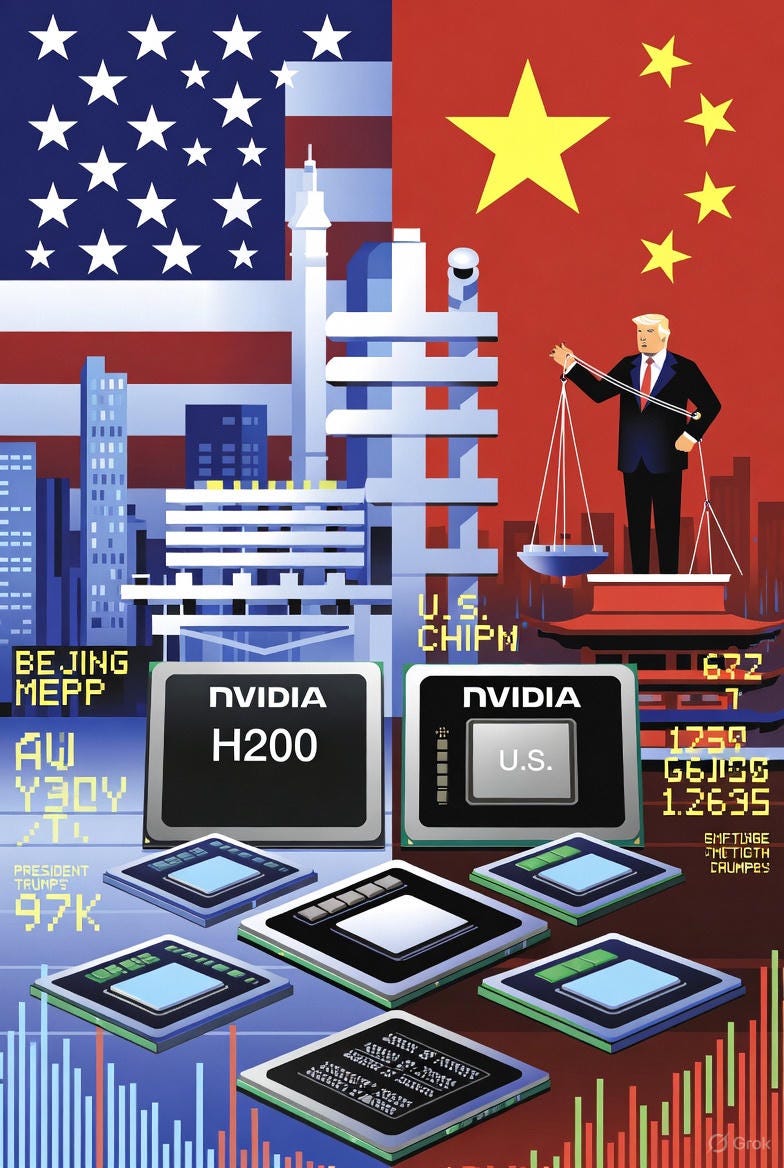
  • U.S. to allow Nvidia H200 sales to China. Nvidia won approval to sell H200 AI chips to “approved customers” in China, subject to a 25% surcharge, while reports suggest Beijing may still curb domestic access, clouding demand prospects.
  • Cursor developed an internal AI Help Desk that handles 80% of its employees’ support tickets, says the $29 billion startup’s CEO.
  • Warby Parker, Google to launch AI-powered smart glasses in 2026.
  • SoftBank and Nvidia reportedly in talks to fund Skild AI at $14B, nearly tripling its value.

Other Tech News

What AI got wrong today:

I’ve been building an AEO checker app using Vibe coding with Lovable, and I’m benchmarking it against Cursor and Gemini 3. One core feature sends users an email report with their site analysis. For that, I’m using Resend, which lets you connect your domain via DNS records, perfect for fast MVP testing and deployment.

I ran into DNS issues and asked ChatGPT for help. It confidently told me I didn’t need MX records. That advice was completely wrong. After ChatGPT doubled and tripled down on it, I added the MX records anyway, and everything worked instantly.

Just another real-world reminder:

LLMs still make confident, time-wasting errors that can distort your understanding of systems.

Trust your own thinking, verify with docs, and always cross-check when something doesn’t feel right.

Share

🛠️ AI Jobs Corner

Apply Today — Open Positions.

OpenAI’s Enterprise Momentum in One Snapshot

OpenAI released its State of Enterprise AI with a few key stats. This comes out when the model seems to be losing shine due to hefty competition from Anthropic and Gemini models. Adoption in Enterprise AI is still early, but the winners are being defined today.

  • Usage is exploding: ChatGPT message volume is up 8× YoY, and API reasoning-token usage surged 320×, a clear signal that companies are moving beyond basic prompts.
  • Real productivity gains: A new survey of 9,000 employees shows workers save 40–60 minutes per day, with the biggest wins in engineering and data science.
  • Enterprise penetration: 36% of U.S. businesses now use ChatGPT Enterprise.
  • Custom GPTs are taking off: Usage is up 19×, but most workers still don’t use advanced features like reasoning or search, meaning adoption is still early-stage with major upside left.
  • Non-technical workers are coding more: Research and IT employees without technical titles increased coding-related AI messages by 36% in the last six months.
  • Pressure is rising: Competition from Gemini, risk to consumer revenue, and $1.4 trillion in infrastructure commitments are real headwinds.
  • Pushback on “AI is useless” claims: OpenAI’s data directly contradicts recent MIT/Harvard studies that found zero ROI and “workslop.”

Enterprise AI is delivering measurable time savings and accelerating into deeper technical work, but most companies are still only scratching the surface. Altman, knows the urgency and instructed employees to boost ChatGPT through the better use of user signals. OpenAI is set to release a new model this week, and it also plans to release another model in January with better images, improved speed, and a better personality, after which it will end the ‘code red’.

Share

Is ChatGPT safe for Mental Support?

A new UK study of 11,000+ youths shows that 1 in 4 teenagers (13–17) and nearly 40% of those affected by youth violence now turn to AI chatbots like ChatGPT for mental health support, driven by long NHS waiting lists, privacy concerns, and 24/7 access.

Usage is twice as high among Black teens, and victims and perpetrators of violence are significantly more likely to rely on AI than their peers. Teens describe chatbots as non-judgmental, always available, and safer than adults, especially when fearing school or police involvement. But experts warn this creates serious risks, citing lawsuits linked to suicide cases and weak regulation, with youth leaders stressing that “children need a human, not a bot.” The findings expose a growing gap between mental health demand and real-world access, which AI is rapidly filling by default.

🧰 AI Tools of The Day

What We are Reading

  • Book Browse — Helps you discover Great Books
  • Opening Bell Daily — Industry-leading data newsletter covering the story of the stock market. Trusted by 190,000+ investors every single morning.
  • The Sales Wagon — Proven sales tactics, psychology, and automation strategies that help you close more deals and build predictable revenue.

One Standard for all AI models

Major AI players, including Anthropic, OpenAI, Google, and Microsoft, are set to form a new open-source standards group called the Agentic Artificial Intelligence Foundation, organized by the Linux Foundation, to standardize how AI agents connect to enterprise software.

The goal is to make AI agents interoperable across apps — similar to how banks standardized electronic payments, by aligning on tools like Anthropic’s Model Context Protocol (MCP), OpenAI’s Agents.md, and Block’s Goose local AI agent. MCP is already gaining real traction across products like ChatGPT and Google Workspace, enabling agents to connect tools like Slack to automate workplace tasks. However, CIOs warn that security risks like prompt-injection attacks remain unresolved, especially as companies plug agents into sensitive systems like PagerDuty and internal financial platforms. Despite the risks and the tech industry’s long history of open-standards disputes, the formation of this group signals a major push toward shared infrastructure for enterprise AI automation.


🛟Is ChatGPT safe for Mental Support? was originally published in Coinmonks on Medium, where people are continuing the conversation by highlighting and responding to this story.

The Real Economics Behind a Successful Uber-Style App

For over a decade, the narrative around ride-hailing has been dominated by giants like Uber and Lyft. Their story was one of massive venture capital, aggressive expansion, and, for a long time, significant losses. But for the modern entrepreneur looking to enter the market in 2025, the economic reality is different. You don’t need billions in the bank; you need a sustainable business model and the right technology.

The secret to a profitable taxi business today isn’t just about matching riders with drivers; it’s about managing the margins between customer acquisition costs (CAC) and lifetime value (LTV). This is where the strategic use of an Uber clone comes into play, shifting the focus from “growth at all costs” to “growth at a profit.”

The Shift from Development to Deployment

In the early days of the gig economy, 80% of a startup’s budget went into technology. Building a proprietary algorithm to match drivers and riders cost millions. Today, the economics have flipped. Smart entrepreneurs know that reinventing the wheel is a fast track to bankruptcy.

Instead of hiring a massive engineering team, successful founders leverage an Uber clone script. By using a pre-built, white-label solution, you reduce your initial capital expenditure (CapEx) by up to 90%. This liquidity is crucial because it frees up capital for what truly matters: marketing and driver liquidity.

When you use a robust Uber clone app, you aren’t just buying code; you are buying a business in a box that has already solved the complex problems of geolocation, payment splitting, and server scalability.

Revenue Streams: Beyond Simple Commissions

To understand the real economics, you must look beyond the standard 20% commission model. While an Uber clone script allows you to set commission rates easily, successful local apps are diversifying their revenue:

  • Surge Pricing Models: Just like the giants, you can use dynamic pricing during peak hours. This isn’t just about profit; it’s an economic lever to balance supply and demand, ensuring reliability.
  • Subscription Models: A rising trend involves offering “Pro” memberships to riders for waived booking fees, or “Driver” subscriptions where drivers pay a flat monthly fee instead of a per-ride commission. A flexible Lyft clone script can often accommodate these hybrid models.
  • Advertising Integration: Local businesses are often willing to pay for in-app placement, turning your taxi booking app into a marketing platform for restaurants or events in the destination city.

Operational Efficiency: The Hidden Profit Driver

The difference between a failing app and a unicorn often lies in the “burn rate.” A high-quality Lyft Clone App or Uber equivalent focuses on automation to keep operational costs low.

Automation over Administration

If you need a human dispatcher to manually assign every ride, your unit economics will fail. A modern taxi booking script uses intelligent dispatch algorithms to assign the nearest driver automatically. This reduces fuel costs for drivers (increasing their retention) and reduces wait times for riders (increasing their retention).

The Trust Economy

In the ride-hailing business, trust is a currency. Features like real-time tracking, SOS buttons, and driver verification are not just safety features; they are economic safeguards. A safe platform reduces insurance premiums and legal liabilities, directly impacting your bottom line.

Niche Domination vs. Global Domination

The “Uber for everything” model is fading. The new wave of successful apps focuses on niches.

  • Corporate Transport: specialized apps for employee commuting.
  • Medical Transport: non-emergency medical transport (NEMT).
  • Electric Vehicle (EV) Fleets: branding your Uber clone as an eco-friendly alternative.

By focusing on a niche, you drastically lower your Customer Acquisition Cost. You aren’t marketing to everyone; you are marketing to a specific group that has a recurring need.

Conclusion: Choosing the Right Partner

The economics of a ride-hailing startup are promising, provided you don’t overspend on the initial build. The goal is to launch fast, test the market, and iterate. This requires a development partner who understands not just code, but the business logic of the on-demand economy.

For entrepreneurs looking to enter this space with a competitive edge, Rentallscript stands out as a leading clonescript development company.

Their solutions, such as the Wooberly script, are designed with the modern economic model in mind, offering 100% customization, scalability, and a one-time payment structure that eliminates the bleed of monthly SaaS fees. Whether you are looking for a Lyft Clone Script or a specialized taxi solution, partnering with a veteran like Rentallscript ensures your technology is an asset, not a liability.

Frequently Asked Questions (FAQs)

Q1: Is it legal to use an Uber clone script for my business? Yes, it is perfectly legal. An “Uber clone” refers to the functionality and business model, not stolen code. Reputable development companies write their own code from scratch to mimic the popular features of major ride-hailing apps. As long as you purchase the script from a legitimate provider, you own the license to use and customize it for your brand.


The Real Economics Behind a Successful Uber-Style App was originally published in Coinmonks on Medium, where people are continuing the conversation by highlighting and responding to this story.

How Real-World Asset Tokenization Is Changing the Way Assets Are Bought and Sold

Tokenization is transforming how assets are bought and sold

Real-World Asset Tokenization

Real-world asset tokenization has rapidly emerged as one of the most transformative innovations in digital finance. By converting physical and traditional financial assets into blockchain-based tokens, this model is reshaping how assets are bought, sold, traded, and owned. From real estate and commodities to private credit, fine art, intellectual property, and even carbon credits, tokenization introduces a level of liquidity, transparency, and accessibility previously unattainable in conventional markets. As global institutions, enterprises, and investors continue to explore tokenized asset ecosystems, the shift is redefining fundamental market structures and creating entirely new opportunities for capital formation and economic participation.

Understanding Real-World Asset Tokenization

Real-world asset tokenization is the process of creating digital representations of physical or financial assets on a blockchain. These tokens are programmable and can be traded, split, or bundled to reflect ownership, usage rights, or revenue entitlements. For example, a tokenized piece of real estate could provide holders with rental income and appreciation proportional to their ownership share, while a tokenized commodity like gold could represent fractional ownership of the physical asset stored in a vault.

Tokenization can be applied to a wide range of assets, including:

  • Real estate: Residential, commercial, and vacation properties.
  • Commodities: Precious metals, oil, or agricultural products.
  • Financial instruments: Bonds, equities, and alternative investment funds.
  • Art and collectibles: High-value paintings, sculptures, and rare items.

Why Traditional Ownership and Trade Models Limit Market Efficiency

Most real-world assets — such as real estate, private equity, luxury goods, or commodities — are inherently illiquid. Traditional frameworks for buying or selling these assets include:

  • lengthy due diligence and documentation processes
  • high minimum investment thresholds
  • multiple intermediaries, each adding cost and delay
  • limited access to global buyers and sellers
  • regulatory barriers associated with cross-border transactions

These frictions restrict market participation and result in inefficient capital flow. Investors struggle to access attractive alternative asset classes, while asset owners find it difficult to unlock liquidity without selling the entire property or security.

How Tokenization Changes the Buying and Selling of Assets

1. Transactions Become Faster and More Efficient

Traditional asset transfers depend on clearinghouses, brokers, custodians, and legal verifications. These layers create delays that extend settlement times from days to weeks. Tokenization collapses these steps into a single blockchain transaction validated within seconds.

  • Real estate transfers no longer require lengthy title searches
  • Bond settlements move from T+2 to near-instant
  • Commodity ownership can shift without physical documentation
  • Private equity shares can be transferred digitally without complex approval processes

The use of smart contracts further automates compliance, payments, and settlement, removing human error and minimizing administrative workloads. The resulting efficiency reshapes how markets function, enabling higher transaction volumes and greater capital mobility.

2. Fractional Ownership Expands Investor Participation

One of the most impactful changes in asset markets is the introduction of fractional ownership through tokenization. By dividing assets into smaller units, tokenization lowers entry barriers and democratizes access.

Fractionalization enables:

  • A retail investor to buy $100 worth of a commercial building instead of the full $10 million property
  • Ownership of rare art pieces or luxury goods by multiple investors
  • Participation in corporate equity or private funds with small minimum investments
  • Commodity investments without requiring entire lots or warehouses

This transformation increases market depth and unlocks demand from investors previously priced out of the market. It also enables diversified portfolios, as individuals can allocate capital across multiple high-value assets without needing significant funds.

3. Enhanced Liquidity Through 24/7 Token Markets

Traditionally, many real-world assets suffer from low liquidity. Real estate, private equity, fine art, and collectibles are difficult to sell quickly without heavy price discounts. Tokenization counters this limitation by enabling continuous, global trading of asset-backed tokens.

Token marketplaces and regulated digital exchanges allow tokens to be bought and sold around the clock, similar to cryptocurrencies. This liquidity reduces the inefficiencies associated with long holding periods and creates new liquidity pathways for asset owners.

4. Global Accessibility and Cross-Border Transactions

Tokenization removes geographic barriers by making assets accessible to global investors through decentralized blockchain networks. Investors from any region can participate in tokenized markets, provided regulatory frameworks allow it.

This global reach:

  • Expands investor pools
  • Reduces dependency on local capital markets
  • Allows assets to be priced more efficiently
  • Enhances market competition

For asset owners, tokenization provides access to capital far beyond local markets, enabling more favorable price discovery and investment opportunities.

5. Transparent Ownership and Reduced Fraud

Blockchain’s immutable ledger records every transaction, providing a transparent and tamper-proof record of ownership. This visibility reduces prevalence of fraud, title disputes, or double-selling of assets.

In sectors such as supply chain, luxury goods, and commodities, tokenization ensures authenticity and verification at each stage of the asset’s lifecycle. Transparent records reduce operational risks and improve trust among investors, regulators, and asset handlers.

6. Programmable Assets and Smart Contract Automation

Tokenized assets become programmable, meaning their behavior, conditions, and rights can be embedded directly into the code through smart contracts. These programmable functions include:

  • Automatic distribution of rental income or dividends
  • Enforcement of compliance rules
  • Real-time valuation updates
  • Automated vesting schedules
  • Collateral liquidation procedures

Programmability replaces manual processes and enhances the functionality of assets beyond traditional models.

Benefits of Tokenizing Real-World Assets

1. Democratization of Investment

By enabling fractional ownership and global accessibility, tokenization democratizes investment opportunities. Small investors can now gain exposure to high-value assets, diversifying their portfolios without the need for large capital commitments. Democratization also promotes inclusivity and allows participation from regions previously excluded from certain markets.

2. Enhanced Market Liquidity

Tokenized assets are tradable on secondary markets, enabling faster and more flexible buying and selling. This liquidity attracts a larger investor base and facilitates better price discovery, creating more efficient markets for previously illiquid assets.

3. Transparency and Trust

Blockchain’s transparent ledger ensures investors have access to real-time ownership and transaction data. Automated compliance and smart contracts reduce operational risk and build trust among participants, encouraging greater investment activity.

4. Lower Barriers to Entry

High-value assets that were traditionally restricted to institutional investors are now accessible to smaller participants. This opens up opportunities for diversified investment strategies and allows more people to participate in wealth creation.

5. Efficient Capital Raising for Asset Owners

Asset owners can raise capital more efficiently by tokenizing their assets and selling tokens directly to investors. This reduces dependence on traditional financing methods, cuts costs, and accelerates the fundraising process.

Real-World Examples of Tokenized Assets

  1. Real Estate: Platforms like RealT and Slice RE tokenize residential and commercial properties, allowing investors to purchase fractional ownership and earn rental income or appreciation.
  2. Commodities: Gold and other precious metals have been tokenized, enabling investors to own fractions of physical commodities without storing or transporting them.
  3. Art and Collectibles: Tokenization platforms allow fractional ownership of artworks and rare collectibles, giving investors exposure to valuable assets with lower capital requirements.
  4. Bonds and Securities: Tokenized bonds and equity shares are traded on blockchain networks, offering improved liquidity, faster settlement, and lower operational costs.

Challenges and Considerations

Despite its benefits, real-world asset tokenization faces several challenges:

1. Regulatory Uncertainty

The regulatory environment for tokenized assets is still evolving. Different jurisdictions have varying rules regarding securities, property ownership, and digital assets. Compliance with KYC/AML regulations and securities laws is critical, and uncertainty can slow adoption.

2. Market Adoption

Tokenization is still relatively new, and investors may be hesitant to adopt it without understanding the technology or market dynamics. Education and awareness are crucial to wider adoption.

3. Technology Risks

While blockchain is secure, smart contracts and token platforms must be thoroughly audited to prevent coding errors, security breaches, or vulnerabilities that could compromise investor funds.

4. Valuation and Pricing

Determining the accurate value of tokenized assets can be challenging, especially for illiquid or non-standard assets. Transparent and reliable valuation mechanisms are essential for investor confidence and market efficiency.

Future Outlook

The potential of real-world asset tokenization is vast. Some trends shaping the future include:

  • Integration with DeFi Platforms: Tokenized assets may be used as collateral in decentralized finance ecosystems, enabling lending, borrowing, and liquidity pooling.
  • Expansion Across Asset Classes: Beyond real estate and commodities, tokenization will likely include infrastructure, intellectual property, and private equity.
  • Globalized Investment Platforms: Cross-border tokenized asset trading will become more seamless, enhancing market liquidity and access.
  • Institutional Participation: Institutional investors are expected to adopt tokenization for portfolio diversification, capital efficiency, and improved liquidity management.
  • Smart Contract Innovations: More sophisticated contracts will automate governance, compliance, and profit distribution, reducing operational complexity and risk.

As technology matures and regulatory frameworks stabilize, tokenization has the potential to become a mainstream approach for buying, selling, and managing assets.

Conclusion

Real-world asset tokenization is transforming how physical and financial assets are bought, sold, and managed by converting them into digital tokens. This process enables fractional ownership, enhances liquidity, lowers entry barriers, and increases transparency and efficiency, giving investors greater flexibility, global access, and faster transactions while allowing asset owners to raise capital more efficiently and reach broader markets. Although challenges such as regulatory uncertainty, technological risks, and adoption hurdles remain, the advantages are clear, and as blockchain adoption grows, tokenization is poised to make previously illiquid assets accessible, tradable, and inclusive for investors worldwide.


How Real-World Asset Tokenization Is Changing the Way Assets Are Bought and Sold was originally published in Coinmonks on Medium, where people are continuing the conversation by highlighting and responding to this story.

How to Build a Powerful Identity Tokenization Platform

How to Build a Powerful Identity Tokenization Platform

Digital identity has become one of the most critical components of modern online interactions. From financial applications and healthcare services to enterprise access management and e-commerce, identity verification forms the foundation of trust. However, traditional identity systems centralized databases, manual verification steps, and repeated sharing of sensitive information introduce major risks, including data leaks, identity theft, unauthorized access, and compliance failures.

With the rise of blockchain, zero-knowledge technology, and Web3 ecosystems, Identity Tokenization Platforms are emerging as a transformational approach to digital identity security. They replace vulnerable raw data with cryptographic tokens, enabling users and organizations to share identity attributes without revealing personal information. As industries shift toward decentralized systems, building a powerful identity tokenization platform becomes an essential step for businesses, developers, and Web3 startups.

This guide explains the complete process, from fundamentals to architecture, features, and development steps, helping you understand exactly how to build a powerful Identity Tokenization Platform for 2025 and beyond.

1. Introduction to Identity Tokenization

Identity tokenization is the process of converting sensitive identity data such as names, addresses, biometrics, or government IDs into secure, non-exploitable tokens. These tokens maintain the functionality of the original data but remove risk, making them safe for storage, transfer, and verification.

What Makes Tokenization Powerful?

★It eliminates raw data exposure
★Tokens cannot be reverse-engineered
★Works with decentralized identity (DID) frameworks
★Supports privacy-preserving verification
★Reduces risk of hacks and compliance violations

In short, identity tokenization helps build ecosystems where users control their identity, and organizations can verify claims without accessing sensitive information.

2. Why Businesses Need an Identity Tokenization Platform

Rising Security Threats
Global cyberattacks are increasing, with identity theft affecting millions each year. Centralized databases remain the biggest points of failure.

Compliance Requirements
Regulations like GDPR, HIPAA, CCPA, and global KYC/AML guidelines demand modernized identity handling. Tokenization provides a compliant and auditable solution.

Web3 and Decentralized Applications
Blockchain-powered platforms require self-sovereign identities, tokenized credentials, and decentralized verification systems.

Seamless User Experience
Tokenized identity tokens allow users to share verifiable claims instantly without repeatedly uploading documents.

Enterprise Digital Transformation
Businesses integrating cloud systems, AI, and IoT require secure, interoperable, and scalable identity frameworks.

3. Core Components of a Powerful Identity Tokenization Platform

A successful identity tokenization platform relies on several foundational components. Understanding these helps ensure secure and scalable development.

Identity Capture Layer

This module collects identity information, such as:

★Government ID documents
★Biometrics
★Phone numbers & emails
★Account credentials
★Certificates & licenses
★Corporate identity data

AI-powered OCR and biometric verification help automate this step.

Tokenization Engine

This is the heart of the platform. It:

★Replaces sensitive identity data with cryptographic tokens
★Ensures tokens have no exploitable value if leaked
★Supports various token formats (static, dynamic, hashed, blockchain-based)
★The engine must be fast, secure, and built for high-volume requests.

Decentralized Storage Layer

Sensitive identity data should never be stored in one place. Instead:

★Encrypted fragments can be stored on distributed networks
★Zero-knowledge storage enables privacy-preserving retrieval
★Blockchain can store non-sensitive proofs

This ensures total data protection even during breaches.

Blockchain Integration

Blockchain plays a critical role in:

★Storing decentralized identifiers (DIDs)
★Issuing verifiable credentials
★Storing identity hashes
★Enabling trustless cross-platform verification

Popular blockchain choices include: Ethereum, Polygon, Hyperledger Indy, Solana, Avalanche, and Cosmos.

Zero-Knowledge Verification Layer

This component enables verification without exposing raw data.

For example:
A user can prove they are above 18 without revealing their birthdate.

Access Control & Permissions
The platform must give users full control:
★Who can access data?
★Which claim can be shared?
★For how long?
★Can permissions be revoked?

User sovereignty is a key differentiator from Web2 identity systems.

API Integration Layer

Powerful APIs enable businesses to integrate identity verification into:

★Banking apps
★Web3 platforms
★Exchanges
★Healthcare portals
★Government portals
★E-commerce systems

An easy-to-integrate API dramatically increases adoption.

Step-by-Step Guide: How to Build a Powerful Identity Tokenization Platform

This section provides a complete development blueprint.

Step 1: Outline Primary Use Cases and Audience Segments

Before development, identify who the platform will serve:

Possible Use Cases
★KYC verification for exchanges
★Web3 dApp authentication
★Financial onboarding
★Healthcare data protection
★Workplace access management
★IoT device identity
★Multi-chain identity wallets

Clarity in use cases determines the required features, security architecture, and tokenization model.

Step 2: Choose an Identity Framework

Two major frameworks dominate identity tokenization:

1. Decentralized Identity (DID)
★W3C-compliant
★User-controlled identity
★Interoperable across platforms

2. Self-Sovereign Identity (SSI)
★Gives individuals full ownership
★Uses verifiable credentials
★Zero-knowledge enabled

Choosing the right framework defines the structure of identity tokens.

Step 3: Design the Tokenization Model

There are several tokenization models:

Static Tokenization
Fixed tokens for consistent identity references.

Dynamic Tokenization
Tokens change on every request, improving anonymity.

Format-Preserving Tokenization
Token retains data format (useful for legacy systems).

Blockchain-based Tokenization
Creates NFTs or credential tokens representing identity proofs.

Choose based on the sensitivity of data and interoperability requirements.

Step 4: Build the Tokenization Engine

The engine should include:

★Cryptographic hashing (SHA-256 / SHA-3)
★Encryption keys
★Token generation algorithms
★Data mapping tables
★Non-reversible tokenization logic

This engine determines the platform’s security strength.

Step 5: Develop Identity Verification Modules

Integrate advanced verification tools:

★AI-Powered Document Verification
★OCR
★MRZ scanning
★Document authenticity detection
★Biometric Verification
★Face match
★Fingerprint match
★Liveness detection
★KYC/AML Gateways

Supports regulatory onboarding processes.

Step 6: Integrate Blockchain & Smart Contracts

Smart contracts automate identity validation workflow:

★Issue identity tokens
★Store identity proofs
★Validate claims
★Manage revocation
★Track access trails

Blockchain ensures transparency and immutability.

Step 7: Build User Identity Wallets

Users need a secure interface to manage identity tokens.

Key Features
★Identity token storage
★Permission controls
★Claim sharing
★DID management
★QR authentication
★Multi-chain support

This wallet forms the user-facing component of the platform.

Step 8: Create Admin & Enterprise Dashboard

Organizations need:
★Access logs
★Verification analytics
★Token management
★API usage tracking
★Audit reports
★Security alerts

This dashboard helps enterprises integrate and monitor identity flows.

Step 9: Build API and SDK Integrations

Provide plug-and-play tools:

★REST APIs
★Webhooks
★JavaScript & Python SDKs
★Mobile SDKs (iOS, Android)
★Easy integration accelerates enterprise adoption.

Step 10: Implement Compliance & Security Standards

A powerful identity tokenization platform must follow standards:

★GDPR
★CCPA
★HIPAA
★ISO 27001
★SOC 2
★KYC/AML regulations

Security implementation includes:

★End-to-end encryption
★Key rotation
★HSM modules
★Two-factor access
★Role-based permissions

5. Key Features of a Powerful Identity Tokenization Platform

A successful platform should include:

★Decentralized Identifiers (DID)
★Verifiable Credentials (VCs)
★Zero-Knowledge Authentication
★Encrypted Identity Vault
★Multi-chain Identity Support
★Dynamic Token Lifecycle Management
★Biometrics & Multi-factor Authentication
★Regulatory Reporting Tools
★Access Revocation Features
★Data Minimization Mechanisms

These features ensure reliability, privacy, interoperability, and scalability.

6. Benefits of Identity Tokenization

Increased Data Security
Tokens eliminate the risk of raw data exposure.

User Privacy Protection
Users share only required claims, not full documents.

Reduced Compliance Burden
Tokenized data minimizes risk profiles for organizations.

Faster Verification Workflows
No need for repeated document submissions.

Cross-platform Interoperability
Multiple services can verify the same identity token securely.

Seamless Web3 Integration
Supports blockchain-based ecosystems and decentralized apps.

Fraud Prevention
Tokens cannot be reverse-engineered or reused fraudulently.

7. Technologies Required to Build the Platform

Blockchain Frameworks
Ethereum, Hyperledger Indy, Polygon, Polkadot, Solana.

Cryptographic Tools
AES-256, SHA-256, RSA, Zero-Knowledge proofs.

AI & ML Tools
OCR, liveness detection, pattern analysis.

User Wallet Tech
React Native, Flutter, Swift, WalletConnect.

Backend Technologies
Node.js, Go, Python, Rust, PostgreSQL, IPFS, MongoDB.

8. Challenges and How to Overcome Them

Ensuring Complete Privacy
Use zero-knowledge proofs and encrypted storage.

Achieving Regulatory Compliance
Implement global compliance frameworks early in development.

Cross-platform Interoperability
Support W3C DID and VC standards for global acceptance.

Managing Large Data Sets
Use distributed storage systems like IPFS or secure cloud shards.

Enterprise Adoption Barriers
Provide clear APIs, documentation, and onboarding support.

9. Future of Identity Tokenization

Identity tokenization will transform:
★Digital banking
★DeFi and Web3
★Healthcare and insurance
★Global travel and e-governance
★Smart cities
★Enterprise security

As AI, blockchain, and cryptography converge, the future will lean toward self-owned, tokenized identities that enable safe, fast, and private digital interactions globally.

Conclusion

Building a powerful identity tokenization platform requires a combination of blockchain technology, advanced cryptography, AI verification modules, and privacy-first architecture. As digital ecosystems expand, identity tokenization becomes a fundamental pillar for security, compliance, and trust.


How to Build a Powerful Identity Tokenization Platform was originally published in Coinmonks on Medium, where people are continuing the conversation by highlighting and responding to this story.

New on the NordFX Blog: How to Trade News & Macro Events

By: NordFX

Economic data, central-bank meetings, inflation reports and geopolitical developments shape every major market move. Understanding these drivers is essential whether you trade forex, gold, oil, indices, or crypto.

In this new article, NordFX breaks down:
• How to navigate the economic calendar
• Why CPI, GDP, NFP and rate decisions move markets
• How macro events affect different asset classes
• How to manage risk during high-volatility sessions

The article is practical, structured, and designed to help traders build a clearer framework for interpreting market reactions.

Read it here 👉
https://nordfx.com/useful-articles/nordfx-trade-news-macro-events-guide?utm_source=social&utm_medium=post&utm_campaign=nordfx

🧠 A great read for anyone looking to trade smarter during news events.


📊 New on the NordFX Blog: How to Trade News & Macro Events was originally published in Coinmonks on Medium, where people are continuing the conversation by highlighting and responding to this story.

Top 10 Token Standards Powering Modern Tokenization

Top 10 Token Standards Powering Modern Tokenization

Tokenization has become one of the most transformative innovations within the blockchain ecosystem. From real-world assets (RWA) and financial instruments to supply chain tracking, gaming items, identity management, and digital collectibles tokenization unlocks a new paradigm of ownership, liquidity, and transparency.

As more enterprises, governments, exchanges, and startups step into blockchain, the need for standardized, secure, and interoperable token formats continues to grow. Token standards act as frameworks that guide how digital assets behave, interact, and move across blockchain networks. Without standards, the token economy would be chaotic, incompatible, and vulnerable to technical loopholes.

In 2026 and beyond driven by RWAs, CBDCs, enterprise blockchain adoption, DeFi 2.0, and global tokenization regulations token standards will be the backbone of digital assets.

This blog explores the Top 10 Token Standards Powering Modern Tokenization, diving deep into their roles, benefits, and use cases across industries.

1. ERC-20: The Universal Standard for Fungible Tokens

ERC-20 remains the most widely adopted token standard in the world. It powers fungible tokens assets where each unit holds identical value, such as cryptocurrencies, utility tokens, governance tokens, and security tokens (with added compliance layers).

Why ERC-20 Dominates Tokenization
✦Highly flexible and programmable
✦Compatible with all Ethereum-based wallets and exchanges
✦Widely supported in DeFi platforms
✦Excellent liquidity and interoperability

Popular Uses
✦ICOs and IDOs
✦Governance tokens
✦Stablecoins (USDT, USDC)
✦Platform tokens
✦Staking tokens

Strengths
✦Simple, battle-tested, and secure
✦Huge developer ecosystem
✦Seamless integration with DeFi protocols

ERC-20 remains the foundation for most tokenization projects worldwide.

2. ERC-721: The Standard Behind NFTs & Digital Uniqueness

ERC-721 revolutionized Web3 by enabling Non-Fungible Tokens (NFTs) tokens with unique attributes, metadata, and ownership.

Why ERC-721 Is Crucial for Tokenization

It supports:
✦Unique digital collectibles
✦Verifiable ownership
✦Immutable metadata
✦Authentic digital identity

Popular Uses
✦Real estate tokenization (unique property deeds)
✦Art, music, and collectibles
✦Gaming assets
✦Identity tokens

Strengths
✦Perfect for representing one-of-a-kind assets
✦Secure and immutable ownership transfer
✦Massive ecosystem support (OpenSea, Rarible, etc.)

3. ERC-1155: Multi-Token Standard for Hybrid Assets

Many modern tokenization projects require a mix of fungible and non-fungible assets. ERC-1155 enables that flexibility.

Key Advantages
✦Stores multiple token types in a single contract
✦Reduces gas fees
✦Efficient for high-volume tokenization
✦Ideal for gaming economies and RWA bundling

Popular Uses
✦Gaming ecosystems
✦Metaverse assets
✦Semi-fungible tokens (tickets, vouchers)
✦Commodity baskets (gold-silver bundles)

ERC-1155 is becoming a preferred standard for scalable and multi-asset tokenization.

4. BEP-20: Binance Smart Chain’s Token Standard

BEP-20 mirrors ERC-20 but operates on Binance Smart Chain (BSC) a fast, low-cost, and scalable network.

Why BEP-20 Gained Massive Adoption
✦Extremely low transaction fees
✦Easy migration from ERC-20
✦Rapid token deployment
✦Strong presence in DeFi and GameFi

Popular Uses
✦IDOs/ICOs on BSC Pad
✦Farming and staking tokens
✦GameFi ecosystem assets
✦Meme tokens

Strengths
✦High throughput
✦Huge community and liquidity
✦Easier scalability for startups

5. TRC-20: Tron’s High-Speed Token Standard

TRC-20 is Tron’s version of ERC-20, designed for high-speed and low-fee transactions.

Why TRC-20 Matters in Tokenization
✦Near-zero gas fees
✦High transaction volume capability
✦Popular with exchanges and cross-border payment platforms

Uses
✦Payment tokens
✦Reward tokens
✦Stablecoins (USDT TRC-20 dominates global transfers)

Strengths
✦Cost-efficient
✦Scalable for enterprise-level tokenized financial systems

6. SPL Tokens: The Standard Behind Solana’s Token Ecosystem

Solana’s SPL token standard powers one of the fastest-growing ecosystems.

Why SPL Tokens Are Essential
✦Solana offers 50,000+ TPS
✦Extremely low transaction costs
✦Ideal for real-time tokenized applications

Popular Uses
✦DeFi
✦Real-time gaming
✦Tokenized loyalty programs
✦Instant settlement systems

Strengths
✦High speed
✦Great for high-volume tokenized environments

7. FA2 Token Standard (Tezos): Multi-Asset & Flexible

FA2 is Tezos’ universal token standard, supporting fungible, non-fungible, and multi-asset tokens.

Why FA2 Is Important
✦Unified contract for all token types
✦Strong compliance features
✦Great for enterprises and RWA tokenization

Popular Uses
✦Tokenized securities
✦Real estate
✦Carbon credits
✦NFT marketplaces

Strengths
✦Offers strong governance and upgradeability
✦Developer-friendly

8. Polkadot’s PSP22 / PSP34 Standards

Polkadot’s smart contract standards (PSP22 for fungible, PSP34 for NFTs) are becoming essential for cross-chain tokenization.

Why They Matter
✦Built for interoperability
✦Strong cross-chain compatibility
✦Suitable for enterprises building multi-chain RWA platforms

Popular Uses
✦Cross-chain assets
✦Tokenized financial instruments
✦Interoperable NFTs

Strengths
✦High scalability
✦Multi-chain support

9. Cardano’s Native Asset Standard

Cardano doesn’t use smart contracts for tokens. Instead, tokens are native to the ledger making them more secure and efficient.

Why Cardano Tokenization Stands Out
✦No gas for token creation
✦Built-in ledger rules
✦Extremely secure

Popular Uses
✦Tokenized credentials
✦Identity-based tokens
✦Government-backed projects (Africa initiatives)
✦Utility and governance tokens

Strengths
✦Predictable fees
✦Formal verification ensures security

10. ERC-3643 (T-REX Standard): For Compliant Security Tokens

ERC-3643 (formerly ERC-1400/T-REX) is the most important token standard for regulated tokenization.

Why ERC-3643 Is the Future of Security Tokenization
✦Built-in compliance
✦On-chain identity validation
✦Transfer restrictions
✦Audit-ready structure

Popular Uses
✦Real-world assets (gold, real estate, equities)
✦Tokenized bonds
✦Private securities
✦Institutional tokenization frameworks

Strengths
✦Regulatory-friendly
✦Essential for enterprise adoption
✦Suitable for STOs and tokenized funds

Why Token Standards Matter in Modern Tokenization

Token standards bring structure, trust, and interoperability to blockchain ecosystems. They:

✦Ensure seamless wallet and exchange support
✦Reduce development costs
✦Increase security
✦Enable interoperability between platforms
✦Build trust among investors
✦Allow institutions to adopt blockchain safely

Without token standards, mass adoption of digital assets would not be possible.

How Token Standards Transform Industries

Real Estate
✦Fractional ownership tokens
✦Deeds as NFTs
✦Rental income distribution via stablecoin tokens

Finance & Banking
Tokenized equities
Bonds
Funds
Derivatives
CBDCs

Supply Chain
Track-and-trace tokens
Authentication NFTs

Gaming & Metaverse
Hybrid assets (ERC-1155)
In-game currencies (ERC-20/SPL)

Healthcare
Patient ID tokens
Medical data NFTs

Energy & Sustainability
Carbon credit tokens
Renewable energy tokens

Tokenization is becoming the infrastructure for the next decade of digital commerce.

Future of Token Standards: What’s Coming in 2026 & Beyond?

1. RWA-Focused Standards

Designed for:
✦Property tokens
✦Commodities
✦Tokenized securities
✦Regulated assets

2. Interoperability Standards

Cross-chain compatibility will be mandatory.

3. Privacy-Enabled Token Standards

Zero-knowledge proofs will protect sensitive data.

4. Enterprise Token Standards

Built for:
✦Compliance
✦Governance
✦Auditability

5. AI-Integrated Token Frameworks

AI agents managing smart contracts and tokenized workflows.

Conclusion

Token standards are the core infrastructure behind tokenization’s global growth. As enterprises digitize assets, institutions adopt blockchain, and Web3 expands into the mainstream, choosing the right token standard can make or break a project.

From ERC-20 and ERC-721 to ERC-3643, SPL Tokens, and Polkadot standards, each plays a unique and crucial role in shaping digital ownership, liquidity, and global financial innovation.

In 2026 and beyond driven by RWAs, enterprise blockchain, and rapidly evolving Web3 ecosystems token standards remain the most powerful force enabling secure, scalable, and interoperable tokenization.


Top 10 Token Standards Powering Modern Tokenization was originally published in Coinmonks on Medium, where people are continuing the conversation by highlighting and responding to this story.

How U.S. Chip Bans Backfired: China’s Path to Semiconductor Self-Sufficiency

There’s an old Turkish proverb that goes, “Kötü komşu insanı hacet sahibi yapar,” which roughly translates to “A bad neighbor makes one self-reliant.” It suggests that adversity from others can force you to become independent and resourceful. In the world of global tech geopolitics, this couldn’t ring truer than in the saga of U.S. export restrictions on advanced AI chips to China. What started as a strategy to curb China’s technological rise has instead accelerated its journey toward self-sufficiency in semiconductors. Fast forward to December 2025, and even as President Trump lifts bans on Nvidia’s H200 chips, China is reportedly imposing its own limits on access to them — preferring to nurture its domestic industry instead. This article explores how America’s restrictions paved the way for China’s tech independence, proving that sometimes, “bad neighbors” are the best motivators.

Grok

China’s Response: From Dependency to Domestic Dominance

Faced with isolation, China didn’t sit idle. Beijing poured billions into its “Made in China 2025” initiative, which had already aimed to boost semiconductor self-sufficiency but gained new urgency post-bans. Key players like Huawei, SMIC (Semiconductor Manufacturing International Corporation), and others ramped up R&D.

  • Investments and Subsidies: China accelerated subsidies for local chipmakers, funding everything from fabrication plants to AI research. By 2025, reports indicate China’s AI chip self-sufficiency rate has climbed from 34% in 2024 to projections of 82% by 2027.
  • Bans on Foreign Chips: In a bold move signaling confidence, China banned foreign AI chips, including Nvidia’s, from state-funded data centers in November 2025. This policy funneled demand toward homegrown alternatives like Huawei’s Ascend series and chips from startups like Cambricon.
  • Technological Breakthroughs: Despite initial setbacks, Chinese firms made strides in advanced nodes. SMIC, for instance, has been producing 7nm chips, bypassing some U.S. tool dependencies through stockpiling and innovation. The new five-year plan emphasizes semiconductor and AI self-reliance, aiming to reduce reliance on exports and boost domestic spending.

This pivot wasn’t just reactive; it was strategic. Smuggling networks emerged to circumvent bans, but the real win was in building internal capabilities. As a result, China has developed ecosystems for AI training and inference that rival Western tech, even if not yet at the bleeding edge.

The Twist: Trump’s Reversal and China’s Self-Imposed Limits

In a surprising policy shift, President Trump announced in December 2025 that the U.S. would allow Nvidia to export H200 chips to “approved customers” in China, with a 25% revenue cut going to the U.S. government. This move aimed to balance U.S. economic interests — Nvidia’s stock surged on the news — while maintaining some leverage.

But here’s where the Turkish proverb shines: China, now bolstered by its progress, isn’t biting. Regulators are discussing limits on H200 access through customs checks, subsidies for locals, and potential public-sector bans. Why rely on a “bad neighbor” when you’ve learned to fend for yourself? Beijing’s focus on self-sufficiency means it no longer desperately needs these imports; domestic chips suffice for many applications, and the bans have fostered a resilient industry.

Lessons Learned: Self-Reliance in a Fractured World

The U.S.-China chip war illustrates how export controls, while protective in the short term, can accelerate rivals’ independence. For China, the restrictions were a catalyst, turning vulnerability into strength. As Morgan Stanley predicts, by 2027, China could dominate its own AI chip market.

In the end, the Turkish proverb reminds us that adversity breeds innovation. The “bad neighbor” policy from the U.S. didn’t hobble China — it made it a semiconductor powerhouse. As global tech tensions evolve, other nations might take note: sometimes, the best way to thrive is to build your own tools.

What do you think? Has the U.S. strategy backfired, or is there more to come? Share your thoughts in the comments.

(Disclosure: This article is based on publicly available reports and analyses as of December 2025.)


How U.S. Chip Bans Backfired: China’s Path to Semiconductor Self-Sufficiency was originally published in Coinmonks on Medium, where people are continuing the conversation by highlighting and responding to this story.

❌