Reading view

There are new articles available, click to refresh the page.

Ethereum Rewards Keep Rolling In As SharpLink Posts Fresh Staking Gains

Many major companies continue to lock in on Ethereum, the second-largest digital asset, despite the ongoing volatile action of the altcoin’s price. One of the methods currently adopted by these companies to grow their ETH portfolios is via Ethereum Staking, where they earn notable rewards.

SharpLink Scores Another Major Ethereum Staking

In the ever-evolving world of cryptocurrency, the Ethereum staking economy is still demonstrating its durability. As the staking economy gains traction, SharpLink Gaming, a leading public company, is once again at the center of this wave, with massive rewards from its ETH staking positions.

Being the first publicly traded company to adopt ETH as its primary treasury reserve asset, SharpLink continues to increase its exposure to Ethereum, as evidenced by its staking gains. A recent post on the X platform by the company reveals another round of significant staking rewards in the past week.

This development showcases the power of ETH’s proof-of-stake network in general as well as the company’s increasing yield performance. Furthermore, the most recent gains are bolstering confidence in long-term staking plans, which comes at a time when investors are keeping a closer eye on on-chain returns than ever.

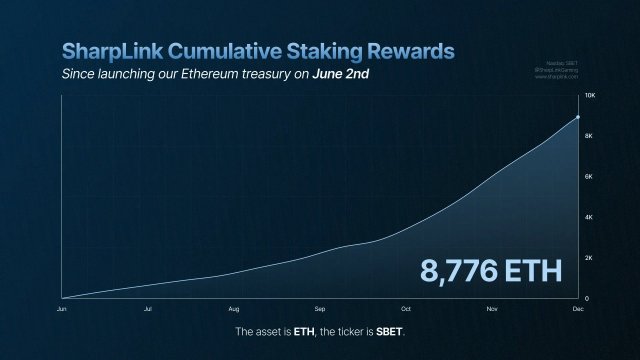
As seen in the latest report, SharpLink scooped in over 446 ETH from staking rewards just last week. It was worth noting that since the company launched its ETH treasury in June 2025, they has experienced a persistent rise in their cumulative staking rewards.
Ethereum

Following the recent gains, the total cumulative rewards have reached 8,776 ETH, which seems to have ignited a frenzy in the community. The firm’s ETH holdings remain 100% staked in an institutional-grade manner and maintain compounding value for the treasury.

Mlik Road, a crypto enthusiast, highlighted that at current prices and holdings, SharpLinks’ latest staking reward in one week is valued at $1.38 million. Interestingly, this amounts to around $70 million in income for the gaming firm annually.

As rewards keep rolling in, the important part of this development is that this figure is only expected to continue growing. When the price of ETH rises, the staking revenue of SharpLink will increase. In addition, when the firm’s ETH holdings increase, its staking income will multiply.

Whales Are Adding More ETH To Their Wallets

Ethereum’s bounce appears to have shifted the sentiment of investors, especially large investors or whales, toward a bullish standpoint. According to Santiment, a leading market intelligence and on-chain data analytics platform, ETH was a notable gainer on Tuesday, with a rise of +8.5% and an optimistic accumulation trend from whales and sharks.

Related Reading: Ethereum Emerges As A Dollar Settlement Powerhouse, Outpacing Traditional Payment Networks – Details

While these big investors have resumed ETH accumulation, retail holders have been offloading their holdings at a fast rate. Data shared by Santiment shows a massive accumulation of 949,240 ETH worth $3.15 billion in the past 3 weeks by whales. Meanwhile, small retail investors have gone on a selling spree, dumping 1,041 ETH over the past week.

Ethereum

ETF на Dogecoin фиксирует худшую активность трейдеров с начала работы

Торговая активность вокруг Dogecoin в этом цикле все заметнее смещается от крупных институциональных продуктов к более спекулятивным и «игровым» форматам. Падение объемов в биржевом фонде на Dogecoin показывает: интерес розницы к пассивному экспозиционному инструменту уходит, тогда как тяга к риску никуда не делась.

Для многих трейдеров Dogecoin давно превратился из мема в «голубую фишку» среди шуточных токенов, но именно это со временем убивает адреналин. Если ETF показывает минимальные объемы с момента запуска, значит, трейдерам становится скучно просто держать DOGE через традиционный фонд. Им нужен драйв, плечо и комьюнити, где рост ощущается физически.

Одновременно рынок мем‑токенов продолжает кипеть: появляются новые персонажи, трейдинговые сообщества, формируются собственные субкультуры. Там, где институциональный продукт дает лишь хранилище стоимости, розница ищет идентичность, игру и возможность «выжать максимум» из каждого движения рынка. Это особенно заметно по всплескам активности на платформах с деривативами и соревнованиями по доходности, а также по подборкам топ‑мем‑токенов на профильных ресурсах.

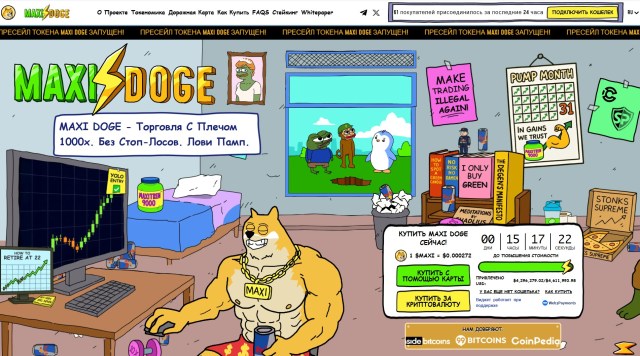
Именно на этом пересечении — усталость от «официального» Dogecoin и жажда экстремального риска — появляется Maxi Doge ($MAXI). Проект предлагает не просто мем, а культ пампа, совмещая образ пса‑качка с культурой предельного плеча и соревновательными механиками для розничных трейдеров.

КУПИТЬ MAXI DOGE

Почему мем‑токены и трейдинговые комьюнити смещают фокус с Dogecoin

Снижающиеся объемы ETF на Dogecoin показывают, что классическая модель «купил и забыл» перестает быть центром внимания розницы. В условиях бычьего рынка трейдеры все чаще выбирают активы с возможностью многократного роста и активного участия, а не скучный биржевой продукт.

MaxiDoge

В сегменте мем‑токенов усиливается конкуренция: рядом с Dogecoin и Shiba Inu выстраивается целая линейка новых монет с агрессивным маркетингом, игровыми механиками и собственными культами силы. Здесь важны не только котировки, но и вовлеченность в чаты, таблицы лидеров, турниры и совместные акции с площадками деривативов. 

На этом фоне возникает спрос на проекты, которые напрямую заточены под розничного инвестора с «макси‑менталитетом»: стремление к высокой доходности, готовность к риску и желание соревноваться. Maxi Doge выступает одним из таких вариантов, соединяя мем, культуру экстремального трейдинга и инструменты для геймификации доходности, не подменяя это скучной институциональной игрой.

Maxi Doge как ответ на усталость от пассивного Dogecoin

Трейдеры розничного сегмента часто не обладают ни капиталом, ни уверенностью крупных игроков, но стремятся к сопоставимым результатам. Maxi Doge строит на этом целую философию: пес-качок символизирует 1000‑кратное плечо, где каждый участник сообщества соревнуется, а не просто наблюдает за графиком.

Ключевая идея — «Leverage King Culture»: токен и бренд передают энергию предельного плеча и постоянного соревнования среди трейдеров. Закрытые соревнования для держателей с таблицами лидеров по доходности, распределением призов и партнерскими событиями с площадками деривативов превращают владение $MAXI в постоянную игру на результат, а не пассивное хранение.

Токен работает на сети Ethereum с управлением предложения и распределения через смарт‑контракт. Создан казначейский Maxi Fund, который поддерживает ликвидность и финансирует партнерства. Уже на этапе предварительной продажи собрано $4,3 млн при цене около 0,0002725 доллара за $MAXI, что сигнализирует о заметном интересе к концепции мем‑токена с трейдинговым уклоном.

Дополнительный слой — механика стейкинга с динамической доходностью: ежедневное автоматическое распределение наград смарт‑контрактом из специально выделенного пула в 5% на протяжении до одного года. В совокупности с мем‑маркетингом и подчеркнутой целью обойти по динамике даже оригинальный DOGE, это позиционирует $MAXI как инструмент для тех, кто не хочет мириться с вялой статистикой ETF.

US Banking Giants Are Quietly Piling Into Bitcoin Credit, Claims Michael Saylor

At Bitcoin MENA 2025 in Abu Dhabi, Michael Saylor used his keynote to deliver a clear message: major US banks have quietly pivoted from excluding Bitcoin to actively building products on top of it – and they are now coming directly to him.

“In the past six months I have noted and been approached by BNY Mellon, by Wells Fargo, by Bank of America, by Charles Schwab, by JP Morgan, by Citi,” the Strategy (MSTR) executive chairman said. “They are all starting to issue credit against either Bitcoin or against Bitcoin derivatives like IBIT.”

JUST IN: Michael Saylor says he got approached by all the major banks recently to launch #Bitcoin products and services.

Banks are here 🙌 pic.twitter.com/AcHQRCaP7y

— Bitcoin Magazine (@BitcoinMagazine) December 9, 2025

Big Banks Now Want Bitcoin Exposure

Saylor contrasted that with the situation a year earlier, when “all of the large banks in the United States” still refused to bank Bitcoin. Now, he said, the sector is moving toward custody and credit. “Wells Fargo and Citi have both public announced intent to allow the custody of Bitcoin within the banks and in the year 2026 they’ll start to extend credit,” he told the audience.

Saylor framed this as the institutional expression of a broader policy shift in Washington, which he described as treating BTC as “digital gold” and, more broadly, “digital capital.” He claimed there is now “a profound consensus amongst everyone running the United States” – from the president and vice president to the Treasury, SEC and other top officials – that Bitcoin is a strategic digital asset.

“The United States is the most influential financial regulator in the world,” he said. “Whatever the US banking system does and the US security market does ripples through South America […] Europe […] the Middle East […] even Hong Kong. Even the Chinese will copy what the US is doing.”

Against that backdrop, Saylor positioned Strategy as “the world’s first digital treasury company,” whose business model is to industrialize BTC-backed credit. He reported that the company now holds 660,624 BTC, including 10,600 BTC acquired “yesterday,” and is currently buying “in the range of $500 million to a billion a week” in Bitcoin. “We’re not stopping,” he said. “I think that we can buy more Bitcoin than the sellers can sell. And we’re going to take it all. And we’re going to take it out of circulation.”

The core of his argument is the conversion of volatile “digital capital” into more stable “digital credit.” Strategy over-collateralizes its credit instruments “five-to-one or ten-to-one,” aiming to protect principal even if BTC falls 90%. In return, it targets yields around 8–12.5% in its preferred and note structures, funded by BTC’s expected long-term appreciation.

Saylor presented MSTR equity as “amplified Bitcoin” because issuing credit and reinvesting in BTC can, in his model, double BTC-per-share roughly every seven years. For investors who “don’t trust anybody,” he argued, holding BTC directly remains rational; for those wanting yield and lower volatility, he pitched BTC-backed credit as the superior choice.

He then extended the logic further, outlining a path from digital credit to “digital money.” By constructing a fund that is mostly composed of short-duration BTC-backed credit (such as his “Stretch” structure), buffered with fiat instruments and cash, Saylor claimed one can create a $1 instrument with near-zero volatility and an estimated yield around 8%, distributed as tax-deferred dividends. “I could create what looks like a stablecoin […] a $1 stablecoin stable to six significant digits that pays you 8% yield tax-deferred but powered by Bitcoin,” he said, adding that banks, asset managers or crypto firms could wrap this into coins, funds or deposit-like accounts.

The speech ended as a direct appeal to sovereign wealth funds and regulators in the region. Saylor urged nations that “want to be the Switzerland of the 21st century” to let banks custody Bitcoin, extend BTC-backed credit and ultimately offer digital-money accounts that pay several hundred basis points above the risk-free rate. “If you give people money that’s better than every other bank on Earth, all of the capital in the world will flow into that country, that bank,” he said.

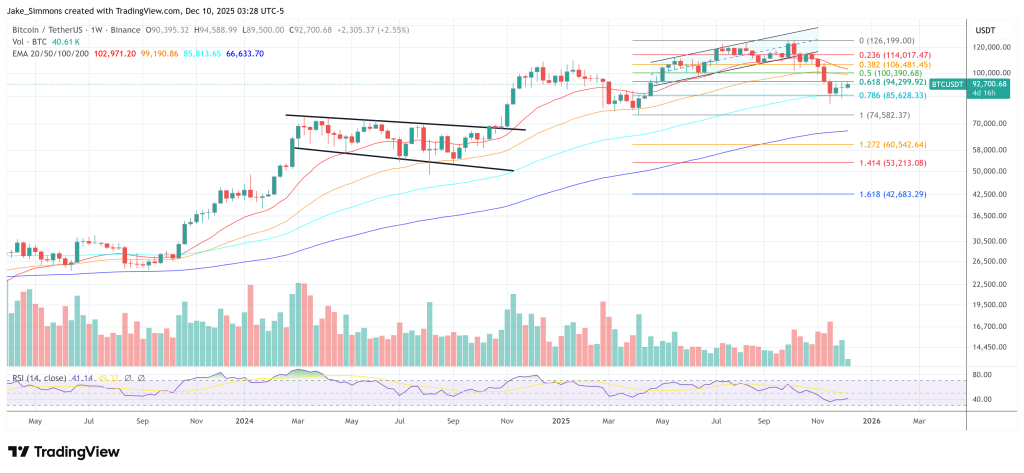
At press time, BTC traded at $92,700.

Bitcoin price

Shibarium Stages Comeback With Latest Development, Shiba Inu Whales Return – Details

Following its launch in 2023, Shibarium, a Layer-2 blockchain network for the Shiba Inu ecosystem, was widely seen as a major catalyst that could propel SHIB to new levels and potentially lift its price. However, over the past few months, activity and adoption on Shibarium have remained disappointingly quiet. Now, with the potential advancement and growing interest in the new ShibOS platform, momentum for a comeback could be building. Adding to this possible shift, SHIB whales have noticeably returned, with on-chain activity beginning to climb. 

Shibarium Revival Could Take Shape With The Adoption Of ShibOS

For most of the year, Shibarium has struggled to gain meaningful traction, unable to revive and return to the level of activity investors once expected. As the number of active users decreased, developers were slow to build on it, and the price of SHIB saw little to no reaction despite its strong community backing and Shibarium’s promise of greater utility and faster transactions. 

Although conditions look rather bleak, the narrative could shift as the new ShibOS platform grows and is increasingly adopted. ShibOS is a new Operating System designed to serve as the backbone of the Shiba Inu ecosystem. Rather than positioning SHIB as a simple meme-driven asset, ShibOS aims to create a functional environment where applications, utility, and identity features can thrive. 

The operating system provides a framework that connects traditional businesses and Web3 developers, enabling seamless integration of blockchain features. The concept behind ShibOS places the Shiba Inu community at the center of a broader technological transformation. It introduces a structure that supports Decentralized Applications (dApps) and self-governed digital identities while offering a gateway for Web2 brands interested in experimenting with blockchain technology. 

If developers and businesses begin adopting ShibOS and integrating it into their products, Shibarium could naturally benefit from the surge in activity. More applications would mean more transactions, increased users, and a healthier on-chain economy. This type of organic growth could, in turn, drive the demand for SHIB, potentially influencing its price. 

Shiba Inu Whale Activity Hits Six-Month High

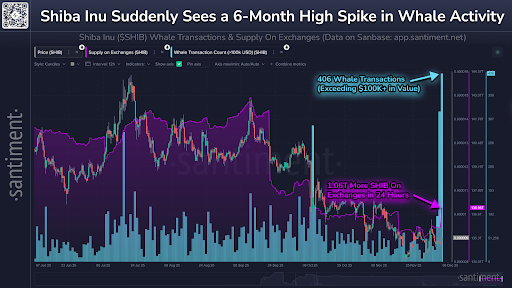
Shiba Inu is also showing signs of renewed activity in terms of on-chain transactions. According to fresh data and a chart shared by SanSights on Santiment, SHIB whale activity has surged to its highest level since early June 2025. Over the last day or so, multiple accounts have reportedly made 406 transactions, each moving more than $100,000 in SHIB. 

Shibarium

At the same time, crypto exchanges have seen a net increase of 1.06 trillion SHIB, valued at roughly $15 million to $20 million—all deposited within 24 hours. This sudden increase in supply comes as prices surge unexpectedly this week, highlighting a rare convergence of bullish factors. 

Typically, when whale activity, large deposits, and price movements happen at the same time, it can signal upcoming big changes. It could either be that whales are accumulating for a stronger price rally or preparing to sell into the current momentum. 

Shiba Inu price chart from Tradingview.com

XRP Rising Against All Odds: Ripple CEO Celebrates These Achievements

Spot XRP ETFs first debuted in the United States back in 2025, and since then, it has been a story of success. The very first, the XRPC by Canary Capital, opened the floodgates, and since then, multiple XRP ETFs have been approved by the US Securities and Exchange Commission (SEC), all to great success. As a result, Ripple CEO Brad Garlinghouse has taken time out to celebrate these approvals and the immense success that the ETFs have enjoyed since launch.

Ripple CEO Celebrates XRP ETFs’ Success

Earlier this week, it was reported that the XRP ETFs currently trading in the market have crossed $1 billion in Assets Under Management (AUM). While this is not out of the ordinary, with others such as Bitcoin and Ethereum Spot ETFs sitting at billions of dollars in AUM, the difference that XRP made is how fast it reached this target.

Garlinghouse took to the X (formerly Twitter) platform to share that XRP was the fastest cryptocurrency ETF to hit the $1 billion milestone. The anticipation and rapid buy-in from institutional investors saw inflows ramp up quickly, and in less than four weeks, crossing the $1 billion mark. Furthermore, this $1 billion milestone was in the United States alone, suggesting much higher figures from other regions.

This milestone prompted the crypto founder to elaborate on why this is, giving a number of reasons. The first is the fact that the market looks ready for more crypto-related products. The speed with which XRP ETFs crossed this milestone is evidence of rising demand, and with over 40 crypto products launched this year, Garlinghouse explains that this shows there has been “pent-up demand.”

In addition to the demand, there is also the rising demand for there to be more long-lasting investment options in the crypto market. The advent of ‘pump-and-dumps’ has done significant damage to crypto’s reputation. However, these “off-chain crypto holders”, who buy into these crypto products, are moving more toward “longevity, stability, and community.”

Quickly Become An Investor Favorite

Following the launch of the XRP ETFs, institutional interest has quickly blown up. According to the CoinShares Digital Asset Fund Flows Weekly Report, institutional investments in the altcoin managed to surpass that of Ethereum over the last week, putting it behind only Bitcoin.

As the report shows, net flows for XRP came out to 244.7 million, compared to only $39.1 million for Ethereum. This has brought up its AUM to $3.112 billion as of the latest report, showing a rapid increase in investment. Year-to-date inflows have also risen drastically, up to $3.1 billion from the $608 million recorded back in 2024.

Currently, there are a total of nine XRP ETFs trading in the open market. Additionally, there are still nine pending applications that are expected to be approved.

XRP price chart from Tradingview.com

Midnight Goes Live As Cardano Founder Targets A $10 Billion Ecosystem

Cardano founder Charles Hoskinson has declared Midnight officially launched, describing it as the “first fourth generation cryptocurrency” and claiming it has already become “a billion dollar ecosystem heading to a $10 billion ecosystem.”

In a December 9 livestream from Colorado, recorded after he was forced to cancel an appearance at Abu Dhabi Finance Week due to severe food poisoning and a jet malfunction, Hoskinson framed the launch as both a technical milestone and an ideological statement about how cryptocurrencies should be built and distributed.

Cardano Founder Touts Midnight’s Fair Launch

Despite saying he had “not eaten in two days” and was “a little faded,” the Cardano founder focused on the scale and duration of the effort behind Midnight. “We worked on it for six years,” he said, noting “many false starts” and several technology changes before the team converged on “a roadmap and a technology stack that we feel is going to be the tech stack of the future.” Midnight’s rollout, he stressed, is structured in four phases, with the project now “in the very first phase” of that plan.

The next stage, according to the Cardan founder, will significantly expand Midnight’s capabilities. Over the coming months, the team intends to bring up a federated mainnet and an incentivized testnet, then activate “hybrid DApps with each ecosystem.”

He said “the next nine months is going to be a lot of fun” but also “a lot of work for all of us,” pointing to features such as “true hybrid applications, true multi-resource consensus, [and] true post-quantum folding schemes” that aim to “advance the state-of-the-art of all of the zero knowledge stacks.” The overarching goal, he argued, is “creating a natural easy way for people [to] get their privacy back.”

Privacy and chain-agnostic interoperability are at the core of how Hoskinson positioned Midnight. He said users are “starting to realize and starting to wake up that their privacy is not a guarantee and it’s not a given,” and criticized existing systems as “designed from the ground up to take your privacy from you.”

Midnight, by contrast, is framed as infrastructure that can be used by “every single blockchain in the space.” “What makes Midnight so special is the fact that Midnight is for everyone,” he said. “It has equal application to Solana users and Avalanche users and Ethereum users and Binance users and Cardano users and Bitcoin users and everyone else in between.”

The Cardano repeatedly emphasized distribution and launch mechanics as a deliberate rejection of the venture-driven model that dominates much of the industry. He highlighted that Midnight was brought to market “in a completely decentralized way” with “no ICO, no insiders, no VC participation.”

The outcome, in his view, is that “every single user enjoys the fact that it had a fair launch and a fair distribution and every single person was on equal footing through the Glacier Drop, the Scavenger Hunt, and now the exchange distributions.”

On that basis, he argued that “it’s still possible in 2025 to launch a cryptocurrency the way Satoshi did it” and “still possible to build something with vision and values where we can do better and not hand the world over to centralized actors, the finance of old.”

Hoskinson Warns Of Regulatory Overreach

He also used the Midnight launch to issue a broader warning about regulation and the direction of the industry if privacy-preserving infrastructure is not defended. “Right now the laws are being written. They’re written the wrong way,” he said. “If the rulemaking is done the wrong way, every single thing that makes cryptocurrency special will be taken from us.”

Hoskinson rejected a future where “only custodial wallets” exist, “every single person has to be KYC and AML,” and “only five or 10 protocols are pre-selected” and “armchair controlled by a small cabal of international bankers.” Instead, he said, “I want to live in a world where the protocols preserve and protect your rights as a human, your agency as a human, your economic identity as a human.”

Hoskinson described Midnight as “probably the fastest growing and most vocal project we’ve ever built,” pointing to “hundreds of ambassadors” coming online and a rapidly filling Discord, which he framed as a gathering point for those who believe in “freedom of association, commerce, and expression.”

He ended with a direct call to action: “I want you to join the Discord. I want you to become an ambassador and tell each and every person that we can do better. And I want you to build on Midnight.” Whatever network developers come from, he said, “just build something and show the world that you can do interesting and cool things,” adding that for him and his team, “we’re in it for life.”

At press time, Cardano traded at $0.4621.

Cardano price

Bitwise Rolls Out New ETF For Broad Crypto Exposure, Including BTC, XRP, And ADA

On Tuesday, Bitwise announced the launch of the Bitwise 10 Crypto Index ETF (BITW) on the New York Stock Exchange (NYSE), allowing investors to gain exposure to a diverse range of cryptocurrencies in a single investment vehicle. 

This ETF includes ten digital assets: Bitcoin (BTC), Ethereum (ETH), XRP, Solana (SOL), Chainlink (LINK), Litecoin (LTC), Cardano (ADA), Avalanche (AVAX), Sui (SUI), and Polkadot (DOT). 

Notably, BITW marks the first exchange-traded fund by a major crypto asset manager to incorporate Avalanche, Sui, and Polkadot into its portfolio, as highlighted by Bitwise CEO and co-founder Hunter Horsley in a recent interview with CNBC.

Bitwise ETF Launches With Over $1 Billion In Assets

“This development significantly broadens the audience that can access these various assets, particularly for those digital currencies that lack a spot ETF,” Horsley explained on Monday. 

The fund is tailored for both financial advisors and smaller investors looking to utilize funds from individual retirement accounts (IRAs) or other retirement savings, where ETFs serve as the main investment option.

BITW represents a conversion from a prior index fund that encompassed the same digital currencies and has launched with over $1 billion in assets. 

The approval of Bitcoin and Ethereum ETFs back in January 2024 has led asset managers to compete for the chance to introduce ETFs that track a broader range of digital assets, including altcoins like Sui and Aptos, as well as memecoins such as TRUMP and Dogecoin (DOGE). 

However, these investment vehicles experienced major withdrawals in October and November, particularly for Bitcoin- and Ethereum-focused ETFs. These withdrawals reached record levels amid a broader sense of caution due to falling crypto prices. 

“The timing is ideal for many investors who have been paying attention since the Bitcoin ETF launch and are now looking for a more comprehensive way to allocate to digital assets without the need to select individual assets,” Horsley noted.

BITW Allocates 90% To Major Cryptos 

It’s important to emphasize that while BITW offers exposure to smaller cryptocurrencies in terms of market capitalization, its allocation to these assets is proportionately limited. 

Specifically, the ETF dedicates 90% of its holdings to Bitcoin, Ethereum, Solana, and XRP, with the remaining 10% allocated to the other tokens in the fund. 

The fund will undergo monthly rebalancing, a more frequent schedule compared to many exchange-traded funds in the market that typically rebalance quarterly or semi-annually. 

Bitwise further expressed its commitment to expanding access to cryptocurrency opportunities, stating in a social media post

At Bitwise, we’ve been working tirelessly since 2017 to expand access to the opportunities in crypto. Countless investors have requested an index ETP, and we’re thrilled that NOW, with BITW’s listing on NYSE, you have that option. We believe 2025 is a breakout year for this space, and we are more optimistic than ever about the opportunities ahead.

Bitwise

As of this writing, Ethereum is the best-performing asset in Bitwise’s new fund. It is trading at $3,323 and has recorded gains of up to 6% in the past 24 hours as it approaches key resistance levels. 

Featured image from DALL-E, chart from TradingView.com 

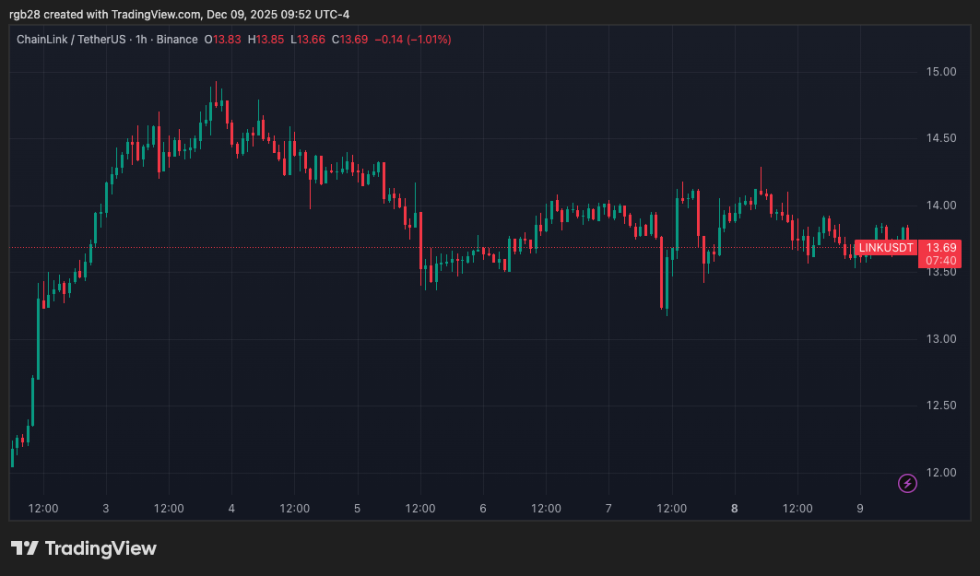
Chainlink and Mastercard Join Swapper Finance To Bring Direct Deposits To 3.5B Users

Swapper Finance has launched Direct Deposits in collaboration with Chainlink and Mastercard, aiming to bring global payments directly into the on-chain economy to more than 3.5 billion users worldwide.

Swapper Finance Launches Direct Deposits With Chainlink, Mastercard

On Tuesday, Swapper Finance, a next-generation payments infrastructure layer that connects global users to on-chain applications, announced the launch of Direct Deposits in collaboration with Chainlink, Mastercard, and multiple key partners.

Direct Deposits, which are live now, are set to bring “the global payments world directly into the on-chain economy through a unified, secure, and compliant flow,” powered by Chainlink Runtime Environment (CRE) and Mastercard’s recognized global network.

According to the announcement, users will be able to deposit into Decentralized Finance (DeFi) protocols using payment cards, crypto transfers, or Web3 wallets inside a single, end-to-end on-chain workflow for the first time.

Swapper’s Direct Deposits aim to unlock instant access to DeFi for billions of people worldwide by eliminating traditional bottlenecks, exchanges, and multi-step onboarding. This has historically required stitching together isolated systems, including Know Your Client (KYC) requirements, compliance, card payments, fiat conversion, settlement, and liquidity routing, which has created friction, high drop-off rates, and inconsistent security across the process.

Direct Deposits are set to replace this old-fashioned flow through one “unified, verifiable, on-chain orchestration layer,” with every component of the process executed inside a secure on-chain environment.

Roman Tirone, Senior Manager, Chainlink Build at Chainlink Labs, affirmed that “by unifying identity, compliance, token swaps, settlement, and more in a single orchestration layer, CRE is enabling the onboarding of billions of cardholders into the onchain economy.”

This creates a simple and familiar checkout experience that quickly moves a user from traditional finance to on-chain, supported by institutional-grade security and global reach. Meanwhile, the launch represents another step in Mastercard’s efforts to integrate traditional payment infrastructure with blockchain-based applications, helping it expand its digital asset strategy.

‘The Onboarding Layer For Web3’

Swapper’s launch will see multiple leading Web3 platforms integrate the Direct Deposits technology directly into their user flows, including Pi Squared, Stake.link, KyberSwap, AITECH, NPC, Teneo, BigWater, Rhuna, TrebleSwap, MyStandard, Landwolf, Dolomite, HyperSwap, Turbo, APU, and Radiant Capital, among others.

This signals strong demand for a unified card-to-on-chain standard, the announcement added, which suggests that Direct Deposits “are quickly becoming a foundational component for user acquisition across Web3.”

The launch also represents “deep technical collaboration across Mastercard, Chainlink, Swapper Finance, and key partners” to bring together payment authorization, compliance, execution, and liquidity routing in a single verifiable workflow powered by CRE and Swapper Finance.

Arthur, CTO of Swapper Finance, affirmed that “this is the onboarding layer we always believed the industry needed,” adding that Direct Deposits represent a “turning point” for how people enter the space as “the first truly unified onboarding layer for Web3.”

“Our goal has always been to remove the barriers that keep billions of people from accessing DeFi, and with this launch, that future becomes real,” Arthur stated, concluding that “Direct Deposits represent a turning point for how people enter Web3. For the first time, the process feels intuitive rather than intimidating. We expect this launch to dramatically expand the number of users who can participate in onchain markets.”

chainlink, link, linkusdt

Canadian Crypto Traders In Trouble? Regulator Flags 40% For Possible Tax Fraud

Canada’s tax authority has told investigators that roughly 40% of people using crypto platforms are at risk of not paying the right amount of tax.

Reports have disclosed the figure as part of a wider push by the Canada Revenue Agency to bring crypto activity into the tax system.

The move has already led to audits, court orders for data, and recovered funds, but criminal charges remain rare.

Audit Findings And Numbers

According to CRA figures, about 15% of flagged crypto users failed to file returns at all. Based on reports, another roughly 30% of those who did file are deemed high risk for under-reporting or other compliance gaps.

The agency’s specialist unit — reported to be around 35 auditors — has handled more than 230 audit files tied to crypto activity.

Canada’s crypto tax crackdown reaps millions. So why no criminal charges? https://t.co/iyRyZzC3rn

— BNN Bloomberg (@BNNBloomberg) December 8, 2025

Reports say the work has led to recovered tax payments that total over C$100 million, though some outlets put the recovered amount closer to C$72 million depending on which cases are counted.

Dapper Labs And Data Orders

One of the court actions targeted users of a platform run by Dapper Labs. The CRA obtained a court order seeking records for about 2,500 users, a slice of roughly 18,000 accounts that were originally on the agency’s radar.

The orders, and others like them, signal a shift: the CRA is increasingly asking judges to force platforms to hand over user data rather than relying only on audit notices.

This is because crypto records can be fragmented, cross-border, and hard to trace without platform cooperation.

Why Criminal Charges Are Limited

Based on reports and legal commentary, the CRA has won civil recoveries but has not seen criminal prosecutions in these crypto cases since 2020.

That gap highlights practical and legal hurdles. Tax fraud cases that go criminal require proof beyond a reasonable doubt that a person willfully evaded tax.

Many crypto cases involve messy transaction histories, unclear intent, or legal questions about how certain tokens should be taxed, and those factors can slow or block criminal referrals.

What It Means For Users And Platforms

For investors, collectors, and traders in Canada, the signal is clear: records matter. Reports note that other Canadian enforcement bodies, including financial intelligence units, are increasing checks on crypto firms and foreign exchanges that touch Canadian customers.

Platforms and users who kept poor records or who relied on assumed anonymity now face higher odds of being identified during audits or court orders.

Featured image from Unsplash, chart from TradingView

Why 2026 Is Unlikely To Be Crypto’s Next Bust Year: Bitwise CIO

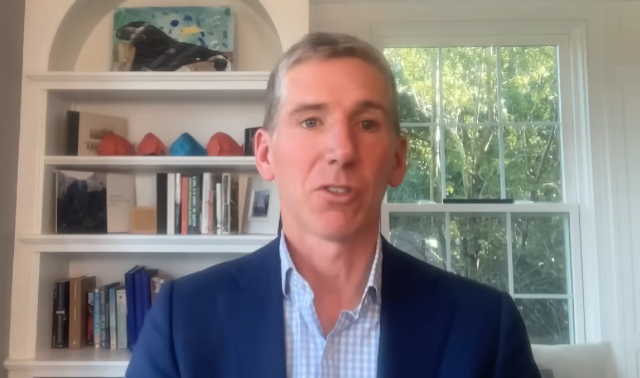
Bitwise CIO Matt Hougan says the crypto market is anchored to the wrong mental model. Speaking on the Empire podcast recorded 5 December and released on 8 December, he argued that the traditional “four-year Bitcoin cycle” has lost its explanatory power – and that 2026, which many expect to be a brutal post-halving down year, is far more likely to be an “up year” driven by institutional flows and regulatory tailwinds.

“2026 will not be a bad year, Jason,” Hougan told host Jason Yanowitz. “I think 2026 will be a good year […] I just don’t understand the logical reason why [the four-year cycle] would repeat again. It’s not like built into a mechanical clock. It was driven by specific factors and those factors no longer exist, so it won’t keep happening.”

He acknowledged that recent price action has unnerved investors, with Bitcoin giving back a “Vanguard pump” and selling off into a weekend on no obvious news. But he framed that as positioning and microstructure, not the start of a structural unwind.

“People in crypto over the last two months have learned to be nervous on weekends,” he said, pointing to thin weekend liquidity and Friday macro headlines. He noted that sentiment is depressed even though “the market is flat for the year,” adding: “We’re freaking out about a market that is flat for the year.”

Why The 4-Year Crypto Cycle Is Dead

Hougan broke down the four main explanations traditionally used to justify the Bitcoin cycle and argued each is now materially weaker.

First is the halving itself. “The halving cycle is just not that important,” he said. “It’s half as important as it was four years ago […] a fraction of, you know, a quarter as important as it was eight years ago, a sixteenth, etc. There’s just not that much supply being removed.” As issuance becomes a smaller fraction of total supply and ETF and derivatives flows grow, the mechanical supply shock carries less weight.

Second is the rate cycle. Prior “down years” such as 2018 and 2022 coincided with aggressive rate hikes. “Interest rates are going down,” he said. “So that thesis is just completely invalidated, right? It’s completely different.”

Third is the “blow-up” pattern – Mt. Gox, ICOs, FTX – that historically capped euphoric phases. Hougan allowed that balance-sheet stress in parts of the market is “the strongest case for the four-year cycle repeating,” but he does not expect forced liquidations on the scale of prior collapses. In his view, potential problem entities are more likely to “just not buy as much in the future” rather than being compelled sellers.

Fourth is simple randomness: three similar cycles do not make a law of nature. “Across those four, they’re all much weaker than they were in the past,” he summarised.

Why 2026 Is Poised To Be Better Than 2025

Against that, Hougan set what he sees as a once-in-a-generation shift in regulation and institutional behaviour. “You have a once-in-a-generation regulatory change from severe regulatory headwinds to strong regulatory tailwinds,” he said, and “more importantly, you have this institutional adoption narrative that’s going to overwhelm everything.”

In the last six months, he noted, major US wirehouses have “green-lit crypto exposure.” He singled out Bank of America: “They have $3.5 trillion in assets. One percent is $35 billion. Four percent is like $140 billion. That’s more than the total flows into Bitcoin ETFs so far.” He stressed it is not just one bank: “There are four wirehouses. They’re basically all on now […] the biggest advisory groups all managing many trillions of dollars.”

The catch is timing. Institutional allocations are slow and process-driven. “The average Bitwise client, I think, invests after eight meetings with us,” he said, and some of those are quarterly. That “eight-meeting” lag means the ETF era is still in its early innings; the full impact of platforms being switched on is more likely to manifest through 2026 than in a single explosive quarter.

Hougan also emphasised that advisers optimise for client retention, not absolute performance. “The one thing a financial adviser doesn’t want to do is have a meeting with their client where something is down 50% and their client fires them,” he said. That is why reduced volatility, cleaner regulation and mainstream narratives like “Bitcoin as digital gold” and “stablecoins and tokenization as new financial rails” matter so much.

On supply dynamics, he pushed back on two recurring fears: “OG whales dumping” and MicroStrategy as a forced seller. He argued that much of the apparent “selling” by long-term holders is actually upside being sold via covered calls. Whales come to Bitwise and similar firms, he said, saying: “I have a hundred million of Bitcoin […] can you write covered calls against this?” That “effectively introduces new supply into the market” without coins moving on-chain.

On MicroStrategy, he was categorical: “From a data perspective [it is] just strictly untrue that it will be forced to sell its Bitcoin.” The company has meaningful cash to service interest, no principal due until 2027, and manageable maturities relative to its Bitcoin holdings. He agreed with Jeff Dorman’s framing that MicroStrategy is no longer a major marginal buyer but also “not a forced seller.”

Too much pessimism on the timeline.

Brought on @Matt_Hougan to tell us why 2026 will be FAR better than 2025.

Tons of good nuggets in here related to institutions, financial advisors, cycles, and more.

Enjoy the optimism!pic.twitter.com/WZJb55yENF

— Yano 🟪 (@JasonYanowitz) December 8, 2025

Looking ahead, Hougan expects investors to eventually reframe the current period not as a failed bull cycle but as a behavioural transition through a key level. “We might look back at 2025 at some point and say, ‘Huh, you know what? $100,000 was like a big behavioral cliff we had to get over. Took us like a year,’” he said.

For 2026 specifically, his message is clear: the old four-year pattern “won’t keep happening,” and the combination of regulatory clarity and institutional inflows sets up what he calls an “extraordinarily strong” backdrop rather than a programmed bust.

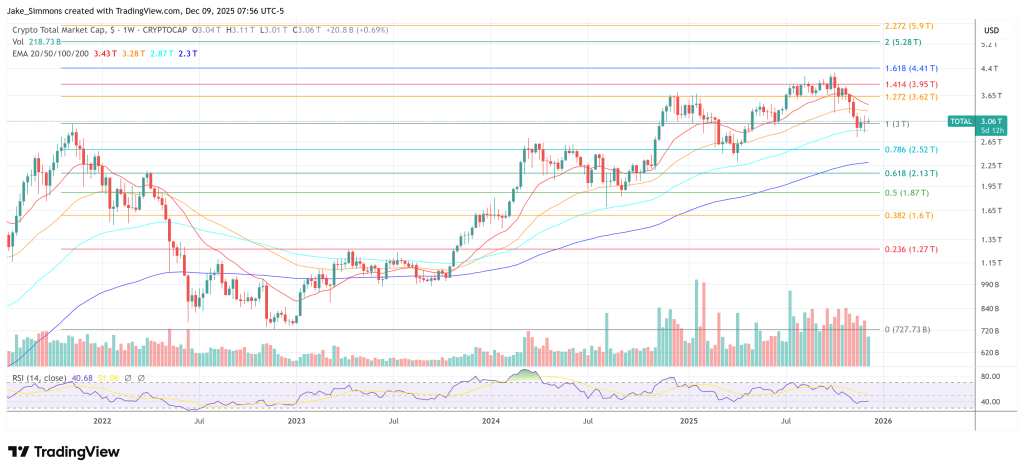
At press time, the total crypto market cap stood at $3.06 trillion.

Total crypto market cap

Featured image from YouTube, chart from TradingView.com

Classic Bitcoin Buy Signal Returns: Are Miners Hinting The Next Accumulation Phase?

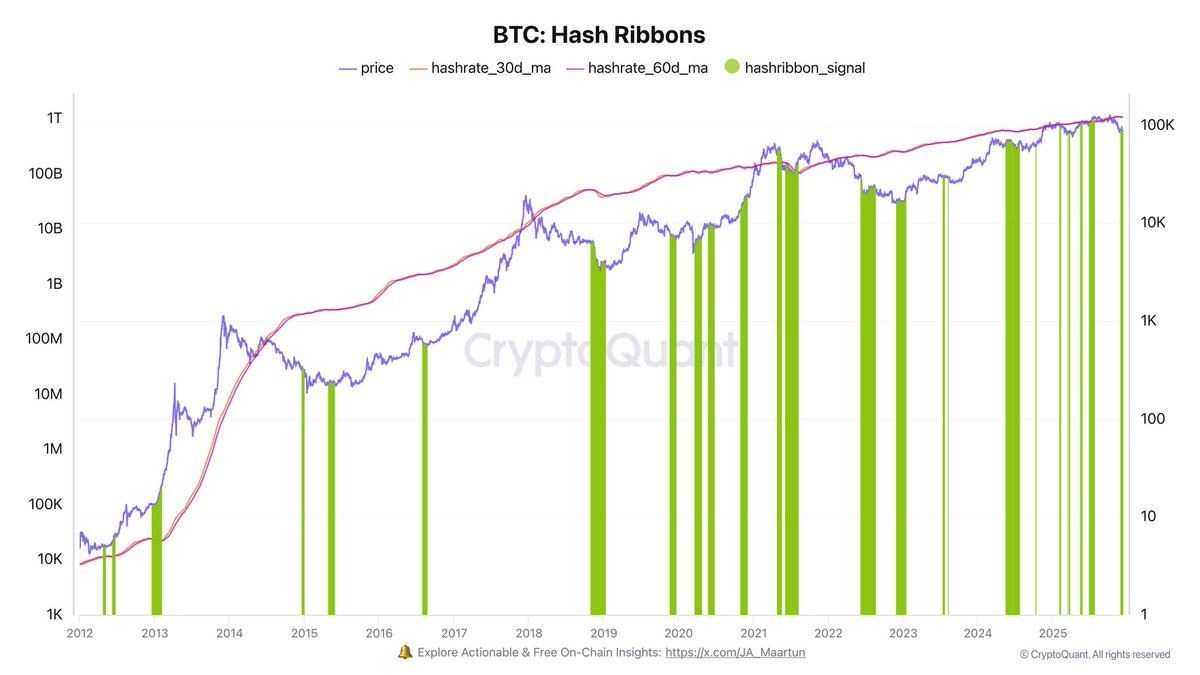
Bitcoin is trading at a decisive moment, holding just above the $90,000 mark after several days of tight consolidation. Despite reclaiming this key level, the market continues to struggle with upward momentum, leaving traders uncertain about the next major move. Yet beneath the surface, a key on-chain indicator has triggered fresh interest among analysts. According to top analyst Darkfost, the Hash Ribbons have just flashed a new buy signal — a development that historically aligns with strong medium-term performance for Bitcoin.

Darkfost emphasizes that this signal is not a cue to rush blindly into the market, but rather a meaningful piece of data worth highlighting. Hash Ribbon signals typically appear during periods of miner stress, when mining difficulty forces weaker miners to shut down.

These moments often precede significant accumulation phases, as selling pressure from distressed miners fades. With the exception of the unprecedented 2021 mining ban in China, every previous Hash Ribbon buy signal has produced profitable outcomes for patient investors.

Understanding The Bitcoin Hash Ribbons Signal

Darkfost explains that the Hash Ribbons indicator is built around the evolution of Bitcoin’s hashrate, comparing the 30-day and 60-day moving averages to detect periods of miner stress. When the 30-day MA of the hashrate falls below the 60-day MA, it signals that mining difficulty is rising relative to miner profitability.

In these phases, less efficient miners are often forced to scale back operations or shut down entirely, reducing the overall network hashrate.

Bitcoin Hash Ribbons | Source: CryptoQuant

While mining difficulty itself is influenced by several factors — including electricity costs, hardware efficiency, block rewards, and, of course, Bitcoin’s price — the key point is that miner capitulation tends to create short-term selling pressure. Miners may liquidate part of their reserves to stay afloat, often contributing to temporary weakness in the market.

However, Darkfost emphasizes that these periods of stress historically present strong mid-cycle accumulation opportunities. As weaker miners exit and difficulty adjusts downward, the market often enters a healthier phase where selling pressure subsides, and long-term participants begin to accumulate BTC at discounted prices.

Over the years, Hash Ribbon buy signals have frequently marked early stages of major recoveries, offering investors a structural, data-driven advantage even when sentiment appears uncertain.

Testing Support as Momentum Weakens

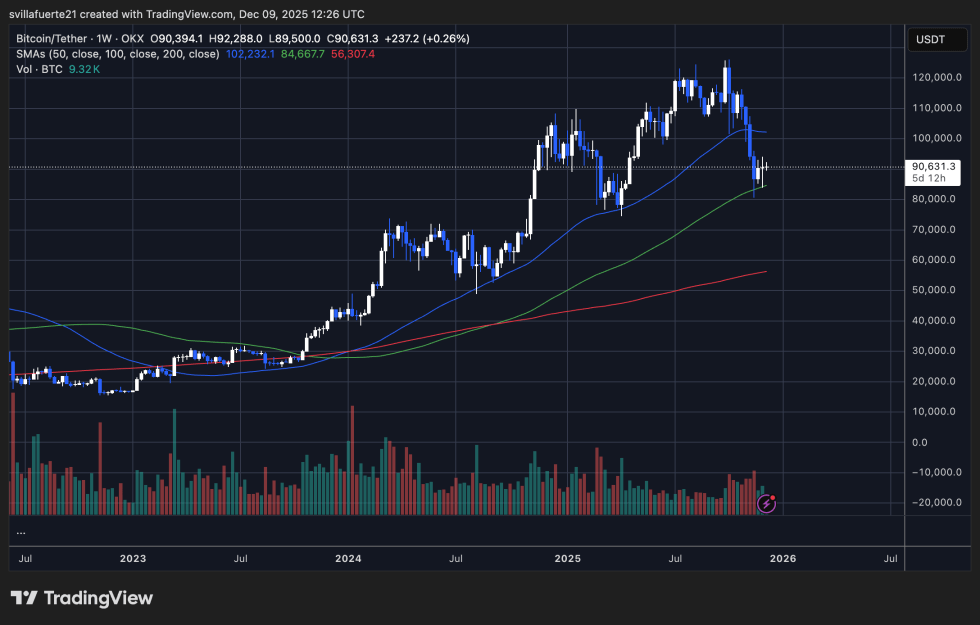
Bitcoin continues to trade just above the $90,000 level, showing signs of stabilization after several weeks of heavy downside momentum. The chart reveals that BTC has bounced off the 100-day moving average (green), which is now acting as a key dynamic support zone. This level has historically served as an important midpoint during major pullbacks, and the market’s ability to hold above it suggests that selling pressure may be easing.

BTC testing long-term support | Source: BTCUSDT chart on TradingView

However, the price remains well below the 50-day moving average (blue), which has begun to curve downward — a signal that short-term momentum still leans bearish. For a stronger recovery, Bitcoin must reclaim this moving average and convert it into support. Until then, rallies may struggle to extend meaningfully.

Volume has also compressed significantly compared to the earlier stages of the uptrend. This decline indicates hesitation from both buyers and sellers, often typical during consolidation phases following sharp corrections. The lack of aggressive selling is a constructive sign, but the absence of strong buy-side interest keeps BTC vulnerable to further swings.

If Bitcoin holds above the $90K–$88K area, it could build a base for a broader rebound. A breakdown below this region, however, would open the door to deeper retracements toward the mid-$80K range.

Featured image from ChatGPT, chart from TradingView.com

Bitcoin Struggles Near $90K as ETFs Absorb Retail Demand and On-Chain Activity Drops

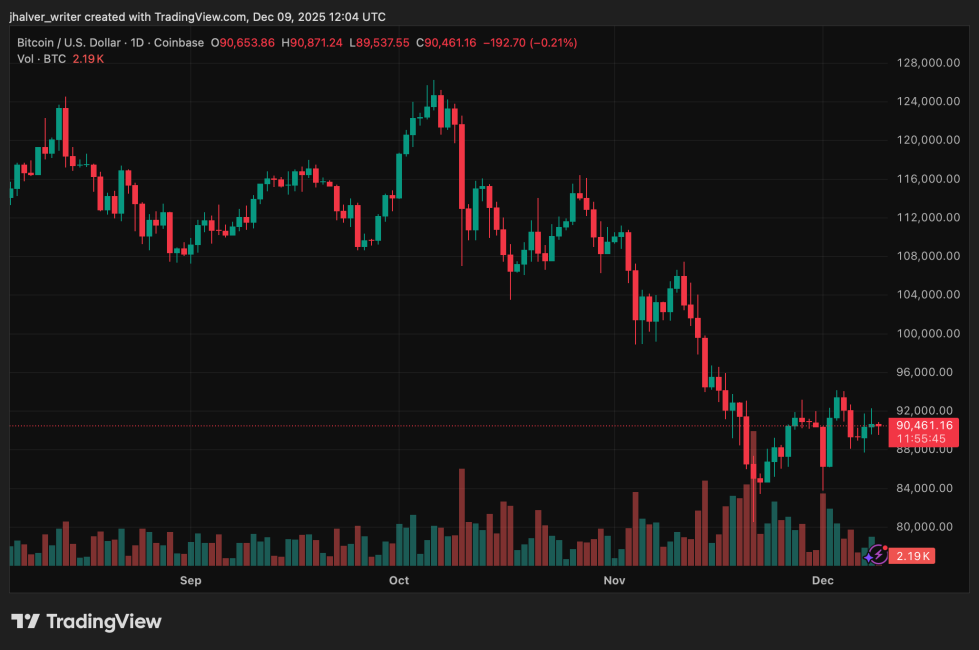
Bitcoin (BTC) is trading uncomfortably close to the $90,000 mark, as a mix of macro caution, thinning liquidity, and shifting market structure continues to weigh on price action.

Related Reading: Wall Street Storms Ripple In Explosive $500 Million Deal

What was once a retail-driven ecosystem is now increasingly shaped by institutional flows, with U.S. spot Bitcoin ETFs attracting substantial assets, while on-chain activity trends in the opposite direction. The result is a market that moves, but with participation patterns very different from those seen in earlier cycles.

Bitcoin BTC BTCUSD BTCUSD_2025-12-09_13-04-15

Bitcoin ETF Flows Rise as Retail Activity Falls

Since the launch of U.S. spot Bitcoin ETFs in early 2024, the network has experienced a steady decline in active on-chain addresses. Analysts attribute this partly to the “convenience trade,” in which retail investors opt for exposure through traditional brokerage accounts rather than managing their own Bitcoin wallets.

BlackRock’s IBIT and similar products now capture a growing share of BTC demand, even as the blockchain itself shows a decline in grassroots participation.

Industry experts argue that this shift fundamentally changes how value circulates in the Bitcoin economy. ETF issuers, not miners or network users, are now capturing a higher share of revenue.

SwanDesk CEO Jacob King describes this as a structural pivot toward off-chain monetization, with Bitcoin functioning more as a financial instrument than a peer-to-peer asset.

BTC Price Pressure Intensifies Around Macro Events

Bitcoin’s recent price behavior reflects both macro uncertainty and intraday volatility patterns. BTC has repeatedly slipped below $90,000 despite developments that historically would support bullish sentiment, such as Strategy’s (formerly MicroStrategy) latest purchase of over 10,600 BTC.

Traders remain cautious ahead of the Federal Reserve’s policy decision, where expectations for a quarter-point rate cut are high. Yet the hesitation is evident: rallies toward $92,000 continue to meet resistance, and liquidity remains thin across spot and derivatives markets.

Consequently, analysts warn that Bitcoin must hold above a key support level near $88,000 to avoid a deeper downside.

Institutional Trading Dynamics Shape Market Movements

A growing number of analysts suggest that predictable sell-offs around the U.S. market open reflect coordinated execution rather than organic selling.

Market watchers point to high-frequency firms, such as Jane Street, which hold large ETF positions, as possible contributors to these recurring patterns. While unproven, the consistency of these drops has added to trader frustration.

Meanwhile, miners face their own pressures. Hashprice has fallen to near-record lows, prompting operators to pivot toward AI infrastructure as mining profitability erodes.

Related Reading: CEOs Of Leading Banks To Discuss Crypto Market Structure With US Senators This Week

With ETFs absorbing demand, macro signals driving sentiment, and miners restructuring their businesses, Bitcoin now sits at a pivotal moment, supported by institutional capital but missing the retail pulse that once defined its cycles.

Cover image from ChatGPT, BTCUSD chart from Tradingview

Bitcoin OG Doubles Down On Ethereum With A Massive $209.8M Long – Find Out His Liquidation Price

Ethereum is holding above the $3,000 level for the fourth consecutive day as the market enters a decisive week dominated by the upcoming FOMC meeting. Traders are cautiously positioning ahead of the Federal Reserve’s announcement, aware that liquidity signals and rate expectations could determine whether this recovery continues—or breaks down.

Despite the recent stabilization, fear remains firmly in control. Many analysts warn that if ETH loses the $3K floor, the market could face a deeper retracement, especially with volatility expected to spike around the macro event.

Amid this uncertainty, on-chain data from Lookonchain has revealed a striking development: BitcoinOG, the same whale who famously shorted the market during the violent October 10 crash, has now dramatically increased his bullish exposure to Ethereum. According to the data, he has ramped up his long position to 67,103.68 ETH, valued at approximately $209.8 million.

Whale Positioning Adds a New Layer of Volatility

According to Lookonchain, the BitcoinOG whale is now sitting on more than $4 million in unrealized profit from his massive Ethereum long. His position of 67,103.68 ETH, currently valued at over $209 million, comes with a liquidation price of $2,069.49, a level far below current market conditions but still within the realm of possibility if macro pressure intensifies.

BitcoinOG Whale Ethereum Long Position | Source: Lookonchain

This liquidation threshold is especially important because it reveals the whale’s risk appetite and how aggressively he’s leveraging this bet. A liquidation level near $2,070 implies confidence that Ethereum won’t revisit its deeper range lows, even as the market remains fragile ahead of the FOMC meeting. It also shows he has a significant margin buffer behind the trade, suggesting strategic positioning rather than impulsive speculation.

However, large leveraged positions can act as double-edged swords for the broader market. If price begins trending toward his liquidation zone, cascading liquidations across other longs could accelerate downside momentum. Conversely, whales with deep pockets often defend key levels to protect their positions.

ETH Higher-Timeframe Trend Remains Fragile

Ethereum’s weekly chart shows the market fighting to stabilize above the $3,000–$3,150 zone, a level that now acts as the primary support band after weeks of heavy selling. The recent bounce from the mid-$2,700s has created a short-term relief structure, but ETH still trades well below its 50-week moving average, which is beginning to curl downward—a signal that the broader trend is losing momentum.

ETH consolidate around key level | Source: ETHUSDT chart on TradingView

The chart highlights a clear pattern: each rebound over the past six months has produced lower highs, reflecting persistent seller dominance whenever ETH approaches the $3,500–$3,800 region. This repeated rejection zone marks a key resistance cluster that bulls must reclaim to shift the medium-term outlook back toward bullish continuation.

Volume also remains relatively muted compared to earlier stages of the cycle, suggesting that current buying interest is hesitant. Without a surge in spot demand, rallies may continue to fade quickly.

On the positive side, ETH has reclaimed the 200-week moving average, an important long-term support that historically acts as a pivot between macro bull and bear phases. As long as this level holds, Ethereum retains structural strength.

ETH is in a neutral-to-bearish consolidation, and a decisive weekly close above $3,300 is needed to confirm regained momentum.

Featured image from ChatGPT, chart from TradingView.com

Bitcoin Meets Shari’ah Finance As UAE Bank Leads The Way

Ruya Bank has launched in-app Bitcoin trading, becoming the first Shari’ah-compliant bank to let customers buy and sell the cryptocurrency using a mobile banking app.

According to the bank, the move follows approval by its Shari’ah-governance board and was built with a regulated partner to handle custody and settlement.

Shari’ah Approval And Partnership

Ruya said it worked with Fuze, a regulated virtual-asset infrastructure provider, to manage custody, settlement and compliance for trades.

The bank framed the service as a Shari’ah-approved investment option rather than a tool for quick speculation. Reports have disclosed that Bitcoin is the initial digital asset offered at launch.

UAE Crypto Flows And Local Context

Between July 2023 and June 2024 the UAE recorded roughly US$30 billion in virtual-asset inflows, a rise of 42% year-on-year according to figures circulated around the launch.

Ruya Bank CEO: Bitcoin Is Now Shari’ah Compliant — A New Chapter for Islamic Digital Finance https://t.co/sijVZfAJne via @unlockbc @myruyabank #islamicFinance #isBitcoinHalal #Shariah_compliant #Bitcoin #adoption #BitcoinNews #UAE

— Unlock Blockchain (@unlockbc) December 8, 2025

That growth has come as regulators in the UAE lay out clearer rules for virtual-asset service providers, making banks and fintechs more willing to add crypto features inside regulated apps.

How The Offering Works

Users who meet the bank’s terms can execute Bitcoin buys and sells inside the Ruya app. Trade execution and custody are handled by Fuze under the arrangements described.

The bank says its Shari’ah board reviewed the structure to ensure compliance with Islamic finance principles, with an emphasis on transparency and clearer risk controls.

Potential Impact On Muslim Investors

For Muslims who have avoided crypto because of religious concerns, this gives a regulated route inside an established bank.

Analysts quoted in coverage suggested the move could nudge more conservative savers toward holding some Bitcoin when they otherwise would not have.

Adoption will depend on demand and on whether other Islamic banks follow Ruya’s example.

What Comes Next

Ruya has signaled it will consider offering other virtual assets later, depending on demand and regulatory clarity. Based on reports, the bank wants to position this service as part of longer-term wealth planning rather than short-term trading.

This step marks a notable moment: a Shari’ah-compliant bank rolling Bitcoin trading into its core app with a regulated custodian.

It could widen access for Muslim investors in the UAE and beyond, while also testing how Islamic finance rules and modern crypto systems can be combined in practice.

Featured image from Pexels, chart from TradingView

What BlackRock’s Latest Filing Means For The Ethereum Price

The latest S-1 registration submitted to the US Securities and Exchange Commission has placed Ethereum back at the center of market speculation. A recent SEC document shows that BlackRock’s iShares division has formally filed to launch a staked ETH exchange-traded fund, a move that would give traditional investors access not only to ETH price exposure but also to staking rewards through a regulated product.

A New ETF Structure That Brings Staking Into Traditional Finance

The proposed trust, which is called the iShares Staked Ethereum Trust ETF (ETHB), differs from previous Ethereum filings because it incorporates staking into its core design. According to the S-1 filing, the ETF would hold ether directly while delegating most of its balance to external validators, allowing staking rewards to feed into the trust’s net asset value. This approach offers institutions a pathway to access ETH’s yield component without interacting with on-chain staking infrastructure themselves.

Related Reading: Industry Leader Shares Why Ethereum Price Will Reach $12,000

The structure is bullish for Ethereum, as it shows that major asset managers like BlackRock are looking beyond basic price exposure and toward products that reflect how Ethereum now operates after its transition to proof-of-stake.

The first indication of BlackRock’s interest in ETH staking was in July, when it filed an application to add ETH staking in its iShares Ethereum Trust (ETHA). It seems the fund issuer is now taking proactive action on the staking trust with the recent standalone filing. Under SEC procedure, the new filing begins the review period, although a formal approval timeline does not start until the exchange responsible for listing the ETF submits a Form 19b-4.

If approved, the ETF could influence Ethereum’s circulating supply over time. The plan is to stake between 70% and 90% of the trust’s ETH, and this means that large inflows would steadily route more ether into long-term staking, reducing the volume actively available on the open market.

What This Could Mean For ETH’s Price Outlook

The potentially smaller liquid supply is going to contribute to a bullish ETH price, particularly during periods when demand for ETH rises. The filing itself does not change ETH’s price in the short term, nor does it signal any immediate regulatory approval. 

Related Reading: Ethereum Buyers Have Re-Entered The Arena Below $3,400, Here’s How Much They’ve Bought

What the filing does provide is a clearer picture of how ETH might fit into the next generation of institutional investment products. A staked ETH ETF would formalize staking as an investable feature and increase the types of investors who consider the altcoin a viable long-term asset.

Any eventual impact on Ethereum’s price will depend on how the approval process unfolds and how much capital flows into the product once it launches. BlackRock’s existing footprint in the Ethereum ETF niche shows how influential those inflows can be. Its iShares Ethereum Trust (ETHA) has consistently led other spot issuers, including over the past 24 hours, when ETHA recorded $23.66 million in inflows compared to Grayscale’s $11.83 million, while other issuers saw no inflows at all.

Once approved, shares of the iShares Ethereum Staking Trust are expected to trade on Nasdaq under the ticker ETHB.

Ethereum

Week of Heavy ETF Inflows Pushes XRP Into Compression Zone, Is a Major Move Coming?

XRP spent the past week caught between rising institutional demand and stagnant price action, creating a compression zone that traders say is becoming increasingly difficult to ignore.

Even as U.S. spot XRP ETFs approach the $1 billion AUM milestone, the asset continues to trade within a narrow band, leaving market participants to question whether the prolonged consolidation is setting the stage for a larger move.

The disconnect between inflows and price has become one of the week’s most notable themes. Analysts note that while institutional capital continues to accumulate, XRP’s chart remains muted, indicating heavy profit-taking following November’s rally and lingering sell-side pressure across higher timeframes.

Ripple XRP XRPUSD XRPUSD_2025-12-09_12-26-06

ETF Momentum Builds as XRP Price Stalls

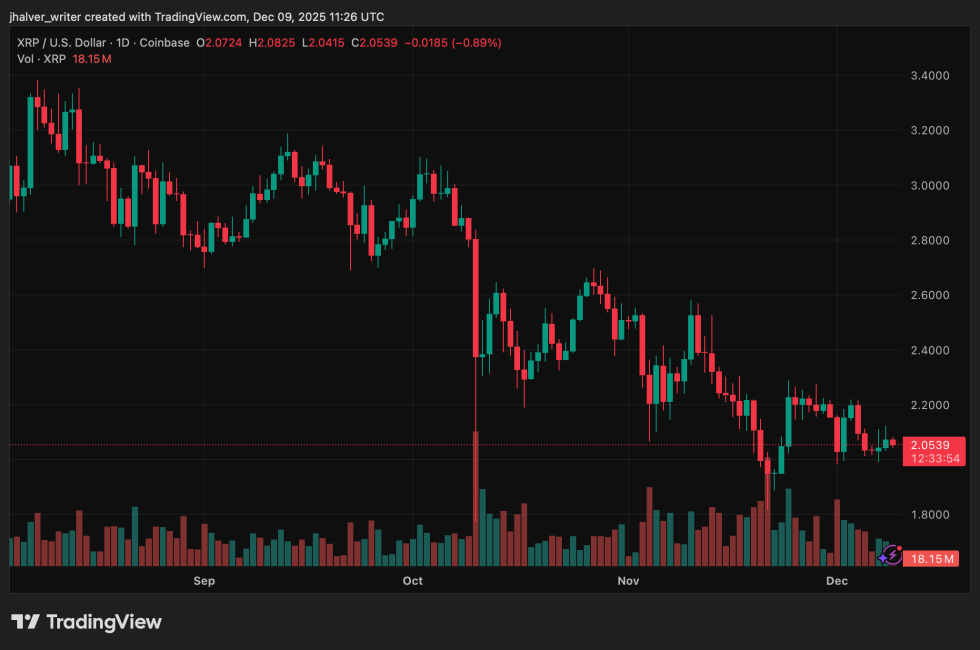
The XRP price is hovering near $2.06, slipping slightly despite consecutive days of ETF inflows. Analysts highlight that large holders likely sold into strength, offsetting the fresh demand entering through regulated products.

Even so, XRP ETFs have outperformed Bitcoin ETFs in terms of relative inflow strength, indicating that institutions are positioning themselves early.

Ripple CEO Brad Garlinghouse noted that XRP became one of the fastest-growing U.S. crypto ETFs of the year, arguing that broader access through traditional investment accounts is expanding the asset’s investor base.

The market reaction remains mixed, with some traders viewing ETFs as a stabilising force, while others see them as limiting upside volatility.

Regulatory and Structural Developments Add New Variables

Beyond market flows, regulatory commentary added another layer of attention. Former SEC Chair Paul Atkins emphasized tokenization as a practical path forward, highlighting its benefits, including increased transparency and faster settlement.

His remarks sparked debate within the XRP community, particularly among those who argue that the XRP Ledger is well-positioned for enterprise-grade tokenization systems.

Meanwhile, Ripple’s recent $500 million equity round, structured with downside protection for Wall Street investors, reinforced how closely the company’s valuation is tied to its XRP holdings.

Funds reportedly concluded that around 90% of Ripple’s net worth derives from its XRP treasury, underscoring the token’s central role in the firm’s long-term outlook.

Technical Picture Shows Compression, Not Capitulation

On the charts, XRP remains locked between the $2.07 support level and the $2.18 and $2.30 resistance levels.

Analysts note weakening momentum indicators but stable underlying demand. If XRP breaks above these levels, a move toward Wave 3 targets near $2.73 becomes more likely, though failure to do so could trigger another retest of lower support.

The XRP price continues to compress, supported by some of the strongest ETF inflows of the year, but constrained by steady selling and broader market caution. Whether this tension resolves upward or downward is the question traders will carry into the next week.

Cover image from ChatGPT, XRPUSD chart from Tradingview

Abu Dhabi Steps Up Crypto Regulation: Tether, Circle Secure Major Approvals

Tether and Circle, issuers of the two largest stablecoins in the world, have just received major regulatory greenlights in UAE’s Abu Dhabi.

Tether’s Stablecoin Recognized As ARFT, While Circle Obtains FSP License

Major developments related to the cryptocurrency sector have occurred in the United Arab Emirates (UAE) this week, with Tether and Circle both winning approvals in Abu Dhabi Global Market (ADGM), the international financial center and free economic zone of Abu Dhabi, UAE’s capital.

First, as Tether has announced in a press release, USDT issued on a number of blockchains has been recognized as an Accepted Fiat-Referenced Token (ARFT) in ADGM. USDT already received approval from ADGM last year, but the previous recognition only included the Ethereum, Solana, and Avalanche versions. With the new regulatory nod, USDT available on Aptos, Celo, Cosmos, Kaia, Near, Polkadot, Tezos, TON, and TRON has also entered the market.

“By extending recognition to USD₮ on several major blockchains, ADGM further strengthens Abu Dhabi’s position as a global hub for compliant digital finance,” said Tether CEO Paolo Ardoino.

USDT being considered as an ARFT means that authorized persons licensed by ADGM’s Financial Services Regulatory Authority (FSRA) can offer regulated activities involving the stablecoin on nearly all its native blockchains. “Introducing USD₮ within ADGM’s regulated digital asset framework reinforces the role of stablecoins as essential components of today’s financial landscape,” noted Ardoino.

Meanwhile, Circle, the issuer of USDC, has also advanced in the region with a new license from the FSRA, according to an announcement. The license, called the Financial Services Permission (FSP), allows the company to operate as a Money Services Provider in ADGM.

Arvind Ramamurthy, ADGM Chief Market Development Officer, said:

Circle’s regulated presence in ADGM reinforces our ambition to build a trusted, institutional-grade digital asset ecosystem in Abu Dhabi, one that enhances market confidence, supports real-world use cases, and cements the UAE’s role as a leading hub for regulated digital finance.

The greenlight from ADGM follows the recognition of Circle’s USD and EUR stablecoins by the Dubai Financial Services Authority (DFSA) in February of this year. The move made USDC and EURC the first stablecoins to be approved in the Dubai International Financial Centre (DIFC).

The new FSP license means “Circle is positioned to expand regulated payment and settlement use cases in the UAE for businesses, developers, and financial institutions,” the statement noted.

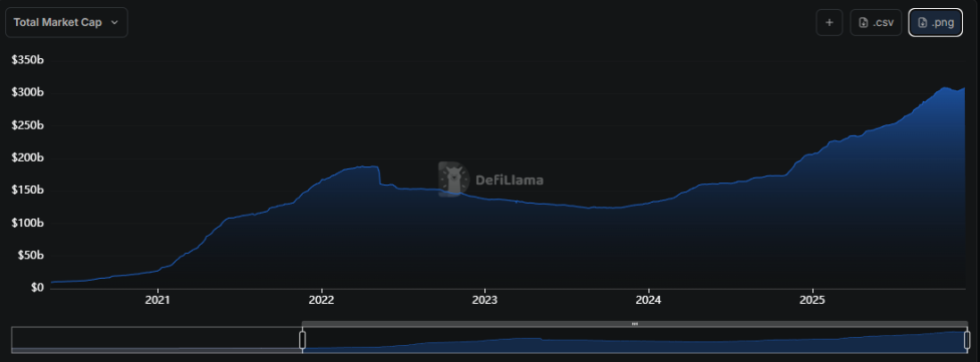
Stablecoins have witnessed rapid growth throughout 2025, setting multiple records. The near-constant growth in these tokens, however, saw a break in October, as the combined market cap of this side of the cryptocurrency sector reversed course.

Stablecoin Market Cap

As the above chart from DefiLlama shows, the stablecoin market cap declined to a low in mid-November. Since this bottom, though, capital inflows have returned for these fiat-tied assets, with the market cap once again nearing in on a new record.

Bitcoin Price

At the time of writing, Bitcoin is floating around $90,100, up almost 4% in the last seven days.

Bitcoin Price Chart

Crypto Investor Reveals Drastic Move As He Dumps Bitcoin To Buy XRP

A well-known crypto investor, who claimed to have bought Bitcoin when it was $3,000, has announced that he has dumped all his BTC to load up on XRP. The unexpected move comes at a time when the market is experiencing significant volatility, with Bitcoin trading at an uncharacteristically low price and XRP experiencing a downtrend. Despite choppy market conditions, the analyst is highly confident in the altcoin’s future performance.

Crypto Investor Sells Entire Bitcoin Stash To Buy XRP

A crypto entrepreneur who goes by Crypto X AiMan on X social media shocked the broader market this week by announcing that he had sold his entire Bitcoin position and moved the proceeds into XRP. The crypto investor unapologetically declared he had gone 100% all-in on the token. The unexpected pivot sparked instant reactions, with many in the crypto community voicing similar optimism for the altcoin and admitting they have already made, or plan to make, the same move. 

In his post, AiMan explained that his primary reason for the sudden portfolio switch was the level of regulatory clarity that XRP gained in the United States after the resolution of its prolonged legal battle with the Securities and Exchange Commission (SEC). While the broader legal landscape around digital assets is still evolving, the crypto investor argues that XRP now holds a unique position as a non-security among established cryptocurrencies in the US. 

AiMan also highlighted Ripple’s considerable reserves and its more than 300 banking and payment partnerships as primary reasons for his decision to diversify into the third-largest cryptocurrency. At present, Ripple owns more than 45 billion XRP, representing over 45% of the total supply of 100 billion tokens. Under normal circumstances, such a concentration might raise concerns about centralization and excessive issuer control. However, AiMan has indicated that this level of institutional oversight is actually a strategic advantage. 

Additionally, the crypto investor pointed to Ripple’s partnerships with central banks and major financial institutions, especially those preparing for the ISO 20022 upgrade, which is expected to reset global messaging standards in 2026. With all of these in place, AiMan views the token as an asset with incredible potential.

The crypto entrepreneur drew a comparison between the altcoin and BTC. He described Bitcoin as a form of digital gold that prioritizes scarcity and decentralization, but that faces limitations in speed and transaction costs. On the other hand, he portrayed XRP as a “digital dollar,” framing it as a more practical instrument for cross-border payments, designed to move value quickly and at low cost. 

Investor Embraces Full Risks As He Goes All In On The Altcoin 

In his post, AiMan acknowledged the significant risks of investing 100% of his BTC proceeds into XRP. He admitted that XRP could lose all of its value, leaving him with nothing. Despite this, he remained undeterred, emphasizing that if things go well, the potential rewards could be life-changing

He pointed out a stark contrast between Bitcoin’s current market capitalization of over $2 trillion and the global cross-border payments industry, which is valued at approximately $250 trillion. According to the crypto entrepreneur, if the altcoin were to capture just 1% of that market, its value could increase exponentially.

XRP

Ethereum Emerges As A Dollar Settlement Powerhouse, Outpacing Traditional Payment Networks – Details

In the broadening blockchain sector, the Ethereum network remains a dominant force, heavily utilized and constantly selected by crypto players to carry out their on-chain operations. A recent report shows that Ethereum is transitioning from blockchain to the big league, as the network overtakes dollar-denominated transactions across digital payments.

A Leader In Dollar Transactions

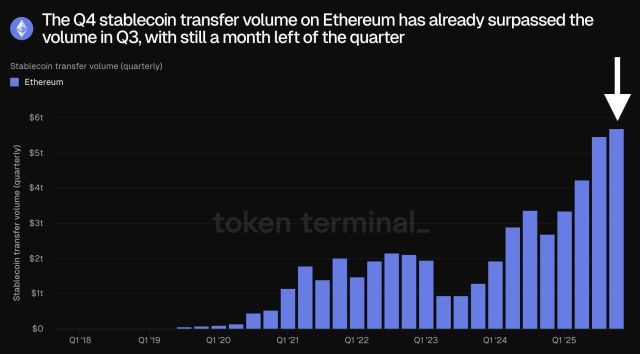
With a surge in stablecoin transfer volume, Ethereum is no longer only a rival in the cryptocurrency space. In a post on the X platform, Leon Waidmann, a market expert and head of research at On-Chain Foundation, reported that ETH is currently surpassing some of the largest traditional payment networks in the world in terms of raw transaction volume.

Data from the post reveals a surge in dollar-denominated transactions on Ethereum, which has triggered new conversations about its increasing prominence as a layer of global settlement. This spike shows that the blockchain’s changing role in finance is becoming more difficult for institutions to ignore as volumes surge past expectations.

With one month remaining in the year, the amount of ETH stablecoin transfers in Q4 has already exceeded that of Q3. According to the data, the leading network has recorded nearly $6 trillion in stablecoin volume in the fourth quarter of this year alone, reflecting its growing demand for payment settlement.

Ethereum

When it comes to dollar-dominated transaction volume, the blockchain has already outpaced both Visa and Mastercard transaction volumes in the current quarter. Given the surge in stablecoin transfer volume, Ethereum is gradually becoming the major settlement layer for digital dollars.

Waidmann stated that the size makes early Decentralized Finance (DeFi) activity appear insignificant by comparison. In the meantime, the conventional financial infrastructure is being surpassed by the on-chain economy.

Ethereum Network’s Throughput Exhibiting Robust Growth

As demand for Ethereum as the main settlement layer grows, the network is also quietly entering a new phase of its evolution. This change is one that is characterized by accessibility, efficiency, and quickness rather than traffic jams and soaring costs.

Waidmann highlighted that ETH scaling is rising, alongside growing throughput and declining transaction costs. With transaction prices continuously declining and network throughput surging, the blockchain is demonstrating concrete evidence that its long-promised scaling vision is coming to pass.

As a result, Ethereum will be able to handle an increasing amount of activity over time. However, the network’s usage cost continues to decline, drawing close to zero. Currently, Layer 2s take care of the heavy execution while the mainnet settles the valuable transactions. Should these two lines continue to move in opposite directions, ETH is scaling just as planned.

At the time of writing, the price of ETH was still holding above the $3,100 level despite recording a more than 1% decline in the last 24 hours. Its trading volume has also witnessed a bearish action, dropping by over 4% in the past day.

Ethereum

Institutional Investors Are Leaving Ethereum And Buying XRP – Here Are The Figures

The newest Digital Asset Fund Flows Weekly Report from CoinShares paints a picture of shifting institutional preferences toward XRP, and Ethereum is no longer attracting the level of attention it once did. The report shows that Ethereum’s weekly inflows came in far behind other major assets, even as overall sentiment in the crypto market improved.  Meanwhile, XRP surged to the second-highest inflow position behind Bitcoin, and large investors are reallocating capital away from Ethereum and into funds linked to XRP.

Ethereum Inflows Lose Momentum

Ethereum’s position in institutional portfolios has weakened noticeably in recent weeks. This was evident in a four-week stretch of outflows throughout November. Notably, a recent broader market recovery pushed total digital asset inflows to $716 million last week, bringing the inflow stretch to two consecutive weeks.

However, Ethereum captured only a small share of that capital. The report shows Ethereum with just $39.1 million in weekly inflows, a subdued figure compared to the sizeable movements seen in other assets. This soft performance follows months of cooling demand, and it suggests that institutional conviction in Ethereum is fading.

Even the month-to-date figure trails behind expectations, coming in at $41.2 million, far below the institutional numbers of Bitcoin XRP, and even Chainlink.

XRP Pulls In Massive Institutional Demand

XRP ranked as the second-largest inflow recipient last week, drawing $245 million, more than six times what Ethereum received. This surge builds on strong year-to-date activity, lifting XRP’s total inflows for 2025 to over $3.1 billion, far above the $608 million recorded in 2024. 

CoinShares’ report shows that XRP’s inflows are a sustained trend rather than a one-off spike. Inflows into XRP-linked products have jumped massively since the introduction of Spot XRP ETFs in the US. Interestingly, these ETFs have witnessed consistent days of inflows since their launch.

These figures indicate that institutions view XRP as a more attractive allocation than Ethereum at this stage of the market cycle. XRP’s strong accumulation coincides with improving sentiment across the derivatives market, where products linked to Bitcoin have also recovered. 

Speaking of Bitcoin, the leading cryptocurrency remained the dominant inflow magnet, with $352 million entering its investment products last week. However, the more notable story lies in the sequence of inflows just behind Bitcoin. Bitcoin continues to anchor portfolios, but capital that would have traditionally flowed into Ethereum is now finding its way into XRP, alongside other new institutional favorites such as Chainlink, which posted a record weekly inflow of $52.8 million, representing more than half of its year-to-date inflows.

Across the geographic breakdown, inflows from the US, Germany, and Canada contributed heavily to this realignment. The US received the most inflows of $483 million last week. Germany, Canada, and Switzerland-based funds came in behind with $96.9 million, $80.7 million, and $34.4 million, respectively.

XRP price chart from Tradingview.com (Ethereum)

❌