Reading view

There are new articles available, click to refresh the page.

This Week in Scams: Phony AI Ads, Apple Account Takeover Attempts, and a PlayStation Scam

By: McAfee

For this week in scams, we have fake AI-generated shopping images that could spoil your holidays, scammers use an Apple Support ticket in a takeover attempt, and a PlayStation scam partly powered by AI.

Let’s start with those fake ads, because holiday shopping is in full swing.

Keep a sharp eye out for fake AI shopping ads that sell knockoff goods

Turns out that three-quarters of people (74%) can’t correctly identify a fake AI-generated social media ad featuring popular holiday gifts—which could leave them open to online shopping scams.

That finding, and several others, comes by way of research from Santander, a financial services company in the UK.

Here’s a quick rundown of what else they found:

  • Less than one in 10 (8%) people feel “very confident” in their ability to spot an AI-generated ad on social media.
  • More than half (56%) fear that they or a family member could get scammed as a result.
  • About two-thirds (63%) said that they won’t purchase anything from social media platforms because they’re not sure what’s real and what’s fake.

From the study … could you tell these ads are both fake?


Fake ads, like this, have been popping up across social.


Could you tell this ad is fake?

In all, cheap and readily available AI tools make spinning up fake ads quick and easy work. The same goes for launching websites where those “goods” can get sold. In the past, we’ve seen scammers take two different approaches when they use social media ads and websites to lure in their victims:

Phishing sites

During the holidays, scammers pump out ads that offer seemingly outstanding deals on hot items. Of course, the offer and the site where it’s “sold” is fake. Victims hand over their personal info and credit card number, never to see the items they thought they’d purchased. On top of the money a victim loses, the scammer also has their card info and can run up its tab or sell it to others on the dark web.

Knock-off sites

In this case, the scammer indeed sells and delivers something. But you don’t get what you paid for. The item looks, feels, fits, or works entirely differently than what was advertised. In this way, people wind up with a cheaply made item cobbled together with inferior materials. Worse yet, these scams potentially prop up sweatshops, child labor, and other illegal operations in the process. Nothing about these sites and the things they sell on them are genuine.

So, fake AI shopping ads are out there. What should you look out for? Here’s a quick list:

  • First off, any offer that sounds too good to be true and heavy discounts on hard-to-find or popular items are major signs of a scam—and have been for years running now.
  • See if the image looks a little too polished or even cartoony in some cases. As for people in AI ads, they can look airbrushed and have skin tones that seemingly give off an odd glow.
  • Look up reviews of the company. Trustpilot and the Better Business Bureau offer great resources for that. Even simple a search using “CompanyName scam” can give you an idea if it’s a scam or not.
  • And lastly, the combination of our Scam Detector and Web Protection can help sniff out a scam for you.

The Apple Support scam that came from … Apple? (Not really. We’ll explain.)

“I almost lost everything—my photos, my email, my entire digital life.”

So opens a recent Medium post from Eric Moret recounting how he almost handed over his Apple Account to a scammer armed with a real Apple Support ticket to make this elaborate phishing attack look legit.

Over the course of nearly 30 minutes, a scammer calmly and professionally walked Moret through a phony account takeover attempt.

It started with two-factor authentication notifications that claimed someone was trying to access his iCloud account. Three minutes later, he got a call from an Atlanta-based number. The caller said they were with Apple Support. “Your account is under attack. We’re opening a ticket to help you. Someone will contact you shortly.”

Seconds later came another call from the same number, which is where the scam fully kicked in. The person also said they were from Apple Support and that they’d opened a case on Moret’s behalf. Sure enough, when directed, Moret opened his email and saw a legitimate case number from a legitimate Apple address.

The caller then told him to reset his password, which he did. Moret received a text with a link to a site where he could, apparently, close his case.

Note that at no time did the scammers ask him for his two-factor authentication code throughout this process, which is always the sign of a scam. However, the scammers had another way to get it.

The link took him to a site called “appeal-apple dot com,” which was in fact a scam site. However, the page looked official to him, and he entered a six-digit code “confirmation code” sent by text to finish the process.

That “confirmation code” was actually a fresh two-factor authentication code. With that finally in hand, the scammers signed in. Moret received a notice that a new device had logged into his account. Moret quickly reset his password again, which kicked them out and stopped the attack.

So, what went wrong here? Let’s break down three key moments in this account takeover scam:

  • The unsolicited phone calls. That’s an immediate sign to hang up and call an official support number to confirm the “issue” yourself.
  • The fake website. A site with a URL like “appeal-apple dot com” is a scam site, even if it looks “official.” Scammers can create them easily today.
  • The code heist. Scammers trick people into handing over their authorization code by calling it something else, like a “confirmation code.”

So, how can you protect yourself from account takeover scams? Let’s break that down too.

  • Know that Apple Support won’t call you or open a case on your behalf.
  • Also know that anyone can create an Apple Support ticket for anyone else, without verification. If you didn’t create it yourself, it’s a strong sign of a scam.
  • If you have concerns, call Apple yourself at 1-800-275-2273 or contact them through their Apple Support App, available here on Apple’s support page.
  • Only interact with Apple through sites and emails with the proper “apple dot com” address. Watch out for altered addresses like the “appeal-apple dot com” used here.
  • Never, ever share your authentication code in any way … verbally, in an email, in a text, or a website. Any request for it from anyone is a scam.
  • You can see the devices signed into your account any time. Go to Settings, tap your Name, and scroll to see all devices linked to your Apple ID.
  • Get protection that blocks links to scam sites, like our Scam Detectorand Web Protection.

The FCC takes aim at the Wal-Mart PlayStation 5 Robocall Scam

Maybe you didn’t get a scam call from “Emma” or “Carl” at Wal-Mart, but plenty of people did. Around eight million in all. Now the Federal Communications Commission’s (FCC) Enforcement Bureau wants to put a stop to them.

“Emma” and “Carl” are in fact a couple of AI voices fronting a scam framed around the bogus purchase of a PlayStation. It’s garnered its share of complaints, so much that the FCC has stepped in. It alleges that SK Teleco, a voice service provider, provisioned at least some of these calls, and that it must immediately stop.

According to the FCC, the call plays out like this:

“A preauthorized purchase of PlayStation 5 special edition with Pulse 3D headset is being ordered from your Walmart account for an amount of 919 dollars 45 cents. To cancel your order or to connect with one of our customer support representatives, please press ‘1.’ Thank you.”

Pressing “1” connects you to a live operator who asks for personal identifiable such as Social Security numbers to cancel the “purchase.”

If you were wondering, it’s unlawful to place calls to cellphones containing artificial or prerecorded voice messages absent an emergency purpose or prior express consent. According to the FCC’s press release, SK Teleco didn’t respond to a request to investigate the calls. The FCC further alleges that it’s unlikely the company has any such consent.

Per the FCC, “If SK Teleco fails to take swift action to prevent scam calls, the FCC will require all other providers to no longer accept call traffic from SK Teleco.”

We’ll see how this plays out, yet it’s a good reminder to report scam calls. When it comes to any kind of scam, law enforcement and federal agencies act on complaints.

Get a scam call? Who’s here you can report it to:

And we close things out a quick roundup …

Here’s a quick list of a few stories that caught our eye this week:

Scammers pose as law enforcement, threaten jail time if you don’t pay (with audio)

Deepfake of North Carolina lawmaker used in award-winning Brazilian Whirlpool video

What happens when you kick millions of teens off social media? Australia’s about to find out

We’ll see you next Friday with more updates, scam news, and ways you can stay safer out there.

The post This Week in Scams: Phony AI Ads, Apple Account Takeover Attempts, and a PlayStation Scam appeared first on McAfee Blog.

Ways to Tell if a Website Is Fake

By: McAfee

Ways to Tell if a Website Is Fake

Unfortunately in today’s world, scammers are coming at us from all angles to trick us to get us to part with our hard-earned money. We all need to be vigilant in protecting ourselves online. If you aren’t paying attention, even if you know what to look for, they can get you. There are numerous ways to detect fake sites or emails, phishing, and other scams.

Before we delve into the signs of fake websites, we will first take a closer look at the common types of scam that use websites, what happens when you accidentally access a fake website, and what you can do in case you unknowingly purchased items from it.

What are fake or scam websites?

Fake or scam websites are fraudulent sites that look legitimate while secretly attempting to steal your personal information, money, or account access.

These deceptive platforms masquerade as trustworthy businesses or organizations, sending urgent messages such as popular shopping websites offering fantastic limited-time deals, banking websites requesting immediate account verification, government portals claiming you owe taxes or are eligible for refunds, and shipping companies asking for delivery fees.

The urgency aims to trick you into logging in and sharing sensitive details—credit card numbers, Social Security information, login credentials, and personal data. Once you submit your data, the scammers will steal your identity, drain your accounts, or sell your details to other criminals on the dark web.

These scam websites have become increasingly prevalent because they’re relatively inexpensive to create and can reach millions of potential victims quickly through email and text campaigns, social media ads, and search engine manipulation.

Cybersecurity researchers and consumer protection agencies discover these fraudulent sites through various methods, including monitoring suspicious domain registrations, analyzing reported phishing attempts, and tracking unusual web traffic patterns. According to the FBI’s Internet Crime Complaint Center, losses from cyber-enabled fraud amounted to $13.7 billion, with fake websites representing a significant portion of these losses.

Consequences of visiting a fake website

Visiting a fake website, accidentally or intentionally, can expose you to several serious security risks that can impact your digital life and financial well-being:

  • Credential theft: Scammers can capture your login information through fake login pages that look identical to legitimate sites. Once they have your username and password, they can access your real accounts and steal personal information or money.
  • Credit card fraud: When you enter your bank or credit card details on fraudulent shopping or fake service portals, scammers can use your payment information for unauthorized purchases or sell these to other criminals on the dark web.
  • Malware infection: Malicious downloads, infected ads, or drive-by downloads may happen automatically when you visit certain fake sites. These, in turn, can steal personal files, monitor your activity, or give criminals remote access to your device.
  • Identity theft: Fake sites can collect personal information like Social Security numbers, addresses, or birthdates through fraudulent forms or surveys.
  • Account takeovers: Criminals can use stolen credentials to access your email, banking, or social media accounts, potentially locking you out and using your accounts for further scams.

Common types of scam websites

Scammers use different tricks to make fake websites look real, but most of them fall into familiar patterns. Knowing the main types of scam sites helps you recognize danger faster. This section lists the most common categories of scam websites, how they work, and the red flags that give them away before they can steal your information or money.

  • Fake shopping stores: These fraudulent e-commerce sites steal your money and personal information without delivering products. They offer unrealistic discounts (70%+ off), have no customer service contact information, or accept payments only through wire transfers or gift cards. These sites often use stolen product images and fake customer reviews to appear legitimate.
  • Phishing login pages: These sites mimic legitimate services such as banks, email providers, or social media platforms to harvest your credentials. Their URLs that don’t match the official domain, such as “bankofamerica-security.com” instead of “bankofamerica.com” Their urgent messages claim your account will be suspended unless you log in immediately.
  • Tech support scam sites: These fake websites claim to detect computer problems and offer remote assistance for a fee. They begin with a pop-up ad with a loud alarm to warn you about viruses, provide you with phone numbers to call “immediately,” or request remote desktop access from unsolicited contacts.
  • Investment and crypto sites: These sites guarantee incredible returns on cryptocurrency or investment opportunities, feature fake celebrity endorsements, or pressure you to invest quickly before a “limited-time opportunity” expires.
  • Giveaway and lottery pages: You receive notifications with a link to a page that claims you’ve won prizes In contests you never entered, but require upfront fees or personal information to receive them. They will request bank account details to “process your winnings” or upfront processing fees.
  • Shipping and parcel update portals: These usually come in the form of tracking pages that mimic delivery services such as USPS, UPS, or FedEx to steal personal information or payment details. The pages ask for immediate payment to release and deliver the packages, or for login credentials to accounts you don’t have with that carrier.
  • Malware download pages: These ill-intentioned sites offer “free” but uncertified software, games, or media files that contain harmful code to infect your device once you click on the prominent “Download” button.
  • Advance fee and loan scams: These sites guarantee approved loans or financial services regardless of your credit score. But first you will have to post an upfront payment or processing fees before any actual assistance is rendered.

Understanding these common scam types helps you recognize fake sites before they can steal your information or money. When in doubt, verify legitimacy by visiting official websites directly through bookmarks or search engines rather than clicking suspicious links.

For the latest warnings and protection guidance, check resources from the Federal Trade Commission and the FBI’s Internet Crime Complaint Center.

Recognize a fake site

You can protect yourself by learning to recognize the warning signs of fake sites. By understanding what these scams look like and how they operate, you’ll be better equipped to shop, bank, and browse online with confidence. Remember, legitimate companies will never pressure you to provide sensitive information through unsolicited emails or urgent pop-up messages.

  1. Mismatched domain name and brand: The website URL doesn’t match the company name they claim to represent, like “amazoon-deals.com” instead of “amazon.com.” Scammers use similar-looking domains to trick you into thinking you’re on a legitimate site.
  2. Spelling mistakes and poor grammar: Legitimate businesses invest in professionally created content to ensure clean and error-free writing or graphics. If you are on a site with multiple typos, awkward phrasing, or grammatical errors, these indicate that it was hastily created and not thoroughly reviewed like authentic websites.
  3. Missing or invalid security certificate: The site lacks “https://” in the URL or shows security warnings in your browser. Without proper encryption, any information you enter can be intercepted by criminals.
  4. Fantastic deals: Look out for prices that are dramatically low—like designer items at 90% off or electronics at impossibly low costs. Scammers use unrealistic bargains to lure victims into providing payment information.
  5. High-pressure countdown timers: The site displays urgent messages such as “Only 2 left!” or countdown clocks with limited-time offers that reset when you refresh the page. These fake urgency tactics push you to make hasty decisions without proper research.
  6. No physical address, contact information, legitimate business details: The site provides only an email address or contact form. In the same vein, any email address they provide may look strange like northbank@hotmail.com. Any legitimate business will not be using a public email account such as Hotmail, Gmail, or Yahoo.
  7. Missing or vague return policy: Legitimate businesses want satisfied customers and provide clear policies for returns and exchanges. Scams, however, cannot provide clear refund policies, return instructions, or customer service information.
  8. Stolen or low-quality images: Scammers often steal images from legitimate sites without permission, making their product photos look pixelated, watermarked, or inconsistent in style and quality.
  9. Fake or generic reviews: Authentic reviews include specific details and a mix of ratings and comments. On fake websites, however, customer reviews are overly positive with generic language, posted on the same dates, or contain similar phrasing patterns.
  10. Limited payment options: Legitimate businesses offer secure payment options with buyer protection. Fake websites, however, only accept wire transfers, cryptocurrency, gift cards, or other non-reversible or untraceable payment methods.
  11. Recently registered domain: The website was created very recently—often just days or weeks ago, whereas established businesses typically have older, stable web presences.
  12. Fake password: If you’re at a fake site and type in a phony password, the fake site is likely to accept it.

Recognize phishing, SMiShing, and other fake communications

Most scams usually start out from social engineering tactics such as phishing, smishing, and fake social media messages with suspicious links, before leading you to a fake website.

From these communications, the scammers impersonate legitimate organizations before finally executing their malevolent intentions. To avoid being tricked, it is essential to recognize the warning signs wherever you encounter them.

Email phishing red flags

Fake emails are among the most common phishing attempts you’ll encounter. If you see any of these signs in an unsolicited email, it is best not to engage:

  • One way to recognize a phishing email is by its opening greeting. A legitimate email from your real bank or business will address you by name rather than a generic greeting like “Valued Customer” or something similar.
  • In the main message, watch for urgent language like “Act now!” or “Your account will be suspended immediately.” Legitimate organizations rarely create artificial urgency around routine account matters. Also pay attention to the sender’s email address. Authentic companies use official domains, not generic email services like Gmail or Yahoo for business communications.
  • Be suspicious of emails requesting your credentials, Social Security number, or other sensitive information. Banks and reputable companies will never ask for passwords or personal details via email.
  • Look closely at logos and formatting. Spoofed emails often contain low-resolution images, spelling errors, or slightly altered company logos that don’t match the authentic versions.

SMS and text message scams

Smishing messages bear the same signs as phishing emails and have become increasingly sophisticated. These fake messages often appear to come from delivery services, banks, or government agencies. Common tactics include fake package delivery notifications, urgent banking alerts, or messages claiming you’ve won prizes or need to verify account information.

Legitimate organizations typically don’t include clickable links in unsolicited text messages, especially for account-related actions. When in doubt, don’t click the link—instead, open your banking app directly or visit the official website by typing the URL manually.

Social media phishing

Social media platforms give scammers new opportunities to create convincing fake profiles and pages. They might impersonate customer service accounts, create fake giveaways, or send direct messages requesting personal information. These fake sites often use profile pictures and branding that closely resemble legitimate companies.

Unusual sender behavior is another indicator of a scam across all platforms. This includes messages from contacts you haven’t heard from in years, communications from brands you don’t typically interact with, or requests that seem out of character for the supposed sender.

Examples of fake or scam websites

Scammers have become increasingly cunning in creating fake websites that closely mimic legitimate businesses and services. Here are some real-life examples of how cybercriminals use fake websites to victimize consumers:

USPS-themed scams and websites

Scammers exploit your trust in the United States Postal Service (USPS), designing sophisticated fake websites to steal your personal information, payment details, or money. They know you’re expecting a package or need to resolve a delivery issue, making you more likely to enter sensitive information without carefully verifying the site’s authenticity.

USPS-themed smishing attacks arrive as text messages stating your package is delayed, undeliverable, or requires immediate action. Common phrases include “Pay $1.99 to reschedule delivery” or “Your package is held – click here to release.”

Common URL tricks in USPS scams

Scammers use various URL manipulation techniques to make their fake sites appear official. Watch for these red flags:

  • Misspelled domains: Sites like “uspps.com,” “uspo.com,” or “us-ps.com” instead of the official “usps.com”
  • Extra characters: URLs containing hyphens, numbers, or additional words like “usps-tracking.com” or “usps2024.com”
  • Different extensions: Domains ending in .net, .org, .info, or country codes instead of .com
  • Subdomain tricks: URLs like “usps.fake-site.com” where “usps” appears as a subdomain rather than the main domain
  • HTTPS absence: Legitimate USPS pages use secure HTTPS connections, while some fake sites may only use HTTP

Verify through official USPS channels

Always verify package information and delivery issues through official USPS channels before taking any action on suspicious websites or messages:

  • Official USPS website: Report the incident directly to usps.com by typing the URL into your browser rather than clicking links from emails or texts. Use the tracking tool on the homepage to check your package status with the official tracking number.
  • Official USPS mobile app: The USPS mobile app, available from official app stores, provides secure access to tracking, scheduling, and delivery management. Verify that you are downloading from USPS by checking the publisher name and official branding.
  • USPS customer service: If you receive conflicting information or suspect a scam, call USPS customer service at 1-800-ASK-USPS (1-800-275-8777) to verify delivery issues or payment requests.
  • Your local post office: When you need definitive verification, speak with postal workers at your local USPS location who can access your package information directly in their systems.

Where and how to report fake USPS websites

Reporting fake USPS websites helps protect others from falling victim to these scams and assists law enforcement in tracking down perpetrators.

  • Report to USPS: Forward suspicious emails to the United States Postal Inspection Service and report fake websites through the USPS website’s fraud reporting section. The postal inspection service investigates mail fraud and online scams targeting postal customers.
  • File with the Federal Trade Commission: Report the fraudulent website at ReportFraud.ftc.gov, providing details about the fake site’s URL, any money lost, and screenshots of the fraudulent pages.
  • Contact the Federal Bureau of Investigation: Submit reports through the FBI’s Internet Crime Complaint Center, especially if you provided personal information or lost money to the scam.
  • Alert your state attorney general: Many state attorneys general offices track consumer fraud and can investigate scams targeting residents in their jurisdiction.

Remember that legitimate USPS services are free for standard delivery confirmation and tracking. Any website demanding payment for basic package tracking or delivery should be treated as suspicious and verified through official USPS channels before providing any personal or financial information.

Tech support pop-up ads scams

According to the Federal Trade Commission, tech support scams cost Americans nearly $1.5 billion in 2024. These types of social engineering attacks are increasingly becoming sophisticated, making it more important than ever to verify security alerts through official channels.

Sadly, many scammers are misusing the McAfee name to create fake tech support pop-up scams and trick you into believing your computer is infected or your protection has expired and hoping you’ll act without thinking.

These pop-ups typically appear while you’re browsing and claim your computer is severely infected with viruses, malware, or other threats. They use official-looking McAfee logos, colors, and messaging to appear legitimate to get you to call a fake support number, download malicious software, or pay for unnecessary services.

Red flags of fake McAfee pop-up

Learning to detect fake sites and pop-ups protects you from scam. Be on the lookout for these warning signs:

  • Offering phone numbers to call immediately: Legitimate McAfee software never displays pop-ups demanding you call a phone number right away for virus removal.
  • Requests for remote access: Authentic McAfee alerts won’t ask you for permission to remotely control your computer to “fix” issues.
  • Immediate payment demands: Real McAfee pop-ups don’t require instant payment to resolve security threats.
  • Countdown timers: Fake alerts often include urgent timers claiming your computer will be “locked” or “damaged” if you don’t act immediately.
  • Poor grammar and spelling: Many fraudulent pop-ups contain obvious spelling and grammatical errors.
  • Browser-based alerts: Genuine McAfee software notifications appear from the actual installed program, not through your web browser.

Properly close a McAfee-themed pop-up ad

If you see a suspicious pop-up claiming to be from McAfee, here’s exactly what you should do:

  1. Close the tab immediately: Don’t click anywhere on the pop-up, not even the “X” button, as this might trigger malware downloads.
  2. Use keyboard shortcuts: Press Ctrl+Alt+Delete or Command+Option+Escape (Mac) to force-close your browser safely.
  3. Don’t call any phone numbers: Never call support numbers displayed on the pop-ups, as these connect you directly to scammers.
  4. Avoid downloading software: Don’t download any “cleaning” or “security” tools offered through pop-ups.
  5. Clear your browser cache: After closing the pop-up, clear your browser’s cache and cookies to remove any tracking elements.

Verify your actual McAfee protection status

To check if your McAfee protection is genuinely active and up-to-date:

  • Open your installed McAfee software directly: Click on the McAfee icon in your system tray or search for McAfee in your start menu.
  • Visit the official McAfee website: Go directly to mcafee.com by typing it into your address bar.
  • Log into your McAfee account: Check your subscription status through your official McAfee online account.
  • Use the McAfee mobile app: Download the official McAfee Mobile Security app to monitor your protection remotely.

Remember, legitimate McAfee software updates and notifications come through the installed program itself, not through random browser pop-ups. Your actual McAfee protection works quietly in the background without bombarding you with alarming messages.

Crush fake tech support pop-ups

Stay protected by trusting your installed McAfee software and always verifying security alerts through official McAfee channels such as your installed McAfee dashboard or the official website.

  1. Close your browser safely. If you see a fake McAfee pop-up claiming your computer is infected, don’t click anything on the pop-up. Instead, close your browser completely using Alt+F4 (Windows) or Command+Q (Mac). If the pop-up does not close, open Task Manager (Ctrl+Shift+Esc) and end the browser process. This prevents any malicious scripts from running and stops the scammers from accessing your system.
  2. Clear browser permissions. Fake security pop-ups often trick you into allowing notifications that can bombard you with more scam alerts. Go to your browser settings and revoke notification permissions for suspicious sites. In Chrome, go to Settings > Privacy and Security > Site Settings > Notifications, then remove any unfamiliar or suspicious websites from the allowed list.
  3. Remove suspicious browser extensions. Malicious extensions can generate fake McAfee alerts and redirect you to scam websites. Check your browser extensions by going to the extensions menu and removing any you don’t recognize or didn’t intentionally install.
  4. Reset your browser settings. If fake pop-ups persist, reset your browser to its default settings to remove unwanted changes made by malicious websites or extensions, while preserving your bookmarks and saved passwords. In most browsers, you can find the reset option under Advanced Settings.
  5. Run a complete security scan. Use your legitimate antivirus software to perform a full system scan. If you don’t have security software, download a reputable program from the official vendor’s website only, such as McAfee Total Protection, to detect and remove any malware that might be generating the fake pop-ups.
  6. Update your operating system and browser. Ensure your device has the latest security and web browser updates installed, which often include patches for vulnerabilities that scammers exploit. Enable automatic updates to stay protected against future threats.
  7. Review and adjust notification settings. Configure your browser to block pop-ups and block sites from sending you notifications. You could be tempted to allow some sites to send you alerts, but we suggest erring on the side of caution and just block all notifications.

Steps to take if you visited or purchased from a fake site

Be prepared and know how to respond quickly when something doesn’t feel right. If you suspect you’ve encountered a fake website, trust your instincts and take these protective steps immediately.

  1. Disconnect immediately: Close your browser by using Alt+F4 (Windows), Ctrl + W (Chrome), or Command+Q (Mac) on your keyboard.
  2. Run a comprehensive security scan: If you suspect a virus or malware, disconnect from the internet to prevent data transmission. Conduct a full scan using your antivirus software to detect and remove any potential threats that may have been downloaded.
  3. Contact your credit card issuer: Call the number on the back of your card and report the fraudulent charges for which you can receive zero liability protection. Card companies allow up to 60 days for charge disputes under federal law and can refund payments made to the fake store. Consider requesting a temporary freeze on your account while the investigation proceeds.
  4. Cancel your credit card: Request a replacement card with a new number to give you a fresh start. Your card issuer can expedite the request if needed, often within 24-48 hours.
  5. Document everything thoroughly: Save all emails, receipts, order confirmations, and screenshots of the fake website before it potentially disappears. This documentation will be crucial for your chargeback and insurance claims, and any legal proceedings.
  6. Update passwords on other accounts: Scammers often test stolen credentials across multiple platforms, so if you reused the same password on the fake site that you use elsewhere, change those passwords immediately. Enable two-factor authentication on important accounts like email, banking, and social media.
  7. Stay alert for follow-up scams: Scammers may attempt to contact you via phone, email, or text claiming to “resolve” your situation through fake shipping notifications, additional payments to “release” your package, or “refunds” on your money in exchange for personal information.
  8. Monitor your credit and financial accounts. Keep a close eye on your bank and credit card statements for several months and place a fraud alert on your credit reports through one of the three major credit bureaus—TransUnion, Equifax, and Experian. Consider a credit freeze for maximum protection.
  9. Check for legitimate alternatives. If you were trying to purchase a specific product, research authorized retailers or the manufacturer’s official website. Verify business credentials, secure payment options, and return policies before making new purchases.

Report a scam website, email, or text message

  • Federal Trade Commission: Report fraudulent websites to the FTC, which investigates consumer complaints and uses this data to identify patterns of fraud and take enforcement action against scammers.
  • FBI’s Internet Crime Complaint Center: Submit detailed reports to the ICc3 for suspected internet crimes. IC3 serves as a central hub for reporting cybercrime and coordinates with law enforcement agencies nationwide.
  • State Attorney General: If the fake store claimed to be located in your state, consider reporting to your state attorney general’s office, as these have dedicated fraud reporting systems and can take action against businesses operating within state boundaries. Find your state’s reporting portal through the National Association of Attorneys General website.
  • Domain registrar, hosting provider, social media: Look up the website’s registration details using a WHOIS tool, then report abuse to both the domain registrar and web hosting company. Most providers have dedicated abuse reporting emails and will investigate violations of their terms of service. If the fake page is on social media, you can report it to the platform to protect other consumers.
  • Search engines: Report fraudulent sites to Google through their spam report form and to Microsoft Bing via their webmaster tools to prevent the fake sites from appearing in search results.
  • The impersonated brand: If scammers are impersonating a legitimate company, report directly to that company’s fraud department or customer service. Most brands have dedicated channels for reporting fake websites and will work to shut them down.
  • Share your experience to protect others: Leave reviews on scam-reporting websites such as the Better Business Bureau’s Scam Tracker or post about your experience on social media to warn friends and family. Your experience can help others avoid the same trap and contribute to the broader fight against online fraud.
  • Essential evidence to gather:
    • Full website URL and any redirected addresses
    • Screenshots of the fraudulent pages, including fake logos or branding
    • Transaction details, if you made a purchase (receipts, confirmation emails, payment information)
    • Email communications from the scammers
    • Date and time when you first encountered the site
    • Any personal information you may have provided
  • Additional reporting resources: The CISA maintains an updated list of reporting resources while the Anti-Phishing Working Group investigates cases of the fake sites that appear to be collecting personal information fraudulently. For text message scams, forward the message to 7726 (SPAM).

Final thoughts

Recognizing fake sites and emails becomes easier with practice. The key is to trust your instincts—if something feels suspicious or too good to be true, take a moment to verify through official channels. With the simple verification techniques covered in this guide, you can confidently navigate the digital world and spot fake sites and emails before they cause harm.

Your best defense is to make these quick security checks a regular habit—verify URLs, look for secure connections, and trust your instincts when something feels off. Go directly to the source or bookmark your most-used services and always navigate to them. Enable two-factor authentication on important accounts, and remember that legitimate companies will never ask for sensitive information via email. Maintaining healthy skepticism about unsolicited communications will protect not only your personal information but also help create a safer online environment for everyone.

For the latest information on fake websites and scams and to report them, visit the Federal Trade Commission’s scam alerts or the FBI’s Internet Crime Complaint Center.

The post Ways to Tell if a Website Is Fake appeared first on McAfee Blog.

How to Spot Charity Scams and Donate Safely this Giving Season

By: McAfee

The holidays are the season of giving; unfortunately, it’s also the season when scammers try to cash in on the spirit of generosity

If you’re seeing a heartfelt charity ad on social media, a touching email, or a surprise text asking you to donate, it’s worth pausing for a moment. Is it genuine charity—or a scam built to tug at your heartstrings?

The good news: staying safe doesn’t mean stopping your generosity. With a few quick checks, you can give confidently and protect yourself.

What is charity fraud?

Charity fraud is when scammers pose as legitimate nonprofits—or misuse the name of a real charity—to trick people into donating money or giving away personal information.

In some cases, the organization is completely fake. In others, it’s a real charity that uses donations in misleading or unethical ways, passing very little money to the actual cause.

Type 1: Fully fake charities

The first type involves flat-out fraud, where the organization is a front for a scam, through and through. Any money you give goes straight into the scammer’s pocket. As does your personal and payment info, which can lead to further fraud.

Type 2: Low impact “charities”

These are real, registered charities. But They keep the majority of donations for overhead instead of helping the cause.

This second type often involves questionable practices by the organization. According to the Better Business Bureau, reputable organizations keep 35% or less of their funds for operations.

Meanwhile, some less-than-reputable organizations keep up to 95% of funds, leaving only 5% for advancing the cause they advocate. (For a closer look at some examples, the independent watchdog group Charity Watch published a blog highlighting some of the worst charities they audited in 2024.)

Common to both, they’ll indeed play on your emotions, and they’ll urge you to donate now. As it is with so many scams and shady deals on the internet, you’ll find a sense of urgency central to their message.

How to spot a charity scam

1. Look for a dot-org domain

For starters, reputable charities often have dot-org as their domain extension—versus dot-com or any one of the hundreds of permutations available today.

2. Research the organization

Charities leave a paper trail, one that can get audited. And fake ones won’t leave a trail at all. With a quick look at some reputable online resources, you can quickly find out if the charity you want to support is legit.

In the U.S., the Federal Trade Commission (FTC) has a site full of resources so that you can make your donation truly count. Resources like Charity Watch and Charity Navigator, along with the BBB’s Wise Giving Alliance can also help you identify the best charities. You can also look up a charity’s Form 990 tax return online.

3. Take your time

This goes hand-in-hand with the above. If you feel like you’re getting rushed to donate, it could be a sign of a scam. Step back and indeed do your research with a few clicks to the resources listed above.

4. Pay with a credit card

This protects you in two ways. If you fall victim to a scam, you can contest the charges with your credit card company. And if a scammer tries to use your card again for other purchases, you can contest those too. Also, in the U.S., credit cards offer you additional protection that debit cards don’t. That’s thanks to the Fair Credit Billing Act (FCBA). It limits your liability to $50 for fraudulent charges on a credit card if you report the loss to your issuer within 60 days.

5. Avoid sketchy payment methods

The following is a sure-fire red flag: requests for payment in cash, gift cards, cryptocurrency, or wire transfers. Don’t ever use these forms of payment for charities, let alone anything else online.

6. Donate directly

Better yet, donate directly. Rather than respond to calls, ads, emails or texts, donate on your terms. After you give your possible donation some time and thought, you can go directly to the website of a charitable organization that you’ve researched.

And here’s how McAfee can help you stay safer still.

Get a scam detector. You can combine your healthy skepticism and awareness with the right technology, like our Scam Detector and Web Protection.

Both will alert you if a link you received might take you to a sketchy site. It’ll also block those sites if you accidentally tap or click on a bad link.

Clean up your personal info online. Scams over email, phone, and text all require the same thing: your contact info.

In many cases, scammers get it from data broker sites. Data brokers buy, collect, and sell detailed personal info, which they compile from several public and private sources, such as local, state, and federal records, plus third parties like supermarket shopper’s cards and mobile apps that share and sell user data.

Moreover, they’ll sell it to anyone who pays for it, including people who’ll use that info for scams. You can help reduce those scam texts and calls by removing your info from those sites. Our Personal Data Cleanup scans some of the riskiest data broker sites and shows you which ones are selling your personal info.

Monitor your identity and credit. The problem with many scams is that you only find out about it once the damage is done, like when a scammer uses your phished card number to make additional purchases in your name.

Actively monitoring your identity and credit can spot a problem before it becomes an even bigger one. You can take care of both easily with our credit monitoring and identity monitoring.

Additionally, our identity theft coverage can help if the unexpected happens with up to $2 million in identity theft coverage and identity restoration support if determined you’re a victim of identity theft.​

You’ll find these protections, and plenty more, in McAfee+.

A safe way to support the fight against cybercrime

If you want to give back and help protect people from online fraud, McAfee has partnered with Fight Cyber Crime, a legitimate U.S. nonprofit dedicated to helping victims of online scams.

You might remember them from our Scam Stories partnership earlier this year, sharing real stories from real scam victims to raise awareness about threats facing us every day on and offline.

Why we recommend them

  • They provide free support and recovery guidance to scam victims.
  • They raise nationwide awareness about cybercrime.
  • They’re a vetted, established organization doing real work in online safety.

How you can help

Visit their site to learn more or make a donation: https://fightcybercrime.org/about/donate/

Supporting validated charities like Fight Cyber Crime is one way to make a real impact this holiday season—without putting yourself at risk.

The post How to Spot Charity Scams and Donate Safely this Giving Season appeared first on McAfee Blog.

McAfee Named ADVANCED+ in Real-World Protection — What That Means for You

When it comes to online safety, independent testing matters. And in the latest AV-Comparatives Real-World Protection Test, McAfee earned the highest possible rating, ADVANCED+, with a 99.5% protection rate. It’s the kind of recognition that helps shoppers understand which tools truly hold up in real-life conditions, not just in controlled lab environments.

For anyone navigating today’s mix of emails, downloads, suspicious links, and AI-driven scams, independent results like these are a clear signal: strong protection still makes a real difference.

What Is the AV-Comparatives Real-World Protection Test?

The Real-World Protection Test is an independent evaluation run by AV-Comparatives, a trusted third-party security testing lab. The test measures how well antivirus and online protection tools block real threats that people encounter every day, including dangerous URLs, malicious downloads, phishing pages, and harmful files attempting to run on a device.

This type of testing is widely cited by major tech publications and review sites because it reflects actual user behavior rather than controlled lab simulations.

Why This Recognition Matters

According to AV-Comparatives, their Real-World Protection Test is designed to measure how security products perform in situations people face every day: clicking a link, opening a file, visiting a site for the first time.

It’s one of the most widely cited sources in tech journalism and consumer product reviews, and it often shapes how online shoppers evaluate cybersecurity tools.

Here’s why tests like these are used in tech reviews, buying guides, and search engine rankings:

  • They compare multiple brands under the same conditions
  • They use real-world threats, not theoretical malware
  • They measure false positives, which impact everyday usability
  • They influence third-party reviews and product roundups
  • They help shoppers choose trustworthy protection without guesswork

McAfee has earned an ADVANCED+ rating in all tests since June 2022, demonstrating our consistency and reliability in the moments that matter most: when a threat appears disguised as something routine.

About the AV-Comparatives Real-World Protection Test

The latest evaluation included 19 consumer security products, each tested across the full attack chain, from the moment a malicious URL is accessed to the instant a dangerous file tries to execute.

Unlike benchmark tests that focus on one part of the process, this assessment mirrors real user behavior. AV-Comparatives notes that the methodology is meant to be “as realistic as possible,” and the results often reveal meaningful differences in both protection and false positives.

With this round of testing, McAfee maintains its cycle of highest ratings in every Real-World Protection Test, while several well-known competitors were downgraded due to high false-positive counts.

What This Means for Everyday Users

A high protection score matters most when you’re simply going about your day — shopping, banking, downloading a file, or clicking a link you think is safe. Independent recognition signals three core things:

1. Trustworthy Protection

Strong results indicate that advanced threats, misleading links, and malicious downloads are blocked before they can cause harm.

2. Fewer False Alarms

With only four false positives out of nearly 500 samples, McAfee flagged less than 1% of clean files incorrectly. For context: the industry average in this test was 10 false positives, and one competitor even misidentified 75, meaning it labeled nearly 16% of harmless activity as a threat.

The takeaway is simple: strong protection shouldn’t get in your way, and these results show it doesn’t.

3. Innovation That Keeps Pace With Scammers

Criminals now use AI to make fake emails, websites, and support messages look real. Testing that mirrors those real-world conditions helps consumers see which tools stay ahead of that curve.

A Note on McAfee Protection Tools

McAfee’s threat protection, the same technology validated in this test, is built into McAfee+ Premium, McAfee+ Advanced, McAfee+ Ultimate, McAfee Total Protection, and McAfee LiveSafe.

McAfee’s built-in Scam Detector, included in all core plans, automatically detects scams across text, email, and video, blocks dangerous links, and identifies deepfakes—stopping harm before it happens.

The post McAfee Named ADVANCED+ in Real-World Protection — What That Means for You appeared first on McAfee Blog.

The Most Impersonated Brands in Holiday Shopping, Ranked

Scammers aren’t worried about ending up on the naughty listIf anything, they’re doubling down in 2025.  

This year, scammers are impersonating major brands with startling accuracy, from fake delivery updates to cloned checkout pages.

Our McAfee Labs researchers analyzed real scam texts, emails, and URLs from October through early November, along with consumer survey data, to identify the patterns shaping this season’s fraud.

Here’s what shoppers need to know, what’s trending upward, and how to spot the fakes before they reach your cart.

What Is a Holiday Brand-Impersonation Scam?

A brand-impersonation scam is when criminals copy a real brand, like a retailer, tech company, bank, or delivery service, to make fake emails, texts, ads, or websites that look legitimate.

Their goal is to trick shoppers into clicking, entering account details, or making a payment.

McAfee Labs’ brand impersonation analysis shows criminals focusing on the items people shop for most — tech gifts, luxury goods, and high-demand drops.

Fake versions of these brands typically include:

  • Copied product photos
  • Familiar layouts
  • Holiday sale graphics
  • Support pages designed to capture logins
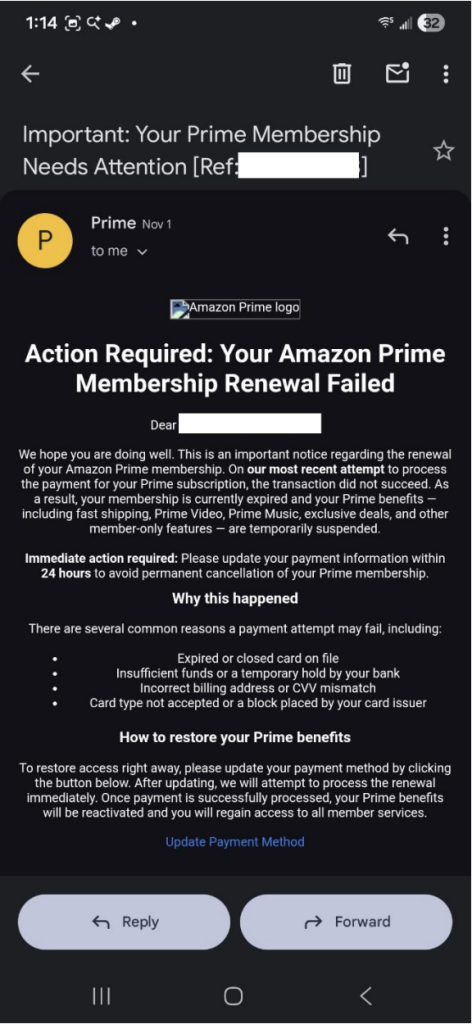
An example of a phishing attempt this holiday season.
An example of a phishing attempt this holiday season. THIS IS A FAKE PHISHING EMAIL!

Which Brands Are Being Faked the Most This Holiday Season?

Top 5 most impersonated luxury brands

  1. Coach
  2. Dior
  3. Ralph Lauren
  4. Rolex
  5. Gucci
Top 5 most impersonated mainstream consumer brands
  1. Apple
  2. Nintendo
  3. Samsung
  4. Disney
  5. Steam

Other Key Research Takeaways US:

  • Email scams are exploding, up ~50% in retail and ~85% in tech as the holidays approach.
  • Fake storefronts are rising, with technology URL scams up nearly 50% and consumer URL scams up ~5%.
  • Trusted brands are the most impersonated, including Amazon, Microsoft, Apple, Walmart, and Costco.
  • 96% plan to shop online
  • 91% see ads from unfamiliar retailers
  • 37% may buy from brands they don’t recognize
  • AI is reshaping scams, with 46% of Americans encountering fake celebrity or influencer endorsements.

Other Key Research Takeaways UK:

  • 97% plan to shop online
  • 86% see ads from unfamiliar retailers
  • 30% may buy from brands they don’t recognize
  • AI is reshaping scams, with 42% of Americans encountering fake celebrity or influencer endorsements.

How to Stay Safe While Brands Are Being Faked This Season

Scammers are getting better at copying the brands you trust, but avoiding the fakes gets much easier when you slow down, verify what you see, and use tools that check links and messages before you click.

Here’s what actually helps during a season when realistic-looking scams are everywhere:

1. Go straight to the source

If you get a message about an order, refund, delivery issue, or account lockout, don’t click the link.

Go directly to the retailer’s app or type the URL manually.

This single habit eliminates most holiday scams.

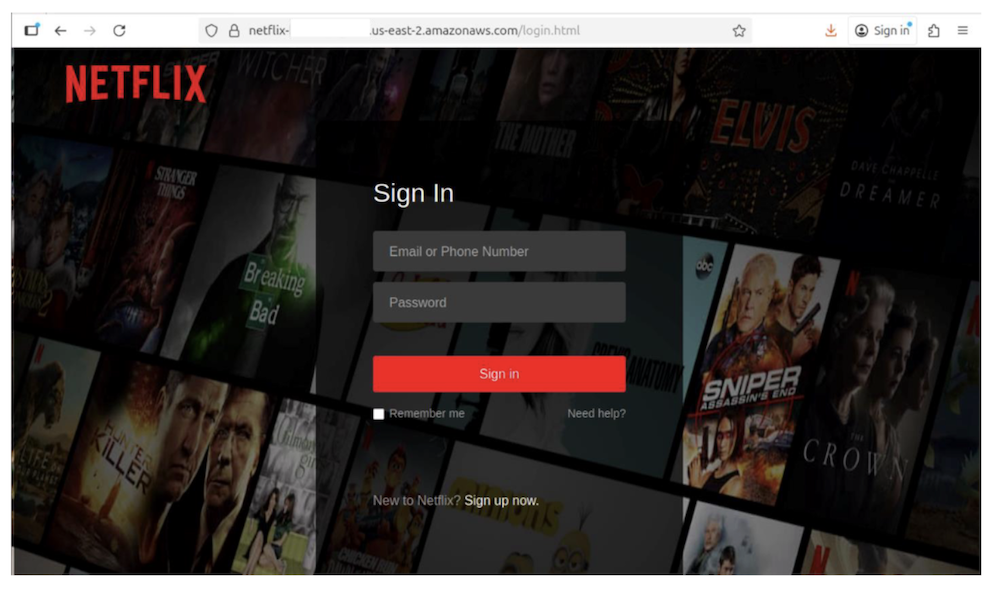
This may look exactly like the Netflix login page... but it's not. This scam landing page is meant to steal your username and password.
This may look exactly like the Netflix login page… but it’s not. This scam landing page is meant to steal your username and password.

2. Inspect the sender, not the graphics

Scammers can recreate logos, colors, and templates perfectly.

What they can’t easily mimic:

  • A legitimate domain
  • A verified phone number
  • A support email that matches the company’s format

If the sender looks off, the message is off.

3. Let security tools check the link for you

McAfee’s online protection adds a critical layer of holiday safety, especially when scammers imitate retailers with near-perfect accuracy.

Key protections include:

Web Protection
Blocks malicious or suspicious websites before they load — including fake checkout pages, login portals, and support sites.

Scam Detector
Built into all core McAfee plans. It flags scam texts, emails, and even deepfake-style video promotions, letting you know a link or message is unsafe before you interact with it.

Password Manager
Creates and stores strong, unique passwords so a stolen login from one retailer doesn’t unlock your whole digital life.

Identity & Financial Monitoring
Transaction Monitoring and Credit Monitoring can alert you to unusual activity — a crucial safety net when stolen logins, card numbers, or personal details circulate quickly during the holidays.

These tools help counter the exact tactics scammers rely on: cloned websites, fake brand emails, and phishing links disguised as legitimate retailers.

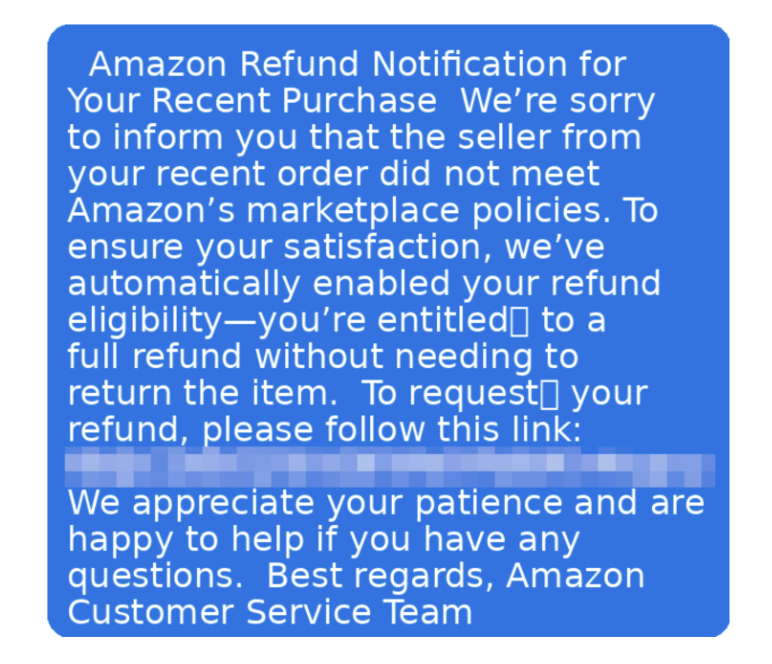
This shows a SMishing text from a fake Amazon. Companies won't text you like this.
This shows a SMishing text from a fake Amazon. Companies won’t text you like this.

4. Turn on two-factor authentication everywhere you shop

Even if a scammer gets your password, they can’t get in without your one-time code.

5. Treat urgency as a red flag

Legitimate companies don’t ask you to “act in minutes,” pay fees to “unlock” an account, or claim you must stay on the line.

Pressure is a tactic — not customer service.

6. Keep an eye on your accounts

Check your banking and shopping accounts weekly.

Small unauthorized charges often appear before large ones.

The post The Most Impersonated Brands in Holiday Shopping, Ranked appeared first on McAfee Blog.

Protect the Whole Family with McAfee+ Ultimate Family Plan

By: McAfee

Many content creators highlight the differences between today’s most prominent generations: the Silent Generation, baby boomers, Generation X, millennials, and Generations Z and Alpha. No generation seems to have much in common with the others. In truth, there is something that people can agree on: identity and online privacy protection. Young or old, cybercriminals don’t discriminate against who they target. In fact, some generations are more prone to certain scams than others. Educating yourself and your family members on current cyberthreats is the first step to defending against them. In this guide, we’ll take a look at how to protect every age group from online threats.

Family protection matters

Your family faces an onslaught of online threats that didn’t exist just a decade ago, and growing. The FBI’s 2024 Internet Crime Report shows that Americans alone lost over $18 billion to cybercrime since 2020. That’s why protecting your family entails more than just antivirus software. Digital protection now encompasses safeguarding your household’s online privacy, monitoring for identity threats, and securing every family device that connects to the internet. This is how risks impact different family members differently:

  • Your children and teens, 97% of whom own a smartphone, face vulnerabilities through social media platforms, gaming networks, and school devices. They’re naturally curious and trusting, making them prime targets for social engineering scams disguised as friend requests or free game downloads.
  • Adults in your household juggle multiple online responsibilities—banking, shopping, work communications, and managing family accounts. The rush of daily life can make you more susceptible to phishing emails that look legitimate or malicious links embedded in seemingly innocent messages.
  • Senior family members often become targets because they may be less familiar with evolving online scams. In 2024, the FTC received 147,127 complaints from adults aged 60 years and above, resulting in $4.8 billion in losses. But since many of these incidents go unreported, that figure may actually go as high as $61.5 billion.

Depending on the age group, criminals adapt their tactics based on who they’re targeting. With the right protection, you can expand your family’s digital life with confidence. When you have the right safeguards in place, your family can fully embrace the incredible opportunities that technology offers. Your kids can safely research school projects, your teens can connect with friends responsibly, and you can manage your household efficiently online. The most effective digital safety approach is to create a safety net with layered protection, one that works across all your devices and considers each family member’s technology usage—whether that’s helping your teenager safely explore career interests online, ensuring your online banking stays secure, or giving grandparents peace of mind when video chatting with distant relatives. This means combining real-time threat detection, safe browsing tools, identity monitoring, and secure connections through a virtual private network.

Distinct protections per age group

No two generations use technology the same way—and cybercriminals know it. Children, teens, adults, and seniors each face unique digital risks shaped by their habits, confidence levels, and online environments. That’s why effective cybersecurity isn’t one-size-fits-all. Tailoring protection to each age group ensures that everyone—from curious kids to tech-savvy adults—can navigate the digital world safely and confidently.

Safeguard childhood

Cybercriminals can buy Social Security Numbers (SSNs) of minors on the dark web or gather them through medical records or school system breaches. SSNs are valuable to a cybercriminal because the theft can go undetected for years since children aren’t yet opening credit cards or applying for mortgages. It’s never too early to start identity monitoring. For the same reason, you might consider putting a credit freeze on behalf of your child since they won’t be needing it for several years. A credit freeze makes your child’s credit inaccessible to everyone, including criminals, and won’t negatively affect their credit score.

Digital safety with tween and teen independence

Once your child becomes a teenager, they can be allowed to open their first email addresses and social media profiles independently. It’s an important life lesson in organization, responsibility, and digital literacy. However, these platforms could open them to risks such as cyberbullying, fake news, and social engineering. The best way to avoid being cyberbullied is through education. Ensure that your tweens and teens who spend unsupervised time on their devices know what to do if they encounter cyberbullying. The best course of action is to report the incident to an adult and, in the meantime, to suspend their accounts.

Prepare the seniors

Cybercriminals often seek out seniors as easy targets for online scams because they are typically less digitally savvy. They may not realize that some emails in their inbox could be sent by someone with bad intentions. What can start out as a friendly email pal can quickly spiral into divulging sensitive personal information or sending huge sums of money to a criminal. The best way to prepare the seniors in your life for online safety is to impart a few, easy-to-follow absolutes. Start with these three rules:

  • Never tell anyone your password. Your bank, tax filing service, nor the IRS will ever need it.
  • Never divulge your SSN over email.
  • Never send money to a stranger, no matter how much their “sob story” tugs at your heartstrings.

Manage what’s right for your family online

Creating a safer digital environment for your children doesn’t require you to become a tech expert. With the right approach and tools, you can establish healthy digital boundaries that protect your children while allowing them to enjoy the benefits of our connected world.

Start with open conversation

Before implementing any technical measures, have honest discussions with your family about online safety to build trust and help you recognize each family member’s digital journey. Explain that protective measures will not restrict freedom, but reduce risks such as phishing attempts, malware infections, and exposure to inappropriate content.

Create a family technology agreement

A family tech agreement serves as your household’s digital constitution. Work together to establish rules about screen time, appropriate websites, social media use, and consequences for breaking agreements, including guidelines about sharing personal information, downloading apps, and what to do if they encounter something concerning online.

Enable parental controls

Most devices and platforms offer robust parental control features. iOS devices’ Screen Time and Android’s Family Link allow you to set app limits and content restrictions, while Windows and macOS can filter content and set time limits. The Federal Communications Commission recommends router-level filtering as the first line of defense because it automatically protects all devices connected to your network.

Set up app and content filters

Configure age-appropriate content filters on streaming services, gaming platforms, and app stores. Netflix, Disney+, and other services allow you to create child-friendly profiles with content restrictions, while gaming consoles like PlayStation, Xbox, and Nintendo Switch include comprehensive parental controls for game ratings, online interactions, and spending limits. For web browsing, enable SafeSearch on Google, Bing, and other search engines to create clarity and keep harmful content from appearing in search results.

Optimize privacy settings across platforms

Because social media platforms often favor data collection over privacy, it is critical that you adjust privacy settings on all social media accounts and apps your family uses. Turn off location sharing and disable targeted advertising when possible, and limit who can contact your children online. To reduce younger children’s exposure to social engineering attempts and inappropriate contact from strangers, make their profiles private by default and require approval for new followers or friend requests.

Deploy safe browsing tools

Your teen could be so focused on downloading a “free” TV or video game that they may not recognize the signs of malicious sites such as typos, blurry logos, or incredible offers. Trustworthy safe browsing extensions and software could protect your teen from these unsafe downloads, as well as from risky websites, hidden malware, phishing, and social media bots. Safe browsing extensions could teach your family members to develop better security instincts when they see warnings about suspicious URLs, poor website design, and too-fantastic offers.

Make protection age-appropriate

Tailor your approach to each family member’s age, digital maturity, and comfort level with technology. Younger children will need more restrictive settings and closer supervision, while teenagers are more open when they understand the reason behind the rules and can have some autonomy with clear consequences for misuse.

Regular check-ins and updates

As technology evolves, ongoing conversation about responsible usage will allow you to address new apps, games, or websites your family wants to explore. Set a monthly family meeting to discuss online experiences, review your technology agreement, and adjust settings as needed. When you implement these strategies consistently, your family will experience fewer security incidents, reduced exposure to inappropriate content, and better digital habits overall. These tools and strategies work best when combined with ongoing communication and a family culture that prioritizes both digital exploration and safety. In addition, children who grow up with these protections develop stronger security awareness and are less likely to fall victim to online scams as they become more independent digital users.

Mindfulness is safety

As an adult, you typically have better street smarts than teens. However, the daily rush of juggling work, social obligations, and running a household could leave you without much time to spare, even for romance. As a result, living life in the fast lane makes you more susceptible to scams, phishing, malware, and computer viruses. The best way to prevent falling for these digital threats is this: slow down! Take your time when you receive any message from someone you don’t know or have never met in person. If you feel even an iota of suspicion, don’t engage with the sender. Delete the message. If it’s important, the person or organization will follow up. To fully protect your connected devices and the personally identifiable information they store, consider investing in safe browsing, antivirus software, and identity monitoring and restoration services to catch any threats that may have passed under your watchful eye.

Modern antivirus for today’s cyberthreats

While you might think your devices are already secure, modern cyberthreats have evolved to become more virulent, far beyond what traditional built-in protections can handle. In response, antivirus solutions have transformed into intelligent security systems that provide comprehensive, real-time protection using behavioral analysis, machine learning, and cloud-based threat detection. These advanced technologies actively identify and block phishing attacks, malware, ransomware, and malicious websites that traditional security measures often miss. While operating systems such as Windows and macOS include basic security features, they’re designed as general safeguards rather than comprehensive family protection solutions. Built-in protections typically focus on known threats, but do not detect zero-day attacks, sophisticated phishing schemes, or emerging malware variants that cybercriminals specifically design to evade standard defenses. Consider these daily family scenarios where your teenager brings home their school laptop. It may have been exposed to threats through shared networks or downloads from classmates. That family tablet everyone uses for streaming and games becomes a potential entry point for malicious apps or compromised websites. When you connect to public Wi-Fi at the coffee shop, airport, or hotel during family travel, you’re exposing your devices to network-based attacks that built-in protections weren’t designed to handle. Your modern family needs a comprehensive antivirus solution that monitors all your family’s devices continuously, learns each member’s online behavior patterns, and adapts its protection accordingly. This means blocking that suspicious email before your spouse clicks on it, preventing your child from accidentally downloading malware disguised as a game, and ensuring your smart home devices remain secure. The best value comes from bundled services that address your family’s complete digital life. Identity monitoring services watch for signs that your family members’ personal information has been compromised in data breaches. A family VPN service encrypts your internet connection, protecting sensitive information when family members use public Wi-Fi networks for school projects, work calls, or entertainment. This integrated protection works seamlessly not just to protect individual devices, but to safeguard your entire family’s digital ecosystem. With cybercrime damages projected to continue growing significantly each year, investing in comprehensive family protection is one of the smartest decisions you can make for your household’s digital well-being.

The ultimate protection plan

Get the whole family committed to safer and more private online lives with the help of McAfee+ Ultimate Family Plan. This plan covers up to six individuals in your family with an entire suite of comprehensive privacy, identity, and device security features. The plan also includes preventive measures to fight online crime, such as safe browsing tools, an advanced firewall, unlimited VPN, and antivirus software for unlimited devices. Your family can also receive up to $2 million in identity theft recovery and $50,000 in ransomware coverage. With the McAfee+ Ultimate Family Plan, device security extends across unlimited computers, smartphones, and tablets, while its advanced antivirus software automatically updates to defend you against the latest threats. Safe browsing tools block malicious websites before they can cause harm, and the unlimited VPN encrypts internet connections on public networks, while the built-in firewall monitors incoming and outgoing traffic. All your family’s login credentials on all devices will be secure with password management, while secure cloud storage protects important documents and family photos. Real-time alerts notify you immediately when scams are detected or suspicious activity occurs.

Protection tailored for every family member

Every family member faces different online risks, shaped by their age, habits, and digital experience. Children need safeguards against identity theft and unsafe content, while teens require protection that balances independence with security. Adults juggle multiple connected accounts that demand advanced monitoring, and seniors benefit from simplified defenses against scams and fraud. A one-size-fits-all approach no longer works. The McAfee+ Ultimate Family Plan effectively adapts to each person’s unique digital life, ensuring that everyone stays safe, confident, and connected online:

  • Your young children’s Social Security Numbers will be monitored for misuse, while your teens will be protected from risky downloads and phishing attempts and still maintain their online autonomy.
  • The adults in your family will benefit from comprehensive identity theft protection that monitors credit reports, bank accounts, and personal information across the dark web. Meanwhile, your email and social media accounts will be continuously surveilled for unauthorized access.
  • Seniors will receive simplified alerts and protection specifically designed for common online scams and be supported by top-notch identity restoration specialists to resolve any issues that arise.

Quick start checklist

Getting started with the McAfee+ Ultimate Family Plan takes only minutes. Simply follow this short list to start protecting your family’s digital life:

  • Account creation: Create a master account at mcafee.com using the primary family email address. This account becomes your central dashboard for managing all family members’ protection.
  • Add family profiles: Add family profiles by entering each member’s basic information. You can include up to six family members with personalized settings—spouses, children, and other household members. Each person receives their own unique protection settings based on their age and device usage patterns.
  • Install on devices: Download the McAfee app on every family device—computers, phones, and tablets. The software automatically synchronizes with your primary family account and begins protecting all devices immediately. The installation process typically completes in under five minutes per device.
  • Enable key protections: Once installation is done, you can start activating identity monitoring, VPN, and safe browsing for each member.
  • Turn on alerts: You will also need to configure notification preferences for each device to activate alerts when security events and threats occur.
  • Test your setup: To see if the installation works, run initial antivirus scans on all devices. You can also test the VPN to ensure that the connection works.

Essential tips to protect your family online

A comprehensive online security solution combined with best digital practices can go a long way in protecting your loved ones from identity theft, scams, and online risks. These essential tips will help you strengthen your family’s digital defenses, build safer online routines, and give everyone the confidence to explore the internet securely.

  • Use unique passwords and multi-factor authentication: Doing this prevents hackers from accessing multiple accounts even if one password is compromised. Enable MFA on all critical accounts.
  • Enable automatic updates on all devices: Configure automatic security updates to keep your family’s devices protected against the latest security threats without requiring constant manual action from you.
  • Turn on safe browsing and firewall protection: Enabling safe browsing features blocks malicious websites and unauthorized network access before they can harm your family’s devices and data.
  • Use a VPN on public Wi-Fi networks: A VPN protects your data on public networks by encrypting your family’s internet connection in hotel, coffee shop, or airport Wi-Fi to prevent data theft.
  • Set device-level parental controls: Configure age-appropriate content filters to protect children from inappropriate content while teaching responsible digital habits.
  • Consider freezing minors’ credit reports: Credit freezing will prevent identity thieves from opening fraudulent accounts in your children’s names, as they won’t need credit yet.
  • Teach family members to recognize phishing red flags: Educating your family to identify common phishing tactics empowers them to spot red flags in suspicious emails, texts, and websites that try to steal personal information.
  • Back up important family files regularly: Create a comprehensive backup strategy to ensure precious photos, documents, and memories are safe even if devices are lost, stolen, or infected with ransomware.
  • Monitor identities for the whole family: Use family plans to catch suspicious activity early, allowing you to respond quickly if someone’s personal information is compromised.

Final thoughts

Protecting your family’s digital life doesn’t have to be overwhelming. With the right knowledge, best digital practices, and a comprehensive security solution like McAfee+ Ultimate Family Plan, you can safeguard everyone against today’s online threats. A comprehensive family plan will help you enable safe browsing tools, monitor your family members’ identities, educate each family member about their unique risks, and build a strong foundation of online security. Start implementing these protective measures today, and stay informed about emerging threats and security best practices to keep your loved ones safe in our connected world.

The post Protect the Whole Family with McAfee+ Ultimate Family Plan appeared first on McAfee Blog.

This Week in Scams: DoorDash Breach and Fake Flight Cancellation Texts

By: McAfee

Leading off our news on scams this week, a heads-up for DoorDash users, merchants, and Dashers too. A data breach of an undisclosed size may have impacted you.

Per an email sent by the company to “affected DoorDash users where required,” a third party gained access to data that may have included a mix of the following:

  • First and last name
  • Physical address
  • Phone number
  • Email address

You might have got the email too. And even if you didn’t, anyone who’s used DoorDash should take note.

As to the potential scope of the breach, DoorDash made no comment in its email or a post on their help site. Of note, though, is that one of the help lines cited in their post mentions a French-language number—implying that the breach might affect Canadian users as well. Any reach beyond the U.S. and Canada remains unclear.

Per the company’s Q2 financial report this year, “hundreds of thousands of merchants, tens of millions of consumers, and millions of Dashers across over 30 countries every month.” Stats published elsewhere put the user base at more than 40 million people, which includes some 600,000 merchants.

The company underscored that no “sensitive” info like Social Security Numbers (and potentially Canadian Social Insurance Numbers) were involved in the breach. This marks the third notable breach by the well-known delivery service, with incidents in 2019 and 2022

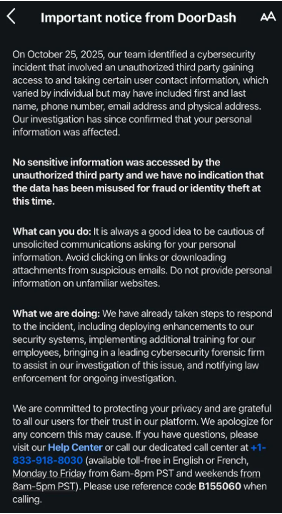
Image of DoorDash email about data breach.

What to do if you think you got caught up in the DoorDash breach

While the types of info involved here appear to be limited, any time there’s a breach, we suggest the following:

Protect your credit and identity. Checking your credit and getting identity theft protection can help keep you safer in the aftermath of a breach. Further, a security freeze can help prevent identity theft if you spot any unusual activity. You can get all three in place with our McAfee+ Advanced or Ultimate plans.

Keep an eye out for phishing attacks. With some personal info in hand, bad actors might seek out more. They might follow up a breach with rounds of phishing attacks that direct you to bogus sites designed to steal your personal info. As with any text or email you get from a company, make sure it’s legitimate before clicking or tapping on any links. Instead, go straight to the appropriate website or contact them by phone directly. Also, protections like our Scam Detector and Web Protection can alert you to scams and sketchy links before they take you somewhere you don’t want to go.

Update your passwords and use two-factor authentication. Changing your password is a strong preventive measure. Strong and unique passwords are best, which means never reusing your passwords across different sites and platforms. Using a password manager helps you stay on top of it all while also storing your passwords securely.

Attention travelers: Now boarding, a rise in flight cancellation scams

Even as the FAA lifted recent flight restrictions on Monday morning, scammers are still taking advantage of lingering uncertainty, and upcoming holiday travel, with a spate of flight cancellation scams.

How the scam works

Fake cancellation texts

The first comes via a text message saying that your flight has been cancelled and you must call or rebook quickly to avoid losing your seat—usually in 30 minutes. It’s a typical scammer trick, where they hook you with a combination of bad news and urgency. Of course, the phone number and the site don’t connect you with your airline. They connect you to a scammer, who walks away with your money and your card info to potentially rip you off again.

Fake airline sites in search results

The second uses paid search results. We’ve talked about this trick in our blogs before. Because paid search results appear ahead of organic results, scammers spin up bogus sites that mirror legitimate ones and promote them in paid search. In this way, they can look like a certain well-known airline and appear in search before the real airline’s listing. With that, people often mistakenly click the first link they see. From there, the scam plays out just as above as the scammer comes away with your money and card info.

How to avoid flight cancellation scams

Q: How can I confirm whether my flight is really canceled?
A: Check directly in your airline’s official app or website. Never click links in texts or emails.

Q: How can I spot a fake airline search result?
A: Look for “Ad”/“Sponsored,” confirm the URL, and check that the site uses HTTPS, not HTTP.

Q: Is there a tool that flags fake booking sites?
A: Scam-spotting tools like Scam Detector and Web Protection can identify sketchy links before you click.

In search, first isn’t always best.

Look closely to see if your top results are tagged with “Sponsored” or “Ad” in some way, realizing it might be in fine print. Further, look at the web address. Does it start with “https” (the “s” means secure), because many scam sites simply use an unsecured “http” site. Also, does the link look right? For example, if you’re searching for “Generic Airlines,” is the link the expected “genericairlines dot-com” or something else? Scammers often try to spoof it in some way by adding to the name or by creating a subdomain like this: “genericairlines.rebookyourflight dot-com.”

Get a scam detector to spot bogus links for you.

Even with these tips and tools, spotting bogus links with the naked eye can get tricky. Some look “close enough” to a legitimate link that you might overlook it. Yet a combination of features in our McAfee+ plans can help do that work for you.  Our Scam Detector helps you stay safer with advanced scam detection technology built to spot and stop scams across text messages, emails, and videos. Likewise, our Web Protection will alert you if a link might take you to a sketchy site. It’ll also block those sites if you accidentally tap or click on a bad link.

Scammers Hijack a Trusted Mass Texting Provider

You’ve probably seen plenty of messages sent by short code numbers. They’re the five- or six-digit codes used to send texts instead of by a phone number. For example, your cable company might use one to send a text for resetting a streaming password, the same goes for your pharmacy to let you know a prescription is ready or your state’s DoT to issue a winter travel alert, and so on.

According to NBC News, scammers sent hundreds of thousands of texts using codes used by the state of New York, a charity, and a political organizing group. The article also cites an email sent to messaging providers by the U.S. Short Code Registry, an industry nonprofit that maintains those codes in the U.S. In the email, the registry said attempted attacks on messaging providers are on the rise.

What this means for the rest of us is that just about any text from an unknown number, and now short codes, might contain malicious links and content. It’s one more reason to arm yourself with the one-two punch of our Scam Detector and Web Protection.

What are short codes?
Short codes are 5–6 digit numbers used by pharmacies, utilities, banks, and government agencies to send official alerts.

Why this attack is unusual
Scammers didn’t spoof short codes—they gained access to real ones used by:

  • The State of New York
  • A charity
  • A political organizing group

Why this matters
Even texts from legitimate short-code numbers can no longer be trusted at face value.

What to do now

  • Treat any unexpected text—even from a short code—as suspicious.
  • Don’t tap links.
  • Verify by going directly to the official website or app.

Quick Scam Roundup

Consumers warned over AI chatbots giving inaccurate financial advice 

  • Our advice: Always verify recommendations with trusted financial sources

Why our own clicks are often cybercrime’s greatest allies

  • Our advice: Many attacks rely on rushed or emotional decisions, slow down before clicking

TikTok malware scam uses fake software activation guides to steal data

  • Our advice: Download software only from official sources


We’ll be back after the Thanksgiving weekend with more updates, scam news, and ways to stay cyber safe.

The post This Week in Scams: DoorDash Breach and Fake Flight Cancellation Texts appeared first on McAfee Blog.

How to Follow McAfee on Google News in One Simple Step

By: McAfee

Want McAfee’s latest scam alerts, cybersecurity tips, and safety updates to show up automatically in your Google News feed? You can follow McAfee directly on Google News with a single tap.

Google News now gives every official publisher a dedicated page — and McAfee has one. Once you follow us, our newest articles will appear in your Following tab and throughout your personalized news feed whenever they’re relevant to you.

Here’s how to do it in seconds.

Follow McAfee on Google News

Step 1: Go to our official Google News page

Tap or click this link:

McAfee Official Google News Source Page

This opens McAfee’s verified publisher page inside Google News.

Image shows McAfee's Google News source page.
Image shows McAfee’s Google News source page.

Step 2: Tap the ⭐ “Follow” button

You’ll see a star icon at the top of the page.

Tap Follow and you’re done.

That’s it — McAfee is now part of your personalized news feed.

What happens after you follow McAfee

When you tap the star:

  • McAfee appears under Following → Sources in Google News
  • Our stories show up more often when you search for cybersecurity topics
  • You’ll see McAfee alerts, safety tips, and threat updates sooner
  • Google prioritizes McAfee when we publish on topics you care about (AI scams, malware, identity theft, etc.)

No settings menus. No advanced search. Just one tap.

How to Unfollow or Manage Your Sources

If you ever want to update your feed:

  1. Open Google News

  2. Go to Following → Sources

  3. Tap the star again to unfollow

  4. Or rearrange which sources matter most to you


Image shows how to find your preferred sources in Google News


FAQs

Do I need the Google News app?

No. Following works in both browsers and the app.

Will this make McAfee show up first for every search?

Not automatically — but Google does prioritize publishers you follow when the content is relevant.

Can I follow McAfee on multiple devices?

Yes. It’s tied to your Google account, not your phone or laptop.

Is the follow button safe?

Absolutely. This is Google’s built-in publisher follow system.

Stay Updated, Stay Safer

Cyber threats move fast — following McAfee on Google News makes it easier to stay ahead of scams, breaches, and emerging AI risks.

The post How to Follow McAfee on Google News in One Simple Step appeared first on McAfee Blog.

Ghost Tapping: What It Is, How It Works, and How to Stay Safe

By: McAfee

Contactless payments make everyday purchases fast and easy. Yet with that convenience comes a risk: ghost tapping.

In crowded spaces or rushed moments, a scammer could trigger a small tap-to-pay charge or push through a higher amount without your clear consent. Understanding what ghost tapping is, how it happens, and what to do next helps you keep your money and identity secure.

What Is Ghost Tapping?

Ghost tapping is a form of contactless fraud where someone attempts to initiate a tap-to-pay transaction without your approval.

Tap-to-pay cards and mobile wallets on phones use a technology called “near-field communication,” or NFC. That lets them communicate with things like a point-of-sale device for payment at a very close range. It’s generally quite safe, particularly because of the “near” part. You have to get very close to make the connection.

Even so, proximity and distraction can be exploited. Attackers may try to skim limited details from RFID (Radio Frequency Identification technology) cards or NFC cards, or nudge you into approving a payment you didn’t intend. If you’ve ever wondered what ghost tapping is, think of it as an opportunistic, in-person scam that abuses the tap-to-pay moment rather than a remote hack.

How Ghost Tapping Happens

Most schemes rely on getting close and catching you off guard. A criminal might carry a portable reader, press into a pocket or bag, and attempt a low-value charge. Others set up tampered terminals, rushing you so you don’t check the amount.

Consider These Two Scenarios:

You’re at a busy farmer’s market. A scammer with a phone equipped with a point-of-sale app stumbles into you and gets close enough to your card to trigger a transaction. It’s almost like a modern-day pickpocket move, where the bump distracts the victim from the theft as it happens.

In another case, you might come across a phony vendor. Maybe someone’s selling cheap hats outside a football game or someone’s going around your neighborhood selling candy, supposedly to support a charity. In scenarios like these, you tap to pay with your phone just as you’d expect… but with one exception: the “vendor” jacks up the purchase price. They hurry you through the transaction, so quickly that you don’t review the screen before you confirm payment.

We’ve also seen reports of people getting Apple Pay scammed by impostor merchants who exploit quick taps and small screens. While mobile wallets add strong safeguards, poor visibility and social pressure can still lead to losses.

The Better Business Bureau on Ghost Tapping:

A report posted on the Scam Tracker at the Better Business Bureau (BBB) shows how the phony vendor version of this scam allegedly played out:

“An individual is going door to door in [location redacted] claiming to be selling chocolate on behalf of [redacted] to support special needs students. He says that he can only accept tap-to-pay to get people to pay with a card. He then charges large amounts to the card without the cardholder being able to see the amount. He got my mother for $537… Another victim for $1100… He changes neighborhoods frequently to avoid getting caught.”

Signs of Ghost Tapping and Common Myths

Early ghost detecting starts with vigilance. Watch for unfamiliar small charges, especially after crowded events, and alerts tied to contactless transactions. If you see odd activity tied to RFID cards or NFC cards, act quickly.

Common myths persist. Attackers can’t drain accounts from far away, clone full cards via a tap, or bypass wallet protections easily. Most successful cases hinge on proximity, distraction, and human error. Meanwhile, Apple Pay scam stories often involve rushed taps and unverified totals.

Effective ghost detecting focuses on timely alerts, careful review, and immediate response.

How to Protect Yourself from Ghost Tapping Scams

The BBB, which recently broke the story of these scams, offers several pieces of advice. We have some advice we can add as well.

From the BBB…

  • Store your cards securely. An RFID-blocking wallet or sleeve can help stop wireless skimming.
  • Always confirm payment details. Before tapping your card or phone, check the merchant’s name and amount on the terminal screen.
  • Set up transaction alerts. Many banks allow real-time notifications for every charge.
  • Keep an eye on your accounts. Daily checks help you spot fraud faster.
  • Limit tap-to-pay use in high-risk areas. Consider swiping or inserting your card instead.

From us at McAfee…

Monitor your identity and your credit.

The problem with many card scams is that they can lead to further identity theft and fraud, which you only find out about once the damage is done. Actively monitoring your identity and credit goes beyond single transaction alerts from your bank and can spot an emerging problem before it becomes an even bigger one. You can take care of both easily with timely notifications from our credit monitoring and identity monitoring features, all as part of our McAfee+ plans.

When you’re out and about, consider what you’re carrying—and where you carry it.

The physical safety of your phone and cards counts as well. While ghost tapping scams are new, old-school physical pickpocketing attempts persist. When it comes to devices and things like debit cards, credit cards, and even cash, keep what you bring with you to the bare minimum when you go out. This can cut your losses if the unfortunate happens. If you have a credit card and ID holder attached to the back of your phone, you may want to remove your cards from it. That way, if your phone gets snatched, those important cards don’t get snatched as well.

When in doubt, shop with a credit card.

In the U.S., credit cards offer you additional protection that debit cards don’t. That’s thanks to the Fair Credit Billing Act (FCBA). It limits your liability to $50 for fraudulent charges on a credit card if you report the loss to your issuer within 60 days.

The post Ghost Tapping: What It Is, How It Works, and How to Stay Safe appeared first on McAfee Blog.

Venmo 101: Making Safer Payments with the App

By: McAfee

As the holiday season ramps up, so do group dinners, shared travel costs, gift exchanges, and all the little moments where someone says, “Just Venmo me.”

With more people sending and splitting money this time of year, scammers know it’s prime time to target payment apps. Here’s how to keep your Venmo transactions safe during one of the busiest — and riskiest — payment seasons.

What kind of scams are on Venmo?

Venmo scams come in all shapes, and many of them look like variations of email phishing and text scams. The scammers behind them will pose as Venmo customer service reps who ask for your login credentials. Other scammers offer bogus cash prizes and pyramid schemes that lure in victims with the promise of quick cash. Some scammers will use the app itself to impersonate friends and family to steal money.

Venmo has a dedicated web page on the topic of scams, and lists the following as the top Venmo scams out there:

·       Fake Prize or Cash Reward

·       Call from Venmo

·       Call from Tech Support

·       Fake Payment Confirmation

·       Pre-payment for Goods and Services

·       Stranger Posing as a Friend

·       Payments from Strangers

·       Offers to Make Money Fast

·       Paper Check Scam

·       Romance Scam


Venmo has thorough instructions to combat these scams and breaks them down in detail on its site. They also provide preventative tips and steps to take if you unfortunately fall victim to one of these scams. Broadly speaking, though, avoiding Venmo scams breaks down into a few straightforward steps.

How to avoid getting scammed on Venmo

1) Never share private details.

Scammers often pose as customer service reps to pump info out of their victims. They’ll ask for things like bank account info, debit card or credit card numbers, or even passwords and authentication codes sent to your phone. Never share this info. Legitimate reps from legitimate companies like Venmo won’t request it.

2) Know when Venmo might ask for your Social Security number.

In the U.S., Venmo is regulated by the Treasury Department. As such, Venmo might require your SSN in certain circumstances. Venmo details the cases where they might need your SSN for reporting, here on their website. Note that this is an exception to what we say about sharing SSNs and tax ID numbers. As a payment app, Venmo might have legitimate reasons to request it. However, don’t send this info by email or text (any email or text that asks you to do that is a scam). Instead, always use the mobile app by going to Settings  –> Identity Verification.

3) Keep an eye out for scam emails and texts.

Venmo always sends communications through its official “venmo.com” domain name. If you receive an email that claims to be from Venmo but that doesn’t use “venmo.com,” it’s a scam. Never click or tap on links in emails or texts supposedly sent by Venmo.

4) Be suspicious of the messages you get. Imposters are afoot.

Another broad category of scams includes people who aren’t who they say they are. In the case of Venmo, scammers will create imposter accounts that look like they might be a friend or family member but aren’t. If you receive an unexpected and likely urgent-sounding request for payment, contact that person outside the app. See if it’s really them.

5) When sending money, keep an eye open for alerts from the app.

Just recently, Venmo added a new feature, dynamic alerts, which helps protect people when sending money via the “Friends and Family” option. It pops up an alert if the app detects a potentially fraudulent transaction and includes info that describes the level of risk involved. In the cases of highly risky payments, Venmo might decline the transaction altogether. This adds another level of protection to Friends and Family payments, which are non-refundable in cases of fraud. Further, this underscores another important point about using Venmo: only pay people you absolutely know and trust.

More ways to stay safe on Venmo

Keep your transactions private. Venmo has a social component that can display a transaction between two people and allow others to comment on it. Payment amounts are always secret. Yet you have control over who sees what by adjusting your privacy settings:

  • Public – Everyone on the internet can see and comment on the transaction.
  • Friends – Only your Venmo friends and the other participant’s friends can see and comment on the transaction. (Note that the friends of the other participant might be strangers to you, so “friends and friends of friends” is more accurate here.)
  • Private – Here, only the participants can view and comment on the transaction.

This brings up the question, what if the participants in the transaction have different privacy settings? Venmo uses the most restrictive one. So, if you’re paying someone who has their privacy set to “Public” and you have yours set to “Private,” the transaction will indeed be private.

We suggest going private with your account. The less financial information you share, the better. You can set your transactions to private by heading into the Settings of the Venmo app, tapping on Privacy, and then selecting Private.

In short, just because something is designed to be social doesn’t mean it should become a treasure trove of personal data about your spending habits.

Add extra layers of security. Take extra precautions that make it difficult for others to access your Venmo app.

  • First off, lock your phone. Whether with a PIN or other form of protection, locking your phone prevents access to everything you keep on it, which is important in the case of loss or theft. Our own research found that only 58% of adults take the vital step of locking their phones. If you fall into the 42% of people who don’t, strongly consider changing that.
  • Within the Venmo app, you can also enable Face ID and a PIN (on iOS) or a PIN and biometric unlock (Android). These add a further layer of security by asking for identification each time you open the app. That way, even if someone gets access to your phone, they’ll still have to leap through that security hurdle to access your Venmo app.
  • Use a strong, unique password for your account. That’s a password with at least 13 characters using a mix of cases, numbers, and symbols that you don’t use anywhere else. You can also have a password manager do that work for you across all your accounts.

Keep your online finances even more secure with the right tools

Online protection software like ours offers several additional layers of security when it comes to your safety and finances online.

For starters, it includes Web Protection and Scam Detector that can block malicious and questionable links that might lead you down the road to malware or a phishing scam, such as a phony Venmo link designed to steal your login credentials. It also includes a password manager that creates and stores strong, unique passwords for each of your accounts.

Moreover, it further protects you by locking down your identity online. Transaction Monitoring and Credit Monitoring help you spot any questionable financial activity quickly. And if identity theft unfortunately happens to you, up to $2 million in ID theft coverage & restoration can help you recover quickly.

The post Venmo 101: Making Safer Payments with the App appeared first on McAfee Blog.

This Week in Scams: New Alerts for iPhone and Android Users and a Major Google Crackdown

By: McAfee

Welcome back to another This Week in Scams.

This week,  have attacks that take over Androids and iPhones, plus news that Google has gone on the offensive against phishing websites.

First up, a heads-up for iPhone owners.

The “We found your iPhone” scam

In the hands of a scammer, “Find My” can quickly turn into “Scam Me.”

Switzerland’s National Cyber Security Center (NCSC) shared word this week of a new scam that turns the otherwise helpful “Find My” iOS feature into an avenue of attack.

Now, the thought of losing your phone, along with all the important and precious things you have on it, is enough to give you goosebumps. Luckily, the “Find My” can help you track it down and even post a personalized message on the lock screen to help with its return. And that’s where the scam kicks in.

From the NCSC:

When a device is marked as lost, the owner can display a message on the lock screen containing contact details, such as a phone number or email address. This can be very helpful if the finder is honest – but in dishonest hands, the same information can be used to launch a targeted phishing attack.

With that, scammers send a targeted phishing text, as seen in the sample provided by the NCSC below …

A smartphone screenshot showing a fraudulent text message claiming a lost iPhone 14 has been located and instructing the recipient to click a link. A large red diagonal stamp reading “Betrug / Fraud” overlays the message, indicating it is a scam.
Source: NCSC, Switzerland

What do the scammers want once you tap that link? They request your Apple ID and password, which effectively hands your phone over to them—along with everything on it and everything else that’s associated with your Apple ID.

It’s a scam you can easily avoid. So even if you’re still stuck with a lost phone that’s likely in the hands of a scammer the point of consolation is that, without your ID, the phone is useless to them.

Here’s what the NCSC suggests:

Ignore such messages. The most important rule is Apple will never contact you by text message or email to inform you that a lost device has been found.

Never click on links in unsolicited messages or enter your Apple ID credentials on a linked website.

If you lose your device, act immediately. Enable Lost Mode straight away via the Find My app on another device or at iCloud.com/find. This will lock the device.

Be careful about which contact details you show on your lost device’s lock screen. For example, use a dedicated email address created specifically for this purpose. Never remove the device from your Apple account, as this would disable the Activation Lock.

Make sure your SIM card is protected with a PIN. This simple yet effective measure prevents criminals from gaining access to your phone number.

Android phone takeover scam

Now, a different attack aimed at Android owners …

A story shared on Fox this week breaks down how a combination of paid search ads, remote access tools, and social engineering have led to hijacked Android phones.

It starts with a search, where an Android owner looks up a bank, a tech support company, or what have you. Instead of getting a legitimate result, they get a link to a bogus site via paid search results that appear above organic search results. The link, and the page it takes them to, look quite convincing, given the ease with which scammers can spin up ads and sites today. (More on that next.)

Once there, they call a support number and get connected to a phony agent. The agent convinces the victim to download an app that will help the “agent” solve their issue with their account or phone. In fact, the app is a remote access tool that gives control of the phone, and everything on it, to the scammer. That means they can steal passwords, send messages to friends, family, or anyone at all, and even go so far as to lock you out.

Basically, this scam hands over one of your most precious possessions to a scammer.

Here’s how you can avoid that:

Skip paid search results for extra security. That’s particularly true when contacting your bank or other companies you’re doing business with. Look for their official website in the organic search results below paid ads. Better yet, contact places like your bank or credit card company by calling the number on the back of your card.

Get a scam detector. A combination of our Scam Detector and Web Protection can call out sketchy links, like the bogus paid links here. They’ll even block malicious sites if you accidentally tap a bad link.

Never download apps from third-party sites outside of the Google Play Store. Google has checks in place to spot malicious apps in its store.

Lastly, never give anyone access to your phone. No bank rep needs it. So if someone on a call asks you to download an app like TeamViewer, AnyDesk, or AirDroid, it’s a scam. Hang up.

Beyond that, you can protect yourself further by installing an app like our McAfee Security: Antivirus VPN. You can pick it up in the Google Play store, which also includes our Scam Detector and Identity Monitoring. You can also get it as part of your McAfee+ protection.

Google takes aim at phishing scams with a lawsuit against an alleged criminal organization

Just Wednesday, Google took a first step toward making the internet safer from bogus sites, per a story filed by National Public Radio.

A lawsuit alleges that a China-based company called “Lighthouse” runs a “Phishing-as-a-Service” operation that outfits scammers with quick and easy tools and templates for creating convincing-looking websites. According to Google’s general counsel, these sites could “compromise between 12.7 and 115 million credit cards in the U.S. alone.

The suit was filed in the U.S. District Court in the Southern District of New York, which, of course, has no jurisdiction over a China-based company. The aim, per Google’s counsel, is deterrence. From the article:

“It allows us a legal basis on which to go to other platforms and services and ask for their assistance in taking down different components of this particular illegal infrastructure,” she said, without naming which platforms or services Google might focus on. “Even if we can’t get to the individuals, the idea is to deter the overall infrastructure in some cases.”

We’ll keep an eye on this case as it progresses. And in the meantime, it’s a good reminder to get Scam Detector and Web Protection on all your devices so you don’t get hoodwinked by these increasingly convincing-looking scam sites.

Again, scammers can roll them out so quickly and easily today.

And now for a quick roundup …

Here’s a quick list of a few stories that caught our eye this week:

Alarmingly realistic deepfake threats now target banks in South Africa

Nearly 80% of parents fear their kids will fall for an AI scam, but they aren’t sure how to talk about it

Hyundai data breach exposes 2.7 million Social Security numbers


And that’s it for this week! We’ll see you next Friday with more updates, scam news, and ways you can stay safer out there.

The post This Week in Scams: New Alerts for iPhone and Android Users and a Major Google Crackdown appeared first on McAfee Blog.

The Stars Scammers Love Most: McAfee Reveals World’s Most Deepfaked Celebs

A deepfaked image of Taylor Swift from a scam video that has since been taken down.

You’ve seen the videos: a too-perfect Taylor Swift promoting free cookware. A fake Tom Hanks offering dental insurance.

They look real—but they’re not.

New research from McAfee Labs shows just how common these scams have become.

Our 2025 Most Dangerous Celebrity: Deepfake Deception List ranks the stars and influencers whose likenesses are most hijacked by scammers, and reveals a growing market for AI-powered fake endorsements.

At the top of the list? Taylor Swift, followed by Scarlett Johansson, Jenna Ortega, and Sydney Sweeney. Globally, names like Brad Pitt, Billie Eilish, and Emma Watson also appear among the most exploited.

McAfee also released its first-ever Influencer Deepfake Deception List, led by gamer and streamer Pokimane, showing that scammers are now targeting social platforms just as aggressively as Hollywood.

Top 10 Most Dangerous Celebrities (2025): U.S 

List of the top 10 celebrities most exploited by scammers in 2025 according to McAfee, led by Taylor Swift.
McAfee’s 2025 report reveals the most impersonated celebrities in online scams, with Taylor Swift ranking number one in the U.S.

Top 10 Most Dangerous Celebrities (2025): Global

McAfee’s 2025 global ranking of the most exploited celebrity names used in online scams.
Taylor Swift tops McAfee’s global list of celebrities most hijacked by scammers in 2025, followed by Scarlett Johansson and Jenna Ortega.

Top 10 Most Dangerous Influencers  (2025): Global 


Top 10 influencers most impersonated by scammers online in 2025, according to McAfee, with Pokimane ranking first.
From Pokimane to MrBeast, McAfee’s 2025 list shows which influencers’ likenesses are most exploited in scams.

Why Scammers Love Famous Faces

The formula is simple: use someone people trust to sell something that doesn’t exist.

Criminals clone celebrity voices and faces with AI to promote fake giveaways, skincare products, crypto investments, or “exclusive” deals that lead straight to malware or payment fraud.

According to McAfee’s survey of 8,600 people worldwide:

  • 72% of Americans have seen fake celebrity or influencer endorsements.
  • 39% have clicked on one.
  • 1 in 10 lost money or personal data, an average of $525 per victim.

Scammers exploit trust. When you see a familiar face, your brain automatically lowers its guard. And that’s exactly what they count on.

How Deepfakes Are Making Headlines

AI has made these scams look frighteningly real.

Modern deepfake generators can mimic voices, facial movements, and even micro-expressions with uncanny precision. Only 29% of people feel confident identifying a fake, and 21% admit to having low confidence spotting deepfakes.

That’s how fake endorsements and AI romance scams have exploded online.

  • A woman in France lost nearly $900,000 to a scammer posing as Brad Pitt, complete with AI-generated images and voice messages.
  • TV host Al Roker was recently targeted by a fake deepfake video claiming he’d suffered heart attacks.
  • Tom Hanks, Oprah, and Scarlett Johansson have all been used in fraudulent ads for products they never touched.

“Seeing is believing” doesn’t apply anymore, and scammers know it.

The Psychology of The Scam

Deepfake scams don’t just rely on technology; they prey on parasocial relationships, the one-sided emotional bonds fans form with public figures.

When a “celebrity” DMs you, it doesn’t always feel strange. It feels personal. That sense of intimacy makes people act before thinking.

It’s the same psychological playbook behind romance scams, now supercharged by AI tools that make fake videos and voice messages sound heartbreakingly real.

How to Protect Yourself

  1. Pause before you click. If an ad or post seems out of character or “too good to be true,” it probably is.
  2. Verify at the source. Check the celebrity’s verified account on social media. Scammers often copy profile photos and bios but miss subtle details like posting style or engagement patterns.
  3. Look for signs of AI manipulation. Watch for off-sync lip movements, robotic tone, or lighting that looks inconsistent.
  4. Never share personal or payment details via messages, even if the sender appears to be verified.
  5. Use McAfee’s Scam Detector, included in all core plans, to automatically analyze texts, emails, and videos for signs of fraud or deepfake manipulation.

Key Takeaways

Celebrity and influencer culture has always shaped what we buy, but now it’s shaping how scammers deceive. These deepfakes don’t just steal money; they chip away at our trust in what we see, hear, and share online.

The celebrities at the center of these scams aren’t accomplices, they’re victims, too, as criminals hijack their likenesses to exploit the bond between fans and the people they admire. And as deepfake tools become easier to use, the line between real and fake is vanishing fast.

The next viral “giveaway” might not be an ad at all…it could be bait.

You can’t stop scammers from cloning famous faces, but you can stop them from fooling you. Use McAfee’s Scam Detector to scan links, messages, and videos before you click.

The post The Stars Scammers Love Most: McAfee Reveals World’s Most Deepfaked Celebs appeared first on McAfee Blog.

How to Remove Your Personal Information From the Internet

Chances are, you have more personal information posted online than you think.

In 2024, the U.S. Federal Trade Commission (FTC) reported that 1.1 million identity theft complaints were filed, where $12.5 billion was lost to identity theft and fraud overall—a 25% increase over the year prior.

What fuels all this theft and fraud? Easy access to personal information.

Here’s one way you can reduce your chances of identity theft: remove your personal information from the internet.

Scammers and thieves can get a hold of your personal information in several ways, such as information leaked in data breaches, phishing attacks that lure you into handing it over, malware that steals it from your devices, or by purchasing your information on dark web marketplaces, just to name a few.

However, scammers and thieves have other resources and connections to help them commit theft and fraud—data broker sites, places where personal information is posted online for practically anyone to see. This makes removing your info from these sites so important, from both an identity and privacy standpoint.

Data brokers: Collectors and aggregators of your information

Data broker sites are massive repositories of personal information that also buy information from other data brokers. As a result, some data brokers have thousands of pieces of data on billions of individuals worldwide.

What kind of data could they have on you? A broker may know how much you paid for your home, your education level, where you’ve lived over the years, who you’ve lived with, your driving record, and possibly your political leanings. A broker could even know your favorite flavor of ice cream and your preferred over-the-counter allergy medicine thanks to information from loyalty cards. They may also have health-related information from fitness apps. The amount of personal information can run that broadly, and that deeply.

With information at this level of detail, it’s no wonder that data brokers rake in an estimated $200 billion worldwide every year.

Sources of your information

Your personal information reaches the internet through six main methods, most of which are initiated by activities you perform every day. Understanding these channels can help you make more informed choices about your digital footprint.

Digitized public records

When you buy a home, register to vote, get married, or start a business, government agencies create public records that contain your personal details. These records, once stored in filing cabinets, are now digitized, accessible online, and searchable by anyone with an internet connection.

Social media sharing and privacy gaps

Every photo you post, location you tag, and profile detail you share contributes to your digital presence. Even with privacy settings enabled, social media platforms collect extensive data about your behavior, relationships, and preferences. You may not realize it, but every time you share details with your network, you are training algorithms that analyze and categorize your information.

Data breaches

You create accounts with retailers, healthcare providers, employers, and service companies, trusting them to protect your information. However, when hackers breach these systems, your personal information often ends up for sale on dark web marketplaces, where data brokers can purchase it. The Identity Theft Research Center Annual Data Breach Report revealed that 2024 saw the second-highest number of data compromises in the U.S. since the organization began recording incidents in 2005.

Apps and ad trackers

When you browse, shop, or use apps, your online behavior is recorded by tracking pixels, cookies, and software development kits. The data collected—such as your location, device usage, and interests—is packaged and sold to data brokers who combine it with other sources to build a profile of you.

Loyalty programs

Grocery store cards, coffee shop apps, and airline miles programs offer discounts in exchange for detailed purchasing information. Every transaction gets recorded, analyzed, and often shared with third-party data brokers, who then create detailed lifestyle profiles that are sold to marketing companies.

Data broker aggregators

Data brokers act as the hubs that collect information from the various sources to create comprehensive profiles that may include over 5,000 data points per person. Seemingly separate pieces of information become a detailed digital dossier that reveals intimate details about your life, relationships, health, and financial situation.

The users of your information

Legally, your aggregated information from data brokers is used by advertisers to create targeted ad campaigns. In addition, law enforcement, journalists, and employers may use data brokers because the time-consuming pre-work of assembling your data has largely been done.

Currently, the U.S. has no federal laws that regulate data brokers or require them to remove personal information if requested. Only a few states, such as Nevada, Vermont, and California, have legislation that protects consumers. In the European Union, the General Data Protection Regulation (GDPR) has stricter rules about what information can be collected and what can be done with it.

On the darker side, scammers and thieves use personal information for identity theft and fraud. With enough information, they can create a high-fidelity profile of their victims to open new accounts in their name. For this reason, cleaning up your personal information online makes a great deal of sense.

Types of personal details to remove online

Understanding which data types pose the greatest threat can help you prioritize your removal efforts. Here are the high-risk personal details you should target first, ranked by their potential for harm.

Highest priority: Identity theft goldmines

  • Social Security Number (SSN) with full name and address: This combination provides everything criminals need for identity theft, leading to fraudulent credit accounts, tax refund theft, and employment fraud that may take years to resolve, according to the FTC.
  • Financial account information: Bank account numbers, credit card details, and investment account information enable direct financial theft. Even partial account numbers can be valuable when combined with other personal details from data breaches.
  • Driver’s license and government-issued ID information: These serve as primary identity verification for many services and can be used to bypass security measures at financial institutions and government agencies.

High priority: Personal identifiers

  • Full name combined with home address: This pairing makes you vulnerable to targeted scams and physical threats, while enabling criminals to gather additional information about your household and family members.
  • Date of birth: Often used as a security verification method, your DOB combined with other identifiers can unlock accounts and enable age-related targeting for scams.
  • Phone numbers: This information enables SIM swapping, where criminals take control of your phone number to bypass two-factor authentication and access your accounts.

Medium-high priority: Digital and health data

  • Email addresses: Your primary email serves as the master key to password resets across multiple accounts, while secondary emails can reveal personal interests and connections that criminals exploit in social engineering.
  • Medical and health app data: This is highly sensitive information that can be used for insurance discrimination, employment issues, or targeted health-related scams.
  • Location data and photos with metadata: Reveals your daily patterns, workplace, home address, and frequented locations. Photos with embedded GPS coordinates can expose your exact whereabouts and enable stalking or burglary.

Medium priority: Account access points

  • Usernames and account handles: These help criminals map your digital footprint across platforms to discover your personal interests, connections, and even potential security questions answers. They also enable account impersonation and social engineering against your contacts.

When prioritizing your personal information removal efforts, focus on combinations of data rather than individual pieces. For example, your name alone poses minimal risk, but your name combined with your address, phone number, and date of birth creates a comprehensive profile that criminals can exploit. Tools such as McAfee Personal Data Cleanup can help you identify and remove these high-risk combinations from data broker sites systematically.

Step-by-step guide to finding your personal data online

  1. Targeted search queries: Search for your full name in quotes (“John Smith”), then combine it with your city, phone number, or email address. Try variations like “John Smith” + “123 Main Street” or “John Smith” + “555-0123”. Don’t forget to search for old usernames, maiden names, or nicknames you’ve used online. Aside from Google, you can also check Bing, DuckDuckGo, and people search engines.
  2. Major data broker and people search sites: Search for yourself in common data aggregators: Whitepages, Spokeo, BeenVerified, Intelius, PeopleFinder, and Radaris. Take screenshots of what you find as documentation. To make this process manageable, McAfee Personal Data Cleanup scans some of the riskiest data broker sites and shows you which ones are selling your personal info.
  3. Social media platforms and old accounts: Review your Facebook, Instagram, LinkedIn, Twitter, and other platforms for publicly visible personal details. Check old accounts—dating sites, forums, gaming platforms, or professional networks. Look for biographical information, location data, contact details, photos, and even comment sections where you may have shared details.
  4. Breach and dark web monitoring tools: Have I Been Pwned and other identity monitoring services can help you scan the dark web and discover if your email addresses or phone numbers appear in data breaches.
  5. Ongoing monitoring alerts: Create weekly Google Alerts for your and your family member’s full name, address combinations, and phone number. Some specialized monitoring services can track once your information appears on new data broker sites or gets updated on existing ones.
  6. Document everything in a tracker: Create a spreadsheet or document to systematically track your findings. Include the website name and URL, the specific data shown, contact information for removal requests, date of your opt-out request, and follow-up dates. Many sites require multiple follow-ups, so having this organized record is essential for successful removal.

This process takes time and persistence, but services such as McAfee Personal Data Cleanup can continuously monitor for new exposures and manage opt-out requests on your behalf. The key is to first understand the full scope of your online presence before beginning the removal process.

Remove your personal information from the internet

Let’s review some ways you can remove your personal information from data brokers and other sources on the internet.

Request to remove data from data broker sites

Once you have found the sites that have your information, the next step is to request to have it removed. You can do this yourself or employ services such as McAfee’s Personal Data Cleanup, which can help manage the removal for you depending on your subscription. ​It also monitors those sites, so if your info gets posted again, you can request its removal again.

Limit the data Google collects

You can request to remove your name from Google search to limit your information from turning up in searches. You can also turn on “Auto Delete” in your privacy settings to ensure your data is deleted regularly. Occasionally deleting your cookies or browsing in incognito mode prevents websites from tracking you. If Google denies your initial request, you can appeal using the same tool, providing more context, documentation, or legal grounds for removal. Google’s troubleshooter tool may explain why your request was denied—either legitimate public interest or newsworthiness—and how to improve your appeal.

It’s important to know that the original content remains on the source website. You’ll still need to contact website owners directly to have your actual content removed. Additionally, the information may still appear in other search engines.

Delete old social media accounts

If you have old, inactive accounts that have gone by the wayside such as Myspace or Tumblr, you may want to deactivate or delete them entirely. For social media platforms that you use regularly, such as Facebook and Instagram, consider adjusting your privacy settings to keep your personal information to the bare minimum.

Remove personal info from websites and blogs

If you’ve ever published articles, written blogs, or created any content online, it is a good time to consider taking them down if they no longer serve a purpose. If you were mentioned or tagged by other people, it is worth requesting them to take down posts with sensitive information.

Delete unused apps and restrict permissions in those you use

Another way to tidy up your digital footprint is to delete phone apps you no longer use as hackers are able to track personal information on these and sell it. As a rule, share as little information with apps as possible using your phone’s settings.

Remove your info from other search engines

  • Bing: Submit removal requests through Bing’s Content Removal tool for specific personal information like addresses, phone numbers, or sensitive data. Note that Bing primarily crawls and caches content from other websites, so removing the original source content first will prevent re-indexing.
  • Yahoo: Yahoo Search results are powered by Bing, so use the same Bing Content Removal process. For Yahoo-specific services, contact their support team to request removal of cached pages and personal information from search results.
  • DuckDuckGo and other privacy-focused engines: These search engines don’t store personal data or create profiles, but pull results from multiple sources. We suggest that you focus on removing content from the original source websites, then request the search engines to update their cache to prevent your information from reappearing in future crawls.

Escalate if needed

After sending your removal request, give the search engine or source website 7 to 10 business days to respond initially, then follow up weekly if needed. If a website owner doesn’t respond within 30 days or refuses your request, you have several escalation options:

  • Contact the hosting provider: Web hosts often have policies against sites that violate privacy laws
  • File complaints: Report to your state attorney general’s office or the Federal Trade Commission
  • Seek legal guidance: For persistent cases involving sensitive information, consult with a privacy attorney

For comprehensive guidance on website takedown procedures and your legal rights, visit the FTC’s privacy and security guidance for the most current information on consumer data protection. Direct website contact can be time-consuming, but it’s often effective for removing information from smaller sites that don’t appear on major data broker opt-out lists. Stay persistent, document everything, and remember that you have legal rights to protect your privacy online.

Remove your information from browsers

After you’ve cleaned up your data from websites and social platforms, your web browsers may still save personal information such as your browsing history, cookies, autofill data, saved passwords, and even payment methods. Clearing this information and adjusting your privacy settings helps prevent tracking, reduces targeted ads, and limits how much personal data websites can collect about you.

  • Clear your cache: Clearing your browsing data is usually done by going to Settings and looking for the Privacy and Security section, depending on the specific browser. This is applicable in Google Chrome, Safari, Firefox, Microsoft Edge, as well as mobile phone operating systems such as Android and iOS.
  • Disable autofill: Autofill gives you the convenience of not having to type your information every time you accomplish a form. That convenience has a risk, though—autofill saves addresses, phone numbers, and even payment methods. To prevent websites from automatically populating forms with your sensitive data, disable the autofill settings independently. For better security, consider using a dedicated password manager instead of browser-based password storage.
  • Set up automatic privacy protection: Set up your browsers to automatically clear cookies, cache, and site data when you close them. This ensures your browsing sessions don’t leave permanent traces of your personal information on your device.
  • Use privacy-focused search engines: Evaluate the possibility of using privacy-focused search engines like DuckDuckGo as your default. These proactive steps significantly reduce how much personal information browsers collect and store about your online activities.

Get your address off the internet

When your home address is publicly available, it can expose you to risks like identity theft, stalking, or targeted scams. Taking steps to remove or mask your address across data broker sites, public records, and even old social media profiles helps protect your privacy, reduce unwanted contact, and keep your personal life more secure.

  1. Opt out of major data broker sites: The biggest address exposers are Whitepages, Spokeo, and BeenVerified. Visit their opt-out pages and submit removal requests using your full name and current address. Most sites require email verification and process removals within 7-14 business days.
  2. Contact public records offices about address redaction: Many county and state databases allow address redaction for safety reasons. File requests with your local clerk’s office, voter registration office, and property records department. Complete removal isn’t always possible, but some jurisdictions offer partial address masking.
  3. Enable WHOIS privacy protection on domain registrations: If you own any websites or domains, request your domain registrar to add privacy protection services to replace your personal address with the registrar’s information.
  4. Review old forum and social media profiles: Check your profiles on forums, professional networks, and social platforms where you may have shared your address years ago. Delete or edit posts containing location details, and update bio sections to remove specific address information.
  5. Verify removal progress: Every month, do a search of your name and address variations on different search engines. You also can set up Google Alerts to monitor and alert you when new listings appear. Most data broker removals need to be renewed every 6-12 months as information gets re-aggregated.

The cost to delete your information from the internet

The cost to remove your personal information from the internet varies, depending on whether you do it yourself or use a professional service. Read the guide below to help you make an informed decision:

DIY approach

Removing your information on your own primarily requires time investment. Expect to spend 20 to 40 hours looking for your information online and submitting removal requests. In terms of financial costs, most data brokers may not charge for opting out, but other expenses could include certified mail fees for formal removal requests—about $3-$8 per letter—and possibly notarization fees for legal documents. In total, this effort can be substantial when dealing with dozens of sites.

Professional removal services

Depending on which paid removal and monitoring service you employ, basic plans typically range from $8 to $25 monthly while annual plans, which often provide better value, range from $100 to $600. Premium services that monitor hundreds of data broker sites and provide ongoing removal can cost $1,200-$2,400 annually.

The difference in pricing is driven by several factors. This includes the number of data broker sites to be monitored, which could cover more than 200 sites, and the scope of removal requests which may include basic personal information or comprehensive family protection. The monitoring frequency and additional features such as dark web monitoring, credit protection, and identity restoration support and insurance coverage typically command higher prices.

The value of continuous monitoring

The upfront cost may seem significant, but continuous monitoring provides essential value. A McAfee survey revealed that 95% of consumers’ personal information ends up on data broker sites without their consent. It is possible that after the successful removal of your information, it may reappear on data broker sites without ongoing monitoring. This makes continuous protection far more cost-effective than repeated one-time cleanups.

Services such as McAfee Personal Data Cleanup can prove invaluable, as it handles the initial removal process, as well as ongoing monitoring to catch when your information resurfaces, saving you time and effort while offering long-term privacy protection.

Aside from the services above, comprehensive protection software can help safeguard your privacy and minimize your exposure to cybercrime with these offerings such as:

  • An unlimited virtual private network to make your personal information much more difficult to collect and track
  • Identity monitoring that tracks and alerts you if your specific personal information is found on the dark web
  • Identity theft coverage and restoration helps you pay for legal fees and travel expenses, and further assistance from a licensed recovery pro to repair your identity and credit
  • Other features such as safe browsing to help you avoid dangerous links, bad downloads, malicious websites, and more online threats when you’re online

So while it may seem like all this rampant collecting and selling of personal information is out of your hands, there’s plenty you can do to take control. With the steps outlined above and strong online protection software at your back, you can keep your personal information more private and secure.

Essential steps if your information is found on the dark web

Unlike legitimate data broker sites, the dark web operates outside legal boundaries where takedown requests don’t apply. Rather than trying to remove information that’s already circulating, you can take immediate steps to reduce the potential harm and focus on preventing future exposure. A more effective approach is to treat data breaches as ongoing security issues rather than one-time events.

Both the FTC and Cybersecurity and Infrastructure Security Agency have released guidelines on proactive controls and continuous monitoring. Here are key steps of those recommendations:

  1. Change your passwords immediately and enable multi-factor authentication. Start with your most critical accounts—banking, email, and any services linked to financial information. Create unique, strong passwords for each account and enable MFA where possible for an extra layer of protection.
  2. Monitor your financial accounts and credit reports closely. Check your bank statements, credit card accounts, and investment accounts for any unauthorized activity. Request your free annual credit reports from all three major bureaus and carefully review them for accounts you didn’t open or activities you don’t recognize.
  3. Place fraud alerts or credit freezes. Contact Equifax, Experian, and TransUnion to place fraud alerts, which require creditors to verify your identity before approving new accounts. Better yet, consider a credit freeze to block access to your credit report entirely until you lift it.
  4. Replace compromised identification documents if necessary. If your Social Security number, driver’s license, or passport information was exposed, contact the appropriate agencies to report the breach and request new documents. IdentityTheft.gov provides step-by-step guidance for replacing compromised documents.
  5. Set up ongoing identity monitoring and protection. Consider using identity monitoring services that scan the dark web and alert you to new exposures of your personal information.
  6. Document everything and report the incident. Keep detailed records of any suspicious activities you discover and all steps you’ve taken. File a report with the FTC and police, especially if you’ve experienced financial losses. This documentation will be crucial for disputing fraudulent charges or accounts.

Legal and practical roadblocks

As you go about removing your information for the internet, it is important to set realistic expectations. Several factors may limit how completely you can remove personal data from internet sources:

  • The United States lacks comprehensive federal privacy laws requiring companies to delete personal information upon request.
  • Public records, court documents, and news articles often have legal protections that prevent removal.
  • International websites may not comply with U.S. deletion requests.
  • Cached copies could remain on search engines and archival sites for years.
  • Data brokers frequently repopulate their databases from new sources even after opt-outs.

While some states like California have stronger consumer privacy rights, most data removal still depends on voluntary compliance from companies.

Final thoughts

Removing your personal information from the internet takes effort, but it’s one of the most effective ways to protect yourself from identity theft and privacy violations. The steps outlined above provide you with a clear roadmap to systematically reduce your online exposure, from opting out of data brokers to tightening your social media privacy settings.

This isn’t a one-time task but an ongoing process that requires regular attention, as new data appears online constantly. Rather than attempting to complete digital erasure, focus on reducing your exposure to the most harmful uses of your personal information. Services like McAfee Personal Data Cleanup can help automate the most time-consuming parts of this process, monitoring high-risk data broker sites and managing removal requests for you.

The post How to Remove Your Personal Information From the Internet appeared first on McAfee Blog.

Best Ways to Check for a Trojan on Your PC

By: McAfee

Trojan horse malware was recently in the news after researchers discovered that an email contained an innocent-looking .pdf file attachment. CSO Online magazine reported that when the attachment was clicked, a permission request popped up and the email recipient clicked “allow,” initiating the document download and save, and executing the malware.

Trojans continue to be one of the most widespread cyberthreats globally, accounting for 58% of all malware as reported by Dataprot.net, as criminals adapt their methods to bypass advancing security measures. But all is not lost. In this guide, we will take a closer look at how you can detect Trojans on your computer, and share ways to detect and remove them.

What is a Trojan?

A Trojan, often called a Trojan horse, is a type of malicious software that disguises itself as a legitimate program to deceive you into installing it on your device. Its name is taken from the story of Odysseus who hid his Greek soldiers inside a wooden gift horse to infiltrate the city of Troy.

While the term “Trojan virus” is commonly used, a Trojan is not technically a virus. Both are types of malware, but they behave differently. A virus is a piece of code that attaches itself to other programs and, when run, replicates itself to spread to other files and systems. A Trojan, however, is a standalone program that cannot self-replicate. It relies entirely on tricking the user into downloading and executing it.

From their beginnings in the 1980s as simple social engineering tricks with limited technical sophistication, modern Trojans have dramatically transformed to become multi-stage campaigns that use legitimate-looking emails, fake software updates, and compromised websites to deliver malware that can remain undetected for months. Recently, Trojan attacks have exploited the supply chain to target software vendors directly, allowing criminals to distribute the malware through channels that consumers trust.

The dangers that Trojans bring

The dangers of a Trojan are extensive, ranging from direct financial loss to a complete invasion of your privacy. Once a Trojan enters your PC, cybercriminals can steal sensitive credentials for your banking and credit card accounts, leading directly to theft. They can also access and exfiltrate personal files, photos, and documents, creating a serious privacy exposure.

Beyond theft, an attacker can use this access to take complete control of your device. They might install other types of malware like ransomware or spyware, use your computer as part of a botnet to attack others, or simply monitor your every keystroke. This total loss of device control and privacy is one of the biggest dangers. However, these risks are manageable if caught early. This demonstrates the importance of layered protection with real-time monitoring and community intelligence. As cybercrime attack methods evolve, your security needs to adapt, too.

Methods of spreading Trojans

  • Phishing emails: These legitimate-looking emails contain malicious attachments or links that, when opened, install the Trojan. To avoid getting infected, never open attachments from unsolicited sources.
  • Cracked software: Websites offering free versions of paid software often bundle Trojans with the download. That “free” software could cost you everything. View such offers with a healthy dose of skepticism. Always use legitimate, official software.
  • Fake updates: Pop-ups pretending to be legitimate updates for software like Adobe Flash Player can trick you. If you wish to update your software, it is best to go directly to the official website.
  • Malvertising: Malicious ads on legitimate websites can redirect you to pages that automatically download malware. When these online ads pop-up, be cautious about clicking them.

The Trojan invasion process

A Trojan infection follows a stealthy, multi-stage process. The delivery stage begins with a lure, where social engineering tactics, such as a convincing email or a free software offer, trick you into downloading and opening a malicious file. In the execution stage, you run the seemingly harmless program and unknowingly trigger the Trojan’s installation. The malware then often embeds itself into your system’s startup processes to ensure it persistently runs every time you turn on your PC. From there, it connects to a remote command-and-control server operated by the attacker, awaiting instructions for its malicious actions, such as stealing your credentials or monitoring your activity.

Types of Trojan malware

Trojans come in different forms, each with their own process of attack. Here are some of them:

  • Backdoor Trojans: These create a hidden backdoor, bypassing normal authentication measures. These backdoors often remain hidden for long periods, allowing attackers to steal files, or install additional malware without your knowledge.
  • Keylogger Trojans: Once installed, these Trojans remotely control your PC persistently, recording your keyboard strokes to capture passwords, accessing your files, and taking screen captures.
  • Banker Trojans: As the name suggests, these Trojans are designed to steal your login credentials for online banking, payment systems, and credit card accounts. They work by hijacking browser sessions, injecting fake login pages, or capturing keystrokes to steal your credentials and manipulate your transactions.
  • Downloader Trojans: These Trojans act as delivery mechanisms for other malware. One type—downloaders—connect to remote servers to fetch additional malicious payloads after initial infection. Another type known as droppers carry other malware within their code and deploy it directly upon execution.
  • DDoS Trojans: They turn infected computers into zombie-like “bots” that participate in Distributed Denial-of-Service attacks that overwhelm and crash websites, servers, and online services, causing outages or financial damage.
  • Scareware or fake antivirus Trojans: This type of malware mimics legitimate security software, showing fake virus alerts to scare you into paying for a “premium” but useless version or further compromise the device.

Real-life Trojan attacks

  • Banking credential theft: The Zeus Trojan family spread through fake banking emails with links to infected websites. Once installed, it secretly captured online banking passwords and credit card details as users typed them. This led to millions of dollars in stolen funds and compromised accounts worldwide, forcing banks to implement stronger authentication measures.
  • Corporate data exfiltration: Emotet initially appeared as urgent invoice attachments and shipping notifications in business emails. After infection, it silently collected email contacts, login credentials, and sensitive documents from corporate networks. Companies faced significant data breaches, regulatory fines, and damaged customer trust as their confidential information was sold on criminal marketplaces.
  • Botnet recruitment: The Mirai Trojan targeted smart home devices by exploiting default login credentials on routers and security cameras. Infected devices became part of massive botnets used to launch devastating attacks that temporarily shut down major websites and services, while users were oblivious that their gadgets were being used for cyberattacks.
  • Multi-stage attacks: TrickBot masqueraded as software updates and legitimate business documents. Aside from stealing banking information, it installed ransomware that encrypted entire networks. Organizations faced operational shutdowns, hefty ransom demands, and costly recovery efforts that sometimes took months to complete.

By understanding the signs of a Trojan virus presence on your computer and using comprehensive security software, you dramatically reduce the danger and protect your digital life.

Signs of Trojan presence on your PC

A Trojan attack isn’t just a single event; it’s the entire process a cybercriminal uses to trick you into running malicious software. Recognizing the early warning signs is key. Here are some of the most common cues that can help you know if you have a Trojan virus attack in progress.

  • Slower than usual computer performance: Trojans tend to install additional malware that consumes computer processing units and memory resources. This can significantly slow your computer down and cause your operating system to become unstable and sluggish.
  • Unauthorized apps appear: A common symptom of Trojan infection is the sudden appearance of apps you don’t recall downloading or installing. If you notice an unfamiliar app from an unverified developer in your Windows Task Manager, there’s a good chance that it is malicious software installed by a Trojan.
  • Operating system crashes and freezes: Trojans can overwhelm your system and cause recurring crashes and freezes. An example of this is the Blue Screen of Death, a Windows error screen that means the system can no longer operate due to hardware failure or the termination of an important process.
  • Frequent browser redirects: A Trojan can manipulate your browser or modify domain name system settings to redirect the user to malicious websites. Frequent redirects are a red flag, so you should scan your computer the moment you notice an uptick in these redirect patterns.
  • Aggressive popups: If you’re noticing more pop-up ads than usual, especially those claiming your web browser or a media player is out of date, there’s a strong possibility that a Trojan has installed a malicious adware program on your PC. These fake alerts trick you into installing the Trojan instead of a real update.
  • Disabled security and other software. Trojans can interfere with applications and prevent them from running. A common mid-attack behavior is the Trojan deactivating your browser, apps such as word processing and spreadsheet software, or your antivirus or firewall, it’s a major red flag.
  • Unexpected password requests: The Trojan may display a fake system prompt asking you to re-enter your computer password or credentials for an online account, which it then captures.
  • Constant, unexplained network activity: Your computer’s internet connection may seem unusually busy even when you’re not using it. This could be the Trojan communicating with a remote server.

Recognizing these signs early allows you to act quickly. If something feels off, trusting your instinct and running a scan can help you find and contain a threat before it does significant harm.

4 best ways to check for a Trojan on your PC

If you’re noticing any of the symptoms above, it’s time to investigate further using automated tools and manual checks. A layered approach is the best way to find and confirm a Trojan infection. To get started, follow the steps below:

1. Scan your PC

The first step is to scan your PC using an antivirus software. Plenty of scan options are available on the market offering real-time protection from all types of malicious software threats, including viruses, rootkits, spyware, adware, ransomware, and Trojans. Some even feature on-demand and scheduled scanning of files and apps, advanced firewall for home network security, and compatibility with Windows, macOS, Android, and iOS devices.

2. Search for Trojans while in safe mode

The next step is to search for Trojans while your computer is in safe mode. In this phase, your device will run only the basic programs needed for Microsoft Windows operation, making it easy to spot any unfamiliar or suspicious programs. Here’s how to do it:

  1. Type “MSCONFIG.” in the search bar from the Start menu.
  2. Click on the “Boot” tab in the System Configuration box.
  3. Tick “Safe Mode” and click “Apply,” then “OK.”
  4. After the system restarts, re-open the configuration box.
  5. Click on “Startup.”
  6. Examine the list and see if there are any suspicious files.
  7. Disable any you deem suspicious.

3. Check processes in Windows Task Manager

Another effective way to detect if Trojans are in your system is to check the processes running in Windows Task Manager. This will allow you to see if there are any unfamiliar and unauthorized malicious programs or suspicious activity.

To go to the Task manager, press Ctrl+Alt+Del and click on the “Processes” tab. Review the list of active applications and disable the apps without verified publishers or ones you don’t remember downloading and installing.

4. Scan with Windows security

You can also scan your PC using built-in Windows virus and threat protection tools. Microsoft Defender (called Windows Defender Security Center in older versions of Windows 10) can perform virus scans and detect various types of malware. These are the parts to note:

Windows’ built-in security, known as Microsoft Defender, is a capable tool that can detect and remove many common Trojans. For basic protection, it provides a solid first line of defense and is far better than having no security at all. It handles known threats well and is constantly updated by Microsoft.

However, a dedicated security suite offers more comprehensive, layered protection. This goes beyond simple malware removal to include advanced features like a robust firewall, real-time phishing protection that blocks malicious websites before they load, identity safeguards, and a VPN for secure browsing. These layers work together to stop threats *before* they can infect your PC, which is always better than removing them after the fact.

Think of it as the difference between a standard lock on your door and a full home security system. For everyday, low-risk browsing, the built-in tool may be enough. But for anyone who banks, shops, or shares personal information online, the added protection of a full security suite provides essential peace of mind against a wider range of threats.

Remember to check your network

Most Trojans communicate with a remote command-and-control server to receive instructions or send stolen data through your internet connection. By monitoring your network activity, you can spot these hidden connections early. Unusual outbound traffic, unfamiliar IP addresses, or constant background data transfers are all red flags that something malicious might be operating behind the scenes.

  • Monitor active connections: Use the Resource Monitor tool in Windows (resmon.exe) to see which applications are using your network. Look for any unfamiliar processes making outbound connections.
  • Verify DNS and proxy settings: In your Windows network settings, check that your DNS server and proxy settings haven’t been changed. Trojans often alter these to redirect your traffic through malicious servers.
  • Firewall logs: Firewall logs can show repeated attempts by a specific program to connect to the internet, which is a strong indicator of a Trojan trying to communicate with its operator.

Choose the best Trojan scanner & removal tool

If you’re in the market for a tool that scans and removes Trojans, you have the option of free or premium tools. Whichever you choose, the key is to act quickly but carefully before the Trojan can cause any lasting damage.

Free tools are a great step

A free scan is the perfect first step to determine if you have a Trojan virus on your system. These no-cost tools provide an immediate way to detect potential threats and give you peace of mind about your PC’s security status.

Free Trojan scanners work by examining your system files, running processes, and common hiding spots where malware typically lurks. They check for known Trojan signatures, suspicious file behaviors, and registry modifications that indicate a possible infection. While they may not catch every advanced threat, they’re excellent for identifying common Trojans and giving you a clear starting point.

Simple steps to run your free scan

  1. Choose your scanner: Download a reputable free scanning tool from a trusted security provider’s official website. Ensure your scanner has the latest threat definitions for maximum effectiveness.
  2. Close other programs: Restart your PC in Safe Mode and close any unnecessary applications to improve scan performance and accuracy.
  3. Run a full system scan: Make sure you select the free tool’s comprehensive scan option to check all files, not just a quick scan.
  4. Review the results: Carefully examine any detected threats, noting their names and file locations. When threats are found, most free scanners will categorize them by risk level and provide recommended actions.
  5. Take action on findings: Quarantine or delete identified threats as recommended by the scanner. High-risk items should be immediately quarantined or deleted, while suspicious files may need further analysis. Be careful as some legitimate files can occasionally trigger false positives.
  6. Restart and rescan: Reboot your PC and run another scan to confirm that the Trojan or any threat was completely removed.

Free scanning tools give you valuable insight into your system’s health and serve as an excellent diagnostic tool to check Trojan presence. However, they typically offer detection and removal only, without the real-time protection needed to prevent future infections.

Comprehensive scanning with McAfee antivirus

For comprehensive security that stops threats before they can infect your system, consider upgrading to a complete security solution that provides continuous monitoring and advanced threat protection. Modern antivirus suites like McAfee Total Protection are expertly designed to detect and block Trojans. They use a layered security model that includes signature detection to identify known malware, behavioral analysis to spot suspicious activities characteristic of a Trojan, and artificial intelligence to protect against the very latest threats. Real-time protection actively scans files as you access them, while scheduled and manual scans allow you to thoroughly check your entire system for any hidden malware.

McAfee software is especially effective when it comes to scanning for Trojans and other types of malware and removing them before they can cause any damage to your computer system. With real-time, on-demand, and scheduled scanning of files and applications at your disposal, we’ll help you detect and eliminate any emerging threat in a timely manner.

Remove the Trojan from any platform

In any computer platform—Windows or macOS—the process of scanning and removing a Trojan with McAfee software is similar and absolutely achievable. These steps will help you regain control of your device:

  1. Disconnect your PC: Unplug your ethernet cable or turn off Wi-Fi to stop the Trojan from communicating online.
  2. Reboot in Safe Mode: Restart your computer in Safe Mode to prevent most malware from loading.
  3. Run a full antivirus scan: Use a trusted tool like McAfee to run a complete scan and quarantine or delete any threats it finds.
  4. For Mac: Run a full system scan with trusted security software designed for this device.
  5. Reset your browsers: Return your web browsers to their default settings to remove any malicious or unfamiliar extensions or changes. Update macOS to the latest version to patch security vulnerabilities.
  6. Reboot and rescan: Restart your PC normally and run another full scan to confirm the Trojan is completely gone.
  7. Change all your passwords: Once your computer is clean, immediately change passwords for your email, banking, and other important accounts.

Once you’ve completed the removal process, strengthen your defenses by enabling automatic updates, using reputable security software, and being cautious about downloads and email attachments. Regular system scans and keeping your software current are your best protection against future infections. With these steps, you can confidently clean your devices and prevent repeat attacks.

Quick tips to prevent a Trojan virus invasion

  • Keep software updated: Enable automatic updates for your operating system, web browser, and applications to patch security vulnerabilities.
  • Scrutinize emails: Do not open attachments or click links from unknown or suspicious senders. Verify requests for information.
  • Use strong, unique passwords: Employ a password manager to create and store complex passwords for each of your online accounts.
  • Enable a firewall: Ensure your network firewall is active to monitor and control incoming and outgoing network traffic.
  • Backup data regularly: Keep regular backups of your important files so you can restore them in case of a ransomware attack or data corruption.
  • Avoid risky downloads: Only download applications from official websites and trusted app stores.
  • Enable multi-factor authentication (MFA): Add this extra security layer to your important online accounts.
  • Use real-time protection: Ensure a comprehensive security suite like McAfee is always running to detect threats instantly.

FAQs about Trojans

What is a Trojan horse?

A Trojan is malware that disguises itself as a legitimate file or program. Once you run it, it can perform malicious actions such as stealing data or giving an attacker remote control of your PC.

How does a Trojan spread?

Trojans don’t spread on their own. They rely on you to download and run them. This often happens through phishing emails with fake attachments, malicious ads, or downloads of cracked software.

Can Macs and phones get infected by Trojans?

Yes. While less common than on Windows PCs, Trojans exist for all major operating systems, including macOS, Android, and iOS. It’s crucial to only install apps from official app stores to stay safe.

What is the quickest way to check for a Trojan?

The fastest and most reliable method to check for a Trojan in your computer is to run a full system scan with a trusted antivirus program. This will check all files and running processes for known threats.

How long does it take to remove a Trojan?

Removal time can vary. A good antivirus scan might find and remove it in under an hour. However, some complex Trojans may require more steps, like booting into Safe Mode, which can take longer.

What should I do immediately after removing a Trojan?

Once your system is clean, the first thing you should do is change the passwords for all your important accounts, especially email, banking, and social media, as the Trojan may have stolen them.

Final thoughts

Wondering if your computer has been infected by a Trojan can be worrying, but it’s a manageable issue with the right approach. By understanding the signs of a Trojan virus and using the detection methods outlined, you can take back control of your device’s security. To prevent getting infected by a Trojan, proactive measures such as safe online habits and the layered defense of a trusted security suite like McAfee are your best defenses. Stay vigilant and keep your software updated, so you can confidently navigate the digital world.

The post Best Ways to Check for a Trojan on Your PC appeared first on McAfee Blog.

Holiday Shopping Scams: What to Watch as Black Friday & Cyber Monday Approach

It’s an all-too-familiar trap. You’re scrolling TikTok when an ad for your favorite shoe brand pops up. Black Friday and Cyber Monday sales are everywhere, and this one—buy one, get one free—looks completely legit.

The site it links to looks real too. The logo, the product pages, even the checkout cart all match what you’d expect from the brand. You place your order and move on.

A few days later, you notice the charge on your bank statement. It’s the right amount—but the payment didn’t go to the store you thought. Instead, there’s a company name you don’t recognize.

That’s when it hits you: the site wasn’t real at all. You’ve been scammed.

Peak shopping season is peak scam season, with fake deals and ads making up one major tactic used to deceive shoppers.

Nearly all U.S. adults plan to shop online this season, with about half planning to do so daily or more. Scammers know that when people are rushing to buy gifts and click “checkout,” they’re also less likely to slow down and verify what they’re seeing.

That’s when fraudsters strike, often using artificial intelligence to make their fake messages and websites look authentic.

McAfee’s 2025 holiday shopping research revealed that almost half of Americans (46%) say they’ve already encountered these AI-powered scams while shopping.

How AI is Powering Holiday Scammers

The era of “obvious scams” is over.

Generative AI tools have made it simple to clone brand websites, copy influencer voices, and even create realistic video ads promoting fake sales. And our recent State of the Scamiverse research found  people struggle identifying deepfakes, with 39% of people saying deepfake video scams are getting more sophisticated and harder to spot.

That’s why deepfake-driven scams utilizing advanced tactics are multiplying across platforms like TikTok and Instagram. Scammers are impersonating celebrity likenesses, or well-known brands, to advertise “exclusive” promotions or fake giveaways. For holiday shoppers, the line between what is authentic and fraudulent continues to blur.

By the Numbers

  • 1 in 5 Americans say they’ve been scammed during a past holiday season
  • The average loss per victim is $840
  • 57% of those surveyed are more concerned about AI scams this year than last
  • 38% of those surveyed believe they can spot scams, yet 22% have fallen for one
  • Detected deepfakes surged 1,740% in North America last year


What to Watch For in 2025

1. Fake Retail Sites and Counterfeit “Deal” Pages

These scams mimic major brand websites down to the logo, product photography, and even customer service pages. The only difference is the URL—a single extra letter or misplaced period (“target-sale.com” instead of “target.com”).

When shoppers enter their payment details or passwords on these fraudulent websites, that information goes directly to criminals. According to McAfee research, this fear of scams while shopping has stopped 40% of consumers from completing a holiday purchase.

How to spot it: Always check the full web address, look for “https,” and avoid clicking through from an ad or social post. It’s best to just type the retailer’s name directly into your browser instead to reach the official site.

2. TikTok and Social Media Scams

Even cybercriminals follow trends, and short-form videos are scam hotspots. Scammers use deepfakes or stolen influencer content to make “exclusive” deals look legitimate.

For example, a TikTok clip may show a celebrity promoting a discount code that redirects to a counterfeit store.

According to McAfee research, 1 in 5 people (20%) say they or someone they know has fallen victim to a deepfake scam in the past year. And overwhelmingly, respondents said they came across deepfakes on social media.

How to spot it: Check if the creator’s account is verified. Look at past posts and engagement patterns. Real brands rarely share one-off videos with unfamiliar links.

3. Delivery and Shipping Text Scams

You’ll receive a text saying a package can’t be delivered or that a small fee is needed to confirm your address.

McAfee found that 43% of people have encountered fake delivery notifications, and many victims say they entered credit card information thinking they were resolving a legitimate issue.

How to spot it: Real shipping companies rarely send texts with clickable payment links. Visit the carrier’s official website or app to verify any delivery problems.

4. Gift Card and Account Verification Scams

These scams pressure you to “verify” your account or make an urgent payment. Messages may claim your PayPal or Amazon account is locked and request you to confirm details. Others ask for gift cards to “resolve” a billing issue.

Scammers count on urgency—once you send a code or card number, the funds are gone instantly.

How to spot it: No legitimate company will ask for payment in gift cards or ask you to share one-time codes over text. Always log in to your account directly, never through a link sent via message.

How to Shop Safely This Holiday Season

Go straight to the source. If you see an offer on social media, type the retailer’s URL yourself instead of clicking through the post. Fraudulent ads often lead to look-alike domains.

Pause before you click. Take a moment to verify emails and DMs. Check the sender’s address, look for misspellings, and hover over links to preview where they lead.

Use AI to fight AI. McAfee’s Scam Detector can identify suspicious messages, fake websites, and deepfake content before harm occurs.

Keep your software up to date. Many scams exploit outdated browsers or apps. Regular updates patch vulnerabilities before criminals can use them.

Avoid public Wi-Fi while shopping. Public networks are easy for hackers to monitor. Use a secure or mobile connection instead. Check out McAfee’s VPN to stay protected while browsing and shopping.

Never pay with gift cards: Legitimate companies and businesses will never ask for you to pay or verify a purchase in exchange for gift cards.

Be suspicious of requests to pay with crypto: A legitimate company will not force you to pay in crypto or other specific crypto assets.

How McAfee Can Help

McAfee’s Scam Detector uses advanced artificial intelligence to automatically detect scams across text, email, and video. It blocks dangerous links, identifies deepfakes, and stops harm before it happens.

McAfee’s identity protection tools also monitor for signs that your personal information may have been exposed and guide you through recovery steps.

You can sign in to your McAfee account to scan for recent breaches linked to your email, or try a free trial of McAfee antivirus to keep your devices secure throughout the shopping season.

The post Holiday Shopping Scams: What to Watch as Black Friday & Cyber Monday Approach appeared first on McAfee Blog.

Holiday Shopping 2025: US Fact Sheet 

By: McAfee

The holidays are supposed to be about joy and generosity — but this year, they’re also peak season for AI-powered scams. New research from McAfee, a global leader in online protection, shows how fraudsters are using artificial intelligence to create more convincing lures — from deepfake endorsements to cloned delivery messages — as Americans head online to shop.

US – Holiday Shopping 2025 Fact Sheet 

The post Holiday Shopping 2025: US Fact Sheet  appeared first on McAfee Blog.

This Week in Scams: Fake Steaks and Debit Card Porch Pirates

By: McAfee

We’re back with a new edition of “This Week in Scams,” a roundup of what’s current and trending in all things sketchy online.

This week, we have fake steaks, why you should shop online with a credit card, and a new and utterly brash form of debit card fraud.

Fake steaks from “0maha Steaks”

Yes, the letter “O” for Omaha in the subject line of this email scam is actually a zero. And that’s not the only thing that’s off with this email, it’s a total scam.

An image of a scam 0maha Steaks email.


If you like your choice cuts, the name Omaha Steaks might be a familiar one. They’ve been around for almost 110 years, and since 1953 they’ve been in the mail order meat business. Today, they sell, well, just about anything you can picture in the butcher or seafood case. With that, the company enjoys a premium reputation, so it’s little surprise scammers have latched onto it and built a phishing attack around the brand—one they garnish with a nod to concerns over rising food prices.

A few things can quickly tip you off to this scam. For starters, the scammers oddly spell Omaha with a zero in the subject line, as mentioned. From there, the sender’s email address is a straight ref flag. In this case, it’s the curiously spelled “steaksamplnext” followed by a (redacted) domain name that isn’t the legitimate omahasteaks dot-com address. Also curious is the lack of an actual price for the bogus “Gourmet Box.” And lastly, you might think that a premium foods brand would showcase some pictures of their famous fare in the email. Not so here.

Rounding it out, you’ll see the classic scammer tactics of scarcity and urgency, which scammers hope will pressure people to act immediately. In this case, only 500 of these supposed boxes are available, and the offer “concludes tomorrow.”

How to avoid Omaha Steak scams and phishing scams like them

Even as this scam makes the rounds, it’s easy to spot if you give it a closer look and a little thought—giving it a sort of old-school feel to it. However, more and more of today’s phishing emails look increasingly legit, thanks to AI tools, which might get you to click.

As for phishing attacks like this in general, you can protect yourself by:

Always checking the email address of the sender. If it doesn’t match the proper address of the company or brand that’s supposedly sending the email, it’s a scam. In this case, from the people at Omaha Steaks themselves, “If it doesn’t show OmahaSteaks.com and @OmahaSteaks, it’s not us!”

Looking for addresses and links that look like they’ve been slightly altered so that they seem “close enough” to the real thing. In this case, the scammer didn’t even bother to try. However, you could expect an alteration like “omahasteakofferforyou.com” to try and look legit.

Getting a scam detector. Our Scam Detector, found in all core McAfee plans, helps you stay safer with advanced scam detection technology built to spot and stop scams across text messages, emails, and videos. It’ll also block those sites if you accidentally tap or click on a bad link.

One good reason for using your credit card when shopping online.

What’s the most common kind of fraud? If you said, “credit card,” you’ll find it number five on the list. The top form is debit cards, according to 2025 findings from the U.S. Federal Reserve.

As reported by financial institutions, the Fed found that attempts at debit card fraud rose to 73% with 52% of those attempts being successful.

There’s a good reason for that debit card fraud ranks highest for attempts and success rate. It’s the same reason that credit card fraud is relatively low. Debit cards don’t have the same fraud protections in place that credit cards do.

As you might have read in our blogs before, credit cards offer additional protection thanks to the Fair Credit Billing Act (FCBA). Your maximum liability is $50 for fraudulent charges on a lost or stolen card if you report the loss to your issuer within 60 days. In the case of relatively unprotected debit cards, those losses often go unrecovered.

Keep this in mind as you sit down for your online shopping for the holidays: use a credit card instead of a debit card. That gives you the protection of the FCBA if your shopping session gets hacked or if the retailer experiences a data breach somewhere down the road. Also think about making it even safer by shopping with a VPN. Our VPN creates an encrypted “tunnel” that protects your data from crooks and prying eyes, so your card info stays private.

A new debit card scam with a porch pirate twist

First reported by the FBI last year, we’re seeing continued reports of a brash and bold form of debit card scam—people physically handing over their cards to scammers.

The scam starts like many card scams do, with a phone call. Scammers spoof the caller ID of the victim’s bank or credit union, ring them up, and tell them there’s a “problem” with their account. From there, scammers direct victims to cut up their current card—but with a twist. They tell victims to keep the little EMV chip for tap-and-go payments intact.

Why? Victims get instructed to leave the cut-up card and intact chip in the mailbox for a “courier” to pick up for “security purposes.” Once in hand, scammers get access to the bank account associated with the chip. Even if the scammers don’t wrangle a PIN number out of their victims with a little social engineering trickery, they can still make purchases with the chip as some points of sale don’t require a PIN number when tapping to pay.

Here’s how you can avoid the “porch pirate” debit card scam

Shred your old cards in a paper shredder. Then, take the next step. Grab the shredded pieces and throw them away in separate batches. This will all make it fantastically tough for a scammer to piece together your card and steal your info.

Call back your bank yourself. If you get a call, voicemail, or text saying there’s an issue with your account, you can verify any possible issue yourself by calling the number on the back of your card.

Know that banks won’t send “couriers” for cards. And they’ll simply never ask you to leave your card in your mailbox.

Other scam and cybersecurity headlines this week

That’s our roundup for this week. We’ll catch you next Friday with more updates, scam news, and ways you can stay safer out there.

The post This Week in Scams: Fake Steaks and Debit Card Porch Pirates appeared first on McAfee Blog.

The Louvre Used Its Own Name as a Password. Here’s What to Learn From It

The Louvre at night

If you’ve been watching the news, you’ve probably seen the headlines out of Paris: one of the most audacious heists in decades took place at the Louvre, where thieves made off with centuries-old crown jewels worth tens of millions of dollars.

But amid the cinematic drama, a quieter detail emerged that’s almost harder to believe—according to French newspaper Libération (via PC Gamer), auditors discovered that the password protecting the museum’s video surveillance system was simply “Louvre.”

While it’s not yet confirmed whether this played a direct role in the robbery, cybersecurity experts point out that weak or reused passwords remain one of the easiest ways for criminals—digital or otherwise—to get inside.

Safety Lessons You Can Learn from The Louvre

The Louvre’s cybersecurity audits, dating back to 2014, reportedly revealed a pattern of outdated software and simple passwords that hadn’t been updated in years. Subsequent reviews noted “serious shortcomings,” including security systems running on decades-old software no longer supported by developers.

That situation mirrors one of the most common security issues individuals face at home. Whether it’s an email account, a social media login, or your home Wi-Fi router, using an easy or repeated password is like leaving the front door open. Hackers don’t need to break in when they can just walk through.

As experts here at McAfee have explained, cybercriminals routinely rely on “credential stuffing” attacks, in which they test stolen passwords from one breach against other sites to see what else they can access. If you’ve used the same password for your streaming account and your online banking, it’s not hard to imagine what could go wrong.

What’s A Bad Password?

  • Obvious or guessable: Anything like “password,” “123456,” or even the name of the service (“Louvre,” “Netflix,” “Chase”) can be cracked in seconds.
  • Dictionary words: Real words or phrases are easier for hacking programs to guess, even when combined creatively.
  • Repeated passwords: Reusing a password across multiple sites means one breach can expose everything.
  • Personal details: Pet names, birthdays, and favorite bands can all be scraped from social media—making them the first thing a hacker will try.

What Makes A Strong Password

A strong password is long, complex, and unique. Cybersecurity experts recommend at least 12–16 characters that mix uppercase and lowercase letters, numbers, and symbols. A short password can be guessed in minutes; a long one can take decades to crack.

If that sounds like a lot to juggle, you’re not alone. That’s why password managers exist.

Why A Password Manager Is Your Best Guard

A password manager takes the work—and the guesswork—out of creating and remembering complex passwords. It generates random combinations that are nearly impossible to crack, then stores them securely using advanced encryption.

The added bonus? You’ll never have to reuse a password again. Even if one account is theoretically compromised in a breach, your others remain protected because each password is unique.

McAfee’s password manager also uses multi-factor authentication (MFA), meaning you’ll need at least two forms of verification before signing in—like a code sent to your phone. That extra step can stop hackers cold, even if they somehow get your password.

How to protect yourself

To keep your digital treasures safer than the Louvre’s jewels:

  • Use strong, unique passwords for every account. Longer is better.
  • Change passwords regularly and especially after any breach or suspicious activity.
  • Turn on MFA wherever possible—it’s one of the simplest and most effective protections.
  • Avoid public Wi-Fi for sensitive logins, or use a secure VPN.
  • Store passwords safely with a reputable password manager instead of your browser or a notepad.

The bottom line

Reports of the Louvre’s weak password might make for an easy punchline, but the truth is that millions of people make the same mistake every day—reusing simple passwords across dozens of accounts. Strong, unique passwords (and the right tools to manage them) are still one of the most powerful defenses against data theft and identity fraud.

As scams and breaches continue to evolve, your best defense is awareness and protection that adapts just as fast. McAfee’s built-in Scam Detector, included in all core plans, automatically detects scams across text, email, and video, blocks dangerous links, and identifies deepfakes—stopping harm before it happens.

The post The Louvre Used Its Own Name as a Password. Here’s What to Learn From It appeared first on McAfee Blog.

Kickoffs and Rip-offs—Watch Out for Online Betting Scams This Football Season

By: McAfee

Football season is in full swing — tailgates, rivalries, fantasy leagues, and Sunday afternoons glued to the screen. Alongside the highlights and heartbreaks, there’s another game playing out online: the rush to place bets.

Every break in the action brings another sportsbook promo — risk-free wagers, bonus bets, exclusive odds — flooding your feed and inbox. But what you don’t see between the ads and sponsorships is how much money is really in play, or how scammers have joined the lineup.

Last year, legally licensed online and retail sportsbooks took nearly $150 billion in bets, a 22.2% jump from 2023 according to the American Gaming Association. And with so much of that money flowing through apps and websites, scammers are finding creative new ways to cash in.

They’re setting up fake betting sites, phishing for logins, and spinning up unlicensed offshore platforms that operate without oversight. Even self-proclaimed “insider tipsters” are pitching guaranteed wins that never exist.

If sports betting is legal in your state and you’re planning to make some wagers this season, here’s how to keep your money — and your data — safe.

Is online sports betting legal in my state?

Since a U.S. Supreme Court ruling in 2018, individual states can determine their own laws for sports betting. Soon after, sports betting became legal in waves. In all, 39 states and Washington D.C. currently offer sports betting through licensed retail locations. Of them, 31 further offer legal sports betting through licensed online apps and websites. The map below offers a quick view as to how all that plays out.

Map of US states that have legalized sports betting.

Image from https://sportsdata.usatoday.com/legality-map 

Even as online sportsbooks must be licensed to operate legally, be aware that the terms and conditions they operate under vary from service to service. Per the Better Business Bureau (BBB), that calls for closely reading their fine print. For one, you might come across language that says the company can “restrict a user’s activity,” meaning that they can freeze accounts and the funds associated with them based on their terms and conditions. Also, the BBB cautions people about those promo offers that are often heavily advertised, because “like any sales pitch, these can be deceptive.”

What do online betting scams look like?

Fake betting sites

This form of scam follows the same playbook scammers use for all kinds of bogus sites in general. They cook up a copycat site that looks like a legitimate betting site, create a web address that looks like it could be legitimate, and then flood the web with sponsored search results, ads, and social media posts to drive traffic to them. From there, scammers capture payment info and take bogus bets that they never pay out on. Once the site gets discovered as a scam, they pull it down and spin up other scam sites. With the aid of AI tools to help with the process, scammers can turn around scam sites quickly.

Sports app phishing scams

Scammers piggyback on legitimate betting apps and sites another way. They’ll create phony customer support sites that they promote online, with the addition of scam texts and emails to lure in victims. Under the guise of support, they gain a victim’s login info, hack the account, and clean out the victim’s cash.

Unlicensed offshore platforms

These form a gray area when it comes to scams. Some of these offshore platforms, while unlicensed, are legitimate to varying degrees. What makes them dangerous is that they have no regulatory oversight, which means they can do things like charge hidden costs, lock accounts, and refuse payment without users having any way to dispute those actions. Some of these platforms might have suspect security measures as well, which could lead to account hacks. And of course, some of these offshore platforms are simply fake betting sites, as mentioned above.

Handicapper scams

Earlier this year, the BBB shared word of a growing scam where self-proclaimed experts with “insider information to place sure-thing bets” reach out to victims via email and social media posts. Per the BBB, “A handicapper’s goal isn’t to win bets for their members, it’s to get people to buy their picks. Once you’ve purchased their picks, the handicapper has already won. It doesn’t matter if the pick wins or loses, the handicapper keeps the payment.”

Of course, that “insider info” is entirely fake. It’s all just a smokescreen to draw in victims.

Ready to place your bet online? Keep these things in mind.

1) Stick with legitimate betting sites and apps. Use only legal, regulated sportsbooks when you place a bet.

If you’re a sports fan, you probably know the names, like BetMGM, DraftKings, FanDuel, bet365 and Fanatics Sportsbook. In addition, check out the organization’s BBB listing at BBB.org. Here you can get a snapshot of customer ratings, complaints registered against the organization, and the organization’s response to the complaints, along with its BBB rating, if it has one.

2) Use a secure payment method other than your debit card. Credit cards are a good way to go when buying, or betting, online.

One reason why is the Fair Credit Billing Act, which offers protection against fraudulent charges on credit cards by giving you the right to dispute charges over $50 for goods and services that were never delivered or otherwise billed incorrectly. Your credit card companies may have its own policies that improve upon the Fair Credit Billing Act as well. Debit cards don’t get the same protection under the Act.

3) Protect yourself from fake betting sites and bogus offers.

You can steer clear from all kinds of fake sites and bogus offers with the combination of our Web Protection and Scam Detector, found in our McAfee+ plans. They’ll alert you if a link might take you to a sketchy site, and they’ll block those sites if you accidentally tap or click on a bad link.

In addition to the latest virus, malware, spyware, and ransomware protection, it also includes strong password protection by generating and automatically storing complex passwords to keep your winnings and payment info safer from hackers and crooks.


Editor’s Note:

If gambling is a problem for you or someone you know, you can seek assistance from a qualified service or professional. Several states have their own helplines, and nationally you can reach out to resources like http://www.gamblersanonymous.org/ or https://www.ncpgambling.org/help-treatment/.

The post Kickoffs and Rip-offs—Watch Out for Online Betting Scams This Football Season appeared first on McAfee Blog.

Frankenstein Data: How Data Brokers Stitch Together—and Sell—Your Digital Self

Your digital life is being stitched together—one purchase, one search, one swipe at a time.

Data brokers collect and combine fragments of your personal information to build detailed profiles they can sell to advertisers, employers, and anyone willing to pay.

While you can request that these brokers delete your data, many make it almost impossible to do so.

A joint investigation by CalMatters and The Markup found that 35 data brokers had intentionally hidden their opt-out pages from search results, making it harder for people to remove their information.

The result: a patchwork version of you exists online—a Frankenstein of your data, stitched together without your consent.

Moreover, practically anyone can purchase this sensitive info. That ranges from advertisers to law enforcement and from employers to anyone on the street who wants to know a lot more about you.

Here’s what’s happening, and what you can do about it.

Data brokers making it tougher to remove personal data from their sites

As part of the article, reporters analyzed 499 data broker sites registered in the state of California. Of them, 35 had search-blocking code. Additionally per the article, many opt out pages “required scrolling multiple screens, dismissing pop-ups for cookie permissions, and newsletter sign-ups and then finding a link that was a fraction the size of other text on the page.”[i]

Once the publications contacted the data brokers in question, multiple companies halted the practice, some responding that they were unaware their site had search-blocking code. Several others didn’t respond by the time the article was published and kept their practices in place.

Where do data brokers get such personal info?

There are several ways information brokers can get your info about you …

Sources available to the public: Some of your personal records are easily available to the public. Data brokers can collect public records like your voter registration records, birth certificate, criminal record, and even bankruptcy records. By rounding them up from multiple sources and gathering them in one place, it takes someone seconds to find out all these things about you, rather than spending hours poring over public records.

Search, browsing, and app usage: Through a combination of data collected from internet service providers (ISPs), websites, and apps, data brokers can get access to all kinds of activity. They can see what content you’re interested in, how much time you spend on certain sites, and even your daily travels thanks to location data. They also use web scraping tools (software that pulls info from the web), to gather yet more. All this data collecting makes up a multi-billion-dollar industry where personal data is gathered, analyzed, sold, and then sold again and again—all without a person’s knowledge.

Online agreements: As it is with smartphone apps, you’ll usually have to sign an agreement when signing up for a new online service. Many of these agreements have disclosures in the fine print that give the company the right to collect and distribute your personal info.

Purchase history: Data brokers want to know what products or services you’ve purchased, how you paid for them (credit card, debit card, or coupon), and when and where you purchased them. In some cases, they get this info from loyalty programs at places like supermarkets, drugstores, and other retailers. Kroger, one of the largest grocery chains, is a good example of how purchasing insights end up in the hands of others. According to Consumer Reports, the company draws 35% of its net income from selling customer data to other companies.

What can I do about companies collecting my data?

For starters, there aren’t any data privacy laws on the federal level. That, so far, has fallen to individual states to enact. As such, data privacy laws vary from state-to-state, with California having some of the earliest and strongest protections on record, via the California Consumer Privacy Act (CCPA) and the California Privacy Rights Act (CPRA).

In all, 20 states currently have comprehensive privacy laws in place, with five others that have put narrower privacy protections in place, covering data brokers, internet service providers, and medical/biometric data.

States with Comprehensive Data Privacy Laws

·       California

·       Virginia

·       Colorado

·       Connecticut

·       Utah

·       Iowa

·       Indiana

·       Tennessee

·       Texas

·       Florida

·       Montana

·       Oregon

·       Delaware

·       New Hampshire

·       New Jersey

·       Kentucky

·       Nebraska

·       Rhode Island


For specific laws in your state and how they can protect you, we suggest doing a search for “data privacy laws [your state]” for more info.

Even if your state has no or narrow data privacy laws in place, you still have several ways you can take back your privacy.

How to protect your data from data brokers.

The first thing you can do is keep a lower profile online. That can limit the amount of personal info they can get their hands on:

  • Be selective about what you share online.Don’t overshare personal info on social media. Avoid things like online quizzes and sweepstakes. And be aware that some data brokers indeed scour the web with scraping tools that gather up info from things like forum posts.
  • Go private. Even better, lock down your privacy on social media. Social media platforms like Facebook, Instagram, and others have several settings that keep your profile from being scraped in the ways mentioned above. Features like our
  • Use a virtual private network (VPN) whenever possible.A VPN hides your IP address and encrypts your data while you surf the web. McAfee’s Secure VPN protects your personal data and credit card information so you can browse, bank, and shop online without worrying about prying eyes, like data brokers and internet service providers (ISPs) that collect info about what you do online.

Remove your info from data brokers quickly with McAfee.

The list of data brokers is long. Cleaning up your personal data online can quickly eat up your time, as it requires you to reach out to multiple data brokers and opt out.

Rather than removing yourself one-by-one from the host of data broker sites out there, you have a solution: our Personal Data Cleanup.

Personal Data Cleanup scans data broker and people search sites and shows you which ones are selling your personal info. It also provides guidance on how you can remove your data from those sites. And if you want to save time on manually removing that info, you have options. Our McAfee+ Advanced and Ultimate plans come with full-service Personal Data Cleanup, which sends requests to remove your data automatically.

If the thought of your personal info getting bought and sold in such a public way bothers you, our Personal Data Cleanup can put you back in charge of it.

The post Frankenstein Data: How Data Brokers Stitch Together—and Sell—Your Digital Self appeared first on McAfee Blog.

❌