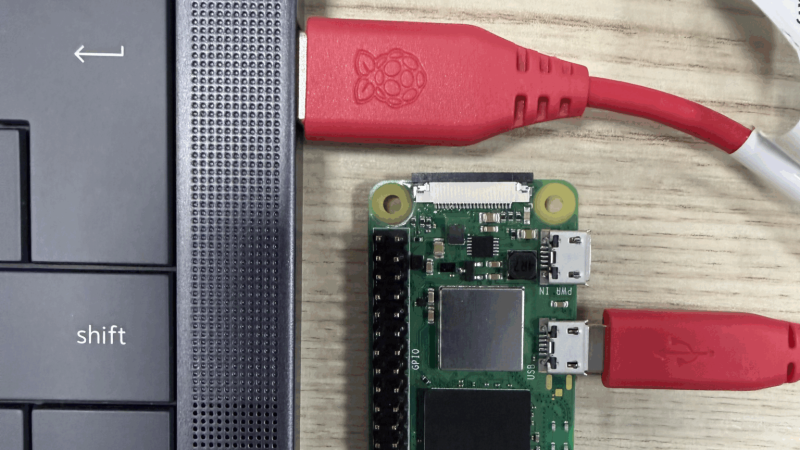
Setting up access to a headless Raspberry Pi is one of those tasks that should take a few minutes, but for some reason always seems to take much longer. The most common method is to configure Wi-Fi access and an SSH service on the Pi before starting it, which can go wrong in many different ways. This author, for example, recently spent a few hours failing to set up a headless Pi on a network secured with Protected EAP, and was eventually driven to using SSH over Bluetooth. This could thankfully soon be a thing of the past, as [Paul Oberosler] developed a package for SSH over USB, which is included in the latest versions of Raspberry Pi OS.
The idea behind rpi-usb-gadget is that a Raspberry Pi in gadget mode can be plugged into a host machine, which recognizes it as a network adapter. The Pi itself is presented as a host on that network, and the host machine can then SSH into it. Additionally, using Internet Connection Sharing (ICS), the Pi can use the host machine’s internet access. Gadget mode can be enabled and configured from the Raspberry Pi Imager. Setting up ICS is less plug-and-play, since an extra driver needs to be installed on Windows machines. Enabling gadget mode only lets the selected USB port work as a power input and USB network port, not as a host port for other peripherals.
An older way to get USB terminal access is using OTG mode, which we’ve seen used to simplify the configuration of a Pi as a simultaneous AP and client. If you want to set up headless access to Raspberry Pi desktop, we have a guide for that.
Balancing the need to know with the need to get shovels in the ground is causing friction in communities across the country
feature Applied Digital CEO Wes Cummins said when his company decides on a location for a datacenter, he asks town officials to sign non-disclosure agreements to stop politicians from leaking insider information.…
Astrophysicists are warning that low Earth orbit is reaching a critical tipping point, where satellite collisions could happen faster than previously imagined. A new metric, the CRASH Clock, developed by Sarah Thiele of Princeton University, Aaron Boley of the University of British Columbia, and Samantha Lawler of the University of...
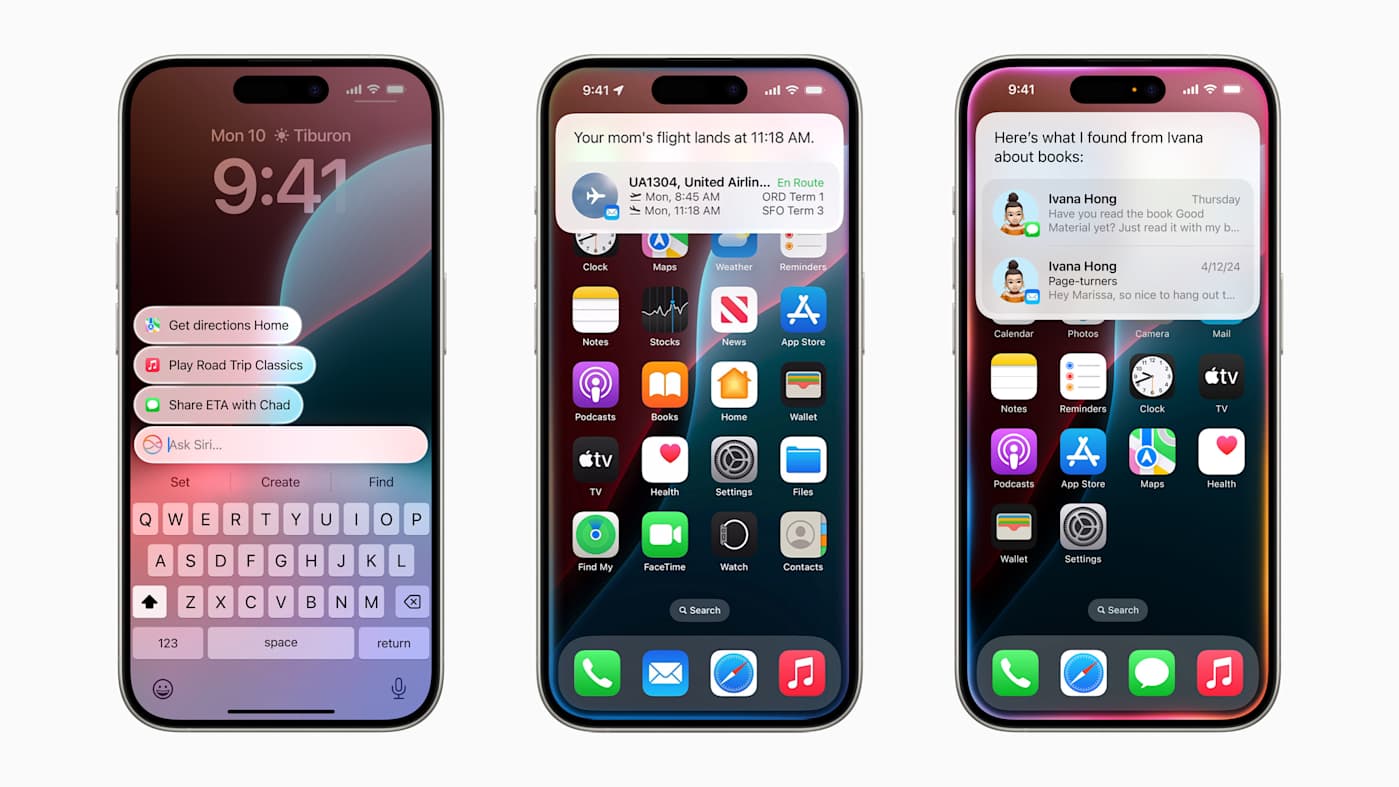
A new and improved Siri may finally make an appearance, but this time, it could be with a Google Gemini glow up. According to Bloomberg's Mark Gurman, Apple wants to announce a new Siri in "the second half of February" that will show off the results of its recently announced partnership with Google and offer demonstrations of the Gemini-powered capabilities.
After this reveal, Gurman reported that the new Siri will make its way to iOS 26.4, which is also slated to enter beta testing in February before its public release in March or early April. Apple has been meaning to launch its next-gen Siri ever since its announcement at WWDC 2024, but now we know that this Gemini-powered Siri will behave more like an AI chatbot, similar to OpenAI's ChatGPT, thanks to another Bloomberg report from last week.
Following the reported demo that's scheduled for late February, Gurman said Apple will have a grand reveal of the new Siri, which is currently codenamed Campos, at its annual developer conference in the summer. After that, the latest Siri and the accompanying Gemini-powered Apple Intelligence features are expected to arrive with iOS 27, iPadOS 27 and macOS 27, which are expected to be available as beta releases in the summer.
This article originally appeared on Engadget at https://www.engadget.com/ai/apple-reportedly-plans-to-reveal-its-gemini-powered-siri-in-february-174356923.html?src=rss
In what is one of the most important developments in the Chinese auto industry, Xiaomi’s SU7 has outsold Tesla’s Model 3 in 2025. The information comes from the China Passenger Car Association (via scmp.com). The Chinese smartphone maker delivered 258,164 units of its first EV. Meanwhile, Tesla sold only 200,361 Model 3s, marking the first […]
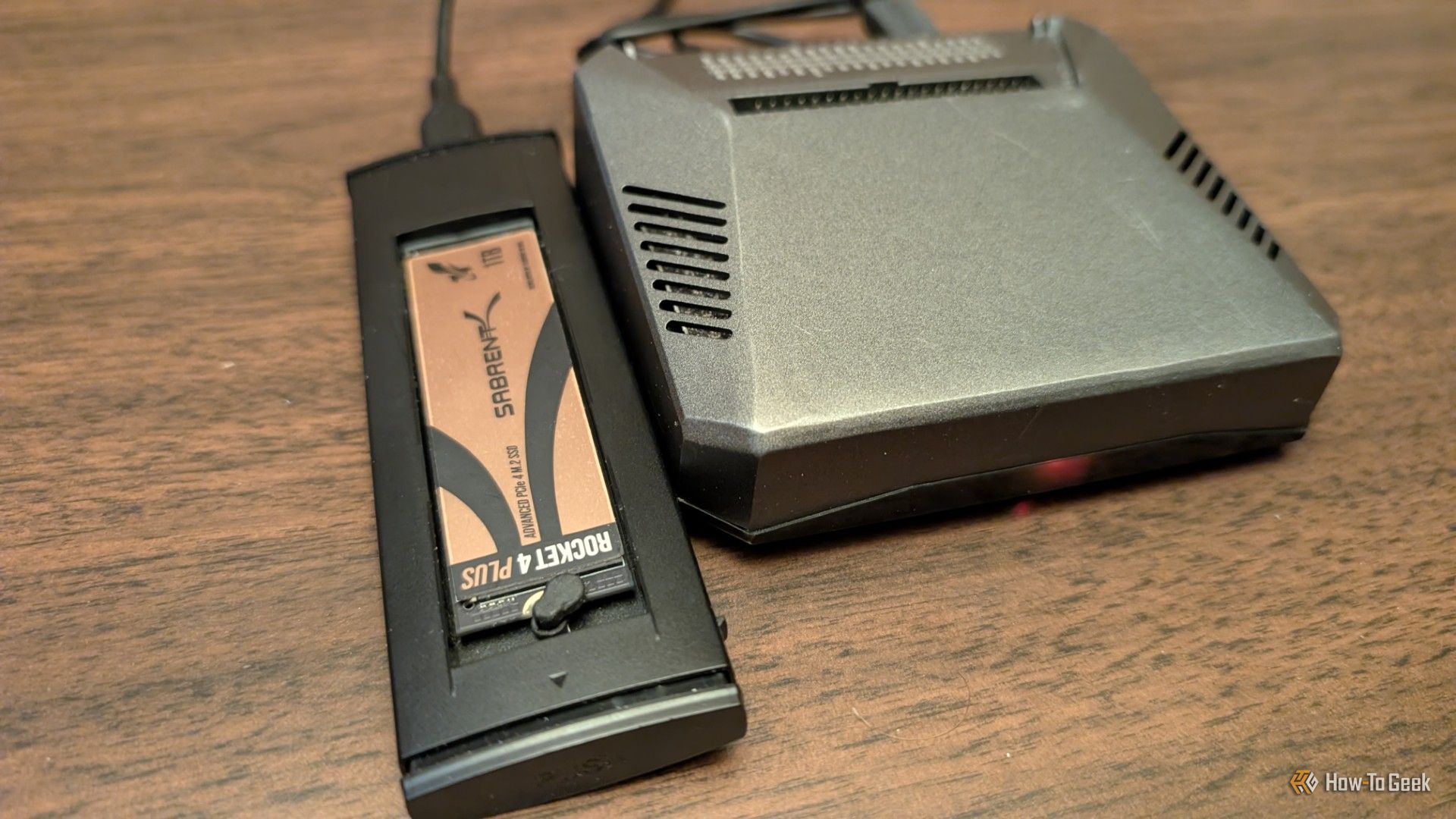
Raspberry Pis are popular because they're small, don't consume much power, and are extremely versatile. However, the default method of booting one—from the microSD card—is best avoided if possible. Here's how you can do it.
People have been using Android phones for nearly two decades, and some bad habits have been passed down over the years. Even some of the oldest myths persist today. The good news is that it’s really very easy to avoid these mistakes once you know about them.
Not all of your storage is the same, and you shouldn't treat it as such. There are many advantages to tiering, and organizing said tiering, over just dumping everything on your storage in no particular order.
If you want a good TV, or any TV these days, you're inevitably going to buy a "smart" TV. On paper, a smart TV sounds like an upgrade over a "dumb" model, but in practice, smart TVs have turned out to be of limited value. The list of cons is indeed long, and it's why I disable the smart functions on my own TVs completely.
One of the most jaw-dropping athletic feats in recent memory happened this past Saturday, when legendary rock climber Alex Honnold free soloed the Taipei 101 skyscraper live on Netflix.
Formerly known as the Taipei World Financial Center, the building stands 1,667 feet tall, making it the 11th-tallest structure in the world. From 2004 to 2009, it actually held the title of tallest building on Earth, before the Burj Khalifa took that crown. Late Saturday night for U.S. viewers, Honnold climbed the entire thing without ropes, harnesses, or safety equipment, finishing in just over 90 minutes and becoming only the second person ever to pull it off.
It’s hard to overstate how unhinged this is. Thousands of people tuned in to watch the pure, panic-inducing spectacle of a 40-year-old man scaling a skyscraper with nothing but his hands and shoes, the kind of thing your brain immediately rejects as a bad idea. And yet, Honnold made it look almost routine.
When he finally reached the top, his first words summed up the whole experience perfectly: “Sick.”
Naturally, social media had a field day. Clips and screenshots spread almost instantly, equal parts awe and disbelief, with people marveling not just at the physical feat but at how casually it was presented. A historic athletic achievement, broadcast live, that somehow still felt deeply ridiculous in the best way possible.
For anyone unfamiliar with Honnold — and mild spoilers, I guess — this isn’t his first time doing a stunt like this. He’s best known for becoming the first person to free solo climb El Capitan, a nearly 3,000-foot vertical granite wall in Yosemite that has killed multiple climbers over the years. That ascent was documented in Free Solo, the 2018 film that went on to win the Academy Award for Best Documentary.
All of which is to say: Alex Honnold isn’t reckless. However, he is, in the most respectful way possible, absolutely out of his mind and also extremely good at what he does.
Newsweek reports on how the U.S. Congress is debating "kill switch" technology for vehicles, "which would be able to monitor diver behavior, detect impairment such as intoxication and intervene..."
"While the technology is not yet a legal requirement in cars, Congress passed a law with the Infrastructure Investment and Jobs Act in 2021 that requires the Department of Transportation to create the mandate."
Republican Representative Thomas Massie of Kentucky introduced an amendment to a federal spending bill that would reverse the mandating of the technology. On Thursday, 160 Republicans voted in favor, but the legislation failed 164-268, according to the House Clerk's official roll call — with 57 Republicans joining 211 Democrats in voting against it...
The House vote signals substantial Republican support for curbing any move toward mandated impaired-driving prevention systems, but not enough to pass such legislation. Critics of the kill switch technology see it as government overreach, while those in favor argue that it could prove to be lifesaving.
Thanks to long-time Slashdot reader SonicSpike for sharing the article.
 Login
Login


 Tim McLaughlin / Reuters: