Congress has released the final version of the 2026 National Defense Authorization Act (NDAA), and critics have been quick to point out that previously proposed rules giving the US military the right to repair its equipment without having to rely on contractors have gone missing. …
An attempt to provide vendor-neutral oversight as the agent train barrels on
The Linux Foundation on Tuesday said it has formed the Agentic AI Foundation (AAIF) to provide vendor-neutral oversight for the development of AI agent infrastructure.…
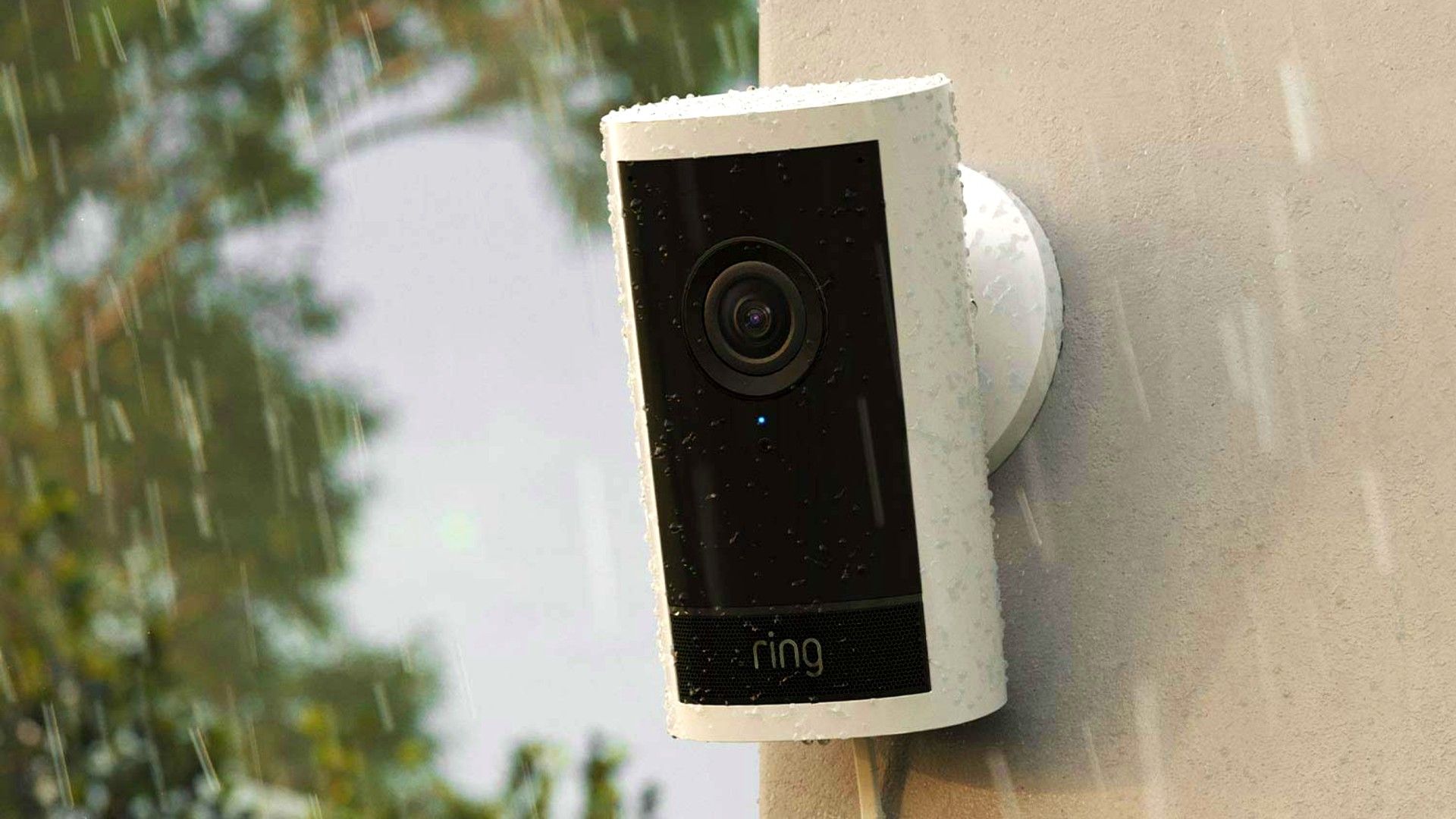
Ring has started rolling out its AI-powered facial recognition feature, Familiar Faces, to video doorbell owners across the United States. This addition means your smart doorbell can now identify your visitors, a major step forward for personalization that also brings significant privacy concerns.
Local page translation is one of the best recent additions to Firefox, but iPhone and iPad owners haven't been able to try it out. That's finally changing with the release of Firefox 146, and Mozilla is throwing in a few other minor improvements.
The best gifts inspire joy long after the initial unwrapping. Subscription boxes are designed to show up again and again, each time offering something new to try, build or taste. They’re perfect for friends who already have too much gear or relatives who like to discover things without searching for them. From electronics kits and mystery puzzles to Japanese treats and fresh coffee, these boxes make each month feel like a small celebration. You pick the vibe, the plan and the recipient gets a steady stream of good surprises. Below are 13 subscription boxes that hit the sweet spot between fun and thoughtful, whether your giftee is a builder, reader, snacker or collector.
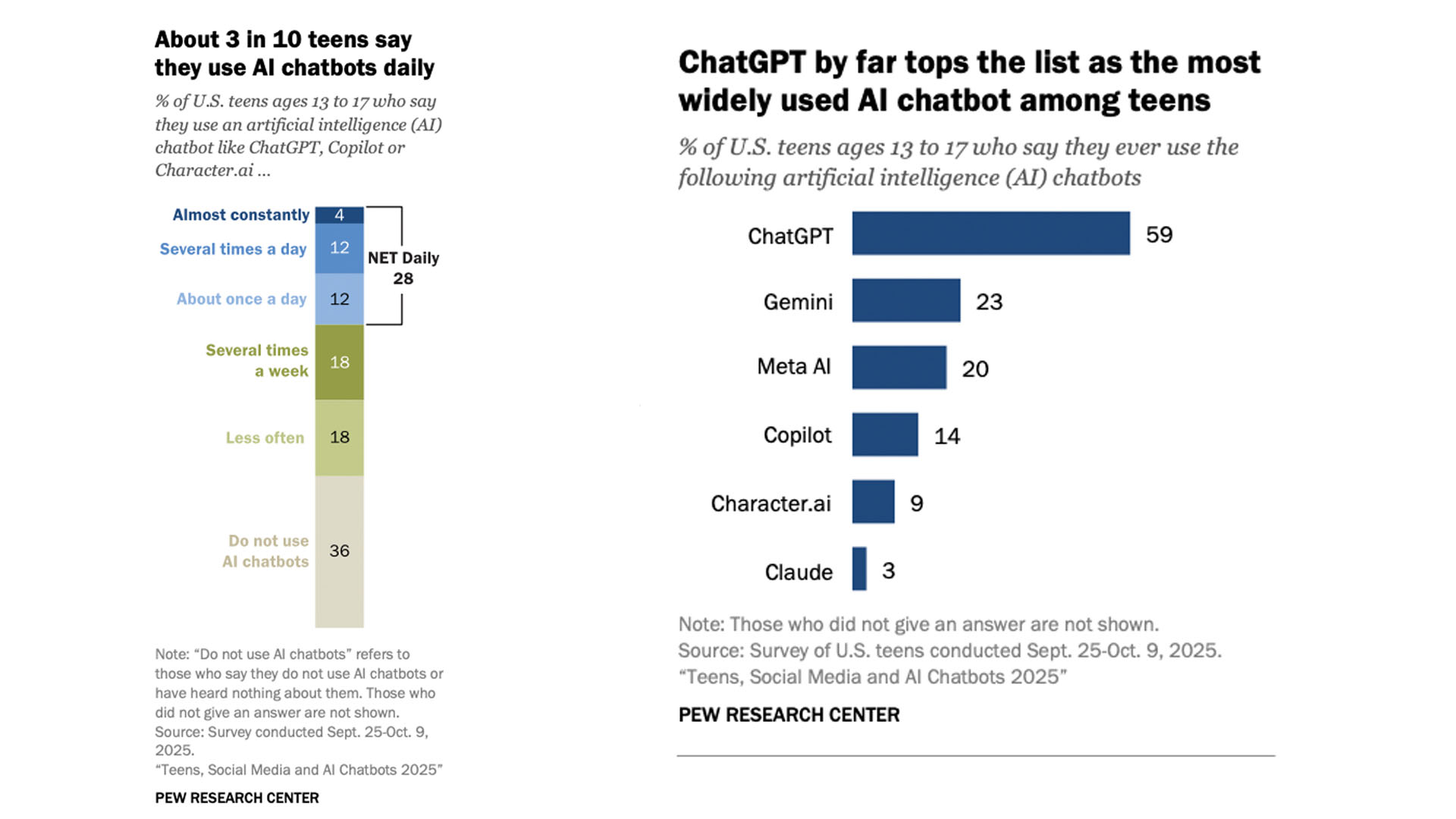
AI chatbots haven't come close to replacing teens' social media habits, but they are playing a significant role in their online habits. Nearly one-third of US teens report using AI chatbots daily or more, according to a new report from Pew Research.
The report is the first from Pew to specifically examine how often teens are using AI overall, and was published alongside its latest research on teens' social media use. It's based on an online survey of 1,458 US teens who were polled between September 25 to October 9, 2025. According to Pew, the survey was "weighted to be representative of U.S. teens ages 13 to 17 who live with their parents by age, gender, race and ethnicity, household income, and other categories."
According to Pew, 48 percent of teens use AI chatbots "several times a week" or more often, with 12 percent reporting their use at "several times a day" and 4 percent saying they use the tools "almost constantly." That's far fewer than the 21 percent of teens who report almost constant use of TikTok and the 17 percent who say the same about YouTube. But those numbers are still significant considering how much newer these services are compared with mainstream social media apps.
The report also offers some insight into which AI companies' chatbots are most used among teens. OpenAI's ChatGPT came out ahead by far, with 59 percent of teens saying they had used the service, followed by Google's Gemini at 23 percent and Meta AI at 20 percent. Just 14 percent of teens said they had ever used Microsoft Copilot, and 9 percent and 3 percent reported using Character AI and Anthropic's Claude, respectively.
The survey is Pew's first to study Ai chatbot use among teens broadly.
Pew Research
Pew's research comes as there's been growing scrutiny over AI companies' handling of younger users. Both OpenAI and Character AI are currently facing wrongful deaths lawsuits from the parents of teens who died by suicide. In both cases, the parents allege that their child's interactions with a chatbot played a role in their death. (Character AI briefly banned teens from its service before introducing a more limited format for younger users.) Other companies, including Alphabet and Meta, are being probed by the FTC over their safety policies for younger users.
Interestingly, the report also indicates there has been little change in US teens' social media use. Pew, which has regularly polled teens about how they use social media, notes that teens' daily use of these platforms "remains relatively stable" compared with recent years. YouTube is still the most widely-used platform, reaching 92 percent of teens, followed by TikTok at 69 percent, Instagram at 63 percent and Snapchat at 55 percent. Of the major apps the report surveyed, WhatsApp is the only service to see significant change in recent years, with 24 percent of teens now reporting they use the messaging app, compared with 17 percent in 2022.
This article originally appeared on Engadget at https://www.engadget.com/ai/nearly-one-third-of-teens-use-ai-chatbots-daily-200000888.html?src=rss
The James Webb Space Telescope and other international observatories have spotted a 13-billion-year-old supernova. On Tuesday, the European Space Agency (ESA) announced the sighting of a gamma-ray burst from a star that exploded when the Universe was only 730 million years old. The Webb telescope even detected the supernova's host galaxy.
Before this observation, the oldest recorded supernova was from when the Universe was 1.8 billion years old. That's a difference of more than a billion years.
You can see the gamma-ray burst in the image below. It's the tiny red smudge at the center of the zoomed-in box on the right.
The tiny red splotch in the center of the crop box is the oldest thing you've seen.
NASA, ESA, CSA, STScI, A. Levan (IMAPP)
"This observation also demonstrates that we can use Webb to find individual stars when the Universe was only 5 percent of its current age," co-author Andrew Levan wrote in the ESA's press release. "There are only a handful of gamma-ray bursts in the last 50 years that have been detected in the first billion years of the Universe. This particular event is very rare and very exciting."
Researchers learned that the 13-billion-year-old explosion shared many traits with modern, nearby supernovae. While that may not sound shocking, scientists expected a more profound difference. That's because early stars likely had fewer heavy elements, were more massive and didn't live as long. "We went in with open minds," co-author Nial Tanvir said. "And lo and behold, Webb showed that this supernova looks exactly like modern supernovae."
Detection was an international relay race. First, NASA's Neil Gehrels Swift Observatory noted the X-ray source's location. (That helped Webb to make subsequent observations that determined its distance). Then, the Nordic Optical Telescope on the Canary Islands in Spain made observations indicating that the gamma ray might be very distant. Hours later, the European Southern Observatory's Very Large Telescope in Chile estimated its age: 730 million years after the Big Bang. All of this happened in under 17 hours, according to the ESA.
The team behind the observation has been approved to spend more time with Webb studying gamma-ray bursts from the early Universe — and the galaxies behind them. "That glow will help Webb see more and give us a 'fingerprint' of the galaxy," Levan predicted.
This article originally appeared on Engadget at https://www.engadget.com/science/space/the-webb-telescope-spots-a-supernova-from-13-billion-years-ago-194327489.html?src=rss
Pinduoduo in China, Shopee in Southeast Asia, and Meesho in India operate in markets that could hardly be more different -- an upper-middle-income industrial state, a stitched-together archipelago of under-banked economies, and a country where three-quarters of retail is unorganized and e-commerce penetration sits at about 7% -- yet all three have landed on the same business model.
These platforms run asset-light marketplaces specializing in cheap goods and slow delivery, monetizing through logistics mark-ups, advertising, and installment credit rather than retail margins. Temu and Shein are further variations now expanding in the U.S. and Europe.
The economics are thin. Pinduoduo's EBITDA margins on GMV sit in a 0-4% band; Meesho's group-wide EBITDA hovers around break-even. Neither charges commissions on most sales; both earn through logistics mark-ups and advertising. Sponsored listings account for 1-3% of GMV at Indian marketplaces and 4-5% at Alibaba and Pinduoduo.
Credit is the more consequential side business. In India, cash on delivery functions as unofficial credit. Meesho CEO Vidit Aatrey said the customers prefer CoD for its "built-in delay," which effectively makes it "a five-day loan." Geography, income, and regulation were supposed to produce different answers. They produced one: a 3% endgame where e-commerce clips a few points of GMV and relies on attention and credit for profits.
 Login
Login




 Emily Sundberg / Feed Me: