After the backlash that greeted Coca-Cola’s AI-generated Christmas ad last month, you’d expect other corporate giants to be more cautious about releasing their own AI-infused efforts. But no. McDonald’s Netherlands decided it’d be a really good idea to use generative AI tools to knock together its own festive commercial. But folks didn’t respond well following […]
Netflix's $72 billion bid to buy Warner Bros Discovery has triggered a consumer class action claiming the merger would crush competition, erase HBO Max as a rival, and hand Netflix control over major franchises. Reuters reports: The proposed class action (PDF) was filed on Monday by a subscriber to Warner Bros-owned HBO Max who said the proposed deal threatened to reduce competition in the U.S. subscription video-on-demand market. "Netflix has demonstrated repeated willingness to raise subscription prices even while facing competition from full-scale rivals such as WBD," the lawsuit said. [...] The lawsuit said the Warner Bros deal would eliminate one of Netflix's closest rivals, HBO Max, and give Netflix control over Warner Bros marquee franchises including Harry Potter, DC Comics and Game of Thrones. On Monday, Paramount Skydance launched a $108 billion hostile bid to buy Warner Bros. Discovery with an all-cash, $30-per-share offer.
Longtime Slashdot reader Randseed writes: With the likes of Google Nest, Ring, and others cooperating with law enforcement, I started to look for affordable wireless IP security cameras that I can put around my house. Unfortunately, it looks like almost every thing now incorporates some kind of cloud-based slop. All I really want is to put up some cameras, hook them up to my LAN, and install something like ZoneMinder. What are the most economical, wireless IP security cameras that I can set up with my server?
Overtone is described as "an early-stage dating service focused on using AI and voice tools to help people connect in a more thoughtful and personal way."
Microsoft’s logo on the company’s Redmond campus. (GeekWire File Photo)
Two human rights proposals at Microsoft’s annual shareholder meeting drew support from more than a quarter of voting shares — far more than any other outside proposals this year.
The results, disclosed Monday in a regulatory filing, come amid broader scrutiny of the company’s business dealings in geopolitical hotspots. The proposals followed a summer of criticism and protests over the use of Microsoft technology by the Israeli military.
The filing shows the vote totals for six outside shareholder proposals that were considered at the Dec. 5 meeting. Microsoft had announced shortly after the meeting that shareholders rejected all outside proposals, but the numbers had not previously been disclosed.
According to the filing, two proposals received outsized support:
Proposal 8, filed by an individual shareholder, called for a report on Microsoft’s data center expansion in Saudi Arabia and nations with similar human rights records. It asked the company to evaluate the risk that its technology could be used for state surveillance or repression, and received more than 27% support.
Proposal 9, seeking an assessment of Microsoft’s human rights due diligence efforts, won more than 26% of votes. The measure called for Microsoft to assess the effectiveness of its processes in preventing customer misuse of its AI and cloud products in ways that violate human rights or international humanitarian law.
Proposal 9 had received support from proxy advisor Institutional Shareholder Services — a rare endorsement for a first-time filing. Proxy advisor Glass Lewis recommended against it.
The measure attracted 58 co-filers and sparked opposing campaigns. JLens, an investment advisor affiliated with the Anti-Defamation League, said Proposal 9 was aligned with the Boycott, Divestment and Sanctions movement, which pressures companies to cut ties with Israel. Ekō, an advocacy group that backed the proposal, said the vote demonstrated growing concerns about Microsoft’s contracts with the Israeli military.
In September, Microsoft cut off an Israeli military intelligence unit’s access to some Azure services after finding evidence supporting a Guardian report in August that the technology was being used for surveillance of Palestinian civilians.
Microsoft’s board recommended shareholders vote against all six outside proposals at the Dec. 5 annual meeting. Here’s how the other four proposals fared:
Proposals 5 and 6, focused on censorship risks from European security partnerships and AI content moderation, drew less than 1% support.
Proposal 7, which asked for more transparency and oversight on how Microsoft uses customer data to train and operate its AI systems, topped 13% support.
Proposal 10, calling for a report on climate and transition risks tied to AI and machine‑learning tools used by oil and gas companies, received 8.75%.
[NullPxl]’s Ban-Rays concept is a wearable that detects when one is in the presence of camera-bearing smartglasses, such as Meta’s line of Ray-Bans. A project in progress, it’s currently focused on how to reliably perform detection without resorting to using a camera itself. Right now, it plays a well-known audio cue whenever it gets a hit.
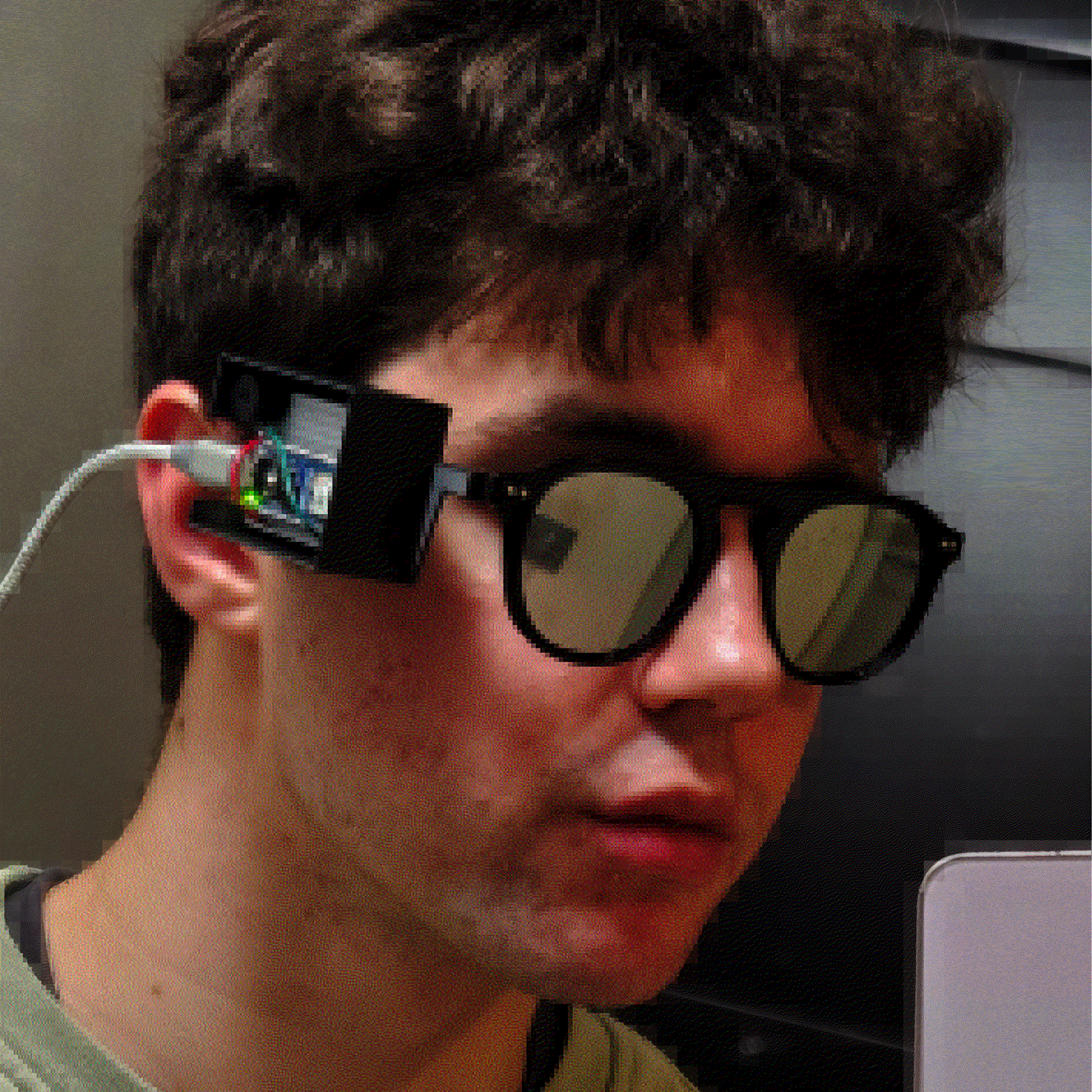
Once software is nailed down, the device aims to be small enough to fit into glasses.
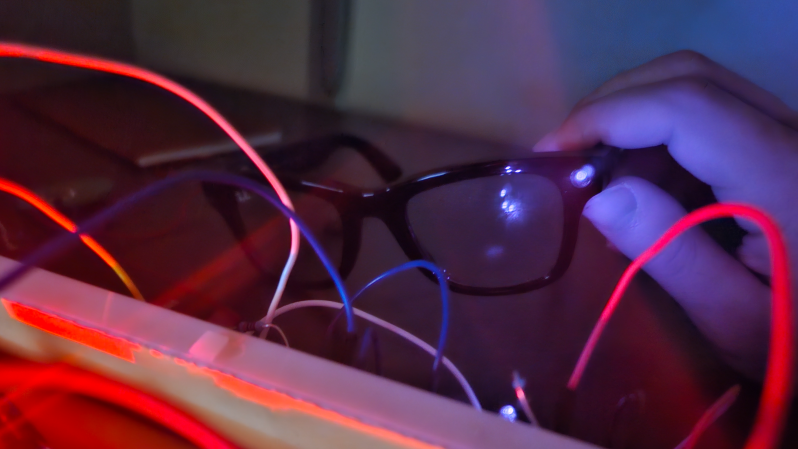
Currently, [NullPxl] is exploring two main methods of detection. The first takes advantage of the fact that image sensors in cameras act as tiny reflectors for IR. That means camera-toting smartglasses have an identifying feature, which can be sensed and measured. You can see a sample such reflection in the header image, up above.
As mentioned, Ban-Rays eschews the idea of using a camera to perform this. [NullPxl] understandably feels that putting a camera on glasses in order to detect glasses with cameras doesn’t hold much water, conceptually.
The alternate approach is to project IR in a variety of wavelengths while sensing reflections with a photodiode. Initial tests show that scanning a pair of Meta smartglasses in this way does indeed look different from regular eyeglasses, but probably not enough to be conclusive on its own at the moment. That brings us to the second method being used: wireless activity.
Characterizing a device by its wireless activity turned out to be trickier than expected. At first, [NullPxl] aimed to simply watch for BLE (Bluetooth Low-Energy) advertisements coming from smartglasses, but these only seem to happen during pairing and power-up, and sometimes when the glasses are removed from the storage case. Clearly a bit more is going to be needed, but since these devices rely heavily on wireless communications there might yet be some way to actively query or otherwise characterize their activity.
This kind of project is something that is getting some interest. Here’s another smartglasses detector that seems to depend entirely on sniffing OUIs (Organizationally Unique Identifiers); an approach [NullPxl] suspects isn’t scalable due to address randomization in BLE. Clearly, a reliable approach is still in the works.
The increasing numbers of smartglasses raises questions about the impact of normalizing tech companies turning people into always-on recording devices. Of course, the average person is already being subtly recorded by a staggering number of hidden cameras. But at least it’s fairly obvious when an individual is recording you with a personal device like their phone. That may not be the case for much longer.
US export controls on AI accelerators have only succeeded in forcing China to develop its own tech
Half a decade of US trade policy aimed at denying China access to America's most potent semiconductor tech has only served to spur China to develop homegrown alternatives.…
 Login
Login




 Zijing Wu / Financial Times:


%20top%20art%201%20SOURCE%20Walmart.jpg)