Will Netflix’s $82.7 billion deal to acquire Warner Bros. get approval from federal regulators? While Paramount was assumed to be the frontrunner to acquire the storied movie studio thanks to CEO David Ellison’s connections to the Trump administration, new reporting in Bloomberg and The Hollywood Reporter suggests that Netflix co-CEO Ted Sarandos met with President […]
[VWestlife] purchased all kinds of USB video capture devices — many of them from the early 2000s — and put them through their paces in trying to digitize VHS classics like Instant Fireplace and Buying an Auxiliary Sailboat. The results were actually quite varied, but almost universally bad. They all worked, but they also brought unpleasant artifacts and side effects when it came to the final results. Sure, the analog source isn’t always the highest quality, but could it really be this hard to digitize a VHS tape?
The best results for digitizing VHS came from an old Sony device that was remarkably easy to use on a more modern machine.
It turns out there’s an exception to all the disappointment: the Sony Digital Video Media Converter (DVMC) is a piece of vintage hardware released in 1998 that completely outperformed the other devices [VWestlife] tested. There is a catch, but it’s a small one. More on that in a moment.
Unlike many other capture methods, the DVMC has a built-in time base corrector that stabilizes analog video signals by buffering them and correcting any timing errors that would cause problems like jitter or drift. This is a feature one wouldn’t normally find on budget capture devices, but [VWestlife] says the Sony DVMC can be found floating around on eBay for as low as 20 USD. It even has composite and S-Video inputs.
For an old device, [VWestlife] says using the DVMC was remarkably smooth. It needed no special drivers, defaults to analog input mode, and can be powered over USB. That last one may sound trivial, but it means there’s no worry about lacking some proprietary wall adapter with an oddball output voltage.
The catch? It isn’t really a USB device, and requires a FireWire (IEEE-1394) port in order to work. But if that’s not a deal-breaker, it does a fantastic job.
So if you’re looking to digitize older analog media, [VWestlife] says it might be worth heading to eBay and digging up a used Sony DVMC. But if one wants to get really serious about archiving analog media, capturing RF signals direct from the tape head is where it’s at.
Windows has a vast ecosystem of its own apps, but many of my current favorite apps for Windows actually started their digital lives on Linux. If you're looking for a few free or open-source alternatives to your conventional Windows apps, some of these options are a great place to start.
One does not simply spend more than 11 hours watching The Lord of the Rings trilogy in a single weekend at home when the opportunity to do so in theaters arises. As The Lord of the Rings: The Fellowship of the Ring turns 25, Fathom Entertainment and Warner Bros. announced theatrical screenings of the Peter Jackson trilogy in their extended editions, according to an exclusive report from Variety.
The re-releases will be available in DBOX presentations from January 16 to 19, complete with movements and vibrations to make you feel like you're making the journey to Mordor with Frodo and his entourage. If you prefer a traditional experience, the trilogy will be available in standard format from January 23 to 25.
Fathom Entertainment
Fathom Entertainment
For the collectors out there, the screenings will also feature limited-edition themed concession items. Fans can purchase popcorn buckets that showcase maps of Middle-earth at AMC locations, while Regal venues and other local cinemas will have buckets with designs of the One Ring. Tickets are already on sale at Fathom's website.
This article originally appeared on Engadget at https://www.engadget.com/entertainment/tv-movies/the-lord-of-the-rings-trilogy-returns-to-theaters-in-january-for-25th-anniversary-202433217.html?src=rss
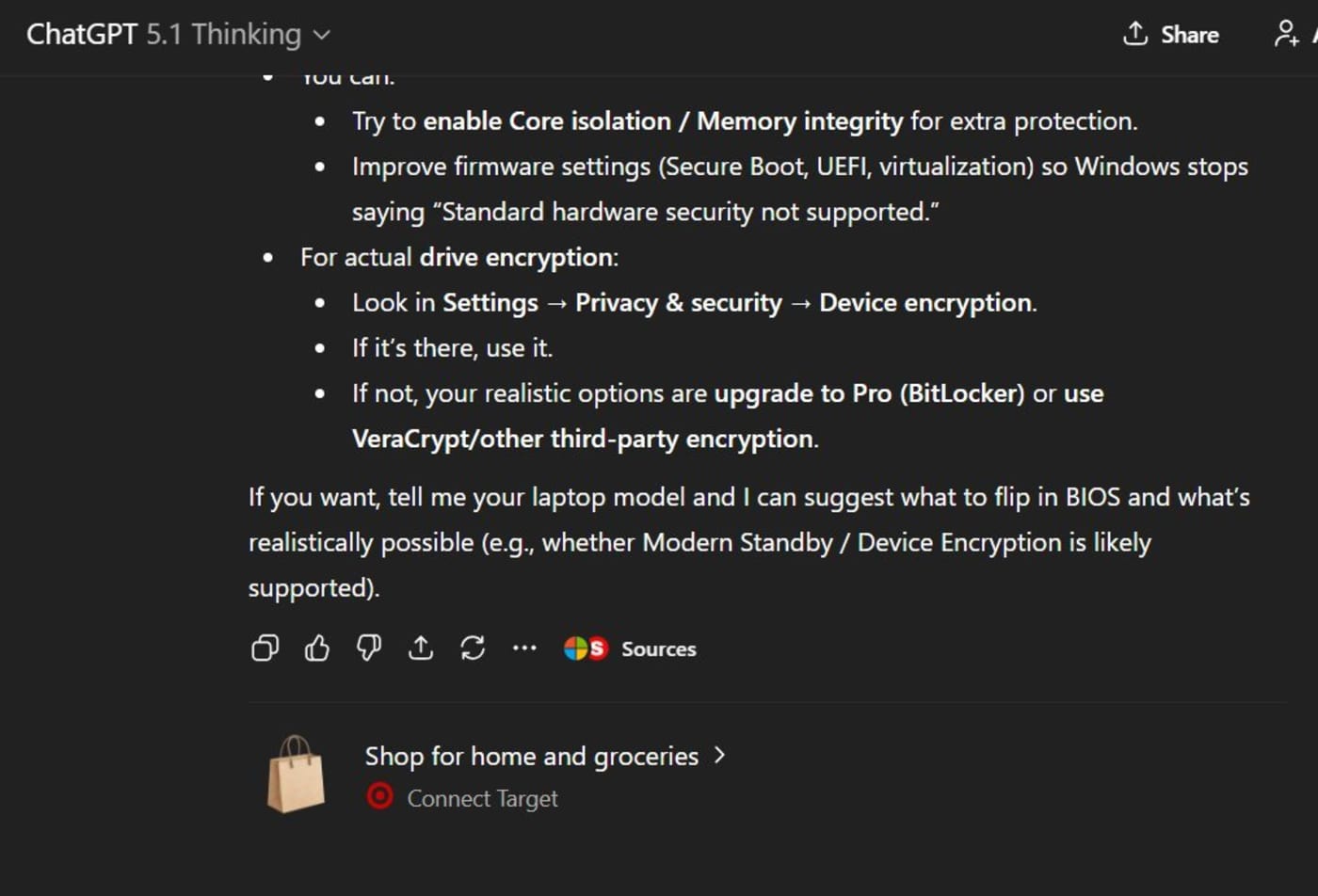
A hardware security response from ChatGPT ended with "Shop for home and groceries. Connect Target."
But "There are no live tests for ads" on ChatGPT, insists Nick Turley, OpenAI's head of ChatGPT. Posting on X.com, he said "any screenshots you've seen are either not real or not ads." Engadget reports
The OpenAI exec's explanation comes after another post from former xAI employee Benjamin De Kraker on X that has gained traction, which featured a screenshot showing an option to shop at Target within a ChatGPT conversation. OpenAI's Daniel McAuley responded to the post, arguing that it's not an ad but rather an example of app integration that the company announced in October. [To which De Kraker responded "when brands inject themselves into an unrelated chat and encourage the user to go shopping at their store, that's an ad. The more you pretend this isn't an ad because you guys gave it a different name, the less users like or trust you."]
However, the company's chief research officer, Mark Chen, also replied on X that they "fell short" in this case, adding that "anything that feels like an ad needs to be handled with care."
"We've turned off this kind of suggestion while we improve the model's precision," Chen wrote on X. "We're also looking at better controls so you can dial this down or off if you don't find it helpful."
It runs locally, a free/open source home automation platform connecting all your devices together, regardless of brand. And GitHub's senior developer calls it "one of the most active, culturally important, and technically demanding open source ecosystems on the planet," with tens of thousands of contributors and millions of installations.
That's confirmed by this year's "Octoverse" developer survey...
Home Assistant was one of the fastest-growing open source projects by contributors, ranking alongside AI infrastructure giants like vLLM, Ollama, and Transformers. It also appeared in the top projects attracting first-time contributors, sitting beside massive developer platforms such as VS Code... Home Assistant is now running in more than 2 million households, orchestrating everything from thermostats and door locks to motion sensors and lighting. All on users' own hardware, not the cloud. The contributor base behind that growth is just as remarkable: 21,000 contributors in a single year...
At its core, Home Assistant's problem is combinatorial explosion. The platform supports "hundreds, thousands of devices... over 3,000 brands," as [maintainer Franck Nijhof] notes. Each one behaves differently, and the only way to normalize them is to build a general-purpose abstraction layer that can survive vendor churn, bad APIs, and inconsistent firmware. Instead of treating devices as isolated objects behind cloud accounts, everything is represented locally as entities with states and events. A garage door is not just a vendor-specific API; it's a structured device that exposes capabilities to the automation engine. A thermostat is not a cloud endpoint; it's a sensor/actuator pair with metadata that can be reasoned about.
That consistency is why people can build wildly advanced automations. Frenck describes one particularly inventive example: "Some people install weight sensors into their couches so they actually know if you're sitting down or standing up again. You're watching a movie, you stand up, and it will pause and then turn on the lights a bit brighter so you can actually see when you get your drink. You get back, sit down, the lights dim, and the movie continues." A system that can orchestrate these interactions is fundamentally a distributed event-driven runtime for physical spaces. Home Assistant may look like a dashboard, but under the hood it behaves more like a real-time OS for the home...
The local-first architecture means Home Assistant can run on hardware as small as a Raspberry Pi but must handle workloads that commercial systems offload to the cloud: device discovery, event dispatch, state persistence, automation scheduling, voice pipeline inference (if local), real-time sensor reading, integration updates, and security constraints. This architecture forces optimizations few consumer systems attempt.
"If any of this were offloaded to a vendor cloud, the system would be easier to build," the article points out. "But Home Assistant's philosophy reverses the paradigm: the home is the data center..."
As Nijhof says of other vendor solutions, "It's crazy that we need the internet nowadays to change your thermostat."
One of the most anticipated television events of the year has arrived—well, at least part one of it has—and with it comes the return of our favorite monster-fighting 80s teens. It’s been a long three-year wait, but Stranger Things season five has begun. The only bummer is that it’s dropping in three volumes. While we'd all love for the final season to drop at once, we must be patient.
Those might not exactly be ads you're seeing on ChatGPT, at least according to OpenAI. Nick Turley, OpenAI's head of ChatGPT, clarified the confusion around potential ads appearing with the AI chatbot. In a post on X, Turley said "there are no live tests for ads" and that "any screenshots you've seen are either not real or not ads." The OpenAI exec's explanation comes after another post from former xAI employee Benjamin De Kraker on X that has gained traction, which featured a screenshot showing an option to shop at Target within a ChatGPT conversation.
OpenAI's Daniel McAuley responded to the post, arguing that it's not an ad but rather an example of app integration that the company announced in October. However, the company's chief research officer, Mark Chen, also replied on X that they "fell short" in this case, adding that "anything that feels like an ad needs to be handled with care."
"We’ve turned off this kind of suggestion while we improve the model’s precision," Chen wrote on X. "We’re also looking at better controls so you can dial this down or off if you don’t find it helpful."
There's still a lot of uncertainty about whether OpenAI will introduce ads to ChatGPT, but in November, someone discovered code in a beta version of the ChatGPT app on Android that made several mentions of ads. Even in Turley's post debunking the inclusion of live ads, the OpenAI exec added that "if we do pursue ads, we’ll take a thoughtful approach." Turley also posted that "people trust ChatGPT and anything we do will be designed to respect that."
This article originally appeared on Engadget at https://www.engadget.com/ai/openais-head-of-chatgpt-says-posts-appearing-to-show-in-app-ads-are-not-real-or-not-ads-190454584.html?src=rss
"People in their teens and early 20s are increasingly turning to old school tech," reports the BBC, "in a bid to unplug from the online world."
Amazon UK told BBC Scotland News that retro-themed products surged in popularity during its Black Friday event, with portable vinyl turntables, Tamagotchis and disposable cameras among their best sellers. Retailers Currys and John Lewis also said they had seen retro gadgets making a comeback with sales of radios, instant cameras and alarm clocks showing big jumps.
While some people scroll endlessly through Netflix in search of their next watch, 17-year-old Declan prefers the more traditional approach of having a DVD in his hands. He grew up surrounded by his gran's collection and later bought his own after visiting a shop with a friend. "The main selling point for me is the cases," he says. Streaming services like Netflix and Disney+ dominate the market but Declan says he values ownership. "It's nice to have something you own instead of paying for subscriptions all the time," he says. "If I lost access to streaming tomorrow, I'd still have my favourite movies ready to watch."
He admits DVDs are a "dying way of watching movies" but that makes them cheaper. "I think they're just cool, there's something authentic about having DVDs," he says. "These things are generations old, it's nice to have them available."
The BBC also writes that one 21-year-old likes the "deliberate artistry" of traditional-camera photography — and the nostalgic experience of using one. They interview a 20-year-old who says vinyl records have a "more authentic sound" — and he appreciates having the physical disc and jacket art.
And one 21-year-old even tracked down the handheld PlayStation Portable he'd used as a kid...
On a cold winter’s day in December 1995, Microsoft co-founder Bill Gates shook the tech world with plans to embed internet connectivity into all of Microsoft’s major products, making headlines across the country. Click to enlarge. (GeekWire Graphic / Geof Wheelwright)
December 7 carries historical weight well beyond the tech world, but for those who covered Microsoft in the ’90s, the date has another resonance. Thirty years ago today, Bill Gates gathered more than 200 journalists and analysts at Seattle Center to declare that the company was going “all-in” on the internet.
As managing editor for Microsoft Magazine at the time, I was there, and I remember it well. Three decades later, I can’t help but see the parallels to Microsoft’s current AI push.
The moves that Microsoft kicked off that day to build internet connectivity into all its products would reverberate throughout the next decade, helping to lay the foundation for the dot-com boom years and arguably the eventual rise of cloud computing.
The release of Internet Explorer 2.0 as a free, bundled browser, the internet-enablement of Microsoft Office, the complete revamping of the still-new MSN online service, Microsoft’s licensing of Java from Sun Microsystems and a focus on how the internet might be used commercially were all pieces of the Microsoft plan unveiled that day.
Internet Explorer 2 was a modest, but ambitious, part of Microsoft’s 1995 internet enablement strategy. (GeekWire Screenshot / Geof Wheelwright)
“The internet is the primary driver of all new work we are doing throughout the product line,” Bill Gates told the assembled technology press in 1995. “We are hard core about the internet.”
Substitute the word “AI” for “internet” and you have a statement that current Microsoft CEO Satya Nadella could have made at any moment in the last couple of years.
“Fifty years after our founding, Microsoft is once again at the heart of a generational moment in technology as we find ourselves in the midst of the AI platform shift,” Nadella wrote in his 2025 annual letter to shareholders. “More than any transformation before it, this generation of AI is radically changing every layer of the tech stack, and we are changing with it.”
Whether you are using the Microsoft Azure cloud platform; running a Windows 11 PC, tablet, or laptop; spending time on LinkedIn; or using Microsoft 365, you will find AI baked in.
Comparing then and now, there are insights in both the similarities and the differences, and lessons from Microsoft’s mid-’90s missteps and successes that are still relevant today.
What’s the same?
The challenge of navigating the shift to a new generation of technology in a large, fast-moving company is the biggest similarity between now and 30 years ago.
Bill Gates launches Windows 95 in August 1995, just four months before the company’s massive internet pivot. (Microsoft Photo)
Microsoft was a lot smaller in 1995, but it was still the dominant force in the software industry of its day. When the company launched Windows 95 in August of 1995, it came with the first versions of both Internet Explorer and MSN. Within four months, it had to ship new, better versions of those products alongside a whole lot of other changes.
The push for speedy change grew out of something the company had been telling its senior leaders for several months prior to the launch of Windows 95: It had to move fast and do more if it was going to catch up in a race that it couldn’t afford to lose.
Gates’ famous “internet tidal wave” memo from May 26, 1995 (which later became an antitrust exhibit) spelled out both the threat and opportunity — calling the internet “the most important single development to come along since the IBM PC was introduced in 1981.”
Later in the memo, Gates acknowledged a significant problem: Microsoft would have to explain why publishers and internet users should use MSN instead of just setting up their own website — and he admitted that the company didn’t have a great answer.
Fast forward to March 2023, a few months after Microsoft partner OpenAI launched ChatGPT, when Satya Nadella made the scale of the AI era clear in a speech on the future of work.
“Today is the start of the next step in this journey, with powerful foundation models and capable copilots accessible via the most universal interface: natural language,” Nadella said. “This will radically transform how computers help us think, plan, and act.”
Of course, Microsoft CEOs have learned a lot over the last 30 years, including the importance of not pointing out the company’s shortcomings in memos that could end up being seen by the rest of the world. Nadella offered nothing like Gates’ MSN admission. But his comments about the size of the AI challenge and opportunity were a direct parallel to the urgency that Gates expressed about the internet 30 years ago.
What’s different?
In the world of PC operating systems and software, Microsoft in the 1990s was king — with few competitors that came even close to the kind of market share it enjoyed. It was arguably late in making a bet-the-company pivot to the internet, but doing so from a very strong position.
Thirty years later, amid the rise of artificial intelligence, Amazon, Google, Nvidia, OpenAI, and Anthropic are part of a more complex network of competitors and partners.
Back in 1995, the big competition was perceived as coming from Netscape and other fast-moving internet startups — and Microsoft was the behemoth battling the insurgents.
The New York Times’ headline about the 1995 event summed up the framing: “Microsoft Seeks Internet Market; Netscape Slides.” As The Seattle Times put it, “Microsoft plays hardball — Game plan for the Internet: Crush the competition.” Many others echoed the theme.
The Seattle Times’ coverage of Microsoft’s internet pivot captured the competitive themes of the day. (Click to enlarge)
I saw that competitive dynamic first-hand at the press event, when by a stroke of luck I ended up sitting beside Bill Gates at lunch. I recall him being a little annoyed by questions about the Java licensing deal with Sun and the broader press interest in the Netscape/Microsoft narrative. He wanted to focus on the broader impact of the day’s announcements.
He stressed, for example, that the licensing by Microsoft of Sun’s Java programming language for use with Microsoft’s Internet Explorer browser was not really a big deal.
“Java you can recreate trivially,” Gates told me, brushing off the licensing deal as a routine business decision, not much different than many others Microsoft made over the years.
The scale is also drastically different. For example, my January 1996 cover story for Microsoft Magazine quoted Gates explaining how the “150 million users of Windows” would benefit from the internet integration it was undertaking across 20 new products and technologies.
In today’s terms, those numbers look tiny. In a blog post earlier this year, Microsoft executive vice president Yusuf Mehdi said Windows now powers more than 1.4 billion monthly active devices. That doesn’t include Microsoft’s massive cloud computing business, Microsoft 365, LinkedIn, Xbox, and its already-significant AI-attributable revenue from Copilot.
The investment gap is more dramatic, even adjusted for inflation. Microsoft poured more than $88 billion into capital expenditures last fiscal year, much of it on AI infrastructure. In 1995, the company’s $220 million deal with NBC to launch MSNBC sounded like a lot of money.
That MSNBC deal, however, highlights another important contrast between the present and the past. In 1995, no one really knew where the internet (and the web) was going to go. Fortunes were made and lost trying to predict which business models would work online.
Tim Bajarin, CEO of the consultancy Creative Strategies and a longtime industry analyst, says Microsoft is better positioned now than it was in 1995. The difference: we already have the underlying architecture for useful AI applications. That wasn’t true with the internet back then.
“We didn’t see the value proposition until we saw the role of applications built on a web-based architecture,” Bajarin said. “That is what is significantly different.”
Lessons for today
Microsoft’s AI push, Bajarin said, will succeed only if it delivers genuine value — implementations that solve real problems and show clear return on investment.
Recent headlines suggest not everyone is convinced. ‘No one asked for this’: Microsoft’s Copilot AI push sparks social media backlash, declared Germany’s PC-WELT magazine. It’s the same question Gates couldn’t answer about MSN in 1995: Why should anyone use this?
Microsoft CEO Satya Nadella speaks at the company’s 50th anniversary event. (GeekWire File Photo / Kevin Lisota)
Perhaps the biggest lesson on the competition front is that there is no guarantee of longevity or relevance in tech. Only one of the competitors listed in the December 1995 New York Times story is still around – IBM – and it is a vastly different company than it was then.
There is one more lesson, about the cost of success. Microsoft’s aggressive internet push worked — but it also triggered a Department of Justice investigation that lasted from 1998 to 2001. Competing hard is essential. Competing too hard has consequences.
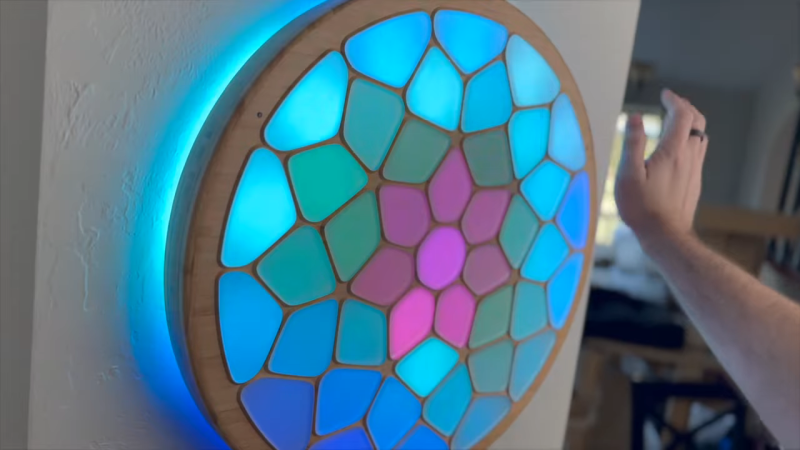
[Voria Labs] has created a whole bunch of artworks referred to as Lumanoi Interactive Light Sculptures. A new video explains the hardware behind these beautiful glowing pieces, as well as the magic that makes their interactivity work.
The basic architecture of the Lumanoi pieces starts with a custom main control board, based around the ESP-32-S3-WROOM-2. It’s got two I2C buses onboard, as well as an extension port with some GPIO breakouts. The controller also has lots of protection features and can shut down the whole sculpture if needed. The main control board works in turn with a series of daisy-chained “cell” boards attached via a 20-pin ribbon cable. The cable carries 24-volt power, a bunch of grounds, and LED and UART data that can be passed from cell to cell. The cells are responsible for spitting out data to addressable LEDs that light the sculpture, and also have their own microcontrollers and photodiodes, allowing them to do all kinds of neat tricks.
As for interactivity, simple sensors provide ways for the viewer to interact with the glowing artwork. Ambient light sensors connected via I2C can pick up the brightness of the room as well as respond to passing shadows, while touch controls give a more direct interface to those interacting with the art.
[Voria Labs] has provided a great primer on building hardcore LED sculptures in a smart, robust manner. We love a good art piece here, from the mechanical to the purely illuminatory. Video after the break.
We all know and rely on the glorious copy-paste shortcut. Seriously, imagine having to right-click to copy and then right-click to paste every single time you need to move a snippet of text. Frustrating, right? It completely breaks your rhythm!

 Login
Login