Your mom deserves a gift she loves this year. These are the things we're buying our own moms for the holidays, from noise-cancelling headphones to the Oura Ring to track her health and more.
The names of two partial owners of firms linked to the Salt Typhoon hacker group also appeared in records for a Cisco training program—years before the group targeted Cisco’s devices in a spy campaign.
Google is testing AI-powered article overviews on participating publications’ Google News pages as part of a new pilot program, the search giant announced on Wednesday. News publishers participating in the pilot program include Der Spiegel, El País, Folha, Infobae, Kompas, The Guardian, The Times of India, The Washington Examiner, and The Washington Post, among others. […]
Bananas, blackberries, limes and more — Amazon’s same-day delivery of perishable grocery items has expanded across the U.S. to more than 2,300 cities and towns, the company announced Wednesday.
Amazon launched the expanded offering earlier this year, allowing customers to integrate items such as fresh produce, seafood, milk and more into their regular shopping orders of electronics, books, clothes, and household essentials.
And customers have responded.
Fresh groceries now make up nine of the top 10 most-ordered same-day items, according to Amazon, with a 12-pack of toilet paper rounding out the bunch.
Analysts say Amazon’s rapid expansion of same-day delivery for fresh groceries marks a meaningful escalation in its long-term push into perishable food — a category where it has historically lagged.
The company’s scale and logistics reach allow it to serve both small towns and large metro areas without relying on third-party platforms, according to Wedbush, which noted in a report Wednesday that the expansion ramps up competitive pressure on Instacart, whose business relies heavily on grocery delivery subscriptions.
Analysts also say the stronger grocery offering makes Amazon Prime’s $139 annual membership more attractive, while weakening the value of Instacart+, which recently scaled back key subscriber benefits. Amazon is also increasingly competing with the grocery efforts of Uber Eats and DoorDash, according to Wedbush.
In most areas, the same-day deliveries are free for Amazon Prime members for orders that cost more than $25. If the purchase is below that amount, the cost is $2.99. For shoppers without a Prime membership, the delivery tacks on a $12.99 fee.
(Amazon Graphic)
Since this summer, Amazon has expanded the fresh grocery selection available for same-day delivery by more than 30%, including offerings from Whole Foods Market and Amazon Grocery, the company’s new private brand, which now includes over 1,000 items, with most priced under $5.
Amazon is also seeing a shift in shopping patterns as customers who add fresh groceries to their orders shop about twice as often as those who don’t.
GeekWire tested the same-day service in June, placing a late-night order that arrived in the morning and included apples, cucumbers, and blueberries alongside non-perishable items.
Amazon says it plans to expand same-day perishable grocery delivery to more cities and towns in 2026.
The expansion of same-day perishable delivery comes as Amazon is also testing a new ultra-fast option called Amazon Now, which promises delivery in 30 minutes or less. GeekWire tested this service earlier this month, and received a frozen pizza, hummus, bread and more in 23 minutes, from order click to delivery drop-off in Seattle.
Amazon has for years been expanding and experimenting in the grocery space. In 2007, it started offering grocery deliveries in Seattle through Amazon Fresh, then offered Amazon Fresh grocery pick-up sites and eventually started opening Amazon Fresh grocery stores beginning in 2020. It acquired Whole Foods Market in 2017.
Microsoft has released one of its most detailed looks yet at how people use Copilot — and the results suggest the AI assistant plays different roles depending on time of day and the device.
In a new preprint titled “It’s About Time: The Copilot Usage Report 2025,” Microsoft AI researchers analyzed 37.5 million de-identified Copilot conversations between January and September of this year. Enterprise and school accounts were excluded, and machine classifiers labeled each chat by topic and “intent,” such as searching for information, getting advice, or creating content.
The top-line finding: on desktop computers, Copilot usage centers on work and technical questions during business hours. On mobile, it’s about health — all day, every day.
“Health and Fitness” paired with information-seeking was the single most common topic-intent combination for mobile users, and stayed in the top spot every hour of the day across the nine-month window. The paper suggests this shows how people increasingly treat Copilot on their phones as a private advisor for personal questions, not just a search tool.
On PCs, “Work and Career” overtakes “Technology” as the top topic between 8 a.m. and 5 p.m., mirroring a traditional office schedule. Other work-related topics such as science and education also rise during the day and fade overnight.
“The contrast between the desktop’s professional utility and the mobile device’s intimate consultation suggests that users are engaging with a single system in two ways: a colleague at their desk and a confidant in their pocket,” Microsoft wrote in the study.
Compared with January, the September data from Microsoft’s study shows fewer programming conversations and more activity around culture and history — a sign, the researchers say, that usage has broadened beyond early technical adopters into more mainstream, non-developer use cases.
Usage reports from OpenAI and Anthropic found similar consumer patterns, with many people using ChatGPT and Claude for practical guidance, information, and writing help in their personal lives. Microsoft’s new Copilot study adds a sharper twist: on desktops, AI looks like a co-worker; on phones, it looks a lot more like a health and life adviser.
In a companion blog post, Microsoft said the study shows how Copilot “is way more than a tool: it’s a vital companion for life’s big and small moments.”
The study highlights a rise in advice-seeking, particularly around personal topics. This suggests people are turning to AI not just to offload tasks but to help make decisions — which could raise the stakes for model builders around accuracy, trust and accountability.
Microsoft’s research team included Microsoft AI CEO Mustafa Suleyman as a co-author. Each conversation was automatically stripped of personally identifiable information and no human reviewers saw the underlying chats, according to the paper.
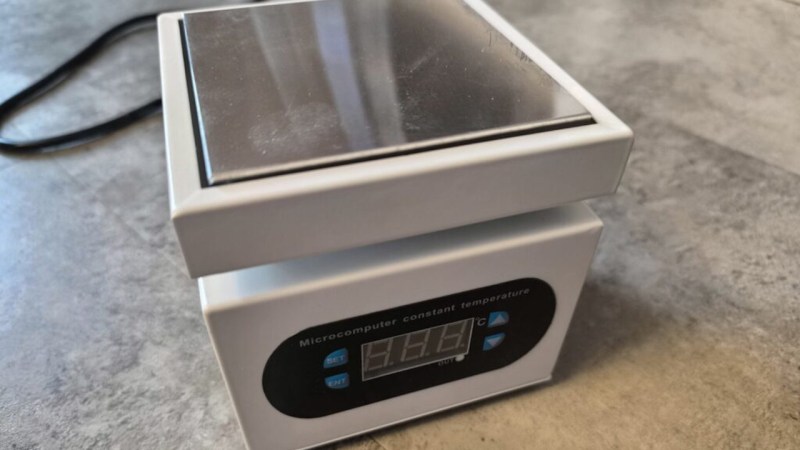
For less than $30 USD, you can get a 10×10 centimeter hotplate with 350 Watts of power. Sounds mighty fine to us, so surely there must be a catch? Maybe not, as [Stefan Nikolaj]’s review of this AliExpress hotplate details, it seems to be just fine enough.
At this price, you’d expect some shoddy electronics inside, or maybe outright fiery design decisions, in the vein of other reviews for similar cheap heat-producing tech that we’ve seen over the years. Nope – the control circuitry seems to be more than well-built for our standards, with isolation and separation where it matters, the input being fused away, and the chassis firmly earthed. [Stefan] highlights just two possible problem areas: a wire nut that could potentially be dodgy, and lack of a thermal fuse. Both can be remedied easily enough after you get one of these, and for the price, it’s a no-brainer. Apart from the review, there’s also general usage recommendations from [Stefan] in the end of the blog post.
While we’re happy to see folks designing their own PCB hotplates or modifying old waffle irons, the availability of cheap turn-key options like this means there’s less of a reason to go the DIY route. Now, if you’re in the market for even more build volume, you can get one of the classic reflow ovens, and maybe do a controller upgrade while you’re at it.
The digital intrusion allegedly caused thousands of pounds of meat to spoil and triggered an ammonia leak in the facility
A Ukrainian woman accused of hacking US public drinking water systems and a meat processing facility on behalf of Kremlin-backed cyber groups was extradited to the US earlier this year and will stand trial in early 2026.…
 Login
Login




 Stevie Bonifield / The Verge: