Reading view

There are new articles available, click to refresh the page.

The Ninja Crispi is a glass-bottom air fryer, and its $40 off at Amazon

Ninja Crispi air fryer deal

SAVE $40: As of Dec. 6th, the Ninja Crispi air fryer and portable cooking system is $139, which is $40 off its list price of $179. 


Black Friday has come and gone, and with it, most of the wallet-saving deals have retreated into the ether. That is almost all of those deals, but one: Ninja has its Black Friday deal on the Ninja Crispi air fryer. The Ninja Crispi is $40 off this weekend, for who knows how much longer. This air fryer features two glass bottoms in 4-quart and 6-cup capacities. This portable cooking system is an air fryer, in addition to baking, reheating, and something Ninja refers to as "Max Crisp," which is likely closely related to broiling.

The two different sizes offer unique capabilities for cooking different quantities of food at various speeds. For example, the 6-cup glass-bottom bowl can reheat some fries or veggies (who says potatoes aren't vegetables) in as little as 7 minutes, while the 4-quart glass-bottom bowl can bake a whole chicken and vegetables.

If the combination of a glass bottom and extreme heat gives you pause, don't worry, Ninja is already way ahead of you. The borosilicate glass (which the famously heat-resistant Pyrex brand's glass is made of) is thermal shock-resistant, and both glass bottoms come with heat-protected feet that allow the device to sit atop any material countertop you want (except plastic). The glass bottoms are also dishwasher safe.
Waymo's robotaxi fleet is being recalled again, this time for failing to stop for school buses

To prevent its robotaxi fleet from passing stopped school buses, Waymo is issuing another software recall in 2025. While it's not a traditional recall that pulls vehicles from the road, Waymo is voluntarily updating software for its autonomous fleet in response to an investigation from the National Highway Traffic Safety Administration. According to Waymo, the recall will be filed with the federal agency early next week.

Mauricio Peña, Waymo's chief safety officer, said in a statement that Waymo sees far fewer crashes involving pedestrians than human drivers, but that the company knows when "our behavior should be better."

"As a result, we have made the decision to file a voluntary software recall with NHTSA related to appropriately slowing and stopping in these scenarios," Peña said in a statement to multiple news outlets. "We will continue analyzing our vehicles’ performance and making necessary fixes as part of our commitment to continuous improvement."

According to the NHTSA investigation, some Waymo autonomous vehicles were seen failing to stop for school buses that had their stop signs and flashing lights deployed. The federal agency said in the report that there were instances of Waymo cars driving past stopped school buses in Atlanta and Austin, Texas.

Earlier this year, Waymo issued another software recall after some of its robotaxi fleet were seen hitting gates, chains, and similar objects. Last year, Waymo also filed two other software recalls, one of which addressed a fleet vehicle crashing into a telephone pole and another correcting how two separate robotaxis hit the same exact pickup truck that was being towed.

This article originally appeared on Engadget at https://www.engadget.com/transportation/waymos-robotaxi-fleet-is-being-recalled-again-this-time-for-failing-to-stop-for-school-buses-190222243.html?src=rss

©

© Waymo

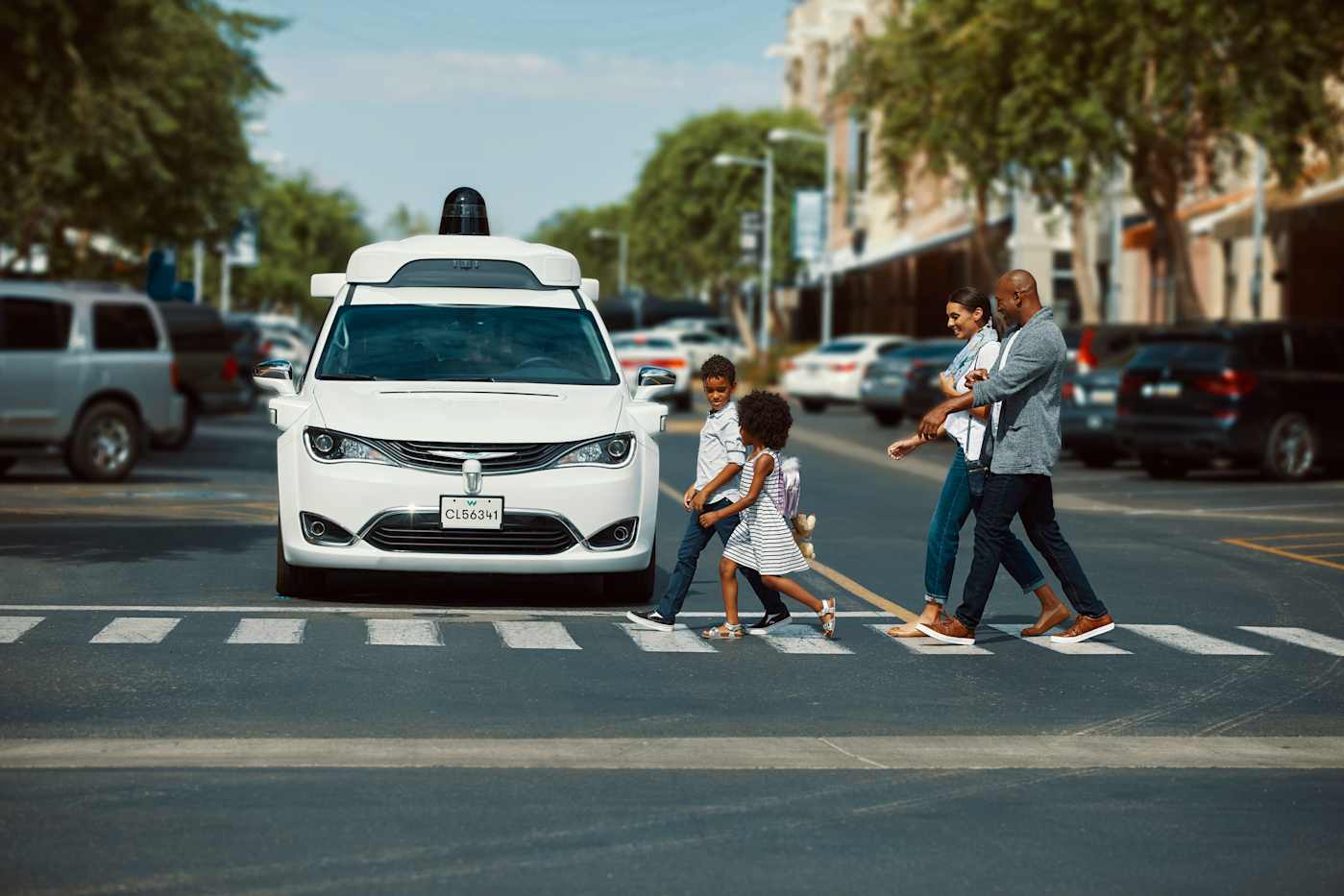
A Waymo autonomous vehicle waits for a family of pedestrians to cross the street.

Aptera's Solar-Powered EVs Take Another Step Toward Production

To build three-wheeled, solar electric vehicles, Aptera has now launched its "validation" vehicle assembly line, reports the San Diego Business Journal. "The validation line will set a technical foundation for the company's eventual low-volume assembly line, ensuring that manufacturing processes are optimized and refined, particularly for the company's composite body structure." To date, Aptera has produced three validation vehicles, two of which are in use driving around the San Diego region, with plans to build another 10 in the coming weeks as progress continues on the validation manufacturing line. "You learn things when you start to put miles on vehicles, putting 10s of thousands of miles on these validation vehicles and learning a lot from the durometer of the suspension, ride quality, spring rates and braking pressure," Aptera co-founder and co-CEO Chris Anthony said. "We've been able to incorporate a lot of the usability stuff back, but also, just as we've gone through the process of building these, a lot of order-of-operation stuff that's educated us on what's going to make for the best initial assembly lines," he added.... Aptera made its public debut on October 16, with the company's executive team participating in the Nasdaq closing bell ceremony that evening. Shares of SEV have hovered between $6.50 and $8.50 for much of the company's first month on the exchange. The company's equity line of credit also took effect in mid-November... expected to aid in Aptera generating at least a portion of the $65 million the company has said it will need to complete validation manufacturing and begin low-volume production for customers. Aptera previously raised some $135 million from more than 17,000 investors in what the company touts as the most successful crowdfunding effort of all time, but Anthony argued Aptera will soon need to invest larger sums of capital to scale its production needs. "Publicly listing the company gives us a lot more funding mechanisms to get into production," he said. "So just having access to the public markets, public liquidity and the kind of instruments and tools that banks offer to public companies, it just seemed like now is the right time." Alongside the IPO, Aptera made its formal transition to a Public Benefit Corporation, giving the company a legal obligation to consider its effect on employees, communities and customers in addition to the profit motives of its shareholders. California's state government also awarded Aptera $21 million "to support its push toward scaled manufacturing," the article points out. It also notes that Aptera's vehicles "are technically classified as motorcycles rather than standard passenger cars, presenting a potentially cheaper alternative for consumers on the hunt for an electric vehicle."

Read more of this story at Slashdot.

Why These Parents Want Schools to Stop Issuing iPads to Their Children

What happened when a school in Los Angeles gave a sixth grader an iPad for use throughout the school day? "He used the iPad during school to watch YouTube and participate in Fortnite video game battles," reports NBC News. His mother has now launched a coalition of parents called Schools Beyond Screens "organizing in WhatsApp groups, petition drives and actions at school board meetings and demanding meetings with district administrators, pressuring them to pull back on the school-mandated screen time." Los Angeles Unified is the first district of its size to face an organized — and growing — campaign by parents demanding that schools pull back on mandatory screen time. The discontent in Los Angeles Unified, the second-largest school district in the country, reflects a growing unease nationally about the amount of time children spend learning through screens in classrooms. While a majority of states prohibit children from using cellphones in class, 88% of schools provide students with personal devices, according to the National Center for Education Statistics, often Chromebook laptops or iPads. The parents hope getting a district that has over 409,000 students across nearly 800 schools to change how it approaches screen time would send a signal across public school districts to pull back from a yearslong effort to digitize classrooms.... [In the Los Angeles school district] Students in grade levels as low as kindergarten are provided iPads, and some schools require them to take the tablets home. Some teachers have allowed students to opt out of the iPad-based assignments, but other parents say they've been told that they can't. Parents can also opt their children out of having access to YouTube and several other Google products... The billion-dollar 2014 initiative to give tablet computers to everyone became a scandal after the bidding process appeared to heavily favor Apple, and it faced criticism once it became clear that students could bypass security protocols and that few teachers used the tablets. Currently, the district leaves it up to individual schools to decide whether they want students to take home iPads or Chromebooks every day and how much time they spend on them in class... Around 300 parents attended listening sessions the district held last month about technology in the classroom. Nearly all who spoke criticized how much screen time schools gave their children in class, pointing to ways their behavior and grades suffered as students watched YouTube and played Minecraft... Several also asked district officials to explain why children as young as kindergartners were asked to sign a form to use devices in which they promised they would honor intellectual property law and refrain from meeting people in person whom they met online. "Is it possible for children to meet people over the internet on school-issued devices?" one father asked. The district officials declined to answer, saying it was meant to be a listening session. In 2022, Los Angeles Unified started requiring students to complete benchmark assessments on educaitonal software i-Ready, the article points out, which generates unique questions for each students. "But parents and teachers are unable to see what children are asked, in part because the company that makes the program considers them proprietary information..." One teacher says his school's administartors are requiring him to use i-Ready even though it doesn't have any material for the science class he's actually teaching. He's also noticed some students will use answers from AI chatbots, bypassing the school's monitoring software by creating alternate user profiles. But the monitoring software company suggests the school misconfigured their software's settings, adding "More commonly, when students attempt to bypass filtering or monitoring, they do so by using proxies." Thanks to long-time Slashdot reader schwit1 for sharing the article.

Read more of this story at Slashdot.

Get 20% Off This Akai MIDI Controller And Get Your Music Journey Going

While it's true that Black Friday and Cyber Monday are both over, there are still a ton of deals available if you know where to look. We've found one example that will get you an Akai MIDI keyboard controller for just $79, but you'll need to be quick - this deal won't last forever.

The post Get 20% Off This Akai MIDI Controller And Get Your Music Journey Going first appeared on Redmond Pie.

Beeples billionaire robot dogs — Musk, Zuckerberg, and Bezos — are pure nightmare fuel

billionaire-faced robot dogs on a red carpet

Hey man, I don't know what message you're trying to send by plastering extremely realistic-looking billionaire faces onto robot dogs — that's between you and your higher power, or lack thereof — but no thanks. I'm good, actually, thanks for offering.

I actually do not need to witness Elon Musk's smirking visage attached to a robot that then defecates AI-generated Polaroids to the audience. I've got errands to run.

Look at these damn things.

The exhibit at Art Basel Miami Beach is called “Regular Animals.” Created by digital designer and artist Mike Winkelmann, who goes by Beeple, it features robot dog versions of Mark Zuckerberg, Elon Musk, Jeff Bezos, Andy Warhol and Pablo Picasso, according to Storyful.

[image or embed]

— The Wall Street Journal (@wsj.com) December 5, 2025 at 11:22 AM

“Regular Animals”, an art installation by Beeple 🤮 at Art Basel in Miami, features billionaire-faced robodogs that take photos of spectators & then “defecate” the so called “artistic impressions”, some of which link to NFTs. Printed “Excrement Samples” sell for $100k. Creepy af innit?

[image or embed]

— trish (@omerta22.posts.art) December 4, 2025 at 2:13 PM

The art installation I'm referring to is called Regular Animals, located in Miami during Art Basel. It's a creation by Mike Winkelmann, aka Beeple, the artist who sold his NFT art for $69 million during the 2021 NFT boom.

The penned-up billionaire dogs include Musk, Mark Zuckerberg, and Jeff Bezos, as well as art-world figures like Andy Warhol, Pablo Picasso, and Beeple himself. It's unnerving and weird to see the hyper-realistic faces wandering around on the picture-pooping dogs. Some folks might be tempted to draw some meaning from the installation. Not me, I've got laundry to do. No thanks.

Need a Christmas tree? Amazon Prime members can save 66% on this Pre-Lit Dunhill Fir

dunhill fir tree

SAVE $189: As of Dec. 6th, this Pre-Lit Dunhill Fir artificial Christmas tree is 66% percent off, coming in at $99. This is down from the National Tree Company’s list price of $289.99 on Amazon. 


It's Dec. 6th, which means that Thanksgiving has come and gone, Black Friday and Cyber Monday spun in like the Tasmanian Devil and spun back out, and now we're more than one-fifth of the way through 25 days of Christmas. It's that time of the holiday season when many windows are filling up with the lights of beautifully decorated trees and/or menorahs. If you don't have a tree quite yet or if you've been on the fence, this weekend, the National Tree Company has a deal you might be interested in. The NTC has its Pre-Lit DunHill Fir artificial Christmas tree on sale for 66% off. 

This particular Pre-Lit artificial tree measures 7.5 ft in height with a 55-inch diameter at its base. When it comes to being "Pre-Lit", that means that the tree is wrapped with lights before packaging, offering you a stress-free setup. The tree comes replete with 700 white light bulbs for sparkling holiday-season ambiance, on full-bodied branches designed to look as real as possible. The tree also features attached drop-down branches, allowing you to set it up quickly once you take it out of the box. 

The instructions indicate that one should spend about 45-60 minutes fluffing and pulling apart the branches so they look extra real. 

Meta plans to push back the debut of its next mixed reality glasses to 2027

The big reveal for Meta's next mixed reality glasses is being postponed until the first half of 2027, according to a report from Business Insider. Based on an internal memo from Maher Saba, the vice president of Meta's Reality Labs Foundation, the report said that the company's project, which is codenamed "Phoenix," will no longer be scheduled for a 2026 debut.

In a separate memo, Meta execs explained that the delay would help deliver a more "polished and reliable experience." According to BI, a memo from Meta's Gabriel Aul and Ryan Cairns said this new release window is "going to give us a lot more breathing room to get this right." Meta hasn't publicly revealed many details about its Phoenix project, but The Information previously reported that it would feature a goggle-like form factor with an external power source, similar to how the Apple Vision Pro is attached to a battery pack.

In the memo from Saba, BI reported that Meta is also working on a "limited edition" wearable with the codename "Malibu 2." Yesterday, Meta announced its acquisition of Limitless, a startup that recently developed an AI wearable called Pendant. Even though Meta's current product portfolio is dominated by smart glasses and VR headsets, the Limitless acquisition and Malibu 2 project could hint at the company's plans to expand its offerings.

This article originally appeared on Engadget at https://www.engadget.com/ar-vr/meta-plans-to-push-back-the-debut-of-its-next-mixed-reality-glasses-to-2027-172437374.html?src=rss

©

© Meta

A person using the Meta Orion prototype for a mixed reality experience.

Why These Parents Want Schools to Stop Issuing iPads to the Their Children

What happened when a school in Los Angeles gave a sixth grader an iPad for use throughout the school day? "He used the iPad during school to watch YouTube and participate in Fortnite video game battles," reports NBC News. His mother has now launched a coalition of parents called Schools Beyond Screens "organizing in WhatsApp groups, petition drives and actions at school board meetings and demanding meetings with district administrators, pressuring them to pull back on the school-mandated screen time." Los Angeles Unified is the first district of its size to face an organized — and growing — campaign by parents demanding that schools pull back on mandatory screen time. The discontent in Los Angeles Unified, the second-largest school district in the country, reflects a growing unease nationally about the amount of time children spend learning through screens in classrooms. While a majority of states prohibit children from using cellphones in class, 88% of schools provide students with personal devices, according to the National Center for Education Statistics, often Chromebook laptops or iPads. The parents hope getting a district that has over 409,000 students across nearly 800 schools to change how it approaches screen time would send a signal across public school districts to pull back from a yearslong effort to digitize classrooms.... [In the Los Angeles school district] Students in grade levels as low as kindergarten are provided iPads, and some schools require them to take the tablets home. Some teachers have allowed students to opt out of the iPad-based assignments, but other parents say they've been told that they can't. Parents can also opt their children out of having access to YouTube and several other Google products... The billion-dollar 2014 initiative to give tablet computers to everyone became a scandal after the bidding process appeared to heavily favor Apple, and it faced criticism once it became clear that students could bypass security protocols and that few teachers used the tablets. Currently, the district leaves it up to individual schools to decide whether they want students to take home iPads or Chromebooks every day and how much time they spend on them in class... Around 300 parents attended listening sessions the district held last month about technology in the classroom. Nearly all who spoke criticized how much screen time schools gave their children in class, pointing to ways their behavior and grades suffered as students watched YouTube and played Minecraft... Several also asked district officials to explain why children as young as kindergartners were asked to sign a form to use devices in which they promised they would honor intellectual property law and refrain from meeting people in person whom they met online. "Is it possible for children to meet people over the internet on school-issued devices?" one father asked. The district officials declined to answer, saying it was meant to be a listening session. In 2022, Los Angeles Unified started requiring students to complete benchmark assessments on educaitonal software i-Ready, the article points out, which generates unique questions for each students. "But parents and teachers are unable to see what children are asked, in part because the company that makes the program considers them proprietary information..." One teacher says his school's administartors are requiring him to use i-Ready even though it doesn't have any material for the science class he's actually teaching. He's also noticed some students will use answers from AI chatbots, bypassing the school's monitoring software by creating alternate user profiles. But the monitoring software company suggests the school misconfigured their software's settings, adding "More commonly, when students attempt to bypass filtering or monitoring, they do so by using proxies." Thanks to long-time Slashdot reader schwit1 for sharing the article.

Read more of this story at Slashdot.

Amazon’s new frontiers: Robotaxis, ultrafast deliveries, AI teammates

Amazon is experimenting again. This week on the GeekWire Podcast, we dig into our scoop on Amazon Now, the company’s new ultrafast delivery service. Plus, we recap the GeekWire team’s ride in a Zoox robotaxi on the Las Vegas Strip during Amazon Web Services re:Invent.

In our featured interview from the expo hall, AWS Senior Vice President Colleen Aubrey discusses Amazon’s push into applied AI, why the company sees AI agents as “teammates,” and how her team is rethinking product development in the age of agentic coding.

RELATED STORIES

With GeekWire co-founders Todd Bishop and John Cook. Edited by Curt Milton.

Subscribe to GeekWire in Apple Podcasts, Spotify, or wherever you listen.

❌