During its half-century of existence, Microsoft has brought forth a plethora of products, but the company also has a number of inventions under its belt. While some are quite popular, you probably wouldn't guess they were invented by the Redmond Giant.
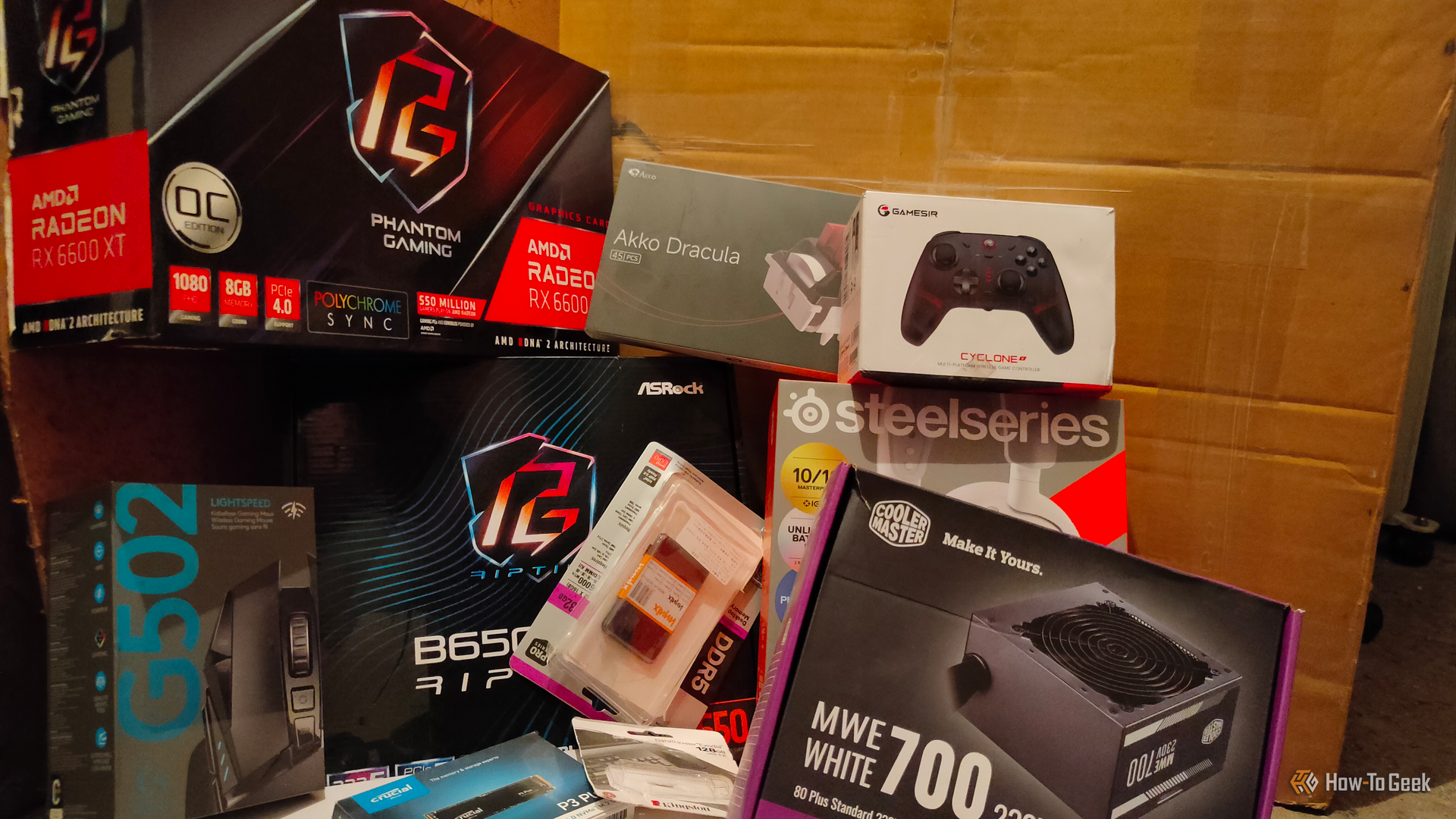
If you’re the type that throws away the packaging your PC parts come in, thinking it’s just fancy cardboard, you’ve come to the right place. I diligently collect the boxes my PC parts come in—and here’s why you should consider doing the same.
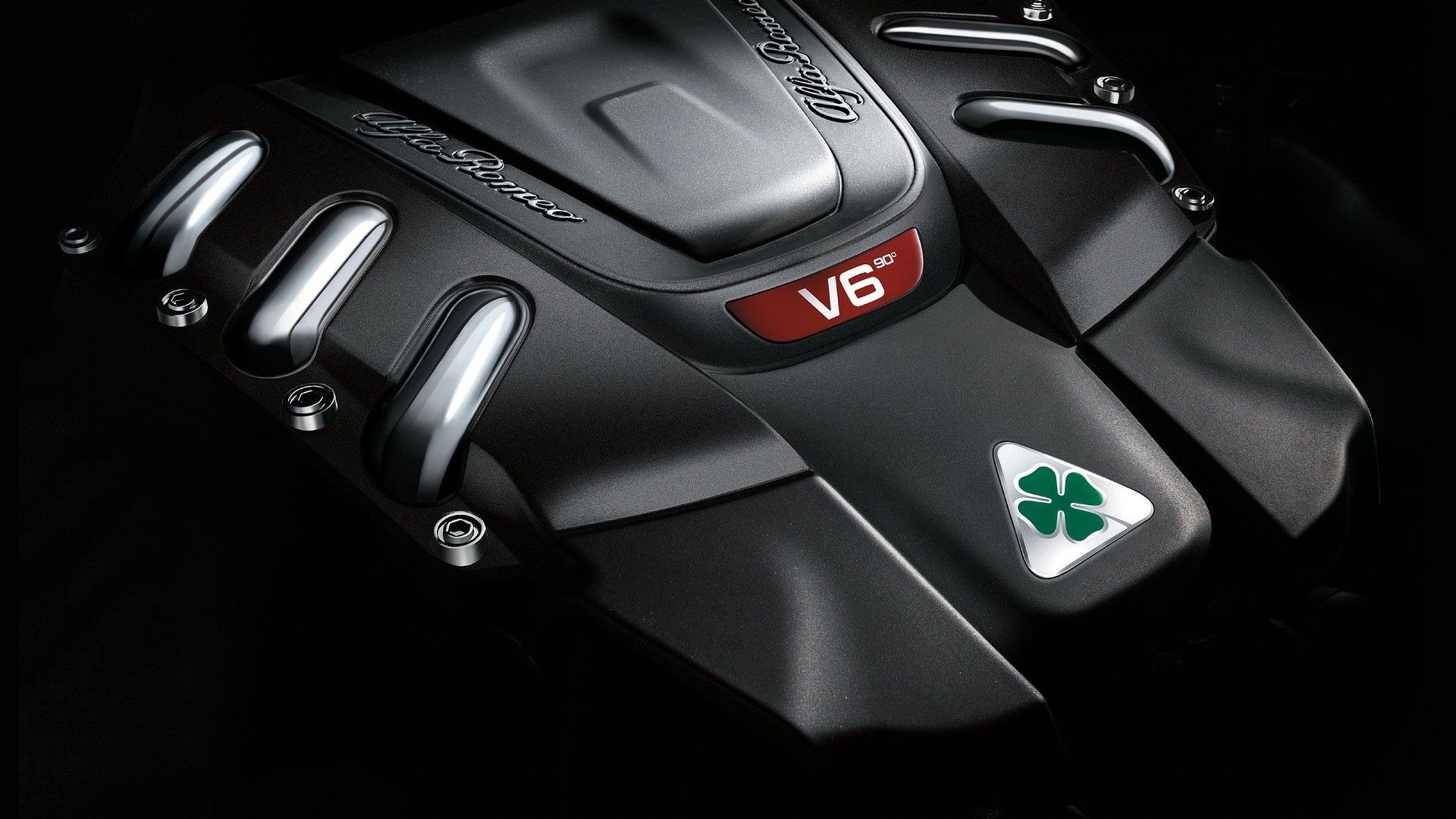
Alfa Romeo is making a dramatic statement with the return of its twin-turbo V-6, but this time, exclusivity is the name of the game. The new Giulia and Quadrifoglio Stelvio special editions will be offered only in select markets, and U.S. buyers won’t see a single example. With extremely limited production numbers, these models are shaping up to be some of the rarest Alfa Romeos ever produced, rarer than even some hypercars.
Today America's college professors "struggle to accommodate the many students with an official disability designation," reports the Atlantic, "which may entitle them to extra time, a distraction-free environment, or the use of otherwise-prohibited technology."
Their staff writer argues these accommodations "have become another way for the most privileged students to press their advantage."
[Over the past decade and a half] the share of students at selective universities who qualify for accommodations — often, extra time on tests — has grown at a breathtaking pace. At the University of Chicago, the number has more than tripled over the past eight years; at UC Berkeley, it has nearly quintupled over the past 15 years. The increase is driven by more young people getting diagnosed with conditions such as ADHD, anxiety, and depression, and by universities making the process of getting accommodations easier. The change has occurred disproportionately at the most prestigious and expensive institutions. At Brown and Harvard, more than 20 percent of undergraduates are registered as disabled. At Amherst, that figure is 34 percent. Not all of those students receive accommodations, but researchers told me that most do. The schools that enroll the most academically successful students, in other words, also have the largest share of students with a disability that could prevent them from succeeding academically. "You hear 'students with disabilities' and it's not kids in wheelchairs," one professor at a selective university, who requested anonymity because he doesn't have tenure, told me. "It's just not. It's rich kids getting extra time on tests...."
Recently, mental-health issues have joined ADHD as a primary driver of the accommodations boom. Over the past decade, the number of young people diagnosed with depression or anxiety has exploded. L. Scott Lissner, the ADA coordinator at Ohio State University, told me that 36 percent of the students registered with OSU's disability office have accommodations for mental-health issues, making them the largest group of students his office serves. Many receive testing accommodations, extensions on take-home assignments, or permission to miss class. Students at Carnegie Mellon University whose severe anxiety makes concentration difficult might get extra time on tests or permission to record class sessions, Catherine Samuel, the school's director of disability resources, told me. Students with social-anxiety disorder can get a note so the professor doesn't call on them without warning... Some students get approved for housing accommodations, including single rooms and emotional-support animals. Other accommodations risk putting the needs of one student over the experience of their peers. One administrator told me that a student at a public college in California had permission to bring their mother to class. This became a problem, because the mom turned out to be an enthusiastic class participant. Professors told me that the most common — and most contentious — accommodation is the granting of extra time on exams...
Several of the college students I spoke with for this story said they knew someone who had obtained a dubious diagnosis... The surge itself is undeniable. Soon, some schools may have more students receiving accommodations than not, a scenario that would have seemed absurd just a decade ago. Already, at one law school, 45 percent of students receive academic accommodations. Paul Graham Fisher, a Stanford professor who served as co-chair of the university's disability task force, told me, "I have had conversations with people in the Stanford administration. They've talked about at what point can we say no? What if it hits 50 or 60 percent? At what point do you just say 'We can't do this'?" This year, 38 percent of Stanford undergraduates are registered as having a disability; in the fall quarter, 24 percent of undergraduates were receiving academic or housing accommodations.
Popular genetics tests can’t tell you much about your dog’s personality, according to a recent study.
A team of geneticists recently found no connection between simple genetic variants and behavioral traits in more than 3,200 dogs, even though previous studies suggested that hundreds of genes might predict aspects of a dog’s behavior and personality. That’s despite the popularity of at-home genetic tests that claim they can tell you whether your dog’s genes contain the recipe for anxiety or a fondness for cuddles.
This is Max, and no single genetic variant can explain why he is the way he is.
Credit:
Kiona Smith
Gattaca for dogs, except it doesn’t work
University of Massachusetts genomicist Kathryn Lord and her colleagues compared DNA sequences and behavioral surveys from more than 3,000 dogs whose humans had enrolled them in the Darwin’s Ark project (and filled out the surveys). “Genetic tests for behavioral and personality traits in dogs are now being marketed to pet owners, but their predictive accuracy has not been validated,” wrote Lord and her colleagues in their recent paper.
Plotters aren’t as common as they once were. Today, many printers can get high enough resolution with dots that drawing things with a pen isn’t as necessary as it once was. But certainly you’ve at least seen or heard of machines that would draw graphics using a pen. Most of them were conceptually like a 3D printer with a pen instead of a hotend and no real Z-axis. But as [biosrhythm] reminds us, some plotters were suspiciously like typewriters fitted with pens.
Instead of type bars, type balls, or daisy wheels, machines like the Panasonic Penwriter used a pen to draw your text on the page, as you can see in the video below. Some models had direct computer control via a serial port, if you wanted to plot using software. At least one model included a white pen so you could cover up any mistakes.
If you didn’t have a computer, the machine had its own way to input data for graphs. How did that work? Read for yourself.
Panasonic wasn’t the only game in town, either. Silver Reed — a familiar name in old printers — had a similar model that could connect via a parallel port. Other familiar names are Smith Corona, Brother, Sharp, and Sears.
Since all the machines take the same pens, they probably have very similar insides. According to the post, Alps was the actual manufacturer of the internal plotting mechanism, at least.
The video doesn’t show it, but the machines would draw little letters just as well as graphics. Maybe better since you could change font sizes and shapes without switching a ball. They could even “type” vertically or at an angle, at least with external software.
Since plotters are, at heart, close to 3D printers, it is pretty easy to build one these days. If plotting from keystrokes is too mundane for you, try voice control.
One thing that really slowed me down when tinkering with my Raspberry Pi 500+ is not being able to seamlessly copy and paste between it and my MacBook Pro. I went searching for a solution and, after a few failed attempts, found something that works.
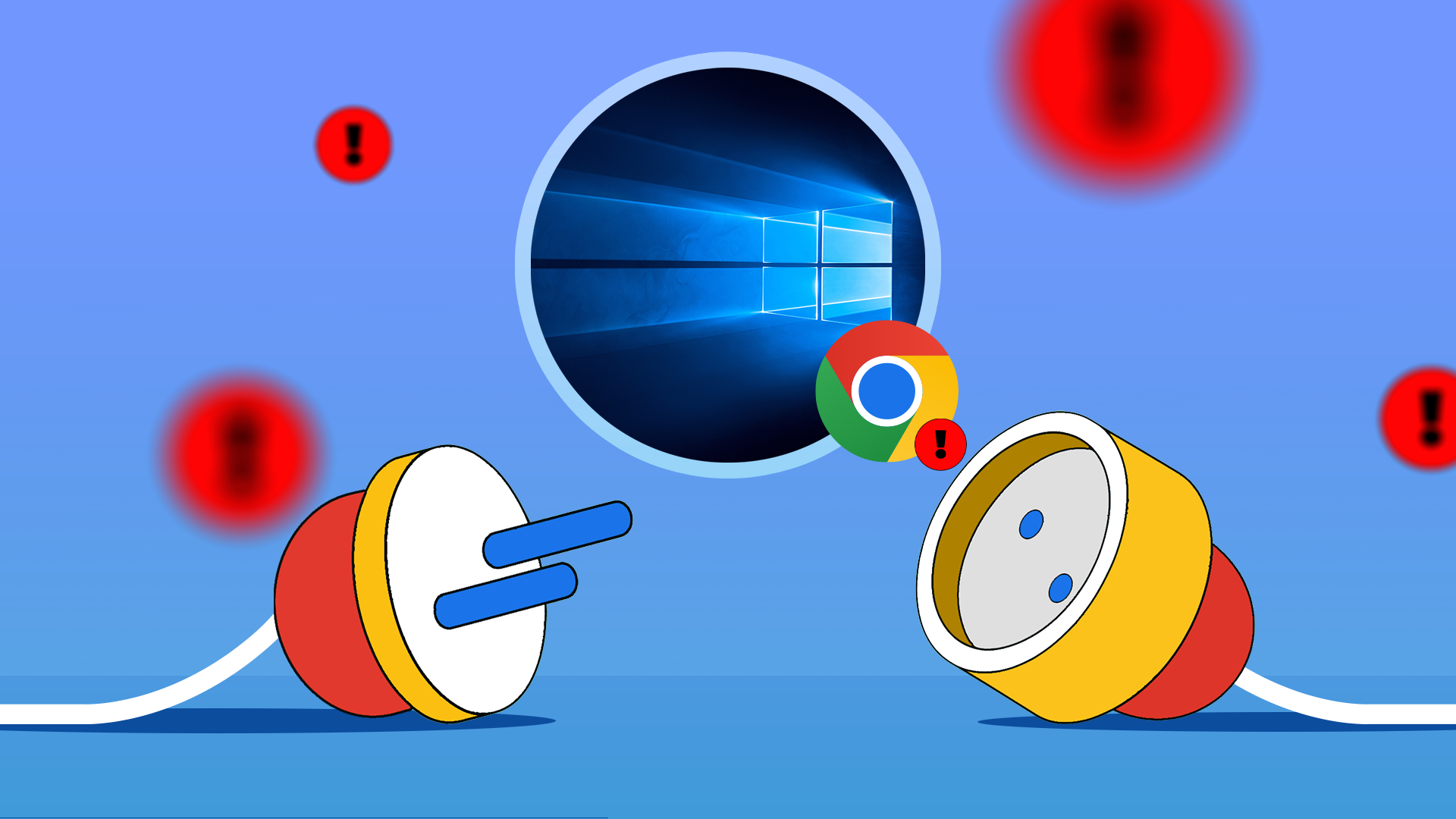
I’ve only got one device left running Windows 10. It's an older tablet PC that I mostly use for media playback. It’s been a reliable little workhorse for years, but it isn’t eligible for Windows 11, so it’s stuck where it is. I still use Chrome on it every day, and like a lot of people holding onto older hardware, I’ve started to wonder how much longer that’s going to last.
There are very few small years for video games, but 2025 felt like a big and mildly weird one in a lot of ways.
It was a year relatively lacking in big-budget first-party bangers from the likes of PlayStation and Xbox, though you'll see a bit of the former on this list. Nintendo had a big year, finally launching the Switch 2, but still, the most talked-about game of the year was a Japanese RPG made in France. Aside from all of that, it was a big year for soccer, non-French-RPGs, lonely hikes, and hotly anticipated sequels to indie smash hits.
Enough of the preamble. Here are Mashable's (unranked) picks for the best video games of 2025.
The combat is so, so good.Credit: GungHo/Falcom/Steam
For me, personally, 2025 was defined less by games that came out this year and more by a long-running series of turn-based RPGs known as Trails in the English-speaking world. There are more than a dozen of them, most of which are at least 50 hours long, and they all connect narratively. The best point of comparison, in terms of the breadth of its story and the sheer number of characters to keep track of, would probably be A Song of Ice and Fire. It's a massive commitment, but I have truly loved playing through the series this year.
And what a nice coincidence it was that developer Nihon Falcom decided to release a shiny new from-the-ground-up remake of Trails in the Sky, the very first game in the series, in late 2025. Aside from just being a great entry point into this incredible series, Trails in the Sky: 1st Chapter is an astounding RPG on its own merits. Its art style brims with personality, the unique real-time/turn-based hybrid combat is my personal favorite RPG combat of the year, and it's fascinating to see the seeds for future high-stakes storytelling planted in this humble, low-stakes adventure.
If any of this sounds at all interesting to you, start with this game and keep going after that. There's also a remake of the second game coming in the near future.
Death Stranding 2: On the Beach
They went nuts with the weather in this one.Credit: Kojima Productions/PlayStation
While I will stop short of calling Death Stranding director Hideo Kojima an unprecedented genius, I do think he represents what I would love to see out of big-budget game development: Eccentric creators with cool ideas given massive amounts of money to make whatever they want, no matter how off-putting the elevator pitch for the project might be.
Death Stranding 2 is certainly less off-putting than its flawed 2019 predecessor, thanks to more forgiving combat and an overall design philosophy that empowers the player more than it disempowers them. That doesn't make it any less goofy, though. This is a game with pizza-based martial arts, a kind and helpful talking doll by your side at all times, a truly confounding central performance from Norman Reedus, and a climactic shirtless electric guitar battle at its conclusion.
Most importantly, Death Stranding 2 is a much more confident take on the ultimate masculine power fantasy of being emotionally unavailable and pondering public infrastructure projects. Its personality shines through where it didn't in the first game, and it's going to stick with me as much as anything I played this year.
Mario Kart World
That dolphin is riding a motorcycle that looks like a dolphin.Credit: Nintendo
The first of two early Switch 2 exclusives on this list, Mario Kart World is also perhaps the most divisive game in that category so far. Some people, like me, love its focused design, increased sense of chaos, and astoundingly fun Knockout Tour mode. Other people feel that the open-world portion of World is half-baked and that a lack of post-launch support has stifled its long-term viability as a multiplayer game.
That's fine, I guess, but I never needed Mario Kart World to be Fortnite. In fact, I'm glad it's not. Nintendo created a great racing game full of fun activities to enjoy, and most importantly, it doesn't require your constant attention. If you want to put it down for weeks or months at a time and come back later, you won't miss anything. Mario Kart World also shies away from embarrassing, undignified corporate crossovers, rounding out its character roster with random Mario enemies instead of SpongeBob SquarePants and Hatsune Miku.
Between all of that and a truly astonishing and dense soundtrack full of loving renditions of songs from across the Mario universe, Mario Kart World is a great celebration of Nintendo's mascot and a great entry point into the Switch 2 as a console.
Despelote
Play 'Despelote' at your earliest convenience.Credit: Panic/Steam
Despelote speaks for itself better than I could ever put into words. You should really just plop down $15, play through it in the 90 minutes it takes to finish, and come back here instead of reading more.
In case you can't or don't want to do that, though, Despelote is a first-person narrative adventure about growing up in Ecuador in the early 2000s, as the country's national men's soccer team attempts to qualify for the World Cup for the first time in its history. Time is measured by game days and further contextualized by political and economic instability that fades into the background because you're playing as a child who cares more about soccer than anything else in the world. Its environments are hazy and dreamlike, resembling half-formed childhood memories better than almost any other game I can think of.
More than anything, Despelote transports the player to a very particular time and place, focusing on a culture that often receives little attention in video games. I choose to celebrate that.
Donkey Kong Bananza
Pauline is so cool.Credit: Nintendo
Our second Switch 2 exclusive understands one crucial aspect of video game design: Punching things until they explode is a lot of fun.
Donkey Kong Bananza is notable for a few reasons. One is that it marks the return of one of Nintendo's oldest characters as a 3D platformer hero, his first game in that role in 25 years. Another is that he got a fresh redesign and a new best friend in the infinitely charming Pauline, a singing teenage girl who joins DK on his quest to the core of the planet. Bananza marries tons of personality with highly destructible environments, all of which will fall to DK's fists on a long enough timeline.
A 3D platformer where you can ignore the baked-in level design and simply punch your way to the goal works remarkably well. I'm not sure if Bananza is as good as Super Mario Odyssey (the last game from this development team), but it's definitely worthy of being on this list.
Ghost of Yotei
Pretty.Credit: Sucker Punch/PlayStation
PlayStation's Ghost of Yotei is one of the few games on this list that I have not personally had time to check out yet, but our reviewer George Yang adored his time with the open-world samurai adventure. His take on the quest design really stood out to me:
"Ghost of Yotei has one of the best open-world formats out there, and that’s due to how seamlessly its side quests and exploration unfold. As Atsu travels across Ezo, NPC characters will call out to her, signaling that they have a side quest for her to tackle. It’s worth doing them too, as they reward Atsu with new equipment or money to help her on her journey. The side quests aren’t mindless fetch quests either — each one has a story that expands Yotei’s lore and worldbuilding. For example, one quest had Atsu rescuing an imprisoned gambler who maintained a winning streak against Saitō’s lackeys, showing not only their lack of morals but their pettiness, too."
It's hard to make open-world games feel fresh in 2025, but by all accounts, Yotei does an admirable job of that. If you want to luxuriate in gorgeous visuals and do cool sword tricks for a few dozen hours, here you go.
Hades II
The part where you play 'Hades II' is still unparelleled.Credit: Supergiant Games/Steam
I have to admit that Hades II has not stuck with me for hundreds of hours in the same way the first game did in 2020. Its faults include a story that wraps up in a rather unsatisfying manner and the fact that it's been done before.
Still, even taking into account a lack of novelty, I think Hades II just barely makes the cut here because more Hades is still more Hades. Developer Supergiant Games marries its usual excellent art direction, audio design, and variable combat mechanics into something that's downright thrilling to play at its best. Introducing a second route to the game also dramatically increased the variety therein. I don't think Hades II measures up to its predecessor, but it doesn't have to in order to make this list.
Baby Steps
I'm getting stressed just looking at this.Credit: Devolver Digital/Steam
Baby Steps, the newest joint from developer Bennett Foddy, is a game you can consume entirely via social media clips of players failing hilariously, if you want. It's another in a long line of games about physics-based movement, where the act of walking requires intent and precision, and nothing is handled for you automatically. Merely going up a set of stairs is a challenge here. Turning the mundane into profound obstacles is a significant part of the appeal of Baby Steps and similar games.
On top of all of that, Baby Steps is just strange (complimentary). It's a game where weird things happen on a regular basis, as a reward for sticking with it through the frustration. I have a feeling Baby Steps will have some of the longest-lasting appeal of any 2025 release.
Metroid Prime 4: Beyond
Heck yes dude.Credit: Nintendo
I don't know if any 2025 video game had more weight on its shoulders than Metroid Prime 4: Beyond. It's the first Prime game in 18 years, following extensive delays and a general sense among Metroid fans that Nintendo had lost interest in the series. It also had to contend with some pre-release controversy surrounding a certain engineer, which led some fans to believe the game was beyond saving before it even came out.
I am pleased to report that Metroid Prime 4 is great, regardless of the anxiety surrounding it. Samus Aran's latest adventure combines rock-solid level design with a haunting desert hub that you traverse on a kick-ass motorcycle. It's the best-looking Switch 2 game so far, and it has a great sense of atmosphere, along with excellent music. Most importantly, it proves that Metroid Prime can still work in a modern context, even if that engineer guy is really irritating.
I beg you to give this one a shot.Credit: Nintendo
At the risk of putting too many Nintendo games on this list, I do want to shout out Xenoblade Chronicles X: Definitive Edition. It's an oft-requested Switch remaster of the last great Wii U exclusive, a gargantuan open-world RPG about human refugees trying to make a life on a distant alien planet after Earth's destruction.
Xenoblade X has one of the three or four best open worlds in any video game, ever. Every inch of it is thoughtfully designed, including the vast, empty stretches of it. It feels alien and hostile when it needs to, and also awe-inspiring and beautiful when it needs to be those things, too. And after about 40 hours, you can fly around the world in a mech, which recontextualizes your relationship with the planet in a heartbeat. It's a remarkable progression of scale that I've never seen another open-world game pull off.
Honorable Mention: Clair Obscur: Expedition 33
The combat rules.Credit: Sandfall Interactive/Steam
I mentioned earlier that the most talked-about game of 2025 was a JRPG made in France. That would be Clair Obscur: Expedition 33, a gorgeous turn-based RPG inspired by several genre classics (and some other, more obscure titles), but with a bleak tone and aesthetic all its own. Set in a world where everyone above a certain age is killed every year (with the number going down year by year), Clair Obscur tells a tale of loss and grief that didn't personally work for me, but did work for plenty of other people I know.
What did work for me was its excellent combat, which synthesizes turn-based battles with real-time dodge and counter mechanics. The result is a game where you can break the math, or just get really good at countering enemy attacks. Or, you can be like me and do both, resulting in a final boss fight that lasts about 20 seconds. The point is that Clair Obscur has excellent combat, great music, a fun world to explore, and exciting boss fights, regardless of how much its story does or doesn't affect you.
Samsung is undoubtedly one of the best TV brands out there. It sells a variety of budget, mid-range, and luxury models that deliver excellent performance across multiple verticals. These include design, low-latency gaming, picture quality, and smart home integration. One area that doesn’t receive much attention is sound.
The average consumer will be satisfied with their TV’s default sound settings. Those who value detail and nuance — not so much. Don’t get me wrong now. Samsung TVs are fine for enjoying music performances, movies, and video games. But many critics agree that their sound quality could be improved. Well, let’s change that.
Whether you already own a Samsung TV or plan to buy one, know that you can tweak the audio output on these devices for optimal listening. Numerous upscaling sound features are sitting on the backend waiting to be discovered. You just need to know what they are and where to find them. We assembled this guide to help you get started.
Here are 7 ways to greatly enhance the sonics on your Samsung TV.
1. Adjust the equalizer
Credit: Alex Bracetti / Mashable
The majority of Samsung TVs come with a manual 8-band EQ. It looks and operates similarly to the EQ on other wireless audio products (e.g., Bluetooth speakers, earbuds, headphones). Once opened, you can adjust the bass, midrange, and treble, which is done through the remote controller. If you need some assistance understanding frequency ranges, check out our guide on how to customize your EQ settings.
Home [Button] -> Settings -> Sound -> Expert Settings
2. Switch the sound modes
Credit: Alex Bracetti / Mashable
Samsung offers three sound modes: Amplify, Adaptive Sound (Optimized), and Standard (default). Each mode modifies sound performance based on preference. Amplify will boost mids and high tones, which is ideal for dialogue-heavy content, while Optimized makes special effects more immersive. Standard is basically the equivalent of a flat EQ; sound is balanced with no emphasis on a specific frequency range.
This proprietary feature gets you surround sound by syncing your TV’s audio output with a Samsung soundbar. You can connect both devices using an HDMI cable, optical cable, or through Wi-Fi. Samsung says to change the source on the soundbar to “D.IN for a cable connection, or Wi-Fi when establishing an internet connection.” Press the Source button on your TV remote to cycle through options.
A more current Samsung TV is required for this setup. Click this hyperlink to check out a list of compatible models.
Home [Button] -> Settings -> Sound -> Sound Output on your TV -> select "TV + Soundbar"
4. Turn on Dolby Atmos
Credit: Alex Bracetti / Mashable
Anyone who owns a pair of spatial audio headphones has likely experienced Dolby Atmos. It’s the most common 3D audio format out there. Enabling the feature will deliver theatrical surround sound best enjoyed in your living room. There is one caveat — you must own external speakers that support Dolby Atmos.
Turning this on will equalize sound across different channels and sources and keep volume output consistent.
Home [Button] -> Settings -> Sound -> Expert Settings -> Auto Volume
6. Shift sound output to the left or right
Credit: Alex Bracetti / Mashable
Listeners with hearing impairments will want to take advantage of the Balance feature. Simply put, it allows you to freely adjust the sound to deliver more sound from the left or right speaker.
Think of Adaptive Sound as an auto-generated EQ. It analyzes a room’s acoustics and your TV’s audio signal in real time to create a clearer and more natural sound profile. Not every Samsung TV comes with the same version. You may see “Adaptive Sound,” “Adaptive Sound+,” or “Adaptive Sound Pro” when navigating through the settings.
Home [Button] -> Settings -> General & Privacy -> Intelligent Mode -> Adaptive Sound
 Login
Login







 This is Max, and no single genetic variant can explain why he is the way he is.
Credit:
Kiona Smith
This is Max, and no single genetic variant can explain why he is the way he is.
Credit:
Kiona Smith



 Sally Ward-Foxton / EE Times: