Recent changes to the Postal Service’s network could mean slower deliveries of prescription drugs in the mail. A study from the Brookings Institution found 6% of Americans live far away from a brick-and-mortar pharmacy, rely heavily on mail-order prescriptions and live in areas impacted by USPS consolidation. Brookings also found that nearly half of all Americans face at least one of those scenarios. USPS this year has been running trucks less often between its processing plants and post offices to transport mail and packages.
Lawmakers want the Defense Department to do away with duplicative cybersecurity regulations. The compromise defense authorization bill released over the weekend would direct the Pentagon to harmonize all cybersecurity requirements that apply to the defense industrial base. The deadline for harmonizing those regulations would be June 1. The goal is to eliminate inconsistent and duplicative cyber requirements across DoD and the military services. That legislative push comes as the Pentagon starts to roll out the Cybersecurity Maturity Model Certification, or CMMC, requirements across its contracts.
Former federal employees are warning of what they say is the “destruction” of the Justice Department’s civil rights division. In a letter penned Tuesday, more than 200 civil rights attorneys who left government this year said they did not want to leave their jobs, but that political leaders at DOJ pressured them to go. The former employees warn that the Trump administration’s overhauls at DOJ have led to a loss of expertise. Their letter also raises concerns about the possibility of a greater exodus of career DOJ staff on the horizon.
The Defense Department has launched GenAi.mil. The platform will put “frontier AI models” into the hands of warfighters. The department selected Google Cloud's Gemini for Government as the first AI deployed on the new platform. Defense Secretary Pete Hegseth said DoD personnel will be able to "conduct deep research, format documents and analyze video or imagery at unprecedented speed.” “The future of American warfare is here, and it’s spelled AI,” Hegseth said.
The head of the National Institute of Standards and Technology’s cyber workforce and education efforts is stepping down. Rodney Petersen said his last day will be Dec. 31. For the past 11 years, Petersen has served as director of NIST’s National Initiative for Cybersecurity Education Cybersecurity Workforce Framework program. Known as the “NICE Framework,” it provides a common language to describe cybersecurity work and the knowledge and skills needed to complete that work. There’s no word yet on who will replace Petersen.
The government’s dispersed HR systems are on the verge of a major transformation. By January, the Office of Personnel Management expects to award a contract that will eventually result in a cohesive HR system for all agencies. It’s not the first time OPM has attempted to merge the more than 100 disparate HR systems across government. But the current effort underway is different: “We’ve already brought experts from many different agencies into a steering committee that are helping us to set the strategy up front,” said Dianna Saxman, OPM’s associate director of HR Solutions.
Despite broad bipartisan support, right-to-repair provisions that would have given service members the ability to fix their own equipment in the field were stripped from the compromise version of the 2026 defense policy bill after industry pushback. The Senate’s provision requiring contractors to provide the military with detailed repair and maintenance instructions was removed from the final text. The House’s data-as-a-service provision, which would have required the Defense Department to negotiate access to technical data and necessary software before signing a contract, was dropped from the bill as well. Sen. Elizabeth Warren (D-Mass.) and Sen. Tim Sheehy (R-Mont.) said they “support the Pentagon using the full extent of its existing authorities to insist on right to repair protections” when purchasing equipment from contractors.
The IRS is setting new limits on telework for employees who are facing a variety of temporary hardships. The IRS said hardship-based requests for full-time telework that employees submitted, but were still awaiting approval, will be “closed,” effective immediately. An agency memo cites the Trump administration’s return-to-office mandate as the reason for the policy change. Employees can still submit hardship-based telework requests, but approvals must come from the agency’s leadership or its human capital office, which is inundated with paperwork from employees retiring under the deferred resignation program.
OPINION — Wars are increasingly fought by unconventional means. A recent example is Ukrainian insertion of unmanned aerial systems (UAS) to attack Russian airfields, launched from civilian outfitted trucks. The Israeli pager attacks are another example of leveraging unconventional means to achieve an outsized effect. Both examples demonstrate that unconventional methods can not only disrupt enemy forces and destroy key objectives, but also achieve tremendous psychological effects and by saturating the airspace, limit an adversaries ability to mount offensive operations.
While the U.S. continues a conventional military buildup off the coast of Venezuela, the lessons from the Ukrainian and Israeli conflicts may be prescient: the US can achieve most of our policy objectives with limited or no ground forces deployment into Venezuela. The authors assume the current U.S. administration’s objectives are centered on regime change without conventional warfare.
Venezuelan forces may be well-prepared for guerilla warfare. Reports are circulating that Russian “advisors” have been dispatched to Venezuela, and it is likely that the Venezuelan army is incorporating Russia’s lessons from Ukraine into their preparation. American forces meeting a small, well-prepared drone force could lead to unacceptable casualties, a prolonged conflict, unnecessary escalation, and international embarrassment.
We suggest, therefore, that if intervention in Venezuela is forthcoming, the U.S. should adopt a strategy centered on unmanned systems. Modern combat in Ukraine and Israel provide a viable model.
Our proposed strategy suggests leveraging a combination of UAS and unmanned ground vehicles (UGV) to weaken the Maduro government’s internal support, and hasten favorable conditions for peace - again, assuming “regime change” or negotiated peace are the desired endstates.
How the U.S. Military Thinks of War
The U.S. Military uses a six-phase planning model to describe the progression of an operation or campaign. This continuum begins with Phase 0: Shape, which involves continuous peacetime activities to influence the operational environment and prepare for contingencies. As an operation develops, the force moves to Phase I: Deter, demonstrating capability and resolve to dissuade, followed by Phase II: Seize Initiative once hostilities begin, gaining access and advantage. The core combat phase is Phase III: Dominate, which involves applying overwhelming combat power to defeat the enemy force. The final stages, often requiring significant force commitment for irregular warfare, are Phase IV: Stabilize, focusing on securing the operating area and providing security, and Phase V: Enable Civil Authority, which transitions security and control back to legitimate local governance to establish a lasting peace. Technologies are used in every phase as a strategic force multiplier.
Proposed Unmanned Systems Strategy
Phase 0 should begin immediately. This phase would be centered on information collection around the capital, Caracas, and the economic epicenters, Venezuela, Maracaibo, Valencia, and Barquisimeto, as well as oil refineries, given their central importance to the Venezuelan economy. Significant real-time intelligence collection could be achieved by leveraging High Altitude Long Endurance (HALE) aircraft coupled with pervasive small, ground-based sensors. UGVs would provide long-term, ground-based multi-disciplined intelligence collection capabilities, leveraging commercial off-the-shelf technologies (proven effective in Ukraine) to reduce risk of exposing sensitive or proprietary technologies.
The assessed trigger for escalation would be a breakdown of negotiations over a change of government. Subsequent operations would focus on precision degradation and infrastructure interdiction, designed to be quick, minimize political fallout, and avoid direct engagement with Venezuelan forces. Generally, operations would seek to scale between Phase 1 - Deter, and Phase 3 - Dominate, to apply and then relieve pressure on the Venezuelan government and population as needed to degrade political will and popular support. Operations should be carefully crafted, and targets thoughtfully selected, not just for military effect, but for their psychological and political impact.
Aerial and Electronic Warfare Dominance
The first actions would be entirely aerial, focused on blinding the Venezuelan government and shaping persistent intelligence, all while demonstrating the ability to dominate without causing significant destruction. The U.S. could suppress air defenses using high-altitude, stealth drones, and specialized EW drones to undermine government influence and degrade command and control. Targets would include Venezuela's air defense systems, mostly Russian S-300VM and Buk-M2E missile batteries, and radar networks. Key locations would be targeted with precision-guided munitions or overwhelmed and jammed by EW drones before kinetic strikes to establish air superiority for subsequent UAS waves.
What national security news are you missing today? Get full access to your own national security daily brief by upgrading to Subscriber+Member status.
Targeting Command and Control
The U.S. could leverage loitering munitions and specialized communications relay and jammer UAVs to target key military and government communication nodes, high-frequency transmission sites, and satellite ground stations. Small, inexpensive UAS could be coupled with highly mobile UGVs to extend range, and to achieve precise sequencing, impressing urgency and conveying the message that the Maduro government is inept. By severing communication links between the military high command and field units, the U.S. could cause decentralized chaos, which would degrade the will to fight. Unmanned surface vehicles (USVs) and unmanned underwater vehicles (UUVs) could contain Venezuelan forces, targeting the fleet to deny freedom of movement.
Given instability in Venezuela and the Maduro Government’s demonstrated willingness to enter into discussions, well-sequenced escalation and deescalation may provide the necessary impetus to achieve the desired effect. Minimizing destruction up to this juncture reduces the subsequent burden of rebuilding, which would increase popular support for a replacement government. Minimizing damage would also reduce the likelihood of causing unintended regional instability through large-scale human displacement.
With their extended battery life and ability to recharge with onboard solar panels or from civilian power sources, UGVs provide an ideal baseline for extended operations, providing prolonged ground-based intelligence and surveillance. Information from onboard sensors, long-term intelligence collection, could provide timely battle damage assessments, and would shape planning for subsequent operations.
Well-Timed Precision Strikes
Small UAS loaded with precision explosive and cyber and EW payloads could be loaded onto UGV and transported deep within the country, where they would be staged for well-timed, precision operations to set conditions for negotiations. Disabling power to cause temporary service blackouts, or disrupting and corrupting government information campaigns would allow the U.S. to control the narrative. These precision operations should be choreographed and limited to eliminate harm to civilians.
Precision strikes launched from UGVs could damage government buildings and political headquarters, timed for maximum media coverage, to demonstrate penetration and weakness. Cellular towers could be struck with small munitions to inconvenience and frustrate the population. These limited actions could continue near indefinitely, and would reinforce the narrative that Maduro is weak and incapable, increasing the likelihood of a timely resignation.
UGVs with an explosive payload could be covertly controlled over cellular networks over extended distances, to strike key locations such as bridges, military installations or troop concentrations deep within Venezuela. In the event of a troop deployment, UGV could also be outfitted with weapon platforms such as machine guns or grenade launchers, for force protection.
Subscriber+Members get exclusive access to expert-driven briefings on the top national security issues we face today. Gain access to save your virtual seat now.
Conclusion
With warships off the coast and the airspace over Venezuela “closed”, all signs indicate that the U.S. administration intends to leverage the military to achieve a political objective. There are two options should we choose to proceed. The first is a conventional war, with high financial cost, significant political risk and moderate risk of casualties. The second option is to leverage our growing unmanned systems arsenal, where financial costs will be relatively low, and the risk of casualties will be minimal.
The lessons from modern conflicts in Ukraine and Israel overwhelmingly provide a model for moving towards an agile, unmanned systems-centric strategy. This agile approach, moving from pervasive intelligence collection to targeted electronic warfare and precision kinetic strikes, if choreographed with other effects, would exert maximum political and psychological pressure. It also minimizes collateral damage by avoiding direct military engagement with Venezuelan forces.
This strategy has several advantages: it drastically reduces the risk of unacceptable casualties for American forces, and it minimizes the destructive aftermath that traditionally prolongs conflict and burdens post-conflict reconstruction. An unmanned systems strategy also enables the U.S. to move fluidly between deterring and dominating to maximize effects, and serves as a strong deterrent against countries who might doubt America’s ability to fight and win in modern combat.
Ultimately, the choice to intervene will always be a political one. However, if such action is deemed necessary, adopting a nearly exclusive unmanned strategy offers a path to achieving a political end-state quickly and cleanly. It is a recognition that the future of modern warfare is defined not by the size of a conventional buildup, but by the strategic, ethical, and precise application of unmanned systems to effect change.
The Cipher Brief is committed to publishing a range of perspectives on national security issues submitted by deeply experienced national security professionals.
Opinions expressed are those of the author and do not represent the views or opinions of The Cipher Brief.
Have a perspective to share based on your experience in the national security field? Send it to Editor@thecipherbrief.com for publication consideration.
Read more expert-driven national security insights, perspective and analysis in The Cipher Brief
OPINION – Offshoring and outsourcing antibiotic production to China and India is putting America’s access to lifesaving medicines at risk. It’s time to implement antibiotic security measures before a supply crisis occurs. The first step is rebuilding onshore fermentation manufacturing capacity.
Antibiotics have significantly improved life expectancy and overall public health for over 80 years. Penicillin alone has saved approximately200 million lives. Its discovery paved the way for further advancements in antibiotics that have saved hundreds of millions more.
From the 1940s to the late 1980s, the United States led global antibiotic manufacturing. The volume of fermentation capacity required to produce antibiotics in the U.S. was a key measure of this. However, over time, pharmaceutical companies steadily outsourced and shifted antibiotic manufacturing to other countries, largely driven by opportunities to reduce costs and avoid capital investment.
Today, the production of antibiotic active pharmaceutical ingredients (APIs) is concentrated in a handful of countries; nearly70% of the manufacturing sites for a representative shortlist of 40 antibiotic APIs are in India and China (with the majority in China). More concerning, the United States no longer has any significant fermentation manufacturing capabilities to produce antibiotic APIs onshore (see Table 1).
Fermentation capacity for manufacture of antibiotics in USA
Year
Fermentation Capacity (Liters)
1944
400,000
1984
18,000,000
2024
Less than 400,000
This reality creates risks to health security and equitable access to key medicines, especially since antibiotics are such an essential tool for combating infections. In 2024, there were256 million prescriptions for antibiotics distributed in the U.S. alone. Yet, the amount of antibiotics manufactured in the United States has dwindled to a concerningly low level;92% of the 111 most-prescribed antibiotics have no U.S. source as of 2021. Worse, antibiotics are42% more likely to be in short supply than other drug products.
Save your virtual seat now for The Cyber Initiatives Group Winter Summit on December 10 from 12p – 3p ET for more conversations on cyber, AI and the future of national security.
During the COVID-19 pandemic, Indialimited exports of two common antibiotics, tinidazole and erythromycin (among other drugs), due to dwindling supply of APIs resulting from the temporary closure of Chinese manufacturing facilities. And, in 2017, there was a globalshortage of two other antibiotics, piperacillin-tazobactam and benzathine penicillin, because a single factory in China shut down. Just three API manufacturers for these products remain, all in China.
Other countries are already steps ahead of the U.S. in securing their own antibiotic supply. India’sProduction Linked Incentive (PLI) scheme, for example, enhances antibiotic security by promoting domestic manufacturing of APIs, key starting materials (KSMs), and drug intermediates. This reduces India’s reliance on imports, and plays a crucial role in protecting Indian public health.
For its national security, the United States must bring antibiotics manufacturing back home. Key is maintaining a level of fermentation manufacturing capacity. This would enhance domestic ability to respond to public health emergencies and minimize the impacts of global supply chain disruptions and geopolitical tensions. Beyond improving antibiotic security, increasing capacity in the U.S. would create net new jobs and enable the implementation of improved and lower cost technologies.
Collaboration between the government and the private sector, particularly via government funding, is crucial to catalyze change in the production landscape. It would also drive innovation in manufacturing processes. To bring fermentation capacity back onshore, something the U.S. has already done to ensure access to other key products, there will have to be incentives.
The CHIPS and Science Act, for example, reduces U.S. dependence on foreign semiconductor manufacturing, particularly from geopolitical rivals like China. TheAct provides $52.7 billion in funding to boost domestic semiconductor production, research, and workforce development, ensuring that the United States maintains a secure and resilient supply of critical microchips used in defense, infrastructure, and consumer technology. Antibiotics should receive the same treatment.
Given that higher costs to produce antibiotics onshore drove antibiotic production overseas in the first place, further economic incentives, such as tax credits and subsidies, are also needed. These could motivate pharmaceutical companies to invest in manufacturing capacity domestically. Contract manufacturing organizations (CMOs) and generic drug suppliers should also be targets of these incentives since generics represent over80% of antibiotic market share by revenue.
Finally, guaranteed purchasing agreements from the government or public entities can provide financial stability for antibiotic manufacturers and make investing in fermentation or manufacturing capabilities a more attractive, lower risk opportunity.
Need a daily dose of reality on national and global security issues? Subscriber to The Cipher Brief’s Nightcap newsletter, delivering expert insights on today’s events – right to your inbox. Sign up for free today.
These opportunities are not without challenges. Pharmaceutical companies have historicallyprioritized more profitable, chronic disease treatments; antibiotics are prescribed for short durations and generate significantly less revenue compared to other drugs. Any new economic incentives need to be meaningful enough to bridge this gap significantly.
In the meantime, the government should continue stockpiling antibiotics to insure against future shortages. Currently, the U.S. maintains an undisclosed amount of antibiotics through the Center for the Strategic National Stockpile (SNS), but a longer term manufacturing strategy is required to improve safety and reduce risk of shortage.
Access to antibiotics is too critical to simply let cost dictate where production occurs. At the end of the day, this is about protecting our ability to combat infection.
The Cipher Brief is committed to publishing a range of perspectives on national security issues submitted by deeply experienced national security professionals. Opinions expressed are those of the author and do not represent the views or opinions of The Cipher Brief.
Have a perspective to share based on your experience in the national security field? Send it to Editor@thecipherbrief.com for publication consideration.
Read more expert-driven national security insights, perspective and analysis in The Cipher Brief because National Security is Everyone’s Business.
Iceland has announced it is boycotting next year's Eurovision over Israel's participation in the competition, saying taking part would "neither be a source of joy nor peace".
Mossbourne Victoria Park Academy, an "outstanding" secondary in east London, humiliated pupils with harsh and harmful discipline; a damning safeguarding review has found.
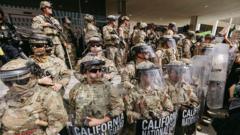
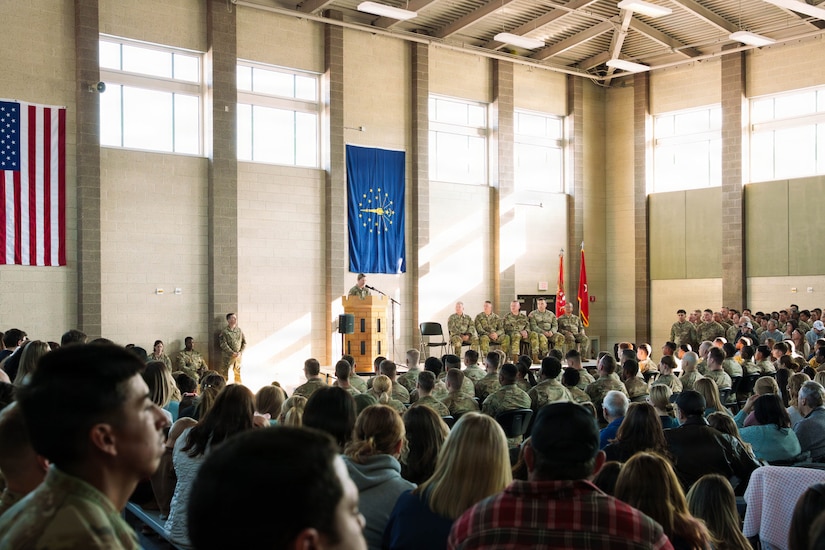
Approximately 300 Indiana National Guard soldiers arrived in Washington to support the D.C. Safe and Beautiful, Joint Task Force District of Columbia mission.
The daughter of Venezuelan opposition leader Maria Corina Machado has accepted the Nobel Peace Prize on her behalf, hours after officials said her mother would miss the ceremony.
 Login
Login