Reading view

There are new articles available, click to refresh the page.

The EEOC powers up for swift action with full funding, a quorum and new priorities

Interview transcript: 

Terry Gerton I want to talk with you about the Equal Employment Opportunity Commission. They were pretty quiet during the shutdown, but they’ve got a full quorum now. They haven’t had that in a while. And they’ve got funding. You work with them quite a bit. What do you think is going to change in the near term?

Debra Leder I think we’re going to see a lot of changes, at least over the next several weeks, until there might be another issue with funding down the road. But I think that we can expect the EEOC to come out of the gate running to accomplish some of these tasks that they have been anxious about doing since the current administration took hold in January of 2025. And so although there’s now a new member who makes the quorum for the EEOC Commission, the now chair who was acting chair and previously commissioner, I think has made the priorities well known. And now that there is a quorum, the agency will actually be able to take official action and vote. Things of those nature will make a big difference.

Terry Gerton So talk us through the priorities of the EEOC under this administration and maybe where there are major differences from the prior administration.

Debra Leder So, we are going to see a lot of realignment and adjustment of where the EEOC focuses its attention and its resources. Some of the big ticket items for the new EEOC commission is to align the agency’s policies with the executive orders that were issued, several of the executive orders which were issued in January of 2025 and forward. Those issues including the ferreting out DEI that may be counter to the law in the EEOC’s view, as well as the pregnant workers’ protection regulations in the EEOC’s view, maybe going too far from what Congress passed as the protection act for that, and also to maybe roll back certain protections for certain previously thought to be protected categories, including those of the LGBTQ+ community in terms of sexual orientation and transgender status, gender identity type thing.

Terry Gerton  So those shifting priorities can come into play in a variety of ways. Do you anticipate more aggressive litigation on the part of the EEOC? Maybe just more policy memorandums? How do you think those priorities will actually be put into practice?

Debra Leder  I think in terms of priorities for the regulations, the rules that had been put out during the past administration, including the harassment guidance that was, I think, officially published in April of 2024, and the pregnant workers’ guidance, I think as a first measure or order of business, the EEOC is going to either do a wholesale retraction or an overhaul revision of both of those guidances, for sure. And in terms of litigation resources, we’ll be seeing more priority pattern in practice and systemic litigation, targeted perhaps in ways that it hasn’t been over the past few years, including to what the commission may view as illegal DEI initiatives that employers may have, and then also helping to clarify its view of what employers are obligated to do, especially in the area of religious accommodations and whether or not, and how, to balance religious accommodations versus other interests that are sometimes competing in the workplace.

Terry Gerton So would you anticipate the order of those activities being first publication and education and communication about these new priorities, or new angles on the rules and then moving to enforcement?

Debra Leder  I think the publication angle has already been well disseminated, even though the EEOC didn’t have a quorum. Now, Chair Andrea Lucas has been very vocal about what she sees as the driving priorities of the agency and in her speaking, as well as in the budget that was submitted in May of 2025 in terms of where they’re going to allocate the dollars to that. So I think the agency is already kind of gassed up and ready to go out of the station in terms of that. It’s just how long will it take to undo some of these regulations, given that there is a commenting period and they’re also subject to court challenge, as we’ve seen in the past several years. So knowing that that might not be as fast a process as the EEOC might hope, we’ll at least see a displacement of the disclaimer language and archived language we now currently see on the banner page for the EEOC, and it’s either work under construction or, stay tuned for new upcoming guidelines. But in the interim, I think we’ll see it in the way that the agency works on a day-to-day basis, how they accept charges, which charges they investigate fully, and which they may serve to litigate, and so that, as well as continuing to do the education and outreach to let the community know what their priorities are, what the EEOC is expecting to spend its resources and efforts on.

Terry Gerton  I’m speaking with Debra Leder. She’s a partner in labor and employment law at Akerman. Following on with that assessment of what the priorities are going to be and where you expect to see action, for the employers who deal with EEOC issues, what should they be doing in the near term to prepare for this change in focus from the EEOC?

Debra Leder Hopefully, employers have already been staying aware of, on top of the changing priorities, the realignment from the current administration. And so being insightful, those employers most likely have already started to review their policies, to review their websites, to review their hiring criteria, as well as how they handle compensation issues and to just make sure that the policies are going to be step-in-step alignment with what the EEOC and what the executive orders have asked for. But in terms of really getting up to speed, aside from continuing to monitor what regulations may be updated and not just formal guidance, but we may see more enforcement guidance or Q and A type format from the EEOC to help employers get up to speed on doing that. Employers need to make sure all of their documentation has been reviewed and is ready in the event of what might be a very broad, all encompassing request through the investigation stage of some of the EEOC’s priority issues. So to just buckle up and be ready for that ride.

Terry Gerton And so what will you be watching for as the EEOC really gets its feet under it and and moves out? Are there particular cases or activities that you think are going to be significant here in the short run?

Debra Leder Well, the significant cases are waiting to see how the EEOC is going to interpret, we kind of already know, but from the Bostock versus Clayton County case in terms of transgender, gender identity and sexual orientation protections and whether or not the EEOC is going to — we know the EEOC in their updated guidance on harassment is going to remove those types of protections. We already know that the EEOC, I believe, has not taken any additional charges or is not investigating charges that assert claims on those grounds, although there’s still private cause of action to get a right to sue to bring those issues to the forefront. But bringing it back to what employers can do, they need to continue to be mindful of what might be the federal policies that they’re seeing and how that might compete with state and local laws that are also a moving target on a day-to-day basis, or at least a week-to-week basis. So employers definitely have a challenging thing, but as a lawyer and as the co-editor of my HR Defense blog, which I have to put a pitch in for, we try to stay on top of all these issues and push out information that employers need to know.

The post The EEOC powers up for swift action with full funding, a quorum and new priorities first appeared on Federal News Network.

© AP Photo/David Zalubowski

FILE - The emblem of the U.S. Equal Employment Opportunity Commission (EEOC) is shown on a podium in Vail, Colorado, Feb. 16, 2016, in Denver. (AP Photo/David Zalubowski, File)

Russia’s is Waging a Sabotage Shadow War on Europe


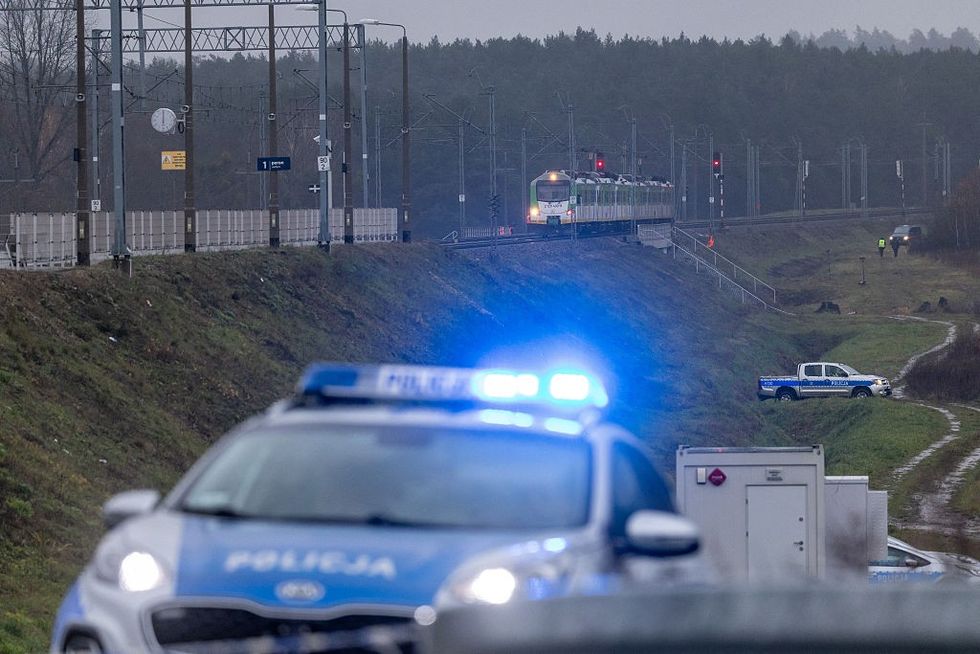
DEEP DIVE — In the darkness of night on November 15, a massive explosion ripped through a stretch of the Warsaw-Lublin railway line close to Mika, Poland, severing a critical logistics route used to ship military equipment and aid eastward from Warsaw toward the Ukrainian border.

The blast, caused by a C-4 explosive device, damaged the tracks and a passing freight train’s wagon floor, halting rail traffic and sending ripples of alarm through Poland, one of Ukraine’s staunchest allies.

Polish authorities quickly confirmed sabotage, charging three Ukrainian nationals — Oleksandr K., Yevhenii I., and Volodymyr B. — with executing the plot under Russian direction. The incident was not a lone act but part of a growing wave of covert operations targeting railways, ports, and pipelines across Europe, aimed at undermining support for Kyiv.

Ivana Stradner, a research fellow at the Foundation for Defense of Democracies, characterizes these actions to The Cipher Brief as Russia “waging a long, low-cost pressure campaign that targets not only the battlefield but everyday life across EU countries.”

Polish prosecutors outlined the operation’s chilling precision. In September 2025, Volodymyr B., arrested on November 20 and charged on November 22, drove Yevhenii I. to the sabotage site for reconnaissance, enabling the selection of the explosive placement. Oleksandr K. and Yevhenii I., the primary perpetrators acting on behalf of Russian intelligence, planted the device and a metal clamp intended to derail a train, then fled to Belarus, where Poland’s extradition requests remain pending.

Immediately following the attack, Foreign Minister Radoslaw Sikorski characterized it as “state terror.” Warsaw closed Russia’s last consulate in Gdansk, and thousands of soldiers were deployed nationwide to protect critical infrastructure. The Kremlin, nonetheless, rebuffed the accusations as “Russophobia” and vowed to retaliate by severing Polish diplomatic ties. This exchange of moves points, however, to a larger trend: the use of subtle, sophisticated attacks aimed at crippling Ukraine’s supply lines without triggering a full-blown escalation.

Proxies in the Shadows: Recruiting the Unwitting

Moscow’s strategy for sabotage is built on proxies, using local citizens and displaced people to carry out attacks and maintain Russia’s plausible deniability. The situation in Poland is particularly disturbing, where the involvement of Ukrainian nationals exposes an aggressive recruitment campaign aimed at vulnerable youth from their war-torn home country. Ukrainian security services have documented a sharp rise, reporting that Russian operatives have entrapped over 170 minors in the last 18 months, often luring them through Telegram channels disguised as job boards or casual chats.

The recruitment base consists of migrants from Eastern Europe and Russian-speaking citizens of countries where the sabotage operations are carried out. They are often individuals with criminal histories or financial problems. What begins as innocuous tasks — snapping photos of buildings or mailing postcards — escalates to planting bombs or torching vehicles, often with payments that seem too good to refuse.

Head of Ukraine’s National Police Juvenile Prevention Department, Vasyl Bohdan, described the ploy’s subtlety: “For the most part, the children don’t understand what is happening, or that it’s very serious.” Experts note that Russian operatives often begin by masquerading as sympathetic figures to build trust with their targets. Once the relationship is established, they leverage compromising material to secure compliance through blackmail. In one recent instance in Ivano-Frankivsk, two teenagers were promised $1700 each and thus embedded a device that detonated remotely, killing one and maiming the other.

“Russia’s intelligence services use Ukrainians inside NATO states because it blurs the political story and creates deniability, especially since many recruits are young, economically vulnerable, and have no prior ideological profile,” Natalya Goldschmidt, CEO of Lightning Associates LLC, a strategic geopolitical consulting firm focusing on Russia, Eurasia, and Latin America, tells The Cipher Brief. “Most of the initial interactions now happen through encrypted apps and seemingly low‑stakes’ tasks, such as taking photos of infrastructure, moving small packages, or counting vehicles, which makes these pipelines hard to spot before an operation moves from reconnaissance to action."

Ukraine’s countermeasures have gained traction, with police and NGOs flooding schools and camps with warnings, partnering with celebrities like boxer Oleksandr Usyk to drill home the dangers. Reports of attempted recruitments have surged to 74 this year, and successful cases have plummeted, as Bohdan noted: the number of successful child recruitment cases has decreased “exponentially over the past year.”

According to Goldschmidt, Moscow’s hybrid operations and cognitive warfare are most effective against a Europe already fragmented by domestic political crises, economic fatigue, and unresolved debates over migration and identity.

“The most worrying escalation over the next year or so is not one spectacular act, but a carefully timed cluster of incidents that together amount to a strategic shock: rail disruptions and warehouse fires at a critical moment for aid to Ukraine, damage to energy or data links in Northern Europe, and Russian drones killing or seriously injuring someone on NATO territory, all wrapped in enough ambiguity to delay a unified response,” she cautioned.

This proxy model extends well into Europe.

In October, Romanian intelligence smashed a parallel operation by arresting two Ukrainian citizens. The pair had smuggled bomb components — incendiary devices disguised in car parts and headphones — into Bucharest, targeting the Nova Post headquarters, a Ukrainian courier firm moving vital aid. In addition to thermite and barium nitrate, the packages included counter-surveillance measures, exhibiting classic Russian tradecraft. According to investigators, the duo is part of a wider network acting under Moscow’s direction, which has allegedly targeted Nova Post sites in Poland and elsewhere.

The threat became clearer that same week when Poland detained eight suspects tied to planned infrastructure attacks. Officials in Europe attribute these coordinated operations to Russian elite formations, notably GRU Unit 29155. General Andrei Averyanov leads the unit and is part of a dedicated sabotage hub under General Vladimir Alekseev, which marshals over 20,000 Spetsnaz operatives.

Need a daily dose of reality on national and global security issues? Subscriber to The Cipher Brief’s Nightcap newsletter, delivering expert insights on today’s events – right to your inbox. Sign up for free today.

Hybrid Echoes: Testing the Article 5 Threshold

The sabotage wave laps at diverse shores, blending old-school explosives with cutting-edge disruptions to fray Europe’s logistical sinews.

There have been several cases of undersea fibre cable damage or destruction in the Baltic under murky circumstances, prompting high-level investigations. From Germany to the Nordic states, prosecutors and security services have reported a pattern of suspected sabotage in fires and parcel-incendiary incidents that have scorched logistics hubs and defense manufacturing sites.

At the same time, GPS and navigation jamming across the Baltic and northeastern Europe has surged — European ministers and national regulators report daily interference that has disrupted flights and aviation operations, and they warn of substantial economic impacts. In September, mass drone overflights and cross-border incursions, including a large wave of drones into Poland and a 19-September violation of Estonian airspace by MiG-31s, prompted NATO consultations and temporary airport closures in the region.

These disruptions, while seemingly tactical, tie directly into a broader strategic calculus aimed at testing NATO’s unity and response mechanisms.

The strategic heart of the issue is NATO’s collective defense clause. Stradner also notes that, “Vladimir Putin has been candid about his desire to discredit NATO’s Article 5 in which members pledge to treat an attack against one ally as an attack against all.” She argues that because Putin, “Trained as a KGB operative, is well versed in so-called ‘active measures,’” his goal is to challenge the alliance.

Alexander Graef, Senior Policy Fellow at the European Leadership Network, however, contends to The Cipher Brief that “the actual impact of these sabotage acts on the flow of aid to Ukraine remains extremely limited.”

In his view, the activities are primarily aimed “less at disrupting logistics than at influencing public opinion in Western societies by trying to convince voters that further support for Ukraine carries unacceptable risks.” He stresses that this strategy “rests on a misreading of Western threat perceptions,” as such actions tend to “reinforce the opposite conclusion: that Russia is a growing danger and that support for Ukraine, as well as investment in defense, must increase further.”

“The Article 5 threshold remains deliberately high. Invoking it requires consensus within the North Atlantic Council. It is hard to imagine such agreement emerging in response to low-level sabotage, ambiguous incidents, or non-lethal disruptions,” Graef said. Therefore, Moscow does indeed appear to be “calibrating its operations to stay well below that line. Still, it is not achieving its intended political effects.”

George Barros, Russia Team & Geospatial Intelligence Team Lead at the Institute for the Study of War, concurs to The Cipher Brief that Russia is “boiling the frog and NATO member states have so far elected to not treat Russian acts of war against them as they truly are.”

“Russia has already passed the threshold with its sabotage actions, manned aircraft airspace incursions, and missiles entering the airspace of Poland and Romania. Russia seeks to normalize this activity so that NATO de facto approves a new normal, in which case we don’t treat Russian acts of war seriously,” he noted. “The West has far too long allowed Russia to operate against us with relative impunity. The West must seize the strategic initiative from Russia and begin imposing dilemmas on Russia.”

Yet even as these operations escalate, analysts say Russia is careful to keep them calibrated just below the line that would trigger NATO’s collective-defense clause.

The problem with Article 5, as experts observe, is that the ‘hybrid’ qualities of ambiguity and deniability – which, it is feared, Russia would manipulate to come close to the Article 5 threshold without reaching it – can paralyze the institutional and political mechanisms of collective defense.

“Putin does this all the time. It’s the same pattern — gray-zone hybrid operations run out of the GRU,” former CIA station chief Daniel Hoffman, tells The Cipher Brief. “Operating against enemies on foreign soil with impunity and facing no repercussions. They’re sending a message.”

Are you Subscribed to The Cipher Brief’s Digital Channel on YouTube? There is no better place to get clear perspectives from deeply experienced national security experts.

Fortifying the Front: Europe’s Counteroffensive

While concerns over Russian interference deepen, Europe tries to fortify its infrastructure. In response to September’s airspace breaches, EU defense ministers accelerated deployment of a “drone wall” along the eastern flank.

To harden against airspace violations, Graef advises that measures must be tailored, noting that while airspace violations require increased internal coordination, harmonized rules of engagement, and improved information sharing, sabotage is primarily the responsibility of “police, counterintelligence services, and judicial authorities.”

He maintains that if Russia’s objective is to weaken European support, then “demonstrating political unity is in itself an important countermeasure.”

Maksym Skrypchenko, nonresident scholar in the Russia Eurasia Program, points out that, from Kyiv’s purview, European governments’ measures to protect infrastructure are catastrophically insufficient.

“Russia is several steps ahead, while Europe is acting reactively rather than proactively. Russian embassies remain operational, and Russian tourists continue to travel, which is being exploited not only for information gathering and influence operations but also for sabotage,” he tells The Cipher Brief. “European countries need to start with basic steps: acknowledge that they have a single major threat. Once this acknowledgment happens, the next step should be decisive action – ceasing the purchase of Russian energy resources, blocking Russia’s shadow fleet, expelling Russian diplomat-spies, strengthening infrastructure protection, and investing in acquiring Ukrainian anti-drone systems, to name a few.”

While some analysts discuss limited, deniable counter-sabotage in response, Graef warns that “such activities carry significant risks.”

“They can easily fuel an action–reaction cycle without generating meaningful deterrent effects,” he asserted, highlighting that the focus should remain on strengthening resilience, improving attribution, and coordinating clear response thresholds rather than “entering a covert tit-for-tat that neither deters nor stabilizes.

In the face of this persistent, multi-layered threat, Stradner believes the ultimate answer lies in deterrence through strength.

“We should not fear escalations as kindness is weakness for Putin, and he only understands the language of power,” she noted, underscoring that the consequences of continued inaction and ambiguity in the face of Moscow’s “new generation warfare.”

“Until NATO resolves the lack of clarity regarding Article 5’s threshold for acts of aggression warranting collective defense, Russia will continue to sabotage without the consequences of all-out war, and the Western response to this hybrid war will remain reactive and insufficient,” Stradner added.

Read more expert-driven national security insights, perspective and analysis in The Cipher Brief because National Security is Everyone’s Business.

Could USPS network changes threaten access to prescription drugs?


  • Recent changes to the Postal Service’s network could mean slower deliveries of prescription drugs in the mail. A study from the Brookings Institution found 6% of Americans live far away from a brick-and-mortar pharmacy, rely heavily on mail-order prescriptions and live in areas impacted by USPS consolidation. Brookings also found that nearly half of all Americans face at least one of those scenarios. USPS this year has been running trucks less often between its processing plants and post offices to transport mail and packages.
  • Lawmakers want the Defense Department to do away with duplicative cybersecurity regulations. The compromise defense authorization bill released over the weekend would direct the Pentagon to harmonize all cybersecurity requirements that apply to the defense industrial base. The deadline for harmonizing those regulations would be June 1. The goal is to eliminate inconsistent and duplicative cyber requirements across DoD and the military services. That legislative push comes as the Pentagon starts to roll out the Cybersecurity Maturity Model Certification, or CMMC, requirements across its contracts.
    (NDAA compromise text - House Armed Services Committee)
  • Former federal employees are warning of what they say is the “destruction” of the Justice Department’s civil rights division. In a letter penned Tuesday, more than 200 civil rights attorneys who left government this year said they did not want to leave their jobs, but that political leaders at DOJ pressured them to go. The former employees warn that the Trump administration’s overhauls at DOJ have led to a loss of expertise. Their letter also raises concerns about the possibility of a greater exodus of career DOJ staff on the horizon.
  • The Defense Department has launched GenAi.mil. The platform will put “frontier AI models” into the hands of warfighters. The department selected Google Cloud's Gemini for Government as the first AI deployed on the new platform. Defense Secretary Pete Hegseth said DoD personnel will be able to "conduct deep research, format documents and analyze video or imagery at unprecedented speed.” “The future of American warfare is here, and it’s spelled AI,” Hegseth said.
  • The head of the National Institute of Standards and Technology’s cyber workforce and education efforts is stepping down. Rodney Petersen said his last day will be Dec. 31. For the past 11 years, Petersen has served as director of NIST’s National Initiative for Cybersecurity Education Cybersecurity Workforce Framework program. Known as the “NICE Framework,” it provides a common language to describe cybersecurity work and the knowledge and skills needed to complete that work. There’s no word yet on who will replace Petersen.
  • The government’s dispersed HR systems are on the verge of a major transformation. By January, the Office of Personnel Management expects to award a contract that will eventually result in a cohesive HR system for all agencies. It’s not the first time OPM has attempted to merge the more than 100 disparate HR systems across government. But the current effort underway is different: “We’ve already brought experts from many different agencies into a steering committee that are helping us to set the strategy up front,” said Dianna Saxman, OPM’s associate director of HR Solutions.
  • Despite broad bipartisan support, right-to-repair provisions that would have given service members the ability to fix their own equipment in the field were stripped from the compromise version of the 2026 defense policy bill after industry pushback. The Senate’s provision requiring contractors to provide the military with detailed repair and maintenance instructions was removed from the final text. The House’s data-as-a-service provision, which would have required the Defense Department to negotiate access to technical data and necessary software before signing a contract, was dropped from the bill as well. Sen. Elizabeth Warren (D-Mass.) and Sen. Tim Sheehy (R-Mont.) said they “support the Pentagon using the full extent of its existing authorities to insist on right to repair protections” when purchasing equipment from contractors.
  • The IRS is setting new limits on telework for employees who are facing a variety of temporary hardships. The IRS said hardship-based requests for full-time telework that employees submitted, but were still awaiting approval, will be “closed,” effective immediately. An agency memo cites the Trump administration’s return-to-office mandate as the reason for the policy change. Employees can still submit hardship-based telework requests, but approvals must come from the agency’s leadership or its human capital office, which is inundated with paperwork from employees retiring under the deferred resignation program.

The post Could USPS network changes threaten access to prescription drugs? first appeared on Federal News Network.

© AP Photo/Susan Walsh

A mailbox is seen in Annapolis, Md., Tuesday, Aug. 18, 2020. (AP Photo/Susan Walsh)

Why an Unmanned Mission May be Most Effective in Venezuela

OPINION — Wars are increasingly fought by unconventional means. A recent example is Ukrainian insertion of unmanned aerial systems (UAS) to attack Russian airfields, launched from civilian outfitted trucks. The Israeli pager attacks are another example of leveraging unconventional means to achieve an outsized effect. Both examples demonstrate that unconventional methods can not only disrupt enemy forces and destroy key objectives, but also achieve tremendous psychological effects and by saturating the airspace, limit an adversaries ability to mount offensive operations.

While the U.S. continues a conventional military buildup off the coast of Venezuela, the lessons from the Ukrainian and Israeli conflicts may be prescient: the US can achieve most of our policy objectives with limited or no ground forces deployment into Venezuela. The authors assume the current U.S. administration’s objectives are centered on regime change without conventional warfare.

Venezuelan forces may be well-prepared for guerilla warfare. Reports are circulating that Russian “advisors” have been dispatched to Venezuela, and it is likely that the Venezuelan army is incorporating Russia’s lessons from Ukraine into their preparation. American forces meeting a small, well-prepared drone force could lead to unacceptable casualties, a prolonged conflict, unnecessary escalation, and international embarrassment.

We suggest, therefore, that if intervention in Venezuela is forthcoming, the U.S. should adopt a strategy centered on unmanned systems. Modern combat in Ukraine and Israel provide a viable model.

Our proposed strategy suggests leveraging a combination of UAS and unmanned ground vehicles (UGV) to weaken the Maduro government’s internal support, and hasten favorable conditions for peace - again, assuming “regime change” or negotiated peace are the desired endstates.

How the U.S. Military Thinks of War

The U.S. Military uses a six-phase planning model to describe the progression of an operation or campaign. This continuum begins with Phase 0: Shape, which involves continuous peacetime activities to influence the operational environment and prepare for contingencies. As an operation develops, the force moves to Phase I: Deter, demonstrating capability and resolve to dissuade, followed by Phase II: Seize Initiative once hostilities begin, gaining access and advantage. The core combat phase is Phase III: Dominate, which involves applying overwhelming combat power to defeat the enemy force. The final stages, often requiring significant force commitment for irregular warfare, are Phase IV: Stabilize, focusing on securing the operating area and providing security, and Phase V: Enable Civil Authority, which transitions security and control back to legitimate local governance to establish a lasting peace. Technologies are used in every phase as a strategic force multiplier.

Proposed Unmanned Systems Strategy

Phase 0 should begin immediately. This phase would be centered on information collection around the capital, Caracas, and the economic epicenters, Venezuela, Maracaibo, Valencia, and Barquisimeto, as well as oil refineries, given their central importance to the Venezuelan economy. Significant real-time intelligence collection could be achieved by leveraging High Altitude Long Endurance (HALE) aircraft coupled with pervasive small, ground-based sensors. UGVs would provide long-term, ground-based multi-disciplined intelligence collection capabilities, leveraging commercial off-the-shelf technologies (proven effective in Ukraine) to reduce risk of exposing sensitive or proprietary technologies.

The assessed trigger for escalation would be a breakdown of negotiations over a change of government. Subsequent operations would focus on precision degradation and infrastructure interdiction, designed to be quick, minimize political fallout, and avoid direct engagement with Venezuelan forces. Generally, operations would seek to scale between Phase 1 - Deter, and Phase 3 - Dominate, to apply and then relieve pressure on the Venezuelan government and population as needed to degrade political will and popular support. Operations should be carefully crafted, and targets thoughtfully selected, not just for military effect, but for their psychological and political impact.

Aerial and Electronic Warfare Dominance

The first actions would be entirely aerial, focused on blinding the Venezuelan government and shaping persistent intelligence, all while demonstrating the ability to dominate without causing significant destruction. The U.S. could suppress air defenses using high-altitude, stealth drones, and specialized EW drones to undermine government influence and degrade command and control. Targets would include Venezuela's air defense systems, mostly Russian S-300VM and Buk-M2E missile batteries, and radar networks. Key locations would be targeted with precision-guided munitions or overwhelmed and jammed by EW drones before kinetic strikes to establish air superiority for subsequent UAS waves.

What national security news are you missing today? Get full access to your own national security daily brief by upgrading to Subscriber+Member status.

Targeting Command and Control

The U.S. could leverage loitering munitions and specialized communications relay and jammer UAVs to target key military and government communication nodes, high-frequency transmission sites, and satellite ground stations. Small, inexpensive UAS could be coupled with highly mobile UGVs to extend range, and to achieve precise sequencing, impressing urgency and conveying the message that the Maduro government is inept. By severing communication links between the military high command and field units, the U.S. could cause decentralized chaos, which would degrade the will to fight. Unmanned surface vehicles (USVs) and unmanned underwater vehicles (UUVs) could contain Venezuelan forces, targeting the fleet to deny freedom of movement.

Given instability in Venezuela and the Maduro Government’s demonstrated willingness to enter into discussions, well-sequenced escalation and deescalation may provide the necessary impetus to achieve the desired effect. Minimizing destruction up to this juncture reduces the subsequent burden of rebuilding, which would increase popular support for a replacement government. Minimizing damage would also reduce the likelihood of causing unintended regional instability through large-scale human displacement.

With their extended battery life and ability to recharge with onboard solar panels or from civilian power sources, UGVs provide an ideal baseline for extended operations, providing prolonged ground-based intelligence and surveillance. Information from onboard sensors, long-term intelligence collection, could provide timely battle damage assessments, and would shape planning for subsequent operations.

Well-Timed Precision Strikes

Small UAS loaded with precision explosive and cyber and EW payloads could be loaded onto UGV and transported deep within the country, where they would be staged for well-timed, precision operations to set conditions for negotiations. Disabling power to cause temporary service blackouts, or disrupting and corrupting government information campaigns would allow the U.S. to control the narrative. These precision operations should be choreographed and limited to eliminate harm to civilians.

Precision strikes launched from UGVs could damage government buildings and political headquarters, timed for maximum media coverage, to demonstrate penetration and weakness. Cellular towers could be struck with small munitions to inconvenience and frustrate the population. These limited actions could continue near indefinitely, and would reinforce the narrative that Maduro is weak and incapable, increasing the likelihood of a timely resignation.

UGVs with an explosive payload could be covertly controlled over cellular networks over extended distances, to strike key locations such as bridges, military installations or troop concentrations deep within Venezuela. In the event of a troop deployment, UGV could also be outfitted with weapon platforms such as machine guns or grenade launchers, for force protection.

Subscriber+Members get exclusive access to expert-driven briefings on the top national security issues we face today. Gain access to save your virtual seat now.

Conclusion

With warships off the coast and the airspace over Venezuela “closed”, all signs indicate that the U.S. administration intends to leverage the military to achieve a political objective. There are two options should we choose to proceed. The first is a conventional war, with high financial cost, significant political risk and moderate risk of casualties. The second option is to leverage our growing unmanned systems arsenal, where financial costs will be relatively low, and the risk of casualties will be minimal.

The lessons from modern conflicts in Ukraine and Israel overwhelmingly provide a model for moving towards an agile, unmanned systems-centric strategy. This agile approach, moving from pervasive intelligence collection to targeted electronic warfare and precision kinetic strikes, if choreographed with other effects, would exert maximum political and psychological pressure. It also minimizes collateral damage by avoiding direct military engagement with Venezuelan forces.

This strategy has several advantages: it drastically reduces the risk of unacceptable casualties for American forces, and it minimizes the destructive aftermath that traditionally prolongs conflict and burdens post-conflict reconstruction. An unmanned systems strategy also enables the U.S. to move fluidly between deterring and dominating to maximize effects, and serves as a strong deterrent against countries who might doubt America’s ability to fight and win in modern combat.

Ultimately, the choice to intervene will always be a political one. However, if such action is deemed necessary, adopting a nearly exclusive unmanned strategy offers a path to achieving a political end-state quickly and cleanly. It is a recognition that the future of modern warfare is defined not by the size of a conventional buildup, but by the strategic, ethical, and precise application of unmanned systems to effect change.

The Cipher Brief is committed to publishing a range of perspectives on national security issues submitted by deeply experienced national security professionals.

Opinions expressed are those of the author and do not represent the views or opinions of The Cipher Brief.

Have a perspective to share based on your experience in the national security field? Send it to Editor@thecipherbrief.com for publication consideration.

Read more expert-driven national security insights, perspective and analysis in The Cipher Brief

America’s Antibiotic Weakness Is a National Security Blindspot

OPINION – Offshoring and outsourcing antibiotic production to China and India is putting America’s access to lifesaving medicines at risk. It’s time to implement antibiotic security measures before a supply crisis occurs. The first step is rebuilding onshore fermentation manufacturing capacity.

Antibiotics have significantly improved life expectancy and overall public health for over 80 years. Penicillin alone has saved approximately 200 million lives. Its discovery paved the way for further advancements in antibiotics that have saved hundreds of millions more.

From the 1940s to the late 1980s, the United States led global antibiotic manufacturing. The volume of fermentation capacity required to produce antibiotics in the U.S. was a key measure of this. However, over time, pharmaceutical companies steadily outsourced and shifted antibiotic manufacturing to other countries, largely driven by opportunities to reduce costs and avoid capital investment.

Today, the production of antibiotic active pharmaceutical ingredients (APIs) is concentrated in a handful of countries; nearly 70% of the manufacturing sites for a representative shortlist of 40 antibiotic APIs are in India and China (with the majority in China). More concerning, the United States no longer has any significant fermentation manufacturing capabilities to produce antibiotic APIs onshore (see Table 1).

Fermentation capacity for manufacture of antibiotics in USA

Year

Fermentation Capacity (Liters)

1944

400,000

1984

18,000,000

2024

Less than 400,000

This reality creates risks to health security and equitable access to key medicines, especially since antibiotics are such an essential tool for combating infections. In 2024, there were 256 million prescriptions for antibiotics distributed in the U.S. alone. Yet, the amount of antibiotics manufactured in the United States has dwindled to a concerningly low level; 92% of the 111 most-prescribed antibiotics have no U.S. source as of 2021. Worse, antibiotics are 42% more likely to be in short supply than other drug products.

Save your virtual seat now for The Cyber Initiatives Group Winter Summit on December 10 from 12p – 3p ET for more conversations on cyber, AI and the future of national security.

During the COVID-19 pandemic, India limited exports of two common antibiotics, tinidazole and erythromycin (among other drugs), due to dwindling supply of APIs resulting from the temporary closure of Chinese manufacturing facilities. And, in 2017, there was a global shortage of two other antibiotics, piperacillin-tazobactam and benzathine penicillin, because a single factory in China shut down. Just three API manufacturers for these products remain, all in China.

Other countries are already steps ahead of the U.S. in securing their own antibiotic supply. India’s Production Linked Incentive (PLI) scheme, for example, enhances antibiotic security by promoting domestic manufacturing of APIs, key starting materials (KSMs), and drug intermediates. This reduces India’s reliance on imports, and plays a crucial role in protecting Indian public health.

For its national security, the United States must bring antibiotics manufacturing back home. Key is maintaining a level of fermentation manufacturing capacity. This would enhance domestic ability to respond to public health emergencies and minimize the impacts of global supply chain disruptions and geopolitical tensions. Beyond improving antibiotic security, increasing capacity in the U.S. would create net new jobs and enable the implementation of improved and lower cost technologies.

Collaboration between the government and the private sector, particularly via government funding, is crucial to catalyze change in the production landscape. It would also drive innovation in manufacturing processes. To bring fermentation capacity back onshore, something the U.S. has already done to ensure access to other key products, there will have to be incentives.

The CHIPS and Science Act, for example, reduces U.S. dependence on foreign semiconductor manufacturing, particularly from geopolitical rivals like China. The Act provides $52.7 billion in funding to boost domestic semiconductor production, research, and workforce development, ensuring that the United States maintains a secure and resilient supply of critical microchips used in defense, infrastructure, and consumer technology. Antibiotics should receive the same treatment.

Given that higher costs to produce antibiotics onshore drove antibiotic production overseas in the first place, further economic incentives, such as tax credits and subsidies, are also needed. These could motivate pharmaceutical companies to invest in manufacturing capacity domestically. Contract manufacturing organizations (CMOs) and generic drug suppliers should also be targets of these incentives since generics represent over 80% of antibiotic market share by revenue.

Finally, guaranteed purchasing agreements from the government or public entities can provide financial stability for antibiotic manufacturers and make investing in fermentation or manufacturing capabilities a more attractive, lower risk opportunity.

Need a daily dose of reality on national and global security issues? Subscriber to The Cipher Brief’s Nightcap newsletter, delivering expert insights on today’s events – right to your inbox. Sign up for free today.

These opportunities are not without challenges. Pharmaceutical companies have historically prioritized more profitable, chronic disease treatments; antibiotics are prescribed for short durations and generate significantly less revenue compared to other drugs. Any new economic incentives need to be meaningful enough to bridge this gap significantly.

In the meantime, the government should continue stockpiling antibiotics to insure against future shortages. Currently, the U.S. maintains an undisclosed amount of antibiotics through the Center for the Strategic National Stockpile (SNS), but a longer term manufacturing strategy is required to improve safety and reduce risk of shortage.

Access to antibiotics is too critical to simply let cost dictate where production occurs. At the end of the day, this is about protecting our ability to combat infection.

The Cipher Brief is committed to publishing a range of perspectives on national security issues submitted by deeply experienced national security professionals. Opinions expressed are those of the author and do not represent the views or opinions of The Cipher Brief.

Have a perspective to share based on your experience in the national security field? Send it to Editor@thecipherbrief.com for publication consideration.

Read more expert-driven national security insights, perspective and analysis in The Cipher Brief because National Security is Everyone’s Business.

❌