• Microsoft Teams is front and center at Microsoft despite a very limited number of related announcements made at the event.
• Pairing team collaboration and productivity tools provides Microsoft a distinct competitive position.
Microsoft has officially closed the doors on its annual ‘Ignite’ event, a showcase of enhancements across the entire Microsoft portfolio. Only a handful of Microsoft Teams-related announcements were made, giving the impression that Microsoft Teams has taken a back seat to other Microsoft initiatives. In reality, much the opposite is true. The features unveiled were merely the tip of the iceberg, a small subset of a lengthy and diverse list of improvements that appeared in a Microsoft Teams blog.
While the actual depth of Microsoft Teams introductions might have come as a surprise, what shouldn’t be a surprise is that the introductions were infused with AI. Some examples bear this out.
The user interface for Microsoft Copilot in Teams AI-powered assistant is being unified across chats, channels, and meetings. Deploying a unified front across different functions is reminiscent of the familiar menu structure that cuts across Microsoft’s productivity apps such as Word, Excel, and PowerPoint. The power of this approach allows users to quickly learn a new app based upon their experience with an app they are already familiar with. It’s interesting to note that Microsoft is taking knowledge gained during its ‘Microsoft Office’ era and applying it to ‘modern’ times in the form of the AI-infused Microsoft Copilot. On top of the updated interface, Microsoft Copilot in Teams can now also analyze chat history, meeting transcripts, and calendar content and generate recaps, rewrite messages, and surface insights; this experience is generally available for chat and channels and is rolling out to public preview for meetings.
Providing the ability to collaborate with external users is a growing trend. Microsoft has launched a public preview of several features that enhance interaction between Microsoft Teams users and vendors, clients, partners, and the like. Among other features, Microsoft Teams users can launch a chat, share a file in a chat, and view and respond to Microsoft Teams activity in other accounts and organizations.
A persistent collaborative space is now available from within Microsoft Teams chat and channels, helping organize information and co-create content. The space comes in the form of two features, ‘Pages’ in channels and ‘Notes’ in chat. Taken together, the features mimic the Zoom Docs capability from Zoom. So, although Microsoft is not scoring points for originality, it is introducing some very valuable functionality.
One especially intriguing aspect of Microsoft Ignite 2025 lies beyond the inventory of enhancements revealed, exposing something fundamental to Microsoft. Microsoft is taking a holistic approach to providing team collaboration capabilities. That approach spans Microsoft Teams software, device hardware such as video bars, and security, for instance, blocking files that pose a security risk such as executables before they reach a chat or channel. Normally such an ‘all points covered’ approach would provide Microsoft a unique competitive position, however it does not. Cisco mirrors Microsoft in employing deep lineups of software capabilities, devices, and security. Both companies are setting a tone that others will need to follow to compete in the space; rivals certainly have their work cut out for them.
Collectively, all the new features further cement Microsoft’s position as a leading vendor in the team collaboration/hybrid work arena. With AI touching multiple points of its portfolio including the latest Microsoft Ignite announcements, Microsoft has taken the ‘permeate the platform’ approach to AI adopted by competitors such as Cisco, Google, Zoom, and RingCentral. Coupled with its portfolio of ‘Office’ productivity tools, Microsoft has achieved a degree of differentiation that is largely unmatched.
Tech companies, a charity and academics have collaborated to create AI-powered avatars that are helping people with motor neurone disease hold natural conversations
The language of value in the modern enterprise has fundamentally changed. In boardrooms around the world, the conversation is dominated by new vocabulary: “AI-driven growth,” “speed to market,” “product innovation,” and the relentless pursuit of the “competitive advantage.” Yet, for many security leaders, the language they use to define their own value remains stuck in the past. It’s a dialect of blocked threats and patched vulnerabilities that feels increasingly disconnected from the core mission of the business.
This failure unequivocally stems from the models we use, rather than from a lack of intent. For decades, the return on a security investment was measured with the simple, defensive math of a cost center. This old model fails to capture the immense and often hidden value that a modern security posture contributes to the business. Now, we have a new economy — one where artificial intelligence (“AI”) is the primary engine of innovation and the cloud is the factory floor.
It’s time to reassess the calculus and explore a new economic framework, one that redefines security’s worth not by the incidents it prevents but by the business momentum it creates.
Calculating the true cost of disruption
For years, the quantifiable risk of a breach was a straightforward calculation of regulatory fines, customer notification costs, and credit monitoring services. These are still real costs, but they represent a fraction of the true financial impact in an AI-driven enterprise. The most significant danger isn’t isolated to loss of data. It’s the disruption of the intelligent systems that now form the central nervous system of the business.
Consider a global logistics company whose entire supply chain is orchestrated by an AI platform. A breach-like model poisoning compromises this system and acts as a catastrophic failure of the business itself. The true cost is the value of every delayed shipment, every broken supplier commitment, and the permanent loss of customer trust.
In this new reality, the most important metric becomes the cost of disruption avoidance. A modern, AI-powered security platform that can autonomously detect and neutralize a threat before it halts operations is both a defensive tool and a direct guarantor of revenue and business continuity.
Security as an accelerator — and an innovator
The second and, perhaps, most powerful shift in this new economic model is the reframing of security from a necessary defensive brake to a strategic accelerator. In the past, security was often seen as a gate, a checkpoint that slowed down development in the name of safety. Today, the opposite is true: A mature, unified security platform is one of the most effective tools for increasing the velocity of innovation.
Consider a financial services firm that’s racing to deploy a dozen new AI-powered financial models in a single year. In a traditional, fragmented security environment, each new model might require a six-week, manual security review — a process that would kill any hope of meeting their business goals. A modern, automated security platform that is woven into the development lifecycle can reduce that review process to a matter of days or even hours. It allows developers to innovate with confidence, knowing that security is an enabling partner, clearing the path for progress. This is a direct, quantifiable contribution to the company’s ability to compete and win.
Paying down the past: The value of a clean slate
Many organizations are silently being dragged down by a hidden liability: decades of accumulated “security debt.” This immense, unspoken risk is created by a patchwork of disconnected point products, inconsistent policies across different cloud environments, and the constant operational tax of managing dozens of disparate tools. It increases the attack surface and slows down the entire organization.
Moving to a single, unified security platform is akin to refinancing this debt. It provides a clean slate, a consistent and manageable foundation upon which to build the future. The value here is in the dramatic simplification of operations and the reduction of long-term risk, beyond just the savings on licensing costs. Consolidating from dozens of security tools to a single platform can dramatically cut an organization’s mean time to respond to a threat. It pays down an organization’s security debt and frees up its most valuable resources to focus on innovation.
Let’s speak a different language
These three concepts — the cost of disruption avoided, the velocity of innovation, and the reduction of security debt — form the pillars of a new, business-centric language for security leaders. They provide a holistic framework for calculating the true value of a modern security platform in a way that resonates with C-suite priorities.
Strategies, mandates, and action items for the modern CISO have evolved. Protecting the enterprise? Yes, of course. That is the first priority. But the new imperatives should also be to prove, in clear financial and operational terms, how security accelerates the business. Mastering this new economic language is the most essential step forward in this AI-driven world.
Curious about what else Helmut has to say? Check out his other articles on Perspectives.
IEAの「Energy and AI」レポートにおける予測はさらに衝撃的である。AIによる計算需要が現在のペースで拡大し続ければ、2030年までにデータセンターの電力消費は現在の倍以上となる945TWh前後に達し、世界の電力需要の約3パーセント近くを占める可能性があると警鐘を鳴らしている。別の視点からの試算では、この消費規模は現在の日本一国が消費する総電力量に匹敵するとも言われており、たった一つの産業セクターが主要先進国レベルの電力を飲み込むという、前代未聞の事態が現実味を帯びているのである。また、欧州委員会も同様の危機感を抱いており、EU域内のデータセンター電力消費が2030年には2024年比で約1.6倍に達するというシナリオを提示している。その背景には、クラウドコンピューティングや動画ストリーミングの定着に加え、生成AIの学習および推論フェーズにおける膨大なワークロードが、将来の電力需要を牽引する最大のドライバーになるという明確な見通しがある。
The morning of Monday, Oct 20, 2025, I went to my healthcare provider’s portal to pay a bill. This was my experience:
Jim Wilt
Upon calling my provider to pay over the phone, they were unable to take my payment as their internal systems were also down, leaving us customers hanging with no direction on how to proceed.
My healthcare provider’s SaaS was completely functional; however, their integrated payment vendor, which is reliant on AWS infrastructure, apparently has ineffective redundancies. So, the 10/20/2025 AWS outage resulted in a most unfortunate experience for any customer or employee hoping to utilize this important capability while hindering my healthcare organization from receiving revenue.
Who is to blame? AWS? The payment vendor? Ultimately, my healthcare provider is responsible for their customers’ (and employees’) inability to interact with their services. A cloud outage is not in the same acts-of-nature class as hurricanes, earthquakes, tornadoes, etc., but we do treat them as such and that is simply wrong because these outages can be mitigated.
This is a clear and far too common industry-wide epidemic: poor adoption and execution of cloud computing resilience, resulting in unreliable critical services to both customers and employees.
As reported directly by AWS’ Summary of the Amazon DynamoDB Service Disruption in Northern Virginia (US-EAST-1) Region, a latent race condition in DynamoDB’s DNS management system led to an empty DNS record for the US-EAST regional endpoint, causing resolution failures affecting both customer and internal AWS service connections. This adversely affected the following services: Lambda, ECS, EKS, Fargate, Amazon Connect, STS, IAM Console Sign-In and Redshift.
On 10/29/2024, Microsoft 365 (m365.cloud.microsoft or portal.office.com) experienced an outage due to the rollout of an impacting code change. This affected Microsoft 365 admin center, Entra, Purview, Defender, Power Apps, Intune and add-ins & network connectivity in Outlook. This is all documented by Microsoft in Users may have experienced issues when accessing m365.cloud.microsoft or portal.office.com.
Both of these recent outages required vendors to halt automated processes and manually navigate recovery to bring affected systems back to an operational state. Let’s face it: Cloud providers are not magical and are subject to the same recovery patterns as any enterprise.
Outages are a reality of any system or platform and affect literally every organization. Hence:
Your cloud provider is a single point of failure!
Corporate infrastructure strategies vary from total dependence on provider vendors to actively taking ownership and architecting necessary redundancies for critical systems. When underlying provider outages occur, it is often a catalyst to revisit enterprise resilience strategy, even if you are not directly affected.
When examining an enterprise’s fault-tolerant architectures (which rarely even exist), it may be a good time to instead consider fault avoidance architectures. The latter kicks in when bad happens and the former actively monitors triggers to avoid bad.
This type of introspective examination is too often overlooked, as it is far easier for enterprises to fall into believing the many myths that govern their IT strategy and operations, especially when it comes to Cloud.
Unpacking the myths
Myth #1 – A single cloud provider reduces complexity
Vendors will place every kind of study and incentive in front of enterprise leadership to back the fallacy that locking into their platform is in the best interests of their company. Let’s be clear: It is always in the best interests of the vendor. This concept is then passed down from leadership to engineers who are encouraged to believe what their leadership tells them, and we get into a situation where thousands upon thousands of companies are under the control of a single vendor. Scary, right?
Myth #2 – Cloud platform component defaults are generally a good starting point
Relying on easy-button best practices is what gets enterprises into trouble. The responsibility of an IT cloud infrastructure team is to work with solution architects and engineers to fine-tune their designs to optimize efficiencies, resilience and performance while controlling costs. Cloud vendor default configurations are necessary as they set a functional starting point, but they should never be trusted as a sound design. In fact, they can produce unnecessarily large loads on default regions when left unchecked. The AWS US-East-1 region is historically the most affected region when it comes to outages, and yet so many critical enterprise systems run exclusively in that region.
Vendor plug-and-play architectures must be scrutinized before going into production.
A responsible architecture governance practice should have a policy to avoid known outage-prone regions and single-point-of-failure configurations. These should be vetted in the architecture review board before ever going to production.
Myth #3 – My cloud provider/vendor will take care of me
Service level agreements (SLA) are paid out service credits tied to the cost of the affected service, not cash refunds. They generally start at 10% of service charges, never resulting losses. Your enterprise will literally get pennies back on dollars lost.
The July 2024 CloudStrike outage cost CloudStrike around $75M + $60M they paid out in service credits. This pales an order of magnitude when compared to just one customer, Delta Airlines, which lost $500M net. Parametrix Insurance’s detailed analysisestimates the total direct financial loss facing the US Fortune 500 companies is $5.4B. CloudStrike literally paid pennies on the dollar for their error, so an enterprise’s reliance on a vendor must be managed knowing this reality.
The 11/18/2025 Cloudflare outage, with its 20% hold on global web traffic, equally affected hundreds of millions of accounts, including major systems like X (Twitter), OpenAI/ChatGPT, Google’s Gemini, Perplexity AI, Spotify, Canva and even all three cloud providers. This heightens how a single vendor/platform dependency is a real threat to business continuity.
Enterprises must protect themselves because their vendors won’t.
Future purchase and contract negotiations should pivot toward SLA penalties that are based on enterprise losses over enterprise service costs. Unfortunately, this will drive service costs higher, but it builds in better financial protection when reliant on systems outside of your control.
Myth #4 – Multi-cloud is too expensive and too demanding
To mitigate the impact of regional cloud outages, enterprises that adopt multi-cloud architectures that prioritize resilience, portability, and failover orchestration find additional benefits when they are implemented with a mindset of fault avoidance and cost/performance optimization. This means multiple triggers govern where workloads run, resulting in optimal efficiencies.
This needs to be a priority effort backed by the C-Suite and requires a culture shift to succeed; hence, multi-cloud deployments are exceedingly rare. Still, those who have done this reap benefits well beyond resilience (e.g., large orgs like Walmart, Goldman Sachs, General Electric and BMW as well as SMBs like FirstDigital, Visma and Assorted Data Protection).
Active-active resilience is a pattern for mission-critical apps (e.g., financial trading, healthcare, e-commerce checkout). It maximizes resilience and availability, but at a higher cost due to duplicated infrastructure and complex synchronization. This pattern lends itself best toward fault avoidance with all the goodness of proactive efficiency and optimization triggers.
Active-passive failover is a pattern where a primary cloud handles all traffic, and a secondary cloud is on standby. It provides disaster recovery without the full cost of active-active, but will introduce some downtime and requires a robust replication strategy. It clearly is only a fault-tolerant approach.
Cloud bursting is a pattern where applications run primarily in one cloud but “burst” into another during demand spikes, providing elastic scalability without over-provisioning. It can also provide a good degree of fault tolerance.
Workload partitioning (best-of-breed placement) is a pattern where different workloads are assigned to the cloud provider best suited for them. It greatly optimizes performance, compliance, and cost by leveraging provider strengths, but will not be fully fault-tolerant.
Myth #5 – Cloud has failed. It’s time to get out
This is a recurring theme each time there is a major cloud outage, often tied equally to a cost comparison between on-premises vs. cloud (yes, cloud almost always costs more). The reality is that while there is true value to cloud in the overall infrastructure strategy, there also is value in prioritizing an investment in infrastructure choices, leveraging sensible hybrid strategies. Two effective strategic architectures are based on edge and Kubernetes. Edge reduces blast radius, while Kubernetes provides portable resilience across providers. Both are recommended when aligned with workload architecture and operational maturity.
Edge-integrated resilience extends workloads to the edge while maintaining synchronization with central clouds. Local edge nodes can continue operations even if cloud connectivity is disrupted, then reconcile state once reconnected. In addition to adding a moderate level of resiliency, it also benefits from ultra-low latency for real-time processing (e.g., IoT, manufacturing robotics, autonomous vehicles). This approach is often found in factory, retail store, and branch office use cases.
Kubernetes-orchestrated resilience is a cloud-agnostic orchestration layer that can be leveraged locally and across multiple providers. In addition to a prominent level of resilience, this type of service mesh (e.g., Istio, Linkerd) adds traffic routing and failover capabilities that reduce vendor lock-in. Overall, it is a foundational enabler for multi-cloud, giving enterprises a consistent control plane across providers and on-premises.
Calls to action
There are two major enterprise IT leadership bias camps: Build and Buy. Both play a factor in every enterprise.
The reference architecture patterns shared above address Build bias workloads, which include integrations with Buy workloads.
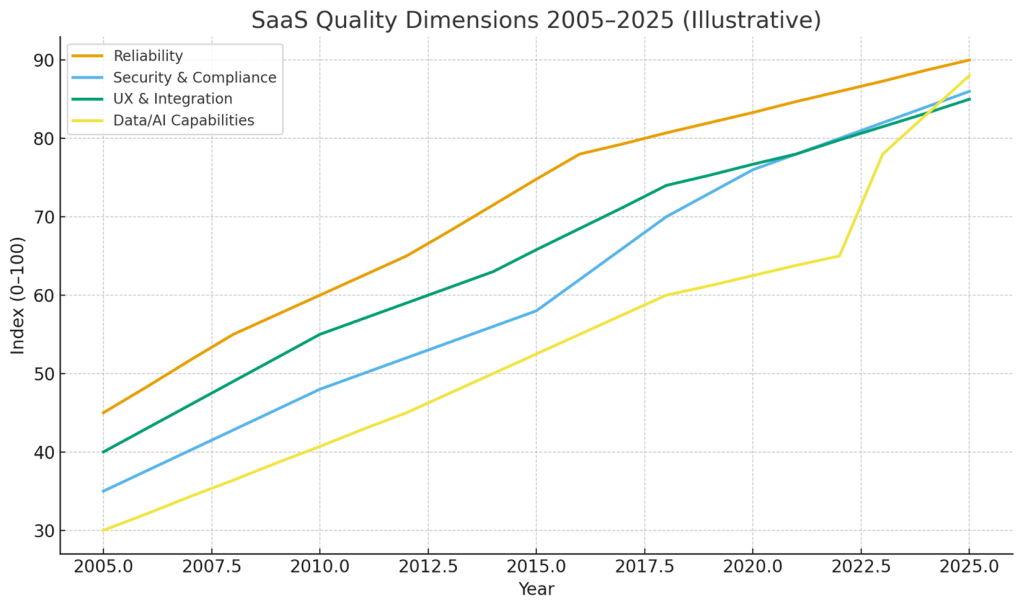
Buy bias workloads are too often subject to vendor-defined SLAs discussed above, which are terribly limiting to 10-100% credits for charges based on the duration of an outage as penalties. Realistically, that really is not going to change; however, SaaS quality over the past 20 years has increased substantially:
Jim Wilt
This becomes the new bar and offers a great measure an enterprise can leverage for both themself and their vendors:
The 1-9 Challenge: Every SaaS vendor, integrator and internal enterprise solution should provide one “9” better than their underlying individual hosting platforms alone.
For example, when each cloud vendor provides a 99.9% SLA for a given service, leveraging an active-active multi-cloud architecture raises that SLA well beyond 99.99%.
Take control of your critical services first and leverage these patterns as a baseline for net-new initiatives moving forward, making high resilience your new norm.
Bottom line: the enterprise is always responsible for its own resiliency. It’s time to own this and take control!
This article was made possible by our partnership with the IASA Chief Architect Forum. The CAF’s purpose is to test, challenge and support the art and science of Business Technology Architecture and its evolution over time as well as grow the influence and leadership of chief architects both inside and outside the profession. The CAF is a leadership community of the IASA, the leading non-profit professional association for business technology architects.
This article is published as part of the Foundry Expert Contributor Network. Want to join?
La automoción vive un momento decisivo. A los retos de la electrificación, los nuevos modelos comerciales o las crecientes exigencias regulatorias ―principalmente, en materia de sostenibilidad― se suma una modernización tecnológica que avanza con paso firme. La digitalización y la IA han dejado de ser herramientas accesorias: hoy son una parte esencial del modelo de negocio del concesionario.
El cambio ya se percibe en el día a día de estos centros. La mayoría de los directivos del sector considera que la IA será clave para el futuro de sus empresas, y más del 80% de los concesionarios la utiliza o tiene planes inmediatos para integrar soluciones basadas en ella.
Punto de venta y centro tecnológico
Los concesionarios han experimentado una evolución extraordinaria en poco tiempo. Hoy, conviven en ellos herramientas de gestión avanzadas, modelos analíticos, automatización y procesos digitales que antes parecían impensables. No se trata de un ajuste superficial, sino de una forma completamente nueva y diferencial de organizar y gestionar el negocio.
Los resultados refuerzan esta transformación: aquellos concesionarios que han incorporado el uso de la IA han visto crecer sus ingresos; muchos de ellos, con incrementos de facturación de un 20% a 30%, y algunos incluso por encima de ese porcentaje.
Todo ello demuestra que la digitalización no es un recurso añadido. Es un elemento que potencia ―en algunos casos, multiplica― la capacidad competitiva del concesionario.
Ámbitos de cambio
Buena parte del impacto de esta particular revolución tecnológica se concentra en tres áreas:
• Eficiencia operativa: la automatización está permitiendo agilizar trámites, reducir errores y dedicar más tiempo a tareas con mayor valor. En algunos concesionarios, la eficiencia comercial ha aumentado hasta un 70% u 80% gracias a soluciones digitales de nueva generación.
• Ventas más precisas y personalizadas: la IA ayuda a identificar qué clientes tienen más probabilidad de comprar y qué mensajes funcionan mejor con cada perfil. Las mejoras en conversión superan el 20% en algunos casos, y hay asesores que han logrado entre un 15% y un 25% de ventas adicionales al año gracias a estas herramientas.
• Nuevo enfoque en posventa: la tecnología permite anticipar necesidades de mantenimiento, organizar mejor la carga del taller y gestionar con más precisión los recambios. La posventa sigue siendo uno de los pilares de la rentabilidad y todo lo que contribuya a optimizarla supone una ventaja clara.
Rentabilidad y generación de empleo
Los concesionarios han trabajado históricamente con márgenes muy ajustados. Hoy, las proyecciones apuntan a que la implantación de IA podría llevar a duplicar la rentabilidad neta de aquí a cinco años, pasando del 1,3% actual a niveles cercanos al 3% en un escenario de transformación avanzada. Pero no bastará con adoptar nuevas herramientas. Hacen falta datos de calidad, integración entre sistemas, nuevas capacidades internas y una estrategia clara. La oportunidad, eso sí, está ahí.
También es importante subrayar que la IA no está destinada a desplazar al factor humano del concesionario. Lo que hace es transformar funciones. Algunas tareas administrativas irán perdiendo peso, pero surgirán otras relacionadas con el análisis de datos, la automatización o la gestión de nuevas tecnologías. Si se orienta bien esta transición, el sector podría generar hasta 10.000 empleos netos de aquí a 2030. El empleo no desaparece: se transforma.
Una oportunidad para España
España cuenta con una red de concesionarios sólida y bien implantada en todo el territorio. La digitalización abre la puerta a reforzar ese modelo y hacerlo más competitivo, eficiente y sostenible. La IA permitirá operar con datos en tiempo real, personalizar la relación con el cliente, planificar mejor el taller, optimizar los recambios y mejorar toda la experiencia digital, desde el interés inicial hasta la posventa. No se trata solo de incorporar más software: se trata de repensar el modelo para adaptarlo a una movilidad que cambia a gran velocidad.
En conclusión, la modernización tecnológica ya está transformando el sector. La pregunta es quién sabrá aprovecharla mejor. En Faconauto, defendemos que esta transición debe afrontarse con visión y ambición. Los concesionarios que combinen innovación, datos y talento humano serán los que marquen la pauta en la nueva movilidad. La tecnología potencia el valor humano del concesionario, no lo sustituye.
La automoción entra en una nueva etapa. La oportunidad de liderarla está en nuestras manos.
>
El autor de este artículo es José Ignacio Moya, director general de Faconauto, la patronal que integra las asociaciones de concesionarios oficiales de las marcas de turismos, vehículos industriales y maquinaria agrícola presentes en el mercado español. Moya es abogado y ha desarrollado buena parte de su carrera profesional vinculado al sector de la automoción.
Explore how the Essential Eight may shift in 2026, why ACSC expectations could rise, and what Australian organisations should do for greater resilience.
December 2025 TIOBE Index recap: Python still leads, C-C# stay tightly grouped, while SQL climbs, R joins the top 10, and Delphi/Object Pascal drops out.
Research highlights how the Home Office’s electronic visa system has used migrants as a ‘testing ground’ for the government’s wider digital ID ambitions
Tech industry heavyweights including Anthropic, AWS, Google, Microsoft, and IBM are beginning to align around shared standards for AI agents, a shift that could give CIOs more flexibility and reduce dependence on any single provider’s platform.
The Agentic AI Foundation (AAIF), announced on Tuesday, aims to develop common protocols for how agents access data and interact with business systems, reflecting growing concern that today’s mix of proprietary tools will hold back broader adoption.
Many early deployments rely on custom connectors or one vendor’s agent framework, making it difficult to integrate other tools as projects scale. A recent Futurum Group report suggests that the agent landscape is fragmented and inconsistent, warning that enterprises will face higher costs and governance risks without open specifications.
AAIF’s goal is to make it easier for agents to work together by agreeing on how they authenticate, share context, and take actions across systems.
Anthropic has contributed its widely adopted Model Context Protocol (MCP) as the core starting point, with Block’s goose and OpenAI’s AGENTS.md also joining the initial set of projects, giving the group established building blocks rather than a standard starting from scratch.
Rising risks drive standards
Enterprises are running into unexpected forms of lock-in and integration complexity as they experiment with agentic AI, exposing architectural risks. Analysts say the underlying problem is that agent behavior itself can create hidden dependencies.
“With agentic platforms, the dependency is now coded into behavior,” said Sanchit Vir Gogia, chief analyst at Greyhound Research. “What appears modular on the surface often turns out to be tightly wound when organizations try to migrate or diversify.”
Tulika Sheel, senior vice president at Kadence International, agreed, adding that enterprises adopting agentic AI today risk becoming tied to a single vendor’s proprietary protocols and infrastructure, limiting flexibility and driving up switching costs. She said the formation of AAIF “makes it easier for enterprises to adopt agentic AI with confidence, giving them more control over their AI choices.”
How shared standards can reshape architectures
For CIOs, the real question is whether vendors can agree on practical interfaces and safety rules that work across platforms. Analysts say this will determine whether AAIF becomes a meaningful foundation for enterprise agent deployments or ends up as just another standards effort with limited impact.
“Open foundation models are used for nearly 70% of generative AI use cases today, and over 80% of enterprises say open source is extremely or very important in their generative AI application stack, especially in the development and fine-tuning layers,” said Sharath Srinivasamurthy, research vice president at IDC. “Hence, enterprises are already designing their architecture keeping open environments in mind.”
Shared protocols could accelerate that shift. According to Lian Jye Su, chief analyst at Omdia, common standards for agent interoperability have the potential to reshape how AI architectures are designed and deployed.
“Firstly, agentic AI applications can shift from rigid, vendor-specific silos to modular, composable systems with plug-and-play capability,” Su said. “Second, enterprises can enjoy seamless portability, shifting their workloads easily from one environment to another without a strong tie-in.”
Su added that clearer standards could also improve governance and orchestration. Transparent oversight mechanisms, combined with consistent integration rules, would allow enterprises to coordinate multi-agent workflows more efficiently. Seamless orchestration, he said, is essential for generating accurate and trustworthy outputs at scale.
Will vendors stay aligned?
Even with momentum building, analysts caution that the harder part may be sustaining cross-vendor alignment once implementations begin.
Gogia said the real test of AAIF will not be technical but behavioral, noting that vendors often align on paper long before they do so in practice. The difference now, he added, is the sheer complexity of agentic AI systems.
“Agentic AI is not just infrastructure,” Gogia said. “It’s behavioral autonomy encoded in software. When agents act unpredictably, or when standards drift from implementation, the consequences are not limited to system bugs. They extend into legal exposure, operational failures, and reputational damage.”
Su agreed that alignment is possible but not guaranteed. “Aligning major vendors around shared governance, APIs, and safety protocols for agents is realistic but challenging,” Su said, citing issues like rising expectations and regulatory pressure.
Sheel said early indicators of progress will include wider production use of MCP and AGENTS.md, cross-vendor governance guidelines, and tooling for auditability and inter-agent communication that works consistently across platforms: “We’ll know it’s working when enterprises can use these tools and safety controls at scale, not just in proofs of concept.”
Movers & Shakers is where you can keep up with new CIO appointments and gain valuable insight into the job market and CIO hiring trends. As every company becomes a technology company, CEOs and corporate boards are seeking multi-dimensional CIOs and IT leaders with superior skills in technology, communications, business strategy, and digital innovation. The role is more challenging than ever before — but even more exciting and rewarding! If you have CIO job news to share, please email me!
Intel designs and manufactures advanced semiconductors. Stoddard joins Intel from Adobe, where she led global IT and cloud operations. Prior to Adobe, she held senior tech leadership roles at NetApp, Safeway, American President Lines, and Consolidated Freightways where she developed deep expertise in logistics and built high-performing teams known for operational excellence and customer-focused innovation. Stoddard holds a BS from Western New England University and an MBA from Marylhurst University.
John Hancock is a life insurance company that offers a range of financial products and services including life insurance, annuities, retirement planning solutions, and wealth management services. Before joining John Hancock, Sakthivel was VP and global CIO at LIMRA and LOMA, and LL Global, a nonprofit trade association serving the financial services industry. He previously held tech leadership positions across organizations of varying size and sector, including Fortune 100 companies. Sakthivel earned an MS and MBA from Southern New Hampshire University, and an MBA from the University of Arkansas at Little Rock.
Headquartered in Atlanta, Georgia, family-owned RaceTrac has been serving guests since 1934. The company’s retail brands include RaceTrac and RaceWay retail locations, Gulf branded locations, and Potbelly neighborhood sandwich shops. Shetty most recently served as CDO at Equifax, where he led the transformation of the company’s data governance, data quality practices, and cloud-native architecture. Prior to that, he held senior tech roles at Pilot Flying J, McDonald’s, SunTrust (now Truist), and Fifth Third Bank. Shetty holds a BBA from the University of Georgia, and an MBA from Georgia State University J. Mack Robinson College of Business.
Guidehouse is a global AI-led professional services firm delivering advisory, technology, and managed services to the commercial and government sectors. White’s career spans global CIO roles and business leadership across industries, with a consistent focus on aligning IT strategy with enterprise goals. Most recently he was global CIO at Avanade. White earned a BASc from Miami University.
AmeriLife develops, markets, and distributes life and health insurance, annuities, and retirement planning solutions. Srivastava was most recently global CIO of Acrisure. Earlier, at Indiana University Health and University of Michigan Health-Sparrow, he led award-winning digital initiatives, including electronic medical records systems that set industry benchmarks. Srivastava holds a BE from Visvesvaraya National Institute of Technology, and an MBA from Michigan State University’s Eli Broad College of Business.
Tim Farris joins Clancy & Theys Construction Company as CIO
Clancy & Theys Construction Company provides construction management, design-build, and general construction services for commercial, industrial, and institutional projects, including new construction and renovation. Farris was most recently senior director, technology leader for RTI International. He holds a BS from UNC at Greensboro, and an MS from the UNC, Chapel Hill.
Ronald McDonald House Charities welcomes Jarrod Bell as CIO
Ronald McDonald House is an independent nonprofit that provides resources, services, and support for families when they have children who are ill or injured. Bell previously served as CTO at Big Brothers Big Sisters of America, where he led the modernization of enterprise systems and oversaw nationwide technology initiatives. He was also CIO at San Francisco Opera, where he implemented tech solutions to support artistic and administrative functions.
Devereux is a nonprofit providing services, insight and leadership in the evolving field of behavioral healthcare. Before joining Devereux, Patel served as CITO at Radial bpost group. His career also includes leadership roles at eBay, GSI Commerce, Siemens Medical Solutions USA, and Aetna US Healthcare. Patel holds a BE from the University of Pune and an MS from Penn State Great Valley.
MIB is the insurance industry’s partner for data, insights, and digital solutions that support underwriting and actuarial decision-making to improve industry efficiencies. Gortze joined MIB in 2020 as CISO. Before that, he was director of information security and IT infrastructure at Cumberland Farms where he was responsible for information security strategy and IT infrastructure operations. Previously, he was senior manager for security and risk consulting at SecureWorks where he led several consulting teams investigating client data breaches and security incidents. He holds a BS from Roger Williams University and an MBA from the Isenberg School of Management at UMass, Amherst.
New CIO appointments, November 2025
New York Life appoints Deepa Soni as CIO
Rohit Kapoor joins Whataburger as CDTTO
A.O. Smith taps Chris Howe as CDIO
Soma Venkat named CITAIO for Cooper Standard
Wella Company welcomes Julia Anderson as CDIO
Anthony Spangenberg joins MSPCA-Angell as CIO
Cengage Group welcomes Ken Grady as CIO
Marc Rubel joins Mirion as CIO
Smith names Mike Mercado CIO
Gregg Cottage promoted to CIO and CISO at NN, Inc.
CFA Institute taps Eliot Pikoulis as CIO
New CIO appointments, October 2025
State Farm names Joe Park as CDIO
Steve Bronson announced as CIO for Southern Glazer’s Wine & Spirits
Bridge Specialty Group appoints Steve Emmons as CIO
Dawn-Marie Hutchinson joins Reynolds American as CIO
Amway welcomes Ryan Talbott as CTO
Randy Dougherty promoted to CIO for Trellix
Shayne Mehringer joins Redwood Services as CIO
Kratos promotes Brian Shepard to CIO
Ravi Soin named CIO and CISO for Smartsheet
Infoblox appoints Justin Kappers as CIO
Manu Narayan named CIO for GitLab
Boomi appoints Keyur Ajmera as CIO
Eric Skinner promoted to CIO for Citadel Credit Union
CONA Services appoints Francesco Quinterno as CIO
New CIO appointments, September 2025
Bank of America names Hari Gopalkrishnan CTIO
Vishal Talwar appointed CDIO for FedEx
Highmark Health announces Alistair Erskine as CIDO
Steven Dee joins Kohl’s as CTO
AI Fire welcomes Mike Marchetti as CIO
Ted Doering joins Ball Corporation as CIO
SpartanNash names Ed Rybicki as CIO
Tara Long named CIO for FM
Trimble announces Jim Palermo as CIO
Bradley Lontz named CIO for CSAA Insurance Group
EchoStor Technologies welcomes Cale Anjoorian as CIO
Corey Farrell joins Peloton as CIO
AWP Safety appoints Craig Young as CIO
Georgeo Pulikkathara joins iMerit as CIO and CISO
Pathward appoints Charles Ingram as CIOO
Ardent Mills appoints Ryan Kelley as CIO
New CIO appointments, August 2025
Neal Sample joins Best Buy as CDTO
Southern Company names Hans Brown CITO
Tim Langley-Hawthorne named CTO of Love’s Travel Stops
QXO appoints Eric Nelson as CIO
Gaspare LoDuca named CIO for MIT
University of Wisconsin-Madison welcomes Didier Contis as CIO
Matt Keen joins Old National Bancorp as CIO
CHG Healthcare names Theresa O’Leary as CIO
Bill Poirier named CIO at the University of Central Florida
Avalara announces Shahan Parshad as CIO
Rajeev Khanna named CIO for Trucordia
Cottage Health Welcomes Ganesh Persad as CIO
Tara Cook joins Hinshaw & Culbertson as CIO
New CIO appointments, July 2025
BrandSafway appoints JP Saini as CDIO
Valerie Ashbaugh announced as CIO for McDonald’s
Agam Upadhyay joins Vertex Pharmaceuticals as CIO
Vertiv Appoints Mike Giresi as global CIO
Rafael Sanchez joins Bloomin’ Brands as CIO
Lee Health welcomes Chris Akeroyd as CIO
Kassie Rangel named CIO for Liberty Tax
Neurocrine Biosciences appoints Lewis Choi as CIO
Angel Miranda joins Westgate Resorts as CIO
Genesys announces Trevor Schulze as CIO
Jeff Burke joins Unilever Foods North America as CDIO

 Login
Login