Reading view

There are new articles available, click to refresh the page.

Citi Analysts Project Bitcoin Price Could Reach $189,000 Next Year In Bullish Scenario

The Bitcoin price has experienced a significant correction after reaching all-time highs above $126,000 in October, currently trading just above $87,900. This marks a notable 30% decline over the past few months. 

Despite this setback, analysts at Citi express optimism for the cryptocurrency’s future, forecasting that its value will continue to rise through 2026.

Optimistic Bitcoin Price Predictions

According to Citi’s analysts, the base case for the Bitcoin price is set at $143,000, reflecting a potential 62% increase from current levels. In a more bullish scenario, the cryptocurrency could surge to over $189,000, indicating a substantial 114% increase. 

Conversely, the analysts also present a bear case for the leading crypto, with an estimated price around $78,500, which would represent an additional 10.6% decline from current trading levels.

The forecast from Citi relies on the assumption that investor adoption will persist, particularly with an influx of funds into exchange-traded funds (ETFs) projected to reach $15 billion. This influx is seen as a catalyst that could significantly boost the Bitcoin price. 

Furthermore, ongoing negotiations in the US Senate regarding their version of the crypto market structure bill, namely the CLARITY Act, which aims to regulate Bitcoin under the Commodity Futures Trading Commission (CFTC), is anticipated to enhance market adoption.

In contrast to Bitcoin, analysts express concerns regarding Ethereum’s (ETH) potential for growth. They argue that Ethereum, being viewed more as “programmable money,” has seen decreased activity, which has resulted in its current trading price of just below $3,000—40% below its all-time high of $4,964.

Additional Catalyst For Price Growth

Chris Neiger, an analyst at The Motley Fool, also attaches bullish predictions to the Bitcoin price future, highlighting that recent US job data reflects an unemployment rate increase to 4.6%, the highest since 2021. 

He asserted that if the Federal Reserve (Fed) chose to lower interest rates by 2026, the Bitcoin price could benefit since lower rates typically enhance the cryptocurrency’s value by making borrowing more affordable.

In November, JPMorgan provided a more conservative estimate, suggesting that Bitcoin could reach $170,000 by 2026, with potential upside expected over the next six to twelve months. 

Meanwhile, even more aggressive predictions from market researcher Fundstrat forecast the Bitcoin price could soar between $200,000 and $250,000 by the end of 2026, largely driven by the mainstream adoption of ETFs.

Additionally, the establishment of the Strategic Bitcoin Reserve by the federal government has encouraged states to consider similar initiatives.

Neiger concludes that just as ETFs have contributed to the credibility of cryptocurrencies and facilitated price increases, the formation of state-level Bitcoin reserves could serve as another critical driver propelling Bitcoin’s value higher in 2026.

Bitcoin price

Featured image from DALL-E, chart from TradingView.com 

Bitcoin Recent Dips Reveal Market Structure Issue Not Coming From Selling Pressure

The Recent volatility in the Bitcoin market pullbacks is being widely interpreted as a wave of selling pressure, but the underlying data tells a different story. On-chain metrics show little evidence of broad holder distribution, suggesting that these dips are not being driven by investors exiting their positions. Instead, the weakness in price appears to stem from the market structure issues.

Why Structural Weakness Is Often Temporary

These Bitcoin dips aren’t coming from selling pressure; they’re coming from stablecoin-denominated shorts. The co-founder of GlydeGG, Sweep, revealed on X that when large amounts of leverage enter the system through dollar or stablecoin, market makers don’t just let the price move. 

Their mandate is to remain neutral because neutrality demands balance. They achieve this by selling spot BTC, not because they’re bearish, but because neutrality requires it. As a result of that, the price drops without fear, panic, and without real spot. 

The United States doesn’t need to dump assets to influence global markets; it exports dollars. Those dollars become leverage, while leverage creates synthetic pressure, which in turn forces hedging, and hedging hits the spot markets; that’s the cycle. This is why recent sell-offs feel empty, because retail has already left.

Currently, the market is rebalancing within a system price against a weakening currency, and all markets are now denominated in a currency that’s losing purchasing power. That’s why volatility rises even when conviction doesn’t change. This isn’t a bear market; it’s clearing the Liquidity Providers (LPs), which is how big players buy BTC cheaply without ever owning it.

How Bitcoin Supply Dynamics Are Entering A New Phase

An ambassador and partner of Wolfswapdotapp, Crypto Miners, has pointed out that the Bitcoin supply dynamics are shifting fast. According to K33Research, nearly $300 billion worth of previously dormant BTC re-entered circulation in 2025. This supply release has been driven by long-term holder sales, large OTC transactions, and ETF-related absorption, which represents one of the largest supply unlocks in BTC history.

Related Reading: Bitcoin’s Make-or-Break Phase Begins: Weekly Support Holds, Momentum Fades

On-chain data from CryptoQuant has shown that the long-term holder distribution over the last 30 days has reached its highest level in more than five years. At the same time, the selling pressure currently is outweighing demand, as ETF flows turn negative, and retail participation has weakened.

Despite near-term fragility, K33 noted that this distribution phase may be approaching exhaustion. The early holder selling is expected to fade into early 2026, potentially setting the stage for renewed accumulation as institutional rebalancing stabilizes supply. For now, the markets remain sensitive, but structurally, this looks like a late-cycle supply redistribution rather than panic selling.

Bitcoin

141,000 Transactions: Here’s Why The Cardano Network Is Roaring Back To Life

The Cardano network is showing signs of activity as on-chain data reveals a sharp increase in transactions tied to the movement of $NIGHT tokens. 

Transaction data surrounding $NIGHT tokens has now grown into new milestones in just a few weeks after launch. Although the entire market conditions are far from bullish, the surge in transaction count points to a structural increase in real activity on the Cardano blockchain.

NIGHT Token Activity Sparks A Transaction Surge On Cardano

The momentum traces back to data highlighted by blockchain explorer Cexplorer.io on the social media platform X. On Wednesday, the platform flagged that Cardano had processed over 122,000 transactions that contained the $NIGHT token, the native asset of the Midnight network. That figure has since adjusted, and transaction activity has been increasing since then. 

At the time of writing, the number of recorded transactions containing $NIGHT stands at 141,363, which indicates continued movement across wallets since their launch. This pattern shows that users are actively interacting with the token following its launch and that Cardano’s base layer is handling meaningful throughput tied directly to user engagement.

What The Data Says About The Network’s Health

The recent transaction data paints a more encouraging picture for Cardano, particularly in light of the long-standing narrative that the network lacks organic on-chain activity. For years, the network has often been dismissed as a so-called ghost chain, with critics arguing about its organic usage. 

This perception has also carried over into Cardano’s DeFi metrics, where co-founder Charles Hoskinson has previously pointed to a gap between on-chain application usage and the roughly 1.3 million users actively participating in Cardano’s staking system.

Furthermore, the creation of Midnight and its native token NIGHT is positive for Cardano as a deliberate expansion of its ecosystem. Midnight was designed as a privacy-focused blockchain that works alongside the network to address long-standing concerns around confidential computation and data protection while still aligning with regulatory and compliance expectations. 

The Midnight sidechain uses zero-knowledge cryptography, and developers can build applications where sensitive information can still be private while allowing selective disclosure when needed. This approach positions Midnight as a practical privacy layer that fits into real-world use cases.

The design and launch mechanics for Midnight and NIGHT make it so that community members needed to claim their token allocations through an official redemption portal and wait for them to thaw or unlock according to a predetermined schedule before they could be moved or fully utilized. 

On-chain activity tied to $NIGHT is one positive to look at amidst the current state of the Cardano network and its price action, which has been under persistent bearish pressure. ADA is trading at a 2025 low around the mid-$0.30s, which is indicative of the selling pressure across the entire crypto market.

Cardano

Best Crypto To Buy Now 19 December – XRP, SOL, ETH

By: Tim Hakki

With speculation growing around a possible 2026 crypto bull run, particularly if U.S. lawmakers finally introduce comprehensive crypto regulations, the period heading into Christmas is shaping up as the best time to load up on crypto if you believe in it.

Bitcoin has stayed below the $90,000 level since Sunday, trading steadily above $87,000 over the past 24 hours.

A key trend worth noting is Bitcoin’s steady decline in market dominance since summer. Historically, this shift often signals capital rotating from Bitcoin into altcoins. In this environment, projects such as XRP, Solana and Ethereum offer the best potential to grow value in the coming year.

XRP (XRP): Reshaping Global Payments

Ripple’s XRP ($XRP) remains a major force in the cross-border payments space, thanks to its near-instant transaction speeds and extremely low fees. Built to modernize global payment rails, the XRP Ledger (XRPL) is a faster and cheaper alternative to legacy systems like SWIFT.

XRP’s importance has been recognized at the institutional level, with references appearing in reports from the United Nations Capital Development Fund and the White House. Supported by Ripple’s expanding network of fintech partnerships, XRP has climbed to become the third-largest cryptocurrency outside of stablecoins, boasting a market capitalization above $113 billion.

best crypto xrp

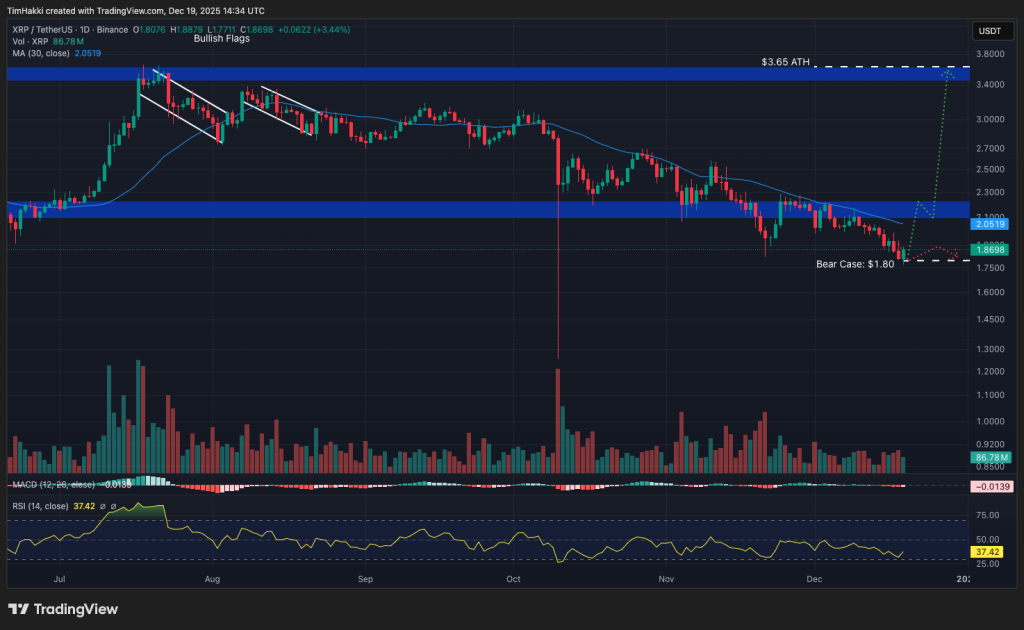
Following the resolution of Ripple’s long-running legal battle with the U.S. Securities and Exchange Commission, XRP surged to its first new all-time high (ATH) in seven years, topping out at $3.65. Since then, the token has pulled back by roughly 49% and is currently trading near $1.87.

The debut of five spot XRP ETFs in the U.S. has driven fresh institutional interest, though much of the demand is not reflected in current prices, probably due to the market pricing it in. Looking ahead, further ETF approvals and clearer regulatory guidance could act as powerful tailwinds. Under favorable conditions, XRP could move back toward record highs by New Year.

Solana (SOL): High-Speed Blockchain Targeting a Potential $1,200 Move

Solana ($SOL) has firmly established itself as a leading smart-contract platform, known for its rapid transaction processing and minimal costs. With a market cap around $71 billion and nearly $9 billion in total value locked (TVL) across its DeFi ecosystem, Solana continues to stand out as Ethereum’s strongest rival.

Recently launched Solana spot ETFs from firms such as Grayscale and Bitwise could pave the way for meaningful institutional inflows, similar to the capital surges that previously boosted Bitcoin and Ethereum.

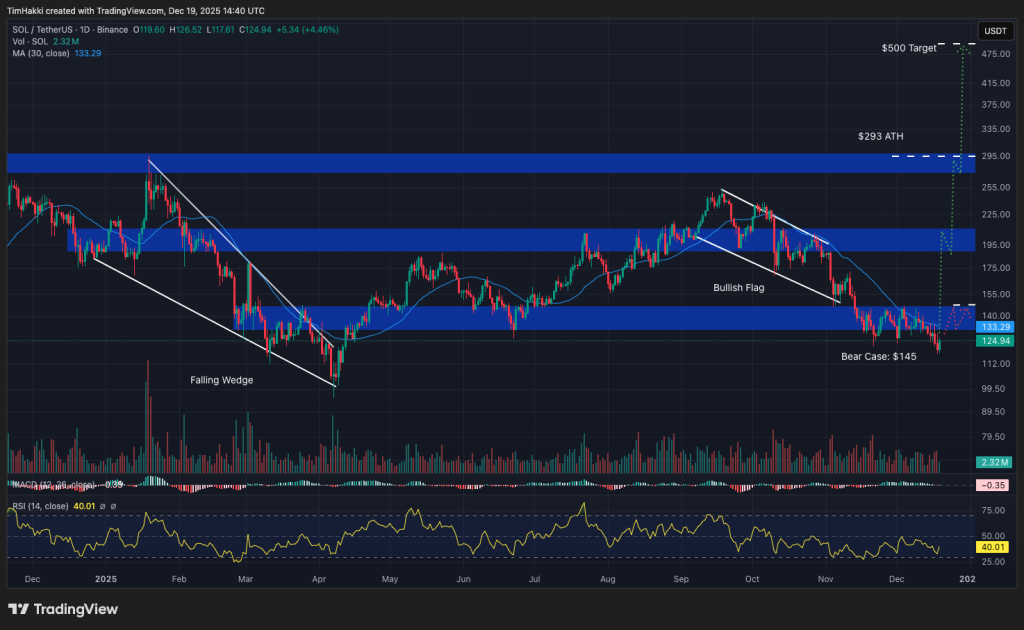
After sliding to around $100 earlier this year, SOL has rebounded and now trades close to $125, hovering at a key technical support level. Its also below its 30-day moving average, which suggests a small price surge back to $130 or $140 may happen over the weekend.

best crypto sol

The next significant resistance lies near $250. A clean break above that zone could send SOL past its prior all-time high of $293.31. In a strong holiday-driven rally, SOL could even hit $500 although weak festive performance is unlikely to cause any major losses, so in a bear case, Solana will probably hold the fort somewhere in the support zone it’s currently in.

Beyond price action, Solana is also emerging as a preferred network for real-world asset (RWA) tokenization. Major financial players including BlackRock and Franklin Templeton have selected Solana to launch tokenized investment products.

Ethereum ($ETH): The Smart-Contract Giant Prepares for Its Next Phase

Ethereum ($ETH) continues to underpin decentralized finance and much of the broader Web3 landscape, supported by a market capitalization north of $357 billion.

With more than $69 billion TVL, Ethereum remains the dominant platform for smart contracts and decentralized applications, reinforcing its central role in the blockchain ecosystem.

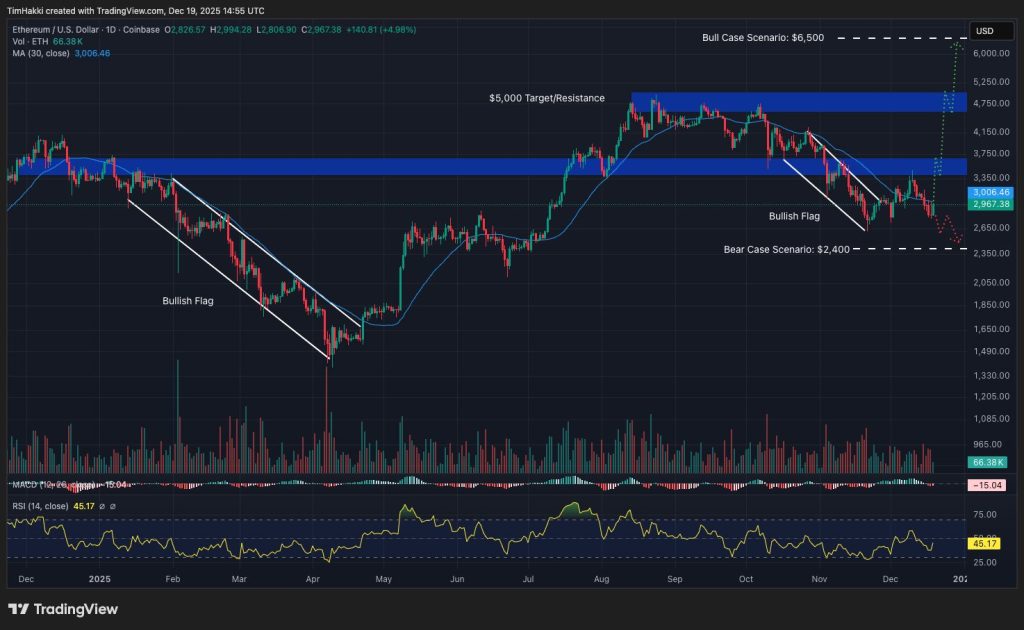
In a strong market cycle, ETH could push toward the $6,500 level by the end of the year, a significant leap from its current price around $2,966 and well beyond its previous all-time high of $4,946 set in August.

best crypto eth

The recent Fusaka upgrade, implemented at the start of the month, substantially improves data availability for Layer-2 networks while enhancing security, efficiency and scalability. These changes could help drive ETH toward $5,000 before month-end.

That said, a move to five figures will likely depend on clearer U.S. regulations and a supportive macroeconomic environment, both of which could unlock greater institutional participation.

Earlier this year, ETH broke out from a bullish flag formation, rallying from $1,800 to a fresh peak. Sustained momentum will be essential if Ethereum is to get a new ATH by New Year.

SUBBD Uses AI and Blockchain to Revolutionize the Creator Economy.

Among newer projects, SUBBD ($SUBBD) is drawing attention as an AI-powered content platform aiming to disrupt the $85 billion creator economy. The project focuses on empowering creators with better monetization tools while offering fans more meaningful engagement.

Unlike traditional subscription services that can take fees of up to 20% and limit community ownership, SUBBD adopts a decentralized approach that removes intermediaries. The concept has resonated with early supporters, raising $1.4 million during its presale.

Have you SUBBD yet? ❤️‍🔥 pic.twitter.com/d8uy5IYHTi

— SUBBD (@SUBBDofficial) October 30, 2025

Users gain access to token-gated content, early drops and exclusive discounts, helping creators build stronger, more direct relationships with their communities.

To stay updated, you can follow SUBBD across X, Telegram, and Instagram, or join the ongoing presale directly through their website.

Click Here to Participate in the Presale

The post Best Crypto To Buy Now 19 December – XRP, SOL, ETH appeared first on Cryptonews.

China’s DeepSeek AI Predicts the Price of XRP, BTC, and DOGE By the End of 2025

By: Tim Hakki

Chinese AI model DeepSeek, often described as a regional alternative to ChatGPT, has issued a new round of aggressive price forecasts for XRP, Bitcoin and Dogecoin as 2025 approaches its final weeks. According to the model, all three assets could see extreme volatility, with sharp moves possible to the upside or downside before year-end.

Below is a summary of DeepSeek’s dual-track outlook, outlining both optimistic and pessimistic price paths for each cryptocurrency through the end of December.

XRP (XRP): DeepSeek AI Warns of Possible Collapse to $0.20 or Moonshot Surge Toward $10

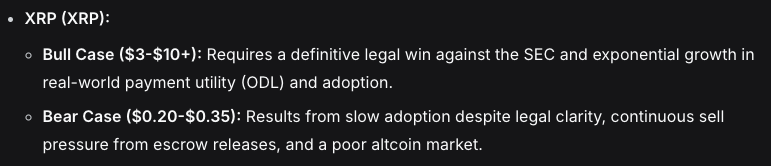
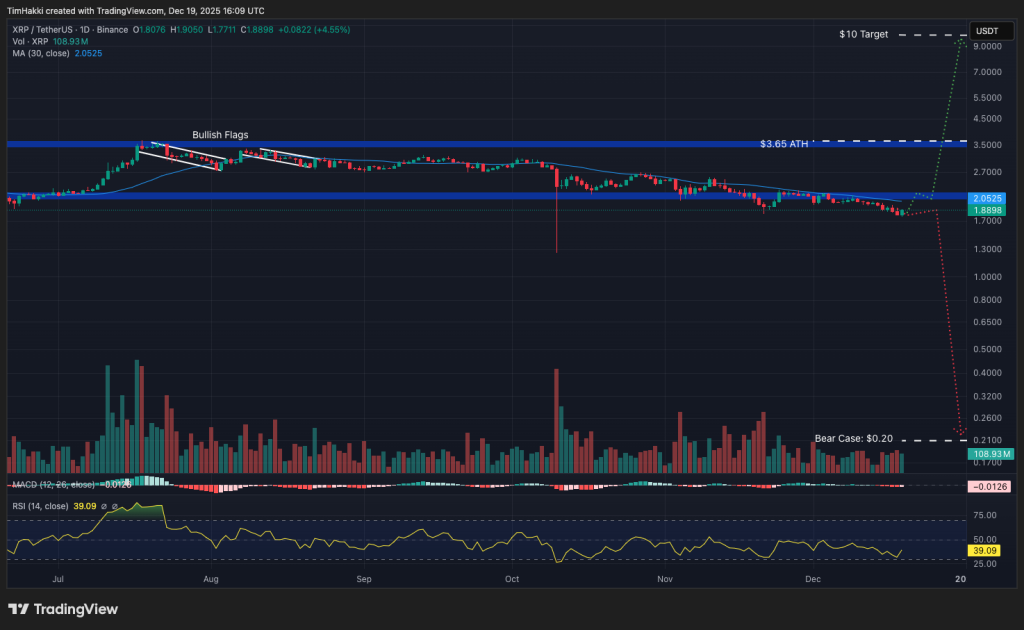
In its bearish case, DeepSeek AI estimates that Ripple’s XRP ($XRP) could fall dramatically from its current level near $1.88 to as low as $0.20. Such a move would imply a drawdown of roughly 89% if selling pressure and negative sentiment intensify.

deepseek ai predicts xrp
Source: DeepSeek

This scenario would sharply contrast with XRP’s strong performance earlier in the year, when the token reached its first new all-time high (ATH) in seven years. XRP peaked at $3.65 in July, shortly after Ripple secured a major legal victory against the U.S. Securities and Exchange Commission.

Throughout much of 2025, XRP has largely traded within a $2 to $3 range. Its relative strength index (RSI) is currently hovering near 39 and trending higher, suggesting renewed interest from traders looking to buy at discounted levels.

On the bullish end of the spectrum, DeepSeek projects a decisive breakout that could lift XRP by more than 432%, pushing the price toward $10 by the end of the year.

The recent launch of five spot XRP exchange-traded funds (ETFs) in the U.S. could help drive fresh institutional demand during the holiday period, following a pattern previously seen with Bitcoin and Ethereum ETFs.

More ETF approvals are expected in the months ahead, raising the odds that 2026 becomes a defining year for XRP. Investors building positions at current prices could benefit a lot.

Bitcoin (BTC): DeepSeek Sees Path to $250,000 or Pullback to $20,000

Bitcoin ($BTC), the world’s largest cryptocurrency by market value, set a new all-time high of $126,080 on October 6. Looking further out, DeepSeek’s extended forecast places BTC as high as $200,000 by 2026.

Frequently likened to digital gold, Bitcoin continues to draw interest from both institutional and retail investors seeking hedges against economic uncertainty. BTC now accounts for more than $1.75 trillion of the roughly $3.05 trillion total crypto market capitalization.

As inflation pressures ease and market sentiment improves heading into the holidays, Bitcoin could attempt another run toward recent highs. The Federal Reserve’s latest interest rate cut may also boost liquidity, supporting risk assets through December.

However, DeepSeek cautions that a sustained wave of selling could drag BTC back toward the $20,000 level, marking the start of a crypto winter throughout 2026.

Even if it seems very ambitious the AI model maintains that its $200,000 upside target remains plausible in early 2026, particularly if U.S. policymakers deliver clearer crypto regulations and move forward with plans for a U.S. Strategic Bitcoin Reserve.

Dogecoin (DOGE): DeepSeek AI Projects Rally to $1 or Slide Toward $0.03

Launched in 2013 as a parody cryptocurrency, Dogecoin ($DOGE) has since grown into a major digital asset with a market capitalization of roughly $22 billion. It now represents close half of the estimated $44 billion meme-coin sector.

DOGE formed several bullish chart patterns in late summer and early autumn, but momentum has weakened in recent weeks. Under DeepSeek’s bearish scenario, Dogecoin could fall to around $0.03, marking a decline of about 77% from its current price near $0.1318.

Dogecoin’s all-time high of $0.7316 was recorded during the retail-driven rally of 2021, and the long-awaited move to $1 has yet to materialize. Still, DeepSeek’s optimistic outlook suggests DOGE could surprise the market with a rally of more than 650%, potentially reaching parity with the dollar, a 7.5x increase from current levels.

Meanwhile, real-world adoption of Dogecoin continues to grow. Tesla accepts DOGE for select merchandise, and major payment platforms such as PayPal and Revolut have added support for Dogecoin transactions.

Maxi Doge (MAXI): A Rapidly Growing Meme Coin Not Included in DeepSeek’s Forecast

While DeepSeek’s analysis centers on established cryptocurrencies, early-stage presale projects often offer far greater upside potential. One such project attracting increasing attention is Maxi Doge ($MAXI), which has already raised nearly $4.4 million as it positions itself as a potential successor to Dogecoin.

MAXI revolves around the character of Maxi Doge, a high-octane crypto degenerate and distant relative of the original Dogecoin. The project leans heavily into meme culture, portraying Maxi as obsessed with heavy lifting, extreme leverage trading and rallying a hyper-active MAXI DOGE community.

Issued as an ERC-20 token, MAXI runs on Ethereum’s proof-of-stake network. This gives it advantages in energy efficiency and developer access compared to Dogecoin’s older proof-of-work architecture.

The ongoing presale offers staking rewards of up to 71% APY, though yields are designed to decline as more participants join.

MAXI is currently priced at $0.000274 in its latest presale round, with automatic price increases scheduled for future stages. Tokens can be purchased using MetaMask or Best Wallet.

Dogecoin stands no chance!

Stay updated through Maxi Doge’s official X and Telegram pages.

Visit the Official Website Here

The post China’s DeepSeek AI Predicts the Price of XRP, BTC, and DOGE By the End of 2025 appeared first on Cryptonews.

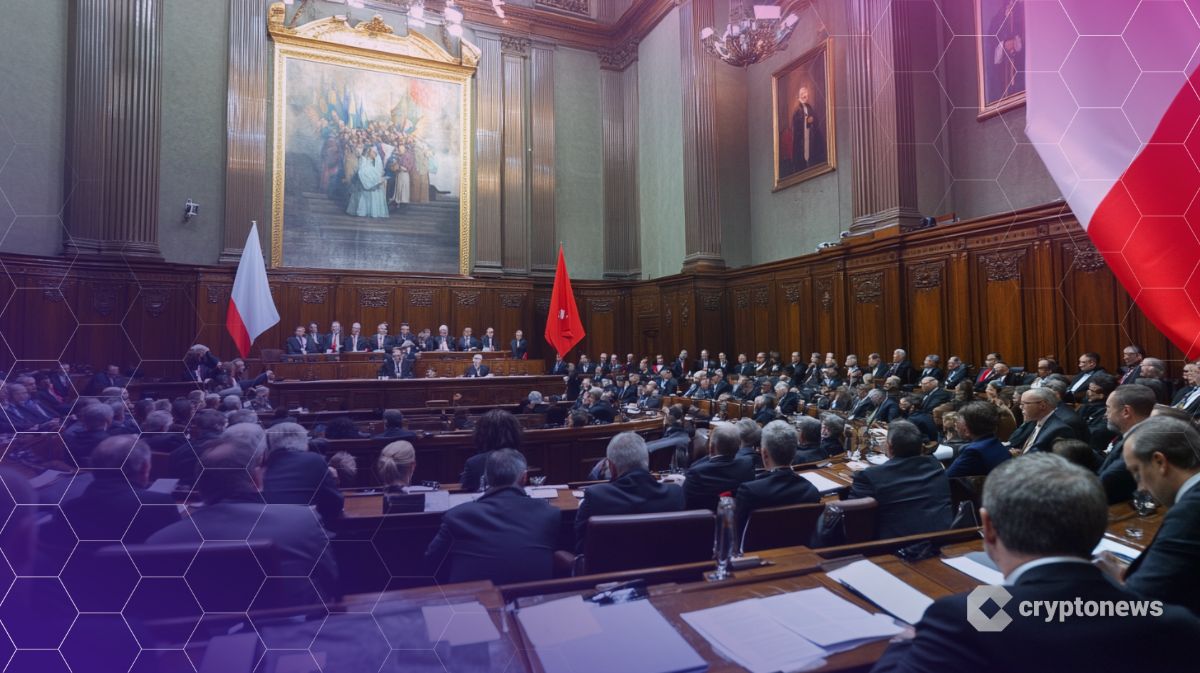
Poland Crypto Bill Clears Sejm Again, Defying President — Will “Restrictive” Rules Stick?

Poland’s lower house of parliament has again approved a contentious cryptocurrency bill, reviving a regulatory push that President Karol Nawrocki blocked only weeks ago

They are setting the stage for another confrontation over how tightly the country should police its digital asset market.

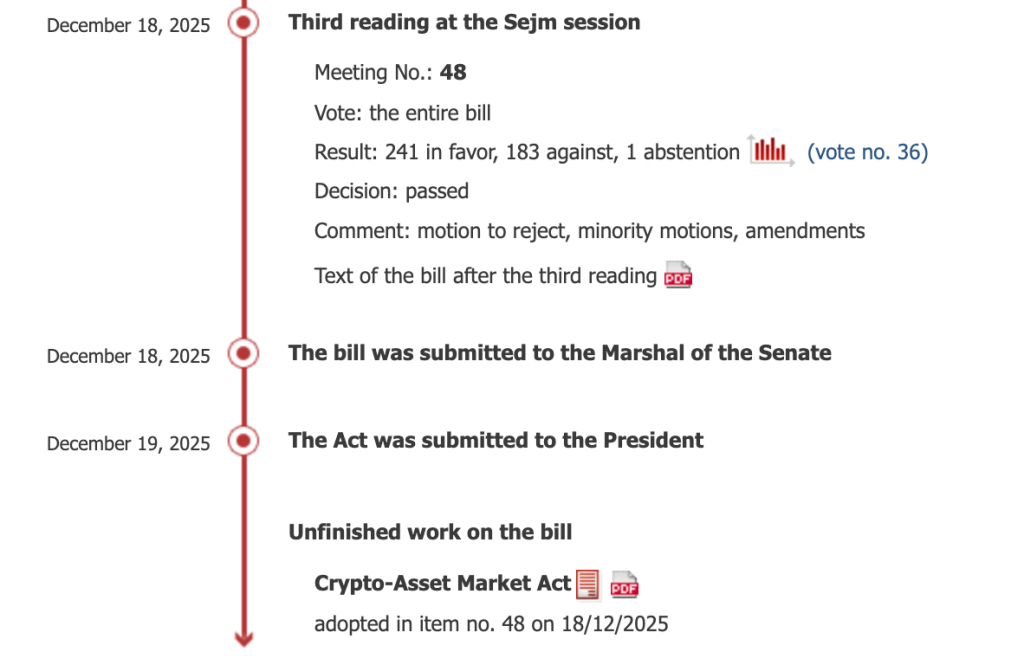
In a vote held on Thursday, the Sejm passed the Crypto-Asset Market Act with 241 lawmakers in favor, 183 against, and one abstention.

Source: Sejm

The bill, which had previously been vetoed by Nawrocki, was forwarded to the Senate on Friday for further consideration.

Reintroduced Without Changes, Poland’s Crypto Bill Tests Presidential Limits

Lawmakers reintroduced the legislation without changes, despite the president’s earlier objections that it threatened civil liberties, property rights, and legal certainty.

The bill is designed to bring Poland’s crypto rules in line with the European Union’s Markets in Crypto-Assets Regulation, known as MiCA, which all member states must implement by July 2026.

Poland remains the only EU country that has not yet adopted a national framework to accompany the bloc-wide rules, a gap the government says has left the domestic market exposed to abuse and foreign interference.

The renewed vote follows weeks of political tension, as in December, Nawrocki vetoed the same legislation after it cleared both chambers of parliament.

Poland fails to override presidential veto on MiCA‑style crypto law, becomes the only EU state without formal crypto regulation

#Poland #MiCA https://t.co/31UF7UNNHd

— Cryptonews.com (@cryptonews) December 5, 2025

They argued that it went beyond EU requirements and granted authorities overly broad powers, including the ability to block crypto-related websites through administrative orders.

At the time, lawmakers failed to secure the three-fifths majority needed to override his decision, forcing the government to restart the legislative process.

Poland’ Bill Tightens Grip on Crypto Firms

The legislation would place crypto-asset service providers under the supervision of the Polish Financial Supervision Authority, or KNF.

Exchanges, custodians, and issuers would be required to obtain licenses, meet capital and compliance standards, and adhere to anti-money laundering rules.

The KNF would gain the power to impose fines of up to 10 million zlotys and, in serious cases, pursue prison sentences of up to five years.

Poland’s crypto-asset market bill advances to the Senate, introducing licensing, fines up to 10M PLN, and potential prison terms. #cryptobill #Polandhttps://t.co/a8R1O4iGBc

— Cryptonews.com (@cryptonews) September 29, 2025

Critics across the political spectrum and within the crypto industry have warned that the framework is among the most restrictive in the EU.

Opposition lawmakers have pointed to the KNF’s average licensing timeline of around 30 months, the longest in the bloc, and argued that the rules could push firms to relocate to jurisdictions with lighter implementations of MiCA.

Poland’s President Faces Defining Choice on Contested Crypto Rules

Industry figures have said the bill risks disrupting a market estimated to serve about three million users in Poland.

Nawrocki, who took office in June after narrowly winning the presidency with 50.89% of the vote, previously aligned himself with industry concerns during the campaign.

🇵🇱 Poland has elected Karol Nawrocki, a conservative who says crypto should be “born in freedom, not buried in red tape.”#poland #cryptohttps://t.co/BVJXhQBnrK
— Cryptonews.com (@cryptonews) June 2, 2025

In a May post on X, he pledged that “no oppressive laws” would be imposed on the digital asset sector, saying Poland needed innovation rather than excessive regulation.

His office has since indicated openness to regulation in principle, provided it does not exceed EU standards. The government now suggests the standoff may be nearing its end.

A spokesperson said the president recently received a classified security briefing that gave him “full knowledge” of the bill’s implications, raising expectations in Warsaw that he may sign the law if it reaches his desk again.

If the Senate approves the measure without amendments, it will return to Nawrocki for a final decision.

The post Poland Crypto Bill Clears Sejm Again, Defying President — Will “Restrictive” Rules Stick? appeared first on Cryptonews.

Ethereum Exchange Supply Just Crashed To New Lows, Why This Is Bullish For Price

CryptoQuant has released a new report, highlighting a significant shift in Ethereum’s exchange supply dynamics and institutional behavior. According to the data, the amount of ETH held on crypto exchanges has crashed to unexpected lows. The decline coincides with growing institutional accumulation, a trend often viewed as an early signal of a bullish price outlook.

Ethereum Exchange Balances Fall To 2016 Lows

Arab Chain, a crypto analyst on CryptoQuant, revealed that Ethereum’s exchange supply ratio across all tracked platforms has declined to approximately 0.137. According to the data referenced in the report, this represents one of the lowest readings observed since 2016

The analyst emphasized that this metric reflects the proportion of total ETH supply currently held on exchanges relative to the overall circulating supply.  Lower levels of this metric reflect a smaller fraction of ETH ready for liquidation on exchanges, which the analyst identifies as an important factor in understanding market liquidity conditions. 

Arab Chain also noted that the sustained decline in this ratio indicates a continued outflow of ETH from centralized exchanges to external wallets. This movement suggests that a smaller portion of Ethereum’s supply is readily available for trading. It also signals growing confidence among holders who prefer long-term positioning over short-term speculation. 

Ethereum

From a broader market perspective, a shrinking exchange supply is often seen as bullish for prices due to basic supply-and-demand dynamics. When fewer coins are available to sell, even a slight increase in demand can push prices up, as buyers compete for a smaller pool of liquid ETH. Reduced liquidity can also limit the intensity of declines, as large sell orders become harder to execute without moving the market. 

In his report, Arab Chain references historical behaviour, illustrated by a chart showing the Ethereum supply ratio for all exchanges. The analyst noted that similar declines in exchange supply have occurred during periods of reaccumulation or in the lead-up to stable price movements following significant market volatility

Ethereum Supply On Binance Crashes

Arab Chain has also shared insights on Ethereum’s supply on Binance. The analyst disclosed that ETH balances on the exchange have been steadily declining over the past few months. As one of the largest crypto exchanges in the world, Binance’s reserve changes often reflect broader market sentiment. 

The CryptoQuant report highlights that the Exchange Supply Ratio on Binance has crashed to 0.0325, a relatively low level compared to previous months. This indicates a steady withdrawal of ETH from the crypto exchange, reducing the amount of tokens available for immediate spot market selling. 

Arab Chain suggested that the drop in Ethereum supply on Binance shows that traders are becoming more cautious. Rather than engaging in short-term trades, many appear to be holding ETH off exchanges due to ongoing market volatility and uncertainty. The analyst added that the falling supply, combined with ETH’s price stability, indicates lower selling pressure. It also signals that the market may be entering a new phase of liquidity absorption and repositioning.

Ethereum

US Senate Confirms Crypto-Friendly Lawyer Mike Selig As New CFTC Chair

The US Senate voted to confirm Mike Selig as chairman of the Commodity Futures Trading Commission in a package of nominations that passed 53–43.

Based on reports, the vote took place on December 18, 2025, and the crypto-friendly lawyer Selig is set to take over leadership of the agency as it prepares to play a larger role in digital asset oversight.

Official Choice And What It Means

According to coverage from legal and industry outlets, Selig’s new term will run through April 2029, giving him multi-year authority to shape policy at the CFTC.

Selig arrives at the agency after serving as chief counsel to the SEC’s crypto task force and following earlier experience at the CFTC, which sources say includes time as a law clerk.

Congratulations to @MichaelSelig and Travis Hill. The @CFTC and @FDICgov are in great hands. America’s future just got a little brighter. https://t.co/oUGpr40Rnw

— Kyle Hauptman (@kylehauptman) December 19, 2025

A Shift In Regulatory Tone

Reports have disclosed that the confirmation was part of a broader set of approvals that also elevated Travis Hill to lead the FDIC.

The nominations were advanced under US President Donald Trump administration’s picks and were bundled with many other candidates in the same roll call.

Industry groups responded quickly, with crypto firms noting the move could bring clearer rules for markets that many say need more regulatory certainty.

Staffing Pressure At The Agency

Mike Selig will initially be the sole commissioner at the normally five-member commission after a string of departures left the agency short-staffed, a fact that lawmakers flagged during hearings as a risk for any new rulemaking push.

Some analysts say the staffing gap could slow action, while others expect expedited hiring and appointments to follow.

Outgoing Acting Chair’s Next Step

Based on reports from major outlets, Acting Chair Caroline Pham plans to leave the CFTC to join crypto payments firm MoonPay once Selig is sworn in.

That transition marks another sign of closer ties forming between regulators and private crypto firms, a trend that has drawn attention on Capitol Hill.

Meanwhile, Travis Hill has been confirmed as chairman of the Federal Deposit Insurance Corporation. He has been serving as the agency’s acting chair and has signaled a supportive approach toward crypto.

Lawmakers and industry watchers will pay attention to how Selig and Hill handle rulemaking for tokenized products and spot market oversight — areas where Congress has discussed granting clearer authority to the CFTC.

Selig will also face questions about enforcement priorities and the agency’s capacity to supervise a market that some estimates place in the trillions of dollars of tradable value.

Featured image from Unsplash, chart from TradingView

Solana Price Prediction: Can SOL Reverse The Massive 40% YoY Price Collapse?

Solana price is down by a lot. The Solana chart has closed with red candles for 3 months straight, leaving many traders in disbelief over how bad the price action has been. When you zoom out, something feels off.

With only 11 days left in 2025, SOL is still set to surpass ETH in annual revenue for the first time. This is mainly due to the strong start of the year. In recent months, however, these metrics have declined significantly.

Total Solana traders are down 87% from the January highs, falling from 4.8 million active wallets to just 624,000.

Solana has no traders left, everyone turned into a coin deployer pic.twitter.com/590Q9WsMgd

— bong (@bon_g) November 13, 2025

Solana Price Prediction: What To Do When You Like Solana

Coinbase CEO Brian Armstrong posted on X saying he likes Solana, a nice gesture for a project going through a hard time. Thanks, Brian.

It is not surprising, though. Coinbase made every Solana-based coin tradable on the platform about a week ago. That move alone shows where Solana stands when it comes to adoption.

Source: SOLUSD / TradingView

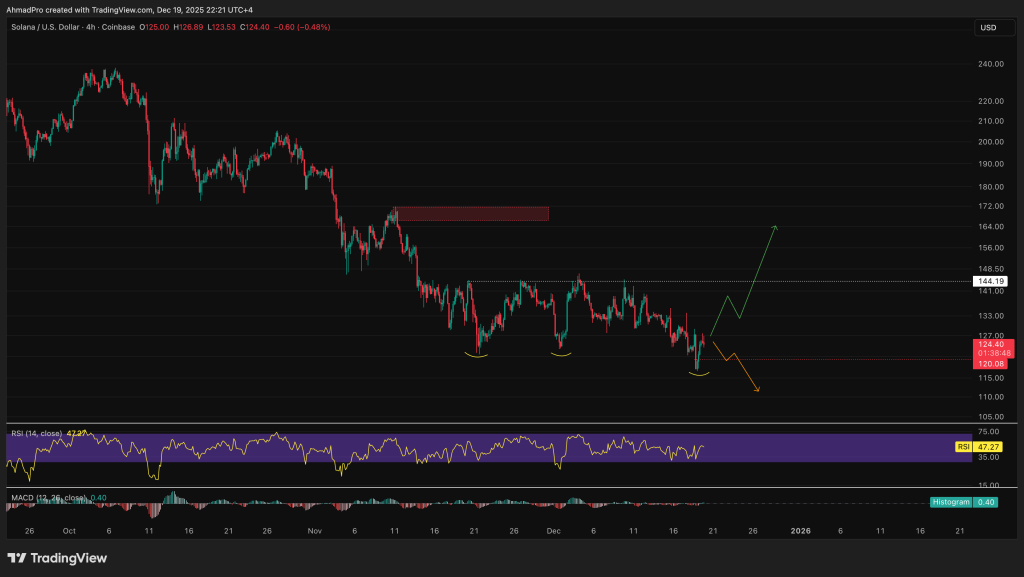
Solana is currently bouncing just to survive. It has been trading in the $144 to $120 range for a good while now. A move below $120 would mean breaking an 18 month support level for Solana, which is something bulls do not want to see.

The bounce pushed RSI back to neutral levels around 47, but if momentum does not pick up, a dip toward $100 becomes very likely.

This setup remains valid as long as Solana does not break above $144 and regain the momentum it showed earlier this year.

Bitcoin Hyper ($HYPER) Might Be The Layer 2 Of Choice For 2026

Bitcoin Hyper ($HYPER) is starting to stand out as one of the few projects still building aggressively while the broader market struggles. Instead of competing with altcoins directly, Hyper is targeting Bitcoin’s biggest weakness: speed and usability.

Built as a Bitcoin Layer 2 powered by Solana-style performance, Bitcoin Hyper unlocks fast transactions, low fees, and full access to DeFi, staking, NFTs, and meme coins, all while staying anchored to Bitcoin’s security. Through the Hyper Bridge, users can move BTC onto the Hyper network and receive a 1:1 representation with near-instant finality.

This effectively turns idle Bitcoin into a productive asset, opening the door to yields, payments, and on-chain applications that were previously impossible on Bitcoin itself.

Early interest has been strong, with Bitcoin Hyper already raising over $29.6M from investors betting that Bitcoin-based DeFi will be one of the dominant narratives going into 2026. The project is also offering a 39% APY staking option for early participants, which has helped drive demand even during market weakness.

As capital rotates away from overextended altcoins and back toward Bitcoin-centric ecosystems, Bitcoin Hyper is positioning itself as a core infrastructure play rather than a short-term hype trade.

Visit the Official Bitcoin Hyper Website Here

The post Solana Price Prediction: Can SOL Reverse The Massive 40% YoY Price Collapse? appeared first on Cryptonews.

ECB Confirms DLT Transactions Coming in 2026 as Digital Euro Privacy Debate Heats Up

The European Central Bank has confirmed that it will begin allowing blockchain-based transactions to settle in central bank money in 2026, as political attention increasingly shifts to the unresolved privacy questions surrounding the proposed digital euro.

In a statement released Friday, ECB executive board member Piero Cipollone said the institution is preparing to make distributed ledger technology settlements possible within its existing monetary infrastructure next year.

The public and private sector must work together to shape the future of money, says Executive Board member Piero Cipollone at @AspenInstitute. By offering pan-European money, infrastructures and standards, we support integrated, safe and innovative payments… pic.twitter.com/uWHCbXHJdX

— European Central Bank (@ecb) December 19, 2025

At the same time, he said the ECB is continuing technical work on the digital euro, a central bank digital currency that would function as a digital form of cash across the euro area.

The move marks a concrete step toward integrating blockchain-based systems into Europe’s financial plumbing.

ECB Readies Digital Euro System, Puts Decision in Lawmakers’ Hands

Under the plan, transactions executed on DLT platforms would be able to settle directly in central bank money rather than relying on private intermediaries.

The ECB has argued that this is necessary to prevent fragmentation in tokenized markets and to ensure that new digital asset ecosystems continue to rely on a risk-free public settlement asset.

Cipollone said the digital euro infrastructure would also be designed to interact with other central bank digital currencies, allowing institutions to use it for cross-border payments.

He added that safeguards such as holding limits and the absence of interest payments would be built in to prevent large-scale shifts of deposits away from commercial banks, preserving their role in credit creation and monetary transmission.

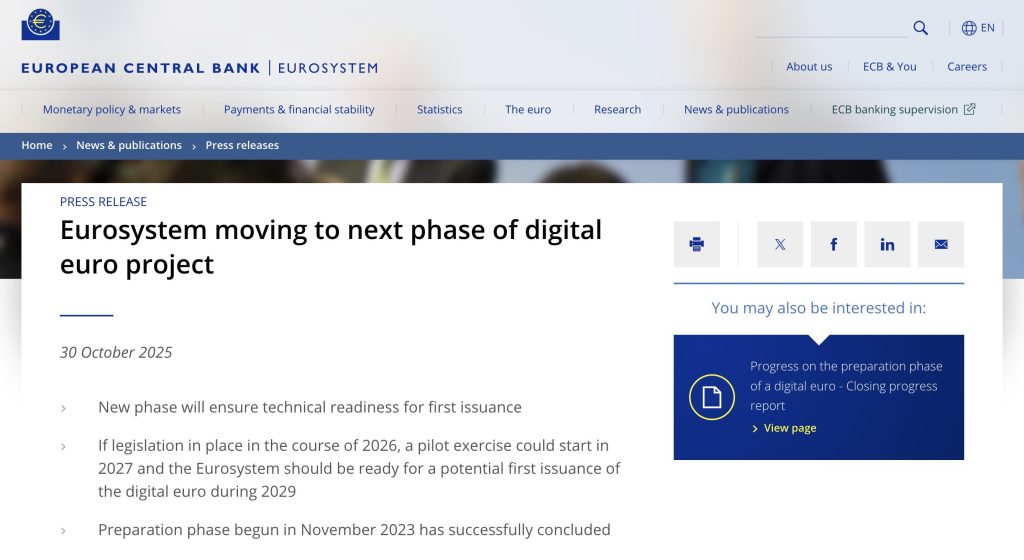
The ECB’s technical preparations are largely complete, following a two-year preparation phase that ended in October 2025.

Source: ECB

The project has now moved into a readiness phase, with the central bank selecting potential system providers and testing settlement mechanisms.

However, officials have stressed that the ECB cannot proceed without a legal framework approved by EU lawmakers.

ECB President Christine Lagarde stated this week that the central bank’s design work is finished and that responsibility now lies with political institutions.

🇪🇺 ECB President Christine Lagarde said that the digital euro is technically ready and is now awaiting legislative approval.#ECB #DigitalEuro #EUStablecoinhttps://t.co/4cdYV6UdSJ

— Cryptonews.com (@cryptonews) December 19, 2025

If the legislation is adopted in 2026, pilot transactions using the digital euro could begin in mid-2027, with the ECB aiming to be ready for a first issuance in 2029.

ECB Promises Privacy, but EU Rules Complicate the Digital Euro Vision

As the timeline becomes clearer, the debate over privacy has intensified.

The ECB has consistently said it does not support a programmable digital euro that would restrict how users can spend their money.

It has also proposed an offline payment option that would allow low-value transactions to take place without being recorded on a central ledger, offering privacy protections comparable to cash.

Source: ECB

Offline balances would be stored locally on devices or smart cards, enabling device-to-device payments without third-party validation.

These assurances contrast with broader regulatory trends in the European Union.

Recent EU proposals on data retention and anti-money laundering have raised concerns among privacy advocates, particularly as new AML rules are set to ban crypto accounts that allow transaction anonymization from 2027.

🧑🏻‍💻 July 2027 triggers a compliance countdown for blockchain companies in the EU who must shut down anonymous crypto accounts or risk expulsion.#EU #CryptoAccountshttps://t.co/Oa89JRaSmg

— Cryptonews.com (@cryptonews) May 2, 2025

Critics argue that these policies risk undermining the privacy guarantees promised for a digital euro, even if the ECB itself does not seek access to user data.

Political negotiations are now underway as the Council of the EU agreed on December 19 on its negotiating position for the digital euro’s legal framework, clearing the way for talks with the European Parliament, which is expected to finalize its stance by May 2026.

ECB officials have described discussions among member states as constructive but have acknowledged that privacy, data access, and democratic oversight remain contentious issues.

Public interest also remains uncertain. An ECB consumer survey published in March found that many Europeans see little need for a digital euro and prefer existing payment methods, including cash and bank accounts.

💶 A new European Central Bank (ECB) report highlights Europeans' reluctance to adopt the digital euro, posing challenges for its planned rollout.#ECB #DigitalEuro https://t.co/3IIUvpseRd

— Cryptonews.com (@cryptonews) March 13, 2025

While the ECB has said adoption levels would not threaten financial stability, it has acknowledged that public trust and education will be critical.

The post ECB Confirms DLT Transactions Coming in 2026 as Digital Euro Privacy Debate Heats Up appeared first on Cryptonews.

Weekly Regulation Roundup: Pardons, Pullbacks, and a Pro-Crypto Reset in Washington

U.S. crypto regulation entered a new phase this week marked by a convergence with leadership changes and a visible retreat from the enforcement-heavy posture that defined the previous regulatory cycle.

From President Donald Trump’s openness to reviewing a high-profile crypto conviction to sweeping changes at the SEC, CFTC and Federal Reserve, the direction of travel is becoming increasingly clear: Washington is recalibrating its approach to digital assets.

Trump Shows Openness to Reviewing Samourai Wallet Case

Earlier this week President Donald Trump indicated he is willing to review a potential pardon for Keonne Rodriguez, founder and CEO of privacy-focused Bitcoin wallet Samourai, who was sentenced last month to five years in federal prison on money laundering charges.

During an Oval Office session on Monday, Trump responded to a reporter’s question by acknowledging awareness of the case and instructing Attorney General Pam Bondi to examine it.

While no formal review has been announced the remarks alone are notable given the broader context of crypto-related enforcement pullbacks under the Trump administration.

The Samourai case has become a flashpoint in debates over financial privacy, open-source software liability, and the limits of money transmission laws when applied to non-custodial tools.

Trump’s comments suggest the White House may be open to reassessing cases viewed by parts of the crypto community as regulatory overreach.

Senate Confirms Mike Selig as CFTC Chair, Clearing Leadership Logjam

In a parallel shift, the U.S. Senate confirmed crypto-friendly lawyer Mike Selig as the next chair of the Commodity Futures Trading Commission ending months of leadership uncertainty at the derivatives regulator. The confirmation passed 53–43 as part of a broader slate of federal nominees.

🇺🇸 The Senate finally confirms @MichaelSelig as the new @CFTC Chair, ending a long leadership vacuum and setting the stage for clearer U.S. crypto regulation. #CFTC #MikeSelig https://t.co/IvLEpQhesH

— Cryptonews.com (@cryptonews) December 19, 2025

Selig is widely viewed as supportive of clearer market structure rules for digital assets and a more predictable regulatory framework. His arrival is expected to accelerate rulemaking around crypto derivatives and spot market oversight, particularly as jurisdictional debates between the CFTC and SEC remain unresolved.

This confirmation also clears the way for Acting Chair Caroline Pham to exit the agency and move into the private sector.

Caroline Pham to Join MoonPay as Revolving Door Turns

Caroline Pham who has served as Acting CFTC Chair confirmed she will depart the regulator to join crypto payments firm MoonPay once Selig is sworn in. Pham wrote on X she looked forward to a smooth transition calling the future “bright.”

Her move shows the increasingly porous boundary between crypto regulation and industry, a dynamic likely to intensify as enforcement pressure eases and policy clarity improves. While such transitions raise perennial questions about the revolving door, they also reflect growing institutional confidence in the sector’s long-term legitimacy.

SEC Enforcement Retreat Accelerates Under Trump

Perhaps the most striking development came from a report indicating the Securities and Exchange Commission has dropped, paused, or dismissed nearly 60% of its crypto-related enforcement cases since Trump returned to office.

According to The New York Times while enforcement continues across traditional markets, crypto cases have been disproportionately affected. The shift is a sharp departure from the aggressive posture taken between 2021 and 2024, when the SEC pursued dozens of actions against exchanges, DeFi protocols, and token issuers.

The trend was reinforced this week by reports that the SEC has formally dropped its four-year investigation into Aave following what sources described as a “significant” defense effort. Together, the developments point to a reassessment of litigation-heavy regulation in favor of clearer rules.

Fed Reverses Crypto Banking Restrictions, Custodia Back in Focus

The Federal Reserve also moved to unwind prior crypto restrictions, withdrawing its 2023 policy statement that effectively barred banks from engaging in crypto-related activities and blocked Custodia Bank’s master account application.

Vice Chair for Supervision Michelle Bowman said the reversal aims to support responsible innovation while maintaining safety standards. The move comes as Custodia continues to challenge its exclusion from the Fed system, amid broader scrutiny of “debanking” practices that sidelined crypto firms between 2020 and 2023.

The policy shift reopens the door for regulated crypto banks to access core financial infrastructure — a important step for institutional adoption.

Congress Targets Scams as Enforcement Focus Shifts

Even as agencies pull back from broad enforcement, lawmakers are signaling that fraud remains a red line. Senators Elissa Slotkin and Jerry Moran introduced the bipartisan SAFE Crypto Act naimed at combating crypto-related scams after reported losses hit $9.3 billion.

The bill proposes a dedicated federal task force to improve coordination between regulators, law enforcement, and the private sector, reflecting a more targeted approach: protect consumers from fraud.

A Regulatory Reset Takes Shape

Taken together, this week’s developments suggest a decisive pivot in U.S. crypto policy. Enforcement-first strategies are giving way to pardons, leadership changes, institutional access, and narrower fraud-focused oversight.

For the industry, the message is mixed but unmistakable: the era of blanket hostility is fading, but scrutiny is not disappearing — it is being reshaped.

The post Weekly Regulation Roundup: Pardons, Pullbacks, and a Pro-Crypto Reset in Washington appeared first on Cryptonews.

XRP ETFs Grow Past $60M As Price Struggles To Respond

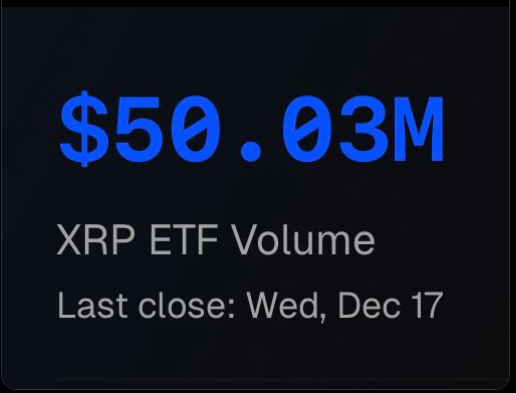
XRP-linked exchange-traded funds reached about $60 million in assets under management on December 17, according to market reports, even as XRP’s spot price slid.

At the time of reporting, XRP was trading around $1.86, down more than 8% in the last week. That gap between ETF growth and a falling spot price has left some investors puzzled.

ETF Flows And How They Work

According to Chad Steingraber, the way ETFs operate helps explain the disconnect. ETF shares trade on exchanges like regular stocks during market hours.

Fund managers then tally net flows at the end of the trading day and arrange purchases of the underlying XRP after the market closes. Because of that timing, ETF inflows do not always translate into instant buying pressure on the spot market.

Officially crossed $60Million!

Record day! https://t.co/Nub2m5MK0Y pic.twitter.com/xg2zgecq24

— Chad Steingraber (@ChadSteingraber) December 18, 2025

Institutional Processes Take Time

Based on reports, part of the picture is the nature of institutional decision-making. Large funds tend to move slowly. They run checks, review risk, and take time to approve new positions.

That process can take months or longer. So an increase in ETF AUM can reflect careful planning and staged capital allocations rather than a rush of short-term bets.

Price Action Shows Technical Weakness

On charts, XRP has been under pressure for months. Traders watching longer time frames point to a steady downtrend and multiple warnings of a broader pullback since mid-year.

The token has slid about 12% over the past month. Support between $1.80 and $1.90 is now being tested. A sustained break below $1.80 would likely shift focus to $1.60, and then to a wider support band near $1.30 to $1.40 if selling continues.

ETF Growth Still Small In Context

While $60 million sounds meaningful, that sum is small compared with AUM levels seen in larger crypto ETFs, and it may not be enough on its own to move markets.

ETF structures differ, too. Some managers may hedge, use staged buys, or employ other tactics that change how and when they add XRP to reserves. These operational choices can mute any immediate impact on price.

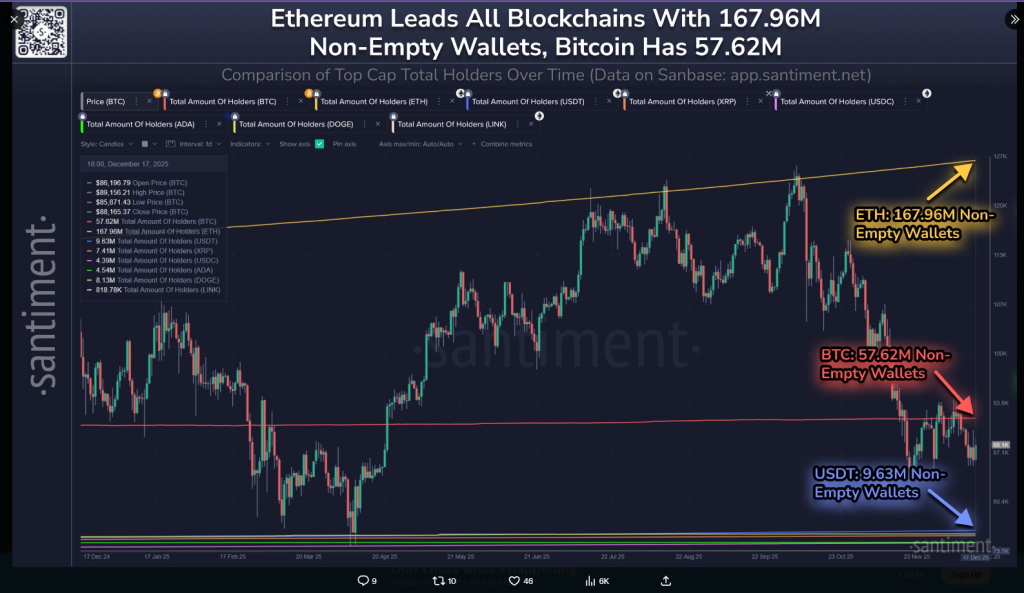
📊 Among top cap assets, here are the amount of non-empty wallets on each network currently:

🪙 Ethereum $ETH: 167.96M 🪙 Bitcoin $BTC: 57.62M 🪙 Tether $USDT: 9.63M 🪙 Dogecoin $DOGE: 8.13M 🪙 XRP Ledger $XRP: 7.41M 🪙 Cardano $ADA: 4.54M 🪙 USD Coin $USDC: 4.39M 🪙 ChainLink… pic.twitter.com/ciRBUp4GxE

— Santiment (@santimentfeed) December 18, 2025

Non-Empty XRP Wallets Steadily Climbing

Meanwhile, reports show that the number of non-empty wallets on the XRP Ledger has been climbing. Santiment has highlighted rising counts of addresses holding some XRP.

Over the past month, while the token fell in price, on-chain wallet activity suggested accumulation by some holders. That pattern raises questions about whether larger buyers are quietly adding to positions.

What This Means For Traders

For now, markets show mixed signals. ETF AUM growth points to rising institutional involvement over time. Price action, however, signals caution.

Traders and investors will be watching whether end-of-day ETF purchases increase demand on the spot market, and whether the $1.80 level holds.

The coming days and weeks may help reveal whether AUM gains translate into broader buying or if technical pressure continues to dominate.

Featured image from Unsplash, chart from TradingView

Another XRP Milestone: Ripple Exec Celebrates RLUSD Anniversary With $1 Billion Market Cap

Ripple’s U.S. dollar–backed stablecoin RLUSD has reached a $1 billion market capitalization just one year after launch, marking another milestone for XRP and the broader Ripple ecosystem. The milestone was highlighted by Ripple executive Jack McDonald, who pointed to a combination of regulatory compliance, institutional infrastructure, practical usage, global expansion, and multichain interoperability as the key factors driving RLUSD’s growth. Together, these developments justify the stablecoin’s rapid ascent.

Building RLUSD Into A $1 Billion Trusted Asset With Ripple And XRP

RLUSD’s rise to a $1 billion valuation on its first anniversary was shaped by deliberate structural decisions before launch. Ripple designed the stablecoin to operate within U.S. regulatory frameworks, combining state-level licensing with federal oversight via the OCC’s conditional approval of its national trust bank charter. This dual-layer compliance gave financial institutions immediate clarity on governance, reserve management, and operational standards, paving the way for quick adoption.

As institutional demand grew, RLUSD issuance expanded in line with actual usage, helping it surpass the $1 billion market cap in November 2025 and secure a position among the top five USD-backed stablecoins globally. Confidence in the stablecoin was reinforced through robust infrastructure choices: Ripple selected BNY Mellon to custody RLUSD reserves, while Deloitte’s independent attestations provided transparency into its backing and operational controls. These measures strengthened institutional trust and enabled RLUSD’s steady expansion into professional financial environments.

Moreover, within Ripple’s ecosystem, RLUSD complements XRP by providing a regulated dollar instrument for settlement, liquidity management, and institutional treasury functions, while XRP continues to support cross-border transfers and on-chain liquidity. Together, two assets form an integrated framework that has underpinned RLUSD’s expansion and milestone achievement.

Institutional Adoption And Global Market Integration

Beyond compliance, RLUSD’s growth has been driven by practical adoption and real-world financial usage. The stablecoin serves as a 24/7 off-ramp for tokenized products, including funds issued by BlackRock and VanEck, allowing smooth movement between tokenized assets and traditional cash positions. Its role extends into capital markets activity, with repo trades and money market fund operations enabled through partnerships with global banks and asset managers, embedding RLUSD directly into institutional workflows rather than peripheral use cases.

RLUSD’s international footprint has expanded alongside its domestic adoption. Recognition in financial hubs such as Dubai (DFSA) and Abu Dhabi (FSRA) enables cross-border operations while maintaining regulatory consistency. Ripple has also extended RLUSD across multiple layer-two blockchain networks, including Optimism, Base, Ink, and Unichain via Wormhole’s NTT standard, increasing interoperability and access to liquidity throughout the ecosystem.

By its one-year anniversary, RLUSD has established itself as a core component of Ripple’s financial infrastructure, demonstrating that trust, compliance, structural design, institutional adoption, and cross-chain expansion can drive rapid, sustainable market growth while achieving a top-five USD stablecoin status.

XRP price chart from Tradingview.com

❌