Ethereum needs to break an important resistance level to trigger a potential surge as futures outflows take over the market. Notably, Ethereum (ETH) has seen a 3.7% drop in the last 24 hours, currently trading at $3,202.
Charles Hoskinson, the founder of Cardano, has continued to express his belief that the Midnight project will be a massive success. Speaking in a recent podcast, Hoskinson projected that Midnight would expand well beyond its current valuation.
Bhutan has introduced a gold-backed digital asset named TER, marking its latest move toward broader adoption of blockchain technology. The token, issued by the Gelephu Mindfulness City (GMC) Special Administrative Region, is supported by physical gold and runs on the Solana network.
While Bitcoin has outperformed XRP over the past five months, analyst Javon Marks believes XRP could flip the switch, leading to a two-digit price target. Bitcoin (BTC), XRP, and the rest of the crypto market have maintained a downward trend since October 2025, with the global crypto market cap losing over $800 billion in valuation within this period.
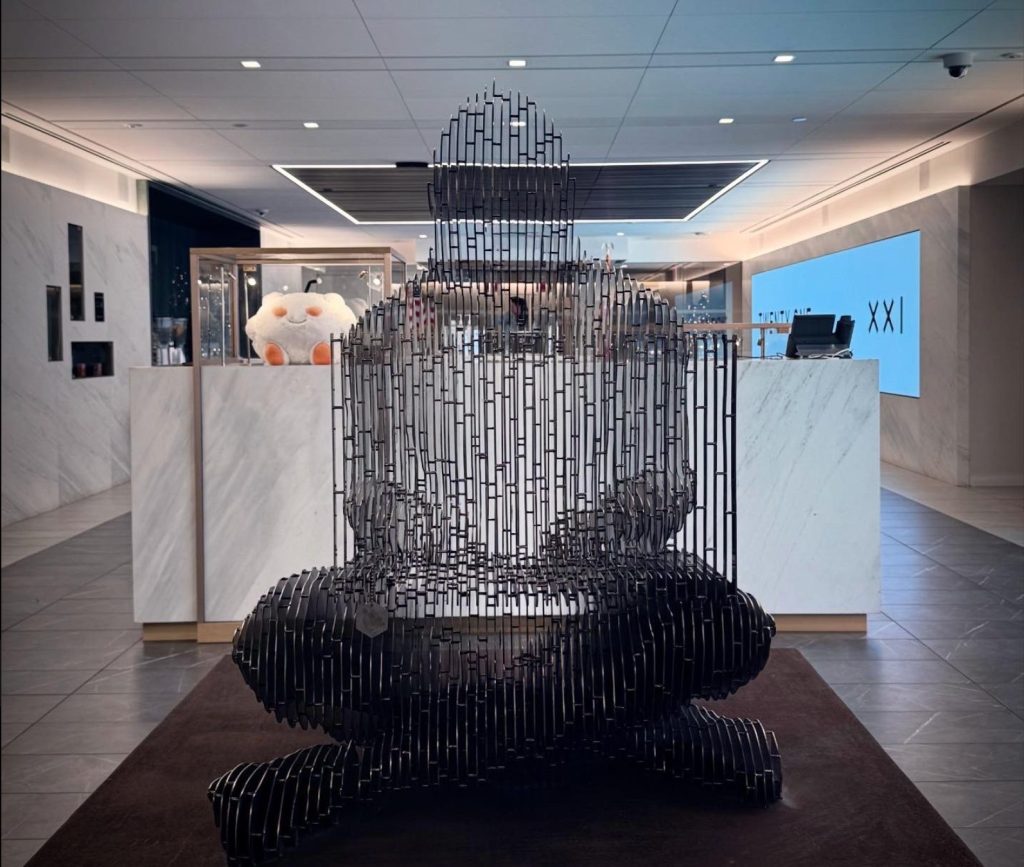
The New York Stock Exchange welcomed a bronze statue of Bitcoin creator Satoshi Nakamoto on Thursday.
Twenty One Capital, the first Bitcoin-native public company listed on the NYSE under ticker XXI, placed the sixth of 21 planned global monuments at the exchange as crypto markets navigate Federal Reserve policy uncertainty.
The installation by artist Valentina Picozzi represents what NYSE officials described as “shared ground between emerging systems and established institutions.”
Twenty One CEO Jack Mallers, who also founded Lightning Network payment provider Strike, said the placement reflects Bitcoin’s evolution from code to cultural phenomenon.
However, according to Bloomberg, the company’s stock tumbled 19% on its Tuesday trading debut following a blank-check merger.
Monument Placement Follows Switzerland Vandalism and Global Campaign
Picozzi expressed astonishment at the achievement, stating the NYSE location exceeded “our wildest dream” for the statue series.
This is such an achievement, even in our wildest dream we wouldn’t think about placing the statue of Satoshi Nakamoto in this location!
The 6th/21 statues of Satoshi Nakamoto found its home in the NYSE.
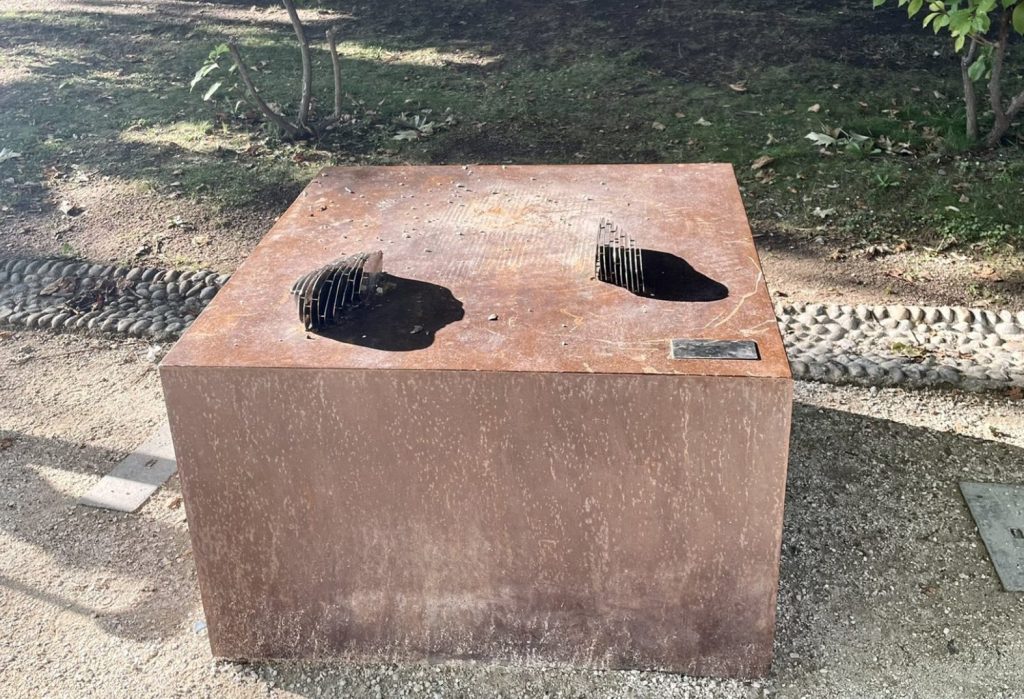
Local investigators suspected intoxicated revelers used tungsten carbide cutting disks and petrol-powered angle grinders to sever the welded bronze sculpture from its base, leaving only the feet attached.
At that time, Satoshigallery, the art collective behind the global campaign, offered a 0.1 Bitcoin reward worth approximately $12,000 for information leading to the recovery of the stolen statue.
The group condemned the vandalism while vowing to continue their mission, declaring, “You can steal our symbol but you will never be able to steal our souls.”
The Lugano theft marked the first major incident affecting official Satoshi monuments since Budapest unveiled the world’s first installation in September 2021.
The global campaign aims to install 21 monuments representing Bitcoin’s 21 million coin supply cap, with existing statues in Budapest, El Salvador’s Bitcoin Beach, Tokyo, and now New York.
Budapest’s original bronze bust featured a faceless, hooded figure with a mirrored surface embodying the “we are all Satoshi” symbolism, while Picozzi’s “Disappearing Satoshi” design depicts a seated figure at a laptop that vanishes when viewed from different angles.
Twenty One Capital Faces Market Headwinds Despite Bitcoin Holdings
Twenty One Capital holds approximately 43,500 bitcoins, valued at over $3.9 billion, making it the world’s third-largest corporate holder.
The company merged with Cantor Equity Partners, a special-purpose acquisition company backed by investment firm Cantor Fitzgerald, and chaired by Brandon Lutnick, son of Commerce Secretary Howard Lutnick.
The deal included $486.5 million in senior convertible notes and roughly $365 million in common equity through private investment transactions.
Despite the volatility, Mallers emphasized that Twenty One differs from rivals by not trading at a premium to net asset value and plans to launch products and utility services beyond simply accumulating Bitcoin.
The company is majority-owned by stablecoin giant Tether and crypto exchange Bitfinex, with minority investment from Japanese technology investor SoftBank Group.
Fed Policy Clouds Bitcoin Rally as Traders Reassess Rate Path
Chair Jerome Powell described the reduction as further policy normalization while projecting only one additional cut in 2026, fewer than investors hoped.
Futures now imply a 78% chance that rates remain unchanged at the next meeting, up from 70% before the decision.
Speaking with Cryptonews, Ray Youssef, CEO of NoOnes, outlined two scenarios depending on Fed guidance.
“A dovish Fed tone could open the door to renewed risk-on sentiment, triggering a ‘Santa rally’ for digital assets, with BTC reclaiming $100,000,” he said, while warning that “a more cautious or hawkish FOMC message” could “drive a retest of the mid $70,000s, as defensive derivatives positioning accelerates downside moves.”
He emphasized that Bitcoin’s recovery hinges on renewed capital inflows rather than reduced selling pressure, noting ETF inflows remain shallow and market depth thin.
Norway pauses CBDC plans, saying its current payment system remains secure and efficient.
Central bank will keep studying retail and wholesale CBDCs as payment habits evolve.
Norges Bank shifts focus to tokenisation tests while monitoring global digital-currency moves.
Norway has decided that its payment system works well enough without introducing a central bank digital currency right now, even after several years of research into the idea.
The decision reflects how stable and efficient the country’s existing infrastructure has remained, despite Norway being one of the world’s most cash-light economies.
It also shows that the priority for the central bank is making sure payments keep functioning securely rather than rushing to release a digital krone before it is needed.
Norges Bank announced on Wednesday that a CBDC is not necessary at this stage, following a broad assessment of how a digital version of the krone might support payment security and efficiency.
Cash use in Norway has continued to fall to some of the lowest levels globally, which had intensified discussions about whether the country required a digital option to keep the national currency attractive for consumers, banks and merchants.
The central bank said the current system offers stable operations, fast settlement, low economic costs, and strong contingency arrangements.
It also noted that several projects are already in place to strengthen these backup systems further.
Decision timing
The central bank made clear that its decision is not permanent and that the question could return as payment habits evolve.
Norges Bank said it wants to be ready to introduce a digital krone if it becomes necessary to maintain a secure and efficient system.
The bank continues to distinguish between two main CBDC models.
A retail CBDC would act as a widely accessible means of payment, similar to physical cash or bank deposits.
A wholesale CBDC would be designed only for financial institutions and would allow interbank transactions through tokenised units recorded in a digital ledger based on blockchain technology.
CBDC types
This distinction has shaped much of Norway’s work so far.
A retail model would give everyday users direct access to central bank money in digital form, while a wholesale model would mirror existing deposits at the central bank using tokenised units.
Both versions remain under study as part of Norway’s broader assessment of future payment needs.
The country’s low reliance on cash had previously added urgency to these evaluations.
Yet Norges Bank concluded that keeping the existing system strong and reliable is the immediate priority, with a CBDC being considered only if payment risks or gaps emerge down the road.
Tokenisation tests
Although Norway is pausing on a digital krone, it is increasing its focus on tokenisation.
The bank said token-based systems can improve efficiency, enable innovation and reduce settlement risk.
It also warned that uncertainty remains about how widely tokenisation will be used and what kinds of risks may appear as the technology grows.
Norges Bank plans to continue practical experiments in collaboration with industry players to understand how tokenised solutions function in real transactions.
These tests are part of a broader strategy to prepare for future developments in digital finance, even without committing to a CBDC at this stage.
The central bank will publish a detailed report on its CBDC research in the first quarter of next year.
This will outline the work completed so far, its next steps, and how it plans to monitor progress in other regions.
Norway is watching international projects closely, including the Eurosystem’s work on a possible digital euro and emerging global standards that may support shared CBDC systems in the future.
Satoshi Nakamoto statue arrives at NYSE, marking crypto’s growing Wall Street acceptance.
Artwork joins global series as Bitcoin’s history and mainstream adoption gain symbolic recognition.
Institutional embrace of Bitcoin accelerates as public entities hold over 3.7M BTC.
The New York Stock Exchange has become the latest home for Valentina Picozzi’s “disappearing” Satoshi Nakamoto statue, signalling how far digital assets have travelled since the time when crypto was treated as unwelcome on Wall Street.
The arrival of the piece was announced in an X post on Wednesday, positioning the NYSE as shared ground for traditional finance and emerging decentralised systems.
The installation also aligns with the anniversary of the Bitcoin mailing list, launched on 10 December 2008, adding symbolic weight to a moment that highlights Bitcoin’s shift from niche idea to mainstream fixture.
NYSE installation
The statue was brought to the NYSE by Bitcoin company Twenty One Capital, which began trading this week.
The artwork itself is by Picozzi, who has been developing her “disappearing” Satoshi series under her Satoshigallery handle.
The New York installation is the sixth piece in a global project she plans to expand to 21 locations.
Her post on X described the placement at such a prominent financial centre as a milestone for the ongoing series.
The display at the NYSE contrasts sharply with the period when crypto was considered taboo across Wall Street.
Bitcoin’s long path
The statue’s arrival coincides with a key date in Bitcoin’s history, falling close to the anniversary of the Bitcoin mailing list launched by Satoshi Nakamoto on 10 December 2008.
Nakamoto mined the genesis block on 3 January 2009, creating the first 50 Bitcoins and setting the foundation for the wider industry.
More than a year after that, on 22 May 2010, Laszlo Hanyecz made the first documented Bitcoin purchase, spending 10,000 Bitcoin to buy two Papa John’s pizzas.
In the years that followed, the asset faced significant resistance.
Institutions and banks kept their distance, and governments attempted to restrict crypto activity through actions widely described as part of Operation Chokepoint 2.0.
Even high-profile sceptics in global finance dismissed the technology before eventually revising their positions.
Institutional shift
The landscape began to change when major financial figures, such as BlackRock’s Larry Fink, shifted from doubt to active interest.
Wall Street institutions moved quickly, increasing participation through exchange-traded funds and direct Bitcoin purchases for corporate treasuries.
Public companies, private companies, countries, and ETFs now hold more than 3.7 million Bitcoin collectively, according to Bitbo.
The total value exceeds 336 billion dollars, showing how deeply Bitcoin has entered mainstream portfolios.
Against this backdrop, the installation at the NYSE serves as a visible marker of how crypto has become integrated into financial culture instead of remaining an outsider technology.
Global statue project
Picozzi’s work has taken the Nakamoto figure to five other locations: Switzerland, El Salvador, Japan, Vietnam, and Miami, Florida.
The collection is intended to reach 21 statues worldwide, a nod to Bitcoin’s capped supply of 21 million tokens.
Her design centres on the idea of disappearance, with the figure positioned as if fading into its surroundings.
The artwork depicts Nakamoto as a hacker in a familiar seated pose, laptop open, representing both the anonymity of Bitcoin’s creator and the programmers who built the broader ecosystem.
The NYSE installation marks the latest step in Picozzi’s effort to trace Bitcoin’s cultural footprint through public art, linking major global locations with the technology’s origins and evolution.
A new “disappearing” Satoshi Nakamoto statue by Valentina Picozzi has been installed at the NYSE, marking Bitcoin’s cultural rise as institutions accumulate millions of BTC. A statue depicting Bitcoin creator Satoshi Nakamoto has been installed at the New York Stock…
Blockstream’s wallet now supports trustless Lightning–Liquid swaps via Boltz, letting users pay Lightning invoices with LBTC while planning future on-chain swap support. Blockstream Adds Lightning-Liquid Swap Feature to Mobile Wallet via Boltz Integration Blockstream has released an update to its…
Galaxy Digital opens an Abu Dhabi office under ADGM, deepening its Middle East footprint as UAE regulators fast-track major exchanges and stablecoin issuers. Digital asset firm Galaxy Digital has established a new entity in Abu Dhabi as part of its…
Polkadot trades near $2 inside a long-term accumulation “home” range flagged since 2022, where Egrag Crypto sees structural support but no confirmed bottom yet. Polkadot (DOT) traded near $2 on Friday as the cryptocurrency returned to a price level chart…
Stellar prints a fresh TD Sequential ‘9’ buy on weekly support, echoing a prior setup that preceded a strong XLM rally, but confirmation still hinges on demand. Stellar (XLM) has generated a technical buy signal on its weekly chart, according…
ETH is rallying on whale accumulation, renewed spot ETF inflows, and improving risk sentiment as traders watch December seasonality, Fed policy, and $4k resistance. Ethereum posted gains as cryptocurrency market sentiment improved ahead of the U.S. Federal Open Market Committee…
Ark Invest CEO Cathie Wood says Bitcoin’s long-running four-year pattern may be losing its grip as big financial players buy and hold more of the supply, a shift that could tame price swings and change how investors plan ahead.
Institutional Buying Is Changing Markets
According to Wood, large firms and spot ETFs are slowly locking up coins that used to flow in and out of retail hands. The most recent halving, on April 20, 2024, cut the miner reward to 3.125 BTC.
On a daily basis, that reduction translated to about a 450 Bitcoin drop in supply each day, a figure some analysts call small compared with the trillions attributed to the market’s value and the billions moving into ETFs.
Ark has been active too, buying shares in Coinbase, Circle and its own Ark 21Shares Bitcoin ETF (ARKB), a signal that institutional demand is more than a rumor.
Cycle Rules Are Being Questioned
Based on reports from banks and crypto firms, the familiar cycle—rises tied to halvings followed by deep crashes of 75–90%—is under debate.
Standard Chartered cut its 2025 price forecast from $200,000 to $100,000, arguing ETF inflows weaken the halving’s price punch.
Bitwise’s Matt Hougan and CryptoQuant founder Ki Young Ju have said institutional flows have changed or even erased the classic rhythm.
Markets hit a peak near $122,000 in July, and some analysts now say future drawdowns may be shallower, in the 25% to 40% range rather than the extreme collapses seen earlier.
Market Structure Still Shows Old Patterns
Not all evidence points to a finished cycle. Reports published by on-chain analytics firms such as Glassnode show behaviors among long-term holders that look like past up-and-down swings.
Demand from late-cycle buyers has softened in ways that mirror prior years, according to that research. It is being argued that halvings remain meaningful interruptions inside a longer trend, not irrelevant events.
Macro observers add that broader economic forces—rates, fiat liquidity, and institutional appetite—are increasingly important in the price story.
Investors should expect longer moves more often, with rallies stretching over more months and volatility generally lower, analysts say.
Wood suggested volatility is falling and that markets may already have hit a low a couple of weeks earlier.
Featured image from Unsplash, chart from TradingView
Crypto venture capital firm Andreessen Horowitz (A16z) has opened its first Asian office in Seoul, South Korea, signaling a deeper push into the region where on-chain activity and user adoption have surged. According to the firm, the new hub will support portfolio companies and help build local partnerships and communities.
A16z Moves Into Seoul
The office will be led by Sungmo Park, who has held roles at Monad and Polygon, and who joins a16z as Head of APAC go-to-market. Reports have disclosed that Anthony Albanese, the fund’s chief operating officer, announced the move and framed it as a way to put teams closer to where users and builders are located.
I’m honored to share that I will be joining @a16zcrypto as Head of APAC go-to-market.
a16z crypto backs exceptional founders, providing not just capital but also hands-on support to help them grow into transformative companies.
Now, a16z crypto is opening an office in Seoul and…
A16z said Seoul will act as a gateway for interacting with companies across Asia and for giving portfolio firms local support on partnerships, marketing and expansion. Park will focus on regional strategy and on helping founders navigate local markets. This is not described as a small PR outpost; it is positioned as a real operating base for the region.
Excited to announce that @a16zcrypto is expanding into Asia and opening our first office in Seoul, South Korea. As part of this, we’re thrilled to have @sungmo_apac16z join our team as Head of APAC go-to-market to lead the Seoul office and start building our presence in the… pic.twitter.com/KBljioBCqx
Based on reports, Asia-Pacific recorded about US$2.36 trillion in on-chain value over the 12 months ending June 2025, an increase of close to 70% from the prior year. That growth helped convince a16z that Asia needs a local presence. Chainalysis and several industry trackers show heavy on-chain flows and deep retail participation across the region.
Our latest State of Crypto report shows that onchain users are widely distributed around the world, with a particularly strong concentration in Asia. It now represents a significant share of global crypto activity, for example:
South Korea itself is highlighted as one of the largest national crypto markets. According to a16z and other coverage, nearly one in three adults in South Korea hold crypto assets — a rate that in some measures is higher than local stock ownership. That level of retail use, plus a thriving developer community, made Seoul an attractive choice for the firm.
What The Move Could Mean
The entry of a major US venture firm into Seoul may boost interest among local startups seeking international partners and could make capital more accessible for teams in South Korea and nearby markets. Several news outlets describe the office as focused on go-to-market support rather than immediate, large-scale local investing, at least at launch.
Competition For Deals
Reports note that other global funds and crypto firms have been increasing activity in Asia this year. A16z’s decision comes as several markets across the region report rising developer activity and fresh funding rounds. For founders, having an established US investor with a local office may speed introductions to global customers and partners.
Featured image from Unsplash, chart from TradingView
Norway rules that a digital krone is unnecessary for now, highlighting its strong payment rails and the uncertain benefits of both retail and wholesale CBDCs.
State Street Investment Management and Galaxy Asset Management are launching a tokenized private liquidity fund on Solana, with Ondo expected to invest $200 million.
The Shiba Inu reserve is drying up on exchanges, with trillions withdrawn over a 24-hour period, sparking sentiments that a recovery could be imminent. Recent on-chain data shows that over 8 trillion SHIB tokens left centralized exchanges in just 24 hours, indicating massive wallet activities.
A well-known XRP educator, X Finance Bull, predicts that XRP could reach $100 within two years as global finance moves fully on-chain. According to him, the coming wave of tokenization will not rely on “hype chains” but on U.S.-built, enterprise-grade technology.
Shiba Inu lead developer Shytoshi Kusama resurfaced on X this week after an 84-day absence. His return coincided with an increase in large SHIB transactions, which rose to their highest levels since June, according to on-chain data.

 Login
Login




 Bitcoin dipped Thursday even as stocks rallied on the Fed’s rate cut and Powell’s upbeat outlook, with policymakers signalling only modest easing ahead.





 South Korea is the second-largest crypto market…