Reading view

There are new articles available, click to refresh the page.

Malaysia’s Crown Prince Launches $121M Crypto Treasury – Despite Bubble Fears

Malaysia’s Crown Prince has formally stepped into the digital-asset sector with a new state-backed stablecoin initiative and a large crypto-treasury plan, even as concerns grow over whether the global digital-asset treasury boom has already entered a fragile phase.

Bullish Aim Sdn. Bhd., chaired and owned by His Royal Highness Tunku Ismail Ibni Sultan Ibrahim, the Regent of Johor, announced the launch of RMJDT, a ringgit-backed stablecoin issued on Zetrix, the Layer-1 blockchain that powers Malaysia’s national Malaysia Blockchain Infrastructure.

The rollout took place under the supervision of the country’s regulated sandbox, which is overseen by both the Securities Commission and Bank Negara Malaysia, to test financial innovations ranging from stablecoins to programmable payment systems.

🇲🇾 Malaysia's central bank will explore asset tokenization and digital assets, collaborating with the private sector on potential use cases for tokenized deposits and CBDCs.#BankNegaraMalaysia #CBDChttps://t.co/FAnsrg2yY6

— Cryptonews.com (@cryptonews) March 24, 2025

Crown Prince Drives RMJDT Rollout With $121M Digital Asset Reserve

RMJDT is intended to strengthen the ringgit’s profile in cross-border settlements and attract foreign direct investment, echoing Malaysia’s broader push into tokenization and digital-asset modernization.

The Crown Prince said the initiative is part of Johor’s effort to align with the country’s Digital Asset National Policy, which encourages real-world asset tokenization and experiments in supply-chain finance.

Alongside the stablecoin launch, Bullish Aim confirmed plans to establish a Digital Asset Treasury Company with an initial allocation of 500 million ringgit, roughly $121 million, in Zetrix tokens.

The firm intends to expand the treasury to one billion ringgit over time. The treasury will be used to stabilize gas fees for RMJDT transactions and to support up to 10% of validator nodes within the national blockchain infrastructure.

The move draws inspiration from high-profile corporate treasury strategies such as those employed by Strategy, which has accumulated more than 660,000 Bitcoin since 2020.

Additionally, Ismail’s reported $2.7 billion bid for a land deal in Singapore back in August shows how some well-capitalized players are still willing to take major swings, even as worries grow about others mimicking the same strategies.

The Regent of Johor said the Zetrix reserve was necessary to ensure predictable operations and tighter alignment with the national blockchain.
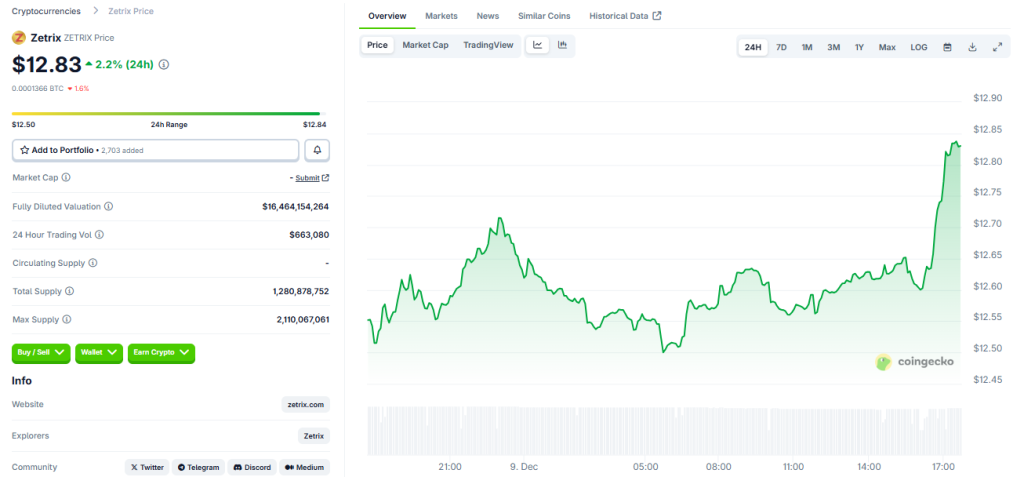
Source: CoinGecko

The launch comes at a time when Zetrix trades around $12.60, well below its peak above $20 recorded roughly a year earlier, according to CoinGecko data.

Malaysia Ramps Up Crypto Treasuries Even as Global Inflows Slow

The timing also places Johor’s initiative inside a broader regional shift. In recent months, Malaysia has seen a series of digital-asset treasury announcements.

On November 12, VCI Global said it would acquire $100 million worth of OOB tokens in a deal that will make Tether the company’s largest shareholder.

🛒 VCI Global has announced plans to acquire $100 million worth of OOB tokens, the native asset of Tether-backed crypto payments company Oobit.#Malaysia #Cryptohttps://t.co/OLLT57dQ9T

— Cryptonews.com (@cryptonews) November 12, 2025

VCI Global plans to fold the token into its AI and fintech platforms and establish its own digital treasury division.

The firm had already purchased $50 million worth of tokens through a restricted share issuance and intends to buy another $50 million on the secondary market after Oobit completes its migration from Ethereum to Solana.

These developments are unfolding as Malaysia’s regulators accelerate reforms to support a more active digital-asset ecosystem.

🔍 @SecComMalaysia proposes regulatory enhancements to the digital asset exchange framework by accelerating token listings. #DigitalAssets #Malaysiahttps://t.co/EV3L8ir6m1

— Cryptonews.com (@cryptonews) July 1, 2025

The Securities Commission has proposed an overhaul of exchange rules after trading volumes more than doubled in 2024 to nearly 14 billion ringgit.

The new framework would allow certain tokens to be listed without prior approval, provided they meet strict criteria, while requiring operators to adopt tighter governance and risk controls.

Source: DefiLlama

But the broader digital-asset treasury sector is showing signs of fatigue. Data from DefiLlama shows corporate crypto treasuries recorded their slowest month of the year in November, with inflows dropping to $1.32 billion, down sharply from September’s peak.

Galaxy Research described the market as entering a “Darwinian phase,” with leverage unraveling and several treasury-backed stocks trading at deep discounts.

Even major players like Strategy, despite adding nearly $1 billion in Bitcoin last week, have seen their equity fall more than 35% over the past month.

The post Malaysia’s Crown Prince Launches $121M Crypto Treasury – Despite Bubble Fears appeared first on Cryptonews.

Bitcoin Price Prediction: BlackRock Doubles Down on Crypto with New ETF Filing – Is a Full-Scale Wall Street Invasion About to Begin?

The world’s largest asset manager, BlackRock, has submitted an S-1 application to launch a staked Ethereum ETF, and analysts believe this Wall Street expansion could permanently alter the Bitcoin price prediction landscape.

BlackRock’s new SEC filing proposes a staking-enabled Ethereum trust that differs from its existing iShares Ethereum Trust (ETHA).

While institutional interest in crypto continues to grow, all eyes are now on where BTC is heading next.

BlackRock Shifts Toward Yield-Bearing Crypto Products

While ETHA tracks spot price movements, the proposed fund would capture both price appreciation and staking yields generated from the trust’s ETH holdings.

The official prospectus filing for ishares Staked Ethereum ETF, their fourth crypto filing. Spot btc, eth, btc income and now this. pic.twitter.com/M6vRxiGm78

— Eric Balchunas (@EricBalchunas) December 8, 2025

This filing represents a significant evolution in institutional crypto strategy.

Investors are increasingly demanding exposure beyond simple price tracking, seeking tokenized financial instruments that generate returns.

If regulators approve the application, it could establish important precedents for how staking rewards are classified.

BlackRock’s dominance in crypto ETFs is undeniable.

Its iShares Bitcoin Trust (IBIT) has become the largest crypto ETF globally and the most successful ETF launch in history, commanding approximately $70 billion in assets.

BlackRock CEO Larry Fink recently revealed that multiple sovereign wealth funds are quietly accumulating BTC “incrementally” despite the recent 30%+ correction.

Bitcoin Price Prediction: BTC Holds $90K as Bulls Eye Return to All-Time Highs

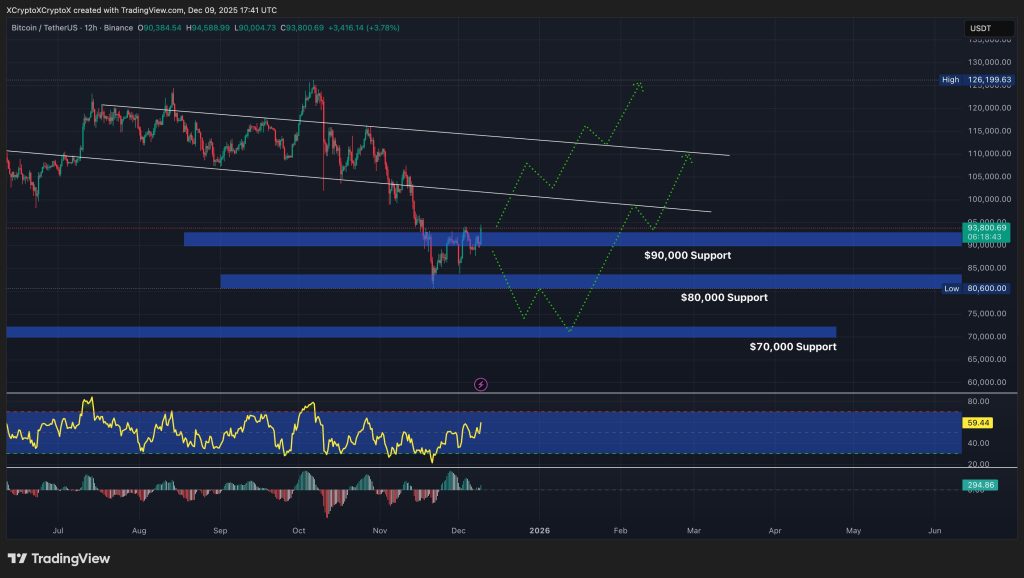
Bitcoin has bounced strongly from the $90,000 zone and is now pushing into key resistance inside a long-term descending channel.

The latest move marks a potential shift in momentum, especially with price reclaiming the $93,000 level and targeting a breakout from this downward structure.

Source: TradingView

Buyers are currently defending the $90,000 support with confidence, and if BTC holds this zone, the chart shows two possible bullish scenarios.

In the short term, Bitcoin could sweep down to retest $80,000 or even $70,000 liquidity before making a sharp reversal to the upside.

Alternatively, a clean breakout above the channel could send BTC surging directly toward $112,000, with a longer-term path toward $126,000 if momentum holds.

RSI continues to trend upward, showing early strength, and MACD histogram bars have flipped green, suggesting short-term bullish pressure.

As the week begins, price action favors the bulls, but traders will want to watch for a strong daily close above $94,500 to confirm upside continuation.

Maxi Doge Presale Builds Momentum as Market Eyes Next Breakout

With Bitcoin on the verge of a breakout, investor attention is quickly shifting toward early-stage opportunities with even bigger potential.

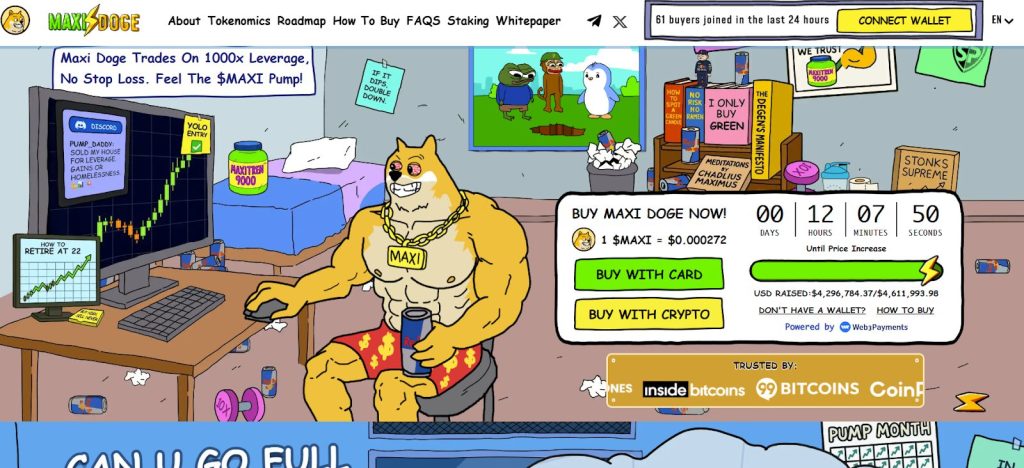
Maxi Doge ($MAXI) has emerged as a top contender.

Built around the high-energy ethos of gym culture and trader discipline, $MAXI is more than just a meme coin.

MAXI is creating a hub where early adopters can share trading setups, alpha leaks, and early opportunities in a fast-moving market.

Bitcoin Price Prediction - Maxi doge banner

Tapping into the same speculative momentum that drove Dogecoin’s historic 1,000x rally, the Maxi Doge presale has already surpassed $4.3 million in funding.

With daily price increases and 72% APY staking rewards for early holders, the window to secure a strong position is quickly narrowing.

To purchase MAXI at the current price, visit the official Maxi Doge presale website and connect an Ethereum-compatible wallet, such as Best Wallet.

You can pay using existing crypto or a bank card in seconds.

Visit the Official Maxi Doge Website Here

The post Bitcoin Price Prediction: BlackRock Doubles Down on Crypto with New ETF Filing – Is a Full-Scale Wall Street Invasion About to Begin? appeared first on Cryptonews.

Why The Litecoin Price Could Stage A 33% Rally To $110

A crypto analyst has forecasted that the Litecoin price is gearing up for an explosive rally to $110. Unlike Bitcoin and Ethereum, which have seen considerable declines over the past few months, Litecoin appears to be stabilizing, gaining about 7.8% this past week, according to CoinMarketCap. Although LTC has seen its fair share of declines this year, analysts still hold hope that the cryptocurrency could cross the $100 threshold and reclaim former highs. 

Litecoin Price Targets A $110 Breakout

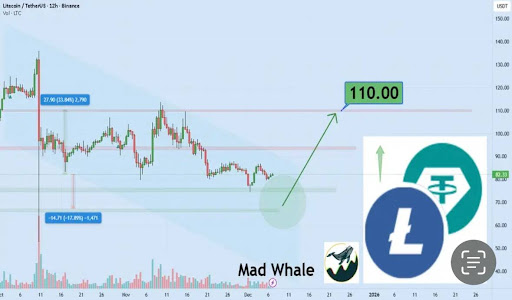
Litecoin may be preparing for a strong upward move, according to a new analysis from TradingView market expert MadWhale. The analyst has indicated that the cryptocurrency has the technical structure needed to break out of its long-term descending channel and potentially climb toward $110. With its current price sitting around $83, a surge to this level would represent a significant 33% rally. 

MadWhale has based his bullish LTC forecast on weekly candlesticks and how the cryptocurrency has consistently responded to past support and resistance levels. He explained that the altcoin had been trapped in a descending channel that has controlled its price for several weeks now. According to the TradingView analyst, Litecoin is now approaching the upper resistance region of the descending channel–a point where traders usually watch for either a clean breakout or a sharp rejection.

Litecoin

From the analyst’s price chart, Litecoin’s support zones have repeatedly held firm, showing that buyers consistently defended the area. Due to this steady support, he expects Litecoin’s bounce near the descending channel’s upper resistance to build momentum. If the support holds, MadWhale suggests the cryptocurrency could skyrocket to $110, completing its breakout from the descending channel. 

A breakout could signal a significant shift, potentially transforming Litecoin’s recent downtrend into a new bullish phase. MadWhale’s chart also highlights the cryptocurrency’s volatility, showing that in early October, LTC had rallied around 33.84%, climbing above $120. However, just days later, it crashed more than 17%, coinciding with the October 10 liquidation event that shook the market. 

Update On LTC’s Price Action

Litecoin is approximately 79% below its all-time high of over $410, recorded during the 2021 bull run. The cryptocurrency has dropped 17.68% over the past week and is down 33% for the year, mirroring the broader decline seen across altcoins. Despite its performance, LTC’s Fear and Greed Index remains in the neutral zone, suggesting that crypto investors are cautiously optimistic.

According to market analyst CW on X, the next sell wall for Litecoin is at $98, about 15% above its current price. Once the cryptocurrency reaches this level, CW expects a significant number of sellers to offload their coins. His chart also highlights the next key resistance levels for LTC, suggesting a potential surge to $98 first and then to the $106-$110 range.

Litecoin

XRP ETFs Shatter Records With Their Biggest Weekly Inflows To Date, Wall Street Flocking In?

Despite a recent bounce and the broader cryptocurrency market gradually turning bullish, the price of XRP remains confined between the $2 and $2.12 range. XRP’s price may be experiencing sideways movements, but both retail and institutional investors are still showing heightened appetite for the leading alctoin via the Spot Exchange-Traded Funds (ETFs).

A Record-Breaking Week For The XRP ETFs

In the world of digital asset investments, XRP is emerging as one of the major assets that is gaining serious attention among investors and traders. Following a significant inflow of cash into exchange-traded funds linked to the leading cryptocurrency, it is once again in the limelight of crypto investment.

A crypto enthusiast known as XRP Update on the social media platform X has outlined that the altcoin is currently undergoing massive validation. While the broader market cools down, Spot XRP Exchange-Traded Funds (ETFs) record their largest weekly inflows since the products were launched.

A massive wave of capital flowing into a fund indicates that sentiment among investors, especially institutions, is undergoing a powerful shift. In addition, it suggests that major investors may be actively preparing for the altcoin’s next notable move upward rather than remaining on the sidelines.

XRP

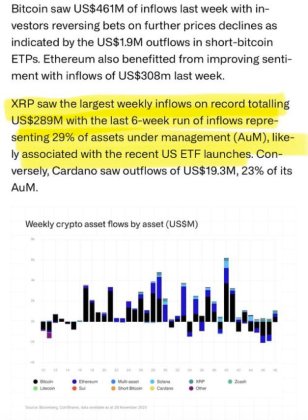
According to the data shared by the enthusiast, the funds amassed inflows valued at $289 million in a single week, marking its most successful week ever. After this week of bullish trading for the funds, they have now recorded massive inflows in 6 consecutive weeks. 

These 6-week inflows currently represent nearly 30% of the total Assets Under Management (AUM), which is likely associated with the recent United States ETF launches. When ETF inflows surge, it typically implies that institutional demand is increasing again, indicating that high-net-worth investors are exploring the token.

The Fund Takes The Lead In Cryptocurrency Spot ETF

XRP has just reached a major milestone that reflects its growing position as a valuable and reliable investment strategy. Brad Garlinghouse, the Chief Executive Officer (CEO) of Ripple, announced that the token has emerged as the fastest-moving crypto Spot ETF on the market.

After more than 4 weeks of launch, the fund continues to record inflows, reaching $1 billion in AUM in the US, making it the fastest ETF. This type of growth was last seen with its Ethereum counterpart, which launched late last year. With over 40 crypto ETFs introduced this year in the US alone, Garlinghouse has offered his take on what the development means, highlighting two key takeaways. 

According to the Ripple CEO, demand for regulated cryptocurrency goods is pent up. Additionally, millions more people who don’t need to be experts may now use crypto thanks to Vanguard’s offering of access to regular retirement and trading accounts for Americans.

For this new generation of off-chain crypto holders, Garlinghouse noted that durability, stability, and community are all important but often overlooked factors.

XRP

Popular Crypto Analyst Reveals New Bitcoin Price Target That Has Got The Community Moving

Renowned analyst Peter Brandt has unveiled a new set of Bitcoin price targets that have quickly sparked discussion across trading communities. His updated technical roadmap comes as BTC shows signs of cooling, prompting traders to reassess its recent price movement. With Bitcoin slipping beneath the structure that supported its multi-month climb, Brandt’s projected corrective zones have become a central focus in the market’s debate over where the asset may be headed next.

Bitcoin Price’s Structural Breakdown Raises The Stakes For Crypto Traders

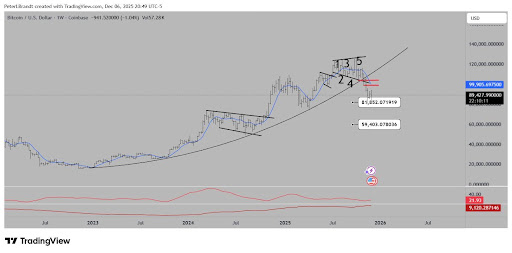
In a recent post on X, Brandt outlined his latest outlook, highlighting a completed five-leg advance — a classic sequence often linked to trend exhaustion when price stretches too far without meaningful resets. In this case, the formation appears as a rising wedge, a pattern known for producing sharp shifts once its lower boundary is breached. That breach has now happened, marking what Brandt interprets as a structural turning point rather than a panic-driven drop.

Bitcoin price

From the breakdown, two corrective regions emerge: near $81,852 and $59,403. These targets are drawn directly from the proportions of Bitcoin’s recently completed structure, giving them a grounded, technical foundation. Brandt frames the pullback as a normalization event, one that fits neatly into Bitcoin’s historical rhythm of expansions followed by methodical cooldowns. Instead of portraying the situation as a threat to long-term strength, the analysis positions the zones as potential resting points where the market could stabilize before setting its next course.

There is also a familiar pattern echoing through the charts — a reminder of late 2021, when sentiment surged ahead of structural reality and the market eventually recalibrated. While conditions today are not identical, the resemblance underscores how expectations and chart formations often move in parallel. In both scenarios, a strong run gave way to a controlled corrective period.

Brandt’s roadmap follows a clear sequence: formation completion, slope-line violation, and defined landing zones. Each step reinforces the next, forming a cohesive narrative that explains why this chart has quickly gained traction among crypto traders monitoring short-term volatility.

Brandt’s Targets Offer Strategic Guidance For Crypto Traders

Bitcoin is currently trading at $90,175, reflecting a 1.9% dip over the past 24 hours alongside a 4.4% gain across the last seven days. The price sits close to the level where the structural break first appeared, amplifying interest in Brandt’s outlined targets. Traders are now assessing whether the asset is preparing for a deeper corrective sweep or simply entering a consolidation phase before another directional move.

Ultimately, Brandt’s targets are intended to guide traders rather than alarm them. They highlight likely equilibrium zones during routine market resets, offering reference points where Bitcoin could stabilize after extended rallies. By framing the analysis this way, traders are encouraged to approach the market with a measured strategy and sharper precision, rather than reacting impulsively to short-term fluctuations.

Bitcoin price chart from Tradingview.com

On the value of holding the History of Bitcoin in your hands

Bitcoin Magazine

On the value of holding the History of Bitcoin in your hands

In Bitcoin culture, there is still a noticeable gap between the importance of the subject and the forms in which it is presented. Much of what exists is entirely digital, quick to disappear, or shaped by a purely functional aesthetic. Even projects that engage with Bitcoin’s history or its artistic dimension often end up looking more like documentation or marketing than something with cultural presence.

When I first saw History of Bitcoin in person at the Bitcoin Conference 2025 in Amsterdam, that contrast became quite clear. The physical object had a calm, deliberate quality that stood out in an environment dominated by screens and fast exchanges. It didn’t feel like something designed to be glanced at and set aside. It felt like something that expects to be revisited.

What stayed with me was not the rarity of the materials, but the intention behind the choices. In fields like design, architecture, and art publishing, substantial coffee-table books have long played a role in giving subjects a physical anchor. Major art publishers use this format because it creates a stable place for a topic to live. A well-made book slows the pace. It encourages repeated viewing and allows ideas to settle. That kind of physical presence is still unusual in the Bitcoin world.

Many Bitcoin-related books appear as softcovers. I understand why, but they often feel interchangeable and easy to overlook. They rarely give the impression that something is meant to be kept. My point isn’t that books should be luxurious. It’s that form and material can signal whether a subject is being treated with care.

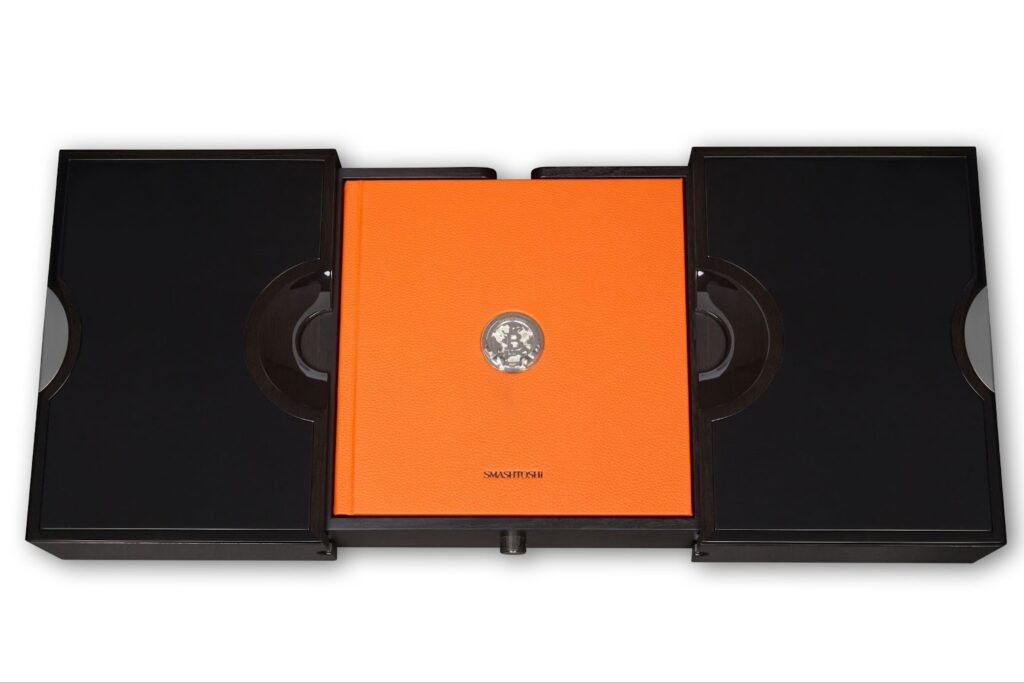
Smashtoshi, History of Bitcoin (First Edition)

Seen from that angle, the First Edition of History of Bitcoin is a considered object. It comes in a case made from five-thousand-year-old fossilised black oak. The material is unusual, but the effect is straightforward: it gives the book a steady, quiet setting. Inside, the volume is bound in bull leather with a finely made silver emblem by Asprey Studio. None of this feels like decoration. It feels like someone thinking carefully about how an object should look if it is meant to last.

The team behind the project described these choices in a way that adds another layer to this. For them, ancient materials weren’t chosen for rarity, but to reflect a belief that Bitcoin itself is built to endure for a very very long time. Placing a young technology inside something that has already lasted thousands of years creates a deliberate contrast. They also spoke of the First Edition as a kind of time capsule, an object made to outlive us and to offer future readers a way to encounter Bitcoin’s beginnings in a physical form. 

The project continues this restrained approach. The physical book and the digital archive are designed to stand alongside each other. The archive provides access and the book provides presence. Together they make the material both reachable and grounded.

Grant Yun, GPU Power Shift

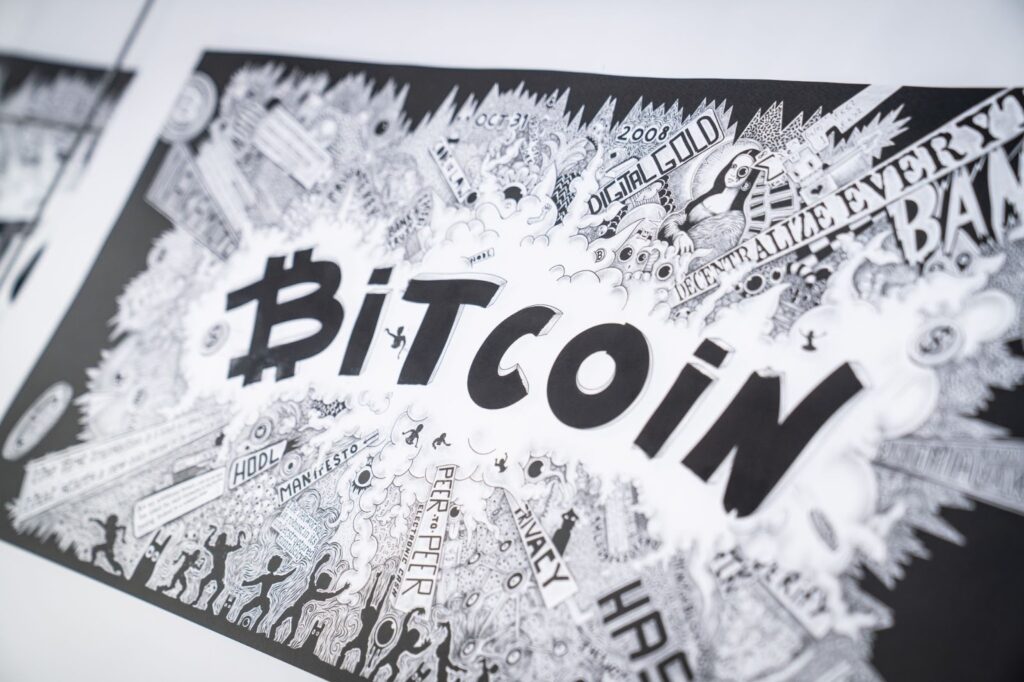
The 128 artworks in the book were created by different artists specifically for this project. Each one revisits a moment in Bitcoin’s history without trying to define a final interpretation. They open space for reflection. They invite conversation. That is one of the strengths of a good coffee-table book: it creates room for looking again.

The companion volume, the range of guest articles on the website, and even the small fragment of the original Bitcoin code included with each collector’s edition follow the same idea. They offer multiple entry points into the history rather than insisting on a single narrative.

My First Bitcoin, the nonprofit receiving the proceeds from the First Edition auction at Bitcoin MENA, teaches young people around the world. Connecting the book to this project links historical reflection with future education in a simple and meaningful way.

All of this suggests to me that presentation is not a secondary detail. It is part of the cultural work needed to give a subject depth. A carefully made book is not a decorative object. It is a way of turning something that might otherwise feel temporary into something that can endure.

That is, ultimately, why History of Bitcoin feels meaningful to me. It gives this history a form that can be kept close, something you can put down, return to, and live alongside. It doesn’t try to conclude anything. It simply gives Bitcoin a place to settle.

Hackatao, The World’s Most Famous Whitepaper

This post On the value of holding the History of Bitcoin in your hands first appeared on Bitcoin Magazine and is written by Steven Reiss.

Bitcoin Price Skyrockets to $94,000 as Banks Start to Embrace Bitcoin  

Bitcoin Magazine

Bitcoin Price Skyrockets to $94,000 as Banks Start to Embrace Bitcoin  

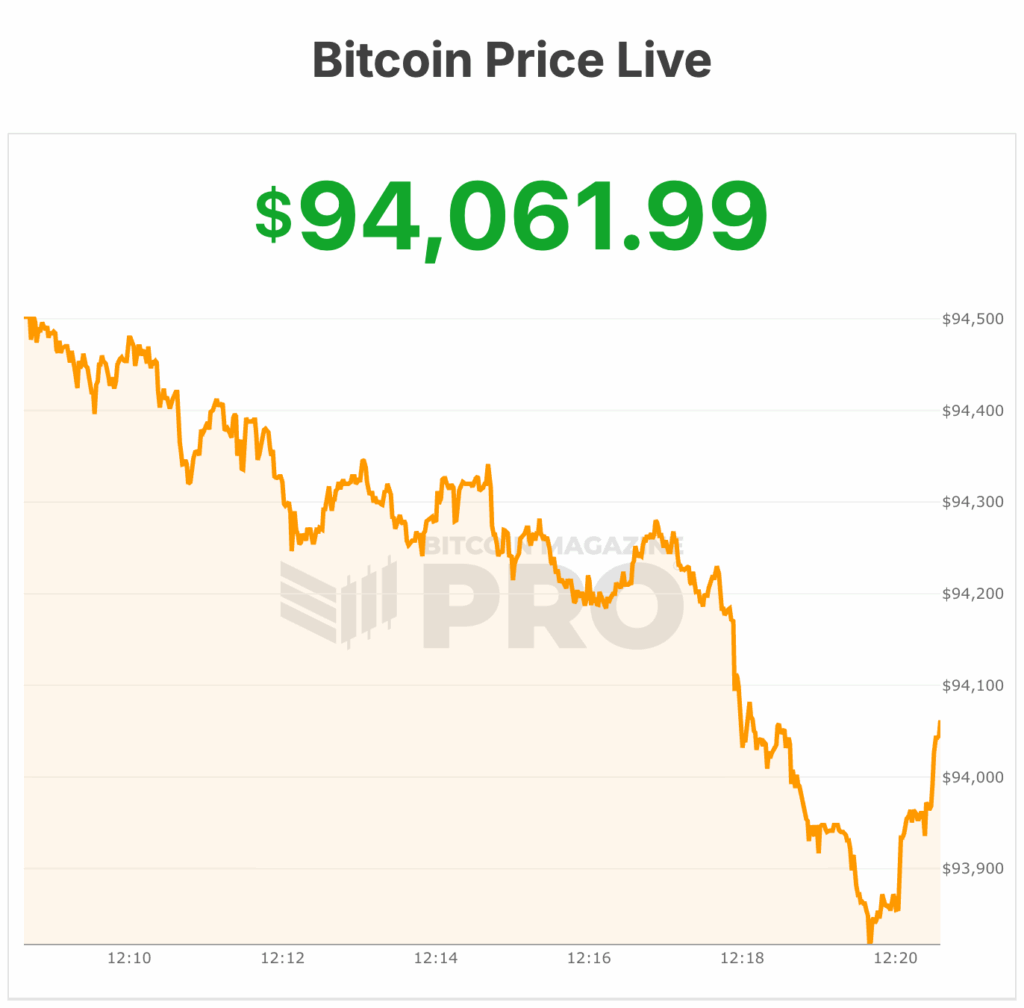
The bitcoin price is currently pumping and hit highs of $94,640 today, climbing over 4% in the last 24 hours. Bitcoin’s 24-hour trading volume reached $46 billion. It stands at its seven-day high.

The total circulating supply of Bitcoin is 19,959,806 BTC, with a maximum supply of 21 million. Today’s market capitalization is roughly $1.86 trillion, reflecting the 4% daily gain.

The broader bitcoin space is experiencing some momentum. The Bitcoin MENA conference in Abu Dhabi just wrapped up, full of bank leaders and industry thought leaders sharing their thoughts on Bitcoin’s future. 

Earlier today, Jack Mallers’ Bitcoin company, Strike, and Twenty One rang the opening bell at the New York Stock Exchange. The company holds over 43,500 BTC — around $4 billion — making it the world’s third-largest publicly listed Bitcoin holder. 

Majority-owned by Tether Investments and Bitfinex, with SoftBank as a significant minority investor, the company blends a Bitcoin treasury strategy with operational Bitcoin-focused financial services under CEO Jack Mallers.

Investors are also paying close attention to macroeconomic signals. Ark Invest CEO Cathie Wood said that the Bitcoin price’s four-year cycle may shift. She suggested the market may have already seen its lows.

Neuberger CIO Shannon Saccocia also noted that expected Federal Reserve rate cuts and gains in AI-driven productivity could lift equities and other risk assets. Stocks often perform well when the economy avoids recession and the Fed is easing.

JUST IN: Bitcoin pumps to $94,000! pic.twitter.com/ek3C26RhSu

— Bitcoin Magazine (@BitcoinMagazine) December 9, 2025

Bitcoin price rally

Bitcoin price’s recent rally comes amid growing adoption and institutional interest. Large players are integrating Bitcoin into payments and financial products.

For example, earlier today, PNC Bank became the first major U.S. bank to offer direct spot bitcoin trading to eligible Private Bank clients through its digital platform, using Coinbase’s Crypto-as-a-Service infrastructure. 

The service allows qualified clients to buy, hold, and sell bitcoin without relying on external cryptocurrency exchanges. 

Coinbase provides the trading, custody, and settlement infrastructure, while PNC retains the direct client relationship and regulatory oversight.

The launch follows a strategic partnership announced in July and reflects a growing trend among U.S. banks to integrate bitcoin into wealth management services.

Also last week, the Bank of America urged its wealth management clients to allocate 1% to 4% of their portfolios to digital assets, signaling a major shift in its approach to Bitcoin exposure. The move allowed over 15,000 advisers across Merrill, Bank of America Private Bank, and Merrill Edge to proactively recommend crypto to clients.

At the time of writing, the bitcoin price is $94, 061.

bitcoin price

This post Bitcoin Price Skyrockets to $94,000 as Banks Start to Embrace Bitcoin   first appeared on Bitcoin Magazine and is written by Micah Zimmerman.

Crypto Traders Turn Cautious, Favor Bitcoin Over Risky Altcoin Bets

Bitcoin has rebounded to around $92,000 after last week’s $2 billion liquidation event, but traders are adopting cautious positioning amid high volatility and looming central bank decisions.

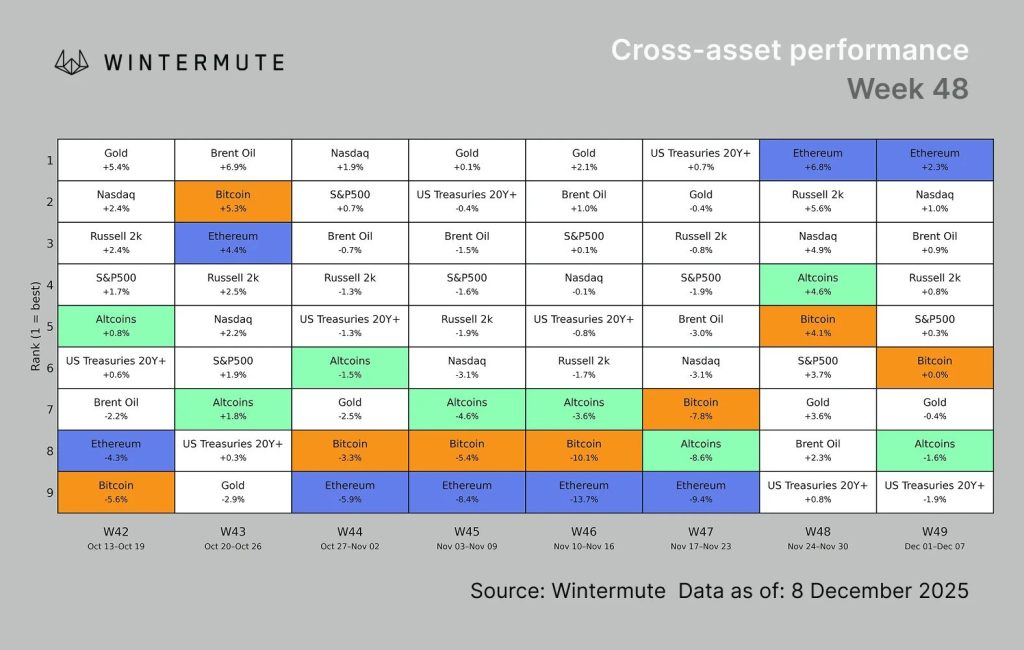
According to market maker Wintermute, market activity has narrowed sharply into Bitcoin and Ethereum, with investors favoring delta-neutral and carry strategies over directional altcoin exposure while awaiting clarity from the Federal Reserve and macro indicators.

The consolidation follows two months of macro uncertainty that triggered strong market turbulence. Total crypto market capitalization has recovered to approximately $3.25 trillion.

Yet, compressed basis rates and subdued funding levels indicate limited appetite for leveraged positions ahead of this week’s Fed decision and next week’s Bank of Japan rate announcement.

Bitcoin Over Altcoin - Wintermute Cross-asset performance
Source: Wintermute

Market Absorbs Shock Without Follow-Through Selling

Friday’s sharp drawdown was a major blow to Bitcoin’s recovery, with cascading liquidations erasing roughly $4,000 in just over an hour.

The liquidation event eliminated approximately $2 billion in leveraged positions, briefly pushing Bitcoin below $88,000 before buyers stepped in at lower levels.

Despite the violent intraday move, the market absorbed the shock without triggering sustained selling pressure.

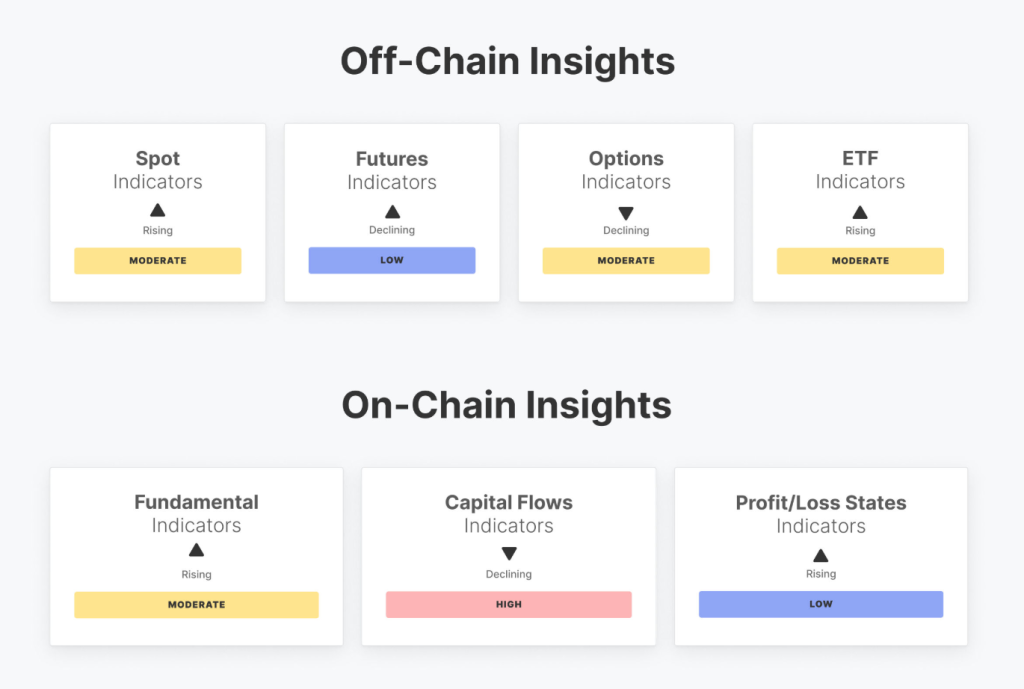
Glassnode data shows Bitcoin’s 14-day RSI climbing from 38.6 to 58.2, while spot volume increased 13.2% to $11.1 billion.

This suggests buyers remained active at the lows even as broader conviction remains uneven across on-chain, derivatives, and ETF metrics.

Bitcoin Over Altcoin - Glassnode off-chain and on-chain insights
Source: Glassnode Report

Year-end implied volatility remains elevated, with traders positioning for either $85,000 or $100,000 by December 26.

Options data reveals heightened caution, with the 25-delta skew reaching 12.88% and volatility spread turning sharply negative at -14.6%, indicating strong demand for downside protection despite the recent bounce.

Institutional Flows Turn Negative Amid Growing Caution

ETF flows have emerged as a major headwind, flipping from a $134.2 million inflow to a $707.3 million outflow.

The reversal indicates profit-taking or weakening institutional interest following Bitcoin’s recent volatility, which is adding pressure to near-term price action.

While ETF trade volume rose 21.33% to $22.6 billion and ETF MVRV increased to 1.67, the substantial outflows suggest some investors are taking advantage of elevated prices to reduce exposure.

Speaking with Cryptonews, Arthur Azizov, founder and investor at B2 Ventures, noted the impact of persistent withdrawals.

More than $2.7 billion has left BTC products over the past five weeks, and another $194 million left just in a single day,” he said.

When such a row of withdrawals persists, the whole market becomes quieter and gets less support.

However, MicroStrategy continues its aggressive accumulation strategy, recently purchasing 10,624 BTC for approximately $962.7 million at an average price of $90,615 per bitcoin.

Strategy has acquired 10,624 BTC for ~$962.7 million at ~$90,615 per bitcoin and has achieved BTC Yield of 24.7% YTD 2025. As of 12/7/2025, we hodl 660,624 $BTC acquired for ~$49.35 billion at ~$74,696 per bitcoin. $MSTR $STRC $STRK $STRF $STRD $STRE https://t.co/oyLwSuW7nW

— Michael Saylor (@saylor) December 8, 2025

The company now holds 660,624 BTC acquired for roughly $49.35 billion at an average cost of $74,696, with 2025 additions totaling $21.48 billion, just $500 million short of its entire 2024 accumulation.

Traders Prioritize Yield Capture Over Directional Bets

Futures open interest has declined to $30.6 billion, while perpetual funding rates have turned more supportive, with long-side payments rising to $522,700.

However, the compressed CME basis has driven growing interest in delta-neutral strategies in lower-cap assets, where carry opportunities remain attractive, confirming limited appetite for directional altcoin risk.

On-chain metrics show modest stabilization, with active addresses rising slightly to 693,035 and entity-adjusted transfer volume increasing 17.1% to $8.9 billion.

However, Realised Cap Change fell to just 0.7%, well below its low band, indicating softer capital inflows, while the STH-to-LTH ratio climbed to 18.5%, indicating continued dominance by short-term holders.

While speaking with Cryptonews, Ignacio Aguirre, CMO at Bitget, also warned of additional pressure from international monetary policy.

A stronger yen raises the risk of unwinding yen carry trades, which is a move that can temporarily weigh on crypto valuations as leveraged positions reset across global markets,” he said.

Azizov emphasized key resistance levels ahead. “Only a strong move above $100,000 could flip the script, restore confidence, and open the way toward $120,000+ level,” he said.

If that fails, a deeper pullback to the broad $82,000–$88,000 zone may be needed.

The post Crypto Traders Turn Cautious, Favor Bitcoin Over Risky Altcoin Bets appeared first on Cryptonews.
Crypto Rally Stalls Near $94K Bitcoin as Bond Turmoil Spurs Risk-Off Ahead of Fed

The crypto market entered December with strong upward momentum, with Bitcoin climbing towards $94,000 and Ethereum nearing $3,250 by late last week, according to a research note from Laser Digital.

The rally was fuelled by two key catalysts: Strategy’s purchase of roughly $960 million worth of BTC and anticipation around the Fusaka upgrade scheduled for December 3.

However, as those factors passed, bullish sentiment evaporated. Prices quickly reversed during Friday’s U.S. trading session, leading to aggressive selling. A small rebound emerged over the weekend, but sentiment failed to sustain into Monday—a pattern that Laser Digital notes has been “typical behavior of the crypto market for the past few months.”

Bond Yields Hit Multi-Decade Highs as Policy Expectations Shift

Macro conditions added pressure across risk assets. Bond markets sold off across major economies, driven initially by Japan. The JGB 10-year yield breached 1.90%, a record level over the past 30 years.

Laser Digital says that the move followed growing odds of a December rate hike by the Bank of Japan, coupled with concerns around increased issuance stemming from a larger-than-expected FY25 supplementary budget and the expected FY26 budget.

Meanwhile, in the U.S., the 10-year Treasury climbed above 4.10%, with markets positioning ahead of the Federal Reserve’s policy meeting. Expectations for a “hawkish cut” this week—a reduction accompanied by firm forward guidance—weighed on rate sentiment and risk appetite broadly.

Market Split Between Equities and Crypto

Gracy Chen, CEO at the universal exchange Bitget, said investors are behaving as if the Fed’s rate decision has already been decided. “According to CME Group’s FedWatch, Fed funds futures bet on almost a 90% chance of a 25 bp cut, which makes sense, especially given inflation cooling and soft macro data. Interestingly, just a couple of weeks ago, the chance was below 40%.”

She notes a divergence in risk sentiment: “The S&P 500 is up almost 17% this year and trades only about 4% below its October peak. Yet U.S. equity funds had $3.5 billion in outflows last week, while global funds added $7.9 billion… Crypto, sadly, is much weaker… A rate cut could make BTC rise back toward $94,000–$96,000. By contrast, a cautious move could send it into the $80K range again.”

Volatility Builds Ahead of Central Bank-Heavy Week

Laser Digital notes that options markets are pricing extra volatility ahead of the FOMC decision. The trading desk expects “price action to be choppy this week and next,” citing a dense calendar that includes the Fed on December 10, the BOJ on December 19, and two major labor reports in between.

Market focus is centred on the Fed’s updated Summary of Economic Projections (SEP) dot plot and the potential revision to the terminal rate path, both of which could reshape positioning into year-end.

Volume Cools, but Event Risk Premium Remains

Crypto volatility has eased back from recent peaks, though markets continue to price event risk meaningfully. BTC volumes are trading around the 45-vol handle and ETH around 70-vol, with 11th December event volatility marked at 56v for BTC and 75v for ETH.

Laser Digital notes that spot-vol correlation remains negative—a trend that has continued to materialize. With macro forces dominating and catalysts fading, markets appear braced for turbulence as central banks take centre stage.

https://t.co/nW0weLdqlv

— Laser Digital (@LaserDigital_) December 9, 2025

The post Crypto Rally Stalls Near $94K Bitcoin as Bond Turmoil Spurs Risk-Off Ahead of Fed appeared first on Cryptonews.

Bitcoin Stalls Near $90K as Select Altcoins Rally, Leaving ‘Altcoin Season’ on Hold

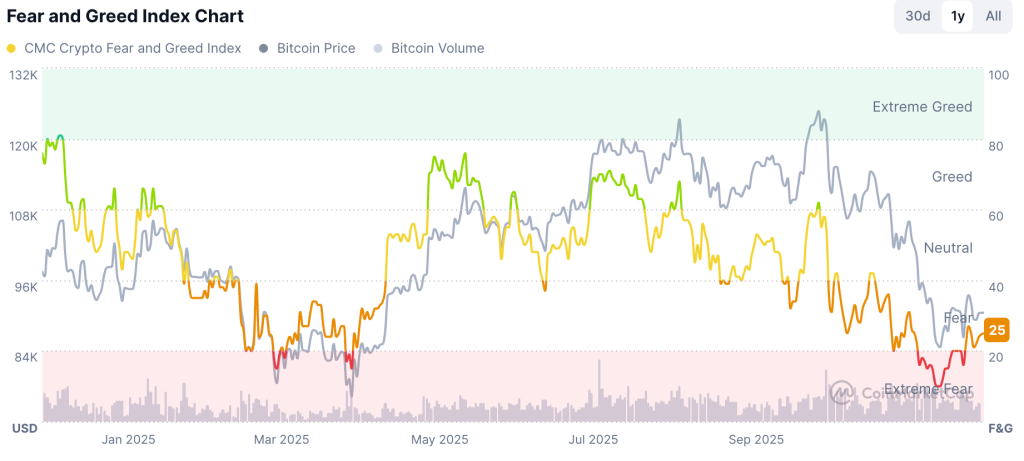
Fear continues to shape the market even though the sharp panic of late November has eased. The Fear and Greed Index now prints 25, placing sentiment inside the fear band without dipping back into extreme readings.

Bitcoin is trading a little above $90,000 with a small recovery from earlier lows, and the market continues to behave as though it is still sorting through recent losses rather than preparing for a broad turn in risk appetite.

Within that restrained environment, only a few altcoins are showing clear strength. Zcash, MemeCore, and Cardano are moving higher while the majority of large caps remain muted. Their performance offers a narrow window into how traders position themselves when the wider market hesitates but does not fully retreat.

Fear and Greed Index (Source: CoinMarketCap)

Zcash Shows Its First Meaningful Bounce After Heavy Losses

Zcash (ZEC) is now trading around $426, up by about 10% in 24 hours, and its rise stands out because the token fell sharply from a peak near $700 in November before losing close to 30% across the month.

Trading data today shows firmer depth and a pickup in spot volume across several venues, which indicates that market participants are revisiting liquid privacy names now that the steepest part of the decline has passed.

The rebound still leaves ZEC far from last month’s high, yet the current structure looks steadier than earlier attempts at recovery. Activity is spread across several markets rather than concentrated in narrow windows, which suggests a more stable footing for the token as sentiment steadies around the mid-twenty fear readings.

MemeCore Advances On Continued Community Activity

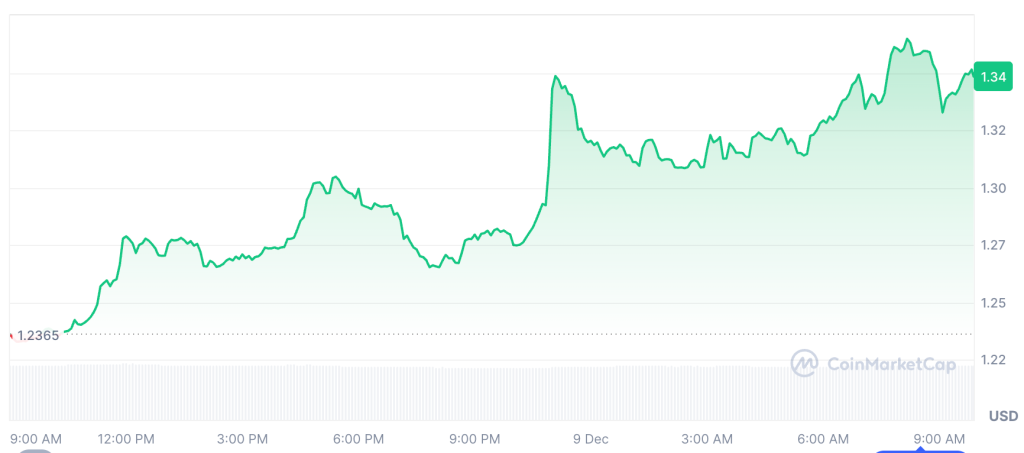
MemeCore (M) is trading near $1.34, up by about 9% in 24 hours. The move follows a period where engagement inside its community continued even during last week’s extreme fear conditions.

MemeCore Price (Source: CoinMarketCap)

Trading screens show stable liquidity on its active pairs, and on-chain usage linked to staking and social features remains visible enough to support small bursts of momentum whenever market pressure slows.

The rise today appears tied to that ongoing participation instead of a single driver. MemeCore has tended to perform best when traders look for tokens supported by active user bases rather than one-off events.

Cardano Edges Higher With Large Cap Rotation

Cardano (ADA) is trading near $0.45, up by about 3% in 24 hours. The growth is modest but aligns with behavior seen across other large caps in recent sessions, where liquidity remains firm and flows turn balanced once Bitcoin stabilizes.

Help shape the next generation of DeFi and RWA startups building on Cardano.

We are seeking Service Providers to deliver sessions and workshops for the Cardano Accelerator Program on startup relevant disciplines.

Interested? Apply by 4 January: https://t.co/5mkP8cv1TJ

— Cardano Foundation (@Cardano_CF) December 8, 2025

Trading volumes today show measured participation rather than strong accumulation, yet ADA continues to benefit from being one of the more established networks during risk-averse periods.

Cardano’s move does not alter its longer trend, but it illustrates how stable large caps often move first when markets pause after declines.

Altcoin Season Still Out Of Reach Despite Small Pockets Of Strength

The overall picture still leans toward caution. A fear reading of 25, Bitcoin holding just above $90,000, and limited rotation across major assets all point to a market that has not regained the breadth usually associated with altcoin season.

The advances in Zcash, MemeCore, and Cardano show that selective interest persists, but the gains remain narrowly concentrated and depend heavily on liquidity and existing user activity rather than broad enthusiasm.

For now, altcoin season sits at a distance, with only small pockets of momentum taking shape while sentiment remains anchored in the lower bands of the fear index.

The post Bitcoin Stalls Near $90K as Select Altcoins Rally, Leaving ‘Altcoin Season’ on Hold appeared first on Cryptonews.
OKX and Deltix Boost US Institutional Trading

Major crypto exchange OKX has joined hands with Deltix to expand institutional trading capabilities for clients across the U.S. Per the announcement, the companies in this country will be able to access, for the first time, regulated digital-asset liquidity via the same infrastructure they use for equities and FX.

Deltix is a division of EPAM Systems, which provides digital development, software engineering, and product design services among others.

Moreover, this particular division offers institutional-grade trading and quantitative research platforms to funds, brokers, and trading firms across markets.

According to Ilya Gorelik, CEO of Deltix, the integration provides clients with a unified trading experience across traditional and digital markets.

Also, per the OKX press release, the partnership connects the worlds of traditional and digital asset markets. The former brings “mature infrastructure, sophisticated risk management, and regulatory guardrails,” while the latter boasts “innovation, transparency, and opportunity.”

Moreover, “several” quant funds and algorithmic trading firms already use the integration to extend digital-asset exposure within their quantitative and execution frameworks, the companies note.

One of them is Windy Financial. Its Head of Digital Strategies, Brian Petersen, commented that the partnership provides “a seamless, institutional-grade solution that lets us execute digital strategies […] without venturing into offshore or unregulated markets. It’s a powerful step forward for quantitative and institutional firms seeking high-performance, compliant market access.”

Digital and Traditional Markets on the Same Infrastructure

Institutions increasingly look to participate in digital-asset markets, the partners say. They expect the same level of governance, reliability, and performance as in TradFi.

“This partnership brings digital assets directly into the same infrastructure that professional traders and funds already rely on every day,” says Roshan Robert, OKX US CEO. It gives U.S. institutional clients regulated, onshore access to digital-asset markets.

Download OKX in the US. Make them proud. pic.twitter.com/17oWCOR8AC

— OKX (@okx) December 9, 2025

At the same time, these institutions gain access to the liquidity and execution quality through OKX’s global shared order book.

U.S. institutional clients can now access OKX’s spot markets available via Deltix. They can integrate digital asset trading into existing quant and execution workflows.

Moreover, they can execute against OKX’s global shared order book. This way, they gain liquidity and performance necessary for institutional-grade trading, OKX says. They can test, trade, and deploy quantitative strategies for digital assets alongside their TradFi workflows.

Then, the clients can leverage the exchange’s APIs for execution and market-data connectivity.

Additionally, clients route activity through OKX’s licensed U.S. entity, which provides them with full regulatory compliance.

Finally, they can manage risk, analytics, and reporting within their native infrastructure.

“The partnership fills a critical gap in end-to-end infrastructure for quantitative, fund, and proprietary-trading firms seeking efficient digital-asset execution, research, and analytics,” the announcement concludes.

The post OKX and Deltix Boost US Institutional Trading appeared first on Cryptonews.

Hong Kong Targets Crypto Tax Evasion with 2028 Data Sharing Plan

Hong Kong launched a public consultation on implementing the OECD’s Crypto-Asset Reporting Framework (CARF) and amended Common Reporting Standard (CRS), aiming to begin automatic exchange of crypto tax information with partner jurisdictions by 2028.

The government plans to complete legislative amendments in 2026, strengthening the city’s commitment to international tax cooperation while maintaining its reputation as a global financial hub amid evolving digital asset regulations.

Financial Services Secretary Christopher Hui announced “Hong Kong will make amendments to the Inland Revenue Ordinance (Cap. 112) (the Ordinance) for implementing CARF and the newly amended CRS” and demonstrated a commitment to combating cross-border tax evasion.

The automatic exchange will operate on a reciprocal basis with partners meeting data confidentiality and security standards, with the newly amended CRS implementation scheduled for 2029.

Hong Kong Crypto Tax and Data Sharing - Image of Christopher Hui
Secretary for Financial Services and the Treasury Christopher Hui. | Source: The Standard

Framework Responds to Rapid Digital Asset Growth

The OECD published CARF in 2023 following the rapid expansion of the digital asset market in recent years, providing automatic exchange of crypto transaction tax information similar to Hong Kong’s existing CRS framework, operational since 2018.

The new framework incorporated digital financial products and enhanced reporting requirements, addressing gaps in traditional financial account information exchange.

Hong Kong has been exchanging financial account information automatically with partner jurisdictions annually since 2018 under the CRS, enabling tax authorities to use the information for assessments and to detect tax evasion.

The CARF extension builds upon this established infrastructure, applying similar transparency standards to crypto assets that process billions in trading volume across the city’s licensed exchanges.

The government proposes mandatory registration for financial institutions to enhance identification, alongside increased penalties and enhanced enforcement mechanisms.

These measures respond to the OECD’s second-round peer review of Hong Kong’s CRS administrative framework effectiveness, which began in 2024 and examines the city’s commitment to global tax transparency standards.

Balancing Innovation and Compliance Pressures

The consultation arrives as Hong Kong navigates competing pressures between fostering digital asset innovation and satisfying international regulatory standards.

The city has pursued aggressive fintech expansion through its new “Fintech 2030” strategy launched by the Hong Kong Monetary Authority, focusing on data, artificial intelligence, resilience, and tokenization under the DART framework.

Hong Kong has courted crypto activity through licensing regimes and spot crypto exchange-traded funds, seeking regulated venues for demand.

Securities and Futures Commission Chief Executive Julia Leung recently announced licensed crypto exchanges will soon connect with global order books, ending the city’s isolated trading model and enabling local platforms to tap broader liquidity.

✅ Hong Kong will allow licensed crypto exchanges to connect with global order books, ending its current isolated trading model.#HongKong #Cryptohttps://t.co/f8Lj9NKxoR

— Cryptonews.com (@cryptonews) November 3, 2025

Despite regulatory openness, authorities have drawn bright lines between market infrastructure and listed issuers relying on speculative token holdings.

The stock exchange questioned at least five companies seeking to pivot to crypto treasury models, while the SFC warned retail investors about risks tied to digital asset treasury strategies after observing substantial premiums above asset holdings.

Amidst all these, HashKey Holdings advanced toward becoming Hong Kong’s first listed crypto exchange, clearing the stock exchange’s listing hearing and preparing to raise at least $200 million through an initial public offering scheduled before year-end.

The company accounts for more than 75% of Hong Kong’s onshore digital asset trading volume and has recorded HK$1.3 trillion in cumulative spot-market transactions.

Mainland Tensions Shape Regional Strategy

The consultation also unfolds against mainland China’s renewed crypto crackdown, with the People’s Bank of China reasserting strict prohibitions on virtual asset trading in late November following signs of renewed speculation.

Beijing specifically flagged stablecoins as posing money laundering and fraud risks, convening a high-level meeting with 13 government agencies to coordinate enforcement.

🇨🇳 China reinforces crypto ban with renewed enforcement targeting stablecoins as Hong Kong stocks with digital asset exposure drop sharply following central bank warning.#China #Cryptohttps://t.co/XDtoyarpNo

— Cryptonews.com (@cryptonews) December 1, 2025

Hong Kong-listed crypto companies saw sharp losses following Beijing’s announcement, with Yunfeng Financial Group dropping over 10% and OSL Group losing more than 5%.

The mainland stance has complicated Hong Kong’s ambitions, particularly after Chinese regulators instructed major tech firms, including Ant Group and JD.com, to pause stablecoin issuance plans.

For now, regarding the consultation paper, public feedback is welcome through February 6, 2026, with submissions accepted by post or email to the Financial Services and Treasury Bureau.

The post Hong Kong Targets Crypto Tax Evasion with 2028 Data Sharing Plan appeared first on Cryptonews.
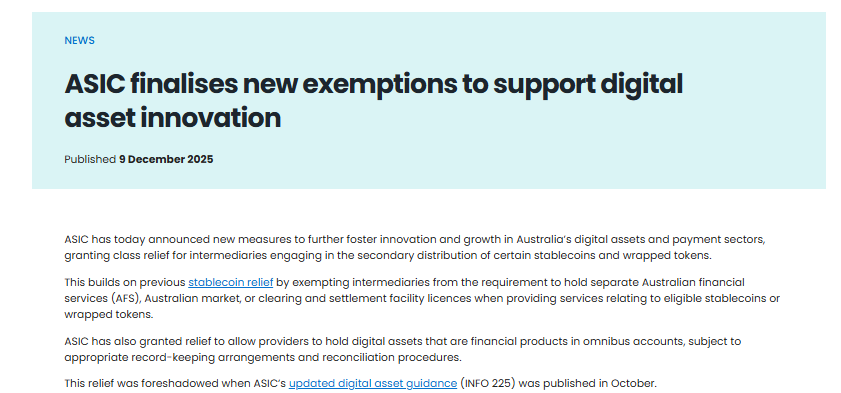
ASIC Unveils Major Stablecoin Relief and Omnibus Rights — But There’s a Catch

Australia’s securities regulator has introduced a sweeping set of exemptions aimed at easing the path for digital asset businesses while making clear that the reprieve is temporary and tied to a broader overhaul of the country’s crypto framework.

The Australian Securities and Investments Commission (ASIC) on Tuesday finalized class relief for intermediaries handling the secondary distribution of certain stablecoins and wrapped tokens.

The decision allows exchanges and other service providers to operate without holding separate Australian financial services, market, or clearing and settlement licenses when dealing with eligible products.

ASIC said the move is intended to support innovation as the government works on a permanent regime for digital asset platforms and payment systems.

Source: ASIC

ASIC Confirms Omnibus Custody Relief After Industry Feedback

The relief also extends to custody, as providers will be permitted to hold tokenized financial products in omnibus accounts, a structure commonly used in traditional markets but long restricted in crypto.

ASIC said the exemption will only apply if firms maintain proper records and reconciliation procedures. The regulator initially signaled this shift in October when it published the latest update to its key digital-asset guidance, INFO 225.

Tuesday’s announcement marks the end point of a consultation that began on 29 October, when ASIC released Simple Consultation 32 outlining proposed exemptions for stablecoins and wrapped assets.

🇦🇺 Australia requires stablecoin and digital asset providers to obtain financial services licenses under new ASIC guidance effective June 2026.#Australia #Stablecoinhttps://t.co/OECNhNHLUz

— Cryptonews.com (@cryptonews) October 29, 2025

The regulator received five non-confidential submissions, with industry groups largely supporting the plan but requesting clearer definitions and wider eligibility.

ASIC responded by expanding the scope to include tokens issued by entities that have applied for licenses.

The changes sit on top of a broader framework that ASIC has been assembling throughout the year.

The regulator’s updated INFO 225 guidance, published in late October, confirmed its long-held view that many stablecoins, wrapped tokens, tokenized securities, and even digital asset wallets fall under existing financial product rules.

Stablecoin Issuers Get Temporary Breather Under ASIC’s Transition Plan

That interpretation requires most service providers to hold AFS licenses and comply with investor-protection laws already in force.

To ease the transition, ASIC has adopted a sector-wide no-action stance until June 30, 2026.

Companies will have time to review the new guidance, lodge license applications, or adjust their operations.

🇦🇺 Australia's ASIC grants stablecoin intermediary relief from licensing requirements until 2028, with Catena Digital as the first qualified issuer.#Australia #Stablecoinhttps://t.co/vi2mBPwPbb

— Cryptonews.com (@cryptonews) September 18, 2025

The temporary relief is expected to remain in place until mid-2028, by which time the government aims to replace it with legislation covering tokenized payments and custody structures.

ASIC has indicated it may add more issuers after several firms said existing licensing hurdles threatened the commercial viability of launching Australian-regulated stablecoins.

Intermediaries must still provide retail investors with Product Disclosure Statements, a condition ASIC argues balances flexibility with consumer safeguards.

Regulators Tighten Grip as Australia Races to Catch Up in Digital Assets

The exemptions land at a moment when policymakers say Australia risks slipping behind global competitors.

ASIC Chair Joe Longo warned last month that tokenization is reshaping capital markets and urged the country to modernize quickly or face what he called a “missed opportunity.”

Government proposals released in September would require exchanges to obtain AFS licenses and impose penalties of up to 10% of annual turnover for rule breaches. Smaller platforms meeting low-threshold criteria would be exempt.

💸 Australia is set to slap crypto platforms with fines as steep as 10% of turnover under tough new draft rules, the Treasury said Thursday.#Australia #CryptoRegulation https://t.co/eVdrLlJgnd

— Cryptonews.com (@cryptonews) September 25, 2025

The push for tighter supervision has not stopped enforcement actions. In October, ASIC obtained a temporary travel ban against Blockchain Global director Ryan Xu as it investigates the collapse of the ACX Exchange, which left creditors owed more than A$58 million.

The case remains before the Federal Court.

Australia’s digital-asset sector has grown rapidly, with adoption climbing to 31% in 2025. Self-managed superannuation funds have increased their crypto exposure sevenfold since 2021, reaching A$1.7 billion.

🇦🇺 Australia's crypto adoption hits 31% outpacing other developed nations as stablecoins power $46T in transactions and crypto market cap crosses $4T globally.#Australia #Crypto #Adoptionhttps://t.co/ujNdEiEQDn

— Cryptonews.com (@cryptonews) October 24, 2025

Large exchanges have begun targeting this market, with Coinbase preparing a dedicated service for retirement accounts.

The post ASIC Unveils Major Stablecoin Relief and Omnibus Rights — But There’s a Catch appeared first on Cryptonews.

❌