Cardano founder Charles Hoskinson has shared new insights into the development and rollout of the ecosystem’s privacy-focused project, Midnight. Following the launch of Midnight’s native token, NIGHT, on Cardano, Hoskinson featured on the Gokhshtein News Network to outline the project’s technical roadmap, phased deployment strategy, and the ecosystem growth expected to follow.
Cardano tests key resistance levels with significant liquidation data showing pressure on long positions. Cardano (ADA) is currently trading at $0.4316, reflecting a 3.3% gain over the past 24 hours.
A well-known market commentator has shared three reasons XRP failed to deliver the pump many expected in 2025. XRP entered 2025 with huge expectations after a remarkable stretch in late 2024.
Bitcoin is testing key resistance levels after breaking the 20-day SMA, with analysts expecting potential upside momentum. Currently, Bitcoin is trading at $91,747, reflecting a 2.7% gain over the last 24 hours.
The prospect that Cardano could be the next token to repeat the explosive move seen with XRP is gaining momentum among proponents. Remarkably, analyst JD is one of those sharing this narrative.
ZKsync has announced plans to deprecate ZKsync Lite, Ethereum’s first zero-knowledge rollup, in 2026 as the protocol shifts its focus entirely toward the ZKsync network and ZK Stack-powered chains.
The original Layer 2 solution, which launched in December 2020 as a groundbreaking proof-of-concept, will undergo an orderly sunset after serving its purpose of validating critical ideas for production ZK systems.
No immediate action is required from users, as ZKsync Lite continues to operate normally, with funds remaining secure and withdrawals to Ethereum’s Layer 1 functioning throughout the deprecation process.
The ZKsync Association will share detailed migration guidance, specific dates, and a comprehensive deprecation plan in the coming year.
In 2026, we plan to deprecate ZKsync Lite (aka ZKsync 1.0), the original ZK-rollup we launched on Ethereum.
This is a planned, orderly sunset for a system that has served its purpose and does not affect any other ZKsync systems.
ZKsync Lite emerged as the first zero-knowledge rollup on Ethereum, pioneering technology that would later evolve into ZKsync Era and the Elastic Network.
The protocol addressed Ethereum’s fundamental challenges of high transaction fees and slow transaction processing by executing transactions off-chain and submitting cryptographic proofs of validity back to Layer 1.
The project gained significant momentum in November 2025 when Ethereum co-founder Vitalik Buterin publicly endorsed ZKsync following its Atlas upgrade, describing the work as “underrated and valuable.“
ZKsync has been doing a lot of underrated and valuable work in the ethereum ecosystem. Excited to see this come from them! https://t.co/coZKCfsb8h
His backing catalyzed institutional adoption, triggering a 50% surge in ZK token prices while positioning ZKsync as central to Ethereum’s “Lean Ethereum” scaling strategy.
ZKsync evolved from its initial Lite version to ZKsync Era in March 2023, becoming the first publicly available zkEVM.
The June 2024 ZKsync 3.0 upgrade transformed the ecosystem from a single Layer 2 into the Elastic Network, an interconnected system of autonomous ZK chains sharing liquidity and security through cryptographic proofs rather than traditional bridges.
Institutional Traction Validates ZK Technology
While ZKsync Lite phases out, the broader ZKsync ecosystem has attracted major institutional interest.
Deutsche Bank is developing an Ethereum Layer 2 blockchain using ZKsync technology as part of Project Dama 2, which involves 24 financial institutions testing the blockchain for asset tokenization under Singapore’s regulatory sandbox.
UBS also conducted a proof-of-concept for its Key4 Gold product using ZKsync Validium, testing the platform’s ability to support tokenized gold investments with privacy and scalability.
Tradable has also tokenized $2.1 billion in institutional-grade private credit on ZKsync, accounting for nearly 90% of the network’s market share for real-world asset protocols.
The Ethereum Foundation launched “Ethereum for Institutions” in October 2024, providing enterprises with structured pathways to blockchain adoption using zero-knowledge proofs, fully homomorphic encryption, and trusted execution environments.
Projects like Chainlink, RAILGUN, and Aztec Network pioneer privacy-preserving smart contracts that secure counterparty information while maintaining transparency.
Security Incidents Test Platform Resilience
The deprecation announcement follows two significant security breaches in 2025 involving ZKsync’s protocols.
In April, an attacker exploited admin access to the airdrop distribution contract, minting 111 million unclaimed ZK tokens worth approximately $5 million during the protocol’s token distribution to ecosystem participants.
The recovered amount exceeded the original stolen value due to token price increases, with ZK gaining 16.6% and ETH rising 8.8% following the incident.
The attackers also published phishing links promoting a fake ZK token airdrop designed to drain users’ wallets, causing the token price to drop approximately 5% despite a prior 38.5% weekly rally.
The breach occurred through compromised delegated accounts with limited posting privileges, which have since been disconnected.
These back-to-back incidents contributed to broader industry concerns, as crypto hacks resulted in $1.6 billion in losses during the first quarter of 2025 alone. The quarter was among the worst for crypto security breaches in history.
Google “dollar debasement” searches hit records as Fed pivots to easing, boosting the debasement trade narrative for Bitcoin and crypto. Google searches for the term “debasement” in relation to the U.S. dollar reached their highest levels on record this quarter,…
Polygon’s stablecoin role could revive its struggling token, but competition and weak volumes keep outlook uncertain. Polygon’s native token faces scrutiny as market analysts examine whether anticipated growth in stablecoin adoption could reverse the cryptocurrency’s recent underperformance, according to industry…
Bitcoin sits on a key 0.382 Fib support as traders eye the Fed, soft ETF flows and rising on-chain “liveliness,” leaving price vulnerable but primed for a relief bounce. Bitcoin (BTC) is trading at a critical technical level that could…
EMJ Capital’s Eric Jackson sees Bitcoin evolving from digital gold to neutral global collateral, implying a radical $50M per coin valuation by 2041. EMJ Capital CEO Eric Jackson has projected that bitcoin could reach $50 million per coin by 2041,…
US President Donald Trump’s new national security strategy is drawing attention for what it leaves out, not what it includes. The document, released this week, highlights threats from hostile states, the rise of artificial intelligence, and worries tied to quantum technology. But it does not mention crypto or blockchain at all, even after months of strong political talk around digital assets.
No Crypto In The New Strategy
According to reports, the strategy outlines several areas Washington plans to strengthen, including defense modernization and partnerships with key allies. It also mentions how emerging tools like AI and biotech could shape competition in the years ahead.
Crypto, however, is missing from the list. That omission stands out because the administration previously backed a plan to build a national digital-asset reserve and had signaled that Bitcoin could play a role in long-term economic planning.
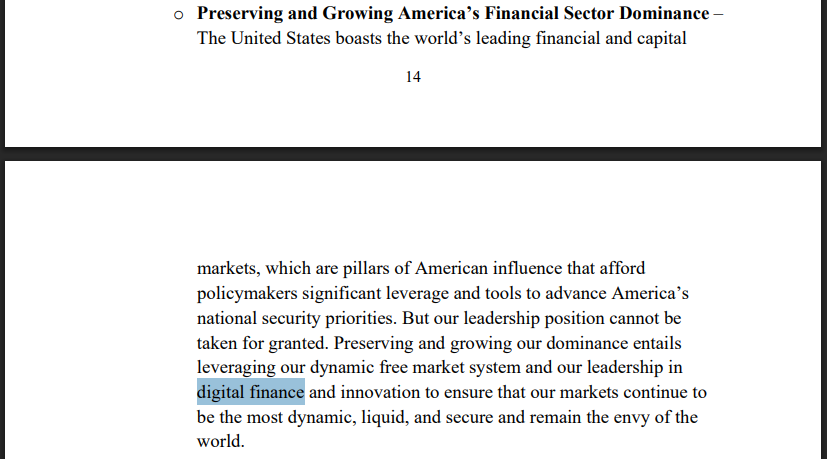
One part of the document mentions that Trump aims to maintain and expand “America’s financial sector dominance” by leveraging the nation’s “leadership in digital finance and innovation” to safeguard market liquidity and stability, which some interpret as a possible reference to crypto.
Observers say the silence does not match earlier moves. In January, Trump approved an order that encouraged agencies to prepare for a “digital-asset stockpile,” an idea tied to creating a Strategic Bitcoin Reserve.
That announcement caught global attention, especially after Bitcoin climbed past $126,000 earlier this year before falling to the $88,000 range during a market pullback.
Industry Reaction
Based on reports, some analysts believe the White House chose to keep crypto out of the national security framework to avoid shifting it into a military or defense category.
They argue that digital assets may stay under economic and financial oversight instead of being treated as a strategic security concern.
Others think the omission could weaken the momentum that crypto supporters hoped to see after months of praise from government officials.
Several industry voices say they expected at least a short reference to blockchain due to the technology’s increasing presence in global payments and national-level discussions.
Reports have disclosed that developers and crypto policy groups were tracking the document closely, waiting to see if digital money would be acknowledged in the same way as AI or quantum computing.
That did not happen, and the silence left many wondering whether Washington sees crypto as a priority or just another financial tool.
Questions Moving Forward
The lack of any direct language about crypto may influence market expectations. Some investors considered the national security strategy an important signal that could shape future regulation or federal participation in the crypto economy.
Instead, the absence of a clear stance has raised questions about whether the US will slow its public adoption plans, even as other countries push ahead with central bank digital currency testing.
Featured image from Getty Images, chart from TradingView
Historical context supports an analysis suggesting that Shiba Inu could explode from here as it retests a crucial support area. Notably, the analysis came from Crypto Patel, who forecasts that Shiba Inu could reverse recent price underperformance.
Professional investors can now trade XRP directly against the Hong Kong Dollar (HKD) after its listing on a licensed crypto exchange in the region. In a recent announcement, OSL, a regulated digital asset trading platform in Hong Kong, expanded its trading offerings by listing XRP for professional investors on its Flash Trade platform.
Recent data from Coinglass reveals that traders are piling into short positions on XRP at a far more aggressive pace than any other major asset. Despite this pressure, the asset has held surprisingly firm, posting gains over the past day.
Bitcoin is trading at a pivotal level that analysts say could determine whether the market holds its broader uptrend or slips back toward spring lows.
Key Takeaways:
Bitcoin is sitting on a crucial Fibonacci support level, with a breakdown risking a drop toward the April lows near $76,000.
A weekend leverage flush pushed BTC below $88,000 before a sharp rebound.
Traders now await the Fed meeting and key US economic data.
In a recent post on X, crypto trader Daan Crypto Trades said the 0.382 Fibonacci retracement zone is the line bulls must defend, warning that a breakdown could send BTC back to April levels near $76,000.
“It’s also pretty much the last major support before testing the April lows again, which would break this high time frame market structure,” he said.
Bitcoin Dips Below $88K in Weekend Leverage Flush, Analyst Says
Over the weekend, Bitcoin briefly dipped below $88,000 during another round of leverage washouts before rebounding above $91,500.
Analyst “Bull Theory” described the move as typical low-liquidity weekend manipulation aimed at flushing both longs and shorts.
The market now turns its attention to this week’s Federal Open Market Committee meeting, where a 0.25% rate cut is widely expected.
BREAKING: Bitcoin dumped $2,000 from $89.7k to $87.7k and liquidated $171 million worth of longs.
But then it pumped $3,500 from $87.7k to $91.2k and liquidated $75 million worth of shorts.
Still, crypto markets have cooled since the October cut, as Fed Chair Jerome Powell emphasized a data-dependent path rather than a predictable easing cycle.
Markus Thielen of 10x Research noted that traders expect a similar tone this week, cautious and potentially hawkish, keeping pressure on risk assets.
With ETF inflows softening and trading volumes thinning into December, Thielen said upside participation remains limited, while volatility compression leaves BTC more vulnerable to downside moves in the near term.
“Bulls will point to the Treasury General Account rebuild, the end of Quantitative Tightening, and looming rate cuts as a liquidity windfall for Bitcoin,” Thielen wrote.
He added that hypothetical macro tailwinds are “irrelevant if the underlying message lacks conviction and the market structure fails to support a sustained move.”
Nick Ruck of LVRG Research said upcoming U.S. jobs data and inflation figures may prove just as influential.
If they reinforce expectations for continued easing, he believes renewed liquidity inflows could fuel a broader recovery across digital assets.
Analysts say the divergence suggests renewed underlying demand, with dormant coins moving at levels not seen in years, a sign that long-term holders may be re-entering the market.
The indicator’s steady rise points to a major rotation of capital beneath the surface despite cautious sentiment.
Liveliness measures the balance between coins being transacted and those being held, weighted by age. It tends to rise during bull markets as older coins move at higher prices, reflecting fresh inflows and greater conviction.
Last week, Bitfinex said the market is showing “seller exhaustion” following a period of heavy deleveraging and panic-driven exits by short-term holders.
“The combination of extreme deleveraging, capitulation among short-term holders, and early signs of seller exhaustion has created the conditions for a stabilisation phase and a relief bounce,” the firm wrote.

 Login
Login



 In 2026, we plan to deprecate ZKsync Lite (aka ZKsync 1.0), the original ZK-rollup we launched on Ethereum.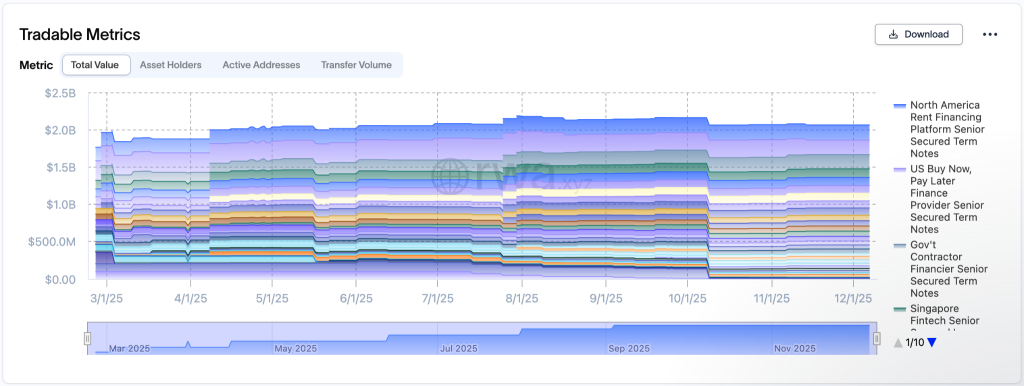
 The
The