
❌

Normal view

There are new articles available, click to refresh the page.
Before yesterdayMain stream

How to Configure KeyLocker for JarSigner using the DigiCert KSP Library?

20 January 2026 at 02:32

Digitally signing Java applications improves authenticity, integrity, and trust. DigiCert KeyLocker allows you to sign .jar files securely using keys stored in DigiCert’s cloud-based Hardware Security Modules (HSMs) and the DigiCert KSP Library. This guide explains how to establish your environment and use JarSigner to sign Java applications from KeyLocker. What Is DigiCert KeyLocker? DigiCert… Read More How to Configure KeyLocker for JarSigner using the DigiCert KSP Library?

The post How to Configure KeyLocker for JarSigner using the DigiCert KSP Library? appeared first on SignMyCode - Resources.

The post How to Configure KeyLocker for JarSigner using the DigiCert KSP Library? appeared first on Security Boulevard.

A UI-Focused Display Library For The ESP32

By: Lewin Day
9 January 2026 at 14:30

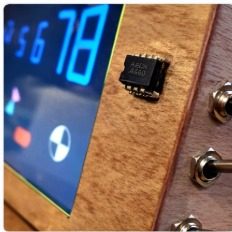
If you’re building a project on your ESP32, you might want to give it a fancy graphical interface. If so, you might find a display library from [dejwk] to be particularly useful.

Named roo_display for unclear reasons, the library is Arduino-compatible, and suits a wide range of ESP32 boards out in the wild. It’s intended for use with common SPI-attached display controllers, like the ILI9341, SSD1327, ST7789, and more. It’s performance-oriented, without skimping on feature set. It’s got all kinds of fonts in different weights and sizes, and a tool for importing more. It can do all kinds of shapes if you want to manually draw your UI elements, or you can simply have it display JPEGs, PNGs, or raw image data from PROGMEM if you so desire. If you’re hoping to create a touch interface, it can handle that too. There’s even a companion library for doing more complex work under the name roo_windows.

If you’re looking to create a simple and responsive interface, this might be the library for you. Of course, there are others out there too, like the Adafruit GFX library which we’ve featured before. You could even go full VGA if you wanted, and end up with something that looks straight out of Windows 3.1. Meanwhile, if you’re cooking up your own graphics code for the popular microcontroller platform, you should probably let us know on the tipsline!

Thanks to [Daniel] for the tip!

Drive 1024Γ—600 Pixels via I2C with an ATtiny85

8 January 2026 at 07:00
The clock demo on display

If you need to drive a big screen for a project, it’s fair to say your first thought isn’t going to be to use the ATtiny85. With just 512 bytes of RAM and 8 kilobytes of flash memory, the 8-bit micro seems a little cramped to drive, say, a 10β€³ screen. Yet that’s exactly what [ToSStudio] is doing with TinyTFT_LT7683: 1024 x 600 pixels of TFT goodness, over I2C no less.

With the right TFT controller, this little micro-controller can do magic.

The name kind of gives away the secret: it won’t work on just any TFT display. It’s using properties of the LT7683 display driver, though if you don’t have one of those, the RA8875 is also compatible. Those drivers can take more than just a pixel stream– a good thing, since you’d be hard pressed to get that many pixels streaming from an ATtiny. These are character/graphic display drivers, which means you can get them to draw both characters and graphics on the screen if you speak the lingo.

It’s still not blazing fast; the documentation suggests β€œstatic or moderately dynamic UIs” as the suggested use case, and a clock is of the pre-programmed examples. From that, we can surmise that you can get 1 FPS or better with this code. You’re limited both by the simple micro-controller and the bandwidth of the I2C bus, but within those limits this seems like a very powerful technique.

This isn’t the first ATtiny graphics library to blow our minds, but if you really want an impressive graphics demo from the little micro that could, you really need to race the beam.

Thanks to [Thomas Scherer] for the tip!

Anna’s Archive loses .org domain, says suspension likely unrelated to Spotify piracy

5 January 2026 at 15:38

The primary domain of Shadow library Anna's Archive was taken offline, with annas-archive.org being put under the serverHold status. While Anna's Archive recently made waves with a massive "backup" of Spotify, the shadow library's operator said the music pirating doesn't appear to be connected to the .org domain suspension. Anna's Archive remains available at several other domains.

Anna's Archive launched in 2022 in response to the US Department of Justice seizure of domains used by e-book pirate site Z-Library. Acting as a shadow library and a search engine for other shadow libraries, Anna's Archive aims to archive books and other written materials and make them widely available via torrents. Its data sets have also been heavily used by AI companies to train large language models.

In addition to mirroring shadow libraries such as Sci-Hub, Library Genesis, and Z-Library, Anna's Archive made a major move into music pirating two weeks ago with an announcement that it scraped Spotify and made a 300TB copy of the most streamed songs. Despite that development, the person behind Anna's Archive said the domain suspension doesn't seem to be related to the Spotify scraping.

Read full article

Comments

Β© Getty Images | Anadolu

Hacker Shelf

By: hoek
9 July 2025 at 13:38

Hello, readers of my blog. Today, I would like to present my new baby to you. More specifically, a project that is simply an online library containing PDF files on the subject of cybersecurity. Specifically, it covers pentesting, hacking, tools, red teaming, blue team, forensics, AI, risk, networks, malware analysis, threat hunting, and so on.

❌
❌