❌

Normal view

There are new articles available, click to refresh the page.
Today β€” 6 December 2025Main stream

The buzz over an β€˜alien’ interstellar comet shows how way-out speculation goes viral

6 December 2025 at 18:43
An astrophotograph of the interstellar comet known as 3I/ATLAS highlights its green coma and a wandering blue-tinted ion tail. (Copyright Victor Sabet and Julien De Winter, republished with permssion)

Is an interstellar spacecraft zooming through our solar system? That’s the big question for fans of unidentified flying objects β€” and for a researcher at the University of Washington who analyzed the speculation over the interstellar comet known as 3I/ATLAS.

Mert Bayar, a postdoctoral scholar at the UW Center for an Informed Public, focused on 3I/ATLAS to track how social-media influencers use over-the-top speculation to fill in information gaps.

β€œI’ve written previously onΒ how expert opinions can fuel conspiracy theorizingΒ through elite-driven rumoring and amplification,” Bayar explained in an email to GeekWire. β€œMy academic interest in philosophy, epistemology and the politics of conspiracy theories, plus a personal interest in space-related conspiracy theories, led me to look more closely at 3I/ATLAS.”

His analysis, published this week, is titled β€œAlien of the Gaps: How 3I/ATLAS Was Turned into a Spaceship Online.” The title takes inspiration from a concept known as β€œGod of the Gaps,” which traces how thinkers through the ages explained phenomena they couldn’t fully understand by appealing to the influence of higher powers.

In ancient Greece, those higher powers might have been the gods on Mount Olympus. Bayar argues that a similar process exists today: β€œWhere natural explanations feel incomplete, we substitute a different higher agency, not Zeus this time, but extraterrestrials,” he writes.

Such questions came into the spotlight when 3I/ATLAS was spotted in July. The object’s trajectory suggested that it was only the third known celestial interloper coming into the solar system from far beyond. Even after astronomers built up evidence to classify it as a comet, 3I/ATLAS exhibited enough anomalous behavior to sustain speculation about alien technology.

Exactly how was that speculation sustained? A key figure is Harvard astronomer Avi Loeb. Years before 3I/ATLAS was found, Loeb and a colleague raised the possibility that a previously sighted interstellar object known as β€˜Oumuamua β€œmay be a fully operational probe sent intentionally to Earth vicinity by an alien civilization.”

Loeb hit upon the alien-technology theme repeatedly in follow-up research papers and a book published in 2023. This year’s discovery of 3I/ATLAS gave a fresh boost to his speculative musings. To track how such musings influenced online discussions about 3I/ATLAS, Bayar used a media analytics platform called Brandwatch to analyze roughly 700,000 posts about the comet that were published on the X social-media channel between July 1 and Nov. 21.

β€œAlmost 280,000 of the 700,000 posts invoke aliens or ET technology β€” about 40% of the 3I/ATLAS conversation on X,” Bayar writes. About 130,000 posts reference Loeb by name or by his status as a Harvard scientist. More than 82,000 posts explicitly pair his name with the alien-technology hypothesis.

β€œTo be fair, at times, Avi Loeb states that 3I/ATLAS is most likely a natural interstellar comet,” Bayar says. β€œBut he then spends far more time walking through its supposed β€˜anomalies’ and entertaining the alien-technology hypothesis. For most audiences, the volume and emphasis of that speculation effectively buries the initial caveat and recenters the story around the alien frame rather than the natural-comet explanation.”

All that feeds into a broader online ecosystem that Bayar calls the β€œmystery economy.”

β€œOur information systems reward the production of mystery and speculation,” he writes. β€œThat reward is amplified by a ready-made ecosystem of websites, content creators across platforms who produce, spread and amplify speculative takes. Those creators need a steady supply of β€˜new’ material, and Loeb’s ever-growing list of anomalies, even when indirectly refuted by organizations like NASA, feeds that need for sustained mystery and endlessly recyclable content.”

In case you’re curious about the anomalies, Penn State astronomer Jason Wright, who focuses on studies of extrasolar planets and the search for extraterrestrial intelligence, ticks through Loeb’s list (and offers explanations that don’t involve aliens) in a blog post that was published last month.

But the point behind Bayar’s research has more to do with social-media dynamics than with planetary science. The insights gained from studying the β€œAlien of the Gaps” could well be applied to other spheres of conspiratorial theorizing, ranging from vaccine denialism to the search for a Jan. 6 pipe-bomb suspect.

Bayar had to limit his statistical analysis to posts about 3I/ATLAS on X, but he saw signs that information was flowing between different online platforms. β€œOne of the most frequently appearing terms in the 3I/ATLAS conversation on X is β€˜@YouTube,’ suggesting that many X accounts are reacting to or sharing YouTube videos,” he told GeekWire.

β€œBecause of data-access constraints, we can’t confidently identify a single β€˜nexus’ of spread,” Bayar said. β€œWhat we can say is that the conversation on X is both widely distributed and largely contained within alien-adjacent communities: Total volume is still under a million posts, which suggests it hasn’t broken out into a truly mass-viral story beyond the UFO/UAP crowd.”

That could change, however. 3I/ATLAS is due to make its closest approach to Earth on Dec. 19, which means there’ll be further opportunities for astronomical imagery β€” and for speculative online buzz.

Thanks to Julien De Winter for permission to republish a Nov. 25 image of 3I/ATLAS that was captured by Victor Sabet and De Winter using a Starfront Observatories telescope in Texas.
Yesterday β€” 5 December 2025Main stream

NASA Selects 2 Instruments for ArtemisΒ IV LunarΒ Surface Science

4 December 2025 at 15:59

4 min read

NASA Selects 2 Instruments for ArtemisΒ IV LunarΒ Surface Science

NASA has selected two science instruments designed for astronauts to deploy on the surface of the Moon during the Artemis IV mission to the lunar south polar region.Β The instruments will improve our knowledge of the lunar environment to support NASA’s further exploration of the Moon and beyond to Mars.Β 

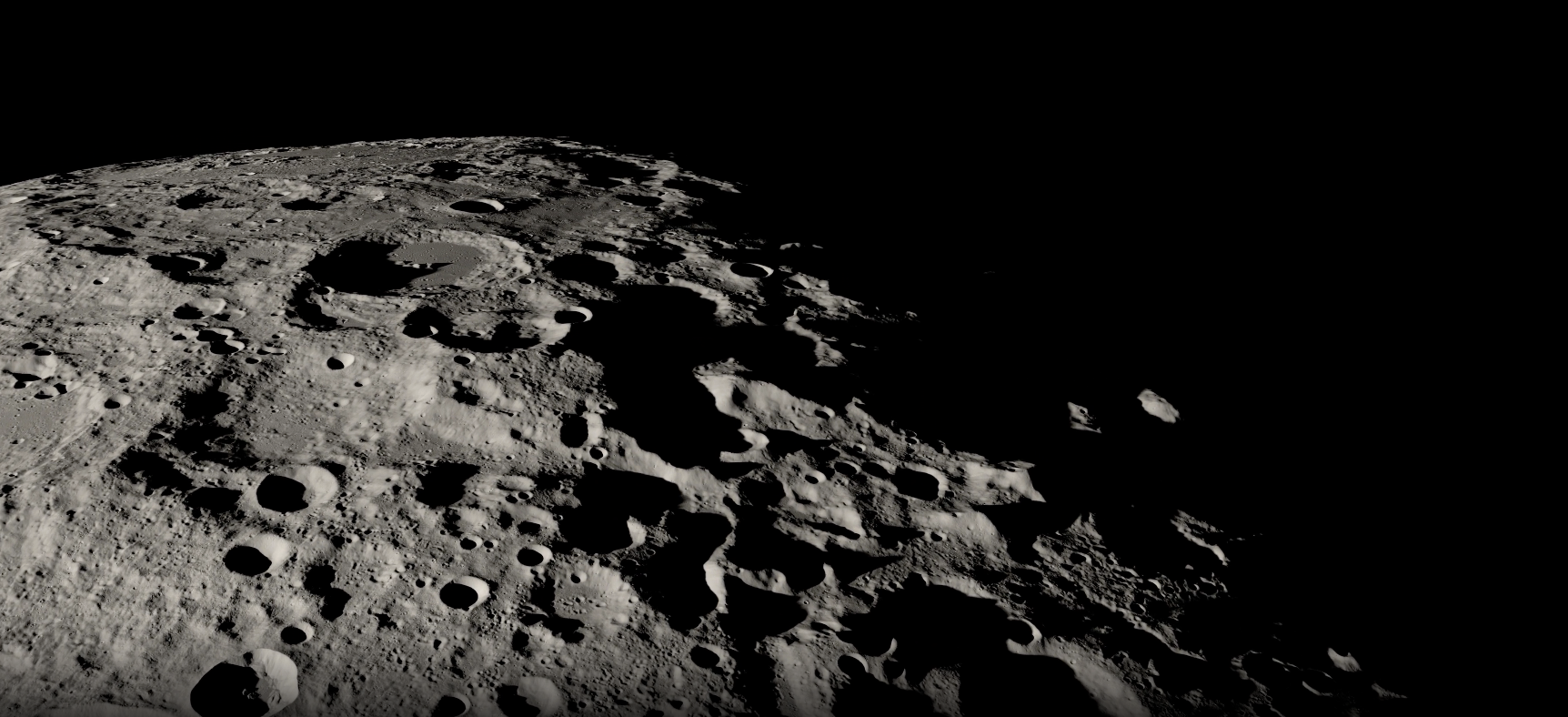
A visualization of the Moon’s South Pole region created with data from NASA’s Lunar Reconnaissance Orbiter, which has been surveying the Moon with seven instruments since 2009.Β 
NASA’s Scientific Visualization Studio/Ernie Wright

β€œThe Apollo Era taught us that the further humanity is from Earth, the more dependent we are onΒ science toΒ protect and sustainΒ human life on other planets,” said Nicky Fox, associate administrator, Science Mission Directorate at NASA Headquarters in Washington. β€œBy deploying these two science instruments on the lunar surface, our proving ground, NASA is leading the world in the creation of humanity’s interplanetary survival guide to ensure the health and safety of our spacecraft and human explorers as we begin our epic journey back to the Moon and onwardΒ to Mars.”

After his voyage to the Moon’s surface during Apollo 17, astronaut Gene Cernan acknowledgedΒ the challenge that lunar dustΒ presents to long-term lunar exploration. Moon dust sticks to everything it touches and is very abrasive. The knowledge gained from the DUSTER (DUst and plaSma environmenT survEyoR) investigation will help mitigate hazards to human health and exploration.Β Consisting of a set of instruments mounted on a small autonomous rover, DUSTERΒ will characterize dust and plasmaΒ around the landing site. These measurements will advance understanding of the Moon’s natural dust and plasma environment and how that environment responds to the human presence, including any disturbance during crew exploration activities and lander liftoff. The DUSTER instrument suite is led by Xu Wang of the University of Colorado Boulder. The contract is for $24.8 million over a period of three years.Β 

A model of the DUSTER instrument suite
A model of the DUSTER instrument suite consisting of the Electrostatic Dust Analyzer (EDA)β€”which will measure the charge, velocity, size, and flux of dust particles lofted from the lunar surfaceβ€”and Relaxation SOunder and differentiaL VoltagE (RESOLVE)β€”which will characterize the average electron density above the lunar surface using plasma sounding. Both instruments will be housed on a Mobile Autonomous Prospecting Platform (MAPP) rover, which will be supplied by Lunar Outpost, a company based in Golden, Colorado, that develops and operates robotic systems for space exploration.
LASP/CU Boulder/Lunar Outpost

Data from the SPSS (South Pole Seismic Station) will enable scientists to characterize the lunar interior structure to better understand the geologic processes that affect planetary bodies. The seismometer will help determine the current rate at which the Moon is struck by meteorite impacts, monitor the real-time seismic environment and how it can affect operations for astronauts, and determine properties of the Moon’s deep interior. The crew will additionally perform an active-source experiment using a β€œthumper” that creates seismic energy to survey the shallow structure around the landing site. The SPSS instrument is led by Mark Panning of NASA’s Jet Propulsion Laboratory in Southern California. The award is for $25 million over a period of three years.Β 

An artist’s concept of SPSS (South Pole Seismic Station)
An artist’s concept of SPSS (South Pole Seismic Station) to be deployed by astronauts on the lunar surface.
NASA/JPL-Caltech

β€œThese two scientific investigations will be emplaced by human explorers on the Moon to achieve science goals that have been identified as strategically important by both NASA and the larger scientific community”, said Joel Kearns,Β deputy associate administrator for exploration, Science Mission DirectorateΒ at NASA Headquarters. β€œWe are excited to integrate these instrument teams into the Artemis IV Science Team.”

The two payloads were selected for further development to fly onΒ Artemis IV;Β however, final manifesting decisions about the mission will be determined at a later date.Β 

Through Artemis, NASA will address high priority science questions, focusing on those that are best accomplished by on-site human explorers on and around the Moon and by using the unique attributes of the lunar environment, aided by robotic surface and orbiting systems. The Artemis missionsΒ will send astronauts to explore the Moon for scientific discovery, economic benefits, and build the foundation for the first crewed missions to Mars.

For more information on Artemis, visit:

https://www.nasa.gov/humans-in-space/artemis

Karen Fox / Molly Wasser
Headquarters, Washington
202-358-1600Β 
karen.c.fox@nasa.govΒ /Β molly.l.wasser@nasa.gov

Facebook logo
Instagram logo
Linkedin logo

Rocket Report: Blunder at Baikonur; do launchers really need rocket engines?

5 December 2025 at 07:00

Welcome to Edition 8.21 of the Rocket Report! We’re back after the Thanksgiving holiday with more launch news. Most of the big stories over the last couple of weeks came from abroad. Russian rockets and launch pads didn’t fare so well. China’s launch industry celebrated several key missions. SpaceX was busy, too, with seven launches over the last two weeks, six of them carrying more Starlink Internet satellites into orbit. We expect between 15 and 20 more orbital launch attempts worldwide before the end of the year.

As always, we welcome reader submissions. If you don’t want to miss an issue, please subscribe using the box below (the form will not appear on AMP-enabled versions of the site). Each report will include information on small-, medium-, and heavy-lift rockets, as well as a quick look ahead at the next three launches on the calendar.

Another Sarmat failure. A Russian intercontinental ballistic missile (ICBM) fired from an underground silo on the country’s southern steppe on November 28 on a scheduled test to deliver a dummy warhead to a remote impact zone nearly 4,000 miles away. The missile didn’t even make it 4,000 feet, Ars reports. Russia’s military has been silent on the accident, but the missile’s crash was seen and heard for miles around the Dombarovsky air base in Orenburg Oblast near the Russian-Kazakh border. A video posted by theΒ Russian blog site MilitaryRussia.ru on Telegram and widely shared on other social media platforms showed the missile veering off course immediately after launch before cartwheeling upside down, losing power, and then crashing a short distance from the launch site.

Read full article

Comments

Β© Korea Aerospace Research Institute

Before yesterdayMain stream

SpaceX is blasting toward a new Falcon 9 milestone

4 December 2025 at 19:20

For the sixth year in a row, SpaceX is on course to set a new annual launch record for the Falcon 9 rocket, highlighting SpaceX’s increasing dominance in orbital launch activity, as well as the success of its reusable booster system in enabling frequent, cost-effective flights. The Elon Musk-led spaceflight company is set to complete […]

The post SpaceX is blasting toward a new Falcon 9 milestone appeared first on Digital Trends.

Congress warned that NASA’s current plan for Artemis β€œcannot work”

4 December 2025 at 17:54

In recent months, it has begun dawning on US lawmakers that, absent significant intervention, China will land humans on the Moon before the United States can return there with the Artemis Program.

So far, legislators have yet to take meaningful action on thisβ€”a $10 billion infusion into NASA’s budget this summer essentially provided zero funding for efforts needed to land humans on the Moon this decade. But now a subcommittee of the House Committee on Space, Science, and Technology has begun reviewing the space agency’s policy, expressing concerns about Chinese competition in civil spaceflight.

During a hearing on Thursday in Washington, DC, the subcommittee members asked a panel of experts how NASA could maintain its global leadership in space over China in general, and more specifically, how to improve the Artemis Program to reach the Moon more quickly.

Read full article

Comments

Β© Liu Guoxing/VCG via Getty Images

OpenAI CEO reportedly turned to a Seattle startup in quest to challenge SpaceX on the space data frontier

4 December 2025 at 13:52
Stoke Space hot-fire test
Stoke Space’s Zenith booster engine blazes during a hot-fire test in 2024. (Stoke Space Photo)

OpenAI CEO Sam Altman is thinking about expanding into the final frontier for data centers, and his efforts to follow through on that thought reportedly turned into talks with Stoke Space, a rocket startup headquartered just south of Seattle.

Altman looked into putting together the funding to invest in Stoke Space, with an eye toward either forging a partnership or ending up with a controlling stake in the company, according to an account published by The Wall Street Journal. The discussions reportedly began this summer and picked up in the fall, but are said to be no longer active.

Such a move would open up a new front in Altman’s competition with SpaceX founder Elon Musk, who has talked about scaling up Starlink V3 satellites to serve as data centers for AI applications. β€œSpaceX will be doing this,” Musk wrote in a post to his X social-media platform.

Jeff Bezos, the founder of Amazon and the Blue Origin space venture, has voiced a similar interest in orbital data centers β€” as has Google CEO Sundar Pichai. Google is partnering with Planet Labs on a space-based data processing effort known as Project Suncatcher.

The tech world’s appetite for data processing and storage is being driven by the rapidly growing resource requirements of artificial intelligence applications. Altman addressed the subject on Theo Von’s β€œThis Past Weekend” podcast in July.

β€œI do guess that a lot of the world gets covered in data centers over time,” Altman said. β€œBut I don’t know, because maybe we put them in space. Like, maybe we build a big Dyson sphere on the solar system and say, β€˜Hey, it actually makes no sense to put these on Earth.'”

Citing unidentified sources, the Journal said Altman has been exploring the idea of investing in space ventures to follow through on that thought. Kent, Wash.-based Stoke Space, which is working on a fully reusable rocket called Nova, reportedly became a focus of Altman’s interest.

Nova is expected to have its first launch in 2026. Just this week, Celestis announced that Stoke Space would use Nova to send cremated remains and DNA samples into deep space for Celestis’ β€œInfinite Flight” mission in late 2026.

Much has changed on the AI frontier in recent weeks. OpenAI is facing a strong challenge from Google and its Gemini chatbot β€” and this week, Altman ordered OpenAI to refocus urgently on upgrading ChatGPT, its flagship AI platform. Such down-to-earth market concerns may have been one of the factors putting Altman’s space aspirations on hold.

A spokesperson for Stoke Space said the company would not comment on the Journal’s report.

There’s another Seattle-area space venture that may well offer the kind of play that Altman is looking for: Redmond, Wash.-based Starcloud is developing its own platform for AI data centers in space. Like Stoke Space, Starcloud went through the startup accelerator program at Y Combinator, which Altman ran for a time before he became OpenAI’s CEO.

Last month, Starcloud had its first test satellite launched into space with an Nvidia data-processing chip on board. The startup is already partnering with a Colorado-based company called Crusoe to offer limited GPU processing capacity in space by early 2027.

Lego announces NASA Artemis SLS rocket set to lift off (literally) in 2026

4 December 2025 at 10:08

How do you top a highly detailed scale model of NASA’s new moon-bound rocket and its support tower? If you’re Lego, you make it so it can actually lift off.

Lego’s NASA Artemis Space Launch System Rocket, part of its Technic line of advanced building sets, will land on store shelves for $60 on January 1, 2026, and then β€œblast off” from kitchen tables, office desks and living room floors. The 632-piece set climbs skyward, separating from its expendable stages along the way, until the Orion crew spacecraft and its European Service Module top out the motion on their way to the moonβ€”or wherever your imagination carries it.

β€œThe educational LEGO Technic set shows the moment a rocket launches, in three distinct stages,” reads the product description on Lego’s website. β€œTurn the crank to see the solid rocket boosters separate from the core stage, which then also detaches. Continue turning to watch the upper stage with its engine module, Orion spacecraft and launch abort system separate.”

Read full article

Comments

Β© LEGO/collectSPACE.com

NASA heads to Death Valley to test new Mars drone tech

3 December 2025 at 23:30

After reaching Mars with the Perseverance rover in early 2021, NASA’s Ingenuity helicopter proved a huge success as it exceeded expectations with an astonishing 72 flights across the Martian surface. But three years after entering the history books by becoming the first aircraft to achieve powered, controlled flight on another planet, Ingenuity sustained damage to […]

The post NASA heads to Death Valley to test new Mars drone tech appeared first on Digital Trends.

China tried to copy SpaceX’s Falcon 9 landing, but this is what happened

3 December 2025 at 19:00

SpaceX has been successfully landing the first stage of its Falcon 9 rocket for the last decade. Doing so allows SpaceX to use a single booster for multiple missions, enabling it to slash launch costs and increase launch frequency. Few other companies have made any real effort to emulate SpaceX’s feat with a first-stage booster, […]

The post China tried to copy SpaceX’s Falcon 9 landing, but this is what happened appeared first on Digital Trends.

NASA nominee appears before Congress, defends plans to revamp space agency

3 December 2025 at 14:31

Private astronaut Jared Isaacman returned to Congress on Wednesday for a second confirmation hearing to become NASA administrator before the US Senate Committee on Commerce, Science, and Transportation in Washington, DC.

There appeared to be no showstoppers during the hearing, in which Isaacman reiterated his commitment to the space agency’s Artemis Program and defended his draft plan for NASA, β€œProject Athena,” which calls for an assessment of how NASA should adapt to meet the modern space age.

During his testimony, Isaacman expressed urgency as NASA faces a growing threat from China to its supremacy in spaceflight.

Read full article

Comments

Β© Graeme Sloan/Bloomberg via Getty Images

A spectacular explosion shows China is close to obtaining reusable rockets

3 December 2025 at 12:40

China’s first attempt to land an orbital-class rocket may have ended in a fiery crash, but the company responsible for the mission had a lot to celebrate with the first flight of its new methane-fueled launcher.

LandSpace, a decade-old company based in Beijing, launched its new Zhuque-3 rocket for the first time at 11 pm EST Tuesday (04:0 UTC Wednesday), or noon local time at the Jiuquan launch site in northwestern China.

Powered by nine methane-fueled engines, the Zhuque-3 (Vermillion Bird-3) rocket climbed away from its launch pad with more than 1.7 million pounds of thrust. The 216-foot-tall (66-meter) launcher headed southeast, soaring through clear skies before releasing its first stage booster about two minutes into the flight.

Read full article

Comments

Β© LandSpace

NASA Astronaut Jonny Kim Advances Research Aboard Space Station

3 December 2025 at 00:00

5 min read

Preparations for Next Moonwalk Simulations Underway (and Underwater)

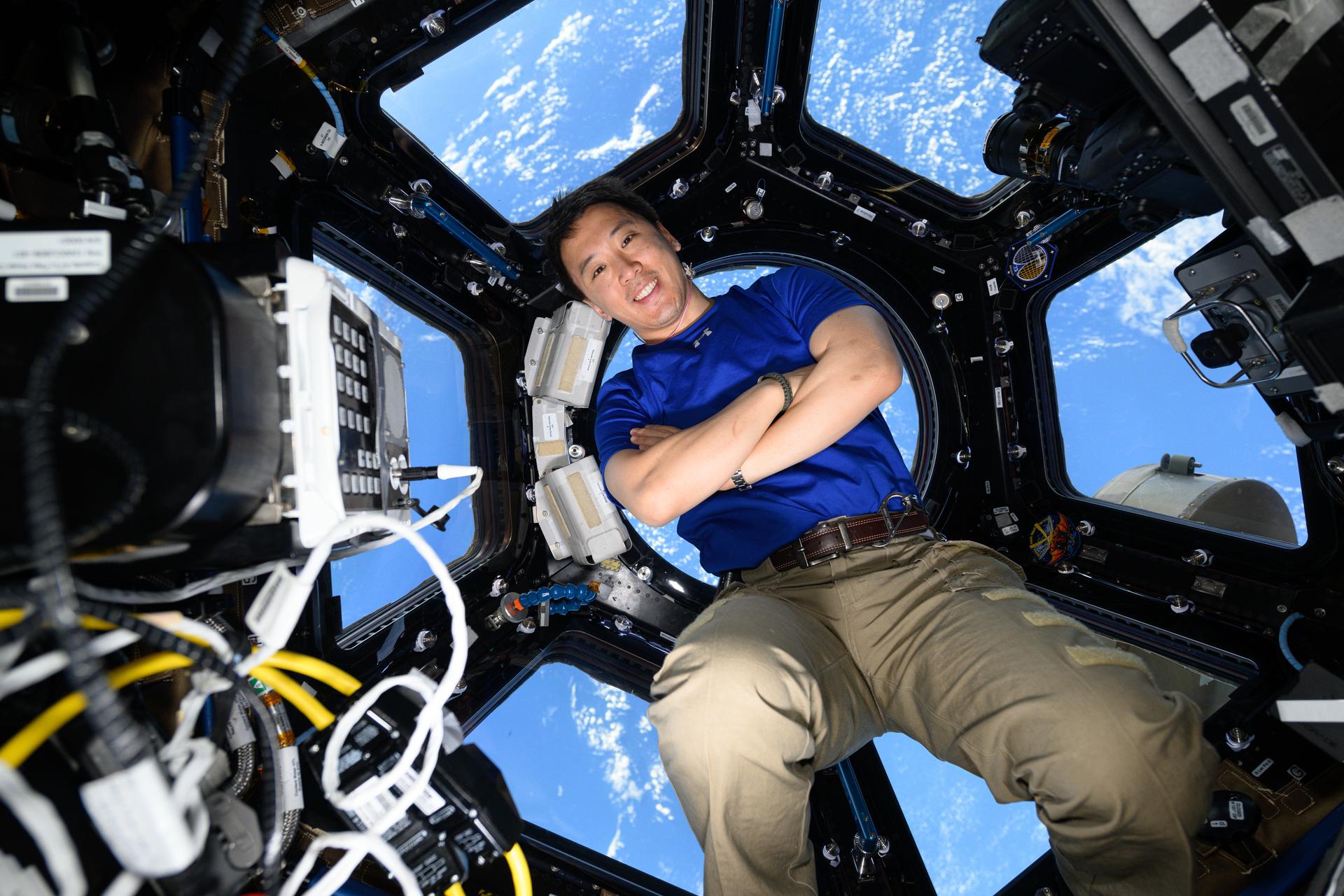
NASA astronaut Jonny Kim floats in the center of the image with his arms crossed, smiling. He wears a blue shirt and khaki pants. Behind him, the seven windows of the space station’s cupola reveal Earth’s blue oceans below. In the foreground, on the left, a rectangular device with a keypad and multiple wires is visible.
NASA astronaut Jonny Kim floats inside the Cupola of the International Space Station.
NASA

NASA astronaut Jonny Kim is wrapping up his first mission aboard the International Space Station in early December. During his stay, Kim conducted scientific experiments and technology demonstrations to benefit humanity on Earth and advance NASA’s Artemis campaign in preparation for future human missions to Mars.

Here is a look at some of the science Kim completed during his mission:

Medical check-ups in microgravity

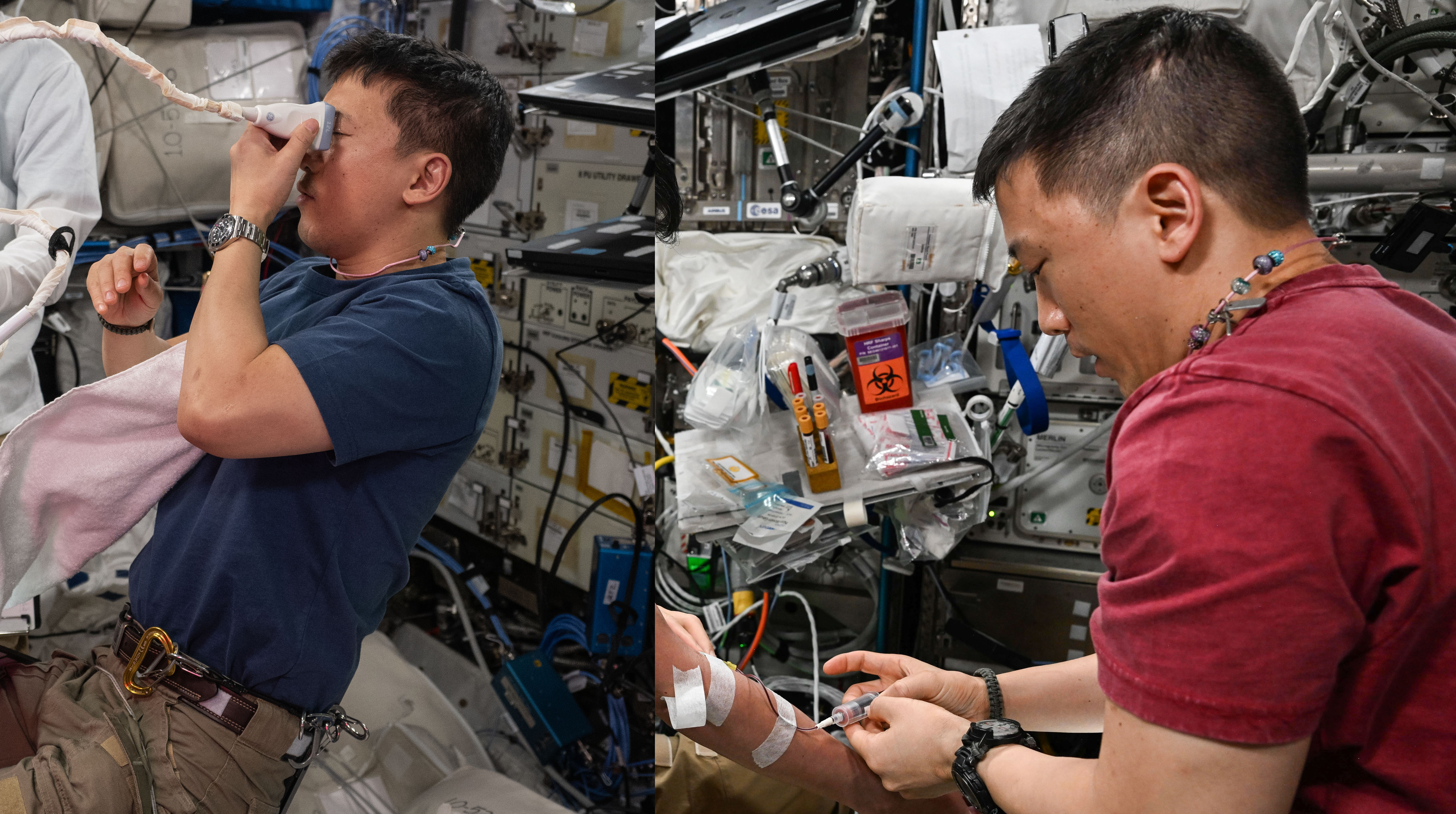
Left: NASA astronaut Jonny Kim, wearing a navy-blue shirt and brown cargo pants, holds a small medical device to his left eye. Kim wears a silver watch on his left wrist, and there are many electronic devices and wires embedded in the surrounding walls. Right: Kim, wearing a red shirt and a black watch, draws blood from a fellow crew member’s arm, which has multiple white adhesives attached. A small workstation with multiple blood vials and a biohazard disposal container is in the background.
NASA

NASA astronaut Jonny Kim, a medical doctor, completed several routine medical exams while aboard the International Space Station. NASA flight surgeons and researchers monitor crew health using a variety of tools, including blood tests, eye exams, and ultrasounds.

Kim conducts an ultrasound of his eye in the left image. Eye exams are essential as long-duration spaceflight may cause changes to the eye’s structure and affect vision, a condition known as spaceflight associated neuro-ocular syndrome, or SANS. In the right image, Kim draws blood from a fellow crew member. These blood sample collections provide important insights into crew cartilage and bone health, cardiovascular function, inflammation, stress, immune function, and nutritional status.

NASA astronauts complete regular medical exams before, during, and after spaceflight to monitor astronaut health and develop better tools and measures for future human exploration missions to the Moon and Mars.

Learn more about human research on space station.

Low light plant growth

NASA astronaut Jonny Kim, wearing a blue shirt, holds a camera to his left eye as he photographs a toaster-sized device mounted to the overhead wall of the station. This device has an open panel, revealing six rectangular chambers containing sprouts in clear agar. The area is dimly lit, with visible wiring to Kim’s left.
NASA
A close-up of rectangular, test-tube-like chambers containing seedlings. About one-third of the chambers are filled with clear agar on which green seedlings grow. A soft yellow light illuminates the chambers.
NASA

NASA astronaut Jonny Kim photographs dwarf tomato sprouts grown using a nutrient supplement instead of photosynthesis as part of a study on plant development and gene expression. The plants are given an acetate supplement as a secondary nutrition source, which could increase growth and result in better yields, all while using less power and fewer resources aboard the space station and future spacecraft.Β 

Learn more about Rhodium USAFA NIGHT.

Radioing future space explorers

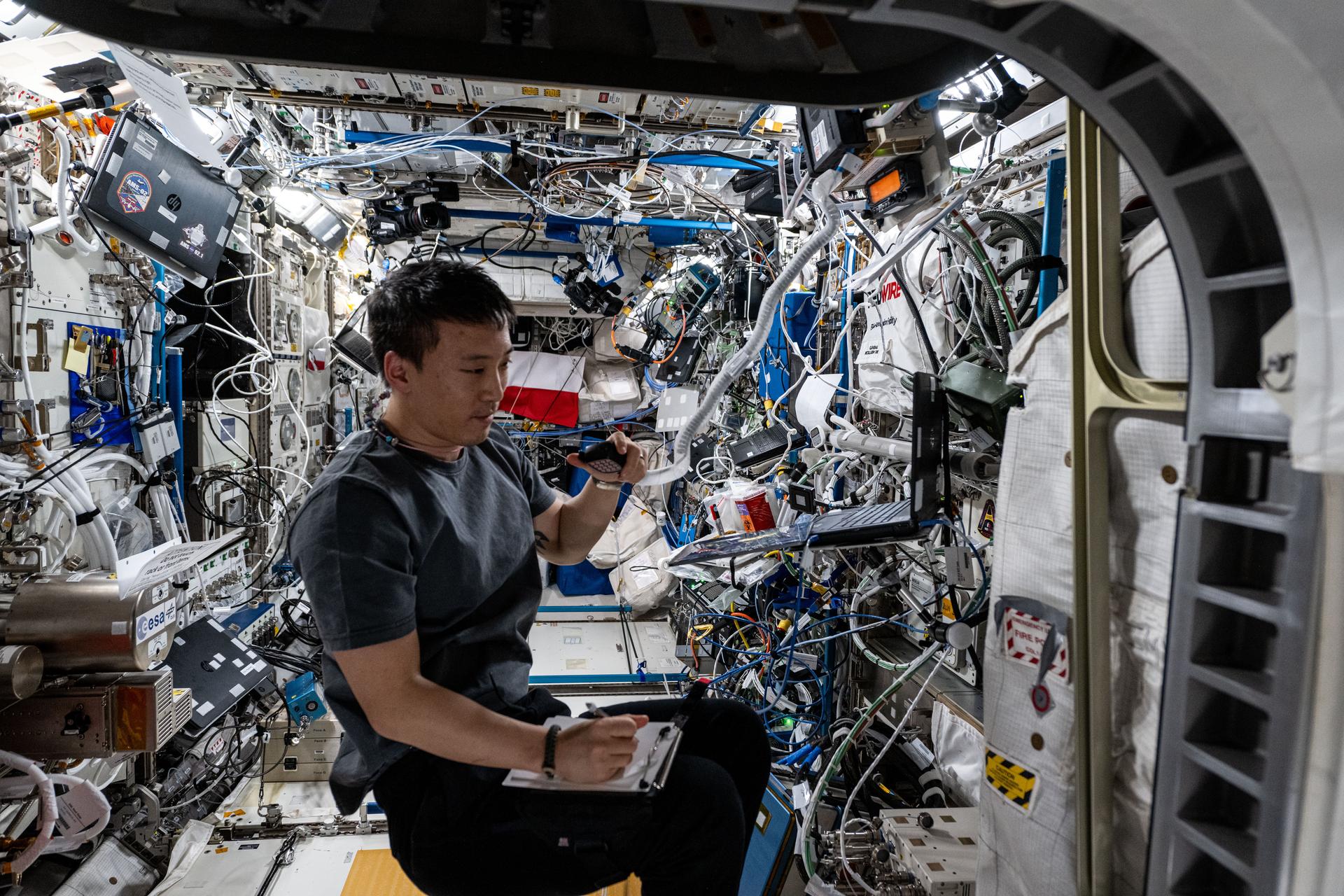
NASA astronaut Jonny Kim, wearing a black shirt and black pants, sits with a clipboard on his right leg and a radio in his left hand. His right hand rests on the clipboard as he takes notes while looking at a laptop. Densely packed electronics and wiring along the walls of the space station are visible in the background.
NASA

NASA astronaut Jonny Kim uses a ham radio to speak with students on Earth via an educational program connecting students worldwide with astronauts aboard the International Space Station. Students can ask about life aboard the orbiting laboratory and the many experiments conducted in microgravity. This program encourages an interest in STEM (science, technology, engineering, and mathematics) and inspires the next generation of space explorers.

Learn more about ISS Ham Radio.

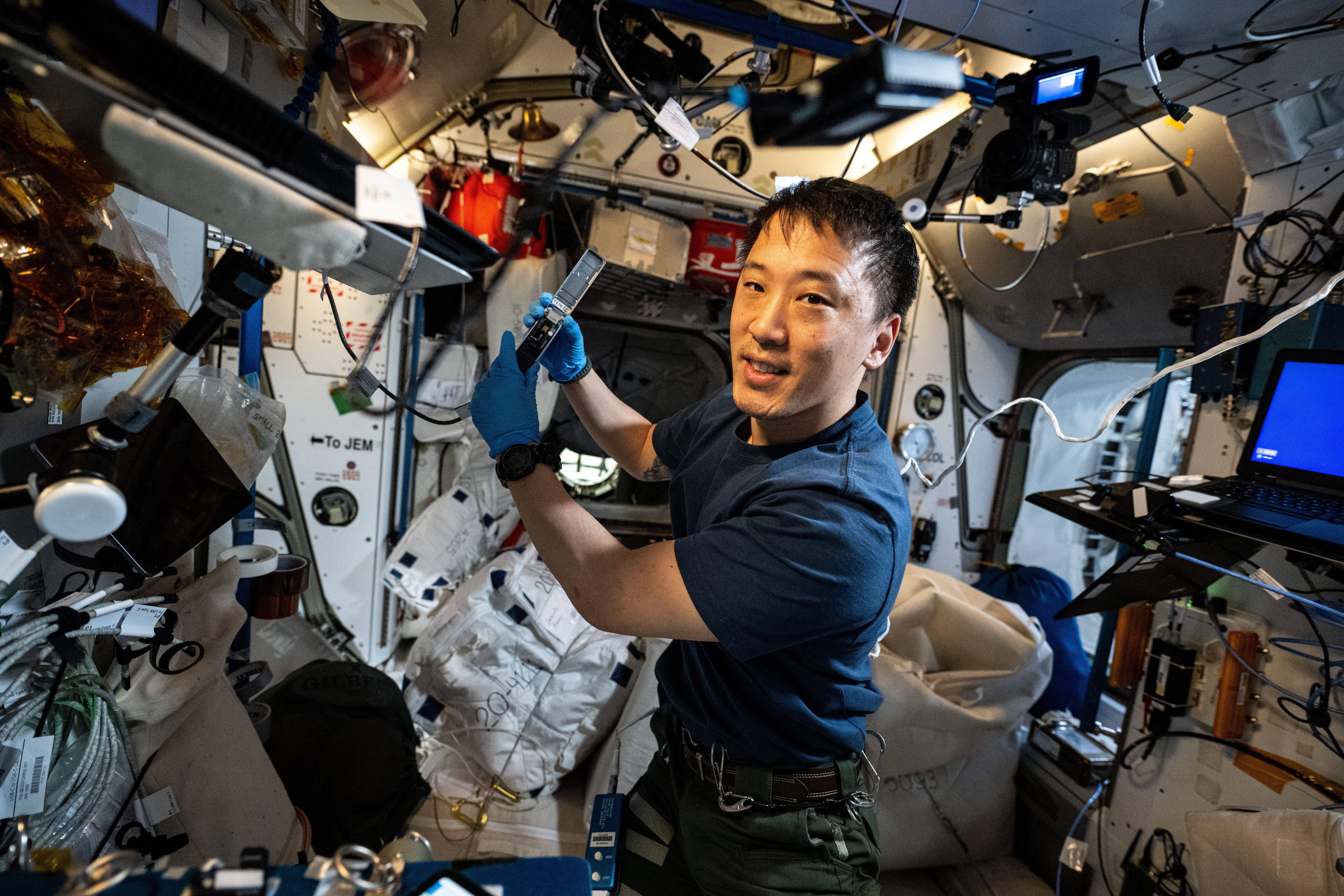
Encoding DNA with data

NASA astronaut Jonny Kim, wearing a navy-blue shirt and blue latex gloves, holds up a rectangular, controller-sized device with both hands. He is surrounded by electronic equipment and wires.
NASA

Secure and reliable data storage and transmission are essential to maintain the protection, accuracy, and accessibility of information. In this photo, NASA astronaut Jonny Kim displays research hardware that tests the viability of encoding, transmitting, and decoding encrypted information via DNA sequences. As part of this experiment, DNA with encrypted information is sequenced aboard the space station to determine the impact of the space environment on its stability. Using DNA to store and transmit data could reduce the weight and energy requirements compared to traditional methods used for long-duration space missions and Earth-based industries.

Learn more about Voyager DNA Decryption.

Remote robotics

NASA astronaut Jonny Kim, wearing a black shirt, faces left as he reaches for a laptop with his right hand. His left hand rests on a joystick controller. Multiple electronics panels are embedded into the wall directly in front of him, with numerous wires visible in the surrounding area.
NASA

Future deep space exploration could rely on robotics remotely operated by humans. NASA astronaut Jonny Kim tests a technology demonstration that allows astronauts to remotely control robots on Earth from the International Space Station. Findings from this investigation could help fine-tune user-robot operating dynamics during future missions to the Moon, Mars, and beyond.Β 

Learn more about Surface Avatar.

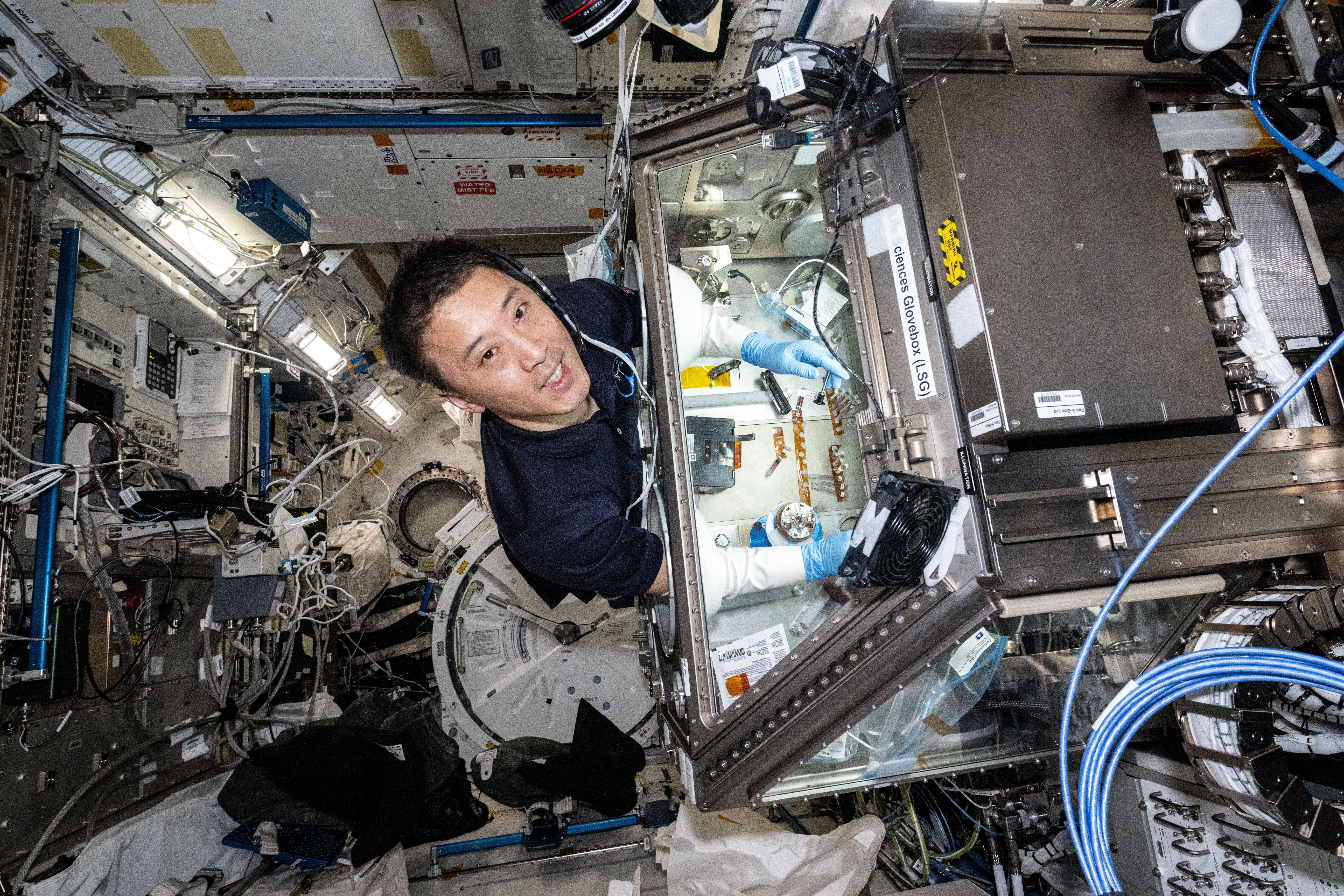
Blocking bone loss

NASA astronaut Jonny Kim, wearing a black shirt, smiles as he is photographed from above. His arms are inserted into a clear-paneled glovebox, where his hands, covered in blue latex gloves, handle small sterile items sealed in paper wrappers. Wires and electronics line the surrounding walls of the space station.
NASA

NASA astronaut Jonny Kim conducts an investigation to assess the effects of microgravity on bone marrow stem cells, including their ability to secrete proteins that form and dissolve bone. Bone loss, an age-related factor on Earth, is aggravated by weightlessness and is a health concern for astronauts. Researchers are evaluating whether blocking signals that cause loss could protect astronauts during long-duration spaceflights. The findings could also lead to preventative measures and treatments for bone loss caused by aging or disease on Earth.Β Β 

Learn more about MABL-B.

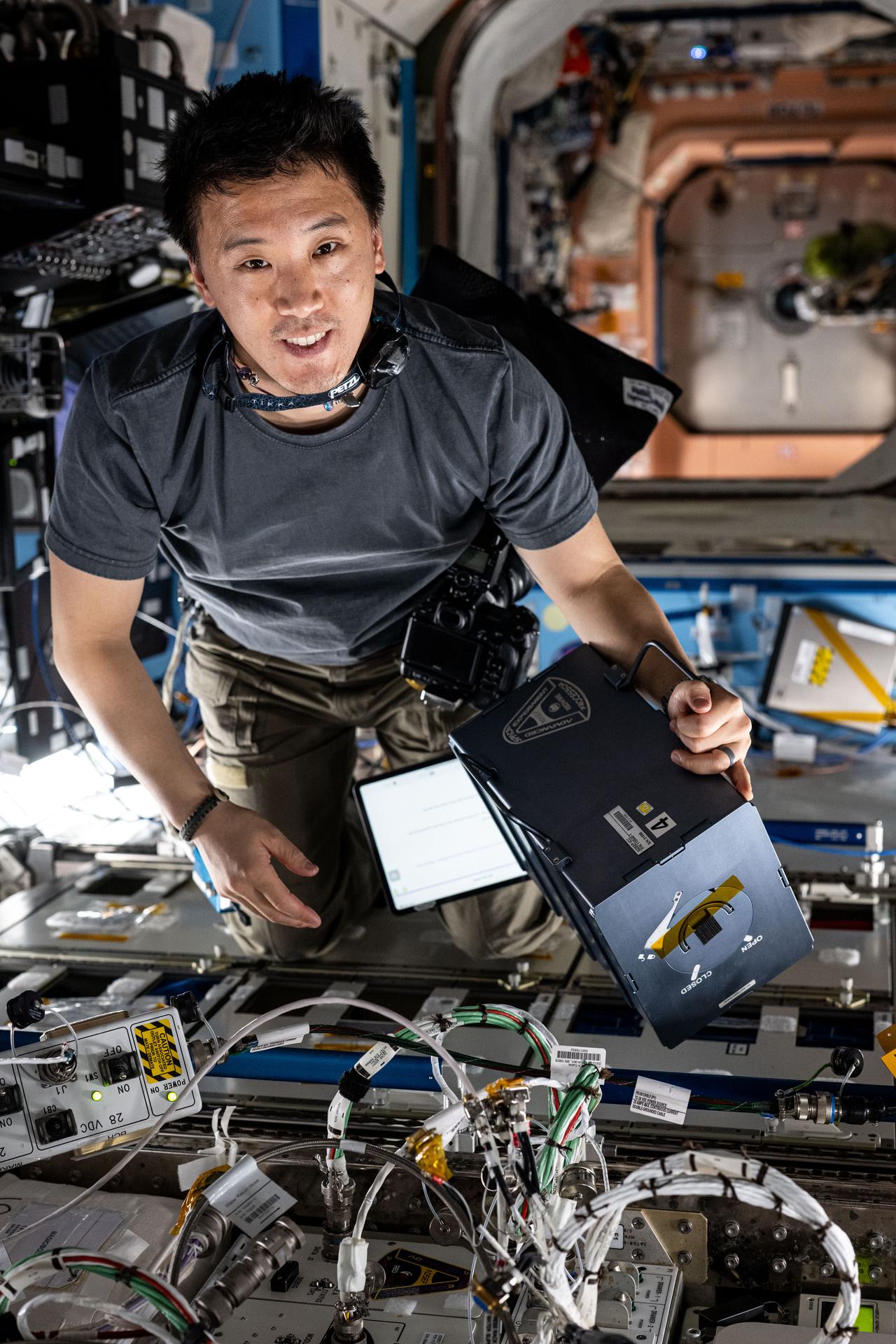
Upscaling production

NASA astronaut and Expedition 73 Flight Engineer Jonny Kim swaps hardware that promotes physical science and crystalization research inside the Advanced Space Experiment Processor-4 (ADSEP-4) aboard the International Space Station. The ADSEP-4 is supporting a technology demonstration potentially enabling the synthesis of medications during deep space missions and improving the pharmaceutical industry on Earth.
NASA

NASA astronaut Jonny Kim tests new hardware installed to an existing crystallization facility that enables increased production of crystals and other commercially relevant materials, like golden nanospheres. These tiny, spherical gold particles have optical and electronic applications, and are biocompatible, making them useful for medication delivery and diagnostics. As part of this experiment aboard the space station, Kim attempted to process larger, more uniform golden nanospheres than those produced on the ground.

Learn more about ADSEP-ICC.

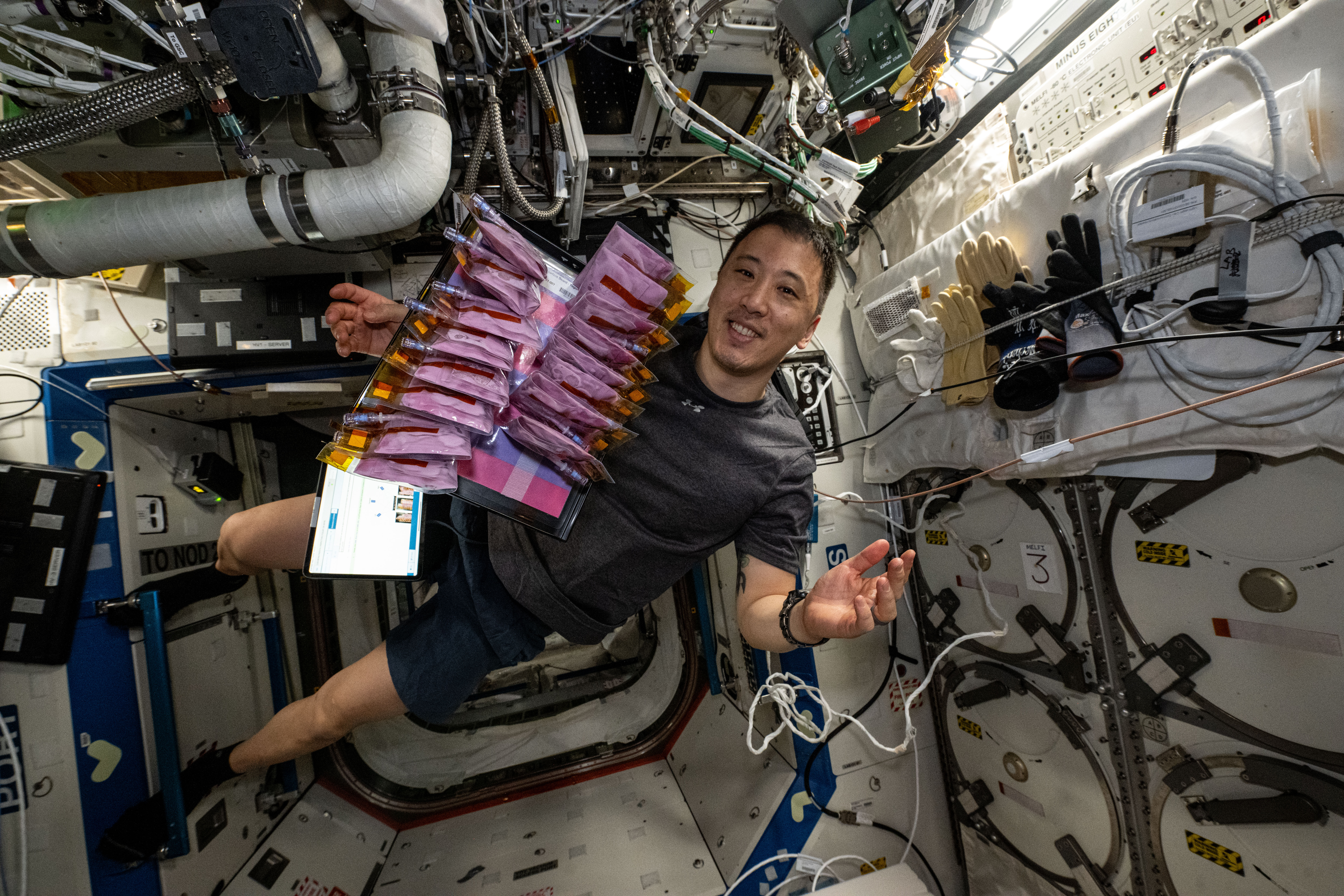
Nutrients on demand

NASA astronaut Jonny Kim, centered and smiling, wears a gray shirt, and black shorts as he floats in front of clear stacked bags filled with yogurt or kefir, which contain color-changing food dye. The walls are white, and a board holding gloves is to his left. Multiple wires and a tube run overhead.
NASA

Some vitamins and nutrients in foods and supplements lose their potency during long-term storage, and insufficient intake of even a single nutrient can lead to diseases and other health issues. NASA astronaut Jonny Kim displays purple-pink production bags for an investigation aimed at producing nutrient-rich yogurt and kefir using bioengineered yeasts and probiotics. The unique color comes from a food-grade pH indicator that allows astronauts to visually monitor the fermentation process.

Learn more about BioNutrients-3.

Next-Gen medicine and manufacturing

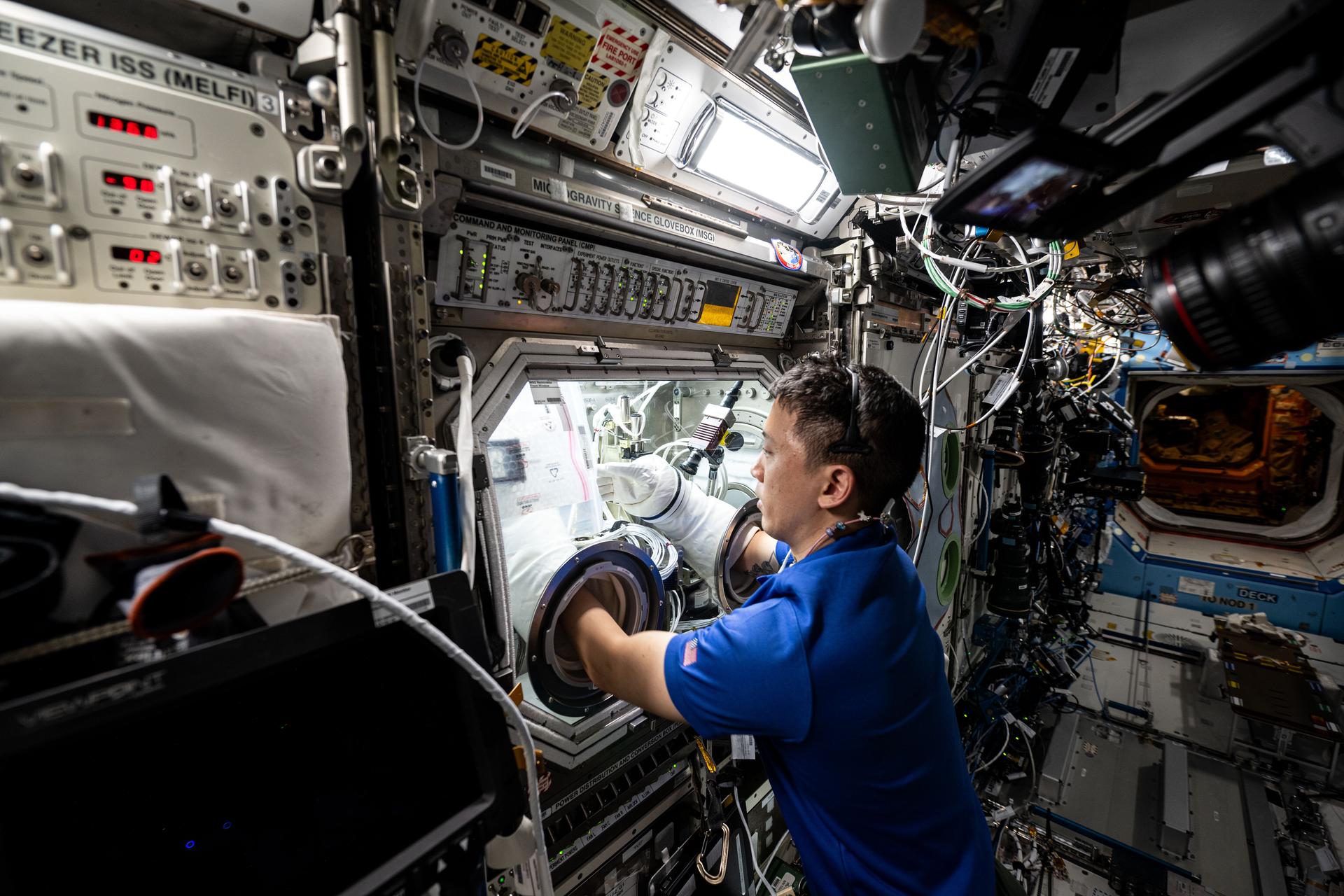
NASA astronaut Jonny Kim, wearing a blue shirt, faces the forward with his arms inserted into a clear-paneled glovebox aboard the International Space Station. His gloved hands are visible through the window as he handles materials inside. Scientific instruments, control panels with switches and lights, and cables run along the ceiling and walls, and a camera mounted above and to the right records the activity.
NASA

NASA astronaut Jonny Kim uses the Microgravity Science Glovebox to study how high-concentration protein fluids behave in microgravity. This study helps researchers develop more accurate models to predict the behavior of these complex fluids in various scenarios, which advances manufacturing processes in space and on Earth. It also can enable the development of next-generation medicines for treating cancers and other diseases.Β 

Learn more about Ring Sheared Drop-IBP-2.

Observing colossal Earth events

An image shows the Earth’s curved horizon outlined by a bright yellow-green light against the blackness of space and filled with stars. A massive swirl of gray clouds, rotating counterclockwise, dominates the Earth’s surface that is visible. The hurricane’s eye is brightly lit with flashes of blue-white lightning.
NASA

On Sept. 28, 2025, NASA astronaut Jonny Kim photographed Hurricane Humberto from the International Space Station. Located at 250 miles above Earth, the orbiting laboratory’s unique orbit allows crew members to photograph the planet’s surface including hurricanes, dust storms, and fires. These images are used to document disasters and support first responders on the ground.Β 

Learn more about observing Earth from space station.

Planned satellite constellations may swamp future orbiting telescopes

3 December 2025 at 11:26

On Wednesday, three NASA astronomers released an analysis showing that several planned orbital telescopes would see their images criss-crossed by planned satellite constellations, such as a fully expanded Starlink and its competitors. While the impact of these constellations on ground-based has been widely considered, orbital hardware was thought to be relatively immune from their interference. But the planned expansion of constellations, coupled with some of the features of upcoming missions, will mean that at least one proposed observatory will see an average of nearly 100 satellite tracks in every exposure.

Making matters worse, some of the planned measures meant to minimize the impact on ground-based telescopes will make things worse for those in orbit.

Constellations vs. astronomy

Satellite constellations are a relatively new threat to astronomy; prior to the drop in launch costs driven by SpaceX’s reusable rockets, the largest constellations in orbit consisted of a few dozen satellites. But the rapid growth of the Starlink system caused problems for ground-based astronomy that are not easy to solve.

Read full article

Comments

Β© NASA

LandSpace Could Become China's First Company To Land a Reusable Rocket

By: BeauHD
3 December 2025 at 05:10
China's private launch firm LandSpace is preparing the debut flight of its Zhuque-3 rocket, aiming to become the country's first to land a reusable orbital-class booster using a Falcon-9-style return profile. Ars Technica reports: Liftoff could happen around 11 pm EST tonight (04:00 UTC Wednesday), or noon local time at the Jiuquan Satellite Launch Center in northwestern China. Airspace warning notices advising pilots to steer clear of the rocket's flight path suggest LandSpace has a launch window of about two hours. When it lifts off, the Zhuque-3 (Vermillion Bird-3) rocket will become the largest commercial launch vehicle ever flown in China. What's more, LandSpace will become the first Chinese launch provider to attempt a landing of its first stage booster, using the same tried-and-true return method pioneered by SpaceX and, more recently, Blue Origin in the United States. Construction crews recently finished a landing pad in the remote Gobi Desert, some 240 miles (390 kilometers) southeast of the launch site at Jiuquan. Unlike US spaceports, the Jiuquan launch base is located in China's interior, with rockets flying over land as they climb into space. When the Zhuque-3 booster finishes its job of sending the rocket toward orbit, it will follow an arcing trajectory toward the recovery zone, firing its engines to slow for landing about eight-and-a-half minutes after liftoff. At least, that's what is supposed to happen. LandSpace officials have not made any public statements about the odds of a successful landing -- or, for that matter, a successful launch... UPDATE: Chinese Reusable Booster Explodes During First Orbital Test

Read more of this story at Slashdot.

The space station just did something for the first time in its history

2 December 2025 at 23:10

The International Space Station (ISS) has been orbiting Earth for the last quarter of a century.Β  But it was only this week that all eight of its docking ports were filled at the same time. The spacecraft currently docked at the orbital outpost are: two SpaceX Dragons, a Cygnus XL, JAXA’s (Japan Aerospace Exploration Agency) […]

The post The space station just did something for the first time in its history appeared first on Digital Trends.

This Chinese company could become the country’s first to land a reusable rocket

2 December 2025 at 18:04

There’s a race in China among several companies vying to become the next to launch and land an orbital-class rocket, and the starting gun could go off as soon as tonight.

LandSpace, one of several maturing Chinese rocket startups, is about to launch the first flight of its medium-lift Zhuque-3 rocket. Liftoff could happen around 11 pm EST tonight (04:00 UTC Wednesday), or noon local time at the Jiuquan Satellite Launch Center in northwestern China.

Airspace warning notices advising pilots to steer clear of the rocket’s flight path suggest LandSpace has a launch window of about two hours. When it lifts off, the Zhuque-3 (Vermillion Bird-3) rocket will become the largest commercial launch vehicle ever flown in China. What’s more, LandSpace will become the first Chinese launch provider to attempt a landing of its first stage booster, using the same tried-and-true return method pioneered by SpaceX and, more recently, Blue Origin in the United States.

Read full article

Comments

Β© LandSpace

❌
❌