Normal view

There are new articles available, click to refresh the page.
Today — 9 December 2025Hackaday

G4 iMac Becomes a Monitor with a MagSafe Secret

9 December 2025 at 16:00
A computer monitor which was formerly an iMac G4 with a hemispherical white base sits on a table. The table and wall are likely white, but pink light is washing the scene making them and the monitor base appear pink. An iPhone sits above a piece of rounded plastic jutting out from the monitor base.

The G4 iMac is one of the more popular computers in the restomodding scene given its charm and unparalleled ergonomics. Most modern machines that people squeeze in don’t have a disc drive anymore though, so [EasternBloc Engineering] has fitted a retractable MagSafe charger into the drive bay of the machine.

In this example, the iMac has become simply a monitor, instead of an entire all-in-one computer, and the original 15″ display has been replaced with a lightweight 22″ monitor on a 3D printed VESA mount. The narrow confines of the iMac neck meant [EasternBloc Engineering] had to sever the connectors from the HDMI and power cable before reconnecting them once they were fed through.

The really novel part of this restomod is the engineering of the retractable MagSafe charger mount that pops out of the drive bay. [EasternBloc Engineering] started by looking at repurposing an original disc drive, but quickly turned to a bespoke 3D printed solution. Using a LEGO motor and gears for the drive, the system can stick its tongue out at you in a more modern way. A straight in-and-out mechanism like on an original disc drive would’ve been easier to implement, but we appreciate the extra time for angling the phone that respects the ergonomics of the machine. We hope the files will become available soon for this part of the mod since electromechanical components are more interesting than the VESA mount.

We’ve taken a look at how to implement MagSafe (or Qi2) into your own projects and also a few different G4 iMac restomods whether you prefer Apple Silicon or a PC-based approach.

A Deep Drive Deep Dive Into a Twin-Rotor Motor

9 December 2025 at 14:30

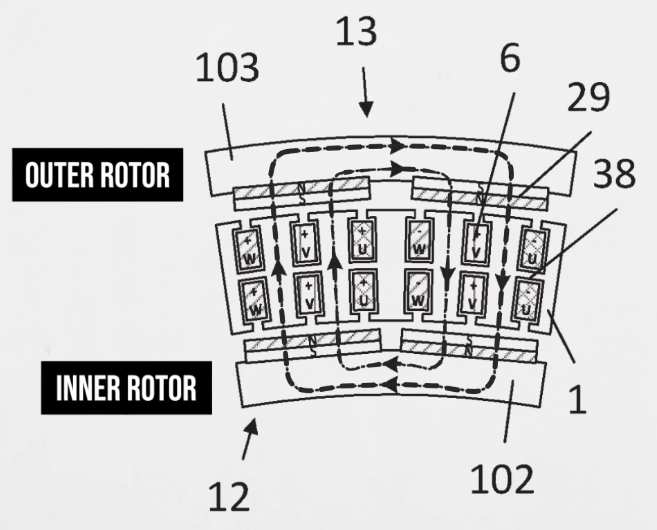
Compromise is key to keeping a team humming along. Say one person wants an inrunner electric motor, and the other prefers outrunner. What to do? Well, if you work at [Deep Drive], the compromise position is a dual-rotor setup that they claim can be up to 20% more efficient than standard designs. In a recent video, [Ziroth] provides a deep dive into Deep Drive’s Twin-Rotor Motor. 

This is specifically a radial flux permanent magnet motor, like most used in electric vehicles today — and don’t let talk of inrunners and outrunners fool you, that’s the size of motor we’re talking about here. This has been done before with axial flux motors, but it’s a new concept for team radial. As the names imply, the difference is the direction the magnetic field is orientated: axial flux motors have all the magnetism oriented along the axis, which leads to the short wide profile that inspired the nickname “pancake motors”. For various reasons, you’re more likely to see those on a PCB than in an electric car.

In a radial flux motor, the flux goes out the radius, so the coils and magnets are aligned around the shaft of the motor.  Usually, the coils are held by an iron armature that directs their magnetic flux inwards (or outwards) at the permanent magnets in the rotor, but not here. By deleting the metal armature from their design and putting magnets on both sides of the stator coil, Deep Drive claims to have built a motor that is lighter and provides more torque, while also being more energy-efficient.

Of course you can’t use magnet wire if your coil is self-supporting, so instead they’re using hefty chunks of copper that could moonlight as busbars. In spite of needing magnets on both inner and outer rotors, the company says they require no more rare-earths than their competitors. We’re not sure if that is true for the copper content, though. To make the torque, those windings are beefy.

Still, its inspiring to see engineers continue to innovate in a space that many would have written off as fully-optimized. We look forward to seeing these motors in upcoming electric cars, but more than that, hope they sell a smaller unit for an air compressor so after going on a Deep Drive deep dive we can inflate our rubber raft with their twin rotor motor boater bloater. If it works as well as advertised, we might have to become twin-rotor motor boater bloater gloaters!

Thanks to [Keith Olson] for the tip.

Keebin’ with Kristina: the One with the C64 Keyboard

9 December 2025 at 13:00
Illustrated Kristina with an IBM Model M keyboard floating between her hands.

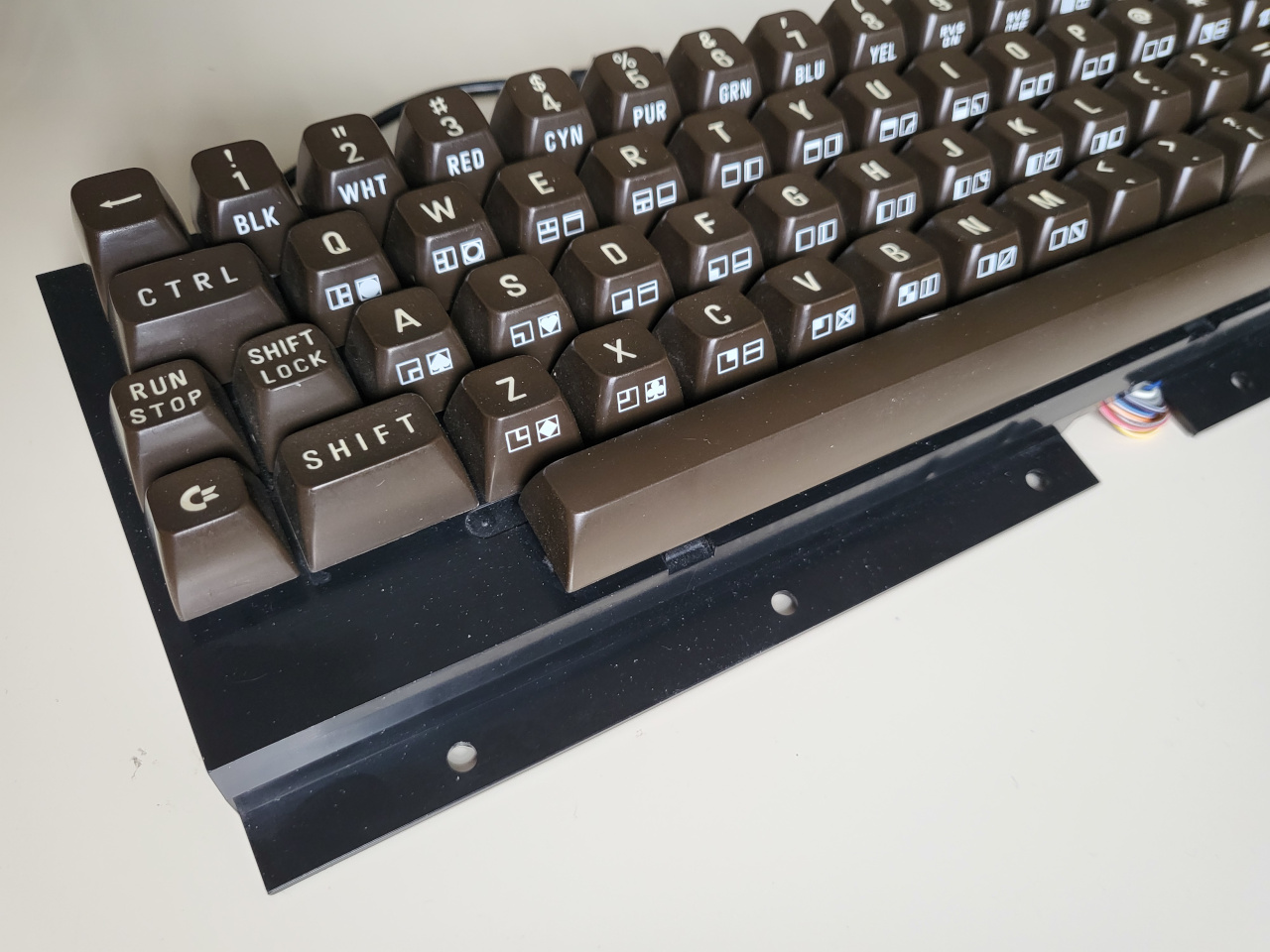
[Jean] wrote into the tips line (the system works!) to let all of us know about his hacked and hand-wired C64 keyboard, a thing of beauty in its chocolate-brown and 9u space bar-havin’ glory.

A C64 keyboard without the surrounding C64.
Image by [Jean] via GitHub
This Arduino Pro Micro-based brain transplant began as a sketch, and [Jean] reports it now has proper code in QMK. But how is a person supposed to use it in 2025, almost 2026, especially as a programmer or just plain serious computer user?

The big news here is that [Jean] added support for missing characters using the left and right Shift keys, and even added mouse controls and Function keys that are accessed on a layer via the Shift Lock key. You can see the key maps over on GitHub.

I’ll admit, [Jean]’s project has got me eyeing that C64 I picked up for $12 at a thrift store which I doubt still works as intended. But don’t worry, I will test it first.

Fortunately, it looks like [Jean] has thought of everything when it comes to reproducing this hack, including the requisite C64-to-Arduino pinout. So, what are you waiting for?

ArcBoard MK20 Proves That Nothing Is Ever Finished

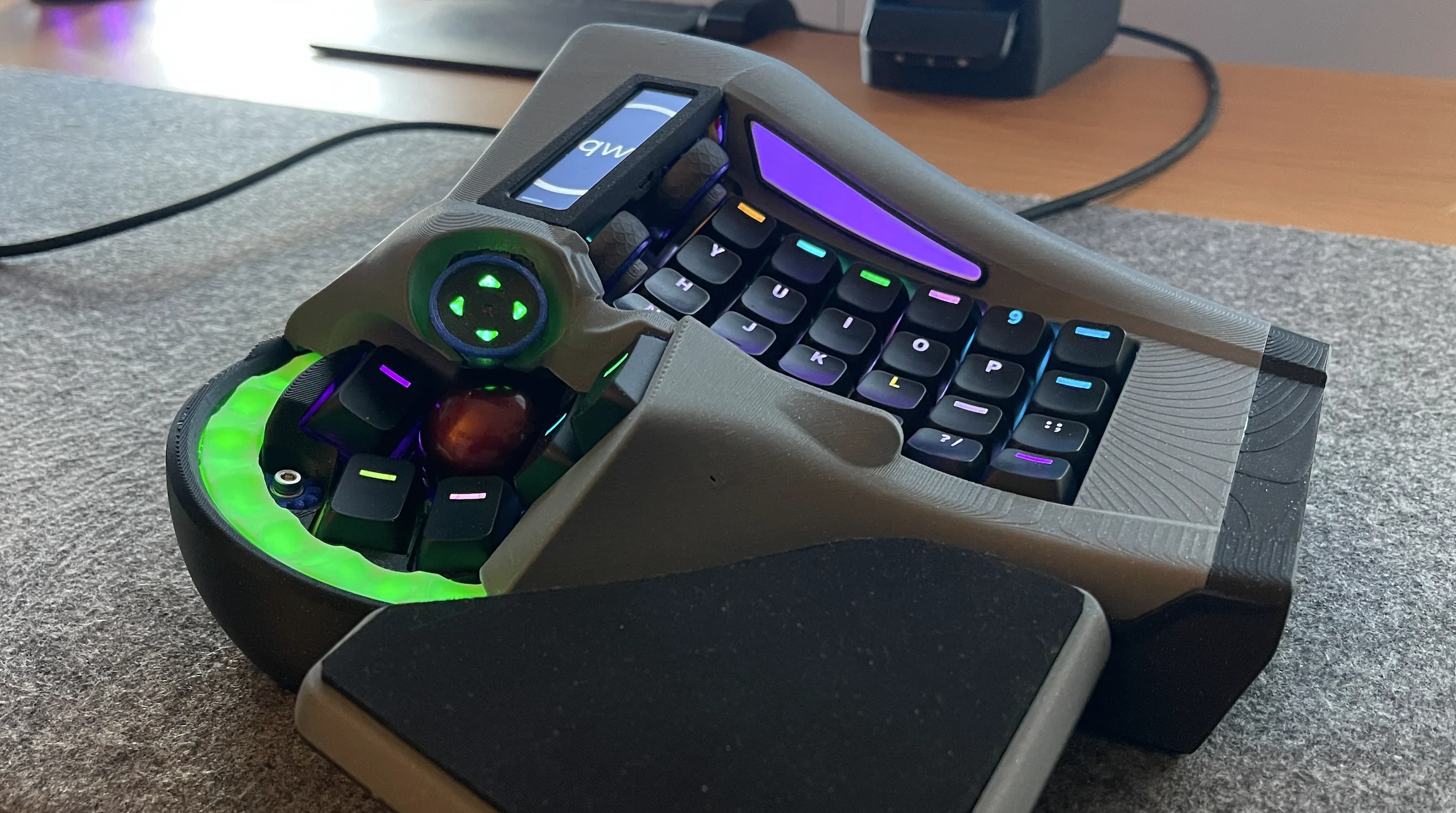
I find it so satisfying that [crazymittens-r] is never quite satisfied with his ArcBoard, which is now in its 20th revision.

The right half of a split keyboard with integrated mouse control out the wazoo.
Image by [crazymittens-r] via reddit
When asked ‘WTF am I looking at?’, [crazymittens-r] responded thusly: ‘my interpretation of how you might use a keyboard and trackball without moving your hands.’ Well, there you have it.

This is one of those times where the longer you look, the crazier it gets. Notice the thumb trackball, d-pad thingy, and the green glowy bit, all of which move. Then there are those wheels up by the YHN column.

A bit of background: [crazymittens-r] needed something to help him keep on working, and you know I can relate to that 100%. There’s even a pair of pedals that go with it, and you’ll see those in the gallery.

You may remember previous ArcBoards, and if not, know this: it’s actually gotten a lot smaller since mk. 19 which I featured here in May 2024. It still looks pretty bonkers in the best possible way, though, and I’m here for it.

Via reddit

The Centerfold: KaSe

Image by [harrael] via reddit
So I have become fond of finding fuller-figured centerfolds for you such as KaSe by [harrael]. As the top commenter put it, KaSe gives off nice Esrille NISSE vibes. Boy howdy. And I think that’s probably just enough thumb keys for me.

[harrael] had noble goals for this project, namely learning more about ESP32-S3s, USB/BLE HID, and firmware design, but the most admirable of all is sharing it with the rest of us. (So, if you can’t afford a NISSE…)

Do you rock a sweet set of peripherals on a screamin’ desk pad? Send me a picture along with your handle and all the gory details, and you could be featured here!

Historical Clackers: Typewriter Tom’s Typewriter Throng

I’m going to take a brief detour from the normal parade of old typewriters to feature Typewriter Tom, who has so many machines lying around that Hollywood regularly comes knocking to borrow his clacking stock.

Image via The Atlanta-Journal Constitution

And how many is that? Around 1,000 — or six storage units full. Tom received a call once. The caller needed six working IBM Selectrics ASAP. Of course, Tom could deliver, though he admits he’s probably the one person in all of Georgia who could.

Another thing Tom delivers is creativity in the form of machines he sells to artists and students. He also co-founded the Atlanta Typewriter Club, who have been known to hold typewriter petting zoo events where people can come and — you guessed it — put their hands on a typewriter or two.

Go for the story and stay for the lovely pictures, or do things the other way around if you prefer. But Typewriter Tom deserves a visit from you, even if he already got one from Tom Hanks once.

Finally, PropType AR Can Turn Anything Into a Keyboard

Yes, literally anything with enough real estate can now become a keyboard, or at least it would seem from TechExplore and the short video embedded below. Watch as various drinking vessels and other things become (split!) keyboards, provided you have your AR goggles handy to make the magic happen.

A split keyboard is projected onto a water bottle.
Image by [PropType] via YouTube
While this setup would be immensely helpful to have around given the right circumstances, the chances that you’re going to have your AR goggles on you while running or running around the mall seem somewhat slim.

But the point here is that for augmented reality users, typing is notoriously difficult and causes something known as ‘gorilla arm’ from extended use. So in all seriousness, this is pretty cool from a problem-solving standpoint.

So how does it work? Basically you set the keyboard up first using the PropType editing tool to customize layouts and apply various effects, like the one you’ll see in the video. Be sure to stick around for the demo of the editing tool, which is cool in and of itself. I particularly like the layout on the soda can, although it might be difficult to actually use without spilling.


Got a hot tip that has like, anything to do with keyboards? Help me out by sending in a link or two. Don’t want all the Hackaday scribes to see it? Feel free to email me directly.

Super Simple Deadbuggable Bluetooth Chip

9 December 2025 at 11:30

We’re all used to Bluetooth chips coming in QFN and BGA formats, at a minimum of 30-40 pins, sometimes even a hundred. What about ten pins, with 1.27 mm pitch? [deqing] from Hackaday.io shows us a chip from WCH, CH571K, in what’s essentially a SO-10 package (ESSOP10). This chip has a RISC-V core, requires only three components to run, and can work Bluetooth through a simple wire antenna.

This chip is a RISC-V MCU with a Bluetooth peripheral built in, and comes from the CH57x family of WCH chips that resemble the nRF series we’re all used to. You get a fair few peripherals: UART, SPI, and ADC, and of course, Bluetooth 4 with Low Energy support to communicate with a smart device of your choice. For extra hacker cred, [deqing] deadbugs it, gluing all components and a 2.54 mm header for FTDI comms onto the chip, and shows us a demo using webBluetooth to toggle an LED through a button in the browser.

You need not be afraid of SDKs with this one. There’s Arduino IDE support (currently done through a fork of arduino_core_ch32) and a fair few external tools, including at least two programming tools, one official and one third-party. The chip is under a dollar on LCSC, even less if you buy multiple, so it’s worth throwing a few into your shopping cart. What could you do with it once received? Well, you could retrofit your smoke alarms with Bluetooth, create your own tire pressure monitors, or just build a smartphone-connected business card!

PCB Design Review: TinySparrow, A Module For CAN Hacking, v2

9 December 2025 at 10:00

A year ago, I’ve design reviewed an MCU module for CAN hacking, called TinySparrow. Modules are plenty cool, and even more so when they’re intended for remaking car ECUs. For a while now, every car has heavily depended on a computer to control the operation of everything inside it – the engine and its infrastructure, the lights, and  Sadly, ECUs are quite non-hackable, so building your own ECUs only makes sense – which is why it’s heartwarming to see modules intended to make this easier on the budding ECU designer!

Last time we saw this module, it was quite a bit simpler. We talked about fixing a number of things – the linear regulator, the unprotected CAN transceiver, and the pinout; we also made the board cheaper to produce by reducing the layer count and instead pushing the clearance/track width limits. This time, we’re seeing TinySparrow v2 , redesigned accounting for the feedback and upgraded with a new MCU – it’s quite a bit more powerful!

For a start, it’s got ESD diodes, a switching-linear regulator chain for clean but efficient power supply, and most importantly, an upgraded MCU, now with USB and one more CAN channel for a total of two! There’s a lot more GPIOs to go around, too, so the PCB now uses all four of its sides for breakout out power, programming, and GPIO pads. Only a tiny bit bigger than its v1, this module packs a fair bit of punch.

Let’s revisit the design, and try to find anything still left to improve – there’s a few noteworthy things I found.

Protection Almost Perfect

It took me a bit to try and find the ESD diodes mentioned in the README – I didn’t notice that they’re basically the only thing on the bottom layer. This is fine – protection elements like ESD diodes can be on a different layer, and as they’re SOT-23, they’re easy to solder on post-factum. This is quite a nice placement choice, in my opinion – you can basically solder this board with cheaper single-side assembly, use ESD-less boards for your bench testing, and then simply solder the few bottom side components onto “production” versions!

There is but one hiccup with the way they’re placed. ESD diode appnotes will tell you – there’s some extra considerations you can try and put into ESD diode layout. This design pulls connector tracks directly to the CAN ICs on top layer, and directly to diodes on the bottom one. Instead, you should try and route the signal “through” the ESD diodes – letting track inductance play in your favour, and not impeding the ESD diode’s impact.

Fortunately, by lightly rerouting 3.3V CAN transceiver power inputs and a few surrounding signals, we can put CAN+ and CAN- signals through vias under the package, so that the signal flows “in series” with ESD diode pads. Similarly, the ESD diodes get vias to ground, shared with transceiver ground vias, but oh well. It’s not perfect, but to my eye, it’s better than before, as far as ESD protection is concerned.

About the only problem I can see with the reroute, is having to reshuffle USB signals, putting them closer together. However, as long as they’re intra-pair length-matched, they’ll do just fine.

Vias Fit Inside Pads, But Maybe Don’t?

This is not the only change to consider as far as signal routing goes, but it’s the most major one. The next issue I see, is vias – specifically, vias inside component pads.

I’ve had a few run-ins with via-in-pad related problems. Previously, I’ve failed to assemble some boards specifically because of via-in-pad related problems, with solder paste wicking through the board and onto the opposite side. For 0402 components I used, this made a number of boards essentially non-solderable depending on how lucky I got reflowing them, and I had to run a new board revision to get the yield up.

This board’s files have a fair few hints about getting assembled by JLCPCB, and JLC can definitely do plugged vias, preventing any sorts of solder flowing through the board. If the designer or someone else takes the board elsewhere, however, that might no longer apply, which would be disappointing. Also, you might have to pay extra for plugging holes – just like with the previous review, let’s see if we can avoid it. Most problematic areas are around the transceivers, still – especially given the board files now have a custom rule for 0.5mm via-to-via distances. This is not a constraint I’ve seen actually stressed by JLCPCB, but I don’t mind – with just a little bit more signal shuffling, every newly moved via landed within the 0.5mm target area.

Pinout Considerations, Again

The VDC pin now has GND pins to match, and in general, there’s a lot more GND pins to go around – which is great! It’s pretty surprising to me that the VDC pin is duplicated and its trace goes across the board on an inner layer. This is supposed to be an at least somewhat unfiltered and unprotected car power rail, after all, and I don’t think that’d help things like noise integrity. Maybe this helps with testing because all the core signals are brought to the same corner, but to my eye, it has bad vibes.

The module could perhaps use a key pin – there’s zero omissions in the outer dual-row, which leaves for a possibility of inserting this module rotated 180 degrees by accident, likely obliterating at least something on the module. If these modules are ever meant to be swapped during testing, i.e. using machined headers, I’d try and remove one of the pins from the equation – there’s a NC pin in one of the corners already, thankfully.

There’s a pair of 3.3 V signals and GND signals on the opposite sides of each other. This is geometrically satisfying pinout-wise, and, it would short-circuit the module’s onboard regulator if the module’s ever rotated inserted 180 degrees. This is generally harmless with modern modules, but it could very well make the switching or the linear regulator heat up to finger-burning temperatures – last thing you need when trying to remove a module inserted incorrectly!

Thankfully, at the top, there’s a few unconnected pads, so perhaps GND and NC could swap places, making sure that 3.3 V lands on NC once rotated 180 degrees. The VDC pads could perhaps use the same consideration, but I’m comfortable leaving those as homework.

Moving Forward

It’s a joy to see how much the TinySparrow module has grown in its v2. From vastly improved layout to higher consideration given to design rules, nicer silkscreen, and a way more powerful MCU while at it, it’s that much more of a viable heart for a somewhat modern car, and it’d be quite nice to see some boards utilizing it in the future. I hope this review can help!

As usual, if you would like a design review for your board, submit a tip to us with [design review] in the title, linking to your board files. KiCad design files strongly preferred, both repository-stored files (GitHub/GitLab/etc) and shady Google Drive/Dropbox/etc .zip links are accepted.

The EFF Nails It: What’s Wrong With UK Digital ID

9 December 2025 at 07:00

It sometimes seems as though we are in a constant tussle over privacy between governments and the governed, with each year bringing fresh attempts to extend surveillance, and consequent battles. For Brits the big news at the moment comes in a new digital ID scheme, something that will be required for anyone wishing to work in the country, as well as for certain government services. It’s something that has attracted a lot of opposition, and now the EFF have produced an analysis  of why they think it won’t work.

From the perspective of a British writer it would be easy to write screeds about the flaws in the scheme, the way it over-reaches, and about the historical distrust of Brits for their government’s bureaucracy. With the parliamentary petition opposing it approaching three million signatures, there’s no shortage of people who don’t support it. Perhaps the most obvious thing for most of us is how unnecessary it is for its stated aim of preventing illegal immigrants from seeking employment, it neglects that we already have to show proof of right to work before being hired, and that if crooked employers ignore that they will surely also ignore the digital ID.

If you’re reading this elsewhere in the world from where this is being written then it’s still of relevance, because governments like to point to other countries to justify these measures. Follow the EFF on this matter, and take note.


Art: British Passport SVG by Swapnil1101, Public Domain

LED Hourglass is a Great Learning Project

By: Lewin Day
9 December 2025 at 04:00

An hourglass tells you what it is in the name — a glass that you use to measure an hour of time passing by. [EDISON SCIENCE CORNER] has built a digital project that mimics such a thing, with little beads of light emulating falling sand in the timekeepers of old.

The build is designed around the Arduino platform, and can be constructed with an Arduino Uno, Nano, or Pro Mini if so desired. The microcontroller board is hooked up with an ADXL335 three-axis accelerometer, which is used for tracking the orientation and movement of the digital hourglass. These movements are used to influence the movement of emulated grains of sand, displayed on a pair of 8×8 LED matrixes driven by a MAX7219 driver IC. Power is courtesy of a 3.7 V lithium-ion cell, with a charge/boost module included for good measure. Everything is wrapped up in a vaguely hourglass-shaped 3D printed enclosure.

The operation is simple. When the hourglass is turned, the simulated grains of sand move as if responding to gravity. The movement is a little janky — no surprise given the limited resolution of the 8×8 displays. You also probably wouldn’t use such a device as a timer when more elegant solutions exist. However, that’s not to say builds like this don’t have a purpose. They’re actually a great way to get to grips with a microcontroller platform, as well as to learn about interfacing external hardware and working with LED matrixes. You can pick up a great deal of basic skills building something like this.

Would you believe this isn’t the first digital hourglass we’ve featured on the site?

RP2350 Done Framework Style

9 December 2025 at 01:00

Ever want a microcontroller addon for your laptops? You could do worse than match one of the new and powerful microcontrollers on the block to one of the most addon-friendly laptops, in the way the Framework RP2350 laptop card does it. Plug it in, and you get a heap of USB-connected IO coming out of the side of your laptop – what’s not to love?

The card utilizes the Framework module board space to the fullest extent possible, leaving IO expansion on SMD pads you could marry to a male or female header, your choice. With about seventeen GPIOs, power, and ground, there’s really no limit on what you could add to the side connector – maybe it’d be a logic analyzer buffer, or a breadboard cable, or a flash chip reader, maybe, even an addon to turn it into a pirate version of a Bus Pirate? There’s a fair few RP2350 peripherals available on the side header GPIOs, so sky’s the limit.

Naturally, the card is fully open-source, and even has two versions with two different USB-C plug connectors, we guess, depending on which one is better liked by your PCBA process. Want one? Just send off the files! Last time we saw an addon adding GPIOs to your laptop, it was a Pi Zero put into the optical bay of a Thinkpad, also with an expansion header available on the side – pairing yet another legendary board with a legendary laptop.

Yesterday — 8 December 2025Hackaday

The Engineering That Makes A Road Cat’s Eye Self-Cleaning

8 December 2025 at 22:00

Although most people manage to navigate roads without major issues during the day, at night we become very reliant on the remaining navigational clues. The painted marks on the asphalt may not be as obvious in the glare of headlights, not to mention scuffed up and/or covered by snow and hidden by fog. This is where cat’s eyes are a great example of British ingenuity. A common sight in the UK and elsewhere in Europe, they use retroreflectors embedded in the road. Best of all, they are highly durable and self-cleaning, as [Mike Fernie] details in a recent video on these amazing devices.

Invented in the 1930s by [Percy Shaw], cat’s eyes feature a sturdy body that can take the abuse of being driven over by heavy trucks, along with a rubber dome that deforms to both protect the reflectors and wipe them clean using any water that’s pooled in the area below them. They also provide an auditory clue to the driver when they pass the center line, which can be very useful for night-time driving when attention may be slipping.

In the video the cat-squishing cleaning process is demonstrated using an old cat’s eyes unit that seems to have seen at least a few decades to road life, but still works and cleans up like a charm. Different color cat’s eyes are used to indicate different sections of the road, and modern designs include solar-powered LEDs as well as various sensors to monitor road conditions. Despite these innovations, it’s hard to beat the simplicity of [Percy]’s original design.

Build Yourself A Graphing Weather Display

By: Lewin Day
8 December 2025 at 19:00

These days, Internet connectivity is ubiquitous, so you can look up live weather data on just about any device around you. Regardless, [Jozerworx] wanted a simple, clean, independent weather display, and came up with this simple design. 

The build is based on the Lilygo T5 EPD devboard, which combines an ESP32-S3 microcontroller with a nice 4.7-inch e-paper display. This display has the benefit that it only uses power when it’s being updated, making it particularly suitable to run off a battery for extended periods of time. Meanwhile, the ESP32 and its inbuilt Wi-Fi connectivity allow it to query the internet for updated weather forecasts. Weather data is sourced via the OpenWeather API, which [Jozerworx] notes comes with the caveat of requiring an API key. It’s a little fussy, but if you want good weather data, there are few easier ways to get it. The display shows a forecast for the next five days, while also showing graphs of ambient temperature and humidity along with useful information like the sunset and sunrise schedule.

Files are on Github for those eager to learn more. [Jozerworx] also notes that getting started with the display is particularly easy with the inclusion of a setup mode. This allows the display to act as a Wi-Fi access point with a web page that you use enter your home Wi-Fi connection details.

We’ve featured a great many charming weather displays over the years, too. If you’re working to plot, chart, or even predict the weather—don’t hesitate to show us your cool projects over on the tipsline!

ESP32 EPaper Weather Station

One Lucky 3DS Gets A Switch-Style Dock

8 December 2025 at 16:00

The Nintendo Switch dock set a new bar for handheld docking user experience – just plug your console in to charge it, output image to your monitor, and keep it working with any USB peripherals of your choice. What if a 3DS is more your jam? [KOUZEX] shows off a Switch-style dock design for his gorgeous yellow 3DS, with Switch Pro controller support, and this dock wasn’t just a 3D printing job – there’s a fair bit of electronics to show, too.

While the 3DS looks stock at a glance, it has already been upgraded internally – there’s a USB-C capture card built in, half-ticking the “monitor output” requirement, and a Raspberry Pi board turns that output into HDMI. Building a charging dock is also pretty simple, with just two contacts on the side that desire 5V. Now, the pro controller support was a fair bit harder – requiring an internal modchip for emulating buttons, and trying out receiver boards for the Switch controller until a well-functioning one was found.

The build video is quite satisfying to watch, from assembling some QFNs onto tiny OSHPark boards using a hotplate and soldering them into the 3DS, to planning out, building, and dremeling some prints to create a true slide-console-into-dock experience, same way the Switch pulled it off. It even has the same USB-C and HDMI arrangement as the Switch dock, too! Want a simpler dock for your 3DS? Don’t forget that you can build a charger dock for yours with just a 3D print and a few wires.

Trace Line Clock Does It With Magnets

8 December 2025 at 14:30

We love a good clock project, and [byeh_ in] has one with a design concept we don’t believe we have seen before. The Trace Line Clock has smooth lines and a clean presentation, with no sockets or visible mechanical fixtures.

Reading the clock is quite straightforward once one knows what is going on. At its heart, the unmarked face is much like any other analog clock face, and on the inside is a pretty normal clock movement. The inner recessed track on the face represents hours, and the outer is minutes. The blue line connects the two, drawing a constantly changing line.

Sped-up footage shows how the line moves.

To make the blue segment move without breaking the lines of the clock, [byeh_ in] uses magnets. The inside end moves around the inner ring with the hour hand, while the rest of the blue segment follows the minute hand. Since the length between these two points is not constant, [byeh_ in] cleverly designed one of the magnets to be floating. By keeping the magnet captive in a channel on the underside of the blue segment, the whole thing moves smoothly, no matter how the two ‘hands’ align.

Speaking of smooth, it’s important for the parts to move together with minimal friction. To achieve this [byeh_ in] uses something we think is under-utilized in 3D printed parts: candle wax. Wax is non-greasy, sticks well to 3D printed parts simply by rubbing, slides easily, and doesn’t make a mess. Directions and 3D models are available should you wish to try making your own.

We’re always delighted by the amazingly different ways people can re-imagine a clock. From clocks with hands but void of a face to clocks made out of clocks, we love to see ’em so if you’ve got a favorite, drop us a tip!

Linux Fu: The SSD Super Cache

8 December 2025 at 13:00

NVMe solid state disk drives have become inexpensive unless you want the very largest sizes. But how do you get the most out of one? There are two basic strategies: you can use the drive as a fast drive for things you use a lot, or you can use it to cache a slower drive.

Each method has advantages and disadvantages. If you have an existing system, moving high-traffic directories over to SSD requires a bind mount or, at least, a symbolic link. If your main filesystem uses RAID, for example, then those files are no longer protected.

Caching sounds good, in theory, but there are at least two issues. You generally have to choose whether your cache “writes through”, which means that writes will be slow because you have to write to the cache and the underlying disk each time, or whether you will “write back”, allowing the cache to flush to disk occasionally. The problem is, if the system crashes or the cache fails between writes, you will lose data.

Compromise

For some time, I’ve adopted a hybrid approach. I have an LVM cache for most of my SSD that hides the terrible performance of my root drive’s RAID array. However, I have some selected high-traffic, low-importance files in specific SSD directories that I either bind-mount or symlink into the main directory tree. In addition, I have as much as I can in tmpfs, a RAM drive, so things like /tmp don’t hit the disks at all.

There are plenty of ways to get SSD caching on Linux, and I won’t explain any particular one. I’ve used several, but I’ve wound up on the LVM caching because it requires the least odd stuff and seems to work well enough.

This arrangement worked just fine and gives you the best of both worlds. Things like /var/log and /var/spool are super fast and don’t bog down the main disk. Yet the main disk is secure and much faster thanks to the cache setup. That’s been going on for a number of years until recently.

The Upgrade Issue

I recently decided to give up using KDE Neon on my main desktop computer and switch to OpenSUSE Tumbleweed, which is a story in itself. The hybrid caching scheme seemed to work, but in reality, it was subtly broken. The reason? SELinux.

Tumbleweed uses SELinux as a second level of access protection. On vanilla Linux, you have a user and a group. Files have permissions for a specific user, a specific group, and everyone else. Permission, in general, means if a given user or group member can read, write, or execute the file.

SELinux adds much more granularity to protection. You can create rules that, for example, allow certain processes to write to a directory but not read from it. This post, though, isn’t about SELinux fundamentals. If you want a detailed deep dive from Red Hat, check out the video below.

The Problem

The problem is that when you put files in SSD and then overlay them, they live in two different places. If you tell SELinux to “relabel” files — that is, put them back to their system-defined permissions, there is a chance it will see something like /SSD/var/log/syslog and not realize that this is really the same file as /var/log. Once you get the wrong label on a system file like that, bad, unpredictable things happen.

There is a way to set up an “equivalence rule” in SELinux, but there’s a catch. At first, I had the SSD mounted at /usr/local/FAST. So, for example, I would have /usr/local/FAST/var/log. When you try to equate /usr/local/FAST/var to /usr/var, you run into a problem. There is already a rule that /usr and /usr/local are the same. So you have difficulties getting it to understand that throws a wrench in the works.

There are probably several ways to solve this, but I took the easy way out: I remounted to /FAST. Then it was easy enough to create rules for /var/log to /FAST/var/log, and so on. To create an equivalence, you enter:


semanage fcontext -a -e /var/log /FAST/var/log

The Final Answer

So what did I wind up with? Here’s my current /etc/fstab:


UUID=6baad408-2979-2222-1010-9e65151e07be /              ext4    defaults,lazytime,commit=300 0 1
tmpfs                                     /tmp           tmpfs   mode=1777,nosuid,nodev 0 0
UUID=cec30235-3a3a-4705-885e-a699e9ed3064 /boot          ext4    defaults,lazytime,commit=300,inode_readahead_blks=64 0 2
UUID=ABE5-BDA4                            /boot/efi      vfat    defaults,lazytime 0 2
tmpfs                                       /var/tmp    tmpfs  rw,nosuid,nodev,noexec,mode=1777 0 0

<h1>NVMe fast tiers</h1>

UUID=c71ad166-c251-47dd-804a-05feb57e37f1 /FAST  ext4  defaults,noatime,lazytime  0  2
/FAST/var/log /var/log  none  bind,x-systemd.requires-mounts-for=/FAST 0 0
/FAST/usr/lib/sysimage/rpm /usr/lib/sysimage/rpm none bind,x-systemd.requires-mounts-for=/FAST 0 0
/FAST/var/spool /var/spool  none  bind,x-systemd.requires-mounts-for=/FAST 0 0

As for the SELinux rules:


/FAST/var/log = /var/log
/FAST/var/spool = /var/spool
/FAST/alw/.cache = /home/alw/.cache
/FAST/usr/lib/sysimage/rpm = /usr/lib/sysimage/rpm
/FAST/alw/.config = /home/alw/.config
/FAST/alw/.zen = /home/alw/.zen

Note that some of these don’t appear in /etc/fstab because they are symlinks.

A good rule of thumb is that if you ask SELinux to relabel the tree in the “real” location, it shouldn’t change anything (once everything is set up). If you see many changes, you probably have a problem:


restorecon -Rv /FAST/var/log

Worth It?

Was it worth it? I can certainly feel the difference in the system when I don’t have this setup, especially without the cache. The noisy drives quiet down nicely when most of the normal working set is wholly enclosed in the cache.

This setup has worked well for many years, and the only really big issue was the introduction of SELinux. Of course, for my purposes, I could probably just disable SELinux. But it does make sense to keep it on if you can manage it.

If you have recently switched on SELinux, it is useful to keep an eye on:


ausearch -m AVC -ts recent

That shows you if SELinux denied any access recently. Another useful command:


systemctl status setroubleshootd.service

Another good systemdstupid trick.” Often, any mysterious issues will show up in one of those two places. If you are on a single-user desktop, it isn’t a bad idea to retry any strange anomalies with SELinux turned off as a test: setenforce 0. If the problem goes away, it is a sure bet that something is wrong with the SELinux system.

Of course, every situation is different. If you don’t need RAID or a huge amount of storage, maybe just use an SSD as your root system and be done with it. That would certainly be easier. But, in typical Linux fashion, you can make of it whatever you want. We like that.

Cheap And Aggressive DRAM Chip Tester

8 December 2025 at 11:30

People enjoy retrocomputing for a wide variety of reasons – sometimes it’s about having a computer you could fully learn, or nostalgia for chips that played a part in your childhood. There’s definitely some credit to give for the fuzzy feeling you get booting up a computer you built out of chips. Old technology does deteriorate fast, however, and RAM chip failures are especially frustrating. What if you got a few hundred DRAM chips to go through? Here’s a DRAM chip tester by [Andreas]/[tops4u] – optimized for scanning speed, useful for computers like the ZX Spectrum or Oric, and built around an ATMega328P, which you surely still have in one of your drawers.

The tester is aimed at DIP16/18/20 and ZIP style DRAM chips – [Andreas] claims support for 4164, 41256, 6416, 6464, 514256, and 44100 series RAM chips. The tester is extremely easy to operate, cheap to build, ruthlessly optimized for testing speed, sports a low footprint, and is fully open-source. If you’re ever stuck with a heap of RAM chips you want to quickly test one by one, putting together one of these testers is definitely the path to take, instead of trying to boot up your well-aged machine with a bunch of chips that’d take a while to test or, at worst, could even fry it.

[Andreas] includes KiCad PCB and Arduino source files, all under GPL. They also provide adapter PCBs for chips like the 4116. What’s more, there are PCB files to build this tester in full DIP, in case that’s more your style! It’s far from the first chip tester in the scene, of course, there are quite a few to go around, including some seriously featureful units that even work in-circuit. Not only will they save you from chips that failed, but they’ll also alert you to fake chips that are oh so easy to accidentally buy online!

Belting out the Audio

8 December 2025 at 10:00

Today, it is hard to imagine a world without recorded audio, and for the most part that started with Edison’s invention of the phonograph. However, for most of its history, the phonograph was a one-way medium. Although early phonographs could record with a separate needle cutting into foil or wax, most record players play only records made somewhere else. The problem is, this cuts down on what you can do with them. When offices were full of typists and secretaries, there was the constant problem of telling the typist what to type. Whole industries developed around that problem, including the Dictaphone company.

The issue is that most people can talk faster than others can write or type. As a result, taking dictation is frustrating as you have to stop, slow down, repeat yourself, or clarify dubious words. Shorthand was one way to equip a secretary to write as fast as the boss can talk. Steno machines were another way. But the dream was always a way to just speak naturally, at your convenience, and somehow have it show up on a typewritten page. That’s where the Dictaphone company started.

History of the Dictaphone

Unsurprisingly, Dictaphone’s founder was the famous Alexander Graham Bell. Although Edison invented the phonograph, Bell made many early improvements to the machine, including the use of wax instead of foil as a recording medium. He actually started the Volta Graphophone Company, which merged with the American Graphophone Company that would eventually become Columbia Records.

In 1907, the Columbia Phonograph Company trademarked the term Dictaphone. While drum-based machines were out of style in other realms, having been replaced by platters, the company wanted to sell drum-based machines that let executives record audio that would be played back by typists. By 1923, the company spun off on its own.

Edison, of course, also created dictation machines. There were many other companies that made some kind of dictation machine, but Dictaphone became the standard term for any such device, sort of like Xerox became a familiar term for any copier.

Dictaphones were an everyday item in early twentieth-century offices for dictation, phone recording, and other audio applications. Not to mention a few other novel uses. In 1932, a vigilante organization used a Dictaphone to bug a lawyer’s office suspected of being part of a kidnapping.

Some machines could record and playback. Others, usually reserved for typists, were playback-only. In addition, some machines could “shave” wax cylinders to erase a cylinder for future use. Of course, eventually you’d shave it down to the core, and then it was done.

The Computer History Archives has some period commercials and films from Dictaphone, and you can see them in the videos below.

As mentioned, Dictaphone wasn’t the only game in town. Edison was an obvious early competitor. We were amused that the Edison devices had a switch that allowed them to operate on AC or DC current.

Later, other companies like IBM would join in. Some, like the Gray Audograph and the SoundScriber used record-like disks instead of belts or drums. Of course, eventually, magnetic tape cassettes were feasible, too, and many people made recorders that could be used for dictation and many other recording duties.

The Dictabelt

For the first half of the twentieth century, Dictaphones used wax cylinders. However, in 1947, they began making machines that pressed a groove into a Lexan belt — a “Dictabelt,” at first called a “Memobelt.” These were semi-permanent and, since you couldn’t easily melt over some of the wax, difficult to tamper with, which helped make them admissible in court. Apparently, you could play a Dictabelt back about 20 times before it would be too beat up to play.

These belts found many uses. For one, Dictaphone was a major provider to police departments and other similar services, recording radio traffic and telephone calls. In the late 1970s, the House Select Committee on Assassinations used Dictaphone belts from the Dallas police department recording in 1963 to do audio analysis on the Kennedy assassination. Many Dictaphones found homes in courtrooms, too.

As you can see in the commercials in the video, Dictabelts would fit in an envelope: they are about 3.5 in x  12 in or 89 mm x 300 mm. The “portable” machine promised to let you dictate from anywhere, keep meeting minutes, and more. A single belt held 15 minutes of audio, and the color gives you an idea of when the belt was made.

Magnetic Personality

Of course, Dictaphone wasn’t the only game in town for machines like this. IBM released one that used a magnetic belt called a “Magnabelt’ that you could edit. Dictaphone followed suit. These, of course, were erasable.

Even as late as 1977, you could find Dictaphones in “word processing operations” like the one in the video with the catchy tune, below. Of course, computers butted into both word processing and dictation with products like Via Voice or DragonDictate. Oddly, DragonDictate is from Nuance, which bought what was left of Dictaphone.

Insides

Since this is Hackaday, of course, you want to see the insides of some of these machines. A video from [databits] gives us a peek below.

Offices have certainly changed. Most people do their own typing now. Your phone can record many hours of crystal-clear audio. Computers can even take your dictation now, if you insist.

Should you ever find a Dictabelt and want to digitize it for posterity, you might find the video below from [archeophone] useful. They make a modern playback unit for old cylinders and belts.

We’d love to see a homebrew Dictabelt recorder player using more modern tech. If you make one, be sure to let us know. People recorded on the darndest things. Tape caught on primarily because of World War II Germany and Bing Crosby.

How Big is Your Video Again? Square vs Rectangular Pixels

8 December 2025 at 07:00

[Alexwlchan] noticed something funny. He knew that not putting a size for a video embedded in a web page would cause his page to jump around after the video loaded. So he put the right numbers in. But with some videos, the page would still refresh its layout. He learned that not all video sizes are equal and not all pixels are square.

For a variety of reasons, some videos have pixels that are rectangular, and it is up to your software to take this into account. For example, when he put one of the suspect videos into QuickTime Player, it showed the resolution was 1920×1080 (1350×1080). That’s the non-square pixel.

So just pulling the size out of a video isn’t always sufficient to get a real idea of how it looks. [Alex] shows his old Python code that returns the incorrect number and how he managed to make it right. The mediainfo library seems promising, but suffers from some rounding issues. Instead, he calls out to ffprobe, an external program that ships with ffmpeg. So even if you don’t use Python, you can do the same trick, or you could go read the ffprobe source code.

[Alex] admits that there are not many videos that have rectangular pixels, but they do show up.

If you like playing with ffmpeg and videos, try this in your browser. Think rectangular pixels are radical? There has been work for variable-shaped pixels.

Off-Axis Rotation For Amiga-Themed Levitating Lamp

8 December 2025 at 04:00

Do you remember those levitating lamps that were all the rage some years ago? Floating light bulbs, globes, you name it. After the initial craze of expensive desk toys, a wave of cheap kits became available from the usual suspects. [RobSmithDev] wanted to make a commemorative lamp for the Amiga’s 40th anniversary, but… it was missing something. Sure, the levitating red-and-white “boing” ball looked good, but in the famous demo, the ball is spinning at a jaunty angle. You can’t do that with mag-lev… not without a hack, anyway.

The hack [RobSmith] decided on is quite simple: the levitator is working in the usual manner, but rather than mount his “boing ball” directly to the magnet, the magnet is glued to a Dalek-lookalike plinth. The plinth holds a small motor, which is mounted at an angle to the base. Since the base stays vertical, the motor’s shaft provides the jaunty angle for the 3D-printed boing ball’s rotation. The motor is powered by the same coil that came with the kit to power the LEDs– indeed, the original LEDs are reused. An interesting twist is that the inductor alone was not able to provide enough power to run even the motor by itself: [Rob] had to add a capacitor to tune the LC circuit to the ~100 kHz frequency of the base coil. While needing to tune an antenna shouldn’t be any sort of surprise, neither we nor [Rob] were thinking of this as an antenna, so it was a neat detail to learn.

With the hard drive-inspired base — which eschews insets for self-tapping screws — the resulting lamp makes a lovely homage to the Amiga Computer in its 40th year.

We’ve seen these mag-lev modules before, but the effect is always mesmerizing.  Of course, if you want to skip the magnets, you can still pretend to levitate a lamp with tensegrity.

A Touchscreen MIDI Controller For The DIY Set

By: Lewin Day
8 December 2025 at 01:00

MIDI controllers are easy to come by these days. Many modern keyboards have USB functionality in this regard, and there are all kinds of pads and gadgets that will spit out MIDI, too. But you might also like to build your own, like this touchscreen design from [Nick Culbertson].

The build takes advantage of a device colloquially called the Cheap Yellow Display. It consists of a 320 x 240 TFT touchscreen combined with a built-in ESP32-WROOM-32, available under the part number ESP32-2432S028R.

[Nick] took this all-in-one device and turned it into a versatile MIDI controller platform. It spits out MIDI data over Bluetooth and has lots of fun modes. There’s a straightforward keyboard, which works just like you’d expect, and a nifty beat sequencer too. There are more creative ideas, too, like the bouncing-ball Zen mode, a physics-based note generator, and an RNG mode. If you liked Electroplankton on the Nintendo DS, you’d probably dig some of these. Files are on GitHub if you want to replicate the build.

These days, off-the-shelf hardware is super capable, so you can whip up a simple MIDI controller really quickly. Video after the break.

Before yesterdayHackaday

Wavebird Controller Soars Once More with Open Source Adapter

7 December 2025 at 22:00
Computer rendering of a DIY, purple Nintendo Wavebird controller adapter

After scouring the second-hand shops and the endless pages of eBay for original video game hardware, a pattern emerges. The size of the accessory matters. If a relatively big controller originally came with a tiny wireless dongle, after twenty years, only the controller will survive. It’s almost as if these game controllers used to be owned by a bunch of irresponsible children who lose things (wink). Such is the case today when searching for a Nintendo Wavebird controller, and [James] published a wireless receiver design to make sure that the original hardware can be resurrected.

The project bears the name Wave Phoenix. The goal was to bring new life to a legendary controller by utilizing inexpensive, readily available parts. Central to the design is the RF-BM-BG22C3 Bluetooth module. Its low power draw and diminutive footprint made it a great fit for the limited controller port space of a Nintendo GameCube. The module itself is smaller than the GameCube’s proprietary controller connector.  Luckily for projects like this, there are plenty of third-party connector options available.

When it comes to assembly, [James] insists it is possible to wire everything up by hand. He included an optional custom PCB design for those of us who aren’t point-to-point soldering masters. The PCB nestles cleanly into the 3D-printed outer casing seen in the image above in the iconic GameCube purple. Once the custom firmware for the Bluetooth module is flashed, pairing is as simple as pressing the Wave Phoenix adapter pairing button, followed by pressing X and Y simultaneously on the Wavebird controller. The two devices should stay paired as long as the controller’s wireless channel dial remains on the same channel. Better yet, any future firmware updates can be transferred wirelessly over Bluetooth.

Those who have chosen to build their own Wave Phoenix adapter have been pleased with the performance. The video below from Retrostalgia on YouTube shows that input responsiveness seems to be on par with the original Nintendo adapter. Mix in a variety of 3D printed shell color options, and this project goes a long way to upcycle Wavebird controllers that may have been doomed to end up in a dumpster. So it might be time to fire up a round of Kirby Air Ride and mash the A button unencumbered by a ten-foot cord.

There are even more open source video game controller designs out there like this previous post about the Alpakka controller by Dave.

Hackaday Links: December 7, 2025

7 December 2025 at 19:00
Hackaday Links Column Banner

We stumbled upon a story this week that really raised our eyebrows and made us wonder if we were missing something. The gist of the story is that U.S. Secretary of Energy Chris Wright, who has degrees in both electrical and mechanical engineering, has floated the idea of using the nation’s fleet of emergency backup generators to reduce the need to build the dozens of new power plants needed to fuel the AI data center building binge. The full story looks to be a Bloomberg exclusive and thus behind a paywall — hey, you don’t get to be a centibillionaire by giving stuff away, you know — so we might be missing some vital details, but this sounds pretty stupid to us.

First of all, saying that 35 gigawatts of generation capacity sits behind the big diesel and natural gas-powered generators tucked behind every Home Depot and Walmart in the land might be technically true, but it seems to ignore the fact that backup generators aren’t engineered to run continuously. In our experience, even the best backup generators are only good for a week or two of continuous operation before something — usually the brushes — gives up the ghost. That’s perfectly acceptable for something that is designed to be operated only a few times a year, and maybe for three or four days tops before grid power is restored. Asking these units to run continuously to provide the base load needed to run a data center is a recipe for rapid failure. And even if these generators could be operated continuously, there’s still the issue of commandeering private property for common use, as well as the fact that you’d be depriving vital facilities like hospitals and fire stations of their backup power. But at least we’d have chatbots.

Well, that won’t buff right out. Roscosmos, the Russian space agency, suffered a serious setback last week when it damaged the launchpad at Site 31/6 during a Soyuz launch. This is bad news because that facility is currently the only one in the world capable of launching Soyuz and Progress, both crucial launch vehicles for the continued operation of the International Space Station. As usual, the best coverage of the accident comes from Scott Manley, who has all the gory details. His sources inform him that the “service cabin,” a 20-ton platform that slides into position under the rocket once it has been erected, is currently situated inside the flame trench rather than being safely tucked into a niche in the wall. He conjectures that the service cabin somehow got sucked into the flame trench during launch, presumably by the negative pressure zone created by the passage of all that high-velocity rocket exhaust. Whatever the cause of the accident, it causes some problems for the Russians and the broader international space community. An uncrewed Progress launch to resupply the ISS was scheduled for December 20, and a crewed Soyuz mission is scheduled for July 2026. But without that service cabin, neither mission seems likely. Hopefully, the Russians will be able to get things tidied up quickly, but it might not matter anyway since there’s currently a bit of a traffic jam at the ISS.

We saw a really nice write-up over at Make: Magazine by Dom Dominici about his impressions from his first Supercon visit. Spoiler alert: he really liked it! He describes it as “an intimate, hands-on gathering that feels more like a hacker summer camp than a tech expo,” and that’s about the best summary of the experience that we’ve seen yet. His reaction to trying to find what he assumed would be a large convention center, but only finding a little hole-in-the-wall behind a pizza place off the main drag in Pasadena, is priceless; yes, that mystery elevator actually goes somewhere. For those of you who still haven’t made the pilgrimage to Pasadena, the article is a great look at what you’re missing.

And finally, we know we were a little rough on the Russians a couple of weeks back for their drunk-walking robot demo hell, but it really served to demonstrate just how hard it is to mimic human walking with a mechanical system. After all, it takes the better part of two years for a new human to even get the basics, and a hell of a lot longer than that to get past the random face-plant stage. But still, some humanoid robots are better than others, to the point that there’s now a Guinness Book of World Records category for longest walk by a humanoid robot. The current record was set last August, with a robot from Shanghai-based Agibot Innovations going on a 106-km walkabout without falling or (apparently) recharging. The journey took place in temperatures approaching 40°C and took 24 hours to complete, which means the robot kept up a pretty brisk walking pace over the course, which we suppose didn’t have any of the usual obstacles.

❌
❌